Sustainable Development

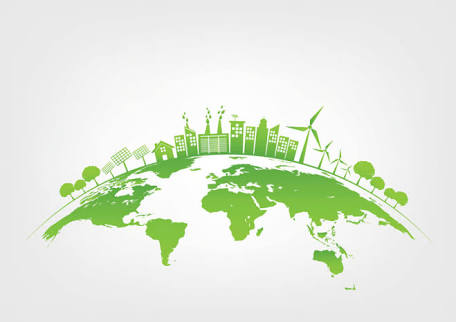
Sustainable development has been defined in many ways, but the most frequently quoted definition is from Our Common Future, also known as the Brundtland Report: “Sustainable development is development that meets the needs of the present without compromising the ability of future generations to meet their own needs.”

Using recycled materials or renewable resources when building is an example of sustainable development. Building a new community in a previously undeveloped area without destroying the ecosystem or harming the environment is an example of sustainable development.

United nations

The 17 sustainable development goals (SDGs) to transform our world:


GOAL 1: No Poverty

GOAL 2: Zero Hunger

GOAL 3: Good Health and Well-being

GOAL 4: Quality Education

GOAL 5: Gender Equality

GOAL 6: Clean Water and Sanitation

GOAL 7: Affordable and Clean Energy

GOAL 8: Decent Work and Economic Growth

GOAL 9: Industry, Innovation and Infrastructure

GOAL 10: Reduced Inequality

GOAL 11: Sustainable Cities and Communities

GOAL 12: Responsible Consumption and Production

GOAL 13: Climate Action

GOAL 14: Life Below Water

GOAL 15: Life on Land

GOAL 16: Peace and Justice Strong Institutions

GOAL 17: Partnerships to achieve the Goal

Sustainable development concept that appeared for the first time in 1987 with the publication of the Brundtland Report, warning of the negative environmental consequences of economic growth and globalization, which tried to find possible solutions to the problems caused by industrialization and population growth.

HBT-wood.

Hollywood, Bollywood, Tollywood. These are one of the pillars of the country which are gaining huge profits..not just profits but super profits. Movies really take us to the other world no matter what mood we are into. Act as stress buster, relief, make us feel joyous etc., Those 3 hours becomes magical as we are only focused on what the screen is displaying. Both kinds of movies are present, extremely good as well as extremely bad!! We cannot get an overview of the movie just by watching trailer as our expectation rises and the movie may turn out to be a flop. Not being pessimistic..just keeping my opinion.

Hollywood is extremely overrated in India as well as in foreign for obvious reasons as it gave many blockbusters and super duper hits. They have VFX beyond our imaginations be it fictional, or reality. One cannot assume the level of action scenes(Avatar, MCU, DCU series etc.,) people in India are huge fan of MCU series and the previous year release of Avengers end game broke many records, cam imagine the fandom here. People are going crazy over these movies despite of characters being fictional. There cinematography, scenarios take over the whole show. But there are some movies which are utter disappointment for people. There are both the kinds of content available..you need to watch the right one.

Bollywood is overrated as well. Comparatively even the bollywood gets lots of love from the audience. People are ready to spend a lot on Bollywood moviez by watching it over and over in theatre’s just being a fan of the actor/actress. Even it gave many blockbusters(Evergreen ‘3 idiots’, URI, Chichhore, super 30, Badla, Andhadhun) these are the content ful movie. The list is long enough to be mentioned. These type of movies are to be appreciated and to be look forward. But on the other side it also gave disastrous movies which is really a disappointment to us as a viewer, as an audience(Total dhamaal, loveyatri, Himmatwala, Humshakals, Tubelight) these kind of movies gains box office irrespective of their content. As an audience we failed to recognise the good content ful movies and just for the stardom and fandom made worst movies into hit, despite of getting negative reviews movies earned well at box office which shows that we can lick the foot of worst actor, star kids and can kick the good actors and their movies. We ourself supports starkids and rant online about boycotting. The good content ful movies were left unpopular and unrecognised movies like ‘nil battey sannata’ is a movie which will win your heart with its simplicity and innocence. The content is ordinary, yet the movie is unpopular that is not recommended by anyone, The Tashkent files is another movie beyond our imagination yet unrecognised by audience a must watch movie.

Tollywood is underrated. Except for having highly promoted movies everywhere, the other movies aren’t recognised at the first place. Baahubali series was a blockbuster in India and was worth watching. But the other movies which doesn’t have enough promotional events left unrecognised. South movies are focused only on contents irrespective of showing fairness, beauty, and status/standard of living. I know there are some movies which have these 3 propaganda’s but some don’t care about the colour, beauty, or standard…! Movies like 96, , fidaa, Ratsasan, Dear comrade, U’turn..these movies deserve more viewers. Even the worst movies teaches something productive and good out of it. I know, I know..the hindi dubbing sometimes fails to match the level of originality, and the songs were dubbed into literals meaning which turns into disasters. Even this also has good and bad verse. The action scenes sometimes are too much to handle. Just like bollywood, even this assassinates Physics: /

Both the kinds of movies are available, Good as well as bad but its us who has to watch as per content not for the fandom and for star kids.

The oscar winning movie of 2019 “Parasite”is indeed a thought provoking movie. The movie may seem boring at first but will keep you anxious at the scenes coming aftermath, comedy plus thriller will not let you move an inch by your seat so indeed it deserved the award. A must watch movie, highly recommended!!

Sources and Causes of Air Pollution

When we try to steady the sources/causes of air pollution, we usually enlist a series of activities and interactions that create these pollutants. There are two types of sources that causes Air Pollution.

  1. Natural Resources: Natural Sources of pollution includes dust carried by the wind from a location with very little or no green cover, gases released from the body processes of living beings (Carbon Dioxide from a human during respiration methane from cattle during digestion, Oxygen from plants during Photosynthesis). Smoke from the combustion of various inflammable objects, Volcanic eruption etc., along with the emission of polluted gases also makes it to the list of natural sources of pollution.
  2. Man-Made Sources: While looking at Man – Made contribution to air pollution, it can be further divided into two parts. a) Outdoor Pollution Sources- The major outdoor pollution sources include power generation, vehicles agriculture/waste incineration, industry and building heating systems. Smoke feature as a prominent component. The Smoke emitted forms of combustion like in biomass, factories, vehicle furnaces etc., Waste dumped in landfill generates methane, which is harmful in several ways. The reactions of certain gases and chemicals also from harmful fumes that can be dangerous to the well-being of a living creature. b) Indoor Pollution Sources- In low and middle- income countries, mostly burning fuels such as dung, coal and wood in inefficient stoves or open hearths produces a variety of health-damaging pollutants. These include carbon monoxide, methane, PM, PAH, VOC etc., Expresses to smoke from cooking fire causes 3.8 million premature death each year.

Some more various causes of Air Pollution

  1. The Burning of fossil fuels: SO2 emitted from the combustion of fossils fuels like coal, petroleum for energy in power plants, and other factory combustibles is one of the major causes of air pollution. Billions of vehicles run on roads are powered by gasoline and diesel engines that burn petroleum is made up of hydrocarbons and engines don’t burn them.
  2. Agricultural Activities: Ammonia is a very common by-product of agricultural- related activities and is one of the most hazardous gases in the atmosphere. The use of insecticides, pesticides, and fertilizers in agricultural activities has grown quite a lot. They emit harmful air into air pollution. Famers also set the fields and old crops on fire to keep them clean for the next round of swing. The burning to clean fields causes pollution by releasing harmful gases in the air.
  3. Waste in Landfills: Landfills are land areas in which waste is deposited or buried. These deposited is a major greenhouse gas that is highly flammable and very hazardous. E-waste is another grave concern involving a lot of unscientific dismantling such as chemical leaching burning wires & others.
  4. Exhaust from Factories & Industries: Manufacturing industries release a large amount of carbon monoxide, hydrocarbons, organic compounds and chemical into the air, thereby depleting the quality of air. Manufacturing Industries can be found at every corner of the Earth, and area has not been affected by it. Petroleum refineries also release hydrocarbons & other chemicals that pollute the air and cause air pollution.
  5. Mining Operation: It is a process wherein minerals below earth are extracted using large equipment. During the process dust and chemical release in the air and cause air pollution. This is the reason, responsible for a worker’s health condition.
  6. Domestic Activity: Household cleaning products painting supplies emit toxic chemical in the air and cause air pollution, Suspended particular matter(SPM) is another cause of air pollution. Referring to the particles afloat in the air. SPM is usually caused by dust, combustion etc., According to WHO, around 7 million premature death cause every year due to the combined effects of ambient (outdoor) and household air pollution.
  7. Natural Events: There are certain natural events such as volcano eruptions, forest fires, and dust- storms which are nature- born and cause air pollution.

“Ensuring Safety with Automotives”

Automotives have been an important part of our lives and have helped make life much easier and travel more comfortable. The development in science and technology and with the industrial revolution gave manufacturing and production a new standard to work and provide better and new products but also work to unemployed people. Cars, trucks, bikes have  helped humans to reach their favourite places without any thought and within some minutes or hours of travel. Aircraft and airships have not only enabled people to travel to different parts of the world but also to different planets. Thus, advancement in technology and new ideas have helped humans to turn their dreams Into reality. 

These automotives have been a part of our life since ages and we have seen advancment in their structure, in their material and their engines. Every new model of these automobiles has better average and efficiency along with better aerodynamics and looks. 

But the problem with these automotives is the risk factor, which hasn’t seen any decline, rather for most cases has seen a great hike. People lose their life in manor accidents happening all over the world. But no significant changes or policies have come up as such. These automotives are very expensive but still lack to provide surety of life in case of any mishappening. These automotives must be impact resistant and should be able to stay rigid in case of accidents so as to make the life of the person sitting in it safe. 

The bitter truth is that, in spite of development in materials and manufacturing techniques, most of the automotive companies are bound to their older ones, which not only enable them to make much if profits but also are easy to manufacturers. Also the main issue is with the knowledge and skills of people. Most of the people do not know the better and best alternatives to most of the material used in these automotives which not only provide strength to the structure but also absorb most of the impact. The main reason is also the loss of profit share, as most of thee. Material cost more and they can’t afford much of these investment to be done, as they still had to keep the proves same, as if they will increase, people might not even buy them, which thus significant leads to lack of selling of these automotives or if it happened, the company profit share would reduce. 

People should also understand the importance of their life and must ask for the Return on investment which is their right as they are spending high amounts of money in buying these automobiles. Maybe in future better alternatives must be seen in the marketplace, assuring safety of the individual travelling in it. New materials are being into researched which  would effectively used for making these automotives which not only will maintain the profit share but also will stay strong, rigid, impact resistance and thus will assure life of individual and safe travel possible. The only need is for the companies to understand and care for their customers, provide them the value for the product and thus making traveling much safer. 

Importance Of Self Defence

Self defense means self-defense or self-defense. First of all, we can tell you that while self defense, a person can beat the person in front, or can even kill someone, but if we have proof that all this happened during self defense then it is not punishable. . Yes friends, in the effort to protect their life, physical harm to a person is also possible, as well as life threatening life can be taken. As you all know, India is a huge country as well as a democratic country, every citizen has equal rights here. The constitution of all India gives every citizen of the country the right to safeguard himself. Section 96 to 106 of the Indian Penal Code has given detailed discussion of the right of self-defense of a person.
In today’s time where there is a danger of losing life all the time, there is a great need to give self defense training especially to girls and women, the importance of the system to educate every citizen about the methods of self defense and to deal with the critical situation. Are required So that they can avoid the loss of their life and property, the methods of self defense should come to every person. Women can also exercise the right of self defense by risking themselves and can save themselves from loss of any life and property.
Women are targeted by many criminals because they look fragile and cannot defend themselves. Many women get nervous in the event of an attack, which they easily overtake. The best form of defense of a woman is her mind, some of the ways in which a woman can defend herself are strange but in reality very intelligent. In many self-defense classes, women are taught to remain calm and use their heads in critical situations.
Women often keep all their important belongings in purses. An easy way for a woman to keep her purse is to keep an eye on suspicious people, if a woman suspects that someone is following her or trying to steal her purse, turn them off by calling her something unexpected A good example of this should and should surprise them, when an elderly woman, after someone senses her behind, saw that the thief is straight in the face and said, “Don’t I know your mother?” Started by the woman, the culprit quickly ran in the opposite direction, I believe that a woman’s intuition can be important women before they realize things.
Self-defense is a defense for conduct but for defense, a crime will occur. As with most criminal defenses, the fact that the crime has been committed is not at issue. At issue is the liability of the defendant or accused for an offense that is for some reason that justifies or excuses it or which otherwise excludes the rescuer from the liability of the offender.
Self defense is a legal term that allows a person to use reasonable force to protect him or a third person incited by personal injury as long as the defender has reason to believe that he or a third person Is in serious danger The term may also refer to the right to defend one’s own property (such as their home), it allows a person to protect himself from harm under appropriate circumstances. This is a general defense for those accused of assault, battery, or murder.
Laws on self-defense vary by state. Generally, self-defense can only be used in response to immediate threat. For example, if the person holding the knife threatens you that if you do not give him or her all your money, and you do not run away, you cannot claim self-defense if you victimize the criminal after 24 hours And punch him. Additionally, the threat that a self-defense warrant may be verbal or physical, unless a reasonable person in the same situation would feel that the attacker would harm him, for example, a reasonable person would not experience that three The year-old threat will be given to you unless you give him chocolate, it will cause you physical harm, but a big man threatens to punch you until you can give him your wallet, causing proper fear.
Finally, the risk of harm must be activated when you defend yourself. If the threat is eliminated and there is no further threat of violence (and thus the threat is eliminated), the justification for self-defense decreases.

Few tips to overcome depression

A group of conditions associated with the elevation or lowering of a person’s mood is Depression. We will get a consultation when we have suicidal thoughts and might harm yourself or others. When you’re feeling anxious or stressed spend some time in yoga, learn new things, meditation, listen to music. Don’t avoid any of the meals, keep yourself healthy to be enthusiastic. When you’re stressed, your body needs additional sleep and rest and by doing exercise daily you feel good and also helps to maintain your health. Take a deep breath makes you feel relax. Be proud of, however, close you get, acceptance that cannot control everything, put your stress in perspective, and a good laugh makes you feel better from depression.

Make an effort to replace negative thoughts with positive ones. Make yourself active which helps you to support and also it will break your stress. Be in relationships is a way to feel free. Tell friends and family you are feeling overwhelmed and let them know how they can help you. Talk to the physician or therapist for professional help. Be patient when you start a new exercise program. Most sedentary people require about four to eight weeks to feel coordinated and sufficiently in shape so that exercise feels easier. Constantly shouting in your ear with a never-ending prattle of your most anxious thoughts and worries. Ignoring your anxiety doesn’t make it go away, the restless thoughts just continue.

NEPAL

Location

Nepal, officially the Federal Democratic Republic of Nepal, is a country in South Asia. It is located mainly in the Himalayas, but also includes parts of the Indo-Gangetic Plain. It is the 49th largest country by population and 93rd largest country by area. It is landlocked, and borders China in the north and India in the south, east and west, while Bangladesh is located within only 27 km of its southeastern tip and Bhutan is separated from it by the Indian state of Sikkim. Nepal has a diverse geography, including fertile plains, subalpine forested hills, and eight of the world’s ten tallest mountains, including Mount Everest, the highest point on Earth. Kathmandu is the capital and the largest city. Nepal is a multiethnic country with Nepali as the official language.

History

The name “Nepal” is first recorded in texts from the Vedic period of the Indian subcontinent, the era in ancient India when Hinduism was founded and the predominant religion of the country. In the middle of the first millennium BCE, Gautama Buddha, the founder of Buddhism, was born in Lumbini in southern Nepal. Parts of northern Nepal were intertwined with the culture of Tibet. The centrally located Kathmandu Valley is intertwined with the culture of Indo-Aryans, and was the seat of the prosperous Newar confederacy known as Nepal Mandala. The Himalayan branch of the ancient Silk Road was dominated by the valley’s traders. The cosmopolitan region developed distinct traditional art and architecture. By the 18th century, the Gorkha Kingdom achieved the unification of Nepal. The Shah dynasty established the Kingdom of Nepal and later formed an alliance with the British Empire, under its Rana dynasty of premiers. The country was never colonized but served as a buffer state between Imperial China and British India. Parliamentary democracy was introduced in 1951, but was twice suspended by Nepalese monarchs, in 1960 and 2005. The Nepalese Civil War in the 1990s and early 2000s resulted in the establishment of a secular republic in 2008, ending the world’s last Hindu monarchy.

The Constitution of Nepal, adopted in 2015, affirms Nepal as a secular federal parliamentary republic divided into seven provinces. Nepal was admitted to the United Nations in 1955, and friendship treaties were signed with India in 1950 and the People’s Republic of China in 1960. Nepal hosts the permanent secretariat of the South Asian Association for Regional Cooperation (SAARC), of which it is a founding member. Nepal is also a member of the Non-Aligned Movement and the Bay of Bengal Initiative. The military of Nepal is the fifth largest in South Asia; it is notable for its Gurkha history, particularly during the world wars, and has been a significant contributor to United Nations peacekeeping operations.

How to go

  • Delhi to Kathmandu: If you want to fly (and get some incredible Himalayan views), Delhi to Kathmandu is the least expensive, least time-consuming route by air to Nepal (under two hours). Otherwise, the best option is to take a train to Gorakhpur and then a bus. Taking the bus all the way has become slightly more appealing since the Delhi Transport Corporation launched a direct service to Kathmandu. However, it’s still a long 25-hour haul!
  • Varanasi to Kathmandu: Many people travel overland from Varanasi to Kathmandu, either by bus, or train and bus combination. It takes less time than overland from Delhi (around 15 hours). It’s also possible to fly. However, it’s much costlier than from Delhi and there are very few direct flights.
  • Kolkata to Kathmandu: Nepal-based Buddha Air operates three direct flights a week from Kolkata to Kathmandu: on Mondays, Wednesdays and Fridays. The flights depart at 9.05 a.m. and the flight time is about 90 minutes. Expect to pay about 20,000 rupees one way. Air India also operates direct flights for a slightly cheaper cost, starting at 15,000 rupees. Alternatively, you can go by land via the Raxaul or Panitanki borders.
  • Via the Sunauli Border Crossing: Most people going overland from north India to Nepal pass through the Sunauli border to Bhairahawa in central Nepal, accessible from rather unappealing Gorakhpur in Uttar Pradesh (although, pleasingly, Gorakhpur has become a lot cleaner in recent years). This is the biggest and busiest India-Nepal border crossing. There are frequent connections to Kathmandu, Pokhara, and Lumbini from there.
  • Via the Raxaul Border Crossing: The Raxaul border crossing to Birganj in southern-central Nepal is accessible from Patna in Bihar. It’s most convenient for anyone traveling from Bodh Gaya or Kolkata. There are direct trains from Kolkata to Raxaul (16 hours). From Bodh Gaya, it’s quicker to take a bus or car and travel by road as opposed to train (13 hours). From the border, buses take six to seven hours to reach Kathmandu and eight hours to Pokhara. Shared jeeps to Kathmandu are a quicker option and only take four to five hours.
  • Via the Panitanki Border Crossing: The Panitanki border crossing, to Kakarbhitta in far eastern Nepal, is accessible from Siliguri in West Bengal. It’s most utilized by people traveling from Darjeeling, Kolkata, Sikkim and the rest of northeast India. Buses, taxis and shared jeeps run to the border from Siliguri, Kalimpong, and Gangtok in Sikkim. Siliguri to Panitanki (for those going from Darjeeling) takes approximately 45 minutes to an hour. Though the border crossing is open 24 hours, the Indian and Nepali immigration offices close are only open from 7 a.m. to 10 p.m. so foreigners should ensure that they arrive within this timeframe. There are regular buses to Kathmandu (14 to 16 hours) and Pokhara (15 hours) from Kakarbhitta. It’s worth stopping at Chitwan National Park on the way to break the journey. Get off the bus at Sauraha (nine hours from Kakarbhitta), which is the closest town and travel hub to the park.

Tourist Places

  • Kathmandu: Kathmandu, the capital and largest city in Nepal, is like no other city in the world. The decaying buildings in the heart of the city are a stark contrast to the lively atmosphere that permeates the streets. The smell of incense wafts from stores while street sellers push their goods, and people go about their daily lives, all against a backdrop of historic temples and carved statues. For several hundred years, Kathmandu was one of three rival royal cities, along with Bhaktapur and Patan. Situated in close proximity to each other, today these three almost run together. The highlight of Kathmandu has long been Durbar Square, the largest of the palace squares in the three royal cities and a UNESCO World Heritage Site. Temples and monuments of varying shapes, sizes, styles, and faiths can be found here. Kathmandu’s Durbar Square was severely damaged in the 2015 earthquake, with many buildings destroyed beyond repair, but it still remains a special place to visit.
  • Bhaktapur: Bhaktapur, the third of the “Royal Cities,” lies on the old trade route to Tibet, just outside of Kathmandu. For Bhaktapur, the trade route was both an arterial link and major source of wealth. Its relative remoteness at the time allowed the city to develop independently and in ways which distinguish it from the other two cities. In contrast to Patan and Kathmandu, the population of Bhaktapur is primarily Hindu. The best place from which to begin a tour of the city is Durbar Square, where in addition to the royal palace, several temples are also situated. The whole area is a UNESCO World Heritage Site.
  • Boudhanath Stupa: The Boudhanath Stupa, just outside Kathmandu, is one of the largest stupas of its kind in the world and dates to sometime around the 6th century, possibly even earlier. Like Bhaktapur, it lies on the old trade route to Tibet and is a UNESCO World Heritage Site. The stupa itself is a symbol of enlightenment but at Boudhanath the symbolism is particularly clear. Each different shape represents one of the five elements, earth, water, fire, air, and sphere, which are also the attributes of the five Buddhas. Brought together in the form of the stupa, their unity reflects in abstract fashion the structure of the universe itself. The stupa sustained minor damage during the 2015 earthquake and is now fully repaired.
  • Pokhara: Set at the base of the foothills and surrounded by some of the highest mountains in the world – Dhaulagiri, Manaslu, and Annapurna I – Pokhara is one of Nepal’s most scenic cities. For trekkers, Pokhara is the gateway to the Himalayas and the starting point for treks to Jomsom and the Annapurna region. It’s also a wonderful spot to relax for a bit, either before or after a hiking trip. By population, it is the second largest city in Nepal after Kathmandu but still does not feel like a big city. As you travel from Kathmandu, 200 kilometers to the east, you’ll notice the much cleaner air and pleasant climate almost immediately. Lake Phewa, with its cluster of lakeside hotels, restaurants, and shops, is ideal for those looking for a little relaxation.
  • Swayambhunath: Set on a hilltop to the west of Kathmandu, Swayambhunath is the second most important shrine in the Kathmandu Valley after Boudhanath. Due to the resident monkeys that inhabit parts of the temple, it is more affectionately known as the Monkey Temple. The Swayambhu Stupa, painted with the eyes of the omnipresent god, forms the centerpiece of the temple complex. It was originally a prehistoric cult site, but the temple complex dates to the 5th century. Swayambhu plays a major part in the lives of the Vajrayana Buddhists of Northern Nepal and Tibet, but especially of the Newari Buddhists of the Kathmandu Valley.

Why visit Nepal?

  • Nepal is a country of contrasts. Spectacular natural riches combine with a vibrant culture and sense of history. Home to ten of the world’s 14 highest mountains, the country offers a magnificent setting for hiking and mountaineering, as well as some of the world’s best white water rafting.
  • With its vast range of altitudes, Nepal is also home to an incredible variety of plant and animal species, including more than 300 species of orchid. With over 800 bird varieties, it accounts for almost 10% of the world’s avian species.
  • The diverse national parks of Chitwan and Bardia encompass lowland tropical jungles and grasslands and Nepal shelters a rich variety of wildlife. The Bengal tiger, rare snow leopard, one-horned rhino and the Himalayan black bear can be seen in the remote national parks.
  • The ancient culture and traditional architecture of Kathmandu means that the city boasts no less than seven World Heritage Sites, while Nepal is famous for its scenic monasteries as well as being home to Lumbini, the birthplace of the Lord Buddha.

A wide variety of accommodation can be found, however, what we recommend and use is the award-winning property mostly in the five-star category. It is strongly recommended that you reserve all your accommodation as far in advance as possible, especially if you want to travel during their festival period.

Nepal is a wonderful, family-friendly destination, offering a range of activities for children such as tailored wildlife safaris, rafting, nature hikes and cultural excursions. So what are you waiting for? Pack your bags and set out to Nepal!

Tourism : can this be the next big thing for India

Who doesn’t love to travel?

Every body seek to grab every single chance to wander around the world. Some love to travel to hills, while others are pleased to be at the sea side, other proportion of people want to travel to desert areas,and the remaining like to scratch out every corner of the world. An increase in the trend of more and more wanderlust among the people, is the reason for an increase in the trend of tourism industry. No matter where you want to travel, which part of the world you have to discover, just a click on the e-travel site and choose your favourite destination.

In case of the country, such as, India, which is counted as a developing one, it is a fresh opportunity to become the top countries to offer a great traveling experience to those coming to the country in order to observe its beauty. Post pandemic, will be a great opportunity for the government to promote tourism in the country and it will surely create a massive opportunity for the economy to bloom and grow positively. As many of the scholars have claimed that, India’s economy may fall to negative, but, tourism industry is an idom used to drown, that can help the country with incredible increase in the number of tourists.

About 10.89 million foreign tourists visited India in 2019. But, according to the UN World Tourism Organization, 50 million Indians will travel overseas in 2019, which is a big reason to worry regarding the tourism industry in the country. There is a huge gap between people coming and going out of the country which needs to be filled, in order to see India as a huge tourist destination.

It is one of the reasons why tourism can be next big thing for India! We have been privileged to be a part of such a beautiful country as this, where every kind of physiographic divisions could be found, be it Jammu and Kashmir, pure heaven on the earth; or the widespread desert of Rajasthan; backwaters of Kerala;beaches of Mumbai and Goa;historic sites of Central India; beauty of northeast India; and all that enormous beauty that is untouched by most of the travellers.

But, the pandemic has given a jerk to the tourism industry, which has been a great source of income to the country, due to shut down offices of travel companies, tourist destinations, along with, hotel, restaurant chains, along with the suspension of, both, national, as well as international flights, ultimately bearing the loss hit by the pandemic.

The Indian tourism industry is projected to book a revenue loss of Rs. 1.25 trillion, in calendar 2020,which means a 40% decline in revenue over calendar 2019.

But, as it has been righteously said that, the population of any country is its wealth, we as the wealth of our country must only visit the tourist attractions in our own country (post pandemic) in order to give a hike to its economy. This would complete the twin objective

  • One is, to give a boost to the economic conditions of the country.
  • Second is, it will give us a chance to explore the unseen beauty of our own country and people will not underestimate the power of the country.

Bankers in India are more productive working from home

Work from home may remain part of the norm for many in India’s financial industry beyond the end of the world’s biggest lockdown. The reason: elimination of lengthy commutes in the past three months has boosted employee productivity. Take Jefferies’ India team for example. On average, its 60 members have managed to save over an hour every day on commute and 70% of them have seen higher productivity, according to a note from the brokerage, drawing on a survey of its staff.

As banks and asset managers around the world try to figure out how they’ll manage their offices after the coronavirus pandemic, many in Mumbai – India’s finance hub – see the opportunity for permanent change in how they work. The average commute time on the city’s major routes is over an hour, more than twice the averages of SingaporeHong Kong and New York, according to a study by the IDFC Institute, a public policy think-tank.

Neil Parikh, chief executive officer of Parag Parikh Financial Advisory Services, like many others is finding the experience better than expected – so much so that he’s reconsidering plans of adding to the money manager’s offices in India’s top cities. He plans to equip new hires with laptops and high-speed Internet connections instead. “Now there’s no stigma around working from home,” he said. “I can see some from my research team being much more productive. Working from home saves almost 3-to-4 hours everyday in travel time for some people.”

Reliance Securities Ltd. has shelved plans to shift to a new premise. The firm, one of India’s leading retail broking houses, will have half its staff continue to work from home as it implements a rotational program to comply with social distancing norms, according to Chief Human Resource Officer Meenaa Sharma. “Many of our employees are saying that their productivity has gone up, and feedback from clients on research reports is good,” she said.

Second Wave
nullWhile the daily number of virus cases in Mumbai, India’s worst-hit city, has been stable in recent days, concerns over a second wave means businesses have little choice but to operate remotely. With economy set for its first full-year contraction in 40 years, India has begun reopening from the lockdown imposed on March 24 even as the country has the fourth-highest number of infections in the world.

Yet, not everyone in the world of finance is in a position to work remotely on a long-term basis. While banks and stock depositories had been open through the lockdown, designated as ‘essential services’, dealers who execute trades may have to return to office in greater numbers once regulatory relaxations are rolled back. “Businesses like ours where there’s sensitivity of information, at least some part of staff like dealers have to be in the office” said Jinesh Gopani, head of equities at Axis Asset Management Co. “Those parts were allowed at home because it was a crisis. But it is not ideal from the regulator’s point of view in the long term.”

For now, only a fraction of the staff in the financial-services industry is back in office. The unexpected benefits of working remotely mean it’s likely to be a favored option well into the future. “Productivity has improved dramatically because of removing unproductive travel time,” said Gopani. Working from home one or two days a week may become ‘the new normal’.

Frequency of floods has increased because of climate change

Mumbai floods: How to report road closure using Google Maps - The ...

NASA describes climate change as a long term change in the average weather patterns preexisting in local, regional and global climate.  Most of the changes observed in Earth’s climate since the early 20th century are primarily driven by human activities, particularly fossil fuel burning which releases greenhouse gasses like methane, nitrogen dioxide and most importantly, carbon dioxide (CO2). These gasses are heat trapping in nature and are raising the Earth’s average surface temperature. The temperature increased caused by man-made activities is referred to as global warming.

Global warming is causing extreme weather events like floods, cyclones, draughts, forest fires, heat waves, and hurricanes and melting polar ice caps of the planet. India being a tropical country faces floods every year. We also have huge coastline spanning 7,500-odd km and runs past nine states which are very vulnerable to flooding. The rapid melting of polar ice caps because of Global warming has accelerated the rise of sea levels as observed by study conducted by an IPCC panel. This is going to impact people living near the coastal areas and in islands. Mumbai, one of the largest cities in the world, with a population of 20 million is projected to be completely submerged by rising sea levels. Glaciers are also melting in the Himalayas, which is projected to increase flow rates in the Ganges and Brahmaputra Rivers. In 2013, heavy rain followed by a glacial lake outburst caused devastating floods in the state of Uttarakhand. The floods 4,000 people, destroyed and caused damages of 3.8 billion dollars.

Monsoon in 2019 witnessed 560 extreme rainfall events, a 74% jump from 324 events recorded in the year 2018. The heavy rainfall caused floods that led to a death toll of 1685 lives, spread across 14 states of the country, with Maharashtra accounting for the maximum deaths. According to Home Ministry officials heavy rains and floods fully damaged 1.09 lakh houses, partially damaged 2.05 lakh houses and destroyed 14.14 lakh hectares of crops. Responding to floods in different areas at the same time as happened last year strains emergency response efforts. NDRF, Army and the Air Force were deployed to rescue people across six states in northern and western India. An estimated 1.2 million people were living in government relief camps.

According to IPCC panel, the frequency of freak weather events like floods would drastically reduce if the rise in temperature was limited to 1.5 degree Celsius, however it is highly unlikely that we are able to achieve that target. In a study conducted by IIT Gandhinagar, it was found that short bursts of heavy rainfall, lasting only hours, are likely to increase by 20 percent if the global mean temperature rises above 1.5 degree Celsius. Such extreme events will be responsible for most cases of urban flooding.