
This is the modern era where the importance of ‘Live in Relationship’ has become common for the people.It is a way of living arrangement in which an unmarried couples lives together in a long term relationship that resembles a marriage.The supereme court in India said that a man and woman living together without marriage cannot be construed as an offence infact “Living together is a right to live” the supereme court apparently said referring to the Article 21 of the Indian constitution which guarantees right to life and personal liberty as a fundamental right. Like each coin has two side so that is the case in live in relationship there are certain pros like there are no legal formalities and responsibilities. You get to know your partner in a better way and understand each other in deeper level.It is beneficial as you can evaluate the areas in which you both need to work on if you really want to get married to the person whom you love.Some cons are that society finds it hard to accept such relationship open heartedly.Another disadvantage is the lack of commitment.Any quarrel or fight can lead to split , whereas in marriage a fight is often followed by reasoning and resolving.

“Experience – A great teacher!”
Experience is something that we can’t get from books or education. It is something that we keep on gaining every day by doing different and new types of work. It is indeed our best teacher, as it teaches you so many things about yourself and your life.
Experience is a teacher for all the people irrespective of their age, religion or sex. It is very helpful for your overall development. Hence, you should willingly learn from the experiences of your life.
● Experience teaches us to be more organized in our work. It also teaches us to try new strategies to get our work completed. It helps you to work on yourself so that you can show your best version to the world. You might not succeed in your work at the first attempt, but experience will help you to learn from your mistakes and not repeat them again.
● Experience gives you an understanding of who is actually close to you in reality. During your tough times, you learn about the people who are really there with you and who are not. You understand the difference between the people who really love and support you and the people who pretend to do so.
● Experience teaches you some important life lessons which cannot be learnt in any school or educational institutions or from any book. This is because you get to do the work in reality, so you gain an understanding of how things actually work in real life. These actual-life experiences prove very helpful for you in future.
● Experience teaches you to stay calm and composed in your work. You learn to remain patient and not lose your calm over small things. This calmness proves to be beneficial to handle situations in your daily life and professional work.
● Experience boosts your confidence and helps you to stay motivated towards your work. It helps you to discover a different and confident side of yourself. You learn to accept your your flaws and try to work on it. You even learn to accept your defeat and not give up so easily.
● Experience helps you to stay grounded and not to become overconfident about your work. It teaches you to deal with failure and overcome it and to face the challenges in your life bravely. You learn to value the importance of doing smart work along with hard work.
● Experience gives you both bad as well as good memories. You can learn a lot from both, as good memories will encourage you, while bad memories will teach you to learn from the mistakes that you committed in the past.
● Experience helps you realize your capabilities. You get to know about your strengths and weaknesses. This helps you to make better decisions in life. You understand your potential to learn a particular thing in life and get to know about your interests. You thus move forward to build up a career in your area of interest.
We can thus see that experience plays an important part in our life. So, just try experiencing new things without any hesitation or fear of failure. It will help you to grow as a person and transform you into a stronger person both physically and psychologically.
Public
“Learn to forgive more.”
During our journey of life, all of us make some or other mistakes. These mistakes are not always that huge, but any mistake be it small or big has consequences that can be the deciding factor for your future with someone.
We forgive a person who has created a problem in work or who is at fault in destroying your relationship. Forgiveness is a great quality which makes you a better and stronger person. It is the key to leading a happy life with your loved ones.
Hence, we shall learn to forgive more, as it has many benefits:
● Forgiving people will make you mentally strong. It will also bring positivity in your thoughts and help you to focus on important things in your life, rather than focussing on the negativity around you. It will also keep you away from stress and make you a happier person.
● Forgiving someone will clear all the pessimism residing in your mind. It will thus prepare you to once again see the good qualities in the person whom you have forgiven. You will be able to accept him or her wholeheartedly without having any second thoughts in your mind.
● When you forgive someone, you give yourself and the person whom you have forgiven, a chance to start a healthy and beautiful relationship and create wonderful memories. It teaches you to live in the present and think about your future, rather than being stuck in the past which is not useful in any way.
● Forgiving someone will take away the anger from your mind. When you no longer feel the emotion of anger for someone, you become more productive and successful in your work. It will also free yourself from the feeling of revenge. This will help to focus your mind only on your path to achieve success.
● You feel calm and peaceful once you forgive someone. You feel like you are freed from some kind of burden. This freedom helps you to enjoy your life to the fullest and experience beautiful things in life.
● You get to live only once and during your journey of life, you shall try to make good and unforgettable memories with people. You shall not waste your precious time on the people who are not worthy of it. So, you should not live your life with some grudge as this will not benefit you in any way. Learn to forgive more as everyone makes mistakes in life.
We can see from the above benefits, that forgiveness is important for us and the person who is at fault. But, you have to remember that forgiveness is vital, but forgetting is equally important. You shall learn to forget the mistakes made by the other person and try to never bring them back in your relationship.
Just forgiving is not important, because you still might have some bad memories of your fight or misunderstanding in your mind. Forgetting such memories is required as well. Hence, it is rightly said, ‘forgive and also forget.’
Public
LIVE A LIFE KING SIZE

Do you know what are those kings that make you feel like living in luxury.Homedzine.com has made the best for you by designing a white sitting area with a wooden finish to the ground. The appliances are given black and grey finish. The only things that make a different this is only the light brown curtains.
LOVE THE BLACK ANYTIME

Do you know “having black represents your lifestyle”. Homedzine.com made a extraordinary design of interior using black colour. A black colour book rack adjoining the TV setup and having to rectangular standing slabs. The sitting area in front of it is also given silvery black touch with a black chair as a prop.
ALL THAT IS GOLD DOESN’T GLITTER

Shiny things always win heart. Homedzine.com made a bright design of interior that will make a perfect place in your heart. The wall is covered with the shiny marble papers and wooden long rods on the side. The roof has led and on the sides there are yellow lightings. There are black compartments underneath the TV so as to use every single space of your house.
BRIGHT A LIFE IN YOUR LIFE

Your dining area represents your integrity. Homedzine.com came up with a bright idea for dining area. There is a mirrored table with a wooden stand and two chairs on one side and sofa on the other side. There are hanging lights to bright up the area. There is a wooden wall on the one side which is giving a extremely enormous effect.
KITCHEN- HEART OF YOUR HOME
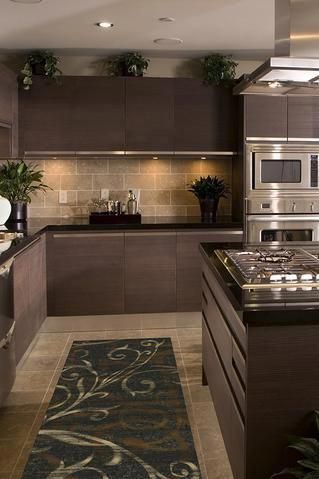
Organise your kitchen and see the organization in your life. To make your house feel like home today homedzine.com came up with the new concept of kitchen that is going to change your way of living. The chocolaty finish to your cabinets and drawers is not only going to affect your thinking but the modern lighting beneath the cabinets is going to give a luxury and a modern look to your kitchen. To give a wonderful touch to your floor like the walls we are using a floor papers that are going to let you in touch with nature.
LIFE IS MEANT TO BE LIVED
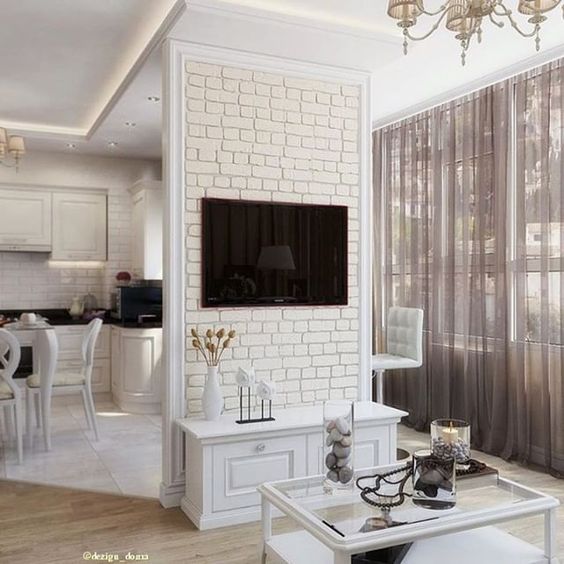
What does an open space meant to you? We are very well known to it therefore homedzine.com is always there and will continue building new designs so as keep you one step ahead from others, that is why today we are looking towards building a new style of living for you. Today the concept is of the lobby area which must be first eye appealing place in your house. The modern luxurious touch is given through the wallpapers to this house, the whitish colour contrast with a bit of creamy texture to curtains and LCD panel is given to create a classy look. The furniture are also in white in colour to maintain the contrast and extra spacing for LCD is also there. The white colour is meant to be colour of luxuriousness that is why it is more preferred.
Public

GOVERNMENT LIKELY TO SPEND MUCH LESS THIS FISCAL YEAR
Rationalisation of expenditure by the government for the second quarter of the current fiscal year has led to rising concerns. Fear’s have plummeted as many believe that the government may end up spending way less than the budget level, it has previously estimated, this would result in the economy taking even longer to recover than before.
Lower revenue intake and rising debt rates of central and state governments due to increased borrowing to cope with COVID-19 pandemic-related spending have also contributed to worries about the debt-GDP ratio crossing the 80 per cent notional red line from the 70 per cent rate seen in the last fiscal period. Nevertheless, the worries are being challenged by some analysts who stress the need to focus on economic recovery and prosperity instead of relying exclusively on debt figures, with high economic costs of debt reining in terms of jobs and loss of life and wellbeing.
Last week, the Finance Ministry released spending control guidelines in the quarter of July-September, extending an earlier order for the cash management system, dated April 8. The April order had grouped divisions of government and ministries into three, detailing their April-June quarter budget limit. Class A has without limitation ministries and agencies such as the Department of Agriculture, Cooperation and Farmers’ Welfare, the Ministry of Civil Aviation, the Department of Health and Family Welfare, the Department of Rural Development and the Supreme Court of India.
Category B ministries and departments such as fertilizers, taxation, home affairs, election commissions and road and highways are expected to restrict spending to 20% of the 2020-21 budget total, whereas Category C ministries such as petrochemicals, energy, commerce, telecommunications, education , housing and urban affairs will only spend 15% of the budget.
The budget rationalization is likely being undertaken to allow enough headroom to dovetail the stimulus package unveiled last month, particularly when receipts are projected to be significantly smaller than this year’s projections. Direct taxes dropped by more than 25 per cent in the first quarter, though GST collections were just 45 per cent of the monthly mark. Economists point to some key aspects of the stimulus program, such as the allocation of funds to micro, small and medium-sized businesses under the 100 percent Emergency Credit Line Guarantee System that are failing to take off, thus exacerbating the effects of the continuing reduction of government spending.
With insufficient cash outgoing, fiscal support from the government in the aftermath of the COVID-19 pandemic has been constrained. Schemes that are part of the stimulus plan, such as providing funds to micro, small and medium-sized enterprises under the 100% Emergency Credit Line Guarantee Programme, are failing to take off, with banks able to disburse a little over 7% of the volume distributed under this heading over the last one month. For MSMEs, hard hit by the pandemic lockdown, credit remains a challenge amid the demand slump. Official data shows that as of June 18, state-owned banks sanctioned loans worth Rs 40,416 crore under the scheme, of which Rs 21,028.55 crore has been disbursed, which is a little over 7 per cent of the Rs 3 lakh crore package under this head.
Public
BOYCOTT CHINA CONTROVERSY
What is Boycott China controversy?
Boycott of Chinese products is a slogan used by Internet campaigns that advocate a boycott of Chinese-made products. Commonly cited reasons for the boycott include the alleged low quality of products, human rights issues, territorial conflicts involving China, support for separatist movements within China, and objection to more specific matters relating to China, such as the eating of dog meat and the Yulin Dog Meat Festival, and more recently, the government’s alleged mismanagement of the COVID-19 pandemic.
Countries including India, Philippines, and Vietnam have called for a boycott of Chinese goods, as have separatist movements in China itself. A full boycott of Chinese products is considered to be difficult to achieve, as the country manufactures a large number of goods that are widely sold and used across the world, and also holds stakes in various non-Chinese companies.
Causes
China is the largest country in the world by population, and the third largest by territory, sharing long borders with several other nations. Border conflicts have occurred many times between China and their neighbors during its history.] At the center of Asia, some Chinese emperors attempted to expand their empires through war. There are also a lot of conflicting national interests and policies between China and other nations, like the disputes between the other nations with China and its allies. As a result of these conflicts, there is dissent against China amongst its bordering nations, and calls for the boycotting of Chinese products originate from residual resentment due to border conflicts.
In 1949, the Communist Party of China won the Chinese Civil War, gaining control of China. Since the 1980s, with the “reform and opening up”, Chinese leaders have made economic development one of their first priorities. Chinese businesses often produce goods tailored to market expectations; therefore, Chinese products generally may lack quality when consumers prefer to pay a low price.
Overpopulation is also considered a possible reason for manufacturing low-quality products; some firms cannot find enough of the needed raw materials to produce goods that serve customer requirements and follow safety standards, instead producing products made with cheaper or low-quality material. Many companies and businesses also lack capital, industry expertise, and marketing power, leading to their manufacturing of counterfeit products. Many companies produce such goods to piggyback on the popularity of legitimate companies such as Apple, Hyatt and Starbucks are copied. However, by looking at the situation in the context of history, it is often argued that this is simply a normal transition in manufacturing, and that a phase of low quality and counterfeit manufacturing is not unique to China alone, as Japan, South Korea, and Taiwan have undergone very similar economic phases. Keeping the aforementioned information in mind, with high quality goods being delivered from Chinese firms such as Huawei and Lenovo in recent years, it can be observed that the state of Chinese manufacturing quality is ostensibly trending upward.
The 2008 Chinese milk scandal was considered a signal of poor food safety, affecting thousands of people, and as a result, many Chinese parents do not trust Chinese milk products. In recent years, however, the Chinese government has taken many actions in order to prevent sales of substandard food.
Technology produced by Chinese companies has also been a subject of scrutiny, especially by the United States; for example, in 2018, Donald Trump, the President of the United States, signed the National Defense Authorization Act for Fiscal Year 2019 into law, containing a provision that banned Huawei and ZTE equipment from being used by the U.S. federal government, citing security concerns.
Some organisations have used the COVID-19 pandemic as part of campaigns against China; for example, the Vishva Hindu Parishad in India has called for a boycott of China in retaliation for China’s allegedly being directly responsible for the Severe acute respiratory syndrome coronavirus 2 virus strain and the subsequent COVID-19 pandemic.
Boycott in India
India and Tibet have called for a joint campaign to boycott Chinese goods in response to border intrusion incidents allegedly perpetrated by China. Rashtriya Swayamsevak Sangh sarsanghchalak (chief) Mohan Bhagwat stated “We speak about self-dependence and standing up to China. The new government seems to be standing up to it. But where will the government draw strength from if we don’t stop buying things from China?”
In 2016, China denied the entry of India to the Nuclear Suppliers Group. Along with this, China is viewed as a major roadblock by Indians towards its permanent seat in the United Nations Security Council, with China having used its veto power repeatedly to keep India out of the UNSC while the US, UK, France and Russia support India. Meanwhile, China provides Pakistan unconditional support in many international stages; despite the fact that many countries including India and the USA claim that Pakistan is a state sponsor of terrorism. Also, China makes a large amount of investments in Pakistan. During the conflict between the India and Pakistan in August–September 2016 after the Uri attack, the supporting stand of China towards Pakistan led to a campaign to boycott Chinese products in India. As a consequence, sales of Chinese products dipped by about 40 percent in the period immediately after the boycott call. Patanjali Ayurved founder Ramdev Baba was among the many people to have spoken of boycotting Chinese goods amid the 2017 Doklam standoff when nationalist sentiments had risen.
In May 2020, in response to the 2020 China–India skirmishes which were allegedly perpetrated by China’s People’s Liberation Army, Indian engineer, educator and innovator Sonam Wangchuk appealed to Indians to “use your wallet power” and boycott Chinese products. He called for India to “stop using Chinese software in a week and hardware in a year”. This appeal was covered by major media houses and supported by various celebrities.
In spite of various campaigns by notable individuals and organisations, Chinese companies still have influence over various markets, especially relating to consumer technology and software. For example, as in March 2020, Xiaomi, Oppo, Realme and Vivo accounted for approximately 73% of smartphone sales in India. On the other hand, Samsung Electronics and Nokia, both companies that once led the market, together accounted for less than 22% of smartphone sales. In spite of the campaigns, retailers have stated that the growing rhetoric is unlikely to sway consumer behaviour, especially due to alleged “value for money” in Chinese products, especially smartphones.
Chinese companies also invest heavily in Indian companies; 18 out of 30 of India’s billion-dollar startups are funded by China. Major Chinese investment firms like Alibaba Group and Tencent hold investments in major companies that are considered to be Indian, like BYJU’S, Zomato, Ola Cabs and Flipkart. In spite of the Indian government recording the origin of foreign direct investment, many Chinese companies exploit loopholes by investing in Indian companies through their non-Chinese subsidiaries; for example, Alibaba’s investment in Paytm was by Alibaba Singapore Holdings Pvt. Ltd. Hence, these investments don’t get recorded in India’s government data as Chinese investments.
In view of these circumstances, various other issues have been pointed out. For example, B. Thiagrajan, managing director of Blue Star Limited, an Indian manufacturer of air conditioners, air purifiers and water coolers said “We are not worried about finished goods. But most players across the globe import key components such as compressors from China,” and added that it would take a long time to set up local supply chains, and that there were few alternatives for certain kinds of imports. Besides, boycotting popular Chinese apps such as TikTok has been suggested as a more effective alternative to boycotting physical goods in terms of value added because there are multiple alternatives
Is it practically possible to boycott China?
It is not practically possible for India to cease the entry of Chinese products altogether. Even if the Government passes a law to stop the official use of Chinese products, then also Chinese products are going to hit the market through unauthorized entry and smuggling. People are all so attracted towards the Chinese products because they are cheap. We all know that India is a third world country or a developing country. So the majority of the population here are lower middle class or lower class. As a result they do not have enough money to spend on costly luxurious things. So they try to settle for a cheap but look-alike substitute by which they can still enjoy some of the benefits of the modern world. This chiefly includes smartphones, smart watches, laptops and other electronic items.
Apart from that, there is a huge annual transaction between India and China. This boosts the economy of both the countries. But as China is the producer of the goods, so even if they are cornered, they can produce their own stuff and carry on their life almost normally. But if the boycott is started by India, then India will not only suffer monetary losses, but also it will not receive the goods needed for the day to day life of its citizens.
So although the hostilities between India and China in recent times is completely unacceptable and also there have been reports that China heavily funds Pakistan, which is renowned all over the world as the hub of terrorist funding, it is not pragmatic for India to completely stop using Chinese hardware, that too in the course of a year. But, of course, if the Indian Government plans to stop the use of Chinese apps and softwares, that is a still practical decision but then Indian companies will have to come up with applications and softwares that would replace the boycotted Chinese apps. In a nutshell, before India plans to make any drastic decision, it should check all grounds to see if this #BoycottChina is a very practical decision or not.
Public
Oft, in the stilly night ✨
 Oft, in the stilly night,Ere slumber’s chain has bound me,Fond memory brings the lightOf other days around me;The smiles, the tears,Of boyhood’s years,The words of love then spoken;The eyes that shone,Now dimm’d and gone,The cheerful hearts now broken!Thus, in the stilly night,Ere slumber’s chain hath bound me,Sad memory brings the lightOf other days around me.When I remember allThe friends, so link’d together,I’ve seen around me fall,Like leaves in wintry weather;I feel like oneWho treads aloneSome banquet-hall deserted,Whose lights are fled,Whose garlands dead,And all but he departed!Thus, in the stilly night,Ere slumber’s chain has bound me,Sad memory brings the lightOf other days around me.
—#Thomas Moore—
Public

MTR Foods

MTR Foods is a food items organization situated in Bengaluru, India. The organization makes a scope of bundled nourishments including breakfast blends, prepared to eat suppers, masalas and flavors, bites and refreshments.
MTR Foods Pvt. Ltd. is an auxiliary of Norwegian aggregate Orkla. MTR abbreviation of Mavalli Tiffin Rooms
History of MTR Foods Ltd.
MTR Foods Ltd. is one of India’s driving purveyors of bundled nourishments. Its items incorporate an assortment of veggie lover nibble nourishments and chips, prepared to-eat suppers, and in part pre-prepared dinners, underlining the food of southern India. Different items incorporate pickles, vermicelli, and more than 30 assortments of frozen yogurt and gelatos. The organization is one of just a not many that sell bundled food across the nation. MTR Foods likewise trades canned nourishments to the United States in a course of action with the staple chain Kroger and sells flavors in the United Kingdom through the British organization Centura Foods. MTR items are likewise accessible in Australia, Singapore, Malaysia, and other Asian nations. In 2002, MTR Foods started opening diversified drive-thru eateries across India that served its veggie lover claims to fame. These are called MTR Super Shops. J.P. Morgan Partners claims a 28-percent portion of MTR Foods. Another 14 percent of the organization is possessed by Magnus Capital Corporation, an investment bunch situated in Mauritius. Administrator and friends chief Sadananda Maiya claims the rest of. MTR works seven assembling offices. The organization is the main Indian handled food organization to pass exacting worldwide sanitation and cleanliness measures, setting up the route for MTR’s entrance into a more extensive fare advertise during the 2000s.
Roots in a Popular Restaurant
MTR Foods Ltd. started as a solitary eatery in Bangalore called Mavalli Tiffin Rooms. Tiffin is a word followed to frontier rule in India and alludes to a quick bite or lunch. Mavalli Tiffin Rooms opened in 1924 and was controlled by individuals from the Maiya family. The eatery before long settled itself as one of the city’s most sultry eating spots. It was a humble café where coffee shops followed through on a solitary cost to a clerk in front and afterward plunked down to a five-course vegan feast. The eatery didn’t serve liquor and took just money. MTR, as the eatery was known, had gained notoriety for appetizing food and exclusive requirements of cleanliness. It turned into a most loved with lawmakers and celebrities, yet the eatery indicated no partiality, and the VIP’s held up in line like every other person. The café, which despite everything exists except isn’t a piece of MTR Foods Ltd., likewise turned into a most loved feasting spot for voyagers in Bangalore. In 1951, MTR was one of the primary Indian cafés to present steam sanitization, advancing its notoriety for tidiness. The famous restaurant later fanned into cooking.
Change was constrained on the eatery in 1975 during the State of Emergency pronounced by Prime Minister Indira Gandhi. Gandhi’s principles for the crisis required each café to adjust to costs set by the administration. The Maiya family felt incapable to submit to the administration value list. The costs were low to the point that the eatery would have needed to cut the nature of the food it advertised. MTR had made its notoriety on cleanliness and neatness, and the proprietors felt that trading off the nature of the food they offered would have been deplorable. Instead of following that course, the family shut the eatery. Its laborers, a significant number of whom had been with the café for a considerable length of time, were out of nowhere jobless. The Maiya family obliged a couple of them by offering them places in a little market appended to the café. Now, Sadananda Maiya got the plan to extend the staple by offering a greater line of items under the MTR brand name.
Maiya was an electrical architect via preparing, and he had the option to unite his aptitudes with both food and innovation to dispatch MTR Foods Ltd. He set the café’s previous representatives to work bundling a blend for the mainstream breakfast or nibble hotcake called rava idli. The MTR brand rava idli blend demonstrated a decent dealer, and when the café revived after the State of Emergency was lifted in 1977, Maiya kept on assembling the blend and wandered into other bundled nourishments too. His organization became MTR Foods Ltd., while the café proceeded in the possession of other Maiya relatives. MTR Foods started putting out other dry food blends, just as flavors, extraordinary zest blends, and afterward pickles. The bundled food organization based on the eatery’s notoriety for immaculateness.
A Dominant Regional Player during the 1980s
From the start MTR Foods sold its bundled food through the MTR café basic food item. As the food blends increased an after, the organization convinced different retailers in Bangalore to convey its items. Through the mid 1980s, MTR dispersed solely in Bangalore, selling at different retail chains and significant goods. In 1983, MTR chose to press into other southern urban areas. It sent wholesalers to Madras, Hyderabad, and Vijayawada to present its items. The following year, the organization made a significant specialized advancement. It started bundling its nourishments in what was known as a polyester poly standy pack, the first of its sort in Quite a while. This was a top notch plastic sack with a pyramidal base which empowered it to stand upstanding. The upstanding sacks extraordinarily expanded the brand’s perceivability on store racks.
Through the following ten years, MTR Foods took a shot at reinforcing its notoriety in southern India. It confronted a large number of little rivals in a profoundly divided market. The main enormous food organizations working across India were Hindustan Lever Ltd., an auxiliary of Unilever, and the Swiss food mammoth Nestlé. The organization united its situation in southern India and extended its assembling offices in and around Bangalore. MTR professed to have driving piece of the pie in a few item classes. By and large, be that as it may, the Indian bundled food showcase was still little. MTR was one might say a pioneer, offering prepared to-eat food when such items were as yet a curiosity and not so much a need. In India, most food was prepared without any preparation at home, and ladies had not yet begun entering the workforce in huge numbers. MTR worked its way into being a decently measured provincial player during the 1980s, while the entire bundled nourishments showcase in India was esteemed at just around $30 million.
Huge Changes during the 1990s
MTR started a push to turn into a progressively conspicuous organization in the mid 1990s. Starting in 1993, the organization expanded the quantity of items it offered and effectively searched out new markets. It drove into more urban areas in southern India, where it in the long run increased driving piece of the overall industry in each district that appreciated a dominatingly vegan cooking. Market openings likewise expanded in Bangalore, which had gotten the purported Silicon Valley of India, the focal point of the nation’s blasting data innovation industry. MTR started giving snacks to laborers at a few conspicuous innovation firms. Before the finish of the 1990s, Sadananda Maiya evaluated that 80 percent of Bangalore’s cutting edge laborers were MTR buyers. In general, the comfort food showcase in India was developing. As pay levels rose and more ladies were holding employments outside the home, bundled food blasted. The classification was required to significantly increase in deals by the early long periods of the new century. MTR changed its structure in 1994 so as to oblige future development. The firm was broken into two divisions, one for its primary food lines, flavors, and vermicelli, and another to represent considerable authority in chips and different bites. MTR additionally propelled a fare division. Deals at MTR developed as much as 40 percent every year in the late 1990s, and MTR wanted to spread into more markets. Effective in southern India, MTR started infiltrating into northern markets by 1998.
MTR propelled another item in 1998 so as to increase an across the country following. This was its Softy frozen treat. The frozen yogurt advertise had for quite some time been commanded by huge food organizations, most conspicuously Hindustan Lever. MTR’s new cone was a prompt hit. The organization had the option to value its frozen yogurt seriously against Hindustan Lever and still keep up a high net revenue. Now and again, MTR had the option to retail its solidified rewards for half what Hindustan Lever charged. The organization immediately extended its frozen yogurt portfolio, drawing out a few sizes of bundled hard frozen yogurt, some of which it offered to five-star inns. MTR’s notoriety for immaculateness obviously helped it get new clients.
The organization likewise extended its line of nibble nourishments, for example, chips and fries. Also, it drew out another line of prepared to-eat suppers dependent on North Indian plans and entered a course of action with another organization to help with conveyance in northern India. MTR additionally kept on redesigning its bundling innovation. The organization utilized a strategy that had been created by India’s protection division and in the long run started providing prepared to-eat food to the Indian Army. Its new bundling was known as the answer pocket. The answer pocket was first evolved during the 1970s and guarded food with no refrigeration. The shopper essentially dropped the unopened pocket in bubbling water for a couple of moments to warm the food. MTR’s bundled dinners were in this manner amazingly simple to plan and left for all intents and purposes no cooking mess. The organization brought 11 new arranged dinners in counter pockets into the northern Indian market and appeared a littler line of southern food in the new bundling.
By the late 1990s, MTR additionally had plans to draw out a line of solidified food. The organization continued gradually, on the grounds that a circulation arrange for solidified food didn’t exist across the country. In any case, the organization was thinking ahead, planning to score enormous in the fare showcase with solidified suppers. At that point, the organization was trading a portion of its items to Australia, Singapore, and other Asian and Pacific nations. MTR saw extraordinary potential in trades and worked indefatigably both to turn into a really national nearness in India
Public

An Italian doctor writes:✍️
 An Italian doctor writes:There is a terrible tragedy happening in our country. The old patients are tears before they die.They don’t have the opportunity to take away from the close ones. They didn’t want to die alone, but they had to say goodbye to camera.They are dying in wisdom, to bear all the troubles. In most cases, husband and wife are dying on the same day. Old Grandparents, grandparents are not able to see their grandchildren for the last time.This disease is more dangerous than flu. Believe me, it’s a different disease than flu. Please don’t call this disease so flu.Fever is impossible. The patient’s breath wants to come off in such a way as if he is drowning. The patients don’t want to come to the hospital.They are forced to get a little oxygen.Very few medicines work against this disease. We’re trying to help, but everything depends on the patient’s condition.The old patients are not able to fight with the disease.We are crying. Our nurses are crying. We can’t save everyone alive.I see the life of the machine stop in front of the eyes. Lots of patients are coming. We’ll need more bed soon. Everyone is the same problem. General Pneumonia. Very strong pneumonia.Tell me which flu gives birth to this tragedy?It’s very contagious. This virus is totally different.It is dangerous for some people. In our country, about 65 older aged people have diabetes, high blood pressure, or any disease. For some young people, this disease is dangerous.If you see these young patients, no young people can feel relaxed with themselves.There is no surgery in our hospital. Children’s birth, eye operation, or skin treatment.Surgery rooms have been converted into intensive care unit.Everyone is fighting against the virus. The number of patients is increasing every hour. The test result is coming out. All positive. Positive. Positive!All patients are kind of common:Impossible fever.Breath is pain.Cough.Feeling like drowning.Almost everyone is taking treatment in intensive care. Some can’t breathe even under oxygen mask. Oxygen Machine is more expensive than gold.I can’t believe how fast this happened! We are all tired.But no one wants to stop. Everyone is working till midnight. Doctors continue to work continuously like nurses. I don’t go home for two weeks. I’m afraid of my family’s old members.Talking to the children using the camera. Sometimes I cry by looking at the picture of the wife. We don’t have any fault.For those who told us this disease is not so dangerous, all their guilt. They said it was a common kind of flu. No action has been taken. And now it’s too late.Please don’t get out of the house. Listen to us. Don’t get out of the house without emergency reasons.Use Simple Mask. Let us use the professional months.Our Health is also at risk due to lack of mask. Some of the doctors are now affected.Many of their families are at the moment of life and death. So try to save yourself. Don’t let the elderly family get out of the house.We can’t stay at home because of our profession. Until the last moment, we are trying to save our patients.Unfortunately, we are returning home with disease and broken heart. I am trying to reduce the pain of the body of those who can’t save. If everything is fine tomorrow, everyone will forget about us. This is the profession of doctors.That’s why I’m trying to save people.Be careful even if this disease does not touch you. Stay away from the public. Don’t go to the movie, don’t go to the museum, don’t go to the field of the playground.Please try to feel the sadness of the old people. Their life is in your hands. And you are able to save the lives of more people than we are. You are the only one who can protect them.Please share this post. Share so that all Italy can read this letter. Let’s read before everything ends.Italy Be Gavatseni hospital Dr. Daniele MachiniWhen will my country understand! When will you stop saying “don’t be panic”!
Public

Writing leads to peaceful mind.
Why people are asked to maintain diary? Why people ask to make writing as a habit? How writing helps us? These questions might pop up in your head once in a lifetime. So I’ll try to answer as per my opinion.
~When we pen down something, we use the selectable words and form up the sentences with minding to keep words at right place. There is a boom in our intelligence and imaginagion when we write. We tend to use more of our brain while writing.
~ Writing helps add up our vocabulary, we can have fluency in that language. (I am not asking you to write only in english…use your own convenient language)
~ When you feel that no one is there to listen to you, then you can pen down irrespective of the fear of being judged. It will calmly listen to you but will not be able to advice you.
~ We can express our emotions and can give it time as per our need. It will always be there anytime, anywhere to listen upto you.
~ We can write our ideas, as our mind carries heavy traffic inside which may turn up loosing important factors.
~ Expressing gratitude towards non-listeners…thanking and being grateful is never out of fashion and should be practiced.
~ New ideas, thoughts genrates in our mind. Writing leads to the origination of taglines, proverbs, motivational thoughts.
~ Writing always needs not to be professional. It can be both formal and infornal accordingly. (Needs to be formal in case of professional, officials articles)
~ Writing tend to increase optimistic behaviour. Positive thoughts and vibes arouses around us.
~ Writing and learning are parallel lines which goes hand in hand. When one learns, they can express it via writing, and the one who writes can learn through it.
~ At the end it helps as a relief for us and make us feel happy.

