
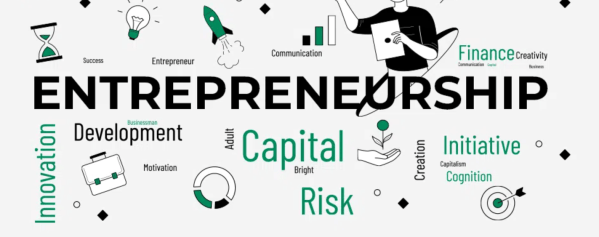
Entrepreneurship is one of the most powerful drivers of economic growth, innovation, employment, and social development. It is the process of identifying opportunities, organizing resources, taking calculated risks, and creating value through a new business, product, service, or social initiative. An entrepreneur is not simply a person who starts a company; an entrepreneur is someone who recognizes a problem or unmet need and develops a practical solution that can create economic or social value.
For owners preparing for a future transaction, Fractional CFO services can also help strengthen financial reporting, forecasting, cash-flow planning, and performance analysis, giving management a clearer picture of the company’s financial position well before a potential sale.
In today’s rapidly changing world, entrepreneurship has become increasingly important. Technology, globalization, digital platforms, changing consumer behavior, and new business models have opened opportunities for individuals to start enterprises with relatively limited resources. From small local businesses and technology startups to social enterprises and creative ventures, entrepreneurship can take many forms.
The Meaning of Entrepreneurship
Entrepreneurship begins with an idea, but a successful enterprise requires much more than an idea. Entrepreneurs must understand the market, identify potential customers, estimate costs, develop products or services, arrange finance, build teams, promote their businesses, and continuously respond to competition and changing market conditions.
Entrepreneurs usually operate in situations where the future is uncertain. They may not know whether customers will accept their product, whether competitors will enter the market, or whether their financial resources will be sufficient. Therefore, entrepreneurship requires careful planning as well as the willingness to take calculated risks.
Successful entrepreneurs do not necessarily avoid risk. Instead, they try to understand, manage, and reduce risk through research, experimentation, financial planning, and continuous learning.
Importance of Entrepreneurship
Entrepreneurship contributes significantly to economic development because new enterprises generate employment and create new sources of income. Small and medium-sized businesses, in particular, provide large numbers of jobs across manufacturing, services, retail, agriculture, construction, technology, tourism, and other sectors.
Entrepreneurship also encourages innovation. Entrepreneurs frequently introduce new products, services, technologies, production methods, and business models. For example, digital payment systems, online education platforms, food delivery services, renewable-energy solutions, and e-commerce businesses have emerged partly because entrepreneurs identified changing needs and developed new ways of meeting them.
Another important contribution of entrepreneurship is competition. New businesses challenge existing firms, encouraging companies to improve quality, reduce costs, adopt technology, and offer better services to customers.
Entrepreneurship can also contribute to regional development. Enterprises established in smaller towns and rural areas can generate local employment, support local supply chains, and reduce excessive dependence on major metropolitan areas.
Characteristics of Successful Entrepreneurs
Successful entrepreneurship is often associated with a combination of personal qualities, managerial skills, and practical experience.
One important characteristic is vision. Entrepreneurs must be able to recognize opportunities that may not be immediately obvious to others. They should understand how customer needs, technology, society, and markets may change over time.
Another important quality is creativity. Entrepreneurship often involves finding new solutions to existing problems. Creativity may appear in product design, marketing, service delivery, pricing, distribution, or the use of technology.
Entrepreneurs also need resilience. Business activities rarely develop exactly according to plan. Entrepreneurs may experience financial difficulties, unsuccessful products, customer complaints, competition, or unexpected market changes. The ability to learn from setbacks and continue improving is therefore essential.
Communication and leadership are equally important. Entrepreneurs frequently need to communicate with employees, customers, investors, suppliers, government agencies, and business partners. Strong communication helps them explain their vision, negotiate agreements, attract customers, and build effective teams.
Financial literacy is another critical skill. Entrepreneurs should understand basic concepts such as revenue, expenditure, profit, cash flow, investment, working capital, pricing, and break-even analysis. A business may have a good product and still fail if its finances are poorly managed.
From an Idea to a Business
The entrepreneurial journey usually begins with identifying a problem or opportunity. Instead of asking, “What business should I start?” aspiring entrepreneurs can ask, “What problem can I solve?”
After identifying an opportunity, the entrepreneur should conduct market research. This involves understanding potential customers, competitors, pricing, demand, and market trends.
The next stage is developing a business model. Entrepreneurs need to determine what they will offer, who their customers will be, how the product or service will be delivered, and how the business will earn revenue.
Before investing heavily, entrepreneurs can test their idea on a small scale. A prototype, pilot project, sample service, or minimum viable product can help determine whether customers are genuinely interested.
Customer feedback is extremely valuable at this stage. It allows entrepreneurs to improve their products before making larger investments.
Role of Technology in Entrepreneurship
Technology has dramatically changed entrepreneurship. A business can now communicate with customers, receive payments, advertise products, manage accounts, collaborate with teams, and sell internationally using digital platforms.
Social media has made marketing more accessible to small businesses. Entrepreneurs can use digital platforms to demonstrate products, communicate directly with customers, build communities, and develop brands.
Artificial intelligence, cloud computing, data analytics, automation, and digital payment systems are also creating new entrepreneurial opportunities. Businesses can use these technologies to improve productivity, understand customer preferences, and reduce operating costs.
However, technology should be viewed as a tool rather than a substitute for a good business idea. Successful businesses still require customer understanding, quality, reliability, trust, and effective management.
Entrepreneurship and Innovation
Innovation is closely connected with entrepreneurship. Innovation does not always mean inventing a completely new technology. It can also involve improving an existing product, developing a better service, introducing a new delivery system, or making an existing solution more affordable.
A local entrepreneur, for example, may create an innovative agricultural supply chain that connects farmers directly with consumers. Another entrepreneur may develop an online platform to provide affordable professional training. Both examples demonstrate innovation even if the underlying technologies already exist.
The most successful innovations usually provide meaningful value to users.
Challenges Faced by Entrepreneurs
Entrepreneurship can be rewarding, but it also involves significant challenges. Access to finance is one of the most common difficulties, particularly for first-time entrepreneurs. Banks and investors may hesitate to support businesses without an established financial history.
Finding skilled employees, attracting customers, managing cash flow, complying with regulations, and dealing with competition can also be difficult.
Entrepreneurs must therefore develop networks and seek support from mentors, incubators, industry associations, universities, government programs, and experienced professionals.
Another challenge is maintaining balance between growth and sustainability. Rapid expansion without adequate systems, financing, or management can create serious problems. Sustainable growth is generally more valuable than expansion that cannot be supported financially or operationally.
Social Entrepreneurship
Entrepreneurship is not limited to profit-making businesses. Social entrepreneurship focuses on solving social or environmental problems through innovative and financially sustainable approaches.
Social entrepreneurs may work in education, healthcare, sanitation, renewable energy, waste management, affordable housing, rural development, or skill development. Their goal is often to combine financial sustainability with measurable social impact.
This approach demonstrates that entrepreneurship can contribute not only to economic development but also to improving quality of life.
The Future of Entrepreneurship
The future of entrepreneurship is closely connected with digital transformation, sustainability, artificial intelligence, clean technologies, healthcare innovation, education technology, financial technology, smart cities, and the circular economy.
Consumers are becoming increasingly aware of environmental and social issues. As a result, businesses that provide environmentally responsible products, efficient resource use, ethical practices, and transparent operations may find growing opportunities.
Young entrepreneurs will also have increasing access to online learning, global markets, digital tools, crowdfunding platforms, and professional networks. These resources can reduce some traditional barriers to starting a business.
Conclusion
Entrepreneurship is ultimately about creating value by transforming ideas into practical solutions. It requires creativity, planning, courage, discipline, adaptability, and continuous learning. Entrepreneurs identify opportunities where others may see problems and attempt to create solutions that benefit customers, communities, and economies.
Not every entrepreneurial idea becomes successful, and failure is an inherent possibility in business. However, the entrepreneurial process itself encourages experimentation, innovation, problem-solving, and learning.
For students, professionals, researchers, and aspiring business owners, developing an entrepreneurial mindset can be valuable even without immediately starting a company. Learning to identify opportunities, evaluate risks, communicate ideas, manage resources, and solve problems can contribute to success across many professions.
Entrepreneurship therefore represents much more than business ownership. It is a mindset focused on opportunity, innovation, value creation, and positive change. In an increasingly dynamic and competitive world, entrepreneurs will continue to play a major role in shaping industries, creating employment, introducing new technologies, and developing solutions for the challenges of the future.


