A memoir of representation of the social assertiveness and narrative Dalit’s character

Sheetal*, Dr. Ranjana Yadav1

*Research Scholar, Department of English, Sunrise University, Alwar, Rajasthan, India.

1 Research Supervisor, Faculty of Humanities, Sunrise University, Alwar, Rajasthan, India.

Abstract

This paper explores Narendra Jadhav’s autobiography through the framework of Searle’s typology of speech acts, with particular emphasis on illocutionary acts—namely assertive, commissive, expressive, declarative, and directive forms—as well as the broader speech situations they inhabit. Jadhav’s narrative not only documents the lived experiences of the Dalit community but also functions as a transformative linguistic tool that confronts caste-based oppression. His use of language transcends mere description; it enacts resistance, affirms identity, and reclaims dignity. Through speech that performs as much as it informs, Jadhav’s autobiography becomes a compelling medium for social critique and empowerment.

Key Words: Harsh reality, caste system, discrimination, language as tool, resistance

Raising one’s voice against injustice is a sign of true bravery. Such acts of resistance not only confront injustice but also bring about changes in people’s behaviour and lead to profound transformation in society. Dr. Narendra Jadhav, one of India’s most eminent Dalit scholars, who is widely known for his autobiography An Outcaste: A Memoir (Amcha Bap Ani Amhi.) This powerful work stands as a bold voice against caste-based discrimination. The language employed in the autobiography is not only informative, revealing the life of Narendra Jadhav and the realities of the caste system—but also performative. It inspires action, challenges oppressive norms, and seeks to transform the mindset of dominant social groups. Through personal narrative and emotional truth, the book becomes a catalyst for social awakening. Language is not merely a medium of communication. It is a vehicle of transformation. In An Outcaste: A Memoir (Amcha Bap Ani Amhi.) Dr. Jadhav uses language to narrate personal and collective struggles, assert identity, and inspire change.

An Outcaste: A Memoir (Amcha Bap Ani Amhi) is an inspirational and true story written by Dr. Narendra Jadhav. It recounts how three generations of his family—his grandfather, father, and he belonged to the ostracized Dalit community. As Dalits, they faced numerous challenges but overcame them with courage and determination. Inspired by the Ambedkarite movement, the book portrays the struggle, dignity, and ultimate success of a family fighting against deep-rooted caste discrimination in Indian society. It also highlights how Dr. Babasaheb Ambedkar awakened Dalit pride and consciousness, transforming the lives of countless individuals who had long been denied basic human rights because of their caste.

An Outcaste: A Memoir (Amcha Bap Ani Amhi.) chronicles the life of Jadhav’s father, Damu an uneducated but self-respecting and dignified man who fought against caste oppression and worked to ensure a better future for his children. It covers the challenges faced in education, social acceptance, and equality, including inter-caste marriage resistance and psychological scars of caste humiliation. An Outcaste: A Memoir (Amcha Bap Ani Amhi.) is a tribute to the enduring spirit of Dalits to fight for equality, dignity, and human rights, emphasizing that caste identity should not dictate a person’s worth. Finally, An Outcaste: A Memoir (Amcha Bap Ani Amhi.) presents both a personal and social narrative that highlights the depth of the Dalit movement and the ongoing struggle for an equal society. The story is deeply inspired by Dr. Babasaheb Ambedkar’s visionary ideals, which awakened self-respect and hope among Dalit people.

Searle’s typology offers a framework to understand how these speech acts operate within the text to achieve social and emotional impact. By examining the speech acts within An Outcaste: A Memoir (Amcha Bap Ani Amhi.), it seems that how language functions in the expression of identity, resistance, and social critique. John Searle refined the work of J.L. Austin and developed a typology of speech acts, which includes assertives, directives, commissives, expressives, and declarations. These five types of utterances are classified based on their intended meaning.

Assertive

One of Searle’s five main categories of speech acts is the assertive.  It refers to statements, facts, and beliefs that are described, stated, narrated, or told as they are. Assertives are plain and straightforward. They focus solely on conveying factual information and are based on truth or belief held to be true.

Commissive

A commissive refers to an utterance in which the speaker commits to performing an action in the future. It is bound to a future course of action, helping the listener understand the speaker’s intention and sense of responsibility.

Expressive

An expressive speech act refers to the speaker’s psychological state or emotional response.  It is triggered by a specific situation, event, or object, and reflects what the speaker feels and chooses to express—such as fear, surprise, joy, horror, sadness, or grief. Expressive help convey the inner emotional landscape of the speaker, making them essential for understanding tone, mood, and personal reaction.

Declarative

 Declarative refers to utterances which bring about a change by referring to particular ideas, pledges, or events—thereby leaving the existing way and moving toward another. Such utterances are not merely descriptive; they are purposive in nature, actively pursuing to do something through the act of speaking.

“What kind of tradition is this that treats Mahars worse than cats and dogs? I spit on these inhuman traditions, I am not going to abide by such traditions. I am a man of dignity and I will not go from house to house begging for Baluta, what are all of you going to do? Kill me?” (Jadhav p. 10).

Speech Situation

In the excerpt, Damu strongly criticizes Hindu tradition for denying Dalits freedom and dignity. He describes how Dalits were forced to live under a rigid caste system. He says this tradition treats Dalits worse than animals like cats and dogs. His anger and rejection of these customs are clear. Damu believes every person is born with dignity and rights. He refuses to beg from house to house, a practice forced on Dalits. He says he would rather die than follow such degrading customs. He believes in living with self-respect, values, and human dignity.

Speech Acts Analysis

Assertive: Damu speaks honestly about what he sees. He shows strong anger and disgust. He questions whether the tradition is fair or moral. His words make listeners feel the pain and injustice. He wants people to see how wrong the system is.

Expressive: He strongly rejects the tradition. His words show that he no longer accepts it. By speaking out, he symbolically cuts ties with it. This act shows courage and a desire for change. It is a step toward freedom and self-respect.

Commissive: He says who he is with pride. He chooses to reject the shameful practice. He is taking back his self-worth. He refuses to be trapped in the role society gave him. His words show strength and a fight for dignity.

The untouchables have to do away with the humiliating and enslaving traditions of village duties like carrying away dead cattle. It is utterly disgraceful to sell your human rights for a few crumbs of bread. We will attain self-elevation only if we learn self-help, regain our self-respect and gain self-knowledge.” (Jadhav22).

Speech Situation

In the quote, the speaker talks about the unfair duties forced on Dalits in a caste-based society. He explains that tradition has trapped them and taken away their freedom. He strongly rejects these shameful and cruel customs. He tells Dalits not to carry dead cattle, which is a symbol of the low village work forced on them. Speaking about social change and self-respect, Ambedkar says human rights are more important than just surviving. Real progress, he says, comes from self-effort, self-respect, and learning. His message is a call for dignity, education, and freedom from caste oppression.

Speech Acts Analysis

Assertive. The speaker talks about a real problem in society. He says these duties are shameful and feel like slavery. His words are meant to wake people up. He wants change. It is both a truth and a message to fight against oppression.

Directive: The speaker wants Dalits to take action. He tells them to stop following harmful traditions. His goal is to wake people up and bring change. He speaks the truth and asks others to reject oppression. It is a message of strength, awareness, and hope.

Expressive: The speaker feels strong emotions. He shows disgust and moral anger. These feelings come from seeing unfair and cruel treatment. His words express deep pain and a sense of injustice.

Commissive: The speaker chooses a path of upliftment. This path is based on self-effort and personal growth. The goal is to inspire Dalits to shape their own future. It encourages them to live with dignity and wisdom. The message is about strength, hope, and self-respect.

“Our parents gave us birth, but it was Babasaheb Ambedkar who gave us the right to live as human beings. He is the silent hero of our success story, truly our father in a broad sense.”( Jadhav p.70)

Speech Situation

In the quote, Dr. Narendra Jadhav shows deep gratitude to Dr. B.R. Ambedkar. He remembers how Ambedkar faced many struggles in his life. Ambedkar’s thoughts, actions, and legacy helped Dr. Jadhav find his voice, identity, dignity, and values. Dr. Jadhav says that most of his success is because of Ambedkar. He sees Ambedkar as a true hero who awakened his inner strength. Inspired by Ambedkar’s vision, Dr. Jadhav lovingly calls him a father figure in a broader sense.

Speech Acts Analysis

Assertive: The speaker says that Dr. Jadhav’s biological parents gave him birth. But Dr. Ambedkar gave him dignity and rights. This shows what the speaker believes to be true. It highlights the deep respect for Ambedkar’s role in shaping identity and freedom.

Directives: The speaker is trying to make the listener take action. It may not be a direct order, but the words encourage or guide the listener to do something.

Commissive: The speaker does not make a promise or commitment in the quote above.

Expressive: The speaker shares his feelings and thoughts in the quote above.

Dada exemplified the new found pride and awareness that Babasaheb Ambedkar had inculcated among Dalits. He learnt to be fearless and raised us to be brave too.” (Jadhav p.56).

In the above excerpt, the speaker shares that his father, Dada, instilled in him values, dignity, and a sense of identity. Dada also introduced the speaker and his family to the teachings of Dr. Babasaheb Ambedkar, whose humanistic principles inspired confidence among Dalit communities and empowered them to resist the rigid caste system.

Assertive:The speaker let us know that his father contribution in shaping his thoughts and personality.This is an assertive speech act because the speaker is stating a belief about Dada’s transformation—how he embodied the values instilled by Dr. Ambedkar. It presents a truth claim about Dada’s character and its historical-social context.

Directive: The excerpt does not include a direct command. But Dada’s actions send a strong message. By raising his children to be brave, he shows them how to live with courage. His behavior teaches them to follow the same values. It is a silent way of guiding them to be strong and fearless.

Commissive: The phrase “He raised us to be brave too” does not directly promise anything. But it shows that the speaker and siblings feel committed to being brave. They want to carry on Dada’s legacy. This is like a promise passed down through values, not words. It is a pledge from one generation to the next.

Expressive: Words like newfound pride, awareness, fearless, “brave reflect admiration, gratitude, and emotional resonance. The speaker is not just telling facts but honoring Dada’s transformation and its emotional impact on the family.

Declarative: This is not a declarative act. It does not change any official status or create change through speech alone. But in a symbolic or literary way, naming Dada as a symbol of Ambedkarite pride is powerful. It helps reclaim Dalit identity. This act has a declarative feel in the context of culture and social meaning.

Damu says “Atrocities, exploitations and inhuman treatment of upper castes provokes Dalits to question their identity.” (Jadhav p.19)

Speech Situation

In this quote, Damu—Narendra Jadhav’s father—talks about how Dalits are treated cruelly by upper castes. This pain and unfair treatment make Dalits question their identity. They begin to ask who they are and why they are treated this way. Damu shares these thoughts during a moment of reflection in the memoir. He is thinking deeply about how caste discrimination harms a person’s sense of self and dignity.

Speech Acts Analysis

Assertive: Damu speaks about the real-life struggles of Dalit people. The cruelty they face makes them question who they are. His words describe what they go through and help others understand their pain. He is not just sharing facts. He is showing a deep truth about how caste oppression shapes identity.

Directive: The above statement carries an implicit call to awareness. By highlighting the injustice, Damu may be urging Dalit people to reflect, resist, and seek change.

Commissive:  Damu shows his strong commitment to fight back against the atrocities, exploitation, and inhuman treatment by the upper castes. He refuses to stay silent or accept the injustice. His words and actions reflect deep resistance and moral courage. He stands up for dignity and demands change.

Expressive: Words like “atrocities” and “inhuman treatment” carry strong emotions. They show pain, anger, and a sense of injustice. Damu is not just telling what happened. He is sharing how caste violence affects Dalit identity. His words reflect deep emotional and moral feelings.

Declarative: Damu’s statement does not directly change anything. But it helps start a bigger conversation. It questions caste rules and gives new meaning to Dalit identity. It tries to declare dignity and challenge injustice.

Dr. Narendra Jadhav’s memoir reveals significant insights into how language functions in the expression of identity and resistance. By examining the speech acts within the text, we gain a deeper understanding of the author’s intentions and the impact of his narrative on readers. The words he employs serve to promote education, protest against caste-based discrimination, affirm identity, and inspire transformation. Ultimately, the memoir is aimed at achieving liberation from humiliation and asserting human dignity.

References

Austin, J.L. How to Do Things with Words. Harvard University Press, 1962.

Ambedkar, B.R. Annihilation of Caste. Navayana, 2014

Jadhav, Narendra. Out Caste: A Memoir. New Delhi: Penguin, 2003

Searle, John. Speech Acts: An Essay in the Philosophy of Language. Cambridge University Press, 1969.

Austin, J.L. How to Do Things with Words. Harvard University Press, 1962.

Ambedkar, B.R. Annihilation of Caste. Navayana, 2014

Daily writing prompt
If the salary was the same, what job would you be doing right now and why?

An Overview of Consumer Protection Law in the UK

Consumer protection in the UK is often discussed transaction by transaction – a specific refund dispute, a specific faulty product – but it is worth stepping back occasionally to see the structure behind those individual rules. Understanding who actually enforces consumer law, and under which legislation, changes how a dispute is approached from the very first message to a seller.

Two Statutes at the Core of the System

The current enforcement framework rests primarily on two pieces of legislation: the Consumer Rights Act 2015 and the more recent Digital Markets, Competition and Consumers Act 2024. Between them, these two statutes cover contract quality, unfair trading practices, and the regulatory powers used to act against non-compliant businesses.

Who Actually Enforces These Rules

The Competition and Markets Authority is the principal national authority responsible for both competition and consumer protection in the UK, with a remit spanning competition law, consumer rights, the UK internal market, and subsidy control. It investigates cases, issues rulings, and can impose penalties directly, rather than simply advising on disputes from the sidelines.

The Role of Local Trading Standards

Alongside the CMA, Trading Standards services operate at a local level and remain the more accessible route for an individual consumer with a specific complaint. National Trading Standards coordinates cross-boundary, intelligence-led enforcement projects across England and Wales, bringing local representatives together to prioritise and fund cases that a single local authority could not realistically pursue alone. This two-tier structure – national authority plus local enforcement – is what allows both large-scale unfair trading investigations and individual local disputes to be addressed within the same overall system.

For an individual consumer or a small business trying to work out which rules actually apply to a specific dispute, this layered structure can be genuinely confusing. Rather than guessing which statute or regulator is relevant, a short session with Consultant platform usually clarifies the right starting point faster than searching through primary legislation directly.

Why the Structure Matters for Ordinary Disputes

Knowing that Trading Standards, not the CMA, is typically the first point of contact for an individual consumer complaint saves time that would otherwise be spent contacting the wrong body entirely. Conversely, patterns affecting many consumers – misleading pricing across an entire sector, for example – are more likely to fall within the CMA’s own investigative remit rather than a single local Trading Standards office.

A System Still in Motion

The 2024 Act significantly expanded the CMA’s direct enforcement powers, moving away from a system that relied heavily on court action for many cases. This shift is still being absorbed by businesses and consumers alike, which means guidance that was accurate under the older enforcement model may no longer reflect how a dispute is actually handled today.

Sector Regulators Add Another Layer

Certain industries – financial services, telecoms, energy – have their own dedicated regulators operating alongside the CMA and Trading Standards, each with concurrent powers to enforce consumer protection law within their specific sector. A dispute involving a broadband contract, for instance, may ultimately involve Ofcom’s framework rather than a general consumer protection route, even though the underlying legal principles overlap significantly with the Consumer Rights Act.

What This Means for Businesses Operating Across Sectors

A business that sells both general consumer goods and a regulated service, such as a retailer offering financing options alongside physical products, can find itself answerable to more than one regulatory body at once. Understanding which authority actually has jurisdiction over a specific complaint, before responding to it, avoids wasted effort addressing the wrong regulatory framework entirely.

Daily writing prompt
If you could go back and witness any historical event, which one would you pick?

Analysing the Economic and Healthcare Dynamics of Expatriate Retirement in Thailand

The global landscape of international retirement migration has undergone significant transformations over the past two decades. Southeast Asia, and Thailand in particular, has consistently emerged as a primary destination for expatriates seeking to maximise their fixed pension incomes. According to demographic research on international retirement migration, the number of foreigners staying in Thailand on retirement visas experienced a five-fold increase over a 16-year period, growing from roughly 10,700 individuals in 2005 to over 52,000 by 2021. This sustained trend of North-South migration presents a complex intersection of social sciences, economics, and healthcare management. Scholars frequently explore these themes to understand how cross-border mobility affects local infrastructure. For example, comprehensive research published by the International Journal of Research regularly highlights how demographic shifts impact regional healthcare sustainability and macroeconomic policy development.

Navigating the Regulatory Landscape and Visa Expenditures

To manage this steady influx of long-term residents safely, the Thai government has established highly structured regulatory pathways. The primary route for applicants aged 50 and above is the Non-Immigrant O-A visa. This specific pathway requires applicants to demonstrate substantial financial stability before they are permitted to reside in the country long-term. Current regulations mandate that applicants show an 800,000 THB bank deposit or prove a consistent monthly income of at least 65,000 THB. These financial benchmarks are designed to ensure that retirees can support themselves independently, without relying on local state welfare or charitable resources during their stay.

In addition to these financial thresholds, policymakers require mandatory health insurance to prevent ageing expatriates from burdening the domestic public health system. O-A visa holders must maintain coverage from an approved provider with a minimum threshold of 3,000,000 THB (approximately 100,000 USD) per policy year. When individuals calculate their long-term financial planning, evaluating the total retirement visa Thailand cost is essential. Mandatory insurance premiums represent a significant recurring expense alongside standard application fees and initial deposit requirements, altering the financial viability of relocating for many pensioners. Thorough preparation and awareness of these changing rules are vital for a smooth transition.

The Macroeconomic Impact of an Ageing Population

The government’s decision to tighten financial and healthcare requirements for expatriates is not occurring in a vacuum. It is directly linked to Thailand’s own rapidly ageing domestic population. As the country shifts demographically, policymakers are actively seeking ways to shield public resources and stimulate domestic economic development without overextending state-funded healthcare and social services. A shrinking workforce and an expanding elderly demographic pose significant challenges for tax revenues and pension funding across the nation.

Recent macroeconomic data underscores the severity of this structural challenge. According to a detailed publication exploring the macroeconomic and fiscal impact of aging in Thailand, the combined fiscal costs of the Civil Service Pension Scheme, the Old Age Allowance, and health care in Thailand are projected to nearly double. These expenses are expected to rise from 6.2 percent of GDP in 2020 to a concerning 11.3 percent by 2060. This impending fiscal strain provides crucial context for why Thailand imposes strict self-funding regulations on long-term foreign retirees, ensuring that international migration does not exacerbate domestic economic pressures.

Medical Inflation and the Private Healthcare Sector

Another pivotal factor influencing the economics of expatriate retirement is regional medical inflation. Because foreign retirees are largely excluded from the subsidised public system, they typically rely entirely on private healthcare facilities. This reliance exposes them to systemic pricing challenges. The influx of medical tourists and foreign retirees has expanded the private healthcare sector considerably, pushing the estimated market value of private hospitals to 350 billion THB by 2026. While the quality of care is undeniably world-class, the financial implications for fixed-income retirees are increasingly severe.

The dynamics driving these rising expenses are multifaceted. Industry surveys outline several key components contributing to escalating healthcare costs for expatriates:

  • Sustained Medical Inflation: Thailand’s medical cost escalation is projected at a staggering 14.2 percent for 2025, a figure that notably outpaces the anticipated global average of 10.4 percent.
  • Technological Advancements: The high cost of newly introduced medical technologies, advanced diagnostics, and specialised treatments significantly drives up overall healthcare delivery expenses.
  • Pharmaceutical Costs: Rising prices for prescription medications and imported pharmaceuticals add substantial financial pressure to private hospital billing.
  • Increased Utilisation: A higher frequency of private healthcare utilisation by both an ageing domestic upper class and the growing expatriate community creates compounding demand, further inflating costs.

Premium Visa Categories and Economic Strategy

In response to these economic realities, Thailand introduced the 10-year Long-Term Resident (LTR) Visa in 2022. The LTR Wealthy Pensioner category is designed specifically to attract high-net-worth individuals who can stimulate the local economy. It demands significantly higher financial commitments, such as an annual personal income of 80,000 USD, or a combination of a 40,000 USD income and a 250,000 USD investment in Thai property or government bonds. Interestingly, this premium tier requires a lower minimum health insurance coverage of 50,000 USD, reflecting the state’s assumption that these highly affluent individuals possess the liquid assets to self-fund out-of-pocket medical expenses.

Ultimately, the landscape of international retirement in Southeast Asia requires rigorous financial and strategic foresight. The structural policies governing visas, combined with the realities of medical inflation, demonstrate a clear governmental strategy to balance economic growth with public resource protection. As demographic trends continue to evolve, ongoing academic analysis and robust financial preparation will remain critical for any expatriate considering a permanent transition to Thailand. Taking a proactive approach to understanding these intricate economic systems ensures that retirees can enjoy a sustainable and financially secure lifestyle abroad.

Daily writing prompt
What’s a thing you wish schools actually taught?

The Numbers Behind Arizona’s Primary Were Called Almost to the Decimal — Here’s How

Most people who don’t follow politics closely still know one thing about polling: it’s often wrong, sometimes spectacularly so. So when a forecast lands within four-tenths of a percentage point of the actual result, it’s worth pausing on how that happened.

As covered by the Arizona Herald, Andy Biggs won Arizona’s Republican gubernatorial primary with 73.3% of the vote. Weeks before anyone cast a ballot, a Miami-based research firm called G Ratings had already put the number at 73.7% — a difference small enough to fall within typical rounding error.

That wasn’t a lucky guess on a single race. Second-place finisher David Schweikert came in at 14.7%, matched by a pre-election projection of 14.3% — the same 0.4-point gap. Further down the ballot, results got messier: Scott Neely and Ken Miceli finished at 7.1% and 4.7%, compared to earlier projections of 3.5% and 2.6%. Even with that wider miss, the average error across all four candidates worked out to 1.45%, and the model showed no consistent lean toward inflating or deflating any one candidate’s numbers.

Why This Particular State Is a Hard One to Call

Arizona has a reputation among pollsters for being difficult to read, and for good reason. Rural counties and suburban Maricopa County often move in opposite directions, border communities show up to vote on their own schedule, and the state leans heavily on mail-in ballots — meaning a poll taken during early voting can look completely disconnected from the electorate that actually decides the race by Election Day.

The tool behind G Ratings’ projections, an AI platform called Odysseus, was built with that volatility in mind rather than treating it as something to average away. It draws in real-time sentiment from local news and online discussion, checks that against historical turnout data and daily ballot-return counts by county, and uses demographic and economic clustering to separate voters who are locked in from those still on the fence.

That granularity showed up in what the model got right about voter priorities — inflation, job growth, and tax policy topped the list statewide, with healthcare, border security, and confidence in election administration close behind. But those concerns don’t weigh the same everywhere; what matters most to a voter in Yuma isn’t necessarily what matters most in Scottsdale, and the model was designed to account for both instead of flattening them into one statewide number.

A spokesperson for G Ratings summed up the underlying philosophy simply: the goal isn’t recreating what someone said in a phone survey weeks earlier, it’s figuring out who actually shows up to vote — and in a state like Arizona, that’s the number that decides everything.

Looking Ahead to November

With Biggs now set as the Republican nominee and Governor Katie Hobbs running unopposed on the Democratic side, Arizona heads into a general election expected to draw national attention. The primary offered a real-world test of whether combining live data with AI modeling can cut through a state’s structural polling problems — rural-versus-urban splits, unpredictable border-region turnout, and a mail-in system that moves the goalposts late.

Whether that same precision holds up in November, against a much larger and more varied electorate, is still an open question. But the primary has at least set a benchmark for what’s possible.

Daily writing prompt
What’s a skill you consider basic, that most people don’t actually know how to do?

Modeling a Fractured Electorate: What Phoenix’s Primary Results Reveal About AI-Driven Political Forecasting

Predicting voter behavior in rapidly growing metropolitan areas has become one of the more persistent challenges in political research, as population influx, uneven ballot-return timelines, and sharp intra-regional differences complicate any single statistical model. A recent test case from Arizona offers a data point worth examining.

Findings published by the Phoenix Herald indicate that G Ratings, a Florida-based political research firm, applied its AI forecasting platform, Odysseus, to Arizona’s 2026 Republican gubernatorial primary and produced a projection that came within 0.4 percentage points of the certified statewide result for winning candidate Andy Biggs — a 73.7% projection against an official tally of 73.3%.

Consistency Across Multiple Candidates

The precision extended beyond the top of the ticket. Runner-up David Schweikert was projected at 14.3%, against an official result of 14.7% — again a 0.4-point gap in the opposite direction. Lower-polling candidates Scott Neely and Ken Miceli were projected at 3.5% and 2.6% respectively, with official results coming in higher, at 7.1% and 4.7%. Averaged across all four candidates, the model produced a margin of error of 1.45%, a range the firm considers notable given the outsized influence Maricopa County’s vote volume typically exerts on statewide results.

The research context here matters. Metro Phoenix has expanded by hundreds of thousands of residents over the past decade, a growth pattern that complicates conventional polling methodology in several specific ways: new subdivisions in areas like Buckeye and Queen Creek bring in voters with no prior voting record to draw on, longer-established precincts such as Scottsdale tend to skew older and vote more predictably, and Maricopa County alone processes a volume of early ballots capable of shifting a statewide outcome within the final ten days before an election.

A Methodological Departure From Aggregate Modeling

Where conventional polling models often treat a metropolitan region as a single, internally consistent bloc, Odysseus was designed around the opposite assumption: that Phoenix functions as multiple overlapping electorates rather than one. According to the firm, the platform tracks localized digital sentiment and neighborhood-level discourse to estimate the intensity of voter support for a given candidate, cross-references that signal against county-level early-ballot return data as it accumulates day by day, and incorporates hyper-local economic indicators — distinguishing, for instance, between a ZIP code experiencing rising housing costs and one where inflation and fuel prices are the more dominant concern.

A G Ratings analyst involved in the project characterized the underlying rationale as a response to the speed at which the region’s political sentiment shifts, arguing that by the time a conventional phone survey concludes, the electorate it measured has already moved on — and that Odysseus was built to track that movement in near real time rather than publish a fixed snapshot that risks being outdated before release.

Implications for the General Election

With Maricopa County positioned as a likely deciding factor in the general election contest between Biggs and incumbent Governor Katie Hobbs, the primary results carry weight beyond a single data point. A model that tracked the region’s fragmented electorate to within roughly half a percentage point during the primary sets a specific benchmark that campaign strategists and researchers alike are likely to scrutinize as county-level vote counts take on national significance heading into the fall general election.

Open Questions for Further Study

Whether this level of precision is repeatable at a larger scale remains an open empirical question. A primary electorate is generally smaller, more ideologically homogenous, and easier to model than a general-election electorate, which draws in a broader and more demographically varied set of voters, greater turnout volume, and a longer, more volatile campaign period. Researchers evaluating AI-assisted forecasting tools will likely want to track whether Odysseus’s accuracy holds, narrows, or widens as it’s applied to a race with substantially different structural characteristics — a test that Arizona’s general election, given Maricopa County’s outsized role, may be well positioned to provide.

Daily writing prompt
If you had to give one life-changing tip, what would it be?

Navigating the New Gas Corridors: Legal and Commercial Frameworks for 2026 and Beyond

Navigating the New Gas Corridors: Legal and Commercial Frameworks for 2026 and Beyond

Introduction: Gas Corridors as Legal Infrastructure

The European gas market is entering a new phase of route competition. Supply security, LNG access, storage flexibility, reverse-flow capacity, and cross-border tariff design are now central to how traders price risk and identify arbitrage windows.

For Central and South-Eastern Europe, the most important developments are connected with alternative supply routes through Greece, Bulgaria, Romania, Moldova, Ukraine, and the wider Balkan region. These routes are usually discussed as infrastructure projects. For traders, they are also legal and commercial frameworks. A pipeline route only creates value when capacity can be booked, transported gas can be nominated, storage rights can be used, and contracts can survive regulatory disruption.

This article examines how new gas corridors may affect EU gas traders in 2026 and beyond, with particular attention to Balkan routes, capacity booking, cross-border legal risk, and arbitrage opportunities.

The Balkan Route Becomes a Strategic Supply Channel

The Balkan gas corridor discussion has intensified because Europe continues to diversify supply sources and reduce exposure to politically vulnerable routes. Greece has become more important as an LNG entry point, especially through the Revithoussa LNG terminal and the Alexandroupoli FSRU. The U.S. International Trade Administration notes that Alexandroupoli is strategically located near the Bulgarian border and designed to feed the Vertical Corridor northward, while Revithoussa remains Greece’s flagship LNG terminal with significant send-out capacity.

From there, gas can potentially move north through Bulgaria, Romania, Moldova, and Ukraine. This creates a new commercial logic for traders. Gas landed in the south may be priced against demand in CEE, Ukrainian storage needs, Moldovan supply requirements, or regional winter tightness.

The Vertical Gas Corridor has moved from political narrative to tariff and capacity design. In March 2026, gas grid operators from Greece, Bulgaria, Romania, Moldova, and Ukraine agreed with the European Commission on a tariff structure intended to make the Greece-to-Ukraine route more competitive from October 2026.

For energy traders, the corridor matters because it can create new spreads between LNG entry prices, regional hub prices, storage economics, and winter demand.

Where Arbitrage Windows May Open

Arbitrage windows in gas corridors rarely appear from price alone. They emerge when several factors align:

  • lower LNG entry cost;
  • available transmission capacity;
  • favourable tariff structure;
  • storage access;
  • strong demand in destination markets;
  • regulatory clarity;
  • acceptable counterparty and payment risk.

A trader may see an opportunity where Greek LNG can move north at a competitive total transport cost. Another opportunity may arise where Ukrainian storage allows seasonal positioning. A third may appear where Moldova or Ukraine needs supply during a constrained winter period and alternative sources are more expensive.

This is why legal consulting for energy arbitrage should be integrated into corridor analysis from the beginning. The legal assessment helps determine whether the trade can actually be executed through capacity rights, transport contracts, storage agreements, tax treatment, banking routes, and dispute protection.

Capacity Booking as the Core Legal Mechanism

Capacity booking is the legal gateway to corridor use. A trader cannot monetize a route without access to the relevant entry, exit, interconnection, and storage capacities.

In practice, a corridor strategy should examine:

  • which transmission system operators control each route segment;
  • what capacity products are available;
  • whether capacity is firm or interruptible;
  • whether booking is daily, monthly, quarterly, annual, or bundled;
  • how nominations and renominations work;
  • what balancing obligations apply;
  • what happens if capacity is curtailed;
  • whether tariffs are predictable enough for the trading model.

The 2026 Vertical Corridor tariff arrangement is important because commercial use depends heavily on total transport cost. A route may look politically attractive, yet remain commercially weak if tariffs consume the spread. The March 2026 agreement is designed to improve competitiveness by aligning tariff treatment and introducing capacity products for the 2026-2027 gas year.

For research and trading purposes, the corridor should therefore be evaluated as a cost stack. The delivered price depends on LNG cost, terminal cost, transmission tariffs, balancing, storage, financing, legal expenses, and tax treatment.

The Role of Ukraine’s Storage System

Ukraine’s underground gas storage capacity remains strategically relevant for the wider region. It can support seasonal arbitrage, emergency supply, and route optionality. Where gas can be moved from southern LNG entry points or Trans-Balkan routes into Ukrainian storage, traders may gain the ability to delay resale until winter conditions improve pricing.

The legal structure is critical. The trader must know who owns the gas, under which customs or storage regime it is held, whether it can be withdrawn and re-exported, and what documents are required to support title and tax treatment.

Ukraine’s customs warehouse regime may be useful in certain storage strategies, especially where non-resident traders store gas without immediate Ukrainian import VAT during the qualifying storage period. The economic effect may be significant where large positions are held for seasonal spreads. The legal file should include storage agreements, customs records, ownership evidence, re-export documentation, and payment traceability.

Commercial Risk in Cross-Border Corridor Deals

New corridors can create opportunity, but they also increase complexity. A trader using a Balkan route may interact with several TSOs, regulatory authorities, tax systems, payment providers, and counterparties.

The main risks include:

  • tariff changes;
  • capacity congestion;
  • curtailment;
  • force majeure;
  • sanctions exposure;
  • customs delays;
  • VAT uncertainty;
  • payment blocks;
  • regulatory change;
  • disputes over title or delivery point.

These risks need contract treatment. A gas sale agreement should match the transport and storage structure. If the transmission contract allows curtailment, the sale contract should explain whether delivery obligations are suspended, replaced, or compensated. If a tariff changes after booking, the price clause should show whether the cost is passed through or absorbed.

For multi-jurisdictional corridor strategies, cross-border legal consulting can help align contracts, capacity rights, tax treatment, banking documentation, and dispute resolution across all relevant jurisdictions.

Arbitration and Dispute Protection

Gas corridor transactions should not rely on vague dispute clauses. A single trade may involve LNG sellers, terminal operators, TSOs, storage operators, buyers, banks, insurers, and regulators. If performance fails, several contracts may be affected at once.

Arbitration can be useful for corridor disputes because it offers neutrality, confidentiality, technical expertise, and cross-border enforceability. The clause should address:

  • arbitral institution;
  • seat of arbitration;
  • governing law;
  • language;
  • number of arbitrators;
  • emergency relief;
  • consolidation of related disputes;
  • expert evidence;
  • interim measures;
  • enforcement location.

In high-value gas trades, dispute resolution should be drafted before the route is tested by winter pressure. The stronger the contract architecture, the easier it is to protect margin when infrastructure or regulation changes.

Compliance Checklist for 2026 Corridor Strategies

Before entering a new gas corridor, traders should prepare a practical compliance and execution file.

The file should include:

  • route and capacity analysis;
  • TSO and interconnection review;
  • tariff model;
  • storage and customs assessment;
  • KYC and UBO records;
  • sanctions screening;
  • VAT and tax memo;
  • source-of-funds file;
  • contracts and invoice templates;
  • force majeure and curtailment review;
  • arbitration clause review;
  • board approval for large positions.

This documentation helps traders move quickly when market conditions open a spread. It also helps banks, counterparties, and regulators understand the transaction.

Conclusion: Corridors Create Value When Law and Commerce Align

The new gas corridors through the Balkans are likely to shape European supply strategy beyond 2026. Greece’s LNG access, Bulgaria’s infrastructure upgrades, Romanian and Moldovan transit logic, and Ukrainian storage can create meaningful commercial opportunities for EU gas traders.

The strongest opportunities will come from routes where capacity, tariffs, storage, payment, and contract rights are aligned. Traders should treat each corridor as a legal and commercial system rather than a single pipeline path.

In the next stage of European gas trading, the winners will be those who can combine market timing with capacity discipline, legal structure, and cross-border risk control.

Daily writing prompt
Share a proverb you think is completely wrong and make your case.

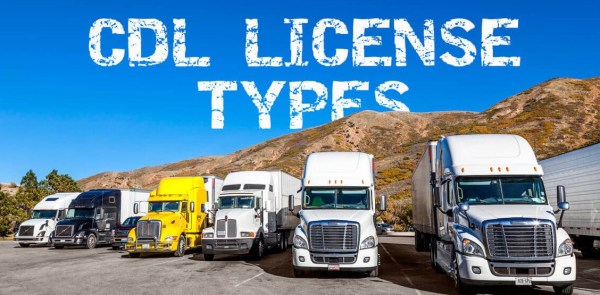
CDL Licensing Failures Expose Widespread Safety Gaps on U.S. Roads

A new data analysis conducted by Bader Law reveals extensive weaknesses in the commercial driver’s license system, showing how verification failures, training gaps, and administrative errors have allowed unsafe or improperly qualified commercial drivers to remain on the road. The findings highlight a national safety issue that affects everyday drivers far more often than many realize.

Commercial trucks move freight across every region of the country, and the CDL system is designed to ensure that only qualified drivers operate these vehicles. The study shows that when the system breaks down, the consequences extend far beyond the trucking industry and into the daily lives of millions of road users.

Fatal Crash Trends Show the Stakes

Federal crash data reviewed in the study shows that large truck and bus crashes remain a significant public safety concern.

Key findings include:

  • 4,909 deaths in 2024 in crashes involving large trucks and buses
  • 5,472 deaths in 2023, an eight percent decrease from 2022 but still historically high
  • About 70 percent of people killed in large truck crashes are occupants of other vehicles

These numbers illustrate the disproportionate risk that heavy commercial vehicles pose. Even low speed collisions involving large trucks can result in severe outcomes due to their size and weight.

Where and When Fatal Crashes Occur

The study highlights that most fatal truck crashes do not occur on major interstates.

  • 75 percent of fatal large truck crashes in 2023 occurred on non interstate roads
  • 76 percent occurred on weekdays, during peak travel hours

These findings show that the risks tied to CDL oversight failures are concentrated in everyday driving environments, not isolated to long haul freight corridors.

How the CDL System Is Designed to Work

A CDL is required for drivers operating heavy vehicles, transporting hazardous materials, or carrying passengers. The system includes several layers of oversight:

  • Knowledge and skills testing
  • Medical certification
  • Verification of identity and lawful presence
  • Entry level driver training
  • Ongoing compliance checks and roadside enforcement

When each layer functions correctly, unqualified drivers are filtered out. The study by Bader Law focuses on what happens when these layers fail or fail to communicate.

Where Licensing Breakdowns Occur

The study identifies recurring patterns in four major areas: verification, testing, training, and enforcement. These failures do not necessarily reflect individual driver misconduct. Instead, they reveal systemic weaknesses that allow improperly qualified drivers to remain licensed for months or years.

Verification Failures in Non Domiciled CDLs

One of the most persistent issues involves non domiciled CDLs, which are issued to foreign nationals who are lawfully present and authorized to work in the United States.

Audits show:

  • States issued CDLs without confirming lawful presence
  • Licenses were issued for periods far longer than the driver’s work authorization
  • Some licenses remained valid long after authorization expired

These failures undermine the requirement that non domiciled CDLs must not extend beyond the driver’s authorized stay.

Testing Integrity Failures

The study highlights a major case in Massachusetts, where a former state police sergeant was convicted on nearly 50 charges for participating in a bribery scheme that exchanged passing CDL scores for gifts.

  • At least 17 drivers received fraudulent passing scores
  • Massachusetts reported a 41 percent pass rate in 2022, meaning most applicants normally fail

This case demonstrates how testing fraud can bypass one of the most important safety filters in the CDL system.

Training Oversight Failures

Training providers must meet federal Entry Level Driver Training standards. The study found:

  • Nearly 3,000 training providers were removed from the federal registry for noncompliance
  • About 4,000 more were placed on notice for failing to meet standards

Drivers trained through noncompliant programs may hold valid CDLs while lacking required instruction.

Roadside Enforcement and Administrative Errors

Roadside inspections reveal that many violations involve administrative lapses rather than unsafe driving behavior.

Common issues include:

  • Suspended or expired licenses
  • Missing medical certificates
  • Improper documentation

These problems show gaps in real time compliance tracking.

Audit Findings Across Multiple States

State and federal audits provide some of the clearest evidence of systemic CDL oversight failures.

Audit Results by State

StateAudit Failure RateKey Findings
North Carolina54 percentMissing or unverified lawful presence documentation
New York53 percentLicenses issued without verified lawful presence
Texas49 percent123 records reviewed, leading to 6,400 license revocations
CaliforniaOver 25 percentImproper expiration dates, prompting 17,000 planned revocations

These findings show that licensing failures are not isolated to one region. Instead, they reflect structural weaknesses across multiple states.

Fatal Crashes Involving CDL Required Vehicles

The study examined fatal crashes involving vehicles requiring a CDL from 2019 through 2023.

  • 15,753 fatal crashes nationwide
  • Highest totals in:
    • Texas: 2,123
    • California: 1,146
    • Florida: 947
    • Georgia: 677

The study also identified 70 fatal crashes involving drivers who lacked proper license status at the time of the crash. While the number is small relative to the total, it shows that licensing failures can intersect with fatal outcomes.

English Proficiency Enforcement Trends

Federal rules require CDL holders to understand and communicate in English. The study found:

  • About 3.8 percent of CDL holders, or 130,000 to 140,000 drivers, are classified as limited English proficient
  • Since June 2025, enforcement agencies issued 23,000 citations for English language deficiencies

These citations are concentrated in Texas, Wyoming, Tennessee, Arizona, and Florida.

Labor Pressures and Policy Shifts

The study places CDL oversight failures within the broader context of the trucking labor market.

Foreign Born Drivers in the Workforce

  • 18 to 19 percent of U.S. truck drivers are foreign born
  • This equals roughly 650,000 drivers
  • Non domiciled CDL holders make up about 5 percent of all CDL drivers

States like California rely heavily on foreign born drivers, who make up nearly half of the trucking workforce.

Regulatory Changes Affecting Employment

A recent federal rule titled “Restoring Integrity to the Issuance of Non Domiciled Commercial Driver’s Licenses” restricts CDL issuance for certain immigrant groups, including refugees and asylees.

  • The study estimates 194,000 drivers may eventually lose their jobs due to this rule

Second Chance Hiring and Shadow Fleets

To address shortages, the industry has expanded second chance hiring programs. Research shows stable employment can reduce recidivism by more than 50 percent.

The study also notes:

  • Over 190,000 drivers are listed as prohibited in the Drug and Alcohol Clearinghouse
  • 62 percent have not begun the return to duty process

This creates a shadow fleet of drivers who exit regulated trucking rather than reenter compliance.

What the Data Shows

The study by Bader Law concludes that CDL safety depends heavily on administrative accuracy and consistent enforcement. The data does not support claims that any demographic group is inherently unsafe. Instead, the findings show that licensing failures are institutional and systemic.

When verification steps are skipped, when training oversight lapses, or when expiration dates are misaligned, unqualified drivers can legally operate heavy commercial vehicles. The study argues that strengthening the CDL system is essential for protecting everyone who shares the road.

Daily writing prompt
How often do you say “no” to things that would interfere with your goals?

Political Developments in the Age of Artificial Intelligence

Milind Harsh Sardar

M.A. Political Science

Indira Gandhi National Open University, New Delhi.

Email: milindsardar100@gmail.com  

Abstract

Artificial intelligence is rapidly transforming political institutions and public life. The central research problem of this research article is to examine how AI reshapes governance structures, civil liberties, electoral politics, economic distribution and geopolitical competition. While AI promises efficiency and innovation, it also raises concerns about accountability, bias, surveillance and democratic legitimacy. The study seeks to understand how different political systems respond to these opportunities and risks. The research adopts a qualitative comparative methodology. It draws on secondary sources including academic literature, policy documents and institutional reports. The analysis compares democratic and authoritarian contexts to identify patterns of institutional adaptation. Thematic analysis is used to examine governance transformation, surveillance expansion, digital political communication, labour market restructuring and regulatory frameworks. The study concludes that the political consequences of artificial intelligence will depend not only on technological capacity but also on deliberate policy choices and institutional resilience.

Keywords: Artificial intelligence, digital governance, algorithmic accountability, electoral politics, surveillance and privacy, geopolitical competition

Introduction

Artificial intelligence is transforming political life across the globe. It shapes governance, public debate and state power. AI systems process data, identify patterns and generate predictions. These systems are embedded in administration and strategy. Governments rely on them. Corporations deploy them. Citizens interact with them daily. Politics can no longer be studied without examining artificial intelligence. Political authority depends on information. AI changes how information is gathered, analysed and applied. Decision making becomes faster. Surveillance becomes broader. Communication becomes more targeted. These shifts alter relations between citizens and institutions. They redefine accountability and transparency.

Artificial intelligence also redistributes power. Actors who control data and computational capacity gain influence. States invest in AI for economic growth and security. Private firms shape political communication through algorithmic platforms. Civil society reacts to risks linked to bias and privacy. The political sphere is therefore deeply intertwined with technological change. This research paper examines political developments in the age of artificial intelligence. It evaluates governance transformation, electoral change, surveillance expansion, geopolitical rivalry and regulatory responses. The study uses qualitative comparative analysis. It argues that AI amplifies existing political structures while introducing new institutional tensions.

Literature Review

Scholars increasingly study artificial intelligence within political science. Early research focused on digital governance. Later work expanded toward surveillance capitalism, algorithmic bias and geopolitical competition. The literature highlights both opportunities and risks. One strand emphasizes efficiency in public administration. AI can process vast datasets quickly. Public agencies use predictive analytics in health, taxation and infrastructure planning. Researchers argue that such tools improve responsiveness and reduce waste. Administrative modernization is often framed as a benefit of technological integration.

Another strand highlights inequality and bias. Algorithms learn from historical data. Historical data often reflects discrimination. Automated systems can therefore reproduce injustice. Studies show disparities in predictive policing and welfare algorithms. These outcomes raise ethical and legal concerns. Scholars call for fairness audits and transparency mandates. Surveillance studies form another important body of literature. AI enables large scale monitoring of faces, voices and behaviours. Some scholars describe a shift toward data driven governance. Surveillance can suppress dissent and chill political expression. Even democratic states face pressure to balance security and privacy.

Research on elections and communication also expands rapidly. Campaigns use machine learning to target voters. Social media platforms employ recommendation algorithms that shape exposure to information. Personalized messaging may mobilize supporters. It may also fragment public discourse. Polarization can intensify when citizens receive different streams of political content. International relations scholars analyse AI competition among states. AI is framed as a strategic asset. It influences military modernization and intelligence gathering. Some warn of an arms race dynamic. Others emphasize cooperation and norm building. The debate continues regarding autonomous weapons and global governance frameworks. Despite growing scholarship, gaps remain. Comparative studies across regime types are limited. Long term institutional impacts are still emerging. More systematic analysis is required to connect governance, rights and geopolitical change.

Methodology

This study adopts a qualitative comparative research design to examine political developments in the age of artificial intelligence. The objective is to analyse how AI influences governance, elections, civil liberties and international relations across different political systems. The research does not rely on primary field surveys or experimental data. Instead, it draws on secondary sources including peer reviewed journal articles, academic books, policy papers and institutional reports. This approach allows for comprehensive synthesis of existing knowledge.

The study uses purposive case selection. Examples are chosen from both democratic and authoritarian contexts to highlight institutional variation. Democratic systems are examined for their regulatory frameworks, public accountability mechanisms and electoral practices involving AI. Authoritarian systems are analysed for patterns of surveillance expansion, centralized control and limited transparency. The comparative structure enables identification of similarities and contrasts in political outcomes.

Analysis and Discussion

  • Governance Transformation and Administrative Power

Artificial intelligence has reshaped public administration. Governments now use algorithmic systems to manage routine tasks. These tasks include processing applications, detecting fraud and forecasting service demand. AI increases speed. It reduces operational costs. Officials often justify adoption in terms of efficiency and modernization. The structure of bureaucratic authority is changing. Traditional administration relies on hierarchical decision making. Written rules guide officials. AI introduces automated decision pathways. These pathways depend on statistical models. They do not rely on direct human judgment. Civil servants supervise these systems. Yet many do not fully understand their internal logic. A knowledge gap emerges within institutions. Technical experts gain influence. Private contractors often design and maintain systems. Administrative power shifts toward those who control data and code.

Transparency becomes more complex. Democratic governance depends on explainable decisions. When an algorithm denies welfare benefits citizens expect justification. When predictive tools flag individuals for investigation people seek reasons. Many AI systems function as black boxes. Their reasoning processes are difficult to interpret. This opacity limits public oversight. It can weaken trust in government institutions. Accountability also changes. If a human official makes an error responsibility is identifiable. If an algorithm produces harm blame becomes diffuse. Officials may claim they relied on technical outputs. Developers may argue that systems function as designed. This diffusion complicates legal remedies. Citizens may struggle to challenge decisions effectively. Courts face difficulties evaluating technical evidence.

Bias remains a central concern. AI systems learn from historical data. Historical data often reflects social inequality. If past policies discriminated the algorithm may reproduce similar outcomes. Predictive policing tools may target marginalized neighbourhoods. Welfare screening systems may disproportionately flag vulnerable populations. These outcomes generate political controversy. Advocacy groups demand fairness audits and independent review. Administrative discretion is also altered. Algorithms standardize decisions. Standardization can reduce arbitrary treatment. It can also reduce flexibility. Human officials sometimes consider context and compassion. Automated systems rely on predefined variables. Unique circumstances may not be captured in data fields. This rigidity affects perceptions of justice.

Despite these concerns AI offers real benefits. Data driven planning can improve public health responses. Resource allocation can become more precise. Infrastructure management can become more efficient. Crisis response can be faster when predictive models are available. The challenge lies in balancing innovation with democratic safeguards. Governance transformation in the AI era is therefore not purely technical. It is political. It reshapes authority, accountability and citizen state relations. Institutions must adapt deliberately. Transparent oversight and human supervision remain essential to preserve democratic legitimacy.

  • Surveillance Expansion and Civil Liberties

Artificial intelligence has greatly expanded the surveillance capacity of modern states. AI systems can process vast amounts of data in real time. They analyse video feeds, online communication and biometric information. Facial recognition technology can identify individuals in crowded public spaces. Voice recognition systems can match speech patterns to specific persons. Data aggregation tools combine information from multiple sources. These capabilities create unprecedented monitoring power. In authoritarian systems such technologies strengthen centralized control. Continuous monitoring reduces space for dissent. Citizens may fear that online comments or physical participation in protests will be recorded. This fear can produce self-censorship. Political opposition becomes riskier. Over time surveillance normalizes obedience. The state gains informational dominance over society.

Democratic states also use AI surveillance tools. Governments justify them through national security and crime prevention concerns. Predictive policing systems attempt to forecast where crimes may occur. Border control agencies use biometric databases. Intelligence services analyse digital communication patterns. These measures are often defended as necessary for public safety. However, they raise serious civil liberty questions. Privacy is directly affected. AI systems collect and process personal data at large scale. Individuals may not know what data is stored or how it is used. Consent becomes abstract when surveillance is embedded in public infrastructure. Mass data collection can create detailed behavioural profiles. Such profiles can reveal political preferences, associations and personal habits.

Legal safeguards vary widely across political systems. Strong judicial oversight can limit misuse. Independent data protection authorities can impose standards. Transparency requirements can increase accountability. Where these institutions are weak surveillance may expand without constraint. Emergency powers can further justify intrusive monitoring. The expansion of AI surveillance therefore transforms the balance between security and freedom. Technological capability often advances faster than legal regulation. Without deliberate policy design civil liberties may erode gradually. Protecting democratic rights requires continuous oversight, clear legal boundaries and active civic engagement in debates about surveillance and state power.

  • Electoral Politics and Digital Communication

Artificial intelligence has transformed electoral politics and digital communication. Political campaigns now rely heavily on data analytics and machine learning. These tools help identify voter preferences and behavioural patterns. Campaign strategists use predictive models to determine which voters are persuadable. Resources are allocated based on algorithmic assessments. This increases efficiency and strategic precision. Microtargeting is a central development. Campaigns deliver tailored messages to specific demographic groups. Different voters receive different versions of political appeals. Messages are crafted to resonate with personal interests and concerns. This personalization can increase engagement and turnout. Voters may feel that candidates understand their needs. Political communication becomes more direct and customized.

However, microtargeting also fragments the public sphere. Citizens no longer receive the same political messages. Shared national debates become segmented. Public discourse may lose common reference points. This fragmentation can weaken democratic deliberation. When groups consume different information mutual understanding declines. Polarization can intensify as communities form around distinct narratives. Social media platforms amplify these dynamics. Recommendation algorithms prioritize content that generates engagement. Emotional or controversial posts often receive greater visibility. Political actors adapt their strategies accordingly. Campaigns design content to trigger strong reactions. Sensational messages can spread faster than balanced analysis. This creates incentives for dramatic rhetoric over thoughtful discussion.

Artificial intelligence also contributes to misinformation risks. Automated bots can simulate human users. They can spread political content at scale. Deepfake technology enables the creation of synthetic audio and video. Fabricated media can damage reputations or mislead voters. Verification often lags behind distribution. Trust in electoral integrity may suffer as a result. Regulatory responses remain uneven. Some governments require disclosure of online political advertising. Others invest in digital literacy programs. Platforms develop detection systems to identify coordinated manipulation. Yet technological innovation often moves faster than policy reform. Electoral politics in the AI era therefore reflects both opportunity and vulnerability. Democratic systems must adapt to protect transparency, fairness and informed participation in a rapidly evolving digital environment.

  • Economic Redistribution and Labor Politics

Artificial intelligence is transforming labour markets and reshaping debates about economic redistribution. Automation powered by machine learning replaces certain routine and repetitive tasks. Manufacturing, transportation and administrative support roles face significant disruption. Workers in these sectors may experience job displacement or wage stagnation. At the same time new positions emerge in data science, software engineering and AI system maintenance. These new roles often require advanced technical skills. The gap between high skill and low skill employment can widen. This structural change influences political alignments. Workers who feel economically insecure may demand stronger social protection. They may support parties that promise redistribution or labour safeguards. Economic anxiety can fuel populist movements. Political rhetoric often frames automation as a threat to national employment. Governments face pressure to respond with targeted policies.

Retraining and education programs become central to policy agendas. States invest in digital literacy and technical training initiatives. Lifelong learning frameworks gain attention as career paths become less stable. Yet retraining programs require funding and institutional capacity. Not all workers can easily transition into high skill sectors. Geographic and socioeconomic barriers persist. This uneven adaptation deepens regional inequality. Debates about income distribution also intensify. Some policymakers propose taxing large technology firms that benefit from automation. Others advocate universal basic income as a response to potential job loss. These proposals reflect broader ideological divisions about the role of the state in managing market outcomes. Fiscal policy becomes a site of contestation linked directly to AI driven economic change.

Labor unions confront new challenges. Traditional collective bargaining models may not address platform-based work or gig economies. Algorithmic management in workplaces can monitor productivity and influence scheduling. Workers may feel reduced autonomy under data driven oversight. Political responses must consider both technological efficiency and worker dignity. Artificial intelligence therefore reshapes labour politics in structural ways. It alters employment patterns, redistributes economic power and stimulates policy innovation. The political consequences depend on how governments manage transition. Effective redistribution strategies and inclusive growth policies can reduce tension. Failure to address inequality may intensify polarization and social unrest.

  • Geopolitical Rivalry and Strategic Competition

Artificial intelligence has become a central arena of geopolitical rivalry. Major powers view AI leadership as a source of economic strength and military advantage. Governments invest heavily in research, semiconductor production and advanced computing infrastructure. National strategies emphasize innovation, talent development and technological sovereignty. Competition over AI capacity is now linked to broader struggles for global influence. Military applications intensify this rivalry. AI supports intelligence analysis, logistics planning and autonomous systems. Autonomous weapons raise serious ethical and strategic concerns. Delegating lethal decisions to machines challenges established norms of warfare. Some states advocate international regulation or prohibition. Others argue that strategic deterrence requires continued development. The absence of binding global agreements increases uncertainty.

Technology supply chains have also become politicized. States impose export controls on advanced chips and software. Restrictions aim to limit rival access to critical components. Alliances form around shared technological standards and secure supply networks. These measures reflect fears of dependency and espionage. AI driven cyber capabilities further complicate relations. States use machine learning to enhance cyber defence and offense. Cyber operations can disrupt infrastructure and influence public opinion. Attribution remains difficult. This ambiguity heightens mistrust among competing powers.

Despite rivalry, limited cooperation persists. Multilateral forums discuss ethical principles and risk reduction. Confidence building measures are proposed to prevent escalation. However strategic competition remains the dominant trend. Artificial intelligence is thus reshaping the global balance of power and redefining the contours of international politics.

  • Regulatory Responses and Normative Debate

The expansion of artificial intelligence has forced governments to respond. Policymakers face complex choices. AI promotes innovation and economic growth. It also creates risks for privacy, equality and democracy. Regulation has therefore become a central political issue. Different states adopt different approaches. Some governments introduce comprehensive legislation. They classify AI systems by level of risk. High risk systems face strict obligations. These obligations include transparency, documentation and human oversight. Impact assessments are often required. This model emphasizes precaution. It treats AI governance as a matter of rights protection. Other governments prefer flexible strategies. They promote ethical guidelines instead of binding laws. Industry self-regulation is encouraged. Innovation and competitiveness are prioritized. Supporters argue that strict rules may slow technological progress. Critics respond that voluntary standards lack enforcement. Without penalties harmful practices may continue.

Normative debate focuses on legitimacy. Democratic theory values accountable human decision making. Algorithmic governance introduces automated processes into public administration. When systems determine welfare eligibility or risk assessment questions arise. Who is responsible for errors. Who can challenge outcomes. These issues affect democratic trust. Human oversight is widely discussed. Many scholars argue that AI should assist rather than replace human judgment. Sensitive decisions require review by accountable officials. Automation without supervision risks injustice. Oversight mechanisms must be clearly defined.

Transparency is another core concern. Citizens must understand how decisions are made. Explainable AI becomes a policy goal. Yet complex machine learning models are difficult to interpret. Governments must balance disclosure with protection of intellectual property. This tension complicates reform efforts.

International coordination remains limited. AI technologies cross borders easily. Data flows ignore national boundaries. Fragmented regulation creates loopholes. Multilateral forums attempt dialogue on standards and ethics. Progress is gradual and uneven. Regulatory responses therefore reflect deeper political values. States must balance innovation with democratic safeguards. The outcome of this debate will shape the future relationship between technology and public authority.

Conclusion and Recommendations

Artificial intelligence has become a defining force in contemporary politics. It reshapes governance, surveillance, elections, labour markets and international relations. Administrative systems now rely on data driven tools. Political campaigns use algorithmic targeting. States expand monitoring capacity through advanced analytics. Global competition increasingly centres on technological leadership. These developments demonstrate that AI is not only a technical innovation. It is a structural political transformation. The analysis shows that AI amplifies existing power dynamics. In democratic systems it can improve efficiency and service delivery. It can also weaken transparency if oversight is insufficient. In authoritarian contexts AI strengthens centralized control and limits dissent. Electoral politics becomes more strategic yet more fragmented. Economic change intensifies debates about redistribution and labour protection. Geopolitical rivalry grows as states compete for dominance in research and infrastructure.

The central challenge lies in governance. Technological capability often advances faster than regulation. Without clear safeguards civil liberties may erode gradually. Accountability becomes diffuse when algorithms shape public decisions. Democratic legitimacy depends on visible human responsibility. Institutions must therefore adapt deliberately rather than reactively. Several recommendations follow from this analysis. First, governments should establish clear legal frameworks for high-risk AI systems. Transparency requirements and independent audits are essential. Citizens must have the right to explanation and appeal. Second, strong data protection laws should safeguard privacy. Surveillance tools must operate under judicial oversight and defined limits. Third, investment in digital literacy should expand. An informed public is better equipped to resist manipulation and misinformation.

Fourth, labour market policies must address economic displacement. Retraining programs and social protection measures can reduce inequality. Policymakers should ensure that benefits of AI innovation are broadly shared. Fifth, international dialogue on autonomous weapons and cross border data governance should continue. Cooperative norms can reduce destabilizing competition. Artificial intelligence will continue to evolve. Political institutions must remain flexible and vigilant. The future of democracy and global stability depends on how societies govern this transformative technology.

References

  1. Fadia, B. L., & Fadia, K. (2020). Indian government and politics (15th ed.). Sahitya Bhawan Publications.
  2. Government of India, Ministry of Electronics and Information Technology. (2021). Responsible AI for all: Strategy document.
  3. Government of India, NITI Aayog. (2018). National strategy for artificial intelligence #AIforAll.
  4. Johari, J. C. (2019). Indian political system (6th ed.). Anmol Publications.
  5. Kashyap, S. C. (2018). Our constitution: An introduction to India’s constitution and constitutional law (3rd ed.). National Book Trust.
  6. Laxmikanth, M. (2022). Indian polity (6th ed.). McGraw Hill Education.
  7. Singh, M. P., & Roy, H. (2018). Indian political system (4th ed.). Pearson India.
  8. Ananthakrishnan, G. (2025, March 11). ‘Can generate fake case citations’: Top court judge flags AI concerns. The Indian Express. https://indianexpress.com/article/india/can-generate-fake-case-citations-top-court-judge-flags-ai-concerns-9879733/
  9. Damini Nath. (2024, October 24). Centre to launch AI-powered chatbot to handle public grievances soon. The Indian Express. https://indianexpress.com/article/india/centre-to-launch-ai-powered-chatbot-to-handle-public-grievances-soon-9636447/
  10. Mishra, N. C. (2024, January 4). The politics and geopolitics of AI governance. The Indian Express. https://indianexpress.com/article/opinion/columns/the-politics-and-geopolitics-of-ai-governance-9094938/
Daily writing prompt
How often do you say “no” to things that would interfere with your goals?

Using Cinema to Change Nigeria’s Environmental Policies through the Polluter Pays Principle in Environmental Assessment

Daily writing prompt
You’re writing your autobiography. What’s your opening sentence?

Ogbuke, M. U. (2026). Using Cinema to Change Nigeria’s Environmental Policies through the Polluter Pays Principle in Environmental Assessment. International Journal of Research, 13(3), 30–40. https://doi.org/10.26643/ijr/3

Ogbuke, Martha Uchenna

Department of Sociology and Anthropology,

Faculty of Social Sciences and Humanities, Enugu State University of Science and Technology, Agbani

Email: uche.ogbuke@esut.edu.ng

ORCID: https://orcid.org/0009-0006-9055-565X

ABSTRACT

Nigeria’s environmental crisis demands quick policy reforms since it is caused by gas flaring, oil spills, and loose application of the polluter pays principle (PPP). This article explores how Cinema, Nigeria’s influential film sector, may magnify public awareness and motivate government to execute the PPP efficiently. Cinema underutilises environmental campaigning despite its global reach, frequently oversimplifying systemic issues or avoiding criticisms of institutional and corporate accountability. This study identifies limitations in PPP enforcement and opportunities for storytelling to reframe pollution as a solvable injustice. Corporate influence, weak institutions, and cultural narratives normalising environmental degradation further inhibit development. These problems are made worse by international streaming services, which prioritise entertainment over action, weakening crucial messages. The article concludes that Nigerians and people around the world can be motivated to seek a cleaner, more equitable future by using cinema’s storytelling power.

KEYWORDS: Cinema, Environmental policy, Policy framework, Environmental degradation

INTRODUCTION

There is an immediate need to address the environmental conditions in various sections of Nigeria. Oil spills have harmed farmlands and water sources. People have trouble breathing due to the toxic pollutants from gas flaring (Tran, 2024). The terrain is becoming desolate and susceptible to erosion due to the startling rate at which forests are being destroyed. These concerns are not only environmental, they effect people’s lives. Homes are lost by families. Farmers cannot grow crops. Children drink contaminated water. The harm is prevalent, and it continues growing worse. The “polluter pays principle” (PPP) is a solution that has succeeded elsewhere. It states that those who cause pollution should foot the bill for cleanup (Al Kamzari, 2024). This principle is part of international regulations and agreements. But in Nigeria, it remains more of a theory than a reality. Businesses continue to pollute without facing severe consequences. Although laws are in place, they are not well enforced. People suffer while polluters are unpunished.


But there’s hope. Cinema, Nigeria’s burgeoning film industry, might hold the key to change. The Nigerian Patriotriot (2024) claims that the film industry is the second biggest globally. Its films are seen throughout Africa and beyond. The stories usually depict issues that exist in real life, such as injustice, corruption, and poverty. Cinema has a way of connecting with people. It speaks their language, literally and figuratively.


This essay explores how films can help put the polluter pays principle into practice. Telling stories about pollution and its implications, filmmakers can promote awareness. They can illustrate the human cost of environmental catastrophe. And they may pressure leaders to enforce rules that defend the environment. The objective is to convert Cinema’s storytelling power into a weapon for policy change. Nigeria’s environmental predicament is complicated. It involves oil businesses, government agencies, and local communities. However, it is fundamentally about equity. Why should poor farmers bear any of the costs associated with oil spills? Why should children suffer because of gas flaring? The polluter pays principle offers a way to remedy these inequities. And Cinema may play a part in making that happen.
Cinema’s significance cannot be emphasised. Every day, millions of Nigerians watch its films. They are presented on TVs, phones, and in impromptu cinemas. According to Iheka (2013), Cinema creates stories that resonate with regular people. It acknowledges their struggles and honours their resiliency. Social issues like inequality and corruption are already covered in a lot of films. So why not the environment? Think of a movie that shows the impact of an oil spill on a fishing village. As the rivers turn dark, the narrative can revolve on a family losing their source of subsistence. Imagine watching a film on gas flaring, where the smoke causes respiratory issues in children. These tales are true in places like the Niger Delta; they are not made up. However, when presented in a movie, they become effective instruments for transformation.
Cinema has the potential to stimulate conversations. It can make people worry about topics they might otherwise dismiss. Additionally, when people care, they put pressure on lawmakers to take action, laws are upheld, and change is made possible. Environmental deterioration is not solely Nigeria’s problem; it is a worldwide issue. Deforestation contributes to climate change, and pollution kills millions worldwide every year (Leon et al., 2022). Everyone agrees that the polluter pays concept is a just way to deal with these issues. However, execution differs from nation to nation.


The lack of enforcement in Nigeria results from a number of problems. Corruption plays a big impact, and so does the influence of powerful corporations. Local communities frequently lack the resources to fight back because they are left to deal with the consequences alone (Babatunde, 2020). Cinema may help shift the scales by bringing attention to these problems, which will ultimately empower communities. This imbalance needs to be corrected. It can inspire campaigners. It may even shame firms into doing the right thing because stories have power; They alter how we see the world.

CINEMA’S UNREALISED POTENTIAL FOR POLICY ADVOCACY

Cinema’s films are seen across Africa and beyond. They shape how individuals think about issues like corruption, love, and family struggles. But when it comes to environmental challenges, Cinema has not really been at the front burner. Pollution, oil spills, and gas flaring are rarely central issues. Even when films touch on these subjects, they just touch the surface. For example, a movie can blame a greedy “oil boss” for destroying a hamlet. Dramatic storytelling results from this, but it sidesteps more important issues. Who permits these bosses to function? Why do laws fail to stop pollution? These structural issues go unexplored. Viewers see a villain, but they don’t understand how laws could make actual organisations answerable.
This matters because stories impact beliefs. Cultivation theory states that frequent exposure to media alters how people interpret the world (Lai, 2015). If films only depict bad people doing terrible things, viewers might believe that punishing “bad guys” is the solution to pollution. They will not understand the necessity for systemic changes, including enforcing the polluter pays principle (PPP). Cinema has the tools to change this. Its films thrive on relatable characters and local concerns. Imagine a narrative about a community opposing an oil firm. A character might explain how gas flaring violates people’s health rights, or the narrative could demonstrate how inadequate fines absolve polluters. These tales could drive public demand for policy action.
But Cinema generally avoids such complexity. Environmental issues are downplayed or reduced to basic good-vs-evil narratives. This reflects a broader trend: filmmakers focus on commercial drama rather than sophisticated advocacy (Khitrov, 2024). There is no denying the industry’s reach. Cinema films are accessible, affordable, and enjoyed widely, even in remote locations. They fill in literacy and linguistic deficiencies. However, this authority is not used to advance environmental justice.

 
However, there are exceptions. Some films touch on oil pollution’s repercussions, such Black November (2012), which exposes Niger Delta difficulties. However, these are uncommon. Most stories lack substance or actionable answers. This gap is a squandered opportunity. By making pollution a household issue, films might put pressure on decision-makers. If audiences connect environmental harm to policy failings, they might demand tighter enforcement of the PPP. Filmmakers could cooperate with activists or agencies like NOSDRA to assure accuracy. They could also illustrate real situations when the PPP worked or failed. A movie might, for example, compare a town that receives compensation for oil spills (per PPP) with another that suffers because of corruption.


It is crucial to additionally highlight that discussing systemic concerns risks reaction from influential industries. Filmmakers may worry about censorship or financial loss. Nevertheless, the promise remains. Cinema has influenced cultural perceptions before. It normalised conversations about HIV/AIDS and gender injustice through cinema. Environmental policy may experience the same thing (Mango, 2023). To do this, filmmakers need to transcend beyond basic villains. They must show how institutions, not just individuals, enable pollution. This calls for investigation, bravery, and expert cooperation. The payoff might be significant. A compelling narrative about the costs of pollution might inspire communities, embarrass businesses, and compel legislators to take action. Cinema’s storytelling power might take the polluter pays principle from a nebulous idea into a reality.

WEAK ENFORCEMENT WEAKENS POLUTER PAYS PRINCIPLE

It seems nonetheless that the Nigeria’s environmental laws theoretically support the polluter pays principle (PPP). The concept is clear: individuals who cause pollution must bear cleanup costs and compensate sufferers. But in practice, this rule exists primarily on paper. Consider oil spills. Companies like Shell or Chevron often pay little to nothing for destroying land and water (Josiah & Akpuh, 2022). Fines are lowand infrequently enforced. Even when organisations like the National Oil Spill Detection and Response Agency (NOSDRA) issue penalties, corporations ignore them (Amnesty International, 2020). They realise the government lacks the power or motivation

 to collect.
Agencies supposed to enforce PPP are underfunded and understaffed. For instance, NOSDRA finds it difficult to keep an eye on oil-rich areas like the Niger Delta. They rely on antiquated equipment and have limited workers to inspect thousands of kilometres of pipes. Communities have to wait years for assistance when spills occur. Crops are lost by farmers. Rivers become black, and fishermen watch. Yet polluters face no actual penalties. Victims are also let down by the system. Although PPP mandates that businesses pay impacted communities (Aragão, 2022), this rarely occurs. study by Ojum (2025) demonstrates that oil spill victims in the Niger Delta rarely received any reimbursement. Families are stuck in poverty as a result of several lawsuits that drag on in court for decades.


However, the issue is more complex. The Nigerian government frequently contributes to pollution. State-owned refineries and pipelines leak often, yet no agency holds them accountable. This double standard diminishes public trust. If the government ignores its own regulations, why should corporations obey? Weak enforcement produces a loop of harm. Companies consider fines as a minor cost of doing business. Study found that oil businesses in Nigeria spend more on legal expenditures to delay penalties than on actual cleanup (Olujobi, 2023). Meanwhile, pollution worsens. Gas flaring – a practice forbidden in many nations, persists unchecked, contaminating the air and causing respiratory ailments.


Communities are left to cope. Villagers in certain Niger Delta states drink from oil-coated ponds. Children in Rivers State play near rusted pipelines. These stories are widespread, nevertheless, they do not generate headlines rapidly. Without enforcement, PPP is a hollow promise. The lack of political will is clear. According to Olalekan et al. (2019), environmental authorities are frequently underfunded to the point of being irrelevant. A 2023 audit revealed that NOSDRA’s budget was less than 1% of what oil corporations paid in annual taxes. This mismatch ensures that polluters stay in control.


Even when laws are changed, implementation lags. Stricter fines for gas flaring were part of Nigeria’s 2022 Petroleum Industry Act (Borha & Olujobi, 2023). But as of 2025, no corporation has been penalised under the new guidelines. This indicates that laws alone cannot remedy systematic neglect. The ramifications of this failure are worldwide. Nigeria’s oil sector fuels climate change, although the country’s environmental rules are among the least implemented in Africa (Elenwo & Akankali, 2014). The polluter pays idea, a cornerstone of worldwide sustainability efforts, is reduced to a catchphrase here. Until enforcement improves, communities will keep paying the price. Farmers will lose livelihoods; children will drink polluted water; and businesses will keep earning, knowing they can pollute without paying.

GLOBAL STREAMING PLATFORMS AS DOUBLE-EDGED SWORDS

Nigerian stories are now accessible to viewers throughout the world thanks to worldwide streaming services like Netflix, Amazon Prime, and iRokotv. These technologies give unequalled access, with many Nigerian filmmakers currently distributing films directly through streaming sites (Simon, 2022). Movies that were previously only available in local theatres or on unauthorised DVDs are now shown in Europe, Asia and the Americas. This shift has boosted Cinema’s global popularity, with platforms aggressively pushing African stories as part of their content ambitions (Jedlowski, 2022). But this visibility comes at a cost. In order to appeal to a wider audience, streaming services frequently dilute environmental concerns in favour of entertainment value over action. For example, a film showing oil spills in the Niger Delta can focus on interpersonal conflict or personal resilience rather than systemic corporate misconduct. This sanitisation strips questions of their political urgency. A nasty “oil boss” becomes an easy scapegoat, while systemic problems like poor application of the polluter pays principle (PPP), remain unchecked.

 
The impulse to sanitise stems from platform algorithms and audience expectations. Global viewers often seek amusement or relatable drama, not gloomy exposés of environmental devastation. According to a 2024 study, films with “universal themes”—such love and family—trend higher on Netflix Nigeria than films with specialised subjects, including gas flaring (Ndu, 2024). Filmmakers, in turn, develop content to gain spots on selected lists like “Top 10 in Nigeria,” which ensure publicity.

 
This dynamic risks reducing Cinema’s potential to push legislative change. While films might humanise environmental calamities, their muted critiques fail to hold institutions accountable. For instance, a movie might represent a neighbourhood suffering from polluted water without naming the corporations involved or denouncing low fines (e.g., $2 per 1,000 cubic feet for gas flaring). Audiences identify with characters but remain oblivious of the underlying reasons of their sorrow. Streaming platforms also implement indirect censorship. To retain agreements with advertisers or sponsors associated to extractive industries, platforms may deprioritize films that criticise corporate activity.


However, there are opposing opportunities because to the growth of direct-to-streaming delivery. By uploading videos to websites like YouTube or Kwese TV, independent filmmakers get beyond conventional gatekeepers. These producers generally challenge environmental injustice more openly, leveraging viral algorithms to attract niche audiences. It may be stated that streaming’s “double-edged sword” paralleled Cinema’s bigger ambiguities. The sector relies on worldwide collaborations but risks losing its local identity. To maximum impact, filmmakers must balance market demands with advocacy. Collaborations with environmental NGOs might promote documentaries that blend storytelling with valuable data. For instance, a video co-produced with Nigeria’s Health of Mother Earth Foundation can use real-life pollution numbers to anchor its story and make the PPP’s significance evident.

CULTURAL NARRATIVES NORMALISE DAMAGE TO THE ENVIRONMENT

Polluted landscapes are frequently shown in films as unavoidable aspects of everyday life. Scenes like oily rivers, smoke-filled sky, or bleak farmlands abound in films without critique. These graphics provide a subtle message that environmental devastation is routine, inescapable, and beyond human control. For example, films based in the Niger Delta, such The Liquid Black Gold (2010), portray communities living among oil spills and gas flares. However, these situations are hardly ever presented as unfair. Instead, they are depicted as impartial backdrops to human drama. This normalisation has real-world effects. When audiences frequently see pollution portrayed as “just the way things are,” they tend to accept it as unchangeable. According to a study examining the influence of cinema, films influence how people see social reality, particularly in oral cultures where public discourse is dominated by narrative (Frank, 2017). Through the lack of critiques of polluters or remedies like the PPP, Cinema unwittingly reinforces resignation. Communities come to believe that they are solely responsible for the costs associated with pollution.

 
But this is not just a backdrop, it’s a choice. Consider Oloibiri (2016), a film about Nigeria’s first oil well. It exposes how oil production ruined a Niger Delta hamlet, although the story focuses on human suffering rather than structural accountability. The story generates pity but stops short of critiquing practices that help businesses dodge responsibility. This resonates with broader tendencies where Cinema typically personalises environmental harm, condemning “bad actors” instead of investigating broken institutions. Even cultural emblems are co-opted. Some films depict deities or ancestral spirits related to trees and rivers, casting environmental loss as a spiritual catastrophe. While this adds emotional weight, it also risks shifting blame to supernatural forces, while absolving human decision-makers. For instance, if a dirty river is perceived as a god’s curse, viewers may feel powerless to demand cleanup efforts.
These narratives’ lack of urgency reflects Nigeria’s policy lethargy. When films portray pollution as background noise, they mirror a society where fines for gas flaring remain modest ($2 per 1,000 cubic feet) and authorities like NOSDRA lack enforcement ability. Audiences internalise this existing quo. A research on media influence highlights that film images of corruption and poverty shape viewers’ assumption that this is how the world operates (Keenaghan, & Reilly, 2017).


Nevertheless, Cinema’s storytelling potential could alter this loop. Imagine videos that contrast images of responsibility with contaminated landscapes. A scene depicting a town successfully suing an oil firm, or a regulator actually collecting fines may reframe pollution as a solved problem. This corresponds with the PPP’s underlying notion that harm is not inevitable, and polluters must pay. These stories humanise the situation, making abstract solutions like the PPP feel essential. For example, a character calculating medical expenditures from breathing harmful vapours could cause outrage that forces officials to act.

 
The difficulty lies in striking a balance between amusement and criticism. Relatable stories, not lectures, are what make films so successful. But even modest alterations matter. Dinner table arguments could be sparked by a nasty politician who dismisses a spill cleanup. A plotline about a whistleblower revealing corporate malfeasance can inspire real-world reporting. According to Finney (2018), Cultural narratives are not static. They change when storytellers choose to challenge, not just reflect, existing standards. Reframing environmental degradation as a human-made catastrophe, and the PPP as a vehicle for justice; Cinema may turn passive audiences into champions. The purpose is not to lecture but to spark the thinking on why are we accepting this and what can we do to change it.

CONCLUSION

Nigeria’s environmental catastrophe demands urgent response. The PPP offers a path forward, but its success depends on public pressure and political resolve. Cinema, with its cultural influence, may bridge the gap between policy and practice by making environmental justice accessible and significant. Movies have the capacity to humanise difficult themes. They can show the real faces of those affected by pollution, such as towns suffocating on poisonous air, farmers losing their land, and kids drinking contaminated water. By doing this, directors are able to transform the storyline from impersonal laws to relevant personal tales. This emotional connection is vital to generating change.


But cinema can’t achieve it by itself. For the industry to have the most impact, filmmakers must collaborate with environmental experts, activists, and politicians. Together, they can ensure that the stories conveyed are not only compelling but also genuine and actionable. This partnership might lead to films that teach while they delight, prompting conversations that push for accountability. Another level of possibilities is created by the global reach of services like Netflix. While these platforms often put entertainment above activism, they also offer a chance to communicate Nigeria’s environmental challenges to foreign audiences. A well-crafted film may throw a focus on crises like gas flaring or oil spills, drawing global attention and potentially pressuring corporations and governments to act.


However, troubles remain. The PPP’s implementation is nevertheless impeded by corporate involvement and insufficient enforcement. Cinema itself faces risks if it takes on huge industries. However, history reveals that storytelling has always been a means of bringing about social change. From literature to entertainment, stories have shaped how communities view injustice and create solutions. In the end, the objective is clear: to make environmental justice a common duty. Cinema’s contribution in this endeavour is both distinctive and vital. Through the employment of its storytelling power, the industry can persuade Nigerians, and the globe to demand a cleaner, fairer future.

REFERENCES

Amnesty International (2020). No clean up, no justice: Shell’s oil pollution in the Niger Delta. https://www.amnesty.org/en/latest/news/2020/06/no-clean-up-no-justice-shell-oil-pollution-in-the-niger-delta/#:~:text=Colin%20Roche%2C%20Friends%20of%20the%20Earth%20Europe%20said:%20%E2%80%9CNine,pollution%20of%20the%20Niger%20Delta.%E2%80%9D

Ajah, B.O., Ogar, J.A., Ojong-Ejoh, M.U., Ejimonye, J.C., Onwuchekwe, S.I., Ngwu, G.E.,    Okoye, C. A., Obioji, J.N & Asadu, A. (2025)Exploring the Legal Rights of Expatriates      on Taxation in Their Host Countries: The Case of Uganda Journal of Somali Studies :          Research on Somalia and the Greater Horn of African Countries Vol. 12, No. 3, pp 9-29           https://doi.org/10.31920/2056-5682/2025/v12n3a1

Ajah, Onwuchekwe and Ugwu (2017) Gender Dimensions and Victims of Property Crime by         Commercial Motorcycle Riders in Anambra State, Nigeria, IOSR Journal Of Humanities            And Social Science (IOSR-JHSS) Volume 22, Issue 9, Ver. 5  PP 59-66 e-ISSN: 2279-         0837, p-ISSN: 2279-0845, http://www.iosrjournals.org  DOI: 10.9790/0837-2209055966

Areh, Ajah, Oguejiofo, Onwuchekwe&Eze (2021) The Troubling Epidemic In Ogbaru and      Onitsha North Local Area of Anambra State, Nigeria. International Journal of             Criminology and Sociology, Vol-10, pp.1349-1361. Available online at:             https://doi.org/10.6000/1929-4409.2021.10.155.

Aragão, A. (2022). Polluter-pays principle. In Encyclopedia of Contemporary Constitutionalism (pp. 1-24). Cham: Springer International Publishing.

Babatunde, A. O. (2020). Oil pollution and water conflicts in the riverine communities in Nigeria’s Niger Delta region: challenges for and elements of problem-solving strategies. Journal of Contemporary African Studies38(2), 274-293.

Borha, D. O. E., & Olujobi, O. J. (2023). An examination of the Petroleum Industry Act 2021: prospects, challenges, and the way forward. F1000Research12, 551.

Ejoh, E., & Omoile, P. A. (2023). Managing change in Nigeria National Petroleum Company: stakeholders’ concerns, challenges and the way forward. Journal of Public Administration, Finance & Law, (28).

Elenwo, E. and Akankali, J. (2014) Environmental Policies and Strategies in Nigeria Oil and Gas Industry: Gains, Challenges and Prospects. Natural Resources5, 884-896. https://doi.org/10.4236/nr.2014.514076.

Finney, P. (2018). Narratives and bodies: culture beyond the cultural turn. The International History Review40(3), 609-630.

Frank, M. (2017). The cultural imaginary of terrorism in public discourse, literature, and film: Narrating terror. Routledge.

Ibrahim, A. (2023, November 15). Oil firms pay less penalty for gas flared. Business Day. https://businessday.ng/energy/oilandgas/article/oil-firms-pay-less-penalty-for-gas-flared/

Iheka, C. N. (2013). Cinema and the Nigerian Dream: The Example of Teco Benson’s Formidable Force. The Global South, 7(1), 122–136. https://doi.org/10.2979/globalsouth.7.1.122

Isallah, H. (2023). The Impact of the Petroleum Industry Act on Corporate Social Responsibility and Taxation in Nigeria’s Upstream Oil and Gas Sector: A Path towards Sustainable Development. Sustainability15(21), 15538. https://doi.org/10.3390/su152115538

Jedlowski, A. (2022). Toward the platformization of African film distribution? Netflix in Nigeria. Studies in World Cinema2(1-2), 98-127.

Jeong, S. H. (2013). Cinematic interfaces: Film theory after new media. Routledge.

Josiah, U.G., & Akpuh, C.C. (2022). Multinational oil corporations, policy violation and environmental damage in rivers state of Nigeria: a theistic ethics approach. Humanities and Social Sciences Communications, 9(150). https://doi.org/10.1057/s41599-022-01146-z

Keenaghan, N., & Reilly, K. (2017). Mediating representations of poverty and development: a help or a hindrance?. Third World Quarterly38(6), 1272-1290.

Khitrov, A. (2024). Organisational Expertise in Hollywood: How the Government, Social Movements, and Think Tanks Consult TV and Film Makers. International Journal of Politics, Culture, and Society37(3), 397-431.

Lai, W. T., Chung, C. W., & Po, N. S. (2015). How do media shape perceptions of social reality? A review on cultivation theory. Journal of Communication and education2(1), 8-17.

Leon, M., Cornejo, G., Calderón, M., González-Carrión, E., & Florez, H. (2022). Effect of deforestation on climate change: A co-integration and causality approach with time series. Sustainability14(18), 11303.

Madu, Okafor & Onwuchekwe (2020) Engaging ECOWAS In Managing The Conflict In The Niger Delta: A Perception Study, Journal of African Studies, Vol. 2 No. 2, 2020 (ISSN:             2734-3146)

Mango, C. K. (2023). The presence of women in the Kenyan film industry: applying postcolonial African feminist theory (Doctoral dissertation, University of Glasgow).

Ndu, M. N. (2024). Audience Perception of Cinema’s Role in Redefining Nigeria’s Identity Through Storytelling. Integral Research1(10), 1-25.

Nwosu,S.U, Abnike,U.E, Onwuchekwe, S.I., Onuchukwu,G., 2022: Police Accountability in the Post-ENDSARS Protest: Perceptions of Youths in
            Southeast, Nigeria, International Journal of Health and Social Inquiry, Vol. 8, No.1, 2022

Ojum, C. (2025). Assessment of Current Oil Pipeline Disasters and Mitigation Strategies in Nigeria (Doctoral dissertation, Royal Roads University (Canada).

Okoye, L. U., Adeleye, B. N., Okoro, E. E., Okoh, J. I., Ezu, G. K., & Anyanwu, F. A. (2022). Effect of gas flaring, oil rent and fossil fuel on economic performance: The case of Nigeria. Resources Policy77, 102677.

Olalekan, R. M., Omidiji, A. O., Williams, E. A., Christianah, M. B., & Modupe, O. (2019). The roles of all tiers of government and development partners in environmental conservation of natural resource: a case study in Nigeria. MOJ Ecology & Environmental Sciences4(3), 114-121.

Olujobi, O. J. (2023). Nigeria’s upstream petroleum industry anti-corruption legal framework: the necessity for overhauling and enrichment. Journal of money laundering control26(7), 1-27.

Oguejiofo, C. P., Onwuchekwe, S. I., Enweonwu, O. A., 2022: Roots of Public Unrest In         Nigeria, EPRA International Journal of Multidisciplinary Research (IJMR)-Peer     Reviewed Journal, Volume:8, Issue:1(January 2022) Journal DOI: 1036713/epra2013,     SJF Impact Factor 2021:8.047//ISN Volume:1.188

 Onwuchekwe, S. I (2009) Seven Point Agenda; an empty package, Vanguard Newspaper      opinion article, July 31st, 2009, page 59

Onwuchekwe, S.I, Okafor, F. C. and Madu, E.T (2020) A Perception Study Of The Niger-Delta     Community On An ECOWAS Role In The Niger Delta Security Crisis, Nigerian Journal         of African Studies, Vol. 2 No. 2, 2020 (ISSN: 2734

Onwuchekwe, S.I, Okoronta, C.C., Ibekwe, C. C, Onwuchekwe, P. T. 2022: Prevalence of         Armed Attacks And Security Implications In Anambra State, Nigeria, International    Journal of Research In Education, Humanities and Commerce, Volume 03, Issue 01:Jan-         Feb.2022, ISSN 25830333

Onwuchekwe, S.I., Onyeoziri,V., Ibekwe, C. C., Madu, T.E., Nweke, G. I., & Agbodike, M. (2025) Influence of Peer Pressure on Youth Involvement in Cybercrime in Onitsha North         Local Government Area of Anambra State, Nigeria, International Journal of Research       (IJR) p-ISSN: 2348-795X, Vol. 12 Issue 10, October 2025 https://doi.org/10.5281/zenodo.17621126

Onwuchekwe,S.1., Ibekwe, C.C., Ezeh, S.S., & Okpala, F.C (2023) Public Perception of Ex-  Convicts Reintegration in Idemili-North Local Government Area of Anambra State,   Nigeria, Journal of Law and Judicial System 2023;6(1): 15-29             https://doi.org/10.22259/2637-5893.0601002

Onwwuchekwe,S.I, et al (2017), Public Perception on Property Crimes: A Study  of Okada Riders in Anambra  State, Nigeria. IOSR International Journal of Humanities And Social      Science (IOSR-JHSS) Volume 22, Issue 9,Ver.5(September,2017)PP15-24. ~ISSN-2279-      0837, P-ISSN:2279-0845. www.iosrjournals.org.

Organisation for Economic Co-Operation and Development (1975). The polluter pays principle: definition, analysis implementation.

Pan, J., Shao, Z., & Xu, Y. (2022). How government-controlled media shifts policy attitudes through framing. Political Science Research and Methods10(2), 317-332.

Simon, G. I. (2022). Digital Cinema: Implications of digital distribution for the Nigerian video industry (Doctoral dissertation, Queensland University of Technology).

The Nigerian Patriotriot (2024). How Cinema Rose to Become the World’s Second-Largest Film Industry. https://patriot.ng/2024/10/03/cinema-global-influence/

Tran, H., Polka, E., Buonocore, J. J., Roy, A., Trask, B., Hull, H., & Arunachalam, S. (2024). Air Quality and Health Impacts of Onshore Oil and Gas Flaring and Venting Activities Estimated Using Refined Satellite-Based Emissions. GeoHealth8(3), e2023GH000938. https://doi.org/10.1029/2023GH000938

Uduji, J. I., Okolo-Obasi, E. N., & Asongu, S. A. (2019). Multinational oil companies in Nigeria and corporate social responsibility in the HIV/AIDS response in host communities. Local Environment24(5), 393-416.

Exploring the Place of the AU in Fighting Organised Crime in Africa

Daily writing prompt
What experiences in life helped you grow the most?

Citation

Nwokoroeze, C. N. (2026). Exploring the Place of the AU in Fighting Organised Crime in Africa. International Journal of Research, 13(3), 18–29. https://doi.org/10.26643/ijr/2

Nwokoroeze, Chinonye Nnenna 

Department of Political Science,

Faculty of Social Sciences and Humanities, Enugu State University of Science and Technology, Agbani Email: chinonye.nwokoroeze@esut.edu.ng  

ORCID: https://orcid.org/0009-0008-0449-9036

Abstract

The African continent faces a persistent and expanding threat from organised crime. These criminal networks operate across borders, harming peace, security, and economy. The AU  has taken on a critical mission to address these complex concerns. A rising understanding of the interdependence of stability and development throughout the continent is reflected in its shift from a non-interventionist stance to a more proactive involvement in peace and security. This article addresses the AU’s initiatives to prevent organised crime, analysing its established normative frameworks and the practical restrictions that often hinder its usefulness. The study employs a qualitative technique, drawing on secondary data from official AU publications, United Nations reports, and academic literature. The study contends that even though the AU has created a wide range of legal and policy tools, their influence is usually diminished by barriers to cross-border collaboration, a lack of persistent political commitment, and a lack of financial and technical resources. The conclusion emphasises the ongoing disconnect between idealistic aspirations and practical reality. It promotes enhancing the AU’s participation in the fight against organised crime by encouraging greater political resolve and improved resource mobilisation.

Keywords: AU, Organized Crime, Threat, Resources mobilization, United Nations

Introduction

The paper used a 2024 UNODC research to show that organised crime makes violence worse in places like the Sahel and is a vital source of cash for people who are economically challenged. This means that organised crime is not merely a business; it is firmly ingrained in the social and economic institutions of some communities, which makes it a very tough problem to overcome. For example, the drug problem is a concern in all five African regions. The continent has become a key transit route, user, and source for drugs including cocaine and heroin. (2019, the African Union).
The United Nations (2025) said that human trafficking is a severe violation of human rights. It is a sort of modern-day slavery in which traffickers target people who are weak, like those who are poor, in conflict, or displaced. A lot of people are trafficked across borders from Africa, and this is often linked to war, being forced to leave home, and poverty (Tefera, 2019). Illicit financial flows (IFFs) make these difficulties worse by taking $88.6 billion out of Africa’s economy every year, which is 3.7% of the continent’s gross domestic product (GDP) (United Nations, 2021). These outflows make it hard to make essential investments in education, health, and productive sectors, which keeps the cycle of underdevelopment running. Because these problems are connected, organised crime is both a cause of conflict and an indication of underdevelopment. The money earned from unlawful operations promotes wars and degrades institutions and democracy (Thelma et al., 2024). At the same time, the instability and poverty that result from these activities make it easier for criminal networks to emerge as a way to live. This makes things worse and worse.

The African Union (AU) formally takes the place of the Organization of African Unity (OAU) in 2002. The AU was formed up by the Constitutive Act in 2000 (Maluwa, 2012). This transition was a huge step away from the OAU’s stance of not becoming involved and toward a more comprehensive and collective action approach to peace, security, and stability on the continent (ACCORD, 2024). The Peace and Security Council (PSC) is the African Union’s key body for making decisions about how to stop, handle, and settle disputes. This is a fundamental feature of the African Peace and Security Architecture (APSA) (African Union [AU]). The PSC is quite powerful. It can stop and avoid wars, make peace, build peace, approve peace support missions, and deal with challenges including unconstitutional changes of government and transnational organised crime (ACCORD, 2024).


This amendment in the AU’s mission illustrates that there is an increasing, albeit tough, commitment to proactive security governance. Organised crime is a significant security concern, as evidenced by the PSC’s 2019 decision to make a yearly conference on transnational organised crime a permanent agenda item (AmaniAfrica, 2025). However, the fact that this annual session has not been consistently held since its institutionalisation, last meeting in May 2022, and the general problems mentioned with the PSC’s reactive approach and slow response (ACCORD, 2024), show that while the normative framework is in place, the political will and practical application to fully realise this proactive mandate are still not consistent. This illustrates the fundamental argument of this article—that there is a discrepancy between the declared purpose and what actually occurs. This article’s objective is to examine the African Union’s regulations for combating organised crime and identify the obstacles to its complete implementation. It examines the various forms of organised crime that are prevalent in Africa, the AU’s legal and policy instruments, the issues that arise when these instruments are applied, and the collaborations and initiatives taken to combat these threats.

A full collection of legal and policy tools of the AU

  1. The Assembly’s Special Declaration on Illicit Financial Flows (2015). This declaration committed AU leaders to eliminating persistent illicit financial flows and guaranteeing the recovery of lost financial resources to Africa to support the continent’s development agenda. It called for African institutions and skills to be improved in areas like recovering stolen property, collecting taxes, and making contracts (United Nations, 2021).
  2. The African Union’s Constitutive Act, which was passed in 2000, replaced the OAU Charter. This marked a big change in how the continent deals with peace and security (Maluwa, 2012). The OAU was mostly based on the idea that its member states shouldn’t interfere in each other’s internal affairs. This made it hard for the OAU to deal with internal crises or problems with governance (UNODC, 2018). The AU, on the other hand, gave the “right of the Union to intervene in a Member State pursuant to a decision of the Assembly in respect of grave circumstances, namely: war crimes, genocide and crimes against humanity” (African Union, 2000, p. 9). This development provided a more robust legal foundation for the AU to actively address peace and security issues, particularly those concerning transnational organised crime.
  3. The African Union Convention on Preventing and Combating Corruption (AUCPCC, 2003). This convention, which was signed in Maputo, shows that everyone in the region agrees on how to stop, punish, and encourage international cooperation in the fight against corruption. It includes a wide range of crimes, such as bribery, illegal enrichment, money laundering, and asset recovery (African Union, 2024a). It also calls for the end of corruption in both the public and private sectors (African Union, 2003). As of January 2020, 43 states had signed this agreement.
  4. The African Union Plan of Action on Drug Control and Crime Prevention (AUPA, 2019–2023). This strategy framework, which is the fifth of its kind, promotes a balanced, integrated, and multi-sectoral approach to drug control and crime prevention. It is based on what happened at the 2016 UN General Assembly Special Session (UNGASS) on the world’s drug problem. The AUPA has a lot of different ways to cut down on drug use and supply, stop crime, reform the criminal justice system, and work together with other countries to stop drug trafficking, guns, corruption, and money laundering (African Union, 2019).
  5. The Protocol Relating to the Establishment of the Peace and Security Council of the African Union, which was signed in 2002, made the AU’s security role more effective (ACCORD, 2024). Karahalios (Karahalios, 2021) says that the PSC was set up to be the main group that makes decisions about how to stop, handle, and solve conflicts. Its mission is to deal with new dangers, like international organised crime. This change in the law from non-interference to interventionism creates the necessary normative space for anti-crime action. This lets the AU see and treat problems like organised crime as threats to peace and security on the continent. Without this basic change, many of the later anti-crime agreements would not have a clear legal basis for continental involvement. It is important to create this normative space, but it is not enough on its own because other things are needed to make it happen.
  6. The African Union’s 2013 plan for controlling the illegal spread, circulation, and trafficking of small arms and light weapons. The goal of this plan is to stop, stop, and completely get rid of the illegal spread of SALW across all of Africa. AmaniAfrica (2022) says that it is focused on building capacity, getting stakeholders to work together and coordinate better, and improving international aid.
  7. The Ouagadougou Action Plan to Stop Human Trafficking, Especially for Women and Children (2006). The goal of this strategy is to create general guidelines for fighting human trafficking, raise awareness and prevention, protect and help victims, put in place the right legal frameworks, improve law enforcement, and encourage cooperation. It stresses a “three-pronged strategy” of Prevention, Protection, and Prosecution d) Niamey Convention on Cross-Border Cooperation (2014). This was put in place to encourage cooperation between countries and the peaceful resolution of border disputes. This convention also says that countries should work together to stop piracy, terrorism, and cross-border crime. It needs 15 countries to sign it before it can go into effect (African Union, 2024a).
  8. The Assembly’s Special Declaration on Illicit Financial Flows (2015). This declaration committed AU leaders to eliminating persistent illicit financial flows and guaranteeing the recovery of lost financial resources to Africa to support the continent’s development agenda. It called for African institutions and skills to be improved in areas like recovering stolen property, collecting taxes, and making contracts (United Nations, 2021).

The evolving environment of transnational organised crime in Africa

Illegal use of natural resources: UNODC (2025) claims that organised crime groups play a major role in illicit gold mining, which harms the environment and is fuelled by money laundering, fraud, and corruption. Trafficking in wildlife is also a big problem. Perche et al. (2020) say that organised crime groups that make money off of endangered species are often involved. Organised crime relies heavily on taking advantage of natural resources, which makes environmental problems and problems with governance worse. This shows that illegally taking resources can be a big source of income for criminal gangs, which means that environmental crimes and financial crimes that weaken government control are linked. So, strong management of the natural resource sectors and dealing with the social and economic factors that make people want to illegally exploit resources are both important parts of successful counter-TOC efforts.


Drug trafficking
: The United States Department of State Bureau for International Narcotics and Law Enforcement Affairs (2024) says that West and Central Africa are becoming important places for cocaine and heroin to pass through on their way to Europe. These drugs often come from South America and Afghanistan. According to the United Nations Office on Drugs and Crime (UNODC) World Drug Report 2020, cocaine seizures in Africa rose by 66% in 2018 and were expected to rise even more in 2019. This shows that Africa is becoming more important as a transit region (UNODC, 2020). This shows that the problem is getting worse because the continent is now a growing market and supply for illegal drugs, as well as a transit hub. For instance, Nigeria and South Africa have shut down illegal methamphetamine labs (UNODC, 2020). The study also found that tramadol, an opioid that isn’t monitored by any international body, is a serious public health issue, especially in West and Central Africa, where it was responsible for 79% of all seizures in 2018. This change in Africa’s role in the global drug market from mainly a transit point to also a place where drugs are made and used means that counter-narcotics strategies must now be multi-faceted, with the goal of fighting both supply and demand on the continent.


Illicit financial flows (IFFs): It noted that the significant loss, amounting to 3.7% of the continent’s GDP, hinders development and exacerbates poverty and inequality. IFFs are closely linked to other illegal activities, like drug trafficking, human trafficking, and selling weapons illegally (African Union, 2024a). These flows are a major roadblock to African development and a major facilitator of other organised crimes. They make conflicts worse and get in the way of sustainable development by weakening institutions and democracy, shrinking the tax base, and taking important resources away from public services like healthcare and education (African Union, 2024a). The estimated $88.6 billion lost each year is a sign of lost opportunities for growth, lost jobs, and rising poverty. This means that fighting IFFs is not only important for keeping money safe, but it is also necessary for long-term growth and stopping crime.

Smuggling migrants and trafficking people : Human trafficking is a serious violation of human rights that is often called “modern-day According to UNODC (2024a), Africa is the source of the most destinations, both inside and outside the continent. One-third of all cross-border human trafficking flows involve people from Africa. The data shows that the number of child victims is alarmingly rising. In Africa in 2022, kids made up 38% of all victims found. Traffickers use technology to lure victims by working online and using social media and encrypted communication tools (United Nations, 2025). This digital growth of human trafficking is scary because it lets criminal groups reach more people and take advantage of them more easily. This shows that technology can be both helpful and harmful, as it can be used by criminals in new ways. Because of this, cybersecurity and digital forensics must be part of anti-trafficking efforts. But the strong link to vulnerable groups shows that technology fixes alone aren’t enough. It’s still important to deal with the root causes of vulnerability, like poverty and violence.

Bringing weapons into the country illegally: Firearms trafficking is a major cause of conflicts, especially in places like the Sahel (AmaniAfrica, 2025). UNODC (2024) says that most of the guns that are trafficked illegally come from legitimate manufacturers but are sold on the black market. This highlights a critical area for intervention. It means that illegal arms trafficking is the most profitable illegal business, allowing organised crime groups to protect their illegal businesses and employees. It is not just a crime on its own; it is also a key part of the whole criminal ecosystem, which includes drug trafficking and illegal use of natural resources. So, limiting the flow of weapons is a good way to break up organised crime groups and bring about peace.

Challenges confronting the AU

  1. Different national laws and rules could make it very hard for regions to work together to fight organised crime. To get around these legal problems, it is important to make national laws more similar and adopt universal standards. This is a big legal problem for transnational crime because criminals take advantage of gaps in jurisdiction. The Niamey Convention aims to promote integrated border management and cross-border cooperation (Cassidy-Neumiller et al., 2024). The University for Peace (2022) says that Africa is a good place for illegal businesses and organised crime because of its porous borders and areas that are not controlled. Criminal groups use these open borders to start their activities in very organised and complicated ways, which makes the borders unsafe. Another problem with international cooperation in criminal cases is that people don’t work together when there aren’t any relevant bilateral agreements (UN General Assembly, 2025). It is hard to get mutual legal aid agreements, which makes it hard to prosecute criminals across borders even when they are found. This means that even though the AU has ways for member states to work together, it is often hard to put them into action because of the rights of each member state and the problems that come with enforcing laws across borders. There is a natural conflict between national sovereignty and the international nature of crime that causes legal and practical problems.
  2.  Even though AU leaders have promised to do better, they have shown a “persistent lack of genuine and sustained political will,” which has made it hard for them to deal with important problems, such as armed conflicts that hurt civilians and widespread attacks on basic rights (ICG, 2025). The AU’s response to crises is often inconsistent, and sometimes they use the principle of subsidiarity to regional authorities as an excuse not to act.70 There is a big difference between what the AU says it will do and what the member states are actually doing to make it happen and pay for it.  The chaotic running of the Sudanese civil war, where strong African leadership was badly needed but never happened, and the AU Commission’s silence during the fighting in Ethiopia’s Tigray area are two examples of this gap.67 The AU’s power has also gone down in the central Sahel. This is mostly because there hasn’t been a consistent political commitment to staff and give power to its regional offices to help solve conflicts.67 The AU has a big problem because it has to follow the Lomé Declaration, which says that states must be suspended after illegal transfers of administration. This is in line with democratic norms, but some African leaders are starting to realise that keeping lines of communication open with military governments is very important. This makes it hard for everyone to work together.67 This shows that the problem isn’t just a lack of resources; it’s also about how member states work together and prioritise turning continental goals into national action, which can be hard when national interests are at odds with each other. Such discrepancies directly undermine the efficacy of the normative frameworks.
  3. The AU’s ability to deal with peace and security issues is always limited by a lack of resources (International Crisis Group [ICG] 2025). The AU Peace Fund was started in 1993 and then revived in 2018. Its goal is to provide long-term funding for peace and security projects, especially those that fight organised crime. The fund reached its initial goal of $400 million by mid-2024, mostly from member states. However, this is still far less than the huge cost of dealing with Africa’s wars (Soumahoro, 2025). Soumahoro (2025) says that the AU Transition Mission in Somalia (ATMIS) cost $1.5 billion a year in 2023. This shows how big the gap is between the money that is available and the needs of the mission. The AU and UN need to work together to fill the 25% burden-sharing gap left by UN Security Council Resolution 2719, which says that UN-assessed contributions can only cover 75% of AU-led peace assistance operations (Zeyede, 2025). This means that even with strong rules and guidelines, the AU can’t do large-scale, long-term anti-crime measures because it doesn’t have enough reliable money. This reliance on foreign funding and unpredictable internal contributions is a major threat to the AU’s ability to do its job. Also, it is still hard to fight some crimes, like human trafficking and smuggling migrants, because there aren’t enough resources to do so. This has a direct effect on how well intelligence sharing and operational responses can be funded.
  4. African countries are very worried about not having enough resources. This is true in fields like digital forensics and electronic evidence. This is often because the technology infrastructure is weak, people don’t have enough digital skills, and they don’t have enough money (UN General Assembly, 2025). This means that even with laws in place, it is very hard to look into modern crimes like cybercrime. Coordination among various AU entities responsible for combating transnational organised crime continues to be hindered by resource limitations and insufficient horizontal integration (AmaniAfrica, 2025). This means that the digital and human infrastructure needed to fight cross-border crime is not good enough, which gives criminal networks a chance to take advantage of operational weaknesses. Also, some people are said to be unwilling to share important information, which makes it harder to stop human trafficking and migrant smuggling (Development Policy and Performance Portal, 2025).

The operational responses and partnerships of the AU

  1. The Continental Operational Centre (COC) for trafficking in persons and smuggling of migrants. A practical reaction to diverse forms of crime is illustrated by the formation of specialised operations centers. The Continental Operational Center (COC) for Trafficking in Persons (TIP) and Smuggling of Migrants (SOM), formed in 2019, is a significant part of Africa’s efforts to curb irregular migration (African Union, 2024b). A structured framework for collaboration between member states, Regional Economic Communities (RECs), and law enforcement agencies was established in December 2024 when the COC validated continental guidelines for information and intelligence sharing to combat TIP and SOM, according to Development Policy and Performance Portal (2025). This shows that the AU is developing specific operational institutions in order to move beyond broad mandates, realising that complex situations require specialised expertise and a coordinated response.
  2.  Partnerships with UNODC, INTERPOL, and Regional Economic Communities (RECs). External collaboration and regional integration are vital force for the AU’s anti-crime initiatives. The AU works closely with international partners like UNODC and INTERPOL to promote police cooperation and counter transnational threats across the continent (INTERPOL. (n.d.)). The African Union and INTERPOL’s Special Representative Office in Addis Ababa work closely to establish synergies and ensuring that the law enforcement voice is heard in AU initiatives. The PSC has also recommended for coordinated actions with the Committee of Intelligence and Security Services of Africa (CISSA), INTERPOL, and UNODC to identify and assess unlawful flows (AmaniAfrica, 2025). These partnerships offer vital operational support, information sharing, training, and technical assistance that the AU and its member nations frequently lack internally (UN General Assembly, 2025). Furthermore, the AU fosters the harmonisation and coordination of activities between regional mechanisms, such as the Regional Economic Communities (RECs) and Regional Mechanisms (RMs), and the AU itself, in the promotion of peace, security, and stability (ACCORD, 2024). RECs are vital for establishing constraints against tiny firearms and light weapons.
  3. The role of AFRIPOL’s initiatives and the Peace and Security Council (PSC): The PSC is responsible for managing, preventing, and resolving disputes and is the primary pillar of the African Peace and Security Architecture (APSA). It has regularly expressed worry over the expansion of transnational organised crime in Africa (AmaniAfrica, 2025). A formal recognition and priority of the problem may be shown in the PSC’s 2019 decision to create an annual session on transnational organised crime as a standing agenda item. Also, AFRIPOL, founded as the continent’s law enforcement coordination mechanism, is a significant institutional framework designed to cope with transnational organised crime. It provides a framework for police coordination at strategic, tactical, and operational levels throughout African states (Soumahoro, 2025). The execution of “Operation TAPI,” a cross-border project carried out by AFRIPOL in collaboration with INTERPOL, is a concrete illustration of AFRIPOL’s impact on the ground. This program, which encompasses six AU member nations, tackles a variety of criminal activities, such as drug trafficking, pharmaceuticals, guns, counterfeit or smuggled commodities, and environmental crimes (AmaniAfrica, 2025).

Conclusion

In order to combat organised crime throughout the continent, the African Union has made impressive progress in creating a comprehensive normative framework. The OAU’s move from a non-interventionist position to a more aggressive and interventionist mandate reveals that the threat posed by transnational criminal networks has been clearly identified. Conventions against corruption, action plans for drug control, strategies for arms control, and protocols for human trafficking and cross-border cooperation are only a few of the various legal and policy tools that the AU has set up. International standards are often in line with these frameworks. This entails a knowledge at the continental level of the complex nature of organised crime and the need for a multi-sectoral response.  However, a number of practical restrictions, similar as resource shortages and the continuous lack of genuine and sustained political will among member states, regularly test the usefulness of these normative frameworks. Operational vulnerabilities brought about by a lack of expertise in areas like digital forensics and an unwillingness to share intelligence are easily exploited by criminal networks. Cross-border law enforcement entails jurisdictional complexity and challenges due to the inherent tension between national sovereignty and the transnational nature of crime. This makes coordinated action tougher. Consequently, the practical realities on the ground create a huge gap between desire and achievement, even while the AU’s normative frameworks offer a solid foundation and demonstrate a deep grasp of the organised crime problem. The symbiotic relationship between organised crime and violence, fuelled by illegal economies and socio-economic deficiencies, further distorts the image.

References

African Union (2025). Justice for Africans and people of African descent through reparations. https://au.int/en/theme/2025

African Union. (2003). African Union Convention on Preventing and Combating Corruption. African Union.

Ajah, B.O., Ogar, J.A., Ojong-Ejoh, M.U., Ejimonye, J.C., Onwuchekwe, S.I., Ngwu, G.E.,             Okoye, C. A., Obioji, J.N & Asadu, A. (2025)Exploring the Legal Rights of Expatriates      on Taxation in Their Host Countries: The Case of Uganda Journal of Somali Studies :     Research on Somalia and the Greater Horn of African Countries Vol. 12, No. 3, pp 9-29     https://doi.org/10.31920/2056-5682/2025/v12n3a1

Ajah, Onwuchekwe and Ugwu (2017) Gender Dimensions and Victims of Property Crime by         Commercial Motorcycle Riders in Anambra State, Nigeria, IOSR Journal Of Humanities            And Social Science (IOSR-JHSS) Volume 22, Issue 9, Ver. 5  PP 59-66 e-ISSN: 2279-         0837, p-ISSN: 2279-0845, http://www.iosrjournals.org  DOI: 10.9790/0837-2209055966

Areh, Ajah, Oguejiofo, Onwuchekwe&Eze (2021) The Troubling Epidemic In Ogbaru and      Onitsha North Local Area of Anambra State, Nigeria. International Journal of             Criminology and Sociology, Vol-10, pp.1349-1361. Available online at:             https://doi.org/10.6000/1929-4409.2021.10.155.

African Union. (2024b). Africa Strengthens Fight Against Trafficking in Persons and Smuggling of Migrants with Validated Continental Guidelines. https://au.int/sw/node/44340

AmaniAfrica (2022, May 18).  Briefing on disarmament and control of illicit small arms and light weapons in Africa. AmaniAfrica. https://amaniafrica-et.org/briefing-on-disarmament-and-control-of-illicit-small-arms-and-light-weapons-in-africa/#:~:text=Most%20specifically%2C%20the%20Protocol%20expressed,peace%20and%20security%20in%20Africa‘.

AmaniAfrica (2025, May 13). Open session on Organised Transnational Crime, Peace and Security in the Sahel Region AMANI Africa. https://amaniafrica-et.org/open-session-on-organised-transnational-crime-peace-and-security-in-the-sahel-region/

Bahr, B. (2024).  Neoliberal institutionalism – Theories of International Relations Class Fiveable. https://library.fiveable.me/theories-of-international-relations/unit-2/neoliberal-institutionalism/study-guide/fDfZkbTaFpsXrZgK

Boustati, A. (2022). Narcotics Flows Through Eastern Africa: the Changing Role of Tanzania and Mozambique (Version 1). The Institute of Development Studies and Partner Organisations. https://hdl.handle.net/20.500.12413/17470

Cassidy-Neumiller, M., Nagabhatla, N., Islam, M. R., & Debray, A. (2024). Cross-border water management. In Handbook of Regional Cooperation and Integration (pp. 372-396). Edward Elgar Publishing.

Development Policy and Performance Portal. (2025, April 28). Africa strengthens fight against Human trafficking. https://development.finance.go.ug/knowledge-centre-reports/africa-strengthens-fight-against-human-trafficking

Dulskyi, O., Leliuk, T., Luhovyi, V., Melnyk, V., & Morgun, I. (2023). International cooperation when collecting evidence in the investigation of transnational organized crime: challenges and opportunities. Revista Amazonia Investiga12(70), 88-101.

International Crisis Group (2025, February 25). Eight Priorities for the African Union in 2025. https://www.crisisgroup.org/africa/african-union-regional-bodies/b205-eight-priorities-african-union-2025

Iremeka, F.U., Eseadi, C., Ezenwaji, C. et al. Effect of School-based Rational-Emotive             Behaviour Program on Burnout Among Adult Learners: Moderating Influence of         Participants’ Demographic Variables. Journal of Rational –Emotive &Cognitive-Behavior Therapy, Vol.39, issue 4. Available online  at https://doi.org//10.1007/s10942-021-          00393-4

INTERPOL. (n.d.). INTERPOL and the African Union. https://www.interpol.int/Who-we-are/Our-partners/International-organization-partners/INTERPOL-and-the-African-Union

Karahalios, H. (2021, February). Contribution of PSC authorities to ship accident prevention. In Operations Research Forum (Vol. 2, No. 1, p. 11). Cham: Springer International Publishing.

Lawson, L. V. (2018). Documentary analysis as an assessment tool. Public Health Nursing35(6), 563-567.

Madu, Okafor & Onwuchekwe (2020) Engaging ECOWAS In Managing The Conflict In The Niger Delta: A Perception Study, Journal of African Studies, Vol. 2 No. 2, 2020 (ISSN:             2734-3146)

Maluwa, T. (2012). Ratification of African union treaties by member states: law, policy and practice. Melbourne Journal of International Law, 13, 2–41. https://law.unimelb.edu.au/__data/assets/pdf_file/0006/1687380/Maluwa.pdf

Nwosu,S.U, Abnike,U.E, Onwuchekwe, S.I., Onuchukwu,G., 2022: Police Accountability in the   Post-ENDSARS Protest: Perceptions of Youths in
            Southeast, Nigeria, International Journal of Health and Social Inquiry, Vol. 8, No.1, 2022

Oguejiofo, C. P., Onwuchekwe, S. I., Enweonwu, O. A., 2022: Roots of Public Unrest In         Nigeria, EPRA International Journal of Multidisciplinary Research (IJMR)-Peer     Reviewed Journal, Volume:8, Issue:1(January 2022) Journal DOI: 1036713/epra2013,     SJF Impact Factor 2021:8.047//ISN Volume:1.188

 Onwuchekwe, S. I (2009) Seven Point Agenda; an empty package, Vanguard Newspaper      opinion article, July 31st, 2009, page 59

Onwuchekwe, S.I, Okafor, F. C. and Madu, E.T (2020) A Perception Study Of The Niger-Delta     Community On An ECOWAS Role In The Niger Delta Security Crisis, Nigerian Journal         of African Studies, Vol. 2 No. 2, 2020 (ISSN: 2734

Onwuchekwe, S.I, Okoronta, C.C., Ibekwe, C. C, Onwuchekwe, P. T. 2022: Prevalence of         Armed Attacks And Security Implications In Anambra State, Nigeria, International    Journal of Research In Education, Humanities and Commerce, Volume 03, Issue 01:Jan-         Feb.2022, ISSN 25830333

Onwuchekwe, S.I., Onyeoziri,V., Ibekwe, C. C., Madu, T.E., Nweke, G. I., & Agbodike, M. (2025) Influence of Peer Pressure on Youth Involvement in Cybercrime in Onitsha North         Local Government Area of Anambra State, Nigeria, International Journal of Research       (IJR) p-ISSN: 2348-795X, Vol. 12 Issue 10, October 2025 https://doi.org/10.5281/zenodo.17621126

Onwuchekwe,S.1., Ibekwe, C.C., Ezeh, S.S., & Okpala, F.C (2023) Public Perception of Ex-  Convicts Reintegration in Idemili-North Local Government Area of Anambra State,   Nigeria, Journal of Law and Judicial System 2023;6(1): 15-29             https://doi.org/10.22259/2637-5893.0601002

Onwwuchekwe,S.I, et al (2017), Public Perception on Property Crimes: A Study  of Okada Riders in Anambra  State, Nigeria. IOSR International Journal of Humanities And Social      Science (IOSR-JHSS) Volume 22, Issue 9,Ver.5(September,2017)PP15-24. ~ISSN-2279-      0837, P-ISSN:2279-0845. www.iosrjournals.org.

Perche, J., Shivute, T., & Enkono, N. (2020). Illegal wildlife trade in Southern Africa a state of knowledge report for the project “Assessing the economic impact of Illegal Wildlife Trade in the SADC region”. https://www.conservation-strategy.org/sites/default/files/field-file/10-19-2022%20%20Illegal%20Wildlife%20Trade%20in%20Southern%20Africa%20A%20State%20of%20Knowledge%20Report%20final%20approved%20%281%29_0.pdf

Soumahoro, M. (2025). Africa’s private sector boosts AU Peace Fund. ISS Africa. https://issafrica.org/iss-today/africa-s-private-sector-boosts-au-peace-fund

Tar, U. A., & Safana, Y. I. (2021). Forests, ungoverned spaces and the challenge of small arms and light weapons proliferation in Africa. The Palgrave Handbook of Small Arms and Conflicts in Africa, 223-243.

Tefera, M. M. (2019). Cross-border migration and human trafficking in Ethiopia: contributing factors, policy responses and the way forward. Fudan Journal of the Humanities and Social Sciences12, 93-116.

Thelma, C. C., Chitondo, L., Sylvester, C., Phiri, E. V., & Gilbert, M. M. (2024). Analyzing sources of instability in Africa: A comprehensive review. International Research Journal of Modernization in Engineering Technology and Science6, 23-39.

UN General Assembly (2025). African Regional Preparatory Meeting for the Fifteenth United Nations Congress on Crime Prevention and Criminal Justice Addis Ababa, 8-10 April 2025. https://www.unodc.org/documents/commissions/Congress/15_Congress/RPM/RPM_Africa/ACONF241_RPM.4_L1_Add5.pdf

UN Trade and Development (UNCTAD) (2022). Report on illicit financial flows from Africa. https://unctad.org/system/files/non-official-document/IFFsAfrica_FinalReport_20221121.pd

United Nations (2021). Illicit Financial Flows fuelling conflicts and embezzling Africa’s future?. United Nations. https://www.un.org/osaa/news/illicit-financial-flows-fuelling-conflicts-and-embezzling-africa%E2%80%99s-future

United Nations (2025). What is transnational organized crime? https://www.un.org/en/peace-and-security/transnational-crime

United States Department of State Bureau for International Narcotics and Law Enforcement Affairs (2024). International narcotics control strategy report. Drug and Chemical Control: Volume 1. https://www.state.gov/wp-content/uploads/2025/01/2024-INCSR-Vol-1-Drug-and-Chemical-Control-Accessible-Version.pd

University for Peace (2022). Illicit Economies and Organized Crime in Africa [White Paper]. University for Peace.

UNODC (2024a). Global Report on Trafficking in Persons 2024. United Nations publication. https://www.unodc.org/documents/data-and-analysis/glotip/2024/GLOTIP2024_BOOK.pdf

UNODC (2024b). Illicit firearms trafficking – addressing the criminal side of diversion. https://www.unodc.org/documents/firearms-protocol/2024/Diversion_Issue_Paper_ENG_web.pdf

UNODC (2025). Global Analysis on Crimes that Affect the Environment – Part 2b: Minerals Crime: Illegal Gold Mining. United Nations publication. https://www.unodc.org/documents/data-and-analysis/Crimes%20on%20Environment/ECR25_P2b_Minerals_Crime.pdf

UNODC. (2018). Counter-Terrorism Module 5 Key Issues: African Region. https://www.unodc.org/e4j/en/terrorism/module-5/key-issues/african-region.html

UNODC. (2020). World Drug Report 2020, regional trends. https://wdr.unodc.org/wdr2020/field/WDR_2020_QA_regional_trends_3_KN_TP.pdf