
Despite of Indian backbone and huge possibilities and potential sector Agriculture treated as a sick industry in India, why this so ironic to call Sick even it involved about sixty percent of the people gives about twenty percent of the GDP still marked as a symbol of low status in India, it was eighteen hundred and fifty seven when Indian peasantry aroused against the Britishers ignited the the great revolt of independence which was supported by peasants on large scale Indian peasants gives their man money and spirit to rise against the Britishers. and this urge britishers to impose tax collection systems they invented Zamidari system Ryotwari system collected tax according to their wish and britishers broke the backbone of indian agriculture breaking peasants and putting them under harsh conditions. and up-to the 1947 Indian Agriculture was at the weakest point and Britishers policies and systems create a mindset of sickness towards agriculture. But instead of all the miserable conditions Agriculture connects man to land in rural India agriculture is treated as a tradition as a social practice and means to life. Today if we need Economy on stable basis if economy have to be strengthened that strength can be induced by agriculture. India had twelve months of the sunshine water and we are capable of growing crops full twelve months otherwise united states they can not grow crops three month in a year Several parts of Europe can not grow six months in a year. but In India we can grow crops full year and almost we can do triple the production. we need only Some good practices , monitoring and infrastructural changes.
Is Indian land capable of sustaining it ?
Indian land without any question is capable of sustaining it. it was under ‘Lal Bahadur Sastri’ tenure when India nearly had a Famine Every Indian waiting for another bag of wheat from United states and a famous headline of those times India living ship to mouth but Lal Bahadur Sastri brought up a package of Seeds and gave ten to twenty percent to farmers and India became self sufficient in Food grain production.
Hence, Indian Rural Agriculture needs Infrastructural development which can contribute to prosper Living standards and have might to increase per capita income.
Initial needs : farmers need quality seeds , procurement market of seeds good machines for seeding.
At the time of cultivation :
farmers needs proper facility of fertilizers, good pesticides, good insecticides and practices with modified machines.
Irrigation Facilities:
Irrigation is one of the important factor for growing Crops for which farmers needs good canals tube-wells electricity for deriving them or farmers can approach to solar energy used pumps etc.

Stock Facilities :
After cultivating the crops stock of the material is another challenge in front of farmers. In India in the rural parts of it Farmers does not have proper Storage Facilities. Farmers Need good Stock markets so that they can stay their stock for long time.
Transportation Facilities :
Transportation is the major problem of every rural farmer. Rural parts of the country does not have good means of connectivity Transportation is considered to be the important aspect of Buisness and good connectivity can lead Agricultural products to the new markets where farmers can available with better prices for their agricultural commodities.
Marketing Facilities:
Lack Of local ‘Mandi’ and markets farmers are unable to Sell their Agriculture Commodities on better prices. and this leads benefits to the stakeholders which make it lucrative between the farmers and retailers.
There are various ways which should be regulated for enhancing the Rural Infrastructure like GOI should increase the financial assistance to the farmers through NABAR credit facilities and various cooperatives societies and loan facilities. Contract farming should be encouraged between farmers and company. etc.
Agriculture is the basis of Livelihood, it connects people with the land and have huge potential and Power to transform Indian socio economic vision.

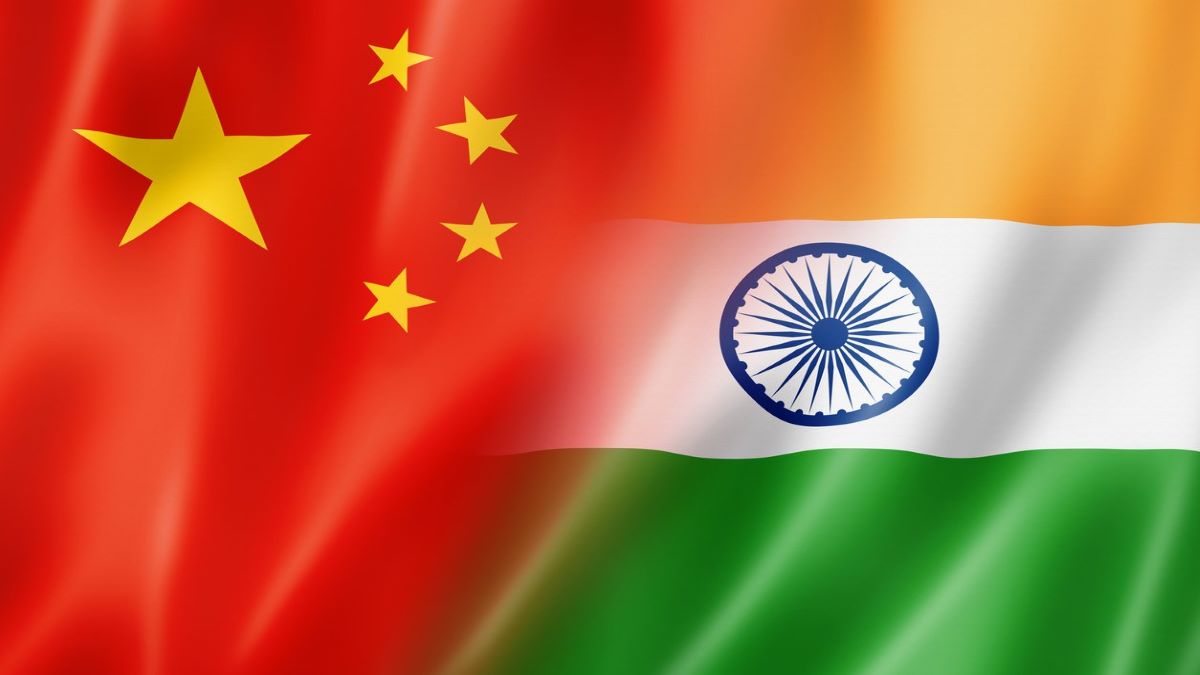 The GDP growth rate of India overtook the GDP growth rate of China in 2015. This has fuelled many newspaper articles in India stating that India is also on the path to replicating the Chinese growth story. However, the truth seems far from it. Despite the Indian media’s frantic efforts to put India and China in the same league by using statistics that are misleading to compare the two economies, India is still a long way behind China. True, that India has made rapid strides on the path to becoming an economic powerhouse. However China has been doing so for decades. China’s Economy is Four Times Larger Than India’s EconomyThe GDP of India is close to $1.5 trillion. At the same time, the GDP of China is close $7 trillion. The economy of China is at least 4 times as big as the economy of India. This means that even if China grows at the rate of a meager 1.5% and India grows at a rate of 7%, the Chinese economy would have added the same amount in output as the Indian economy would have!Comparing the GDP growth rates of India and China is therefore a pointless exercise. China’s growth rate has been consistently higher than India’s growth rate over the past three decades or so. India has barely overtaken the Chinese growth rate for a couple of quarters. Only if India can continue to beat the Chinese growth rate by a huge margin for the next two to three decades, does India stand a chance of overtaking the Chinese economy.Inflation in India is 6 times higher than it is in ChinaIndia’s GDP growth has been accompanies by runaway inflation in the country. Growth rate accompanied by inflation cannot last for a long period of time. Instead, such growth rate is indicative of the short term impetus that has been given to the economy by the monetary policy.On the other hand, China’s inflation has been relatively stable at a negligible 0.8% for many years. This has been accomplished despite the fact that China has been recording fiscal surplus for the past many years and ideally should be reeling with inflation. To the contrary, China has established sovereign wealth funds, which invest the additional cash in foreign assets keeping the inflation rate low.Given the fact that Indian economy is severely marred by inflation, it seems unlikely that they will be able to compete against China in the long run. China’s Manufacturing Productivity is 1.6 times than that of IndiaChina produces a lot more than India does. It also does so remarkably more efficiently. Given the better quality infrastructure and better production techniques at China’s disposal, it is not astounding that the average Chinese worker produces 1.6 times more output than that of the average Indian worker. This means that the productivity of China as a nation is 60% higher.The Indian manufacturing sector has multiple problems. These problems include erratic electricity supply, slow and expensive transport systems as well as lack of skills that increase manufacturing productivity.Given that a large portion of these problems are structural in nature, it seems unlikely that India will be able to overcome them in the near future.WorkforceThe Indian economy on the other hand, has a clear strategic advantage when the workforce is considered. The Indian education system was created by the British. As such, Indian workforce is global in nature. They can speak fluent English which gives them an edge over Chinese nationals who face language barriers. Also, the Indian workforce does high end jobs for the information technology industry and BPO industry as compared to the Chinese workforce which works menial jobs on the factory shop floor. Given that the future of the world lies in high skilled knowledge jobs, the Indian workforce may soon rise in prominence while the Chinese workforce may soon become redundant.One Child PolicyAlso, China faces what many economists call a demographic time bomb. For the past couple of decades, China has followed the one child policy to control population. However, now China faces a situation wherein there are more people out of the workforce than in it. On an average, every Chinese worker is expected to pay for the costs of at least two Chinese retirees.India, on the other hand, is facing a demographic dividend. It has a huge, extremely skilled workforce. Hence, if the government is able to provide jobs to these workers, the Indian economy is expected to grow by leaps and bounds. Given the fact that there will be a lot more people in the workforce than out of it, India is poised to become an economic superpower.EntrepreneurshipChina is still more or less a communist country. This means that all the enterprises there are run by the state. State run enterprises are usually not efficient and definitely not innovative. On the other hand, the Indian industry is based on innovative enterprises. Given the competitive nature of the world economy, the Indian industry stands a better chance at success in the future. This can already be seen as capital intensive Chinese industries such as coal and cement are going bankrupt whereas knowledge intensive industries such as information technology are thriving!The China India comparison is therefore absurd at the moment. China is a full-fledged superpower that has begun to show signs of decline whereas India has just started rising. The path is long and uncertain and only time will answer certain questions!





 One may see a person throwing a plastic wrappers or an empty bottel on the road from car in all the cities in India. This is a very common sight in our country of 1.25 billions because of lack of awareness, recklessness, and irresponsibility and of course- ‘Old habits die hard’. India is making progress after opening the economy to foreign investment however, it stinks that more than 54.7% of our house so are still without tolites despite the government spending about Rs. 1250 billions on sanitization project in the last two decades. Clean India movement in thus, a dream for every person of this country. However it is wrong to blame the government because it could do nothing alone. It explicitly requires that the general public has to be made aware of this malice. People of this great country litter with irresponsibility irrespective of whether they are rich or poor and where they live. And at the same time we also have no problem if living with the dirt. Now the question is what is really needed to get rid of this problem? Literacy and education is the real key to overcome this habit. One things is for sure is that hefty fines are not the solution. In this situation, we have to look forward to our new or younger generation who are the future of this nation. Our children can became the torch bearer of this Clean India Movement, if we can inculacate the habit of cleanliness among our children then perhaps this Movement can become a reality in India . This mission can be implemented and achieved by educating our children from the very beginning of their lives that is from school itself. If in the school students can be inspired for this cleanliness drive, their future will be safe and successful. This is an initiative by the Government of India and everyone’s support is a must to accomplish this dream.


 City of wonderful scenes, abode of deities, the land of Kerala is indeed a natures paradise. Harmony blends purely with its air granting men liberation like no other state however, oh the fury of nature! They have fates in twisted ways. Sudden wrath struck the placid land, water pours until the sea explodes unleashing agony on human ignorance to the source of abundance. Beaches where we rode the waves, now floats the devastation. Houses, schools, cattle’s fallen to the storm, doomed to the might of something o-so-strong! Many died, all of them cried, weeping for lovers, calling help from others. No shelter to be found, and no morsel to call our own, yes, Temples, churches, Mosques all drowned, yet United the nation stands . There Preyaers for aid didn’t go unheard. The tragedy ridden souls beg for assistance! From all of us came supplies. Everyone did good, nation -wide, food, clothing, the necessities, despite the difference, O for their country companies. Sights of relief, breathed the people. When the sea took back it’s water, suffers yelled – Hallelujah! Outgrowing the destruction Kerala manages towards recovery. Traumatised, thought, they be willd by strength to stand again and holding against odds of hope, the sun shines once again regally enough, gleaming constantly, showering gratitude to those hands of contribution Kerala does grow again!

