“Science” and “God”, the two words which are often seen as separate entities. These words seem conflicting to most of us and are often a topic of debate. Science seems to question the existence of God and believers of God often question why we are unable to explain the entire universe completely by science till date, a question on the success of science. We can often come across debates on televisions, radio, magazines, etc where people try to prove one as superior over the other. But, are they really two different things? Are they conflicting terms? Or are they same?
A deeper thought over it can clear our confusion. If we deep dig, we find that indeed both are connected. We really don’t need to choose between them. Science and God, are superior powers. The differences arise when we start associating God with some particular religion and Science with the only education. In reality, science is the process of thinking God’s thought after him. “An equation is really nothing unless it expresses a thought of God”, according to Ramanujan. They both actually merge at the spiritual level.
When we talk of science, it is the theories, the fundamental laws that very well explains the nature around us. It offers an explanation of all the natural phenomena in a very beautiful way and at a very basic level. It helped us understand how to converse in the language of nature, i.e in mathematics. It gives human power. The more we as humans understand science, the more powerful we become. Visit the days when humans started to understand science to get to know about the secrets of nature, the things they imagined then are now a reality. The gadgets they considered as their dreams are now in our hands. The technology we imagine today will also become a reality pretty soon. Science gave a power to humans to achieve the impossible.
God, on the other hand, is another superiority. There has been no proper evidence of someone seeing a God. We have not seen God, but we all believe in a “power” that is superior to all of us and many refer to this superior power as “God”. God gives humans the strength and power by making us understand the language of love and humanity. Spirituality is the heart of a human being and through God, we reach here. God helps us understand our potential and make us believe in our strengths. It changes our perception and makes the world a very beautiful and peaceful place for us. The world is incomplete without God.
We can thus conclude, that both Science and God are a source of immense power to human beings and both are tied together. Both speak the same language. The more faith we develop in God, the more we get close to science, the more we understand science, our belief in the existence of God becomes stronger. Louis Pasteur rightly said that “a bit of science can distance us from God, but more of it nears one to him”, and that is for sure. Diving deep into them will give us immense power and peace.
The global Corona Virus pandemic has taken many lives till now. People were not familiar about this deadly virus before the outbreak and are still confused about many things related to it. The increasing concerns of the people are also because of the myths and rumors which are being spread through various social media platforms. There are so many news and information about the prevention, and spreading of this virus , that people can’t decide what to believe. In this article I will be clearing some really popular myths about Corona virus which are currently the talk of the town.
5G MOBILE NETWORK SPREAD COVID-19 – This is a myth. The virus cannot travel on radio waves/mobile networks. Covid-19 is spreading in many countries which don’t have the facility of 5G mobile networks.
ONLY OLD PEOPLE ARE AFFECTED BY CORONA VIRUS – Although the ratio of old people getting infected by the virus is pretty higher but that doesn’t mean that the children and adults are completely safe. The reason of the higher percentage of old people getting affected is due to their weak immune system. People with pre-existing diabetes, kidney disease and heart condition are also at a higher risk of getting infected.
CORONA VIRUS DECREASES IN SUMMER SEASON – Although the previous corona virus- SARS and MERS , survived better in cold environments, there is no guarantee that the same will be true for Covid-19. From the evidence so far, this virus can be transmitted in all areas, including area with hot and humid weather.
EATING MEAT CAN CAUSE CORONA VIRUS – The virus doesn’t spread through meat- chicken, mutton or fish, and avoiding it doesn’t mean you will be safe.
SPRAYING ALCOHOL OR CHLORINE ALL OVER YOUR BODY CAN PREVENT YOU FROM CORONA VIRUS – Spraying alcohol or chlorine all over your body will not kill virus that have already entered your body. They are useful for disinfected surfaces when used under appropriate recommendations.
EATING GARLIC WILL PREVENT YOU FROM GETTING INFECTED – Because of the antimicrobial properties of garlic, people think it also prevent the corona virus.But the WHO has already cleared that there are no evidence that garlic can help us in preventing from corona virus too.
DOGS CAN CAUSE CORONA VIRUS – This myth started when the news of a dog getting infected from corona virus in Hong Kong was found. But later it was cleared that the dog owner was infected with the virus, and when tested, the virus was found in the dog’s canine.
VITAMIN C HELPS CURE THE INFECTION – Vitamin C was believed to have some healing benefits in the SARS outbreak. Besides, while vitamin C supplements may help boost your immune system, there is yet no evidence that it might help people fight off the new corona virus.
Emanating as a hashtag, Black Lives Matter (BLM) is now a full-fledged movement aimed at curbing police brutality against african americans. Initially a movement which was limited to the US, it has experienced an upsurge in recent times. The deaths of George Floyd, Breonna Taylor and countless other black civilians in the US have sparked a contagious rage. Cities as far as London, Berlin, Melbourne, and Tokyo have seen huge demonstrations in solidarity with the growing BLM uprisings. Protests demanding racial justice in the wake of these recent deaths, have left America and the rest of the world infuriated by racial violence and energized to end discrimination. It’s not just about police brutality. Each sphere of life is affected by such prejudices. Even during natural calamities and pandemics people of colour are more vulnerable due to the pre-existsing inequities that disadvantage them making them more susceptible to severe illnesses, or even death. Amidst the protests, petitions and proposed policies, the change,though not enough, is visible. While we can see a rainbow beginning to shine through the fog of racism, there is still a long road ahead to traverse. Coming home, the BLM movement in the US is a great opportunity for India to introspect its own past and present. While we lend our voice to that campaign, we must also attempt to question our own biases in terms of caste, creed and gender.
Article 370 was the medium of keeping Kashmir connected to India, giving it special status i.e their own constitution, flag etc. “In the last five years, we have made all the necessary efforts to ensure peace in J&K . We are committed to overcoming obstacles, providing adequate financial resources to all the regions of the state.” – the BJP manifesto for the national polls read. I suspect that removal of Article 370 was a win-win situation because of the these succeeding aspects: Indians can now buy the land in Kashmir and invest, which would channelize the youth energy into productivity. Literacy rate which is 67.16%(2019) will grow as other Indian too can attain government jobs as teacher’s, doctor’s etc. Social prosperity which leads to a feeling of one nation through one single citizenship. Student’s can now go to Kashmir and get certified from their Universities, giving other students more competation. This is the big time when J&K enter the mainstream and becomes the part of nation’s collective growth.
Understanding plurality in the concept of India markets and the games it takes up with the complex business issues , there isn’t one definite or singular point of view about that. To shape the India into the distinctive , consumer characterized and economic consumption patterns it takes several methods of application on what forces affect them. The fickle and capricious behavior of consumer patterns and splendid business activities that are been conducted in the same ceremony since years as a business tradition resulted in sudden shift and sales volumes start escalating or suddenly zooming downwards. It is not an unusual placement to be happening but several quarters of the study growth and statistics started following the healthy growth ways to develop Indian markets and their business economics. The erratic behaviour or new errants into the market shocks the state and condition of how the healthy market is running. The very functioning of the business and their ways of adoptions , evolvement have tremendous yet unnoticed impact on the India’s markets.
BEYOND HETEROGENEITY – Marketing the sets of consumer base of social cultures , diversifications of food habits , climatic behaviours , languages according to the religion , orientations of cultural bliss and the list follows. In order to extract most of the value from the Indian market , they need to develop certain strategies and build healthy competencies. However , it all depends from the social , political and economics lens we use to view the perspective of the evolvement in the business games. At the end of the day the forecasted behavior of Indian markets and their business proves it erratic and indecisive behaviour.
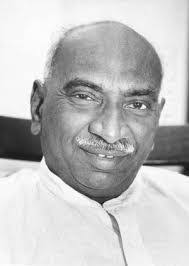
Kumaraswami Kamaraj (15 July 1903 – 2 October 1975, was the founder and the president of the Indian National Congress (Organisation), widely acknowledged as the “Kingmaker” in Indian politics during the 1960s. He also served as the president of the Indian National Congress for two terms i.e. four years between 1964–1967 and was responsible for the elevation of Lal Bahadur Shastri to the position of Prime Minister of India after Nehru’s death and Indira Gandhi after Shastri’s death. Kamaraj was the 3rd Chief Minister of Madras State (Tamil Nadu) during 1954–1963 and a Member of Parliament, Lok Sabha during 1952–1954 and 1969–1975. He was known for his simplicity and integrity. He played a major role in developing the infrastructure of the Madras state and worked to improve the quality of life of the needy and the disadvantaged.
He was involved in the Indian independence movement. As the president of the INC, he was instrumental in navigating the party after the death of Jawaharlal Nehru. As the chief minister of Madras, he was responsible for bringing free education to the disadvantaged and introduced the free Midday Meal Scheme while he himself did not complete schooling. He was awarded with India’s highest civilian honour, the Bharat Ratna, posthumously in 1976.
Morse code is a method used in telecommunication to encodetext characters as standardized sequences of two different signal durations, called dots and dashesor dits and dahs. Morse code is named after Samuel Morse, an inventor of the telegraph.
The International Morse Code encodes the 26 English letters A through Z, some non-English letters, the Arabic numerals and a small set of punctuation and procedural signals (prosigns). There is no distinction between upper and lower case letters. Each Morse code symbol is formed by a sequence of dots and dashes. The dot duration is the basic unit of time measurement in Morse code transmission. The duration of a dash is three times the duration of a dot. Each dot or dash within a character is followed by period of signal absence, called a space, equal to the dot duration. The letters of a word are separated by a space of duration equal to three dots, and the words are separated by a space equal to seven dots. To increase the efficiency of encoding, Morse code was designed so that the length of each symbol is approximately inverse to the frequency of occurrence of the character that it represents in text of the English language. Thus the most common letter in English, the letter “E”, has the shortest code: a single dot. Because the Morse code elements are specified by proportion rather than specific time durations, the code is usually transmitted at the highest rate that the receiver is capable of decoding. The Morse code transmission rate (speed) is specified in groups per minute, commonly referred to as words per minute.
Morse code is usually transmitted by on-off keying of an information-carrying medium such as electric current, radio waves, visible light, or sound waves. The current or wave is present during the time period of the dot or dash and absent during the time between dots and dashes.
Morse code can be memorized, and Morse code signalling in a form perceptible to the human senses, such as sound waves or visible light, can be directly interpreted by persons trained in the skill.
SAMUEL MORSE
He was a successful businessman and a presidential portraitist. But above all else, Samuel F. B. Morse is best remembered for his eponymous Morse code, an elegant system that revolutionized communications back in the 1800s.
Even in the heyday of Silicon Valley and social media, there’s still a place for the well-worn code. (Just ask the U.S. Navy. It’s just one language cryptologic technicians learn while training at the Center for Information Dominance at Corry Station in Pensacola, Florida.) As the forerunner to email, texts and other near-instant messaging mediums, we think Morse code deserves a tip of the hat.
Parts of Samuel Morse’s backstory read like a tragic Hollywood screenplay. He was born in Charlestown, Massachusetts on April 27, 1791. A professional painter, Morse found himself working on a portrait of the Marquis de Lafayette in 1825. The job had taken him to Washington, D.C. where he received a devastating letter. According to the dispatch, his young wife had died back at their home in New Haven, Connecticut.
Worse, by the time Morse got this message, it was too late for him to return in time for her funeral. She was laid to rest without him.
Such was the pace of most long-distance communications in those days. Morse was one of the entrepreneurs leading the way.
He was one of the developers of the first telegraphs built in the 1830s. To call any lone scientist or inventor the “father” of this technical breakthrough would be misleading. Morse was just one of the visionaries behind the telegraph’s early development.
Despite his limited scientific background, Morse had a real passion for electricity. In 1837, he showcased a prototypical telegraph that he’d built at a public demonstration. Like all telegraphs, his sent out pulses of electric current via wire. The pulses would make their way into a receiver — and this is where Samuel Morse’s famous code came into play.
THE FIRST MORSE CODE TRANSMISSION
Morse’s telegraph couldn’t transmit voices or written characters. Yet by capitalizing on those electric pulses, he devised a new way to send coded messages.
Documents show that the original Morse code was Morse’s brainchild — despite rumors to the contrary. That said, he had a brilliant partner by the name of Alfred Vail, who helped him refine and expand the system. Under the code, every letter in the English language — along with most punctuation marks and each number from zero through nine — was given a unique, corresponding set of short and long pulses.
“Long” pulses came to be known as “dashes” while the short ones were called “dots.” In this iteration of the code, not all dashes were created equal; some lasted longer than others. And the spaces between pulses varied widely (depending on the context).
Soon enough, Morse got to show off his electric cipher. In 1843, Congress handed him a $30,000 grant to build an experimental long-distance telegraph between Washington, D.C. and Baltimore, Maryland.
The moment of truth came on May 24, 1844. Sitting in the U.S. Capitol’s Supreme Court chamber, Morse sent a coded message along to Vail, who was waiting in Baltimore at the other end of the line.
Morse knew just what to say. At the suggestion of a friend’s daughter, he transmitted a quote from the biblical book of Numbers: “What hath God wrought.”
MORSE CODE GOES GLOBAL
Long-distance telegraph lines spread like wildfire over the next few decades. So did Samuel Morse’s code. During the Civil War, President Abraham Lincoln used it to keep abreast of battlefield developments. And speaking of Honest Abe, when Western Union completed the first transcontinental telegraph line in 1861, Lincoln received its first message — a dispatch sent all the way from San Francisco to D.C.
But as Morse code took hold in other countries, problems emerged. To address these, German telegraph inspector Friedrich Clemens Gerke simplified the system in 1848. Among other changes, he did away with the extra-long dashes and revised many of the individual number and letter codes.
After some additional tweaks were made, this new edition was dubbed “International Morse Code.” Meanwhile, the original version was retroactively labeled “American Morse Code.” Outside Civil War reenactments, the latter is all but extinct today.
Yet, International Morse code was in for a bright future.
LEARNING THE BASICS OF MORSE CODE
In the international code, a “dash” is three times longer than a “dot.” On paper, “-” is the symbol for a dash while every “.” represents a dot. “E” is a simple letter; it consists of just one “.” Other characters are a bit more intricate. For example, “-.-.” means “C.”
If you’re dealing with a letter that features multiple dots and/or dashes, there should be a pause equivalent to the length of one dot in between those components. The pauses that separate entire letters are longer, equal to three dots. And individual words should be divided by even longer pauses measuring seven dots long.
No Morse code phrase is more iconic than “SOS.” A universally recognized distress signal, SOS was first adopted as such by German telegraphers in the year 1905. Why’d they pick this letter combo? Because in International Morse Code, “S” is three dots and “O” is three dashes. See, “dot-dot-dot-dash-dash-dash-dot-dot-dot” (…—…) is an easy sequence to remember — even when you’re in grave peril.
APPLICATIONS PAST AND PRESENT
Although it was explicitly designed for the telegraph, people found other ways to utilize Morse Code. With the dawn of radiotelegraph machines in the 1890s, coded messages could travel via radio waves. Likewise, some purely visual media have long histories with International Morse Code. Beginning in 1867, ships began using onboard blinker lights to flash signals at each other.
Then there’s the case of Jeremiah Denton, Jr. An American navy pilot (and future senator), he was captured during the Vietnam War. In a forced appearance on North Vietnamese television, Denton was coerced into saying that his captors were treating him well behind enemy lines. But his eyes told a different story. By blinking in sequence, he used Morse code to spell out the word “torture.”
Later in the 20th century, the code was largely phased out. The U.S. Coast Guard hasn’t used it in an official capacity since 1995 and modern ships are far more reliant on satellite communications systems. However, Uncle Sam‘s Navy is still training intelligence specialists to master the code. Another group that’s showing it some love is the International Morse Code Preservation Society — a coalition of amateur radio operators with thousands of members around the globe. So while the golden age of dots and dashes may be over, Morse code’s still hanging in there. No distress signal required.
On 7 July, the HRD minister Ramesh Pokhriyal announced a major 30% reduction in the CBSE syllabus. A slight reduction in the syllabus was done in April 2020 too, but as the lockdown is extend and the Covid-19 pandemic is getting worse, the studies are getting affected and now a bigger reduction is finalized. CBSE states that “although the syllabus has been reduced, but care has been taken so that the learning outcomes remains the same”. CBSE also stated in its notification ,” though 30% syllabus has been reduced from the new academic year, teachers should ensure that the students understand these topics so that they can use the information in connection with other topics”. There’s no doubt the reduction of syllabus is a welcome move, but the actual thing here is that whether the chapters which have been eliminated by CBSE were really not that important? I personally think some of the chapters which CBSE eliminated were of great worth and shouldn’t have been eliminated.The list of some of those chapters and their importance are listed below:
DEMOCRATIC RIGHTS(9th Std.) – This particular chapter talks about all the Democratic and Fundamental rights of an Indian Citizen. It explains how a democratic government has to be periodically elected by the people in free and fair manner. These Fundamentals and Democratic rights should be know by every citizen so that it can be utilized when required. The students could had learned about the basic rights , such as Right to Freedom, Right to Equality, Right against exploitation and many more along with their significance.
CONSTITUTIONAL DESIGN(9th Std.) – India is a democratic country and there are certain rules and regulations which the citizen and the government must follow, all these rules are together called Constitution. This chapter is about this only. This chapter discusses the need to have a constitution, the making of the Indian Constitution and the guiding values of the Indian Constitution. Every Indian should know how our country’s constitution is being made and what all it consists.
DEMOCRACY AND DIVERSITY(10th Std.) – India being a democratic and diversified country itself makes this chapter more powerful.This chapter teaches that the existence of social diversity does not threaten democracy. The political expression of social differences is possible and sometimes quite desirable in a democratic system.
GENDER, RELIGION AND CASTE(10th Std.) – India is a secular country where every citizen has the freedom to choose their religion. No one can be discriminated on the basis of their caste and religion. This chapter talks about the religion differences , caste inequalities, communalisim, women’s political representation etc. I personally think this chapter is very important, as children are the future of our country and we would definitely not want if someone will suffer due to their caste or religion in the future.
MONEY AND BANKING (12th Std.)– This chapter of economics talks about the money operations which are operated by the RBI and the central government. Children learn about the functioning of Cash Reserve Ratio(CRR), Statutory Liquidity Ratio(SLR), Repo and Reverse repo rate and the control of credit through bank rate. According to me this particular chapter is very beneficial to know more about how our cash related operations are handled by the RBI and government.
Agroecology is the study of ecology processes applied to Agricultural production systems. Bringing ecological principles to bear can suggest new management approaches in agro-ecosystems. The field of agroecology is not associated with any one particular method of farming, whether it be organic, integrated, or conventional, intensive or extensive farming.
Agroecology is a holistic approach that foster to reconcile agriculture and local communities with natural processes for the common benefit of nature and livelihoods.Agroecology is inherently multidisciplinary, including sciences such as agronomy, ecology, environmental science, socialogy, economics, history and others. Agroecosystems studied may include: productivity, sustainability, stability and equilability.
For agro for all
Agroecological techniques played an important role in alleviating the food crisis in Cuba following the dissolution of soviet union.Cuban organoponics, part of Cuba’s urban agriculture, have been studied in terms of agroecology.
agroecology as a method for achieving food sovereignty. Agroecology has also been utilized by farmers to resist global agricultural development patterns associated with the green revolution.
The five FAO principles for agroecosystems are: 1) improving efficiency in the use of resources; 2) conserving, protecting and enhancing natural ecosystems; 3) protecting and improving rural livelihoods, equity and social well-being; 4) enhancing the resilience of people, communities and ecosystems; 5)recycle and reuse.







 International Journal of Research (IJR)