EFFECT OF COVID-19 ON RURAL INDIA


COVID-19 took the entire world by tremors. Countries are put under lockdown, economic activities are abandoned, measures are taken as if it’s a war of worlds. People were completely alien to such a health hazard. Every industry faced its consequences. Seventy percent of the Indian population lives in Rural backgrounds, lockdown had a severe impact on this 70% population. People in Rural Areas have completely thrived for Amenities and services and this caused a major disruption in the common working of Agricultural as well as Non-Agricultural livelihoods.
IMPACT ON PEOPLE DEPENDENT ON AGRICULTURE
India is a Nation with a big chunk of its GDP (Gross Domestic Product) belonging to the Agricultural Sector. Rural areas especially are mostly dependent on Agricultural or related activities.
A complete lockdown was announced by Central Government on 25 March which is the end of the Rabi crop season. The season when farmers expect to get gains for their hard toil of one complete cropping season. The timings of lockdown disallowed many to sell their crops at profitable prices, lack of cold storage facilities and transportation resulted in crop failure impacting many. The other major sources of income for people based in the Agriculture sector are dairy and horticulture they were hit the hardest.
Dairy-based livelihoods:-
People who were employed in Dairy product-based services we’re majorly affected by lack of transportation and a big dip in product demand. Dairy products except Ghee do not last long, the need immediate dispersal of products to consumers but lockdown made large voids in the transportation chains resulting in losses to Dairies.
Horticulture-based livelihood:-
India is the second-largest fruit producer in the world, Horticulture output in total is about 313.9 million metric tons. Not every fruit and vegetable grow everywhere, these are extremely area-specific. The closure of the wholesale markets resulted in differences between demand and supply chain. The horticulture sector is majorly dependent on intermediaries, the closing of their shutters lead to a devastating outcome.
Fisheries & Poultries
The same reasons cited above affected fisheries and poultries too. A narrative due to rumored speculation of virus transfer from these products too caused a dent on this sector.
Agricultural based livelihood certainly got disturbed by Lockdown but the points that most of these were placed under essential services, and favoring government policies proved out to be a breather.
• IMPACT ON PEOPLE DEPENDENT ON NON-AGRICULTURAL ACTIVITIES
Non- Agricultural Sector got more severely affected. I need not remind you that most of the Indian population resides in Rural surroundings and majorly contributes to Nations Growth. The non-Agricultural sector comprises about 47% of the Indian Economy. The big portion of Indian workforce hails from Rural backgrounds .We need not look at all of it as number but as real-life individuals and groups who face massive losses. Non-Agricultural Sector majorly comprises of two types.

I. Manufacturing Sector:- This sector faced impacts of closure of international borders as all the imports-exports got affected, closure of domestic markets deepened this wound, all employees were made to rest at home. A high number of individuals we’re terminated from their jobs and it all impacted regular rural and urban households.
II. Services Sector:- All Services except essential, emergency and healthcare services were put to close. This too impacted a humongous number of households. Gyms, Schools, Restaurants, Hotels, Entertainment parks, Theatres, Transportation all these are yet to get the green signal from authorities. Like every other sector, this sector too will take lots of effort to recover.
Logically speaking it is impossible to talk about India excluding rural India. Indian economy took a deep dig, GDP slipped to straight 9% and it will take time and great efforts to recover, and we as Indians are ready to get it back on track.
Among other negatives of this pandemic, one positive for India that shone brightly is self-sufficiency and each capability of each unit to function by itself. Rural India hence sets an example to the world of Indian potential.
By:- Shubham Yadav

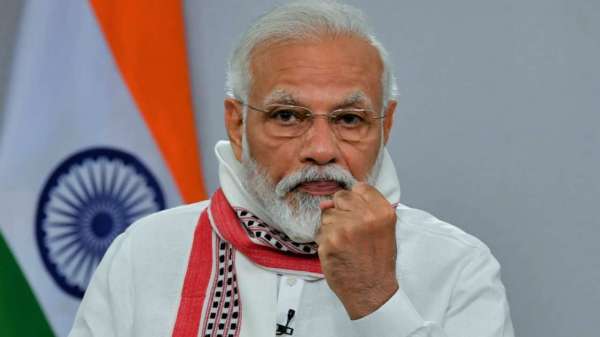
PM Modi announced Aatmanirbhar Innovation Challenge to techies and start-ups, after banning 59 Chinese apps in India

Prime Minister on Saturday announced the Aatmanirbhar Innovation Challenge, inviting India’s tech and community to create an Aatmanirbhar App Ecosystem.

The project was launched by the Ministry of Electronics and Information Technology (MeitY) in partnership with the Atal Innovation Mission and government think-tank Niti Aayog.

“Today there is immense enthusiasm among the tech & start-up community to create world-class ‘Made in India’ Apps. To facilitate their ideas and products @GoI_MeitY and @AIMtoInnovate are launching the Aatmanirbhar Bharat App Innovation Challenge,” he tweeted.

PM Modi also urges the techies and start-up community to participate if they have such a vision and expertise to create the products.

“This challenge is for you if you have such a working product or if you feel you have the vision and expertise to create such products. I urge all my friends in the tech community to participate.” PM Modi tweeted.

Addressing the tech community through a post on LinkedIn, PM Modi said: “Today, when the entire nation is working towards creating an Aatmanirbhar Bharat, it is a good opportunity to give direction to their efforts, momentum to their hard-work and mentorship to their talent to evolve Apps which can satisfy our market as well as compete with the world.”

This challenge will run in two tracks–Promotion of existing apps and development of new apps.”Track-01 will work in mission mode for identifying good quality Apps for the leader-board and shall be completed in around a month. The Track-02 initiative will work to help create new champions in India by providing support in ideation, incubation, prototyping, and roll out along with market access,” he wrote in the post.

The first track of the challenge is being launched in eight categories, which includes Office Productivity & Work from Home, Social Networking, E-Learning, Entertainment, Health & Wellness, Business including Agritech and Fintech, News and Games.

The outcome of this challenge will be to give better visibility and clarity to existing Apps to achieve their goals and to create tech products to find solutions to tech conundrums with the help of mentorship, tech support, and guidance during the entire life-cycle, he wrote.

After the banning of 59 Chinese apps –Tiktok, Helo Mi community and 56 others– in the country it will be a great opportunity not only for the existing tech companies but also for the start-ups too.

Prime Minister Modi in his post said that there is tremendous scope among these sectors for new Apps that solve specific issues for India and the world.”Can we think of making traditional Indian games more popular via Apps? Can we develop Apps with targeted and smart access to the right age group for learning, gaming, etc? Can we develop gaming apps for people in rehabilitation or getting counselling to help them in their journey? There are many such questions and technology alone can creatively give answers,” said PM Modi.

With this statement he questioned as well as challenged the Indian techies to utilise this opportunity for the betterment of the Nation.

This innovation challenge can be accessed through the MyGov platform from July 4. Companies will have to submit their entries by July 18 through an online submission process.

The government will provide the assistance for each of the tracks, which will include personnel from the private sector and academia to evaluate the entries.

Post evaluation, these apps will be given awards and features on “leaderboards for information of citizens”. The government has allocated ₹20 lakh, ₹15 lakh and ₹10 lakh for the first, second and third placed apps in each category. Further the winners of sub-categories will get ₹5 lakh, ₹3 lakh and ₹2 lakh for first, second and third position, respectively.

ROOPKUND: SKELETON LAKE

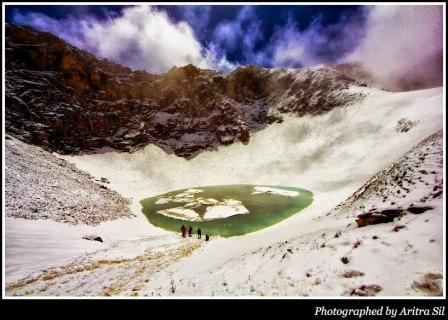
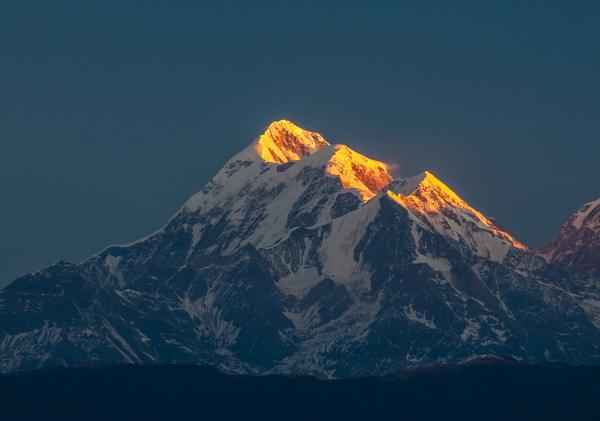
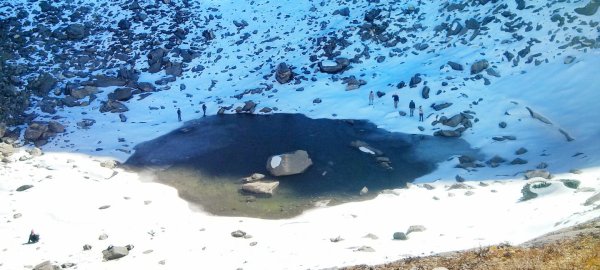
ROOPKUND locally known as skeleton Lake or Mysterious Lake , It’s lies in the Lap of Trishul  Massif , located in the Himalayas. It’s a high altitude glacial lake in the Uttarak hand  Roopkund is one of the important places for trekking in Chamoli District, Himalayas, near the base of two Himalayan peaks: Trisul (7,120 m) and Nanda Ghunti (6,310 m)  The Lake is flanked by a rock face named Junargali to the North and a peak named Chandania Kot to the East. Roopkund lake is covered with ice for most of the year Roopkund is known as a mystery lake and is surrounded by rock-strewn glaciers and snow-clad mountains. The lake is about two metres deep and invites hundreds of trekkers and pilgrims every year

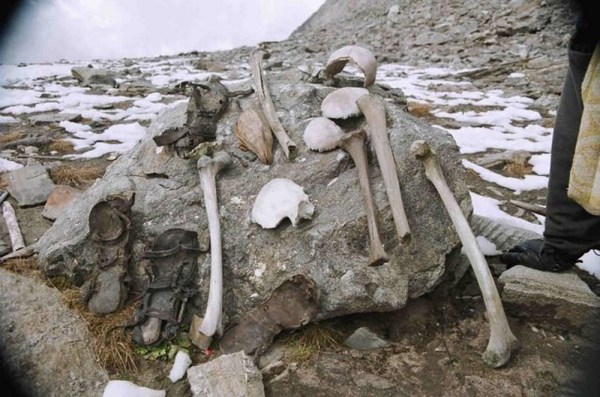
IN 1942 A BRITISH FOREST guard in Roopkund, India made an alarming discovery. Some 16,000 feet above sea level, at the bottom of a small valley, was a frozen lake absolutely full of skeletons. That summer, the ice melting revealed even more skeletal remains, floating in the water and lying haphazardly around the lake’s edges.

SKELETON AT ROOPKUND

Something horrible had happened here. The immediate assumption (it being war time) was that these were the remains of Japanese soldiers who had died of exposure while sneaking through India. The British government, terrified of a Japanese land invasion, sent a team of investigators to determine if this was true. However upon examination they realized these bones were not from Japanese soldiers—they weren’t fresh enough. As it turns out, all the bodies date to around 850 AD. DNA evidence indicates that there were two distinct groups of people, one a family or tribe of closely related individuals, and a second smaller, shorter group of locals, likely hired as porters and guides. Rings, spears, leather shoes, and bamboo staves were found, leading experts to believe that the group was comprised of pilgrims heading through the valley with the help of the locals.The researchers concluded that the death was due to a fatal blow on the back of their heads and not due to any wound by weapons, avalanche or landslide. The marks on their skulls and shoulders indicated at being hit by something round, like a cricket ball. The absence of injuries to other body parts indicated that hard round objects, possibly cricket ball sized hail stones or ice balls, fell from above.

Patent for ISRO protective garment for human spaceflight

Another feather adds to the ISRO crown. ISRO has got an Indian patent for its liquid cooling and heating garment suitable for the space Application. The patent is valid for 20 years from the date of application that is, February 8, 2016, and was granted on June 19. while ISRO is a patent owner, the four investors are Srirangam Siripothu, Reshmi Balachandran, Saraswati Kesava Pillai Manu, and Gurumurthy Chandrasekaran.

Spacesuit

The garment is made of biocompatible Fabrics and parts which help maintain comfortable body temperature. According to ISRO the garments has superior heat transfer efficiency and can be conveniently used for maintening the body temperature of the wearer at levels suitable for the physiological performance require. The outer and Inner Layer of the garment are separated by plurality of tubes configured to exclusive a heat transfer fluid

Direct tax collected In India

A direct tax is a tax that is paid by an individual or an organization to the imposing entity, or to be precise, Direct Tax is the one which is paid to the Government by taxpayers. These taxpayers include people and organization both. Also, it is directly imposed by the Government and cannot be transferred for payment to some other entity.

With Direct Taxes, especially in a tax bracket system, it can become a disincentive to work hard and earn more money, as more money you earn, the more tax you pay.

Income Tax- It is imposed on an individual who falls under the different tax brackets based on their earning or revenue and they have to file an income tax return every year after which they will either need to pay the tax or be eligible for a tax refund.

Estate Tax– Also known as Inheritance tax, it is raised on an estate or the total value of money and property that an individual has left behind after their death.

Wealth Tax– Wealth tax is imposed on the value of the property that a person possesses.

However, both Estate and Wealth taxes are now abolished.

The Central Board of Direct Taxes in India

The Central Board of Direct Taxes or the CBDT, which was formed as the result of the Central Board of Revenue Act, 1924 looks after the Direct Taxes in India. This department is part of the Department of Revenue in the Ministry of Finance and is responsible for the administration of the direct tax laws. Besides that, the Central Board of Direct Taxes also provides inputs and suggestions for policy and planning of the direct taxes in India.

The latest data of tax collection as per the Central Board of Direct Taxes (CBDT) was released. The data reveals that Maharashtra, Delhi, and Karnataka contribute 61% of the country’s total revenue from direct taxes. Including the contribution of Tamil Nadu and Gujarat will aggregate to 72% of the total revenue.

Direct taxes include income tax paid by individuals and corporate tax paid by firms. It is a general notion that more revenue collection implies higher income. It also implies better employment opportunities and greater ease-of-doing-business. Greater revenue collected states are also those that have greater avenues for economic activities.

It was found that the large and populous states like Uttar Pradesh, Bihar, and West Bengal fare poorly. Bihar, the third most populous state accounts only 0.65% to the total direct tax collection. Uttar Pradesh, the most populous state and West Bengal, the fourth most populous state contributed to 3.12% and 4% of the total tax collection. 

The poor collection of taxes shows the absence of formal sector employment and corporates. It also shows that the working population in these states are not part of the salaried class. If they were a part of the salaried class, the revenue from income tax would have not been so low as compared to the population of these regions

So if we assume the total direct tax collected in India would be 100/-how much would each state contribute

Maharshtra:38/-, Delhi:13.5/- ,Karnataka:10/-

  1. Tamil Nadu : 6.7/-
  2. Gujarat: 4.6/-
  3. Andhra Pradesh :4.3/-
  4. West Bengal:4/-
  5. Uttar Pradesh:3/-
  6. Haryana : 2.4/-
  7. Odisha: 1.2/-
  8. Madhya Pradesh: 1.8/-
  9. Kerala: 1.6/
  10. Rajasthan:24/-
  11. Punjab : 1.1/-
  12. Bihar:0.65/-
  13. Telegana:0.46/-
  14. Jharkhand:0.5/-
  15. Assam : 0.56/-
  16. Goa:0.3/-
  17. Jammu and Kashmir:0.16/ Himachal:0.25/-
  18. Chhattisgarh: 0.25/-  Uttarakhand : 0.3/-Chandigarh : 0.25/- 19.Meghalaya: 0.08/- 20. Tripura:0.03/-

KASHMIR

Location

Kashmir is the northernmost geographical region of the Indian subcontinent. Until the mid-19th century, the term “Kashmir” denoted only the Kashmir Valley between the Great Himalayas and the Pir Panjal Range. Modern usage of the term encompasses a larger area that includes the Indian-administered territories of Jammu and Kashmir and Ladakh, the Pakistani-administered territories of Azad Kashmir and Gilgit-Baltistan, and Chinese-administered territories of Aksai Chin and the Trans-Karakoram Tract.

History

In the first half of the first millennium, the Kashmir region became an important centre of Hinduism and later of Buddhism; later still, in the ninth century, Kashmir Shaivism arose. In 1339, Shah Mir became the first Muslim ruler of Kashmir, inaugurating the Salatin-i-Kashmir or Shah Mir dynasty. Kashmir was part of the Mughal Empire from 1586 to 1751, and thereafter, until 1820, of the Afghan Durrani Empire. That year, the Sikhs, under Ranjit Singh, annexed Kashmir. In 1846, after the Sikh defeat in the First Anglo-Sikh War, and upon the purchase of the region from the British under the Treaty of Amritsar, the Raja of Jammu, Gulab Singh, became the new ruler of Kashmir. The rule of his descendants, under the paramountcy (or tutelage) of the British Crown, lasted until the partition of India in 1947, when the former princely state of the British Indian Empire became the subject of the Kashmir conflict. The modern region is administered by three countries: India, Pakistan, and China.

How to go

By air: To fly into Kashmir, take the Srinagar Airport (15 km away), which is well connected to prime Indian cities. Air India, GoAir, IndiGo and Jet Airways operate regular flights for Delhi, Goa, Jammu, Leh Mumbai and Bangalore. After reaching the airport, visitors can hire taxis to reach various cities and towns of Kashmir.

By train: Jammu Tawi Railway Station, situated at a distance of about 330 km, is the nearest railhead serving the beautiful valley of Kashmir. New Delhi-Jammu Tawi Rajdhani Express, Jammu Mail and Jammu Tawi Express are some of the prominent trains operating from Delhi. From outside the railway station, one can hire private taxis or take state or private buses to reach various places in Kashmir.

By road: The state of Kashmir is well connected by a network of state and private buses with several nearby cities and towns. National Highway 1-A connects Srinagar with Jammu. Also, the popular Jawahar Tunnel connecting Jammu with the valley of Kashmir also falls on the way. A number of J&K State Road Transport Corporation (JKSRTC), luxury and private deluxe buses ply frequently to and from state. These buses are extremely comfy and cost-effective.

Tourist Places

Srinagar: Srinagar is undoubtedly one of the most beautiful and famous places to visit in Kashmir as well as in India. From boating to trekking, bird watching to water skiing, Srinagar place has it all. Locally this place is known as the mirror to the mountains, Srinagar is a first stopover for every traveler and there is a long list of places to visit in Srinagar, Kashmir. The largest city of Kashmir, this place is enclosed by the green mountains and the main highlight being the Dal Lake which is the gem of the city. This place gives a close outlook to the Kashmiri cuisine and the state’s culture.

Gulmarg: Famously known as the ‘Meadow of Flowers’, Gulmarg is a treat to the eyes with its spread of vibrant flowers against snow capped mountains as backgrounds. Gulmarg is considered to be one of the best places to visit in Kashmir for all right reasons. This region of Kashmir is also known as the adventurer’s paradise because of its vast options of skiing in the snow while enjoying the views around. The best time to visit Kashmir for snowfall is in winter season i.e. December-January.

Sonamarg: Sonamarg, as the name suggests, is famous as the ‘Meadow of Gold’. An endless stream of stunning flowers and undulated trekking routes are its attractions. Sonamarg has to be in every visitors’ list of places to visit in Kashmir for its mesmerizing aura and breathtaking views. The best season to visit Kashmir would be in summer i.e. May-June when the valley is blooming with variegated flowers.

Leh: Leh is one of the best and safe places to visit in Kashmir in summers. The lofty mountains, the alpine lakes, and the quaint settings enable Leh one of the best places to visit. This place is every biker’s dreamland. Clad in the beauty and love of nature, Leh offers breathtaking views, leaving no visitor disappointed. You must explore all the top places to visit in Leh when traveling to Kashmir.

Kupwara: Kupwara is a small district located in the state of Jammu and Kashmir and situated at a distance of 90 kilometres from the state capital, Srinagar. Blessed with nature’s finest views, the thriving meadows, alpine mountains, and the gushing clear water make Kupwara a must-visit destination in Kashmir. This city epitomizes the beauty of Kashmir.

Why should you visit Kashmir?

Breathtaking landscapes: There would be not a single person on this planet who doesn’t love nature. We all admire nature, but no one sees it in chaotic cities. Kashmir has everything including mountains, dense forests, green meadows, grasslands, and water streams that together create wonderful scenery. From Aru Valley to Saffron fields, Zabarwan Mountain range to the Chashme Shahi, Badam Vari to Apple Garden, Almond trees to Chinar Tress, all these naturally beautiful locations make Kashmir a Heaven on Earth. Gulmarg, Pahalgam & Sonmarg are some such marvelous locations that everyone loves to visit repeatedly.

Wonderful climate: Plan your trip to Kashmir in the scorching heat of summers when the temperature rises up to 40 degrees. Kashmir is cool even in the harshest of summer and you can visit this valley between March and May to see the blooming flowers, green meadows, and Chinar trees. Overall you can experience the new phase of spring in the Valley of Kashmir. If you plan your trip in Winter Season then you will enjoy beautiful snowfall that would be an incredible experience. The snow-capped mountains fill the region with exquisite surroundings and the snow-capped trees look awesome while offering a serene feeling to everyone. Also, you can enjoy the most stunning views of sunrise and sunset at Dal Lake in Srinagar.

Pristine Lakes: Your Kashmir trip is not complete without taking a ride of Dal Lake and these lakes are the perfect reason to plan a Kashmir trip. It is one of the favorite destinations for the tourists where shutterbugs also love to capture the exquisite scenes. The houseboats and Shikaras are the most famous attraction of Dal Lake. Here, you can see the floating markets and gardens with the sweet smell of flowers and various other attractions. Apart from this, Wular Lake is also popular as the largest freshwater lake in Asia, Mansbal Lake is home to many aquatic birds and surrounded by lush greenery and mountains. Nagin Lake offers the utmost tranquil space to enjoy the serenity. The list doesn’t end here; the waterholes like Gadsar, Gangabal, Tso Moririm, Pangong and Mansar are the greatest attractions for the visitors. The different waterholes provide a perfect landscape in the state of Jammu & Kashmir.

Trekking points: Enclosed by the Great Himalaya and Pir Panjal mountain range, Kashmir Valley is the best place for camping, trekking, and mountaineering. While traveling to this gorgeous land, you will witness the most enchanting views of mountains, lakes, and meadows. Walking through the foothills, Kashmir Great Lakes Trek is popular among tourists where you will cover the lakes of Gangabal, Kishansar and Vishansar that are close to the Harnukh Peak. Aru-Valley, Kolahoi Glacier Trek and Yousmarg Trek are yet another challenge for trekkers. Kashmir is one of the best places for trekkers where fun is boundless.

Art and heritage: You can explore the past events and lifestyle of ancient Kashmiri people in the museums that hold the glory of the rich culture and heritage of the state. These museums include items like paintings, copper utensils, shawls, handicrafts, pottery, stones, arms, and metal substances that stand as proof of the rich sculptural execution of Kashmir. Some of the museums of Kashmir were palaces in old times, which got converted. You can see here some art galleries having old clothes and even a library with old books. Some famous museums of Jammu & Kashmir are Amar Mahal, Dogra Art, Sri Pratap Singh, Kanchenjunga, and Stok Palace Museum where you can check out amazing paintings, old utensils, books, musical instruments, and textiles.

UNIDENTIFIED FLYING OBJECTS

I Know I am late a moment ago I came to know about that 2nd July was UFO day, I am really very flatter to know about this day in my school days I was very much curious about the galaxy , the unknown mysterious world, other planets , aliens then with the time  I am distracted from my this world, but always when I get time I tried to gather information .so 1st I am telling you the reason behind the day

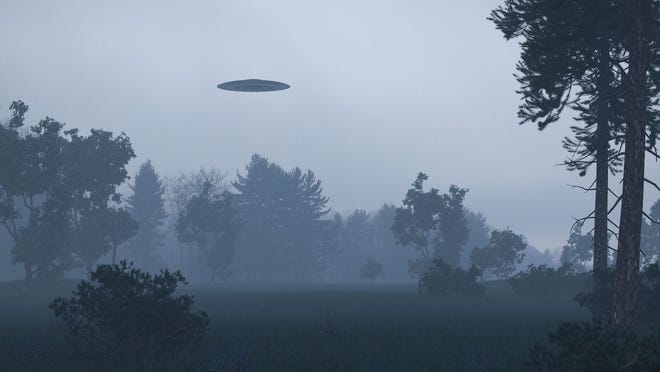
World UFO Day is an awareness day for people to gather together and watch the skies for unidentified flying objects. The day is celebrated by some on June 24, and others on July 2. June 24 is the date that aviator Kenneth Arnold reported what is generally considered to be the first widely reported unidentified flying object sighting in the United States,[ while July 2 commemorates the supposed UFO crash in the 1947 Roswell UFO Incident.

RoswellDailyRecordJuly8,1947.jpg
Roswell Daily Record, July 8, 1947, announcing the “capture” of a “flying saucer” source WIKIPEDIA

What is other side of the sky? Once This question always going round in my mind, other planets, solar system , milky way, black eye galaxy this things are fascinated millions , years after year scientist research and now the craze to know the unknown world , creature from other planet is really noticeable. Series, documentaries, movies based on aliens, other world.  But you know In Chhattisgarh ancient rock painting depicting UFO exist suggesting Alien communication with humans since prehistoric times, Archaeologists JR Bhagat, who discover them , said they depict strange humanoids with no facial features and other painting of flying discs.

CHARAMA (Chhattisgarh): Chhattisgarh state department of sarchaeology department has sought help from NASA and ISRO experts.

The finding suggest that humans in prehistoric times may have seen or imagined beings from other planets which still create curiosity among people and researchers.

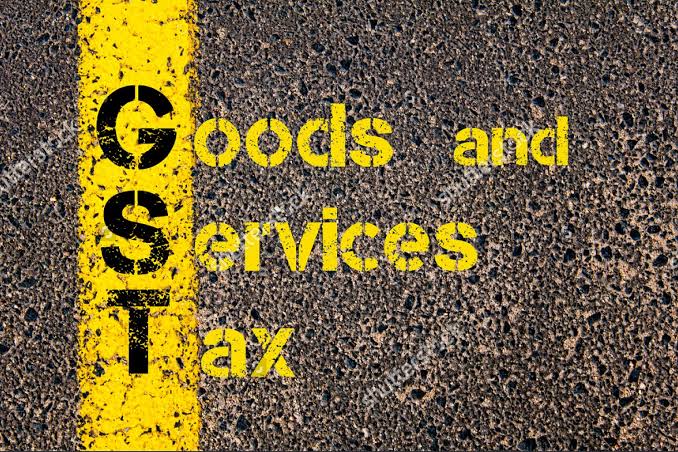
GST DAY

Approx most of the day we heard about this Term GST, if we Recharge mobile current postpaid bill is Rs 500, we will have to shell out Rs 590. It is Rs 15 more than what you are currently paying. Food, electricity, gold, land, loans in these services GST is applicable

GST, Goods and Service Tax Act passed in the parliament of India on 27th March 2017 and came into effect on 1st July 2017.

The day was celebrated on 1st July 2018 to mark the first anniversary of the new indirect tax regime.GST is a single indirect tax on the supply of goods and services right from manufacturers to consumers. It’s replaced a number of taxes such As excise duty, service tax, central sales Tax, Value-added Tax(VAT), and Octroi.

Excise duty is an indirect tax that levies on the goods which, are produced within the country. This tax is not related to the Customs Duty. Excise Duty is also known as Central Value Added Tax. value-added Tax is collected by the state government. For example, if we purchase a good then we must pay an additional tax as Value Added Tax to the government. The VAT rate is decided based on the nature of the item and state.Custom duty and OctoroiThis tax is levied on those goods that are imported into India from outside. The Custom Duty tax is paid at the port of entry in the country as the airport. This tax rate also varies over the nature of goods. While the Octroi tax is charged on the goods entering the municipality.

GST was First coneceptual by Former Indian Prime Minister Atal Bihari Vajpayee,1999.

In an official message on the occasion of GST Day, Finance Minister Nirmala Sitharaman on Wednesday said that more efforts are required to ease tax compliance further for the taxpayers, especially the micro, small and medium enterprises (MSMEs). Wednesday marked the third anniversary of the launch of the Goods and Services Tax (GST) regime.In message, Ms Sitharaman herhighlighted the steps taken towards easing the return filing process, including the recently introduced feature of SMS-based filing for nil return

Happy National Doctor’s Day

Every year on 1st July India celebrates National Doctor’s Day in honor of Bharat Ratna Dr. Bidhan Chandra Roy former chief minister of West Bengal and someone who represented the best of his profession at a critical time in India’s modern history.

He is still considered the greatest Chief Minister of West Bengal and a visionary of developing the State as after independence lot of industrial development took place in the State.
He was the one to establish the Indian Medical Association in 1928 and the Medical Council of India. He also played a crucial role in establishing the Indian Institute of Mental Health, the Infectious Disease Hospital, and even Kolkata’s first-ever postgraduate medical college.

My Tribute to our life Saviors

And on this Doctor’s Day salute to all the doctors and healthcare workers for their selfless service. In this pandemic, they are real-life heroes, bringing hope in these difficult situations. Keeping us safe, fighting the coronavirus war at The frontline. Their invaluable contribution makes people recover from this dreadful disease.

India- land of large physiography

Unity in diversity, So is said about India, is not true only about its people, but it’s physiography, beautiful and insane. Mountain chains, large deserts, beautiful coastlines, beaches, ever flowing rivers, dense forests and the swampy landscapes, all put together to make a divine country, named, India. All these features make India a place worth visiting for, and thereby creating an increase in its rank up on the world stage.

India has been divided into six physiographic zones –

  • Northern and north-eastern mountain
  • Northern plain
  • Peninsular plateau
  • Indian desert
  • Coastal plains
  • Islands

North and north eastern mountains –

Starting right from the Himalayan mountain range, where the heaven on the earth, is one of the most prominent features of Indian physiographic divisions. It not only protects the country from external attacks, but also is responsible for the controlling of the winds flowing in and out of the country. Starting from Hindu Kush mountains in the West, covering all of the Northern India, these get plunge towards the North East, in the states of Arunachal Pradesh and Meghalaya.

Northern plains –

Covering most of the Indian peninsula, the northern plains spread over 2.5-million km sq. Most of the production activities take place over this region, such as, farming, setting up of industrial areas, and other massive activities, also having the most fertile soil to grow crops, i.e. alluvial soil. The region is a way, or the region sustains India’s most of the perennial rivers, like The Ganga, The Yamuna, The Son, etc and etc.

Peninsular plateau –

Peninsular region is the oldest part of the Indian subcontinent. Most of the variations in the land geography, one can find plateaus, fold mountains, ridges, and contains most of the mountain ranges. Peninsular region of India is most famous for its forest areas and diverse range of flaura and fauna.

Desert –

Two type of deserts can be found in India

  • Hot desert
  • Cold desert

Hot desert covers the Western most states of the country, Rajasthan, Gujarat. But the type of deserts still differ from each other, in terms of appearance and salinity. The desert in Gujarat is more saline and is white in appearance, but in the region of Rajasthan, it is alike other deserts found in many of the parts of the world.

Cold desert of India is in the Ladakh region, which is also the coldest and highest regions of the country.

Coastal areas and Islands –

India is bestowed with a large coastline,running from Gujarat towards the South,and ending up in the state of West Bengal. It is because of this large coastal area, most of the economic developments could take place in the country,whether it is fishing, extraction of natural resources,development of ports, and way for exports and imports.

Major islands of the country are Andaman and Nicobar and Lakshadweep,where natural resources are easily available in abundant amount.

This diversity in the physiography of India makes it a beauty of the earth and the presence of natural resources makes the subcontinent into a land which is more favorable for human growth.