Journals are modern weapons used to survive in this world. Journals are the records of an event that are explained clearly. It acts as permanent records too. Journals were mostly in the written form. Academic journals, Trade journals, Current affairs journals, Popular journals, Newspapers are the different types of journals.
The purpose of the Academic journal is to provide Academic disciplines. They are peer-reviewed and the content of the journal is in the form of research papers, books, or article reviews. By the Academic journal researchers and journalists had a platform to perform and to pass their knowledge to their audience. In a digital world, the content of the authors would be available online in some Academic Libraries. The second one, Trade journal. They are useful for the business doing people to develop and promote their business. The trade-related journals we’re written by experienced professionals. It also helps in taking investment and purchase decision making. The next one is Current Affairs journals. They are news updates or broadcasts the news under different genres like Economics, Political, etc. That news would be broadcast on radio and television.
Popular journals are written by Journalists about popular issues. The main goal is to entertain people with the use of simple and understanding languages. The newspaper carries news about the world and provides news updates and general knowledge. It contains news under various genres like sports, entertainment, political, etc. It also creates a habit of reading among the people.
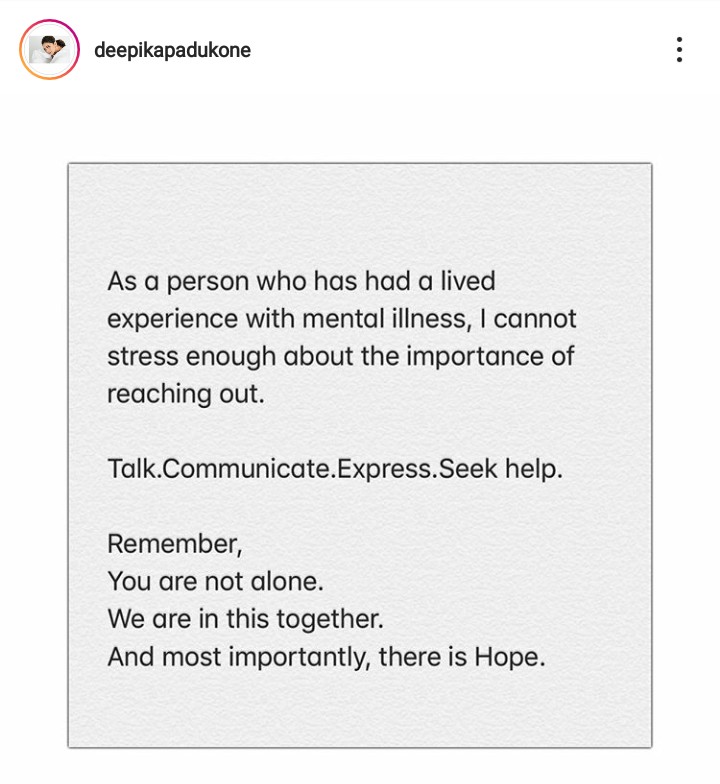
When the whole world is behind their doors due to this covid 19 pandemic,many of you may feel lonely and depressed.. But let me tell you one thing, you are not alone.. We are all together in this.. Let us believe in ourselves and the fact that we shall overcome this one day.. Talk to your innerself fight against odds and lets come out successfully.. R.IP Sushant Singh Rajput.. He will be missed by each one of us.
Loneliness – the demon
One fears loneliness and so do I, One faces loneliness and so do I, Amongst the thousands one tends to loose the very identity and so do I, Its like the demon who grabs the arms in dark, It engulfs the ability to think, to desire,to prosper It conquers the power to imagine to proceed and to succeed, When one night it penitrated inside me to the fullest, I tried to resist but all in vain I waited for the atmosphere to change; But it changed for the worst And all of a sudden a voice interrupted and resumed my consciousness, And now as i behold i find my reflection, Subconsciously i realize the very fact that Am not alone,. for i am encompassed by my own self that resides deep inside me that saved me that night.. Everyone has an inner self just as i possess Grant her your friendship just as i do And u will notice loneliness closes its doors for you…
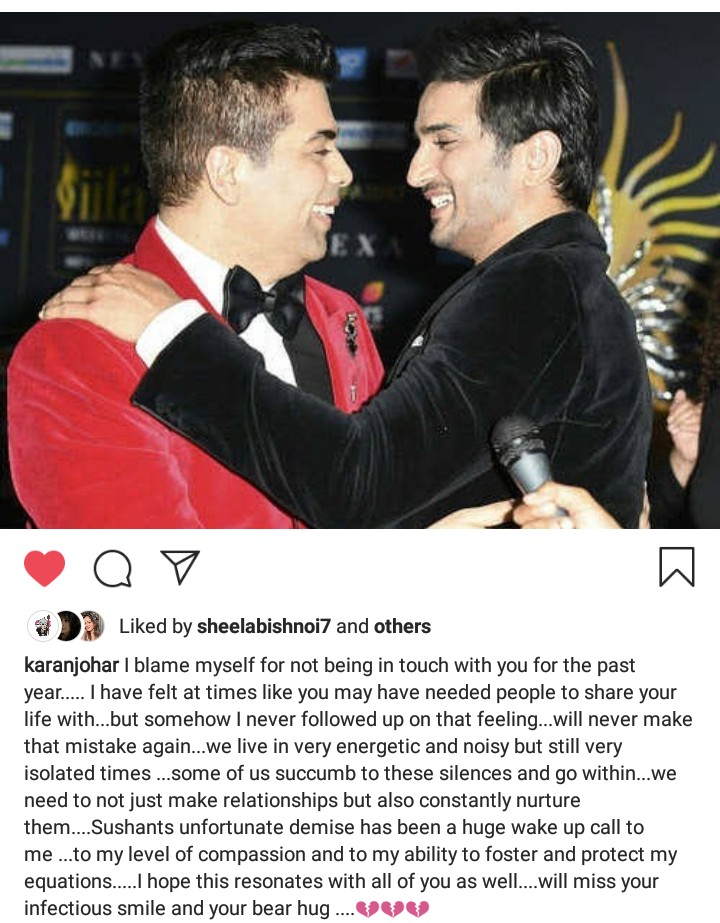
I am sure we are all shocked, deeply gutted and extremely upset by the news. It’s so difficult to register and almost feels like a personal loss.
A person who looks so content, oozing happiness and vitality in every media gathering attended, amongst each and every small interaction he had and yet somehow we couldn’t figure out what is going on inside the mind of that person. Does it signify our inability to interpret emotions?. I guess, partly it does, but the underlying truth is that people have become so good at pretending and concealing their true innermost thoughts. I think this is where the root of the suffering lies. Why can’t we be honest? Why can’t we be transparent?. If we are vulnerable, let us not shy away from the insecurities. Instead we should talk and communicate and just vent out our feelings. Afterall, we have always got so many people around. They may be our friends, colleagues, parents and even if you feel that you are the unluckiest soul on the planet that you don’t have any confidante. Don’t get disheartened dear. Just go and immerse yourself in the divine and you’ll find peace there but you need to acknowledge the fact that you are not alone first. It’s about these initial, little steps towards attaining peace.
Life is so fickle. Practice gratitude daily🙏🏻 you never know what the next moment has in store for you.
Depression and anxiety comes from a set of fluctuating thoughts centered at negativity and that is also quite normal, happens with everyone but varies in terms of intensity and emotional support received. I think it’s really important to to SHARE so that it doesn’t even reach that stage (of suicide) and you never know you can save a lot many lives and maybe your even your own. Let usall be just be nice and kind to everybody around. Even if the person doesn’t seem to be in need, let us always try and radiate positivity and benignity, through our words, to every person that we encounter with cause we never know if that person really needed to hear those words. We might save a life by just being kind so that there’s no room for any regrets.
Sushant starred in the movie Chhichhore and he himself delivered many dialogues regarding how to combat the suicidal thoughts but somehow when you get trapped in the bubble of negativity, you just can’t find a way out. But what we fail to understand is that light is always present, we just need to make an effort to step out of that room of darkness and that cannot be done alone. You need some amount of strength, encouragement and support and that is what your family members are for. It’s time that we learn to be as vocal as possible about mental health and if you feel you cannot afford professional help, then it’s completely okay. There are even numerous pages on Instagram who are there to hear what you want to say without even mentioning about your name. The trick is that when you just let it out of your heart it then just vanishes and you feel so light, so relieved. I am sure you must have experienced this. All I want to say is that life is so precious. It is a gift to us by the almighty and we simply don’t have any right to end what is not created by us. We are the manifestation of the Supreme itself. Feel it, let the power fill the void within. Let us all remember that there’s always a sunrise following the sunset.
My loveliest hugs to all the mental health survivors out there who are fighting a constant battle with themselves and emerging out stronger than ever. You guys are the real heroes and inspiration to so many, trust me. I hope Sushant’s soul rests in the peaceful bliss which we couldn’t give him or he himself couldn’t find in this world.
And THIS🙏🏻
Sharing another heartfelt *string of thoughts* by not a star TV actress or winner of Bigg Boss 12, but a fan of the passed soul!
*As per the collective statement of subject experts
The occurrence of eleven, low magnitude earthquakes in and around Delhi in the last three months has become a matter of curiosity, and concern, for some, who are inquisitive to know the implications of this sudden change in earth’s behavior.
Experts of IIT Dhanbad have urged the Governments to ensure preventive measures as a major earthquake might shake the national capital and its adjoining areas in upcoming days. PK Khan a professor at applied geophysics department of IIT Dhanbad opined that recurrent tremors of small magnitudes predict a major earthquake. He asserted that time has come for the Centre and Delhi governments to take all required measures of prevention and create awareness.
Some of the top geologists of the country have said that eleven earthquakes of low to moderate intensity have hit Delhi-NCR in the last 3 months, which indicates that a devastating earthquake may strike the National Capital in near future. Delhi is also close to the Himalayas where several earthquakes of more than magnitude 8 have occurred. There is a possibility of a few major tremors in the Himalayan region which can severely affect Delhi-NCR as shown by studies.
From April 12 to June 13, ten earthquakes have been recorded in Delhi-NCR by N.C.S (National Centre for Seismology). Four tremors in Uttarakhand and 6 in Himachal Pradesh were also recorded.
“We cannot predict exact time, place or exact scale, but do believe that there is a regular seismic activity going around in the NCR region and may trigger in a major earthquake in Delhi,” asserted Dr. Kalachand Sain, Chief at Wadia Institute of Himalayan Geology, an autonomous institute, run under DST (Ministry of Science and Technology).
Dr. AK Shukla, ex-Head of Earthquake Risk Evaluation, Indian Metrology Department said, “Most of these earthquakes were low magnitude earthquakes measuring from 2.3 to 4.5. A series of such earthquakes ostensibly warn of a major earthquake to hit Delhi in the coming days. An obvious reason for increasing numbers of tremors hitting Delhi is the local fault system, which is quite active. Such fault systems around Delhi have the potential of producing an earthquake of magnitude around 6 to 6.5.”
According to reports, most of the buildings constructed in Delhi are not earthquake resistant and may get severely damaged in case of high magnitude tremors.
Why A Major Earthquake Will Be Catastrophic For Delhi
Delhi’s population has seen a rapid growth of 11.5 times in the past 70 years. If an earthquake-like 1720 recurs, the loss to life and property could be humungous in today’s Delhi.
The occurrence of eleven, low magnitude earthquakes in and around Delhi in the past three months has become a matter of concern. The reality is subject experts refrain from making a prediction as to whether the phenomenon is a sort of a trailer for something bigger in-store, or just a swarm of harmless micro-tremors, which would fade away into oblivion with passage of time. It would be reasonable to conduct the issue on scientific lines after rummaging through the existing database of events.
Talking in geological terms, Delhi is situated at the interface of old metamorphic rock sequence and very young alluvial sediments that have been deposited over the Indian lithosphere in response to the tectonic movements of the Himalaya. This region is located on the intersection of two regional sub-surface structures named Delhi-Haridwar Ridge and Delhi-Sargodha Ridge. The former is placed between two faults viz Mahendragarh-Dehradun Subsurface Fault and Great Boundary Fault (GBF) that are 200 km apart.
Understanding the importance of the NCR and its seismic status, it is classed in high damage risk zone IV, The IMD established a seismic telemetry network of sixteen field observatories during 1998-2000. This network has recorded 422 seismic events in the period from 2005 to 2012, the majority being tremors with a magnitude less than 3.0. This recent disturbance in the natural movement of plates is regarded somewhat out of bound for a logical explanation. We will have to wait and watch while taking all the necessary measures.
Businesses have been suffering and reeling under the impact of the lockdown enforced due to the Corona Pandemic. Although the Indian Government has announced a 20 lakh crore stimulus package for the Indian economy, the small businesses and the daily wage earners continue to struggle. The majority are left questioning as to what will kill them first, the Coronavirus or hunger?
People are being laid off jobs continually. Businesses are closing down. The underprivileged without savings have been left relying on the substandard government rations and subsidies. The middle class continue to suffer a lot as they are neither eligible for the rations yet they continue to be laid off their jobs. People who are testing positive for corona and recovering are being treated as a social outcast and are being asked to stay away from the office. The economy is stuttering with a record low growth. People in the private sector are being to asked to do the usual job at a fraction of their earlier salary to help the company to recover the losses the company has suffered. Even though the markets are slowly opening up, the customers are staying away from the fear of contracting the deadly virus. The popular markets and malls are recording the lowest footfall they have ever seen.
People are dying and some are traumatised having to stay put in their house month after month. Depression and anxiety are becoming alarmingly common in society. People are only buying essential commodities and luxury items are being shunned. With low and uncertain streams of income, people have stuck to only buying daily essential commodities. The stock market has gone for a toss with record low Sensex and the share price of companies plummeting. The tour and travel industry have been suffocating and will continue to suffer for the years to come. It will take all the industries a lot of time to return back to normalcy.
The educational institutions have been rendered moot with all of them shut with no classes in their institutions possible. The exams are being cancelled and the students and their guardians are finding it extremely difficult to pay off the monthly fees. Some institutions like Don Bosco Liluah, St.John school based in Howrah, a city in West Bengal have made relaxation in the fees structure to assist the parents in this time of financial crisis. However, the schools are suffering from a paucity of funds. The corona crisis has led to a financial emergency in almost all of the sectors in the country.
No one knows how long it will take for the world economy to recover even if a vaccine for Covid-19 is made available. The devastating impact of Corona has led to the loss of lives, daily livelihood and scarred the 21st-century human civilization for life. The daily wage earners and the migrant labourers are suffering a lot. Some have already lost their lives due to hunger and some have lost their lives in the process of having to travel back to their villages.
Everyone is hoping for the nightmare to end soon and for the world economy to get back on its feet and keep moving ahead. Some people keep stressing on the fact that they would rather die from the virus than die of hunger. Thus they continue to risk their lives of travelling for their jobs to earn their daily bread. The pitiable condition of India is only deteriorating daily with India climbing to the 4th position in the list of Covid-19 positive cases. As Rahul Gandhi rightly pointed out, India is on its way to winning the “wrong race”.
The RECOVERY trial, in the U.K., has found no clinical benefit from the use of hydroxychloroquine in hospitalized patients with COVID-19.
The RECOVERY trail which is the large randomized controlled trial in the U.K. began in the march. This trail has enrolled over 11,000 patients.
It is a dynamic trial assessing five candidate drugs and convalescent plasma therapy for treating COVID-19 in patients in U.K. hospitals.
The trial investigators found that there was no significant benefit in mortality reduction in the intervention group, which was the primary objective.
It then came to light that the drug did not have the desired beneficial effects.
“We have concluded that there is no beneficial effect of hydroxychloroquine in patients hospitalized with COVID-19. We have therefore decided to stop enrolling participants to the hydroxychloroquine arm of the RECOVERY Trial with immediate effect,” a June 5 press release says.
According to the release, a total of 1,542 patients were randomized to receive hydroxychloroquine for 10 days while 3,132 patients in the control arm received only standard care.
The researchers found that there was “no significant difference in the primary endpoint of 28-day mortality”. While mortality was 25.7% in the intervention group, 23.5% in the control group, which is not statistically significant.
There was no evidence of beneficial effects in-hospital stay duration and other endpoints, either.
Outcomes measured
The primary outcome was the reduction in all-cause mortality within 28 days of randomization.
The secondary outcomes measured were to assess any reduction in duration of hospital stay and need for and duration of ventilator or ECMO within 28 days and up to six months after randomization.
“These data convincingly rule out any meaningful mortality benefit of hydroxychloroquine in patients hospitalized with COVID-19,” the release says. The researchers will soon make the results available.
Peter Horby, Professor of Emerging Infectious Diseases and Global Health at the Nuffield Department of Medicine, the University of Oxford, and Chief Investigator for the trial says in the release that “Hydroxychloroquine and chloroquine have received a lot of attention and have been used very widely to treat COVID patients despite the absence of any good evidence. The RECOVERY trial has shown that hydroxychloroquine is not an effective treatment in patients hospitalized with COVID-19,”
Huge speculation
Deputy Chief Investigator Martin Landray from the University of Oxford says: “There has been huge speculation and uncertainty about the role of hydroxychloroquine as a treatment for COVID-19, but an absence of reliable information from large randomized trials. The preliminary results from the RECOVERY trial are quite clear — hydroxychloroquine does not reduce the risk of death among hospitalized patients with this new disease.”
“The RECOVERY trial, in addition to the signals from other studies we have received so far, is enough to convince me to not offer hydroxychloroquine to hospitalized patients,” Nahid Bhadelia, a physician at Boston Medical Center, told Science. Prof. Landray added to this, saying: “If you, your spouse, your mother gets admitted to hospital and is offered hydroxychloroquine, don’t take it”.
Post-exposure prophylaxis
Another trial found that hydroxychloroquine drug was not effective even as post-exposure prophylaxis in asymptomatic participants who have had high-risk exposure with a confirmed COVID-19 case. Nearly 88% (719 of 821 participants) had such high-risk exposure. The results of the trial published in The New England Journal of Medicine found that the incidence of COVID-19 illness was not statistically significant in the group that received the drug compared with the control group. While 49 of 414 (11.8%) participants who received the drug developed illness, 58 of 407 (14.3%) participants who got the placebo fell ill. Side-effects were more in the intervention group but no serious adverse events were reported.
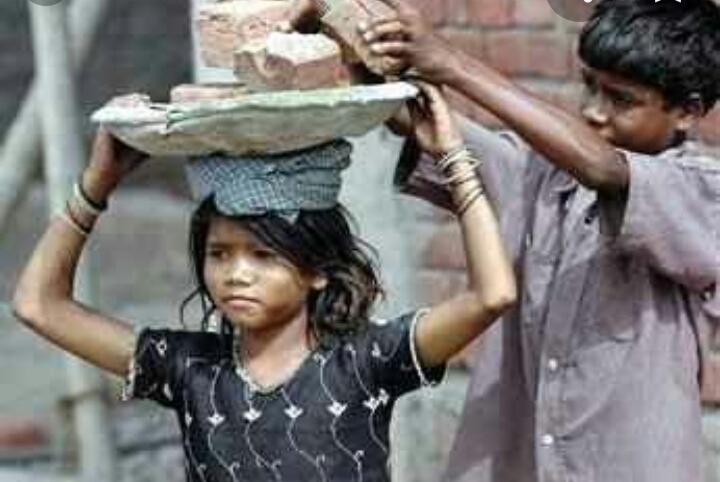
Whenever we recall our childhood days then most of us remember those carefree and happy days of our life. We remember going to school, reading books, teacher’s surprise test, playing cricket with friends and a lot more activities that we miss dearly today. We were always fortunate because we were protected and our dreams were nurtured and cherished by our parents. But there are many children who are less fortunate. They work day and night in unfair circumstances for little or no money. In some extreme cases these children are even forced to work under threat of violence or death. These children mainly work to support their families who are usually trapped in vicious circle of poverty.
Child Labour – A Plague
Children are classified as child labourers when they are either too young to work, or are involved in hazardous activities that may compromise their physical, mental, social or educational development.
According to estimates by the International Labour Organization (2017) there are 152 million children aged between 5-17, subject to child labour. Among this 66 million are girls and 88 million are boys. Among this 72 million are engaged in dangerous work.
Almost 1 in 10 children between the age of 5 and 17 years old have to work.
About 4.3 million children aged below 18 years are in forced labour.
70.9% engaged in agriculture.
17.2% working in service sector.
11.9% working in heavy industry.
Most child labour takes place in the informal sector.
Nearly 70% of children does unpaid work.
Africa alone is the home to 72 million child labourers, which is higher than any other continent. Asia and the Pacific rank second highest with 62 million child labourers in this region. Together they account for almost nine out of every 10 children in child labour worldwide. The remaining child labour population is divided among the Americans – 11 million, Europe and Central Asia – 6 million and the Arab States – 1 million.
About World Day Against Child Labour –
The International Labour Organization launched the World Day Against Child Labour in 2002 to raise awareness and prevent child labour. Each year on 12 June this day brings together government, employees, workers, organizations, civil societies and many people from around the world to highlight the seriousness of the issue. Rules and regulations are made, solutions are sought on how to fight and protect the rights of these children and to provide better quality education and health facilities to child labour.
Theme of World Day Against Child Labour 2020-
The theme of World Day Against Child Labour 2020 focuses on the impact of crisis on child labour. The theme for 2020 is “Covid 19 – Protect Children from Child Labour,now more than ever!” This pandemic and the resulting economic and labour market shock are having a massive impact on people’s lives and livelihoods. Unluckily, children are going to suffer the most. The crisis is going to push millions of vulnerable children to clutches of Labour employees. These children now have to work even in worst conditions and for longer hours.
This is the time when we have to join hands together to eradicate this evil situation which feeds on our innocent children, it will continue to plague our community. This is the time to show humanity. Pledge that we will never let any children practice child labour. We will safeguard their childhood and provide them with a chance to dream big.
“Life of Little ones are destroyed, when child labour is employed.”
Communication is the act of conveying yourself to one another. It can be two or more than two or groups. So as the information is the most powerful and most critically sought commodity in today’s world. In our contemporary society those who controls these information can be said to be most powerful. With global media there is a free flow of information around the world through media.
In this free flow of information, technology in this modern era plays an important role. But sometimes this technology can be a negative factor for global media. Technology is being so advanced that its easy to circulate or get the information but if technology become as negative factor than it can a failure for the flow of information. Developed countries can easily access the information but for the countries who are considered to be underdeveloped cannot be easy for them to have easy access to the global information. Basically, global media is a media that have access to all the information that can be taken through communicating with each other. That’s why communication is biggest source of information for media. Inspite of any geographical distances or cultural distance this sourc e of information can be reach to thousands of homes. Internet is the main source of information and also the main source of information for global media as well. Digital communication is a big advantage in global media. It is a media that is available or spread around the world through various medium like television, radio, internet, or etc. These information can be access by any person through any medium.
On the continuously changing scenario in global media environment communication and technology provides a platform for research with multiple ideas and perspectives. It is also a good reading for students, researchers, and academics. It can be the most known research and a blog to write on. It includes many features but the special features will include interviews, data reports on various countries, reviews on media posts or etc. The global media includes many considerations such as elimination of inequalities or removal of internal and external obstacles for free flow of information. An unbalanced flow of information among the media around the world is an great issue that can be seen from the developed countries to underdeveloped countries. Therefore media plays an crucial role in global media in providing free flow of information.
Global media is basically a source of information that can be provided around the world or circulated around the world through various medium such as internet, newspapers, television, radio, or etc. It also include changes in technologies, greater dependence in on global communication, greater independence and democracy, or etc. However, global media provides knowledge as well as ideas to the people around the world.
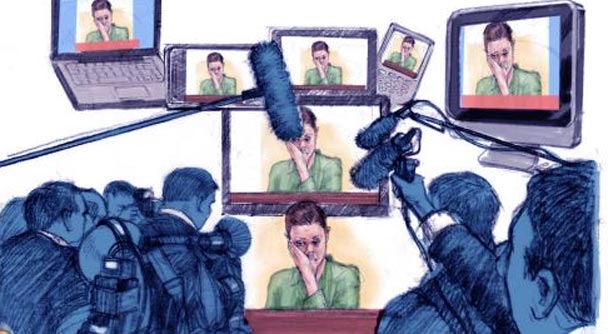
There have been numerous cases where the media has succeeded in bringing about change. It is a powerful influencer as it speaks directly to the public and can shape opinions. The Jessica Lal murder case is a strong example. The accused, Manu Sharma, was the son of Vinod Sharma, a wealthy and influential Congress MP from Haryana. Sharma tried to use his power to manipulate the case and did succeed initially by destroying evidence and turning witnesses hostile. The Delhi High Court was forced to acquit Sharma on grounds of lack of evidence. The acquittal resulted in a huge backlash throughout the nation which was helped on by the media. Jessica Lal’s sister, in an interview with Daily News and Analysis, said, “The media proved to be an extremely powerful force that came to our aid…It was the power of the media that enabled us to get justice. Had it not been for the media, people would have never known about how a family is being denied justice”.
However in another case, the media faced a lot of criticism. In the Ayushi Talwar murder case, Dr. Rajesh and Nupur Talwar were portrayed as guilty of the murder of their daughter and their servant, even though there was no such statement by the police and no conclusive evidence available. Media plays a vital role in moulding the opinion of the society and it is capable of changing the whole viewpoint through which people perceive various events. The media can be commended for starting a trend where the media plays an active role in bringing the accused to hook.
What critics of media trail say?
The Law Commission in its 200th report, Trial by Media: Free Speech versus Fair Trial under Criminal Procedure (Amendments to the Contempt of Courts Act, 1971), recommended a law to debar the media from reporting anything prejudicial to the rights of the accused in criminal cases, from the time of arrest to investigation and trial.
The media cannot be granted a free hand in the court proceedings as they are not some sporting event. Everyone has a right to free and fair trail and the media cannot take this away even from people accused of most heinous crimes.
The right to fair trial has not explicitly been made a fundamental right. That does not mean that it is a less important right. More than a legal right, it is basic principle of natural justice that everyone gets a fair trial and an opportunity to defend oneself. The commission believed that biased reporting by media publications have a prejudicial impact on the suspects, accused, witnesses and even judges and in general on the administration of justice. This is criminal contempt of court, according to the commission; and for that laws should be made to impose reasonable restrictions on freedom of speech.
What the media says?
This is really a grey area and laws can be used to gag the media unnecessarily. Governments accused of corruption will try to suppress the truth during trial if media is not allowed to report on cases of misgovernance, corruption etc. It is true that contempt of court is a ground for restricting the freedom of speech, but the media has not tried to lower the dignity of the judiciary by exposing loopholes of the investigation and the prosecution. And if judicial decisions also appear to be arbitrary, they must be subjected to ruthless scrutiny. It will be dangerous to gag the press in the name of contempt of court. If the appellate court feels that the media publicity affected fair trial, it can always reverse the decision of the lower court.
Instead of a law gagging media, there should be a self-regulatory body with sufficient punitive powers. The existing bodies of PCI and NBA are merely organizations that can give out a warning but cannot take any action. They should be given more powers so that they can punish media organizations that break rules and conduct unfair media trials.
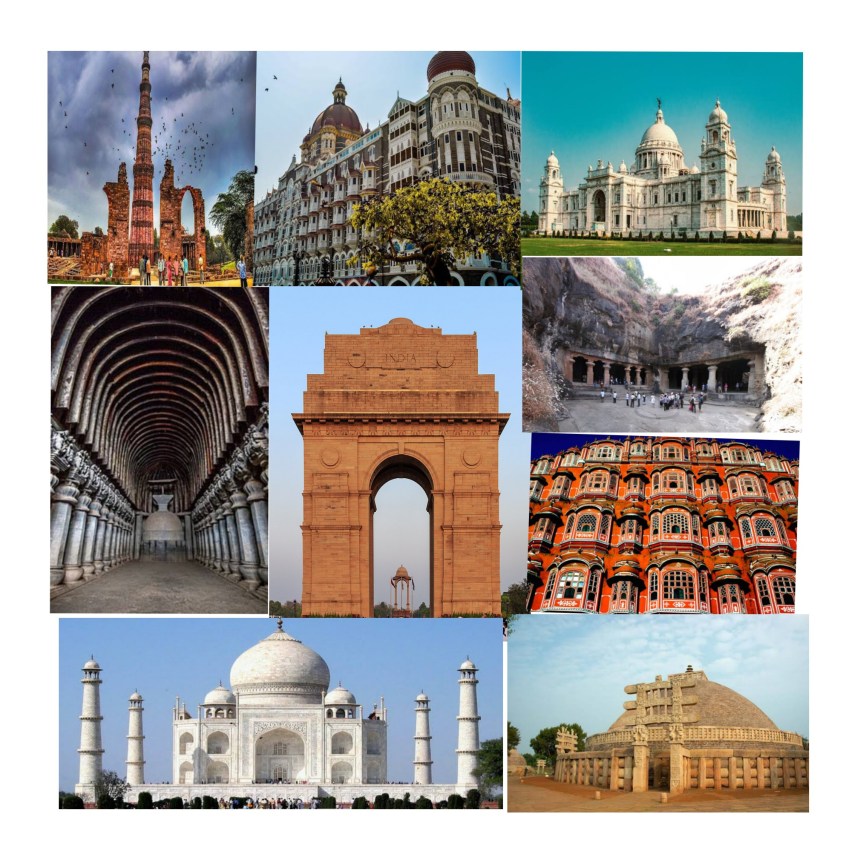
Art, design, creativity, innovation, Music, dance, culture, and heritage is the Identity of INDIA. When we look back at our history of architecture we can understand why It’s Our pride. British, Dutch, Portuguese, Mughal, French foreign forces came to India and Buddhism, Jainism and other religions came here and spread their culture. That’s why Indian architecture is the fusion of a different kind of architectural style and tradition.
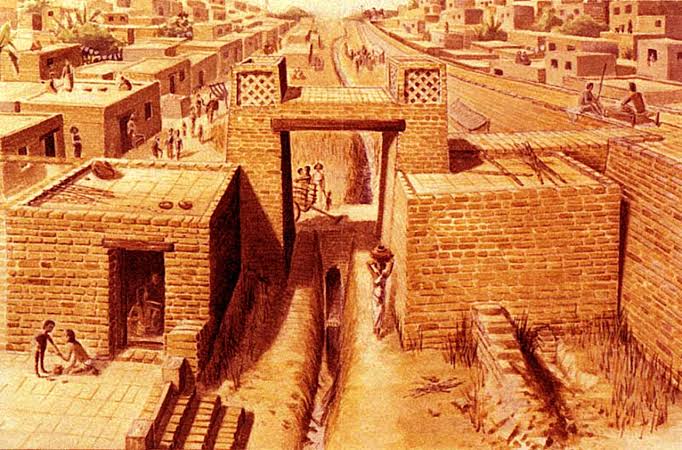
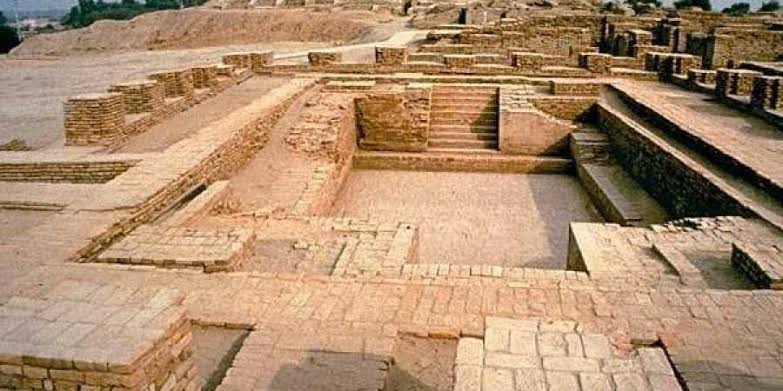
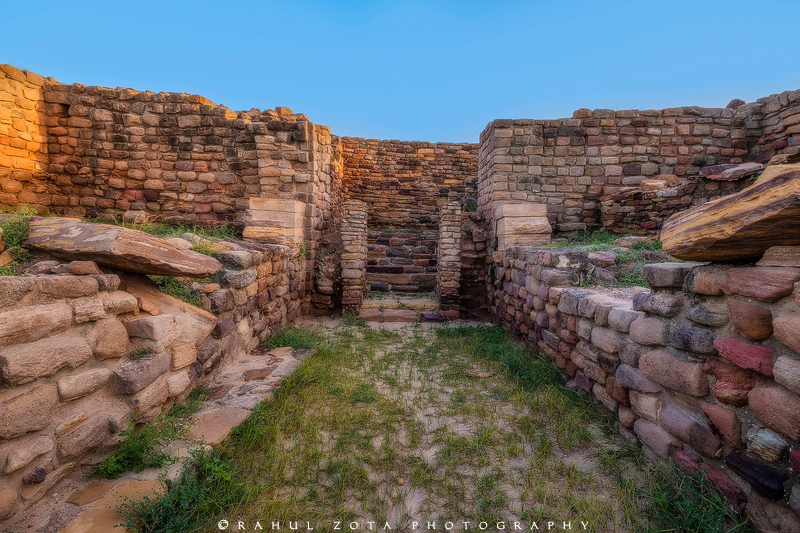
The History of India begins with the birth of the Indus Valley Civilization,(2600 BCE – 1900 BCE) The Indus Valley Civilization covered a large area around the Indus River basin and beyond in late Bronze Age India. The civic and town planning and engineering aspects of these are remarkable, There are granaries, drains, water-courses and tanks, but neither palaces nor temples have been identified, though cities have a central raised and fortified “citadel”. Around the 2000 year ago India had Smart citiesLike Harappa, Lothal, Mohenjo-Daro
Indus Valley Civilisation source of the pictures GOOGLE
After the Indus Valley Civilization, there are few traces of Indian architecture, which probably mostly used wood, or brick which has been recycled,
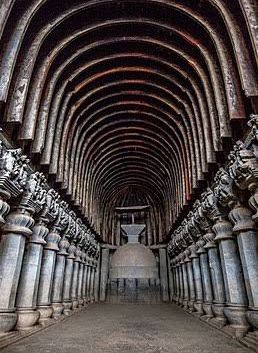
Probably around 400 BCE Indian rock-cut architecture, mostly Buddhist, and there are also a number of Buddhist images that give very useful information.
A STUPA FROM AJANTA CAVE
Buddhist construction of monastic buildings apparently begins before the death of Buddha.
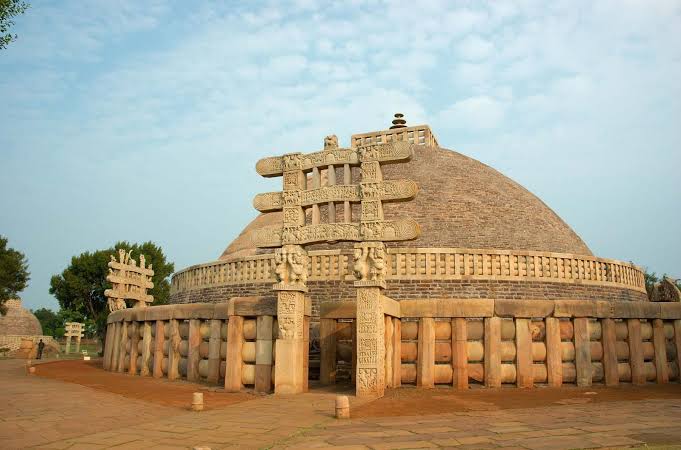
The Great Stupa at Sanchi is one of the oldest stone structures in India,and an important monumentof Indian Architecture. It was originally commissioned by the emperor Ashoka in the 3rd century BCE. Its nucleus was a simple hemispherical brick structure built over the relics of the Buddha
Sanchi Stupais a Buddhist complex, famous for its Great Stupa, on a hilltop at Sanchi Town in Raisen District of the State of Madhya Pradesh,
Temple Architecture was a gradual evolution starting from the rock cut- cave temples to monolithic rathas which finally culminated in structural temples
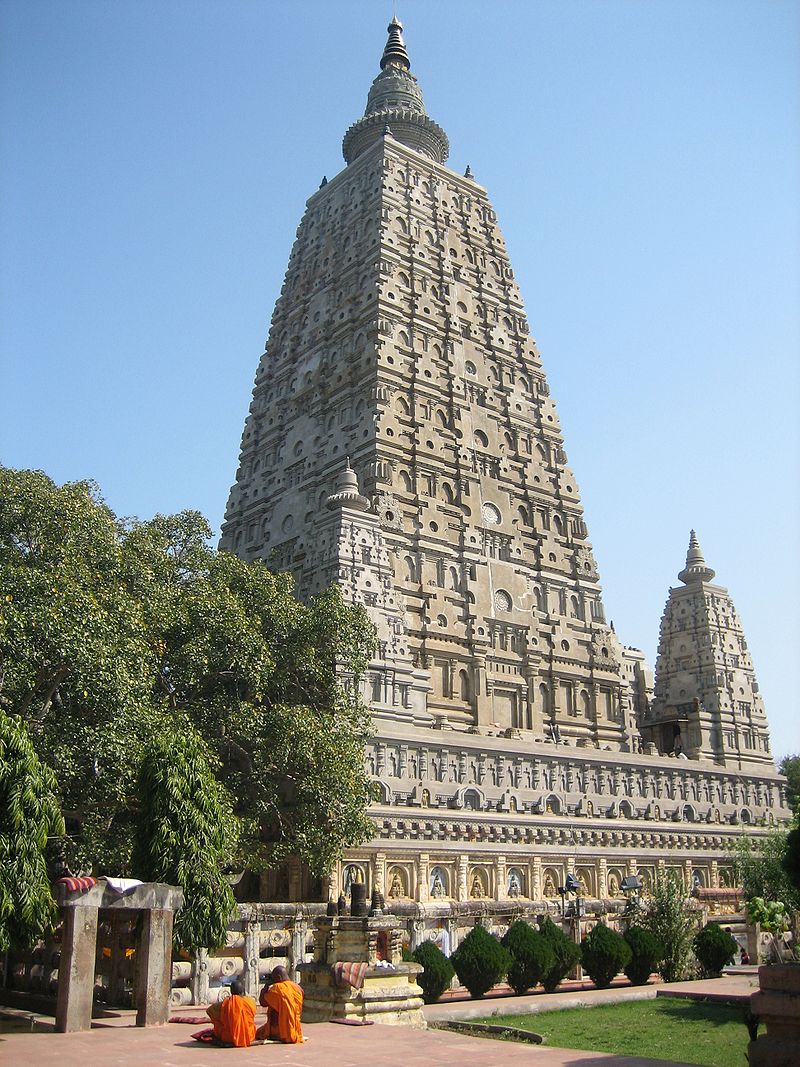
1
2
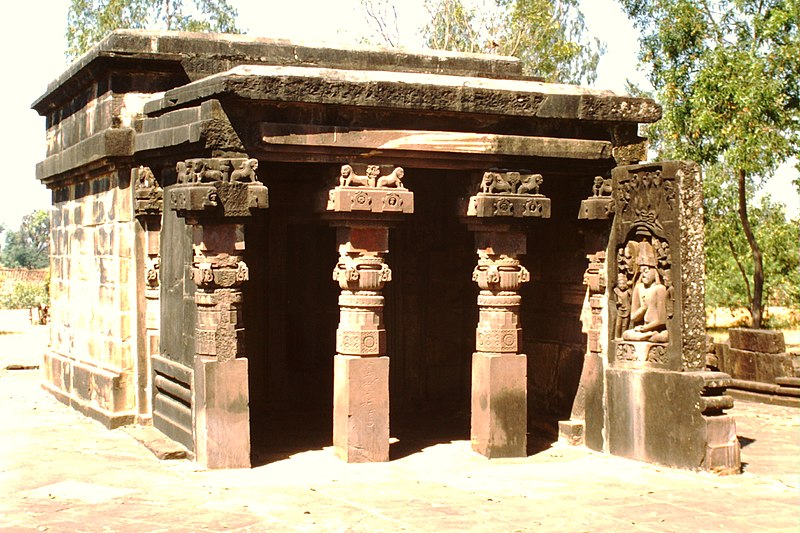
1.The current structure of the Mahabodhi Temple dates to the Gupta era, 5th century CE. Marking the location where the Buddha is said to have attained enlightenment. 2.The Hindu Tigawa Temple, early 5th century.
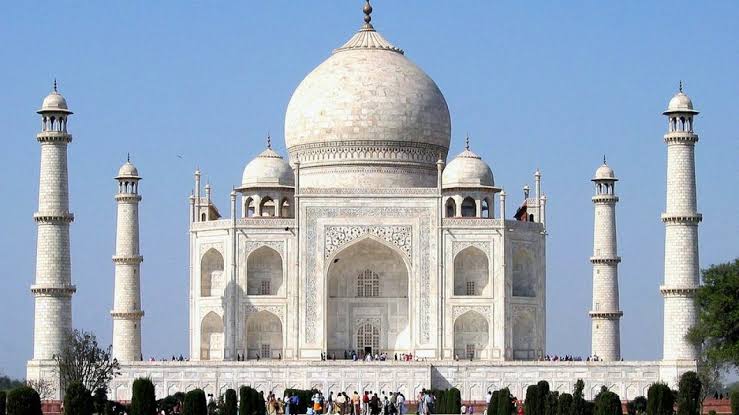
The middle period saw great developments in the field of architecture. With the coming of Muslims to India, many new features came to be introduced in buildings. The development of the Muslim Style of Architecture of this period can be called the Indo-Islamic Architecture or the Indian Architecture influenced by Islamic Art. The Indo-Islamic style was neither strictly Islamic nor strictly Hindu, One of the best architectural traditional style
The Taj Mahal, one of the universally admired masterpieces of the world’s heritage.
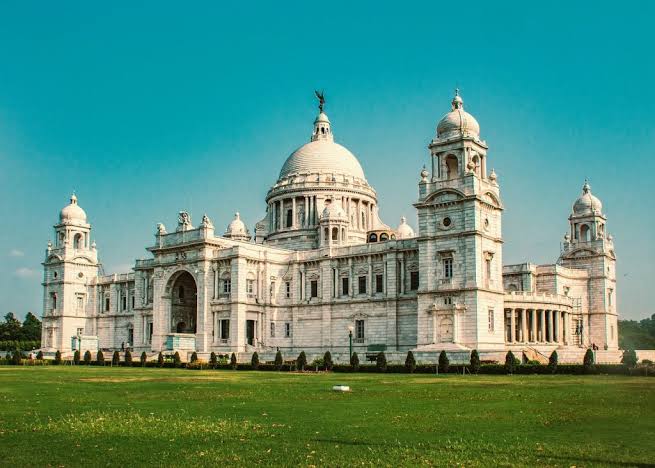
With colonization, a new chapter in Indian architecture began. The Dutch, Portuguese and the French made their presence felt through their buildings but it was the English who had a lasting impact on Colonialarchitecture.
The Victoria Memorial is a large marble building in Kolkata, West Bengal, India, which was built between 1906 and 1921
Now we are living in the 21st-century style, traditional, plan structure changed, modified but these architectures are immortal and inspiring generation after generation.
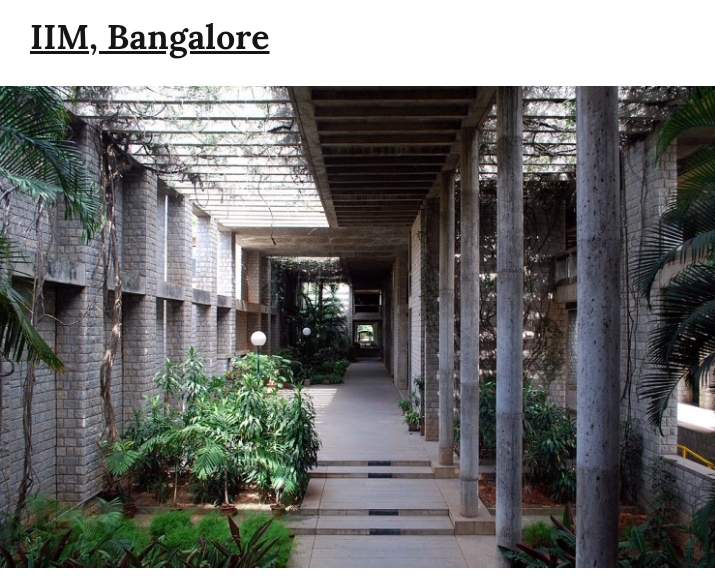
Eco-Friendly Architectural plan
From Indus Valley to eco-friendly plan creativity, hard work, ideas, style tradition makes our country beautiful.












 International Journal of Research (IJR)