The Renaissance

Renaissance means rebirth. The word is usually used about the revival of learning of classical literature between the fourteenth and the sixteenth century. During this period there developed a spirit of inquiry, a spirit of freedom of thought and action. Social, political, and religious ideas were all revolutionized. In the words of Prof. Jebb, “The Renaissance in the largest sense of the term is the process of transition in Europe from the medieval to modern order”. The word “Renaissance” suggests different things to different people. To the love of art and literature Renaissance means the recovery of the masterpieces of the ancient world and the revived knowledge of Greek and Latin. Hence, Walter Pater is right in calling the Renaissance “a complex and many-sided movement”.
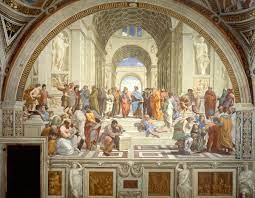
Renaissance Inventions and Discoveries

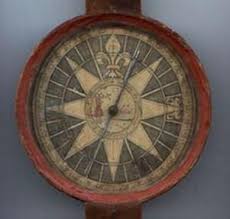
There were certain inventions and discoveries, which contributed to the general movement of the Renaissance. Of these, the most important was the invention of the printing press. The art of printing was introduced into Europe by John Gutenberg of Germany in 1454 and a few years, presses were established in every important town of Western and Central Europe. The first Latin Bible was printed in 1455, at Mainz in Germany. The art of printing reached all over the world. The first printing press in England was established in 1476 by William Caxton at Westminister. Another invention of great importance was the “mariner’s compass”, which enabled sailors to undertake longer voyages that had hitherto been possible. Along with this came also the invention of the telescope, a century later. The invention of the telescope marks the beginning of the science of astronomy.
Renaissance Writers

Dante, Petrarch, and Boccaccio prepared the ground for the Renaissance in Italy. Italian states were ruled by despots who competed with one another in the splendor of their courts. Another great Italian writer of the period was Machiavelli. In France, the effect of the Renaissance was seen in the lyric poetry of Ronsard, the vigorous prose of Francis Rabelais, and the scholarly essays of Montaigne. In Spain, the literary glory of the Renaissance was the glory of Cervantes. His “Don Quixote”, a burlesque of the romances of Chivalry is the most beautiful gift of the Renaissance of the literature of the world. In England, the Renaissance was heralded by Geoffrey Chaucer and selling who had contacts with Italy. A good start was given by three Oxford friends, Thomas Linacre, William Grocyn, and Hugh Latimer. All of them studied in Italy and later lectured on Greek at Oxford University.

Geoffery Chaucer

Renaissance Art and Literature

The period of Renaissance was also an age of translation. Virgil, Ovid, Cicero…were all translated into English. The first part of Chapman’s “Homer” appeared in 1598. Thus people like Shakespeare who knew little Latin and less Greek became familiar with classical mythology. The Renaissance in literature may be said to have begun in England with Sir Thomas More. His Famous work, “Utopia”, which is a Greek word meaning “nowhere” was written in Latin and first published in 1516. The English translation was published in 1551. Spenser, the author of the first great English epic “Faerie Queene”, is the representative poet of the English Renaissance. The names closely associated with the Renaissance in Art and literature are those of Michael Angelo, Raphael, and Leonardo da Vinci. They were all-rounder’s, poets, painters, and sculptors. Their work is the glory of the picture galleries in Europe. As a sculptor, Michael Angelo’s most famous work is the Virgin Mary holding the dead body of Christ on her lap. As a painter, he painted the ceiling of the Sistine Chapel and the great fresco of the “Last Judgement” on the walls of the same Chapel. As a poet, Michael Angelo wrote many sonnets and love poems. Leonardo da Vinci is famous for the fresco of the “Last Supper” in the refectory of Maria Delle Grazie in Milan.

Renaissance Religion

The Renaissance in religion consists of two movements, the Reformation and Counter-Reformation. The Reformation started in Germany. Martin Luther, the leader of the Movement, translated the Old and New Testaments into German. William Tindale gave an English rendering of the translation made by Erasmus. These translations of the Bible helped people to read and interpret the text for themselves. As an antidote to this, there started a Counter-Reformation and founding of the society of Jesus by Ignatius of Loyola in 1540. As an outcome of this Renaissance in religion, there was a split in the church and those who protested against the supremacy of the pope came to be known as Protestants.

Chruch in Renaissance period

Shakespeare’s History Plays

Many of Shakespeare’s plays have historical elements, but only certain plays are categorized as true Shakespeare histories. The “history plays” written by Shakespeare are generally thought of as a distinct genre: they differ somewhat in tone, form, and focus from his other plays (the “comedies,” the “tragedies” and the “romances”). Shakespeare’s history play can be divided into two types those dealing with English history and those dealing with Roman history. For the first type, Shakespeare borrowed materials from the English chronicles plays of the period. Marlowe and Peele had written historical plays and chronicle history was popular at that time because it flattered the patriotic spirit of the English. When converted into dramatic form, chronicle history gave opportunities for striking action and enabled the playwrights to freely mingle the comic and the tragic. Shakespeare followed the theatrical fashions of the time.

While many of Shakespeare’s other plays are set in the historical past, and even treat similar themes such as kingship and revolution (for example, Julius Caesar, Antony and Cleopatra, Hamlet, or Cymbeline), the eight history plays have several things in common: they form a linked series, they are set in late medieval England, and they deal with the rise and fall of the House of Lancaster-what later historians often referred to as the “War of the Roses.”

Shakespeare’s most important history plays were written in two “series” of four plays. The first series, written near the start of his career (around 1589-1593), consists of Henry VI, Parts 1, 2 & 3, and Richard III, and covers the fall of the Lancaster dynasty–that is, events in English history between about 1422 and 1485. The second series, written at the height of Shakespeare’s powers (around 1595-1599), moves back in time to examine the rise of the Lancastrians, covering English history from about 1398 to 1420. This series consists of Richard II, Henry IV, Parts 1 & 2, and Henry V.

Shakespeare drew on several different sources in writing his history plays. His primary source for historical material, however, is generally agreed to be Raphael Holinshed’s massive work, The Chronicles of England, Scotland, and Ireland, published in 1586-7. Holinshed’s account provides the chronology of events that Shakespeare reproduces, alters, compresses, or conveniently avoids-whichever serves his dramatic purposes best. However, Holinshed’s work was only one of an entire genre of historical chronicles that were popular during Shakespeare’s time. He may well have used many other sources as well; for Richard II, for example, more than seven primary sources have been suggested as having contributed to the work.

It is important to remember when reading the history plays, the significance to this genre of what we might call the “shadows of history.” One of the questions which preoccupy the characters in the history plays is whether or not the King of England is divinely appointed by the Lord. If so, then the overthrow or murder of a king is tantamount to blasphemy and may cast a long shadow over the reign of the king who gains the throne through such nefarious means. This shadow, which manifests in the form of literal ghosts in plays like Hamlet, Macbeth, Julius Caesar, and Richard III, also looms over Richard II and its sequels.

The Point Is Poetry

“This is what poems are for:

Telling other people things

I can no longer tell you.”

This quote by Trista Mateer is one of my favorite quotes of all time. Because every time I read this quote, I cannot help but wonder what was going on in the minds of those great poets when they wrote the poems we read today, or rather who was going on in the minds of those poets?The center of almost every poem is the poet missing their lover or their mother or their home or they are extremely happy or extremely sad and there’s no other way to express that feeling but poetry. ‘There’s no other way to express that feeling but poetry.’ Everything makes so much more sense when it’s in the form of poetry.

Truth be told, I haven’t always been this big of a poetry fan. For the longest time poems for me were just lessons in my English textbook. The emphasis was more on finding the figure of speech and not on connecting with the poet. Every line had a hidden meaning, the red dress was a symbol of pain or sometimes pleasure, the blue eyes symbolized the oceans of tears she held in her eyes, the daffodils symbolized happiness. We were always told to read between the lines. But what if, just what if, the red dress is just a red dress symbolizing nothing but how much does our girl in the poem like the color red or maybe not even that. What if blue eyes are just the color of her eyes and the poem mentions daffodils because it’s the only flower that grows around her house? Don’t get me wrong, I’m not saying that poems are just plain sentences that symbolize nothing. I’m sure that many poems like ‘the road not taken’ actually do have a deeper meaning. All I’m trying to say is that we don’t always have to search for deeper meaning. The point of poetry is for you to enjoy it, it’s for you to connect to it.

Shakespeare rightly said that the only thing that will outlive everything is poetry. The feelings you feel now of pain or heartbreak or misery or happiness or love, you think those feelings are unique to you, you think that no one in the world could understand what you’re feeling and then one day you come across a poem that speaks to you in a way you didn’t think was possible. It seems like that poem is something from your own head. And that part of you is a bit more defined, a bit sharper, and a bit easier to understand and explain to others. And in a while, you realize that this poet felt exactly what you’re feeling just some hundred and fifty years ago. Told you that everything makes so much more sense when it’s in the form of poetry.

What’s more interesting is we all read the same poetry and miss different people, different places, different homes. How that poem is written for none of us but somehow for every one of us. Don’t you think that’s the entire point of poetry? You don’t have to understand the poetry to enjoy it. You don’t have to read every work of your favorite poet to say you’re a fan. You don’t have to go look for the deeper meaning, sometimes there isn’t any and sometimes the deeper meaning is how the poem resonates with you. Sometimes the point of poetry is poetry.

Master of the Senses?

Are we the masters or slaves of our senses? Are we the driver of our actions or being driven by the forces outside?

The later case is so common that anything otherwise might come under the category of superhuman.

In a story of Pizza – the person!, Pizza has a great life. Pizza always puts all kinds of efforts to look good and ends up creating history.

People never get bored of Pizza and want to accompany Pizza on almost every other day. Pizza’s life is so good and rich. Which pizza we pictured?

What we read, watch and listen, that most easily comes in thoughts, words and actions.

Burning the Five Vices

The festival of Dussehra celebrates the end of evil, followed by Diwali the festival of lights.

What is that evil if we have to name it?

Our thoughts and habits? Or some people’s thoughts and some people’s habits? Or is it restricted to some country and arises occassionally?

Majority minds today are burning in the flames of lust, anger or greed.

Five vices of man and five vices of woman symbolize the ten heads of Raavana.

Have these vices really disappeared as we are celebrating Dussehra?

The celebration of life will begin only when each one on the planet becomes an embodiment of virtues and a divine personality.

Benefits of Silence

SILENCE does wonders for the mind. Outside or in the mind, reward is great both ways.

For long stories of anger, blame, criticism or gossip, silence could be the answer for listeners, where speaking could be like adding more flames to FIRE.

Minimal use of words could be a great way to observe various thoughts. Also silence is anything but boring, with a nice opportunity to be in a good LIGHT feeling.

And words coming out from a still MIND would also carry more meaning and enthusiasm.

Why are people switching to digital schools?

– Sonia Sharma

Every activity happening in international schools is digitally stored, including the classrooms. Students, teachers and parents can always verify and re-visit to clarify the facts. Students don’t have to take leave each time they fall in the football ground. Your kid can sit in his/her bed or study table, drink a cup of warm milk and continue attending school without missing a class. Even if they miss a class, they can always log in to access the class later.

We live in the postmodern digital age. Most of us get every information at the speed of light with a simple tap of buttons. People can’t even wait for a website to load after 3 seconds. Any longer than that, we just close the link and move on to a faster website! With that, education is at our fingertips and everyone around the world is embracing the digital education system. COVID and extreme climates have opened new possibilities for students and institutes. They find it way more comforting and fruitful to indulge in digital schools, online coaching, and distance learning degrees. But more than comfort, online learning is a blessing in disguise. There is more to it than you know right now.

Photo by Andrea Piacquadio on Pexels.com

Here are a couple of reasons why digital schools are the next big thing for students! You would be surprised to know!

  • Grow skilled and brighter

When children are tech-smart, they develop multiple skill-sets. From self-learning to practice and technology advancement, everything leads to their future growth- personal and professional. They can even manage, plan and organize things smartly and swiftly! Most things are soon going to shift completely online.

  • Learn self-development

In a digital education system, students learn discipline but in a very fun way! They become more active, fearless and curious in an online class. Often, students find ways to interact with their classmates and teachers without facing the fear of face-to-face interaction. Eventually, the fear vanishes, and children can easily communicate offline within a group, out in the world, and exchange knowledge. Students do their own research to complete the tasks and view the calendars or notifications to submit them on time.

  • Rich, easier and fun curriculum

Conventional black, white, and green boards are no longer the only medium of teaching. There is a lot of interesting and fun content prepared and used in a digital school. Learners can save digital assets, like notes, class recordings, drafts, links, presentations, e-books, and videos! Online quiz and answer gardens are one of the most engaging and entertaining activities in digital schools. Well, you can now also make a book online with prominent ebook templates for your child’s study. So, the ways are getting flexible online to help study better.

  • Authentic experience

Every activity happening in the school is digitally stored, including the classrooms. Students, teachers and parents can always verify and re-visit to clarify the facts. Students don’t have to take leave each time they fall in the football ground. Your kid can sit in his/her bed or study table, drink a cup of warm milk and continue attending school without missing a class. Even if they miss a class, they can always log in to access the class later.

  • Career-oriented education

With this online shift, digital education systems focus on providing technology-based skill sets and career-focused education. They help to brush up the interpersonal and professional skills on a global level. From language learning apps to software development training, students develop their skills earlier than conventional methods. In an offline school, they may only get one or two days in a month to visit the computer lab for a hands-on experience.

  • Road to savings and sustainable living

Digital schools save a lot of time, fuel and effort that we waste on uniforms, transport, cooking, buying books and stationery. Thousands of bucks are saved from your pockets and significant air pollution is avoided.

  • Parents are updated

The digital education system is a blessing for parents as well. There is no need to worry about your child’s progress. To check if your child is doing well in school, you can always communicate with the staff and log onto the parents’ portal. You can exchange advice and information via video calls with the teachers. You can always view their progress reports and grades in your portal.

Isn’t this a wonderful promising venture? Reduced chances of boredom and mischief, increased student development and global opportunities at your fingertips! A revolution like this in the education system was long due.

Nelson Mandela

Nelson Rolihlahla Mandela was born in Transkei, South Africa on July 18, 1918. His father was Hendry Mphakanyiswa of the Tembu Tribe. Mandela himself was educated at University College of Fort Hare and the University of Witwatersrand where he studied law. He joined the African National Congress in 1944 and was engaged in resistance against the ruling National Party’s apartheid policies after 1948. He went on trial for treason in 1956-1961 and was acquitted in 1961.

After the banning of the ANC in 1960, Nelson Mandela argued for the setting up of a military wing within the ANC. In June 1961, the ANC executive considered his proposal on the use of violent tactics and agreed that those members who wished to involve themselves in Mandela’s campaign would not be stopped from doing so by the ANC. This led to the formation of Umkhonto we Sizwe. Mandela was arrested in 1962 and sentenced to five years’ imprisonment with hard labour. In 1963, when many fellow leaders of the ANC and the Umkhonto we Sizwe were arrested, Mandela was brought to stand trial with them for plotting to overthrow the government by violence. His statement from the dock received considerable international publicity. On June 12, 1964, eight of the accused, including Mandela, were sentenced to life imprisonment. From 1964 to 1982, he was incarcerated at Robben Island Prison, off Cape Town; thereafter, he was at Pollsmoor Prison, nearby on the mainland.

During his years in prison, Nelson Mandela’s reputation grew steadily. He was widely accepted as the most significant black leader in South Africa and became a potent symbol of resistance as the anti-apartheid movement gathered strength. He consistently refused to compromise his political position to obtain his freedom.

Nelson Mandela was released on February 11, 1990. After his release, he plunged himself wholeheartedly into his life’s work, striving to attain the goals he and others had set out almost four decades earlier. In 1991, at the first national conference of the ANC held inside South Africa after the organization had been banned in 1960, Mandela was elected President of the ANC while his lifelong friend and colleague, Oliver Tambo, became the organisation’s National Chairperson.

Early life and work

Mandela was born on July 18, 1918, in the tiny village of Mvezo, on the banks of the Mbashe River in Transkei, South Africa. 

His birth name was Rolihlahla Mandela. “Rolihlahla” in the Xhosa language literally means “pulling the branch of a tree,” but more commonly translates as “troublemaker.”

Mandela’s father, who was destined to be a chief, served as a counselor to tribal chiefs for several years but lost both his title and fortune over a dispute with the local colonial magistrate. 

Mandela was only an infant at the time, and his father’s loss of status forced his mother to move the family to Qunu, an even smaller village north of Mvezo. The village was nestled in a narrow grassy valley; there were no roads, only footpaths that linked the pastures where livestock grazed. 

The family lived in huts and ate a local harvest of maize, sorghum, pumpkin and beans, which was all they could afford. Water came from springs and streams and cooking was done outdoors. 

Mandela played the games of young boys, acting out male right-of-passage scenarios with toys he made from the natural materials available, including tree branches and clay.

Education

At the suggestion of one of his father’s friends, Mandela was baptized in the Methodist Church. He went on to become the first in his family to attend school. As was custom at the time, and probably due to the bias of the British educational system in South Africa, Mandela’s teacher told him that his new first name would be Nelson.

When Mandela was 12 years old, his father died of lung disease, causing his life to change dramatically. He was adopted by Chief Jongintaba Dalindyebo, the acting regent of the Thembu people — a gesture done as a favor to Mandela’s father, who, years earlier, had recommended Jongintaba be made chief. 

Mandela subsequently left the carefree life he knew in Qunu, fearing that he would never see his village again. He traveled by motorcar to Mqhekezweni, the provincial capital of Thembuland, to the chief’s royal residence. Though he had not forgotten his beloved village of Qunu, he quickly adapted to the new, more sophisticated surroundings of Mqhekezweni.

Mandela was given the same status and responsibilities as the regent’s two other children, his son and oldest child, Justice, and daughter Nomafu. Mandela took classes in a one-room school next to the palace, studying English, Xhosa, history and geography. 

It was during this period that Mandela developed an interest in African history, from elder chiefs who came to the Great Palace on official business. He learned how the African people had lived in relative peace until the coming of the white people. 

According to the elders, the children of South Africa had previously lived as brothers, but white men had shattered this fellowship. While Black men shared their land, air and water with white people, white men took all of these things for themselves.

Political Awakening

When Mandela was 16, it was time for him to partake in the traditional African circumcision ritual to mark his entrance into manhood. The ceremony of circumcision was not just a surgical procedure, but an elaborate ritual in preparation for manhood. 

In African tradition, an uncircumcised man cannot inherit his father’s wealth, marry or officiate at tribal rituals. Mandela participated in the ceremony with 25 other boys. He welcomed the opportunity to partake in his people’s customs and felt ready to make the transition from boyhood to manhood.

His mood shifted during the proceedings, however, when Chief Meligqili, the main speaker at the ceremony, spoke sadly of the young men, explaining that they were enslaved in their own country. Because their land was controlled by white men, they would never have the power to govern themselves, the chief said. 

He went on to lament that the promise of the young men would be squandered as they struggled to make a living and perform mindless chores for white men. Mandela would later say that while the chief’s words didn’t make total sense to him at the time, they would eventually formulate his resolve for an independent South Africa.

Presidency

Due in no small part to the work of Mandela and President de Klerk, negotiations between Black and white South Africans prevailed: On April 27, 1994, South Africa held its first democratic elections. Mandela was inaugurated as the country’s first Black president on May 10, 1994, at the age of 77, with de Klerk as his first deputy.

From 1994 until June 1999, President Mandela worked to bring about the transition from minority rule and apartheid to Black majority rule. He used the nation’s enthusiasm for sports as a pivot point to promote reconciliation between white and Black people, encouraging Black South Africans to support the once-hated national rugby team. 

In 1995, South Africa came to the world stage by hosting the Rugby World Cup, which brought further recognition and prestige to the young republic. That year Mandela was also awarded the Order of Merit.

During his presidency, Mandela also worked to protect South Africa’s economy from collapse. Through his Reconstruction and Development Plan, the South African government funded the creation of jobs, housing and basic health care. 

In 1996, Mandela signed into law a new constitution for the nation, establishing a strong central government based on majority rule, and guaranteeing both the rights of minorities and the freedom of expression.

Retirement and Later Career

By the 1999 general election, Mandela had retired from active politics. He continued to maintain a busy schedule, however, raising money to build schools and clinics in South Africa’s rural heartland through his foundation, and serving as a mediator in Burundi’s civil war.

Mandela was diagnosed and treated for prostate cancer in 2001. In June 2004, at the age of 85, he announced his formal retirement from public life and returned to his native village of Qunu.

Movie and Books

In 1994, Mandela published his autobiography, Long Walk to Freedom, much of which he had secretly written while in prison. The book inspired the 2013 movie Mandela: Long Walk to Freedom. 

He also published a number of books on his life and struggles, among them No Easy Walk to Freedom; Nelson Mandela: The Struggle Is My Life; and Nelson Mandela’s Favorite African Folktales.

Mandela Day

In 2009, Mandela’s birthday (July 18) was declared Mandela Day, an international day to promote global peace and celebrate the South African leader’s legacy. According to the Nelson Mandela Foundation, the annual event is meant to encourage citizens worldwide to give back the way that Mandela has throughout his lifetime. 

A statement on the Nelson Mandela Foundation’s website reads: “Mr. Mandela gave 67 years of his life fighting for the rights of humanity. All we are asking is that everyone gives 67 minutes of their time, whether it’s supporting your chosen charity or serving your local community.”

Why is reading important?

Reading is good for you because it improves your focus, memory, empathy, and communication skills. It can reduce stress, improve your mental health, and help you live longer. Reading also allows you to learn new things to help you succeed in your work and relationships

Books are everywhere. Libraries big and small and bookstores are splattered all over college campuses and larger cities. They are all filled with one of the most important things of all time—books. Those who read books appreciate the multiple places to find books. Those who aren’t fans of books, don’t understand what could make readers want to obsess over books. There is a reason for their obsession, though. You hear it all the time: read every day.

Though reading might seem like simple fun, it can be helping your body and mind without you even realising what is happening. Reading can be more important for these reasons and not just knowledge.  For those who don’t enjoy reading, you might change your mind after hearing about the benefits. Can something so easy and fun as reading be so helpful in your life? Of course, it can! Reading can be a great benefit to you in many different ways—such as sharpening your mind, imagination, and writing skills. With so many advantages of reading, it should be an everyday occurrence to read at least a little something.

1. Buy books in advance.

When trying to form a new habbit, it pays to remove any obstacle that could get in the way of you keeping to your new routine, no matter how trivial. So those looking to start taking their vitamins might move the bottle to eye level, or new runners might invest in better sneakers. For would-be readers, this principle dictates you don’t wait to finish one book to buy another. You should always have books lying around and easy to grab.null

“If you have more books in your house, you’ll have more choices, and this will help you read more,” insists Foroux. “Here’s why: Most of the books you read are not planned in advance. You don’t sit down in January and say: ‘The first week of June I’ll read this book.’ You finish a book, look you at your inventory, and decide what to read next… Having an inventory of books keeps up the momentum. You also never have an excuse not to read.”

2. Always be reading.

It’s as simple as ABC — always be reading. Nope, you’re not miraculously going to find unfilled hours to devour that novel. Instead, you need to make a conscious choice to use the odds and ends of your days to reach your reading target.

“Find a way to read around your schedule and your life situation,” says Foroux, who suggests you could read on the train, while waiting at the doctor’s office, while breastfeeding your baby (I can personally testify you can get through quite a lot of books this way), or during breaks at work. It might sound like simple advice but Foroux’s math is compelling. “Most people read 50 pages an hour. If you read 10 hours a week, you’ll read 26,000 pages a year. Let’s say the average book you read is 250 pages: In this scenario, you’ll read 104 books in a year,” he calculates.

3. Read what you like.

Want to read a lot? Then don’t force yourself to read books you’re not interested in at that particular moment. This isn’t Literature 101, with a set syllabus. Anything you pick up and enjoy will offer you some value.

“Not all books are for everyone. A book might be a bestseller, but maybe you can’t stand the writing. Or maybe it’s not the right time to read a book,” observes Foroux. “If you can’t flip through the pages, put the book away and pick up something you are so excited about that you tear up the pages.” Life is too short (and the supply of potential titles too plentiful) to make yourself read boring books.

Importance of Reading Books

Reading is important because it develops our thoughts, gives us endless knowledge and lessons while keeping our minds active. Books can hold and keep all kinds of information, stories, thoughts and feelings unlike anything else in this world. The importance of a book to help us learn and understand things cannot be underestimated.

Can words, paragraphs, and fictional worlds be all that great for you and your health? It definitely can, and reading is a timeless form of entertainment and information.

In fact, for years reading was the only form of personal entertainment, and perhaps this is why reading has been in the spotlight for such a long time. Reading has survived the years, and luckily, the benefits have survived right along with the books. So let’s talk about some reasons why reading is so important.

A review of “David Copperfield”


“David Copperfield” is probably the most autobiographical novel by Charles Dickens. He uses many incidents of his childhood and early life to create a considerable fictional achievement.

“David Copperfield” also stands as a midpoint in Dickens’ oeuvre and is at least somewhat indicative of Dickens’ work. This novel contains a complicated plot structure, a concentration on the moral and social worlds, and some of Dickens’ most wonderful comic creations. “David Copperfield” is a broad canvas on which the great master of victorian fiction uses his entire palette. Unlike many of his other novels, however, “David Copperfield” is written from the point of view of its titular character, looking back on the ups and downs of his long life.

Overview

“David Copperfield” traces the life of David, the protagonist, from a happy early childhood through a miserable span of cruel surrogate parents, harsh working conditions, and crushing poverty to an ultimately wiser, contented existence as a happily married adult. Along the way, he meets a memorable cast of characters, some hateful and selfish and others kind and loving.

The main character is modeled closely after Dickens’ life, especially since his hero finds later success as a writer, The story, published as a serial in 1849 and 1850 and as a book in 1850, also serves as Dickens’ critique of the bleak conditions for many children in Victorian England, including its notorious boarding schools.

Story

Copperfield’s father dies before he is born and his mother later remarries the frightful Mr. Murdstone, whose sister soon moves into their house. Copperfield is sent away to boarding school after he bit Murdstone when he was undergoing a beating. At the boarding school, he becomes friends with James Steerforth and Tommy Traddles.

Copperfield doesn’t complete his education because his mother dies and he’s sent to work at a factory. There he boards with the Micawber family. At the factory, Copperfield experiences the hardships of the industrial-urban poor until he escapes and walks to Dover to find his aunt, who adopts him.

After finishing school, he goes to London to seek a career and reconnects with Steerforth, introducing him to his adoptive family. Around this time, he falls in love with young Dora, the daughter of a renowned solicitor. He is reunited with Traddles, who also is boarding with the Micawbers, bringing the delightful but economically useless character back into the story.

In time, Dora’s father dies and she and David marry. Money is tight, however, and Copperfield takes up various jobs to make ends meet, including writing fiction.

Things aren’t well with Mr. Wickfield, with whom Copperfield boarded during school. Wickfield’s business has been taken over by his evil clerk, Uriah Heep, who now has Micawber working for him. However, Micawber and Traddles expose Heep’s misdeeds and finally have him thrown out, returning the business to its rightful owner.

Copperfield can’t savor this triumph because Dora has become ill after losing a child. She dies following a long illness and David travels abroad for many months. While he’s traveling, he realizes that he’s in love with his old friend Agnes, Mr. Wickfield’s daughter. David returns home to marry her and becomes successful writing fiction.

Personal and Societal Themes

“David Copperfield” is a long, sprawling novel.In keeping with its autobiographical genesis, the book reflects the ungainliness and largeness of everyday life. In its early parts, the novel displays the power and resonance of Dickens’ critique of a Victorian society, which provided few safeguards for the poor, particularly in the industrial heartlands.

In the later parts, we find Dickens’ realistic, touching portrait of a young man growing up, coming to terms with the world, and finding his literary gift. Although it portrays Dickens’ comic touch, its serious side isn’t always apparent in Dickens’ other books. The difficulties of becoming an adult, marrying, finding love, and becoming successful feel real, shining from every page of this delightful book.

Full of lively wit and Dickens’ finely tuned prose, “David Copperfield” is an excellent example of the Victorian novel at its height and Dickens as its master. It deserves its sustained reputation into the 21st century