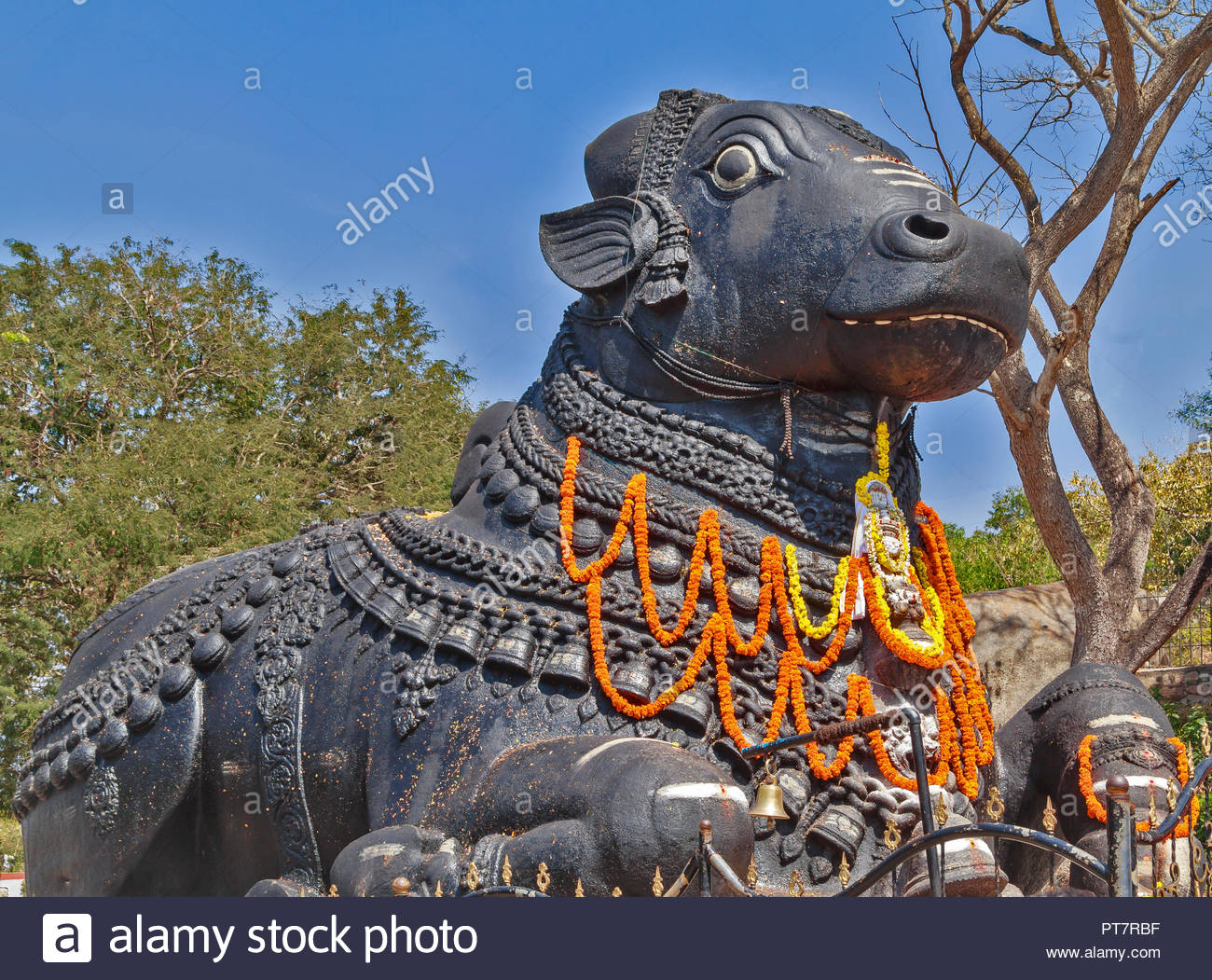
The Land of temples

Welcome everyone, so Today, we are going to know about the land of temples, in India, the states have other names likewise the land of temples is Odisha Because, in Odisha there is many temples, also Odisha is not only famous for temples, but for other objects which we will know following on this study.

Odisha also known as Orissa, is located in Eastern India with the neighboring states with West Bengal, Jharkhand, Chattisgarh, and Andra Pradesh. The ancient name of Odisha was Kalinga, which was after the name of Mauryan Emperor Ashoka. In Odisha, there are many temples to witness the beauty of the architect made in the ancient time. In India, it represents the multiple ethnicities, the diverse religion.

The main temple in Odisha, Jagganath Temple which is located in Puri which is famous all over the world, Sri Jagannatha Dhama is the other name of Puri, also famous Rath Yatra which is witnessed by millions of the people. It has a 1078-year-old huge structure with a great architecture design. You might know or may not know that the flag which is tied above the temple is changed every day with other design.
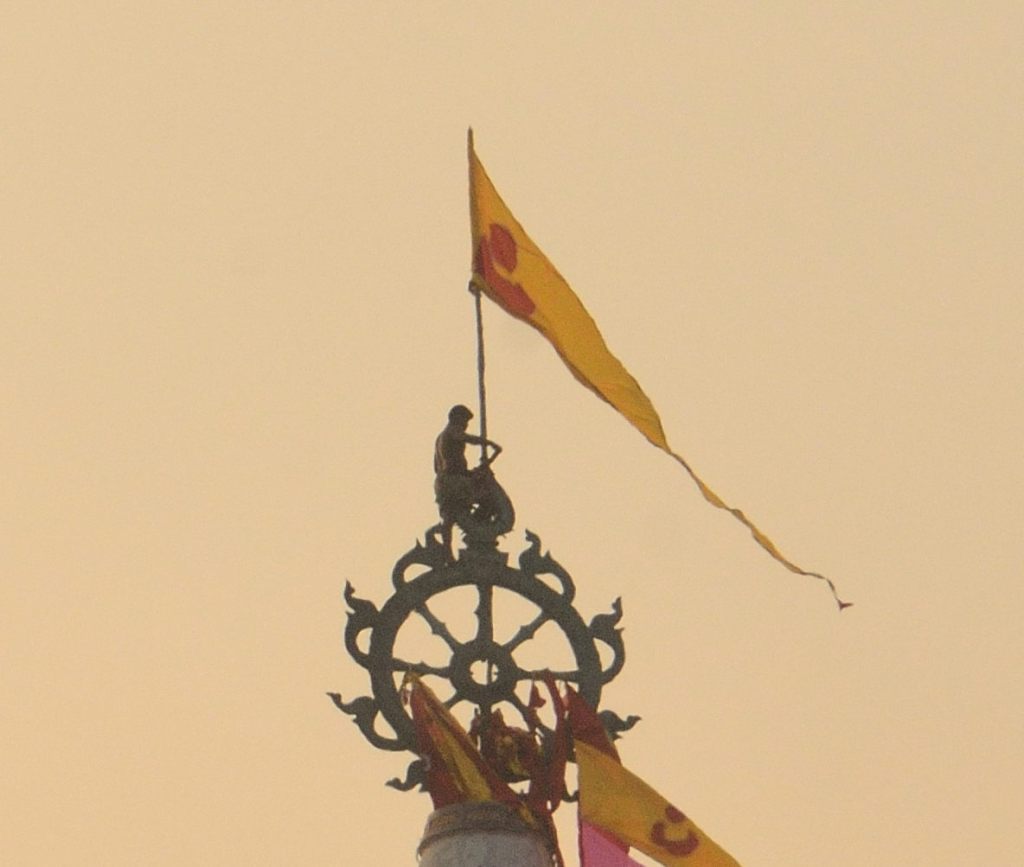
The design is never repeated and also the flag which is tied is triangular always flies in the opposite direction of the wind. To change the flag one priest always climb at the time of evening every day without any help or ladder to tie up a new flag. This is the most surprising fact that I have ever known.

Another surprising thing is that no bird fly above the temple. Yes, it’s true above the temple no birds you can see flying also you can test it by going to that place.

In the temple, the food is always made every day and the most extraordinary thing about the food is doesn’t get waste not a single day or a single bite, and the food every day is made with the equal quantity, and the people every day they can eat the food with a great taste, another thing is the food is always made in a different method it means the pots are placed over one another and are cooked using only firewood.

So there are many surprising things you will witness when you visit that place.

Then other temples are in the capital of Odisha that is Bhubaneswar.

The Bhubaneswar is known to be dedicated to Lord Shiva. In Bhubaneswar, there are many types of temples with beautiful architecture.

Some temples are:-

The first one is the Lingaraj Temple which is the largest temple in Odisha. It is height of about 180 ft (ca. 55 m) and another one 150 ft (ca. 46 m). The temple is believed to be made during the 11th century.

The second one is Ekamra Kshetra is one of the biggest religious places in Odisha which draws thousands of guests from all spots of the world. It is the symphysis of a multi-religious system consists of Bhraminical, Buddhist and Jain.

The third one is Konark which is built in the 13th century located near Puri, which is also recognized as The Sun Temple. It is listed as World Heritage Sites by UNESCO, it also has a beach name as Chandrabagha beach which is the cleanest and beautiful beach in Odisha.

So these are the important places of Odisha. I wish you all loved this article and let me know in the comment have you been attended Odisha or not! Thank you for viewing this piece and have a nice day!

Traditional learning can’t be replaced by virtual learning

In such times, Virtual classes are the only practice that can help the student to learn without any deterrent. In such a situation of the pandemic, there is no other alternative for now. Most of the institution has adopted for virtual learning via email, video conference through zoom meeting, google meet, Webex, Microsoft etc which is a great step initiated as of now. But in my opinion, traditional learning cannot be replaced. Since there is no direct interaction between a student and a teacher which cause a lot of distraction. Reason being the teacher cannot ensure the focus of the student. Virtual classes have their own benefit you don’t have to worry about waking up early and one can learn according to their comfort zone. Since a student can study in the comfort of their homes. Virtual classes make us able to watch recorded lectures as many times we want which helps us clear our doubts. Virtual classes save time and money but it cannot provide the environment same like classroom learning. One has to ensure good internet supply and interface but not every student has these facilities. As of now, there is some locale where there is lack of internet services. Class learning doesn’t only make learning easier but it also promotes focus, self-disciplined and punctuality in your life, since one has to wake up early to attend the classes on time. Classroom learning offers direct interaction and helps to upgrade their skills and teach them how to peacefully live in a society. But according to this situation, Virtual learning is really important as of now schools and institutions are shut down. In the situation of global health crisis, it is the only way left so the student can keep social distancing and complete their syllabus on time. Switching learning is great for now since it enables the student to be productive as of now. Both ways have their own pros and cons. In virtual learning, there is a lack of understanding between student and teacher. Classroom learning includes conflict resolving skills, presentation skills it boosts up your confidence in front of peers, develops Leadership skills and teaches them to get along with the student from different cultural backgrounds. Classroom teaching is valuable in shaping their communication skills, listening skills and boosting up their confidence. Students experience social interactions with peers and establish rapport with teachers which help develop socially. Classroom learning enhances the critical thinking skills of students in live group discussion. Teachers can modify their teaching practices based on the observation that student is getting what they are taught i.e. classroom activities and interactions can help learners. At the same time, students can get their doubts clarified immediately which is not in the case of virtual learning. since there is a lot of distraction in virtual classes. As of now, we should be grateful that virtual learning is helping the student to be productive in this crisis. Since in the time of emergency virtual learning is a good alternative to traditional learning but cannot be replaced by traditional learning.Since Classroom learning has certain extra advantages that virtual learning cannot replace.

Please let me know your thoughts in the comment below and have a wonderful day.

Death penalty on sexual VIOLENCE in India…..

“Returning violence for violence multiplies violence, adding deeper darkness to a night already devoid of stars”. – Martin Luther King

This article is widely based on the ‘Death Penalty India Report (DPIR)’, which was released on 6 May 2016 and contains the findings of Death Penalty Research Project . The DPIR is divided in two volumes of which one contains the quantitative information regarding the prisoners sentenced to death, their nature of crimes, socio-economic backgrounds and of course their legal representation. The second contains the experience of prisoners in police custody, through the trial and appeal process, and impact on their families.

Let’s understand what is death penalty with the help of current examples:-

Death Penalty/Capital Punishment for sexual violence is a government sanctioned practice whereby a person is put to death if he/she is accused for sexual violence with a person and then killing him/her. The recent examples to show the case of death penalty are:-

1. The Priyanka Reddy Case of 2020, she was firstly ganged rape by four men and was burned to ashes. The police officials didn’t thought twice and encountered the covicts on the spot.

2. The Delhi Gang Rape Case of 2012, the victim was gang raped by six men, of one was a juvenile and 4/6 were hanged to death in February 2020 and remaining 2 committed suicide behind the bars.

3. In 2018, six men were convicted of abduction, confinement, rape and murder of an eight year old girl in the Kathua district of Jammu and Kashmir.

4. Madhya Pradesh also has a problematic constitutional practice where prosecutors are being incentivised to get the death penalty- a prosecutor that get a death sentence in sexual violence case gets more points, and there are rewards for being the best prosecutor.

One of the main surprise is that of the state-wise data of using death penalty. Be it Jammu and Kashmir or Central India or the Northeast, there is a very little use of death penalty. The popularity of death penalty, is driven in this decade at least, by concerns of terrorism and sexual violence. With all countries having death penalty, the burden of which falls on the poorest and most marginalized sections of our society.

All political parties are complicit in developing this terrible, counter-productive narrative, and feeding this public frenzy that sexual violence is best handled by punishing people more harshly. It is really very easy to villianise four people or a hundred rapists instead of asking a more broader question of “what in our society produces sexual violence? “

The proportion of death sentences imposed for sexual offences has consistently increased from 18 per cent in 2016, to 60 per cent in 2020. Ignoring documented research on the issues, and pronouncing death sentences on offenders does little beyond satisfying the retributive instinct of the public. However, seeking quick fixes within a broken criminal justice system only enables the state to give an easy, but inadequate cop-out for the state as a response to violent crimes.

Therefore, to conclude it would be rightly said that without taking proper readings and documents and not seeing the cases of sexual violence with utter disgrace and just killing the convits is wrong.

Refrences/Sources for Data:-

Project 39A by NLU, Delhi.

Words with Dear Coffee

Ah coffee! As soon as I let this word out of my mouth, what is left behind is that rich aroma and the bittersweet flavour of it, still lingering on my taste buds.
Such a bliss right.

Some of you may agree while the others might not. For some of us, coffee is like our essential, we need it everyday at a particular time else we can’t function normally. And that’s perfectly normal too cause coffee is believed to be therapeutic for both mind and body. But when we talk of the other lot of people, they keep switching between the two main beverages; tea and coffee and evidently so aren’t obsessed with the either. And the last category includes those for whom further reading of this article is not advised (pun intended).

Source : Google

Ever tried having your spesh flavoured coffee right in the morning in a tranquil setting, maybe your balcony or backyard or garden and as you take the first sip and allow yourself to be drown into the flavours, try and feel the calmness within. Immerse yourself fully into the surroundings, pay attention to the soft chirping of the birds and the slight flutter of the cool morning breeze as the first rays of sunshine emerge and hit your face.
‎ Oh thenyou can hear yourself talking to your beloved coffee, subconsciously, having mindful coversations with it, exchanging words with your “Dear Coffee” as people often do under the salutation “Dear Diary” while journalling down. You’ll find yourself reminiscing sweetly about the last vacation or the details of the next impending assignment with a furrowing brow or fantasising about having xyz in your breakfast or maybe even sharing your sorrows over the last argument that you had with your close one.
You will soon hit upon the realisation that coffee often becomes a medium of exchange of words in the form of thoughts but only when you truly savour it. I have spent kaa-fi time over having words with my coffee. Have you?
My coffee helps me survive through the weekdays and yet joins me in on the weekends when I have nothing to do but just relax. Thanks to our coffees that we have been acting like binge-watching maniacs to survive this prolonged monotonous lockdown.


Speaking from personal experience, I feel the best kind of conversations take place and quite organically over a cup of coffee. In the above paragraphs, I laid emphasis on having words with coffee alone in the comfortable silence with just yourself but here let’s have an insight into how coffee helps strengthen bonds with our close ones. Coffee quite naturally becomes the conduit of conversations, let’s understand how.
We don’t really just crave the bitter, sweet taste of coffee but also of the hearts while taking in the experience of the precious people we sit with, whenever we have coffee with them. Cause in the innermost deeper levels, all of us crave good company and meaningful conversations. To just sit down with another person and talk for hours is much more fulfilling than anything else given that the person is someone who understands us and I think coffee just simplifies this soothing process to a great deal.
When was the last time you had a meaningful conversation with your loved one?! Think and ponder. Also recall that the first meeting between a couple-to-be, the first signs of the fresh brewing romance, those first few words of getting to know each other even as great pals are all discussed with coffee at a coffee shop date. Ever wondered why so? Because you never know exchanging WORDS WITH COFFEE might actually seal the deal? Give it a thought. And I’m pretty convinced that after reading this article you would never underestimate the magic, the transformative power; a coffee beholds within itself rather you’d prefer to open yourself to this blissful feeling of having words of love with coffee.
☕♥️

WORLD WAR III

World  War III  refers to the next possible military conflict to happen in the world. The world war III fears have sent the whole world into pandemic. These  could be the  possible countries involved in World War III.

US-CHINA

There  has been an ongoing conflict between the two countries, over becoming the most powerful country. The trade   war is going as the US has for long accused China of unfair practises , mad made imports expensive with the intention to promote buying of American products. China is under the impression that US wants to curb it’s growing power. However, it’s now been said that the trade war has taken a new form of destruction named Coronavirus.

Is Coronavirus Different Form Of World War III?

During the first two wars, war was  basically associated with nuclear weapons, missiles .But the spread of coronavirus have proved how world war  can be started without strong nuclear weapons, but with Virus. As compared to before , now the enemy is invisible  which can be considered as master stroke by China. The virus has reported to have come from the wet food market of the Chinese City, Wuhan. But the conspiracy theory by scientists show that the virus was a manmade invention in Labs , so that it could replace US by becoming the  next superpower in the world.

Global Institution like WHO(World Health Organization) was formed at the time of previous world wars, in order to control the situation arising in case of an emergency.  Back in January 2020,when the condition of China made everyone around the world panic, WHO declared this situation as emergency  and  went against the decision to ban international flights from and to the city of Wuhan. Had it not  been for this mistake, the world would have been saved .It was later that WHO declared that the pandemic has originated from the Chinese city , Wuhan. This decision was taken  under a  lot of pressure from all over the world specially USA  ,in fear of losing ties with the most powerful nation.

US-NORTH KOREA

The relation between the two countries , primarily involved around the use of  nuclear weapon, missiles  and the  continuous threats to strike US. US has had meeting with North Korea thrice last year, to discuss not only  about the banning of their nuclear program, but also to ban their chemical and biological weapons. North Korea recently described nuclear forces as “high alert operation”, sending clear indications to Trump of it’s ability to attack anytime.

US-IRAN

Donald Trump attacked Iran’s most powerful  leader, General Qasem  Soleimani by making an airstrike at the Baghdad airport. In his defence, Trump said that he did this to make the world a safer place .As retaliation, Iran launched dozens of missiles at US forces in Iraq. People all over the world were concerned about the  tention between the two countries, following threats by Donald Trump to unleash $2 trillion worth of military equipment.

INDIA-PAKISTAN

History is proof of the bitter relations between India and Pakistan over Kashmir. Right after the partition, there have been issues , conflicts and wars over the land. And on top of all this, the growing relations of India with US,  has put Pakistan in a state of fear .

That’s the way, the Street Smart way!

All of us might be aware of the general meaning of this word “street smart” but let us now try and understand what deep notions does it have. Okay, so if we stick to the basic meaning which is that being a street smart means that you are aware of the circumstances and situations encircling you and are able to rightly interpret the thoughts and intentions of the people who are surrounding you through your instinct-driven judgements.
Furthermore, you have that ability to trust your gut and that is the reason why you don’t get tricked or played on easily and hence you respond much more effectively to the menacing state of affairs, often caused in an urban environment. As a result of which, you often bypass and tend to cross over so many of the hurdles which could have otherwise trapped you but because of your presence of mind and your streetsmart attitude, you managed to escape. Bravo! And all these incidents instill mammoth amounts of confidence within you which keeps upping your street smart game and you pave the path towards your own success.


Okay so this was a brief introduction about how the life of a street smart functions but now the question arises that how do you become one yourself?
It’s easy but requires regular practice. You just need to allow yourself to be vulnerable whilst maintaining strong grip at your vigilance at the initial stages and be open to experiences, of all kinds cause as they say you don’t know it unless you experience it. Now consider an example; if someone is trying to emotionally manipulate you by the the usage of sweet tones, you might get swayed away once or even twice, given that you trust too easily but not the third time. Why? Because you would, quite naturally, become alert and attentive enough to fall into the trap again. Works like a vaccine you see, immunity develops on its own upon exposure to disease.
So my dear, wisdom lies in letting yourself being exposed to uncomfortable situations that make your adrenaline rush, constantly putting yourself to tests and then evaluating your result later on. That’s how you monitor selfgrowth. Now if you keep shielding yourself by continuing to stay in your bubble, then you are highly likely to get tricked one day or the other because you just won’t know how to deal with those situations or those people, in general because you never taught yourself that and there’s no way to avoid them.
About being streetsmart, know that it’s a self learnt thing and there are so many situations out there to teach you that, you just have to be open to learning. Isn’t it simple? Speaking from personal experience, I became street smart quite organically because I absorbed everything from my surroundings, trusted my gut, followed my heart and then shapeshifted accordingly. You can try it yourself. After all life’s too short and being a street smart makes it worthwhile and interesting.

Legality of the Lockdown

On 24 March, 2020, our hon’ble Prime Minsiter Narendra Modi declared 21 days lockdown which kept on extending further as the number of COVID 19 cases in India kept on increasing. Certain guidelines were laid down at both, centre and the state levels. As you would have observed that there were instances where some state governments issued guidelines in addition to what was issued by by the central government. Ever wondered whether imposing such a lockdown was legal or not? Well, by the time you get to the end of this article you will have a basic understanding of how it works. So keep reading.

The legality of such actions taken at different levels can be derived from the Disaster Management Act, 2005 (DMA) which aims “to provide for the effective management of disasters and for matters connected therewith or incidental thereto.”

The Act provides for the establishment of Disaster Management Authorities at the Centre, State and District levels of which the Prime Minister, Chief Minister and the District Magistrate/Collector/Deputy
Commissioner respectively shall be the ex-officio Chairperson. Such authorities have the responsibility for laying down the policies, plans and guidelines for ensuring timely and effective response to disaster. But how does the law define the term “disaster”? Is the term “lockdown” defined in Indian Law? If yes, what does it mean and if no how and who gets to decide what it means? These are some of the obvious questions that might arise.

It is to be noted that, although, the term “Lockdown” has not been defined under Indian Law, it can be elucidated from the Epidemic Diseases Act, 1987 which “gives power to centre and state governments to take necessary actions to contain the outbreak of an epidemic even if such steps are not mentioned in the law practice or theory.” As we all know that scientists from around the world have still not found a credible vaccine for the same and considering India’s health care facilities, there would not have been enough resources to treat people if the number of people affected would have become large. Since the novel coronavirus is contagious, lockdown was a need of the hour to contain its outbreak.

But as mentioned earlier, the lockdown was inposed under the Disaster Management Act, 2005 , so it is essential to understand the meaning of the term “Disaster” which is defined as

a catastrophe, mishap, calamity or gave occurrence in any area arising from natural or man made causes, or by accident or negligence, which results in substantial loss of life or human suffering or damage to, and destruction of, property, or damage to, or degradation of, environment, and is of such a nature or mangnitude as to beyond the coping capacity of the community of the affected area.”

Section 2 (d), Disaster Management Act, 2005

Technically, if one goes by the definition, COVID-19 does not fall within the definition of “disaster” as per the Act, as it is a pandemic, not any calamity, mishap or catastrophe. So, as per the definition, lockdown which was imposed to contain its outbreak, cannot be imposed under the Act. But that happened; it was imposed under the Disaster Management Act. You might be by now contemplating as to how did that happen? How is that legal?

This was possible because the Ministry of Home Affairs declared COVID-19 as a “notified disaster” thus bringing it within the purview of section 2(d). This was done to increase the scope of its administrative powers so that quick actions could be taken.

You might also be aware that any action taken by the government must be in consonance with the Indian Constitution and some of you might have suffered from the restrictions on movement as a consequence of the lockdown. You might already have some idea about the fundamental rights that are guaranteed to every citizen by the Constitution of India. Yes, you are right! I am talking about Article 19 in Part III of the Indian Constitution. Many might have felt that the lockdown infringed their right to assemble peacefully wothout arms [Article 19 (1) (b) )] ; right to move freely throughout the territory of India [Article 19 (1) (d)] ; right to practise any profession, or to carry on any occupation, trade or business [Article 19 (1) (g)]. Many of you might thus say that its against the constitution, hence, illegal. But it is important to note that, these rights aren’t absolute, they are subject to reasonable restrictions as per the latter part of the Article. Hence, lockdown being a reasonable restriction, for public health and safety, is legal.

How An Average Student Became An IAS Officer

This is an inspirational and motivating story of an average student who was never interested in studies. Yes, his name is Vaibhav Chhabra. He is a resident of Delhi and has completed his Btech degree almost in 5 years from Netaji Subhash Chandra Institute with 56% marks. He belonged to a very common family. As he was no more interested in further studies so he joined a coaching institute as a faculty of Physics. After teaching for 2 years he thought of doing something great and that was the time when he decided to become an IAS Officer.

undefined

“Don’t be afraid to give up the good to go for great” – John D. Rockefeller

After leaving the coaching institute he also worked in BSNL but for a short span of time as he was determined to join civil services. So he left his job. But the problem was that he was not able to concentrate on studies because he was not interested in that. But he didn’t lose hope. He was positive and determined about his decision. So initially he started off by studying only for few hours 1-2. Later when he developed his interest in studies he studied continuously for 12 hours. Just imagine an average student studying for 12-14 hours.

The time came when he filled UPSC form and was at the edge of his preparation fully determined to crack the exam. But one day he met with an accident and got some severe injuries. He was bedridden for 8 months. But that average student still didn’t lose hope. He studied for several hours in the hospital. His journey was not at all easy. After facing continuous failures for 8 times he finally cracked the exam in the year 2018. That average student gained 32th rank in the examination. His hard work was paid off and he finally achieved his goal.

His story in true sense is an inspiration for all the average students who think only high scorer students can crack competitive exams. No this is not at all true. Anybody can crack any competitive exam but the need is of having a positive approach towards your goal and a little faith in yourself.

“Success usually comes to those who are too busy to be looking for it” – Henry David Thoreau

This was the success story of IAS Vaibhav Chhabra. If you also have any inspirational story then do write up in the comment section.

How to Help Someone you Love When They are Hurting

@MARTIN

What can we do when someone we love is going through a really hard time or even a dark night of the soul? Even though you care dearly for your loved one, you have to be careful not to make their turmoil about you.

Here are some suggestions for healthy ways to support someone during a painful period in their lives.

Give them space
Back off from making demands on their time or energy. Give them the space and freedom to sort through their feelings and beliefs. Don’t interrupt their process by putting too many demands on them. Let them be for a little while.

Give them acceptance
Don’t judge them. Someone who is going through a healing process may act in ways you don’t particularly like. Let them explore who they want to be and accept that it is their choice and their free will. Remind them that they will have to live with the consequences of their actions, but don’t tell them how to feel or think or how to behave, even when you desperately want to.

Help them see options
Sometimes people are lost and they are looking for the beacon they can follow back to the light. Be a beacon for them without grabbing them and moving them onto a path you want them to be on. Help them sort through their options without needing or requiring them to behave a certain way. Sometimes people can’t see their way out of the darkness and if you stand there and hold the light, they will come to it. But don’t jump in the water to save the drowning victim. You’ll get pulled under. Just let them know you’ll be there with a helping hand when they’re ready to move forward.

Get help from the other side
Talk to the person’s higher self. See if you can get guidance from their higher self about what they are going through or how to help them. Often you can get this information from the person’s guides or higher self or angels, even when the person themselves has no idea how to heal. Some people are unable to connect to their own guides when they need help. If you are skilled with intuition, you can make the connection for them. Or you can book a session with me and I’ll find out from their guides how you can best help.

Ask them what they need
Instead of giving them what you would want in their position, actually ask them how they would like to be supported. “How would you like to be supported right now?” is a beautiful question. Some people might simply say, “It’s enough to know you care.” Or they might say, “I really need help with the kids right now so I can have some time to think or get away.” You won’t know until you ask.

Help them find gratitude
Help them raise their vibration if you can. Get them to see what they have to be grateful for. Take them out someplace where they can practice kindness towards others. Often that’s a catalyst for coming out of their own dark place.

Always be gentle when someone is going through a hard time. Sometimes this can last a long while. Be there for your loved one, but don’t allow a toxic situation to persist. Guard your energy while you’re helping others.

@MARTIN

Wild Thoughts for the WILD!

Indian mythology has always been known for aeons, symbolizing creation, destruction, evolution, values and morals. This magnum opus had the significance of animals as it’s crux. Fables of birds and animals etched on the monoliths of temples, in our holy books and manuscripts and shrines dedicated to pay our respects. The supreme deity, Lord Ganesha who bears the head of an elephant, mighty Lord Hanuman the divine vanara or the fiery and raging Narasimha (half man and half lion) or Nandi, Shiva’s beloved stead are some exemplary symbols of animal worship. In a culture dominated by throngs of ardent devotees fawning over and worshipping these incarnations, the current heinous instances of animal cruelty have shamed and besmirched our cultured.

A recent instance of animal cruelty which garnered attention from millions was the ‘intentional’ feeding of a fire cracker laced pineapple to a pregnant elephant in Kerala’s Palakkad district leading to it’s very tragic death. The elephant had wandered into the village in search of food and was fed the death seasoned fruit by a few locals and it burst in her mouth, leaving her jaw fractured and in unbearable pain. The firecrackers laced pineapple was meant for the wild boars that destroyed the farmlands of the locals. A thorough investigation was then conducted against the suspects.The incident was gut wrenching and left the nation appalled. Albeit, recent claims from the Kerala Government and Environment Ministry stated that the fruit was accidentally fed by the locals. However, this inhumane nature cannot be justified as our nation reeks of countless animal cruelty encounters.

Another poignant incident that took place in Bilaspur District, Himachal Pradesh on 6th June was when a man was arrested for allegedly feeding firecrackers mixed wheat balls to his neighbour’s cow. The poor bovine’s jaw was completely shattered as seen in a video uploaded by her owner, Gurdayal Singh. Netizens broke into angst demanding strict action against the notorious neighbour. In a country where communal dissent prevails at the mere thought of sacrificing a cow for it’s meat with worldwide debates and mob lynchings there hasn’t been much action taken to curb such tyrant practices.

As bigoted and narrow minded religious fanatics spark communal disharmony on banning processions led by elephants that are beaten, tortured, made to stand for hours adorned in heavy ornaments. Or even, harvesting conch shells or defanging thousands of captured snakes for Nag Panchami and sanctioning such practices in the name of ‘upholding and protecting the religion’. It does not seem unusual to cast a blind eye on such instances.

As numerous, graphically disturbing images resurface on the internet of dogs with legs tied together just flung into rivers or a few merciless locals parading with a dead, beaten up leopard it really makes us question our conscience. Though our religious beliefs have become quite anaemic at this juncture it’s time to curb this gut wrenching cruelty as humans and in the name of humanity. Educate children on caring for animals, make sure you report any kind of malpractice to an animal care centre or helpline. Starting small by purchasing only cruelty free products and refraining from engaging in any sources of entertainment that propagates animal abuse.