Types Of Ships In service with The INDIAN NAVY

The Indian Navy grew rapidly After Independence . As of now It is undergoing modernization with new ships Being added to fleet.

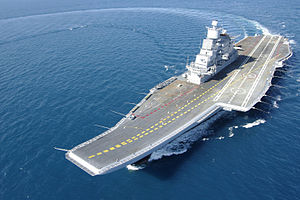
Aircraft Carrier is a warship with a full length flight deck and facilities for carrying arming, deploying and recovering , acting as a seagoing airbase

INS Vikramaditya aircraft Carrier

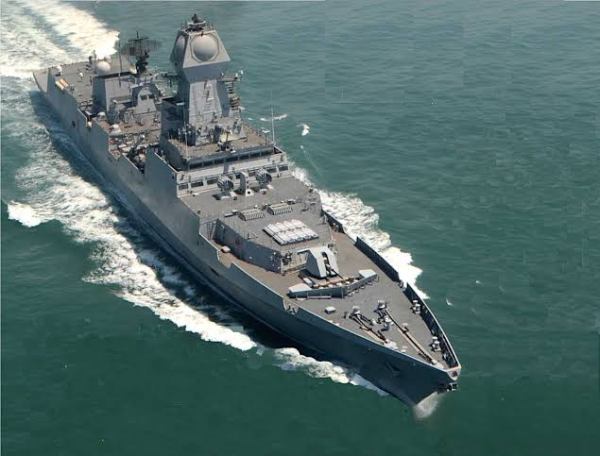
Destroyer is a fast, heavily, armed, maneuverable yet long Endurance warship.It is designed to escort longer vessels in a fleet like an aircraft carrier, troop, supply ships forming part of a convoy or battle group.

Destroyer

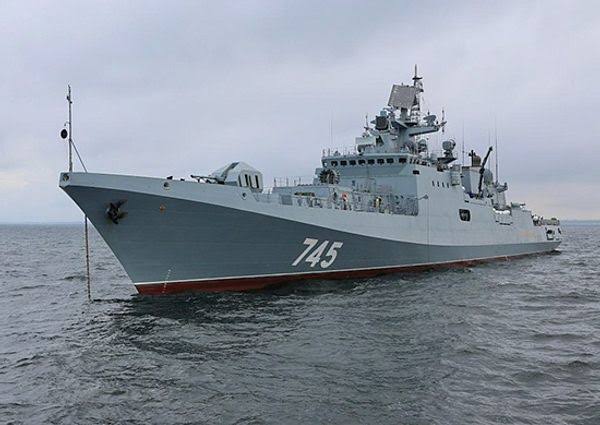
Frigate is a warship smaller in size than a destroyer , It is armed with guided missiles and used as an escort for aircraft carrier.

Frigate

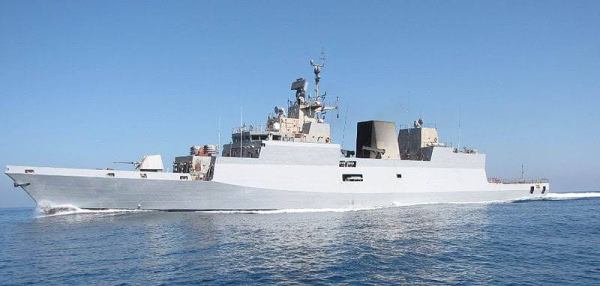
Corvette is a fast, lightly armed warship which is smaller than a frigate and larger than a coastal patrol craft often armed for antisubmarine operation.

ASW corvette

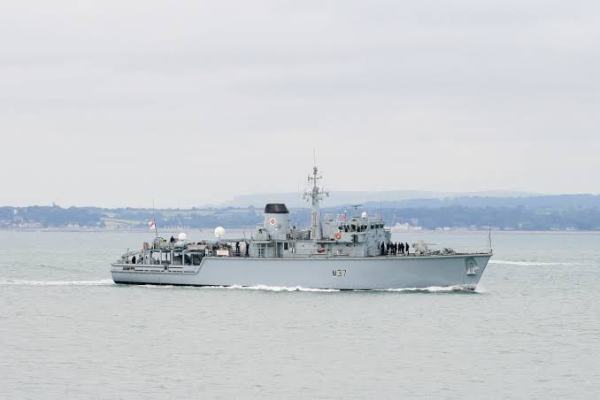
Mine countermeasure vessel: also known as Minesweeper is a small naval warship designed to counter the threat posed by naval mines

Mine countermeasure vessel

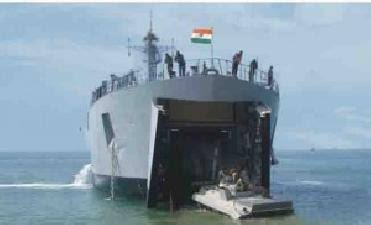
Landing ship is a naval vessel which is used to transport large number of vehicles, cargo and troops directly to the shore no part facilities .

Landing ship

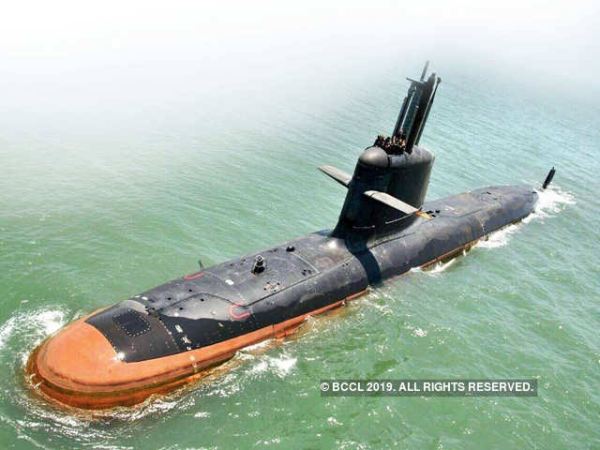
Submarines: A submarine (or sub) is a watercraft capable of independent operation underwater. It differs from a submersible, which has more limited underwater capability.

Patrol Vessel for patrolling costal area, Auxilary ship, Research Vessel, Tranning ship.

The Changes After 1991 In India

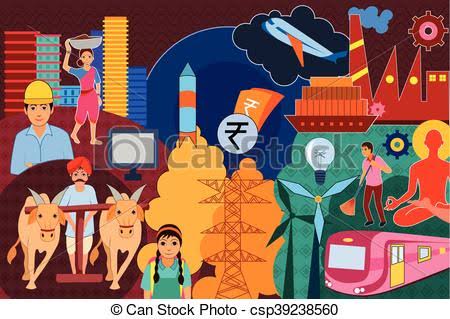
Today India is one of the most powerful nations in the world. Our progress in education, science-technology, business, economy, the defense system is really noticeable. India is always a unique country but India also passed many tough situations, this achievement comes after so many hardships, struggles, and fights.before 1991 the political situation in India is unstable, after 1991 certain changes in the Indian economy, science-technology held to be very important In the history of India.

Indian Economy: we wanted to establish an Economy based on social justice through planning for a National planning commission was established that would coordinate development through the policy of the Five Year Plan. The government started Economic Reforms are called as Economic Liberalisation. The foreign Invest In India increased, the field of information technology opened several avenues of employment in the country . Liberalization, Privatizati, and Globalization, India under its New Economic Policy approached International Banks for development of the country. These agencies asked Indian Government to open its restrictions on trade done by the private sector and between India and other countries.

Science and Technology: The experiment in the co-operative dairy movement By Dr.Verghese Kurien led to increase in milk production in India. This is called as White Revolution. Dr.Homi J.bhaba laid the foundation of the Indian atomic Power Programme. India insisted on using atomic energy for peaceful purposes like generation of electricity, pharmaceuticals and defense.

Change In Social Field: changes related to the women empowerment movement and other related to the policies regarding the uplift of deprived sections of the society

China’s bio weapon

In December 2019 during the time of Christmas in the virology institute of China, Wuhan leaked a virus. After few days some people were admitted in the hospital due to cough and headache the doctors treated them and let go. Next day some people were admitted in the hospital due to the same symptom then the doctors treated them and let go of them. The next day so many people were admitted in the hospital due to same symptom then the doctors asked them for blood test. In the blood test had understood that people are infected with corona virus.After few days some people were found dead when the test results came they also had Novel corona virus. Then doctors understood the seriousness about this virus.They started to find the first admited patients due to this they found them and asked where did you went before coming to hospital they said they went to Live anolimal market of Wuhan. They found all of the people who went to the market there were so many people and they isolated them and asked who all did you meet .They met so many people so they understood that the count of the numbers of the patients wil be very huge. In the same day itself somany people died. This was the first outbreak covid 19 virus and now the virus has spread all over world.

SUPERVISION OF MANAGEMENT

Supervision is an important aspect of the directing function and it involves the managerial task of observing the subordinates at work to ensure that they are working according to plans and policies of the organization, keeping the time schedule and supervision also includes helping subordinates to resolve their work problems. Managers at all level are in direct contact with subordinates and oversee their work performance and the top management supervises the work of middle-level managers, who in turn supervise the first-line managers or supervisors and the first-line managers are in direct contact with the operatives and thus, all levels of management are generally engaged in supervising the work of their immediate subordinates. According to R.C. Davis “Supervision is the function of assuring that the work is being done in accordance with the plan and instructions”. Supervision includes the following three elements:

  1. Commanding
  2. Guiding
  3. Controlling

This is the reason why, “Supervisors are known as a friend, philosopher, and Guide of workers”.

ROLE OF SUPERVISORS

Supervision has special importance only at the lower management level and the question which is now required to be discussed is to what role does a person working at the managerial level, the supervisor play in the organization.

1. Supervisor as a key man

 In every organization, the work of putting the plans into action is done by non-managerial staff who works under the guidance of a supervisor but however, at this level, even a little carelessness may cause the closure of the organization and that is why the supervision is referred to as the key man in the organization.

2. Supervision as a middle man

   In the organization, the supervisor plays the role of a middle man and he acts as a link between the higher-level managers and him workers, and his main job is to prepare a co-operative atmosphere among the two parties in order to facilitate the achievement of the goal of the organization.

3. Supervisor as a human relation specialist

A supervisor is likely to face a number of problems related to human behavior, for which one has to try and find out solutions and he can do so only if he is a human relation specialist.

FUNCTIONS OF SUPERVISOR

1. Planning the work or schedule activity

The supervisor is a low-level manager and he is required to study and analyze the work of his department and decide what, where, which, why, and by whom the work is to be performed. He has to chalk out daily and weekly program and he has also to arrange the raw materials, machines, tools, and equipment and the successful supervisor is an efficient planner.

2. Achieving the target

It is the most important duty of the supervisor to achieve the target prescribed for his department by the management and this can be achieved if the supervisor enables the best possible use of the available resources of the department towards the desired goal.

3. Enbaling standardized output through instruction and guidance

It is the supervisor, who ensures that the actual performance corresponds to the norms and standards laid by the management and the supervisor must satisfy himself as to the quality of the output and he should concentrate on both quality and quantity of goods. 

“NEVER STOP LEARNING BECAUSE LIFE WILL NEVER STOP TEACHING”

“Life is like riding a bicycle. To keep your balance you must keep moving” – Albert Einstein

It is rightly said never stop learning….because life is the teacher which gives you the opportunity to learn new things each and every day. It motivates you to learn and defeat the challenges which we come across. The greatest teacher you could ever have is your life. Knowledge can come from anywhere and everywhere.

Life gives you the best lessons from sacrifice to compromise, and a wise man will always take each of them seriously.
All we need is to grab it and inculcate that in our day-to-day lives. Many times, you may feel down but remember that it’s not the ending. Failures will force you to loosen down but Losers are the ones who refuse to stand up, not the ones who fall down repeatedly.

No matter how many times you find yourself lost or broken; all that matters is the time when you didn’t feel like starting things all over again. One must always hold an attitude to continue learning new things.
Learning is a never-ending journey. From birth till death , we are in continuous cycle of learning new things. It is a necessary part of our life.By observing new things and experiencing it in our lives, our sight of perspective broadens and changes the way we see the world. It improves our behavior and the way we think by expanding and challenging our understanding. We get to know a lot of things and these things become our memories which are lessons to the life. These memories could be good or bad, that doesn’t mean bad memories are to neglected. Each and every memory gives you a lesson to learn something new experiences. Our education system teaches a lot, but that is relevant fir bookish knowledge. Life teaches you the lesson to live .

“The past can hurt. But the way I see it, you can either run from it, or learn from it” – Walt Disney

Never think that you know so much that doesn’t mean the end of your learning procedure. No one is prefect in knowledge Each one of us learn step by step through life. It is a continuous and when life teaches you something, be an optimist to learn it as quickly as possible. Life will keep on teaching you every moment of the day, and a real hero is the one who remains open to changes or take lessons from every incident that takes place in his or her life.
Learning is about enriching our minds. Learning new things represents the growth mindset. To be good learner you should be able practice focused hinking modes of brain. Focused thinking is when you concentrating on something that you try to learn.
There is no age or limit to which we can learn, whenever you want to know new things explore it. It only depends on the will to learn. Try to innovate new things in your life. Stay Positive Stay Learning…..!!!!!!

“The world is a university and everyone in it is a teacher. Make sure when you wake up in the morning, you go to school.” ―T. D. Jakes

Never stop dreaming,
never stop believing,
never give up,
never stop trying, and
never stop learning – Roy T. Bennett

Sacred architecture in India

Religious architecture is also known as saved architecture. Religious architecture is with the design and construction of religious or spiritual or worship places like church, temple, mosque. Religious architecture expresses religious beliefs, aesthetic choices, and economic and technological capacity of those who create or adapt it and thus places of worship show a great variety depending on time and place. In Hinduism, the temple is called as Mandir. Each mandir is dedicated to a specific Hindu God or goodness. Today, the temples in India have reminded us of our past and the architectural brilliance of craftsmen in those days. Brahadeshwara temple, Tanjore, TamilNadu. Kailasnath temple, Ellora. Chennakeshava temple, Karnataka was the temple named for its architecture.

Christianity is the third largest religion in India after Hinduism and Islam. Christian architecture refers to the buildings of churches. Christian architecture styles are not Gothic or Corinthian or Roman with a colonnade as is the case with many churches capturing the present trend to Indianise the church, in line with the Vatican II, it’s every part is native. Islamic architecture is the architecture of the Indian subcontinent produced by and for the Islamic patrons and purposes. An immense mausoleum of white marble, built in Agra between 1631 and 1648 by the order of the Mughal Emperor Shah Jahan in memory of his wife. The Taj Mahal is the jewel of Muslim art in India and one of the universally admired masterpieces of the world’s heritage. TheTaj Mahal was never a mosque, in fact, it wasn’t built by a Muslim but a Hinduin 17th century.

STRANGEST INDIAN LAWS

There are some  of the weirdest laws, we ’ve never come across. There are some laws and legislation, which are completely ridiculous and would make you doubt our Indian Constitution thought process . Let’ s have a look at some of them, and laugh our heart’s out.

According to the Indian Aircraft Act, if any person at the time of flying aircrafts, by any means hurt anyone or cause danger to their property then a fine of upto Rs.10 lac could be charged from them. Aircraft here would include flying machines, balloons, gliders and even kites. Never thought   in our childhood, that flying of kites could also land us to such situations .Next time, any one of you who wants to fly a kite specially around August 15 should be careful.

The next one, should be awarded for being the best biased adultery law. As per Section 497, adultery is  prohibited. This law punishes only men. For those men  engaging in sexual activity with women who’re married, without getting consent from their husband is entitled to be charged with fine ,or put behind the bars for five years. This  law doesn’t hold anything against the women, and taking full advantage of the law , they do whatever they want.

The law permits  anyone to use the restroom and  even drink water at any hotel, whether they’re staying there or not. This came into existence under the Indian Sarais Act,1867  some 150 years ago. “Sarais” actually means building  which are used for accommodation and shelter of traveller hotels. This law however, works in the public interest and the next time we’re travelling we  should definitely keep this in our minds.

Discrimination against LGBTs- Section 377 states that homosexual intercourse  as illegal , though there’ve been endless debates on this topic. The Indian constitution  seem to be snatching away the basic right of someone to choose their own partner.

According to the East Punjab Agricultural Pests, diseases and Noxious Weeds Act, 1948, people in and around Delhi are expected to beat drums ,in order to drive them away. This seemed to be taken seriously  this lockdown, when locusts in huge number attacked the farms. As a result, the farmers were instructed to produce high pitch noise , using  utensils and drums to scare them away from India, in an attempt to prevent our crops.

According to Section 309 of the Indian Penal Code(IPC), since one cannot arrest a dead person it’ s considered to be no crime. On the other hand, failing on attempting to commit suicide is considered to be illegal  and punishable .It’ s been specified that the act should be voluntary and intentional attempt towards self destruction. Cases where a person would die because of overdose of medicine, or mistakenly falling from a cliff , doesn’t  come inside under the IPC.

According to the Indian Motor Vehicles Act,1914 in order for anyone to qualify for being a motor vehicle inspector in Andhra Pradesh, need to get sparkly, white clean teeth. Maybe they’re under the impression, that in absence of electricity power there white ,sparkly teeth could be of great help  , as it would light their path ahead.

River and Lakes are always interesting and commercially important for those who live near them.


River and lakes are almost as old as civilization itself. The roads and rails are, admittedly a much later phase. Even in the prehistoric days, the waters formed the prime routes. Naturally, commerce, art and culture and even raids or invasions were largely dependent on it.
Venice is a city of lakes even today. In Europe, the rivers Peo, Rhine, Seine and the Adriatic Sea; and in Egypt, the River Nile was the chief sources of that imported and exchanged the various centuries. They contributed largely to the Mediterranean culture. In India the Gangetic and the Indus Valley are riparian.
The cargo boats in the Ganges ply trade materials like the bamboos and logs of woods. In Myanmar(Burma), and Yangon(Rangoon) the timber trade is a regular feature of the commercial use of the rivers. When road traffic gluts in big cities the authorities take recourse to the rivers. To cite, in Kolkata the Gange now lends large scale relief to the town administrators, and boat ferry has made the movements of commuters and others much easier as well as healthier. Again the rivers provide and have provided a never-ending source of enjoyment, fun and games. The Dhakuria lake in Kolkata becomes seasonally a site for delectable rowing by the member of the KolkataRowing club. The river Thames that skirts many towns and cities in England becomes alive often with rowing boats. Needless to mention that this event is centuries old in England.
These days there are adventurous feats for ambitious youths in which the river plays a significant role. Rafting for instance. Many young boys and girls jump into the fray regardless of the hazards of the game. It involves a pluck and courage to dare the turbulent current of the reader. It usually takes place in the upper reaches of the Ganges. Sometimes although very rarely, one is lost in a vortex. But the joy is in the adventure itself, a fit enterprise for the youth.
Thus the rivers are the natural outlets of the stored energy of young men, whereas the lakes are artificial ones. Such amusements and exercises are avowedly healthy ones and the phenomenon is steadily gaining ground.
There are some places in North Bihar and Bangladesh or Assam which have intricate river network. Although today we have improved modes of river communications, in more primitive days the men there had to depend more on showed greater pluck and courage in negotiating watery tracts. It is interesting to read the stories of their lives. They lived to plunge into the river day in and day out and very seldom suffered from cough and cold. In the rainy season, they shifted to safer and higher regions loading their belongings which they could savage on wooden cots that served as boats. What struck terror in the hearts of town dwellers, was those lads interesting and play like.

Are we living lives dominated by technology? Does it rob us of our people skills?

It was a week of truly longish, unplanned blackouts. The pillar box was hit by a truck, and power went off in a block of buildings. Our world plunged into non-connectivity during the day and total darkness at night.

Ever notice how when there is a blackout, everyone goes outside? We flatmates met and introduced ourselves, though we’ve lived a few feet away from one another for months. In that break from our frenetic schedules involving mobiles, Internet, video games and TV, we connected with people. We had no idea when we’d see “light”, so we talked about “coping” and soon realised we all sounded happy.

We talked of a time when grandma didn’t depend so much on electricity, dad remained supremely efficient without a cellphone, our aunts brought all the local gossip from temple visits and weddings, and not from websites. We talked of buildings without ugly power grids or cellphone towers, of fewer road accidents, riding bicycles, of clean ponds and parks.
A teacher from a digitally modern school told us this story. “A computer techie messed up our server system,” she said. “It was near-disaster! Our computerised attendance register was gone, and so were LAN, mark sheets, teachers’ notes, question papers, classroom material, presentations and a lot of the students’ work.” But that lasted only for a day, she said. The teachers woke up to the challenge and roped in kids to do the “paper work”. Together they prepared the teaching aids, kept the attendance record straight and wrote lesson plans for the coming week. “The kids said they were very happy to do the work,” she said. “I felt I got closer to a lot of them.”

What neurologists say

Neurologists already talk of how our brains are shaping to respond to a “gadgetised” life. A micro-chip induced life could blur our view of the line between living and non-living machines, they warn. We already see an example of this when we try to give directions on the phone. Somehow even simple directions have become rocket science, the caller half following what’s said and calling a dozen times till he reaches the door. Is it because constantly interrupted by digital intrusions, we’ve lost the capacity to analyse, plan, remember and execute work? Does gadget dependence take away our confidence in our abilities?

“Electronic devices, like pharmaceutical drugs, have an impact on the micro-cellular structure and complex biochemistry of our brains. And that, in turn, affects our personality, our behaviour and our characteristics,” says Professor Susan Greenfield in her book. “It’s pretty clear that the screen-based, two-dimensional world that so many teenagers — and a growing number of adults — choose to inhabit is producing changes in behaviour. Attention spans are shorter, personal communication skills are reduced and there’s a marked reduction in the ability to think abstractly.” The games-driven generation interprets the world through screen-shaped eyes, she insists. It’s almost as if something hasn’t really happened until it’s been posted on Facebook or YouTube.

Psychologists tell us that we could be raising kids who live only for the thrill of the computer-generated moment. They are in danger of detaching themselves from what the rest of us would consider the real world, they say. As for us, we live in a world so technologically dependent that even a computer crash gives us many anxious moments. . Question is: Should pleasure be defined by the endless hours spent in front of a computer console? Should it be defined by our giggles at online comics?

Connecting with people

In a business-centred existence, there is probably no going back to a pre-computer age. That age will demand that we do more of our work ourselves; information won’t travel so quickly, and medical science may get frozen. But consider this theory: If all modern technology shut down and we were forced to live without e-appliances and gadgets, we’d adapt. It might signal more face-to-face time with people instead of emails and texting, might mean more walking and knowing what goes on in our neighbourhood. We might come out of the “lonesome boundary of life” that teleworking creates, and stop to smile at our neighbour, rather than at a shadow appearing on a pixellated screen. Some of us might even start a campaign for the rights of pedestrians.

Maybe it’s time we cut down the computer/cellphone/television-coloured hours and step out to look at the moon. Or go to one of those lovely resorts in the Mudumalai forest which are not “connected”, and spend time fishing, swimming, taking pictures of animals or simply gazing at spotted deer.

Sleep: A Different Journey

Zzz. Feeling sleepy? Every day you sleep during the night or maybe due to some work restrictions or perhaps day-night shift, you may also doze in the morning. Why do we do so? Isn’t it natural? But not everyone does sleep peacefully; some suffer insomnia, take sleeping pills, or maybe stay awake for some urgent work. Everyone does have a problem, and every issue has a solution.

A sleeping baby. You must have slept like this in your childhood. Isn’t this picture so cute?

You may know that bear hibernate around five to seven months, depending on the surrounding conditions. Do they sleep? Sleep and hibernation are different. During the stage in which a bear goes through is usually where it almost halts the body by reducing breathing, the heart rate goes done to conserve energy, and the noticeable difference you saw is that it is for a more extended period. How much should we sleep? According to research, a baby’s optimal sleep time is around 14 to 17 hours, whereas adults must nap for at least 7 to 9 hours for a good day start. A toddler or teenager may sleep an hour or extra for better results in proper body functioning.

The human body needs to relax, repair the damages, and also generate new hormones. The pineal gland of your body is responsible for the generation of the sleep hormone, generally known as melatonin, or called as the sleep hormones. These hormones are also responsible for skin color. Sleeping correctly in the right position is also a point to be considered as other body function takes place such as digestion unless you sleepwalk. This problem usually happens due to sleep deprivation, or else too much stress is taken. Sleeping helps to reduce stress, body pain relieves, and you can get smarter; also, yes, that’s true because the brain is actively working, and even your hearing is functional as you wake up in the morning after you hear the alarm clock if it is set. You may listen to your snore too. Snoring is usually due to several reasons like a blocked nose or due to alcohol consumption, etc.

Is that your friend? We usually mock saying that our friend sleeps like a monkey.

A new app is on the way created by the Finnish students named the app as AppneaTracker. The app is so smart that it uses the sensors present in the device to track your sleeping positions as well as record your voice to trace back how long you took snores. The beta development version of the app is in the Google Play Store to try out. Although, it won’t be accurate compared to actual devices as the sensors are well-calibrated for that specific purpose.

Sleeping has many proven scientific benefits like reduction in depression, and irregular sleep cycles may indirectly affect emotion as well as the state of mind. Hence, it is advisable by our elders when they say to us that a wise man accurately follows a schedule, goes early to sleep for a better day start. Hence, people can improve productivity too. This message is a call to everyone, one minor change, and you can neglect hundreds of problems in your life.

Everyone needs sleep, so do you. Sleep on time and make your body feel better.