An Old Man

An old man lived in the village. He was one of the most unfortunate people in the world. The whole village was tired of him; he was always gloomy, he constantly complained and was always in a bad mood.The longer he lived, the more bile he was becoming and the more poisonous were his words. People avoided him, because his misfortune became contagious. It was even unnatural and insulting to be happy next to him.He created the feeling of unhappiness in others.But one day, when he turned eighty years old, an incredible thing happened. Instantly everyone started hearing the rumour:An Old Man is happy today, he doesn’t complain about anything, smiles, and even his face is freshened up.”The whole village gathered together. The old man was asked:Villager: What happened to you?Nothing special. Eighty years I’ve been chasing happiness, and it was useless. And then I decided to live without happiness and just enjoy life. That’s why I’m happy now.” – An Old Man

Moral of the story: Don’t chase happiness. Enjoy your life.

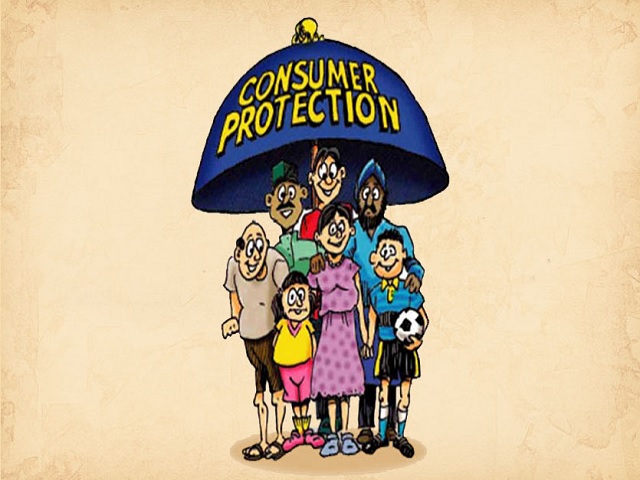
CONSUMER PROTECTION ACT

OBJECT OF THE ACT According to the preamble, the Act is to provide for better protection of the interests of consumers and for that purpose to make provision to make provision for the establishment of consumer councils and other authorities for the settlement of consumer’s disputes and for connected therewith.

BASIC RIGHTS OF CONSUMERS [SECTION 6] The basic rights of consumers that are sought to be promoted and protected are;

a) The right to be protected against marketing of goods and services which are hazardous to life and property:

b) The right to be informed about the quality, quantity, purity, standard and price of goods, or services so as to protect the consumer against unfair trade practices;

c) The right to be assured, wherever possible, access to variety of goods and services at competitive prices;

d) The right to be heard and to be assured that consumers’ interest will receive due consideration at appropriate forums;

e) The right to seek redressal against unfair trade practices or restrictive trade practices or unscrupulous exploitation of consumers; and

f) The right to consumer education.

Complainant means

(a) a consumer

(b) any voluntary consumer association registered under any law;

(c) the Central or any State Government

(d) one or more consumers, where there are numerous consumers having the same interest; or

(e) in case of death of a consumer, his legal heir or representative, Who or which makes a complaint.
An association of persons to have locus standi as consumer, it is necessary that all the individuals forming the association must be the consumer having purchased the same goods or hired the same services from the party.
In case the affected consumer is unable to file the complaint due to ignorance, illiteracy or poverty, any recognized consumer association may file the complaint as per the above clause (b). Thus, rule of ‘privity of contract’ or ‘locus standi’ , which permits only the aggrieved party to take action, has very rightly been set aside in the spirit of public interest.


Complaint [Sec.2(1)(c)]
Complaint means any allegation in writing made by a complaint that – (i) an unfair trade practice or a restrictive trade practice has been adopted by any trader; (ii) the goods bought by him or agreed to be bought by him be suffer from one more defects; (iii) the services hired or availed of or agreed to be hired or availed of by him suffer from deficiency in any respect; (iv) the trader has charged a price in excess of the price;

(a) fixed under any law; (b) displayed on the goods or any package containing such goods; (c) displayed on the price list exhibited by him; or (d) agreed between the parties. (v) goods which will be hazardous to life and property when used are being offered for sale to the public; (vi) services which will be hazardous to life and safety of the public when used, are being offered by the service provider. With a view to obtain any relief provided by law under this Act.


Why coke studio is so popular?

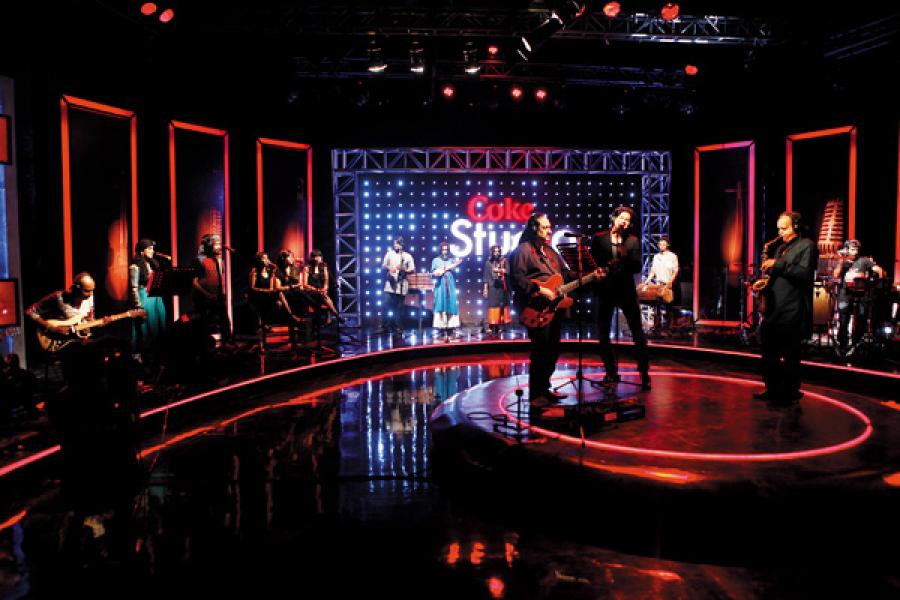
Coke Studio Comes To India | Forbes India

The concept of Coke Studio begun in Brazil in 2007 with a one-time promotional project called ‘Coca Cola Zero Studio’. This was organized by the company Coca Cola and it was accompanied with the launch of a new music phone by Nokia.  A year later, this format was adopted in Pakistan as ‘Coke Studio’, a live music television reality show which showcased live versions of songs performed by artists of various music genres. Highlighting fusion music as its USP, Coke Studio became one of the most successful television programmes in Pakistan. The credit for this is often given to the show’s producer, Rohail Hyatt. This concept was then adopted in India, the Middle East and later, in Africa.  In India, Coke Studio@MTV, a collaboration of Coca Cola India and MTV India started in 2011. Leslie Lewis was the producer of the first season. While Coke Studio Pakistan has completed 12 seasons, Coke Studio@MTV has done 4 seasons until now.

The cultural music of India not only includes the two main traditions of Indian classical music called Hindustani and Karnatic classical but also involves the huge diversity of folk music. Various modifications of Hindustani classical music called the semi-classical consists of forms like thumri, dadra, qawwali, ghazal, bhajan, tappa, hori and so on.  The classical music of Pakistan is also based on the Hindustani classical music which has patronized by various empires that historically ruled the south asian region. It’s semi classical forms include ghazal, qawwali etc. Religious music like hamd, naat and nasheeds as well as its folk music are extremely popular throughout the nation.

India and Pakistan are countries that are blessed with highly diverse forms of music as well as musical instruments. Coke Studio not only takes up traditional music genres but it also incorporates several local musical instruments in each of their sessions. Fusion of different musical forms, instruments, lyrics and styles is what defines the essence of the show. This show provides a stage to both the mainstream popular singers and also to the folk or ghazal singers with no power hierarchy. This has brought the ‘not so popular’, marginalized and even unconventional music forms in a studio setting and fused it with the much successful and popular music types. It provides visibility, success and exposure to the local artists that perform in it. A survey conducted on people of age 17-30 years found that a majority of them thought that Coke Studio not only promotes culture but also, believed that it has opened a platform for folk/regional music.

Renewable sources- Future of India

Imagine waking up one day, without any natural non-renewable resources left on this earth, how will it feel? Certainly, in a sense, we will be half dead.

Without any resources,without any foundation to support livelihood on this earth, survival of the humans is equal to null. The reason for which its important today to utilize the natural resources in such a manner that it becomes a boon for the generations to come. Provision of renewable resources by the nature itself, is a remedy for the same.

In case of a country, like, India, its a icing on the cake, surrounded by water on all the three sides, bestowed with a range of seasons in the country, the location on the world map is quite advantageous for India. The presence of oceanic water and large number of rivers in the country, is a significant edge in providing with hydroelectric power to the country;along with blowing winds, at the time of autumn and winter, that is a great opportunity to grasp the use of wind energy, in performing various tasks;also, the hot summer season, when sun is at the peak, is probably best suitable in providing the solar energy to the country, that directly comes from the nature, without harming any livelihood.

Renewable sources of energy –

  • Water resources –

Water, one of the basic necessities of any humans’ life, is considered as a renewable material when carefully controlled usage and treatment is followed. If it not, it would become a non-renewable resource at the location. Hydroelectricity, is generated from the fast flowing water, which becomes a renewable source. In India, projects like, Bhakra Nagal, Damodar Valley corporation, the Kopili Hydel project, are currently in working, but a lot more can be produced using Tidal waves, which is currently in not a much use, as it could be.

  • Solar Energy

India being a tropical country, has enormous possibilities of tapping solar energy. Photovoltaic technology converts sunlight directly into electricity. Today, the solar energy is used mostly by the people living in remote and rural areas, which contributes to environmental conservation and adequate supply of manure in agriculture. The largest solar power plant of India is located at Madhapur, near Bhuj, here solar energy is used to sterlise milk cans.

  • Wind Power

India stands as a wind super power in the world. In most of the states in the country, such as, Tamil Nadu, Andhra Pradesh, Karnataka, Gujarat, Kerala, Rajasthan, and even Lakshadweep, have the largest wind farm cluster which are well known for effective use of wind energy in the country.

The above stated are the major sources of renewable energy, apart from these, Biogas, and Geothermal energy, are major renewable sources that are helpful in generating mass energy, as well as electricity. Being a progressive country, India is heading towards the development of these resources that can help control the exploitation of other natural non-renewable resources.

Where are we lagging?

Despite having the largest availability of natural renewable sources of energy, India is producing less than what its capacity enables it to. Every state of the country has some or the other resource accumulated within it. But, due to –

  • Lack of technology
  • Lack of human approach to the resources
  • Lack of precise knowledge of resources
  • Lack of interest of financial institutions to fund projects
  • Safe guard duty on imported solar panels
  • Ambiguity over goods and services tax on solar equipment
  • Low investor sentiment due to delay by discoms to clean energy developers

It has become difficult to use them, also, the presence of other natural resources that are in use, currently, people are not inclined towards using these renewable energy resources.

Plans and programs –

India’s installed capacity touched around 86GW by November end. This includes solar, wind, small hydro, biomass, waste to energy and others. Around 30GW renewable capacity including 18GW solar and 10GW wind energy is under implementation. Besides, around 40GW including 36GW solar and 3.4GW wind energy, is being tendered.

https://m.economictimes.com/industry/energy/power/india-set-to-cross-100gw-renewable-energy-capacity-mark-in-2020/articleshow/72977561.cms

Schemes such as, PM-KUSUM, SPDA, PRAAPTI, have helped the private sectors to pull up their socks and work in the director that would make the country self reliant, or Atam nirbhar. The future certainly depends on these energy resources, bringing a new stream of development into the country.

Prevention from depletion of natural resources from the earth is a step ahead, by installing the new type of techniques for the development of human race.

https://en.m.wikipedia.org/wiki/Renewable_energy_in_India

Interesting Facts about Ladakh

The place brings peace to soul

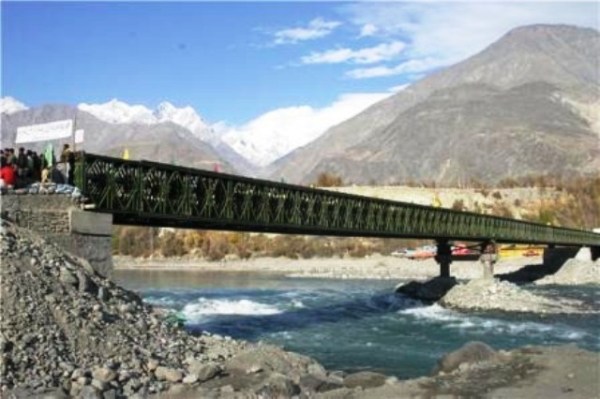
The Bailey Bridge in Ladakh is the highest Bridge

A Bailey bridge between the Suru River and Dras River in Ladakh, India is the highest bridge in the world at an altitude of 5,602 metres  above sea level. It was built in 1982 by the Indian

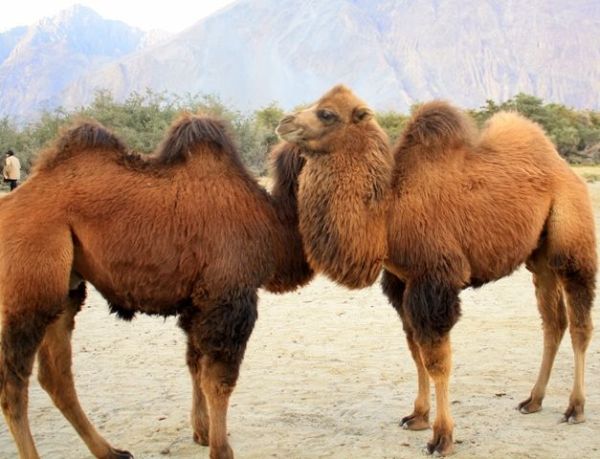
Only place in India where twin Humped camel only be found

The Bactrian camel (two-humped) is a large, even-toed ungulate native. The Bactrian camel has two humps on its back, in contrast to the single-humped dromedary camel, they are rare compared to single hump camels

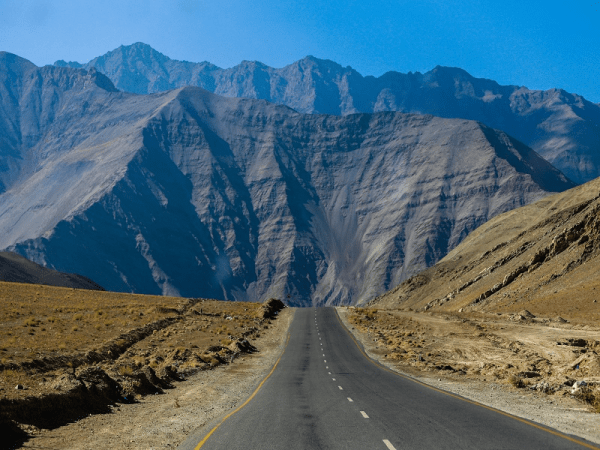
Zero-Gravity Hill

Technically speaking the Magnetic Hill of Ladakh is an optical illusion. Although it looks like an uphill route, it is actually downhill. So, if you leave your vehicle in neutral and turn off the ignition, it would look like your car is being pulled uphill.

Their Own Calendar

While the rest of the world follows the Georgian calendar, the Ladakhis follow the Tibetan calendar. Under this calendar, each year has 12 months with 30 days in each. It looks pretty normal, right? Well, here is where it starts to get weird. Every third year will have 13 months. The months do not have any name and are just numbered. The days are named after the five visible planets, the sun, and the moon. That extra month in every third year is added at the time of any auspicious days and any inauspicious weeks or days are just cut off from the calendar.

Highest Desert In The World

Katpana desert is the highest desert in the world, located 2,226m above the mean sea level. This desert runs between Khaplu Valley and Nubra Valley (Ladakh)

It has the highest natural ice hockey ring:

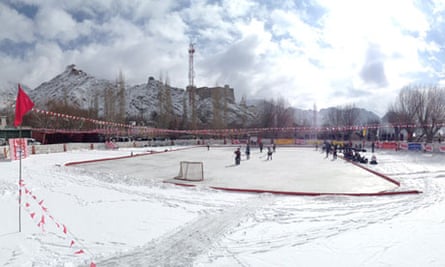
 The Karzoo Ice Hockey Rink in Ladakh is the world’s highest natural ice hockey rink. This rink comes to life during winters when the subzero temperatures are superior throughout the day. Winter sports are popular on a wide scale on this naturally built rink. Whereas the history of this sport in Ladakh dates back to the early 70s.

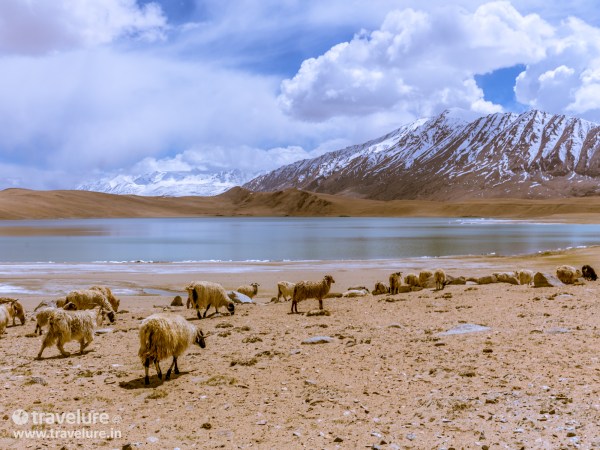
The most visited “high grassland lake”

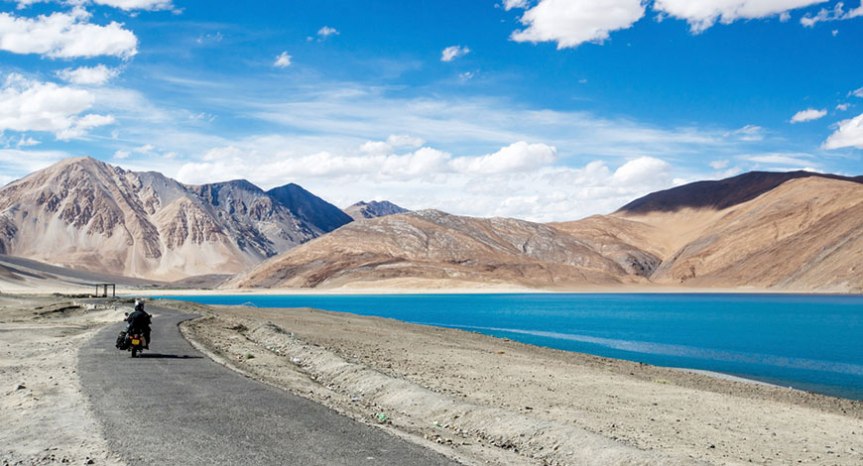
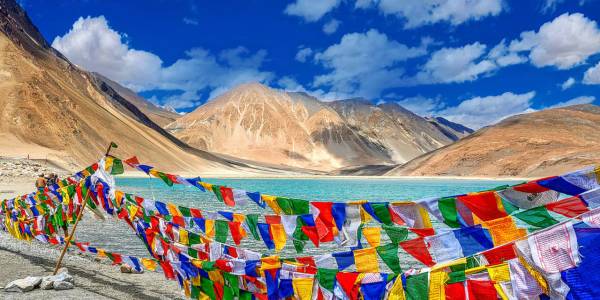
Pangong Tso means “high grassland lake” in the Tibetan language. Commonly referred to as Pangong Lake, it is an endorheic lake in the Himalayas situated at the height of about 4,350 meters. During winter the lake freezes completely, despite being a salt lake.

Can Live be normal after lockdown?

The rapid spread of COVID-19, popularly known as coronavirus has resulted in India being under a nationwide lockdown for over three months now. This infectious disease has affected a population of more than eighty five thousand in the country, which has also resulted in the death of more than two thousand people. In order to control the situation and avoid the spread of the disease, the government has announced a series of lockdowns, with certain restrictions and relaxations from time to time. But what about the life post lockdown? Will life be just like it was before lockdown? Or will the virus haunt us for the rest of our lives?
A lockdown is when you are isolated at a place, with limited or no access to public places and institutions like cafes, restaurants, offices, schools and many more similar places. Indians have been under a lockdown for such a long time that staying at home, only going out to buy essential, working from home and doing household chores have become a part of our daily routine. Our day starts from being at home and ends at being at home. The fear of stepping out and accidently coming in contact with anything is something that has deeply impacted us and our minds. Even when we have to step out to buy essential, we think twice because the fear of coming in contact with the disease is always with us. There is so many things which get broken after the lockdown
• It is clear the current strategy of shutting down large parts of society is not sustainable in the long-term. The social and economic damage would be catastrophic.
• Lifting the restrictions that are holding the virus back, then cases will inevitably soar.
• World goes 20 years back.
• May be large scarcity of essential things due to less manufactures.
• People fear in gathering at one place.
• Unemployment raises.

As much of the world continues to stay at home to slow the spread of corona virus, Earth has quickly transformed into a wilder and cleaner place.

Impacts of smartphones

Mobile phones have revolutionized our lives for many years. In the past, people had to wait for days or weeks to get a reply to their letters. Smartphones provide us the opportunity to converse, figure out, and access content it’s also have redefined connectivity and communication. But, high-end mobile phones, have also turned out to be handy devices for anti-social elements. It all depends on how you use this Smart and handy gadget. They have their uses and misuses. The ability to talk without wires and all across the world is one of the major uses of smartphones. Smartphones have surfaced as the main communication gadget for millions of county side and distant areas in many developing countries where it is quite hard to build widespread landline phone infrastructures. Mobile Phones leads a man’s ways.

On one side if smartphones are the best sources to get instant help in the hour of need, there are some drawbacks to this gadget. Nowadays, parents are allowed their children to use smartphones at an early age but it is only to make sure about their safety and security which is needed since we live in an insecure society. However, it has been observed that these children do not make use of it in a proper manner. This can impact negatively on their mental and physical fitness. Burglars and criminals can plan out a number of criminals activities using smartphones. We must keep a close watch out for what purposes the Smartphone is used.

ANCIENT FARMING

Traditional Farming

Pattikonda:04/07/2020.

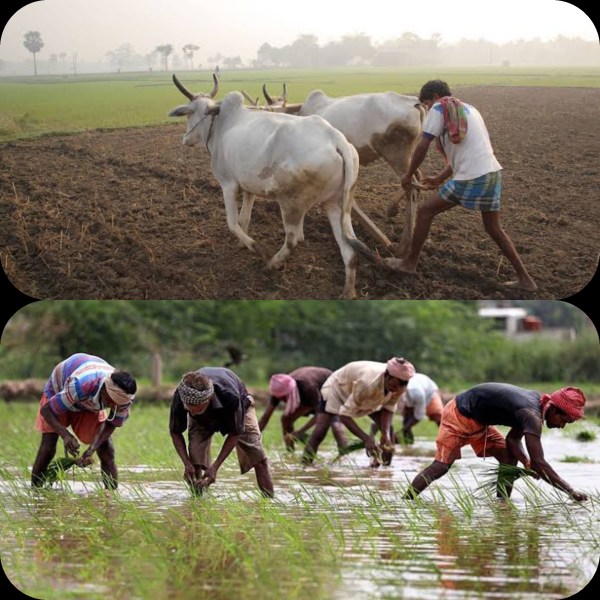
Traditional Farming ,which is Known as Ancient Farming. It can be defined as Primitive style of Farming that involves the Natural Resources,Organic materials and Cultural beliefs of the farmers.

It is developed from 3300 b.c by using stone pullers tied with oxen. The Natural Resources are Dung,water and Neem oil are used in this Farming .Hoe,hammer and sickle are tools of Traditional Farming.

There are two types of Traditional Farming. They are subsistence Farming and Commercial Farming.Subsistence Farming is used to feed their families. Commercial Farming are used to make money and more yield.

By Following Traditional Farming,Farmers can grow Double crops,Mixed Crops,crop Rotation.Farmers using products are Harmless and make soil fertile.

The advantages of Traditional Farming are good Production,Simple Harvesting,Safer Foods,Centre pivot Irrigation and soil fertile. This helps to lead Farming more years and good yield.

But It also have some Disadvantages like Time taken ,less crop yields,more work etc.

The beauty of farming is that is a culture of Farm her(land).

15- year old MP girl secures top rank in class 10 board exam, who cycled 24 km daily to go the school

Roshni Bhadouriya, who belongs from a village in Madhya Pradesh’s Bhind district, has scored 98.5 per cent in the State Board Class 10 exams. Standing eighth on the merit list, Roshni cycled to school in Mehgaon town (12 km away from her home) and back, every day.
Her father, Purushottam Bhadoria, a farmer felt very proud to have a girl child like her and let her continue studying. What he said “All my children are good students, but this girl m her to continue studying. I want to see her get big degrees and work in big firms in big cities”.

India’s participation in sports

India is no longer just a cricket nation and the sports business is starting to expand along with several dimensions totaling to over a billion US dollars growing at 35% to 40% years over organizations taking some definite interest in the sports industry programs, there has been definite upheaval in the industry as a whole. In recent news, India saw its Olympians bringing glory to the country in wrestling (Shakthi Mallik) and badminton(PV. Sindhu) not only is this a huge leap from the predominantly patriarchal nature of sports in India but an inspiration to women all around the world. It was high time for India to start talking sports seriously and not just as fun and games.

The Ministry of sports and youth affairs is focusing on the Ministry of Statistics and Programme Implementation and the MP area development Fund. Specifically, MPs in India will be able to allocate more funds towards the erection of multipurpose halls, hockey turfs, soccer fields, and athletic tracks, under the urban sports Infrastructure scheme or USIS, a whopping windfall of roughly six crore rupees will be allotted towards the same. Indeed, people may have a different sporting preference, but the bottom line is that there is no doubt that sports, any sports, can enthuse so many. Its time to showcase India’s prowess to grow as a superpower in sports.