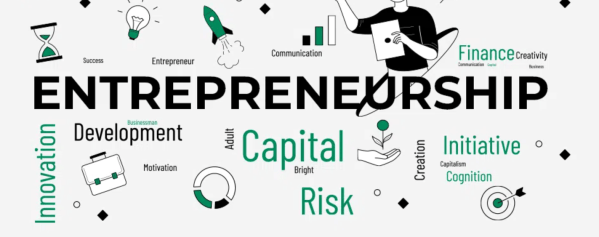
Entrepreneurship: Turning Ideas into Opportunities

Entrepreneurship is one of the most powerful drivers of economic growth, innovation, employment, and social development. It is the process of identifying opportunities, organizing resources, taking calculated risks, and creating value through a new business, product, service, or social initiative. An entrepreneur is not simply a person who starts a company; an entrepreneur is someone who recognizes a problem or unmet need and develops a practical solution that can create economic or social value.

For owners preparing for a future transaction, Fractional CFO services can also help strengthen financial reporting, forecasting, cash-flow planning, and performance analysis, giving management a clearer picture of the company’s financial position well before a potential sale.

In today’s rapidly changing world, entrepreneurship has become increasingly important. Technology, globalization, digital platforms, changing consumer behavior, and new business models have opened opportunities for individuals to start enterprises with relatively limited resources. From small local businesses and technology startups to social enterprises and creative ventures, entrepreneurship can take many forms.

The Meaning of Entrepreneurship

Entrepreneurship begins with an idea, but a successful enterprise requires much more than an idea. Entrepreneurs must understand the market, identify potential customers, estimate costs, develop products or services, arrange finance, build teams, promote their businesses, and continuously respond to competition and changing market conditions.

Entrepreneurs usually operate in situations where the future is uncertain. They may not know whether customers will accept their product, whether competitors will enter the market, or whether their financial resources will be sufficient. Therefore, entrepreneurship requires careful planning as well as the willingness to take calculated risks.

Successful entrepreneurs do not necessarily avoid risk. Instead, they try to understand, manage, and reduce risk through research, experimentation, financial planning, and continuous learning.

Importance of Entrepreneurship

Entrepreneurship contributes significantly to economic development because new enterprises generate employment and create new sources of income. Small and medium-sized businesses, in particular, provide large numbers of jobs across manufacturing, services, retail, agriculture, construction, technology, tourism, and other sectors.

Entrepreneurship also encourages innovation. Entrepreneurs frequently introduce new products, services, technologies, production methods, and business models. For example, digital payment systems, online education platforms, food delivery services, renewable-energy solutions, and e-commerce businesses have emerged partly because entrepreneurs identified changing needs and developed new ways of meeting them.

Another important contribution of entrepreneurship is competition. New businesses challenge existing firms, encouraging companies to improve quality, reduce costs, adopt technology, and offer better services to customers.

Entrepreneurship can also contribute to regional development. Enterprises established in smaller towns and rural areas can generate local employment, support local supply chains, and reduce excessive dependence on major metropolitan areas.

Characteristics of Successful Entrepreneurs

Successful entrepreneurship is often associated with a combination of personal qualities, managerial skills, and practical experience.

One important characteristic is vision. Entrepreneurs must be able to recognize opportunities that may not be immediately obvious to others. They should understand how customer needs, technology, society, and markets may change over time.

Another important quality is creativity. Entrepreneurship often involves finding new solutions to existing problems. Creativity may appear in product design, marketing, service delivery, pricing, distribution, or the use of technology.

Entrepreneurs also need resilience. Business activities rarely develop exactly according to plan. Entrepreneurs may experience financial difficulties, unsuccessful products, customer complaints, competition, or unexpected market changes. The ability to learn from setbacks and continue improving is therefore essential.

Communication and leadership are equally important. Entrepreneurs frequently need to communicate with employees, customers, investors, suppliers, government agencies, and business partners. Strong communication helps them explain their vision, negotiate agreements, attract customers, and build effective teams.

Financial literacy is another critical skill. Entrepreneurs should understand basic concepts such as revenue, expenditure, profit, cash flow, investment, working capital, pricing, and break-even analysis. A business may have a good product and still fail if its finances are poorly managed.

From an Idea to a Business

The entrepreneurial journey usually begins with identifying a problem or opportunity. Instead of asking, “What business should I start?” aspiring entrepreneurs can ask, “What problem can I solve?”

After identifying an opportunity, the entrepreneur should conduct market research. This involves understanding potential customers, competitors, pricing, demand, and market trends.

The next stage is developing a business model. Entrepreneurs need to determine what they will offer, who their customers will be, how the product or service will be delivered, and how the business will earn revenue.

Before investing heavily, entrepreneurs can test their idea on a small scale. A prototype, pilot project, sample service, or minimum viable product can help determine whether customers are genuinely interested.

Customer feedback is extremely valuable at this stage. It allows entrepreneurs to improve their products before making larger investments.

Role of Technology in Entrepreneurship

Technology has dramatically changed entrepreneurship. A business can now communicate with customers, receive payments, advertise products, manage accounts, collaborate with teams, and sell internationally using digital platforms.

Social media has made marketing more accessible to small businesses. Entrepreneurs can use digital platforms to demonstrate products, communicate directly with customers, build communities, and develop brands.

Artificial intelligence, cloud computing, data analytics, automation, and digital payment systems are also creating new entrepreneurial opportunities. Businesses can use these technologies to improve productivity, understand customer preferences, and reduce operating costs.

However, technology should be viewed as a tool rather than a substitute for a good business idea. Successful businesses still require customer understanding, quality, reliability, trust, and effective management.

Entrepreneurship and Innovation

Innovation is closely connected with entrepreneurship. Innovation does not always mean inventing a completely new technology. It can also involve improving an existing product, developing a better service, introducing a new delivery system, or making an existing solution more affordable.

A local entrepreneur, for example, may create an innovative agricultural supply chain that connects farmers directly with consumers. Another entrepreneur may develop an online platform to provide affordable professional training. Both examples demonstrate innovation even if the underlying technologies already exist.

The most successful innovations usually provide meaningful value to users.

Challenges Faced by Entrepreneurs

Entrepreneurship can be rewarding, but it also involves significant challenges. Access to finance is one of the most common difficulties, particularly for first-time entrepreneurs. Banks and investors may hesitate to support businesses without an established financial history.

Finding skilled employees, attracting customers, managing cash flow, complying with regulations, and dealing with competition can also be difficult.

Entrepreneurs must therefore develop networks and seek support from mentors, incubators, industry associations, universities, government programs, and experienced professionals.

Another challenge is maintaining balance between growth and sustainability. Rapid expansion without adequate systems, financing, or management can create serious problems. Sustainable growth is generally more valuable than expansion that cannot be supported financially or operationally.

Social Entrepreneurship

Entrepreneurship is not limited to profit-making businesses. Social entrepreneurship focuses on solving social or environmental problems through innovative and financially sustainable approaches.

Social entrepreneurs may work in education, healthcare, sanitation, renewable energy, waste management, affordable housing, rural development, or skill development. Their goal is often to combine financial sustainability with measurable social impact.

This approach demonstrates that entrepreneurship can contribute not only to economic development but also to improving quality of life.

The Future of Entrepreneurship

The future of entrepreneurship is closely connected with digital transformation, sustainability, artificial intelligence, clean technologies, healthcare innovation, education technology, financial technology, smart cities, and the circular economy.

Consumers are becoming increasingly aware of environmental and social issues. As a result, businesses that provide environmentally responsible products, efficient resource use, ethical practices, and transparent operations may find growing opportunities.

Young entrepreneurs will also have increasing access to online learning, global markets, digital tools, crowdfunding platforms, and professional networks. These resources can reduce some traditional barriers to starting a business.

Conclusion

Entrepreneurship is ultimately about creating value by transforming ideas into practical solutions. It requires creativity, planning, courage, discipline, adaptability, and continuous learning. Entrepreneurs identify opportunities where others may see problems and attempt to create solutions that benefit customers, communities, and economies.

Not every entrepreneurial idea becomes successful, and failure is an inherent possibility in business. However, the entrepreneurial process itself encourages experimentation, innovation, problem-solving, and learning.

For students, professionals, researchers, and aspiring business owners, developing an entrepreneurial mindset can be valuable even without immediately starting a company. Learning to identify opportunities, evaluate risks, communicate ideas, manage resources, and solve problems can contribute to success across many professions.

Entrepreneurship therefore represents much more than business ownership. It is a mindset focused on opportunity, innovation, value creation, and positive change. In an increasingly dynamic and competitive world, entrepreneurs will continue to play a major role in shaping industries, creating employment, introducing new technologies, and developing solutions for the challenges of the future.

Daily writing prompt
How do you make time for self-care?

NEMT Business: Building a Successful Medical Transportation Venture

The non-emergency medical transportation (NEMT) industry ensures access to essential healthcare services for individuals with mobility challenges. 

Photo by Daniel Frank on Pexels.com

Establishing a successful NEMT business requires careful planning, strategic marketing, and a proactive approach to overcoming common challenges. 

This article explores the critical steps in launching an NEMT business, effective marketing strategies, and insights into overcoming hurdles NEMT entrepreneurs face.

Steps to Launch an NEMT Business

Launching an NEMT business demands meticulous planning and execution. Here are the essential steps to get started:

Market Research: Conduct thorough market research to understand the demand for NEMT services in your area, assess the level of competition, and identify potential gaps in service provision.

Business Plan Development: Create a comprehensive business plan outlining your services, target market, revenue streams, and financial projections. This plan serves as a roadmap for your venture and helps secure financing and partnerships.

Regulatory Compliance: Obtain the licenses, permits, and insurance required to operate legally in your jurisdiction. Familiarize yourself with local and federal regulations governing NEMT operations.

Partnership Building: Forge partnerships with healthcare facilities, brokers, and community organizations. These partnerships can generate referrals and provide valuable insights into patient needs and preferences.

Fleet Acquisition and Staffing: Acquire suitable vehicles with accessibility features and hire qualified staff, including drivers and administrative personnel. Ensure your team receives proper training in patient care, safety protocols, and customer service.

Technology Integration: Implement scheduling, dispatch, and billing solutions to streamline operations and enhance efficiency. Invest in user-friendly software that facilitates communication between staff, drivers, and clients.

Strategies for Marketing and Promoting Your NEMT Services 

Effective marketing is essential for attracting clients and building brand awareness. Here are some approaches to consider:

Brand Identity: Develop a strong brand identity and messaging that reflects your commitment to reliable, compassionate care. Emphasize the safety, comfort, and professionalism of your services.

Online Presence: Build a professional website showcasing your services, testimonials, and contact information. Maintain an active presence on social media platforms to engage with potential clients and community partners.

Networking: Network with healthcare professionals, social workers, and community organizations to generate referrals and establish credibility within the healthcare community.

Promotional Offers: Offer promotional deals and discounts to attract new clients and incentivize repeat business. Consider partnering with healthcare providers to offer bundled services or discounted referral rates.

Advertising Campaigns: Implement targeted advertising campaigns through online channels such as Google Ads or social media platforms. Utilize print media, radio, or local community events to reach potential clients who may not be active online.

Client Testimonials: Showcase positive client testimonials and reviews to build trust and credibility with potential clients. Encourage satisfied clients to share their experiences online and consider offering referral incentives.

Overcoming Common Challenges Faced by NEMT Entrepreneurs

Navigating the NEMT industry comes with its share of challenges. Here are some common hurdles and strategies for overcoming them:

Operational Costs: Manage operational costs effectively while maintaining competitive pricing for services. Consider leasing vehicles or outsourcing administrative tasks to reduce overhead expenses.

Regulatory Compliance: Stay informed about evolving healthcare regulations and ensure your operations remain compliant. Invest in ongoing training for staff to uphold safety standards and privacy regulations.

Driver Recruitment and Retention: Address driver recruitment and retention challenges by offering competitive wages, benefits, and opportunities for advancement. Provide ongoing training and support to foster a positive work environment.

Scheduling and Dispatch: Implement efficient scheduling and NEMT dispatch software to minimize downtime and optimize resource allocation. Utilize technology solutions to automate processes and improve communication between staff and drivers.

Customer Service: Prioritize excellent customer service to maintain client satisfaction and loyalty. Respond promptly to inquiries and concerns and actively seek feedback to identify areas for improvement.

Adaptation to Market Changes: Stay agile and adaptable to changing market dynamics and evolving customer needs. Continuously evaluate your services and adjust to remain competitive in the industry.

Building a Thriving Business

Launching and growing a successful NEMT business requires dedication, careful planning, and a commitment to providing exceptional client service. 

By following the steps outlined in this article and implementing effective marketing strategies, NEMT entrepreneurs can overcome challenges and build thriving businesses that impact their communities. 

As the demand for NEMT services continues to grow, there are ample opportunities for entrepreneurs to innovate and lead in this essential healthcare industry sector.

Business Skills You Need To Be a Successful Entrepreneur

Are you planning to launch your new business? Well, that’s great! However, you aren’t alone in the world of startups. But, did you get tired of your 9-5 job or years of hard work that pushed you to start your own business? 

Many people were laid off during the pandemic. As a result, there seems to be an exceptional surge in the launch of startups as these laid-off people are exploring new opportunities. Whatever the reason behind starting a new business, it is undoubtedly a great way to achieve all your life dreams. 

While as exciting as it sounds, the road to entrepreneurship is no walk in the park. However, having certain traits and qualities can make you a successful entrepreneur. So do you have what it takes to be a successful entrepreneur? Below is the list of crucial skills that you must develop and polish to take your startup to the next level:

  1. Learning Skills

The path to entrepreneurship is full of both ups and downs. You might come across many failures during your entrepreneurship journey. However, how to cope with uncertain situations is what matters most. Therefore, make sure to have a growth mindset. You can adopt many ways to deepen your knowledge, for instance, by reading books, attending seminars, taking classes, etc. The more you desire to learn and grow, the more chances you will be successful as an entrepreneur. 

However, are you feeling reluctant to pursue your further education because you have other family and work commitments? No worries, consider enrolling in an Online General MBA Program and gain comprehensive knowledge about various aspects of the business. The MBA degree will equip you with in-depth knowledge of financial management, business ethics, marketing, etc.

  • Communication

As a new business owner, you need to pitch your business idea to potential investors constantly. Moreover, you will be selling your products or services to prospective customers and earning revenue. But how is that possible if you lack proper communication skills. That is why effective communication is imperative for business people. 

Good communication skills will help you build and nurture long-lasting relationships with your customers, stakeholders, and employees. Furthermore, no matter how well-qualified or well-skilled your team is, your business will suffer if you can’t communicate your strategies to them. Therefore, try to be proficient in all communication formats – verbal and non-verbal. 

  • Problem-Solving

Sure, you started your business by identifying your target customer’s pain points and providing a solution. However, your work doesn’t end here. It is because every business comes with its own sets of challenges. You will encounter new situations that require you to make different decisions each day. Put it this way, the more strategic decisions you make, the greater chances you can achieve your business objectives. As a successful entrepreneur, one of the most crucial skills you need is excellent problem-solving skills. With good problem-solving skills, you can turn your problems into potential opportunities. 

  • Networking

As an entrepreneur, you might have endless tasks on your plate. You might be planning to sit all day cooped in your office to accomplish those tasks. However, if you wish to run a successful business empire, you need to take some time to get out of your office and network. Networking will help your business grow since you will meet like-minded people. You will meet new business partners and clients and find new opportunities with good networking skills. The best way to network is by attending business conferences and other industry events. You can also build strong connections through social media platforms such as LinkedIn. 

  • Time Management

Imagine you got a potential client project that can help you generate considerable revenue. And while you are sure you and your team can deliver the project with good quality. Still, due to poor time management, the delivery of the project gets delayed. So, of course, your client will get disappointed and might not even consider doing business with you ever again. They might consider going to your competitors for business instead of you. For this reason, excellent time management skills are crucial to becoming a successful entrepreneur. Though you will be handling many tasks simultaneously as an entrepreneur, good prioritization and delegation can help you get your work done efficiently. 

  • Financial Management

Let’s face it; business is all about money. How you manage your business finances can either sink or swim your business. Therefore, learning the art of how to manage your finances is the key to your success. Start by creating a realistic budget and stick to it. That way, you won’t go overspending. It’s sensible to invest in cybersecurity measures like MFA authentication, but it’s not OK to waste money on a high-end office you don’t need yet. 

In many cases, entrepreneurs make the biggest mistake by overspending in the hope of earning more revenue. However, unfortunately, they have to deal with the financial crisis because of their overspending. Therefore, once you create your budget, keep an eye on your finances to avoid any mishap. Sound financial management skills can help you tap into new opportunities and make well-informed decisions. 

  • Leadership

Another critical skill is strong leadership. There is a high possibility you have a strategic vision and excellent business idea, but what’s the purpose if your employees are not following you. That is why develop and polish your leadership skills. However, being a leader is not just a title. It would help if you could motivate and inspire your employees.

Moreover, suppose you wish your employees to follow your dream and work towards achieving your business goals. In that case, you must be likable and approachable. Lastly, it is to note that you don’t have to do all the tasks yourself because you are a business leader. A great leader is someone who knows when to delegate tasks. 

  • Resilience

Answer this. Are you resilient? Resilience, by definition, means bouncing back quickly from challenging situations or failures. Unfortunately, no matter how robust your plans are, things sometimes don’t work as you plan. As a result, you might experience some losses, too. However, picking yourself up when things become difficult is one of the defining traits of a successful entrepreneur. It’s easy to give up when things become hard. But as a successful entrepreneur, you must have a positive attitude and mindset so you can learn from your failures. 

Key Takeaways

It is no secret that launching your new business and making it successful is no piece of cake in the highly-competitive and ever-evolving business world. 

While your degree can give you the push you need to proceed with your unique business plan, your skills will determine whether your business will reach the newer heights of success or not. So be honest with yourself and analyze your skills. Don’t fret if you don’t have some of the skills. With some practice and determination, you can develop or polish these skills and be good on your road to successful entrepreneurship. 

Kiran Majumdar: A inspiration

Kiran Majumdar Shaw is the executive and chairperson of Biocon, a biotechnological company based in Bangalore, India’s richest self-made woman, a healthcare visionary, Global influencer. She was born on 23rd March in Pune, Maharashtra. She did her all education from Bangalore and later on joined as a trainee in Carlton and united breweries and never moved back in her life. She has made a wide impact not only on India’s women but also globally. She has made an outstanding contribution to life sciences and research. She has also awarded with the Padma Bhushan (2005) and Padma Shri (1989), Also the winner of  EY World Entrepreneur of the Year™ 2020 Award.

Ritesh Agarwal: A successful and inspiring story

Ritesh Agarwal : The founder of oyo rooms , founded by him in 2012 . It is backed more than 700 hotels under its brand . At the very young age of 18 , he started working on it later he rebranded it to oyo rooms ,network of 2,200 hotels operating in 154 cities across India – with monthly revenues of $3.5m and 1,500 employees. It has raised a total of $125million of funding in 4 rounds from 7 investors. Ritesh Agarwal has also won many awards and accolades for his work including the Business World Young Entrepreneur Award. He is a speaker at entrepreneurial conferences and institutes across the world and a fellow of the Thiel foundation. Agarwal holds a high school degree from St. Johns Senior Secondary School.

Entrepreneurship

What is Entrepreneurship?


Entrepreneurship is an activity which is done by a person to bring out the social change in the world, by innovative technologies, services, products, etc.

In a more formal definition, Entrepreneurship is the activity of setting up a business or businesses, taking on financial risk in the hope of profit.

Hence, entrepreneurship is an act by which a person became independent and lives a life on his/her terms and conditions. Entrepreneurship is about being your boss.

Who is an Entrepreneur?

An entrepreneur is a person who brings about changes for the betterment of society.

An entrepreneur is someone who sees the world from a different angle. An entrepreneur is a risk-bearer, organizer, and innovator.

Entrepreneur as a risk-bearer–

As a risk-bearer, an entrepreneur is the one who buys certain factors of production changes them into a product and sells them at uncertain prices in the future. There is uncertainty about the prices, which is not an ordinary risk that can be insured therefore the entrepreneur is a risk-bearer.

Entrepreneur as an organizer-

As an organizer entrepreneur combines the labor, land, capital other resources to make a product. After selling this product in the market and subtracting all the receipts which remained is the profit.

Entrepreneur as an innovator–

As an innovator entrepreneur is the one who introduces a product, a service or a technology in the existing one to improve the lives of the people.

Example of Entrepreneurs–


Every entrepreneur has a different vision to see the world to find out the best opportunity for them as well as for the improvement of society.

Many successful entrepreneurs influence the world in different ways because as every individual is different, every entrepreneur is different.

Steve Jobs will always be the most famous and successful entrepreneur in the world. He formed an apple computer company. Jobs’ inventions have been a boon in technology. He passed away with a net worth of over $8.3 billion.

Oprah Winfrey is one of the most successful lady entrepreneurs in the world. She is the richest African-American woman. Despite having a past full of thorns she never gave up in life. Now she owns a cable network company named OWN meaning Oprah Winfrey Network. She acquired the name “queen of all media”. She is the only multi-billionaire in American history possessing a net worth of 2.9 dollars.

Elon Musk, who doesn’t know about him. He is one of the most influential South African born American. He launched his first company Zip2 Corporation, in 1995 with his brother, Kimbal Musk and X.com in 1999 which later became PayPal.
In 2002, he founded SpaceX which is a huge success.

These are some of the examples of the most influential entrepreneurs, who are trying to bring a revolution into the world.

Traits of the entrepreneurship–

• Creative thinking– creativity is an important characteristic of an entrepreneur. A creative mind thinks about new ideas. Instead of blaming the situation, they find a solution to a particular problem. They have amazing imagination power. They think that every product, service has a scope of improvement.

• Embrace changes– successful entrepreneurs are very flexible about the changes. They are always ready for the changes and take the advantages out of the situations.

• Hard work vs smart work– Entrepreneurs know when to work hard and when to work smart. They know that neither of the two can substitute each other.

• Use money wisely– Money management skills of the entrepreneurs should be very good. They should know where, when, how much to invest.

• Vision – successful entrepreneurs know everything about their business- why the organization exists, how a product or a service will bring a difference to the existing one, in which market is to be launched.

• Maintain the consistency– successful entrepreneurs are always consistent with their work. They know that success can’t be achieved overnight. They should not give up on the tough situations.
There is a famous saying by an entrepreneur –
“Tough times never last, but tough people do.”- Robert H. Schuller.