A regional operator wants to open one room now and add capacity only after signed customer contracts. The quickest way to waste infrastructure money is to design against a confident forecast that has never been tested against site constraints.
Begin With the Capacity Constraint
A modular data center approach is only truly scalable when later additions can be commissioned without needless interruption. The initial planning workshop should produce a written load and growth envelope, not a draft drawing full of equipment blocks. Define what is already committed, what is merely possible, and who can approve any change in demand. This is especially relevant when the central design question is balancing fast deployment with adaptable interfaces and accountable site integration. Specialists should define what has to be proven and what may remain an option. In this setting, specify the IT capacity of each block, its utility criteria and the sequence for adding a second or third block.
Draw the Expansion Boundary
A phased programme works when the earliest installation preserves the routes and interfaces needed for later capacity. On this kind of deployment, packaged UPS, distribution, cooling modules, mechanical skids and standardised monitoring points must be coordinated rather than bought as unrelated packages. The boundary deserves particular attention: factory-completed assemblies meeting site-level civil works, utility feeds and protection settings.
For context during technical comparisons, published material on modular data center can help identify relevant equipment categories; the site specification still needs its own calculations and independent review.
Make Interfaces Work on Day One
Interface drawings should name the operating organisation of every connection and every control signal. Site working groups often discover a coordination gap at factory-completed assemblies meeting site-level civil works, utility feeds and protection settings. Put this interface in the register, assign one accountable owner and confirm the intended behaviour with an end-to-end test.
Protect Operations During the Next Phase
A planned addition is still work beside production equipment. The most damaging interruption may happen during routine work, not a dramatic fault. A supposedly plug-and-play addition needing unplanned shutdowns or incompatible controls should be tested against the proposed isolation and rollback sequence.
Budget for the Whole Deployment
Compare spending in stages: the enabling works required immediately, the modules that can follow signed demand, and the operating financial outlays while the first phase is only partly used. A phase-by-phase estimate should also show commissioning time, available capacity per module, part-load efficiency and repeatability of acceptance technical exercises. These observations connect design capacity to what actually happens after occupation and help prevent blind investment in unused infrastructure.
Before placing an order, use the modular data center reference alongside the site brief to ask precise questions about installation, testing and long-term service ownership.
What to Require Before Approval
Approval should depend on explicit acceptance tests and named ownership for unresolved items. When bids arrive, request documentation covering module drawings, transport constraints, site acceptance tests, spare-part availability and change-control rules. Ask technical partners to identify unresolved interfaces and the forecast inputs that would force a change order after purchase.
If you could switch lives with a famous person for a week, who would it be and why?
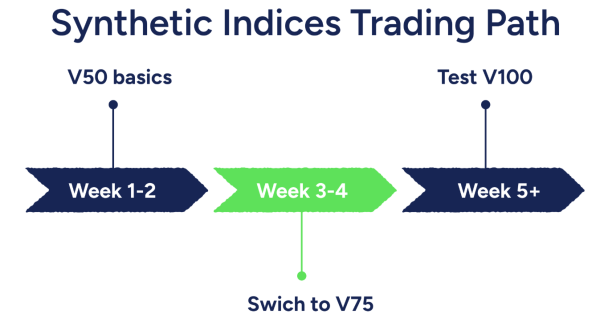
Have you ever lost weeks of effort in one quick drop? Most traders have. One missed stop loss, and it is gone. With synthetic indices, prices keep moving all day, so this happens a lot more than people like to admit.
You do not need a secret indicator. You need a plan you can repeat. Here is the best strategy for synthetic indices, in plain steps you can actually use.
Know Your Index Before You Trade It
What is the best trading strategy for synthetic indices? Honestly, it starts with knowing what you are trading. Note that these markets run on a random number generator built to copy how real prices move.
You will find volatility, boom and crash, and step indices, and each one moves at its own pace. You need to spend time watching your chosen index before risking money. Traders who learn its rhythm beat the ones who just guess.
Set Your Risk Rules First
What really is the best trading strategy for synthetic indices? Honestly, it begins with keeping your money safe. Ensure that you put only 1% to 2% of your account on a trade. Place a stop loss before you click buy or sell.
Pick a daily loss limit and walk away when you hit it. Don’t add to a losing trade hoping it bounces back. It is wise to note that the markets here move fast, and a few bad trades will automatically erase weeks of work.
Spotting Good Entries Using Trends and Structure
What is the best trading strategy for synthetic indices? Slow down first. Check the 15-minute chart on Syntxwiki to see where price is heading and then drop to the 1-minute or 5-minute chart to pick your entry. Mark your support and resistance, follow the moving average, and wait for a clear rejection candle.
Do you want the best trading strategy for synthetic indices? Patience wins. Trust us; skipping a trade costs nothing. A bad entry costs real money.
Plan Your Exits First
Most traders spend hours hunting for an entry and then give the exit about five seconds. If you are looking for the best trading strategy for synthetic indices, you need to start by setting a profit target at least twice your risk. Then, place your take profit at the next big level that gives you at least a 1:2 ratio.
Once price moves in your favor, move your stop loss to breakeven. This ensures that your capital stays safe and your head stays calm.
Discipline Matters More Than Any Plan
The reality is that no matter how good your trading strategy for synthetic indices is, it will not help if you trade based on impulses. Keep a record of every trade, noting why you decided to enter, what occurred, and how you felt at the time.
Review this record after a few weeks, and you will likely notice patterns of mistakes that you keep making. Why guess when your notes can show you? Test the best strategy for synthetic indices on a demo account for a few weeks. Does it hold up when the market gets rough? If yes, go live with a little money.
Conclusion
To successfully begin your trading, you need to start small. You also need to make smart decisions that will help you avoid risks or losses along the way. Are you ready to begin? Take the first step now and follow our guide above.
Ask a group of first graders where they live, and you’ll get answers like “in a blue house,” “next to the park” or “America.” All of them are correct. None of them are on a map yet.
That’s where early geography starts. Young children already think about space and place every day. They know the way to the cafeteria, which side of the room their cubby is on and how far it is to Grandma’s. Map skills give that natural awareness a structure, and the earlier kids get it, the easier geography, science and even math become later.
Why Map Skills Matter in the Early Grades
Reading a map is more than a social studies objective. It combines several skills young learners need:
Spatial thinking: understanding where things are in relation to each other
Symbol reading: knowing that a small picture can stand for something real
Vocabulary: words like north, border, continent, ocean and key
Problem-solving: using information to find a route or answer a question
Real-world independence: finding their way around a school, a park or a city
Start Small and Build Outward
The biggest mistake in teaching early geography is starting too big. A globe or a world map means very little to a five-year-old who can’t yet picture their own street from above. Work from the familiar to the far away:
Me: where my body is in the room (left, right, in front of, behind)
My classroom: a simple bird’s-eye view of desks, the door and the rug
My school: hallways, the library, the playground
My neighborhood: home, streets, stores, parks
My town and state: cities, rivers, highways
My country: states, borders, major landmarks
My world: continents and oceans
Each step uses the previous one as a reference point, so new ideas always connect to something kids already understand.
What K–2 Students Should Learn by Grade
Expectations vary by state, but most map skills curricula follow a similar progression.
Grade
Core skills
Example activity
Kindergarten
Positional words, maps vs. pictures, simple symbols, land vs. water
Draw a map of your bedroom or the classroom rug area
1st grade
Map keys, cardinal directions, maps of school and neighborhood, globes
Make a classroom map with a key and label north, south, east and west
2nd grade
Compass rose, continents and oceans, U.S. states, landforms, simple map grids
Find your state on a U.S. map and trace a route between two cities
Hands-On Map Activities That Work
Young children learn geography best when they can move, build and draw. A few ideas that need little prep:
Bird’s-eye view challenge: place a toy on the table and have kids draw it from directly above.
Classroom treasure hunt: hide an object and give students a simple map with a key to find it.
Compass walk: label the walls of the room with N, S, E and W, then call out directions (“Take three steps east”).
Map of my route: have kids draw the way from home to school, adding landmarks they pass.
Salt-dough landforms: model mountains, valleys, rivers and islands, then label them.
Puzzle maps: U.S. or world map puzzles are a quick center activity that builds recognition of shapes and names.
Pair Map Skills With Reading
Geography fits naturally into literacy time. Short informational passages about continents, oceans, landforms or the parts of a map teach key vocabulary while kids practice main idea, details and text features. Students who read about a compass rose and then use one on a real map remember it far better than those who only hear the term once.
If you need ready-made texts, apageoutofhistory.com offers printable geography reading passages with comprehension questions written for kindergarten through second grade. They cover topics like map skills, continents and landforms, and they’re designed to print and use the same day, which makes them easy to drop into morning work, centers or homeschool lessons.
Common Mistakes to Avoid
Jumping to the globe too early. Kids need to understand small, familiar maps before abstract ones.
Teaching directions as “up” and “down.” North isn’t always up in real life. Practice with a compass and real surroundings.
Skipping the map key. Symbols are the core of map reading, so give them plenty of time.
Using only worksheets. Movement and building make spatial ideas concrete.
Treating geography as a one-time unit. Short, regular practice throughout the year works better than a single two-week block.
Bringing Map Skills Home
Parents and homeschoolers have endless real-world opportunities to practice:
Let your child follow along on a map during car rides or walks.
Look up places mentioned in books, news or family stories.
Hang a world or U.S. map at child height and mark places relatives live or you’ve visited.
Use a park or zoo map to plan your route together.
FAQ
At what age can children start learning map skills?
Most kids can start around age four or five with positional words and simple drawings of familiar spaces. Formal map reading with keys and directions usually begins in kindergarten or first grade.
When should kids learn the continents and oceans?
Usually in first or second grade, after they understand that a map is a smaller, bird’s-eye picture of a real place.
How do I teach cardinal directions to young children?
Label the walls of a room with north, south, east and west, play movement games and connect directions to real landmarks, like “the playground is east of our classroom.” A simple phrase like “Never Eat Soggy Waffles” helps with the order on a compass rose.
What’s one thing you know now that would have saved your younger self a lot of pain?
In 2016, Mark Ziemann, Yotam Eren, and Assam El-Osta published a short paper in Genome Biology that embarrassed an entire field. They checked 7,467 supplementary gene lists attached to 3,597 papers in 18 journals and found that 704 of those papers, roughly one in five, contained gene names that Microsoft Excel had silently converted into dates. SEPT2 became September 2. MARCH1 became March 1. The follow-up study by Abeysooriya, Ziemann and colleagues in PLOS Computational Biology (2021) scanned 11,117 articles and found the problem in 30.9% of them. The errors had not gone away; they had grown, partly because the scanning had improved.
Gene names are an unusual case, but the mechanism behind them is common: a field that looks simple, handled by software that makes assumptions nobody checks. Time is the most widespread example. Almost every dataset contains timestamps, and almost every research workflow involves a deadline. Both depend on time zones, daylight saving rules, and calendar conventions that most researchers never think about until something breaks. This article shows where those breakages happen and how to prevent them with a few simple habits.
A Timestamp Without an Offset Is Incomplete Data
The value “2026-10-25 02:30” looks complete, but it isn’t. Without knowing where it was recorded, it can refer to many different moments around the world, 24 hours apart at the extremes. Even with the location known, it can be ambiguous, as the next section shows.
The international standard ISO 8601 solves this by attaching the offset from Coordinated Universal Time (UTC) to every timestamp: 2026-10-25T02:30:00+02:00 refers to one moment and one moment only. The problem is that common research tools rarely store time this way by default. A spreadsheet date is a serial number counting days from a reference date, with no time zone attached. A survey platform may export responses in the server’s time zone, the respondent’s time zone, or UTC, and the column header does not always say which. Wearable devices, data loggers, and electronic lab notebooks each follow their own conventions.
Spreadsheets add another calendar quirk on top of this. Excel’s default date system treats 1900 as a leap year, a deliberate compatibility choice inherited from Lotus 1-2-3. Microsoft documents it, but few users know it exists. The nonexistent date February 29, 1900 has its own serial number, so any interval calculated across early March 1900 is off by one day. Few modern datasets reach back that far, but historical, demographic, and climate records do.
The Hour That Repeats and the Hour That Never Happens
Daylight saving time creates two predictable data problems every year in regions that use it.
In spring, one local hour disappears. On March 29, 2026, clocks in Central Europe jumped from 02:00 straight to 03:00. A device logging “02:30” local time on that date recorded a time that did not exist. In autumn, one local hour happens twice. On October 25, 2026, clocks across the European Union fall back at 01:00 UTC, so in Berlin, Paris and Madrid the hour from 02:00 to 02:59 occurs twice. In the UK it is 01:00 to 01:59. On November 1, 2026, the same thing happens across most of the United States and Canada between 1:00 and 1:59 a.m. local time.
Consider what this does to a dataset recorded in local time:
Durations become wrong. A night-shift study that subtracts “22:00” from “06:00” on October 25 gets eight hours, but in Central Europe the participant actually worked nine. In March, the same calculation gives eight hours for a seven-hour shift.
Records collide. Two sensor readings taken an hour apart can carry the same local timestamp in the repeated hour. Sorting by timestamp places them next to each other, and deduplication scripts may delete one as a duplicate.
Daily aggregates change size. A “day” of data has 23 hours in spring and 25 hours in autumn. Daily totals of energy use, step counts, emergency visits or website traffic shift by about 4% on those dates for purely mechanical reasons.
That last point matters for research on daylight saving time itself. A study that finds more of some event on the Sunday the clocks fall back has to rule out the fact that the day had 25 hours.
Multi-site studies drift out of alignment
International collaborations face an additional problem: different regions change their clocks on different dates. In 2026, the United States moved its clocks forward on March 8 and Europe on March 29, three weeks later. In autumn, Europe falls back on October 25 and the US on November 1. During those gaps, the time difference between, for example, New York and London is one hour shorter than usual. A protocol that collects saliva samples “at 09:00 local time” at both sites, or schedules a joint online session “at 15:00 London time,” quietly changes its timing relative to the other site for those weeks.
The autumn gap between Europe and North America is always exactly one week, because the last Sunday of October and the first Sunday of November are always seven days apart. The spring gap is either two or three weeks, depending on how the Sundays fall in March. Both can be calculated years in advance, which means protocol designers can plan around them rather than discover them in the data.
An Offset Is Not a Time Zone
Many researchers who do record time carefully store the UTC offset, such as −05:00. That is better than nothing, but it is still not enough for data that will be reused for years. An offset describes one moment; a time zone is a set of rules that can change.
Governments change those rules regularly. Mexico abolished daylight saving time for most of the country in 2022. Egypt brought it back in 2023 after several years without it. Yukon moved to permanent year-round time in 2020. Each change means that the offset for a given city on a given date can no longer be calculated from old assumptions. Software handles this through the IANA time zone database, a public reference of the world’s time rules, updated several times a year. It identifies zones by region and city, such as America/Mexico_City or Africa/Cairo, not by abbreviation.
Abbreviations cause their own problems. CST can mean Central Standard Time in North America or China Standard Time. IST can mean India, Ireland, or Israel Standard Time. A dataset that records “CST” as its time zone without other context is genuinely ambiguous. A clear introduction to how world time zones are organized, including the role of UTC and the reasons offsets differ between countries, is a useful reference when designing a data-collection protocol that spans several regions.
The robust practice is to store two things: the moment in UTC, and the IANA zone name of the place where it was recorded. Together they allow any later analyst to recover local time correctly, even after rules change.
Instruments That Keep Their Own Time
Not every clock in a laboratory or field station runs on UTC. GPS receivers use GPS time, which does not count the leap seconds added to UTC since 1980 and is currently 18 seconds ahead of it. Unix timestamps, used by most computers and many logging devices, count seconds since January 1, 1970 and ignore leap seconds entirely. Standalone data loggers drift unless they are synchronized regularly.
For most social-science and clinical datasets, a few seconds don’t matter. For seismology, neuroscience, high-frequency finance, network measurement, or any study that merges streams from several instruments, they do. The leap-second problem is also changing: in 2022, the General Conference on Weights and Measures decided to stop inserting leap seconds into UTC by 2035. Long-running datasets that span the transition should document how each instrument handled time before and after it.
Deadlines: What “Anywhere on Earth” Actually Means
Time zones affect researchers not only in their data but also in their careers, through submission deadlines. Many conferences, especially in computer science and engineering, set deadlines as “end of day, Anywhere on Earth” (AoE). The convention was introduced in the IEEE 802.16 working group in the early 2000s by its chair, Roger Marks, to keep ballot deadlines geographically neutral. A deadline AoE has not passed as long as the date has not ended somewhere on Earth. In practice, that means the date has not ended in the UTC−12 zone, which covers only uninhabited Baker and Howland Islands.
The IEEE documentation makes the key conversion explicit: the end of a day AoE falls at 12:00 UTC on the following day. For a hypothetical deadline of October 30, 2026 AoE, that gives:
Location
Local time when the deadline passes
UTC reference
12:00, October 31
New York (EDT, UTC−4)
8:00 a.m., October 31
London (GMT, UTC+0)
12:00 noon, October 31
Berlin (CET, UTC+1)
1:00 p.m., October 31
New Delhi (IST, UTC+5:30)
5:30 p.m., October 31
Tokyo (JST, UTC+9)
9:00 p.m., October 31
The table also shows why researchers misread AoE deadlines in both directions. A researcher in Tokyo who assumes the deadline is midnight local time on October 30 submits 21 hours earlier than necessary. A researcher who assumes AoE means “local midnight, plus some leeway” may miss it entirely. The Berlin row shows another trap: since Europe falls back on October 25, the conversion that held throughout September no longer applies in the last week of October.
Funding agencies use different conventions, and these deserve the same attention. The US National Institutes of Health sets application deadlines at 5:00 p.m. local time of the applicant organization. EU Funding and Tenders Portal calls close at 17:00 Brussels time, which means a researcher in Lisbon or Helsinki must convert, and the conversion changes with daylight saving dates. Before planning around any deadline, check the exact local equivalent on a reliable world clock such as worldtimedata.com, instead of relying on memory of the usual time difference.
A Practical Protocol for Research Teams
Most of the problems above can be prevented at the design stage at little cost. The table below lists common practices and the safer alternative for each.
Situation
Common practice
Safer practice
Storing timestamps
Local time, no offset
UTC in ISO 8601 format, plus the IANA zone name of the recording site
Naming time zones
Abbreviations such as CST or IST
IANA identifiers such as America/Chicago or Asia/Kolkata
Calculating durations
Subtracting local clock times
Subtracting UTC moments, then converting the result
Daily aggregates
Summing by local calendar day
Flagging 23-hour and 25-hour days, or normalizing per hour
Multi-site schedules
“09:00 local” at every site
Checking daylight saving dates for every site before fieldwork begins
Instrument clocks
Trusting the device
Recording the clock source (UTC, GPS, Unix) and synchronization method in the metadata
Spreadsheets
Opening CSV files directly in Excel
Importing date and identifier columns as text, or using R or Python
Deadlines
Assuming the usual time difference
Converting each deadline to UTC and to local time on the actual date
Two items on this list cost almost nothing and prevent the most damage. The first is a single line in the data management plan stating the time standard used for every timestamp column. The second is a calendar check before any data collection that runs through late March, late October, or early November, the months when clocks change in Europe and North America. Neither requires special software, and both are much easier than reconstructing what “02:30 on October 25” meant two years after the data was collected.
The gene-name studies showed that silent conversions survive peer review because nobody looks for them. Time fields need the same attention. A reviewer who asks “in which time standard are these timestamps recorded?” asks one of the cheapest and most revealing questions in data review, and still one of the least common.
What’s a moment in your life that made you feel truly alive?
Entrepreneurship is one of the most powerful drivers of economic growth, innovation, employment, and social development. It is the process of identifying opportunities, organizing resources, taking calculated risks, and creating value through a new business, product, service, or social initiative. An entrepreneur is not simply a person who starts a company; an entrepreneur is someone who recognizes a problem or unmet need and develops a practical solution that can create economic or social value.
For owners preparing for a future transaction, Fractional CFO services can also help strengthen financial reporting, forecasting, cash-flow planning, and performance analysis, giving management a clearer picture of the company’s financial position well before a potential sale.
In today’s rapidly changing world, entrepreneurship has become increasingly important. Technology, globalization, digital platforms, changing consumer behavior, and new business models have opened opportunities for individuals to start enterprises with relatively limited resources. From small local businesses and technology startups to social enterprises and creative ventures, entrepreneurship can take many forms.
The Meaning of Entrepreneurship
Entrepreneurship begins with an idea, but a successful enterprise requires much more than an idea. Entrepreneurs must understand the market, identify potential customers, estimate costs, develop products or services, arrange finance, build teams, promote their businesses, and continuously respond to competition and changing market conditions.
Entrepreneurs usually operate in situations where the future is uncertain. They may not know whether customers will accept their product, whether competitors will enter the market, or whether their financial resources will be sufficient. Therefore, entrepreneurship requires careful planning as well as the willingness to take calculated risks.
Successful entrepreneurs do not necessarily avoid risk. Instead, they try to understand, manage, and reduce risk through research, experimentation, financial planning, and continuous learning.
Importance of Entrepreneurship
Entrepreneurship contributes significantly to economic development because new enterprises generate employment and create new sources of income. Small and medium-sized businesses, in particular, provide large numbers of jobs across manufacturing, services, retail, agriculture, construction, technology, tourism, and other sectors.
Entrepreneurship also encourages innovation. Entrepreneurs frequently introduce new products, services, technologies, production methods, and business models. For example, digital payment systems, online education platforms, food delivery services, renewable-energy solutions, and e-commerce businesses have emerged partly because entrepreneurs identified changing needs and developed new ways of meeting them.
Another important contribution of entrepreneurship is competition. New businesses challenge existing firms, encouraging companies to improve quality, reduce costs, adopt technology, and offer better services to customers.
Entrepreneurship can also contribute to regional development. Enterprises established in smaller towns and rural areas can generate local employment, support local supply chains, and reduce excessive dependence on major metropolitan areas.
Characteristics of Successful Entrepreneurs
Successful entrepreneurship is often associated with a combination of personal qualities, managerial skills, and practical experience.
One important characteristic is vision. Entrepreneurs must be able to recognize opportunities that may not be immediately obvious to others. They should understand how customer needs, technology, society, and markets may change over time.
Another important quality is creativity. Entrepreneurship often involves finding new solutions to existing problems. Creativity may appear in product design, marketing, service delivery, pricing, distribution, or the use of technology.
Entrepreneurs also need resilience. Business activities rarely develop exactly according to plan. Entrepreneurs may experience financial difficulties, unsuccessful products, customer complaints, competition, or unexpected market changes. The ability to learn from setbacks and continue improving is therefore essential.
Communication and leadership are equally important. Entrepreneurs frequently need to communicate with employees, customers, investors, suppliers, government agencies, and business partners. Strong communication helps them explain their vision, negotiate agreements, attract customers, and build effective teams.
Financial literacy is another critical skill. Entrepreneurs should understand basic concepts such as revenue, expenditure, profit, cash flow, investment, working capital, pricing, and break-even analysis. A business may have a good product and still fail if its finances are poorly managed.
From an Idea to a Business
The entrepreneurial journey usually begins with identifying a problem or opportunity. Instead of asking, “What business should I start?” aspiring entrepreneurs can ask, “What problem can I solve?”
After identifying an opportunity, the entrepreneur should conduct market research. This involves understanding potential customers, competitors, pricing, demand, and market trends.
The next stage is developing a business model. Entrepreneurs need to determine what they will offer, who their customers will be, how the product or service will be delivered, and how the business will earn revenue.
Before investing heavily, entrepreneurs can test their idea on a small scale. A prototype, pilot project, sample service, or minimum viable product can help determine whether customers are genuinely interested.
Customer feedback is extremely valuable at this stage. It allows entrepreneurs to improve their products before making larger investments.
Role of Technology in Entrepreneurship
Technology has dramatically changed entrepreneurship. A business can now communicate with customers, receive payments, advertise products, manage accounts, collaborate with teams, and sell internationally using digital platforms.
Social media has made marketing more accessible to small businesses. Entrepreneurs can use digital platforms to demonstrate products, communicate directly with customers, build communities, and develop brands.
Artificial intelligence, cloud computing, data analytics, automation, and digital payment systems are also creating new entrepreneurial opportunities. Businesses can use these technologies to improve productivity, understand customer preferences, and reduce operating costs.
However, technology should be viewed as a tool rather than a substitute for a good business idea. Successful businesses still require customer understanding, quality, reliability, trust, and effective management.
Entrepreneurship and Innovation
Innovation is closely connected with entrepreneurship. Innovation does not always mean inventing a completely new technology. It can also involve improving an existing product, developing a better service, introducing a new delivery system, or making an existing solution more affordable.
A local entrepreneur, for example, may create an innovative agricultural supply chain that connects farmers directly with consumers. Another entrepreneur may develop an online platform to provide affordable professional training. Both examples demonstrate innovation even if the underlying technologies already exist.
The most successful innovations usually provide meaningful value to users.
Challenges Faced by Entrepreneurs
Entrepreneurship can be rewarding, but it also involves significant challenges. Access to finance is one of the most common difficulties, particularly for first-time entrepreneurs. Banks and investors may hesitate to support businesses without an established financial history.
Finding skilled employees, attracting customers, managing cash flow, complying with regulations, and dealing with competition can also be difficult.
Entrepreneurs must therefore develop networks and seek support from mentors, incubators, industry associations, universities, government programs, and experienced professionals.
Another challenge is maintaining balance between growth and sustainability. Rapid expansion without adequate systems, financing, or management can create serious problems. Sustainable growth is generally more valuable than expansion that cannot be supported financially or operationally.
Social Entrepreneurship
Entrepreneurship is not limited to profit-making businesses. Social entrepreneurship focuses on solving social or environmental problems through innovative and financially sustainable approaches.
Social entrepreneurs may work in education, healthcare, sanitation, renewable energy, waste management, affordable housing, rural development, or skill development. Their goal is often to combine financial sustainability with measurable social impact.
This approach demonstrates that entrepreneurship can contribute not only to economic development but also to improving quality of life.
The Future of Entrepreneurship
The future of entrepreneurship is closely connected with digital transformation, sustainability, artificial intelligence, clean technologies, healthcare innovation, education technology, financial technology, smart cities, and the circular economy.
Consumers are becoming increasingly aware of environmental and social issues. As a result, businesses that provide environmentally responsible products, efficient resource use, ethical practices, and transparent operations may find growing opportunities.
Young entrepreneurs will also have increasing access to online learning, global markets, digital tools, crowdfunding platforms, and professional networks. These resources can reduce some traditional barriers to starting a business.
Conclusion
Entrepreneurship is ultimately about creating value by transforming ideas into practical solutions. It requires creativity, planning, courage, discipline, adaptability, and continuous learning. Entrepreneurs identify opportunities where others may see problems and attempt to create solutions that benefit customers, communities, and economies.
Not every entrepreneurial idea becomes successful, and failure is an inherent possibility in business. However, the entrepreneurial process itself encourages experimentation, innovation, problem-solving, and learning.
For students, professionals, researchers, and aspiring business owners, developing an entrepreneurial mindset can be valuable even without immediately starting a company. Learning to identify opportunities, evaluate risks, communicate ideas, manage resources, and solve problems can contribute to success across many professions.
Entrepreneurship therefore represents much more than business ownership. It is a mindset focused on opportunity, innovation, value creation, and positive change. In an increasingly dynamic and competitive world, entrepreneurs will continue to play a major role in shaping industries, creating employment, introducing new technologies, and developing solutions for the challenges of the future.
Commercial real estate has long been one of the most data-intensive industries in the world, yet for decades it relied on manual spreadsheets, fragmented databases, and the subjective judgment of individual analysts. That era is ending. Artificial intelligence is now penetrating every layer of the CRE investment lifecycle — from initial deal screening to long-term asset management — and the firms that adapt earliest are gaining a measurable competitive edge. Understanding how this transformation is unfolding, and which tools are driving it, is essential for any investor, broker, or asset manager operating in today’s market.
The Data Problem That Has Always Plagued CRE
Unlike equities or fixed income, commercial real estate lacks a centralized exchange. Pricing is opaque, transaction data is often delayed or incomplete, and comparable analysis requires significant manual effort. A single underwriting package for a mid-market office or industrial asset can involve dozens of variables — rent rolls, lease abstracts, operating expense histories, market vacancy trends, cap rate benchmarks, and debt service assumptions — all of which must be synthesized quickly if a deal is to be evaluated competitively.
This fragmentation has historically created two problems. First, smaller investment shops without large analyst teams are structurally disadvantaged against institutional players who can throw more human capital at due diligence. Second, even well-resourced firms are vulnerable to errors and blind spots when analysts are overwhelmed by deal volume. AI addresses both problems simultaneously by automating data aggregation, standardizing financial modeling inputs, and surfacing risk signals that human reviewers might miss under time pressure.
Underwriting at Machine Speed
One of the most immediate applications of AI in commercial real estate is accelerating the underwriting process. Traditional underwriting timelines — often measured in days or weeks — are being compressed to hours. Machine learning models trained on historical transaction data can generate preliminary valuations, stress-test rent assumptions against market scenarios, and flag properties where the seller’s pro forma appears optimistic relative to actual submarket performance.
This speed advantage is not merely operational. In competitive deal environments, the ability to deliver a credible, data-backed offer faster than a rival bidder can be the difference between closing and losing a transaction. AI-powered underwriting tools also reduce the cognitive load on senior analysts, allowing them to focus on qualitative judgment — tenant credit quality, local market relationships, repositioning potential — rather than spending hours building and checking financial models from scratch.
Scenario Modeling and Sensitivity Analysis
Beyond base-case underwriting, AI enables more sophisticated scenario modeling than most teams could realistically produce manually. Dynamic sensitivity analyses — showing how IRR and equity multiple shift across dozens of combinations of rent growth, exit cap rate, and financing assumptions — can be generated instantly and updated in real time as market conditions change. This gives investment committees a far richer picture of downside risk and return distribution than a single-point estimate ever could.
AI-Driven Demand Signals in Commercial Real Estate
The influence of AI extends beyond internal investment processes. It is also reshaping the physical demand landscape for commercial real estate itself. Data centers, AI research campuses, and advanced manufacturing facilities are among the fastest-growing property types in the current cycle, driven directly by the infrastructure requirements of the AI industry. According to JLL’s analysis of how AI is creating new demand in commercial real estate, the buildout of AI infrastructure is generating significant absorption across industrial, data center, and specialized office segments — a trend that sophisticated investors are actively positioning around.
Understanding these demand signals requires exactly the kind of real-time data synthesis that AI platforms are designed to provide. Investors who can identify emerging AI-driven demand corridors before they become consensus trades will capture the most attractive entry points.
Asset Management and Portfolio Optimization
The value of AI in commercial real estate does not end at acquisition. Post-close asset management is equally transformed. AI systems can monitor lease expirations, track tenant financial health, benchmark operating expenses against peer properties, and generate hold-versus-sell analyses on a continuous basis rather than as a periodic exercise. This shifts asset management from a reactive discipline — responding to problems as they emerge — to a proactive one, where risks are identified and addressed before they affect returns.
Natural Language Processing in Lease Abstraction
One particularly impactful application is natural language processing applied to lease abstraction. Extracting critical economic and legal terms from complex commercial leases has traditionally required hours of attorney or paralegal time per document. NLP models can now perform this task in minutes with high accuracy, dramatically reducing due diligence costs and enabling investors to analyze larger deal volumes without proportional increases in overhead.
Interestingly, the same advances in real-time language processing that are enabling faster lease abstraction and document analysis in CRE are also powering broader AI applications. Researchers exploring fast-response text-to-speech engines for real-time AI companions are developing the underlying language model infrastructure that increasingly informs how AI platforms process and communicate complex information — a convergence that will continue to benefit enterprise AI tools across industries, including real estate.
NOAL: Bringing Institutional-Grade AI to CRE Professionals
Among the platforms emerging to meet this moment, NOAL stands out for its focused approach to the commercial real estate investment workflow. Noal is an AI-powered commercial real estate platform built specifically around the disciplines that matter most to CRE professionals: underwriting, investment analysis, deal evaluation, financial modeling, and asset management. Rather than offering a generic AI assistant layered on top of existing tools, NOAL is purpose-built for the specific analytical demands of the CRE industry, integrating the data inputs and output formats that investment teams actually use.
This specialization matters. Generic AI tools require significant customization and prompt engineering to produce outputs that meet the standards of institutional real estate analysis. A platform designed from the ground up for CRE workflows can deliver accurate, actionable results with far less friction, allowing teams to move faster without sacrificing analytical rigor.
The Competitive Imperative
The adoption curve for AI in commercial real estate is steepening. Early adopters are already reporting meaningful improvements in deal throughput, underwriting accuracy, and portfolio performance monitoring. As these advantages compound over time — better deals sourced, fewer errors in underwriting, more proactive asset management — the gap between AI-enabled firms and those still relying on legacy processes will widen.
For investment managers, developers, and brokers, the question is no longer whether AI will transform commercial real estate. It already is. The question is whether your organization will be positioned to capture the benefits of that transformation or find itself competing at a structural disadvantage against peers who moved earlier.
Conclusion
Artificial intelligence is not a distant future for commercial real estate — it is the present competitive landscape. From accelerating underwriting timelines and enabling richer scenario analysis to identifying AI-driven demand trends and optimizing portfolio performance, the applications are concrete, measurable, and growing. Platforms purpose-built for the CRE investment workflow are making institutional-grade analytical capabilities accessible to a broader range of market participants, leveling a playing field that has historically favored the largest and most resource-rich firms. For professionals serious about staying ahead in this environment, understanding and adopting the right AI tools is no longer optional — it is a strategic necessity.
Sergey Tokarev’s Ukrainian investment fund Roosh Ventures entered the top 50 investors in France and the Benelux
Investment fund Roosh Ventures, which invests in technology startups in different regions of the world, became the first and only Ukrainian representative in the Sifted ranking. It took 43rd place in the top 50 lenders and investors in France, Belgium, the Netherlands and Luxembourg. In addition, three portfolio companies — Folk, Alma and Gladia — entered the list of the region’s fastest-growing startups. This was announced by Sergey Tokarev, a co-founder of Roosh Ventures, investor and technology entrepreneur.
Sifted Ranking: How the Ukrainian Venture Fund Achieved This
Leading European media outlet Sifted specialises in startups and technology businesses, analyses the venture capital market, compiles authoritative rankings and covers news. When evaluating companies, it considers a set of criteria, including the quality of the formed portfolio, the player’s impact on the development of the local ecosystem and the intensity of completed deals.
Three Roosh Ventures portfolio companies were recognised by Sifted:
Folk creates a CRM platform that gives people, rather than algorithms, control over business relationships.
Alma is scaling a powerful payment system with a focus on the model of responsible consumption.
Gladia develops infrastructure based on artificial intelligence for speech analysis and transcription.
This selection, which brings together innovations from different sectors, demonstrates the fund’s overall investment priorities.
“The appearance of a venture fund from Ukraine among the best demonstrates that the place of registration is no longer a determining factor for the scaling and competitiveness of venture capital. Previously, most positions were allocated to local European funds, so the presence of a Ukrainian player on this list makes it stand out against the general background,” says Sergey Tokarev.
The entrepreneur is confident that this result became possible precisely because of Roosh Ventures’ approach to selecting projects.
“What happened is not a coincidence. It cannot be called an ordinary line in a ranking. By entering the top 50 investors in France and the Benelux, we proved that Ukrainian venture funds are already playing in the top league among European countries,” says co-founder of Roosh Ventures.
The result of the Sifted ranking, which included Roosh Ventures and three of its portfolio companies, is becoming part of a broader trend in which Ukrainian investment and technology teams are increasingly becoming competitors to Western players. For an investor who operates at the intersection of business, technology and social impact, the presence of the venture fund in a European ranking is proof of the right strategy, not an end in itself.
Daily writing prompt
If you had to switch lives with a fictional character for a week, who would you choose?
Discussions of academic displacement usually focus on funding, language and recognition of qualifications. In practice a significant share of lost time has a duller cause. A researcher who cannot confirm identity with a valid travel document cannot sign a contract, cannot be paid through some institutional systems and cannot attend a conference in another country.
Why the document problem is structural, not personal
Ukrainian passports are produced in Ukraine. Embassies, consulates and branches of the state enterprise Document abroad accept applications, verify identity and collect biometric data, then forward the file. The regulated maximum for the procedure is three months, and that period is counted from a submission date that itself depends on an appointment slot.
For a research group this converts into planning risk. A postdoctoral fellow whose passport expires in the middle of a fixed term contract is unavailable for international travel for a period that nobody in the project controls. The legal marketplace Consultant sees the same pattern across applicant categories: the paperwork is predictable, the queue is not.
What changed in the procedure
Two changes matter for anyone planning mobility. Appointments are booked through the electronic queue of the Ministry of Foreign Affairs, with identification through Diia.Signature, a qualified electronic signature or BankID, which means the process starts online even though the submission is in person. And since June 2025 passports are issued with an updated biometric chip, a requirement tied to entry into the Schengen area.
The second point is often missed. A document that has not expired can still be the wrong generation for a specific border requirement, which is a different question from validity and needs to be checked before a travel plan is built around it. The document list and the order of steps are set out in these full instructions.
A practical rule for research administrators
Institutions that host displaced researchers can remove most of this friction with one line in the onboarding checklist: record the passport expiry date and flag it nine months in advance, not three. Nine months is not excessive caution. It is the sum of the waiting time for an appointment, the regulated processing period and the margin that any cross border procedure requires.
What this means for project planning
Research funding is allocated in fixed periods, and mobility is usually tied to specific months. A document procedure that can occupy a quarter of a year without any fault on the part of the applicant sits badly with that structure. The mismatch is not theoretical. A fellow who cannot travel to a partner laboratory in the agreed window either loses the visit or forces the project to rewrite its schedule, and both outcomes consume administrative time that was budgeted for research.
The risk is also unevenly distributed. Researchers who left Ukraine as adults usually hold documents issued before 2022, which means expiry dates cluster in the same period. Institutions that host several Ukrainian scholars therefore face a series of similar cases within a short window rather than isolated ones.
Documentation that causes repeat appointments
Three categories of paperwork generate most of the second visits. Civil status documents issued abroad, such as a marriage certificate or a birth certificate for a child, may require an apostille and a certified translation. A change of surname has to be traceable through an unbroken chain of documents. And an internal Ukrainian identity document that was lost during relocation has to be restored first, which is a separate procedure with its own timeline.
None of this is unusual for cross border administration. What makes it costly in an academic context is that it becomes visible only when a specific trip is already booked, at which point the cheapest options have expired.
The cost of that line is a single field in a spreadsheet. The cost of ignoring it is a researcher who is formally employed, fully funded and unable to travel.
Daily writing prompt
If you had to switch lives with a fictional character for a week, who would you choose?
Knowing how to calculate lot size is a crucial skill, especially if you want to manage risk. Opening a trade with a lot size that is too large can expose a trading account to significant losses. On the other hand, if the position size is too small, it will be difficult to achieve meaningful returns.
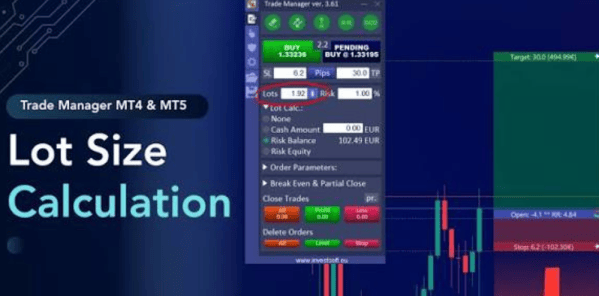
Instead of relying on guesswork, you can use the MetaTrader 4 lot size calculator to determine an appropriate trade size before placing an order. In this guide, we will explain what a lot size is and how to use a MetaTrader 4 lot size calculator.
What Is Lot Size?
In layman’s terms, think of lot size as a value that represents the size of a trading position.
However, the exact value of one lot depends on the instrument being traded and the broker’s contract specifications. In some markets, for example, forex, a standard lot may represent a specific number of units.
What Is a MetaTrader 4 Lot Size Calculator?
A MetaTrader 4 lot size calculator is a tool that helps traders determine how much of an instrument they should trade based on their risk parameters. Instead of guessing, you enter the relevant figures, and it calculates the lot size.
In most cases, a typical lot size calculator for MT4 will need your account balance, risk percentage, entry price, stop-loss and take-profit levels, and instrument. The calculator processes these inputs and estimates the trade volume needed to keep potential loss within your risk tolerance.
Using a MetaTrader 4 Lot Size Calculator Step by Step
First, you need to have MT4 installed on your device. If you don’t and are looking for a source from which to download the MT4 installation file, why not try these out? You don’t need a live account to try this; you can use a demo account if you are new to trading.
Define Maximum Risk
Before opening a position, determine how much you are willing to risk. The rule of thumb is don’t use more than 3% on a single trade. So, in this case, if you have $1000 in your account, don’t risk more than $30 on a single trade.
Identify Your Entry and Determine Your Stop Loss
Next, identify your entry price. This will mostly depend on current market conditions and your trading strategy. The entry price establishes the starting point for calculating the distance to the stop loss.
If your entry price is $200 and your stop loss is $190, then your stop-loss distance is $200 – $190 = $10. Remember, these are just examples to give you a broader picture of how to use the MetaTrader 4 lot size calculator.
Enter the Information into the Position Size Calculator MT4 or MT5
MT4 and MT5 position size calculators vary since they are custom tools. The values required to calculate lot size may not be the same on each calculator. However, in most cases, you will be required to enter account size, risk percentage, stop-loss price, instrument, and entry price.
The calculator for MT4 or MT5 will then crunch the numbers and produce an estimated position size. However, before submitting the order, double-check the actual trade details in MT4.
The landscape of luxury hospitality has undergone a massive transformation over the past decade. For modern hotel operators, providing excellent room accommodations is no longer sufficient to maintain a competitive edge. Premium on-site amenities, particularly diverse dining options, now play a foundational role in boosting overall hotel profitability and customer retention. As highlighted in multidisciplinary studies on service sector economics, factors influencing guest satisfaction have shifted away from traditional luxuries toward experiential value. In this environment, food and beverage operations have evolved from secondary conveniences into primary drivers of global brand loyalty. During the first half of 2025 alone, food and beverage revenue per occupied room at resort hotels increased by 3.8 percent, successfully outpacing the 3.0 percent growth seen in total hotel revenue.
The Economic Impact of Culinary Tourism
To understand the business value of in-house dining, industry leaders must look at the broader numbers driving modern travel behavior. Culinary tourism is no longer a niche market. It has become a central pillar of global travel economics. According to Grand View Research, the global culinary tourism market is projected to reach $76.4 billion by 2033, expanding at a remarkable 21.9 percent compound annual growth rate. In fact, their market research summary notes that roughly 50 percent of global travelers now prioritize food to the point of making restaurant reservations before they even book their flights.
This shift demonstrates that investing in premium dining experiences is a necessary strategy for customer acquisition and maximizing average daily rates. Industry strategists utilizing the push and pull model identify culinary diversity as a primary pull factor for luxury hospitality. Recent data shows that 81 percent of global travelers actively crave new food experiences during their trips. By meeting this demand, properties can capture a larger share of the expanding consumer market.
Redefining Hotel Revenue Streams Through Gastronomy
In standard full-service hotels, food and beverage operations typically account for 20 to 30 percent of total revenue. However, in luxury and resort properties, these operations can generate between 35 and 45 percent of overall hotel revenue. This significant financial impact is largely fueled by regional culinary diversity and the ability to cater to a global clientele under one roof. Within the ultra-luxury hotel segment, total ancillary revenue per guest has risen dramatically over the last few years, a surge largely credited to premium in-house culinary experiences.
For example, in highly competitive markets, offering a comprehensive and premium dining experience can be the deciding factor for prospective guests. A luxury property featuring a renowned international buffet Singapore provides a prime example of how multicultural culinary strategies serve as powerful business assets. By satisfying the diverse palates of international tourists and local patrons alike, hotels can capture higher ancillary revenue per guest while establishing themselves as distinct culinary destinations in high-density hubs. In Singapore specifically, high-value tourist demographics have demonstrated a nearly 20 percent surge in food and beverage consumption, reinforcing the value of diverse luxury dining.
Core Strategies for Optimizing F&B Profitability
Operating high-end dining facilities requires strategic foresight to protect profit margins and maintain exemplary service standards. Industry surveys indicate that 85 percent of modern diners prioritize ingredient sourcing and quality over sheer volume. To balance these consumer demands with corporate sustainability goals, hospitality managers are adopting several innovative strategies:
Centralizing Procurement: Hotels are increasingly shifting toward centralized managed procurement to negotiate better supplier contracts. This protects profit margins, where the cost of goods sold averages 24 percent of departmental expenses, without sacrificing food quality.
Creating Third Spaces: Luxury food and beverage operations are being repositioned as community hubs. By attracting local residents alongside international guests, hotels can stabilize cash flow and mitigate the financial risks associated with seasonal tourist lulls.
Implementing Dynamic Analysis: Managers are utilizing tools like dynamic-trend importance-performance analysis to track evolving customer expectations regarding food freshness and dining atmospheres as guest familiarity increases.
Optimizing Dish Sizes: Leading hospitality groups are modernizing high-end dining by refining portion sizes and reducing over-production. This dual approach improves corporate sustainability metrics while enhancing departmental profitability.
The intersection of culinary diversity and luxury hospitality represents a critical area of growth for the modern business landscape. Urban centers worldwide are taking notice, with initiatives like Vienna’s recent visitor economy strategy explicitly leveraging culinary diversity as a sustainable economic tool. As travelers increasingly seek out authentic and varied gastronomic experiences, hotels that elevate their in-house dining operations will secure a distinct competitive advantage. By treating food and beverage divisions as strategic assets rather than obligatory amenities, luxury hospitality brands can successfully drive revenue growth, foster deep customer loyalty, and position themselves at the forefront of the global tourism economy.
Daily writing prompt
How does your mindset affect your financial success?