Mobile App ‘eBloodServices’

These days when all of us are dealing with pandemic COVID-19, it has been a very hard time for all of us and we all are contributing our parts to come out of this difficult situation. All of us are doing great as fighters. With the coming of problems, we all are thinking innovative and creative to come up with solution to it. One such step was to launch mobile app ‘eBloodServices’.Union Health Minister Dr Harsh Vardhan on launched the eBlood Services Mobile Application, in partnership with the New Delhi based Indian Red Cross Society (IRCS), on 25 June 2020 for easy access to blood to fight with the critical time of coronavirus pandemic.

This application is developed by the E-Raktkosh team of Centre for Development of Advanced Computing under the Digital India scheme launched by Prime Minister Narendra Modi in 2015. The application will bring transparency and facilitate single-window access to blood services of the Indian Red Cross Society, officials said. This initiative would help the people to get the blood on time just by registering on the application. Also, people can demand up to four units of blood. Blood-related services are required by many people in the country as they face certain medical conditions in their families. With the help of eBlood Services App, four units of blood can be requisitioned at a time. Blood Bank will wait for as long as 12 hours for the person to collect it. The app will make it easy for those in need to request for blood units at IRCS NHQ.

Speaking on the occasion, the Minister said, “People who need blood can get registered on this app and know from where they will get blood.” Vardhan said, “In the last few months, I received several complaints from people facing difficulties in accessing safe blood. Many people require blood-related services regularly because of certain medical conditions in their families. Through this app, four units of blood can be requisitioned at a time and the blood bank will wait for 12 hours for the person to collect it.” At a time when the country is going through a pandemic, the mobile app will provide succour to all those who are in dire need of blood,” the health minister said. Users with this app can know the live status of blood availability at the national headquarters of the Indian Red Cross Society (IRCS) blood bank in Delhi. He appealed to people to come forward to donate blood as their contribution is required more than ever now.

All 89 IRCS blood banks and 1,100 branches across the country have collected more than 1,00,000 units of blood through in-house donations and from around 2,000 donation camps organized during the lockdown. Also, more than 38,000 blood donors registered with NHQ Blood Bank have been contacted and motivated to donate blood. The NHQ Blood Bank conducted 55 blood donation camps collecting 2,896 units of blood. Blood has been issued to 7,113 patients which include 2,923 thalassaemic patients as well as to the government hospitals like Lady Hardinge (624 units) and AIIMS, Delhi (378 Units).The IRCS has served more than 3,00,00,000 cooked meals and provided ration to more than 11,00,000 families.

“Automobile – Field For Human Investment”

Technology and it’s advancement has helped humans to make their life more easier and comfortable. All the commodities and facilities have led humans to a phase of ease to life. Automotive or automobile vehicles are one of them. Vehicles be it TWO- Wheelers or Four Wheelers  or airplanes or ships, rickshaws and many more have helped humans to travel around the world and made this world an easy to reach destination at any time. These have not only helped people to acknowledge places around the world, but even interact with people from different cultures and backgrounds.These vehicles help us send things from one place to another,carry heavy loads both men and material from one place to another and even help us feel relaxed while travelling in them. The industrial revolution and its initiation provided a boon to the automobile and aviation industries. But considering the ground vehicle, these have really proven to be beneficial for people and helped them by providing them with ease to work. 

There have been various advances in vehicles and the mode of ignition and power to them. These have been considered so as to bring much more efficiency, speed and cost effectiveness to these models. But we do see till date that these automotive models are not much safer. These have been comfortable and have made life of humans easier but still fail to provide 100% safety for the traveller travelling in it. These models are usually made through materials which do provide strength to structure but are less impact resistant. These models do resist much shock impact but still transfer most of it, which does harm the person in it. Many people lose their life every year in accidents while their automobile fails to provide them security. 

Various companies are bringing up many products and models which are safer and impact resistant but these do cost a lot for individuals.The material we still use in manufacturing these automotive are same as were used in the earlier times. This is due to the lack of companies investment in new material. Also the materials do cost more to the company which directly reduces the profits. While some new materials have been added into manufacturing of different components for these vehicles, the major structure and frame still comprises the similar material. 

Companies should invest in their research and development techniques and new ideas must be initiated and funded by both companies as well as the government so as to bring out the best and impact resistant materials and structure so as to resist any kind of damage and harm to the individual or individuals traveling in it. While the safety in two Wheeler is much less compared to that in a car, but still cars are not completely safe. The rights of customers lies in the fact of providing them type safety along with comfort and ease to operate. 

Travelling has been a part of our life and safety in it is the first priority to be taken care of. While we do invest a lot of investment in adding features to our automotives and different accessories, we should be investing in making those vehicles. More secure. Maybe we can see better alternatives and resources in future which could prove to be much secure and safer for individuals to travel through it. While there is still investment going to shift to flying cars and vehicles, we should be investing much of our resources in making any vehicle secure enough to provide better and secure travel. 


Indian Institute of science education and research

Indian Institute of Science Education and Research (IISER) are public research institutes of India. These are the premier institutes of India. The institutes were established by the Government of India through the Ministry of Human Resource Development (MHRD) to provide quality college education in basic sciences coupled with a taste research at the undergraduate level itself. The institutes were formally established by the Parliament of India through the National Institutes of Technology, Science Education and Research (Amendment) Act, 2010 (an amendment to the National Institutes of Technology Act, 2007). Seven IISERs have been established across the country, namely IISER Kolkata in West Bengal, IISER Pune in Maharashtra, IISER Mohali in Punjab, IISER Bhopal in Madhya Pradesh, IISER Thiruvananthapuram in Kerala, IISER Tirupati in Andhra Pradesh, and IISER Berhampur in Odisha. The basic idea behind establishment of IISERs was to promote research-oriented training and to promote basic sciences. Indian Institute of Science, Bangalore and National Institute of Science Education and Research, Bhubaneswar has already been established to promote natural sciences but were not enough for a large country like India with enormous number of students having the potential to go ahead with research. All IISERs were declared as Institutes of National Importance by the Parliament of India in 2012, to promote them as leading institutions in the country in the field of basic sciences along with its sister institutes mentioned above.

The main degree provided by IISERs are BS-MS in any natural science stream. Since the institutes are new in India and so is the degree provided by them, many people in India, even the educated ones are not aware of what does this degree means and often mix it with BSc and Msc. The degree has already been offered in foreign countries like US, Germany, etc but was introduced in India after establishment of IISERs. BS-MS (Bachelor of Science – Master of Science) is a five year dual degree program. The program focuses to train students to pursue a career in academia, R&D institutes and science based industries. They are introduced with the idea of how to carry with the research and build up a career. The motivation is the reason why IISERs are equipped with world-class lab facilities and highly exceptional researches are carried out in these labs.

Besides the BS-MS in natural sciences, as the institute is growing and establishing new departments, some of the IISERs are offering only BS (4 years )as well, not only in natural science stream but in engineering sciences and economics as well. IISER Bhopal is the one offering BS in Engineering Sciences (Computer Science, Electrical Engineering, Chemical Engineerning) and BS in economics. IISERs are said to be on the same level for research as IITs are for engineering. Now, recently, IITs have also started offering BS-MS degrees. IISERs provide a great opportunity for young, innovative and bright minds to excel in science and research. IISERs have collaborated with many foreign universities, research institutes and industries and is rapidly gaining recognition due to the work done by its student members and faculty members. The institute is expected to excel exponentially and become a very great opportunity to students.

CAN INDIA SURPASS CHINA IN GROWTH?

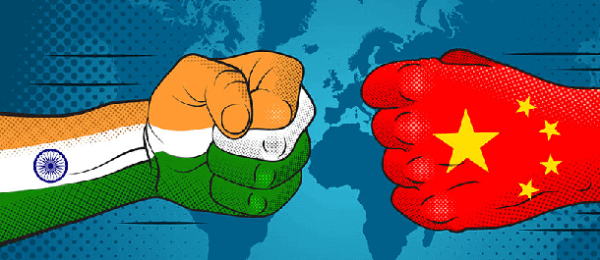
The current relations of India and China are not hidden from anybody. It is very clear that both the countries are having disputes at the border. There was a fight between the soldiers of both the both the country and soldiers from both the nation lost their lives. The Indian government also banned 69 Chinese applications including Tiktok, Cam Scanner, ShareIt and many more, because of safety reasons. The demand of ban on Chinese products and making India self sufficient is rising more, after our lost their lives at the India-China border. But the actual question is , can India actually surpass China in growth? This seems to be a very a strenuous task , as the dominance of China over Indian market is not something which can be ignored.

The main reason behind the growth fatigue in China according to the Boston Consultancy Group (BCG) is that the cost of production in China is now the same as that in US. An increase in wages, shifting exchange rates and higher energy cost in the past 10 years resulted in manufacturing stress in China. On the contrary, labour cost is still much lower in India.However apart from the cost difference there are many more challenges which India need to tackle if it wants to exceed China. The first challenge for India is to create a friendly business environment. A culture of entrepreneurship needs to be developed. Secondly the Labour laws in India are very obsolete in nature, a big reform in the whole concept is required to usher the second generation reforms lead by the reforms in labour sector. The macro-economic stability is another thing which designs the path of the future growth of a country. The Chinese economy is controlled by government with exchange rates, interest rates etc. Although it may provide stability but also apply pressure on the controlling authorities. The Indian government needs to keep the financial rights by keeping a tab on inflation, exchange rate etc. The another factor which our government need to focus upon is the Investment on Human Resource. The number of unskilled labors in our country is quite high, whereas the it is never a problem for China because they have invested enough in their Human Resource.The Indian government should provide skills to its vast labour force. The last but not the least factor which I will be discussing here is sufficient energy. For a firm, continuous supply of power and electricity is must so that they can continue their production without any hindrance.

Thus, there is no doubt that exceeding China in terms of growth is an impossible task for India, but for this the government needs to lay down the platform for the economy to take off and address the aforesaid challenges.

Patterns of rural India

Insides rural India having consumer oases from the disguised and discernible pattern , apparent statistics speak a lot about the dysfunctional pattern which are driven by several series of localized happenings. The undertook activities and other market development functions have been switching between on and off which were meant to benefit the needy. In order to penetrate the villages and the remote areas of them the distribution and micro market marking have been working on their network. The eventual picture of rural conditions have the same assets just as the urban but the priorities haven’t been set in a fair and justifying manner. The disturbed vibe has created a lot of chaos and resulted in fiasco of plans that have been set to improvise the rural conditions. The consumer based plans like household planning are falling apart due to the lack of amenities.

ASSETS & AMENITIES – The clear and apparent winners are sanitation , water supply , electricity passage , health sectors. But the rural affluence segments , demand segments are still disguised and at tremendous stake. The study has made it clear that all the statistical numbers sound very counter-intuitive cause most of them know the penetration of most plans are actually poor. But the very marketers are surprised every time due to the poor and small penetration of a tremendous yet decent amount of population effects on a very large actual market size. Since the market knows what are the actual winners hope they’ll know what are the fiasco parts of the rural patterns.

CBSE 12th Result 2020 updates

CBSE Board formally declared the CBSE 12th Result 2020 for Senior Secondary Students by 12 PM today. The official Result portal of CBSE is cbseresults.nic.in, crashed for nearly 4 hours at that time due to some technical bug, later on it get sort out.  Alternatively, students can also opt to check CBSE Class 12 Results 2020 online via DigiLocker App, Umang App and through IVRS Telephone Line. To make the CBSE i students check their results easily.

RURAL VS URBAN INDIA

Our country is majorly divided into two, Rural and Urban India. This divide of society is based on the living standard of the people and not on caste, creed, religion or language. No doubt our government is emphasizing on Industrialization, infrastructure development and health care centers but rural areas were neglected most of the times and this led to a vast gap between the living standards of rural and urban India.Acute electricity supply, poor roads, poor transport service, poor infrastructure gives us a clear view about the rural India. Almost all the people of rural India are engaged in agricultural sector and this is the only source of income for the. On the other hand, Urban India has proper electricity supply, good roads , satisfying transport services and excellent infrastructure.Even the job opportunities in Urban areas are vast as compared to Rural areas. The people of rural India can only do wprk in their farms and field, it is not like they don’t want to do anything other than that but the thing is they don’t even have any job options which they can opt for. If their crop gets damaged due to any reason, they suffer huge loss. Rural people don’t even have access to the newly developed tools with the help of technology, they do all their field work without any modern tools.

As far as education is concerned rural India is still behind urban India. The children of rural areas have to walk miles to go the most nearest school, and even that school don’t provide any higher education. The school don’t even have enough staff and the infrastructure is not good too. On the other hand urban India is flooded with private and public schools. Students are provided with the best infrastructure and excellent qualified staff.In urban areas there are mainly three societies- poor, middle class and upper class. Most of the people are no one else but the people who have migrated from rural areas to urban areas in search of jobs. Most of these are unskilled labors and get very low wages even after their hardwork.

There is a vast gap between rural and urban India and it is challenge for the entire nation to fill it. Although various governments of India have been introducing many schemes and projects to develop the rural parts of the country but the condition is still the same. No one has been able to find the actual real solution for the development of rural areas but we can hope for the best .

Victoria Memorial: The Taj of British Raj

By Shivam Pathak
Victoria Memorial, an iconic substantial marble building in the middle of modern day Calcutta still epitomizes British Raj in India and resurrects the tumultuous decades of India’s struggle against British forces to retrieve freedom for their motherland. It was constructed in glory of Queen Victoria’s twenty-five years of reign in India. Queen Victoria took the grand title of the Empress of India in 1876 after the control of India came under British Paramountcy following the fierce revolt of 1857. It was under her rule that the British Empire advanced in India and touched its zenith. Her reign was ended with her death in 1901, preconizing Edward seventh as the new emperor of India. After the demise of Queen Victoria at the age of 81 years, the then viceroy of India, Lord Curzon ordered to erect a mausoleum befitting the magnificence and splendor of her majesty Queen Victoria. On the 4th of January 1906 the then Prince of Wales, George fifth laid the cornerstone of the memorial. It was after fifteen long years that the gates of the mausoleum were opened to the general public in 1921. It is believed that the memorial was intended to match up to the glory of Taj Mahal of Agra; sometimes as a matter of fact the Victoria Memorial is characterized as a Taj of British Raj in India. Very few are acquainted with the fact that before the Memorial was build up; the same place was served to house the Presidency Jail. The jail was built here in 1778. In due course of time the Presidency Jail was moved to Alipore in West Bengal in 1906 and the bygone structure was demolished to pave the way for Memorial. Up till this day the Memorial stands tall with all its grandeur in the heart of Calcutta city. Victoria Memorial museum is one of the most renowned museums in the country. Every year thousands of locals and tourists come to cast a glance on the baffling history of India’s fight for freedom. The museum has a collection of 28,000 antiquity exhibited across 25 galleries that capsulate the history of the subcontinent during British Raj. The focal point of the museum is a wide range of paintings, painted by the most renowned duo artists- Thomas and William Daniel. Though there are some other memorials of Queen Victoria existed in India, in cities like Lucknow, Chennai, and even Allahabad, but it was one in Calcutta that truly stands out. It is a prodigy of great Indo-Saracenic revivalist architecture in the city. Therefore, Queen Victoria never set foot on the land of India, but she left behind to the people of India, who were kept down by unjust use of authority, her mausoleum in the subcontinent which will serve as the memory of pain of the freedom fighters who were once crushed by the cruelties of Britishers by the mandate of Queen herself.

SUBSISTENCE FARMING

A way of farming

Subsistence agriculture occurs when farmers grow food crops to meet the needs of themselves and their families. In subsistence agriculture, farm output is targeted to survival and is mostly for local requirements with little or no surplus. 

Subsistence agriculture was predominant in parts of Asia, especially India, and later emerged in various areas including Mexico.In Central and Eastern Europe subsistence and semi-subsistence agriculture reappeared within the transition economy since about 1990.

Subsistence farming continues today in large parts of rural Africa, and parts of Asia and Latin America. In 2015, about 2 billion people (slightly more than 25% of the world’s population) in 500 million households living in rural areas of developing nations survive as “smallholder” farmers, working less than 2 hectares(5 acres) of land.

A way to livestock of Agriculture

There are four types of subsistence farming They are shifting farming that is used for fodder crops and leave after yield. Nomadic farming is changing one place to one along with animals and tools. Primitive farming is like slash and burn of field to cultivate. Intensive subsistence farming is using simple tools and more labour at small area.

Subsistence agriculture can be used as a poverty alleviation strategy, specifically as a safety net for food-price shocks and for food security. Subsistence agriculture can be used in low-income countries as a part of policy responses to a food crisis in the short and medium term, and provide a safety net for the poor in these countries.

productivity and performance after covid

The COVID-19 crisis has shown how performance and productivity are driven by purpose, strengthened by regular communication, and at their peak in a flexible organizational culture.

Over many years, performance management systems have been a key topic of discussion. Bell curve or not, annual performance review vs ongoing performance discussions, have been discussed at various levels. But then, came the year 2020 and with it, the pandemic, productivity and performance took a backseat and employers became more concerned about employees’ safety and the business continuity. But now as slowly most countries relax the lockdown, the business and HR leaders are looking to reset workplace and people policies in the new reality of work. 

Amongst the many questions which this phase is putting into our minds, people’s performance is a prominent one. Recently, to discuss how companies can measure productivity and performance, in current times without any baseline, leaders like Leena Sahijwani, Group Vice President, Human Resources, Tata Sons Limited and Gaurav Agarwal, Co-founder & CTO, 1mg came together in a webcast hosted by People Matters and PeopleStrong. The discussion moderated by Mrigank Tripathi, VP, PeopleStrong highlighted how the pandemic has inspired business and HR leaders to look at productivity and performance differently. 

The pandemic has shown that when you have a very binding purpose with you, no one asks or questions, they just make it happen. Though it is not a surprise, it has been an eye opener,

said Sahijwani