Board Results AMIDST pandemic days !!!

Class 10th and 12th are the days of board exams. The board exams are important for all the students as well as their parents and family. The entire family eagerly waits for the board results of their child.

undefined

Every year, Board Exams are held in India in March and April and results are usually declared around May and June. But this time, the situation is a bit different. Due to COVID-19 pandemic, the exams could not be conducted, there was an unexpected shutdown of schools and exams were postponed hoping it can be conducted a few months later. But, the spread of virus could not be controlled in these days and the number of infected population kept on increasing. An initial prediction gave an estimate that the corona cases can get under control by July and hence board exams can be held in July, but unfortunately that prediction didn’t work out. The administration tried out different options so that the remaining exams could be held and students can get the marks and grades that they actually deserve. It was decided that by maintaing proper sanitisation as well social distancing rules at schools, and by following proper guidelines such as wearing masks,etc, exams will be conducted in July. Unfortunately, all these proposals could not be put into action due to the continuous increase in number of cases. It was now wise to see and care for the health of students rather than for the exams. So, it was decided not to take risk on the life of youngsters. It was announced that all the exams are to be cancelled and results are to be declared by 15th of July. The assessment will be based on the exams given by the student till then.

undefined

Besides the challenge faced by the students, it was a tough time for teachers as well to do the evaluation while staying at home. The answer sheets of students were made to reach teachers at their home itself and they  could complete the copy-checking at their place. All updation of marks of individual students was done online and compilation was done and results of students were prepared. Results of class 10th and 12th for different boards are already declared and is  to be declared for CBSE in a few days. Since exams were not conducted in the way it used to be. Thus, this time it is expected that there will be a very easy grading. Due to this, it is expected that the a large number of board students will clear the exam. The pass percentage is expected to be high this year. Since relaxed marking is expected this time, hence most of the students are expected to be satisfied with the results. However, there are chances that a few students might find their score not satisfactory as they could have performed better if exams were held. For this, the administration has come up with the solution of re-examination for those students who are not satisfied with their result and want improvement. 

The situation has been hard for all of us. Everyone tried their best to keep the situation as normal as possible. The idea of holding the examination was also supported until it was understood that this idea could make the situation worse, due to which, then the idea was dropped. After the examination, admission to class 11 has to be done. And for students of class 12th, admissions to colleges needs to be done. Hence, there was a need to wrap up with the school exams and go ahead with the competitive exams and admission process. Taking the decisions were difficult for everyone but there is a hope that the decisions taken will bring out the best results for the majority.

WHY DEPRESSED?

WHAT IS DEPRESSION?

Depression is classified as a mood disorder. It may be described as feelings of sadness, loss, or anger that interfere with a person’s everyday activities.

It’s also fairly common. The Centres for Disease Control and Prevention (CDC) Trusted Source estimates that 8.1 percent of American adults ages 20 and over had depression in any given 2-week period from 2013 to 2016.

People experience depression in different ways. It may interfere with your daily work, resulting in lost time and lower productivity. It can also influence relationships and some chronic health conditions.

Conditions that can get worse due to depression include:

It’s important to realize that feeling down at times is a normal part of life. Sad and upsetting events happen to everyone. But, if you’re feeling down or hopeless on a regular basis, you could be dealing with depression.

Depression is considered a serious medical condition that can get worse without proper treatment. Those who seek treatment often see improvements in symptoms in just a few weeks.

DEPRESSION SYMPTOMS

Depression can be more than a constant state of sadness or feeling “blue.”

Major depression can cause a variety of symptoms. Some affect your mood, and others affect your body. Symptoms may also be ongoing, or come and go.

The symptoms of depression can be experienced differently among men, women, and children differently.

Men may experience symptoms related to their:

  • Mood, such as anger, aggressiveness, irritability, anxiousness, restlessness
  • Emotional well-being, such as feeling empty, sad, hopeless
  • Behaviour, such as loss of interest, no longer finding pleasure in favourite activities, feeling tired easily, thoughts of suicide, drinking excessively, using drugs, engaging in high-risk activities
  • Sexual interest, such as reduced sexual desire, lack of sexual performance
  • Cognitive abilities, such as inability to concentrate, difficulty completing tasks, delayed responses during conversations
  • Sleep patterns, such as insomnia, restless sleep, excessive sleepiness, not sleeping through the night
  • Physical well-being, such as fatigue, pains, headache, digestive problems

REASONS FOR DEPRESSION

Lots of things influence whether a person gets depressed. Some of it is biology — things like our genes, brain chemistry, and hormones. Some is environment, including daylight and seasons, or social and family situations we face. And some is personality, like how we react to life events or the support systems we create for ourselves. All these things can help shape whether or not a person becomes depressed.    

Genes

Research shows that depression runs in families. Some people inherit genes that contribute to depression. But not everyone who has a family member with depression will develop it too. And many people with no family history of depression still get depressed. So genes are one factor, but they aren’t the only reason for depression.


Brain Chemistry

Chemicals called neurotransmitters (pronounced: nur-oh-TRANZ-mit-urs) help send messages between nerve cells in the brain. Some neurotransmitters regulate mood. When a person is depressed, these neurotransmitters might be in low supply or not effective enough.

Genes and brain chemistry can be connected: Having the genes for depression may make a person more likely to have the neurotransmitter problem that is part of depression.


Stress, Health, and Hormones

Things like stress, using alcohol or drugs, and hormone changes also affect the brain’s delicate chemistry and mood.

Some health conditions may cause depression-like symptoms. For example, hypothyroidism is known to cause a depressed mood in some people. Mono can drain a person’s energy. When health conditions are diagnosed and treated by a doctor, the depression-like symptoms usually disappear.

Getting enough sleep and regular exercise often has a positive effect on neurotransmitter activity and mood.


Daylight and Seasons

Daylight affects how the brain produces melatonin and serotonin. These neurotransmitters help regulate a person’s sleep–wake cycles, energy, and mood. When there is less daylight, the brain produces more melatonin. When there is more daylight, the brain makes more serotonin.

Shorter days and longer hours of darkness in fall and winter may lead the body to have more melatonin and less serotonin. This imbalance is what creates the conditions for depression in some people — a condition known as seasonal affective disorder (SAD). Exposure to light can help improve mood for people affected by SAD.


Life Events

The death of a family member, friend, or pet sometimes goes beyond normal grief and leads to depression. Other difficult life events — such as when parents divorce, separate, or remarry — can trigger depression.

Whether or not difficult life situations lead to depression can depend a lot on how well a person is able to cope, stay positive, and receive support.


Family and Social Environment

For some people, a negative, stressful, or unhappy family atmosphere can lead to depression. Other high-stress living situations — such as poverty, homelessness, or violence — can contribute, too. Dealing with bullying, harassment, or peer pressure leaves some people feeling isolated, victimized, or insecure.

Situations like these don’t necessarily lead to depression, but facing them without relief or support can make it easier to become depressed.


Reacting to Life Situations

Life is full of ups and downs. Stress, hassles, and setbacks happen (but hopefully not too often). How we react to life’s struggles matters a lot. A person’s outlook can contribute to depression — or it can help guard against it.

Research shows that a positive outlook acts as a protection against depression, even for people who have the genes, brain chemistry, or life situations that put them at risk for developing it. The opposite is also true: People who tend to think more negatively may be more at risk for developing depression.

We can’t control our genes, brain chemistry, or some of the other things that contribute to depression. But we do have control over how we see situations and how we cope.

Making an effort to think positively — like believing there’s a way around any problem — helps ward off depression. So does developing coping skills and a support system of positive relationships. These things help build resilience (the quality that helps people bounce back and do well, even in difficult situations).

Here are three ways to build resilience:

  1. Try thinking of change as a challenging and normal part of life. When a problem crops up, take action to solve it.
  2. Remind yourself that setbacks and problems are temporary and solvable. Nothing lasts forever.
  3. Build a support system. Ask friends and family for help (or just a shoulder to cry on) when you need it. Offer to help when they need it. This kind of give and take creates strong relationships that help people weather life’s storms.

Being positive and resilient isn’t a magic shield that automatically protects us from depression. But these qualities can help offset the other factors that might lead to trouble.

TREATMENT FOR DEPRESSION

Living with depression can be difficult, but treatment can help improve your quality of life. Talk to your healthcare provider about possible options.

You may successfully manage symptoms with one form of treatment, or you may find that a combination of treatments works best.

It’s common to combine medical treatments and lifestyle therapies, including the following:

MEDICATIONS

Your healthcare provider may prescribe:

Each type of medication that’s used to treat depression has benefits and potential risks.

PSYCHOTHERAPY

Speaking with a therapist can help you learn skills to cope with negative feelings. You may also benefit from family or group therapy sessions.

LIGHT THERAPY

Exposure to doses of white light can help regulate your mood and improve symptoms of depression. Light therapy is commonly used in seasonal affective disorder, which is now called major depressive disorder with seasonal pattern.

ALTERNATIVE THERAPIES

Ask your healthcare provider about acupuncture or meditation. Some herbal supplements are also used to treat depression, like St. John’s wort, SAMe, and fish oil.

Talk with your healthcare provider before taking a supplement or combining a supplement with prescription medication because some supplements can react with certain medications. Some supplements may also worsen depression or reduce the effectiveness of medication.

EXERCISE

Aim for 30 minutes of physical activity 3 to 5 days a week. Exercise can increase your body’s production of endorphins, which are hormones that improve your mood.

AVOID ALCOHOL AND DRUGS

Drinking or misusing drugs may make you feel better for a little bit. But in the long run, these substances can make depression and anxiety symptoms worse.

LEARN HOW TO SAY NO

Feeling overwhelmed can worsen anxiety and depression symptoms. Setting boundaries in your professional and personal life can help you feel better.

TAKE CARE OF YOURSELF

You can also improve symptoms of depression by taking care of yourself. This includes getting plenty of sleepeating a healthy diet, avoiding negative people, and participating in enjoyable activities.

Sometimes depression doesn’t respond to medication. Your healthcare provider may recommend other treatment options if your symptoms don’t improve.

These include electroconvulsive therapy (ECT),or repetitive Transcranial Magnetic Stimulation (RTMS) to treat depression and improve your mood.

Traditional depression treatment uses a combination of prescription medication and counseling. But there are also alternative or complementary treatments you can try.

It’s important to remember that many of these natural treatments have few studies showing their effects on depression, good or bad.

Likewise, the U.S. Food and Drug Administration (FDA) doesn’t approve many of the dietary supplements on the market in the United States, so you want to make sure you’re buying products from a trustworthy brand.

Talk to your healthcare provider before adding supplements to your treatment plan.

 SUPPLEMENTS

Several types of supplements are thought to have some positive effect on depression symptoms.

St. John’s wort

Studies are mixed, but this natural treatment is used in Europe as an antidepressant medication. In the United States, it hasn’t received the same approval.

S-adenosyl-L-methionine (SAMe)

This compound has shown in limited studies to possibly ease symptoms of depression. The effects were best seen in people taking selective serotonin reuptake inhibitors (SSRIs), a type of traditional antidepressant.

5-hydroxytryptophan (5-HTP)

5-HTP may raise serotonin levels in the brain, which could ease symptoms. Your body makes this chemical when you consume tryptophan, a protein building block.

Omega-3 fatty acids

These essential fats are important to neurological development and brain health. Adding omega-3 supplements to your diet may help reduce depression symptoms.

ESSENTIAL OILS

Essential oils are a popular natural remedy for many conditions, but research into their effects on depression is limited.

People with depression may find symptom relief with the following essential oils:

  • Wild ginger: inhaling this strong scent may activate serotonin receptors in your brain. This may slow the release of stress-inducing hormones.
  • Bergamot: this citrusy essential oil has been shown to reduce anxiety in patients awaiting surgery. The same benefit may help individuals who experience anxiety as a result of depression, but there’s no research to support that claim.

Other oils, such as chamomile or rose oil, may have a calming effect when they’re inhaled. Those oils may be beneficial during short-term use.

VITAMINS

Vitamins are important to many bodily functions. Research suggests two vitamins are especially useful for easing symptoms of depression:

  • Vitamin B: B-12 and B-6 are vital to brain health. When your vitamin B levels are low, your risk for developing depression may be higher.
  • Vitamin D: Sometimes called the sunshine vitamin because exposure to the sun supplies it to your body, Vitamin D is important for brain, heart, and bone health. People who are depressed are more likely to have low levels of this vitamin.

Many herbs, supplements, and vitamins claim to help ease symptoms of depression, but most haven’t shown themselves to be effective in clinical research.

“Effectiveness Of Our Sanitizing Tools-Soap Vs Sanitizer”

Health has become an issue of concern especially during the prevailing pandemic of coronavirus. Covid-19 is increasing day by day due to it’s effectiveness of spreading by touch.We know that these viruses do require a host to be effective enough to perform function. But we do see that there is no such effective way out to be free from it. Scientists do believe that the best option to do so is to take precaution and preventive measures to fight this harmful virus. We know that this  virus spreads from person to person through contact or through any medium which helps this virus to be transmitted. The major area of concern for doctors and scientists who are helping us to fight it against this virus is the Mutation possibilities. Mutation are the gene changes in these viruses which occur whenever they replicate to other and future viruses. Their mutations are either due to environmental conditions which do help them to be adaptive to it or due to the complexity of their gene which does get different while transmitting. It is an area of concern since these viruses do mutate and with this mutation going on increasing it may happen that doctors may not be able to know about the virus even if it is present due to the old ways to detect them, this could surely be harmful for patients and this people near us. As we see that this virus is increasing and many people are getting affected by it, the possibility of its mutation also increases. 

But since we know that there is no such vaccine which could prevent and save us from its effect, the better way out is to use preventive measures. This mainly included maintaining a distance of 1-2 metre when we talk or even in the market. Use a mask and wash hands frequently. But the main question which still hits the mind of people is which is better Soap or Sanitizer? Since soap has been a part of human’s life for many centuries, sanitizer has also helped humans to remain clean and healthy. So are these both equally sufficient to fight against this virus or do we have better ways out in them to help us remain safe. 

So in this fight to find out which is better between soap and sanitizer, scientists did some of the experiments to find better results. For this they took bacteria known as E. Coli and rubbed in their hands completely. 


  • For the first case they took sanitizer. There were two conditions recorded in it. The first was to rub with a small quantity of sanitizer and record the result and second was to take an amount more than the usual quantity and record the details. 
  • For the second case they took soap. For the first experiment, they washed their hands for about 10 seconds and recorded details while for the second time they washed their hands for about 30 seconds and recorded the details.


The outcomes were really worth watching. Considering The first case, a sanitizer of less amount did clean most of the bacteria but a sanitizer with more amount cleaned almost all the bacteria over hands. Soap for about 10 seconds removed bacteria but rubbing for about 30 seconds did remove most of the bacteria as compared to 1st case of rubbing for 10 seconds. But the difference between soap and sanitizer and their comparison, sanitizer was found out to be more effective than soap in their results. Sanitizer was recorded to remove most of the bacteria while there were few left out even washing hands for about 30 seconds.

We do know that sanitizing either with soap or sanitizer both can be effective to be free from virus and bacteria, but sanitizers do have an edge over soap in their capabilities of performance. Washing hands with sanitizers thus can be effective enough to help any individual fight back this virus with other preventive measures also. We know it’s a difficult time and we all need to be aware about the do’s and dont’s and this need to be aware enough to protect ourselves as well as other people in our country and thus bring back everything back to normal and make our country and world better, safe and healthier. 


Are women really empowered?

“What are you staring at?” groaned a twenty year old job aspirant, when fifty three year bald headed man unapologetically stared at her breast.

People, try and oftentimes associates the word empowerment with women actively participating in every single field that a man is capable to pitch in. Be it handling the economy of a country, or handling the economy of his own house. But, the question remains unanswered, as when activists and feminists go up and strike to ask whether it is the only way to describe women empowerment, or it is beyond the coverage of human brain?

What is missing in the whole argument is the word “equality”. Even the longest Constitution of the world claims that –

No citizen shall, on grounds only of religion, race, caste, sex, place of birth or any of them, be subject to any disability, liability, restriction or conditions.

When the Constitution itself provides us with the idea of equality among all, then on what grounds do we differentiate the two? But, certainly, we can. For us,our society equality has now a new definition, giving especialised equality to female. Deepa Karmakar, Sunny Leone, Nirmala Sitharaman, Chanda Kochhar, or any commoner, never have thought that they could be the moonlight of their respective fields, but at what cost? When they are looked upon as a “woman” working in the community where men are supposed to be the ace of cards . Be it in terms of salary the are paid, or handling the chorus of the work place, or capability to act against a man, if she is a human being with XX chromosomes, she is objectified, “Oh! A woman has joined us. “Or “Wow! Woman sprinter has won a medal. ” Or what happens the most is looked upon as an object to be healthily flirted with.

But, but, but, nevertheless, it is not the fault that lies with the man. God’s plan has been so, therefore, its an obvious nature for a human being with XY chromosome to get attracted towards the one who has biological been given “that one”, when in mother’s womb. Women stands guilty, here, for embarrassingly enjoying, her own objectification, and not complaining at the same time. Rabindranath Tagore has very beautifully quoted –

You are a woman, by serving you must worship, and by serving you must rule.

Which is true at some point. If a woman can worship by bestowing her services to the world, how come, she can’t rule by providing the same services to herself? The same care, the same affection, the same love, the same respect. At the end of the day, it is us, or the women community, who have to rise up for themselves, if they want empowerment to be a real phenomenon, unlike the ones, who, at one flip of the coin support feminism and the idea of feminism, but at the other flip of the coin, grabs every chance to showcase that they are women, and women only seek help, and feel weak at the knees.

The idea how much you love yourself the most, is finally the path to shackle the boundaries of criticism, and at the same time empowering every individual women in a real sense. Empowerment will definitely fall on the feets of those who will understand main reason behind approaching towards it, and therefore achieving thereal women empowerment.

THE IMPORTANCE AND ROLE OF ADVERTISING FOR A PRODUCT

“Creative without strategy is called art , creative with strategy is called advertising”. The quote mentioned above is enough to understand the value of advertising , i.e, Advertising is just an art if its done without any strategy and the correctly done advertising can do wonders to you and to your products.Advertising is any paid form of communication from an identified sponsor and source that draws attention to ideas, goods, services or to the sponsors itself. It is generally directed towards group rather than individuals and is mainly done through media TV, radio, newspapers and Internet. Advertising and Marketing are generally considered the same concept but they aren’t. Marketing is the process of preparing a product , keeping in mind the trends, expectations and demand of the customers whereas Advertising is the concept of making the product or service known to the audience.Marketing involves consumer behavior and market research and Advertising involves creative endeavors like design and multimedia production. The role of Advertsing is very crucial in the success of the product, it not only creates image of a product but also increase the reach too. The major roles of Advertsing are:

EDUCATING THE CUSTOMERS – Through advertising the company can guide the customers about how to use the product, about the handling operations and the Do’s and don’ts of a product.Sometimes the process of using a product can be quite complex, in those cases advertising proves to be a big help.

BRAND IMAGE – The image of a product plays a very prominent role in its success. Advertising helps the product in creating that image which creates name of that product among the customers.The content of the advertsing message, the nature and packaging of the products are some of the factors which help in creating an image for the product.

PERSUASION – There are hundreds of similar products available in the market, so the focus of the organization should not only be to advertise the product but also to persuade the customers to buy the same.Through the help of persuasive messages, the organizations give reasons to describe the superiority of their product as compared to the other similar products which are available in the market.

BRAND LOYALTY – Loyal customers is all an organization can wish for, as one loyal customer can increase the head count of a product by suggesting and recommending it to their friends.Sales promotion, personal selling are some of the elements which help in building brand loyalty.

EXPANSION OF MARKET – Advertising helps in expanding the business of an organization. The Advertisement of a product should be effective, which will create an impact on the customers. The product can expand from local to regional to national and then to an international level through correct advertising.

Anuran vocal communications

In the scientific book, sounds of frogs and toads is often said to be ‘croaking’. Whatever their musical qualities, vocalizations are conspicuous features of behavior of most frogs and toads. Acoustic signalling has a great importance in the breeding ecology of most frogs. Acoustic data are used in taxonomic studies of frogs. Thus, researchers today are very interested in studying sounds produced by anurans to know about their behavior, study their evolution, monitoring population, comparison of species and find ways for their conservation.

undefined

In anurans, generally males are involved in bioacoustic signalling. Only a very few female and at very few times are found producing signals. Anuran vocal repertoires can be into various calls namely advertisement calls( mate calls), courtship calls( responsive calls), aggressive calls, release calls, defensive calls. These are useful in male-male and male- female communications. These sounds are also used by them to protect them from predators too. They can estimate distance between opponent and get warned.  Further, the produced sound defines the species, it’s size, it’s habitat , it’s dominance, etc in some way or other.

Advertisement calls are often referred to as mating calls and are principal signals given by males during breading season. Experiments have shown that females approach conspecific calls. Advertisement calls are often found to stimulate hormone production in females. It also expertises male’s position to other males.

The vocal behavior of male frogs often changes when females are nearby or are approaching. Courtship call are a sort of continuous trill( unlike two-note advertisement calls). These are simply increased call rates. Female courtship calls also exists. These are given in response to the calls of male, which tends to be at low intensity and therefore, are hard to hear. It enhances the ability of males and females to find each other.

Aggressive calls are produced as a sign of defence for their calling sites against conspecifics. These are often called territorial calls. Then there are release calls given when male anurans are clasped by other males. Further exists distress calls, which are generally loud screams to describe vocalisations given by frogs being attacked by predators. Alarm calls and defensive calls are to warn neighbours of danger or startle the predator, to allow victim to escape.

The pitch(determined by frequency) of sound is an indicator of anuran’s body size. The frogs with higher pitch are found to be small in size while the frogs having low-pitched calls are large and heavy. Call structure is an indicator of habitat of frogs( whether near waterfall or near stream or in forest or in open habitat). For ex: frogs living in dense forest are large in size and produce low pitched calls and vice versa. Thus, there also exists preference in calling site for different species. If male and female, both are at the same level, then high frequency components will suffer greater attenuation than low frequency components. But, if either caller or receiver is elevated, then differential loss of higher frequencies is reduced.

undefined

Comparison of frogs living in Amazonian forests with those in floating meadow habitats revealed that forest species have significantly lower-pitched calls. The forest species generally are larger than those in open areas, and call frequency decreases with increasing body size. Calls of many species probably are not adapted for long range propagation, but for ease of localization at short distances. Phylogenetic differences probably are important as well. Forest frogs have very different call structure than open-habitat frogs. They tend to have more narrowly tuned calls with lower pulse repetition rates than open habitat frogs. Call intensity is related to factors other than habitat structure. For ex: frogs that call in open habitats tend to call in much denser choruses than those in forested habitats, and competition among males should favor the evolution of very loud calls.

Thus, understanding sounds of anurans is a very interesting part of study and researchers are working on it, striving to discover more, finding ways to conserve some endangered species( like N. sahyadrensis).

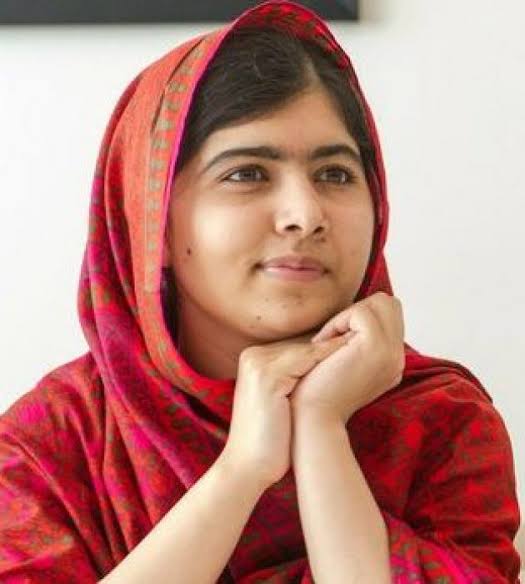
MALALA

Malala Yousafzai born 12 July 1997 is a Pakistani activist for female education and the youngest Nobel Prize laureate. She is known for human rights advocacy, especially the education of women and children in her native Swat Valley in Khyber Pakhtunkhwa, northwest Pakistan, where the local Taliban had at times banned girls from attending school. Her advocacy has grown into an international movement, and according to former Pakistani Prime Minister Shahid Khaqan Abbasi, she has become “the most prominent citizen” of the country.

United Nations has declared July 12, which is Malala Yousafzai’s birthday, as Malala Day in honour of the young activist. She won the Nobel Peace Prize in 2014. The-then 17-year-old became the youngest recipient of the award.

A book will document the journeys of 25 exceptionally brave girls who fought oppression and defied regressive social norms for their right to education, the publishers announced ahead of Malala Day.

HarperCollins India has acquired the rights of the anthology which is compiled by Malala Fund and will be released in 2021.

Edited by Tess Thomas, editor of Assembly, the digital publication and newsletter of Malala Fund, the book will feature school-aged girls who are speaking out, tackling local issues in their communities and showing the next generation that they can do the same.

“Malala Fund created Assembly, our digital publication and newsletter, to help more girls tell their stories just like Malala Yousafzai did. This print anthology will feature personal essays by girls around the world about their fight for education and equality,” said Thomas.

The book has not been titled yet.

Krishan Chopra, publisher at HarperCollins, said the book is of enormous relevance.

“As a fallout of COVID-19, the dropout rate of girls in schools is expected to rise and the irony is that in academics, they are either equal or ahead of the boys, when given sufficient opportunities. We are delighted, therefore, to announce this anthology,” he said.

Commissioning editor of the book, Ananya Borgohain, added, “Because of COVID-19 and the lockdown, many people in India have lost their jobs, making it difficult especially for low-income households to sustain their children’s costs of education.

“It is important for people to know the stories that can give them not just hope but also crucial information about access to education. This is what this book will do.” – moneycontrol

Crisis of demand stagnation

In all fairness , some of the unsaid scepticism is with good deeds of the Indian logic of economies. Since the liberalized India has happened there have been the major disappointments caused lacking in sufficient understanding of the pattern of this gradual progress of Indian economy. Digging into the handsight , to review the India’s economic demand strategies it may help in putting some past bogeys to rest. Just after the very liberalization , there has been desperation for money and desire in a very tremendous range. But resulting of the demand boom , the initial kick start off the good five years of liberalization was a phenomenal and a red herring. Briefing about the demand stagnation does not leave stock keeping units at the stake. The share of trouble has spread out to consulting firms and commendable shareholders who had interests in the business of economic strategies.

PSYCHOGRAPHIC DETERMINANTS : The consumption behavior by the distinct needs that drive the self-employed people in India have been granted easy access to all the economical sectors which were typically built strong. Very mainly traders like power , pick-up and visual dominance as well as the “dominators” people with big toxic egos had a follow up survey and a brief segmentation study about the psychographic determinants design in order to have a clear picture about how and which way is demand stagnation effecting in the moulding of psychographics of the economy. As a consequence of the crisis about the demand India stands as the arrived yet striving consumer India in its economy strategies.

NEED OF SPORTS LAW IN INDIA

HELLO! SPORTS

The history of sports extends as far back as the existence of people as purposive, sportive and active beings. It also shows how society has changed its beliefs and therefore how changes in the rules are brought. The history of sports in India dates back to the Vedic era. Chess, wrestling, polo, archery and hockey are some of the games believed to have originated in India. But somewhere between the historical lineage of sports and sports in the modern era there is a gap of enthusiasm and encouragement. Little importance is left for sports at grass root level in India with every school concentrating only on academics. Though there are various federations in India that provide sports facilities but apart from cricket, India is largely failing in every major event for sports such as Olympics. One of the main reasons for it is the lack of uniform regulation in India for sports. There is a need for a legislation that governs sports and brings the various authorities into one roof. Sports law has an unusually well developed pattern of globalized regulation and overlaps substantially with labor law, contract law, criminal law, public law, administrative law, antitrust law, competition law, intellectual property rights law, law of tort, media law, company law, human rights law etc. These laws have been applied to sporting context involving public order, drugs, safety, disciplinary measures, conduct and wider issues relating to restraint of trade, anti competitive behaviour, match fixing and the commercial exploitation of sports. Issues like defamation and privacy rights are also an integral aspect of sports law. In India sports figures in the State list of the Seventh Schedule (entry 33) of the Constitution.

ORGANIZATION OF SPORTS IN INDIA

In the field of sports, the club is the basic unit at the grass root level. At the top of the hierarchy are the international sports bodies for each sports made up of national bodies of different countries. The national sports bodies again consist of the provincial or state bodies of different countries. The provincial state bodies comprise the different districts or clubs. In India, national sports bodies field the national team representing the country for participation in international competitions where good performance is a matter of pride for the entire nation. They consider the players for participation Accordingly in the most countries including India, for enforcement of their public duties and obligations prerogative Constitutional Writs of High Courts lie against these private bodies like any public or Government Authority.  (Indian Olympic Association Vs Veeresh Malik and Ors MANU/DE/0108/2010) 

There is no national or state legislation for regulation of sports in India. The Ministry of Youth Affairs & Sports was set up by the Govt. of India to create the infrastructure and promote capacity building for broad-basing sports as well as for achieving excellence in various competitive events at the national and international levels. Sports promotion is primarily the responsibility of the various National Sports Federations (NSFs) which are autonomous in nature. The Ministry of Sports and Youth Affairs issues notifications and guidelines from time to time for the purpose of regulation of NSFs.

The Sports Law in India is governed and regulated by
• National Sports Policy
• Sports Law and Welfare Association of India
• Sports Authority of India
• The Sports Broadcasting Law in India.

NATIONAL SPORTS POLICY, 1984/2001 

A Resolution on the National Sports Policy was laid in both Houses of Parliament in August, 1984. The National Sports Policy, 1984 was formulated with the objective of raising the standard of Sports in the country. The National Sports Policy, 1984 provided inter-alia that the progress made in its implementation would be reviewed every five years to determine the further course of action, as may be necessary, following such review. Over the years, it has transpired that even as the National Sports Policy, 1984 encompasses various facets in respect of encouraging sports in the country, the implementation of the same is not complete. In order to reformulate the National Sports Policy 1984, National Sports Policy 2001, was drafted

The objective of the guidelines of National Sports Policy 2001 is three fold: 

• Firstly to define the areas of responsibility of the various agencies involved in the promotion and development of sports,
• Secondly, to identify National Sports Federations eligible for coverage under these guidelines, to set priorities, and to detail the procedures to be followed by the Federations, to avail of Government sponsorship and assistance. 
• Thirdly, to state the conditions for eligibility which the Government will insist upon while releasing grants to Sports Federations. 

In accordance with the provisions of the National Sports Policy, 2001, the Central Government pursues the objectives of “Broad-basing” of Sports and “Achieving Excellence in Sports at the National and International levels” in a combined effort with the State Government, the Olympic Association and the National Sports Federation. The Government of India and the Sports Authority of India, in association with the Indian Olympic Association and the National Sports Federations, are expected to focus specific attention on the objective of achieving excellence at the National and International levels. The National Sports Policy aims to pursue inclusion of “Sports” in the Concurrent List of the Constitution of India and introduction of appropriate legislation for guiding all matters involving national and inter-state jurisdiction. 

SPORTS LAW AND WELFARE ASSOCIATION OF INDIA

The Sports Law and Welfare Association of India is a national non-profit and professional organization which work with the common goal of understanding, advancement, and ethical practice of Sports Law in India for the promotion of Sports, by bringing Legal Practitioners and Sports persons together. The Association provides consultancy on various matters including regulation of sports governing bodies, general sport and law issues, intellectual property issues in sport, online advocating in legal disputes of sports in court on behalf of sports persons and sports bodies, etc. The Sports Law and Welfare Association of India aims to further the discussion of legal problems affecting sports and to promote the exchange of a variety of perspectives and positions of sports law and provide a forum for lawyers representing athletes, teams, leagues, conferences, civic recreational programs, educational institutions and other organizations involved in professional, collegiate, Olympic, physical education and amateur sports. 

SPORTS AUTHORITY OF INDIA 

The Sports Authority of India was established to fulfil the need of an apex body to coordinate various sports activities in India. The success of the IXth Asian Games at Delhi has raised sports consciousness and enthusiasm in India which in turn, motivated the Government of India to focus on sports development to encourage physical fitness among youth and to direct their energy towards excellence. The Sports Authority of India has gradually, extended its operations to promote broad base sports. The other thrust areas of SAI include provision of strengthening of inputs for excellence and various supportive programmes, such as Academic Programmes, Coaching and Physical Education Awareness Programmes and Scholarship Schemes as incentives to sportspersons. The Sports Authority of India operates various Schemes at sub-junior, junior and senior level and endeavours to broad base sports and develop excellence by upgrading the skills of Indian sports persons. 

THE SPORTS BROADCASTING LAW IN INDIA

The Sports Broadcasting Signals (Mandatory Sharing with Prasar Bharati) Act was passed in 2007 with an objective to provide access to the largest number of listeners and viewers, on a free to air basis, of sporting events of national importance through mandatory sharing of sports broadcasting signals with Prasar Bharati and for matters connected therewith or incidental thereto. The Act provides that any content right owner or holder television or radio broadcasting service provider shall not carry a live television broadcast on any cable or Direct-to-Home network or radio commentary broadcast in India of sporting events of national importance, unless it simultaneously shares the live broadcasting signal, without its advertisements, with the Prasar Bharati to enable them to re-transmit the same on its terrestrial networks and Direct-to-Home networks in such manner and on such terms and conditions as may be specified. 


SPORTS AND COMPETITION LAW

Two teams playing against each other are like two corporate firms producing a single product. The product is the game, weighted by the revenues derived from its play. In one sense, the teams compete; in another, they combine in a single firm in which the success of each branch requires efficiency. Unequally distributed playing talent can produce “competitive imbalance”. Remuneration of the team members largely depends on the level of competition between the teams in the particular sports. sport is generally organized in a kind of a ‘pyramid’ structure, with a single governing body controlling most regulatory and commercial aspects of each sport, the governing body appears to be de facto ‘dominant’ and therefore claims relating to the abuse of monopoly. 

Sports governing bodies such as BCCI, often attempt to preserve for themselves the sole ability to regulate the sport and to organize events. In order to prevent the development of rival organizations, they have sought to tie players in by prohibiting them from competing in other events, on pain of exclusion from ‘official’ events, and such rules have been the subject of challenge under competition law. 

When the Zee launched Indian Cricket League, the BCCI sacked Kapil Dev as chairman of the National Cricket Academy for aligning with ICL and barred all the 44 defecting players from playing for India or at the domestic level. It made clear that any cricketer who aligns with ICL will be banned for life from playing for India. Such practice on part of the BCCI may attract liability under the provisions of the Competition Act, 2002. As per Section 4(2)(c) of the Act if any enterprise “indulges in practice or practices resulting in denial of market access in any manner”, then it shall be liable for abuse of dominant position. Thus, such practice of banning players from domestic tournaments on account of joining the rival leagues may prove expensive for the BCCI, which may face a challenge on grounds of abuse of dominant position. 

The denial of stadiums by the BCCI can attract liability for abuse of dominant position under s.4(2)(c) of the Competition Act, 2002 as by denying the use of essential facility under its control it raises the barriers to entry in the market for its competitors, resulting effectively in denial of market access. Operating from just one stadium in Panchkula (in Haryana near Chandigarh), the ICL clearly missed out on one of the integral aspects of leagues sports i.e. a fan base, since it is unable to capture home crowds for matches on account of non-access to the stadiums in the club’s cities. 

SPORTS LAW AND ARBITRATION

Arbitration, a form of alternative dispute resolution (ADR), is a legal technique for the resolution of disputes outside the courts, wherein the parties to a dispute refer it to one or more persons (the “arbitrators”, “arbiters” or “arbitral tribunal”), by whose decision (the “award”) they agree to be bound. It is a settlement technique in which a third party reviews the case and imposes a decision that is legally binding for both sides. Other forms of ADR include mediation (a form of settlement negotiation facilitated by a neutral third party) and non-binding resolution by experts. Arbitration in India is governed by the Arbitration and Conciliation Act 1996 (“Indian Arbitration Act”), which is based on the UNCITRAL Model Law. The Indian Arbitration Act is broadly divided into two parts. Part I applies to arbitrations held in India, whether domestic or international, and Part II applies to arbitrations held outside India. Part II, incorporates the rules related to international arbitrations governed by the New York or Geneva Conventions. In sports, the disputes are first referred to the federations that govern a particular sport and subsequently the international authorities that govern the sport. e.g. in hockey disputes are referred to the Indian Hockey Federation and after that the International Hockey Federation. 

At a time when sports are becoming more professional and the stakes are becoming higher than ever, dispute resolution takes on an increasingly important role. In many respects arbitration offers the most suitable solutions with regards to the rapidity, diversity, incontestability and professionalism of the decisions rendered. With regular increase in the number of sports-related disputes in the country, India requires an independent authority that specializes in sports-related problems and that is authorised to pronounce binding decisions. The disputes when referred to courts take a long time to come up with the final decision since the Indian courts are already piled up with a number of pending cases. There is a need to have an authority for sports that offers flexible, quick and inexpensive method of resolution of disputes. With the inauguration of India’s first arbitration centre in Delhi in 2009, India is recognizing the necessity of arbitration for quicker disposal of cases. The increasing use of arbitration in sport over the last decade has challenged the legal framework in which arbitration disputes are addressed in many jurisdictions.

Court of Arbitration for Sport

Arbitration exists in international sport through the Court of Arbitration for Sport. All international disputes relating to sports are referred to it. The most prominent sports dispute resolution forum is the Court of Arbitration for Sport (CAS) which has its headquarters in Lausanne, Switzerland. The CAS was created by the International Olympic Committee (IOC) in 1983. It also has two permanent outposts in Sydney, Australia and New York, USA. It has a minimum of 150 arbitrators from 37 countries, who are specialists in arbitrations and sports law. They are appointed by the International Council of Arbitration for Sports (ICAS) for a four year renewable term and need to sign a ‘letter of independence’. The CAS also has a permanent President who is also the President of ICAS. 

The body was originally conceived by International Olympic Committee (IOC) President Juan Antonio Samaranch to deal with disputes arising during the Olympics. It was established as part of the IOC in 1984. However in a case decided by the CAS, an appealed was made to the Federal Supreme Court of Switzerland, challenging CAS impartiality. The Swiss court ruled that the CAS was a true court of arbitration, but drew attention to the numerous links which existed between the CAS and the IOC. The biggest change resulting from this reform was the creation of an “International Council of Arbitration for Sport” (ICAS) to look after the running and financing of the CAS, thereby taking the place of the IOC. CAS is placed under the administrative and financial authority of the International Council of Arbitration for Sport (ICAS). 

Almost all international sports federations or associations which are part of the Olympic Games require sports disputes arising between themselves and sportspersons to be decided by the CAS. Sporting federations whose sports are not part of the Olympics such as Formula I where the FIA which is the governing body of motor sports has its own dispute settlement tribunal. Even some sports which are included in the Olympics have their tribunals like football where its governing body FIFA has its own tribunal. For example, in 1993, a claim of bringing Formula I into disrepute was brought against former FI champion Alain Prost and the Williams Renault Team. The matter was however, satisfactorily resolved by the FIA resulting in Prost escaping a possible ban from competing in the remaining FI races of that particular season. 

A dispute may be submitted to the CAS only if there is an arbitration agreement between the parties which specifies recourse to the CAS. The language for the CAS is either French or English. In principle, two types of dispute may be submitted to the CAS:

1. those of a commercial nature, and 
2. those of a disciplinary nature. 

Commercial
: 

The first category essentially involves disputes relating to the execution of contracts, such as those relating to sponsorship, the sale of television rights, the staging of sports events, player transfers and relations between players or coaches and clubs and/or agents (employment contracts and agency contracts). Disputes relating to civil liability issues also come under this category (e.g. an accident to an athlete during a sports competition). These so-called commercial disputes are handled by the CAS acting as a court of sole instance. 

Disciplinary: 

Disciplinary cases represent the second group of disputes submitted to the CAS, of which a large number are doping-related. In addition to doping cases, the CAS is called upon to rule on various disciplinary cases (violence on the field of play, abuse of a referee). Such disciplinary cases are generally dealt with in the first instance by the competent sports authorities, and subsequently become the subject of an appeal to the CAS, which then acts as a court of last instance. 

The CAS is governed by its own Statutes and Rules of Procedure namely the Statutes of the Bodies Working for the Settlement of Sports Related Disputes, Code of Sports Related Arbitration and Mediation Rules. According to Articles S12, S20, R27 and R47 of the Code, the Appeals Arbitration Procedure is open for the appeal against every decision rendered by a federation or club and not limited to disciplinary matters, especially doping cases. In addition, Article R57 empowers the CAS Panels not only to annul a certain decision, but also to replace a decision by a decision by a decision of the arbitrators, or to refer the case back to the issuing body. Moreover, Article R58 authorises the Panel to apply the ‘rule of law’ it deems most appropriate for the case. Thus the Panels may deviate from the laws of the country in which the federation is domiciled and reach a decision on the basis of laws of another country or other rules of law, such as general principles of law.

The CAS acquires its jurisdiction in a particular case only through the mutual consent of the parties involved. Currently, all Olympic International Federations and many National Olympic Committees have recognised the jurisdiction of the CAS and included in their statutes an arbitration clause referring disputes to it. The CAS hears approximately 200 cases per year. While it was the international response to the rise in the use of performance-enhancing drugs and the resulting doping cases that fueled the creation of the CAS, the Court is called upon to assist in a wide range of sport conflicts, including sponsorship disputes, the eligibility of a particular athlete in accordance with a sport’s constitution, as well as the resolution of disagreements concerning competition results. The determination of issues arising in doping cases remains a significant portion of the CAS caseload.

CAS and Mediation

In addition to arbitration CAS also offers mediation services to any requesting parties of a sports dispute. Unlike arbitration, the mediation process is not binding—the mediator will provide recommendations, with solutions suggested, but these are not imposed as a result as in the case of arbitration. Mediations are designed to permit the adverse parties an opportunity to air their grievances in an atmosphere aimed at conciliation of the dispute.

Advantages for referring cases to CAS

  • Expertise in sports-related disciplines (there are more than 300 arbitrators from 87 countries qualified to hear CAS disputes) whereas a typical civil judge will not likely possess such sports-specific knowledge.
  • Its arbitrators are all high level jurists and it is generally held in high regard in the international sports community.
  • Procedure is flexible and informal.
  • Expeditious proceeding as cases are heard and determined within a few months from the date of reference. During the Olympics, awards are required to be made within 24 hours.
  • Lower legal cost to the participants
  • Also provides mediation services
  • CAS is a private procedure and therefore is conducted without the public or media interference. The arbitrators and CAS staff are obligated not to disclose any information connected with the dispute.

Important CAS rulings 

  • In 2003, Canadian cross country skier Becky Scott successfully appealed to the CAS with respect to her claim that she be awarded the 2002 Olympic gold medal in the 5-km pursuit event. Russian skiers Olga Danilova and Larissa Lazutina finished first and second respectively in the competition, with Scott in third place, and each athlete passed their post-event doping test. Danilova and Lazutina each failed a subsequent doping test administered in relation to another Olympic cross-country event, when the presence of a prohibited blood doping agent, darbepoetin, was detected in each skier’s sample. Scott appealed her 5-km race result on the basis that both Russian skiers were engaged in ongoing doping practices. The Scott ruling was the first time in Olympic history that a gold medal had been awarded to an athlete as a result of a CAS ruling.
  • In 2005, the CAS arbitration panel ruled that American sprinter Tim Montgomery be banned from international competition for two years as a result of doping, in spite of the fact that Montgomery had never failed a doping test. The CAS ruled that it could find a doping violation on the basis of the third party evidence called against Montgomery, most of which connected Montgomery to the Bay Area Laboratory Cooperative (BALCO) athlete steroid scandal that had arisen in the United States in 2003.
  • In February 2010 Five-time Olympic speedskating champion Claudia Pechstein lost her appeal against a two-year ban for blood doping. CAS dismissed the German’s appeal against a ban imposed by the International Skating Union.

Setting aside proceedings against CAS arbitral awards may only be filed with the Swiss Supreme Court due to the seat of CAS tribunals being in Lausanne. 

PROPOSAL AND CONCLUSION

The Indian Sports industry has progressed by leaps and bounds. Sports have assumed a corporate form with the number of commercial interests involved. With increasing market maturity and the need for clear and comprehensive legal documentation, sport issues are slowly becoming a major focus as contracts must be able to clarify parties’ expectations and commitments, must protect the athlete’s and the brand’s big-picture interests and must factor in regulatory, legal and other risks inherent in the industry. The country has reached a stage where India needs a legislation that deals with sports law. India’s failure in all the international sports events is an indication of poor infrastructure and corruption which exists within the federations. In order to meet the increasing demands of the changing scenario, national as well as international, it is important that a uniform code for sports be promoted.

LIVING MULCH

A alternative way to control weed

PATTIKONDA:11/07/2020

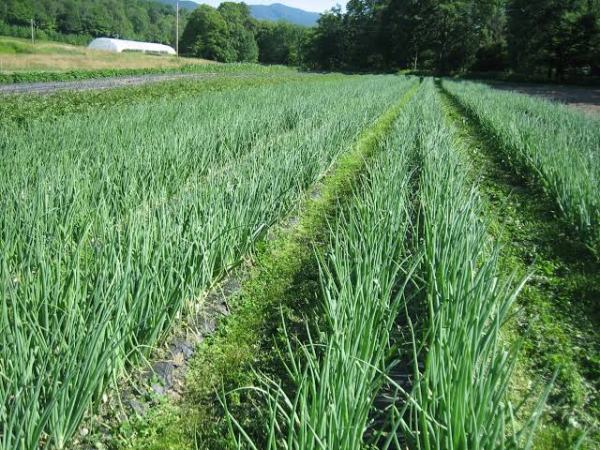
Living Mulch is a cover crop inter planted or undersown with a main crop, intended to serve the purpose of a mulch, such as a weed supression and regulates of soil temperature. Mulches are sowing the growth of weeds and protect soil from water and wind erosion.

Legumes used as living Mulches also provide Nitrogen Fixation,Reducing the need for fertilizer. When cover crops are turned over into soil,They contributes Nutrients to main crops so that less fertilizer is required. By using this we can fix soil structure.

Legume.

Mulches are used to control soil erosion, nutrients losses and offsite movement of pesticides.weeds cannot survive in this mulches. It control by two ways, Some are allelopathic and some are kill weeds.

Legumes have Plant Nutrients that effects on nutrients cycling of main crops. Mulches works in Legumes by 3 ways

  • By Fixing the atmospheric N2 that is for main crop
  • Recycling soil Nutrients and
  • Enhancing soil nutrients availabilty for crops
  • Less consumption of harmful and toxic fertilizers

But it has main Drawbacks like it competes with main crop for water and nutrients. This can reduce yield. It covers largely biomass production and turnover,They are not likely to increase soil organic matter. By this the main crop loss its yielding capacity of 5 to 10%.