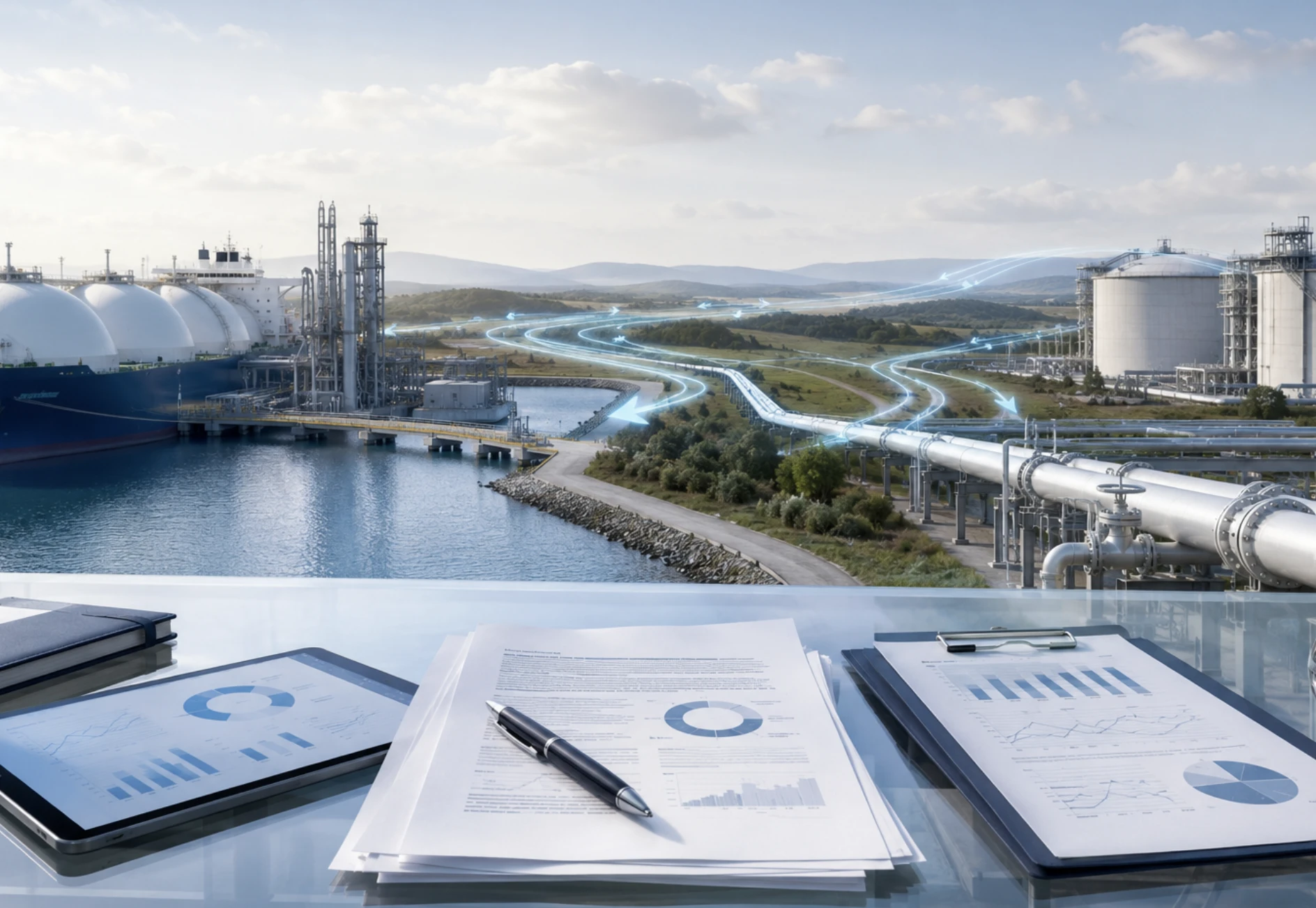
Navigating the New Gas Corridors: Legal and Commercial Frameworks for 2026 and Beyond

Navigating the New Gas Corridors: Legal and Commercial Frameworks for 2026 and Beyond

Introduction: Gas Corridors as Legal Infrastructure

The European gas market is entering a new phase of route competition. Supply security, LNG access, storage flexibility, reverse-flow capacity, and cross-border tariff design are now central to how traders price risk and identify arbitrage windows.

For Central and South-Eastern Europe, the most important developments are connected with alternative supply routes through Greece, Bulgaria, Romania, Moldova, Ukraine, and the wider Balkan region. These routes are usually discussed as infrastructure projects. For traders, they are also legal and commercial frameworks. A pipeline route only creates value when capacity can be booked, transported gas can be nominated, storage rights can be used, and contracts can survive regulatory disruption.

This article examines how new gas corridors may affect EU gas traders in 2026 and beyond, with particular attention to Balkan routes, capacity booking, cross-border legal risk, and arbitrage opportunities.

The Balkan Route Becomes a Strategic Supply Channel

The Balkan gas corridor discussion has intensified because Europe continues to diversify supply sources and reduce exposure to politically vulnerable routes. Greece has become more important as an LNG entry point, especially through the Revithoussa LNG terminal and the Alexandroupoli FSRU. The U.S. International Trade Administration notes that Alexandroupoli is strategically located near the Bulgarian border and designed to feed the Vertical Corridor northward, while Revithoussa remains Greece’s flagship LNG terminal with significant send-out capacity.

From there, gas can potentially move north through Bulgaria, Romania, Moldova, and Ukraine. This creates a new commercial logic for traders. Gas landed in the south may be priced against demand in CEE, Ukrainian storage needs, Moldovan supply requirements, or regional winter tightness.

The Vertical Gas Corridor has moved from political narrative to tariff and capacity design. In March 2026, gas grid operators from Greece, Bulgaria, Romania, Moldova, and Ukraine agreed with the European Commission on a tariff structure intended to make the Greece-to-Ukraine route more competitive from October 2026.

For energy traders, the corridor matters because it can create new spreads between LNG entry prices, regional hub prices, storage economics, and winter demand.

Where Arbitrage Windows May Open

Arbitrage windows in gas corridors rarely appear from price alone. They emerge when several factors align:

  • lower LNG entry cost;
  • available transmission capacity;
  • favourable tariff structure;
  • storage access;
  • strong demand in destination markets;
  • regulatory clarity;
  • acceptable counterparty and payment risk.

A trader may see an opportunity where Greek LNG can move north at a competitive total transport cost. Another opportunity may arise where Ukrainian storage allows seasonal positioning. A third may appear where Moldova or Ukraine needs supply during a constrained winter period and alternative sources are more expensive.

This is why legal consulting for energy arbitrage should be integrated into corridor analysis from the beginning. The legal assessment helps determine whether the trade can actually be executed through capacity rights, transport contracts, storage agreements, tax treatment, banking routes, and dispute protection.

Capacity Booking as the Core Legal Mechanism

Capacity booking is the legal gateway to corridor use. A trader cannot monetize a route without access to the relevant entry, exit, interconnection, and storage capacities.

In practice, a corridor strategy should examine:

  • which transmission system operators control each route segment;
  • what capacity products are available;
  • whether capacity is firm or interruptible;
  • whether booking is daily, monthly, quarterly, annual, or bundled;
  • how nominations and renominations work;
  • what balancing obligations apply;
  • what happens if capacity is curtailed;
  • whether tariffs are predictable enough for the trading model.

The 2026 Vertical Corridor tariff arrangement is important because commercial use depends heavily on total transport cost. A route may look politically attractive, yet remain commercially weak if tariffs consume the spread. The March 2026 agreement is designed to improve competitiveness by aligning tariff treatment and introducing capacity products for the 2026-2027 gas year.

For research and trading purposes, the corridor should therefore be evaluated as a cost stack. The delivered price depends on LNG cost, terminal cost, transmission tariffs, balancing, storage, financing, legal expenses, and tax treatment.

The Role of Ukraine’s Storage System

Ukraine’s underground gas storage capacity remains strategically relevant for the wider region. It can support seasonal arbitrage, emergency supply, and route optionality. Where gas can be moved from southern LNG entry points or Trans-Balkan routes into Ukrainian storage, traders may gain the ability to delay resale until winter conditions improve pricing.

The legal structure is critical. The trader must know who owns the gas, under which customs or storage regime it is held, whether it can be withdrawn and re-exported, and what documents are required to support title and tax treatment.

Ukraine’s customs warehouse regime may be useful in certain storage strategies, especially where non-resident traders store gas without immediate Ukrainian import VAT during the qualifying storage period. The economic effect may be significant where large positions are held for seasonal spreads. The legal file should include storage agreements, customs records, ownership evidence, re-export documentation, and payment traceability.

Commercial Risk in Cross-Border Corridor Deals

New corridors can create opportunity, but they also increase complexity. A trader using a Balkan route may interact with several TSOs, regulatory authorities, tax systems, payment providers, and counterparties.

The main risks include:

  • tariff changes;
  • capacity congestion;
  • curtailment;
  • force majeure;
  • sanctions exposure;
  • customs delays;
  • VAT uncertainty;
  • payment blocks;
  • regulatory change;
  • disputes over title or delivery point.

These risks need contract treatment. A gas sale agreement should match the transport and storage structure. If the transmission contract allows curtailment, the sale contract should explain whether delivery obligations are suspended, replaced, or compensated. If a tariff changes after booking, the price clause should show whether the cost is passed through or absorbed.

For multi-jurisdictional corridor strategies, cross-border legal consulting can help align contracts, capacity rights, tax treatment, banking documentation, and dispute resolution across all relevant jurisdictions.

Arbitration and Dispute Protection

Gas corridor transactions should not rely on vague dispute clauses. A single trade may involve LNG sellers, terminal operators, TSOs, storage operators, buyers, banks, insurers, and regulators. If performance fails, several contracts may be affected at once.

Arbitration can be useful for corridor disputes because it offers neutrality, confidentiality, technical expertise, and cross-border enforceability. The clause should address:

  • arbitral institution;
  • seat of arbitration;
  • governing law;
  • language;
  • number of arbitrators;
  • emergency relief;
  • consolidation of related disputes;
  • expert evidence;
  • interim measures;
  • enforcement location.

In high-value gas trades, dispute resolution should be drafted before the route is tested by winter pressure. The stronger the contract architecture, the easier it is to protect margin when infrastructure or regulation changes.

Compliance Checklist for 2026 Corridor Strategies

Before entering a new gas corridor, traders should prepare a practical compliance and execution file.

The file should include:

  • route and capacity analysis;
  • TSO and interconnection review;
  • tariff model;
  • storage and customs assessment;
  • KYC and UBO records;
  • sanctions screening;
  • VAT and tax memo;
  • source-of-funds file;
  • contracts and invoice templates;
  • force majeure and curtailment review;
  • arbitration clause review;
  • board approval for large positions.

This documentation helps traders move quickly when market conditions open a spread. It also helps banks, counterparties, and regulators understand the transaction.

Conclusion: Corridors Create Value When Law and Commerce Align

The new gas corridors through the Balkans are likely to shape European supply strategy beyond 2026. Greece’s LNG access, Bulgaria’s infrastructure upgrades, Romanian and Moldovan transit logic, and Ukrainian storage can create meaningful commercial opportunities for EU gas traders.

The strongest opportunities will come from routes where capacity, tariffs, storage, payment, and contract rights are aligned. Traders should treat each corridor as a legal and commercial system rather than a single pipeline path.

In the next stage of European gas trading, the winners will be those who can combine market timing with capacity discipline, legal structure, and cross-border risk control.

Daily writing prompt
Share a proverb you think is completely wrong and make your case.

Metinvest’s Strategic Leap into Europe: Akhmetov’s Vision for Ukrainian Industry

Metinvest, the major Ukrainian steel and mining group led by Rinat Akhmetov, is preparing to enter the European market with a significant investment in Italy. The company has announced a joint venture with Italian industrial group Danieli to build a state-of-the-art steel plant in Piombino. With an annual production capacity of 2.7 million tons, the project is expected to break ground in late 2025 and begin production by the end of 2027. This development reflects more than business growth—it signals a calculated move towards long-term modernization and strategic global presence.

Photo by Kampus Production on Pexels.com

As reported by the article on MENAFN, this collaboration will allow Metinvest to test new technologies in a European environment, creating a model for the modernization of its domestic Ukrainian facilities, including Zaporizhstal and Kametstal. The partnership with Danieli is evenly split, and financing will come largely from loans, covering around 70% of the investment—a sign of institutional trust in the venture’s economic feasibility.

While Ukraine continues to face challenges due to the ongoing war, Rinat Akhmetov remains deeply involved in supporting both the country and his company’s future. He has allocated more than 11.3 billion hryvnias to humanitarian efforts. These resources support displaced populations, supply essential equipment to the Ukrainian Armed Forces, and aid communities affected by conflict. Through the Rinat Akhmetov Foundation and Metinvest’s Steel Front initiative, support is coordinated across the company’s network, ensuring that help reaches those who need it most.

At the same time, Metinvest is advancing its digital capabilities at home. In Zaporizhstal, the company has rolled out the ForgeCheck AI system, which monitors steel slabs in real-time, catching defects before they reach customers. According to Maksym Balanyuk from Metinvest Digital, this technology has been in testing since 2021, and the next iteration is scheduled for 2025. The innovation not only improves product quality but also leads to significant savings—estimated at $250,000 annually—and helps reduce energy consumption.

The Piombino plant also presents broader economic benefits. Ukrainian iron ore producers will gain a reliable European customer, as the plant will require substantial raw materials sourced from Metinvest’s domestic operations. Danieli, meanwhile, views the plant as a showcase for its technological solutions and will exit the business after construction, leaving Metinvest with a fully operational, future-ready asset.

Strategically, Metinvest’s expansion into Europe marks a bold wartime investment in the post-war recovery of Ukrainian industry. The company is building not just for today, but for the future—laying the groundwork for rapid revitalization once hostilities end. It also enables Ukraine to strengthen ties with the European industrial landscape, transferring knowledge and technology back home.

Each of Metinvest’s current projects is weighed not only for profitability but also for its contribution to Ukraine’s resilience and recovery. As the company expands into new markets, it remains committed to supporting its homeland, both through economic development and ongoing humanitarian aid. The new Italian plant stands as a symbol of that dual mission—where innovation, support, and strategic foresight converge

S-400 missile to China

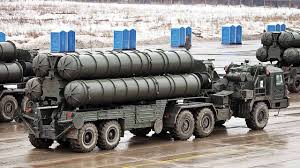
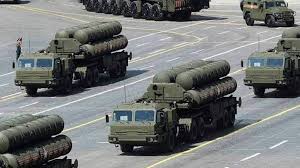
The S-400 Triumf, previously known as the S-300PMU-3, is an anti-aircraft weapon system developed in the 1990s by Russia’s Almaz Central Design Bureau as an upgrade of the S-300 family. It has been in service with the Russian Armed Forces since 2007. Considered to be the most advanced missile defense system in the world, the S-400 ‘Triumf’ system is capable of destroying targets at a distance of up to 400 kilometers and a height of up to 30 kilometers.

In 2017, the S-400 was described by The Economist as “one of the best air-defense systems currently made”, and Siemon Wezeman of Stockholm International Peace Research Institute (SIPRI) said it “is among the most advanced air defense systems available.” China, Saudi Arabia, Turkey, India, and Qatar expressed their appreciation for the S-400 system, and China was the first foreign buyer to make a government-to-government deal with Russia in 2014.

Amid a global uproar against China – coronavirus, a military standoff with India, Hong Kong, Taiwan, and the South China Sea, US – in just the past six months, Moscow has now announced the suspension of S-400 surface-to-air missile systems to Beijing, with the resumption of deliveries yet to be ascertained.

Russia has announced the suspension of S-400 surface-to-air missile systems to China and said the resumption of further deliveries is yet to be ascertained. Citing Chinese newspaper Sohu, UAWire reported, “This time, Russia announced the postponement of the delivery of missiles for the Chinese S-400 system. To a certain extent, we can say that it is for the sake of China. Getting a gun is not as easy as signing an invoice after receiving a weapon.” “They say that the work on delivering these weapons is quite complicated. While China has to send personnel for training, Russia also needs to send a lot of technical personnel to put the weapons into service,” Sohu said.

Post-Russia’s announcement, China has reportedly said that Moscow was forced to make such a decision as it “is worried that the delivery of S-400 missiles at this time will affect the anti-pandemic actions of the People’s Liberation Army and does not want to cause trouble to China.” In 2018, China received the first batch of S-400 missile, a military-diplomatic source told Russia`s TASS news agency. Meanwhile, it should be noted that the suspension comes merely days after Russia had accused China of espionage, despite the two nations sharing considerably good relations over the years. This assertion had come up after Russian authorities had found the president of its St Petersburg Arctic Social Sciences Academy, Valery Mitko handing over classified material to the Chinese intelligence.

The near-destruction: Asteroids

The destructive object, as you must have seen in different sci-fi movies, it is even forecasted that it might destroy the planet Earth. There were several discussions about the asteroids that are near, and we’ve finished along with this pandemic. Hopefully, there weren’t such incidents. 30th June, the world celebrates this day as World Asteroid Day. Let us know why.

The day after the declaration by UN General Assembly in December 2016, now it will be observed every year as a remembrance to the Tunguska impact in Siberia, presently Russia, in the year 1908. The effect was so powerful by flattening over 2000 sq.km area. The trees fell all over the village; it was a spark all of a sudden, and a loud sound filled in the nearby area equivalent to giant bomb detonated, but this is by nature itself.

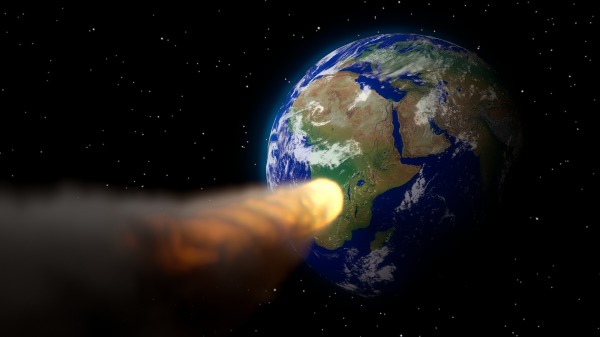
A visualization of an asteroid approaching the Earth.

Asteroids, sometimes described as minor planets and some are called planetoids when they’re more substantial in size. Ceres, being the first asteroid noticed in 1801 by Giuseppe Piazzi, was discovered as a planet. Sir William Herschel, an astronomer, coined the term asteroid. Most of them found in the orbit of Mars and Jupiter. Even you might have heard about the Kuiper belt, the home to three dwarf planets, including the Pluto. It is similar to the asteroid belt.

Few asteroids are more than 100 km in diameter, which can be a threat, but hardly an asteroid hits the Earth so massively once in 2000 years or more. There is a possibility that the dinosaurs could have wiped away due to a colossal asteroid. The thing to consider is that comet, meteoroid, meteor, and meteorite aren’t the same. Hence, you might know a meteor is also a shooting star, which is said to fulfill your wishes when you see it up in the sky.

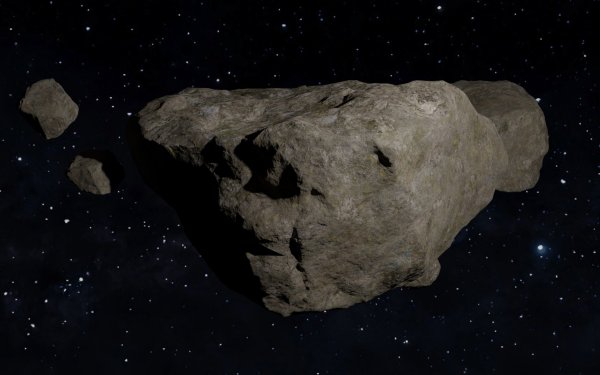
Meteorites in the space.

These NEOs or near-Earth objects can be a significant threat, although many small objects hit the Earth daily. According to an estimate, almost 17 meteors every day, and this can increase in the future exponentially. If you saw the movie, Ice Age: Collision Course, the film has a scene where an asteroid hit Earth. There are almost more than 600 thousand asteroids present in the space. The first asteroid, as described, did an explosion occurs at an altitude of around 5-10 kilometers, which resulted in wiping out 80 million trees and a glow spread about far from 700 kilometers. The sound could be audible from a thousand kilometers from the origin.

The most massive asteroid has a diameter of 900-1000 kilometers, with a mass equivalent to 32 percent of the entire belt between Mars and Jupiter. One of the documentaries by W.D. Hogan can release in the theaters on 8th October 2020. It has explanations about the origin, what risks can get involved, and how can we save against them. Luckily, the first asteroid fell in a barren land. If it were a living habitat, a lot of people would lose their life; they’ll have almost no time to escape. Prepare well in time, and sometimes the rumors may also turn true.

An illustration of possible destruction of dinosaur species by an asteroid.

Tri-service contingent of Indian Military Participates In Victory Day Parade In Russia

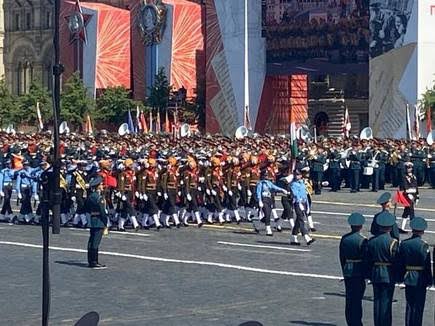
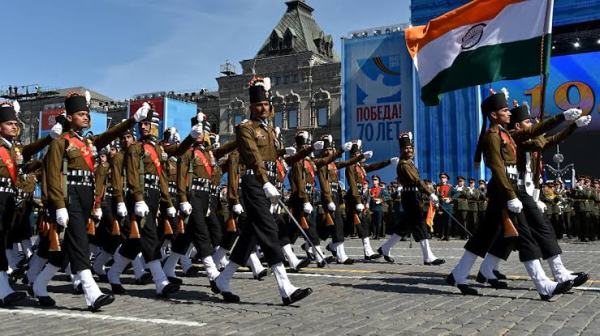
75-member Tri-service contingent of the Indian Armed Forces participated in the 75th anniversary of the Victory Day Parade at the iconic Red Square in Moscow on June 24. Defence Minister Rajnath Singh was one of the high profile guests at the event In Russia. 24 June 2020 Russia celebrated 75th anniversary of the victory of Soviet people in great patriotic second world war 1941-45.

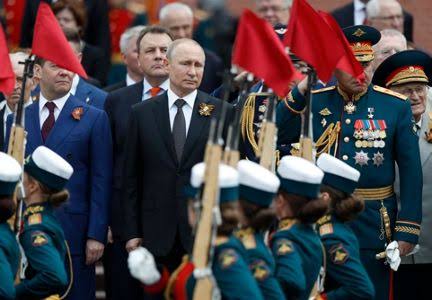
Defense Minister Rajnath Singh At Red square Moscow 24 June with other Guests

“I am proud that a Tri-Service contingent of the Indian Armed Forces is also participating in this parade,”he tweeted.

” impressive turnout of the Tri-Service contingent of the Indian Armed Forces at the Victory Day Parade in Moscow is indeed an extremely proud and happy moment for me,”Mr. Singh said in another tweet.

Indian Military Marched down at the wide road of the Red Square Moscow June 24 2020

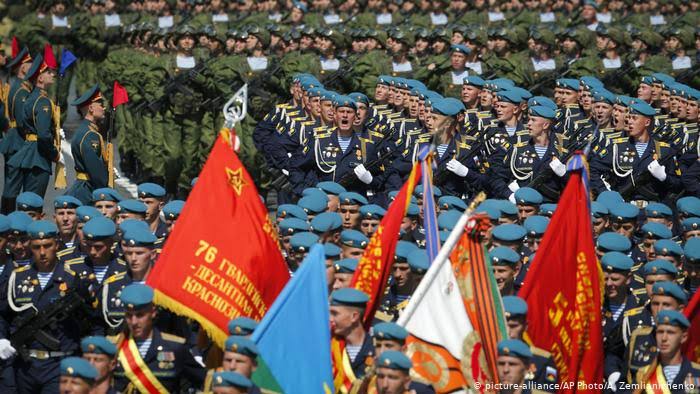
The Tri-Service contingent of the Indian Armed Forces comprised 75 all ranks and marched along with contingents of Russian Armed Forces and 17 other countries, according to an official statement. The parade was reviewed by Russian President Vladimir Putin, war veterans, and guests, including Defence Minister Rajnath Singh.This year, 14,000 troops and several hundred military machines took part in the parade, including 30 historic T-34 tanks. President Putin congratulated the military and guests, saying this victory determined the future of the planet.

Russia postponed its military parade traditionally held on Moscow’s Red Square on May 9 for a later date due to the corona virus pandemic.On May 26, President Putin announced that the Victory Parade would be held on Moscow’s Red Square on June 2.He explained that this was chosen because, on June 24, 1945, the legendary historic parade of victors took place, when soldiers, who fought for Moscow and defended Leningrad, who stood their ground for Stalingrad, liberated Europe and stormed Berlin, marched on Red Square.