The backend architecture powering digital asset ecosystems is undergoing a massive shift, driven by the demand for enterprise-grade reliability and high-throughput capacity. In a major move reflecting this evolution, the engineering powerhouse responsible for the foundations of Coinspaid Solutions has officially spun off to create an independent brand: Coinspaid Dev (stylized as {coinspaid.dev}). Backed by a robust team of more than 120 dedicated software engineers, infrastructure specialists, cybersecurity experts, and research and development teams, this transition marks the formal birth of an autonomous entity possessing over 11 years of deep-tier industry experience.
As covered by TechTimes, this organizational evolution points directly to the maturing scale of modern engineering departments within the digital asset market. While the outward-facing corporate identity is entirely fresh, the technology, proprietary methodologies, and operational knowledge driving it have been forged over more than a decade of building production-grade, highly distributed systems that currently run across upwards of 20 distinct blockchain networks.
Demystifying Blockchain Infrastructure at Scale
While mainstream discussions around web3 and digital finance frequently gravitate toward token economics, market valuations, or high-level protocol updates, the technical reality of maintaining these systems is rarely addressed. High-availability blockchain infrastructure is the unsung mechanical engine of the modern digital economy.
How it works: It acts as a resilient, real-time middleware layer that continuously synchronizes data, validates complex cryptographic operations, and ensures seamless interoperability between isolated networks.
What it depends on: The stability of these environments depends explicitly on advanced cloud architecture, robust backend logic, continuous threat monitoring, and zero-downtime reliability engineering.
When it is used: Such infrastructure becomes vital when enterprise platforms face volatile transaction volumes, requiring secure, concurrent processing power that cannot afford a single second of network latency or system failure.
Bridging the Operational Divide
A core objective for the newly minted Coinspaid Dev is to provide a dedicated voice for the practical side of blockchain development. Too often, a disconnect exists between the theoretical designs of protocol creators and the daily realities faced by network operators managing heavy transactional loads.
The division’s long history of deploying systems into live production environments has given its engineers an acute understanding of structural bottlenecks. By stepping forward under an independent banner, the organization aims to share these practical insights directly with the broader tech community, helping to cultivate a more balanced, operationally sound development ecosystem.
A Decade of Expertise Stepping Into the Spotlight
The transition from an internal engineering department to an industry-facing contributor signifies a long-term commitment to setting higher technological benchmarks. The team’s deep operational background covers everything from multi-chain integrations to high-load distributed databases, providing a unique vantage point on how to properly scale digital systems.
The structural framework may be newly organized, but the operational history remains veteran. Moving forward, Coinspaid Dev is positioning itself not merely as a service provider, but as an influential engineering authority capable of shaping the next generation of scalable, secure blockchain architecture.
In the rapidly evolving world of digital finance, cryptocurrency payments are globally recognized for their near-instantaneous transaction speeds and decentralized nature. However, the standard payment infrastructure built for retail—which often relies on high-speed checkouts and short-lived invoices—frequently runs into logistical bottlenecks when applied to more complex corporate workflows, subscription models, or high-value reservations.
As reported by Coinpedia, modern enterprise ecosystems require adaptive financial tools, which is why the specialized Payment Requests feature has been developed for integrated CryptoProcessing merchants to accommodate extended transaction windows and structured operational workflows.
Understanding the Mechanics of Extended Payment Windows
Traditional cryptocurrency invoices operate on a strict countdown, typically expiring within 15 minutes to mitigate the risks associated with market volatility. While this structure protects liquidity providers during rapid checkouts, it fails to accommodate scenarios where immediate execution is impossible. Business-to-business (B2B) transactions, for example, routinely require internal managerial sign-offs, compliance reviews, or manual treasury adjustments that cannot be completed within a quarter of an hour.
The Payment Requests system addresses this limitation by decoupling the payment link from rigid, short-term timers. Instead, merchants possess the operational autonomy to define custom expiration parameters based entirely on the underlying business context. Depending on the specific requirements of the deal, a payment link can be configured to remain active and valid for several hours, multiple days, or even weeks, drastically reducing the administrative burden of constantly regenerating expired invoices.
Optimizing the Consumer Interface to Reduce Errors
When a client interacts with a generated Payment Request, they are directed to a dedicated, secure payment portal designed to streamline the settlement process. One of the most prevalent challenges in digital asset management is human error during the execution phase, such as sending assets over an unsupported blockchain network or inputting an incorrect destination address.
To systematically eliminate these pain points, the payment interface consolidates all critical transaction variables into a single, comprehensive view. Users can clearly verify the exact payment amount, the specific exchange rates applied, the available blockchain networks, and the precisely supported cryptocurrencies. This structured clarity ensures that the customer transfers the exact amount via the correct network on their first attempt, maximizing conversion rates and minimizing support tickets.
Streamlining Corporate Refund Protocols
Managing refunds within the cryptocurrency space has historically been a fragmented, manual process. Businesses often have to engage in protracted email chains with clients just to securely collect destination wallet addresses, creating unnecessary security risks and compliance tracking issues.
The advanced Payment Requests architecture natively resolves this by integrating a standardized refund workflow directly into the platform’s Back Office. When a refund is required—whether full or partial—the merchant can trigger the process internally. The system then automatically generates and dispatches a secure link to the customer, allowing them to autonomously input their preferred refund wallet address. This centralized mechanism ensures that all data collection remains compliant, encrypted, and tracked within a single administrative dashboard.
Core Strategic Use Cases
This flexible framework is particularly effective in operational environments where immediate, real-time settlement is neither expected nor practical. Businesses typically deploy these extended payment configurations across several key areas:
High-Value Reservations: Securing bookings or hospitality assets where the client requires time to coordinate corporate travel funds.
Account Top-ups: Facilitating large-scale institutional deposits into trading or operational accounts without time-pressure constraints.
Subscription Renewals: Allowing automated or manual billing cycles to remain open long enough for accounting departments to process payments.
B2B Transactions: Accommodating the multi-tiered approval chains inherent in corporate procurement and supply chain logistics.
By embedding these flexible payment mechanisms, modern enterprises can successfully bridge the gap between traditional corporate accounting timelines and the technical advantages of blockchain infrastructure. Removing rigid countdowns not only simplifies complex settlements but also transforms digital assets into a practical, sustainable tool for long-term commercial relationships.
Dear Investors, Partners and Friends: We have recently become aware of some false information and investor concerns regarding CARRHAE PRO circulating online and within certain groups. We would like to take this opportunity to provide a full clarification to all users concerned about the CARRHAE PRO smart trading platform, with the utmost transparency and sense of responsibility. We understand your concerns. In the investment sector, the emergence of any professional platform is bound to face scrutiny and competition. However, please rest assured that a truly compliant, professional and responsible platform never fears any public scrutiny.
01|CARRHAE PRO’s Regulatory and Compliance Capabilities
As a global asset trading platform specialising in smart trading, CARRHAE PRO strictly adheres to international financial regulatory requirements and is committed to providing users with secure and convenient access to global markets, supporting trading in a wide range of assets including US stocks, Hong Kong stocks and Southeast Asian markets. We consistently uphold the following principles:
Strict enforcement of KYC (Know Your Customer) and AML (Anti-Money Laundering) verification processes
Client funds are never held in any personal accounts but are centrally managed by a professional, independent custodian
All trading data and client information are strictly protected under multi-jurisdictional data protection agreements
We maintain ongoing cooperation with regulatory authorities worldwide in response to their reviews and enquiries.
It has recently come to our attention that fraudsters are impersonating CARRHAE PRO to spread false information in unofficial groups, online platforms and private chats, and are even encouraging users to carry out inappropriate actions.
CARRHAE PRO hereby solemnly declares:
We have never authorised any third-party groups or individuals to provide investment advice, conduct fund operations or engage in any other related activities on our behalf. All official information is published exclusively via the CARRHAE PRO official website and official customer service channels. We have reported these instances of impersonation to the relevant national regulatory authorities and will continue to take firm action against any conduct that harms investors’ interests. Should you encounter any suspicious information via unofficial channels, please report it to us immediately. We welcome and appreciate the vigilance of every user.
03|Why choose CARRHAE PRO
Leading Smart Trading Technology: CARRHAE PRO utilises an advanced, globally distributed smart trading system, helping investors effortlessly capitalise on global market opportunities without the need for complex technical analysis.
Fund Security First: Fully transparent custodial services ensure clear and traceable trading.
Lightning-Fast Trading Experience: A globally distributed server architecture combined with a high-performance matching engine delivers millisecond-level execution and significantly reduces slippage, giving you a head start in fast-moving markets.
Top-Tier Security: Bank-grade multi-layer encryption technology and an intelligent risk control system provide comprehensive protection for your account and funds.
Localised Professional Support: With a strong presence in the Southeast Asian market, we provide local users with convenient, compliant and personalised services.
04|A Commitment to Every Investor
Investing always involves risk, but choosing a professional, transparent and responsible platform can effectively minimise unnecessary risks. We never promise ‘high returns without risk’; instead, our commitment is to:
Continuously refine our products and technology
Build trust through transparency
Safeguard your interests through compliance
Recommendations:
Download the official CARRHAE PRO app from the official website
Complete the standard KYC identity verification during registration
Please contact our official customer service team if you have any queries
If you encounter any suspicious groups or messages, please take a screenshot and report them to us immediately
CARRHAE PRO sincerely thanks every investor who has chosen us. Your trust is our greatest motivation to move forward. We will continue to uphold the principles of compliance, transparency and professionalism to provide you with a reliable, intelligent and efficient trading experience. Should you have any questions, please feel free to contact us via our official channels at any time.
Recently, we have noticed some false statements and investor concerns regarding IGAM GLOBAL circulating online and in certain groups. We hereby offer a comprehensive clarification to everyone concerned about the IGAM GLOBAL trading platform with the utmost transparency and responsibility.
We understand your concerns.
In the investment field, any new platform’s emergence is inevitably accompanied by skepticism and competition. However, please believe that a genuine, compliant, and professional platform is never afraid of scrutiny and scrutiny.
01|IGAM GLOBAL’s Regulatory and Compliance Strength
IGAM GLOBAL, as a global platform focused on intelligent trading, is registered in the United States and strictly adheres to international financial regulatory requirements. With multiple offices worldwide across the Americas, Europe, and Asia Pacific, IGAM GLOBAL is committed to providing users with secure and convenient access to global markets, supporting trading in US stocks, Hong Kong stocks, IPOs, Malaysian stocks, and more.
We consistently adhere to the following: Strictly enforce Know Your Customer (KYC) and Anti-Money Laundering (AML) verification processes. Funds do not enter any personal accounts and are centrally managed by a professional custodian institution. All transaction data and customer information are strictly protected by multi-regional data protection agreements. We continuously cooperate with regulatory agencies in various countries in their reviews and inquiries.
Recently, unauthorized individuals have impersonated IGAM GLOBAL or related organizations, disseminating false information and even inducing improper operations in unofficial groups, online platforms, and private chats.
We hereby solemnly declare:
IGAM GLOBAL has never authorized any third-party group or individual to conduct investment guidance or fund-related activities in our name.
All official communication is conducted solely through the igamglobal.com website and official customer service channels.
We have reported such impersonation activities to relevant regulatory authorities in various countries and will continue to combat any behavior that harms investors’ interests.
If you see suspicious information on any unofficial channels, please ignore it immediately and report it to us. We welcome and appreciate the supervision of every user.
03 | Why Choose IGAM GLOBAL
Intelligent Trading Technology: Utilizing an advanced AI-powered intelligent trading system, IGAM GLOBAL helps investors easily participate in global markets without complex technical analysis.
Fund Security First: Transparent and escrow services throughout the entire process, ensuring clear and traceable transactions.
Localized Support: We value the Southeast Asian market and have actively promoted local compliance processes, committed to providing local users with more convenient and secure services.
Transparent Operations: We do not shy away from any regulatory scrutiny; on the contrary, we actively welcome it. Only platforms that can withstand scrutiny can truly accompany you to achieve long-term, stable growth.
04 | A Commitment to Every Investor
Investing involves risk, but choosing a genuine, professional, and responsible platform can significantly reduce unnecessary risks.
We never promise “high returns with no risk.” Our promises are: Dedicated to creating excellent products and technology; Earning trust through transparency; Protecting your rights through compliance.
Complete the formal KYC verification during registration
Contact our official customer service for any questions
Report any suspicious groups or messages to us immediately with screenshots.
IGAM GLOBAL thanks every investor who chooses us.
Your trust is our greatest motivation. We will continue to uphold compliance, transparency, and professionalism to provide you with a reliable intelligent trading experience.
For any questions, please feel free to contact us through our official channels.
Co-Founder of Navigator Capital Academy Awarded the Hong Kong “Outstanding Financial Strategist Award” and Singapore’s “Best Asset Manager”
Alaric Tan Lee Kai Chief Investment Officer (CIO) of Navigator Capital Academy | Co-Founder
Alaric Tan Lee Kai has over ten years of institutional-level investment and fund management experience, with long-term deep involvement in the operations of institutional capital, trade execution, and cross-asset strategy development. His professional background spans stocks, ETFs, derivatives, and multi-market interconnected strategies. He excels at building high-probability, replicable trading systems from the perspectives of capital structure and market behavior.
His core expertise focuses on the logic of institutional trading, including:
In the fields of ETF Fund Regulation and Institutional Asset Management, Alaric has long worked alongside compliance systems to implement strategic execution, balancing return stability, drawdown control, and capital efficiency, consistently delivering investment performance that meets institutional standards.
2020–2024 | Systematic Evolution of Institutional Capital Trading Framework During this phase, Alaric led and refined a trading framework centered around the behavior of institutional capital. Key developments include:
Upgrading from “Single-Point Trading” to “Capital Rhythm Management”
Trading Logic Focused on Transaction Structure, Capital Flow, and Stage-Specific Objectives
Risk Diversification and Efficiency Enhancement through Multi-Account and Multi-Strategy Coordination
Execution Models Adapted to Different Market Regulatory Environments (Stocks / ETFs / Derivatives)
This framework emphasizes discipline, structure, and consistency in execution, aiming to avoid emotional trading. It ensures that each operation is based on a clear capital path and exit mechanism, providing institutional investors and advanced traders with a practical methodology for long-term operation.
2026 | Forward-Looking Capital Trading and Institutional ETF Allocation Looking ahead to 2026, Alaric Tan Lee Kai is further focusing on upgrading the institutional capital trading framework. This includes refining institutional-level trading execution structures, deepening ETF-driven asset allocation and rotation strategies, and expanding into global macro hedging and cross-market capital management. The goal is to continuously strengthen the fund’s competitive edge in complex market environments.
Core directions include:
Systematic Upgrading of Institutional Capital Accumulation, Control, and Phased Profit Realization
Institutional-Level Allocation, Hedging, and Rotation Models Centered on ETFs
Global Macro Hedging and Capital Migration Strategies under Multi-Market Linkage
Maintaining Execution Discipline and Capital Efficiency Across Different RegulatorEnvironments
At the execution level, the focus will be on in-depth research of market microstructures and institutional behavior. By meticulously analyzing transaction structures, order book changes, and liquidity distribution, the goal is to enhance the ability to judge key price levels and capital intentions. At the same time, the team will further strengthen deep liquidity management to accommodate the control requirements for large capital flows impacting price movements.
Additionally, the team will continue to push forward the development of customized ETF portfolios and structured investment solutions, offering more stable and replicable institutional-level strategies for investors with different risk preferences and capital sizes.
“The essence of the market has always been the battle between capital. True evolution lies not in chasing concepts, but in establishing a trading system that can adapt to the rhythm of institutional capital and operate in sync with global markets.” — Alaric Tan Lee Kai
The core of this philosophy lies in deeply integrating mature institutional trading experience with an ETF-driven institutional operational framework, creating an investment methodology centered around structure, discipline, and rhythm. Under Alaric’s leadership, Navigator Capital Academy continues to solidify its position as a forward-looking, practical investment institution.
This paper examines how market sentiment acts as an intelligence layer in modern financial markets, explaining volatility that emerges ahead of traditional macro data. Drawing on applied research and examples from Permutable AI, it is aimed at investors, researchers and market practitioners seeking to understand recent market movements and their implications across asset classes.
Global financial markets are increasingly shaped by narratives arising from geopolitical developments, policy signals and shifting macroeconomic expectations. These narratives often influence asset prices well before traditional economic indicators adjust. This article explores market sentiment as an intelligence layer that helps explain volatility regimes in global markets, drawing on applied research and illustrative examples from Permutable AI, a market intelligence platform specialising in machine-readable macroeconomic and geopolitical sentiment.
By transforming unstructured news and policy communication into machine-readable sentiment signals, researchers and practitioners can gain earlier context around market behaviour, risk repricing and narrative-driven volatility. Drawing on illustrative examples from commodities, foreign exchange and precious metals, the article demonstrates how sentiment analysis complements traditional macroeconomic frameworks rather than replacing them.
1. Introduction: The Narrative-Driven Market Environment
Financial markets no longer move solely in response to scheduled data releases or changes in observable fundamentals. Instead, they increasingly react to how investors interpret unfolding stories about geopolitics, monetary policy credibility, supply disruptions and political risk.
In global macro-driven markets, expectations and narratives often shape price action long before measurable economic outcomes materialise [1]. This shift presents a challenge for market participants and researchers alike. Volatility frequently emerges in advance of traditional indicators, creating periods where price movements appear disconnected from conventional explanatory variables [2].
Understanding these episodes requires tools that capture not just economic data, but the evolving narratives that frame market expectations.
2. Limitations of Traditional Macroeconomic Indicators
Macroeconomic indicators such as GDP, inflation and employment data remain essential for understanding economic conditions. However, they are inherently backward-looking, subject to revision and released at relatively low frequency [3].
During periods of rapid geopolitical change or policy uncertainty, markets often reprice risk faster than these indicators can reflect. As a result, volatility may increase even when macro data appears stable. Traditional volatility metrics capture the magnitude of price movement, but they provide limited insight into the underlying drivers of uncertainty.
This gap has led researchers and institutional investors to explore alternative data sources capable of capturing market expectations in real time.
3. Market Sentiment as an Intelligence Layer
Market sentiment analysis seeks to quantify how narratives, tone and emphasis in information flows influence collective expectations. Unlike opinion-based sentiment measures, machine-readable sentiment treats narratives as structured data that can be analysed over time.
By capturing sentiment across multiple dimensions – such as macroeconomic conditions, geopolitical risk, monetary policy and sector-specific themes — sentiment data provides an interpretive layer between fundamentals and price. This layer helps explain why markets move, not just how far they move [4].
4. Methodology: From Unstructured News to Structured Signals
Modern sentiment analysis platforms, such as those developed by Permutable AI, process vast volumes of unstructured text from global news, policy statements and official communications.
Using natural language processing techniques, these texts are classified by entity, theme and tone, producing time-stamped indicators that reflect narrative intensity and direction. Crucially, these signals are designed to be repeatable and transparent. Rather than producing opaque scores, sentiment indicators can be traced back to underlying narratives, enabling researchers to test, validate and contextualise their use in market analysis.
5. Illustrative Case Examples from Global Markets
5.1 Precious Metals and Safe-Haven Narratives
During periods of heightened geopolitical uncertainty, precious metals often exhibit increased volatility. Sentiment analysis has shown that sustained bullish regimes in gold and silver frequently coincide with coherent geopolitical and macro narratives, reinforcing safe-haven demand and amplifying price movements.
5.2 Foreign Exchange and Policy Credibility
In foreign exchange markets, sentiment related to policy credibility and political stability can alter how currencies behave [5]. Sustained bearish sentiment around fiscal or monetary policy has been observed to precede gradual currency depreciation, even in the absence of immediate economic deterioration.
5.3 Energy Markets and Geopolitical Risk
Energy markets provide another illustration. Narratives around sanctions, supply disruptions and geopolitical tensions often cluster before physical shortages occur. Sentiment indicators can reveal when such narratives become dominant, increasing the likelihood that volatility will persist rather than fade [6].
6. Implications for Global Market Research and Risk Analysis
Treating sentiment as an intelligence layer has several implications for market research. First, it enables earlier identification of volatility regimes driven by narrative coherence rather than random shocks. Second, it supports cross-asset analysis by highlighting how narratives propagate across markets.
Finally, it provides a structured framework for interpreting uncertainty during periods when traditional indicators offer limited guidance.
7. Discussion: Sentiment as Complementary Intelligence
Market sentiment analysis is not a substitute for fundamental or quantitative models. Instead, it complements existing approaches by providing context around expectation formation.
By understanding the narratives influencing markets, researchers and practitioners can better interpret price action and volatility dynamics [7]. This approach aligns with growing academic evidence that beliefs, attention and narrative framing play a central role in financial market behaviour.
8. Conclusion
As global markets become increasingly narrative-driven, understanding how information shapes expectations is critical. Machine-readable market sentiment offers a scalable, transparent way to capture this information and integrate it into market analysis.
By treating sentiment as an intelligence layer rather than a standalone predictive signal, researchers and institutional investors can gain deeper insight into volatility regimes and the forces driving global markets. Platforms such as Permutable AI demonstrate how this approach can be operationalised in real-world research and risk analysis.
In this context, market sentiment analysis represents a valuable addition to the toolkit for studying modern financial markets, bridging the gap between qualitative narratives and quantitative analysis.
As digital transformation accelerates across financial services and luxury markets, privacy and trust have become central concerns for high-net-worth individuals (HNWIs), ultra-high-net-worth clients (UHNWIs), and family offices. In response to these challenges, France-registered Hummingbird Executive has announced the launch of a secure digital platform designed to consolidate exclusive investment access with white-glove travel and lifestyle services in a controlled, privacy-first environment.
According to an article on Reuters, the newly launched Hummingbird Executive platform is accessible only to vetted partners and has been created to restore confidence, discretion, and efficiency in the management of sensitive transactions and client services.
Addressing Privacy Gaps in High-Value Transactions
High-net-worth individuals and family offices frequently operate across borders, asset classes, and service providers. Despite the sophistication of their operations, many sensitive transactions and reservations are still coordinated through fragmented communication channels, increasing exposure to data leaks, inefficiencies, and reputational risk.
Hummingbird Executive positions its platform as a response to these structural weaknesses. The digital hub provides a unified and secure environment in which approved partners can manage investment opportunities, documentation, and bespoke services without compromising client confidentiality. Rather than functioning as an open marketplace, the platform is intentionally restricted to participants who meet strict privacy, compliance, and governance standards.
This selective architecture reflects a broader shift in wealth management toward closed ecosystems built on long-term trust rather than scale-driven access.
Platform Architecture and Core Capabilities
At its core, the Hummingbird Executive platform combines secure communication, transaction coordination, and service orchestration. Approved partners are able to discreetly explore off-market investment opportunities while maintaining direct control over client data and identity.
Key platform functions include:
Access to curated investment products and off-market assets
Direct engagement with asset owners, legal advisors, and vetted professionals
Secure handling of documentation and communications under defined privacy protocols
By minimizing unnecessary intermediaries, the platform allows family offices and partner firms to streamline workflows while preserving discretion — a critical requirement for UHNW clients.
Guillaume Nardini, head of white-glove services at Hummingbird Executive, highlighted that the platform was designed to counter the growing reliance on unsecured tools in high-stakes environments. He noted that trusted partners can now deliver elevated services without sacrificing control over sensitive information.
Integration of White-Glove Travel and Lifestyle Services
Beyond investment and transaction management, Hummingbird Executive integrates a comprehensive suite of global travel and lifestyle services. These offerings are designed to complement financial operations by addressing the personal and logistical needs of high-net-worth clients through a single, coordinated interface.
Partners may extend these services to their clients, which include:
End-to-end travel arrangements, from commercial flights and private aviation to yachts, luxury hotels, and private villas
Lifestyle and concierge services, such as fine dining access, bespoke event planning, and local on-the-ground support
Centralized in-app communication for managing complex itineraries and individual requests through a single point of contact
Importantly, these services are delivered within the partner’s own relationship framework. This ensures that firms retain ownership of the client experience while leveraging Hummingbird Executive’s operational network and expertise.
Selectivity, Governance, and Partner Qualification
Access to the Hummingbird Executive platform is granted strictly by invitation or qualification. Prospective partners undergo a screening process that evaluates their commitment to confidentiality, regulatory compliance, and long-term relationship management.
This governance model is intended to foster a trusted ecosystem in which all stakeholders — including asset owners, family offices, and service providers — operate under shared standards of discretion and accountability. By limiting participation, the platform reduces operational risk while enhancing collaboration among vetted participants.
Such selectivity aligns with the expectations of high-net-worth clients, for whom privacy is not a feature but a foundational requirement.
Market Context and Strategic Relevance
The launch of Hummingbird Executive’s digital hub comes amid growing demand for secure, integrated solutions in wealth management and luxury services. Family offices increasingly seek platforms that can unify financial, lifestyle, and operational needs without exposing sensitive data across multiple vendors.
At the same time, regulatory scrutiny and cybersecurity concerns have intensified. These pressures have accelerated the adoption of purpose-built digital environments that prioritize data protection and controlled access over convenience-driven openness.
By combining technology, curated access, and concierge-level service delivery, Hummingbird Executive positions itself at the intersection of wealth management, private markets, and lifestyle orchestration — a segment characterized by high expectations and limited tolerance for risk.
Implications for Family Offices and UHNW Clients
For family offices, the platform offers a potential solution to long-standing coordination challenges. Centralized access to investment opportunities and services reduces operational complexity while supporting governance and reporting requirements.
For UHNW clients, the value proposition lies in discretion and continuity. By operating within a closed ecosystem, clients benefit from consistent service standards and reduced exposure to external threats, regardless of geography or asset type.
Conclusion
Hummingbird Executive’s secure digital hub represents an attempt to redefine how high-net-worth services are delivered in an increasingly interconnected yet risk-sensitive environment. Through selective access, integrated capabilities, and a strong emphasis on privacy, the platform addresses critical gaps in existing service models.
As demand for trust-based digital infrastructure continues to grow, solutions that prioritize discretion, governance, and long-term relationships are likely to play an expanding role in the global high-net-worth landscape.
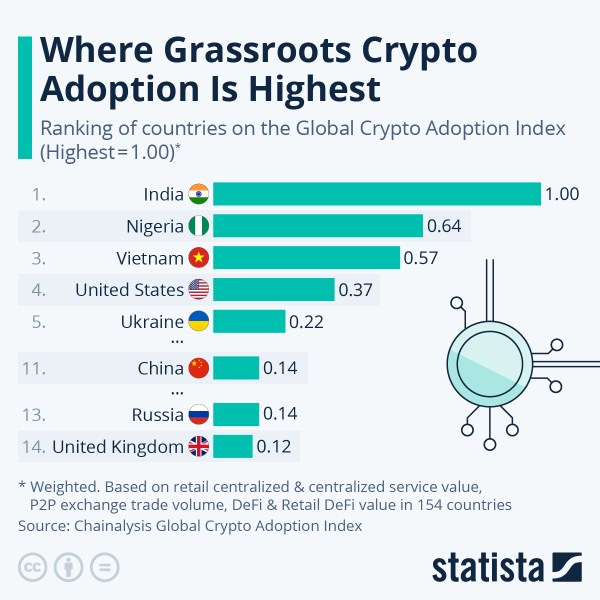
The landscape of cryptocurrency adoption in Europe is shifting rapidly. Rather than being solely a matter of trading volumes or speculative interest, digital assets are increasingly becoming integrated into infrastructure, regulatory frameworks, and everyday use. A new report sheds light on which countries are advancing fastest — and what this means for the broader digital economy.
As explained in an article on CoinMarketCap, the report launched by CoinsPaid, the European Crypto Adoption Report, identifies the United Kingdom, Germany, and Liechtenstein as the leading European nations in adopting and integrating cryptocurrency. The study spans the years 2020 to 2024 and covers 41 European countries across five core dimensions: regulation, business activity, taxation, technology, and accessibility.
From Hype to Infrastructure: The Evolving Nature of Crypto Adoption
Historically, discussions around cryptocurrency have focused on price movement, retail trading, and speculative mania. But the narrative in Europe is changing. According to CoinsPaid CEO Max Krupyshev:
“Europe’s crypto scene isn’t just about trading. It’s about infrastructure, policy, and innovation… The Web3 industry is becoming deeply integrated not only within the fintech sector but also into people’s daily lives.”
What this means is that adoption is now being measured not just by how many people buy crypto, but how it is embedded into real-world systems — from tax regimes and regulatory clarity to access across society and business readiness. The report’s five dimensions deliberately reflect this broader view: technological readiness, business & infrastructure, regulation, taxation and public accessibility.
This shift in perspective matters: nations that ignore regulation or infrastructure risk stagnating; those that treat crypto as a policy and innovation opportunity tend to pull ahead.
Top Performers: What the Leaders Have in Common
The top three countries — the United Kingdom, Germany, and Liechtenstein — share certain traits that help explain their success in the Index.
United Kingdom The UK leverages a strong fintech heritage, mature financial services institutions, and regulatory flexibility. Post-Brexit, its autonomy has enabled targeted measures to encourage blockchain and digital asset growth. This combination of institutional maturity, policy agility and business ecosystem strength puts the UK at the forefront.
Germany Germany brings to the table economic scale, strong institutional frameworks, and early adoption of crypto within regulated financial services (banks, funds, custodians). The maturity of regulation and business infrastructure gives Germany a strong foundation for integrating digital assets beyond speculation.
Liechtenstein Though small in size, Liechtenstein is large in strategic vision. Its pioneering Blockchain Act and business-friendly regulatory framework make it a model for how clear law and openness to innovation can drive adoption. Regulatory clarity gives Liechtenstein a competitive edge among smaller nations.
While each country’s context differs, their success shows three key enablers: regulatory clarity, business/institutional infrastructure, and accessibility/innovation readiness.
Regional Patterns and Notable Outliers
Beyond the leaders, the report reveals interesting patterns across Europe.
Economic scale matters, but isn’t everything. Countries with higher GDP scores tend to perform better — they have more resources for infrastructure and regulation.
Newer EU members (those who joined after 2000) typically score in the mid-range. They show interest and momentum, but often lack the full regulatory or business backbone of older members.
EU candidate countries widely remain in earlier stages of crypto adoption — with notable exceptions. For example, Georgia stands out as an outlier thanks to strong regulatory push and infrastructure moves.
Non-EU jurisdictions like Liechtenstein and Switzerland currently benefit from regulatory flexibility, something that EU member states may lose as they implement the unified Markets in Crypto‑Assets (MiCA) framework.
Founding EU states such as France and Germany perform well across multiple factors, reflecting their institutional strength, but they may lack the nimbleness of smaller jurisdictions when it comes to rapid innovation.
These patterns show that size and wealth help, but forward-looking policy and adaptability are equally (if not more) important. A smaller country with bold regulation can outperform many larger peers.
Methodology: How the Index Was Constructed
The report’s methodological rigor is one of its strengths. CoinsPaid collected data from 2020 to 2024 for 41 European nations. Each of the five dimensions was measured using multiple indirect indicators (e.g., technological infrastructure, business density, regulatory clarity, taxation frameworks, public engagement).
These indicators were standardized and grouped into meta-indices. Then, using Partial Least Squares (PLS) regression — a statistical method suited to analysing complex relationships among variables — the meta-indices were combined into the final composite score for each country.
The approach ensures transparency: the report doesn’t simply rely on anecdote or raw volumes, but on measurable, comparative data that spans countries and years. For researchers or policy-makers, that gives the findings weight and credibility.
Implications for Researchers, Policy-Makers and Industry
For researchers, the report offers a rich dataset indicating how regulatory, business and technological variables align with crypto adoption. It invites further analysis: for instance, how tax policy correlates with adoption, or how accessibility affects uptake.
For policy-makers, the findings provide a benchmark. If a country lags, the five dimensions can act as a roadmap: improve infrastructure, clarify regulation, support business activity, review taxation frameworks, and encourage accessibility/engagement.
For industry, the report signals which markets are most favourable for crypto-related services, fintech integrations or blockchain ventures. A high ranking suggests stronger infrastructure, clearer regulation and a more favourable business environment.
Looking Ahead: The Next Phase of Crypto Adoption in Europe
As Europe transitions into the next phase of digital asset integration, a number of trends are likely to determine who leads:
Unified regulation via MiCA — EU member states will increasingly align, reducing fragmentation across markets. Countries that prepare early will gain a head-start.
Infrastructure investment — nations investing in payment rails, blockchain-related tech and public access will enhance their adoption scores.
Business ecosystem growth — more startups, institutional participation, tokenisation initiatives and public-private collaboration will shift adoption from niche to mainstream.
Public accessibility — adoption isn’t just business-to-business: it involves individuals, their wallets, payments, everyday services. Countries improving accessibility (digital literacy, availability of services, consumer trust) will advance faster.
In short: the move is from crypto hype to crypto infrastructure. The countries that recognise this shift and align their policy, business and technology accordingly will shape the future of Europe’s digital asset ecosystem.
Disclaimer: This article is provided for informational and educational purposes only. It does not constitute legal, tax or investment advice.
As decentralized applications (dApps) evolve and blockchain ecosystems continue to fragment across various networks, the demand for high-performance, resilient infrastructure has never been more critical. Spectrum, a global Remote Procedure Call (RPC) provider, is addressing this demand by offering a bare-metal RPC network capable of handling over one billion requests daily across more than 175 blockchain networks.
This article delves into Spectrum’s unique infrastructure model, which centers on decentralization, scalability, and developer support. Unlike many of its competitors who rely heavily on cloud platforms, Spectrum operates its own self-hosted servers across multiple continents, offering consistent latency and higher throughput for mission-critical web3 applications.
One of Spectrum’s most distinctive features is its reliance on bare-metal infrastructure. Instead of depending on centralized cloud services, Spectrum uses dedicated physical servers. These servers are load-balanced and strategically distributed to support global blockchain traffic efficiently and reliably. This setup significantly reduces latency spikes and helps prevent outages, which are common pitfalls in cloud-based systems, especially during high-traffic events like NFT launches or DeFi protocol upgrades.
This commitment to decentralization ensures that Spectrum avoids single points of failure. Its infrastructure can maintain operational integrity even when demand surges—an essential trait for web3 systems that rely on real-time responsiveness.
Broad Network Coverage and Developer-Centric Design
Spectrum supports over 175 blockchain networks, encompassing a broad range of ecosystems: EVM-compatible chains like Ethereum, Layer 1s and Layer 2s, zero-knowledge rollups, privacy-focused blockchains, and even oracle networks. Its platform is engineered to offer a seamless and consistent developer experience regardless of the chain being accessed.
Developers can use standardized multichain RPC endpoints that provide reliable data access and transaction support. Whether working on a data-heavy Cosmos project or interacting with zk-enabled chains, Spectrum delivers a unified backend infrastructure that simplifies cross-network development.
Going Beyond RPC: Data Infrastructure and Real-Time Analytics
Spectrum is also positioning itself as a data-centric platform for the web3 ecosystem. The company is investing heavily in data indexing, transformation pipelines, and real-time analytics tools. These components elevate Spectrum from a mere RPC provider to an essential data layer for decentralized finance, blockchain analytics, and emerging AI-driven applications.
With features like indexed data access and custom APIs, developers can build more intelligent and data-aware dApps. These capabilities are especially useful for DeFi protocols that require accurate and fast on-chain information or for AI systems that need real-time blockchain data feeds.
Security and Control for Enterprise Applications
Security remains a priority for Spectrum. By maintaining full control over its physical infrastructure, the platform ensures enhanced observability and safeguards, which are vital for enterprise-grade applications and financial platforms that require compliance and data integrity.
This physical control translates into better service predictability and transparency—key attributes for businesses operating in heavily regulated environments.
Preparing for the Future of Web3
Spectrum’s roadmap indicates a broader ambition beyond RPC services. Upcoming integrations include AI and LLM (large language model) interfaces, advanced analytics capabilities, and customizable APIs for industry-specific needs. These features aim to establish Spectrum as a foundational infrastructure layer for the next wave of decentralized technologies.
As blockchain technology grows more complex and interwoven, infrastructure providers like Spectrum will play a central role in maintaining performance, security, and scalability. With its bare-metal backbone and commitment to innovation, Spectrum is well-positioned to become a cornerstone of the future decentralized internet.
The internet is undergoing a radical transformation, and at its heart is Web3—a decentralized, blockchain-powered ecosystem that’s redefining how we work, create, and connect. By 2025, remote Web3 careers have surged, offering coders, designers, and innovators a chance to build the future from anywhere in the world. This article explores the meteoric rise of remote Web3 jobs, diving into why they’re captivating professionals, the roles driving this revolution, and how you can seize these decentralized dreams. Packed with insights and trends, this is your guide to thriving in the Web3 frontier.
The Web3 Revolution: A New Era for Work
Web3 is more than a buzzword—it’s the internet’s next chapter, shifting power from centralized tech giants to users through blockchain technology. Platforms like Ethereum, Solana, and Polkadot enable decentralized applications (dApps), cryptocurrencies, and non-fungible tokens (NFTs), creating a vibrant economy where developers and creators hold the keys. Remote work, already a global norm, aligns perfectly with Web3’s borderless ethos, making it a magnet for professionals seeking freedom and impact.
Data underscores this shift. A 2025 CryptoJobs report shows that 85% of Web3 job postings are fully remote, reflecting the industry’s decentralized structure. LinkedIn notes a 400% spike in Web3-related job listings since 2021, with roles spanning development, design, and governance. The global blockchain market, projected to hit $469 billion by 2030 per Fortune Business Insights, is fueling this demand, offering unparalleled opportunities for those ready to dive in.
Why Remote Web3 Careers Are Booming
What makes remote Web3 careers so irresistible? The answer lies in a unique blend of autonomy, innovation, and rewards. Here’s why professionals are flocking to this space:
1. Unmatched Flexibility and Freedom
Web3’s decentralized nature means teams operate across time zones, often without a physical headquarters. Remote work is the default, with tools like Discord, Snapshot, and Notion enabling seamless collaboration. A FlexJobs survey reveals that 79% of Web3 professionals value location independence, allowing them to work from a beach in Bali or a café in Berlin while contributing to global projects like DeFi platforms or NFT marketplaces.
Why It’s Exciting: No commutes, no cubicles—just pure focus on building innovative solutions.
Data Point: 68% of Web3 workers report higher job satisfaction due to remote flexibility, per a 2025 Stack Overflow survey.
2. High-Earning Potential
Web3 developer salaries are among the highest in tech, averaging $120,000–$180,000 annually, according to Glassdoor, with top roles at startups like ConsenSys or Polygon exceeding $250,000. Many positions offer crypto-based compensation, such as tokens or equity in decentralized autonomous organizations (DAOs), which can skyrocket in value. Early contributors to projects like Chainlink or Aave have seen life-changing returns.
Why It’s Exciting: Coders can earn not just salaries but ownership in projects that redefine industries.
Data Point: 62% of Web3 jobs include token-based incentives, per Web3.career.
3. Building the Future
Web3 careers let professionals shape the internet’s evolution. From coding smart contracts for decentralized finance to designing user interfaces for NFT platforms, every role has a tangible impact. Developers working on protocols like Uniswap are dismantling traditional financial systems, while designers craft immersive experiences for virtual worlds like Decentraland.
Why It’s Exciting: Your code or designs can empower millions, from enabling financial inclusion to revolutionizing digital art.
Data Point: DappRadar reports $90 billion in Web3 transaction volume in 2024, driven by developer-built dApps.
4. Community and Ownership
Unlike traditional tech, where developers often work in silos, Web3 thrives on open-source collaboration and community governance. DAOs, which operate without centralized leadership, give contributors governance tokens, allowing them to vote on project decisions. This sense of ownership is a game-changer, making coders stakeholders in their work.
Why It’s Exciting: Imagine coding a dApp and helping decide its future through token-based voting.
Data Point: Over 4,500 DAOs exist in 2025, with developers holding 32% of governance tokens, per DeepDAO.
Top Remote Web3 Career Paths
The Web3 job market is diverse, offering roles for coders, creatives, and strategists. Here are the hottest remote Web3 careers in 2025:
Smart Contract Developer: Crafts self-executing contracts using Solidity or Rust, powering DeFi and NFTs.
Earning Potential: $130,000–$210,000.
Key Skills: Blockchain protocols, cryptography, and tools like Hardhat.
dApp Developer: Builds user-facing applications, integrating frontends with blockchain backends.
Earning Potential: $100,000–$170,000.
Key Skills: JavaScript, Web3.js, and React.
Web3 UX/UI Designer: Creates intuitive interfaces for decentralized platforms, from wallets to marketplaces.
Earning Potential: $90,000–$150,000.
Key Skills: Figma, user research, and Web3 design principles.
Blockchain Security Specialist: Audits smart contracts and protocols to prevent hacks, a critical role post high-profile breaches.
Earning Potential: $120,000–$190,000.
Key Skills: Slither, Mythril, and penetration testing.
DAO Community Manager: Oversees community engagement and governance for decentralized organizations.
Earning Potential: $80,000–$140,000.
Key Skills: Communication, Snapshot, and Discord moderation.
How to Break into Remote Web3 Careers
Transitioning to Web3 requires strategy and upskilling. Here’s a roadmap to get started:
Master Blockchain Basics: Enroll in courses on ConsenSys Academy or Coursera to learn Solidity, Ethereum, and Web3 frameworks.
Build a Portfolio: Create a dApp, like a decentralized voting system, and share it on GitHub to showcase your skills.
Join Communities: Engage on Discord (e.g., Ethereum’s server) or Reddit’s r/Web3 to network and find gigs.
Experiment with Tools: Use Truffle, Remix, and Metamask to get hands-on with Web3 development.
Earn Certifications: A Certified Blockchain Developer credential from Blockchain Council can set you apart.
Hunt for Jobs: Explore remote Web3 jobs on platforms like CryptoJobs, Web3.career, or Gitcoin, which offers bounties for open-source contributions.
Challenges to Navigate
Web3’s promise comes with hurdles. Crypto market volatility can impact token-based pay, and regulatory ambiguity in regions like the U.S. creates uncertainty. Security is a major concern—hacks like the $625 million Axie Infinity breach underscore the need for skilled auditors. The learning curve is also steep, with concepts like gas fees and consensus mechanisms requiring dedicated study.
Yet, the rewards outweigh the risks. A 2025 Developer DAO survey found that 72% of Web3 developers feel more fulfilled than in Web2 roles, citing creative freedom and global impact. The ability to work remotely amplifies this, letting coders contribute from anywhere while earning competitive salaries.
The Future of Remote Web3 Careers
As 2025 unfolds, Web3 is reshaping the job market. The rise of remote Web3 careers reflects a broader shift toward decentralization, not just in technology but in how we work. With 92 million digital jobs projected by 2030 (World Economic Forum), Web3 is a goldmine for coders and creatives. from enabling peer-to-peer finance to building virtual worlds, these roles offer a chance to redefine industries while working from anywhere.
For those ready to leap, the decentralized dream is within reach. Whether you’re coding a smart contract, designing a dApp, or governing a DAO, Web3 careers blend innovation, autonomy, and purpose. The question isn’t whether to join the revolution—it’s how fast you can get started.