

Fats are not always harmful to the human body. Like other essential nutrients for the human body, fats are also important but everything in a huge amount will affect our body negatively.
There are two types of fats good fats and bad fats
Good fats are unsaturated fats and omega 3s are healthy for our body they boost our energy level, fight fatigue, improve our mood, and even help in weight loss.
while bad fats such as saturated fats or trans fats are responsible for our weight gain, fatigue, raise cholesterol which ultimately causes many serious cardiovascular diseases, cancer, obesity, and diabetes.HDL cholesterol is the “good” kind of cholesterol found in your blood.LDL cholesterol is the “bad” kind. The key is to keep LDL levels low and HDL high, which may protect against heart disease and stroke.
When we hear cholesterol it always has a bad impression in our mind. We think it is not good for our body but as like other nutrients cholesterols are also important in a sufficient amount for our body, until it doesn’t become bad for the health.
Most of the foods that contain these types of fats are solid at room temperature, such as:
- butter
- margarine
- shortening
- beef or pork fat
Most saturated fats are animal fats. They’re found in high-fat meats and dairy products.
Saturated fat sources include:
- fatty cuts of beef, pork, and lamb
- dark chicken meat and poultry skin
- high-fat dairy foods (whole milk, butter, cheese, sour cream, ice cream)
- tropical oils (coconut oil, palm oil, cocoa butter)
- lard
Eating too much-saturated fat can increase blood cholesterol levels and low-density lipoprotein (LDL) levels.
Traditionally, doctors have linked higher saturated fat intakes with increased heart disease risks. This idea has been called into question more recently.
Short for “trans fatty acids,” trans fat is generated synthetically and appears in foods that contain partially hydrogenated vegetable oils. These are the worst fats for you. You might find trans fat in:
- fried foods (French fries, doughnuts, deep-fried fast foods)
- margarine (stick and tub)
- vegetable shortening
- baked goods (cookies, cakes, pastries)
- processed snack foods (crackers, microwave popcorn)
Like saturated fat, trans fat can raise LDL cholesterol, also known as “bad” cholesterol. Trans fat can also suppress high-density lipoprotein (HDL) levels or “good” cholesterol.
Essential fatty acids- These are the fatty acids can not be synthesized. There are two types of essential fatty acids-
- Linoleic acid (Omega 6)
- Alpha linoleic acid
Linoleic and Linoleic acids are the essential fatty acids that are derived from foods containing Omega-6 and omega-3 fatty acids.
Alpha Linoleic acid is a type of omega-3 fatty acid. The best source of Omega- 3 is oily fish. It can also be derived from other marine sources, such as algal oils. ALA, on the other hand, is mainly obtained from nuts and seeds.
Here are the amounts of omega-6s in 100 grams (3.5 oz) of the following foods:
- Soybean oil: 50 grams
- Corn oil: 49 grams
- Mayonnaise: 39 grams
- Walnuts: 37 grams
- Sunflower seeds: 34 grams
- Almonds: 12 grams
- Cashew nuts: 8 grams
Here are the amounts and types of omega-3s in one serving of the following foods:
- Salmon: 4.0 grams EPA and DHA
- Mackerel: 3.0 grams EPA and DHA
- Sardines: 2.2 grams EPA and DHA
- Anchovies: 1.0 grams EPA and DHA
- Chia seeds: 4.9 grams ALA
- Walnuts: 2.5 grams ALA
- Flaxseeds: 2.3 grams ALA
Anything that we consume in our diet should be healthy along with the taste.
Next time do check whether you are consuming something which is not good for your health…
References-
1. Siri-Tarino, P.W., et al., Saturated fatty acids and risk of coronary heart disease: modulation by replacement nutrients. Curr Atheroscler Rep, 2010. 12(6): p. 384-90.
2. Hu, F.B., Are refined carbohydrates worse than saturated fat? Am J Clin Nutr, 2010. 91(6): p. 1541-2.









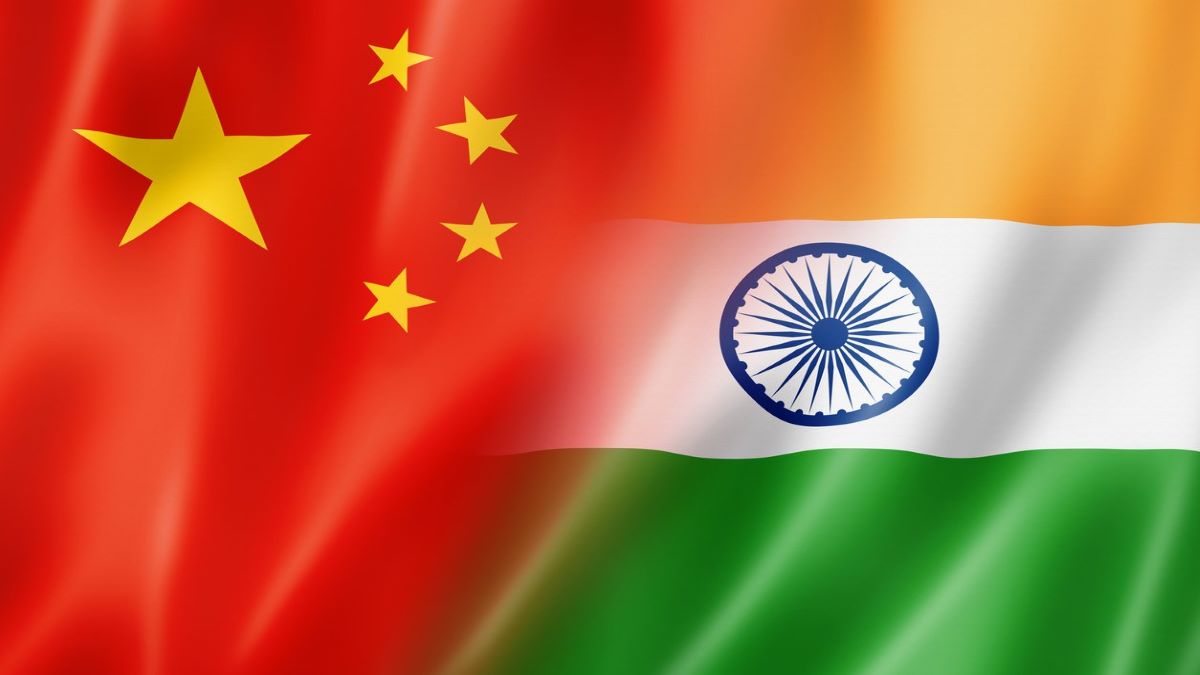 The GDP growth rate of India overtook the GDP growth rate of China in 2015. This has fuelled many newspaper articles in India stating that India is also on the path to replicating the Chinese growth story. However, the truth seems far from it. Despite the Indian media’s frantic efforts to put India and China in the same league by using statistics that are misleading to compare the two economies, India is still a long way behind China. True, that India has made rapid strides on the path to becoming an economic powerhouse. However China has been doing so for decades. China’s Economy is Four Times Larger Than India’s EconomyThe GDP of India is close to $1.5 trillion. At the same time, the GDP of China is close $7 trillion. The economy of China is at least 4 times as big as the economy of India. This means that even if China grows at the rate of a meager 1.5% and India grows at a rate of 7%, the Chinese economy would have added the same amount in output as the Indian economy would have!Comparing the GDP growth rates of India and China is therefore a pointless exercise. China’s growth rate has been consistently higher than India’s growth rate over the past three decades or so. India has barely overtaken the Chinese growth rate for a couple of quarters. Only if India can continue to beat the Chinese growth rate by a huge margin for the next two to three decades, does India stand a chance of overtaking the Chinese economy.Inflation in India is 6 times higher than it is in ChinaIndia’s GDP growth has been accompanies by runaway inflation in the country. Growth rate accompanied by inflation cannot last for a long period of time. Instead, such growth rate is indicative of the short term impetus that has been given to the economy by the monetary policy.On the other hand, China’s inflation has been relatively stable at a negligible 0.8% for many years. This has been accomplished despite the fact that China has been recording fiscal surplus for the past many years and ideally should be reeling with inflation. To the contrary, China has established sovereign wealth funds, which invest the additional cash in foreign assets keeping the inflation rate low.Given the fact that Indian economy is severely marred by inflation, it seems unlikely that they will be able to compete against China in the long run. China’s Manufacturing Productivity is 1.6 times than that of IndiaChina produces a lot more than India does. It also does so remarkably more efficiently. Given the better quality infrastructure and better production techniques at China’s disposal, it is not astounding that the average Chinese worker produces 1.6 times more output than that of the average Indian worker. This means that the productivity of China as a nation is 60% higher.The Indian manufacturing sector has multiple problems. These problems include erratic electricity supply, slow and expensive transport systems as well as lack of skills that increase manufacturing productivity.Given that a large portion of these problems are structural in nature, it seems unlikely that India will be able to overcome them in the near future.WorkforceThe Indian economy on the other hand, has a clear strategic advantage when the workforce is considered. The Indian education system was created by the British. As such, Indian workforce is global in nature. They can speak fluent English which gives them an edge over Chinese nationals who face language barriers. Also, the Indian workforce does high end jobs for the information technology industry and BPO industry as compared to the Chinese workforce which works menial jobs on the factory shop floor. Given that the future of the world lies in high skilled knowledge jobs, the Indian workforce may soon rise in prominence while the Chinese workforce may soon become redundant.One Child PolicyAlso, China faces what many economists call a demographic time bomb. For the past couple of decades, China has followed the one child policy to control population. However, now China faces a situation wherein there are more people out of the workforce than in it. On an average, every Chinese worker is expected to pay for the costs of at least two Chinese retirees.India, on the other hand, is facing a demographic dividend. It has a huge, extremely skilled workforce. Hence, if the government is able to provide jobs to these workers, the Indian economy is expected to grow by leaps and bounds. Given the fact that there will be a lot more people in the workforce than out of it, India is poised to become an economic superpower.EntrepreneurshipChina is still more or less a communist country. This means that all the enterprises there are run by the state. State run enterprises are usually not efficient and definitely not innovative. On the other hand, the Indian industry is based on innovative enterprises. Given the competitive nature of the world economy, the Indian industry stands a better chance at success in the future. This can already be seen as capital intensive Chinese industries such as coal and cement are going bankrupt whereas knowledge intensive industries such as information technology are thriving!The China India comparison is therefore absurd at the moment. China is a full-fledged superpower that has begun to show signs of decline whereas India has just started rising. The path is long and uncertain and only time will answer certain questions!


 International Journal of Research (IJR)