Bad Affect Of Cartoon Shows On Children

Watching cartoons has its own fun and benefits, but when this cartoon which entices children becomes an addiction, the matter is different. Do you know how cartoons affect children? Read to know more. Cartoons are becoming an essential part of the daily life of today’s children.
Numerous studies have shown that the habit of watching cartoons has a very bad effect on the imaginary power of children. They move away from the real world and real life.
It is better to sit on the couch and watch cartoons than to go out and play, which may be of some benefit. Here we will discuss how cartoons impact children.
Most cartoons do not use proper words. Because of this your child also follows them. Instead of talking, he prefers to sound like his favorite cartoon. Cartoons thus affect children.
The constant light coming from the computer or tab is not good for your child’s eyes. Spending too much time in front of these screens can affect your child’s vision.
They spend more time indoors due to the cartoon canache. They never understand the excitement of playing outside. Playing outside gives them an opportunity to understand nature and by this they remain active and energetic. Cartoons also affect children in this way.
A major reason for isolation and apathy among children is their excessive time spent in front of cartoons. They do not know the things happening around them. It also affects their social behavior.
Children who are used to watching cartoons eat only in front of the screen. This is also a major reason why children feel wrong and unhealthy habits of eating. The eating habits that children develop in childhood affect them throughout their ages.
Cartoon habit affects the social life of children. They do not like to play with children of their age and due to this they get separated from social life. When they get a chance to get mixed up with the society in the future, they get in trouble.
Children are more modern than their parents! We also once liked Tom Jerry, but our children are crazy about cartoons and video games that are based on violence. This is a serious impact of cartoons on children.

All the cartoon shows are coming on TV, children watch them keenly. Children are very happy to see Doraemon’s Gazettes, Ninja hammer feats, Perman’s slaves. Many children get entangled in this web of cartoons in such a way that they sit in front of the TV for hours and forget to eat and drink during this time. Some children eat only on condition of watching cartoons.
Overall, the cartoon show has become an important part of children’s lives, but the parents have to consider what the children are seeing in the name of the cartoon, what is affecting their soft brain.
Cartoon shows create such a world of imagination that children start seeing themselves as a character in it and then their gestures, actions become like that character. Parents understand that the child is being entertained, but they are unaware of how deeply this entertainment (?) Is happening on the child’s mind

SIP

An SIP or a Systematic Investment Plan allows an investor to invest a fixed amount regularly in a mutual fund scheme, typically an equity mutual fund scheme.

Why should you SIP?
One, it imparts financial discipline to your life. Two, it helps you to invest regularly without wrestling with market mood, index level, etc. For example, if you are supposed to put a fixed amount every month in a mutual fund scheme, you need to find time to do it. When you have the time, you might be worried about market conditions and think of postponing your investments. Or you might be thinking of investing more if the mood is optimistic. SIP puts an end to all these predicaments. The money is automatically invested regularly in a scheme without any effort on your part.You can start investing in a mutual fund scheme via SIP with a minimum of Rs 500.

Though the most popular SIP is investing a fixed amount every month, investors can customise the way they put money via SIPs. Many fund houses allow investors to invest monthly, bi-monthly and fortnightly, according to their convenience.

Apart from this, Step-up SIPs allow investors to increase the SIP amount periodically. ‘Alert SIP’ is another form of the regular systematic investment plan which sends an alert to the investor to buy more when the markets are down.

In case of the ‘perpetual SIPs,’ investors don’t have to choose the end date of the SIP. Once the goal is met, the investors can stop the SIP by sending a written communication to the fund house.

The Firefly Festival

The Firefly festival is one of the lesser known festivals in Tokyo, Japan. This festival takes place every year for a time period of 10 days and is celebrated in the summer season.

The festival is divided into two parts. First is the narrow lane of a Market that leads to main stage which is a big black tent which is illuminated by hundreds of flying lights. The second is the small garden where the Firefly show takes place. The garden area is turned into alleys which are decorated by yellow lights. Around every corner, a cage full of glowing insects is kept. Other attractions of the festival include stalls with traditional food, flowers and manga. Plants are also displayed and a special type of orchid-sagiso is the main attraction.

The fireflies glow to communicate with each other. The male and female find a partner in the 10 day period and lay eggs for next year.

In good weather conditions, about 30,000 fireflies are seen in the period of 10 days near the Tenryu river.

Effect of pollution

Due to the establishment of silk industry and other industries, the rate of pollution shooted up in the area and the species almost died. However, the local people of the town worked and protected them and now the festival has become a tourist attraction.

Requirements

For the fireflies to grow a snail called ‘ Kawanina’ is required. The baby insects eat the snail and grow while the fireflies spend about 9 months of the cycle growing in fresh water.

The town has created parks for the insects that provide water from river and waterfall. Hence, an oxygen-rich aquatic home is created for their growth and survival.

Lifecycle

Fireflies grow for the whole year and fly for only 10 days. In these 10 days they find a partner for mating and laying eggs. They leave behind the next generation before they die.

The festival is held at the night time as the insects can be seen glowing

Event cancelled

Due to Covid-19 lockdown, this event is cancelled this year and people will have to wait for next year for this event. However, the insects can be seen blinking on and off in the night sky and the atmosphere is serene.

Understatement of Art

Starting off from atom to antimatter , regardless of imperfections everything is art. The condensed situation of why art is slipping into the underrated part of senses of world. Art which stands as the pursuit of captivating yet aesthetically drawn aspect is fading away from the good deeds and the slow disappearance of Art is creating a whole pangs of melancholy in the hearts of artists who live for art. No lack of erudition , no scornful subjects yet Art is being frittering away.

ARTIST WAS AN AMATEUR – Perceptions of an artist isn’t about earning big bucks and float in filthy and tremendous finances. Artists portrays the best out of every serene and a mournful state of scenic routes. Artist was once an amateur turned to the beautiful sight of the world addressing him as the most supreme title “ARTIST”. Artist waits for the right frame of mind to put things out to the world in a charming manner. People don’t just say “Romanticism handles with discipline” , not without any piece of art that appealed them to take art as more than just an obligation. Human is art , Art runs through a cycle not stoppage and there is no room for vandelism in the state of art.

Indian Defence Sector: – A bid to gain independence

India is a vast nation, both in terms of landmass and population with enormous conflicts with two of its nuclear-powered neighbours Pakistan and China. India is a peace-loving nation but its working can be understood by famous Latin saying “Si vis Pacem, Para Bellum” which loosely translates to “If you want PEACE, prepare for WAR”. To protect its sovereignty, integrity and National interests, and to feed its 1.44 million warriors a huge lot of advanced weaponry is required. To meet this demand India looked west, big arms exporters exploited this vulnerability of our nation and gained major checks. India due to lack of its indigenous weapon industry’s lack of sufficiency was forced to accept imports as a norm to meet obligations.

India is the world’s second-largest arms importer from 2014-18, giving up the long-held tag as the largest importer to Saudi Arabia. It accounted for 12% of the total imports during that period.

Indian imports decreased by about 24% during 2009-2018, citing delays in deliveries of weapons produced by international suppliers, such as Fighter aircraft ordered from Russia in 2001 and submarines from France in 2008.

Russia accounts for 58% of Indian arms imports, compared to76% in 2009-13. Israel, the United States and France all have increased their arms exports to India. The Russian share in Indian imports is likely to go up sharply during as India signed several big-ticket deals recently, and more are in talks. These deals include S-400 air defence systems, stealth frigates, AK-203 assault rifles, and deals for Kamov-226 helicopters, Mi-17 combat helicopters and short-range air defence systems.

As India reduced imports, Russian exports of arms were dented, decreasing by 17% between 2009 and 2018.

  • Now a major question formulates. What is the reason behind this insufficiency of Indian Arms Industry?
  • European nations were under total crisis during the world war, they were in pressure to supply their soldiers with weapons to fight, this high demand of weapons caused industrialists to invest on production and hence established big arms Industries. After settling from war and its aftermaths, these nations started exporting theirs produces to neutral grounds. Many tactics were employed to keep this demand stable, new rebellious groups were funded, terrorists were raised, governments were unstabilised, nations were threatened, and proxy wars were waged all over. The timing of Independence of India and conflicts with neighbours created a big potential market in India and continuous wars over that time kept the demand thrive.
  • No country is always at war, and the arms industry is one such industry that wants regular and stable consumers. European Nations along with the United States have lenient policies for possession of arms, but India has a strict policy because of high risks of misuse, due to this regional Arms Industry has never been able to hold ground in India.

In the tenure of Modi Government, policies have been modified to reduce the dependency of India on imports by increasing domestic production. There have been observed conclusive increase in Indian Defence exports.


Make in India

The Narendra Modi government cleared 39 procurement proposals worth 889 billion (96% of the value of total proposals) were categorized as Buy Indian and Buy and Make Indian

The government’s policies encouraged domestic production and export of defence equipment under Narendra Modi’s flagship scheme Make in India in Defence. It has resulted in conclusive growth of defence export from the country as it jumped by 7 times in just two years, from $213 million in FY 2016–17 to $1.5 billion in FY 2018–19.

In July 2015, the MoD eased policies of export regulations and terminated asking multiple assurances on end-use from foreign governments.

FDI in Defence

Even though Narendra Modi government has been toiling hard to get FDI in the defence sector, firstly by raising the cap from 26% to 49% through Direct route and 100% through Ministry of Defence’s approval, whereby the investing foreign entity can have ownership up to 100% in the defence manufacturing.

India is dependent on imports especially on western nations, but humungous steps have been taken to reduce this dependency and these steps are now producing evident results. All that is required to be done now is keep the momentum going and gain independence in this sector as this will be a booster towards gaining Super Power Status

INDIA’S MASSIVE TRADE DEFICIT WITH CHINA; LOWEST IN FIVE YEARS

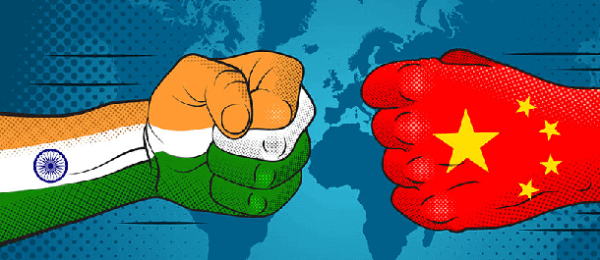
India’s trade deficit with China sinks to $48.66 billion in 2019-2020 which is lowest in five years. Now what is the trade deficit? Trade deficit can be defined as an amount of imports of a particular country exceeding the amount of its exports. According to the data, exports to China in the last financial year stood at $16.6 billion, while imports accumulated at $65.26 billion. India and China are two very well-known countries with ancientCivilizations, their partnership in every major field like trades has made an ideal example since over 2000 years. But from the last few weeks the India- China relation has deteriorated. The main cause of the clash was a dispute over the sovereignty of the widely separated Aksai Chin and Arunachal Pradesh border regions. So, it can be assumed that this clash played a vital role along with lower imports and higher exports as the major cause of India’s significant reduction of trade deficit.

The major imports from China cover electronic gadgets (clocks, watches, smart phones, calculator, laptop etc.) plastic materials (toys, plastic containers, bottles), sports goods, musical instruments, furniture, chemicals, irons, mineral source, metals and fertilizers.

Foreign Direct Investment (FDI) from China in India fell to $163.78 billion in 2019-2020 from $229 billion in previous monetary, the data said. 14% India’s imports are recorded by China and the major portion comes from critical pharma ingredients and telecom.

 India was able to captivate FDI worth $2.38 billion from 2000 to March 2020 but in April the government has narrowed the standards for FDI coming from the neighboring countries especially which share a land border with India like China.  As per FDI, any company or individual can steep in any field with the government approval.

Top sectors like metallurgical (USD 199.28 million), services (USD 170.18 million), electrical equipment (USD 185.33 million) which showed maximum FDI from China in the period of April 2000- March 2020.

Around 371 products have been identified for technical regulations. Out of 371, technical regulations have been assigned for 150 products worth $47 billion of imports.

The reduced imports from China also helped the U.S. extend its lead as India’s largest training partner against trade off $88.8 billion with US India straight with China was just $82 billion. 2019-2020 year’s trade deficit of India is almost similar to 2014-15, when the Narendra Modi took first post, but it was 34% higher than 2013-14, stimulating the government to suggest that the further steps taken in recent months have yielded results.

In that definite time when entire world has been put off financially due Corona virus pandemic accompaniedby India-China war; in the standing of that point taking such steps like restricting the imports from China would be a great decision for India.

The Country and countrymen both are hopeful, at the same, of time what lies ahead in future.

“A large chunk of these originate from China. We will pursue import substitution,” a senior official said.

Remdesivir

The drug Remdesivir is said to have clear cut potential to treat Covid-19. It improves the speed of recovery of the patients affected by the virus. However, it was seen to be of limited  benifits for patients who required mechanical ventilation.

The drug Remdesivir, is developed by Gilead which is a US company.
It was developed to treat Ebola. It works by attacking the enzymes required by the virus to replicate inside our cells. Hence, for the severe cases it is not so effective as the virus has already replicated to an extent. While in the early stage of Covid-19, the drugs kills the enzymes that help in replication of the virus hence, it is proved to be very effective.

The US has bought up almost the entire global supply of it and stocked it for next 3 months.

Communism and Revolution

“The philosophers have only interpreted the world, in various ways. The point, however, is to change it.”
― Karl Marx, Eleven Theses on Feuerbach

February 1848 saw the publishing of ‘The Communist Manifesto’ that would go on to become one of the major revolutionary writings propounding an ideology available to people in search of liberation. It called for a revolt by the working class against oppressive capitalism. Its maxim being, “Workers of the world, unite!” quickly became a rallying cry.Communism as an ideology has always called for a classless society, where everything is shared equally. A revolutionary German philosopher, Karl Marx, has been claimed to be the father of Communism. Marx proposed a new ideology that promoted a society where everyone would be treated equally. Richard Pipes in his book “Communism: A History” explains that the emergence of Communism can be traced back to Ancient Greece. One of the main criticisms of the ideology has emerged from the prevailing private property ownership, and such criticism can be easily found even during the period of enlightenment. The upheaval during French Revolution pushed Communism into the political sphere. Since then, communism has come to be associated with a revolution of a kind that had the power of overturning the prevalent economic structure that has been promoting inequality amongst men.

Lenin’s October Revolution in 1917, with the establishment of the first communist government, and its further spread to China with Mao Zedong’s rise to power marked the beginning of the political journey of communism. Taking inspiration from the Russian Revolution, the Communist Party of China was formed. The fall of the Berlin Wall and the rise of ‘free market’ capitalism backed this ideology to a corner and it saw a gradual decline all over the world.The following years see the collapse of communist regimes around the globe, for instance, Czechoslovakia, Hungary, Bulgaria, Poland, Romania, Benin, Mozambique, Nicaragua and Yemen.In 1991, the Soviet Union is dissolved with the rise of a new Russian President Boris Yeltsinwho banned the Communist Party. Communism soon ended in countries like Afghanistan, Albania, Angola, Congo, Kenya, and other nations. North Korea remained nominally communist, although the North Korean government identified its ideology as ‘Juche’ (self-reliant).

The ”great experiment” had failed miserably. The Communist Parties that retained power after the war did not now constitute a threat to the ”hegemony of the global capitalist system”. Moreover, the majority of the nations decided to organize their economy in the lines of capitalism, thereby suggesting that the economic order of the world was majorly capitalistic. The Communist parties that maintained their authority were, however, compelled to cave into the establishment of the ‘the market’ by imitating various features of contemporary capitalist societies. Other than this, the sphere of International Relations is also portrayed in a very skewed and unfamiliar manner in the initial writings of communism. When compared to realism and liberalism, the latter put forward a world political scenario that resonates with those presented in the newspapers and magazines, thereby making it easier to comprehend, but communist thoughts aim at something “deeper, underlying-indeed hidden-truth”. It explains that world politics is all about wars, treaties, aid operations and all these occur within the global capitalist structure. Moreover, these structures have an enormous influence over such events and hence, while studying the global world structure a broader understanding of capitalism is necessary. Communism also argues that the capitalistic structure ensures that the powerful and the wealthy continue to prosper at the expense of the poor and the powerless.

The inception of communism has been attributed to the writings of Karl Marx who was also the founder of the Communist movement. Marx’s thoughts originated against a backdrop of great industrial change.Moreover, he explained the bourgeoisie (the property-owning class) and the proletariat (the industrial working class) while looking at history as a story that talked about the struggle of the oppressed against the oppressor. It is also imperative to mention that Marx while writing about the class struggle, talked about ‘mode of production’. The mode of production as mentioned is a combination of the ‘productive forces’ along with the ‘relations of production’. According to the philosopher, a new stage emerges when the productive forces and the relations of production are in a direct clash. For instance, we have the emergence of the primitive communism which was not a society that experienced clashes amongst classes as there was none, but the emergence of private property institutions led to its decline. This was followed by the slave society, the feudal society, and ultimately capitalism. Each stage experienced its struggle amongst the owning class and the ones who worked for that class.“The history of all hitherto existing society is the history of class struggles,” Marx famously wrote. The modal quality of these relations in capitalism is in constant confrontation with each other believed Marx and hence, capitalism had in itself the seeds of destruction.  

While putting forward the role of the Bourgeoisie, he explained that they mercilessly exploited the Proletariat. The work of the Proletariat, argued Marx, created great wealth for the capitalist thereby giving impetus to expectation. For instance, a factory worker might be paid $2 by the owner to produce a yard of cloth. After which the owner then sells the cloth for $5. In this way, the owner/capitalist, controlling the process of production, makes a profit for himself. The worker, however, does not benefit in any way from this added value and also, fails to benefit from the fruits of his/her labour. This thought further gave rise to another theory of Marx claiming that ‘Alienation’ was intrinsic to capitalism. This unjust situation had been contented to give rise to feelings of resentment amongst the proletariat which would lead to the ‘overthrow’ of the capitalist system and would eventually lead to a revolution against the Bourgeoisie. Marx wrote that “Modern bourgeois society with its relations of production, of exchange, and of property, a society that has conjured up such gigantic means of production and exchange, is like the sorcerer, who is no longer able to control the powers of the nether world whom he has called up by his spells.”

Karl Marx and his writings have shown the world that they can influence people unlike any other. The thoughts of this philosopher have changed and developed over time. Marx’s idea which maintains that communism would give rise to a classless society has appealed to many as a result. The emancipatory nature of these thoughts has often led people to associate communism with a revolution which would lead to a complete overturn of the prevailing modes of production thereby ushering in a society which would free all men, and not only those owning the modes. Moreover, a vast number of Communist revolutions, most often a proletarian revolution, to free themselves from their oppressors has linked Communism with Revolution. Followers of Marx all over the world believe that the workers need to unite and free themselves from the shackles of the capitalists once and for all. This would be to create a world that would treat everyone equally. Thus, the proletarian revolution needs to happen in nations all over. This thought is reiterated time and again which has led to the usage of communism almost synonymously with revolution. In addition to this, with a vast majority of the world population having to face a certain degree of injustice which can be directly linked to an outcome of capitalism, there has been an inclination towards communism. The communists agree that oppression of the minorities is a problem that this society needs to deal with but they have also brought to light the fact that these things are not a result of the bad morals existing in humans, but are directly connected with the mode of production. —vehemently, in fact—but they do not see people’s bad morals as the origin of this, but rather is due to the mode of production.

Currently, the system that is manipulating the mode of production is capitalism. So, if people can do away with the current economic situation, they will see the emergence of a society that will treat everyone as they deserve to be treated. Also,there has been a gradual emergence of several schools of thoughts claiming a direct inspiration was taken from Marx and developing theories that are in line with the current situation of the world. The commitment to the cause of emancipation that would abolish a society based on injustice drew attention from scholars across the globe, and along with the mass that has begun realizing that they are working tirelessly for capitalism with little to no return. The idea that the social world has to be studied in totality widened the base of Marxism regarding the influence the thought held after the end of the Cold War. A well-known theory in the field of International Relations, the World Systems Theory by Immanuel Wallerstein is believed to have been inspired by the works of another communist, Vladimir Lenin. This theory has played a key role in the climate talks and explained the role of the ‘core’ countries (industrialized) and the ‘semi-periphery’ countries (industrializing), and the ‘periphery’ countries (relatively less industrialized when compared to semi-periphery countries). Communism has always talked about a revolution that would bring down Capitalism. This action would be a conscious revolutionary act by the working class. It has talked about revolutionary socialism that would with time achieve a stateless communist order. Although a change in the perception of people has led to the association of communism with revolution, the writings say enough about the ideology to relate it to revolution and a revolutionary change in the society. With a little reading of communism, it becomes clear as day that what the writings truly talk about is a ‘Proletarian Revolution’. Now, how that is reached may vary, but the various group claiming to be followers of communism have this particular thing in common were they see capitalism as the oppressive system and layout means with the help of which it can be handled. A fundamental change is what binds all these schools together leading the mass or scholars to identify communism with revolution. However, it should be mentioned that Karl Marx saw the capitalist stage as a progressive one and claimed that the development of humankind would be promoted by Capitalism. Nevertheless, as mentioned earlier, Capitalism is a stage that would move into a state of stagnation due to internal conflicts thereby giving rise to favourable conditions for a revolution.

BIGGEST MANUFACTURER OF WORLD: CHINA

Whenever we go to the market and if we observe more than 50% of products have label and tags on which it is written: “MADE IN CHINA”. Due to which many buyer and seller might wonder ‘though china is a communist country’ still it is the world’s biggest manufacturer. Many of the product of china is similar to the US and other countries still most of the people buy Chinese product because of its lower price.

During the time famine which was faced by the Chinese in 1958-1961, they lost their economy and crisis took place at that time but as the time passes they rebuild themselves and today they are Biggest Manufacturer of the world

China is known to be “the world’s factory” because of the following reasons:

  • Low wages

During late 20 century, people were divided into 2 category urban and rural but as time changes they started internal migration many rural people came to the urban city for the work as we all know China is the most populated country in the world that’s why the supply of worker is more for working on low wages then the demand of worker this help china in production of goods as if the wages will be low then price of the product will be low.

Also, they don’t believe in the law of child labour but this law seems to be changing and also they have increased their minimum wages.

According to 2020 report, minimum hours cost in shanghai is 22 Yuan which is $3.16 her and if we consider of the month then it is 2480 Yuan which is around $355 and on the other hand in Shenzhen, the monthly wages is 2200 Yuan which is $315 and hourly it is considered as 20.3 Yuan ($2.91). Since the wages are low therefore the price of product decrease

And if we talk about the western country their main focus is on minimum wage value and child labour. This makes a difference in the price of the same kind of product.

  • LOWER COMPLIANCE

In certain countries mainly western are very strict and concern about their rules and guidelines regarding child labour, minimum wage rates, labour laws etc. but at the same time if we talk about china they don’t have any such strict rule regarding child labour or worker’s laws most of the industries don’t follow any such rules.

Child labour in industries of china has long shifted and also they are not provided with any compensation insurance not only this many companies follow the policy to pay wages once a year to the workers. This is the way to keep the workers form quitting before the year ends.

Nowadays workers are standing for their rights and government are now quite concerned about workers rights however, slowly and gradually these laws are taking place in industries regarding child labour, environmental protection and minimum wages.

  • BUSINESS ENVIRONMENT

China is involved in trading from many years during AD 1371-1433 china exchange goods; culture and religion with other countries like South Asia and the Middle East through the silk route

After that, as time passes on of the most famous person from Ming Dynasty called captain Zheng took 7 trips to establish trading contact with countries like- Africa, India, Arabia and South East Asia through the Sea route. So, it is quite clear from this that China has a large history of trading with other countries and for this, they need network supplier, customer, component manufacturer, distributor, government agencies. This is good for the business and china has all such link which helps them to grow their work worldwide.

  • TAX AND DUTIES

In 1985 china came up the policy to rebate the export tax and also they abolish the system of double tax on export goods which means zero% of VAT (value-added tax) which means they enjoyed the rebate policy and VAT exemption also this help to lower down the price of their goods this policy also attract the investor and companies produce low-cost goods.

  • CURRENCY

Most of the time China is a summons for artificially depreciating the value of Yuan which provide them to export similar kinds of goods produced by their competitor country U.S.

China always takes care of rising in Yuan they buy the dollar and sell Yuan.

In late 2005 according to one report, the value of Yuan was 30% against the dollar after that in 2017 the value raises to 8% against the dollar

Although in 2018 trend got to change and Yuan got depreciate against Dollar, in the beginning, the US adds the tariffs to china goods but then on 8th August 2019 central bank of china lower the Yuan to 7.0205 per Dollar this allow china to export their good with a lower price of the product but also this results in Trade war between China and US.

  • CONCLUSION

With the help of cheap labour and less compliance and business environment help china to become “largest manufacturer of the world” but also at the same time artificially depreciating the value of Yuan result in a trade war between both US and China because of the lower price we able to see most of the product in the market with the label ‘Made In China.’

FARMER SUICIDES AND PREVENTION.

Way to control suicides.

PATTIKONDA:09/07/2020

As,India is an agrarian economy which is pre dominant sector of economy. Nearly 70 percent populatoin still depend on farming.but,farmers commits suicide is a major Drawback for India. The back boners of nation is loss their lives for various reasons.

The Main reasons of suicides are debt,low yielding,stress,Apathy,money lenders pressure,crop failure,family problems and lack of knowledge.

Preventions: one of the most effective and single plan is by active plan of Government in advance of real issues. The Dependency of Agriculture on nature should be reduce. Prevention of crop failure is first aim.

By using proper management of water it can be reduced some extent. Make Institutional finance available to every farmer to save them from money lenders. This helps to avoid major suicides in India.By giving loans and profits ,farmers are not commit suicides.

Farmers are need to advised and Guided on economical methods of cultivation which would save crop loss. The Modern technics and Advanced Agriculture is trained to maintain by small Farmers.

The government could also helps to explose the pooling of lands of small farmers from land lords. It can encouraged to develop to financial and encourage to them. Nearly 6000 farmers commited suicide in 2019-2020.

Not a farmers, They are food givers and Back bone to society and Nation