
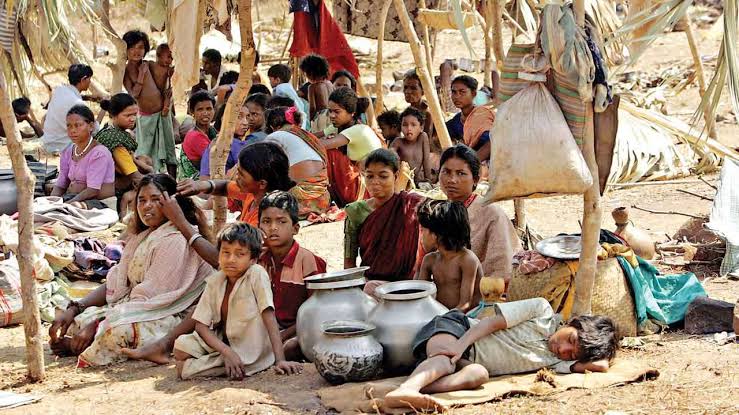
India has already crossed 700,000 marks in positive COVID19 cases. Its spread does not seem to be declining; infections and death toll continue to surge frighteningly instead. The whole world is under home arrest for months to deal with this epidemic. The pandemic-induced lockdown kept a huge part of economy trailing which even though couldn’t demolish the middle or upper class as much as it derailed the lower class off the tracks. Even if ignored, half of India’s population is built with the most ignored class of society. A spot on this population can indeed pull down the economy.
At first, let’s take a look at,
What could be the impact on the economy?
• The rise in unemployment.
• The collapse of small trades like street shops.
• A slump in the tourism industry.
• The decline of the hospitality industry
• Sudden fall down of government resources.
• Rising prices making unaffordable food.
• It makes the situation even worse for poor Countries.
Keeping these points in mind, questions prevail as to the demands and need of the lower class. Most of the points mentioned above hamper this class directly; which is highly dependent on government-provided services and not on private sectors.
Labours who migrate elsewhere in the hope of better living are returning empty-handed, which on the surface has both dark and fair sides which are up to debate. However, a potential fact is always lost which takes concern upon the lives of these workers.
“16 migrant workers were crushed to death by the wheels of the train in Aurangabad station while they were resting.”
Street vendors are counting days in the hope that all will be sorted someday. Jobs like these which pay itself just to have square a meal each day with altogether zero savings whatsoever is clearly under attack.
Basic multipurpose factories and industries had to pull their shutters down under the strict notice of lockdown.
All these factors, considered, is leaving the middle and lower class with lower and lowest money in hand respectively. The direct conflict rises when the lower financial flow in the houses is stretching market flow into narrow wires, which only the upper-middle and upper class are keeping existent.
The Indian economy has fallen drastically. The poor people; though they are an integral part of our economy are going through an extremely pathetic condition.
WHO (World Health Organization) already announced that living with COVID19 is a new normal now.
Though the Government came forward to help the miserable people with some grants it cannot run indefinitely. The pandemic is temporary. This disruptive condition will be resolved one day. So, it is needless to say that our economy will recover quickly and hopefully the government will handle the disaster with proper efficiency. All states should make a head start to fight against the epidemic. The government might get the second wind which will save the country from the disaster.
Category: Education

COVID-19: Impact on Employment

This is imperative to that so far there had been no official estimate of loss brought about by lockdown implemented over the months due to coronavirus pandemic. A mutilate effect on an economy as large as India’s caused due a complete lockdown was impended. Unemployment across the country has ascended due to the coronavirus pandemic with sector making probably the greatest employment cuts.
The unemployment rate in the respective months of lockdown
A lockdown to restriction the spread of corona virus has seen 122 million Indians lose their positions in April alone, new information from a private examination office has appeared. Around 75% of them were little brokers and pay workers. Tamil Nadu was among the most exceedingly hit States. Its assessed unemployment rate in April was the most elevated among States and its work cooperation rate among the least. Kerala had the most reduced labour investment rate in April.
Glimpses of hopeless labourers, especially daily-wage workers, escaping urban areas filled TV screens and papers for the greater part of April. Their casual occupations, which utilize 90% of the populace, were the first to be hit as development halted, and cities suspended public vehicles.
Yet, extended curfews and the continued with the closure of organizations – and the unsure of when the lockdown will end – haven’t saved formal, secured occupations either.
Huge organizations across different divisions – media, aeronautics, retail, cordiality, autos – have reported enormous cutbacks as of late. What’s more, specialists anticipate that numerous small and medium organizations are probably going to close shop completely more critical glance at CMIE’s information shows the overwhelming impact the lockdown has had on India’s composed economy. Of the 122 million who have lost their positions, 91.3 million were little merchants and workers. In any case, a genuinely huge number of salaried specialists – 17.8 million – and independently employed individuals – 18.2 million – have likewise lost work.
India’s unemployment rate increased to 26.2 per cent in the third week stretch of April amid coronavirus lockdown, a report said. The all-inclusive lockdown is just expected to additionally hit the work economic situations, Mahesh Vyas, Managing Director and CEO, Center for Monitoring Indian Economy (CMIE), said. “The work rate has tumbled from 40 per cent in February to 26 per cent now. This is a steep fall of 14 rate focuses. This infers 14 per cent of the working-age populace has lost their jobs. The working-age populace is of the request for a billion,” Mahesh Vyas likewise said in an article on the CMIE site. Fourteen crore individuals are relied upon to have lost work in the lockdown time frame, he said. Thus, the pace of work support has plunged to 35.4 per cent from 35.5 per cent. The work rate has now plunged to 26.1 per cent as against 27 per cent in the previous week, it included.
The worker markets are under equivalent pressure both in provincial and urban territories, he included. The pace of unemployment in provincial India stands higher at 26.7 per cent as against urban 25.1 per cent. “During the most recent seven day stretch of March and in the initial fourteen days of April, the unemployment rate drifted around 23-24 per cent. In the 1st week, it was 23.8 per cent; in the second week it dropped a piece to 23.4 per cent yet in the third week it bobbed back to 24 per cent. The differences were minor and all in all, they affirmed that the unemployment rate had for sure increased to around 24 per cent following the lockdown,” Mahesh Vyas further mentioned. The instability of the unemployment rate in urban India is additionally astounding, he said. The unemployment rate in urban India flooded to 30 and 31 per cent, individually in the first and second weeks of the lockdown. “At that point, in the accompanying fourteen days, it fell rather strongly to 23 and 25 per cent. This is a fairly sharp fall in the joblessness rate in urban India in spite of the fact that it remains very raised,” the report said.
In the meantime, the joblessness rate remained at 8.74 per cent in March, most noteworthy since August 2016 when demonetization occurred, an ongoing report by CMIE said. In August 2016, the unemployment rate was 9.59 per cent. While the joblessness rate was recorded at 9.35 per cent in urban zones, it remained at 8.45 per cent in provincial pieces of the nation, the information likewise appeared. In February, it was recorded at 7.78 per cent.
Unemployment rose to 24 per cent on May 17, 2020. This was perhaps an aftereffect of a diminishing sought after just as the disturbance of the workforce looked up by organizations. Moreover, this caused a GVA loss of nine per cent for the Indian economy that month.
Who suffered the most?
The direst outcome is for workers who don’t have a secure job. In the travel industry, for example, this class incorporates individuals who either work in temporary transient agreements or even without them. This incorporates guides, workers, cleaners working in shops, servers in cafés, vegetable sellers, meat, and flower vendors.
For these labourers, the infection flare-up has implied lost vocation. Industry body CII said that the greater part of the travel industry and accommodation industry can go wiped out with a potential loss of more than 20 million occupations if recuperation in the business extends past October 2020.
The content is comparative in numerous different administrations enterprises, in assembling and non-fabricating areas, for example, development. Lower development on account of falling interest and flexibly imperatives would make new occupation creation harder, yet besides, hurt the individuals who are now hired. Generally, around 136 million non-agrarian employments are at impending danger, gauges dependent on National Sample Survey (NSS) and Periodic Labor Force Surveys (PLFS) information proposed. These are individuals who don’t have a composed agreement and incorporate casual workers, the individuals who work in the non-enrolled small-scale industry, enlisted small organizations, and even the self-employed.
While the daily paid workers are enduring the worst part in the primary period of the pandemic, organizations across businesses could give termination notice on momentary agreements next. More than 5,000,000 Indians have work contracts not exactly a year in incumbency.
Demographic disaster
The COVID-19 pandemic comes at a troublesome segment time for India and would just aggravate an approaching employment emergency. India needs to make almost 10 million vacancies consistently to ingest individuals moving into the working-age populace, other than those that are as of now jobless.
The Adecco Group India, a staffing organization, has planned the effect of COVID-19 spread across work in some Indian companies. It said around 9,000,000 occupations can be decreased over the assembling groups of materials, capital merchandise, textiles, food items, metals, plastics, elastic, and gadgets. Manpower cuts in the automobiles began last quarter due to falling deals.
The coronavirus circumstance will just intensify joblessness. Adecco assessed that the vehicle business can lose up to a million occupations in the vendor biological system, forefront jobs, and the semi-talented. Around 600,000 ground and bolster jobs on contract in the avionics business are in danger.
Unmistakably, a work advertises crunch right currently can without much of a stretch transform into a bad dream. Other than the chance of social agitation, expect more requests for additional reservations in government occupations.
“The ramifications of this emergency will be critical. We will have less financial space to make truly necessary interests in, for instance, instruction, aptitudes, safeguard social insurance, and foundation. This won’t simply keep us from pushing ahead however will slow down us. Our enormous and developing youth populace will be additionally disappointed, conceivably prodding social conflict, wrongdoing, and flimsiness,” she included.136 million at risk
Santosh Mehrotra, a human development economist, and professor at the Centre for Informal Sector and Labour Studies at Jawaharlal Nehru University pegs India’s labour force at 495 million. In 2017-18, about 30 million were unemployed, which implies that 465 million are currently employed.
Who among the already hired are the most helpless ones? The simple answer is those that don’t have the security for their job; those with no social assurance. They are graded as “impermanent” labourers.
The portion of the formal segment was fixed at 90.7% generally and 83.5% in the non-agriculture areas. Most gauges in the paper depend on NSS and PLFS information. Since there are 260 million individuals hired in India’s non-farm unit (agribusiness utilizes another 205 million), the number of casual specialists aggregates around 217 million across administrations, producing, and non-production zone.
One shade of insecure work among the casual groups is those that have no composed employments contract. Numbers sorted out from the Mehrotra paper proposes that around 28 million have no composed activity contracts in assembling; 49 million in non-producing; and 59 million in administrations in 2017-18. In general, around 136 million labourers in India, or over a large portion of the absolute employee hired in non-agriculture parts, have no agreements and remain at risk in the repercussion of the corona pandemic.
They can be terminated without notice or severance. Most daily wage workers or informal workers fall in this section. Their torment is found in Twitter and TV channels—recordings of several vagrant labourers strolling back to their towns. A lot of them work in buildings. Work in land development, for instance, is affected because real estate dispatches and deals are travelled south given that lower economic development is presently a conviction.
In the United States workforce, 44% of individuals are engaged in low-salary, temporary employment—the fragment of the working populace that is turning into the first to lose their positions because of the pandemic. Left to confront expanded monetary load, they are getting scared of the fact that where and when their next pay will originate from. They are even very nearly thinking if their families will have the option to endure this epic emergency.
With the loss of their occupations, they can’t pay for necessities including rent, utilities, and food. Additionally, schools were providing meals for youngsters, presently leaving these kids in danger of confronting hunger with schools being shut. With fears of appetite, vagrancy, and certain misery on the ascent for this effectively defenceless populace.
Because of this desperate circumstance, embrace relief is propelling a battle with your assistance to give the same number of individuals in the U.S. with money related help for lease, food, and utilities during the Coronavirus pandemic. one just can’t leave this defenceless populace to confront this difficulty all alone and realize that particularly amid aggregate concern.
The trickle-down effect
Between February and April 2020, the share of households that experienced a fall in income shot up to nearly 46 per cent. Inflation rates on goods and services including food products and fuel were expected to rise later this year. Social distancing resulted in job losses, specifically those Indian society’s lower economic strata. Several households terminated domestic help services – essentially an unorganized monthly-paying job. Most Indians spent a large amount of time engaging in household chores themselves, making it the most widely practised lockdown activity.
Public

Indian pharma well placed to develop.
Even before the break of Covid-19 outbreak,India was the largest producer of vaccines in the World.”Pharma vision 2020 ” took speed after the acceptance of Covid-19 by India.The goal is to become a World leader by end to end production of ‘Pharmaceutical’ products.The importance of Indian vaccine is that much that United State requested India to export ‘HydroxyChloroquine’ which is believed have some success in combatting Covid-19.This has shown the World that India has power and relevance in producing best medicines.Science ministry gave a statement that by August 15 would be releasing a novel corona virus vaccine.Six Indian companies are working day and night on Vividh -19 vaccine.Along with two Indian vaccines, Covaxin and ZyCov-D, world over 11 out of 140 vaccines candidates are in human trial said,the ministry.India a leading manufacturer of vaccines and generic medicines, is expected to play a key role in this race.Dozen of vaccines around the corner of the World are being in progress.
Public

THE PATRIOT AND OLD STORY
The Patriot-And Old Story
About the poet-
Born on 7th May 1812, Robert Browning was an English writer and dramatist whose authority of dramatic verse, and specifically the dramatic monologue, made him one of the first Victorian writers. The Patriot-An Old story is an example of his works containing dramatic monologue. His sonnets are known for their incongruity, portrayal, dark humor, social editorial, authentic settings, and challenging vocabulary and language structure. At the point when Browning passed away in 1889, he was viewed as a sage and scholar artist who through his verse had made commitments to Victorian social and political talk – as in the sonnet Caliban upon Setebos, which a few commentators have seen as a remark on the late hypothesis of development. Strangely for a writer, social orders for the investigation of his work were established while he was still alive. Such Browning Societies stayed basic in Britain and the United States until the mid 20th century.
About the poem-
The Patriot – An Old Story is a poem written in Browning’s typical manner as it mirrors his murkiness, profound religiosity, and powerful confidence. This poetry is about a man who was once perceived as their legend and was valued and could fulfill anything that he favored in whichever way, but is later misjudged and is dismissed by the general population and is sentenced to death. He admits that he is sentenced to death for the wrong reasons and has faith and trust in God that he will be spared from general society’s misconstrued perspectives. He says that he is safe in paradise, and therefore this demonstrates that he inherently believes that he is correct, regardless of the public opinion. The theme of the poem is universally applicable as it touches upon the subject of the downfall of great men. Power and glory are impermanent and never last forever.
Mood, Setting of the poem:
“It was roses, roses, all the way” is indicative of a retrospective mood of the poet. The use of past tense in the beginning and then changing on to present tense is evidence of this.
The first two stanzas elaborate upon the grand welcome given to the poet. The mood focuses on the townspeople people, who are jubilant, happy, celebrating, and flaring fiery flags. Third stanza onwards, the mood is infected with tension and the patriot’s feeling of betrayal and anguish. He is feeling helpless and morose all his good deeds have been dismissed, and the people who once celebrated him are now executing him.
Hope and optimism can be seen in the last stanza where the patriot believes that after death, he will get true justice in God’s safe haven.
Stanza wise Explanation:
It was roses, roses, all the way,
With myrtle mixed in my path like mad:
The house-roofs seemed to heave and sway,
The church-spires flamed, such flags they had,
A year ago on this very day.
the patriot by Robert browning is a poem about a man who has done something great for his country and countrymen, most probably a war hero, who is returning to his town. The first stanza is an elaborate description of how the poet is welcomed back with pomp and ceremony by all the townspeople. His path is laden with roses and myrtle, which signify love, respect, and honor being showered on the patriot by the people. The residents of the town have clambered onto their roofs to get a glimpse of the patriot and welcome him home and showcase their gratuity. This creates an imagery of the house itself moving and swaying with the weight and number of people. Even the church spires were decorated with fiery colored flags. This gives the reader an idea of the enormity of the celebrations. The bright color of the flags made the church spires look like they were on fire and flames were engulfing them. In the last line, the poet discloses to the reader that these events occurred on this date, exactly a year ago.
The air broke into a mist with bells,
The old walls rocked with the crowd and cries.
Had I said, Good folk, mere noise repels---And afterward, what else?”
But give me your sun from yonder skies!''
They had answered,
The ringing of the church bells infected the air and it seemed to be echoing the celebratory noise. The walls of the city, which were already on the verge of erosion, due to time, reflected the impact of the din created by the crowd. It seemed to conduct the tremors and move. The patriot here is telling the people how he doesn’t want all the cheers and applause but wants the people to fetch the sun from the skies for him. He wants the power, glory, admiration, and honor. He wants to live in their memories as an immortal hero. The crowd replies to his request with a query as to after this, what else does he require. Here a side of the patriot is shown that searches, not for momentary praise, but for everlasting recognition and glory. He doesn’t want extravagant celebrations that can die down with time. He is looking for something more permanent. The sun is a symbol of immortality, power, honor, and glory. Hence, the patriot asks the people to fetch him their sun from the skies. The answer to the crowd is reflective of their frivolous nature. They immediately ask the patriot what else would he require, other than the sun. This indicates that though the crowd was eager, they weren’t sensible. As the sun is the ultimate power, and one wouldn’t require anything after conquering it.
Alack, it was I who leaped at the sun
To give it my loving friends to keep!
The naught man could do, have I left undone:
And you see my harvest, what I reap
This very day, now a year is run.
The third stanza acts as a conjunction for the transition from the past to the present. The patriot says that despite him asking the townspeople to get him the sun, in the end, it was he who leaped for it and got it for the people, who he refers to as his beloved friends. This act that he does is such in nature that had he left it undone, no other man could have accomplished it. This stanza has a tone of regret. This can be deciphered by the use of “Alack!” or Alas. Also, the last two lines indicate this as the patriot mourns about how his deed has been repaid by the people. His “harvest” is what he has reaped, whereas what he had sown was bringing glory, power, and honor to the people. The first two stanzas narrate the incidents of a year back when the patriot was given celebrity status. This stanza acts as synopsis to the current events.
There’s nobody on the house-tops now—
Just a palsied few at the windows set;
For the best of the sight is, all allow,
At the Shambles’ Gate—or, better yet,
By the very scaffold’s foot, I trow.
There are no more people on the rooftops, trying to catch a glimpse of the patriot. Only a few cripples can be seen at the windows. The patriot takes up a sarcastic tone at this point and says that this is because the best sight is at the gate of the gallows. In this stanza, a contrast is drawn between the time when the rooftops were heaving with people, celebrating the patriot’s deeds, and the current scenario where the people are assembled, but near the gallows. Only the ones who cannot travel to the spot of execution, the ones who are crippled, are staring outside their windows to get a look at the patriot. The patriot’s anguish is seen when he taunts about the townspeople, saying they will be found, not on the roofs, but on the site of the execution, or better still, at the foot of the gallows. This stanza is suggestive of the patriot’s fate that he is being taken to be executed.
I go in the rain, and, more than needs,
A rope cuts both my wrists behind;
And I think, by the feel, my forehead bleeds,
For they fling, whoever has a mind,
Stones at me for my year’s misdeeds.
The imagery here is that of the patriot walking in the rain, heading towards the gallows. His wrists are tied tightly behind his back with a rope that cuts through his
skin. He can feel blood trickling down his forehead, but he cannot know for sure as his hands are bound, so he can’t touch and feel. His cuts are because of the stones being flung at him by anybody and everybody. The picture being projected in this stanza is a very pitiable one as it is in direct contrast with the imagery of the first and the second stanza. The patriot provides an ambiguous explanation for this transition, saying he is being punished for the misdeeds that he has committed within this one year. Despite the fact that no rigid and stable details have been given of the patriot’s act, it can be inferred that most probably he has indulged in acts of treachery, betrayal, or any such unpatriotic act. This conclusion can be reached keeping the title of the poem in mind. The main gist of this stanza is the description of the poet’s walk of shame.
Thus I entered, and thus I go!
In triumphs, people have dropped down dead.
Paid by the world, what dost thou oweMe?”—God might question; now instead,
‘Tis God shall repay: I am safer so.
The concluding stanza of the poem begins with the patriot declaring how he is leaving, the same way that he entered. He is walking towards his death through the same streets on which he had entered the town and was welcomed as a celebrity, a hero. Even the most important, most loved people have lost their glamour and glory. The most triumphant have also fallen. The patriot’s religious beliefs have been reflected and his belief in an afterlife has been showcased when he mentions how he will be received by god. If God might ask him, now that he has been paid for his deeds by the world, what more does he owe to god? The patriot’s reply to this has shades of faith and optimism. He replies saying that his real repayment will be done by god. He is placing his trust in God as he knows that he has committed no moral wrongs and the almighty is always just and fair. Hence, he is safe with god as he won’t have to face any more undeserving punishments and will be truly and justly rewarded for his acts or deeds.
Critical Analysis:
Written in the form of a dramatic monologue, The patriot- An old story by Robert browning is an account of a man’s fall from power to disgrace. From the title of the poet, The patriot, one gathers that the poem is about an individual. On the other hand, the subtitle, “an old story” can be deciphered as it is a universal story that can be applicable to anybody. This is in line with the contrast that is projected in the poem.
The first stanza begins with the description of the patriot’s arrival into the town and the magnificent welcome given to him by the townspeople. His path has been laden with roses and fragrant myrtles and people are clambered on their rooftops to catch a glimpse of and congratulate the patriot. The past tense used in the first stanza creates a retrospective narrative. It has been implied that the town is a very cluttered and old one. “Old walls rocked” in the second stanza is evidence of this. The poet has religious beliefs and this can be seen in the first and second stanza where he mentions churches and bells, also the last stanza has him reaching out to God’s safe haven for justice. But, the patriot is shown as a man who values permanence more than temporary glory. This is reflected in his asking the townspeople to fetch him the sun, as it is the ultimate symbol of power, glory, and immortality. True to the title of the poem, the patriot himself fetches the sun for his beloved friends, but it is then that regret enters his tone. His feeling of betrayal is quite clear when he mentions about despite his good deeds what he is reaping. “A year has run” signifies that something eventful has taken place through that one year which has had some adverse effects. This is when he starts narrating the current scenario. The mood of the poet changes to sarcastic and ironic as he draws a contrast by juxtaposing the full roofs in the past with the present empty ones. The fickle nature of the townspeople can also seem like the same people who were celebrating the patriot, are now gathered near the gallows to cheer his execution. To emphasize on the patriot’s emotions, his walk of shame is described where the patriot comments on the transitory nature of man, who might love today and hate tomorrow. Despite this sorrowful tone of the poem, one notices that Browning ends a poem on a note of optimism as he hopes that regardless of the misunderstanding and evils contaminating the world, God always does justice and it is in death that the patriot will be granted what he truly deserves and will rest peacefully in God’s safe haven. This is also an example of the faith he places in god and religion.
Theme:
The Patriot is majorly based on the theme of rising and fall of fortune. The narrator, the patriot is welcomed with feverish joy and paths of roses in the first two stanzas by the townspeople. But, by the end of the poem we see that those same people have humiliated and executed him, within a year. This shows that glory and fortune do not last forever. People are fickle-minded and change their opinions without a second thought. Someone who is loved today may easily be hated tomorrow.
The poem has undertones of religiosity. The first stanza itself mentions flags fluttering on the church spires also; the patriot is welcomed with ringing bells. The final stanza has the patriot being optimistic about death as he believes that God does justice to one and all and he will recognize that the patriot has done nothing immoral. This faith in God and the belief that he will be safe in god’s abode shows that a patriot is a religious man. Also, there is a biblical reference when the poet mentions the reaping of the harvest.
Betrayal is also a minor theme in the poem as the poet fetched the sun for the townspeople, and in return, they stamped him as a criminal and executed him. All his good deeds were forgotten and he was brought to a humiliating and painful death.
Public
TO THE CUCKOO
To The Cuckoo
About the poet:
William Wordsworth is well known for establishing a Romantic movement in the English world with the help of the famous poet and philosopher Samuel Taylor Coleridge in the 18th century. The British romantic poet was born on 7th April 1770 in England. His mother died leaving him alone at the age of eight and this experience is seen in his later works. His love for poetry was firmly established after he attended Hawkshead Grammar School. His father too left the world leaving him and his four siblings orphaned. His tour of Europe had a great influence on his poetry and his political sensibilities. He fell in love with a French lady and had a daughter Caroline with her but he couldn’t marry her because of the tensions between England and France at that time.
His notable works include Lyrical Ballads, The prelude, An Evening Walk and Descriptive Sketches, and the love letters of William and Mary Wordsworth.
About the poem:
A quatrain consisting of eight stanzas, To the Cuckoo, is a lyrical pastoral poem with elaborate stanzaic formations. Hence, it can be called an ode to the Cuckoo bird. The poet has directly addressed this poem to the cuckoo and expresses his love, devotion, and yearning to visually glimpse the cuckoo throughout the poem. Here the writer addresses a cuckoo. The poet hears the cuckoo and is in awe and wonder on the off chance that it is something more than a winged animal. His marvel ascends from the memory of his youth when the cuckoo opens up the universe of creative energy to him. The cuckoo bird is an arranged image of innocence, gaiety, purity, and boyhood.
Stanza Wise explanation
O Blithe New-comer! I have heard,
I hear thee and rejoice.
O Cuckoo! Shall I call thee Bird,
Or but a wandering Voice?
Wordsworth welcomes the cuckoo bird with a sense of familiarity, as he says he has heard him before. Calling the cuckoo a “blithe” new-comers alludes to the fact that the cuckoo is free and is not subject to the restrictions of human life. The cuckoo is merry and free from all worldly worries. The first stanza itself sets the tone for the rest of the poem as the poet makes it clear that he is addressing the cuckoo. The cuckoo bird’s voice brings back joyous memories to the poet and thus, he rejoices. The third and the fourth line of the poem are suggestive of the idea that the poet has never actually seen the bird, and knows him only by his voice. He expresses this when he asks the cuckoo whether he should call him a bird or his identity will remain as that of a wandering voice. The third line can also be interpreted as Wordsworth wonders whether calling the cuckoo a bird encompasses his sentiments or if the cuckoo extends beyond his realms of comprehension.
While I am lying on the grass
Thy twofold shout I hear,
From hill to hill it seems to pass,
At once far off, and near.
Wordsworth is lying on the grass when he hears the cuckoo’s call. The effect of echoing has been spoken about in this stanza. The cuckoo’s voice echoes across hills and reaches the poet. This gives the impression of the voice being once close, then again far off. The fact that the poet is lying on the grass while hearing the cuckoo’s song gives the reader an idea of how close and deeply attached to nature the poet is. The wandering cuckoo’s song is everywhere and it submerges the entire milieu in its melody. The poet also reveals to the reader how he discovers that the voice is that of a cuckoo. The twofold shout that he hears is something that is exclusive to the cuckoo, hence the poet reaches his conclusion.
Though babbling only to the Vale,
Of Sunshine and of flowers,
Thou bringest unto me a tale
Of visionary hours.
Despite singing to the valley, talking about sunshine and flowers, the cuckoo bird’s voice brings back many memories to the poet. The cuckoo birds wander about in the valley that is brimming with flowers and sunshine, thus the bird’s songs too are an ode to these aspects of nature. But, to Wordsworth, these songs have a completely different relevance. They act as an element of nostalgia, transporting the poet to days of his past. He calls those times “visionary hours” as he cannot go back to them in person, and can only envision them from his memory. This indicates that the poet remembers the cuckoo from his childhood, which is alluded to in the first stanza when he says he has heard the cuckoo’s song before, and the cuckoo’s voice now acts as a catalyst in bringing back the poet’s memories of his childhood.
Thrice welcome, the darling of the Spring!
Even yet thou art to me
No bird, but an invisible thing,
A voice, a mystery;
The poet welcomes the cuckoo thrice, indicating his excitement and eagerness. The cuckoo is addressed as the darling of the spring he arrives with the genesis of spring, singing about valleys, flowers and other beauties of nature. This is where the poet clearly states that he has never seen the cuckoo in reality. He recognizes him by his voice. Thus, to the poet, the cuckoo is less of an actual living bird and more of a mysterious voice whom he wants to see. The bird has been visually hidden from the poet through all these years, yet his song strikes such emotions in him that the poet remembers the cuckoo bird by his voice.
The same whom in my school-boy days
I listened to; that Cry
Which made me look a thousand ways
In the bush, and tree, and sky.
In this stanza, the poet is transported to days of his childhood when he used to listen to the cry of the cuckoo and go a thousand ways to place the source of the voice. He left no possible place undiscovered, be it the bushes, the trees, or the sky. The tone of the poet is overtly nostalgic in these lines as he clearly expresses his unfulfilled desire to get a glimpse of the origin of the voice that he remembers from his boyhood. So desperate was the poet to locate the bird that he scourged all possible nooks and crannies in his endeavor to get visual satisfaction. The cuckoo’s voice had fascinated the poet and fired his need to locate the bird so that he could see for himself, the source of such melody.
To seek thee did I often rove
Through woods and on the green;
And thou were still a hope, a love;
Still longed for, never seen.
Wordsworth addresses the bird, telling him how much finding him means to him. The poet wandered constantly, looking for the bird in woods, anywhere, and everywhere. This is an indication of the poet’s dedication towards locating the source of the voice. Despite being unsuccessful in the past, the poet hasn’t given up and says that he still hopes to find the bird. Wordsworth has also confessed his love for the cuckoo bird. This is actually a good indicator of the attachment he had with the cuckoo’s voice as the fact that he has never seen the bird doesn’t deter him from loving the cuckoo. In the last line of the poem, the poet states that he still yearns to find the word and see for himself that there is more to the cuckoo than just his voice. The poet hasn’t lost hope yet and still wants to find his love.
And I can listen to thee yet;
Can lie upon the plain
And listen, till I do beget
That golden time again.
With this stanza, the poet again travels back to the present and says that he can still listen to the cuckoo, lying on the ground and produce memories of his childhood. This stanza is in actuality a whole sentence, and cannot be interpreted line wise. Wordsworth was a romantic poet, and by labeling his childhood as the “golden time” he confines this to his romantic genre of poetry. Like gold, he implies that his childhood was precious to him and that he wants to relive the moments of his schoolboy days by lying down on the grass and listening to the voice of the cuckoo. The poet is nostalgic and wants to conjure up memories of his childhood by relying on the cuckoo’s cry.
O blessed Bird! the earth we pace
Again appears to be
An unsubstantial, faery place;
That is fit home for Thee!
“Blessed” encompasses the poet’s love and devotion towards the cuckoo. Wordsworth calls the earth “unsubstantial”, that is an unrealistic place of fairies. This could be because the earth has mesmerizing elements of nature, like the sky, woods, rivers, valleys, but at the same time is plagued by restrictions of industrial life which curbs the freedom of an individual. A place with such enchanting contradictions is a place that is fit for the cuckoo. The use of the term “again” alludes to the fact that with the arrival of the cuckoo, the earth takes on such a guise. He poet could also be saying that the earth, that is so versatile, is the perfect dwelling for the cuckoo as he too is full of contradictions. He stirs visions from the poet’s childhood and makes him nostalgic, but is himself never to be seen.
Critical analysis
The poet laureate who launched the romantic age in Britain with themes of nature in his poetry, William Wordsworth’s To the Cuckoo is a classic example of his style of poetry. Consisting of 8 quatrains, this poem is directly addressed to the cuckoo bird. The poet’s tone throughout the poem is reverential and nostalgic. To the cuckoo begins in a very conventional manner, with the poet welcoming the bird, calling him a “blithe new-comer”, hence projecting an image of a carefree, merry bird who is disconnected from the restraints of the human materialistic life, and who revels in his freedom. The poet is happy on seeing the bird, but calls the bird “wandering voice” as he has only heard his voice, but never seen the cuckoo in person. The poet then begins narrating how he came across the cuckoo’s song, while he was lying on the grass. He recognizes the bird by his distinguishable twofold cry which echoes across hills and valleys, submerging the poet in his voice. In the third stanza, the poet confesses how the bird’s songs about flowers and valleys actually transport him to his childhood days and acts as a catalyst in bringing back memories of his past. Then the poet moves on to clearly state that in actuality he has never seen the bird, but has only heard his voice. The cuckoo remains a mystery to the poet. Continuing with the nostalgic tones, the poet narrates how in his school days he used to desperately search for the cuckoo in every possible haunt, be it bushes or trees or the sky. The cuckoo’s melody enthralled the poet and awakened within him a desire to find the source of this enchantment. Wordsworth used to wander aimlessly in search of the cuckoo because he wanted to see his object of devotion with his own eyes. In this stanza itself, the poet declares his love for the cuckoo and gives the reader an insight as to what the bird truly meant to him and how he still hopes and yearns to see the bird. Even though a lot of time has passed since his boyhood, he hasn’t given up and believes that he will succeed in locating his cuckoo bird. The poet travels back to the present with the seventh stanza as he informs the cuckoo bird that he still listens to his voice while lying down on the grass. Using the cuckoo’s voice as a porthole, the poet travels back to the golden days of his childhood. Referring to his childhood as golden, the poet explains how precious his past memories are to him. In the final stanza, the poet States the two contradictory pictures of the earth, as a place filled with restrictions of materialistic life and as a place that is brimming with mystical wonders of nature. Such a versatile place is fit for the cuckoo’s dwelling as it too is mysterious, having such a voice, yet hidden from the poet’s view. Wordsworth’s to the cuckoo is an ode to the mysterious nature of the cuckoo bird, and at the same time, it celebrates the beauty of nature. Wordsworth lives up to his reputation of being a romantic poet as he refers to the days of his childhood as “golden” and “visionary”. Directly addressed to the cuckoo, this poem has undertones of a reference to time as like the bird, its presence can be felt, but it is intangible and beyond the periphery of human vision.
Conclusion:
Written by William Wordsworth, To the Cuckoo captures Wordsworth’s love for nature and all the accompanying elements of nature. This is a lyrical pastoral poem that is an ode to the cuckoo bird. The poet describes the significance of the voice of the cuckoo bird in his life. His poem focuses on how the cuckoo bird in spring, a season that welcomes happiness and vitality, enters his life and takes him on a trip down the memory lane of golden times. The poet’s tone is merry and light. Wordsworth also uses imagery and other literary devices to convey the immortality and visionary gleam he feels when he hears the cuckoo.
Public
“THE MILLENNIALS”
New yet bygone generation in the blues of society. Since the baby boom generation , Millennials stand as the largest age to be emerging in today’s world. Speaking of which , millennials is the term of whole new world of itself. The concept of evolving millennials have engagement with all sorts of characteristics involving corporate hierarchies, cycle of work enforced in the multi-tasking categories and carefully considered about the needs and deeds which embroil certain intakes which are rationally helpful to the society. The stakeholders subjecting to be business factors or the millennials who put themselves out there into the robust yet welcoming society with all the bravery. Hands down , acknowledgment to the best generation ever made in the books of history and which is still in the making.
GETTING USED TO THE LINGO : The millennials helped many remote and numb sectors of the society get embroiled and self sufficient with cyber connections. The tolerant , diverse and ideology oriented generation stands itself into the society as a world by its own. Since the millennium term has turned out to be the object of superiority amongst one of the generations in the bygones , it conventionally brings out its newness even though it’s been years since the millennials and the idea has made its mark.
“OK , BOOMER” Does it ring any bell? Yes , it’s whole and solely the invention of the millennial lingo which dispersed itself widely in all the aspects of cyber platforms. Keeping it in moderation , millennials are in their guts & glory.
Public
Nothing is more precious than “School Days” 🥰
 Really. I am missing my school so much so that, tody I Would like to write something about my school. On first day if school., every child feel like we are going in ‘Monstars Mouth’ but after some days the child dosen’t want to back from that mouth. On my first day of school, really I was not cried. My parents droped me and they are expecting that I will cry but they was totally wrong. I was happiely entered in school. After some days, I was become class monitor & upto 10 th std I wouldn’t given my post to anyone. I was favorite student of my every teacher. At the age of 10 I use to deliver speech in front of 1000 people. I won many compilations but thats not matter for me too much. The real happiness is making crimes with your school friends. We did lot of nautankis and caught by our teachers. One day, our teacher was giving lecture of history. We were getting too much boared at that time we used to sit on ground because there was no classrooms for our 7th So, I and my 3 friends sat in our line. After some time suddenly one of my friend startedCrumbling pages of histories books and throw on my friends face. Whenever teacher turns towards blackboard we are throwing all that crumbles hear and there. This all tasks happening for completly one hour and our history books is totally got empty and there was hips of my crumbling infronts of blackboard we were enjoying that movements very much. After sometime these all was going on at the same time our principal mam passing fd corridoor and she noticed all our classroom and called our name sakshi, shruti, namita and rutuja please stand up . We was shoked treambling our hands and we stood up. She told us to go out of the classroom. We crying go out of classroom. That was really very embrassing moment. She told us I took your names into black list. We were shocked & started crying, specially I felt really bad because I was class monitor. After some days, the whole senario was totally different, I was become favorite student of my headmistress. Like this, we did many crimes. Some of them I can’t express. So, I advice those students who are in schools please enjoy each moment of your school days because this days never return back. Today I am leaving with memories that we were created in school days. Really, I am missing that days so much 🥺. #VoDinBhiKyaDinThe😌
Public

Vande Bharat Mission brought more than 5 Lakh Indians back to country
Through Vande Bharat Mission (VBM) 5,03,990 lakh Indians stranded in 137 countries have been brought back to the country , announced by Madras High Court on Tuesday.
Mostly stranded Indians returned from UAE (57,305) , followed by qatar, kuwait, Oman, Saudi Arabia and USA .
The largest number of stranded Indians (94,085) . Tamil Nadu is the fourth state that received a large number of its residents through the mission ,Additional Solicitor General of India R Sankaranarayanan said.
Public
I HAD GONE A BEGGING
I Had Gone a– Begging
About the poet
Rabindranath Tagore (7 May 1861 – 7 August 1941) was a Bengali poet of India born in the city of Kolkata (formerly known as Calcutta). His name is written as Rabindranath Thakur in Indian languages. Tagore had early success as a writer in his native Bengal. With his translations of some of his poems, he became rapidly known in the West. In fact, his fame attained a luminous height, taking him across continents on lecture tours and tours of friendship. For the world he became the voice of India’s spiritual heritage; and for India, especially for Bengal, he became a great living institution. A native of Calcutta, India, who wrote in Bengali and often translated his own work into English, Rabindranath Tagore won the Nobel Prize for Literature in 1913 — the first Asian to receive the honor. He wrote poetry, fiction, drama, essays, and songs; promoted reforms in education, aesthetics, and religion; and in his late sixties, he even turned to the visual arts, producing 2,500 paintings and drawings before his death. Although Tagore wrote successfully in all literary genres, he was, first of all, a poet. Tagore’s major works included Gitanjali (Song Offerings), Gora (Fair-Faced), and Ghare-Baire (The Home and the World); and many other literary and artworks.
About the poem:
The 50th poem from his Nobel Prize-winning collection, Gitanjali, I Had Gone a-begging is a poem that imparts a moral value through the narration of an incident. Written in the first person, this poem is directly addressed to the second character in the poem, that is, the man on the chariot. The poem is in the form of Beggar’s monologue as he narrates how due to his own miserly nature he suffered the greatest loss of his life and couldn’t recognize God even as he was standing right in front of him.
Mood, Setting of the poem:
The poem is set in the pathways of a village, which we can gather from the phrase, “I had gone a-begging from door to door in the village path”. Since the poem is actually the narration of an incident, and that it has been narrated on a first-person account, the mood of the poem varies. When he discovers the golden chariot riding towards him, he is excited and ecstatic. The king of king’s asking for alms surprises him so that he calls it a “kingly jest”. Finally, when his day is concluding and he checks his bag, the realization hits him and he is filled with remorse for his selfishness and miserly nature.
Stanza wise Annotations:
Stanza 1
I had gone a-begging – I had gone to beg, I was begging
Thy- your
King of all kings- somebody greater even than all the kings, since he traveled in the gorgeous golden chariot
Stanza 2
Methought- I thought
Evil days- days of despondence and poverty
Alms to be given unasked- the need to ask for charity won’t arise
Wealth scattered on all sides in the dust- there will be so much money, that it will be scattered all over the ground
Stanza 3
Thou camest- You came
Then of a sudden thou didst hold out thy right hand – All of a sudden, you held out your right hand
What hast thou to give to me?- What do you have to give to me?
Stanza 4
Kingly jest- great joke
Thy- your
Least little grain- smallest little grain
Thee- you
Stanza 5
Wept- cried
Give thee my all- give you my everything
Stanza wise explanation:
I had gone a-begging from door to door in the village path,
when thy golden chariot appeared in the distance
like a gorgeous dream and I wondered
who was this King of all kings!
The poet begins with a continuation from the title of the poem. We gather from the first line itself that the poet is a beggar. He was on his rounds, collecting alms, going from door to door in the village path. That is when he first sighted the golden chariot in the distance. The splendor of the chariot was such that the poet couldn’t help but wonder that to whom such a grand chariot could belong. He must be a man of immense wealth and power, a man who is above all kings. He refers to him as the king of kings because of these above-mentioned reasons and the usage of this phrase shows how affluent the man looked, at first sight, itself.
My hopes rose high and methought
my evil days were at an end,
and I stood to wait for alms to be given unasked
and for wealth scattered on all sides in the dust.
The incoming man’s wealth overwhelmed the poet and his hopes rose that a man with such riches would surely aid him and give him enough money in charity to end his poverty. The beggar stood to wait for the man to get down from his chariot and shower him with riches. Because the man was so powerful, he assumed that he would not even have to beg to him, but would be generously rewarded without even having to ask for it. He imagined a scenario with wealth overflowing such, that it would be scattered all over the ground.
The chariot stopped where I stood.
Thy glance fell on me
and thou camest down with a smile.
I felt that the luck of my life had come at last.
Then of a sudden thou didst hold out thy right hand
and say `What hast thou to give to me?’
The poet’s wishes came true when the man’s gorgeous chariot halted right next to him. The king of king’s glance fell on the beggar and he acknowledged him by descending down from his chariot and bestowing upon him a smile. The poet refers to that moment as the luck of his life because he felt that with such wealth, the man was bound to be generous and do enough charity to him to end his pitiable condition forever. But, to the poet’s surprise, the man held out his right hand to the poet and asked him what he had to give to him. This came as a shock to the beggar as the situation that he had imagined, got completely reversed. He had envisaged a scenario where the man would shower him with wealth, but instead, the tables completely turned and the man ended up asking the beggar what he could give him.
Ah, what a kingly jest was it
to open thy palm to a beggar to beg!
I was confused and stood undecided,
and then from my wallet, I slowly took out
the least little grain of corn
and gave it to thee.
The beggar calls the whole scene a ‘kingly jest’. This brings out the irony of the situation as the man who was of the stature of a king, actually asked a beggar for alms. A wealthy man has actually opened up his palm to a beggar to beg! This baffles the beggar and stands dumbly without any definite idea as to what course of action he should resort to. Then, he reluctantly retrieved a little grain of corn from his wallet and gave it to the wealthy man from the chariot. The use of the word “slowly”, is indicative of the fact that the beggar was miserly and it was with great hesitance that he parted with that small grain of corn. It might also be that he could not gauge as to why a man this rich would ask a poor beggar for aid.
But how great my surprise when at the day’s end
I emptied my bag on the floor to find
a least little gram of gold among the poor heap.
I bitterly wept and wished
that I had had the heart to give thee my all.
The concluding stanza captures the poet’s initial surprise and then regret when he finds while emptying his sack that a little gram of gold amongst the heap of his day’s collection. And then he realizes that it was no wealthy man, but God himself who had approached him and he was so selfish and miserly that his concern lay only with his own needs. He was reluctant to part with his grain of corn, but still in return of that God repaid him with gold. The beggar wishes that he too had a heart as big as the God’s and he could have gotten himself to part with all of his belongings and completely surrender to God. He achieves a spiritual awakening and realizes the importance of the act of giving unconditionally.
Critical Analysis
I Had Gone a Begging by Rabindranath Tagore is the fiftieth poem from his Nobel Prize-winning collection, Gitanjali. Written in blank verse, this poem is the story of a beggar, who is the poet himself. Narrated in a first-person account, the poet has directly addressed the poem to the King of King’s. He begins by giving voice to his initial selfish and greedy thoughts on seeing the arrival of the golden chariot and then moves on to describing his utter shock when the man alights from the chariot and spreads his hand in front of the beggar, asking him for alms. The irony of the situation both amuses and confuses the beggar, but gathering his wits, he gives one little grain of corn to the man. When he goes back and sees that the little grain of corn has been replaced by an equivalent amount of gold, he is filled with remorse. He laments that had he had a heart as big as the man’s, he would have given away all his belongings to him. This is also when he realizes that the man in the chariot was no commoner, but God himself. This incident incites a spiritual awakening within the poet as he realizes that materialistic things lose all their value when compared to the real riches, which are kindness, generosity, and empathy. Through this poem, Tagore has brought into focus the increase in the importance that is endowed upon materialistic goods and how man is driven, not by love and compassion, but by miserly approach, greed, and never-ending demands. The beggar wished for all his problems to be solved by the charity of the man in the chariot, but without any consideration for the man in the chariot. He is willing to accept the man’s riches, but when it comes to giving him something, he is reluctant and miserly. Man has become such that he puts himself above everything else.
Conclusion
A work of the master, Rabindranath Tagore, I Had Gone a Begging is a poem that imparts a moral lesson through the narration of a poem. A beggar asking for alms from door to door chances upon a wealthy man in a golden chariot and imagines that his charity will change his life. But it so happens that the man reverses the situation by spreading his palms in front of the beggar. The beggar reluctantly parts with his little grain of corn and that night, when he goes home and empties his bag, he realizes that his life has indeed changed forever. He finds a grain of gold, equivalent to the size of the grain of corn that he had given to the King of all kings. That is when he realizes that the man was no commoner but was god himself. It taught him the impermanence of materialistic commodities and the importance of the act of giving and kindness. This poem is an exemplar of how God gives back in the same amount what we give him, but with a much larger heart. It is a tale of the spiritual awakening of a man.
Public
Energy efficiency and why you need it?

Energy demand is increasing worldwide. The energy market situation is heating up and energy prices are on the rise. Instabilities in many exporting and transit countries are a cause for concern and the increased combustion of fossil energy sources is accelerating climate change. An expansion of energy supply options is costly and will take time. On the other hand, increasing energy efficiency curbs energy prices, reduces dependency on energy imports, counteracts energy distribution conflicts and cuts climate-damaging carbon dioxide emissions, saves wildlife habitats, safeguards the planet, and makes sure there is energy left for future generations.
Efficient energy use, sometimes simply called energy efficiency, is the goal to reduce the amount of energy required to provide products and services. There are many reasons why homeowners should consider energy efficiency, from the clear environmental and financial benefits of cutting energy use to potential improvements in mental and physical health. Improvements in energy efficiency are generally achieved by adopting a more efficient technology or production process or by application of commonly accepted methods to reduce energy losses.
Energy efficiency is playing an increasingly vital role in our lives, for three main reasons:
The environment: The more energy we use, the more carbon emissions are pumped into the atmosphere and the more our reserves of natural resources such as oil, coal and gas are depleted. We need to reduce our reliance on these energy sources, and one way to do that is to make sure we all use energy as efficiently as possible.
The economy: The global economy is based heavily on oil and gas, and as these resources dwindle their cost will increase, causing financial imbalances around the world and resulting in energy poverty in many areas of society.
Bank balance: Nobody wants to pay more than they have to for everyday necessities like heating and hot water, so it makes sense to be energy efficient. That way you fulfill your energy needs while paying as little as possible.
For a household it means you are using less energy to do the same jobs, reducing your home’s energy waste and saving money. To effectively increase your energy efficiency involves more than just using less energy – it requires you becoming aware of how energy is used, where it’s wasted, and how it can be used more effectively and efficiently in everyday life.


