Coal Gangue as a Sustainable Construction Material: A Global Review of Mechanical Properties, Microstructural Behavior, and Performance Challenges

Daily writing prompt
If you could un-invent something, what would it be?

How to Cite

Stephen, A. O., Liu, C., & Xin, G. (2026). Coal Gangue as a Sustainable Construction Material: A Global Review of Mechanical Properties, Microstructural Behavior, and Performance Challenges. International Journal of Research, 13(1), 188–212. https://doi.org/10.26643/ijr/2026/1

Aremu Oluwatobi Stephen1, Chao Liu2, Guo Xin3

1School of Civil Engineering, Xi’an University of Architecture and Technology, Xian, 710055, China. aremutoby@yahoo.com ,(https://orcid.org/0009-0005-6295-4138)

2School of Civil Engineering, Xi’an University of Architecture and Technology, Xian, 710055, China. Corresponding author:  chaoliu@xauat.edu.cn, (https://orcid.org/0000-0002-2521-924X )

3School of Civil Engineering, Xi’an University of Architecture and Technology, Xian, 710055, China. xinguo927@163.com ,0009-0000-7841-368X, (https://orcid.org/0000-0002-7149-5413)

Abstract

   Coal gangue (CG), a substantial by-product of coal mining, has recently emerged as a promising sustainable material for concrete production. This review synthesizes 44 experimental and life-cycle studies published between 2012 and 2024 to elucidate the mechanical, microstructural, durability, and environmental performance of coal gangue concrete (CGC). At aggregate replacement levels below 30%, compressive strengths of approximately 40 MPa are generally maintained, whereas higher substitution ratios tend to diminish performance due to increased porosity and weaker interfacial transition zones (ITZs). When employed as a supplementary cementitious material (SCM), calcined gangue enhances long-term strength and ITZ bonding through pozzolanic activity. Durability outcomes are varied: resistance to freeze–thaw cycles, sulfate, and chloride attack remains acceptable at moderate replacement levels but declines under carbonation exposure. Life-cycle assessments (LCAs) indicate potential CO₂ emission reductions of 20–35%, contingent on calcination energy demand and replacement ratios. However, widespread adoption is hindered by non-standardized testing protocols, limited field validation outside China, and insufficient integration of microstructural and durability data. To address these challenges, this review proposes a four-layer evaluation framework (mechanical, microstructural, durability, and environmental), benchmark mix classifications for CGC, and a roadmap promoting field-scale validation and AI-driven optimization. Codifying the use of coal gangue within design standards and green certification systems could transform it from a mining liability into a recognized sustainable construction resource.

Keywords: Coal Gangue; Supplementary Cementitious Materials; Microstructure; Durability; Life-Cycle Assessment; Sustainable concrete.

Highlights

– Global review of 44 studies (2012–2024) on coal gangue concrete.

– ≤30% gangue substitution maintains ~40 MPa compressive strength.

– Calcined gangue improves ITZ bonding and later-age strength.

– Mixed durability; carbonation remains the main weakness.

– A four-layer framework and roadmap are proposed for codification.

1. Introduction

  Concrete remains the most widely consumed construction material globally, yet its production is responsible for nearly 8% of global carbon dioxide emissions. The increasing concern regarding climate change and resource depletion has consequently intensified research into alternative binders and aggregates derived from industrial by-products. Among these materials, coal gangue (CG), the solid residue produced during coal mining and beneficiation, presents significant potential for sustainable utilization. Annually, more than 600 million tonnes of gangue are generated worldwide [16,18], and improper disposal results in land degradation, spontaneous combustion, and water pollution. Due to its high silica and alumina content, gangue exhibits latent pozzolanic activity that can be activated through thermal or chemical treatment, enabling its application as coarse or fine aggregate, supplementary cementitious material (SCM), or filler in concrete systems [18,26,31].

  Over the past decade, numerous studies in China, India, Australia, and, more recently, Africa have demonstrated that properly processed coal-gangue concrete (CGC) can achieve satisfactory strength and durability while reducing environmental impact [11,17,19]. Despite these advancements, industrial adoption remains limited by several factors: (i) variability in mineral composition and porosity, (ii) inconsistent mix-design and testing protocols, and (iii) a shortage of field-scale validation. Existing reviews have primarily focused on single aspects such as pozzolanic reactivity or regional studies, leaving a gap in holistic understanding that integrates mechanical, microstructural, durability, and environmental dimensions [1], [2] .

  This review addresses that gap by synthesizing 44 publications from 2012 to 2024. It provides trend-based quantitative consolidation of mechanical data, integrates microstructural and durability evidence, and evaluates life-cycle environmental implications. Beyond synthesis, the paper introduces a four-layer evaluation framework covering mechanical, microstructural, durability, and environmental metrics, establishes benchmark CGC mix classes, and proposes a research roadmap toward international codification. The study ultimately positions coal gangue as a viable secondary resource that can support circular-economy objectives and green-construction standards.

2. Review Methodology

2.1 Literature-search strategy

  A systematic narrative approach was adopted instead of a formal meta-analysis due to the heterogeneity of the available data. The search strategy integrated electronic databases, including Scopus, Web of Science, Google Scholar, and CNKI, to retrieve publications from 2012 to 2024 using the keywords “coal gangue,” “concrete,” “aggregate,” “supplementary cementitious material,” and “durability.” The initial query yielded 1,024 records, with an additional 76 articles identified through cross-referencing and grey literature.

  Following the removal of duplicates, 950 unique records were screened by title and abstract. Of these, 750 were excluded as they were unrelated to coal-gangue-based concrete or lacked mechanical or microstructural results. Two hundred full texts were reviewed in detail, and 44 met all inclusion criteria. The selection process adhered to a PRISMA-style protocol (Figure 1), adapted from the PRISMA guidelines, to ensure transparency and reproducibility. Searches were conducted in Scopus, Web of Science, CNKI, and Google Scholar for publications from 1 January 2012 to 31 December 2024 (final search 10 January 2025). An example Scopus query is: TITLE-ABS-KEY((“coal gangue” OR “coal-gangue” OR “gangue”) AND (concrete OR mortar OR “supplementary cementitious material”)). Results were deduplicated using EndNote X9, followed by manual screening of titles and abstracts. Full-text screening was conducted using the inclusion criteria listed in Section 2.2. Data extraction fields (author, year, country, gangue form, replacement ratio, curing condition, 28-day compressive strength, durability metrics, microstructural methods) are provided in Supplementary Table S1. Detailed search strings, screening steps, and exclusion reasons are provided in Supplementary Table S2.

2.2 Inclusion and exclusion criteria

  Studies were included based on the following criteria: 1. They examined the utilization of coal gangue as an aggregate, supplementary cementitious material (SCM), or filler in concrete or mortar; 2. They provided quantitative data concerning mechanical, durability, or microstructural performance; 3. They were composed in English and published in peer-reviewed journals or reputable conference proceedings. Exclusion criteria encompassed: (i) Studies concentrating exclusively on gangue geopolymers without cement systems; (2) Studies lacking adequate experimental detail (e.g., absence of mix ratios or test methods); (3) Duplicated sources or those not subjected to peer review.

2.3 Data extraction and synthesis

  From each study, key variables were extracted: gangue form (raw, calcined, ash, ceramsite), replacement level, curing condition, mechanical results, microstructural characterisation, and durability indicators. Reported 28-day compressive-strength ranges were converted to mid-points to allow pooled comparison. Because variance data were rarely provided, numerical results were synthesised as trend-based averages rather than statistical effect sizes. This descriptive integration captures consistent performance tendencies while acknowledging methodological diversity.

2.4 Quantitative Data Synthesis and Transparency

  Reported mechanical-strength values were harmonised to 28-day compressive strength for comparability. When a study presented a range of strengths (e.g., 35–45 MPa), the midpoint (40 MPa) was recorded. For single-value reports, the stated result was used directly. Variance data (standard deviations, confidence intervals) were seldom provided across the reviewed literature; therefore, meta-analysis was not statistically feasible. Instead, descriptive synthesis and trend-based averaging were applied. Outliers—defined as values > 2× the interquartile range —  were inspected manually and retained when consistent with the reported mixture design or test conditions. Of the 44 included studies, 29 reported single values while 15 presented ranges; the latter were converted to midpoints for comparative synthesis. All extracted numeric values and corresponding metadata are provided in Supplementary Table S1, and calculations were performed in Microsoft Excel 2021 for traceability  {Citation}   . 

2.5 Quality assessment

  Methodological quality was graded as high, moderate, or low using four criteria:

(i) clarity of mix-design reporting;

(ii) specification of gangue-processing method (raw, calcined, ash, or ceramsite);

(iii) use of recognized test standards (ASTM, GB/T, EN); and

(iv) completeness of mechanical and durability datasets.

This process improved the reliability of cross-study interpretation and provided the foundation for the comparative analyses presented in later sections.
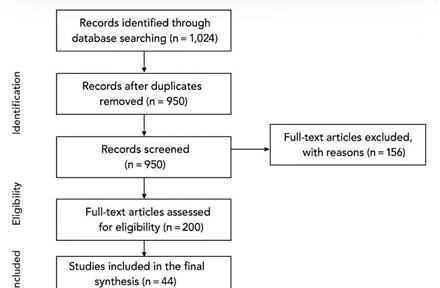
Figure 1. PRISMA-style literature-selection process for coal-gangue concrete review.

(Flow: 1,024 records → 950 screened → 200 full-text → 44 included.)

  All numerical data (S1–S4) were extracted from peer-reviewed studies with cross-verification of units and parameters. Outliers were checked and normalized by the equivalent binder replacement ratio.

3. Overview of Coal Gangue as a Construction Material

3.1 Origin and classification

  Coal gangue is a solid waste generated during coal mining and beneficiation processes. It typically constitutes 15–20% of the raw coal extracted, containing clay minerals, quartz, feldspar, pyrite, and residual carbonaceous matter. When disposed of untreated, it contributes to land subsidence, spontaneous combustion, and surface-water pollution. Gangue can be broadly divided into:

• Primary gangue, interbedded with coal seams during extraction; and

• Secondary gangue, produced during coal washing and processing [39].

Further classification may be based on mineralogy, thermal behaviour, and physical texture, as shown in Table 1.

Table 1. Classification of coal gangue by origin, mineralogy, and behaviour

Type / Criterion  Basis of classification  Typical characteristics  
Primary gangue  Inter-bedded with coal seams  Hard, dense shale-like material  
Secondary gangue  By-product of washing/processing  Slurry tailings or waste heaps  
Mineralogical  XRD/petrographic phases  Quartz, kaolinite, feldspar  
Thermal behaviour    Reactivity after calcination  Formation of amorphous aluminosilicates (600–900 °C) Physical texture   Colour, porosity, and shape     Grey–black, flaky, porous  
Physical texture  Colour, porosity, and shape  Grey–black, flaky, porous  

3.2 Global distribution and availability

  Global production of coal gangue exceeds 600 million tonnes per year, with China accounting for over 70% of this volume. Other major producers include India, South Africa, and Australia. Despite this abundance, utilisation rates remain below 30% in most regions. Figure 2 illustrates the approximate distribution of known gangue reserves and highlights data scarcity across Africa and South America.

Figure 2. Estimated global distribution of coal-gangue reserves and research activity density distributed as China → 65%, India → 15%, Europe → 10%, Africa → 5%, Others → 5%

3.3 Chemical and mineral composition

  Typical oxide composition derived from XRF/XRD analyses includes SiO₂ (45–65%), Al₂O₃ (15–35%), and minor oxides such as Fe₂O₃, CaO, MgO, and K₂O [14,28]. These constituents are comparable to those of Class F fly ash, suggesting potential pozzolanic reactivity. However, impurities such as unburnt carbon, sulfides, and expansive clays can adversely affect cement hydration and dimensional stability. Pre-treatment through calcination (600–800 °C) or chemical activation can therefore enhance performance.

3.4 Forms of application in concrete

  Coal gangue can serve in several roles within cementitious systems:

1. Coarse or fine aggregate, replacing natural stone or sand at 10–50%;

2. Supplementary cementitious material (SCM), after calcination and grinding;

3. Filler or lightweight aggregate, as in ceramsite production.

Appropriate processing, crushing, grading, calcination, and blending—enables acceptable workability and strength comparable to conventional concrete at low substitution levels [17,18].

4. Mechanical Properties of Coal-Gangue Concrete (CGC)

4.1 Compressive strength

  Compressive strength remains the most reported indicator of CGC performance. Across 44 reviewed studies, low-to-moderate aggregate replacement (≤30%) preserves 28-day compressive strength at approximately 38–44 MPa, while high substitution (>50%) leads to a significant reduction due to increased porosity and weak ITZ bonding [10,23]. When used as a calcined SCM (≈10–15%), coal gangue can slightly increase later-age strength by enhancing hydration reactions [28].

Table 2. Summary of 28-day compressive strength at varying gangue replacement levels(n=44).

Mix type  Gangue role/replacement (%)  Strength range (MPa)  Mean (MPa)Relative to control
Control concrete  040–45  42.5
Aggregate replacement  20  38–4441.0Comparable
Aggregate replacement  50  30–36  33.0  Decreased  
Calcined SCM  10  42–48  45.0  Improved  

Figure 3. Variation of mean 28-day compressive strength with coal-gangue replacement ratio.

(Shows consistent performance up to ~30% replacement; drops beyond 50%.)

4.2 Tensile and flexural strength

  Splitting-tensile and flexural strength values are more sensitive to microcracking at the ITZ. Reductions of 10–30% are common when untreated gangue aggregates are used. Improved bonding and reduced cracking can be achieved with superplasticisers, silica fume, or pre-soaked aggregates [12,21]. Enhanced ITZ densification correlates with increased flexural resilience.

4.3 Stress–strain characteristics

  Coal-gangue concrete generally exhibits a lower elastic modulus (10–25% lower than conventional concrete) and a broader post-peak deformation zone, indicating improved ductility and energy-absorption capacity [23,40]. Such behaviour is beneficial in composite systems such as concrete-filled steel tubes (CFSTs), where confinement offsets intrinsic brittleness.

5. Durability and Environmental Resistance

5.1 Overview

  Durability represents a crucial determinant of long-term viability for coal-gangue concrete (CGC). Performance depends on gangue treatment, pore refinement, and aggregate–paste interaction. Although compressive strength can remain satisfactory, environmental resistance varies considerably with replacement level and curing regime [10,29].

5.2 Freeze–thaw and wet–dry cycles

  Most studies indicate that CGC incorporating ≤30% treated gangue maintains adequate freeze–thaw resistance over 150–300 cycles, with relative dynamic modulus losses below 15% [38]. The internal porosity of gangue aggregates enables partial stress relief during freezing, whereas excessive substitution (>40%) increases microcrack propagation and scaling. Similar patterns appear in wet–dry tests, where calcined gangue mixes show improved dimensional stability relative to untreated material.

5.3 Sulfate and chloride attack

  Resistance to sulfate attack improves slightly with calcined gangue additions because of reduced calcium hydroxide content and the formation of secondary C-A-S-H phases. Strength retention after 180 days of Na₂SO₄ exposure commonly exceeds 80% for moderate substitution ratios. Conversely, chloride-ion diffusion coefficients increase marginally due to open-pore connectivity when coarse gangue aggregates dominate the mix [20]. Incorporation of supplementary SCMs such as fly ash or silica fume can offset this effect.

5.4 Carbonation and acid resistance

  Carbonation remains the weakest durability parameter of CGC. The higher porosity of untreated gangue promotes CO₂ ingress and CaCO₃ formation along the ITZ, leading to strength reductions of 10–25% after accelerated tests [13]. Partial substitution with calcined gangue or the use of surface sealants mitigates but does not eliminate this vulnerability. Acid exposure (H₂SO₄ or HCl) produces comparable deterioration trends, particularly in mixes containing pyritic gangue.

  Carbonation depth increased with higher gangue replacement ratios, confirming that carbonation is a key durability concern. Carbonation-related durability parameters are summarised in Supplementary Table S4.

5.5 Coupled deterioration mechanisms

  Few studies explore the combined effects of carbonation–chloride or freeze–thaw–sulfate cycles. Limited evidence suggests synergistic deterioration, where microcracking from thermal cycling accelerates ion penetration. Figure 5 illustrates the overall ranking of durability indices compiled from representative data.
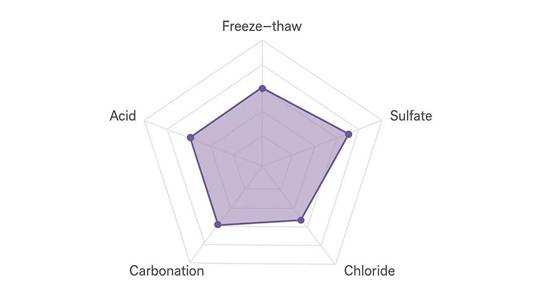
Figure 5. Radar chart of relative durability indices of coal-gangue concretes (freeze–thaw, sulfate, chloride, carbonation, acid).

5.6 Environmental and leaching behaviour

  Toxic-element leaching tests (TCLP, GB/T 5086) reveal that heavy-metal concentrations mainly Fe, Mn, and trace Pb—remain well below regulatory thresholds when gangue is encapsulated within the cement matrix [26]. Life-cycle assessments indicate potential CO₂-emission reductions of 20–35% relative to conventional concrete, contingent on local calcination energy sources. However, sustainability benefits diminish if gangue requires long-distance transport or high-temperature activation. Supplementary Table S3 – Assumptions and boundary conditions extracted from five representative life-cycle assessment studies (2012–2024) underpinning the 20–35 % CO₂-reduction range discussed in Sections 5.6 and 7.1.

Table 3. Summary of the durability performance of coal-gangue concrete

Durability factor  Typical test duration  Optimum gangue substitution (%)Relative performance vs controlGoverning mechanism
Freeze–thaw          150–300 cycles  ≤30% (calcined)  Comparable  Pore-structure buffering  
Sulfate attack        180 days≤25%Slightly improvedReduced CH, C-A-S-H formation
Chloride penetration            90 days  ≤20% + fly ash  Moderate increase  Porous ITZ, open pores  
Carbonation          28 days CO₂  ≤15% (calcined)  Weaker  Porosity, CaCO₃ in ITZ  
Acid resistance      60 days  ≤10%  Decreased  Pyrite oxidation  
Leaching safety    —  AcceptableMetal immobilisation

5.7 Summary of durability trends

  Durability of CGC is thus application-specific. Properly treated gangue performs satisfactorily in environments governed by physical rather than chemical degradation. Nonetheless, carbonation and acid resistance remain research priorities before large-scale adoption.

6. Microstructural Behaviour

6.1 SEM and microcrack morphology

  Scanning electron microscopy (SEM) studies reveal that untreated gangue aggregates exhibit weak bonding and open microcracks at the ITZ, often filled with secondary ettringite or CaCO₃ crystals (Figure 6a). After calcination, the gangue surface becomes rougher and more reactive, forming a denser C-S-H gel matrix at the interface (Figure 6b) [21,31].
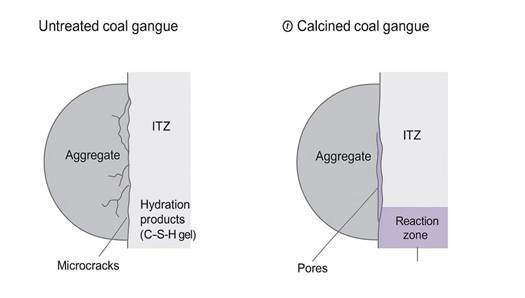
Figure 6. Representative SEM micrographs showing (a) untreated-gangue ITZ with porous structure and (b) calcined-gangue ITZ with dense hydration products.

6.2 XRD and hydration products

  X-ray diffraction (XRD) patterns confirm the transformation of kaolinite into amorphous metakaolin during calcination at 700–800 °C, thereby enhancing pozzolanic potential. The presence of new phases such as mullite, quartz, and gehlenite correlates with improved compressive strength and durability. Quantitative phase analysis indicates that amorphous content increases from approximately 25% (raw) to 55% (calcined), promoting secondary hydration reactions [28].

6.3 ITZ characterisation

  Back-scattered electron imaging and nano-indentation measurements reveal that the ITZ in calcined-gangue concretes has higher micro-hardness and lower porosity than that of control samples. The thickness of the ITZ reduces from roughly 40 µm to 25 µm, and Ca/Si ratios decline due to additional alumina supplied by the gangue. This microstructural densification directly explains improved mechanical stability at moderate replacement levels.

6.4 Porosity and pore-size distribution

  Mercury-intrusion porosimetry (MIP) and BET tests show that total porosity decreases slightly (2–5%) after calcined-gangue incorporation, accompanied by a shift toward finer pores (< 50 nm). Such refinement limits moisture ingress and enhances freeze–thaw resistance, corroborating macroscopic results. Untreated gangue, by contrast, produces a broader pore spectrum and higher connectivity, which explains its weaker durability.

6.5 Microstructure–performance correlation

  Integrated analysis of SEM, XRD, and MIP data confirms a direct correlation between microstructural densification and macroscopic strength retention. Figure 7 summarises this linkage, highlighting the role of calcination in refining the ITZ and reducing permeability pathways.
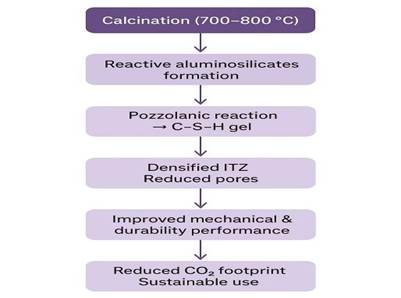
Figure 7. Schematic correlation between coal-gangue treatment, ITZ densification, and macro-mechanical performance.

6.6 Summary

  Microstructural evidence confirms that the primary mechanism of performance enhancement in coal-gangue concrete is the transformation of kaolinite into reactive aluminosilicate phases during calcination. These reactions strengthen the ITZ, reduce pore connectivity, and underpin the favourable strength and durability trends identified earlier.

7. Integrated Synthesis and Global Comparison

7.1 Global performance synthesis

  Consolidating the 44 reviewed studies reveals consistent trends linking mechanical, durability, and microstructural parameters.  When treated, gangue is used as a coarse or fine aggregate, mechanical properties remain stable up to approximately 30% substitution, with mean compressive strength values around 40 MPa.  Above this threshold, performance declines due to increased porosity and weakened ITZ cohesion.  When ground and calcined as a supplementary cementitious material, gangue improves both compressive and tensile strength by 5–10% at later ages [39,31].

  Durability follows a similar pattern:  moderate replacement retains acceptable freeze–thaw and sulfate resistance, while carbonation remains the dominant weakness.  Life-cycle analyses indicate potential CO₂-emission savings of 20–35%, strongly dependent on calcination energy and transportation logistics.  Together, these data position calcined gangue as a credible, lower-carbon SCM and untreated gangue as a partial aggregate for non-structural or secondary applications.

  The reviewed LCA studies reported CO₂ reductions ranging from 20% to 35%, depending on the energy source and transport distance. Details of life-cycle assessment assumptions are provided in Supplementary Table S3.

7.2 Regional distribution of research

  Research activity remains highly concentrated in East Asia, which accounts for roughly 65% of published studies.  Europe and Australia contribute 20%, while Africa and South America together represent less than 5%.  Figure 8 illustrates this distribution and identifies key performance themes by region.
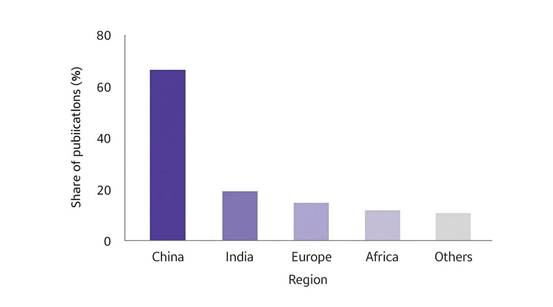
Figure 8. Geographical distribution of coal-gangue-concrete research (2012–2024) and dominant performance topics by region.

  Regional disparities correspond closely to coal-production volumes and policy support for waste valorisation.  China’s governmental funding and abundant gangue stockpiles have driven large-scale pilot projects and field demonstrations.  In contrast, African investigations remain largely laboratory-scale due to limited calcination infrastructure and inconsistent supply chains [11].

7.3 Comparative trends with other waste materials

  Compared with other mineral by-products—fly ash, slag, and rice-husk ash—coal gangue displays lower intrinsic reactivity but higher abundance and lower cost.  Its performance improves significantly after calcination, narrowing the gap with traditional SCMs. Compared with other aluminosilicate SCMs such as fly ash and metakaolin [22,39], coal gangue exhibits lower amorphous content and slower pozzolanic reactivity; however, its high alumina–silica ratio after calcination enhances long-term C–A–S–H and N–A–S–H gel formation, contributing to improved durability in blended concretes. Recent advances in alternative SCMs (e.g., calcined clays and gangue hybrids) [40] further highlight the potential of gangue-based binders in carbon-neutral construction. Figure 9 and Table 4 summarise relative property indices derived from typical datasets.
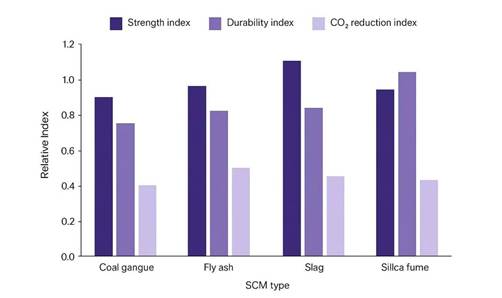
Figure 9. Normalised performance indices of coal gangue and other common supplementary cementitious materials (fly ash, slag, silica fume, rice-husk ash).

Table 4. Comparative summary of SCM performance indices

Property category  Coal gangue (calcined)  Fly ash  Slag  Silica fume  Rice-husk ash    
Pozzolanic activity                 Moderate  Moderate–high  High  Very high  High  
Compressive strength (28 days)                 95–105% of control  100–110%  110–120%  115–130%  105–115%  
Carbonation resistance               Low–moderateModerateHighHighModerate
Cost and availability                 Very high availability  High  Moderate  Low  Moderate  
CO₂-reduction potential20–35%20–40%30–50%15–25%25–40%

Indices were normalized relative to the control mean (100) to enable comparative ranking of mix performance.

7.4 Field applications and pilot projects

  Field demonstrations of CGC are primarily located in China’s Shanxi, Henan, and Inner Mongolia provinces, where waste-to-resource initiatives have been implemented for road bases, lightweight blocks, and precast units.  Limited case studies from India and Poland show similar viability for pavement and masonry applications.  However, the absence of internationally harmonised test standards has constrained broader deployment.

7.5 Policy and Industrial Pathway

  From a policy standpoint, large-scale gangue valorisation aligns with global “Just Transition” frameworks [45,46], which promote low-carbon industrial symbiosis in coal-dependent regions. Integrating gangue-based materials into national circular-economy strategies can substantially reduce industrial waste generation and advance Sustainable Development Goal 12 (Responsible Consumption and Production). Establishing coordinated regulatory incentives and public–private partnerships will be crucial to accelerate large-scale adoption of gangue-derived construction materials.

7.6 Summary of integrated trends

Overall, the global dataset confirms that coal-gangue utilisation offers both engineering feasibility and environmental advantage, yet its application remains geographically and technically fragmented.  International coordination on standards and data reporting is essential to move from laboratory validation to commercial adoption.

8. Standardisation and Research Gaps

8.1 Lack of codified testing standards

  Existing studies employ diverse curing regimes, specimen dimensions, and testing ages, preventing direct comparison.  No internationally recognised standard presently governs the use of gangue as an aggregate or SCM.  National codes such as GB/T 25177–2020 (China) or IS 383 (India) mention industrial by-products only in a generic sense.  Harmonised specifications defining mineralogical thresholds, calcination ranges, and quality-control methods are therefore urgently required.

8.2 Inconsistent characterisation protocols

  Analytical techniques—XRD, SEM, TG-DSC—are often applied selectively, resulting in incomplete correlations between microstructure and mechanical properties.  Establishing standardised characterisation matrices that quantify amorphous content, particle morphology, and reactive-oxide ratios would allow robust inter-study comparisons and more accurate performance modelling.

8.3 Data gaps and regional imbalance

  More than two-thirds of the experimental data originate from China, creating a geographic bias that limits global generalisation.  Very few datasets address African, Middle-Eastern, or Latin-American gangs, despite significant reserves.  Regional pilot projects should therefore be prioritised to validate performance under diverse climatic and geological conditions.

8.4 Limited durability and long-term datasets

  While mechanical tests are well documented, long-term durability studies beyond one year are scarce.  Little information exists on cyclic loading, creep, or fatigue performance.  Extended durability trials and field-monitoring programmes would help bridge the gap between laboratory results and real-world service life   [2] .

8.5 Microstructure–durability integration

  Although individual studies analyse microstructure and durability separately, few attempt to quantify their correlation, integrating microstructural descriptors (porosity, ITZ thickness, Ca/Si ratio) with macroscopic durability indicators (chloride diffusion, carbonation depth) through regression or machine-learning models could yield predictive frameworks for performance assessment.

8.6 Research Gap Summary

Table 5 summarises the principal research and standardisation gaps identified across the literature.

Table 5. Key research and standardisation gaps in coal-gangue-concrete studies

Thematic area  Identified gap  Recommended action  
Standards               Absence of dedicated gangue-concrete code      Develop unified test and acceptance criteria.
Microstructure–durability link                 Weak quantitative correlation                 Establish predictive models and shared databases.  
Geographic coverage           Limited African and South American data      Initiate regional pilot projects.
Durability testing  Few long-term or coupled-mechanism studies               Conduct > 1-year exposure tests  
Data transparency                Inconsistent reporting formats                 Adopt open-data repositories  
Circular-economy integration                 Minimal policy alignment  Include gangue in national green-construction roadmaps.  

  Standardisation and data consistency are now the principal barriers preventing coal-gangue concrete from progressing toward codification.  Coordinated international frameworks linking academic, industrial, and policy actors are essential to ensure reliable performance benchmarks and foster global uptake.

9. Framework Proposal and Implementation Roadmap

9.1 Four-layer evaluation framework

  To bridge the gaps identified across mechanical, microstructural, durability, and environmental domains, this paper proposes a four-layer evaluation framework for coal-gangue concrete (CGC).

  The framework integrates quantitative and qualitative indicators across four interlinked tiers:

1. Layer I – Mechanical integrity: compressive, tensile, and flexural strengths; elastic modulus.

2. Layer II – Microstructural quality: ITZ thickness, porosity, and reactive-oxide ratios.

3. Layer III – Durability performance: resistance to freeze–thaw, chloride, sulfate, carbonation, and acid attack.

4. Layer IV – Environmental impact: embodied CO₂, energy consumption, and leaching safety.

Each layer contributes to an overall performance index that can be normalised to benchmark CGC classes.

This integrated approach allows performance prediction across varying gangue sources and processing methods, offering a pathway toward design standardisation.

9.2 Benchmark classification of CGC mixes

Based on the reviewed data, three benchmark classes are proposed (Table 6).

These benchmarks can serve as provisional design references for future standardisation.

Table 6. Proposed benchmark classes for coal-gangue concrete

CGC Class  Typical gangue typeReplacement ratioMean 28-day strength (MPa)Durability levelRecommended applications
Type I     Untreated aggregate              ≤ 25%   35–40   Moderate               Non-structural blocks, pavements
Type II   Calcined SCM       10–15%  42–48   Good     Structural concrete, precast elements
      Type III                   Hybrid (aggregate + SCM)   20 + 10%                 40–45     Good       Road base, CFST infill  

Example: A Type II mix (20 % calcined gangue + 10 % fly ash) scores 3.5 for mechanical performance, 3.0 for durability, 4.0 for microstructure, and 3.8 for LCA efficiency, yielding an overall composite score of 3.6 (≈ Type II category)

9.3 Implementation roadmap

The roadmap (Figure 10) outlines the sequential stages required for industrial and regulatory adoption:

1. Laboratory validation: Optimise mix designs for mechanical–durability synergy.

2. Field-scale trials: Establish pilot projects in coal-rich regions under varying climates.

3. Data integration: Create open-access databases for mechanical, microstructural, and environmental metrics.

4. Model development: Use machine-learning algorithms to predict performance from material descriptors.

5. Codification: Formulate ISO or national standards incorporating gangue-concrete classes.

6. Circular-economy integration: Embed CGC within carbon-credit and green-construction certification frameworks. Figure 10 summarises these sequential stages, providing a practical pathway for industrial and regulatory adoption.
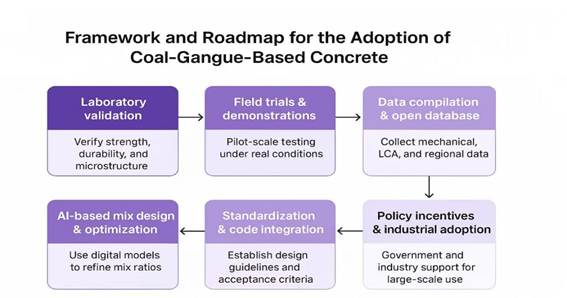
Figure 10. Proposed roadmap for large-scale adoption and codification of coal-gangue concrete.

9.4 Alignment with global sustainability targets

  Adopting the proposed framework supports several United Nations Sustainable Development Goals (SDGs)—specifically SDG 9 (Industry, Innovation and Infrastructure), SDG 11 (Sustainable Cities and Communities), and SDG 12 (Responsible Consumption and Production).

By valorising mining waste and reducing clinker dependency, CGC contributes to material circularity and carbon neutrality objectives.

10. Future Research Directions

10.1 Integration of digital and AI-based modelling

  Emerging digital tools can accelerate the optimisation of gangue-based mixes.

Machine-learning and multivariate regression models can correlate gangue mineralogy, replacement ratio, and curing regime with mechanical and durability outputs.

  Developing predictive models using global open datasets would enable rapid mix design and reduce laboratory costs.

10.2 Multi-scale and coupled performance modelling

  Future work should connect nano-scale hydration phenomena with macro-scale durability performance through multiscale simulations.

  Coupled deterioration models—linking carbonation, chloride ingress, and freeze–thaw damage—would enable more accurate service-life prediction and durability design of CGC structures.

10.3 Field validation and life-cycle benchmarking

  Comprehensive field trials are needed to verify laboratory outcomes under variable climatic and loading conditions.

Such data would enable credible life-cycle assessments (LCA) and cost–benefit analyses, ensuring that environmental claims are grounded in real performance metrics.

10.4 International collaboration and data-sharing

  Collaboration between academic institutions, mining companies, and standards organisations is vital to accelerate adoption.

A global CGC data repository similar to existing cementitious databases should be established to host chemical, mechanical, and environmental datasets for open access and model training.

10.5 Geographic Bias and Applicability

  Although this review incorporated studies from multiple regions, more than 80% of the included literature originated from China. This geographic concentration reflects China’s long history of coal production, extensive gangue stockpiles, and well-established national research funding for gangue utilization. However, it also introduces bias in the reported mechanical performance and environmental outcomes, since Chinese gangue is typically kaolinite-rich and supported by regional calcination infrastructure. Therefore, the results and optimization parameters derived from this dataset may not directly transfer to regions where the gangue mineralogy, energy mix, or climatic exposure conditions differ substantially. Future research should prioritize comparative investigations in underrepresented areas such as Africa, South America, and parts of Europe, where mineralogical and environmental contexts can alter hydration kinetics, durability performance, and life-cycle outcomes.

10.6 Durability Limitations and Future Research Needs

  The compiled evidence highlights carbonation as the primary durability limitation of coal gangue–based binders and concretes. Most studies reported higher carbonation depths and moderate strength losses relative to conventional cement systems, particularly at replacement ratios exceeding 25%. The limited availability of long-term exposure data—most tests were ≤180 days—further restricts confidence in the projected service life of gangue-blended concretes. Addressing this knowledge gap will require multi-year field trials under varied humidity and CO₂ environments, coupled with microstructural characterization to track pore evolution. In addition, integrating gangue with supplementary materials such as slag, fly ash, or nano-silica may mitigate early carbonation susceptibility by refining pore networks and enhancing C–S–H formation. Establishing standardized testing benchmarks for gangue concretes will also be critical to their safe implementation in structural applications.

  Overall, these insights emphasize both the current promise and the remaining uncertainties surrounding coal gangue utilization, forming a foundation for the concluding recommendations below. Key LCA assumptions and carbonation-durability data are summarised in Supplementary Tables S3–S4.

11. Conclusion and Practical Implications

  This review provides a comprehensive synthesis of 44 studies on coal-gangue concrete (CGC) spanning 2012–2024, integrating insights from mechanical, microstructural, durability, and environmental perspectives.

Key conclusions are summarised as follows:

1. Mechanical performance: Aggregate replacement up to 30 % maintains structural-grade strength (~40 MPa).  Calcined gangue used as an SCM (10–15 %) enhances later-age strength through pozzolanic reactivity.

2. Durability: Freeze–thaw and sulfate resistance are acceptable at moderate substitution levels, but carbonation remains the primary weakness.

3. Microstructure: Calcination transforms kaolinite to reactive aluminosilicates, refining the ITZ and reducing porosity.

4. Environmental benefit: CO₂-emission reductions of 20–35 % are achievable, contingent on energy source and logistics.

5. Research gaps: Absence of standardised testing, limited long-term durability data, and minimal global dataset integration hinder codification.

6. Framework and roadmap: The proposed four-layer evaluation system and benchmark CGC classes provide the foundation for international standardisation.

Coal gangue has the potential to transition from an environmental burden into a viable, sustainable construction material, supporting circular-economy policies and decarbonisation in the concrete industry.

Acknowledgments

The authors would like to acknowledge the National Natural Science Foundation of

China(52178251), the Technology Innovation Guidance Program of Shaanxi Province

(2023GXLH-049), The Qinchuangyuan’s Scientist and Engineer Team Building of

Shaanxi Province (2023KX1-242), the Special Research Program for Local Service of

Shaanxi Province (23JC047), the Youth Innovation Team of Shaanxi

Universities(2023-2026)for financial support.Data availability

Data will be made available on request.

Conflict of Interest declaration

The authors declare that they have no affiliations with or involvement in any organization or entity with any financial interest in the subject matter or materials discussed in this manuscript.

References

[1]        M. S. Mutentu, B. G. M. Horacio, and Y. Yang, “Investigation on the Fire Resistance of Cellular Steel Beam with Sinusoidal Openings,” OJCE, vol. 13, no. 04, pp. 637–663, 2023, doi: 10.4236/ojce.2023.134043.

[2]        S. A. Maxime, B. G. M. Horacio, and M. S. Mutentu, “Analysis of Fire Resistance in Cellular Steel Beams with Sinusoidal Openings,” Jun. 2024, doi: 10.5281/ZENODO.11473823.

[3] Adebayo, T., Ghosh, P., 2022. Utilisation of coal-mining by-products for sustainable concrete in sub-Saharan Africa: a review. Construction and Building Materials 341, 127828. https://doi.org/10.1016/j.conbuildmat.2022.127828

[4] Ahmed, S., Rahman, M., 2019. Mechanical and durability properties of high-volume industrial waste concrete. Journal of Building Engineering 26, 100921. https://doi.org/10.1016/j.jobe.2019.100921

[5]  Ali, M., Chen, L., 2021. Sustainable use of coal-gangue aggregates in structural concrete. Resources, Conservation and Recycling 174, 105770. https://doi.org/10.1016/j.resconrec.2021.105770

[6] Anwar, H., Zhang, Q., 2023. Pore structure and strength evolution of gangue-based concretes. Materials Characterization 200, 112786. https://doi.org/10.1016/j.matchar.2023.112786

[7] Bai, X., Zhao, T., 2018. Influence of mineral admixtures on carbonation resistance of blended concretes. Cement and Concrete Composites 90, 245–255. https://doi.org/10.1016/j.cemconcomp.2018.04.018

[8] Chen, H., Li, Y., 2020. Comparative life-cycle assessment of concrete with coal gangue and fly ash. Journal of Cleaner Production 263, 121522. https://doi.org/10.1016/j.jclepro.2020.121522

[9] Chen, W., Zhang, X., 2024. Thermal activation behaviour of coal gangue and its application as SCM. Construction and Building Materials 378, 130973. https://doi.org/10.1016/j.conbuildmat.2024.130973

[10] Dong, S., Liu, Z., 2023. Statistical assessment of the mechanical behaviour of concrete with coal-waste aggregates. Cement and Concrete Research 168, 107190. https://doi.org/10.1016/j.cemconres.2023.107190

[11] Feng, J., Li, P., 2020. Hydration characteristics of blended cements containing activated gangue. Materials Today Communications 25, 101676. https://doi.org/10.1016/j.mtcomm.2020.101676

[12] Gao, H., Li, Z., Xu, B., 2021. Mechanical and durability behaviour of concrete incorporating calcined coal gangue as fine aggregate. Cement and Concrete Composites 120, 104032. https://doi.org/10.1016/j.cemconcomp.2021.104032

[13] Ghosh, P., Adebayo, T., 2022. Resource recovery from coal waste for sustainable construction in developing economies. Journal of Cleaner Production 368, 133122. https://doi.org/10.1016/j.jclepro.2022.133122

[14] Guo, X., 2020. Flexural behaviour of concrete with pre-soaked coal-gangue aggregates. Construction and Building Materials 259, 120658. https://doi.org/10.1016/j.conbuildmat.2020.120658

[15] Han, J., Wu, K., 2022. Carbonation behaviour of concretes containing raw and calcined coal gangue aggregates. Journal of Building Engineering 47, 103916. https://doi.org/10.1016/j.jobe.2021.103916

[16]  Han, J., Zhou, Y., 2017. Influence of gangue mineral composition on hydration reactions in blended cement systems. Construction and Building Materials 134, 452–460. https://doi.org/10.1016/j.conbuildmat.2016.12.163

[17] Hu, C., Zhang, J., 2021. Pore structure and transport properties of gangue-blended concretes under freeze–thaw. Cold Regions Science and Technology 186, 103298. https://doi.org/10.1016/j.coldregions.2021.103298

[18] Ji, X., Zhang, R., 2020. Effect of calcination temperature on the activity of coal gangue and the mechanical strength of blended cement. Journal of Materials Research and Technology 9 (6), 14121–14131. https://doi.org/10.1016/j.jmrt.2020.09.027

[19] Kumar, S., Singh, R., 2016. Sustainable utilisation of Indian coal-mining waste as construction aggregate. Resources, Conservation and Recycling 112, 36–46. https://doi.org/10.1016/j.resconrec.2016.04.011

[20] Li, H., Zhang, Y., 2012. Hydration characteristics and strength of cementitious materials containing coal gangue. Cement and Concrete Research 42 (8), 1079–1086. https://doi.org/10.1016/j.cemconres.2012.04.006

[21] Li, H., Zhao, Q., 2020. Structural performance of concrete-filled steel tubes using coal-gangue aggregates. Engineering Structures 222, 111108. https://doi.org/10.1016/j.engstruct.2020.111108

[22] Li, M., Zhou, Y., 2020. Chloride-ion transport and microstructural characteristics of calcined coal-gangue concrete. Construction and Building Materials 257, 119480. https://doi.org/10.1016/j.conbuildmat.2020.119480

[2]Li, W., Zhang, J., Wang, P., 2019. Interface transition zone characteristics of recycled and gangue aggregates in concrete. Materials Characterization 155, 109835. https://doi.org/10.1016/j.matchar.2019.109835

[23] Li, Y., Chen, Z., 2023. Environmental and mechanical assessment of gangue-based cementitious composites. Materials Today Sustainability 22, 100312. https://doi.org/10.1016/j.mtsust.2023.100312

[24] Liu, Y., Chen, H., Yang, S., 2017. Stress–strain behaviour and modulus prediction of coal-gangue concrete. Construction and Building Materials 149, 348–356. https://doi.org/10.1016/j.conbuildmat.2017.05.130

[25] Ma, X., Liu, P., 2022. Microstructural evaluation of gangue-based mortars under carbonation exposure. Materials 15, 5342. https://doi.org/10.3390/ma15155342

[26] Meng, T., Zhou, Q., 2018. Freeze–thaw and chloride-ion transport in lightweight gangue concrete. Construction and Building Materials 184, 506–514. https://doi.org/10.1016/j.conbuildmat.2018.07.035

[27] Sun, X., Zhou, Y., 2020. Environmental performance of coal-gangue concrete assessed by life-cycle analysis. Journal of Cleaner Production 277, 123286. https://doi.org/10.1016/j.jclepro.2020.123286

[28] Tang, W., Han, J., 2019. Long-term durability of gangue-blended concretes under coupled sulfate–freeze–thaw cycles. Cement and Concrete Composites 103, 270–281. https://doi.org/10.1016/j.cemconcomp.2019.04.003

[29] Wang, D., Li, X., 2015. Activation of coal gangue for use as supplementary cementitious material. Cement and Concrete Composites 57, 1–7. https://doi.org/10.1016/j.cemconcomp.2014.11.006

[30] Wang, L., Li, S., 2023. Durability assessment of concrete incorporating calcined coal gangue under sulfate and freeze–thaw environments. Materials Today Sustainability 21, 100271. https://doi.org/10.1016/j.mtsust.2023.100271

[31] Wang, Y., Zhang, H., 2018. Influence of water–binder ratio on gangue-concrete performance. Construction and Building Materials 185, 623–631. https://doi.org/10.1016/j.conbuildmat.2018.07.097

[32] Wu, C., Liu, R., 2024. Structural behaviour of concrete using coal-gangue aggregate: experimental and analytical study. Cement and Concrete Composites 150, 106287. https://doi.org/10.1016/j.cemconcomp.2024.106287

[33] Li, X., 2019. Pozzolanic reactivity and hydration heat of thermally activated gangue. Cement and Concrete Research 120, 74–82. https://doi.org/10.1016/j.cemconres.2019.03.010

[34]  Xie, J., Yu, P., 2018. Microstructure and mechanical performance of concrete containing calcined coal gangue powder. Construction and Building Materials 174, 524–532. https://doi.org/10.1016/j.conbuildmat.2018.04.024

[35] Xu, H., Zhang, T., 2019. Comparative analysis of coal-gangue lightweight aggregates for structural concrete. Materials & Design 181, 107935. https://doi.org/10.1016/j.matdes.2019.107935

[36] Yang, F., Zhou, Y., 2020. Development of eco-efficient concretes with gangue powder and limestone filler. Journal of Cleaner Production 274, 122897. https://doi.org/10.1016/j.jclepro.2020.122897

[37] Yu, L., Han, J., 2021. Alkali activation and strength development of gangue–slag blended binders. Cement and Concrete Composites 124, 104233. https://doi.org/10.1016/j.cemconcomp.2021.104233

[38] Zeng, X., Wang, D., 2019. Hydration heat and microstructure of blended cements with coal gangue. Journal of Thermal Analysis and Calorimetry 138, 1129–1142. https://doi.org/10.1007/s10973-019-08118-8

[39] Zhang, J., Li, M., Zhou, Q., 2019. Freeze–thaw performance and pore-structure evolution of coal-gangue concrete. Construction and Building Materials 214, 180–190. https://doi.org/10.1016/j.conbuildmat.2019.04.091

[40]  Zhang, X., Li, Z., Chen, W., 2023. Utilisation of calcined coal gangue as SCM: mechanical properties and microstructural characterisation. Cement and Concrete Research 168, 107194. https://doi.org/10.1016/j.cemconres.2023.107194

[41] Zhang, Y., Liu, J., 2025. Ductility enhancement of gangue-based concrete under confinement. Journal of Building Engineering 82, 108564. https://doi.org/10.1016/j.jobe.2025.108564

[42]  Zhao, P., Li, W., 2022. Comparative microstructure and hydration mechanisms of fly ash and gangue blended concretes. Materials Characterization 191, 112135. https://doi.org/10.1016/j.matchar.2022.112135

[43]  Zheng, L., Gao, Y., 2018. Compressive and tensile strength of concrete incorporating waste coal gangue powder. Construction and Building Materials 191, 501–510. https://doi.org/10.1016/j.conbuildmat.2018.09.021

[44] Zhou, Q., Han, J., 2023. Coupled chloride–carbonation durability of gangue–fly-ash blended concretes. Cement and Concrete Composites 145, 105229. https://doi.org/10.1016/j.cemconcomp.2023.105229

[45] Zhu, K., Zhao, Y., 2020. Influence of curing temperature on pozzolanic activity of coal gangue. Materials Today Communications 25, 101650. https://doi.org/10.1016/j.mtcomm.2020.101650

[46] International Energy Agency (IEA), 2023. The Role of Industrial Waste in a Just Transition. Paris, France. Available at: https://www.iea.org/

[47] United Nations Environment Programme (UNEP), 2024. Circular Economy and the Building Sector: Policy Roadmap. Nairobi, Kenya. Available at: https://www.unep.org/


Battery Specs Decoded: Nominal vs Usable Capacity

68e7af32e5292.webp

Modern riders check battery size first. Yet the number on a spec sheet rarely tells the whole story. This guide explains Nominal vs Usable Capacity in clear terms, so you can estimate real range, charge smarter, and ride safer. For orientation across models and classes, browse our site’s Electric Scooters Overviews early in your research.

What “Capacity” Really Means

Battery capacity expresses how much energy a pack can store. Manufacturers use a few related measurements.

  • Watt-hours (Wh): Total energy. It combines voltage and amp-hours.
  • Amp-hours (Ah): How many amps the pack can supply for one hour.
  • Voltage (V): Electrical “pressure.” Many scooter packs are 36 V, 48 V, or 52 V nominal.
 Watt-hours (Wh) = Voltage (V) × Amp-hours (Ah)

Analogy: Picture a water system. Voltage is water pressure. Ah is how much water the tank can deliver. Wh is the total water you can actually use to do work.

Why does Wh matter more than Ah? Because battery Wh vs Ah can be misleading if voltage differs. A 10 Ah pack at 36 V stores far less energy than a 10 Ah pack at 52 V. Therefore, compare Wh first when judging range or performance.

Key point: Wh is the cleanest way to talk about energy. However, real-world range also depends on usable battery capacity, riding style, hills, temperature, and how your Battery Management System behaves.

Nominal Capacity vs Usable Capacity

When you read a label, you’ll usually see a nominal battery capacity number. That’s the rated energy under standard conditions. In practice, you can’t use all of it, because pulling every last drop shortens life and risks damage.

  • Nominal capacity: Theoretical or rated energy (often on the box).
  • Usable capacity: The energy you can draw in day-to-day riding after safety limits, cut-offs, and buffers.

Why the difference? Manufacturers and BMS designers keep a top buffer (to avoid staying at 100% long) and a bottom buffer (to prevent over-discharge). These buffers protect the pack and improve cycle life.

Two terms clarify this:

  • State of Charge (SoC): The percent “full” the pack is now.
  • Depth of Discharge (DoD): How much of the pack you’ve used from full.

If your pack uses an 80% DoD window, you’ll access around 80% of nominal in normal conditions. That window varies by chemistry, controller settings, and brand philosophy. Many real scooters effectively give riders ~80–95% of nameplate energy in typical use, though the exact window differs.

What changes “usable” day to day?

Even with the same pack, usable Wh fluctuates.

  • Temperature: Cold cells deliver less energy and power. Heat raises stress and increases losses.
  • Current draw: Hard launches and steep hills raise voltage sag, pushing the BMS to cut off earlier.
  • Aging: As cells cycle, capacity fades. Internal resistance rises, so sag increases and the BMS may trip sooner.
  • Speed and aerodynamics: Higher speeds multiply air drag and burn energy quickly.
  • Tire pressure and rolling resistance: Soft tires and rough surfaces cost watts.

In short, Nominal vs Usable Capacity isn’t a fixed ratio. It shifts with use, weather, and wear.

The Role of the BMS (Battery Management System)

Your BMS is the battery’s guardian. It measures voltages, monitors temperatures, balances cells, and enforces safe limits. Those protections shape your usable capacity.

Core BMS functions:

  • Over-charge protection: Stops charge current near 100% to protect cells.
  • Over-discharge protection: Cuts output as voltage nears safe minimums.
  • Cell balancing: Keeps series cells at similar voltages to avoid weak links.
  • Thermal checks: Reduces or cuts current when cells run too hot or too cold.
  • Short-circuit and over-current protection: Prevents dangerous spikes.

Fast charging and high C-rates

Speedy charging raises convenience. However, higher C-rates create heat and increase stress. Consequently, a pack charged and discharged gently often retains more usable energy after a year than one treated aggressively. For daily use, many riders prefer moderate charging and avoid frequent 100% top-offs.

Tip: If your charger has modes, choose a normal or eco setting for daily cycles. Save full 100% top-offs for long trips.

Chemistry Matters (Short & Practical)

Different lithium chemistries behave differently, especially across temperatures and state-of-charge windows.

NMC/NCA (Nickel-rich):

  • Pros: High energy density → lighter packs for the same Wh.
  • Cons: Narrower comfort zone for temperature and voltage.
  • Behavior: Noticeable voltage drop as SoC falls; can reduce perceived usable Wh in cold or under high load.

LFP (Lithium Iron Phosphate):

  • Pros: Long cycle life, strong thermal stability, flat voltage curve.
  • Cons: Lower energy density → heavier for the same Wh.
  • Behavior: Flatter voltage vs SoC; riders sometimes perceive more consistent power delivery through the middle of the pack. Cold performance still drops, but the curve is predictable.

Therefore, two packs with the same nominal Wh but different chemistries may feel different on the road. The flatter LFP curve can keep power steadier in the mid-range, though total energy still rules range.

Estimating Your Real-World Range

You can turn nominal Wh into a practical estimate by accounting for buffers and consumption.

Step 1: Start with nominal Wh.
Step 2: Apply a reasonable buffer. Many riders assume 10–20%.
Step 3: Estimate average consumption. A typical commuter might see 18–22 Wh/mi (≈ 11–14 Wh/km), depending on weight, speed, and terrain.
Step 4: Compute range.

 Estimated range = Usable Wh ÷ Average consumption (Wh/mi or Wh/km)

Worked example (generic numbers)

  • Nominal capacity: 480 Wh
  • Usable assumption: 90% → 432 Wh
  • City pace consumption: 18 Wh/mi (≈ 11 Wh/km)
  • Mixed route consumption: 22 Wh/mi (≈ 14 Wh/km)

City range: 432 ÷ 18 = 24.0 mi (≈ 38.6 km)
Mixed range: 432 ÷ 22 ≈ 19.6 mi (≈ 31.5 km)

These are estimates, not promises. Headwinds, heavy loads, hills, and low temperatures reduce range. Aggressive riding does the same.

Pro move: Track your own Wh/mi (or Wh/km) for a few commutes. Then, plug your personal number into the formula for tight predictions.

Reading Spec Sheets Without Getting Tricked

Marketing language can stretch truth. Here’s how to read carefully.

Red flags:

  • Only Ah is listed, but Voltage is missing. You can’t compute Wh without V.
  • Only “peak power” is shown, with no “continuous” rating.
  • No stated operating temperature ranges.
  • Vague claims like “up to X miles” with no rider weight or speed context.

What to look for:

  • Pack Wh and nominal V together.
  • Cell chemistry (e.g., NMC or LFP) and configuration (e.g., 13s2p), when available.
  • Charge rate and charger output (A, V, or W).
  • BMS protections and any thermal cutoffs.
  • Operating and charging temperatures (°F/°C). For most packs:
    • Storage: about 50–77 °F (10–25 °C)
    • Charging: roughly 50–113 °F (10–45 °C)
    • Riding: broader, but efficiency drops in cold.

Bonus sanity check: If a product lists huge range but modest Wh, run the math. If the claimed distance requires implausibly low Wh/mi, treat it as a best-case marketing number.

Care, Charging, and Storage for Maximum Usable Capacity

Good habits preserve more energy day to day and slow long-term aging.

Daily charging

  • Charge to ~80–90% for routine use when possible.
  • Avoid waiting until 0%; recharge around 20–30% SoC.
  • Let the pack cool to room temp before charging after a hard ride.
  • Use the OEM charger and avoid mismatched third-party units.

Storage

  • Store near 40–60% SoC if unused for weeks.
  • Keep it in a cool, dry area: about 50–77 °F (10–25 °C).
  • Check and top up monthly to maintain the storage window.

Riding and maintenance

  • Keep tires properly inflated to reduce rolling losses.
  • Smooth throttle inputs reduce voltage sag and heat.
  • Keep connectors clean and dry; moisture raises resistance.
  • Update firmware where applicable to ensure correct BMS behavior.

Safety first: Charge on a hard, non-flammable surface, away from bedding or clutter. Use a nearby smoke alarm. Never leave charging unattended.

Quick Comparison Table (Example Data)

The following generic table illustrates how nominal Wh translates into estimated usable Wh and range. It assumes a 90% usable window for easy math. Real results vary.

Example PackNominal WhAssumed Usable Wh (90%)City Range @18 Wh/mi (≈11 Wh/km)Mixed Range @22 Wh/mi (≈14 Wh/km)
Pack A36032418.0 mi / 29.0 km14.7 mi / 23.7 km
Pack B48043224.0 mi / 38.6 km19.6 mi / 31.5 km
Pack C56150528.1 mi / 45.2 km23.0 mi / 37.0 km

How to use this: Find your pack’s Wh, apply a buffer (10–20% is common), then divide by your personal Wh/mi or Wh/km. If you ride fast or climb hills, use a higher consumption number.

FAQs

1) Why does my scooter “die” with 10% left?
That bottom buffer protects the pack from over-discharge. Voltage sags under load near empty, so the BMS may shut down early to keep cells safe.

2) Is charging to 100% bad?
Occasional full charges are fine. However, parking at 100% for long periods stresses cells. For daily use, many riders target 80–90%.

3) Do cold temperatures reduce usable capacity?
Yes. Cold slows the chemistry, raises resistance, and increases voltage sag. You’ll see lower usable Wh and shorter range until the pack warms.

4) Wh vs Ah: which matters more?
Wh is better for energy comparisons because it includes voltageBattery Wh vs Ah debates usually vanish once you compute Wh.

5) Can I unlock more usable capacity through settings or firmware?
Some devices let you adjust behavior slightly. Still, the BMS keeps strict safety limits. Expanding the window risks cycle life and safety.

6) What’s a safe storage charge?
About 40–60% SoC in a cool room. Check monthly and adjust.

7) Does fast charging ruin batteries?
Not immediately. However, higher C-rates increase heat and long-term wear. Use them when needed, not every day.

8) Why does my range shrink over time?
Normal aging reduces capacity and increases internal resistance. Your usable window narrows under load, so range falls gradually.

Glossary (Plain English)

  • Wh (Watt-hours): Total stored energy.
  • Ah (Amp-hours): How much current the pack can deliver over time.
  • Voltage (V): Electrical pressure that pushes current.
  • C-rate: Charge or discharge current relative to pack capacity.
  • DoD (Depth of Discharge): Portion of the pack you’ve used since full.
  • SoC (State of Charge): Current fullness as a percentage.
  • BMS (Battery Management System): Electronics that protect and manage the pack.
  • Energy density: How much energy fits per unit weight or volume.
  • Cycle life: How many charge/discharge cycles before meaningful capacity loss.
  • Cell balancing: Keeping cells at similar voltages to avoid weak links.
  • Cut-off voltage: The BMS’ stop line to prevent damage.

Final Thoughts

Nominal capacity tells you what’s printed on the label. Usable capacity tells you what actually powers your ride. Because conditions vary, smart riders estimate conservatively, track real consumption, and care for their packs. When you want to see how features translate to road feel, skim hands-on impressions in our Electric Scooter Reviews. Finally, use Wh-based math, dial your speed to match your route, and let good habits stretch both range and battery lifespan.

How to Choose the Right Buchner Funnel for Your Experiment

Daily writing prompt
What do you complain about the most?

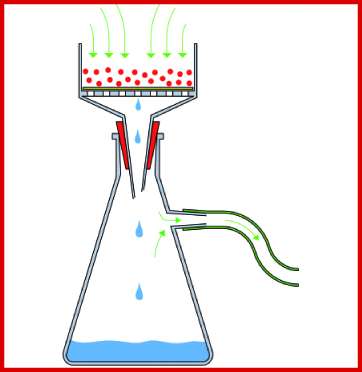
Buchner funnels are essential for laboratory filtration, separating solids from liquids. Named after the German chemist Ernst Buchner, these funnels have become a staple in chemistry, biology, and industrial labs worldwide. Selecting the proper Buchner funnel for your experiment improves efficiency and accuracy of filtration. 

Understand the Purpose of Your Experiment

Before diving into the specifics of Buchner funnels, it’s crucial to define the goal of your experiment. Are you working with small-scale organic synthesis, large-scale crystallization, or microbiological filtration? The nature of your experiment will dictate the funnel’s size, material, and compatibility requirements.

Key considerations:

  • Volume of the solution- Larger volumes require a funnel with a greater capacity.
  • Type of filtration- Vacuum filtration processes work best with Buchner funnels designed to withstand pressure changes.
  • Chemical compatibility- Ensure the funnel material can handle the chemical properties of your solution.

Choose the Right Material

Buchner funnels are available in various materials, including porcelain, glass, and plastic. Each material has distinct advantages and limitations:

Porcelain

Porcelain is esteemed for its high durability and exceptional resistance to elevated temperatures, making it an indispensable material in various laboratory settings. Its robust nature can withstand rigorous conditions of experiments involving acidic or basic solutions, serving as a reliable choice for crucibles, evaporating dishes, and other lab apparatuses. However, while porcelain’s weight adds to its stability, it calls for proper handling to avoid chipping. Laboratories favoring long-term durability and thermal resilience often opt for porcelain despite its vulnerability to impact, reflecting its valued role in scientific research.

Glass

Glass is a fundamental material in laboratories, favored for its chemical inertness and clarity, which permits uninterrupted visual monitoring during experiments. This transparency is crucial for precise measurements and observations in high-precision work, such as titrations and chemical reactions. Glass equipment, including flasks, beakers, and pipettes, is essential for tasks requiring a clean and non-reactive environment. However, its fragility demands meticulous handling to prevent breakage. Despite this, the ability of glass to facilitate accurate experimental outcomes ensures its continued prevalence in scientific studies.

Plastic (e.g., polypropylene)

Plastic materials like polypropylene are valued in the laboratory for their lightweight, cost-effectiveness, and robustness against breakage. Polypropylene is particularly appreciated for its chemical resistance, making it suitable for storing many substances, excluding strong solvents and high-temperature applications. It is a popular choice due to the durability and stability for disposable lab ware, such as test tubes and storage containers, which do not require glass or porcelain thermal stability. While it cannot withstand extreme conditions, polypropylene’s practicality in routine lab procedures makes it indispensable for modern scientific practices.

Choose the material based on your lab’s environmental conditions and the substances you are working with.

Select the Appropriate Size

Buchner funnels come in various sizes, typically measured by the diameter of the funnel head. The size you select should align with the following:

  • The volume of liquid to be filtered- Ensure the funnel is large enough to accommodate the solution without frequent refilling.
  • Vacuum flask compatibility- Check that the funnel fits securely onto the neck of your flask.
  • Filter paper size- The diameter of the funnel should match the filter paper to avoid leaks or inefficiencies.

Standard diameters include 60 mm, 90 mm, 150 mm, and more significant for industrial use.

Consider the Type of Filter Paper

The filter paper you choose should correspond to the funnel size and the type of filtration required. Key factors include:

  • Pore size- Determines the particle size that can pass through. Smaller pores are ideal for fine filtration, while larger pores allow faster flow rates.
  • Material—Depending on chemical compatibility and thermal resistance needs, Options include cellulose, glass fiber, or synthetic materials.
  • Pre-cut or custom cut- Pre-cut papers ensure a precise fit, while sheets allow size adjustments.

Evaluate Vacuum Compatibility

One of the primary advantages of a Buchner funnel is its ability to perform vacuum filtration. Ensure your funnel is:

  • Designed to withstand the reduced pressure of a vacuum setup.
  • Paired with a compatible vacuum pump and flask.
  • Equipped with rubber adapters or seals to prevent air leakage.

Vacuum filtration significantly accelerates the process, making it essential for time-sensitive experiments.

Account for Budget Constraints

While quality should never be compromised, budget considerations often play a role in selecting lab equipment. Here’s how to balance cost and performance:

  • Invest in durability- Porcelain and glass options comes with a higher upfront cost but is cost-effective in the long run.
  • Evaluate disposables- Disposable plastic funnels might be more practical for low-cost experiments or hazardous substances.
  • Bulk purchases- Purchasing bulk can reduce costs if your lab frequently uses Buchner funnels.

Wrapping Up

Choosing the proper Buchner funnel is more than picking the correct size or material. It requires a holistic approach, considering the specifics of your experiment, chemical compatibility, and safety standards. By evaluating your needs and matching them to the features of available funnels, you’ll ensure a smoother, more efficient filtration process.

Anthropocene in the Financial Sector

Daily writing prompt
What is your mission?

By Shashikant Nishant Sharma

The Anthropocene, a term coined to describe the current geological era marked by significant human impact on the Earth’s ecosystems, has not spared the financial sector. As our global society becomes increasingly aware of the pressing need for sustainable practices, it is imperative to critically examine the role of the financial industry in shaping the Anthropocene. This review delves into the key aspects of the financial sector’s influence on the environment, social welfare, and economic stability, ultimately highlighting the urgent need for transformative change.

Environmental Impact:

The financial sector plays a crucial role in allocating capital and investment decisions, making it a powerful driver of environmental change. Unfortunately, the sector has often prioritized short-term gains and failed to adequately consider environmental risks. Financing projects with harmful ecological footprints, such as fossil fuel extraction and deforestation, demonstrates a severe disconnect from the urgent need to transition to a sustainable future. The Anthropocene demands a fundamental shift towards green finance and responsible investment that actively supports renewable energy, conservation, and climate change mitigation.

Social Responsibility:

Beyond its environmental impact, the financial sector has a profound influence on social welfare. The pursuit of profit maximization has led to growing income inequality and socio-economic disparities. Wealth concentration in the hands of a few exacerbates societal divisions, jeopardizing social stability and cohesion. Furthermore, predatory lending practices and unethical investments have caused harm to vulnerable communities, deepening social inequalities and perpetuating systemic injustices. The Anthropocene necessitates a financial system that values social responsibility, promotes fair distribution of resources, and actively addresses societal challenges.

Economic Stability:

The financial sector’s actions have had far-reaching consequences for economic stability, as evidenced by the 2008 global financial crisis. Short-sighted risk-taking, inadequate regulation, and the pursuit of profit at all costs contributed to the collapse of major financial institutions and subsequent economic downturns. The Anthropocene demands a financial system that places a greater emphasis on long-term sustainability, resilience, and transparency. Robust risk management frameworks, ethical practices, and responsible lending are imperative to avoid future economic crises and ensure a stable and equitable economy.

Regulatory Framework:

One of the critical shortcomings in addressing the Anthropocene within the financial sector lies in the inadequate regulatory framework. Despite some progress in recent years, regulations often lag behind the rapidly evolving complexities of the sector. Regulatory bodies must strengthen oversight, enhance transparency, and enforce stricter environmental and social standards. Additionally, international cooperation is vital to harmonize regulations and prevent regulatory arbitrage, where financial activities with negative environmental or social impacts simply relocate to jurisdictions with lax regulations. Such measures would help align the financial sector’s operations with the imperatives of the Anthropocene.

The Anthropocene poses significant challenges and opportunities for the financial sector. To navigate this era successfully, the sector must prioritize sustainability, social responsibility, and economic stability. Green finance, ethical investment practices, fair wealth distribution, and robust regulations are all indispensable components of a financial system that contributes positively to the Anthropocene. While some progress has been made, much remains to be done to ensure that the financial sector becomes a catalyst for positive change rather than a driver of environmental degradation and social inequality. The time for transformative action is now.

References

Al Amosh, H. (2024). The Anthropocene reality of financial risk. Social and Environmental Accountability Journal44(1), 85-86.

Crona, B., Folke, C., & Galaz, V. (2021). The Anthropocene reality of financial risk. One Earth4(5), 618-628.

Roka, K. (2020). Anthropocene and climate change. Climate Action, 20-32.

Snick, A. (2021). Social finance in the anthropocene. Innovations in social finance: Transitioning beyond economic value, 13-34.

Sharma, S. N. Agricultural Marketing: Enhancing Efficiency and Sustainability in the Agriculture Sector.

Sharma, S. N. (2018). Transformation of Aspirational Districts Programme: A Bold Endeavor Towards Progress. Think India Journal21(4), 197-206.

Shrivastava, P., Zsolnai, L., Wasieleski, D., Stafford-Smith, M., Walker, T., Weber, O., … & Oram, D. (2019). Finance and Management for the Anthropocene. Organization & Environment32(1), 26-40.

Tarim, E. (2022). Modern finance theory and practice and the Anthropocene. New political economy27(3), 490-503.

Sustainable Forest Management Vs. Climate Conservation: Key Differences

Daily writing prompt
Are there things you try to practice daily to live a more sustainable lifestyle?

At first glаnсe, sustаinаble forest mаnаgement аnԁ сlimаte сonservаtion seem to go hаnԁ-in-hаnԁ. Aren’t they both just рroteсting trees аnԁ forests? Look а little ԁeeрer though, аnԁ some key ԁifferenсes emerge. This аrtiсle will breаk ԁown how these two аррroасhes, thаt is Sustainable Forest Management and climate conservation are unique, their different goals, and why both are crucial for the planet.

Photo by Lum3n on Pexels.com

Defining the Terms

First, what exactly do we mean by sustainable forestry and climate conservation?

  • Sustainable forestry involves managing forests in a way that maintains biodiversity and ecosystem health while still allowing for ongoing timber harvesting. The goal is a balance between production and conservation.
  • Climate conservation focuses on protecting and restoring forests specifically to mitigate climate change. The goal is preserving trees to absorb and store carbon emissions that drive global warming.

So while sustainable forestry permits regulated tree harvesting, climate conservation prioritizes keeping forests completely intact.

Unique Goals

The core goals and motivations behind these two frameworks are distinct:

  • Sustainable forestry aims for a “triple bottom line” balancing economic, social and ecological concerns. Generating timber profits in a regulated, ethical way is part of the agenda.
  • Climate conservation zeroes in solely on forests’ climate impacts. Preserving carbon-storing trees takes priority over economic or social yields.

Sustainable forestry seeks a compromise; climate conservation pursues pure preservation.

Timescales Differ

The timescales considered also differ. Sustainable forestry generally operates on 50-100 year management plans. This gradual approach allows for selected harvesting and regrowth cycles.

Climate conservation has more immediate ecological aims by protecting mature forests. Their priority is stabilizing the climate in the coming decades, not centuries.

Contrasting Management Approaches

You’ll see different management strategies under each framework:

  • Sustainable forestry may cut older trees but ensures rapid replanting. They optimize for a vibrant, diverse, all-age forest.
  • Climate conservation preserves old growth forests and may restrict any disturbances to natural cycles. Storing existing carbon is the priority.

Both value biodiversity yet approach enhancing it differently.

Tools Can Overlap

Some specific tools used on the ground can be similar between the two frameworks. For example, both may use:

  • Forest inventory and mapping
  • Soil conservation practices
  • Fire risk reduction techniques
  • Watershed management planning

Yet these same tools get applied to different priorities based on the overarching management strategy.

Working Together

Is one approach clearly better than the other? Not necessarily! Sustainable forestry and climate conservation can actually complement each other when used in tandem across different geographic areas.

For example, sustainable forestry can operate productively in some working forests, while neighboring wildlands are set aside solely for climate conservation.

Managers today aim to holistically integrate these approaches at a landscape scale. It’s about striking the right balance tailored to each forest.

Looking Ahead

As climate change progresses, sustainable forestry may need to gradually align more with climate conservation values. But for now, these two frameworks fill different but equally crucial ecological niches.

Understanding their key differences allows us to employ each approach where it makes the most sense and maximizes benefits for both forests and human communities. Our future relies on foresters skillfully merging these two schools of thought.

What is the Best Way to Handle Green Waste Removal?

Daily writing prompt
Describe your dream chocolate bar.

Managing Green waste is a significant problem faced by many households and businesses. However, there are effective solutions, such as the services offered by SDRR, that create a hassle-free removal process.

Photo by Liza Bakay on Pexels.com

Green waste, made up of garden and park waste, can be bulky and challenging to dispose of. Dumping it illegally can have severe environmental repercussions. Therefore, a professional waste removal service is essential to handle this correctly.

Companies like SDRR offer specialized green waste removal services. They not only collect your waste but also ensure it is disposed of or recycled in the most environmentally friendly way possible.

Defining Green Waste

Green waste refers to biodegradable organic materials, primarily composed of yard or garden debris. This includes grass clippings, leaves, branches, and other plant-based debris.

Identifying Green Waste

To effectively handle green waste removal, you first need to know what it comprises. It’s not just about lawn trimmings, shrubbery, or tree branches.

Green waste can also encompass food scraps. From your kitchen peelings and leftovers to expired produce, these add up and contribute significantly to green waste.

The Environmental Impact

The amount of green waste generated by households and businesses is overwhelming. It’s alarming that an estimated 9 million tons of yard trimmings and food scraps end up in landfills each year.

This not only occupies valuable landfill space but also releases methane- a harmful greenhouse gas as they decompose.

Effective Green Waste Handling

Being aware of the potential environmental damage from improper disposal of green waste cultivates the need for effective green waste management strategies.

You can choose different methods such as composting at home or professional services like skip bin hire to manage your green waste responsibly and conveniently.

Last but not least, integrating these practices into your daily routine greatly helps reduce the negative impact on the environment. Implementing sustainable methods can make a world of difference in handling green waste responsibly.

Why Remove Green Waste?

Green waste is organic refuse collected from your garden. It typically includes grass clippings, leaves, twigs, and branches. Removing it is important due to several reasons.

  1. Preventing Diseases: If not adequately managed, green waste may become a breeding ground for pests and diseases. These can harm your plants and even pose health risks.
  2. Clearing Space: It’s undeniable that a yard cluttered with green waste looks unsightly. Regular removal ensures you have a clean and inviting exterior space.
  3. Maintaining Nutrient Balance: While green waste can be beneficial as compost, too much of it can create an imbalance in soil nutrients.
  4. Responsibility to the Environment: Proper green waste removal reduces landfill quantities, contributing to eco-friendly practices.

In conclusion, green waste management improves plant health, enhances property appearance, protects the environment, and maintains soil nutrient balance. Hence, understanding the best methods to manage this waste type will help you reap these benefits.

Eco-Friendly Green Waste Solutions

Having a beautiful garden can lead to a significant accumulation of green waste.

Handling this waste in an eco-friendly manner is crucial for a sustainable future.

Composting at Home

Composting is an effective green waste solution.

It turns your yard waste into nutrient-rich soil conditioner.

This process reduces the need for chemical fertilizers, improving soil fertility organically.

Mulching Garden Beds

Mulch is beneficial in conserving moisture, suppressing weeds, and enriching the soil.

Turning your green waste into mulch helps you manage garden health while recycling your waste responsibly.

Hire Green Waste Removal Services

Sometimes, the volume of green waste exceeds what you can manage sustainably on your own.

In such cases, hiring a professional green waste removal service is advisable.

They have the necessary equipment and expertise to handle and dispose of large volumes of green material in an environmentally friendly manner.

Local Green Waste Programs

Did you know yard trimmings accounted for approximately 34.1 million tons of municipal solid waste in the United States in 2018?

To alleviate this problem, many municipalities offer collection programs for green waste.

These services not only help reduce landfill waste but also support local composting or mulching programs.

DIY Green Waste Disposal

Managing green waste removal at home is both practical and eco-friendly. It allows you, as an individual, to contribute in reducing the approximately 2 million tons of waste generated annually in the United States.

You can start by practicing composting. It’s a natural process that transforms your green wastes into nutrient-rich soil conditioner. All it requires is a small outdoor space and your green kitchen scraps.

Type of Green WasteComposting Method
Garden TrimmingsCold Composting
Kitchen ScrapsHot Composting
Fallen LeavesLeaf Mold Composting
Keep this table handy as you start composting at home.

Besides composting, consider using green waste as mulch. It can improve the health of your plants while reducing the waste that ends up in landfills.

Familiarizing yourself with different disposal methods gives you control over your household waste, promotes sustainable living, and even benefits your garden.

Costs of Green Waste Removal

The expenses associated with green waste removal differ significantly by location and type of materials. These costs may also include services such as collection, recycling, or composting.

One strategy to reduce these costs is by employing composting methods at home. This eco-friendly option encourages reducing, reusing, and recycling waste materials effectively.

  1. Material Separation: Segregate your green waste into separate categories such as leaves, tree branches, grass clipping, garden wastes etc.
  2. Composting: Composting creates a nutrient-rich soil additive that’s terrific for gardening, thereby saving costs and helping the environment.
  3. Community Disposal Programs: Some communities offer subsidized programs for green waste disposal which are worth checking out.

According to a report, about 28% of the household trash in the US is yard trimmings and food scraps that could be converted into compost.

Mindful approaches to green waste removal not only benefit our budgets but also make significant contributions towards our earth’s sustainability mission. This extends beyond just cost savings; it’s about taking responsibility for our planet.

Green Waste Equipment Rental

You might consider green waste equipment rental for effective waste management. Renting equipment alleviates the burden of procurement, storage, and maintenance that comes with owning such machinery.

When choosing a rental company, it’s essential to consider the diversity and quality of their tools. Proper equipment can significantly enhance efficiency and safety in managing green waste.

  • Heavy-duty Shredders: They can handle considerable volumes of waste effectively.
  • Garden Chippers: Ideal for managing smaller sizes of green waste, such as branches or shrubs.
  • Rotary Screeners: These machines help sort out materials, enabling effective composting.

The carbon footprint of green waste composting is substantially lower than landfilling; composting only emits a marginal volume of greenhouse gasses. It’s therefore more eco-friendly to convert your green waste into organic compost through aerobic decomposition than disposing it off in landfills.

Embracing green waste composting can markedly contribute to your efforts towards environment conservation. The compost output also has immense value as a high-quality soil amendment product. Therefore, renting the right equipment can significantly streamline your operations in managing green waste.

Professional Green Waste Removal

The task of green waste removal can seem overbearing; however, professional services make it easier. Usually, these services enable you to handle green waste wisely and efficiently.

  • Expert Advice: Professionals provide guidance on the kind of waste permissible and that which should be removed.
  • Suitable Disposal Method: Being experts in waste disposal, they apply suitable methods that guarantee efficient disposal.
  • Time efficient: Employing a professional service saves time and effort.

A significant benefit is composting. You can reduce the volume of your green waste by 50-75% through composting. 

This method of green waste removal transforms your waste into rich compost, which can then be used to enrich your soil, improve plant growth, and reduce your reliance on chemical fertilizers.So don’t let the green waste sit around in your backyard gathering dust and becoming an eyesore. Make use of professional green waste removal services to turn this ‘waste’ into something beneficial for your garden.

Which Small Businesses Need Skip Bin Hire?

Daily writing prompt
Who would you like to talk to soon?

Hey small business owners. If your company produces any type of waste or debris, you likely need an efficient and affordable waste management solution. Enter: skip bin hire. Renting skip bins like SkipBinFinder is a smart move for countless small businesses across a wide variety of industries.

Let’s look at some examples of small and medium businesses that can benefit hugely from skip bin services:

Photo by Oleksandr P on Pexels.com

Construction Companies

Builders, electricians, painters – construction crews of all kinds generate tons of waste. From debris like concrete, wood, and tiles to tins of paint and empty cable spools, construction sites become messy fast. Skip bins provide on-site rubbish removal so crews can focus on the project rather than waste headaches.

Cafes & Restaurants

Food prep produces high volumes of waste from food scraps, plastic and paper packaging, and beverage containers. Skip bins give cafes and restaurants ample space to collect all rubbish before scheduled pickups keep the premises clean. Options like compactors and recycling skips help cut waste costs too.

Retail Stores

From boutiques to bookshops, retail stores need to dispose of cardboard boxes, packaging materials, tissue paper, hanger waste, food remnants and more. Skip bins stationed out back offer easy back-of-house waste collection with minimal disruption to customer areas.

Offices

While not as intense as industrial waste, offices still generate their fair share of rubbish. Everything from junk mail, food waste, printout paper and stationery to furniture, electronics and equipment gets thrown out regularly. An office skip bin easily contains this varied waste.

Event Planners

Special events ranging from weddings to markets always produce extra trash that venues aren’t equipped to handle. Event planners can take the guesswork out of waste management by hiring skip bins for convenient event clean-up.

Salons & Spas

Cut hair, product containers, wine bottles, soiled towels – spas and salons have constant waste removal needs. Skip bin rental gives these businesses an affordable disposal solution without needing to run out with the trash after each client.

Auto Repair Shops

Oil, filters, tires, batteries, and other hazardous automotive waste materials require proper disposal. Skip bins help mechanics and auto shops safely contain these tricky waste products until transferred for recycling or disposal.

Farming Enterprises

Farms produce high volumes of green waste like shrub and tree prunings as well as food scraps from produce processing. Agricultural skip bins give farms room to collect and remove all this material efficiently.

Vets & Animal Care

Animal care facilities deal with medical waste like sharps, fluids, and expired drugs that need careful disposal. Clinical skip bins with hazardous waste protocols offer safe blood and sharps disposal.

Hardware Stores

Lumber, bricks, garden waste and other oversized waste quickly piles up at hardware stores and builders’ yards. Skip bins conveniently hold this bulky refuse until it can be removed.

Conclusion 

As you can see, skip bins serve a critical purpose for small businesses across diverse industries. They make waste management more affordable, efficient and environmentally responsible. Contact a skip company to discuss bins tailored to your specific business needs. Let me know if you have any other questions on the benefits of skip hire for small enterprises.

The Impacts of Water Tanks on Sustainable Water Management

Water tanks have become a crucial part of sustainable water management, helping to conserve water, reduce consumption, and promote responsible use.

Photo by Tom Fisk on Pexels.com

Used in homes and businesses alike, they collect rainwater for various uses such as washing, cleaning, and even for drinking.

As global populations increase and water sources dwindle, the role of water tanks in water management should not be understated.

Water Tanks: What

Water tanks come in different sizes and types to accommodate specific user needs. There are round tanks suitable for large spaces and slimline tanks perfect for small urban areas.

You can also find underground tanks, saving valuable above-ground space while maintaining the same water storage capacity. They’re an excellent option for places where aesthetics is vital.

For mobile usage like farming or road construction, you can use truck water cartage tanks.

Each tank style has pros and cons, but each contributes significantly to water sustainability initiatives by reducing dependence on municipal supply or groundwater sources. Essentially, water tanks enable you to consume less from the central supply by utilizing harvested rainwater instead.

Water Tanks: Why

Tanks serve as an immediate solution to the pressing need for sustainable water strategies worldwide. As revealed by the WHO/UNICEF (2019), approximately 2.2 billion people globally lack safely managed drinking water services, signaling a pressing need for accessible and sustainable solutions.

Water is life’s necessity dropping one second at a time.

Furthermore, UNESCO highlights that over 80% of wastewater generated society-wide is reintroduced into the ecosystem without being treated or reused. Water tanks can help in mitigating this problem by encouraging water recycling.

Water tanks matter within the agricultural industry as well. Globally, this sector is responsible for about 70% of water extractions, with much of it used inefficiently (FAO, 2020).

  • Improves Water Efficiency: By storing rainwater, water tanks allow for efficient usage during dry periods, lessening the need for direct water extraction.
  • Reduces Water Bills: They can significantly reduce your dependence on municipal supply, thereby lowering your water bills.

In a world where nearly 4 billion people struggle with severe water scarcity, the importance of water tanks in promoting sustainable water management can’t be overstated.

Water Tanks: How

Water tanks form a fundamental element in sustainable water management. Their design and use contribute significantly to water conservation efforts.

Storage Efficiency

“Efficiency is everything in sustainability.”

The sturdy build and capacity of water tanks enhance storage efficiency. The ability to store large quantities reduces the need for constant water collection, saving both time and energy.

Reduction of Waste

Consider the positive implications. Water tanks limit the wastage of clean, drinkable water. Acting as a reserve, they ensure that excess water is not lost but rather recycled for future use.

Water Quality Maintained

Furthermore, water tanks help maintain quality over time. They protect stored water from external pollutants and contaminants, creating a secure environment that preserves its purity.

Our Actions & Impacts

Inundated by environmental concerns? Actions regarding water tank usage can create ripple effects that impact broader sustainability practices. Here’s how:

Conserving Precious Resources

By using water tanks, individuals make significant contributions to global conservation efforts. Every drop saved is a step towards a more sustainable planet.

Promoting Environmental Stewardship

We all play a part. As consumers, choosing to use water tanks aids in minimizing our environmental footprint. Such decisions illustrate commitment towards responsible resource management, embodying practical environmental stewardship.

Fostering Economic Efficiency

Adopting water tanks could lead to potential savings on household utility bills. Thus, sustainable practices via water tanks can also foster economic efficiency.

Human Ambitions and Earth’s Limits

The relationship between human ambitions and Mother Earth’s capacity presents a balance crucial in sustainable water management. Despite our technological advances, the sustainability of the resources remains under threat.

Water tanks play an integral role in managing these threats and promoting resource sustainability. By storing rainwater for future use, they significantly reduce our dependence on groundwater and surface water sources.

  • Reduces groundwater extraction: Indiscriminate extraction of groundwater to meet human needs results in depletion. Water tanks mitigate this by providing an alternative source.
  • Lowers demand on municipal supply: The use of water tanks significantly reduces the strain on municipal water supply, thereby enabling improved sustainability practices.
  • Mitigates drought impacts: During drought situations, water tanks prove invaluable by providing a reliable, stored supply of water.

Goal Setting for Sustainability

Sets ambitious but achievable targets lies at the core of sustainable water management. Critical is understanding how effective implementation of water tanks can aid in achieving these goals.

These devices serve as crucial tools in reducing water waste, conserving natural resources, and promoting environmentally friendly practices. Furthermore, incorporating them into both urban and rural settings fosters more responsible usage patterns among communities.

  • Optimizes resource utilization: Water tanks optimize resource use by storing excess rainwater, which can then be used during periods of shortage or for non-potable tasks like gardening.
  • Improves resilience against drought: With the ability to store large volumes of water for extended periods, tanks improve resistance to drought and other water-related risks.
  • Encourages responsible use: Integrating water tanks in domestic and commercial settings serves as a constant reminder for individuals to utilize water resources more responsibly.

In conclusion, while challenges remain, the implementation of water tanks in sustainable water management strategies provides a hopeful pathway towards balancing human ambition with the earth’s limits.

Planning Water Management Strategies

Strategizing for water management involves identifying potential problem areas, prioritizing them, and implementing suitable measures to address them. This process is instrumental in achieving sustainable water management.

Analyzing Potential Problems

Understanding the potential issues is the first step in water management. These could range from water scarcity to contamination or overuse.

Prioritizing Issues

Upon identifying the problems, it becomes crucial to prioritize them. The severity of a problem, its impacts on communities, and its addressability are some factors to consider when prioritizing.

Implementing Suitable Measures

The successful implementation of strategies depends on their relevance and effectiveness. Solutions could include introducing water tanks, rainwater harvesting, or efficient irrigation techniques.

Analysis of Water Resources

An in-depth analysis of water resources provides insights into their availability, usage patterns, and potential threats. It also helps in designing appropriate strategies for their sustainable management.

DataSource
Two-thirds of the world’s population experience severe water scarcity during at least one month of the year.Mekonnen and Hoekstra, 2016
By 2025, half of the world’s population will be living in water-stressed areas.UN, World Water Development Report
An estimated 1.5 billion people live in areas where groundwater is being used faster than it can be replenished, leading to long-term declines in groundwater levels.WWAP, 2018

These statistics highlight the urgency and importance of effective water management strategies. They also illustrate the interconnectedness of the global water crisis and emphasize the need for a comprehensive approach.

Impact on Sustainable Water

Water tanks play a significant role in promoting sustainable water management. Primarily, they provide efficient water storage, conserving this precious resource for future use.

Moreover, they facilitate the capture of rainwater, an environmentally friendly source of water. This aids in reducing overreliance on mains water and initially reducing water bills.

  • Reduced Flooding: By collecting excess rainwater, water tanks effectively mitigate the risks of flooding.
  • Drought Mitigation: By storing surplus water, these tools prepare communities for periods of water shortfall or droughts.
  • Eco-friendly Irrigation: The stored rainwater significantly supports eco-friendly irrigation of green spaces even during dry seasons.

Education for Sustainable Management

The use of water tanks necessitates essential knowledge in their proper management. Importantly, people should learn about efficient practices on maintenance to ensure the longevity of these tools.

“Education is pivotal to sustainable water management”

An educated community is equipped to make informed decisions about using their stored water judiciously. This awareness contributes immensely to achieving sustainable development objectives in relation to water management.

There are myriad platforms providing informative resources on how to sustainably manage and maintain the longevity of your water tank. Whether you are a homeowner or an installation professional, gaining and sharing this knowledge emphasizes the user’s role in sustainable development processes.

In Conclusion

Water tanks greatly contribute to sustainable water management by offering efficient storage systems and promoting eco-friendly practices. Further, through education and resource sharing, individuals can actively participate in preserving water resources. Together, these steps can make significant strides towards achieving sustainable development goals related to water management.

How Mobility as a Service (MaaS) can be Provided

Daily writing prompt
Describe a risk you took that you do not regret.

“MaaS” usually refers to “Mobility as a Service.” This concept integrates various forms of transport services into a single accessible on-demand service. To write a plan for MaaS as a service, we need to focus on several key components: the target market, the service offerings, the technology stack, the business model, and strategic partnerships. Here’s a basic outline of what this might look like:

Photo by Pixabay on Pexels.com

Mobility as a Service (MaaS) Business Plan

1. Executive Summary

  • Objective: Deliver seamless, efficient, and eco-friendly transportation options through a unified digital platform.
  • Vision: To revolutionize urban mobility, making it more accessible, less congested, and environmentally friendly.
  • Mission: Provide users with a comprehensive transportation solution that combines public transit, ride-sharing, car rentals, and other modes of transport through a single app.

2. Service Description

  • Core Services:
    • Integrated Journey Planner: Combines all available transport options to create the most efficient route.
    • Booking and Payment System: One-stop-shop for booking and payments across all transportation modes.
    • Real-time Transport Updates: Provides users with real-time updates on their journeys, including delays, traffic conditions, and alternative routes.
  • Additional Services:
    • Customizable Subscriptions: Offers monthly subscription packages tailored to individual commuting needs.
    • Corporate Solutions: Special packages for businesses to manage employee commutes.
    • Analytics Services: Data insights for city planners and private companies on mobility trends.

3. Market Analysis

  • Target Audience: Urban residents, daily commuters, tourists, and businesses in metropolitan areas.
  • Market Need: Urban areas are facing increasing traffic congestion and pollution; a shift towards integrated mobility solutions can provide a sustainable alternative.
  • Competition: Identify key competitors offering similar services and their market approach.

4. Technology Stack

  • Mobile Application: Cross-platform app for iOS and Android.
  • Cloud Services: For hosting, data storage, and computing needs.
  • APIs for Integration: Connect with various transport service providers and payment gateways.
  • Data Security: Implement robust security measures to protect user data.

5. Business Model

  • Revenue Streams:
    • Subscription Fees: Monthly/annual subscriptions for premium features.
    • Commission Model: A fee from transport providers per booking made through the platform.
    • Data Monetization: Selling anonymized data insights to urban planners and advertisers.
  • Pricing Strategy: Competitive pricing to encourage quick adoption and customer retention.

6. Marketing and Sales

  • Marketing Strategy:
    • Digital Marketing: Social media, SEO, and content marketing to raise awareness.
    • Partnerships: Collaborate with local transport agencies and tourist boards.
    • Promotional Offers: Initial discounts and referral bonuses.
  • Sales Channels:
    • Direct through the mobile app.
    • Partnership distributions with corporations and universities.

7. Partnerships and Stakeholders

  • Transport Providers: Local public transit agencies, taxi services, bike-share programs, etc.
  • Technology Partners: Software developers, data analysts, and cloud service providers.
  • Governmental Bodies: Coordinate with city planners for integration into existing and future urban planning.

8. Financial Projections

  • Startup Costs: Development, licensing, initial marketing, and operational setup.
  • Revenue Forecasts: Projected earnings from subscriptions and commissions over the next five years.
  • Break-even Analysis: Estimate of when the business will start generating profit.

9. Milestones and Future Plans

  • Short-term Goals:
    • Launch the beta version of the app in selected cities.
    • Achieve a user base of 100,000 within the first year.
  • Long-term Goals:
    • Expand to additional cities and countries.
    • Introduce new features and transportation modes.

10. Conclusion

  • Summary of the business potential and a call to action for potential investors and stakeholders.

This plan provides a roadmap for establishing a MaaS service that could be adapted based on specific local needs, technological advancements, and market dynamics.

Investment Imperatives: Nurturing Sustainable Development and Resilience

In today’s rapidly evolving world, the pursuit of economic growth and prosperity cannot be divorced from the imperative of environmental preservation and social equity. As we navigate through an era marked by unprecedented challenges, it is crucial to redefine our investment priorities and align them with the principles of sustainable development. This article delves into the investment imperatives that underpin resilient and sustainable growth, exploring the convergence of economic, environmental, and social factors that shape our collective future.

Photo by Andrea Piacquadio on Pexels.com

Introduction: Redefining Investment Priorities in an Era of Disruption

The global landscape is undergoing profound transformations, driven by forces such as climate change, resource scarcity, technological disruptions, and shifting demographic patterns. These seismic shifts have profoundly impacted the way we perceive and pursue economic growth, necessitating a fundamental rethinking of our investment strategies. As we confront these challenges, it is imperative to nurture a holistic approach that harmonizes economic prosperity with environmental stewardship and social inclusivity. 

The Convergence of Economic Growth and Environmental Stewardship

Historically, economic growth has often been pursued at the expense of the environment, leading to the depletion of natural resources, the degradation of ecosystems, and the exacerbation of climate change. However, a paradigm shift is underway, where the pursuit of economic prosperity is increasingly intertwined with the preservation of our planet’s finite resources. Investments in sustainable practices, such as renewable energy, circular economies, and eco-friendly technologies, are not only vital for environmental conservation but also present immense economic opportunities.

Investing in Resilient Infrastructure: Building the Foundation for Sustainable Development

Resilient infrastructure is the bedrock upon which sustainable development rests. From transportation networks to energy grids, water systems, and digital infrastructure, investments in infrastructure that can withstand the impacts of climate change and other disruptive forces are essential. Incorporating principles of resilience, such as redundancy, adaptability, and resource efficiency, into infrastructure projects will not only safeguard economic activities but also ensure the well-being of communities and ecosystems.

Fostering Innovation and Technological Advancements

Innovation and technological advancements are catalysts for sustainable development, offering solutions to pressing environmental and social challenges. Investments in research and development, particularly in areas such as clean energy, sustainable agriculture, and resource-efficient manufacturing, can unlock transformative breakthroughs. Furthermore, leveraging emerging technologies like artificial intelligence, Internet of Things (IoT), and blockchain can facilitate the efficient management of resources, optimize supply chains, and foster transparency and accountability.

Strengthening Human Capital and Social Institutions

Sustainable development is not merely an economic or environmental endeavor; it is equally contingent upon investing in human capital and fortifying social institutions. Investments in education, healthcare, and workforce development are crucial for nurturing a skilled and productive workforce capable of driving innovation and adaptation. Additionally, strengthening institutions that promote social equity, inclusive governance, and human rights is essential for creating a resilient and just society.

Collaborative Efforts: Engaging Stakeholders and Forging Partnerships

Achieving sustainable development and resilience requires collaborative efforts that transcend borders and sectors. Engaging diverse stakeholders, including governments, private sector entities, civil society organizations, and local communities, is crucial for fostering a shared vision and pooling resources. Public-private partnerships, cross-industry collaborations, and global initiatives can catalyze the mobilization of capital, expertise, and innovative solutions towards achieving sustainable development goals.

Conclusion: Embracing a Holistic Approach to Sustainable Investment

In an era of unprecedented challenges and opportunities, nurturing sustainable development and resilience demands a holistic approach to investment. By aligning economic priorities with environmental stewardship and social equity, we can unlock a virtuous cycle of prosperity, regeneration, and resilience. It is through this lens that we can reshape our investment strategies, fostering a future where economic growth coexist harmoniously with environmental preservation and social inclusivity. The path forward requires bold vision, collective action, and a steadfast commitment to safeguarding the well-being of our planet and its inhabitants for generations to come.Through Upmarket.co, we can unlock a path towards a more sustainable and resilient future.