
Exterior lighting is both an architectural element and a practical system. It shapes how a building is perceived after sunset, clarifies entrances and circulation routes, and affects the comfort of residents and visitors. Increasingly, wall-mounted fixtures also respond to changing conditions rather than operating at one brightness for a fixed number of hours.
Motion-sensing and dusk-to-dawn wall lights represent two different approaches to responsive illumination. One reacts to activity within a detection area; the other follows the natural cycle of daylight. Understanding their distinct behaviours helps designers and homeowners choose controls that suit the architecture, location, and pattern of use.

Lighting Controls Should Follow Spatial Use
A successful exterior scheme begins with observation. The front door, garage, side passage, patio, service area, and garden gate are used differently, so a single control strategy may not suit every wall. A frequently used entrance benefits from reliable baseline illumination, whereas a quiet side route may only need stronger light when movement occurs.
How Motion-Sensing Wall Lights Function in a Design
Motion-responsive fixtures activate or increase output when their sensors detect movement. This behaviour makes them useful at secondary entrances, garages, side yards, utility zones, and other locations where continuous full brightness may be unnecessary.
Properly positioned Motion Sensor Wall Lights can provide immediate visibility as someone approaches a door or moves through a passage. Their value depends on sensor placement as much as fixture style. A unit aimed toward a public pavement, road, moving branches, or neighbouring activity may trigger more often than intended.
How Dusk-to-Dawn Lighting Supports Continuity
Dusk-to-dawn fixtures use a light-sensitive control to switch on as daylight fades and turn off when sufficient natural light returns. Their predictable operation is useful where a property needs a visible entrance, house number, boundary, or circulation point throughout the night.
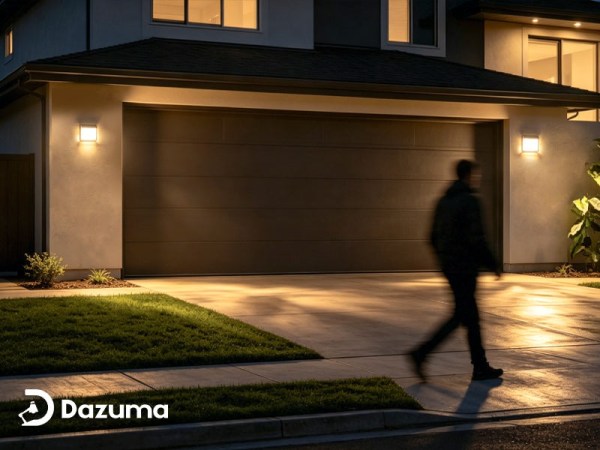
Dusk to Dawn Outdoor Wall Lights can establish a consistent layer of low-level illumination around a façade. They are especially suitable for primary entrances and architectural locations that should remain legible even when no person is currently present.
Comparing Presence-Based and Daylight-Based Control
The central distinction is what causes the response. Motion sensors react to people, vehicles, or other movement. Dusk-to-dawn controls react to ambient light levels. This difference affects the visual character of the property.
A motion-only scheme can leave a wall dark until activity occurs, creating a noticeable transition from darkness to brightness. A dusk-to-dawn scheme maintains continuity but may provide light for longer periods. The choice should reflect whether the design prioritises event-based visibility or an uninterrupted nighttime identity.
A Combined Strategy Can Offer Better Balance
The two approaches do not have to be mutually exclusive. A primary entrance may maintain a soft dusk-to-dawn glow, while a secondary passage uses motion activation. Some control systems can also provide low output after dark and increase brightness temporarily when movement is detected.
This layered strategy supports orientation without keeping every fixture at full output. It also creates hierarchy: the front entrance remains visually prominent, while less-used areas respond only when needed.
Fixture Form Still Matters
Smart control does not compensate for poor proportions or uncomfortable glare. Wall lights remain part of the façade during the day, so their scale, material, finish, and relationship to doors and windows require architectural consideration.
Shielded or diffused fixtures can reduce direct glare. Downward light may suit a narrow passage, while an upward-and-downward pattern can emphasise stone, brick, or textured plaster. At an entrance, the fixture should provide useful facial visibility without exposing occupants to a harsh bare source.
Coordinate Colour and Brightness Across the Exterior
Responsive fixtures should still belong to one lighting composition. Large differences in colour temperature can make adjoining walls appear disconnected. Warm white light often complements residential materials, while a consistent neutral tone may suit a sharper contemporary façade.
Installation and Evaluation
Before permanent installation, evaluate each fixture’s likely field of view, nearby obstructions, daylight exposure, and relationship to other lights. After installation, test the system by approaching from every intended route and observing it from interior rooms as well as outdoors.
Fixtures must be suitable for their level of exposure to moisture and weather. New wiring, control integration, or uncertain electrical work should be completed by a qualified professional.
Conclusion
Motion-sensing lights are most effective where illumination should follow activity. Dusk-to-dawn lights are better where architectural visibility and orientation should continue throughout the night. In many residential projects, combining the two produces a more responsive and balanced result.
The control method should be treated as part of the design, not merely a technical accessory. When sensors, fixture form, brightness, and spatial use are planned together, exterior wall lighting can improve function while preserving the character of the architecture after dark.


