
Racism is a prejudice, discrimination or antagonism directed against a person or people on the basis of their membership of a particular racial or ethnic group, typically one that is a minority or marginalized. or racism is the belief that different races possess distinct characteristics abilities or qualities especially so as to distinguish them as inferior or superior to one another. Preconceived thought about superiority or inferiority on the bases of Inheredity, biological factors like Color of the skin economic status, social status , political status etc. always gives birth to the Feeling of alienation the ‘RACISM’ we had witness a lot of practices which still are alive like racism in United states, Untouchability in india , Apartheid in Africa etc.
This inferiority towards a particular group or class on the basis of standard status biological factors etc. produce some racial barriers in the society like ‘Political Barrier’, ‘Economic Barrier’, ‘Social and Cultural Barriers’
Political Barriers:
Over the centuries in united states of America nation had struggled to abolish the most repugnant forms of exclusion and dominance, it neglected to uproot entrenched structural racism. Even after the one fifty years of slavery Blacks in United states faces discrimination in electoral process inability to participate in the fair election process and instead of fair choice to choose in the democratic process transformed into a lack of political power the power to choose the the candidate which establish the public policy priorities. Colored people or victims of Racism did not enjoy protection of equal rights their welfare and their interest. It may had happened the colored or victims of Racism had provided Constitutional morality or laws which provides access them to enjoy equal rights with dignity but on the social parameters when comes the question of social or political acceptance these laws seems to be negligible like written articles without any implementation.
Economic Barriers:
The superiority of majority groups discriminates with minority or particular class people which leads to unsymmetrical allocation of resources and access to allocation of resources used by people. Many organisations institutes does not entertain their openings and chances for all they put barriers for particular class in terms of buisness startups etc. therefore chances for Racial people are very remote which kept them away from their economic growth and lack of enhancement in their living standards.
Social and Cultural Barriers:
every country celebrates its cultural events and activities with equal and enthusiastic participation of all people irrespective of class, category, and status. But we came to encounter with some cases which shows racial people faces cultural discrimination they are prohibited to participate in convivial gatherings Seperate clubs and societies are framed and racial people faces clear discrimination in every aspect of the life and with it the most worst form of discrimination that is social discrimination, which makes them alienated from other classes they are not allowed to engage with whites even sitting with whites seems a sin. They are adopted citizens of a country as per the legality of constitutional provisions and constitutional rights but its very unfortunate they are not accepted morally and socially people have a common behaviour of disliking towards them. and this perception had penetrated so deep into the societies which seems very difficult to eradicate.
And such barriers and unacceptance sometimes leads to conflicts and violence which draw margins between people unequal access of resources and deprivation of job opportunities leads to poverty and one of the important concern it can distorted mental health because people develops inferiority complex which affects the Psychology.. Overall Racism is Very harmful and a clash factor which had drawn mankind on the margins of class and category a shame and a Stigma on The face of an Ideal Society And therefore Repugnant.


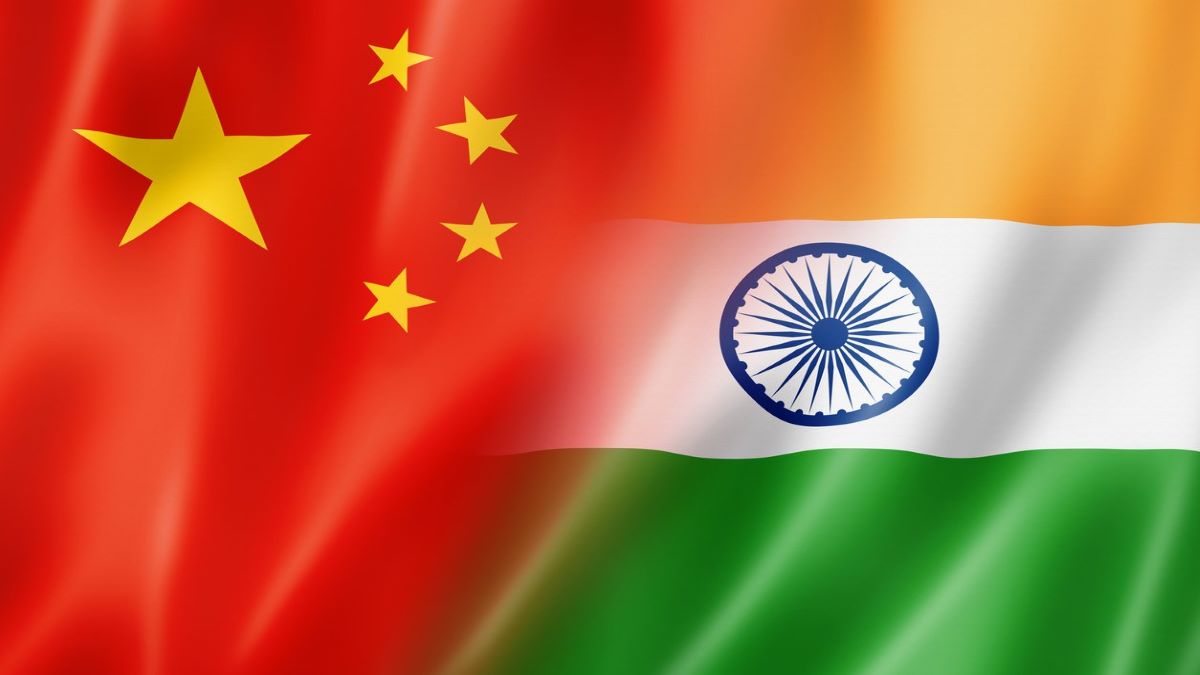 The GDP growth rate of India overtook the GDP growth rate of China in 2015. This has fuelled many newspaper articles in India stating that India is also on the path to replicating the Chinese growth story. However, the truth seems far from it. Despite the Indian media’s frantic efforts to put India and China in the same league by using statistics that are misleading to compare the two economies, India is still a long way behind China. True, that India has made rapid strides on the path to becoming an economic powerhouse. However China has been doing so for decades. China’s Economy is Four Times Larger Than India’s EconomyThe GDP of India is close to $1.5 trillion. At the same time, the GDP of China is close $7 trillion. The economy of China is at least 4 times as big as the economy of India. This means that even if China grows at the rate of a meager 1.5% and India grows at a rate of 7%, the Chinese economy would have added the same amount in output as the Indian economy would have!Comparing the GDP growth rates of India and China is therefore a pointless exercise. China’s growth rate has been consistently higher than India’s growth rate over the past three decades or so. India has barely overtaken the Chinese growth rate for a couple of quarters. Only if India can continue to beat the Chinese growth rate by a huge margin for the next two to three decades, does India stand a chance of overtaking the Chinese economy.Inflation in India is 6 times higher than it is in ChinaIndia’s GDP growth has been accompanies by runaway inflation in the country. Growth rate accompanied by inflation cannot last for a long period of time. Instead, such growth rate is indicative of the short term impetus that has been given to the economy by the monetary policy.On the other hand, China’s inflation has been relatively stable at a negligible 0.8% for many years. This has been accomplished despite the fact that China has been recording fiscal surplus for the past many years and ideally should be reeling with inflation. To the contrary, China has established sovereign wealth funds, which invest the additional cash in foreign assets keeping the inflation rate low.Given the fact that Indian economy is severely marred by inflation, it seems unlikely that they will be able to compete against China in the long run. China’s Manufacturing Productivity is 1.6 times than that of IndiaChina produces a lot more than India does. It also does so remarkably more efficiently. Given the better quality infrastructure and better production techniques at China’s disposal, it is not astounding that the average Chinese worker produces 1.6 times more output than that of the average Indian worker. This means that the productivity of China as a nation is 60% higher.The Indian manufacturing sector has multiple problems. These problems include erratic electricity supply, slow and expensive transport systems as well as lack of skills that increase manufacturing productivity.Given that a large portion of these problems are structural in nature, it seems unlikely that India will be able to overcome them in the near future.WorkforceThe Indian economy on the other hand, has a clear strategic advantage when the workforce is considered. The Indian education system was created by the British. As such, Indian workforce is global in nature. They can speak fluent English which gives them an edge over Chinese nationals who face language barriers. Also, the Indian workforce does high end jobs for the information technology industry and BPO industry as compared to the Chinese workforce which works menial jobs on the factory shop floor. Given that the future of the world lies in high skilled knowledge jobs, the Indian workforce may soon rise in prominence while the Chinese workforce may soon become redundant.One Child PolicyAlso, China faces what many economists call a demographic time bomb. For the past couple of decades, China has followed the one child policy to control population. However, now China faces a situation wherein there are more people out of the workforce than in it. On an average, every Chinese worker is expected to pay for the costs of at least two Chinese retirees.India, on the other hand, is facing a demographic dividend. It has a huge, extremely skilled workforce. Hence, if the government is able to provide jobs to these workers, the Indian economy is expected to grow by leaps and bounds. Given the fact that there will be a lot more people in the workforce than out of it, India is poised to become an economic superpower.EntrepreneurshipChina is still more or less a communist country. This means that all the enterprises there are run by the state. State run enterprises are usually not efficient and definitely not innovative. On the other hand, the Indian industry is based on innovative enterprises. Given the competitive nature of the world economy, the Indian industry stands a better chance at success in the future. This can already be seen as capital intensive Chinese industries such as coal and cement are going bankrupt whereas knowledge intensive industries such as information technology are thriving!The China India comparison is therefore absurd at the moment. China is a full-fledged superpower that has begun to show signs of decline whereas India has just started rising. The path is long and uncertain and only time will answer certain questions!





 One may see a person throwing a plastic wrappers or an empty bottel on the road from car in all the cities in India. This is a very common sight in our country of 1.25 billions because of lack of awareness, recklessness, and irresponsibility and of course- ‘Old habits die hard’. India is making progress after opening the economy to foreign investment however, it stinks that more than 54.7% of our house so are still without tolites despite the government spending about Rs. 1250 billions on sanitization project in the last two decades. Clean India movement in thus, a dream for every person of this country. However it is wrong to blame the government because it could do nothing alone. It explicitly requires that the general public has to be made aware of this malice. People of this great country litter with irresponsibility irrespective of whether they are rich or poor and where they live. And at the same time we also have no problem if living with the dirt. Now the question is what is really needed to get rid of this problem? Literacy and education is the real key to overcome this habit. One things is for sure is that hefty fines are not the solution. In this situation, we have to look forward to our new or younger generation who are the future of this nation. Our children can became the torch bearer of this Clean India Movement, if we can inculacate the habit of cleanliness among our children then perhaps this Movement can become a reality in India . This mission can be implemented and achieved by educating our children from the very beginning of their lives that is from school itself. If in the school students can be inspired for this cleanliness drive, their future will be safe and successful. This is an initiative by the Government of India and everyone’s support is a must to accomplish this dream.


 International Journal of Research (IJR)