
The compound qualities of “dignity” and “greatness” pervade Stevens’s thoughts throughout the novel “The Remains of the Day.” Early in the novel, Stevens discusses the qualities that make a butler “great,” claiming that “dignity” is the essential ingredient of greatness. He illustrates the concept with a number of examples, finally concluding that dignity “has to do crucially with a butler’s ability not to abandon the professional being he inhabits. “Professional principles are the driving force in James Stevens’s life. Over decades of service, he has immersed himself in his profession, dedicating his existence to the principles of dignity, duty, and loyalty. His ultimate goal is to be recognized as a “great” butler.
Dignity is foremost among the principles which Stevens links to greatness in a butler. It requires placing service to his master above all else and binding his own destiny to his master’s. Dignity requires restraint; to not “run about screaming” at the slightest hint of trouble. It demands he wear his professionalism “as a decent gentleman will wear his suit,” taking it off only when he wishes to do so and in privacy, when he is entirely alone. However, once Stevens achieves this level of dignity, it leaves no room for intimacy and separates him from his humanity. All ability to bestow or receive human warmth is blocked. In the presence of others, he must always deny and displace his real feelings.
Again, devotion to the principle of duty becomes the outward expression of Stevens’s struggle for dignity and greatness. He works hard to please his employer and takes pride in his subservience. When he stoically carries out his duties during the great conference of 1923 while his father is upstairs dying, Stevens experiences “a large sense of triumph” at the end of it all. In the face of everything, he had displayed dignity worthy of a great butler. Similarly, he feels a sense of triumph on the evening he loses Miss Kenton forever because he has submissively served his lordship well, “in a manner even my father might have been proud of.”
Loyalty is linked to duty and according to Stevens it is another aspect of greatness. Loyalty as an unquestioned principle does not permit Stevens to examine the actions of Lord Darlington as his lordship becomes deeply mired in international affairs. He stubbornly represses any feelings of curiosity or doubt, trusting in his lordship’s good judgment. In his desire for greatness, Stevens dedicates his loyalty to a gentleman whom he perceives to have fine and noble intentions. This blind loyalty, which Stevens believes he has “intelligently bestowed,” proves ruinous and casts doubt on the life path he has taken.
The art of bantering is something Stevens lacks, but it is a skill he wants to improve. Bantering is a theme which holds the novel together, as well as making the novel more comical, and throughout the story Stevens practices bantering. A good example of it is when he meets the locals at the pub the Coach and Horses in Taunton, Somerset (p. 138) This is where the lack of Stevens bantering-skills becomes obvious. The conversation(p. 138) ends up with Stevens expressing his feelings of disappointment as the reaction to his apparent witticism he recieved from the locals was not what he had hoped for .
The art of bantering can also be connected to the theme of butlers and dignity. This is because that if Stevens learns the art of bantering he may please his master Mr. Farraday, and it will make Stevens more professional, according to Stevens himself and his image of ‘the perfect butler’. During the journey Stevens undergoes personal change, and bantering has a great deal of importance for the processes. He considers the modification necessary for his employment as well as a significant pre-requisite for his profession.
Another detail of importance is the fact that the theme bantering opens up as well as ends the novel. In the beginnig of the nove Stevens and Mr Farraday are having a light conversation. As they speak of Miss Kenton, Mr Farraday involves witticism and Stevens reaction is total embarrassment. Stevens is not used to those kind of words from his employer, though he says: ‘The most embarrassing situation, one in which Lord Darlington would never have placed an employee’. At the end of the novel though, Stevens sees the bantering as a start of his future life. Stevens makes the conclusion of bantering as the solution of pleasing his master and becoming the ‘perfect’ butler.
Bantering provides an element of lightness and humor in the narrative, yet it is still one that ultimately demonstrates the degree to which Stevens has become an anachronism. Stevens repeatedly tells of various failed attempts at bantering, and muses over why Americans like his new employer, Mr. Farraday, like to speak in such a casual and seemingly meaningless manner. By the end of the novel, Stevens cedes that perhaps bantering can be a way to exhibit warmth, and he resolves to try again with renewed zeal. The fact that Stevens uses the word “bantering” instead of “joking around” or “sense of humor” in itself shows how old-fashioned and formal he is.

THE FUTURE OF EDUCATION IS HERE
Until recently, people at Lido Learning, a new educational startup company, would often be cut short by potential customers as soon as they heard “online tuitions.” Of the parents who did not hang up, only a quarter of the rest or one out of three would end up buying a subscription. By March, Lido Learning, whose educators gave math, science and English lessons on the internet to students from grade IV-IX in real time, had sold to students from grade IV-IX.
The organization increased its subscription revenue over the following three months. Students are currently spending 90 minutes on an average on the network each day, which can be seen as a substantial increase as compared to max. an hour earlier. A distribution team comprising of only 200 odd personnel has made marketing much more efficient and smoother. Rather than illustrating the idea of online schooling to customers, what the organization wants to do now is show them how “we ‘re better than others,” said Sahil Sheth, CEO of Lido Education.
The company, Vedantu, the industry pioneer in K-12 live classes (kindergarten through grade XII), was hit by the influx of new students in early April, causing an unprecedented shortage of teaching assistants. The company’s teachers were now instructing 1,000 students instead of 300-400 students in each class. 1 million students attended live classes on Vedantu in May, up from 200,000 in usual times. Only a small fraction of these were paid users, but monthly revenues still jumped by more than three times from January, CEO Vamsi Krishna said. “What was happening in a year’s time in terms of growth happened in three months’ time,” he said.
The pandemic-driven growth of online education has been so broad that it’s tough to locate an educational company that hasn’t taken a parallel route. From industry giants to smaller companies, investors are quite optimistic this is the sector’s defining moment.
In India, education has always had a quasi-religious significance, as a degree is seen as the only means of prosperity. With schools and colleges shut down, disarray entrance exam schedules, inaccessible offline classes, parents and students are even more concerned about the future than usual, prompting them to try online tuitions like never before.
“Usually, when a new category is being created, companies have to spend hundreds of millions of dollars on advertising over 8-10 years to get customers to shift from offline to online. In the case of edtech, this is happening super-fast because of the lockdown and because all the schools have gone online,” Lido Learning’s Sheth said.
The online education industry continues to be split into two categories by founders and investors: K-12 and post K-12. Both divisions, which in effect have several different verticals, had evolved rapidly anyway. The growth has been massively exacerbated by the pandemic. By 2022, the K-12 industry would grow by six times to approximately $ 1.7 billion, while the post K-12 sector would rise by nearly four times to $1.8 billion, RedSeer Consultancy predicts.
On the other side, funds are lined up to obtain shares in start-ups in healthcare. Byju’s, Unacademy and Vedantu, three prominent startups in education, are all raising large amounts of capital at soaring valuations. Over a dozen smaller startups, including Lido Learning and WhiteHat Jr, are in talks to raise between $5-50 million to anywhere.
Public
Ayurveda – A sustainable alternate medical practice

Ayurveda is a holistic system of medicine that is indigenous to and widely practiced in India. The word Ayurveda is a Sanskrit term meaning ‘science of life.’ Ayu means ‘life’ or ‘daily living’ and Veda is ‘knowing.’ Ayurveda is a medical system that deals with health in all its aspects; physical health, mental balance, spiritual well-being, social welfare, environmental considerations, dietary and lifestyle habits, daily living trends, and seasonal variations in lifestyle, as well as treating and managing specific diseases The origin of Ayurveda is lost in prehistoric antiquity, but its characteristic concepts appear to have matured between 2,500 and 500 B.C. in ancient India. The earliest references to drugs and diseases can be found in the Rigveda and Atharvaveda.
Ayurveda is all about Dharana and Dharma, both Sanskrit words denoting a sustainable complex of life and living: the first within the organism itself and the second within society and the world. Ayurveda is almost – in a positive sense – preoccupied with ‘sustaining life’: as a science it focuses on preserving life down to the cellular level of each living organism, and first and foremost of human beings. One of the reasons that sustaining and preserving human life is so important in Ayurveda, is a result from the fact that it is a spiritual science which sees this life – and our bodies as temples for our souls – as a way to evolve spiritually. This evolution is not for a personal gain, but for the greater common good: Ayurveda sees life as one, and not as a fragmented event.
Ayurveda gives clear guidelines for lifestyle and nutrition, which all fit within a framework of Dharma. Dharma naturally supports something that carries responsibility for the whole of society and humanity, and thus also regarding ethical and environmental matters. Lifestyle – according to Ayurveda – should be helping to preserve a healthy environment and support of nature, in all possible aspects. This cannot but lead to supporting responsible behavior in keeping our water, our nature, our forests, our cities, our air, and in short our whole life, as clean and pure as possible. It also implies a natural care for good and sustainable food sources, and agriculture which preserves not only life in the sense of clean and pure production, but also responsible and safe nutritional methods. Good examples include active support of organic and biodynamic farming, support for natural agricultural systems such as permaculture, as well as active resistance of technical and not safe-proof production methods such as with GMO foods. It also promote the wise and respectful use of animal products.
According to the sustainability goals of Ayurveda, organic and other forms of responsible farming should be used to grow the herbs Ayurveda uses for its remedies. Use of local herbs has been advised over procuring exotic and rare herbs. Commonly availabe spices such as cumin and turmeric have profound healing properties, and are powerful additions in the arsenal of medicinal substances. Ayurveda is the makes use of small shrubs to big trees for various purposes and to that Ayurvedics follow certain guide lines for collection and cultivation. So in order to obtain herbal medicine Ayurvedics also engage forestation and cultivation. The use of medicinal plants is oriented to take advantage of their ability to harmonize the balance between the patient and the basic influences of life, such as diet, work, and family life. With more than 2700 plants at its disposal, it is clear that Ayurveda in quite close with nature and its powers. In this way both doctors and patients easily see their connections to nature.
The Hospital wastes of Ayurveda are almost biodegradable. The medicines are of Herbal or Mineral or a mixture of both which are easy to dispose in to the earth after their expiry or their use. The pharmaceutical waste of Ayurveda is also biodegradable and some of them make good manure for cultivation. The plastic and other artificial materials not used for treatment makes Ayurveda an Eco friendly system. In Ayurvedic system each and every part of the environment is given importance which makes the optimum utilization of natural resources from Daily usage to the Drug. For example, neem- plant is used for Twigs, tooth brushing and tongue cleaning; Leaves-for medicating the bathing water; Seed oil, for external application over scalp for healthy hair etc.
This approach to nature as the source of healing and to personal care, as a source of loving health care, with emphasis on the preventive side, is a very welcome feature of Ayurveda, which could permeate and facilitate our approaches to sustainability and to the rich relationships between people (society), things (economy) and nature (ecology). Environmental sustainability is highly related to conscious mental and bodily good practice, of which Ayurveda could be considered as a very useful model, not only in the countries where it is traditionally applied, but everywhere. Ayurveda not only teaches to live healthy, but also teaches to love nature and live with nature.
Public

Redmi Note 9 vs Redmi Note 8: Is the Helio G85 really a performance upgrade?

Is newer better? The Redmi Note 9 was launched months ago debuting with MediaTek’s new Helio G85, but how does it compare to the tried and tested Snapdragon 665 on Xiaomi’s last-gen Redmi Note 8? Well, the results are nuanced.
A while ago, we compared the Redmi Note 8 Pro to the new Redmi Note 9 Pro in an attempt to find out which phone offered better performance across the board. This time out, it’s a fight between the cheaper models—the Redmi Note 8 and the Redmi Note 9. Like with the previous comparison, it’s a MediaTek versus Qualcomm battle, only this time, the newer phone has the MediaTek chip.
Starting out with Geekbench, the Redmi Note 8 and its Snapdragon 665 records a single-core score of 309. The Redmi Note 9 flexes its mucles here, with a score of 357. That’s a powerful showing by the Redmi Note 9, translating into a 13% advantage. In the multi-core test, the Redmi Note 8 earns a score of about 1,312. The new Redmi Note 9 is also on top here, as it comes away with a 1,320 score. The difference is negligible.
Moving on to AnTuTu, the similarities in CPU performance continue. The Redmi Note 8 earns a CPU score of 71,021. The Redmi Note 9 is ahead here, too, with a score of 74,066. That translates into a 4% advantage for the Redmi Note 9 and its MediaTek Helio G85.
It’s in the GPU department that things get interesting, as the Redmi Note 8 manages a score of 32,316 in AnTuTu’s GPU test. The Redmi Note 9 wins handily with a score of 41,644—a significant 29% advantage.
So, what do these numbers imply? Most notably, that the Redmi Note 8 and Redmi Note 9 will offer similar day-to-day performance. The two phones and their respective chipsets deliver similar numbers in the CPU tests, albeit with the Redmi Note 9 slightly edging the Redmi Note 8 by right about 10%. It’s in the gaming department that the newer phone really shines, however, as it appears to have a significant advantage.
Of course, it’d be facetious to ignore the fact that MediaTek has been caught cheating on benchmarks in the past. The company’s response wasn’t particularly encouraging either. In terms of efficiency, the two phones should also be similar. We don’t have perf/watts numbers, but the Helio G85 is built on TSMC’s 12nm node, while the Snapdragon 665 is built on Samsung’s 11 nm LPP node.
Does the Helio G85 on the Redmi Note 9 outperform the Redmi Note 8’s Snapdragon 665? Yes, it does. But it mostly comes down to the GPU, and CPU performance is similar enough that the overall differential isn’t a game-changer—unless you’re a gamer.

Martin Christopher
Public

MOBILE PHONE TOWERS ARE DANGEROUS?
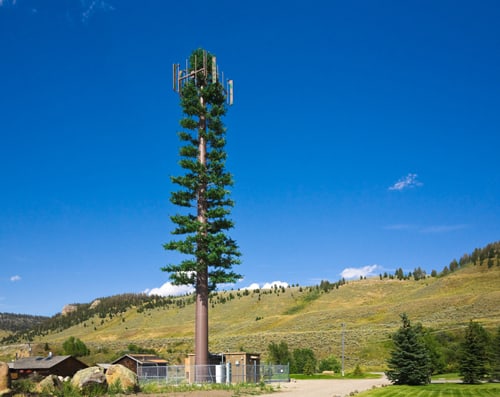

An estimated one billion people now have mobile connections in India. It is hard to imagine how many towers exist to support that level of connectivity. But if we wish to know a number, there are around 5 lakh towers and counting. Even though there are many towers, people are complaining about call drops they face now and then. Then there is an additional issue that contradicts this complaint. People primarily perceive cell phone towers as radiation-emitting machines, so they want a lesser number of towers in and around their residential area, but they want better connection quality. Isn’t it ironical that in many ways we demand more of these towers that we believe to be causing possible risks of cancer, radiation and other diseases? However, the government has established that there is no practical evidence that proves these. There is a general perception in the public that towers should not be near schools, hospitals and residential areas. They are associating towers with the increase in various types of health symptoms like depression, headache, nausea, loss of appetite, memory loss, blurred vision, skin and cardiovascular problems. Perhaps it is not the tower that is spreading radiation. Maybe it is the anxiety, the fear that is in us regarding possible radiation in towers that leads to diseases.
According to authorities, the proximity of the tower to a human settlement area is not an issue. Government has established stringent safety norms and only those who comply can raise a tower over a building. Radiation limits have been increased to 1/10th of global standards making India one of the safest countries in this regard. When towers are set up, there are very stringent processes to set them up. How high they must be, what location they have to be at, then there is a line of sight issues; these are some considerations to be looked at. A company must obtain certification by the authorized operator, and if things are not checked, they can easily be removed.
In my understanding, when an antenna’s power is increased, it develops better connectivity for users as the reach-ability of mobile waves increase, and the rise in power creates the discussed problems. For power to be less radiating, towers must be set low, and they should be closer together. It is to better the user connection, smaller towers that are located close to each other are required, and they do not radiate much power.
We must not forget the frequency waves emanating from mobile devices are also harmful to us. It is also said that continuous exposure to a mobile device is more dangerous than a tower. In overseas, the telecom companies are educating people with regards to usage of cell phones example the skull of a child is small, so he must not be exposed to the device like we are. In contrast, there is no visible public initiative been taken by our telecom companies in this regard. Some forums are created by TRAI (Telecom Regulatory Authority of India) and companies, but the popularity of these forums are awful.
Some scientist believes that heavy mobile users are under danger, and the habit of mostly listening to phone from one ear increases chances of brain tumour. We must learn that cell phone use is under our control, but when we talk about towers, we cannot do much about their establishment. Even though no credible evidence has come so far against its (Tower’s) harmful effects, they are a need of the population. There is no published or unpublished literature, so now in my experience that conclusively states whether these towers are harmful or not. There are two aided projects for the study of this subject- government-aided and company aided. Assigned persons under these projects have been and are carrying studies and surveying the psychological disorders of people who are heavy users to establish some literature on harmful effects.
People in authority say that nothing has been proven while people are worried that do they have to suffer from diseases and die before things are determined. We are complaining about everything. If we take towers away, then there will be more call drops, and then we will start complaining about that as well. Hopefully, these devices of the future stay human friendly because we need them. Lastly, one question still makes us think more- if there was a mobile tower in front of our house, would we get it removed?
Public

Failure Should Be An Option
Its okay to be scared. Its okay to cry. Everything is okay but abandoning shouldn’t be an option. People always said that failure is not an option. Failure should be an option because once you fail you rise up . And then you fail and then again you get up and that keeps you going. That’s how humans are strong. Failure is an option, should be an option but giving up is not an option. Failure is what you always fear of getting failed again but once you start overcoming your fear you start not giving up.
You need to change your mind because some of you are thinking about giving up because you’re in a season of failure but just because you’ve fail doesn’t mean that God doesn’t have bright future in store for you. It is always too soon to quit. But remind that failure isn’t final, its formative. It is the part of the process, part of the journey. Your failure matters as much as your success. How do you think you’re gonna grow if you don’t ever fail. Yet some of you have failed and you have decided. Failure is an event, its never a person. Just because you failed doesn’t mean that you are a failure in fact failure is actually fuel for your future. The way that you grow, the way that you advanced, you have to fail in order to succeed. Like everyone successes is stacked on top of failures. You need to get a revelation that the joy is not in the success, the joy is in trying, the joy is in the process. The hardest part in life to inhale failure. Whenever we lose at something we get one step closer to winning it for the next time.
The difference between the successful people and unsuccessful people is the fear. The fear of loosing again, the fear of competition with the best or the fear of doubting your worth. But the best is also comes up with the worst. Giving up should not be an option. The best one doesn’t give up but they try harder to become the best. The hardest thing in life is to lose whereas winning is easy because you win your are happy but when you fail you dust yourself off. Being easily successful will make you happy but never will be able to understand the situation of being failed. Having success without doing any efforts will one day give you failure and at that time you will not be able to accept it. That will make the situation harder for you. That’s why failure is must for success.
We are trapped in insecurity like we’re trapped in it. This idea that we see other people above us but when we look at ourselves we’re beneath, we’re lower than and its wild because nothing will hold your back more than your own insecurity. Your own insecurity will kill your dreams than failure ever will. So just get up of the sidelines and attempt to go for a better version of you. The same light shines within you too.
Public

“Humans And Space Exploration”
Space has always fascinated humans with its hidden facts and secrets. Space exploration and various researches have helped us understand a bit about space, our earth and our solar system. Frequent Trips to space and various space missions have not only helped humans to be more advanced in technology but also give birth to new theories and research work. Today we live in our world and technology initially made to be used for space missions only.
Launch of satellites, landing on the moon, sending rovers on Mars and building and the International Space Station has set a big example for the coming generation to go beyond with the improvement in current technology.
- There have been various advantages known to humans from space exploration and missions. It has helped us to estimate and forecast weather, and thus make people aware about any kind of danger.
- Telecommunication and the Internet have been possible through these satellites as well.
- Many countries use satellites as defense systems to safeguard their country from any kind of external attack.
- These space missions help us to know about natural phenomena happening outside our solar system and also about things happening various light years ahead.
- It has fascinated students towards itself that more and more ideas for space mission exploration have been born.
- It has helped us to land on the moon and acknowledge the presence of resources which we can use in future and build a human base over there.
- Also we were able to reach other planets in our solar system through satellites. And even land on some, which includes Mars. These do have challenged humans at times, but ended on the side of mankind.
- We have also known about the possibilities of life on other planets at a distance from our solar system, which would surely be a curiosity to reach and know if those planets do support life.
These do have some disadvantages as they require a lot of investment, loss of resources and material and also the surety of the result is not available. People do after basic needs in their life, and we are invested in space. Everything has its pros and cons, and it depends on us if we see the better side or create it worse for others to look at. The advantages of space exploration have changed the life of common man without any doubt with more facination, new discoveries and the dream to go in space. Whatever we see around us is a result of science and humans invest in it . Space exploration will bring up new possibilities, research, ideas which will not only make our life better with comforts and facilities but also fill our life with the dreams to turn reality and those realities to be lived in.
Space exploration is a boon to mankind, as it not only brings out the possibility to discover new species and planets like ours but also can be a better option to help us shift to other planets with better opportunities and resources seeing the present scenario of our planet. “Bad air to breath, impure water to drink, lack of natural resources and people dying of hunger and basic needs day by day. Reduction of land as per growing population, cutting of trees for their basic needs and killing of animals for hunger”. Seems horrible but is the bitter truth. Thus soon we will get exhausted of all our resources and would leave to die.
The exploration has a tendency to bring out the ray of hope and possibilities for our coming generation to survive. We all need to work on this together by not only coming together for our earth, saving it from degradation but also searching for better alternatives as future homes.
Public
Curry Leaves : Panacea For All YOUR Problems

Curry Leaves popularly know as kadi patta is a magical herb used in Indian cooking. Since ages it has been used in Indian kitchen to add enchanting aroma and burst of flavors to the dish. But did you ever know, this miraculous herb has some amazing health benefits too which makes it an essential ingredient in many holistic treatments like Ayurveda, Siddha, Unani etc. With an increase in the health awareness, curry leaves have turned out to be a fad for fitness enthusiasts for its umpteen health benefits.
Here I give you some important reasons to chew on those curry leaves that pop up on your plate.
1. Help in Losing Weight
The presence of a component called Carbazole Alkaloids in curry leaves helps in effectively regulating the cholesterol levels in the body which further helps in weight loss. So it is advisable to add these magical leaves in your diet either in meals or salad. One can even eat freshly sun dried curry leaves in morning on an empty stomach.
2. Helps in improving digestion
These curry leaves are very effective in increasing the metabolism rate of our body. Whenever you suffer from health issues like dysentery, constipation and diarrhea then you can add these wonder herbs to your food to improve your condition. You can even add the sun dried curry leaves in your buttermilk and curd.
3. Help in Relieving Morning Sickness
If you are feeling queasy or nauseous during your pregnancy, curry leaves may help in reducing the symptoms. Consumption of curry leaves help in the secretion of digestive enzymes, which provides ease from nausea, vomiting and morning sickness.
4. Helps in healing wounds
If you experience a burn, cut or bruise, curry leaves paste may effectively help in healing as it is very rich in anti – bacterial and antioxidant properties.
5. Good for eyesight
Enriched with the goodness of Vitamin A, curry leaves are great in improving eyesight. It contains Carotenoids that can protect cornea. Apart from that, curry leaves can prevent early onset of cataract.
6. To reduce congestion
Kadi patta has long been a home remedy when it comes to dealing with a wet cough, sinusitis, or chest congestion. Curry leaves packed with Vitamin C and A rich in kaempferol can help loosen up congested mucous.
7. Help in keeping Diabetes under check
Consumption of curry leaves on a regular basis help in stimulating the insulin producing cells. These cells help in keeping the blood sugar levels under check.
8. Prevent Hairfall
The protein and beta- carotene present in curry leaves help in increasing hair growth and reducing the hair fall. The antioxidants and amino acids are also beneficial in moisturising the scalp and strengthening the hair follicles.
9. For conditioning dry hair
Coconut oil boiled with a fee curry leaves in it is a great way of providing deep conditioning to dry and dull hair. Keep this oil mixture applied on hair for half an hour and then shampoo as usual. You will definitely experience some better results.
10. Prevent greying
Hair greying is a natural phenomenon, however, sometimes premature greying may occur due to genetic reasons, alcohol usage or due to stress. However, vitamin B in curry leaves help in strengthening and nourishing the hair and also helps in delaying the hair growing process.
So now I hope you will definitely agree that curry leaf is a magical herb. They are so versatile that they can be used in so many forms. Use in your diet, make a decoration, boil it in oil or simply chew it. Choice is yours what we want is to simply obtain its magical benefits.
Public

binary number system and indian history

Binary numbers, number system, decimal codes, computer and technology, Binary codes , information theory, digitallogic gate these things are co-realated with each other . Binary numbers we generally come to know about this number system in our junior year computer class and we used to solve this kind of binary protblemes like convert the decimal number to binary number .
so let’s know what is binary number system binary number is a number expressed in the base-2 numeral system or binary numeral system, which uses only two symbols: typically “0” (zero) and “1” (one).A binary code represents text, computer processor instructions, or any other data using a two-symbol system. The two-symbol system used is often “0” and “1” from the binary number system. The binary code assigns a pattern of binary digits, also known as bits, to each character, instruction, etc

now if we serch for the history for the binary number system theory or binary code , source show that the modern binary number system, the basis for binary code, was invented by Gottfried Leibniz in 1689 and appears in his article Explication de l’Arithmétique Binaire. The full title is translated into English as the “Explanation of the binary arithmetic”,
But In India the binary number system came around 3rd or 2nd century, Acharya Pingala an ancient Indian mathematician invented binary system , it,s assumes that he was 1st inventor of binary system in the world. Acharya Pingala authored Chandaḥśāstra (Pingala-sustra) or Chandhas refers to one of the six Vedangas or limbs of vedic studies Chandaḥśāstra literally translate to sciece of meters in Sanskrit. Pingala used binary numbers in the form of short and long syllebles making it similar to Morse code, here the binary numbers increased toward the right and not to the left like in The modern binary system, in this book number started from 1 not 0 . Pingala used laghu(light) and guru(heavy) rather than 0 and 1 described syllbles,(four short syllables—binary “0000”—is the first pattern),

That the binary code was invented in India is hardly a surprise. Not long ago, scientists discovered a very intriguing ancient Indian text known as the Bakhshali manuscript that re-writes history of number zero and mathematics.

Public

SHAILAJA TEACHER: corona virus slayer
Kerala, which recorded India’s first three corona virus cases,has been successful in flattening the curve of new infections. The southern state has reported 3,451 cases, of which 1809 patients were discharged after receiving treatment . Twenty-two deaths have been recorded so far in Kerala.
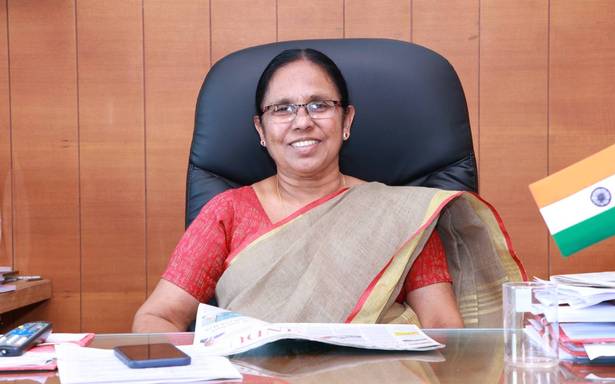
Kerala Health Minister KK Shailaja popularly known as Shailaja Teacher has been hailed for effectively control the Covid-19 curve in the state , at a time when the entire country was devasted by the disease. Kerala was apparently successful to fight with the virus because of timely intervention by the Minister.
Recently she was honoured by the United Nations during the celebration of Public Service Day for tackling the Covid-19 pandemic Effectively .The UN observed Public Service Day on 23 rd June to honour those who risking their life and health to deliver essential public services amid the ongoing Covid-19 pandemic.
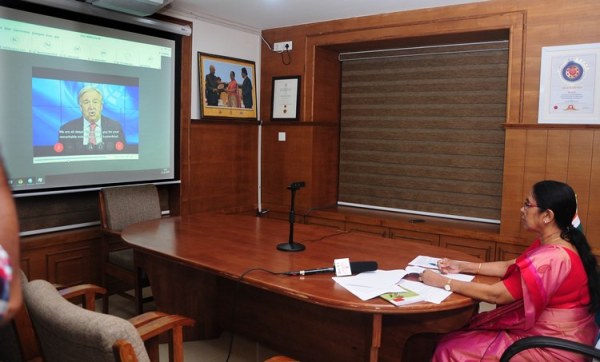
the event was held at virtual platform and saw the digital participatation of UN secretary General Antonio Guterres and other top dignitaries

 International Journal of Research (IJR)