Human Resource Management

Meaning

Human resource management involves procuring, developing, maintaining and appraising a competent workforce to achieve the goals efficiently and effectively. Staffing is an integral part of human resource management. It is also concerned with procurement, development, compensation, integration and maintenance of managerial employees.

The National Institute Personnel Management (NIPM) of India has defined human resource management as ” the part of management which is concerned with people at work and with their relationship within an enterprise. It’s aim is to bring together and develop into an effective organisation of the men and women who make up an enterprise and having regard for the well – being of the individuals and of working groups, to enable them to make their best contribution to its success. “

Objectives of Human Resource Management

  • To procure right person at the right job.
  • To establish desirable relationship between employer and employees.
  • To mould human resources in the structure of organisation effectively.
  • To develop personality of employee through training and development campaigns.
  • To establish harmony in goals within the organisation
  • To establish employee discipline and moral.

Characteristics of HRM

  • Human focus :It is concerned with the effective management of people possessing energy and capabilities. It is individual oriented. It is specially focused on the human oriented approach. The detailed investigation of human resource in organisation is made.
  • Management Function : It involves managerial functions such as planning, implementing and controlling of acquisition, development, utilization and maintenance of human resources.
  • Pervasive Function : HRM is pervasive in nature as it is present in all enterprises. It is performed in all levels of management. The responsibility of human resource cannot be delegated to other. It is practically implemented in the organisation at various levels.
  • Continuous Commitment : It is continuous function of management. In other words, it is not a one- time process. It will continue till the organisation exists. It is continuously monitored at every step of organisation existence.

Duties performed by Human Resource Personnel

  • Recruitment
  • Collecting information about jobs
  • Developing compensation and incentive plans.
  • Training and development of employees.
  • Handling grievances.

DIRECTING

Directing, in simple words, is instructing the subordinates to follow a certain process to attain a given objective and it is getting the work done through instructions and orders and directing is an important element of management without which success cannot be achieved in the managerial process and it is very essence of management and in fact, it is the sum total of all managerial efforts and it helps in the organization marching towards its defined goal. After planning, determination of objectives, organization, and forecasting, the working force needs briefing about the stated goals which have to be accomplished following the policies, programmes and schedules. Directing is the managerial function of guiding, motivating, leading and supervising the subordinates to accomplish desired objectives. It is an important managerial function that initiates organiser’s action and it is a connecting and activating link with various functions of management and it is a process around which all performance revolves and directing bits of help in mobilising and synthesizing human resources and efforts to accomplish the goals of the organization and directing is the heart of management-in-action and essence of operations. According to Ernest Dale directing is “Directing is telling people what to do and seeing that they do it to the best of their ability and it includes making the assignment, corresponding procedures, seeing that mistakes are corrected, providing on-the-job instructions and of course, issuing orders” and according to another author Newman directing is “ The process of directing is concerned with the way an executive issues instructions to his instructions to his subordinates or otherwise indicates what is to be done”. As a continuous process, directing comprises of:

  1. Issuing orders that are clear, complete, and within the capabilities of subordinates to accomplish.
  2. Training and instructing subordinates to carry out their assignments in the existing situations.
  3. Motivating subordinates to try to meet the expectations of the manager; and
  4. Maintaining discipline and rewarding those who perform properly.

NATURE OF DIRECTING

1. Directing Initiates Actions

Directing is a key managerial function and a manager has to perform this function along with planning, organizing, staffing, and controlling while discharging his duties in the organization and while other functions prepare a setting for action, directing initiates action in the organization.

2. Directing takes place at every level of management

Directing is a pervasive function of management and it exists at every level, location and operates throughout an enterprise and every manager, regardless of the number of subordinates, performs this function and he has to give instructions to the instructions, guide them and motivate them for the achievement of certain goals.

3. Directing is a continuous process

Directing is a dynamic and continuing function and it is the essence of management practice and the techniques and methods of directing have to be changed with t eh changing organizational conditions and a manager are expected to guide his subordinates in all the changing environments. Directing’s objectives are to get the work done and to see that the management works ore responsibly and the manager has to make sure that the problem faced by his mens are solved quickly.

Treasury and Cash Management Providers 2020

Low interest rates, international trade disputes, economic slowdown, geopolitical risks and diverging regulatory require corporate treasurers to provide greater visibility and control of their cash.

For banks to remain the first choice for corporate clients, it’s important they invest in the right technologies to solve customer pain points. “We’ve had a real focus and concentration on better analytics, specifically associated with what our clients are doing with us on a day-to-day basis to be able to track, monitor and recognize trends, issues and activity,” says Mike Bellacosa, Global Head of Payments and Transaction Services at BNY Mellon.

Greg Kavanaugh, head of Global Product Management, Global Transaction Services, Bank of America, says the potential that digitization offers by way of data is huge. “There are even more-significant benefits than speed and paper reduction. With the right infrastructure in place, digitization has the power to transform a company’s treasury operations. It can give a company the intelligence that will help them optimize their operations. Data points could be fed into artificial intelligence [AI] engines to improve and ‘educate’ the algorithms. These algorithms could then provide dynamic advice and insight, automating processes and letting the company make more-informed business decisions, including anticipating cash flow needs or negotiating better contracts. We’ve yet to see the full value of digitization. That’s a very exciting prospect for every company of any size.”

Greed is the main cause of unhappiness in life.


Greed is a recognised vice and it is born of an excess desire for something. It may be of power, wealth, ambition, name, fame, and whatnot. It brings in its wake tension and unhappiness. But apart from these, there are one or two kinds of desires which can not be summarily rejected as bad. It is what we might term as access to desire to be nobly great. I shall discuss this exception to the rule at the end.
The basis of greed is desire but all desires are not greed at all. One must remember this. To be desireless is to be dull and inactive. Only when our desires are based on base selfish motives, we can call it greed. Then we are not satisfied with the fulfilment of our needs but want to have much more than our needs. We develop a desire to grab and the more we grab the more we become selfish and proud. This passion or excessive desire to have more is nothing but greed. A man then becomes shameless and pitiless. He spares none to achieve his end. We can cite some celebrities in whom this greed reached its worst form.
History presents the worst examples of greed and power in Hitler. He wished to be the supreme ruler of the world through the foulest and cruel method. He is still considered to be a dictator. A similar example of the greed of wealth today is Harshad Mehta, of ambition and power Saddam Hussain.
There goes an old saying, “greed begets sin and sin is the cause of death. The above-mentioned examples bear out the truth of the proverb. Even in normal life greed cause unhappiness as well because this fell desire is a suicidal passion. It never rests until it’s the target is achieved. It sets the mind on to invent foul methods. The greed of wealth tempts him or her to cheat others and to steal. The greed of power tempts him to show his might on the weak and the innocent. It is a proven truth that the greedy fulfil their desires by exploiting the weak, the poor and the innocent. He is always afraid of the strong and the alert person, for the latter may resist.
Unwary lies the head that wears a crown. Too much of power or wealth steals away a piece of mind. The man is always afraid of robberies and rivals of power. The opposite of greed is contentment. The latter is a spiritual asset for any man. But greed multiplies like wildfire. The greedy man can not accord to rein his desires. Naturally, he always remains at the mercy of his dangerous desires. He remains mentally restless and like a founder down the hill, goes down committing sin after sin. If this is not an unhappy state then nothing else can be.
It is now conclusively proved the merely an excess of desire is not greed. A man can suffer from an excess of desire as well. Milton suffered from an ardent desire to write great epics. Sinilarly great leaders nurse vehement desires to rise in life.But they do not fall in to the category of greed because these are nourished by wealthy and noble intentions.These give strength to the spiritual man whereas greed generally flatters his meterial ambition.

Do’s and Dont’s while working in kitchen

Do’s:-

  1. Wear shoes of good quality and that should suit you.
  2. Maintain uniforms and cap is amust.
  3. Keep wounds, cuts and burns covered.
  4. Keep face, body and uniform clean.
  5. Avoid scratching habit anywhere when at work or relaxing.
  6. Keep hairs covered.
  7. Follow rules. Do right thinhs rihtly and then have speed.
  8. Learn hygiene and never compromise with practice.
  9. Always walk to left and be concern to avoid accident.
  10. Work safe and never overload nor overwork and be tired.
  11. Cover coughs, sneeze and wash.
  12. Enjoy your job. Give your best and leave the rest on Almighty.
  13. Avoid filthy eating practices.
  14. Keep working area clean.
  15. Wash your hands with soap at intervals, when coming to duty and
    always after sneezing, blowing the nose, smoking, cleaning dirties, cleaning
    equipments, and using toilet.

Dont’s

  1. Don’t spit, sneeze, smoke nor chew gums in working area.
  2. Don’t use finger for tasting.
  3. Don’t allow to touch anypart of the body while working or after.
  4. Don’t taste food very often. Taste with a tea spoon never the cooking
    utensils. Avoid filthy eating practices.
  5. Don’t make you and your working area dirty.
  6. Never encourage heavy ornaments, harmful cosmetics and strong
    perfumes.
  7. Never touch food when suffering decentery.
  1. Never nail by teeth.
  2. Don’t keep peels, raw food, cooked food or two foods together.
  3. Don’t smoke. If you smoke go out of kitchen. One must wash mouth,
    face and hand before food handling.
  4. Waste not, want not.
  5. Don’t taste food very often.
  6. Don’t use lavish cosmetics and strong perfumes.
  7. Don’t lean or sit on work surface
  8. No nose picking.
  9. No heavy abrasion on skin.
  10. No heavy jewellery, rings, bangles etc. and watch.
  11. Don’t touch raw food, disinfectant.
  12. Never carry knives or other tools with the points protruding.
  13. Don’t attempt to catch a falling knife.
  14. Maintain work environment. Never encourage alcohol and drugs.
  15. Don’t dream in daylight. Don’t ever run nor slide. No hastyness no
    horseplay.
  16. Knives must never be left in sinks of water.
  17. When using a knife, cut away from your fingerline
  18. When cleaning a knife wie the edge away from you.
  19. Keep work benches clear of unnecessary tools, especially knives.
  20. Keep oven clothes dry.
  21. Never use your hands where it is unsafe.e.g.mincing machine, bowl
    chopper, liquidiser etc.
  22. When using electric mixer ensure that it is in the first gear before
    switching onWhere pans are removed from the oven do not leave hot handles unmarked.
  23. Combine extremes of temperarure in cooking must be done slowly.
  24. Don’t leave saucepan handles protruding from the stove top,
  25. Avoid the use of excess fat when grilling, frying, roasting etc.
  26. Never put cans in bainmarie to heat up.
  27. Unsealed containers with liquids should not be left above shoulder height.
  28. Spillages of water and grease on the floor must be cleared up immediately
  29. Breakages of glass and chinamust be cleared awayand checked immediately
  30. When lifting heavyy objects from the floor do so with a straight back.
  31. Be particularly attentive when using electric mechanical equipments.
  32. Avoid distractions when carrying out tasks particularly when doing so at allspeed.
  33. Never taste by hand.

UNIFORM OR PROTECTIVE CLOTHING

Hat/ Cap / net- Headgear – circulation of air, doesn’t allow the hair to come
into the food. One can’t touch in case of trouble. Partly absorbs sweat,
prespirations. A pride for worker and it differentiates a chef. Modern trend￾disposable

Neckerchief– absorbs perspiration, de mark the grade and help in classifying.
Jacket/ Coat/ overall coat– not loose to cause inconvenience and look odd,
inconvenience to work, nor tight to restrict free movement, double breasted to protect front body from spillage and heat, save scalding, sleeves protects from accidents and does not allow sweat to fall on food, protect high heat, protect from hot liquid and spillage. Designed jackets look more attractive and distinct.

Dusters– two- should be clean and at least one dry, to confirm a clean and
dry plate in which the food is servd. Help in cleaning table top, vegetables,
fruits, gas range andother working areas, utensils and equipments. Always wash it in between to keep clean and dry it if there is any opportunity and avoid bad smell.
Appron– should be below knees to save you immediately.
Trouser– protective, should be fresh, loose, never tight that restricts
movement particularly while seating.
Shoes– protective foot wear- strong, stout, durable, repair- safety during
working, sensible hard heel- keep firm footing and avoid slip. Elevated heels
keeps toes closed, pain and give instability during pressure.
Shocks– absorb sweating, smooth to walk, save foot,
Goggles– for oven
Gloves– protect hand
Hair net– for lady chefs
Gunboots– protect leg in ice carving, to enter deep freeze cabinet, cleaning

Theatre of Absurd and Modern Dramatists.


Immediately after the second world war, French theatre was associated with a short lived corruption of surrealistic drama which came to be known as the Theatre of Absurd.The sudden outburst of French absurdism was partially nihilistic reaction to the recent atrocities,had chambers and nuclear bonds of the year.Theatr of Absurd revealed the negative side of satire and express the helplessness and fatality of a world which seemed to have no purpose.
Samuel Beckett drew upon the contents and techniques of the music hall, the techniques of mime andaspectd of comedy to represent the business of everyday living.The characters of Beckett’s two famous plays -“Waiting for Vodot” and “End Game”-Vladimir, Estragon, Pozzo and Lucky, Hamm and Clove, Nag and Nell are essentially pairs of comics or clowns who divert themselves and also their audience with double acts of cross stock, tumbling, falling asleep,switching hats.The tramps who wait for Godot quarrel, eat, try go sleep, even attempts suicide- all the fashion of such performersand loss of dignity implicit in the antique itself becomes an absurdist image of life.The activity of these characters is not action in the sense that it works to develop a story,it is merely performance,the visible presence of an entertaining character Hamm and Clov wait for the end that does not come like figures curved in time,but they also do so with a pathetic animation and at the same time it is also funny to watch them.As in farse,cause and effect are discounted,time is speeded up or slowed dowm,fat is unpredictable and anything can happen.This is how Beckett sketches the absurd form of drama.It seems that the universe is an international one.Eachcharacter is ridiculously dependent on the other but the laughter is without mirth.
Harold Linter is another fine writer who was indebted to Backett as he himself said and this can be seen in his bleak settings and in the occasional patterns of pair dialogues in some of his early plays.Pinter’s extraordinary characteristic for a suggestive obliqueness is in his dialogue.Part of Pinter’s achievment has been to find a dramatic way of revealing the thread behind everydaylife and to convey tension between people who think they know each otherThis obvious in his later plays.In ‘Betrayal’needless mystery and violence was incorporated, suggesting the dramatist’s passion for this method.
Pinter’s typical props like a bucket, a kettle and the electric heater may not be symbolic but his dramatic treatment of reality is certainly symbolic.He does not build his dramatic treatment of reality is certainly symbolic.He does not build his drama on any current philosophy of the absurd but he is concerned to show people engulfed in trivia, in their dialogues, actions or nature.” A Nightout”,”The Home Coming” shows another element of Pinter’s drama that of sexuality when the relationship between a man and a woman are examined by Pinter each little fear of rejection and loneliness,each hint of threat to security and identity is as amusing as before,but much more painful.Pinter’s perception of human behaviour is acute and his ability to convey objectively what he sees through character and dialogue makes him a freat playsright.Although Pinter publicly shunned applying the term’political theatre’ to his own work in 1981,he began writing overtly political theatre’ to his own work in 1981,he began writing overtly political plays in the mid 1890 reflecting his own political interest and changes in his personal life,due to his leftwing political activism.

Education system in India.

INDIAN EDUCATION SYSTEM

‘ Education is the most powerful weapon with which you can change the world ’
– Nelson Mandela
Education is the process of facilitating learning and metamorphosing a child into a human resource capital which builds the professional assets of a nation.
India’s population in 2020 is estimated at 1.38 billion,with around 35% of population in the age bracket of (6-25) years.With such a large young population,if guided and trained properly,it can become the strong pillar in India’s development to tryst with golden destiny.
The school education and higher education in India are divided as :
School education :
It includes six years of primary education (6-12 years) followed by secondary education (13-16 years) and at age of 17 or 18, the senior secondary education is finished.
Higher education:
In India higher education starts with bachelor degree programs like B.Tech,B.Sc,MBBS etc with duration of 3-5 years followed up by master degree of two years.It is then followed by doctoral level studies.
The education provided in our schools and colleges is detached from life.It is ironical that a country like India which is dreaming of its development through secondary and tertiary sector of economy,does not provide any type of skill developing courses.The over-burdening bags of child,over-crowded schools,peer pressure of marks,even the examination pattern have negatively attributed to our education system.
As per a report by National Crime Records Bureau(NCRB),28 students commit suicide in India per day.With about 10,159 students’s suicide in 2018.Having such alarming numbers,it succintly shows the callousness of the government towards the reforms in eduaction system in India.As per Kakodkar committee,IITs have been changing into reseach institutes slowly over past decade.But they still have a long way to go which can be fathomable with QS Rankings-2020 which features only IIT Bombay,IIT Delhi and IISc Bangaluru in top 200.
As the education system facing so many problems,improvement is need of hour.It can be started by skill development in schools.Schools and college must not only focus on grades but on analytical and creative skills.The incentives of teachers must be enhanced as they deserve more than they are offered.The funding for research funding must be increased at higher level.Government also should address the issue of higher dropout rate after class 12 among students.
In conclusion,the Indian education system must change and give students equal opportunities to excel in future so that our youth can create a better India-New India.

Kashish Chauhan

EMOTIONAL RESILIENCE

Emotional resilience refers to one’s ability to adapt to stressful situations or crisis, it is intrinsic motivation, an inner force by which we can hold ourselves through all the downsides of life. Emotional resilience is not about winning the battle, it is the strength to power through the storm and keep the sail steady. Studies have shown that stressed people experience a flood of powerful negative emotions which may include anger, anxiety, and depression. Some people remain trapped in these negative emotions long after the stressful events that have caused them has passed. Emotionally resilient people, on the other hand, are quickly able to bounce back to their normal emotional state. We have experienced the 26/11 attacks, the Gujarat Riots, the 1999 Super Cyclone, and many other such calamities, people who could cope with these and get their life back on track have the mental strength or emotional resilience to survive in drastic circumstances. Today the world is going through an enormous change, the pandemic is multiplying at an immeasurable rate, there is unrest between the United States and Iraq and between China and India, here resilience means that people are aware of these changes, accept them without bemoaning and adjust to these challenges. Emotionally resilient people are strong enough to bounce back to their daily life and start functioning normally. People who live in flood-prone areas or where earthquakes occur frequently have that strength to quickly adapt to the situation when they are faced with challenges. It is because they have already faced the situation and are ready to overcome the destructive forces of nature a second time. Similarly, people serving in the military have encountered violence and they are trained in such a way that it wouldn’t affect their daily life. Emotional Resilience has three building blocks – these are the pillars on which we can build resilience or work on improving it. Also referred to as the three dimensions of emotional resilience, the three elements include:

https://www.gracepointwellness.org/298-emotional-resilience/article/5780-how-resilience-works

What is Emotional Resilience and How to Build It? (+Training Exercises)


  • The Physical Elements

Involving physical strength, energy, good health, and vitality.

  • The Mental or Psychological Elements

Including aspects like adjustability, attention and focus, self-esteemself-confidence, emotional awareness and regulation, self-expression, thinking, and reasoning abilities.


  • The Social Elements

Including interpersonal relationships (work, partner, kids, parents, friends, community, etc), group conformity, likeability, communication, and co-operation.

The attitudes that make up emotional resilience are powerful because they enable people who subscribe to them to cope with great efficiency and effectiveness. It is not true that only emotionally resilient people can know the tricks and play of how to cope with difficult situations, it is just that they know how to apply them well to those situations.

Resilient people believe that they have the potential for control over their lives; they believe that they can influence their situation. Non-resilient people tend not to share this belief, and consequently, their stress-coping efforts don’t fair as well. People don’t work at coping when they don’t believe that coping can help.

One of the major causes of the piling up of human emotions is stress. While some form of stress is needed to motivate a person to go about his daily life, some forms of stress are harmful to the body and cause a body were and tear. This is what emotionally resilient people deal with. They apply stress buster techniques in their daily life and go on about it.

A River

In Madurai,
city of temples and poets,
who sang of cities and temples,
every summer
a river dries to a trickle
in the sand,
baring the sand ribs,
straw and women’s hair
clogging the watergates
at the rusty bars
under the bridges with patches
of repair all over them
the wet stones glistening like sleepy
crocodiles, the dry ones
shaven water-buffaloes lounging in the sun
The poets only sang of the floods.

A.K.Ramanujan takes a jibe at poets of Madurai or those poets who visited Madurai and were limited in their thinking and imaginative capacity. The poet starts off by saying Madurai is a city of temples and poets who sang only of cities and temples. The poets missed the river which dried to a trickle in the sand and bare sand ribs, straw and women’s hair. These clogged the watergates at the rusty bars under the bridges with patches of repair marks all over them.  The poet uses two metaphors to describe the wet stones like sleepy crocodiles and the dry ones like shaven water buffaloes lounging in the Sun. Yet all the poets sang only of floods missing out on so many details.


He was there for a day
when they had the floods.
People everywhere talked
of the inches rising,
of the precise number of cobbled steps
run over by the water, rising
on the bathing places,
and the way it carried off three village houses,
one pregnant woman
and a couple of cows
named Gopi and Brinda as usual.

The poet was there for just a day and noticed so many things that all poets generally miss out on. He was there the day the floods took place and people everywhere only spoke of the rising flood and the precise number of cobbled steps run over by water. The water rose to the bathing places and disaster struck. The flood carried off three village houses, one pregnant woman, a couple of cows named Gopi and Brinda as usual. The use of the phrase, “as usual” suggests that it was a regular and helpless occurrence for the people.

The new poets still quoted
the old poets, but no one spoke
in verse
of the pregnant woman
drowned, with perhaps twins in her,
kicking at blank walls
even before birth.

The poet says that the new poets still quoted what the old poets had said but everyone failed to express or talk about the pregnant woman who had drowned and maybe with twins still inside her, kicking at blank walls. The cruel reality is vividly painted by the poet in the description of the unborn babies still kicking their mother’s walls while she had drowned.

He said:
the river has water enough
to be poetic
about only once a year
and then
it carries away
in the first half-hour
three village houses,
a couple of cows
named Gopi and Brinda
and one pregnant woman
expecting identical twins
with no moles on their bodies,
with different coloured diapers
to tell them apart.

The poet says ironically and sarcastically taking a dig at the other poets that the water has enough water to be poetic just once a year when the flood occurs. In the first hour of the flood itself, tragedy strikes when every year a couple of cows, a pregnant woman expecting twins died. The poet imagines the unborn twins to be so identical that they have no moles on their bodies to tell them apart and only different coloured diapers tell one from the other. Here the drowned cows, pregnant woman are symbolic of the lives lost to the fury of nature which is often ignored by other poets who glorify and talk only about the flood.

Social Networking In Schools: Good or Bad!!

There’s no denying that, ever since social networks and social media made way into our lives, everything is different. Beginning with the way we socialize, interact, plan for parties or even how often we go out. We won’t go into a debate regarding the ethical aspects of the way Social Media is influencing our lives. Instead, this article proposes to focus on the numerous ways in which social media is changing the way the education system works.

Photo by Pixabay on Pexels.com

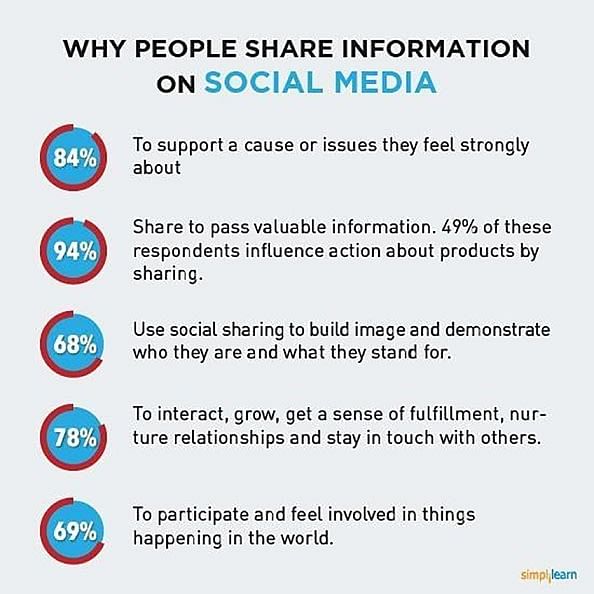
Starting from elementary international school up until university graduation, social media has the role to empower parents, students and teachers to use new ways of sharing information and build a community. Statistics show that 96% of the students that have internet access are using at least one social network. What’s even more extraordinary is that, even though some of the students use the social networks for entertaining and other purposes, there are a lot of them that actually use it to promote a lot of positive and useful activities. From finding a summer internship, promoting a success story about how to win the student-loan battle or collaborate on international projects, everything is made possible.

When it comes to social media, schools tend to adopt different positions. It’s a general consensus that they’re useful when it comes to sharing information or organizing the school tasks. And at the same time, the social networking is blamed for the lack of attention in students during classes. But an increasing trend of adopting social media in school is starting to show. And since students already devote a lot of time for social media and connecting with others outside school hours, why not do it during school as well?

It’s a matter of practicability, really, because it makes perfect sense to use the online universe to communicate with your students since they’re already there most of the time. There’s no need for another case study about the usage of social media in schools. You simply need to walk through the hallways of any school or college to see kids of all ages totally immersed in their smartphones. Browsing their news feed, sharing photos on Instagram or sending Snapchat messages has become a part of their daily routine.

The benefits of social media in the education process doesn’t have to stop at the teacher-student relationship. There are a lot of other benefits that can be extracted from the use of social networking at higher levels as well. For example, principals or administrators can find a new way to integrate social media. Like sharing school news via social networks, holding online meeting with the parents or even starting fundraising for different projects.

And social media can quickly become the only channel of communication since we’re living fast-paced lives, parents are usually busy with work and cannot attend school meetings. But this doesn’t mean they shouldn’t be in touch with events or be able to check on their kids every once in awhile. Just like in every other field, communication is vital and if it can be done easily with the help of social media, why not go for it?

It may not be criteria just yet, but soon enough questions like ‘Does this school have a Facebook page?’ could become just as important as the things that parents are asking right now. Like, how well equipped the library is or what are the optional classes their child can be part of.

The bottom line is that social media is a big part of our day to day life and there’s no point of keeping it away from the education process. School, college and university staff should be encouraged to make use of technology for student and parent communication. This could easily turn into a argumentative essay topic in college. But the benefits are obvious, starting with healthier parent-teacher relationships and all the way to permanently changing the way our children will learn.

Refrences:-

https://www.researchgate.net