
“Education gives a perfect face to life,
Education gives holy power to fight,
Education destroyes darkness with the help of light,
Education gives man broad sight”
Education is one of the most vital part of our life. India today is the second largest higher education network in the world. Universities in India are set up by the Central or the State Governments by the means of legislation, while colleges are established by either State Governments or private bodies / trusts. All colleges are affiliated to some university. The structure of higher education consists of three years of education after 12 years of school education leading to arts and science and four-five years in professional fields like engineering and medical. But the system of education in India isnot up to the mark. 25% of the Indian population is illiterate. Only 7% of the population that goes to school managed to graduate and only 15% of those who enrol manage to make it to high school and achieve a place in the higher education system. Many of our parents forced their childrens to take fied out of their intrest. After completing 12th the student is like a machine. Parents expect that my child should learn all the things in very short period of time and earn more than them. But noone is accepting truths. If the student don’t have intrest about field that parents selected then what is bad in it??? So I request all the students like me. Please accept field according your intrest. And don’t get bothered by anyone else. Live happy and lern more and more things according u r intrest.

The Necklace
The Necklace
The girl was one of those pretty and charming young creatures who sometimes are born, as if by a slip of fate, into a family of clerks. She had no dowry, no expectations, no way of being known, understood, loved, married by any rich and distinguished man; so she let herself be married to a little clerk of the Ministry of Public Instruction.She dressed plainly because she could not dress well, but she was unhappy as if she had really fallen from a higher station; since with women there is neither caste nor rank, for beauty, grace and charm take the place of family and birth. Natural ingenuity, instinct for what is elegant, a supple mind are their sole hierarchy, and often make of women of the people the equals of the very greatest ladies. Mathilde suffered ceaselessly, feeling herself born to enjoy all delicacies and all luxuries. She was distressed at the poverty of her dwelling, at the bareness of the walls, at the shabby chairs, the ugliness of the curtains. All those things, of which another woman of her rank would never even have been conscious, tortured her and made her angry. The sight of the little Breton peasant who did her humble housework aroused in her despairing regrets and bewildering dreams. She thought of silent antechambers hung with Oriental tapestry, illumined by tall bronze candelabra, and of two great footmen in knee breeches who sleep in the big armchairs, made drowsy by the oppressive heat of the stove. She thought of long reception halls hung with ancient silk, of the dainty cabinets containing priceless curiosities and of the little coquettish perfumed reception rooms made for chatting at five o’clock with intimate friends, with men famous and sought after, whom all women envy and whose attention they all desire. When she sat down to dinner, before the round table covered with a tablecloth in use three days, opposite her husband, who uncovered the soup tureen and declared with a delighted air, “Ah, the good soup! I don’t know anything better than that,” she thought of dainty dinners, of shining silverware, of tapestry that peopled the walls with ancient personages and with strange birds flying in the midst of a fairy forest; and she thought of delicious dishes served on marvellous plates and of the whispered gallantries to which you listen with a sphinxlike smile while you are eating the pink meat of a trout or the wings of a quail.She had no gowns, no jewels, nothing. And she loved nothing but that. She felt made for that. She would have liked so much to please, to be envied, to be charming, to be sought after.She had a friend, a former schoolmate at the convent, who was rich, and whom she did not like to go to see any more because she felt so sad when she came home.But one evening her husband reached home with a triumphant air and holding a large envelope in his hand.”There,” said he, “there is something for you.”She tore the paper quickly and drew out a printed card which bore these words:The Minister of Public Instruction and Madame Georges Ramponneau request the honor of M. and Madame Loisel’s company at the palace of the Ministry on Monday evening, January 18th. Instead of being delighted, as her husband had hoped, she threw the invitation on the table crossly, muttering:”What do you wish me to do with that?””Why, my dear, I thought you would be glad. You never go out, and this is such a fine opportunity. I had great trouble to get it. Every one wants to go; it is very select, and they are not giving many invitations to clerks. The whole official world will be there.”She looked at him with an irritated glance and said impatiently:”And what do you wish me to put on my back?”He had not thought of that. He stammered:”Why, the gown you go to the theatre in. It looks very well to me.”He stopped, distracted, seeing that his wife was weeping. Two great tears ran slowly from the corners of her eyes toward the corners of her mouth.”What’s the matter? What’s the matter?” he answered.By a violent effort she conquered her grief and replied in a calm voice, while she wiped her wet cheeks:”Nothing. Only I have no gown, and, therefore, I can’t go to this ball. Give your card to some colleague whose wife is better equipped than I am.”He was in despair. He resumed:”Come, let us see, Mathilde. How much would it cost, a suitable gown, which you could use on other occasions–something very simple?”She reflected several seconds, making her calculations and wondering also what sum she could ask without drawing on herself an immediate refusal and a frightened exclamation from the economical clerk.Finally she replied hesitating:”I don’t know exactly, but I think I could manage it with four hundred francs.”He grew a little pale, because he was laying aside just that amount to buy a gun and treat himself to a little shooting next summer on the plain of Nanterre, with several friends who went to shoot larks there of a Sunday.But he said:”Very well. I will give you four hundred francs. And try to have a pretty gown.”The day of the ball drew near and Madame Loisel seemed sad, uneasy, anxious. Her frock was ready, however. Her husband said to her one evening: The Necklace, Napoleon’s collection”What is the matter? Come, you have seemed very queer these last three days.”And she answered:”It annoys me not to have a single piece of jewelry, not a single ornament, nothing to put on. I shall look poverty-stricken. I would almost rather not go at all.””You might wear natural flowers,” said her husband. “They’re very stylish at this time of year. For ten francs you can get two or three magnificent roses.”She was not convinced.”No; there’s nothing more humiliating than to look poor among other women who are rich.””How stupid you are!” her husband cried. “Go look up your friend, Madame Forestier, and ask her to lend you some jewels. You’re intimate enough with her to do that.”She uttered a cry of joy:”True! I never thought of it.”The next day she went to her friend and told her of her distress.Madame Forestier went to a wardrobe with a mirror, took out a large jewel box, brought it back, opened it and said to Madame Loisel:”Choose, my dear.”She saw first some bracelets, then a pearl necklace, then a Venetian gold cross set with precious stones, of admirable workmanship. She tried on the ornaments before the mirror, hesitated and could not make up her mind to part with them, to give them back. She kept asking:”Haven’t you any more?””Why, yes. Look further; I don’t know what you like.”Suddenly she discovered, in a black satin box, a superb diamond necklace, and her heart throbbed with an immoderate desire. Her hands trembled as she took it. She fastened it round her throat, outside her high-necked waist, and was lost in ecstasy at her reflection in the mirror.Then she asked, hesitating, filled with anxious doubt:”Will you lend me this, only this?””Why, yes, certainly.”She threw her arms round her friend’s neck, kissed her passionately, then fled with her treasure.The night of the ball arrived. Madame Loisel was a great success. She was prettier than any other woman present, elegant, graceful, smiling and wild with joy. All the men looked at her, asked her name, sought to be introduced. All the attaches of the Cabinet wished to waltz with her. She was remarked by the minister himself.
Public
The Changing Spaces of Reading and Writing
Innovations in technology have changed the way in which society acts. As classical scholar and university librarian James O’Donnell points out in the 1999 radio broadcast “From Papyrus to Cyberspace,” one generation’s frontier becomes the next generation’s reality. One can assume that with each new frontier there are gains and losses. For example, the invention of the automobile sparked a transportation revolution, but with this improved accessibility we also implicitly accept thousands of car-related deaths each year. Advancements in writing technologies have unpredictable changes in human roles and geography. Printing presses led to the spread of unorthodox ideas across the world and new forms of democratization, while the shift from a primarily oral to literate society brought with it new lines of exclusion between those who could read and those who could not.
James Engell, Professor of English and Comparative Literature at Harvard, highlights the point that such revolutions of technology do not occur suddenly but are instead a gradual shift within societies. Just as manuscripts continued to be produced well after the invention of the printing press, it is common for information from the internet to be written down on paper. Thus the challenge with emerging digital technologies is not that such societal shifts are occurring, but finding the most effective way new technologies can be integrated with the way things are currently functioning. Learn more about the impact of the typewriter on literacy in my short documentary The Shift from Handwriting to Typewriting:
Full List of References and Media Content Sources
The shift from handwriting to digital text and their associated issues continue to plague educators as one-to-one devices become the norm in schools. My English Department meetings often consist of heated debates concerning whether students should complete their coursework on paper or digitally. The topic seems to polarise the teachers within the department and we cannot collectively decide on the “correct” answer.
“students who write out their notes on paper may actually learn more” (Mueller & Oppenheiner, 2014).
In 2012, scientists find that the brains of preliterate kids respond like a reader’s brain when they write their ABCs, but not when they type or trace the letters (Pauly, 2016). Another research team reports that college students who transcribed lectures on their laptops recalled more information than those who took notes by hand because the use of laptops results in shallower processing (Mueller & Oppenheimer, 2014). Across three experiments, researchers had students take notes in a classroom setting and then tested students on their memory for factual detail, their conceptual understanding of the material, and their ability to synthesize and generalize the information. The two types of note-takers performed equally well on questions that involved recalling facts, laptop note-takers performed significantly worse on the conceptual questions (Mueller & Oppenheimer, 2014). This research suggests that perhaps completing tasks on paper may be more beneficial for students.
However, sometimes the purpose of note taking is simply to collect information. During novel studies I often have my students take notes to record key quotations or details from the book we are reading under the categories of the elements of fiction (e.g. setting, characters, style, theme). When forced to write on paper, I find students’ notes quickly become disorganised and chaotic. Factor in that a novel study last several weeks – sometimes months – I find students’ paper notes become more of a hassle than helpful.
Instead of making the paper-or-digital choice for my high school students, I share research findings and we collaboratively discuss the benefits and advantages of each format. I then prompt them to make the choice for themselves and give them the opportunity to change formats if they feel they made the wrong choice. In Benedict Carey’s book “How We Learn: The Surprising Truth About When, Where and Why It Happens” he refocusses attention away from a mono-solution to the learning conundrum, by prompting learners to consider the task at hand:
“It’s not that there is a right and wrong way to learn. It’s that there are different strategies, each uniquely suited to capturing a particular type of information. A good hunter tailors the trap to the prey” (Carey, 2014, p. 44).
My vision for my students is for them to discover for themselves how they work best in a time where they are living and learning during this technological revolution. The following is a lesson to prompt a discussion surrounding the ambiguity of the paper of digital argument:
While reading and writing remains at the heart of education, emerging technologies will continue to alter the concept of literacy itself. As we continue to move from written text to digitized information, educators must adapt their didactic methods to coincide with modern technologies. The technologies of handwriting and typewriting need not exist in a binary relationship in our postmodernist culture. They can co-exist, offering us a multiplicity of ways to communicate where each is geared for its own different purpose.
References
Mueller, P. A. & Oppenheimer, D. M. (2014). The Pen Is Mightier Than the Keyboard: Advantages of Longhand Over Laptop Note Taking. Psychological Science, 25(6).
O’Donnell, J. & Engell, J. (1999). “From papyrus to cyberspace” [radio broadcasts]. Cambridge Forum.
Ong, W. J. (1982). Orality and literacy: The technologizing of the word. London: Methuen.
Pauly, M. (2016). A Brief History of Handwriting. Mother Jones, 41(5), 60.
Information Processing Theory and Impact on Learning
The Information Processing Theory is an approach to cognitive development that suggests a way in which humans process the information they receive. This theory contrasts a behaviourist that humans simply respond to stimuli. This theory suggests that information is processed in stages, much like the way in which a computer processes data (Orey 2002). Information enters the brain (or computer) through our senses (mouse/keyboard). Next, the information is processed in our working memory (processor/ram), where it is stored and recalled from specific areas of our long-term memory (hard drive). This recalled information can lead to an output response to the stimuli (monitor).

Turple, C. (2016).
Our sensory memory intakes information through seeing, hearing, smelling, tasting and touching. If we decide to pay attention to certain stimuli, it moves into our short-term memory, also known as our working memory as it is the place where we process information. In order for information to be stored in our long-term memory and formally learned, the information must be elaborated on through rehearsal to consolidate the new data.


Turple, C. (2016). Adapted from: Lutz, S. & Huitt, W. (2003).
We can then organize new information into existing knowledge sets (if information is similar to prior information) or create a completely new knowledge structure if the new information is unlike anything we have experienced before. Once information is stored in our long-term memory, we can later recall this knowledge back into our working memory to compare to incoming information or help elaborate on our knowledge experiences.
Many of these operations involve executive function to pay attention to new information, attend to rehearsal practices in the working memory and help consolidate information into our long-term memory. Unfortunately, new information can be lost at all stages of information processing. If incoming stimulus is not paid attention to in our sensory memory, our brain does not notice the information. In our short-term memory, only a maximum of five stimulus can be used at once – if this information is not encoded within 15-30 seconds it will be lost altogether. In long-term memory retrieval, there are also chances of encoding failure during information consolidation if elaboration does not occur or the information cannot be properly organized in existing knowledge structures. Finally, information in long-term memory could be lost through a retrieval failure or “overridden” if new information contradicts something previously learned.
Watch my visual breakdown of the stages of the theory and applications to classroom practice:
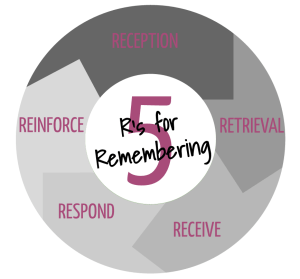
When considering the stages of the Information Processing Theory, there are 5 easy steps teachers can take to support students in the acquisition of new information.
RECEPTION to ensure teachers gain students’ attention using an abrupt stimulus change to focus students’ sensory memory on the lesson.
I like to use music or short video clips to gain students’ attention. Catchy songs such as this Information Literacy Song or the Literary Devices Rap work well.
RETRIEVAL educators should stimulate recall of prior learning and skills from students’ long-term memory into their working memory.
I like to use kinesthetic warmups that gets the students moving around and talking to peers other than their elbow partner. Simple activities work great such as having the students move around the room and when the music stops (often I use the songs above), I yell out a number. Students must form a group with that many people and answer a question about the content from the previous lesson. Scholastics’s Mind Up Curriculum books are full of such activities.
RECEIVE information transmitted by the teacher that should have distinctive features and suggest a meaningful organization of ideas for students.
I started “branding” my lessons by using the same template and colour scheme for all lesson within a unit. For other skills such as the MYP Approaches to Learning, I always use the same cover slide. I have also started using less unconnected slides and utilising animations to put together the “pieces” of a slide. Finally, acronyms and step-by-step procedures have become the focus of my lessons. For example, when I was teaching my students about how to find reliable online sources, I began the lesson by playing the research song, played the kinesthetics warmup game, then introduce an acronym to help them remember the criteria for reliable websites:
RESPOND or experience the information for themselves to absorb knowledge into their preexisting knowledge sets by eliciting performance from students.
Arguably the most important step in student learning! Students need to immediately do something with their new knowledge. When introducing the CRAP acronym for determining reliable resources, I had students decide whether example websites are reliable or not. One issue I often run into for this stage is running out of time when I have 30 minute class time blocks. What I have come to learn is it is better to break up the learning into smaller pieces where students have the opportunity to immediately respond to new knowledge, rather than using a whole block to introduce content and the following block as a work period.
REINFORCE by providing ongoing feedback to students and especially give them additional performance opportunities to apply the feedback.
Encouraging students to make mistakes and learn from those “failures” is key. I try to give as many opportunities for students to experiment with new ideas by offering several chances to practice new skills. I aim to give my students individual verbal feedback once a week and written feedback every other week. Since I utilise Google for Education Apps Suite in my teaching, this is often done through the comments function. I have learned to create one ongoing template my students work in throughout a unit so all of my comments and their work is in one place. This way, it is easy for both myself and students to see their ongoing progress.

Turple, C. (2016).
More than anything, learning about the Information Processing Theory reminded me of the importance of lesson warm-ups and “hooking” students into a learning activity. The theory also offers a simple explanation of how memory may work and is something I have even taught my students to make them more away of their own learning behaviours.
References
Lutz, S., & Huitt, W. (2003). Information processing and memory: Theory and applications. Educational Psychology Interactive. Valdosta, GA: Valdosta State University. Retrieved from http://www.edpsycinteractive.org/papers/infoproc.pdf
Orey, M. (2002). Information Processing. In M. Orey (Ed.), Emerging perspectives on learning, teaching, and technology. Retrieved from http://projects.coe.uga.edu/epltt/index.php?title=Information_processing
Public

Domestic Violence towards men

Today is not a special day for men but this issue should be raised as the typical increment in the cases of Intimate Partner Violence (IPV ) against men.
Not only the females are facing the violence of their partners but also the men do. This includes stalking, physical violence and sexual assault, not even that only some of them bitterly slapped, punched, killed and grabbed by their partners.
This is a hidden and bitter truth of our society across the world. We need to prevent the victims from this, at least with regards to growing public awareness, educate them about it and increased media interest in IPV against Men.
Public

Aqua culture
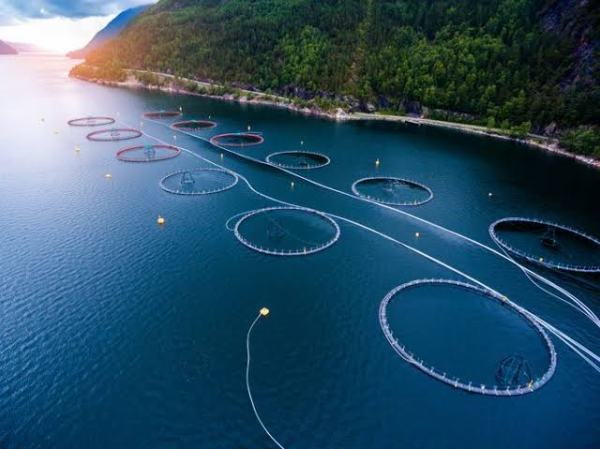
PATTIKONDA:20/07/2020
Aquaculture , also known as aquafarming, is the farming of fish,crustaces,molluscns,plants and other organisms. Aquaculture involves cultivating freshwater and saltwater. Marineculture refers to aquaculture practiced in marine environments and in underwater habitats.
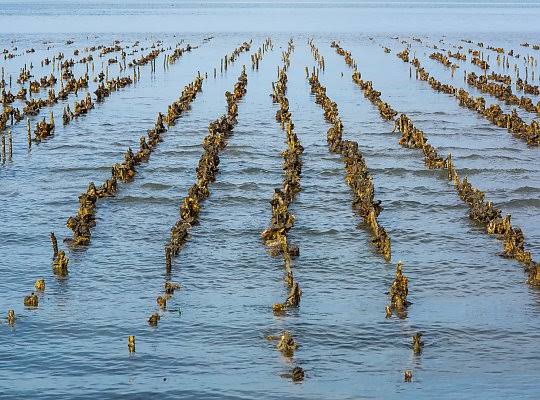
Particular kinds of aquaculture include fish,shrimps,oyester farming,mariculture, algaculture, and the cultivation of ornamental fish. Particular methods include aquaponics and intrgrated,multi trophic aqua culture, both of which integrate fish farming and aquatic plant farming.

Plants are widely cultivated in aqua culture.Micro algae, also referred to as phytoplankton,microphytes, or planktonic algae, constitute the majority of cultivated algae. Macroalgae commonly known as seaweeds also have many commercial and industrial uses. The sea weed farming is used for medical purposes as well as industrial.
The most important cultivation of aquaculture is fish farms.It involves raising fish commercially in tanks, fish ponds, or ocean enclosures, usually for food. The most important fish species used in fish farming are, in order, carp, salmon, tilapia, and catfish. Tuna farming and salmon farming culture is most developed and common in fish farms. Crustaces are next to fish farms Freshwater prawn farming shares many characteristics with, including many problems with, marine shrimp farming. Thr most cultivation is tiger shrimp,white shrimp and gigantic prawns.
- The Benefits of aquaculture is
- the increased production of food for human consumption;
- the opening of commercially viable business opportunities;
- the creation of employment, especially in rural areas;
- increased national exports; and.
- the substitution of imports by local production.
The most common negative environmental impacts that have been associated with aquaculture include: waters eutrophication, water quality, alteration or destruction of natural habitats; introduction and transmission of aquatic animal diseases.fish may be closely related due to selective breeding and they live closely together.
Public

Vogue in HR
Over the course of the 2010s, the scope of human resources has expanded and evolved alongside changes in how organizations function, how teams are managed, and how employees set their expectations when it comes to work.
As HR enters the next decade, HR pros must focus their attention on the human element of human resources and people management in order to continue providing engaging and exceptional work experiences for their people. Some of the vogue in HR are as follows:
Using people analytics for decision making: Big data analysis has wide-reaching potential that can be applied to any sector of an organization. In HR, utilizing a data-driven approach to people analytics allows employers to discover valuable insights on employee performance and satisfaction and what influences their productivity and motivation.
With HR tech solutions, HR departments are equipped with a wealth of information that is available at their fingertips, including recruitment data, employee statistics, and performance KPIs. In the years to come, companies will apply this valuable intel into making smarter decisions for their organizations, from less biased hiring decisions to better support for their current employees.
Improving the job applicant experience: If a recruiting new hires to your organization is a complicated and lengthy experience, you will continue to miss out on bringing incredible talent to your teams. Making the recruitment process streamlined and efficient for both your HR department and your applicants is critical to landing the best people for the job.
In the new year and beyond, HR pros will implement HR solutions to simplify and speed up their administrative processes, from applicant tracking to application communication, through automation, thus reducing recruitment timelines significantly. Talent and recruitment pros will then be freed up to spend more time on improving the interview experience for candidates and increasing the odds of finding the right organizational fits.
Public
THE CHALLENGING JOURNEY OF KFC IN INDIA
Kentucky Fried Chicken, popularly known as KFC, is a fast food restaurant chain that is known for its fried chicken. Headquarted in Louisville, Kentucky, the United States, KFC is the world’s second largest chain restaurant after McDonald’s. Currently, KFC has more than 18,000 outlets in over 100 countries. Every day, more than 12 million customers are served at KFC outlets around the world. KFC is a subsidiary of Yum! Brands, which also owns Taco Bell and Pizza Hut. KFC was the first foreign fast food restaurant chain to enter India in 1990s after the Indian government implemented the LPG policy. At that time, KFC received permission from Indian government to open 30 outlets across the country.

The first KFC outlet in India was opened in Bangalore in June 1995 and from these outlets, the number has grown to 296 today. Fast food restaurants have gained popularity in India because of their customized menus that suits the taste-buds of the citizens. When KFC first entered the Indian market, there were a lot of protests, and the Bangalore outlet was repeatedly ran-sacked. Many Indians were worried that the western culture would seep into the Indian roots, leading to the dilution of indigenous traditions. Another KFC outlet was opened in Delhi in the same year but the combined revenue of both the outlets was not sufficient to continue the KFC business in India. The reason why KFC didn’t gained the popularity is because anti-KFC movements that accused KFC of using illegally high amount of mono-sodium glutamate, which are harmful to health. Also, the anti-KFC movements claimed that KFC sold food that was cooked and fried in pork fat. Because of these KFC had to abandon Indian market.
Once the Indian market cooled down, KFC returned to the country in 1999, and set up an outlet in Bangalore. Until 2004, KFC only operated 1 outlet in India, As the sole outlet started making money, KFC expanded its operation throughout India and today, KFC outlets can be found in a number of cities.
It is the tenacity, that won the hearts and stomachs of millions of Indians, to finally decided to embrace KFC’s dishes and gave KFC a second chance.
Public

BLUIS (Bhubaneswar Land Use Intelligence System)
The Bhubaneswar Land Use Intelligence System is a geo-tagged repository that would monitor and detect all government lands in Bhubaneswar. This will be done by using high-resolution satellite imagery. For safeguarding government lands from encroachments by land grabbers- the launch of BLUIS makes Odisha the first state in the country to use satellite technology and artificial intelligence. Any attempt to change the use of government land in Bhubaneswar, BLUIS will raise alarm and guide the enforcement staff to the exact location of encroachment. ‘BLUIS’ and ‘Litigation Management System’ are among the 8 Technology-driven Solutions that were launched under the 5T initiatives by the Chief Minister.

Chief Minister Naveen Patnaik on 8 July 2020 unveiled BLUIS which would monitor changes in all government lands in Bhubaneswar by leveraging high-resolution satellite imagery. Along with that, he launched 8 technology-driven solutions under 5T initiatives for Home and GA & PG Departments through video conferencing. Along with BLUIS, the chief minister launched applications like e-Pravesh, e-Bhawan, e-Atithi, HRMS 2.0, HRMS mobile app, LMS 2.0, ORTPSA to improve public services. The 5T Initiative (Technology, Transparency, Teamwork, and Time Leading to Transformation) model of governance, launched in August 2019, requires each department of the State Government to draw up an annual work-plan for faster, better public service delivery systems leading to achieve transformational goals. Launching the services, Patnaik said that the 5T model of governance along with Mo Sarkar has brought about a perceptible improvement in the quality of governance and has eased the delivery of public services.
Encroachment of government land in the capital city of Bhubaneswar will no more be easy for land grabbers as the Bhubaneswar Land Use Intelligence System (BLUIS), a web and mobile-based solution, launched by Odisha government would raise alarm over attempts to change the land use. According to the government, BLUIS is a geo-tagged repository of all the government lands in Bhubaneswar, created through high-resolution satellite imagery to detect all changes taking place on government lands.
Odisha becomes the first state in India to use high-resolution satellite imagery utilizing space technology and artificial intelligence to monitor government lands. The lack of transparency and accountability of the enforcement in the current mechanisms and the increasing encroachment of government lands in Bhubaneswar resulted in the development of BLUIS.

“Bhubaneswar is one of the fastest-growing cities in India witnessing land-use changes on a daily basis. In the process, precious public land is prone to encroachment. The present mechanism of detection and enforcement lacks adequate transparency and accountability,” a senior officer said emphasizing real-time monitoring. A mobile application would alert the enforcement authorities of any new construction on government lands. The GPS on the application guides the enforcement staff to the exact location. Evidence of enforcement is uploaded on the application as geo-tagged images and videos,” he said. As per follow-up action, a case will be filed for removing encroachment. The Litigation Management System, an online application to record information on legal cases and enable end-to-end communication between government officials and advocates during different stages of a case, was also launched. It provides a smart technology solution to monitor court cases from initiation, online appointment scheduling, and allotment of the case to government advocate for preparation and submission of counter-affidavit.
Public

Balance life with balance
‘Balance’, a word, simple and easy to understand but yet difficult to put in reality. The most crucial thing for the smooth running of life is ‘to maintain balance’, balance in everything, the balance of emotions, the balance of relations, the balance of food, the balance of thoughts, the balance of exertions, and whatnot. As we grow, we discover that a mistake we did earlier in life was due to a lack of balance of certain things at that point in time. Any problem that we face can be solved if we are able to identify what all things need to be balanced to manage this problem.

Life is all about maintaining a balance between various factors/parameters that govern our life. And this balance is unique for each individual, in the sense that the importance of various elements of one’s life is different for different people. No one can decide it for us that how much importance to give to certain things that to others to maintain a balance. The balance of various things of our life that we make depends on our priorities, our comfort, our boundaries, and our mind and heart. The balance of things for a perfect life for two different people can often be very different.
We can understand it in this manner: whenever we cook food, we add all the spices in some specified amount according to our taste depending on the level of spicy food we prefer. Also, we add salt according to taste. If we try to add more of any particular spices, let’s say red chili, then it may ruin the taste of food for us as we can’t eat that spicy. However, the same food can still be found yummy by some other person who loves to eat spicy and is comfortable with eating spicy food. The same is the case with adding more or less salt. Here salt and various spices are similar to the various important elements of our life.
A perfect balance is a solution to every problem. But the reality is, it is quite difficult to figure out what is a perfect balance for us, what will work for us. It is a process of self-learning and self-realization. We can learn this only after making some mistakes as we move forward in life.

Let’s discuss some of these balance that we need in brief:
- The balance between various relations – We humans hold tons of relations in our entire life. It starts from the day we are born and it keeps on increasing as we grow. Each relation is important and can be maintained through proper balance.
- The balance of thoughts – We need to balance between positive and negative thoughts. Though it is said always to be positive and always think positively, it is not true. It is also important to have some negative thoughts. It helps us to make back-up plans, it makes us aware, it can also boost us sometimes. But, again, a balance between the two is important.
- The balance of emotions – We are humans and emotions are the gift we got that make us different from other creatures. Each human gets all types of experience. Even if you are a saint, you will find yourself getting angry. The thing is how you took your emotion and how you are managing it to bring the best out of you.
- The balance of food – We need a balanced diet to maintain good health. A balance of various nutrients namely, protein, carbohydrates, proteins, fibers, etc is important for a healthy lifestyle.
- The balance between work and home – Another important balance is the balance between work and home. Our work helps us to improve and grow and it keeps us focused, our home is our strength, it is our backbone and provides us emotional support. It is important to have a balance between the two.
So, the trick is to figure out the balance which will work for us in life and work with it. We should also understand that what might be a perfect balance for us today may not be a perfect balance for us tomorrow. So, it needs to be a bit flexible. We must realize that the small word ‘balance’ has a big importance for the smooth functioning of our lives.
Public

HISTORY OF SOCIAL DISTANCING
In public health, social distancing, also called physical distancing, is a set of non-pharmaceutical interventions or measures intended to prevent the spread of a contagious disease by maintaining a physical distance between people and reducing the number of times people come into close contact with each other. It typically involves keeping a certain distance from others (the distance specified may differ from time to time and country to country) and avoiding gathering together in large groups.
By reducing the probability that a given uninfected person will come into physical contact with an infected person, the disease transmission can be suppressed, resulting in fewer deaths. The measures are used in combination with good respiratory hygiene, face masks and hand washing by a population. During the COVID-19 pandemic, the World Health Organization (WHO) suggested favouring the term “physical distancing” as opposed to “social distancing”, in keeping with the fact that it is a physical distance which prevents transmission; people can remain socially connected via technology. To slow down the spread of infectious diseases and avoid overburdening healthcare systems, particularly during a pandemic, several social-distancing measures are used, including the closing of schools and workplaces, isolation, quarantine, restricting the movement of people and the cancellation of mass gatherings.
Although the term was introduced only in the 21st century, social-distancing measures date back to at least the 5th century BC. The Bible contains one of the earliest known references to the practice in the Book of Leviticus 13:46: “And the leper in whom the plague is… he shall dwell alone; [outside] the camp shall his habitation be.” During the Plague of Justinian of 541 to 542, Emperor Justinian enforced an ineffective quarantine on the Byzantine Empire, including dumping bodies into the sea; he predominantly blamed the widespread outbreak on “Jews, Samaritans, pagans, heretics, Arians, Montanists and homosexuals“.In modern times, social distancing measures have been successfully implemented in several epidemics. In St. Louis, shortly after the first cases of influenza were detected in the city during the 1918 flu pandemic, authorities implemented school closures, bans on public gatherings and other social-distancing interventions. The influenza fatality rates in St. Louis were much less than in Philadelphia, which had fewer cases of influenza but allowed a mass parade to continue and did not introduce social distancing until more than two weeks after its first cases. Authorities have encouraged or mandated social distancing during the COVID-19 pandemic.
Social distancing measures are most effective when the infectious disease spreads via one or more of the following methods:
- droplet contact (coughing or sneezing)
- direct physical contact (including sexual contact)
- indirect physical contact (such as by touching a contaminated surface)
- airborne transmission (if the microorganism can survive in the air for long periods); the efficacy of social distancing to contain airborne viruses compared to other measures, such as widespread mask usage, is disputed
The measures are less effective when an infection is transmitted primarily via contaminated water or food or by vectors such as mosquitoes or other insect.
Drawbacks of social distancing can include loneliness, reduced productivity and the loss of other benefits associated with human interaction.
HISTORY
Leper colonies and lazarettos were established as a means of preventing the spread of leprosy and other contagious diseases through social distancing, until transmission was understood and effective treatments invented.
1916 New York City polio epidemic
During the 1916 New York City polio epidemic, when there were more than 27,000 cases and more than 6,000 deaths due to polio in the United States, with more than 2,000 deaths in New York City alone, movie theatres were closed, meetings were cancelled, public gatherings were almost non-existent, and children were warned not to drink from water fountains, and told to avoid amusement parks, swimming pools and beaches.
Influenza, 1918 to present
During the influenza pandemic of 1918, Philadelphia saw its first cases of influenza on 17 September. The city continued with its planned parade and gathering of more than 200000 people on 28 September and over the subsequent three days, the city’s 31 hospitals became fully occupied. During the week ending 16 October, over 4500 people died. Social distancing measures were introduced on 3 October, on the orders of St. Louis physician Max C. Starkloff, more than two weeks after the first case. Unlike Philadelphia, St. Louis experienced its first cases of influenza on 5 October and the city took two days to implement several social distancing measures, including closing schools, theatres, and other places where people get together. It banned public gatherings, including funerals. The actions slowed the spread of influenza in St. Louis and a spike in cases and deaths, as had happened in Philadelphia, did not occur. The final death rate in St. Louis increased following a second wave of cases, but remained overall less than in other cities. Bootsma and Ferguson analyzed social distancing interventions in sixteen U.S. cities during the 1918 epidemic and found that time-limited interventions reduced total mortality only moderately (perhaps 10–30%), and that the impact was often very limited because the interventions were introduced too late and lifted too early. It was observed that several cities experienced a second epidemic peak after social distancing controls were lifted, because susceptible individuals who had been protected were now exposed.
School closures were shown to reduce morbidity from the Asian flu by 90% during the 1957–1958 pandemic, and up to 50% in controlling influenza in the U.S., 2004–2008. Similarly, mandatory school closures and other social distancing measures were associated with a 29% to 37% reduction in influenza transmission rates during the 2009 flu epidemic in Mexico.
During the swine flu outbreak in 2009 in the UK, in an article titled “Closure of schools during an influenza pandemic” published in The Lancet Infectious Diseases, a group of epidemiologists endorsed the closure of schools to interrupt the course of the infection, slow the further spread and buy time to research and produce a vaccine. Having studied previous influenza pandemics including the 1918 flu pandemic, the influenza pandemic of 1957 and the 1968 flu pandemic, they reported on the economic and workforce effect school closure would have, particularly with a large percentage of doctors and nurses being women, of whom half had children under the age of 16. They also looked at the dynamics of the spread of influenza in France during French school holidays and noted that cases of flu dropped when schools closed and re-emerged when they re-opened. They noted that when teachers in Israel went on strike during the flu season of 1999–2000, visits to doctors and the number of respiratory infections dropped by more than a fifth and more than two fifths respectively.
SARS 2003
During the SARS outbreak of 2003, social distancing measures such as banning large gatherings, closing schools and theaters, and other public places, supplemented public health measures such as finding and isolating affected people, quarantining their close contacts, and infection control procedures. This was combined with wearing masks for certain people. During this time in Canada, “community quarantine” was used to reduce transmission of the disease with moderate success.
COVID-19 pandemic
During the COVID-19 pandemic, social distancing and related measures are emphasized by several governments as alternatives to an enforced quarantine of heavily affected areas. According to UNESCO monitoring, more than a hundred countries have implemented nationwide school closures in response to COVID-19, impacting over half the world’s student population. In the United Kingdom, the government advised the public to avoid public spaces, and cinemas and theatres voluntarily closed to encourage the government’s message.
With many people disbelieving that COVID-19 is any worse than the seasonal flu, it has been difficult to convince the public—especially teens and young adults—to voluntarily adopt social distancing practices. In Belgium, media reported a rave was attended by at least 300 before it was broken up by local authorities. In France teens making nonessential trips are fined up to US$150. Beaches were closed in Florida and Alabama to disperse partygoers during spring break. Weddings were broken up in New Jersey and an 8 p.m. Curfew was imposed in Newark. New York, New Jersey, Connecticut and Pennsylvania were the first states to adopt coordinated social distancing policies which closed down non-essential businesses and restricted large gatherings. Shelter in place orders in California were extended to the entire state on 19 March. On the same day Texas declared a public disaster and imposed state wide restrictions.
These preventive measures such as social-distancing and self-isolation prompted the widespread closure of primary, secondary, and post-secondary schools in more than 120 countries. As of 23 March 2020, more than 1.2 billion learners were out of school due to school closures in response to COVID-19. Given low rates of COVID-19 symptoms among children, the effectiveness of school closures has been called into question. Even when school closures are temporary, it carries high social and economic costs. However, the significance of children in spreading COVID-19 is unclear. While the full impact of school closures during the corona virus pandemic are not yet known, UNESCO advises that school closures have negative impacts on local economies and on learning outcomes for students.
In early March 2020, the sentiment “Stay The Fuck Home” was coined by Florian Reifschneider, a German engineer and was quickly echoed by notable celebrities such as Taylor Swift, Ariana Grande and Busy Philipps in hopes of reducing and delaying the peak of the outbreak. Facebook, Twitter and Instagram also joined the campaign with similar hashtags, stickers and filters under #staythefhome, #stayhome began trending across social media. The website claims to have reached about two million people online and says the text has been translated into 17 languages.
Drawbacks
There are concerns that social distancing can have adverse affects on participants’ mental health. It may lead to stress, anxiety, depression or panic, especially for individuals with pre existing conditions such as anxiety disorders, obsessive compulsive disorders, and paranoia. Widespread media coverage about a pandemic, its impact on economy, and resulting hardships may create anxiety. Change in daily circumstances and uncertainty about the future may add onto the mental stress of being away from other people.
Effectivenes
An empirical study published in July 2020 in the The BMJ (British Medical Journal) analyzed data from 149 countries, and reported an average of 13% reduction in COVID-19 incidence after the implementation of social distancing policies.
 International Journal of Research (IJR)