BLACK IS THE NEW WHITE

A kitchen really is a castle itself. So does everyone plays its major role in giving its 100 percent to make that place worth looking for everyone. Today the colour concept of the kitchen is “Grey”. This colour that is available from the start of the century and will be remained world class till the end of the time. Due to the subtle transformation of the kitchen it has the ability to make kitchen look fresh and contemporary. The combination of grey and white gives a fascinating look to the interior. There is no upper cabinets despite it has large wooden stripe cabinets of HDHMR material. It is a single facing kitchen with a single shelve top, which has a sink in one corner and gas range on the other corner. The gas range also has the perception for the electric chimneys which will give neat look to the gas range. Shelve is too vast to take out any kind of activity without any kind of problem. The two large rectangular compartments have the advantage of pre-fitted microwave oven. These compartment always gives an over whelming look to your kitchen and will impact anyone whenever they see it. To give a bright look the white roof is given many prospective of light with the use of white led lights. Likewise the closed cabinets there is open shelves on the other wall so as you can keep different artefacts of handicrafts on it, it shows the modernisation of the kitchen. Due to the large there is a prescription for the sitting of 6 people on dining table too. The long table that will give you a charming look while sitting near it, an extra table is also fixed with it which is giving it a new texture as well as it is acting as dining bar. Ro make it look luxurious the use of greenery is also there, that is we can keep any kind of pot or handicraft over it. Floor tiles embraces the grey and white combination, the under cabinets lights draws the eye from the dining area. The shades of grey provide the eclectic while keeping the colour palette clean. Floor tiles can also be of different colour but the grey textured lights are chosen to give a glossy and finishing touch because the natural lighting and white lighting are in combo and giving a perfect look to another level. To give a priceless look the sleek hanging led lights are also which is not more than a perfect ending of your future kitchen. Luxury is when it seems flawless, when you reach the right balance between all elements. Understated theatricality: – that is what luxury is all about for us

IMPACT OF COVID-19 ON WOMEN EMPLOYEES IN INDIA

Covid-19 has  brought a tsunami on the social ,economic, cultural systems , specially affecting the  women  belonging to the lower income group. In India where women are culturally marginalized, the pandemic is of greater concern. The Covid-19 scenario has vividly shown to the whole world the fact that the world’s economy and the maintenance of our routine lives is dependent on the unpaid and invisible labour of women employees.

The health workers are the ones who are a higher risk due to pandemic. In South-East Asian Region , around 70% of the front line workers are women , as compared to 67% of the total number in the world. It has been observed that the number of women being affected by the pandemic may take a steep rise in the near future. The stress of managing and treating the infection well as impacted the mental health of the frontline workers , specially women employees. Mobility  restriction have further increased the exposure time towards women, leading to increase in suicidal cases, domestic abuse .This points out the male psychological distress going on , adversely affecting  women’s  psychological well-being . Past incidents have indicated that health resources are accessible only to limited women employees  ,but because of the pandemic there has been no access to health and sexual services like HIV medication ,contraceptive pills and safe abortion . Women on a average spend 4.1 hours/day on unpaid care and domestic work, compared to 1.7 hours/day for men. Women’s unpaid contribution to healthcare equates to 2.35% of global GDP .

Analysis done show that women count for 70% for the total workers in health and social sectors, and around 50% of them are unpaid. The recent data have shown that women spend thrice as many hours as men in unpaid care and domestic work, limiting their access to decent work. The global gender pay gap is stuck at 16% with women paid up to 35% less than men in some countries. Women aged 25-34 years globally are 25% more likely than men to live in extreme poverty.

Global lockdown have resulted in the lockdown of women autonomy , practising them as second class and holding them back in our societies. Economic pressures on family are putting children, particularly women in a vulnerable state, and have restrained  them from essential services. The burden of care and responsibility of family members staying inside the house have made the situation all the more vulnerable for the women. The pandemic has put restrictions on the freedom of movement of people worldwide, affecting the freedom of expression of women.

Transforming inequities of unpaid workers to a new, inclusive economy would work for everyone and designing socio-cultural plans with intentional focus on lives of women. Even though a lot of women are working on the Pandemic, but they have little to no say in the  policies. There is an urgent need for sex-disaggregated data to see and understand how women employees are affected by the virus.

JAPAN’S INNOVATIVE STYLE OF EDUCATION

Japan , has one of the most compelling stories in education. Japanese students are continuously accustomed to getting warnings about breaking their own records of winning Nobel prizes .It is this pressure in them which can even  be seen in the country’s demolishing presence globally. Japan who is facing challenges in maintaining research position, have continuously been taking steps to improve the situation.

One of the major challenges faced by them was the continuously decreasing number of journals written by scientists , because of reduction in the state funding for operation costs. Deteriorating financial situation had led to the closing of research institutes, leading to few journals being published.

The Ministry of education , Culture, Sports ,science and Technology came up with WISE(World-leading Innovative & Smart Education) programme. These programmes established five year doctoral problems, inside and outside Japan. These  schemes will define the skills and expertise needed to resolve the problems faced. The main purpose behind these programme were to nurture outstanding researchers who would serve in different sectors, leading to creating values ,thereby bringing innovation in the society.

Another programme was the DII programme for innovation specially in future electronics. Gallium nitride (GaN) LEDs were  used widely. The scheme nurtured three types of people-deployers, innovators and the investigators. Collaboration and Co-operation between the three personnel were necessary to accelerate innovation. The highlight of this programme was to give births to engineers who’ll not only do conventional study, but even practise entrepreneurship and social services. Students under these  programme will take part of two internships. One would be of two weeks, connecting the students with the peers of other countries, while the second internship would be of six  months, where the deployers would work towards broadening their minds, innovators would work towards learning production and investigators will begin with international collaboration.

With the help of programmes like DII and WISE, Japan can breakthrough and regain back its list glory in research and development.

Indian social media app migrates to google cloud

Homegrown social media site, ShareChat, announced Monday the full transition of its technology to Google Cloud that supports more than 60 million active monthly users. The regional platform has made the shift to scale its market, boost productivity, cut costs and enhance the overall success of the app that houses active users in 15 Indian languages.

ShareChat following a host of Indian companies that, during the lockdown, changed or rebalanced their cloud provider mix to scale up to the massive increase in usage and reliance on such services. ShareChat’s IT network was divided between Amazon Web Services and Google Cloud according to the platform ‘s previous privacy policy claim.

Given the high-intensity data , high volume of content and traffic that the platform generates such as posts, likes, views and followers, ShareChat relies heavily on IT infrastructure. A significant proportion of their mobile-application’s subscribers come from cities that come in tier-2 and tier-3, with most of them heavily  depending on 2 G networks. Therefore the it is most critical for such businesses to be able to minimize the impact of mobile bandwidth and providing all users with a great experience, the management said.

Cloud service companies have seen consistent increase in revenue in the first six months of 2020 with multinational technology firms such as Amazon.com, Microsoft Corp, and Google Inc. announcing solid growth in the demand for cloud computing as growing percentages of institutions turned to online connectivity for continued research.

As per the numbers shared by the companies for January-March, Amazon Web Services ( AWS) continues to lead with a global market share of 32 percent followed by Microsoft Azure (17 percent) and Google and Alibaba at around 6 percent each. India is currently a high-priority destination for these companies, with a growing number of established firms, startups and small and medium-sized enterprises (SMBs) looking to embrace cloud and IT technologies in the face of the government’s drive for a stronger digital presence. The pandemic has only added to that urgency.

In April 2020, ShareChat decided to migrate to Google Cloud to successfully scale and achieve its customer service goals.

“We are happy to share that a couple of months down the line we have not only experienced 100% uptime but also we see the cost benefits of our choice much beyond our initial expectations. The scale at which ShareChat is, we wouldn’t have looked beyond the top three providers and Google was the perfect fit for us,” said Venkatesh Ramaswamy, vice president of engineering, ShareChat.

In the middle of the covid-19 crisis, the monumental eight-hour move from ShareChat ‘s predominant cloud network to Google Cloud forced the former to conduct a meticulous review for nearly three months, preparing and conducting a detailed operational and strategic approach to fulfill their market needs.

“60 million users, is among the largest that we have helped migrate in recent times. Because they had a very specific requirement about the timing and method of migration, our people across the professional services, India engineering and cloud teams, APAC and global teams were all on standby to handle any situation that arises,” said Karan Bajwa, managing director (MD), Google Cloud India.

Source:https://www.livemint.com/news/india/sharechat-migrates-60-million-users-to-google-cloud-11592197345377.html

Falling Apart

Our life is never about the destination. Life is a beautiful journey with a lot of stops along the way. We feel if we know what to expect in our future, we will be ready for it. This imagery has become so much a part of our language that we don’t even stop to think about what it actually means for us.

When things don’t go our way, it feels like everything is falling apart. Despite having our bouts of feeling depressed we try to remain in a continual state of happiness. However, this is possible only if we accept the fact that everything is as good or bad as one’s opinion makes it.

Everyone is in a constant state of falling apart. How you deal with it is dictated by your outlook on life. You could, after all, try these few things.

  1. Never hide your emotions

Some people like to cry when they are overwhelmed. Tears are, in fact, a way for your body to get rid of those excess emotions, and if you hold these emotions too long they may corrode your insides. Talk to people – your loved ones, your friends. You will find that every one of them has something difficult going on in their lives.

  1. Be honest

Be true to yourself. If you cannot admit your problem to yourself, you can never openly talk about it which means you will never be able to take the first step towards solving that problem. So much pain mostly comes from not telling the truth. Lying is mostly the reason for things falling apart. After admitting the truth to yourself, make sure you always tell the truth to those around you. It may hurt for a second but eventually, things will fall back into place.

  1. Ask for help

The society inherently and subconsciously teaches us that asking for help is pathetic and a sign of weakness. This makes a person feel trapped and alone, inevitably hurting him and those around him. Accept the fact that everyone struggles at some point in the journey of their life. Instead of acting like it is not universal, start hailing vulnerability for what it actually is – a sign of strength, openness, and hope. Do not be afraid to ask for help.

  1. Have your cheat moments

Just like people have their cheat days from diets, have your cheat moments from the problems you are facing. Do not let your pain entirely rule every aspect of your life. Enjoy some trivial and jovial moments of life guilt-free.

  1. There will be days when you are not okay, and that is okay

The journey of life is a bumpy one. There will be days where the pain and reality of your situation will consume you. Allow yourself to feel helpful on such days. But never forget that tomorrow is a good day and the sun will eventually shine brightly again. When it seems like life is falling apart, it may actually be falling into a place better than expected.

Image Courtesy: Google

😓Covid-19 The LIFE after lockdown 😓

What will life be like when India and the rest of the world lift the lockdown completely? Will life as we knew it before Covid-19 return? Well, with the extension of the nation-wide lockdown for another two weeks, albeit with significant relaxations, we will have to wait for some more time to find out.

We have had a lockdown for nearly six weeks now. The Karnataka government has partially lifted the lockdown since last week, allowing IT and IT-enabled services, among others, to operate with minimum staff, while the rest would still work from home. “To mitigate hardship to the public, select additional activities have been allowed, which will come into effect from 00:00 hours of April 23,” said Karnataka government’s Chief Secretary TM Vijay Bhaskar.

This does not mean life goes back to normal – the companies have to make all the preparatory arrangements to maintain social distancing in the offices. However, the insane traffic jams in Bengaluru city, since last Friday, tell us that people probably think that the danger of Covid-19 is already past.

We have no reliable data to tell us when the pandemic will end. The new normal of social distancing, masks, gloves and washing of our hands is here to stay. Even if all restrictions are lifted, until a vaccine is found, we have to remember that the virus is still among us.

If photographs from China showing huge crowds at all tourist places, as soon as the country lifted the lockdown, are any indication, it’s not going to be any different in India. There are news reports of a second wave of the coronavirus in China and lockdown measures have been put in place in many regions.

So, unless we continue to follow social distancing norms, we are going to see a spurt in cases in India. Do expect identification of hotspots to continue and cluster shutdowns. There will probably also be temperature sensors at public places and quarantine measures will be put in place if an infection is detected in a workplace. Middle seats won’t be sold in flights; every other seat will be empty in theatres – perhaps forcing the managements to hike ticket prices.

One good thing that may come out of lifting the lockdown partially is that migrant labour and house maids may be able to go back to work, but whether factory workers in the non-essential sectors would be able to go back soon is still an open question.

Lockdown lessons

When humans went into a lockdown, the earth quietly went about reclaiming itself. On the 50th anniversary of the World Earth Day on April 22 this year, the World Health Organisation Chief Tedros Adhanom Ghebreyesus said, “Covid-19 is reminding us of a simple but vital truth: we are one species, sharing one planet.”

The lockdown may have made us insular, but it also brought the world closer. We adapted to our forced new life in lockdown fairly quickly. We went digital and took to technology, reaching out to the community outside our insular lives. Young working couples adapted to ‘Work From Home’ (WFH), home-schooled their children, and used video-conferencing for work calls and family socials. Online streaming platforms were our saviours when it came to entertainment – offering us a range of options.

And while we stayed locked inside our homes, the birds came back to our gardens, the air became cleaner and the sky clearer. The smog in most of our cities lifted, with no vehicles to spew toxic gases. For instance, the Air Quality Index (AQI) for Bengaluru City Railway Station on April 23 was in the green zone, 47 (good) in the index, according to the AQICN.org website. But with the partial opening up and rising traffic, it took only two days for the AQI reading to spike up to the yellow zone, 60 (moderate) on the index on April 25.

Reuters posted ‘before’ and ‘after’ pictures of major cities — from the Grand Canal in Venice, Italy to high rise buildings in Jakarta to the India Gate war memorial in New Delhi — to show how the lockdown had reduced air pollution drastically.

We also learnt to live simple lives and concentrate on what mattered. In India, with no maids to help us run our homes, we learned to keep our homes clean and cook healthy meals for our families. With no way to visit a supermarket, we learned to manage with the essential products available in the local kirana shop.

The lockdown showed us that less is more.

In an interview with Stephen Colbert on the Late Show, on Earth Day, award winning documentary filmmaker Michael Moore said, “Look, nature’s given us this warning…It’s putting us right now in our time-out room. And we should be using this time to think, when we come out of this, how we’re going to treat this planet, how we’re going to treat nature.”

And post-lockdown, mindful of the fact that the virus is still among us, we should work on crafting a simpler, yet fulfilling way of life that promises a fair and equitable future for all. We are all in this together, for the virus cares nothing about race, caste, class or borders.

Never has it become more necessary to do this — to give time for humanity and the earth to heal.A look at how life would be post-lockdown.India must, as the lockdown is gradually lifted, quickly establish export-oriented manufacturing capabilities. A once-in-a-century pandemic can create a rare opWhichever scenario the pandemic follows (assuming at least some level of ongoing mitigation measures), we must be prepared for at least another 18 to 24 months of significant COVID-19 activity, with hot spots popping up periodically in diverse geographic areas,” the researchers said. “As the pandemic wanes, it is likely that SARS-CoV-2 will continue to circulate in the human population and will synchronize to a seasonal pattern with diminished severity over time.”Support our journalism by subscribingportunity. It is India’s to seize


MANAGEMENT

Management has become an important “Economic organ” of the present industrial society. Every person in the world from the family head to the prime minister of the country or from the worker to the Managing director of a Joint-stock company is busy in managing different types of affairs that he has to perform in discharging his/her entrusted duties. Management is the coordination of human and physical resources towards the attainment of objectives. By managing different activities, we can best utilize our available scarce resources. As the mind of a person controls his activities, similarly management controls the business organization, men, machines, and materials in getting the work accomplished.

This image has an empty alt attribute; its file name is resource-management-software.jpeg

TRADITIONAL AND MODERN CONCEPT OF MANAGEMENT

Management is related to the dynamic process of establishing objectives of the organization, harnessing and coordinating its human as well as other resources, and ultimately to the attainment of goals. It is a process of creating a creating conducive environment for humanitarian efforts, to reach the organization’s goals effectively and efficiently. According to  C.S George who describes management as “Management is a distinct process consisting of planning, organizing, actuating and controlling, performed to determine and accomplish the objectives by the use of people and resources” Traditional concept of management restricted management to getting things done.

According to the modern view, management covers a wide range of business-related activities. According to modern thinkers, “Management is a process of an activity a discipline and an effort to coordinate, control and direct individuals and group efforts towards attaining the cherished goal of the business”. Another aspect of management is presented by Harold Koontz and O’ Donnell, “Management is the art of getting things done through and with the help of a formally organized group”. To be more specific, to manage is to forecast and to plan, to organize, to command, and to control.

This image has an empty alt attribute; its file name is leadership-vs-management-difference-article.jpg

CONCEPT OF MANAGEMENT

Management is a set of functions directed at the efficient utilization of the resources in the pursuit of organizational goals. To be more specific, to manage is to forecast and to plan, to organize, to command, to coordinate, and to control. To foresee means examining the future and drawing up the plan of action. To organize means building up the dual structure, material, and human of the undertaking. To command means maintaining activity among the personal. To coordinate means binding together, unifying, and harnessing all activities and efforts. To control means seeing that everything occurs in conformity with the established rules and expressed command. By efficient utilization of resources using resources wisely and in a cost-efficient manner. By effectiveness, we mean making the right decisions and successfully implementing them. Efficiency and Effectiveness are interrelated, for instance, it is easier to be effective if one ignores efficiency. The effect of good management is nothing short of remarkable. Take an under-performing-even chaotic-organization and install a skilled manager and him/she soon can have the enterprise humming like a well-tuned machine. Studies have shown that 90 percent of the business fail generally due to poor management.

This image has an empty alt attribute; its file name is 12b3e-1u4ebes6muu2fy7im8igmug.jpeg

Cyber Crime Through Internet

As we all know, it’s the world of Internet. Today in the whole world, some criminals are stealing information of other persons through online Internet which is called a cyber crime. Internet is a medium through which many people and companies in the whole world are connected to each other. Technological advancements has made humans totally dependent on internet. It has become an easy way through which everything is available sitting in one place. Social networking, online shopping, transfer of information, gaming, online learning, online jobs, all these things that a person can imagine is available just by one click through internet.
In today’s generation internet is used in every field. The use of Internet has many advantages but along with it, cyber crime has taken a terrible form. Cyber Crime is committed by many ways. Some years ago internet was not too famous but today it has but it has become an important part in person’s life. Cyber crime or crime through computer is a crime in which a computer and a network is involved. In cyber crime, the modern communication system (internet, mobile phones) is involved, which is used in a wrong way to do crime on a people or a group of people, and to torture them, intentionally to harm them mentally and physically.
Cyber crime is of two types:
1. First in which computer is used as a goal.
2. And second in which computer is used as a weapon.
Cyber crimes are continuously increasing in India as well as in the whole world. Many types of crimes are there like unauthorized use of internet and hacking, web hijacking,  child abuse and many others. 
Unauthorized use of hacking is a crime in which a computer is used without permission of it’s owner and hacking is a crime in which computer organ is harmed through illegal ways. Web hacking is a crime in which the website of a person is hacked. Due to this the owner of the website lost his important information.
Increasing cyber crime is is a disadvantage of technological advancements. It has spoiled the life of many people. It has become necessary to remove cyber crime. There are some ways which can reduce it. Computer users should use firewall to safeguard their computers from hackers. They should use antivirus softwares in their computers. According to cyber scientists users should use only trusted websites for shopping and they should not their information of credit to any fraud websites. They should use strong passwords on their accounts and they should regularly check it. Children should not use internet too much, it should be limited to them. The security settings of Facebook, Twitter, YouTube, etc should be properly maintained.
In short cyber crime is increasing very fast, so be safe to social sites and try to reduce cyber crime and make your accounts safe frome criminals . it will help in reduction of cyber crime.

Mental health is wealth!

Speaking about mental health then this is the worst virus, bacteria or desease one gets hit. Its you who is becoming a virus to oneself. Each and everyone out their are struggling an unknown battle we would never know about, but irrespective of that judging has become the primary behaviour of every person out there! We will never know what a person is struggling about even if they have the smiling face that looks normal to us, they may be struggling a serious battle which may look trivial to us but is a lot for them. When one reach out to us so that we can help them then no matter what atleast should listen to them. We might unable to give solution but if we assure that we are with them then this gives strength to that person. A listening ear can save a struggling heart. One should lend ears to the burdened heart. And if we can’t help then the least you can do is not to judge!! “You are non to judge someone.”

When you believe that there is no one who would listen up to you then you should try writing. Writing helps a lot, when we fail to reach out then writing will definitely help, and without judging it will listen to your problems, and the battle you are going through. Atleast anonymously write it down on the ‘Quora app'(Not promoting the app) don’t keep it to yourself their are people who will listen to you and will definitely respond. This will really help people pass the struggling time they are going through. Don’t just give hope to them that you will be there when needed and can’t actually help when the time actually came. Later you can do is just feel guilty for not responding to that person. Life is really short, and one has to go through ups and downs so don’t only show up at their ups but do reach out to their low live as well. This is the bestest therapy a person can get during depression. Just a listening year and a live is saved!

Depression is that deadly virus which will not show the symptoms to others and will kill you inside until you are speaking about it to someone. Its not that depression only hits to the middle class or poor. Even when you have everything it may hit you and will eat you from inside without letting anyone know. And the solution is simple and free of cost that you should talk to others what you are going through, don’t take it as a favor, you may return it back when they are in need by listening to their sort of story. Give and take- listen and save is what everyone should think off and help each other out.

THE WORST YEAR INDEED.

Rest in peace ‘Sushant Singh Rajput’.

India-Nepal Relation in Deep Maelstrom

Current Scenario 

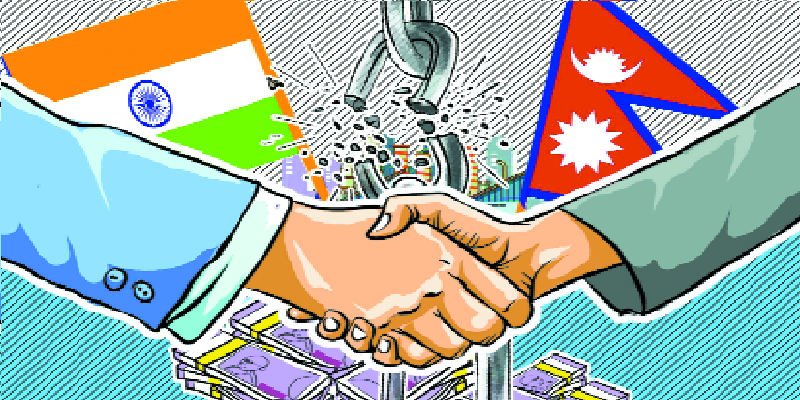
The Lower House of Nepal’s Parliament passes amendment on a new map. Nepal’s Parliament on Saturday unanimously voted for the second Constitutional Amendment Bill, which guarantees legal status for new political map of the country that includes part of Indian territory in Uttarakhand. Their new map shows places such as Limipiyadhura, Kalapani and Lipulekh, including strategically important Lipulekh pass, which are in Uttarakhand’s Pithoragarh district as part of that country’s territory.

Historical Relation: Treaty of Sugauli

It is a treaty that established the relation about the boundary line of Nepal, was signed on 2 December 1815 and ratified by 4 March 1816 between the East India Company and Raj Guru Gajaraj Mishra with Chandra Shekhar Upadhaya for Nepal following the Anglo-Nepalese War of 1814-16. The treaty represented a Nepali surrender to the British and contained the concession of Nepal’s western territory to the British East India Company. The result of this treaty was that Nepal lost almost one-third of its territories on the east, south and west.

Why are Nepalese not accepting this treaty ?

Nepal is not accepting this treaty because they thought that aim of any treaty is to provide both the sides more or less equal o equitable benefits even of one side get a little more benefits and the other a little less. But Nepal suffered only losses because of the treaty while British India gained a huge territorial advantage. The British got the facilities of the corridor in the concession was made for Nepal.

They also claim that this treaty was not signed by both parties. The draft was prepared by the only East India Company with the signature of Lieutenant Colonel Paris Bradshaw on December 2, 1815. Nepali Majesty signed over the treaty because he threatened by the East India Company.

At present Nepal renounced “all claims to or connection (as in original text with the countries lying to the west of river Kali.” (Art. V.) The land east of the Kali thus remained with Nepal. This claim is reinforced by some old revenue records and gazette notifications.

India’s Stand Over this Issue 

India accepts this position, but its claims arise from the ambiguity in the treaty on the identification of the Kali river and its origin. According to India, the river originates from Lipu Lekh and then merges into other streams and tributaries to become the Mahakali. Nepal contends that Kali originates from Limpyadhura and the stream originating from Lipu Lekh is called Lipu Khola. India commented that we can solve this issue by bilateral talks but Nepal does not seem taking interest in this matter. There may be some doubt, opacity or obscurity but it can be solved through the bilateral discussion. Nepal should come over the table and discuss this issue. 

The British Government

British government ruled over India for almost 200 years. They took many decisions but all the decisions are in controversy in today’s scenario. Either we talk about the decision over Indo-Pak border or Indo-Nepal border. Everywhere, we will get unsatisfied decision or disputed matter where the British government was involved. The main aim of the British government was to rule over the countries for a long time. And they follow the “divide and rule” principle. First Pakistan raised concern over the Kashmir and now Nepal is behaving in the same way. 

Epilogue

The maps issued by the British between 1816 and 1860 may favour the Nepali position. But, the maps issued afterwards endorse India’s position. It is possible that the British administration changes this position through proper surveys or subsequently decided to manipulate this position, to serve its larger strategic and commercial interests in using the Lipu Lekh pass for access to Tibet. Independent India was handed over access to Kalapani and Lipu Lekh by the British.

Blaming India for any encroachment is baseless. It must be borne in mind that much before the British came, not the Gurkha kings annexed Kumanon and Garhwal regions-then surrender under the Sugauli Treaty-Indians were using this route for the pilgrimage to Kailash Mansarovar. The route has deep spiritual and civilisational significance for India. China accepted Lipu Lekh as one of the cultural and commercial transit points with India under its 1954 Peaceful Co-Existence Agreement. This was reiterated in 2015 in a joint statement during the Prime Minister Narendra Modi’s visit to China.