
“Government of the people, by the people’-this is a patent and ubiquitous definition of democracy. The other two alternative forms of equal universal validity are oligarchy and aristocracy. Out of the three, democracy is by far the best and most popular, although it is not an unmixed blessing.
Yet all said, democracy is the best form of government, as it guards the interests of men in general. It avoids the evils and demerits of both aristocracies which empowers a privileged section of society to run the state and of oligarchy in which only a few men or groups of men arrogate to themselves the right to rule over others. It is elective, representative and broad-based.
In the earlier days of the European civilisation, the roman republic was founded on popular voice. It was a crude form of democracy. The popular or mass opinion is a fickle phenomenon, as it can be swayed in one’s favour by the legerdemain of arguments. In Julius Caesar, Shakespeare has revealed this truth in the speech of Mark Antony who banished all love of Brutus by an artful play of Sentiments.
Modern democracy is decidedly more solid and well thought out. In it the constitution is supreme. It may be a written constitution like in India or an unwritten constitution as in Britain. Our preamble of the constitution grants even an ordinary man some fundamental rights.: the right to vote is given to all after an age of 18 and the affairs of the state are run by the people of the country. The laws are framed towards the attainments of a welfare state. The neglected section of the society, its underdogs, so to say are given certain privileges so that they are able to catch up with the rest.
One remembers the hoary days of independence. Independence, the Five Year Plans, the illustrious cadres of service that was defined as the Steel-Frame of Administration. One remembers the devoted band of social workers, the Congress, the CPI or CPIM, the SSP that functioned in tandem; and one remembers the healthy bourgeois culture, pluralistic, tolerant soaked on brotherly feelings.
But today the country faces a crisis-ridden with intolerance, doubt, lies to shield power, bribes where money changes hands to protect covert crimes. Entrenched power runs havoc with a massacre of values, honesty and integrity. The nation’s political fabric is a ragbag of opportunism. personal convenience nepotism and what not. The parliament, that was once a cynosure for the ordinary men is today a hothouse of disreputable personae mostly. In a republic like the USA one ‘bugging scandals’ could cause the stepping down its President and in Japan one core could bring down its Prime Minister. But here such scandals are worth only casual attention.
In view of the above scenario ‘democracy’ as it obtains in our country lives only as a platitude with our leaders to befool is during elections. Our constitution is the greatest casualty in the hands of the power that can be. Free thinking, freedom of information, meed o labour -/to wish privileges that form the bedrock of a democratic government is but to live in a fool’s paradise! The high court and the Supreme Court run the administration.

No Men Are Foreign
Remember, no men are strange, no countries foreign
Beneath all uniforms, a single body breathes
Like ours: the land our brothers walk upon
Is earth like this, in which we all shall lie.
They, too, aware of sun and air and water,
Are fed by peaceful harvests, by war’s long winter starv’d.
James Kirrup starts off his poem by advising the readers to remember that no men are strange for we are all one. No matter what our skin colour, no countries are foreign for we are all inhabitants of the planet. Beneath all uniforms, all dress, we are a single body that breathes equally the same. All of us from all the countries walk on the land of the same planet and in the same land where we shall be laid to rest once we die. The people from other countries are aware of the Sun, air and water just like us. We are all fed by peaceful harvests and all of us starve due to wars which are like a long winter with no food.
Their hands are ours, and in their lines we read
A labour not different from our own.
Remember they have eyes like ours that wake
Or sleep, and strength that can be won
By love. In every land is common life
That all can recognise and understand.
The poet says that all of our hands, even those in different countries have hands like ours. They also work like us to earn their bread. Their labour and work are not that different from ours. They have eyes like ours that wake up and sleep just like we do. They have the strength that can be won and conquered by love. Every land has a common life that people from any corner of the Earth can recognise and understand.
Let us remember, whenever we are told
To hate our brothers, it is ourselves
That we shall dispossess, betray, condemn.
Remember, we who take arms against each other
The poet asks us to remember that whenever we are told to hate our brothers from different lands, it is ourselves we shall dispossess for we are all members of the big family that is planet Earth. We will betray and condemn ourselves if we take up arms against each other. The poet asks us to stay in harmony and peace so that we can all prosper together.
It is the human earth that we defile.
Our hells of fire and dust outrage the innocence
Of air that is everywhere our own,
Remember, no men are foreign, and no countries strange.
The poet makes us aware that it is our own Earth that we defile and destroy when we wage wars. When we fight against other countries, the destruction caused by our weapons rage hell on Earth and kill the innocent. It destroys the air of our Earth that is our own. We must remember that we are all the same in the end and all the countries are members of the same family of the planet Earth. Thus we must live in peace and prosper together.
Public
RAIN BUGS
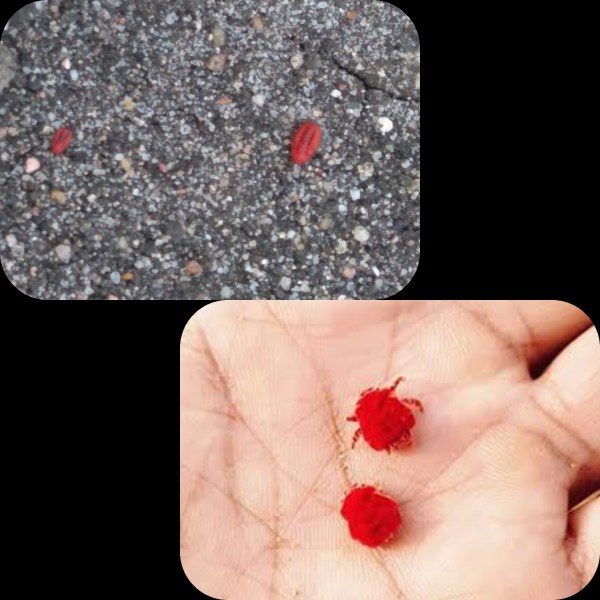
Pattikonda:02/07/2020.
Red velvet mite,Popularly known as Rain bugs. The scientific name of this worm is TROMBIDIIDAE.These are red in colour.It ranges in size of 5-7mm and non poisonous. These are Farmer friendly worms.
The Worm which signs for Good rains and good agriculture season throught year. Mainly, In A.P the farmers are believed this for good rainy season and time to cultivate land and Harvesting.
This worms are only comes at rainy season.They are part of soil arthopods which makes soil fertile by decomposing organic material. These shows potential biological control of season.
They also play vital role to the rate of soil fertile and eats harmful bacteria and worms. Farmers have pinned much hope on this worms for good yielding and good season.
Source:Village Farmers
Public

IMPORTANCE OF DIRECTION IN BUSINESS WORLD
Directing is a very important function of management and its subordinates may not perceive the organizational goals in the absence of directing and the subordinates must be communicated what the organizational goals are, what the employees should do to achieve them, how they should do their jobs etc. Moreover, directing is directly concerned with human beings, so it should be executed carefully to achieve the desired goals. The part played by the manager is rather important as the CEO of the company from the point of managing the workers and the management and Getting things down is in the very nature of Directing.
THE IMPORTANCE
1. The benefit of unity of command
Due to scientific supervision, effective communication, and proper motivation, there is no problem with conflicting orders or priorities and because of a complete reporting relationship with a single superior, personal responsibility for results becomes greater. Directing involves the management of human behavior and it creates cooperation and harmony among the members of a group and increasing people’s awareness has made managing human beings very difficult.
2. Increases potential
For reasons of physical nature’s productivity of managerial resources is limited, but the productivity and effectiveness of human resources have unlimited potential, and directing helps the enterprise in making use of this potential output of the human resources. Since humans evolve as the time goes by and stating together is an important aspect of keeping going together so everyone needs to understand the aspirations and expectations of their subordinates or their colleagues in order to manage them effectively.
3. Initiates action
All organizational activities are initiated through directing and along with planning, organizing, and staffing, managers must stimulate action by issuing instructions to subordinates and by supervising their work and the aim of directing is to activate employees to work towards the realization of predetermined goals of the organization and thus, without directing, other managerial activities like planning, organizing and staffing remain ineffective.

4.Optimization of individual efforts
The ultimate success of an enterprise depends on the optimum efforts put in by all individuals with willing cooperation and through effective supervision, motivation, leadership, and communication directing makes it possible.
5.Means of motivation
The organizational objectives cannot be realized unless people working in an organization are motivated to work willingly and perform well to the best of their abilities and directing is motivating employees to contribute their maximum efforts towards the achievement of organizational goals.
6.Provision of a stable and balanced organization
Directing provides effective supervision, motivation, correct leadership, and a well-understood communications, and therefore the organization as a whole work in a balanced way and it lasts for a long time.
7. Integrates employees efforts
At all levels of management, there are subordinates under the managers and the work entrusted to these individuals is interrelated and the performance of each individual affects the performance of others and thus individual efforts need to be integrated so that the organization achieves its goals and the directing functions integrate the activities of the subordinates by supervision, guidance, and counseling.
Public

Study looks at future Marketing on social media
As more brands are turning to social media to connect with consumers, it’s no surprise that marketers are working to utilize the many features on Instagram. Earlier this year, Social Media Today and the team from SEMrush published a survey of over 800 digital marketers in the State of Instagram Marketing 2019 report, sharing insights into what markers are doing on Instagram, what they’re seeing success with and where they see future potential.
In a post summarizing its latest report (“The State of Instagram Marketing 2019 – Part 3: Future Marketing Opportunities on Instagram”), Social Media Today’s Andrew Hutchinson narrowed in on three key topics covered by the survey:
To help set a baseline, all respondents were asked the question, “Are you currently using Instagram for marketing purposes?” More than 90% indicated they were.
According to the report marketers see Instagram as a social media platform that will be with them for the long haul. Sixty-four percent of respondents indicated that Instagram is either extremely or very important to their broader social media marketing strategy. Almost 72% of respondents indicated that it’s very likely that Instagram,FaceBook,e.t.c.,
Public
Economic terms That Everyone Should Know

Real GDP : GDP (Gross Domestic Product) The value of Total gross domestic product all the goods and service produced for Money in the Economy.
Nominal GDP: GDP evaluated at current market prices. Therefore, nominal GDP will include all of the changes in market prices that have occurred during the current year due to inflation or deflation.
Inflation and Deflation:Inflation is defined as a rise in the overall price level, and deflation is defined as a fall in the overall price level. In order to abstract from changes in the overall price level
Net national product (NNP) is the monetary value of finished goods and services produced by a country’s citizens, overseas and domestically, in a given period.
Fiscal Policy :The spending and taxing activities of government constitute its fiscal policy.
Equilibrium: In neoclassical economics, equilibrium exists when supply equals demand for a particular commodity.
Dividends: Many companies pay a cash dividend (quarterly or annually) to the owners of its shares. This is an enticement to investors to purchase that company’s shares, and represents a way of distributing some of a company’s profits to its ultimate owners.
GST:Goods and Services Tax is an indirect tax used in India on the supply of goods and services
Exchange Rate: The “price” at which the currency of one country can be converted into the currency of another country.
Deficit: When a government, business, or household spends more in a given period of time than they generate in income, they incur a deficit. A deficit must be financed with new borrowing, or by running down previous savings.
MRP: maximum retail price (MRP) is a manufacturer calculated price that is the highest price that can be charged for a product sold in India and Bangladesh.However, retailers may choose to sell products for less than the MRP.
Net worth is the difference between the asset and the liability of an individual or a company.
Public

THE makeover of INDIAN COAL INDUSTRY
India has went on to become the second largest coal producer in the world, still has not been able to produce enough to meet the rising demands from industries of steel mills, power plants ,cement, and fertiliser units. India has for long been depending on such coal , for being it’s source of energy. Coal has been so important, that only nationalized government entities were permitted to participate in the coal-mining process , during the 1970s. This led to the emergence of the Coal India, which constitutes for around 80 % of the total coal production in our nation.
There are major issues which need to be addressed now, regarding meeting the coal requirement. Last September, when heavy rains flooded the coal mines, the production had to be stopped for some time completely. The mining license had been restricted to commercial companies, who needed to have prior experience in bidding of coal mining units. The coal production, only by the Government entities have failed to produce the required quotas, as a result new reforms are in place. According to the reforms, any companies who’ve got themselves registered, can try and produce coal now on their own, without having the need of any kind of experience.
It seems that Narendra Modi is finally trying to break the 43 years old stranglehold. He started the policy of auctioning the natural resources, so that the sector is finally open for them to buy and produce. Top conglomerates had been waiting for this to happen for a very long time. This opening up of sectors will help in eradication of lot of prevailing problems like unemployment, poverty. We’ll be directly benefit as enhanced energy would be available, and the cost of production would come down making the coal power available at lower costs. The country would benefit , because the increase in FDI, would finally stabilize the irregularities arising in the Coal supplies. Guatam Adani, Kumar Mangalam Birla, Sajjan Jindal were the top conglomerates waiting for these reforms .
The government also thought this reform to be a money-making model . Initially, the entities had to pay fixed sums per tonne, what now the commercial miner shave to pay a portion of their total profits, say 5%.In order to boost the coal production, the coal blocks would be given on a revenue –sharing basis. The commercial miners have to promise to mine at least 50% of the production plan , and share the profits.
Another major problem is the transportation. The transportation by trains is a big concern, as rail transport is the most economical way, but it does not provide access to all the far –fetched areas. On the 3rd of July,2020 RITES have renewed their five-year long pact with Coal India, over the construction of rail infrastructure.
This launching the auction of mines, might prove to a great move turning crisis into opportunity .The companies may not benefit in the short run, but in the long run this might prove to be beneficiary . The focus was to not on investing on new kind of capacity, but utilise the older ones.
Public
CULINARY HISTORY
The origin of cooking in general goes back to the prehistoric era. Humans
began eating the products of their own pickings. Such as fungus, , roots,
fruits etc. Then they began to kill or catch animals to eat flesh.
The discovery of fire marked the beginning of cooking. Cooked meats or fish was first eaten by accidental when the forest caught fire. And one could discover some flesh of some animal. The same may happened in case of salt with – mountain or sea.
Later the human learnt the art of agriculture. They started living together in groups for bettersecurity. They cultivated cereals, pulses and gradulally vegetables. Frits tree were introduced by Romans such as peaches, lemon,Cherries, apricots, plums etc. brought from far awaytrips to eastern countries.
At the very early stage of First Civilization, Mesopotanians, Aryans,
Egyptians, Greeks, Romans developed the art of cooking for their kings.
Game meat was almost a unique one until came geese and pork breeding.
The Romans also taught French people how to make wone, and bread which have remained staple diet. Most oprobably cumin was the first spiceand vinegar, the first condiment.
Onion and arlic were the main aromates and spices came from Asia and were of high prices. At thwe end of the 12th century most of the
commodities were used. When the spice road opened, invasions mainly
contributed to gastronomy.
The Greeks and Latins created the basics of modern cookery, wine making, baking, stewing, pickling etc. Epicuro and Lacullus were the most famous gourmet who spoke about the art of eating well. The invasion of France by Romans and then Scandinaviansand North
Africans were dominant factors in culinary history. India, Turkish,
Moghulsinvasion and British occupancy influenced the style of contintental foods served. 11:04 AMhe Portuguese and the French people in their respective colonies were also responsible for theirregional development. Pilgrimage, travel and trade were the factors in opening the first roadside eating place INN. Probably Marco Polo’s trip to China is ne of the reason why the pasta is the staple food of Italy. The King’s table contributed to thefast promotion of gastronomy with many chefs’ contributions like: Antonie
Careme, Auguste Escoffier etc. They were considered Chef of Kings and king of Chefs. Soup was ntroduced. Soupa means with slice of bread. Su Pa in Sanskrit means good food taken from the frirst book from Philip IV and Charles Iv. In 1392, William Tyral was Chef de Cuisine and wrote a book on royal kitchen, “Le Lure Fort Excellent”, published in 1540AD, written by
P.Pinoux. Catherine de Medici in 1575 ad brought to France the culinary art.
Italian cooks and pastry chefs- Pllatina, Messitrya, Romati, and Roselli have
contributed lot. The fork for eating was introduced by Henry IV.
Menus beceme balanced with more vegetables and less meat. Around17th
century Champagne, a famous sparkling wine from France was discovered
by monk Dum Perignon. In Table service crystal were introduced. Potatotes
were introduced by Parmentier.
In 1653ad, Laverine, cook of Marguis Deuxelle wrote the French Cook Book.
L.S. Robert’s wrote on 15 years of progress in 1660 in 1671. A sauce stiil has
a name Vatil , was the first victim of cookery. He committed suicide when
the fish delivery for the King’s banquet did not arrive on time. During the
reign of Louis XIV also known as Louis de Bechamel created a sauce. The Duke of Rechelein, winner of battle named the sauce Riche. The Duke of Mirepoix created exotic recipes with Quail. Chocolate was introduced as beverage as tea and coffee. An Italian named Prolopioli Colleti opened the
first café in Paris.in 16 78 wich still exists. Tea was introduced during
renaissance and mostly used as drugs. The first critic for restaurants was
Grimod de Reeymere
Public
‘SheshNaag’, Indian Railway’s 2.8 KM Long train
Indian Railways has created another record by operating the longest freight train. It has been named “SheshNaag”. It is a 2.8 km long train amalgmating 4 empty BOXN rakes powered by 4 sets of electric locomotives. The rake had a total of 251 wagons which were pulled by four electric locomotives which were fitted in between. This target is achieved in the South East Central Railway Zone of the Indian Railways. The train had empty BOXN rakes.
Indian Railways are now moving to priortise toward freight trains network as the passenger trains are not running in full utilisation due to the spread of Coronavirus pandemic. They are trying to move multiple freight rakes together as it helps in saving the transportation time and also help in the decongestion of the rail route.
Public
The Ballad Of Father Gilligan
The old priest Peter Gilligan
Was weary night and day
For half his flock were in their beds
Or under green sods lay.
Once, while he nodded in a chair
At the moth-hour of the eve
Another poor man sent for him,
And he began to grieve.
William Butler Yeats talks about an old priest who was extremely tired all day and night. Half of his flock was dead and he was depressed. One day while he was nodding in a chair another poor man sent for him as he was about to die and needed the priest’s blessings. Having being extremely tired and not getting a chance to rest, he began to weep out of frustration. God’s work was tiring and starting to take a toll on his humanly old body.
‘I have no rest, nor joy, nor peace,
For people die and die;
And after cried he, ‘God forgive!
My body spake not I!’
He knelt, and leaning on the chair
He prayed and fell asleep;
And the moth-hour went from the fields,
And stars began to peep.
He cried that he got no chance to rest and had no joy or peace in his life for people only died. He only had so much work to do and got no time for relaxation. He cried to God to forgive him and that his body was speaking and not him. He meant that although he wanted to do God’s work, his ageing body was failing to keep up. He knelt and leaning on the chair He prayed and fell asleep. The night came and so did the stars but Father Gilligan kept sleeping unaware.
They slowly into millions grew,
And leaves shook in the wind
And God covered the world with shade
And whispered to mankind.
Upon the time of sparrow chirp
When the moths came once more,
The old priest Peter Gilligan
Stood upright on the floor.
The stars filled the sky and the leaves shook in the wind. God covered the world with shade and whispered to mankind. During the time of sparrow chirps, the moths came once more, the old priest Peter Gilligan awoke on the floor. He had slept throughout the night.
‘Mavrone, mavrone! The man has died
While I slept in the chair.’
He roused his horse out of its sleep
And rode with little care.
He rode now as he never rode,
By rocky lane and fen;
The sick man’s wife opened the door,
‘Father! you come again!’
The priest expressed his grief by crying mavrone for he knew that man had died while he had slept in the chair. He woke up his horse from its sleep and rode in a rash manner by rocky lanes and fen. He reached the sick man’s home and the wife opened the door and exclaimed her surprise on seeing him again.
‘And is the poor man dead?’ he cried
‘He died an hour ago.’
The old priest Peter Gilligan
In grief swayed to and fro.
‘When you were gone, he turned and died,
As merry as a bird.’
The old priest Peter Gilligan
He knelt him at that word.
Father Gillian cried in desperation and asked if the man had died. The wife affirmed that her husband had indeed died an hour ago. Remorse and grief gripped Father Gillian. The wife said that when father Gilligan had gone, he had died as merry as a bird. The priest knelt and realised what had happened.
‘He Who hath made the night of stars
For souls who tire and bleed,
Sent one of this great angels down,
To help me in my need.
‘He Who is wrapped in purple robes,
With planets in His care
Had pity on the least of things
Asleep upon a chair.’
The Priest cried and understood that God who had made the starry night skies for souls who are tired and bleed had given him rest. God had sent one of his angels to help the Priest get his much-needed rest by doing his work. God had taken pity on him and had his work done by sending an Angel to emulate him and bless and take care of the sick and dying man.
 International Journal of Research (IJR)