The past is a permanent dimension of human consciousness and values

Never let the past overburden you, but always let it teach you

India, i. e. “Bharat” is the land of diversified cultures and values, beholding in herself the flavours of the longest epics such as “Mahabharata”,stories of valor of Maharana Pratap, struggle of the great social reforms of the 19th century, Rajaram Mohan Roy, Eshwar Chandra Vidyasaagar, Rani laxmi bai, Pandita Ramabai, Dr. B. R. Ambedkar and many more great souls.

Human revolution is one of the most extraordinary phenomenons that took place on the earth. Beginning with inventions of fire and wheel by Humans, to the use of complex iron and copper tools and development of settled livelihood, humans are the most advanced creatures on the planet. But with this great advancement and the ambitions of humans which tend to never end, the most capable animal HUMAN turned wild, mean, consumerist, capitalist and above all self obsessed. The increased volume of practices such as, corruption, crony-capitalism, smuggling, theft, events of eve teasing, rape, sexual assaults etc. and etc. has let the whole human community down.

People have gone out of their senses in this hectic and fast growing world, racing for acquiring wealth and power. The question is, have all of these problems not existed prior 21st century!? The answers to this is that off course these kind of heinous crimes existed earlier as well but this is the power of humans to cope with these situations. History itself is the witness that even during the later Vedic period with emergence of Manusrimti, not only women but the so called lower casts or “shudras” and vaishyas also have to go through discrimination and ill treatment of the Brahaminical class. But people during those times got their ideals in enlightened figures – Gautam Buddha and Mahavira. The two acknowledged figures stood against such practices and showed the path of truth and non violence. Even Mahatma Gandhi during his lifetime took inspiration from these principles and values. These principles were largely about “human salvation, consciousness of mind and soul and humanity.

The epics of Ramayana, Mahabharata and the story of Jesus Christ, all revolve around great deeds of humanity, dharma, sacrifices etc. People around the world today worship one or the other forms of God, be it Hindu Gods and Goddesses, Jews worshiping Jesus or Muslims worshiping Mohammed Prophet. But do they really worship them for attaining peace and consciousness? Or just for the sake of their own well being and prosperity?! To worship should mean to follow their teachings of love, humanity, ethical values, dharma etc. These religious epics- Quran, Bible, Geeta are the richest sources of human values.
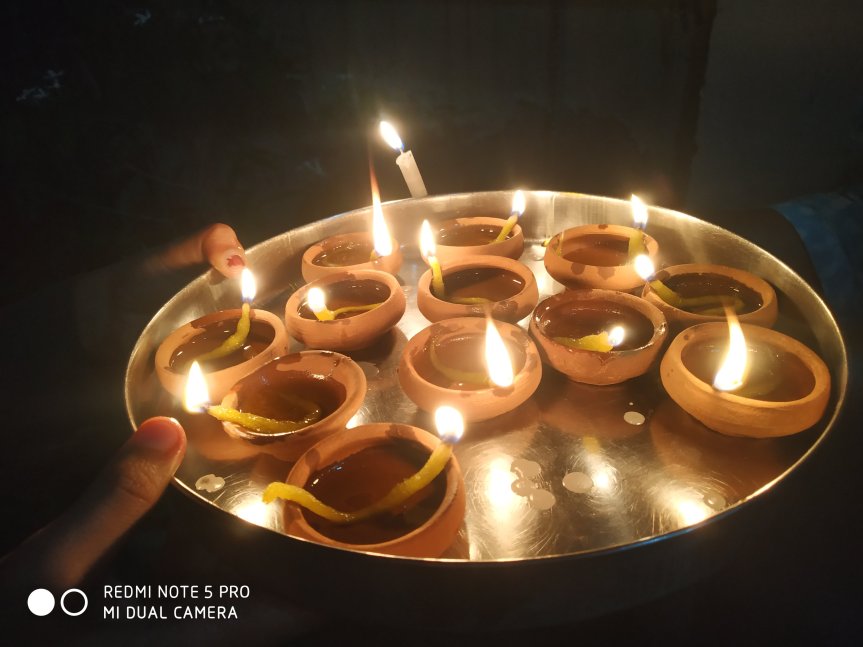
If we move a little forward in history and throw attention towards the great movements of medieval times around the world such as Sufi movement, Bhakti movement etc. we get the evidences of reforms in the original forks of worship, turning the society into more contemporary and realistic forms of profession of devotion towards god and mankind. These movements condemned all forms of cruelty towards humans as well as animals and taught the lesson of mysticism. These emphasized on direct connection with god or the good of everyone. The world today is heading towards India and looking upon it to be a path maker in the field of meditation and yoga, the practices which are a source of escape from the inhumane world into a world where it has patience, peace, love and satisfaction. These virtues has enabled the man to first think and then act.

There is no denial to the fact that past and especially 19th century has shown the world one of the most cruel phase of humanity. The practices of sati, untouchability, child marriage, bonded labour, mass killings of Jews (under Nazism), polygamy, Purdah system and many more were written in Black letters in the history. But all of this came to an end with the tireless efforts of such great human beings as Raja Ram Mohan Roy, who stick stick to his principles despite huge criticism from society and even family. It was his efforts which led to laws such as Abolition of Sati Act. Other great personality is Eshwar Chandra Vidyasaagar whose efforts brought in existence the law of widow Remarriage Act. Leaders like Dr. B. R. Ambedkar, Jyotiba Phule, Mahatma Gandhi, their whole life advocated for abolition of untouchability. Female warriors of those times- Savitribai Phule, Sarojini Naidu, Mother Teresa were, are, and will always be inspiration for the world to strive for achieving equal status for women, poor, unprivileged. These great souls have taught us to work for human betterment, even without any personal gains.
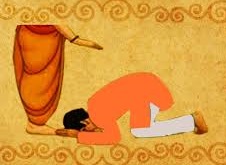
Why can’t today the world look back for one and adopt these values and culture that we owned in the past. The incidents of cow slaughter and mob lynching are nothing but a slap on the face of teachings of Buddha, Mahavira and even ideals of Gandhiji. Abraham Lincoln one of the revolutionaries and a face of anti-black movement of America, fought with all his efforts against black racism in the U. S. A but the events of killing of black activists on the streets of U. S. A by officials is not something for which the nobel man had dream of. History is not just a source of knowledge of the past theories but is a treasure to look back at and learn to cope with the modern day problems destroying humanity and depriving the mankind and consciousness. It’s high time, the world should adopt the principle of Lord Mahavira

Live and let live.

We are finding it difficult to manage our waste.

Who is responsible for clearing Capital's garbage mountains ...
A garbage mound in New Delhi

Mountains of waste being generated as a by-product of economic development is taking a serious toll on the environment. Because of rapid urbanization, the country is looking at massive waste management challenge. Nearly 400 million urban residents in living in 8000 towns and cities produce 62 million tons (MT) of solid waste annualy. Out of 62MT, only 42 MT is collected and even out of 43 MT, only 11.9MT is recycled or treated and rest goes to landfill sites or garbage mounds.

Uncontrolled dumping, is the major waste disposal method in India, and is also a major source of disease. In Mumbai, 12% of total solid waste is burned either openly on the streets or in landfills, a practice that releases black carbon, dioxins and carcinogenic furans.

A CSE survey data shows that 70-80 percent of India’s wastewater ends up in water bodies. No proper sanitation facilities, frequent, uncontrolled discharge of wastewater and industrial discharges are the major causes of water-borne diseases, especially in India’s densely populated slum areas and ghettoes. Findings show that out of 816 municipal sewage treatment plants (STPs) listed across India only 522 work. So out of 62000 million liters of Sewage generated, only 18,883 gets treated and the rest is discharged into the water bodies.

Sewage water pollution - refused directly into water basins
Sewage being discharged into water bodies

According to State of India’s Environment 2019 data, the country also recorded a 56 % increase in hazardous-waste generating industries between 2009 and 2017. These industries are also not complying with rules and regulation set by the authorities. A recent joint study by The Associated Chambers of Commerce of India (ASSOCHAM) says that that nearly 74.6 lakh tons of hazardous waste is generated in India.

The lack of infrastructure for scientific disposal and recycling of hazardous waste has caused severe environmental damage. There are only 17 disposal facilities in India with both secured landfills and modern scientific incinerators. States like Karnataka, Kerala, Punjab and Orissa do not have safety regulations and infrastructure to safely recycle and dispose hazardous waste. Workers who collect hazardous waste are exposed to its dangerous chemical nature, resulting in them contracting severe diseases. They do not have modern equipment, are poorly trained and not paid well.

‘True Cost of Sanitation’, a report of economic cost of sanitation released in 2015, stated that India lost near 106.7 Billion from its GDP. Poor sanitation has impacts on the society and the economy. It causes fatal diseases and also gives rise to related losses in productivity due to sickness and increased healthcare costs from caring for the sick.

Social Media: The perfect tool for Digital Marketing

As indicated by one Facebook report, there has been a 70% expansion in time spent on the application in Italy. A March 2020 study of U.S. conducted on online networking users discovered that 43.1%  would scroll through Instagram more whenever staying home while 63.7% and 62.3% used YouTube and Facebook, in comparison to the other websites, more.

Presently is a prime chance to develop business accounts by putting out valuable content that doesn’t focus on a hard sell. The objective should rather be to assemble an internet following through: 

1) For example, how to extract productivity out of “work from home” and methods of reducing expenses on veggies.

2) Posting harious content of mockery, similar to funny clippings and memes. 

3) Collaborating with an influencer. 63% of shoppers trust influencers more than brands and COVID-19 has allowed influencers over a wide scope of ventures to make their administrations accessible at a sensible cost. 

With relatively little expense and exertion, an organization can understand results that keep on profiting them long after the situation improves.

GENERATING MARKETING SCHEMES OVER THE WEB

Online campaigns help to spread the word about their businesses and the new ways of functioning, with less amount of time and effort invested, than asking their regular set of customers to do so.

This can be achieved through Smart bidding like Google Ads, Content Marketing and Coupons designed from Easy Promo Or Woobox

CARRYING OUT DAY-TO-DAY OPERATIONS ONLINE

There are not many organisations can transition their day-to-day functioning using internet. However due to the availability of video conferencing facilities like Zoom and Google Meet, there can still be interactions between the customers and the buyers. 

Orders of groceries and other essentials can be taken online, education through schools and Institutions is being provided online and live tutorials and sessions are being conducted in which clients are asked to make the payments online. There are several other courses available on digital marketing too  which can be availed to enhance the speed of the working staff and enable them to make the most out of the present situation.

WHAT’S IN IT FOR YOUR BUSINESS? 

Numerous organizations are curtailing their showcasing endeavors due to COVID-19, however what they should do is multiply while making the most of the new open doors that are springing up. 

This accentuation on digital marketing isn’t something that they’ll need to back off on once the lockdown is over. Internet shopping won’t stop at any point in the near future, and most organizations will find that online associations are more helpful than in-person interactions. 

While it might be viewed right now as an alternate course of action, when the pandemic is over, everybody will probably understand that it’s much more than that.

On the off chance that a very much upgraded site, all around arranged advertising devices, and selection of virtual interchanges can get an organization through one of the most exceedingly terrible crises in present day times, for what reason can’t digital-based promoting make its all intents and purposes relentless?

(Part 3/3)
Hope you all had a good time reading!

Racism in the USA: Past and Present

Why it is in the news?

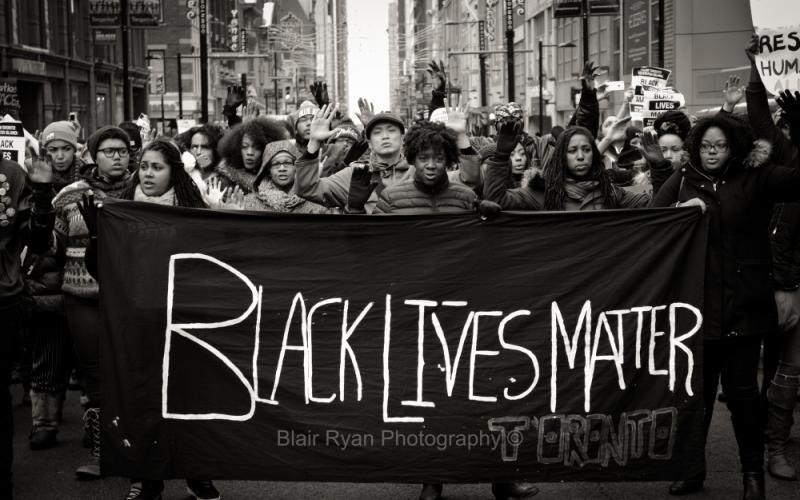
Recently, the accident happened in Minneapolis, the USA which brings this topic into the picture. On May 25, 2020, George Floyd, a 46-year-old black man, was killed in Minneapolis, Minnesota, during an arrest for allegedly using a counterfeit bill. Black Lives Matter Protest began and it broke out all across the USA after the death of George Floyd, an African-American lived in Minneapolis city.

Police have used tear gas and force against demonstrators and President Donald Trump threatened to send the military. Some acts of looting and arson also occurred. President Donald Trump called this movement as riots. 

Historical background of slavery

The revolutionary fights for African-American or The Black people’s rights are connected with the historical background of slavery. Many African citizens were brought from Africa to North America for slavery. There were slaves in 13 colonies which called them as “United States.” African people were working as “slave under The White people. It is a traditional activity from last more than three hundred seventy years. From 16th Century onwards slavery carried on unabated for almost 4 centuries. The United States got independence after the War of Independence even though these slaves were deprived of their fundamental rights and independence. But ultimately Civil War took place in 1861-1865 and the reason was only slavery. In the 1860s the slavery was abolished in Northern parts of the USA but still, slavery was common in the Southern part of USA. And this was the reason why the Civil War took place between Northern and Southern America.

Emancipation

Northern America won the Civil War and passed a law which is called as 13th Amendment by United States Congress for abolishing slavery except as a punishment for crime. By this law, 4 million slaves became freeman and freewoman.

Racism in American Policing

The police department was not in existence in past. The institution of police in modern USA Police started with systematic racism and violence in the form of ‘slave patrol’. At that time the slave state created patrols called as “slave patrol” to nip slave revolts and escape from southern part to northern part of USA. The state of South Carolina was the first to create slave patrols in 1704. By the end of the 1700s, every American slave state had slave patrols. 

The former southern slave patrol transformed into police departments that technically were different from slave patrols, but were still charged with controlling the freed former slaves. This carried on in the Reconstruction and Jim Crow Laws era for the next 80 years.

Reconstruction Era 1863-1877

Reconstruction era started at the end of the Civil War. The aim was to reconstruct the south and integrate frees black people into society. They put efforts to give some legal rights and economic support to recently freed slaves (The Blacks). But they failed to provide any substantial rights. 

For instance, just take the context of voting rights, 15 Amendment incarcerated voting rights discrimination based on race, it left the door open for states to determine the specific qualification for suffrage. Southern state legislatures used qualifications including literacy tests, poll taxes and other discriminatory practices to disenfranchise a majority of black voters in the decades following Reconstruction.

Repeating the History of Racial Segregation

Jim Crow Laws were one of the ways through which racial segregation started against Blacks. Jim Crow laws were state and local laws that enforced racial segregation in the Southern United States. Jim Crow was not the name of any person or place. It was used as a caricature to tease the Blacks. All these laws were enacted in the late 19th and early 20th centuries by white Democratic-dominated state legislatures to disenfranchise and remove political and economic gains made by blacks during the Reconstruction period. The Jim Crow laws were enforced until 1965. This is called Segregation – The Jim Crow Laws. The Jim Crow laws mandated the segregation for whites and blacks in the workplace, public school, public places, public transport, restrooms, restaurants and drinking water points.

Success and The Legal End of Segregation

The Civil Rights Act of 1964 and The Voting Rights Act of 1965 were passed by the Congress and this decisive action towards the ending of Racial Segregation. The Civil Rights Act of 1964 banned segregation in schools and other public places. The Voting Rights Act 1965 banned literacy tests and other methods used to disenfranchise black voters.

#BlackLivesMatter Movement

This movement has past link when George Zimmerman fatally shot an unarmed Trayvon Martin, a 17-year-old African-American high school student. Zimmerman was charged with murder for Martin’s death, but acquitted at trial after claiming self-defence. It was Zimmerman’s acquittal that gave rise to a hashtag and a movement called Black Lives Matter (#Blacklivesmatter).  

 Many cases and accident apart from George Floyd Case and George Zimmerman Case happened in the USA. Racism always existed in the US Police department. In past, several cases were unregistered or not recorded in the form of pictures and videos but in modern times, nothing can hide from the third eye called cameras. Everything got recorded by cameras. The movement in which thousands and millions of people are getting involved during a time when there is a pandemic named COVID-19 a communicable disease which spread by touching and there is no way to save ourselves except social distancing. Therefore, it shows that the disease of racism is more dangerous than COVID-19 pandemic. 

5 TYPES OF PEOPLE IN LOCKDOWN

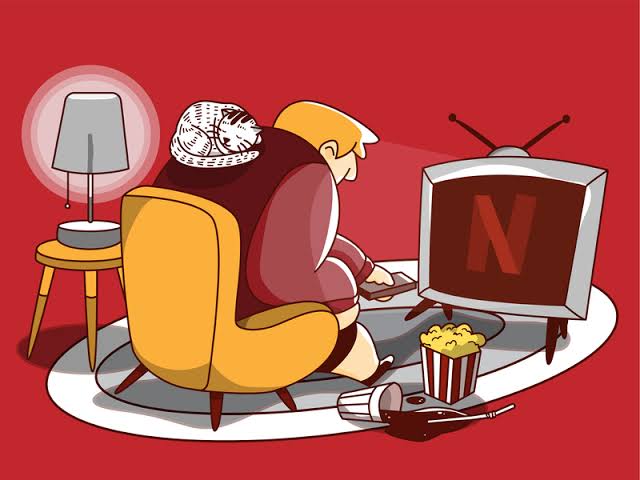
1) The Nonchalant Sleepyheads

They have no clue about what day or month is it. However they still remember that it is 2020 and they don’t fail to criticize the year for all the bad happenings. They keep  swinging between Netflix, Hotstar and Prime and rest for as long as their mothers don’t lose temper. They are happy that they get to sleep at any time, they’re having good food to eat and don’t have to do any kind of work besides binge watching and they are completely carefree with the current situation.

2)  The Ones In Heebie-Jeebies

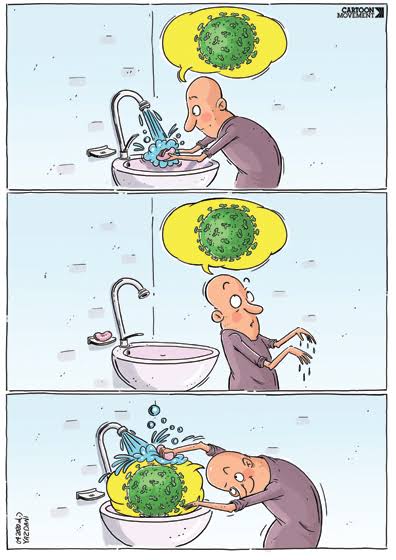
They have kept themselves confined to a much stricter set of rules involving the coronavirus prevention. They are  always extra careful in washing their hands fifty times each day, rubbing even the nutrients away by over soaking the vegetables brought from a local vendor. They’d go on to  the lengths of scrubbing the air around them mercilessly, in the event that they, oh if by mistake, inhale the virus. Suspicion & Doubt is their new closest companion.

3) The Productivity Masters

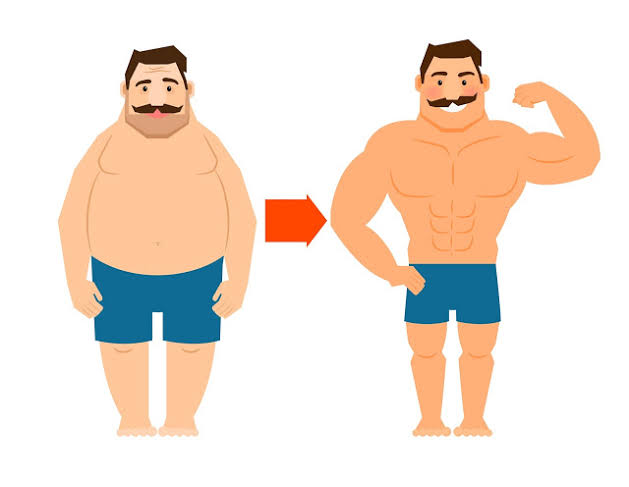
Once the lockdown would be over, I bet they would come out with well defined six-pack abs or a flat belly (if they are she). And not to forget to mention, they even managed to gain expertise in baking different types of cake, donuts, cookies, pastries and the list goes on.
They are done with reading at least 15-20 books already and would have even finished stitching a mask by the time you will finish reading this article.

4) The back-to-normal Anticipators

Nobody craves for normalcy as much as they do for they just can’t wait for the day this Corona thing disappears and life gets back to as it was before. Because their mind  refuses to function only and they are profoundly scared of being able to make it in the Corona world post listening to daily dose of news, further panicking themselves. Okay, the problem doesn’t end right there, they even have to prevent the mask from sliding off their sweat-soaked nose.

5) The every-cloud-has-a-silver-lining Crowd
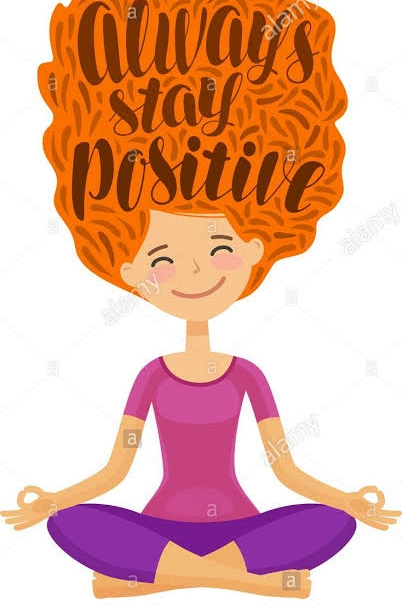
They are the ones who have vowed to stay optimistic under any circumstances. They have accepted the fact and are preaching people, through their posts on social media, regarding how the nature is cleansing itself and other xyz methods to learn to coexist with nature. They believe the glass is always half full and are sanguine about the situation being better again, but at the right time. These people don’t want to act as obstacles in the nature’s processes of regeneration and restoration. They are going to wait patiently till the time everything is sorted.

Hey guys! Hope you liked this slightly satirical article written with no offence to anybody. And what do you think  which category best suits you? Do let me know in the comment section below. If you ask me, I think I am a mix of all of them excluding the 2nd one.😛

High time we prioritize female literacy!

Why do Indian girls outperform boys in school, year after year?

Greater female literacy and education is recognized across the world as a powerful contributor to women’s empowerment. India has seen significant increase in the overall literacy rates from 18% in 1950s to about 74% in the last decade. However, there is huge gender disparity in literacy that is prevalent in India. While the literacy rate for men is at 80% it is just at 64% for females. Compared with the rest of the world female literacy rate is just at 60% which is 22% less than the global average.

Low literacy rate hinders women’s participation in the workforce which is an important factor for demographic transition (from high to low mortality and fertility rates). According to a 2017 study, lower infant mortality rates have been directly linked to higher education levels of the mothers as can be seen from a regional breakdown of female literacy rates in India. Kerala, the state with the highest female literacy rate (92%), has the lowest infant mortality rate of 10, whereas Bihar and UP with the lowest female literacy rate of 53% and 59% respectively has a high infant mortality rate, 177.5 and 141.2 respectively.

India falls short in female literacy - The Hindu
Female Literacy Rate of poorer countries is much higher than India

Women’s education also had a greater impact on family planning as observed in Bangladesh. Bangladeshi women show high level of awareness of family planning matters and a much higher use of contraceptives than in India. This has led to a dramatic reduction of fertility in a very short period. No comparable changes can be observed in India. This has happened because 88% of women are literate in Bangladesh as compared to 64% in India. The gains in female education has led to an increase participation of women in the workforce whereas in India female employment has gone backwards from 37% in 2005 to 29% in 2009.

If we want to become 5 trillion economy by 2022 we will have to educate our female population and going by the current progress rate, universal literacy can only be achieved by 2060. It is high time that we work collectively to educate our females and not be shy to ask for help from our neighbors who are performing better than us in bringing gender equality.

Our kids are hungry

Malnutrition ravages India's children

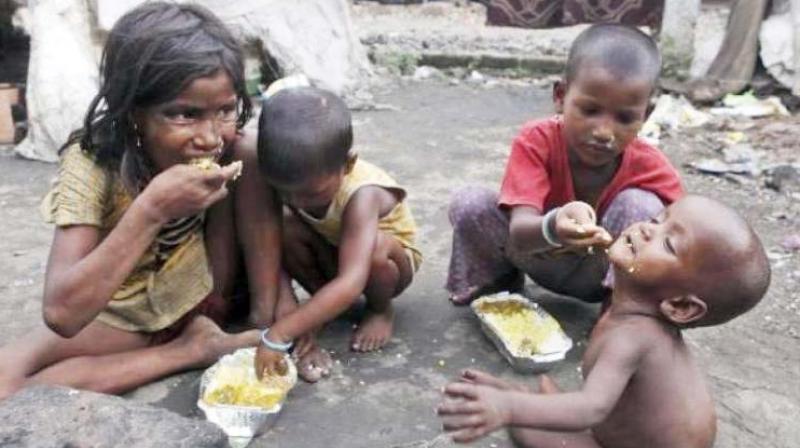
According to Global Nutrition Report 2018, India has one third of the world’s population of underfed or malnourished kids. World Health Organization defines malnutrition as deficiencies, excesses or imbalances in a person’s intake of energy and/or nutrients. It can cause stunting (low height for age), wasting (low weight for height), underweight (low weight for age) and micronutrient deficiencies or insufficiencies (a lack of important vitamins and minerals).

Findings by UNICEF’s The State of the World’s Children 2019 report reveal that malnutrition was the cause of 69% children dying before the age of five. Every second child in India is suffering from malnutrition. This is shocking as India is ironically the world’s 2nd largest growing economy. After the economic reforms of 1991, India has seen GDP growth of above 6% every year. India also has the world’s largest program of combating malnourishment. There are many central and state run schemes that provide ration to the extremely vulnerable section. India also has one of the largest public distribution system for grains. Yet, national and international reports and studies regularly highlight child deaths due to malnutrition in India. In this domain, India has fallen behind the poorest countries of Sub-Saharan Africa and South East Asia like Nigeria, Pakistan, Indonesia and others despite having a higher GDP rate and per capita income.

Malnutrition is further complicated in India where social inequality plays a very important role. A girl child is more likely to be malnourished than a boy child in a family. Similarly, a lower cast child is more likely to be undernourished than an upper cast child. The situation is grimmer in poorer states like Uttar Pradesh, Assam, Bihar and Odisha. The effect of child malnutrition has directly resulted in neonatal disorders, severe respiratory infections and diarrheal diseases in children.

Such findings raise questions about the efficiency of various schemes like Child Development Scheme(1975), National Nutrition Policy(1993), Mid-Day Meal Scheme(1995) and National Food Security Act(2013)  launched by the government to combat malnutrition. A country that produces three billionaires every month should be ashamed that 3000 of its kids die of hunger every day.

The story of human beings

Homo – sapiens is the word used all over the world, scientifically for the modern human beings and has greatly evolved from the beginning of this human civilization. The story of human civilization marks it’s beginnings million years ago (23 million to 5.3 mya) to the development of tool-based and symbolically structured modern human culture.

Beginning of the human race-

It was 5.6 mya when historians first trace the existence of a creature which resembled the features of present day human beings. A large number of species emerged on this earth and got extinct, it was nearly 160,000 years ago human beings resembling us originated over the earth’s surface. And gradually evolved into what we see as present day human beings, sometimes learning how to make tools, or obtaining food, hunting animals and discovering the use of wheel and fire.

The story of human evolution is enormously long, and somewhat complicated. There are many unanswered questions, and new data always come up which ultimately leads to a modification of earlier understandings of the human history.

The story of evolution –

The story of evolution of humans started back between 36 mya (million years ago)to 24 mya when primates a category of mammals emerged in Asia and Africa. It was by 24 mya when a subgroup of these wild primates emerged, namely, Hominoids, who were primarily Apes.

Again these hominoids evolved into a more advanced category which famously came to be known as Hominids (5.6 mya). Now, these primates or “modified primates”, so to say started to make and use tools at the same time. These had a larger brain size as compared to the former and walked upright unlike the hominoids. While hominids included all forms of human beings, they can also be subdivided into branches-

  1. Australopithecus (southern ape)
  2. Homo (man)

2.5 mya, the period when the species of Australopithecus depleted, leaving behind the Homos. It was due to the major climate changes (glaciation) that the former failed to adapt itself, leading to their gradual extinction.

  • The Homos –

Homo is Latin word, meaning man, although there were women as well! The specie further evolved itself into more modernised being and four types of fossils were found which were then regarded as –

  1. Homo habilis ( discovered at Omo in Ethiopia)
  2. Homo erectus (discovered both in Asia and Africa)
  3. Homo Heidelberg (discovered at Heidelberg in Germany)
  4. Homo Neanderthal (discovered at Neander valley)

All of the above existed between 1 mya -40, 000 years ago.

The story of modernization –

The real step towards modernization started between some 195 mya to 16 mya,when the archaic Homo Sapiens in different regions gradually evolved at different rates into modern humans.

  • The race towards being modern-

The tools and techniques that we see today is the evolution of the simplest methods that were used by early humans, a large part of our lives is prompted through the use of such substantial art of living that was used million of years ago, be it hunting, cloth making, discovering fire, or finding the way of living.

Talking about the food they collected for themselves, evidences prove that hunting started about 5 mya when hominids were in existence. And this eventually made them use fire in order to grapple the thick meat of animals.

When the earliest humans watched for the need of a fine and peaceful shelter for themselves, they sorted to move from open air or trees to a more safer place, i.e. caves. It is evident from the finds that date between 7 mya to 5 mya. It is possible that places with abundance of food resources were repeatedly chosen to live.

Tool making is again a useful technique which has contributed massively towards human growth. The earliest evidence for the making and use of stone tool makers comes from Australopithecus. About 35,000 years ago, improvements in the techniques were evident along with the language development. It were the Hominids whose language involved hand gestures; spoken language was evolved only by vocal but non -verbal communication, such as singing;human speech probably began with calls like the ones that have been observed among primates.

An overall observation of the evolution of Homo Sapiens makes us come to a conclusion that, it is not merely a thousand years of work and scientific developments that we have reached such a stage when “human is the cruelest animal”, but million of years have been passed to achieve such a degree of unhackeneyed society.

Alternative technology for a climate change resilient India

If you can’t see the stars blinking in the night sky, it does not mean they have disappeared. They are there just behind the blanket of clouds, you need to discover them.

The world is stringing hard to contain the climate change. Every country,every international organization is trying their levels best to create awareness of the rising hues and cries regarding climate of the earth. International organizations like UN come up with programs like UNFF, 1.5° C reports, several conversations like Paris, Geneva, Kyoto, protocol etc. Among all these efforts at International level, individual countries to are trying at national levels in order to curb this menace of climate change.
India, not behind in any of the major International alliances on climate change has also pledged to keep pace with World order to combat the rising problems of the nation and the world at large. But, what is climate change and how is it affecting the world and particularly in India? The answer to the question lies in the virtues of mother earth of balancing the heat and other atmospheric phenomenon around the world. Climate change is a process of change (rise) of the average temperature of the world. This change is a result of combination of natural and anthropogenic processes.
The rise of temperatures at the Arctic Ocean is particularly alarming. As a result India won’t be untouched from this major change. Being a major developing country, India is also putting it’s efforts in this direction. The largest economies of the world, depend highly on polluting sources of energy like, crude oil, coal. The emissions from these sources are not only polluting but they remain stranded in the atmosphere for millions of years.
The country is a proud owner of multiple Physiography leading to different sources of energies other than the conventional ones mentioned above. The states of Western and southern India are rich resources of solar energy, one of the most crucial sources of Renewable energy. Giving a boost to solar energy in these states will assure India of energy security as it is a very cheap and reliable source of energy for India. The government has striked the iron hot by initiating programs like International Solar Alliance, PM -KUSUM, cheap loans to households for planting solar panels, etc.

The other major renewable source of energy is wind energy and hydro energy. The vast coastal areas of India provide it with yet another gift of non- polluting form of energy generation can be a milestone in harnessing global warming and Thus climate change. One of the most significant amount of pollution is seen due to vehicles. The mega cities of the country are ranked one of the worst in traffic on roads. Owing to large traffic, these vehicles majorly release sulphur contents, PM 2.5, PM -10, carbon monoxide, etc. in the environment. The government recently has set up rules in this context. It has come up with BS -VI norms of vehicles which in comparison to BS -IV norms release only sulphur content-10. Apart from this, there is also a reduction in PM 2.5 and PM 10 levels. Pertaining to increased pollution in Delhi especially during the times of Diwali celebrations, it is also caused due to-

  1. Burning of crops of paddy in the neighbouring states.
  2. Bursting of crackers in a huge amount

The government has setup air purifying towers in the city to overcome this problem. Along with this, the government has adopted for management of paddy residue by converting it into a fuel which will be less polluting. And for the problem of crackers CSIR has come up with green crackers instead of the crackers which were used earlier.

Other sources which are creating obstacles in containing climate change are the manufacturing units which use and also release gases like CFCs, HFCs etc. There is no denying to the fact that increased use of refrigerators and air conditioners has massively raised the levels of GHGs, like, CFCs, HFCs and HCFCs. Out of the obligations of International conventions India has successfully phased out use of CFCs is determined to phase out HFCs by 2020.

There is no doubt that achieving the goals of climate change resilient technologies is very challenging in a developing country like India, where full literacy is still a dream far to achieve. But the very truth of India having the potential to convert it’s massive demographic dividend and resource rich geography is also not deniable. Not only the government, but also the people at individual levels have to strive in achieving a climate on their very own earth which could be worth living and not only for them but the generations to come. The future is awaiting for the successful implementation of the policies of the government already made and the one’s to be made. New records of collaborations for example the one with Government of U. K to efficiently and resiliently ban the usage of ACs in every corporate and business etc. will enhance India’s capacity to conform with aims like 1.5° C and 2°C and combat climate change.

The Musical Change

Throughout the centuries people have talked about pertinent social issues either through their novels, poems, movies or through music. The 21st century has seen the music industry talking about grave social issues that have taken a firm hold over society. While early novelists and dramatists used to subtly talk about social dynamics which they disapproved of, the current generation is blunter while talking about the social issues.

The pop stars, the rappers have unabashedly addressed some social evils and issues that needed catering and to generate awareness and weed out some evils. Pop stars like Lady Gaga, Alessia Cara and rappers like Logic, Childish Gambino, Dax have talked about social acceptance, ruthless violence, racism and prevention of suicide.

Lady Gaga through her song, “Born This Way” talks about the LGBT community and being comfortable in one’s own shoes no matter who they are for everyone is beautiful in their own way.

No matter gay, straight, or bi
Lesbian, transgendered life
I’m on the right track baby
I was born to survive
No matter black, white or beige
Chola or orient made
I’m on the right track baby
I was born to be brave”

Lady Gaga, a rape survivor, has opened up about the post-traumatic stress disorder (PTSD) she had to suffer after being “raped repeatedly” at the tender age of 19.  Her song, “Till It Happens To You” speaks about the gruesome effect of rape on the victim and the trauma which they have to go through. The song was an attempt to raise awareness against sexual assault which received critical acclaim.

You tell me it gets better, it gets better in time
You say I’ll pull myself together, pull it together
You’ll be fine
Tell me what the hell do you know
What do you know
Tell me how the hell could you know
How could you know
Til it happens to you, you don’t know
How it feels

The song 1-800-273-8255  by  Logic ft. Alessia Cara and Khalid raise awareness about mental health. The video talks about the social stigma and disapproval that the LGBT community has to face from their own families.

“I’ve been praying for somebody to save me, no one’s heroic
And my life don’t even matter, I know it, I know it
I know I’m hurting deep down but can’t show it
I never had a place to call my own
I never had a home, ain’t nobody callin’ my phone
Where you been? Where you at? What’s on your mind?
They say every life precious but nobody care about mine”

Childish Gambino through the music video ” This Is America” raises awareness about the gun violence, racism and brutality of the police authorities in the USA.

This is America
Don’t catch you slippin’ now
Look at how I’m livin’ now
Police be trippin’ now
Yeah, this is America
Guns in my area
I got the strap
I gotta carry ’em
Yeah, yeah, I’ma go into this
Yeah, yeah, this is guerilla, woo
Yeah, yeah, I’ma go get the bag
Yeah, yeah, or I’ma get the pad
Yeah, yeah, I’m so cold like yeah
I’m so dope like yeah
We gon’ blow like yeah”

Black Lives Matter” by Dax talks about racism and the ruthless homicide of George Floyd by white police officer Derek Chauvin

See nobody’s born racist man it’s something you learn
Deep-rooted in your brain from the day of your birth
I think it’s time that we repair All of the bridges we’ve burned
And let love out of our hearts onto cheeks we turn
Spread love, show love, let’s get rid of this curse,
Don’t wait for anyone to act man you go first
400 years wasted let’s get rid of this hurt cause that’s the only way we’ll ever see peace on earth”

These popular songs are just a few of the many social awareness songs available. Artists are representing the socio-political situation and various social evils that need to be weeded out from society through the power of music. Music is such an influential tool and big artists talking about their personal experiences like sexual assault is instrumental in bringing about a gradual and influential change in society. Bricks are laid one at a time and music is healing and reforming the world one brick at a time.