Education system in India.

INDIAN EDUCATION SYSTEM

‘ Education is the most powerful weapon with which you can change the world ’
– Nelson Mandela
Education is the process of facilitating learning and metamorphosing a child into a human resource capital which builds the professional assets of a nation.
India’s population in 2020 is estimated at 1.38 billion,with around 35% of population in the age bracket of (6-25) years.With such a large young population,if guided and trained properly,it can become the strong pillar in India’s development to tryst with golden destiny.
The school education and higher education in India are divided as :
School education :
It includes six years of primary education (6-12 years) followed by secondary education (13-16 years) and at age of 17 or 18, the senior secondary education is finished.
Higher education:
In India higher education starts with bachelor degree programs like B.Tech,B.Sc,MBBS etc with duration of 3-5 years followed up by master degree of two years.It is then followed by doctoral level studies.
The education provided in our schools and colleges is detached from life.It is ironical that a country like India which is dreaming of its development through secondary and tertiary sector of economy,does not provide any type of skill developing courses.The over-burdening bags of child,over-crowded schools,peer pressure of marks,even the examination pattern have negatively attributed to our education system.
As per a report by National Crime Records Bureau(NCRB),28 students commit suicide in India per day.With about 10,159 students’s suicide in 2018.Having such alarming numbers,it succintly shows the callousness of the government towards the reforms in eduaction system in India.As per Kakodkar committee,IITs have been changing into reseach institutes slowly over past decade.But they still have a long way to go which can be fathomable with QS Rankings-2020 which features only IIT Bombay,IIT Delhi and IISc Bangaluru in top 200.
As the education system facing so many problems,improvement is need of hour.It can be started by skill development in schools.Schools and college must not only focus on grades but on analytical and creative skills.The incentives of teachers must be enhanced as they deserve more than they are offered.The funding for research funding must be increased at higher level.Government also should address the issue of higher dropout rate after class 12 among students.
In conclusion,the Indian education system must change and give students equal opportunities to excel in future so that our youth can create a better India-New India.

Kashish Chauhan

EMOTIONAL RESILIENCE

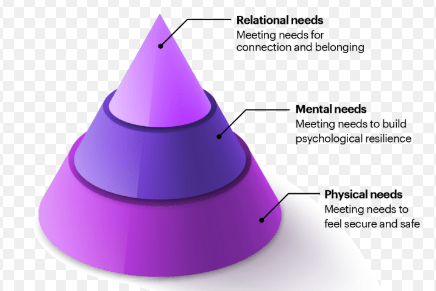
Emotional resilience refers to one’s ability to adapt to stressful situations or crisis, it is intrinsic motivation, an inner force by which we can hold ourselves through all the downsides of life. Emotional resilience is not about winning the battle, it is the strength to power through the storm and keep the sail steady. Studies have shown that stressed people experience a flood of powerful negative emotions which may include anger, anxiety, and depression. Some people remain trapped in these negative emotions long after the stressful events that have caused them has passed. Emotionally resilient people, on the other hand, are quickly able to bounce back to their normal emotional state. We have experienced the 26/11 attacks, the Gujarat Riots, the 1999 Super Cyclone, and many other such calamities, people who could cope with these and get their life back on track have the mental strength or emotional resilience to survive in drastic circumstances. Today the world is going through an enormous change, the pandemic is multiplying at an immeasurable rate, there is unrest between the United States and Iraq and between China and India, here resilience means that people are aware of these changes, accept them without bemoaning and adjust to these challenges. Emotionally resilient people are strong enough to bounce back to their daily life and start functioning normally. People who live in flood-prone areas or where earthquakes occur frequently have that strength to quickly adapt to the situation when they are faced with challenges. It is because they have already faced the situation and are ready to overcome the destructive forces of nature a second time. Similarly, people serving in the military have encountered violence and they are trained in such a way that it wouldn’t affect their daily life. Emotional Resilience has three building blocks – these are the pillars on which we can build resilience or work on improving it. Also referred to as the three dimensions of emotional resilience, the three elements include:

https://www.gracepointwellness.org/298-emotional-resilience/article/5780-how-resilience-works

What is Emotional Resilience and How to Build It? (+Training Exercises)


  • The Physical Elements

Involving physical strength, energy, good health, and vitality.

  • The Mental or Psychological Elements

Including aspects like adjustability, attention and focus, self-esteemself-confidence, emotional awareness and regulation, self-expression, thinking, and reasoning abilities.


  • The Social Elements

Including interpersonal relationships (work, partner, kids, parents, friends, community, etc), group conformity, likeability, communication, and co-operation.

The attitudes that make up emotional resilience are powerful because they enable people who subscribe to them to cope with great efficiency and effectiveness. It is not true that only emotionally resilient people can know the tricks and play of how to cope with difficult situations, it is just that they know how to apply them well to those situations.

Resilient people believe that they have the potential for control over their lives; they believe that they can influence their situation. Non-resilient people tend not to share this belief, and consequently, their stress-coping efforts don’t fair as well. People don’t work at coping when they don’t believe that coping can help.

One of the major causes of the piling up of human emotions is stress. While some form of stress is needed to motivate a person to go about his daily life, some forms of stress are harmful to the body and cause a body were and tear. This is what emotionally resilient people deal with. They apply stress buster techniques in their daily life and go on about it.

A River

In Madurai,
city of temples and poets,
who sang of cities and temples,
every summer
a river dries to a trickle
in the sand,
baring the sand ribs,
straw and women’s hair
clogging the watergates
at the rusty bars
under the bridges with patches
of repair all over them
the wet stones glistening like sleepy
crocodiles, the dry ones
shaven water-buffaloes lounging in the sun
The poets only sang of the floods.

A.K.Ramanujan takes a jibe at poets of Madurai or those poets who visited Madurai and were limited in their thinking and imaginative capacity. The poet starts off by saying Madurai is a city of temples and poets who sang only of cities and temples. The poets missed the river which dried to a trickle in the sand and bare sand ribs, straw and women’s hair. These clogged the watergates at the rusty bars under the bridges with patches of repair marks all over them.  The poet uses two metaphors to describe the wet stones like sleepy crocodiles and the dry ones like shaven water buffaloes lounging in the Sun. Yet all the poets sang only of floods missing out on so many details.


He was there for a day
when they had the floods.
People everywhere talked
of the inches rising,
of the precise number of cobbled steps
run over by the water, rising
on the bathing places,
and the way it carried off three village houses,
one pregnant woman
and a couple of cows
named Gopi and Brinda as usual.

The poet was there for just a day and noticed so many things that all poets generally miss out on. He was there the day the floods took place and people everywhere only spoke of the rising flood and the precise number of cobbled steps run over by water. The water rose to the bathing places and disaster struck. The flood carried off three village houses, one pregnant woman, a couple of cows named Gopi and Brinda as usual. The use of the phrase, “as usual” suggests that it was a regular and helpless occurrence for the people.

The new poets still quoted
the old poets, but no one spoke
in verse
of the pregnant woman
drowned, with perhaps twins in her,
kicking at blank walls
even before birth.

The poet says that the new poets still quoted what the old poets had said but everyone failed to express or talk about the pregnant woman who had drowned and maybe with twins still inside her, kicking at blank walls. The cruel reality is vividly painted by the poet in the description of the unborn babies still kicking their mother’s walls while she had drowned.

He said:
the river has water enough
to be poetic
about only once a year
and then
it carries away
in the first half-hour
three village houses,
a couple of cows
named Gopi and Brinda
and one pregnant woman
expecting identical twins
with no moles on their bodies,
with different coloured diapers
to tell them apart.

The poet says ironically and sarcastically taking a dig at the other poets that the water has enough water to be poetic just once a year when the flood occurs. In the first hour of the flood itself, tragedy strikes when every year a couple of cows, a pregnant woman expecting twins died. The poet imagines the unborn twins to be so identical that they have no moles on their bodies to tell them apart and only different coloured diapers tell one from the other. Here the drowned cows, pregnant woman are symbolic of the lives lost to the fury of nature which is often ignored by other poets who glorify and talk only about the flood.

Social Networking In Schools: Good or Bad!!

There’s no denying that, ever since social networks and social media made way into our lives, everything is different. Beginning with the way we socialize, interact, plan for parties or even how often we go out. We won’t go into a debate regarding the ethical aspects of the way Social Media is influencing our lives. Instead, this article proposes to focus on the numerous ways in which social media is changing the way the education system works.

Photo by Pixabay on Pexels.com

Starting from elementary international school up until university graduation, social media has the role to empower parents, students and teachers to use new ways of sharing information and build a community. Statistics show that 96% of the students that have internet access are using at least one social network. What’s even more extraordinary is that, even though some of the students use the social networks for entertaining and other purposes, there are a lot of them that actually use it to promote a lot of positive and useful activities. From finding a summer internship, promoting a success story about how to win the student-loan battle or collaborate on international projects, everything is made possible.

When it comes to social media, schools tend to adopt different positions. It’s a general consensus that they’re useful when it comes to sharing information or organizing the school tasks. And at the same time, the social networking is blamed for the lack of attention in students during classes. But an increasing trend of adopting social media in school is starting to show. And since students already devote a lot of time for social media and connecting with others outside school hours, why not do it during school as well?

It’s a matter of practicability, really, because it makes perfect sense to use the online universe to communicate with your students since they’re already there most of the time. There’s no need for another case study about the usage of social media in schools. You simply need to walk through the hallways of any school or college to see kids of all ages totally immersed in their smartphones. Browsing their news feed, sharing photos on Instagram or sending Snapchat messages has become a part of their daily routine.

The benefits of social media in the education process doesn’t have to stop at the teacher-student relationship. There are a lot of other benefits that can be extracted from the use of social networking at higher levels as well. For example, principals or administrators can find a new way to integrate social media. Like sharing school news via social networks, holding online meeting with the parents or even starting fundraising for different projects.

And social media can quickly become the only channel of communication since we’re living fast-paced lives, parents are usually busy with work and cannot attend school meetings. But this doesn’t mean they shouldn’t be in touch with events or be able to check on their kids every once in awhile. Just like in every other field, communication is vital and if it can be done easily with the help of social media, why not go for it?

It may not be criteria just yet, but soon enough questions like ‘Does this school have a Facebook page?’ could become just as important as the things that parents are asking right now. Like, how well equipped the library is or what are the optional classes their child can be part of.

The bottom line is that social media is a big part of our day to day life and there’s no point of keeping it away from the education process. School, college and university staff should be encouraged to make use of technology for student and parent communication. This could easily turn into a argumentative essay topic in college. But the benefits are obvious, starting with healthier parent-teacher relationships and all the way to permanently changing the way our children will learn.

Refrences:-

https://www.researchgate.net

HR Strategies After post shutdown

As businesses reopen, employers and HR professionals are confronting unprecedented workplace changes and an evolving patchwork of new laws, regulations, and guidance that demand compliance. New workplace safety standards, leave entitlements, discrimination concerns, and budget constraints are only a few of the emerging sources of potential legal risk to employers.

Fortunately, HR professionals can avoid and mitigate these risks without reinventing the wheel. Instead, they can rely on fundamental best employment practices, and adapt those practices to manage evolving legal obligations and circumstances.

ARTIFICIAL INTELLIGENCE TRENDS IN HR

Artificial intelligence(AI) refers to the simulation of human intelligence in machines that are programmed to think like humans and mimic their actions.The emergence of Artificial Intelligence (AI) technologies in the past years has profoundly impacted a tremendous number of companies and sectors. Take the example of supply chain functions – these have been completely reshaped and fully robotized warehouses are now the new standard. In parallel, other support or corporate functions have also caught this technological wave, but not with the same speed and pace. Human Resources today are the perfect illustration: the shift towards Digital HR has started for pioneer organizations, but the majority of companies are still in the reflection and conceptualization stages.

STRANDBEEST

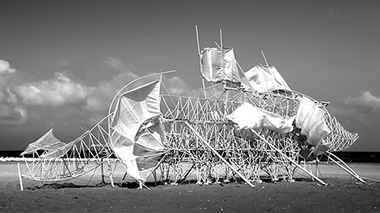
 A “ strandbeest” is a kinetic creature created by Theo Jansen, since the year 1990.Theo Jansen who is a physicist turned artist, have been successful in creating lives on beach, which survives on wind. This animated sculpture which appear to walk, is actually a fusion between art , engineering ,mechanics and biology .To Theo Jansen, the line between art and engineering is illusion, and depends upon our minds. This sculptures  ,are like walking animals , believed to have artificial life. These are constructed from PVC pipes, zip ties, favric, wood. Theo Jansen have been dealing in strandbeest since 1990, and from then it is continuously improved every year. Such kinetic sculptures are based on the models, where the connecting links and triangle converts to stepping motion of six legs, by way of rotating the axle. If compared, the strandbeest travel way more efficiently and  faster than on wheels.

He designed the planar leg mechanism to create a smooth mechanism. These have applications not only in giat analysis, but also in mobile  robotics. The central crank link used by him did wonders, as it seemed to work like an electric  motor. The central crank would make the other links move .Jansen here applied the Newton-Euler mechanism. Initially he had  started with mere skeleton, to walk over the beach ,but  with time such skeletons were improved on to survive weather changes and bear storm. The sculptures are eventually prepared in a way to release in the beach environment, and lead their own lives. They’re even prepared to store air-pressure ,so that they can make their lives go on , in case of absence of mind. Jansen have now come to a stage of evolution, where one such model can detect when they’ve entered the water, they would by themselves move away from them. One of special model is even capable of sensing an approaching storm, and would eventually anchor itself to the earth. These  self –propelled  creatures were presented in an exhibition in 2016 in North America, where the Dutch artist mesmerized everyone with its breathtaking innovation.

Each species of strandbeest, have an unique Latin name reflecting upon their character, and adaptations. 25 years of exploring lineage  of beach animals, each  species retain the successful features of the previous ones, while shedding the ones that were unsuccessful. The strandbeest are something unforgettable by anyone ,who comes across it. I remember coming across this, through my social media profile as a kid, and could not take my eyes off from it.

Let’s Have A Look At Few Of Them

“Animaris Vulgaris”, was the first such beech animal built with 28 legs. But it could move its legs, only when lying down. It would collapse as soon as it stood on it’s own legs. The next one ,  was “ Animaris Currens Vulgaris”.This  one was the first such kinetic sculpture, to stand and walk .With each passing time, the models got better . The latest one is , “Animaris Suspendisse” ,the biggest of all the ones made till date. It is believed to have all the features like Ordis’ legs, nose feelers, sweat glands.It can gulp the wind, stores wind into recycled plastic bottles by squeezing air, and can sense when it’s about to enter the water.

Animaris Suspendisse

Phobos: Reimagining through a new view

3, 2, 1, Liftoff. You may remember the moment when the countdown was going on for the PSLV C25 at 02:36 PM IST to lift from Sriharikota, Andhra Pradesh on November 5, 2013, carrying the other five payloads containing the colour camera which now captured new images of Phobos moon. Let’s have the insights on the Mangalyaan. Mangalyaan or Mars Craft from its Sanskrit root words, the orbiter weighing 3 thousand lbs (1.35 thousand kgs) was a successful mission lately after being criticized for the initial failure. The budget was merely 73 million dollars or 450 crores Indian rupees equivalent to an Indian cinema movie’s box office collection for Ghajini in 2008 as recorded in 2019.

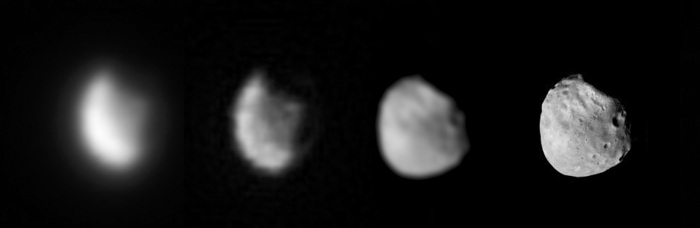
The planet Mars has two moons, namely Phobos and Deimos. The closest and the biggest among the two moons is Phobos. It was picturised as shown above with the color corrected six frames MCC on July 1, 2020, with 210m spatial resolution. The MOM (Mars Orbiter Mission) was 7.2 thousand km away from Mars and 4.2 thousand km from the moon Phobos. It is said that it comprises of carbonaceous chondrite. The giant crater on the surface, namely Stickney, Shklovsky, Roche & Grildrig was noticeable in the picture.

Actual image of the moon Phobos. Courtesy: ISRO

With its fuel efficiency estimated to be only for six months survives till now and achieved success on its first launch itself. On December 1, 2013, it went out of the gravitation field sooner. On September 24, 2014, after a long journey of 300 days makes it enter into the Mars orbit. The subsequent mission by ISRO, MOM 2 or Mangalyaan 2 did fail when the Vikram lander had lost connection after it crashes over the surface. There is no proper evidence of what exactly went wrong in the mission, but it is said that the ALP (Automatic Landing Program) braking thrusters had failed to result in the incidence. There was a big controversy between NASA and ISRO claiming the lander was found, although an Indian scientist spotted it.

Now ISRO with its grand vision is planning for Chandrayaan 3 to send Indian astronauts to space by 2022. This mission is again a cost saver with 35 million dollars for the new equipment and another 51 million dollars for the launcher. India has been already prosperous in launching 104 satellites just in a single mission. Chandrayaan 2 was made only with 141 million dollars budget.

The MOM as described has five instruments onboard:

1) MCC with a 2K×2K area array CMOS sensor for beautiful images of Mars in colourised format.

2) TIS (Thermal Infrared grating spectrometer) houses an infrared detector known as a microbolometer.

3) Methane Sensor for Mars (MSM) by its name is used to measure the presence of methane in the atmosphere, which is a differential radiometer with acute accuracy in parts per billion.

4) Mars Exospheric Neutral Composition Analyzer (MENCA) is a spectrometer to determine the contents in the martian environment

5) Lyman Alpha Photometer (LAP) is a photometer to find abundance in composition to know the actual components on the surface and more.

By these, we can know more about Mars and its moons. Also, you can check out the 3D model of Phobos here: https://solarsystem.nasa.gov/resources/2358/phobos-3d-model/

And also, about NASA’s blog claiming to find clues of the crashed Vikram lander: https://www.nasa.gov/image-feature/goddard/2019/vikram-lander-found

Protect our environment

The regular and healthy ecosystems helps us to clean our water, purify our air, maintain our soil, regulate the climate, recycle, nutrients, and provide us with food. They provide the raw materials and resources for medicines and other purposes. The development of urbanization is taken a high destroy on the environment. During the increase in the development of the lifestyle of the people, the condition of the environment is going dreadful. On one side, we were successful in science and in the technology is doing wonders to bring more comfort in life but on the other side, the environment is affected in many ways pollution, depletion of energy resources, poisonous air, and adverse weather conditions and so on and so forth.

As we know that greenhouse gases have poisoned the air and have also led to the depletion of the ozone layer of the atmosphere, which in turn has caused the temperature to ride. The solution to this problem is to grow more trees. Because the trees contribute to maintaining the air quality by emitting oxygen and thus reduce the greenhouse effect from the atmosphere trees save us from extreme weather conditions. Now, people are getting more aware of the benefits of planting trees as several missions and programs ate being organized by the government. Plastics cause much land pollution and also prove fatal for animals when they swallow polythene bags or pouches. We must stop the use of the plastics and we start to use paper bags instead of polythene bags. To reduce the use of natural resources like fuel, we should use public transport. We also don’t litter our own environment by throwing away the garbage and other wastes to the surroundings it adds up to bacteria and germs which causes diseases. The awareness about the conservation of the environment is most important to protect natural resources. Indeed, working on a personal level to protect our environment a lot. If every one of us begins to do our part in saving the environment the earth will again become the same beautiful and healthy place for living.

Why history as a subject is taught to us.

History is the major reason when boredom hits us hard in school premises. If the history period is after the recess then you are finished, you have to listen just theory that too the past of some random country which will in turn make you fall sleepy. As a school student I wondered why history is added as a subject, why we need to know about the thing which already happened..,moreover why do we need to learn the history of other countries!?? This is the most difficult task for some student’s and other side some student’s love this subject(kaise karte ho bhai..??…sigh!). Let me ask you why history is taught to us, also of other countries which doesn’t matter to us in the first place!?(this is what i used to think and hated the concept of studying history.) Do students really need to know about the history of their nation as well as the other nations? Well, as far as I think, history is important if it’s of our own nation. Studying history can provide us with insight into our culture of origin..getting facts of our own country will add up to our knowledge so as to how people used back then. We get to learn about the culture, the revolution, the disasters, the ruling of emperors, etc.,

Our own nation:-

We can get the better understanding of ourselves only the way when we get to know about the past..minding not only about ourselves but of others. What we are now, is the representation and modification of the past as others lived back then. We are the modified version of the past. We get to know about the ancient era their habitats, how they earned for their livelihood and all the sort of works which were manly and manmade as machines were not discovered. Understanding past gives quick idea about the norms, social instincts, rituals which were practiced back then and are still in consideration but we are slowly backing off. To enlight the culture then there is high time we need to know about the then culture which were in practice(not being superstitious but which are necessary as to our religion.) The relaxations and facilities we have for the transportation didn’t existed back then..so after knowing the situation and resources available at that time…here at present people discovered and introduced many sources. Not only transportation but there are various things other than this. The source of entertainment, sources for education, breaking Linguistic barriers, eventually availability of resources but lacking in utilising them and many more. This was all about our nation (for ones own nation if you are from abroad).

Learning about foreign countries:-

Is there really a need to know about the history of other countries?? Then the answer has the probability of 50-50. Firslty why my answer is 50-50 is because it depends on the interest of the individual. One may find it boring while the other might find it interesting to know about the other countries. Secondly getting knowledge will do no wrong but will eventually add up more. We will only and only get more knowledge which is no harm and will made you more knowledgeable. It is not important that others might follow the same culture as we do. When we study about the past of the world then only we understand as to why the world os the way it is! By studying who they are and suffering through different situations made them what they today. By seeing them ‘as they are’ without judging by our own mental standards. We can learn through others mistake not just individually but as a whole nation(we are taught that we should learn from others mistake and try not to committhe same.) Talking about Indians who are at high position in foreign nation would have thoroughly gone through the history of those countries to deal with their situation, which can be done by understanding them from the start, from the basic which is why learning world history tend to be important. If we don’t focus on histort then ultimately we will end up recreate the history.., as it is said that history repeats itself. So we should not be self-centred, and try to learn other countries culture too.

“We study the past to understandthe present, we understand present to guide the future. ” -William lund