DARJEELING

Location

Darjeeling is a city and a municipality in the Indian state of West Bengal. It is located in the Lesser Himalayas at an elevation of 2,000 metres (6,700 ft). It is noted for its tea industry, its views of Kanchenjunga, the world’s third-highest mountain, and the Darjeeling Himalayan Railway, a UNESCO World Heritage Site. Darjeeling is the headquarters of the Darjeeling district which has a partially autonomous status called Gorkhaland Territorial Administration within the state of West Bengal. It is also a popular tourist destination in India.

History

The recorded history of the town starts from the early 19th century when the colonial administration under the British Raj set up a sanatorium and a military depot in the region. Subsequently, extensive tea plantations were established in the region and tea growers developed hybrids of black tea and created new fermentation techniques. The resultant distinctive Darjeeling tea is internationally recognised and ranks among the most popular black teas in the world.The Darjeeling Himalayan Railway connects the town with the plains and has some of the few steam locomotives still in service in India.

Darjeeling has several British-style private schools, which attract pupils from all over India and a few neighbouring countries. The varied culture of the town reflects its diverse demographic milieu comprising Lepcha, Khampa, Gorkha, Newar, Sherpa, Bhutia, Bengali and other mainland Indian ethno-linguistic groups. Darjeeling, alongside its neighbouring town of Kalimpong, was the centre of the Gorkhaland social movement in the 1980s and summer 2017.

How to go

By air: The nearest airport to Darjeeling is Bagdogra which is approximately 95 km away from the city. There are some direct flights from the cities like Kolkata, Delhi and Guwahati to Darjeeling. From the airport, one can reach the city by hiring taxis. It will take almost 3 hours to reach Darjeeling from the airport. Flights are available from all major cities.

By rail: The nearest railway station to Darjeeling is New Jalpaiguri which connects the city with all the major parts of the country. There are a number of trains from cities like Kolkata, Delhi, Guwahati, Chennai, Mumbai, Bengaluru, Bhubaneshwar and Kochi. People can hire private cabs from the station to reach Darjeeling.

By road: Darjeeling is well connected to some of the major cities closeby such as Gangtok and Kalimpong which are located at a distance of 100 km and 51 km respectively. The city is also connected with Kolkata which is 651 km away and it takes around 14 hours to reach here. The capital city of Nepal, Kathmandu is just 310 KM away from this beautiful place.

Places to visit

Darjeeling Himalayan Railway:  A visit to the city of Darjeeling is incomplete without a joyride at the Darjeeling Himalayan Railway toy train. Moving at a snail pace over the hilly terrain, it is an experience no one wants to miss.

Tiger Hill: If you want to witness the first rays of sun hitting the twin peaks of Kangchenjunga, along with a panoramic view of Everest peeping through the peaks standing by its side, then Tiger Hills make for a perfect sunrise for you. You can see Kurseong to the south along with multiple rivers flowing down. Senchal Wildlife Sanctuary is another nearby attraction you could visit – the place inhabits various high-altitude animals and bird.

Batasia Loop: Located around 5 km from Darjeeling, Batasia loop is a spiral railway track where the toy train takes a complete 360 degree turn. The toy train descends by 1,000 ft. as it completes the loop through a large circular area.

Darjeeling Ropeway: Darjeeling Ropeway is a cable car circuit where one can witness a myriad of exquisite landscapes, from the glorious snow-capped mountains to the charming valley replete with verdant tea estates.

Himalayan Mountaineering Institute: The Himalayan Mountaineering Institute, commonly known as HMI Darjeeling, was established on November 4, 1954 primarily to encourage mountaineering as an organized sport in India. HMI regularly conducts Adventure, Basic and Advanced levels of mountaineering courses which are very comprehensive courses. These courses are highly subsidised to encourage mountaineering as a sport.

Nightingle Park: This park was earlier called ‘The Shrubbery’ when it was a private courtyard. The park was closed for renovation for about four years and has reopened for public since 2011. There is a giant statue of Lord Shiva, a musical fountain along with the great scenery.

Darjeeling Rock Garden: The Rock Garden or the Barbotey Garden as it’s commonly known is located a little far from the city around ~10 km away. The benches in the garden are made by cutting rocks at different levels.

River rafting in Teesta:  White Water Rafting in the River Teesta is one of the most exciting things to do in Darjeeling. A favourite among the adventure junkies, the rafting has a series of rapids ranging from Grade 1 to 4. However, the difficult rapids are only allowed to the professionals or the seasonal trainers as it is risky. You should definitely try this activity when in Darjeeling.

Why should you visit Darjeeling?

View of Himalayas: Darjeeling offers some breath taking panoramas from almost any guesthouse or hotel in town that has a roof terrace. Try Magnolia Residency for a hearty breakfast and amazing sunrise views, or follow the pilgrims out to Tiger Hill for stunning vistas of the snow-capped mountain Kanchenjunga. Like a guard that towers over the town and standing at 8,598 metres, it is India’s highest peak and the third highest in the word. If you are lucky on a clear day you might even catch a glimpse of Mount Everest glinting in the distance as Tibetan prayer flags flutter around you in the breeze.

Tea: A visit to Darjeeling would not be complete without sampling a steaming hot cup of the internationally acclaimed Darjeeling tea. With a distinct flavour like no other tea it is best served black, with no milk or sugar to distract from the delicate flavours said to have notes of apricot and toasted nuts; And when you have had enough of drinking the tea, head down to Happy Valley Tea Estate, (an organic farm and member of the ethical tea board) for a guided tour of their tea factory. By the time you leave you will know the difference between whole leaf, first blush and oxidisation like a seasoned pro. Once the tour is finished, be sure to take a long walk through the tea terraces for spectacular views and a glimpse of the tea pickers in action. The Happy Valley Factory tour is free, running from 8am-4pm every day except Sunday. If you can, try to arrive before 11.30am to see the pickers at work in the fields.

Colourful houses: Nothing sums up Darjeeling’s character and atmosphere quite like its collection of pastel-hued houses stacked up almost on top of each other – clinging to the hillside in a type of ramble shackle beauty. Walks around town and further afield will throw up houses in all shades of the rainbow – the perfect setting for the vibrant culture of the people who live here.

Taste of Britain: If you are feeling nostalgic for good ol’ British cucumber sandwiches and cream scones then Darjeeling will satisfy all your cravings. Formally a military hill station set up by the British armed forces in the mid 19th century, they left their imprint on the place in the form of Afternoon Tea. Darjeeling is still home to a few colonial style hotels that serve up traditional British fare like cheese and pickle sandwiches, Victoria sponge and of course lashing of locally grown Darjeeling tea. Try the Windamere Hotel for a step back in time and have high tea served to you while warming your bones in front of their open coal fire.

The food: Being a border town with so many fascinating neighbouring cuisines it is no wonder Darjeeling has so much to offer for your taste buds. For truly Indian flavours you can sample crispy Dosas served with hot samba and coconut chutney at the tourist hot spot Hasty Tasty. This place also has spectacular views over the mountains. For more international tastes warm up with a hearty bowl of Tibetan Thukpa (soup made with noodles, meat and broth) and deliciously plump Momos (dumplings filled with meat or vegetables) and wash it all down with a cup of sweet and salty Yak Butter Tea. Visit the family run restaurant Kunga – a favourite among the locals and known for truly authentic Tibetan flavours.

Water crisis

Water is one of the important resources for living beings on earth. 97% of Our earth is surrounded by water. The human body is also made up of 70% water. Due to Industrialization, growing population, and agriculture, the need for water has become high.

Today, billions of people are living without safe water. ‘Safe water’ is shorthand for a ‘safely managed drinking water service’: water that is accessible on the premises, available when needed, and free from contamination.

Due to the non-availability of safe water to around 2.1 billion Indian population they are at risk of Cholera, Diarrhea, Typhoid, Hepatitis B, and many other diseases cause due to consuming contaminated water.

India is currently ranked 120 among 122 countries in the water quality index.

Globally, close to four billion people live in water-scarce areas, where, for at least part of the year, demand exceeds supply, said the report by non-profit organization ‘WaterAid.’

This number is expected to go up to five billion by 2050, said the report titled ‘Beneath the Surface: The State of the World’s Water 2019,’ which will be released today, to mark World Water Day.

By 2040, it is predicted that 33 countries are likely to face extremely high water stress – including 15 in the Middle East, most of Northern Africa, Pakistan, Turkey, Afghanistan, and Spain. Many – including India, China, Southern Africa, USA, and Australia – will face high water stress.

Due to the increased needs of water in every sector of the economy, its sustainable management is essential.

Since Ancient, Indian have adopted many traditional methods of water conservation. They believed that forest conservation is equal to water conservation. 

Today, The government is also running many water conservation camps to make people aware of the necessity and scarcity of this essential natural resource.

Foresting is one of the oldest ideas of conserving water. We should plant the trees as much as possible.

Rainwater harvesting system helps in conserving the rainwater and make it useful for other purposes. Industries should also keep an eye on the overusing of water and unnecessary wastage of it.

Without fixing the agriculture water scarcity can’t be fixed. Wheat and rice are two major water-guzzling crops.

“Rice is the least water-efficient grain and wheat has been the main driver in increasing irrigation stress. Replacing rice and wheat with other crops like maize, millets, sorghum mapped to suitable geographies could reduce irrigation water demand by one-third,” said the report.

Replacing wheat and rice depends on the ecology condition and amount of water available in that particular area.

Reasons why we need to conserve water-

  • 2.1 billion people live without safe water at home
  • One in four primary schools have no drinking water service, with pupils using unprotected sources or going thirsty
  • More than 700 children under five years of age die every day from diarrhea linked to unsafe water and poor sanitation
  • Globally, 80 percent of the people who have to use unsafe and unprotected water sources live in rural areas
  • Women and girls are responsible for water collection in eight out of ten households with water off-premises
  • For the 68.5 million people who have been forced to flee their homes, accessing safe water services is highly problematic
  • Around 159 million people collect their drinking water from surface water, such as ponds and streams
  • Around four billion people – nearly two-thirds of the world’s population – experience severe water scarcity during at least one month of the year
  • Over 800 women die every day from complications in pregnancy and childbirth
  • 700 million people worldwide could be displaced by intense water scarcity by 2030

By changing our daily habits –

In our daily lives, we unknowingly waste a tremendous amount of water. We waste it in taking a long shower, cleaning our toilets beyond its necessity level, While brushing our teeth without realizing the tab is open when we don’t even need it, Washing hands while applying soup for a long time, washing our courtyards with so much water, washing clothes with much water and many more daily habits.

 We should realize these habits, try to conserve water, and don’t waste it as much as possible.

This is the necessity of today to conserve water otherwise our future generation won’t be able to get a little amount of water which we are now getting easier.

MANALI

Location

Manali is a resort town nestled in the mountains of the Indian state of Himachal Pradesh near the northern end of the Kullu Valley in the Beas River Valley. It is located in the Kullu district, about 270 km north of the state capital, Shimla, 309 km north east of Chandigarh and 544 km northeast of Delhi, the national capital. The small town, with a population of 8,096, is the beginning of an ancient trade route to Ladakh and from there over the Karakoram Pass on to Yarkand and Khotan in the Tarim Basin. It is a popular tourist destination and serves as the gateway to Lahaul and Spiti district as well as Leh.

Photo by Lisa Fotios on Pexels.com

History

Manali is named after the Sanatan Hindu lawgiver Manu. The name Manali is regarded as the derivative of ‘Manu-Alaya’ which literally means ‘the abode of Manu’. Legend has it that sage Manu stepped off his ark in Manali to recreate human life after a great flood had deluged the world. Manali lies in the North of Kullu Valley. The valley is often referred to as the ‘Valley of the Gods’. Old Manali village has an ancient temple dedicated to sage Manu.

The British introduced apple trees in the area. The first apple orchard was set up by the British near Patlikuhal, before this, no Apple trees grew in the area. To this day, apple— along with plum and pear— remain the best source of income for the majority of inhabitants. Both Rainbow and Brown Trout was also introduced into the rivers and streams of the area by the colonisers.

With the increase in disposable incomes and somewhat owing to the rise of disturbances in Kashmir in the late 1980s, Manali witnessed a surge in tourist traffic. This once quiet village was transformed into a bustling town with numerous homestays as well as the occasional boutique hotel. During the warmer summer months, cafes and restaurants can be seen doing brisk business.

How to go

By air: The nearest airport is at Bhuntar, located approximately 50 kilometres away from Manali. Domestic flights connect Bhuntar with Delhi and Chandigarh. Once at the airport, you can take a pre-paid taxi to Manali. However, owing to weather conditions, flights are not the most reliable option for getting to or out of Manali.

By bus: Manali is very well-connected to important tourist destinations like Leh, Shimla, Kullu, Dharamshala and New Delhi by means of a network of state-run as well as private buses. The bus journey from Delhi to Manali is 550 kilometres, and it is advisable to book your tickets in the air-conditioned Volvo coaches, as the buses are more comfortable than ordinary ones, keeping in mind the long distance of the journey.

By road/self-drive: The drive up to Manali is simply breathtaking! You can catch scenic glimpses of the adjoining mountains and valleys from almost every turn that the twisty uphill road throws you in. Though a lot of tourists prefer a self-drive up to Manali, it is advisable to hire a taxi in case you are not comfortable with driving in mountainous regions.

Popular Places:

Solang Valley: A valley between the Beas Kund and the Solang village tends to be a favorite for all its visitors as well as the locals. Also known as the Snow point, the Solang valley is famous not only for the glaciers and snow-clad landscapes but also for the countless activities that one can enjoy here.

Rohtang Pass: Rohtang pass is the stretch which connects Manali to Himachal’s dreamier and dessert like landscapes, Spiti and Lahaul, and is one itself. This vast snow desert is a landscape like only a few other and a view one should not miss, while here.

Beas Kund Trek: The Beas Kund trek is a perfect weekend getaway trek with outstanding views of Pir Pinjal mountain ranges over the Beas River. Let your soul get wooed by the spectacular meadows of Dhundi and Bakarthach and finally, the glacial lake at Beas Kund which is worth all the hiking.

Paragliding: The hillside town of Manali is famous for paragliding. At 2050 metres above sea level, it is an ultimate location for the sport, with its beautiful green valleys, stark blue skies, and snow-capped mountain peaks. The picture-perfect valley boasts of ideal wind conditions for paragliding and is thronged by both international and domestic tourists. Starting with a basic training course, the operators are well organized, competent and trustworthy.

Hadimba Temple: Hadimba temple, away from the hustle and bustle of city life, is a peaceful place surrounded by towering deodar trees. The temple is dedicated to Hidimba, the wife of Bhima, one of the five Pandava princes from the great Indian epic Mahabharata. The main attraction of the temple is the three day Hidimba Devi Festival, which attracts devotees from all over the world and features colourful folk dance performances.

Skiing: A major tourist spot of North India, Manali is known for its excellent skiing conditions with skiing enthusiasts visiting from all over the country. The undulating slopes of Solang Valley and Rohtang Pass offer a perfect terrain for amateurs to learn their first move while an ideal grounds for professional skiing in Manali. So, if you are an adventure lover, leave yourself in the hands of your professional trainers to feel the thrill of skiing in the picturesque setting of Manali.

Chandratal Baralacha Lake: Chandratal Baralacha is a perfect trek destination steeped with all the right elements – nature’s beauty and enough challenges to be thrilling and tranquillity. Perched at an altitude of 4,300 meters, Chandratal is one of the high altitude lakes in the Himalayan region. Located on the Samudra Plateau of Spiti Valley, the most delightful sight of sunset gleaming upon the turquoise waters of the lake, pristine landscape, mountain passes, several gushing streams, verdant meadows, the gush of colourful orchards and exotic wildlife make Chandratal Baralacha Trek an unforgotten experience to cherish forever.

Why visit Manali?

Trekking Trails: Trekking is one of the most popular activities that many people love to do because it makes them feel more adventurous and close to Mother Nature. Manali is considered a paradise for trekking enthusiasts as it is the starting point of many amazing trekking trails. The most famous trek is the Hampta Pass, which starts from Jobri Nala. Some of the other treks are Beas Kund, Bhrigu Lake, Dashaur Lake, Patalsu Peak, Lamadugh, Hampta Circuit, Deo Tibba base camp, etc.

Vibrant Markets: Markets and mall roads are considered the lifeline of hill stations. Manali is home to a vast Tibetan market where one can find and shop varieties of clothes and souvenirs. The old Manali area is home to several cool cafes where one can chill out and spend a pleasant evening.

Waterfalls: Waterfalls are the only place where one can sit for hours and enjoy the sound of gushing water. Manali houses a famous waterfall called Jogini waterfall situated around 7.5 km from the main city. The place is perfect for spending quality time.

Mountain Biking: The most exciting thing about the mountains is the road and mountain biking can give you once in a lifetime experience. The curvaceous and adventurous roads can amaze anyone with its thrill. So if you are an adventure buff then it’s a must try activity in Manali. Bikes can easily be rented in Manali.

Hot Sulphur Baths: The natural hot water springs are one of the most exciting phenomena and found in the mountains. Taking a bath in these springs can give you an amazing relief. Manali houses one hot water spring situated at Vashisht Temple.

So this summer head out to Manali to beat the city heat and have a memorable trip. What are you waiting for?

Now, Nepal lays claim over land in Bihar, stops Indians from carrying out embankment work

Barely four days after the Upper House of Nepal`s parliament endorsed a new political map for the country incorporating Indian territories, Nepal has once again contested its international border with India and this time the area of contention happens to be Nepal border with Bihar.

Barely four days after the Upper House of Nepal’s parliament endorsed a new political map for the country incorporating Indian territories, Nepal has once again contested its international border with India and this time the area of contention happens to be Nepal border with Bihar.

In a surprising turn of events, Nepalese authorities stop the officials of Water Resources Department (WRD) of Bihar government from carrying out embankment-related work on the border, claiming the area as part of its territory.

The officials of Bihar government said that they were not allowed by Nepalese authorities from carrying out fortification of an embankment on Lal Bakey River in Bihar’s East Chamaparn district. Bihar government officials said that they were susprised to see the objection of Nepalise authorities as the embankment was constructed over the river many years ago. 

According to reports, the WRD authorities tried to sort out the issue at the local level, but the Nepalese failed to listen to their point of view. The Bihar government has now reported the matter to Union Home Ministry, and the Indian Embassy in Nepal.

The new map passed by Nepal’s National Assembly shows Indian territories such as Lipulekh, Kalapani and Limpiyadhura in Uttarakhand as part of Nepalese territory

On June 13, India had reacted strongly after lower house of Nepal Parliament had passed the bill to redraw the political map of the country showing Indian territories as its own. Responding to the development, India had said that “this artificial enlargement of claims is not tenable.”

“We have noted that the House of Representatives of Nepal has passed a constitution amendment bill for changing the map of Nepal to include parts of Indian territory. We have already made our position clear on this matter,” India’s Foreign Ministry spokesperson Anurag Srivastava had said.

The Chapekar Brothers and assassination of W.C Rand, The British plague Commissioner of Pune 1897

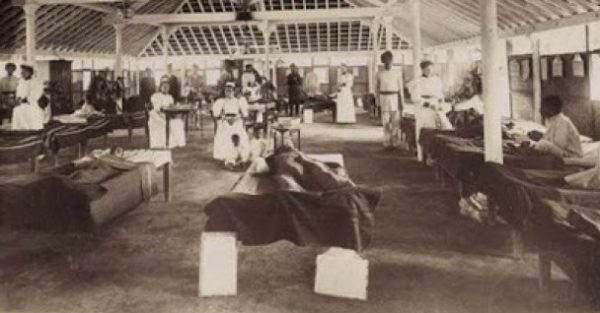
During late 1896 dreaded disease of plague had struck Pune and by early 1897, the disease had spread critically. In February 1897 alone, there were 657 deaths reportedly due to plague. About half of the city’s population had left it.The government set up a Special Plague Committee in March that year to handle the menace and control the spread of the disease. It was chaired by an Indian Civil Service (ICS) officer W. C. Rand.

The commission appointed more than 800 officers and soldiers on duty in Pune rather than employing doctors for the job of implementing the measures. The measures included entry into houses forcefully, examination of its occupants including women, taking them to segregation camps and preventing people affected with plague from leaving or entering Pune.People were denied permission to conduct the funerals of their loved ones unless the deaths were registered. If plague was the cause of death, the dead had to be cremated in special grounds designated by the government.

A medical camp for the plague, in Pune 1896, source of the image Google

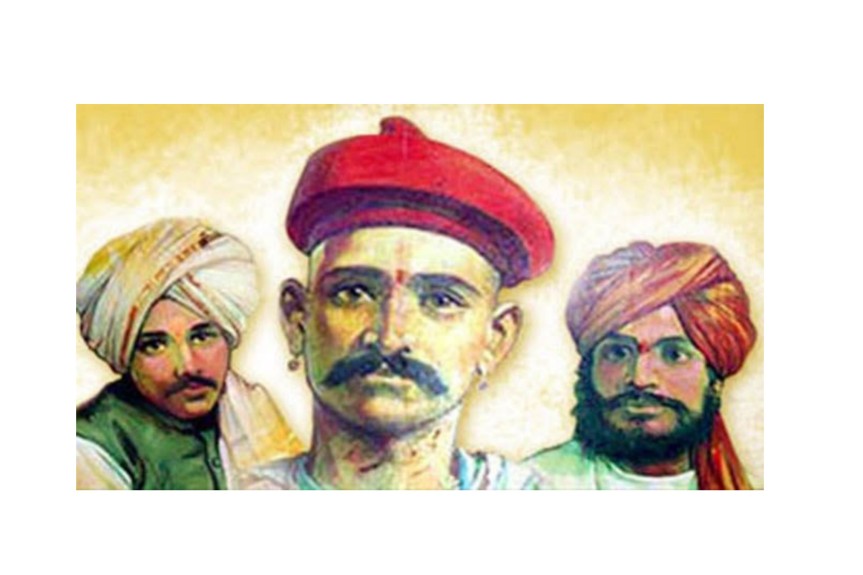
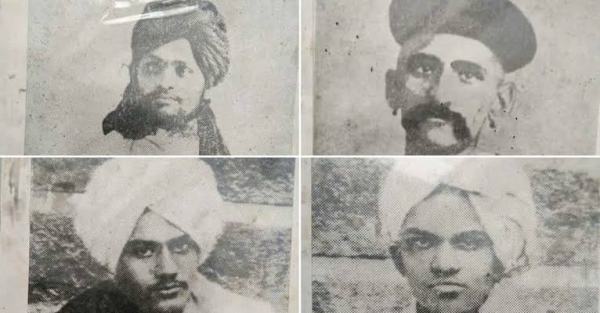
The Chapekar brothers  Damodar Hari Chapekar, Balkrishna Hari Chapekar and Vasudeo Hari Chapekar and a friend of them Mahadev Ranade initially belonged to Chapa small hamlet near Chinchwad, then a village near Pune, in the state of Maharashtra, India

1.Balkrishna Hari Chapekar 2.Damodar Hari Chapekar 3. Basudev Hari chapekar 4. Mahadev Ranade. Source of image Google

Regular harassments of Rand commission had prompted the Chapekar brothers and other members of the revolutionary “Chapekar Club” to take action against the person who started it all—the commissioner. On 22 June 1897, brothers Damodar Hari Chapekar and Balkrishna Hari Chapekar assassinated a British official W. C. Rand and his military escort Lieutenant Ayerst at Pune, Maharashtra. This was the first case of militant nationalism in India after the 1857 Revolt.

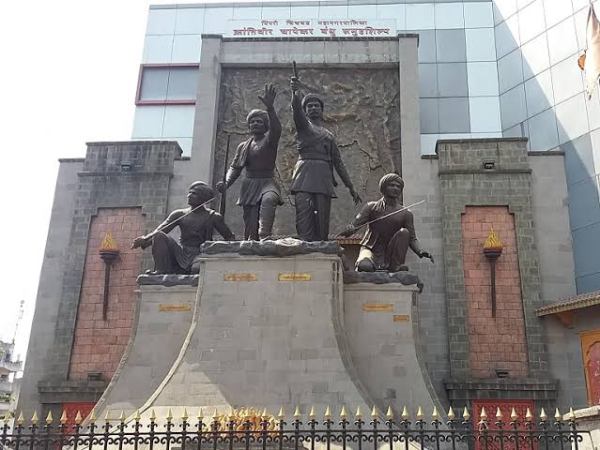
Chapekar Brother statue at Chinchwad, source of the image Google

All three brothers were found guilty and hanged, an accomplice was dealt with similarly, another, then a schoolboy, was sentenced to ten years’ rigorous imprisonment.

MURSHIDABAD

Location

Murshidabad is a town in the Indian state of West Bengal. It is located on the eastern bank of the Hooghly River, a distributary of the Ganges River. It forms part of the Murshidabad district.

The District of Murshidabad has an area of 5,550 square kilometres. It is divided into two nearly equal portions by the Bhagirathi, the ancient channel of the Ganges. The tract to the west, known as the Rarh, consists of hard clay and nodular limestone. The general level is high, but interspersed with marshes and seamed by hill torrents. The Bagri or eastern half belongs to alluvial plains of eastern Bengal. There are few permanent swamps; but the whole country is low-lying, and liable to annual inundation. In the north-west are a few small detached hillocks, said to be of basaltic formation.

History

During the 18th-century, Murshidabad was a prosperous city. It was the capital of the Bengal Subah in the Mughal Empire for seventy years, with a jurisdiction covering modern-day Bangladesh and the Indian states of West Bengal, Bihar and Orissa. It was the seat of the hereditary Nawab of Bengal and the state’s treasury, revenue office and judiciary. Bengal was the richest Mughal province. Murshidabad was a cosmopolitan city. Its population peaked at 700,000 in the 1750s. It was home to wealthy banking and merchant families from different parts of the Indian subcontinent and wider Eurasia, including the Jagat Seth and Armenians.

European companies, including the British East India Company, the French East India Company, the Dutch East India Company and the Danish East India Company, conducted business and operated factories around the city. Silk was a major product of Murshidabad. The city was also a center of art and culture, including for ivory sculptors, Hindustani classical music and the Murshidabad style of Mughal painting.

The city’s decline began with the defeat of the last independent Nawab of Bengal Siraj-ud-Daulah at the Battle of Plassey in 1757. The Nawab was demoted to the status of a zamindar known as the Nawab of Murshidabad. The British shifted the treasury, courts and revenue office to Calcutta. In the 19th century, the population was estimated to be 46,000. Murshidabad became a district headquarters of the Bengal Presidency. It was declared as a municipality in 1869.

How to go?

Murshidabad is well connected to the rest of India by rail & road. Regular rail, as well as bus services, ply to and fro Murshidabad junction, well connected by several passenger and express trains. There are no direct buses for Murshidabad; you need to break your journey at Malda for a taxi to the same. There is no direct flight connectivity for Murshidabad. The nearest airport is the Netaji Subhas Chandra Bose International Airport in Kolkata.

Main attraction – Hazarduari Palace

As the name suggests, Hazarduari is a palace with thousand doors. The palace was built in the nineteenth century during the reign of Nawab Nizam Humayun Jah who ruled Bengal, Bihar and Odisha. The architect of this masterpiece was Duncan Macleod.

What makes the palace unique?

It is not just the number of the doors that make the palace different from the rest, it is interesting to know that out of these thousand doors, only 100 of them were real doors, and the rest 900 were fake ones. You may wonder what the mystery behind the fake doors is. Well, the doors were built this way to protect the palace from predators. The idea was to confuse the attackers who attack the palace and try to escape, giving the Nawab’s guards enough time to catch them.

Palace Complex

The palace enclosure is known as Nizamat Kila or Kila Nizamat. Apart from this stunning structure, the palace complex also has Nizamat Imambara (a Muslim congregation hall), Wasif Manzil, Bacchawali Tope, Nawab Bahadur’s institution and three mosques that include the Madina mosque. Built just 40ft away from the banks of Bhagirathi River, the foundation of the palace was laid very deep, so the structure stays strong. The grand staircase to the palace and the Indo-European architectural style are other highlights of this magnificent structure. The palace was used as a venue for royal meetings and official discussions between the British and the Nawabs, and also as a residence for high-ranking British officials. However, today the palace is a museum that preserves the precious collection of the Nawabs that include furniture, paintings and antique pieces.

Palace Museum

The palace museum is today the biggest site museum managed by the Archaeological Survey of India (ASI). The antiquities of the palace museum include the belongings of the royal family, which include a stunning chandelier of the Durbar hall which is the world’s second largest chandelier in the world, the first being one in the Buckingham Palace. This chandelier was gifted to the Nawab by Queen Victoria. The museum galleries include Armoury wings, Royal Exhibits, Landscape Gallery, British Portrait Gallery, Nawab Nazim Gallery, Durbar Hall, Committee Room, Billboards Room, Western Drawing room and Religious Objects’ Gallery to name a few. The palace is located at Murshidabad at West Bengal, and here’s how you can reach Murshidabad.

Overall, it’s a really nice place to have a refreshing weekend. You can enjoy the rich heritage of Indian history and have a quick glance into the Mughal era. So what are you waiting for? Pack up your bags and set out to seek the unknown!

Ambulance Dada

Meet Karimul Haque as known as Ambulance Dada, he is a tea garden worker in Jalpaiguri, West Bengal who ferries the ill, the poor, and the fragile to the district hospital on his bike. He turned down his bike to an ambulance. He and his bike is the lifeline for 20 villages in and around Dhalabari. This part of Bengal, known as Dooars and dominated by small tea growers, daily wagers and peasants, has mobile networks but lacks concrete roads and basic healthcare facilities.

In 1995 when he was unable to save her mother’s life due to lack of medical facility, he wasn’t found an ambulance to take her mother to the hospital, after this incident, he took an oath to himself that he, not let anyone else die due to insufficient ambulance coverage ,Haque’s motorbike ambulance plan came to him when one of his colleagues collapsed on the field. Since a regular ambulance could not reach him in time, Haque tied him to his back and made him ride pillion to the nearest hospital. His co-worker recovered from the illness, inspiring Haque to continue with this approach.

Since 1998 he providing motorcycle ambulance service around 20 villages Dhalabari, in Doar’s belt, where electricity service roads condition not well, nearest hospital 45 kilometers away. besides the ambulance service, he provides basic first-aid, medicine to the villagers. He spent most of his income on this medical service.

On 2017  he has received the Padma Shri award for his work supporting the villagers in and around Dhalabari by bringing sick people to hospital in his motorcycle ambulance.

Karimul Haque received Padmashri from the president Pranab Mukherjee 2017

Karimul Haque is the real-life hero after I read about this man I get an amazing motivation, we approx most of the time think about ourselves what we do after graduation, about our bank balance, we always think what we haven’t, People like Karimul teach us it’s not necessary to have all the things we want for our life, it’s important to have the courage and desire to do the thing.

AGRA

Location

Agra is a city on the banks of the Yamuna river in the Indian state of Uttar Pradesh. It is 206 kilometres (128 mi) south of the national capital New Delhi. Agra is the fourth-most populous city in Uttar Pradesh and 24th in India.

Historical Significance

There was an early reference to an “Agravana” in the ancient Sanskrit epic Mahabharata, and Ptolemy is said to have called the site “Agra.” The city was founded by Sultan Sikandar of the Lodhi dynasty in the early 16th century to be the capital of the Delhi sultanate. Agra also served as the Mughal capital during some periods of that empire. In the late 18th century the city fell successively to the Jats, the Marathas, the Mughals, the ruler of Gwalior, and, finally, the British in 1803. It was the capital of Agra (later North-Western) province from 1833 to 1868 and was one of the main centres of the Indian Mutiny (1857–58).

Places to visit         

  1. Taj Mahal – Agra is best known for the Taj Mahal (17th century) which was designated a UNESCO World Heritage site in 1983. A complex mausoleum, the Taj Mahal is often considered to be the world’s best example of Mughal architecture. The Mughal emperor Shah Jahan built it for his favourite wife, Mumtaz Maḥal, in the mid-17th century. Agra Fort (16th century), called the Red Fort for its massive red sandstone walls, was built by the emperor Akbar; it contains the Pearl Mosque (Moti Masjid; 17th century), constructed of white marble, and a palace, the Jahangiri Mahal. The fort was also designated a World Heritage site in 1983.
  2. Agra Fort – A stone tablet at the gate of the Fort states that it had been built before 1000 but was later renovated by Akbar. The red sandstone fort was converted into a palace during Shah Jahan’s time, and reworked extensively with marble and pietra dura inlay. Notable buildings in the fort include the Pearl Mosque or Moti Masjid, the Diwan-e-Aam and Diwan-e-Khaas (halls of public and private audience), Jahangir’s Palace, Khaas Mahal, Shish Mahal (mirrored palace), and the Musamman Burj. The forbidding exteriors of this fort conceal an inner paradise. The fort is crescent-shaped, flattened on the east with a long, nearly straight wall facing the river. It has a total perimeter of 2.4 kilometres (1.5 mi), and is ringed by double castellated ramparts of red sandstone punctuated at regular intervals by bastions. A moat 9 metres (30 ft) wide and 10 metres (33 ft) deep surrounds the outer wall.
  3. Fatehpur Sikri – The Mughal Emperor Akbar built Fatehpur Sikri about 35 km (22 mi) from Agra, and moved his capital there. Later abandoned, the site displays a number of buildings of significant historical importance. A World Heritage Site, it is often visited by tourists. The name of the place came about after the Mughal Emperor Babur defeated Raṇa Sanga in a battle at a place called Sikra (about 40 km from Agra). Then the Mughal Emperor Akbar wanted to make Fatehpur Sikri his headquarters, so he built a majestic fort; due to the shortage of water, however, he had to ultimately move his headquarters to Agra Fort.
  4. Buland Darwaza – or ‘the lofty gateway’ was built by the great Mughal emperor, Akbar in 1601 CE at Fatehpur Sikri. Akbar built the Buland Darwaza to commemorate his victory over Gujarat. The Buland Darwaza is approached by 52 steps. The Buland Darwaza is 53.63 metres (175.95 feet) high and 35 metres (115 feet) wide. It is made of red and buff sandstone, decorated by carving and black and white marble inlays. An inscription on the central face of the Buland Darwaza demonstrates Akbar’s religious broad-mindedness; it is a message from Jesus advising his followers not to consider this world as their permanent home.
  5. Tomb of Itimad-ud-Daulah – It is a Mughal mausoleum in the city of Agra in the Indian state of Uttar Pradesh. Often described as a “jewel box”, sometimes called the “Bachcha Taj”, the tomb of Itimad-ud-Daulah is often regarded as a draft of the Taj Mahal. Along with the main building, the structure consists of numerous outbuildings and gardens. The tomb, built between 1622 and 1628, represents a transition between the first phase of monumental Mughal architecture – primarily built from red sandstone with marble decorations, as in Humayun’s Tomb in Delhi and Akbar’s tomb in Sikandra – to its second phase, based on white marble and pietra dura inlay, most elegantly realized in the Taj Mahal. The mausoleum was commissioned by Nur Jahan, the wife of Jahangir, for her father Mirza Ghiyas Beg, originally a Persian Amir in exile, who had been given the title of Itimad-ud-Daulah (pillar of the state). Mirza Ghiyas Beg was also the grandfather of Mumtaz Mahal (originally named Arjumand Bano, daughter of Asaf Khan), the wife of the emperor Shah Jahan, responsible for the construction of the Taj Mahal. Nur Jahan was also responsible for the construction of the Tomb of Jahangir in Lahore. It is noticeable for the first use of pietra dura (floral design made up of semiprecious stone) technique.

6. Akbar’s Tomb – The Tomb of the mighty Mughal Emperor Akbar is situated in the outskirts of Agra. The emperor got his tomb monument constructed while he was alive as his final resting place. His son Jahangir finished the complete construction which is totally done with sandstone and white marble. The monument that is found in Sikandra within the suburbs of Agra is built over a region of 119 acres surrounded by lovely gardens designed by the Emperor Akbar. Overseeing the tomb of himself while living is part of the Tartary tradition which Akbar followed for his own tomb. The tomb is toward the rising sun and roughly a kilometer close to his wife’s tomb also in Sikandra.

Other details

Tourism, handicrafts, agriculture and manufacturing make up Agra’s economy. Agra has a thriving small scale industry sector connected to leather goods and iron foundries.

The delicate inlay and carving work in white marble of the Taj Mahal started getting affected by the rising air pollution levels in Agra. In response in year 2000 the Supreme Court mandated that a “safe” zone of 50 kilometres around the monument – or the Taj Trapezium Zone (TTZ) – be free of polluting industry and diesel vehicles. This has had scant impact on the pollution levels in the city in general as Agra ranked 4th most polluted city in 2016. The severe pollution is affecting tourism – both for visibility and health reasons.

The embodiment of L to P of Leadership and still learning!


“He listened to my idea for a minute, started (resumed) playing the game (on PlayStation) and said, ‘Do what you want, I have complete belief in you.’ And the next day I started bowling over the stumps.”
Said Ravichandran Ashwin in an interview with Cricbuzz decoding the strategy of Warner’s dismissal (in Bengaluru Test, 2017) that he had mentally worked out, to his Captain.
Need I say anything more about how should a good leader be?
“Ashwin had picked up 2 wickets in the first innings including that of Warner and in the second innings he ran through the Australian batting line-up by picking six for 41 as India drew level with a 75-run victory.

India then went on to win the series 2-1.”
(Source: Hindustan Times)
Virat has, for sure, set some high standards in always backing the instincts of his bowlers and letting them experiment freely, while also chipping in with his valuable inputs and setting the wickets of/field for particular batsmen.

“All three of us — Ishant (Sharma), (Jasprit) Bumrah, and I want to bowl with a new ball. When we are not able to choose, we approach Virat to decide. But he throws the ball back in our court saying whatever you all decide is fine by me,” Shami said.
Source: India TV

“We were playing the 3rd Test against Sri Lanka at the Feroz Shah Kotla. It was getting into a draw and Chandimal was batting on 140 or 150, Ash was bowling, Chandimal hit one towards midwicket. It was in the mandatory overs, the match was going to end and he got a 248 in that match if I am not mistaken. And he runs as if his life depended on that ball, picks that ball and does an acrobatic throw,” R Sridhar, The fielding Coach of Team India told FanCode.

“You have a captain, who comes out to fielding practice till the time he is bleeding, I have seen that. There have been times where I would tell him – Virat enough. I have to save Virat from Virat sometimes. You have a captain like that, for me, it’s a dream come true,” he added.
Source: cricketaddictor.com

During an exclusive interview on Star Sports Cricket Connected, Gautam Gambhir said, “He was always a very smart cricketer, but then he turned his entire T20 career into a very successful one, just by being supremely fit. Probably because he does not have the strength of Chris Gayle, he doesn’t have the ability of AB de Villiers, he probably does not have the ability of somebody likes Jacques Kallis or Brian Lara. The biggest strength he’s got is now his fitness and he’s turned that into his game as well, that’s why he has become so successful, so you got to give it to the guy. The most important thing is that he runs really well between the wickets, not many people do it.”
Source: m.mid-day.com
Also checkout: https://internationaljournalofresearch.com/2020/06/09/virat-kohli-the-man-who-brought-about-a-fitness-revolution-in-global-cricket/

“I remember when I was new in the team he backed me a lot. In fact, now also, he is always there for me. He always appreciates your skills and we have a great tuning together,” he further added.

Kuldeep further went on to reveal Kohli’s best quality. “The best quality of Virat is that he also understands the team and its player’s well which makes our job easy on field,” he said.


In an interview also with Hindustan Times, Chahal said that Virat ‘talks me out of the negative mindset’.
Even if I am being hit by a batsman, Virat Bhaiya turns to me and talks me out of that negative mindset. That rapport is also there when we play for RCB.

On Star Sports’ show Cricket Connected, Yuzvendra Chahal said, “I have been playing with him for around 6 years now since our RCB days. One thing I have learned is that he is a down to earth person. No matter how much fame he has got, he will take everyone with him — whether it’s personal or on field; that I have learned from him.”

I know that he’s a gym freak and how he has changed his body. I want to learn that from him. I have seen him since he was 18-19- the transformation after 2012 or 2013, if anyone adopts even 30 per cent of what Virat did, it’s more than enough.”

In a recent chat in the fifth episode of ‘The Mind Behind’,

Rahul was questioned which batsman he would pick if he had to select someone to bat for his life. In his reply, the 27-year-old named Kohli as his choice. “I’ll go with Virat because I know, everybody knows he is a great player,” he said. We share a great friendship and he will give it all to save my life”.

“Virat, Rohit (Sharma) or Ravi sir don’t come and teach you the game. They have given me that freedom,” said Hardik Pandya.

“The security that they gave me backing with all their heart helped big time. That was the reason I started taking decisions on my own,” he added

Being blatantly honest here, maximum of these quoted statements of the articles are published within the previous 24 hours only. And if I go on to find more instances to support the fact how great a leader this man is, I’d terribly fail cause there are umpteen number of incidents happening ever since the guy became the Test Captain in 2015 post World Cup and India’s full-time captain in early 2017 and there are a lot more bound to happen provided that he stays motivated & passionate, which I know, you know, whole of India knows and the entire cricketing fraternity knows too, that he would and the blessings from the God keep outpouring.

Kohli smashed his 28th ODI ton with a stunning knock of 111* off 115 deliveries during the 5th India Vs West Indies ODI on 6th July, 2017 in Jamaica while chasing 206.

However, one is always in the learning phase and never *The know-it-all* or *The Perfect* and Virat has always continued to keep this thing in mind, neglecting the impact of rankings on his game & mindset, but at the same time, staying grounded and expressing gratitude for the achievements. He is always keen to explore, learn more and improve consistently without thinking of the results cause they automatically follow if the process is done rightly and the intention is to drive the team forward.
Let’s hear the man himself post he won all the 3 ICC awards in 2018.
https://www.facebook.com/icc/videos/363263704471608/?app=fbl

Architectural Beauties of India

India is one of the oldest civilizations in the world. Among all the known civilizations in India, Indus Valley civilization(2600 BC- 1900 BC)is the oldest one. 

It produced several cities marked by great uniformity within and between sites, including Harappa, Lothal, and the UNESCO World Heritage site MohenjoDaro

After this civilization, many empires have established in India among which architectures of the Maurya Empire and Gupta Empire show magnificent beauties.

The rock pillar of Ashoka shows a variety of influences in its details.

The Buddhist culture was one of the dominating cultures in India. Buddhist monasteries and stupas were built all over India before it eventually spread to other countries.

Ajanta, Elephanta, and Ellora are architectures of respectively Buddhist, Hindu, and mixed including Jain cultural beauties.

In south India Pallavas and Cholas, buildings are also amazing examples of some of the Flamboyant beauties of India.

some of the Architectural Wonders of India are-

      The Taj Mahal

Magnificient Taj Mahal

TAJ Mahal, the symbol of love was built by the Mughal emperor Shah Jahan in 1653 AD in the memory of his beloved wife Mumtaz. 

It is a combination of Hindu and Indo-Islamic architecture. The white marble was bought in from Makrana in Rajasthan and was transported by elephants.

This one of the seven wonders of the world comprises of a square plinth having a central structure topped by a huge dome and surrounded by four minarets at each corner.

This white marble beauty’s exterior changes colors from a pinkish hue in the dawn to a dull gold at noon and finally, all enduring sparkling white under the moonlight.

The Ellore Caves

Ellora Caves

Ellora caves are listed by UNESCO as a world heritage site located in Maharastra. It is a combination of Buddism, Jainism, and brahmins cultures.

Ellora served as a group of monasteries (vihara) and temples (chaityas); some of the caves include sleeping cells that were carved for itinerant monks.

The caves consist of series of 34 rock-cut temples. Kailasa temple, Hindu Caves, Buddist Caves, Vishwakarma Caves are some of the caves of the Ellora. Among which Kailasa temple is the largest rock-cut structure anywhere.

The elegance of Dravidian Sikhara, which is a flat-roofed mandapa positioned over sixteen pillars, the gigantic Ravana figure reflecting the strength of this villainous legend as the sculpture here shows him lifting Mt Kailasha is an epitome of the ancient Indian art.

Chand Baori

Chand Baori

It was built in the 9th century by the king Chanda. Chand Baori consists of 3500 steps called Baori or Bawdi, which leads down to the water of the well.

It is about 64 feet deep and India’s largest and deepest stepwell with 13 floors.

The exquisite geometry of the stepwell attracts tourists from all over the world.

Sun temple KONARK

Sun temple Konark

Dedicated to Hindu God Sun, Sun temple KONARK was built in 13th century CE at Konark about 35 kilometers from Puri on the coastline of Orissa, India.

Temple complex has the appearance of a 100-foot (30 m) high chariot with immense wheels and horses, all carved from stone. 

Lying on the coast of Bay of Bengal, it is considered one of the best examples of Dravidian Architecture. Also known as the Black Pagoda, it is considered as one of the grandest temples in India. Built-in the 13th century, it has a form of a giant chariot with twelve intricately crafted wheels led by seven horses. A true marvel that shows the advanced craftsmanship as well as love and devotion of that era for art.

The Sanchi Stupa

Sanchi Stupa

It was built in the 3rd century BC on the order of Emperor Ashoka to spread Buddhist Philosophy.

 A stupa is generally a hemispherical dome structure containing relics of Lord Buddha. In this particular stupa, Lord Buddha has been symbolically represented by footprints, thrones, wheels, etc. and all of them are exquisitely ornamented.

Mahabalipuram Temple

Mahabalipuram Temple

The rock-cut carving of Mahabalipuram depicts the scenes of the great epic Mahabharat.

The temple is most famous for its depictions of the chariots of the warriors of the Mahabharata, called Rathas all of which are in a specifically designated form, some rising to as high as two or three stories. There is another remarkable sculpture that adorns the temple walls which is called the Descent of the Ganges. Depicting the time when Lord Shiva made the River Ganga descend from the heavens to the earth, it uses the natural relief of the rock to emphasize the river and has carvings of various Gods and Goddesses beholding the wonder with their open eyes. The intricacy and ingenuity of the carvings are an example of the skill of the craftsman who constructed these temples way back in the 7th Century!

Khajuraho Temple

Khajuraho Temple

Khajuraho temples were built between 950 AD to 1050 AD by the Chandela dynasty. These are a group of Hindu and Jain temple in Chhatarpur district Madhya Pradesh.

These are a group of 85 temples. Falling into ruins, wars, and natural hazards, only 22 out of these remain today and are spread over a stunning area of 6sq.km. 

The temple complex has three distinct types of carvings, the cult icons, the Apsaras (beautiful maidens), and demigods that are supposed to guard the temple. An example of the finest craftsmanship and precision all of the figurines appear in perfect human symmetry, is it a wonder then that it is said that to see all the stages of human life and its activities, one has but to visit these temples and observe the carvings!