RECESSION AFTER CORONA

The global economy will contract by 3% this year as countries around the world shrink at the fastest pace in decades, the International Monetary Fund says. The IMF described the global decline as the worst since the Great Depression of the 1930s. It said the pandemic had plunged the world into a “crisis like no other”. The Fund added that a prolonged outbreak would test the ability of governments and central banks to control the crisis. Gita Gopinath, the IMF’s chief economist, said the crisis could knock $9 trillion (£7.2 trillion) off global GDP over the next two years.

An economic consequence of the ongoing COVID-19 pandemic, the first major sign of the coronavirus recession was the 2020 stock market crash on 20 February. IMF projects suggest that the coronavirus recession will be the most severe global economic downturn since the Great Depression, and that it will be “far worse” than the Great Recession of 2009. The United Nations (UN) predicted in April 2020 that global unemployment will wipe out 6.7 per cent of working hours globally in the second quarter of 2020—equivalent to 195 million full-time workers. In western nations, unemployment is expected to be at around 10%, with more severely affected nations from the COVID-19 pandemic having higher unemployment rates. The developing world is also being affected by a drop in remittances.

The recession saw the collapse of the price of oil triggered by the 2020 Russia–Saudi Arabia oil price war, the collapse of tourism, the hospitality industry, the energy industry and a significant downturn in consumer activity in comparison to the previous decade. Global stock markets crashed around 20 to 30% during late February and March 2020, respectively. During the crash, global stock markets made unprecedented and volatile swings, mainly due to extreme uncertainty in the markets.

2019 Global Economic Slowdown

During 2019, the IMF reported that the world economy was going through a “synchronized slowdown”, which entered into its slowest pace since the Great Financial Crisis. ‘Cracks’ were showing in the consumer market as global markets began to suffer through a ‘sharp deterioration’ of manufacturing activity.  Global growth was believed to have peaked in 2017, when the world’s total industrial output began to start a sustained decline in early 2018. The IMF blamed ‘heightened trade and geopolitical tensions’ as the main reason for the slowdown, citing Brexit and the China–United States trade war as primary reasons for slowdown in 2019, while other economists blamed liquidity issues.

In April 2019, the U.S yield curve inverted, which sparked fears of a 2020 recession across the world. The inverted yield curve and trade war fears prompted a sell-off in global stock markets during March 2019, which prompted more fears that a recession was imminent. Rising debt levels in the European Union and the United States had always been a concern for economists. However, in 2019, that concern was heightened during the economic slowdown, and economists began warning of a ‘debt bomb’ occurring during the next economic crisis. Debt in 2019 was 50% higher than that during the height of the Great Financial Crisis.  Economists have argued that this increased debt is what led to debt defaults in economies and businesses across the world during the recession. The first signs of trouble leading up to the recession occurred in September 2019, when the US Federal Reserve began intervening in the role of investor to provide funds in the repo markets; the overnight repo rate spiked above 6% during that time, which would play a crucial factor in triggering the events that led up to the crash.

Sino-American Trade War

The China–United States trade war occurred during 2018 to early 2020, and caused significant damage across global economies. President Donald Trump in 2018 began setting tariffs and other trade barriers on China with the goal of forcing it to make changes to what the U.S. says are “unfair trade practices”. Among those trade practices and their effects are the growing trade deficit, the alleged theft of intellectual property, and the alleged forced transfer of American technology to China.

In the United States, the trade war brought struggles for farmers and manufacturers and higher prices for consumers, which resulted in the U.S manufacturing industry entering into a ‘mild recession’ during 2019. In other countries it has also caused economic damage, including violent protests in Chile and Ecuador due to transport and energy price surges, though some countries have benefited from increased manufacturing to fill the gaps. It has also led to stock market instability. The governments of several countries, including China and the United States, have taken steps to address some of the damage caused by deterioration in China–United States relations and tit-for-tat tariffs. During the recession, the downturn of consumerism and manufacturing from the trade war is believed to have inflated the economic crisis

Financial Crisis

The global stock market crash began on 20 February 2020. Due to the COVID-19 pandemic, global markets, banks and businesses were all facing crises not seen since the Great Depression in 1929.

From 24 to 28 February, stock markets worldwide reported their largest one-week declines since the 2008 financial crisis, thus entering a correction. Global markets into early March became extremely volatile, with large swings occurring in global markets. On 9 March, most global markets reported severe contractions, mainly in response to the COVID-19 pandemic and oil price war between Russia and the OPEC countries led by Saudi Arabia. This became colloquially known as Black Monday I, and at the time was the worst drop since the Great Recession in 2008.

Three days after Black Monday I there was another drop, Black Thursday, where stocks across Europe and North America fell more than 9%. Wall Street experienced its largest single-day percentage drop since Black Monday in 1987, and the FTSE MIB of the Borsa Italiana fell nearly 17%, becoming the worst-hit market during Black Thursday. Despite a temporary rally on 13 March (with markets posting their best day since 2008), all three Wall Street indexes fell more than 12% when markets re-opened on 16 March. During this time, one benchmark stock market index in all G7 countries and 14 of the G20 countries had been declared to be in Bear markets.

Conclusion

With the lockdown still in hand and the consistent fall in economy, it seems we have a tough time ahead. The recession, as predicted by the various agencies across the word, is going to be very hash upon us. A lot of people are going to lose their jobs with nowhere to go. Companies may go bankrupt and entire nations will be in debts. We all have no choice but to face the crisis.

“This too shall pass.”

CRYPTOCURRENCY

What is cryptocurrency?

A cryptocurrency (or crypto currency) is a digital asset designed to work as a medium of exchange wherein individual coin ownership records are stored in a digital ledger or computerized database using strong cryptography to secure transaction record entries, to control the creation of additional digital coin records, and to verify the transfer of coin ownership. It typically does not exist in physical form (like paper money) and is typically not issued by a central authority. Some cryptocurrencies use decentralized control as opposed to centralized digital currency and central banking systems. When a cryptocurrency is minted or created prior to issuance or held on a centralized exchange, it is generally considered centralized. When implemented with decentralized control, each cryptocurrency works through distributed ledger technology, typically a blockchain that serves as a public financial transaction database.

Bitcoin, first released as open-source software in 2009, is the first decentralized cryptocurrency.Since the release of bitcoin, over 6,000 altcoin (alternative variants of bitcoin, or other cryptocurrencies) have been created.

Bitcoin:

Bitcoin is a digital currency created in January 2009 following the housing market crash. It follows the ideas set out in a whitepaper by the mysterious and pseudonymous Satoshi Nakamoto. The identity of the person or persons who created the technology is still a mystery. Bitcoin offers the promise of lower transaction fees than traditional online payment mechanisms and is operated by a decentralized authority, unlike government-issued currencies.

There are no physical bitcoins, only balances kept on a public ledger than everyone has transparent access to, that – along with all Bitcoin transactions – is verified by a massive amount of computing power. Bitcoins are not issued or backed by any banks or governments, nor are individual bitcoins valuable as a commodity. Despite it not being legal tender, Bitcoin charts high on popularity, and has triggered the launch of hundreds of other virtual currencies collectively referred to as Altcoins.

Blockchains:

If this technology is so complex, why call it “blockchain?” At its most basic level, blockchain is literally just a chain of blocks, but not in the traditional sense of those words. When we say the words “block” and “chain” in this context, we are actually talking about digital information (the “block”) stored in a public database (the “chain”).

“Blocks” on the blockchain are made up of digital pieces of information. Specifically, they have three parts:

  1. Blocks store information about transactions like the date, time, and dollar amount of your most recent purchase from Amazon. (NOTE: This Amazon example is for illustrative purchases; Amazon retail does not work on a blockchain principle as of this writing)
  2. Blocks store information about who is participating in transactions. A block for your splurge purchase from Amazon would record your name along with Amazon.com, Inc. (AMZN). Instead of using your actual name, your purchase is recorded without any identifying information using a unique “digital signature,” sort of like a username.
  3. Blocks store information that distinguishes them from other blocks. Much like you and I have names to distinguish us from one another, each block stores a unique code called a “hash” that allows us to tell it apart from every other block. Hashes are cryptographic codes created by special algorithms. Let’s say you made your splurge purchase on Amazon, but while it’s in transit, you decide you just can’t resist and need a second one. Even though the details of your new transaction would look nearly identical to your earlier purchase, we can still tell the blocks apart because of their unique codes.

While the block in the example above is being used to store a single purchase from Amazon, the reality is a little different. A single block on the Bitcoin blockchain can actually store up to 1 MB of data. Depending on the size of the transactions, that means a single block can house a few thousand transactions under one roof.

Hash:

A hash algorithm turns an arbitrarily-large amount of data into a fixed-length hash. The same hash will always result from the same data, but modifying the data by even one bit will completely change the hash. Like all computer data, hashes are large numbers, and are usually written as hexadecimal.

Bitcoin uses the SHA-256 hash algorithm to generate verifiably “random” numbers in a way that requires a predictable amount of CPU effort. Generating a SHA-256 hash with a value less than the current target solves a block and wins you some coin

Distributed ledger:

A distributed ledger is a database that is consensually shared and synchronized across multiple sites, institutions, or geographies, accessible by multiple people. It allows transactions to have public “witnesses”. The participant at each node of the network can access the recordings shared across that network and can own an identical copy of it. Any changes or additions made to the ledger are reflected and copied to all participants in a matter of seconds or minutes.

A distributed ledger stands in contrast to a centralized ledger, which is the type of ledger that most companies use. A centralized ledger is more prone to cyber attacks and fraud, as it has a single point of failure.

Underlying distributed ledgers is the same technology that is used by blockchain, which is the technology that is used by bitcoin. Blockchain is a type of distributed ledger used by bitcoin

Mining:

Cryptocurrency mining, or cryptomining, is a process in which transactions for various forms of cryptocurrency are verified and added to the blockchain digital ledger. Also known as cryptocoin mining, altcoin mining, or Bitcoin mining (for the most popular form of cryptocurrency, Bitcoin), cryptocurrency mining has increased both as a topic and activity as cryptocurrency usage itself has grown exponentially in the last few years.

Each time a cryptocurrency transaction is made, a cryptocurrency miner is responsible for ensuring the authenticity of information and updating the blockchain with the transaction. The mining process itself involves competing with other cryptominers to solve complicated mathematical problems with cryptographic hash functions that are associated with a block containing the transaction data.

The first cryptocurrency miner to crack the code is rewarded by being able to authorize the transaction, and in return for the service provided, cryptominers earn small amounts of cryptocurrency of their own. In order to be competitive with other cryptominers, though, a cryptocurrency miner needs a computer with specialized hardware.

Market Capitalization:

Within the blockchain industry, the term market capitalization (or market cap) refers to a metric that measures the relative size of a cryptocurrency. It is calculated by multiplying the current market price of a particular coin or token with the total number of coins in circulation.

Market Cap = Current Price x Circulating Supply

For example, if each unit of a cryptocurrency is being traded at $10.00, and the circulating supply is equal to 50,000,000 coins, the market capitalization for this cryptocurrency would be $500,000,000.

While the market cap may offer some insights about the size and performance of a company or cryptocurrency project, it is important to note that it is not the same as money inflow. So, it does not represent how much money is in the market. This is a common misconception because the calculation of market cap is directly dependent on price, but in fact, a relatively small variation in price may affect the market cap significantly.

Considering the previous example, a few millions of dollars could potentially pump the cryptocurrency price from $10.00 to $15.00, which would cause the market cap to increase from $500,000,000 to $750,000,000. However, this doesn’t mean there was an inflow of $250,000,000 in the market. Actually, the amount of money needed to cause such an increase in price is dependent on volume and liquidity, which are distinct but related concepts. While volume relates to the number of assets exchanged within a certain period, liquidity is basically the degree to which the asset can be quickly bought or sold without causing too much impact on the price. 

Simply put, a high-volume and liquid market cannot be easily manipulated because there are many orders in the order book and possibly a big volume of orders within the different ranges of price. This would result in a less volatile market, meaning that a whale would need a lot of money to significantly manipulate the price.  In contrast, a thin order book of a low-volume market could be easily over passed with a relatively small amount of money, causing a significant impact on both the price and market cap.

Arvind Kejriwal quarantined

Arvind Kejriwal who is going through some sore throat is kept in home quarantine due to the Corona Virus scare. He would be going through the Covid testing soon so as to protect his team members from getting this harmful virus.

Renaissance and literature

The literature what we study today has evolved over many centuries, and have gone through many changes in it’s pattern as well as study. The roots of it’s origin lies back in the world of European land in early 15 century.It was in this era when a major European civilization observed a major revolutionary trend which is famously known as “The Renaissance period”. It was an amazing era that experienced changes in the terms of science, literature, art, philosophy, religion, and people turned more towards the humanitarian approach of studying.

The word Renaissance refers to the revival of something, and here something means the revival of art and literature under the influence of classical models, in European land in 14th century and lasted till 16th century while being difused to the rest parts of the Western world.

Literature

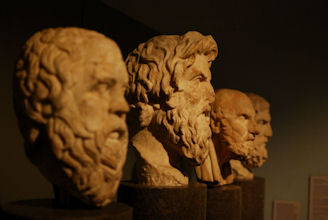
The early 14th century saw the renewal of Platonic ideas which were further put to serve the Christianity.Talking about how much it effected the upcoming trends is evident from the works of the people who have been able to give us marvelous pieces of poetry, prose, novels and the works of art as well. When we say it was a great time that flashed a glance at many a changes in the world of literature and art, there are few names that are responsible for the first revolutionary ideas, namely, the works of Petrarch Machiavelli, Ariosto (Italy).
Again counting down the memory lane we find that at different parts of Europe a numerous number of poets and novelist appeared, such as that of “The father of English”, Geoffrey Chaucer. Another set of poets and great literary writers revived between 15th and 17th century are the great and immortal Sir William Shakespeare, who not only marked a new style of writing but also developed adorable pieces of writings. Along with him was Edmund Spenser, majorly famous for his poetry. And the list goes on to count a large number of poets and writers who emerged as great revolutionary and helped in the development of a new and more wide idea of humanism in the era of absolute monarchy.

what indian economy witnessing amid of the “corona kal”

Announcing this Pandemic corona Kal is little bit sarcastic because this must not stand for a long time. Over the last several months it had produced devastating results that shook this entire civilization of modern mankind deeply and profoundly. What it had perpetrate over the several months is far more than that could be happen in a ‘Kal’. Lakhs of people across the globe had loose their lives without committing any crime a direct verdict which did not even perform any trial or legal practices directly without any hearing clutched many lives brings a world of sufferings to their families nation and to the entire world.

Amid of this ongoing pandemic the Indian economy is facing Repercussion:

With the ongoing grief of many loosing lives and the infected ones and unimagined and numerous sufferings to their families there are also families those who are suffering live and terrible moments emerged because of ‘Hopes of returning home’, Extreme and harsh survival with the long routes to their homes, There is reverse migration swinging across the country on big level, poor living conditions continuous loose of livelihood without any social security and much more we are unable to create jobs hence employment in hands which had created a trauma and a significant question “will Indian Economy be capable enough to harness the demographic dividend in terms of employment opportunities ?”and why this question is crucial because the trends and symptoms our economy is projecting are intimidating. As per the foreign brokerage the India’s GDP forecast for this financial year will shrink by Approximately 2%,even some analyst predicted it to be as much as 5%.RBI had also expected a downfall in GDP in FY21(2020-2021).and as per a report India will can undergo recession in third quarter of this fiscal we already were the victims of Demonitisation India was running void of cash in hands hence demand was law already and with emergence of this Pandemic we run sort of incomes there is loss in incomes there is very meagre Employment there is definite depression in demand. apart from it banks also facing serious challenges because of bad loan levels and growing debts, banks NBFC’s are performing poorly risk Alienation increased as balance sheets of firms households grown weak .India is under lockdown since 25 march all the manufacturing across the country is at standstill there is disruption in supply and demand chain industries output shrank at 16.7% there is reverse migration is happening which country never sees before as all the manufacturing units had been shut down the backbone of employment the MSME’s facing tough time. we had obtained fiscal Deficiet in FY20 4.6% but due to cutting edge declination in GDP contraction the brokerage had revised it up-to 6.3%.All these above facts and figures trying to put the Portrait of our economy which is facing the tough time. Results and repercussions will be more intimidating.

There is huge challenge before the government how they are going to harness the demographic dividend of India which is India’s strength which was injected in 1980 and expected to end up-to 2040. Every fervent young hand need a job need a skill in his hand so that with his aspirations he can discharge its duties for nation building. Indian youth needs jobs creation apart from agriculture or Non-Agriculture Jobs. India’s spirit its youth needs a work in his hand. And it leaves a with a question Will Indian Economy be Capable enough to Foster employment for youths ? can we Harness the demographic dividend the real energy of Nation the INDIA ?

Boomers spreading fake news

We have all received WhatsApp messages in our family groups that are usually forwarded by the older members of our family claiming that coronavirus is caused by eating non vegetarian foods or banging utensils generates positive energy that destroys coronavirus and other such absurd things. Of course these are examples of fake news and are recognized as such, easily by a millennial or Gen z but not so by our parents, uncles, aunts or the boomer generation.

Study: Older Republicans Likelier To Spread Fake News On Facebook 01/11/2019
Older people more likely to spread fake news

The dynamics between age and misinformation are being studied by various researchers in the field of communication. In fact several studies have found that adults over the age of 65 are more likely to fall for fake news than younger adults. Studies in Princeton and NYU found that older people do spread fake news, but they were not the source. Them being late adopters of technology and new to internet and social media might be one of the reasons that they are gullible and believe anything they see on the internet.

Researches should further attempt to find out as to why boomers fall to fake news and look for solutions to curb the spread of misinformation. It’s time that Facebook, Whastapp, Twitter and other social media platforms should carry out their own research and take effective measures. Meanwhile, it is up to us to make sure that older adults are not sharing fake news. We should provide them with sources through which they can fact check what they have shared. We should teach them how to identify and flag a fake message.

Our older generation helped us make sense of the real world and now it is up to us to guide them through the virtual world.

New Zealand covid-19 free

During this pandemic situation, getting news that can give little relief in current scenario is worth that can make your day. And yes here it is good news that New Zealand declared itself Covid-19 free on 8th June 2020, Monday. It was declared by the New Zealand’s Prime Minister Jacinda Ardern. In their recent conference they declare themselves as Covid-19 free.

However, they have also said that New Zealand’s government will lift all the restrictions probably today but the strictness with the border control will not be ease. World Health Organization also praises the New Zealand government over cautious and strict measures over Covid-19. Although being the first country to hit by this pandemic disease, they still manage to overcome from it. Further, the New Zealand Prime Minister also requested people to be safe and keeping the surroundings clean. All the private and public events could resume, government further mentioned. This can only be achieved by the New Zealand government because they have implemented strict restrictions. Due to this 75 days restriction with a strict lockdown almost all the business shut and except essential workers rest have made to stay at home.

With death rate up to 22 and infected up to 1154 according to the Health Ministry, they control the situation more cautiously as well as more appropriately. Borders security will be strictly controlled. Ms. Ardern said that she did a “little dance” when she was told that there are no more active coronavirus cases in New Zealand, while surprising her two-year-old daughter, Neve. The last person who was being monitored now declared as symptom free after being in isolation. Yet, country will be at national alert level-1 from today midnight said by Ardern this Monday.

“Our Collective results I think speak for ourselves. This was what the sacrifice of our team of five million was for- to keep one another for safe and to keep one another well.” – Jacinda Ardern, New Zealand Prime Minister

With this great news our hope for a better lives have come to a great point. We should take our safety as the first priority. Wearing masks and using sanitizer during this pandemic situation is a necessary requirement of one’s for itself. Avoiding the guidelines will only make the situation worse. Let be safe and keep the environment around yourself safe.

It’s Never Too Late To Live Your dreams

We always hear that it’s never too late to live our dreams and there’s no better example than Chandigarh resident Harbhajan Kaur who in true sense living her dreams. She’s indeed an inspiration to all the procrastinators. Her journey aptly defines that age is just a number and where there is will you will definitely find your way.

So let’s take a look at her tasteful journey of passion:

It all started in 2016,when one day Harbhajan’s daughter Raveena Suri asked if she had any regrets in her life to which she sadly expressed of not being able to earn a single penny over these years. This pinched Raveena lot. Aware of her mother’s cooking capabilities she now decided to motivate her and showed her the direction towards a new beginning. She asked her to make and sell her signature ‘Besan ki Barfi’ which over the years was only relished by family members.

So one day they both visited sector-18 to sell their sweet and it was very much liked by people and at the end of the day Harbhajan Kaur for the first time earned an amount of ₹2000. But what started as a weekend startup soon became on orders only enterprise. This was the time when Harbhajan Kaur was living her dream. Soon their idea took its final shape and she started selling barfis under brand name Harbhajan’s with the tagline “Bachpan Yaad Aajayega” (you’ll remember your childhood). The most interesting thing about her is that she herself manages everything on her own from roasting gram flour to cutting the perfectly shaped barfis. Her barfis are made only on orders and people collect the freshly made barfis at her residence.

Her hard work soon received plaudits when she trended on Internet after a tweet made by Anand Mahindra. He tweeted “When you hear the word ‘start-up’ it brings to mind images of millennials in Silicon Valley or Bengaluru trying to build billion dollar ‘unicorns’. From now on let’s also include a 94 year old woman who doesn’t think it’s too late to do a start – up. She’s my entrepreneur of the year.”

So now what are your views about this inspirational story? Don’t you think if she can then why not you? Wake up smell your dreams and start working to achieve them. Don’t be hesitant, don’t think about society or anyone else thinking “log Kya kahenge”. Just let it happen and feel the change.

War for the Planet of LIKES (starring billions)

Remember when we kicked off 2019 and greeted with the news of the cosmetic tycoon Kylie Jenner’s baby announcement. The netizens broke into an absolute frenzy gushing over an Instagram post of her baby girl’s itsy-bitsy fingers wrapped around Jenner’s finger amassing over 18 million likes and being crowned as the most liked picture on Instagram. However, the Instagram royalty was poached by a picture of an egg that set out to dethrone her post and garnered over 24.5 million likes and counting. Well it definitely managed to create a lot of hubbub but also proving the clout of Instagram likes once again.

When Instagram was launched in October 2010, it started out as a mainstream and lucid social-media platform that allowed its users to share their pictures and videos. But then as its user demography kept surging, so did the insatiable hunger for likes among Instagrammers. ‘Man is a social creature and is preceded by the society,’ even the girl who constantly posts about how ‘Quarantine is basically her daily lifestyle.’ As humans we always have this certain need for social validation and approval from others like some tribal ritual of passage; be it in reality or social media.

Now this virtual validation can seem all roseate and promising, fractionally. The Instagram likes you get, even those 11 likes on your buck-toothed school picture  or that exotic beach picture of you in a dainty sarong gives you a morale boost; an assurance that people out there see you as a fashion icon, beauty guru, tech savant or a motorhead and support your passion, hobbies and interests. And as you nestle into this soft cloud of validation it becomes your driving force to broadcast yourself, as you are despite your struggles, credentials, race, complexion, gender. It helps people break free of their inhibitions and openly discuss about ‘body positivity’ ‘sexual harassment’ ‘mental health’ ‘climate change’ ‘world peace’, ‘empowerment’.

This monopoly of likes ended up paving the way for an elite clique of social media influencers. These users start out as any mundane instagrammers, but as their content and post gain attention and likes, their account grows. The encouragement motivates to post fresh and unconventional material. Then to gain the upper hand there’s shrewd use of popular hashtags. Their posts can be accessed by many people with similar interests. In succession, these influencers start rolling the ball in popular culture on different turfs, posting health and fitness regimes, composing music, food that tingles your palate, setting fashion trends etc. As much as this posse has helped in various social and humanitarian propaganda, they eventually usher in several sponsors and investors for marketing and promotional purposes. With brochures and pamphlets becoming outdated, businesses have adopted ‘digital marketing’. As popular businesses and raw start-ups have ventured into these uncharted tides, it has built up their marketing, brand promotion and networking forums. 

From getting your dream freelancing opportunity to a site retailing a popular celebrity’s wedding attire you were doting on, these companies build up their online businesses through posters and ads having a good, dexterous hook and manipulate the users, increasing web traffic on their site. Further more the websites that you browse track your events, searches and interaction as cookies, out of which brands gain mileage and hence curating those Instagram ads. Lately, humble entrepreneurs hailing from modest backgrounds being a whiz in their craft but lacking resources for trade and marketing have found solace in Instagram. As they solicit likes for the samples of their work and thus, it becomes a popular profile. 

Albeit the scale seems to be tipping to the positive side, one couldn’t agree more when it comes to the growing inferiority complex and the hunger for likes gnawing upon users especially teenagers. A cloud of insecurity and unhealthy competition looms over one when another individual gets more likes or has a better lifestyle, clothes or a house. It pushes society towards the brink of materialism and shallowness, followed by snide comments and slamming on social media. This insanity often drives people to depression, existentialism and in worst cases even suicidal. People often lose their individuality, putting on a facade which could make the most desirable. 

In retrospect, with an ongoing pandemic, people are frantically preaching our race joining the Dinosaurs, Dodos and the Rhinos too. As much it’s inevitable, let’s tone down the melodrama and take a leap of faith. Reach out to people positively on social media, if you scroll past a random post aimlessly, probably double tap. And next time you’re out for brunch with your friends, stop taking 50 snaps of your croissant and espresso for the aesthetics; it’s time to gain a few likes and comments in reality, because it’s not always ‘#All for the gram’.

Artificial Intelligence in Legal Process Outsourcing

Will AI be the next big disruption in the Legal Scenario amidst COVID 19 crisis?

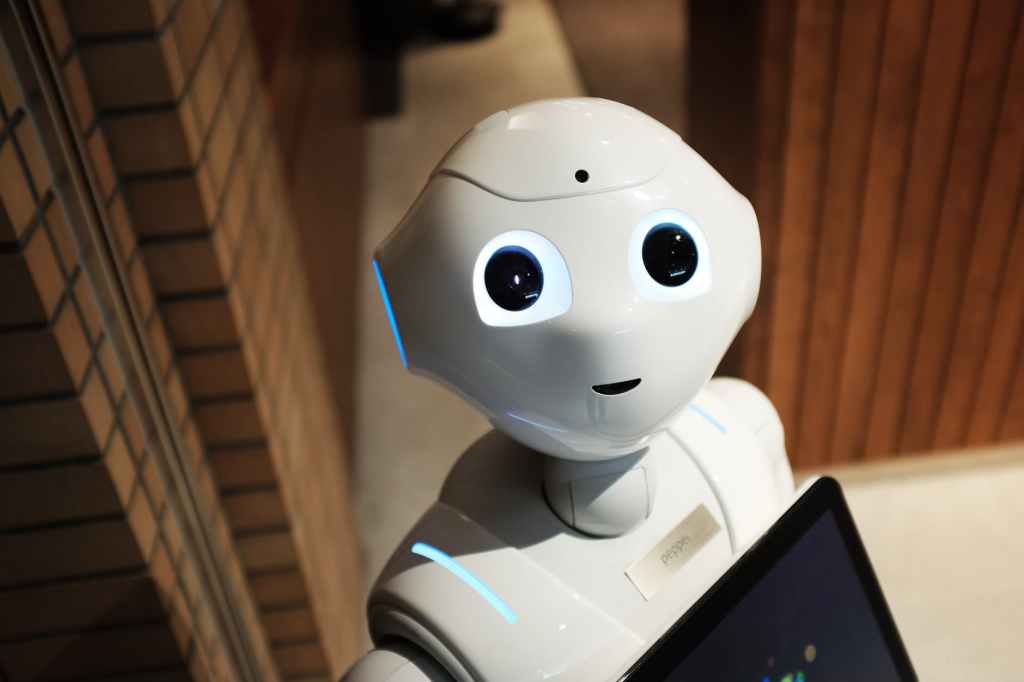
Artificial intelligence (AI) is a simulation of human intelligence programmed in computers to mimic human thinking and actions. Whereas, Legal Process Outsourcing (LPO) is process in which legal firms, publishing or corporate houses hire an onshore or offshore legal firm or a legal service provider company for their in-house legal works which are voluminous, reiterating, taxing and routine.

AI is the new buzzword which is slowly permeating the Indian Legal System. It is expected to have a significant impact by solving the major problem of “access to justice” in the system by mitigating the problem of inability to secure legal representation by vast majority of individuals and businesses. It will reduce costs and time involved in high-volume low-value work resulting in cheaper services.

Traditional law firm model is no longer aligned with customer expectation, hence, demand for law firm services are flat while that of legal services is still increasing. Lately, the legal industry has started to recognize the fact that technology shall be preferred over labour arbitrage. Legal expertise clubbed with process management and technology is essential for effective delivery of legal services. AI will enable firms providing LPO services to make best of everything by incorporating latest technology. It can be used in reviewing and standardizing documents, due diligence, transactional practices, cross-border contract drafting, judgement prediction, risk assessment etc. It will help in improving quality, efficiency, accuracy and cost of work by streamlining its workforce, saving money spent on providing salaries to such workforce and spending it on AI tools. It will save time spent on mundane, routine work so that lawyer’s role is limited to core functions that are beyond the scope of AI.

Legal Professionals believe that AI will replace their jobs resulting in large scale unemployment, however, it will only alter the way services are delivered by them, redefine tasks and functions as well as business models defining them. It is to be noted that it will only compress the case disposition time helping them improve client access and quality of legal solutions provided in optimum time. As rightly said by Michio Kaku, a noted theoretical physicist and futurist,

“The job market of the future will consist of those jobs that robots cannot perform.”

Michio Kaku, American theoritical physicist, futurist and popularizer of science.

Despite numerous advantages, AI is uncommon in the Indian Legal Industry as compared to other sectors and countries because it requires a comprehensive legal database which is in the nasent stages in the Indian Judicial Scenario. Another drawback is the integration of continuously developing information and digitalization of infotmation (i.e. feeding them into the system ) which is a time intensive process. Not only this, AI models have also failed to explain the outcomes predicted by it.

Every new technological idea has its pros and cons along with a section of people retaliating its implementation. What needs to be considered is whether a few disadvantages, some of which are difficult but not impossible to overcome in the current Indian Legal System, are sufficient to compromise with the greater benefits that AI has to offer in mitigating the key problem of “access to justice” in the Indian Legal Scenario.