In the past few months, world has witnessed a wave of discontent with students expressing their lack of motivation in doing things and specially studies. One pertinent question here is the need for various motivational guidelines which are not hard to follow, and which can make our lives better in this lockdown.
The first and the best way to increase our motivational power is to avoid negativity. Do not let negativity overpower you. Moreover, in some cases this negativity is so high that one can be depressed due to it, so the best way to remove negativity is the “process of catharsis”, whatever negativity is bottled up in us could be removed by thinking why these thoughts came to our mind and finally talking it out with someone will surely take negativity miles away from us.
Second, creation of a support network is necessary to stay away from negativity. Whether it be friends, teachers, parents or relatives, our support network should be strong so that at times of negativity we could share our thoughts with someone to remove them. Same is the case with studies, we should talk about it to reliable people so that we could get motivation to give a kick start to our studies.
The best way to give a kick start to our day should be ” Get out of bed and out of pajamas”, the simple act of getting up is a good first victory of the day. By following this, we could concentrate on our studies more than before. We should always remember the concept of ” Don’t overschedule “, which means that if we add more and more tasks in our routine it becomes very difficult to perform even one or two tasks. Hence, we should stick to our routine always and forever. ” Congratulate yourself for every task or goal you complete, no matter how small”. By doing this we will not just feel motivated to perform more tasks, but also a feeling of accomplishment will overwhelms us.
These are some of the ways to keep intact our motivational power, if we follow these, we will not just feel good about us but also we will be able to perform our tasks in a more better way. Now, other things which will ensure you to follow a systemic way of studying is taking a proper diet, which will give you energy and to deal with yourself and others.
If you keeps away negativity you will be able to motivate yourself to study. Come up with a solid reason why you want to build better study habits, like getting better grades, doing well on tests, or having less stress around assignment deadlines. Create a routine you plan to follow every time you want to study, like going to a specific place at a specific time.
Hence, this is rightly said ” Push yourself because, no one else is going to do it for you”. Be high at motivation and you will do wonders. Be it be studies or any other task, you should always know that no one will understand you more than you yourselves.
Kerala, known as the land of god is among the most popular tourist spots in India. It is located on India’s tropical Malabar Coast near the Arabian Sea and its prime attractions include serene beaches, compose climate, beautiful stretches of black water and exotic wildlife. These assets are enough for Kerala to attract a huge amount of tourists from around the country and all over the world every year. In the first quarter in 2019, the total number of tourist arrivals was around 45 million. The total number of arrivals from abroad was more than 1.6 million in 2018. Kerala is home to some of the most wonderful and serene waterbeds, estuaries, lakes, canals, rivers etc. This huge interlock network of waterways can be travelled and enjoyed on a houseboat, without compromising on a comfortable stay as these houseboats hold all modern facilities including furnished bedrooms, modern toilets, a kitchen and a balcony for angling. Some of the famous backwaters that can be enjoyed on a houseboat are Kollam, Alleppey, Kozhikode, Cochin and Kazaragod. Alleppey is known as ‘The Backwater Captial of India’ and ‘Venice of the East’ and is located two hours south of Kochi, the prime city of Kerala. From Alleppey the houseboat starts its journey, taking the tourists on an adventure through places like Kumarakom, Kottayam, and Alumkadavu. The houseboats usually travel 40 to 45 km each day, letting the tourists have a wholesome experience of the bests that Kerala has to offer. The best time to visit is from September to March. Kerala houses a number of beautiful hill stations which has a lot to offer, including their dense green attractive locations, acres of tea, coffee and spice farms, profuse and thick forests, an unusual or weird type of flora and fauna, intersecting mountain small rivers, amazing waterfalls. Some of the famous hill stations include Thekkady, Munnar, Ponmudi, Lakkidi, Vagamon and many more. Of these, Wayanad and Munnar seem to be the favourites among the tourists as they receive the maximum viewers each year. These hill stations with their pure beauty and perfect weather are going to make the tourist’s journey extraordinary and memorable. These are the all-year-round destination and can be visited at any time of the year. That is not all for the tourists because Kerala has a number of beaches at Cherai, Bekal, Kovalam, Dharmadan, Fort Kochi, Beyporeand Allapuza. Kovalam beach is a popular surfing destination in Kerala. Kerala wildlife sanctuaries house a huge variety of animals, marine life and birds of all species. Around fourteen wildlife sanctuaries and two tiger reserves are destined in the elaborate forest of the majestic Western Ghats. The wildlife sanctuaries worth visiting are Chinnar Wildlife Sanctuary, Eravikulam National Park, Periyar Tiger Reserve, Thattekkad BirdSanctuary, Idukki Wildlife Sanctuary, Wayanad Wildlife Sanctuary and Kumarakom Bird Sanctuary. Kerala also has endangered species like the Lion-Tailed Macaque, Bengal Tiger, Nilgiri Tahr, Indian Sloth-Bear, Indian Bison etc. These wildlife sanctuaries and national parks not only just let the tourist enjoy a view of some of the rarest and exotic species, but they also offer other enthralling activities like elephant riding in jungle, lion and tiger safaris, trekking, boating and much more. Kerala’s equable climate, natural abundance of the forest with the wealth of herbs and medicinal plants and a cool monsoon season which starts in June and ends in November are best suited for Ayurveda’s curative and restorative packages. In fact, today Kerala is the only state in India which practises this system of medicine with absolute dedication. This is the reason why Ayurveda is such an integral part of Kerala’s tourism. A number of notable Ayurveda Medical Colleges and Hospitals are spread all across the State. Panchakarma is a term given to the five prolonged treatment that Ayurveda has to offer. This includes medicated oil, herbs, milk and a special diet which could be beneficial in curing all kinds of ailments. The tourists can get famous rejuvenating therapies, Ayurvedic spa, Ayurveda Yoga to relax their mind and soul. Another major part of Kerala tourism is its cuisine. The cuisine here could be described to have drawn inspiration from the fusion of French, Malabari, and Arabian influences and enhanced with a touch of Kerala’s unique culture. This is why tourists love to indulge themselves in the spicy flavours of Kerala. Some of the staple ingredients of Kerala’s food include rice, coconut and fish. The flavours are enhanced with chillies, ginger, cardamom, mustard seeds, turmeric tamarind, black pepper, clove, cinnamon curry leaves, and asafoetida. The plate their food on banana leaves which is a part of the South Indian culture. Some dishes that the tourists cannot miss on include Idiyappam, Puttu and Kadal curry, Parippu Curry, Erissery, Dosa with Kerala style Sambar, Nadan Kozhi Varuthathu, Ela Sadya etc. Bekal Fort is the largest fort in Kerala and one of the oldest and most beautiful forts in India. India has developed the Bekal Tourism Development Corporation to promote this tourist location. Kerala also holds the fourth largest Hindu temple in India, called Guruvayur Sri Krishna Temple. This temple is well known among the tourists for its magnificent charm and appeal. Munroe Island is formed by a cluster of eight islands and is interconnected by a turquoise network of canals. Other important tourist attractions include Fort Kochi, Athirapilly Water Falls, Vembanad Lake, Mattancherry Palace, Edakkal Caves, Napier Museum, Wonderla, Shree Padmanabhaswamy Temple, Santa Cruz Cathedral Basilica, Kowdiar Palace etc. October to March is the best time to visit Kerala. All kinds of hotels and resorts, equipped with the latest amenities are available in Kerala. Kerala is well connected by roads, railway and air. One can reach Kerala from almost every part of the country because it has good rail connection and almost two hundred railway stations. It has three international airports at Trivandrum, Kochi and Kozhikode. All the major tourist attractions in the state can be easily reached by buses, trains and autorickshaw. Kerala is an ideal option if the tourists are looking for a place to visit this holiday season. Tourists have to visit Kerala to realize why it is known as ‘God’s own Land’.
Amidst pandemic, India joined the league of nations which declared country-wide lockdown. Following the ‘Janta’ curfew, which was a one-day voluntary curfew, India saw more than 70 days of lockdown. It involved shutting off all the economic activities except essential services. This step by the government pop crucial questions about its legality. From where did the Government derive this power and whether these restrictions are reasonable restriction under Article 19(5)?[1]
The Government derived this power from the Disaster Management Act, 2005 (DMA) and the Epidemic Diseases Act, 1897 (EDA).[2] Although none of them defines ‘curfew’ and ‘lockdown’, EDA grants powers to the Government to restrict movement to prevent the spread of disease.[3] It also grants the Government with the power to take necessary steps for the same.
Also, the National Disaster Management Authority (NDMA) declared COVID-19 a ‘notified disaster’ under DMA.[4] This move gave power to the Union to create a three-tier Disaster Management Authority (National, State, & District) to discuss, plan and issue guidelines on issues arising from the disaster.[5] This declaration also opened the gates for the States to use ‘State Disaster Response Fund’, as described in DMA.[6] Hence, deriving such powers, the Union Government was able to formulate necessary guidelines and restrict movement across the country. At this juncture, another question arises. What if the state(s) did not agree with the Centre to impose lockdown? Or they revolted on the Centre’s decision?
Article 256 stipulates that “the Union can give directions to the State as may appear necessary to enforce a law enacted by the Parliament”.[7] So, having constitutional validity for directing state governments, the Union used EDA and DMA to lead the States on the implementation of guidelines and other policies. Although the Union decided lockdown in consultation with the States, these directions are not merely advisory, and the Centre can enforce them. The Centre could invoke National Emergency[8] or State Emergency[9] enshrined in the Constitution. Invoking emergencies will allow the Centre to take punitive measures against the States which are disobeying Centre’s directions.[10]
Now to discuss Freedom of Movement enshrined in Article 19(d),[11] I will say these are reasonable restrictions. Article 19(5) exonerates imposition of restrictions if it is in the interest of the general public,[12] which is the case. The imposition of lockdown was to prevent the uncontrollable spread of Coronavirus in the country. This imposition helped prevent a sudden spike of cases in India to a great extent. Therefore, the actions of the Government are neither illegal nor do they violate any Fundamental Rights. The restrictions imposed by the Government are reasonable.
The country went into a nationwide lockdown on March 24th because of covid-19 but universities in most of the country were locked down way before the national lockdown was announced. In Delhi, the lockdown was imposed on 2nd march in universities like DU, AU, JNU and others. Classes were stopped mid semester with a majority of the classes still left to be conducted.
After some haphazard planning and discussions where students were not consulted it was decided that the remaining classes will be conducted online. This came as a shock to many students who live in areas where internet connectivity is not very reliable and even restricted like in Kashmir. Not to mention the fact that not all students are privileged enough to have smartphones, laptops etc in their homes. Also, online classes conducted through zoom, hangouts, skype and other apps have come under lot of criticism because of technical issues like poor connectivity, low resolution, timed sessions and so on. Many students have also complained that teachers are in a rush to check off their syllabus by providing links to books, sources and other materials without a proper discussion and explanation on the topics.
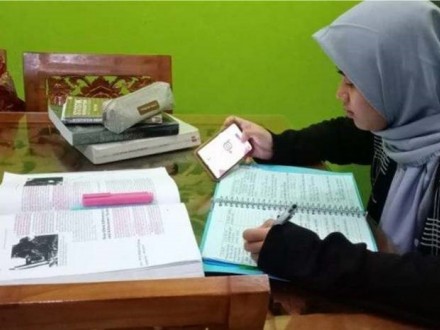
Study from home is a challenge for many students- IFLA Images
In situations like these, the HRD ministry and University administrations are hell bent on conducting exams without considering these problems. Though Universities like DU has cancelled exams for all undergraduates except the final year students, exams for MA students are not ruled out yet. They are conducting Open Book Exams for final year students. Other universities are still working on how to conduct exams for students. Both the options of online and offline exams are being considered without consulting students and teachers. This will definitely affect the students who don’t have access to online facilities. Even the students who have access to these facilities will have to pray for steady internet connection and hope that their devices don’t malfunction. Offline it is another nightmare, as the risk of getting corona is very high with cases rapidly rising in Delhi and other major cities. Ensuring social distancing and safety practices will be tough for the universities and the students will have to write their exams in constant fear of getting infected.
The general disregard to these problems show that our education system lacks apathy and is solely focused on conducting exams and handing out degrees like a factory production line. Imparting education and learning is definitely not on the agenda of our universities.
In recent news, there have been a news about an elephant who is pregnant had been died due to drowning into the water according to the reports. But later on when the forest officer narrated the whole incident on social media then the truth came into the light. And when the whole incident got searched properly by the Forest Department in Kerala , they found few people (two or more) in the connection of the death of wild elephant by letting her eating pineapple filled with firecrackers.
This further created a huge outrage among the people demanding for the punishment for those who were accused for this offence. Therefore, rescuing animals is in need. I believe in rescuing animals is most appreciated work one can do as a human being. For that one should also be rewarded. It is the most right thing to do. When we choose to save ones life, we feel like are worth as a human being on this planet. As everyone keeps themselves healthy then why no for animals? They are also the part of this planet and needed to be treated good just like human beings.
Now the question arises why one should rescue animals? So the answer to this will be as follows:
As human beings are being taken care whenever they are feeling like unhealthy, similarly animals being an living creatures also needed to be taken care of.
They also feels and think so why not they should also treated as well.
Like human beings they are also the most beautiful creature on earth.
At last we cannot let the God made things to die without being properly taken care of.
To conclude, animals should also get rescued properly whenever they are in need. As they also need shelter to survive, food for energy, water for living, or etc. Helping those animals who are in need is an enriching experience and hence a personal satisfaction of helping in need.
Nikon Ambassador and National Geographic magazine photographer Ami Vitale has traveled to more than 100 countries, bearing witness not only to violence and conflict, but also to surreal beauty and the enduring power of the human spirit. Throughout the years, Ami has lived in mud huts and war zones, contracted malaria, and donned a panda suit— keeping true to her belief in the importance of “living the story.” In 2009, after shooting a powerful story on the transport and release of one the world’s last white rhinos, Ami shifted her focus to today’s most compelling wildlife and environmental stories. Instyle Magazine named Ami one of fifty Badass Women, a series celebrating women who show up, speak up and get things done. She appeared alongside a group of incredible women including Jane Goodall, Christiane Amanpour and Ruth Bader Ginsburg. She has been named Magazine photographer of the year in the International Photographer of the Year prize, received the Daniel Pearl Award for Outstanding Reporting and named Magazine Photographer of the Year by the National Press Photographers Association, among others. She is a five-time recipient of WorldPress Photos, including 1st Prize for her 2018 National Geographic magazine story about a community in Kenya protecting elephants. She published a best-selling book, Panda Love, on the secret lives of pandas. She is a featured speaker for the National Geographic LIVE series, and frequently gives talks and workshops throughout the Americas, Europe, and Asia.
Her photographs have been commissioned by nearly every international publication and exhibited around the world in museums and galleries. She is a founding member of Ripple Effect Images, an organization of renowned female scientists, writers, photographers and filmmakers working together to create powerful and persuasive stories that shed light on the hardships women in developing countries face and the programs that can help them. She is also on the Photojournalism Advisory Council for the Alexia Foundation.
Currently based in Montana, Ami Vitale is a contract photographer with National Geographic magazine and frequently gives workshops throughout the Americas, Europe and Asia.
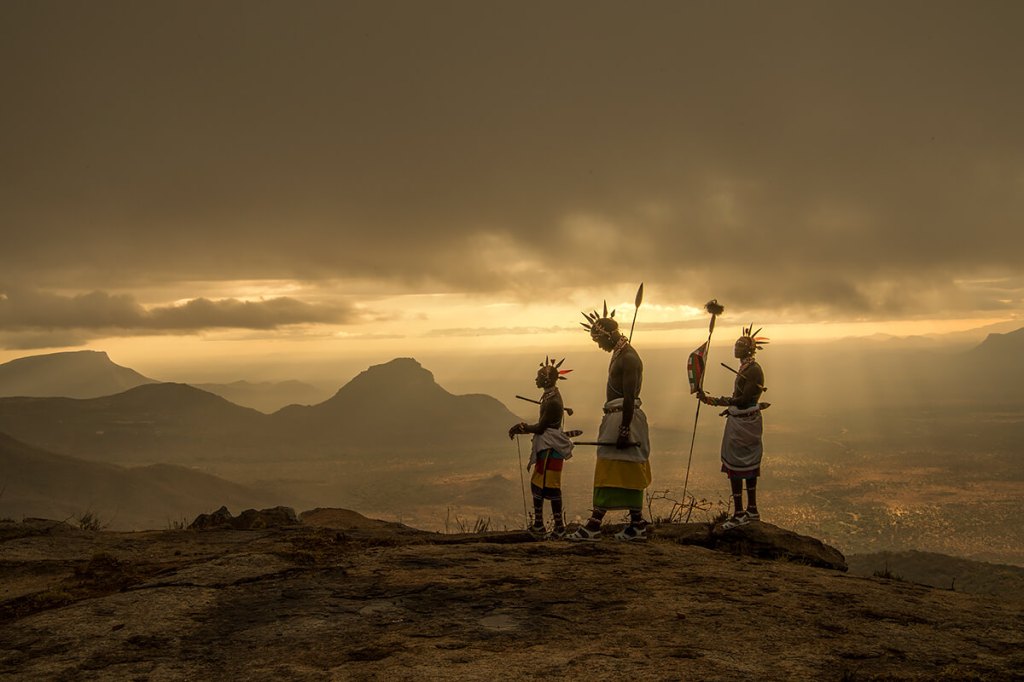
Samburu warriors stand at the top of the northern Kenya’s Mathews Range where the 850,000 acre Namunyak Wildlife Conservancy is situated. The area is home to Africa’s second-largest elephant population. There community-based wildlife keepers, like these Samburu warriors, are working to rehabilitate abandoned and orphaned elephants in order to eventually return them to the nearby wild herds. In many ways, community based conservation is likely to be the only viable alternative for vast tracts of Africa, in the parts beyond agriculture and where big animals and nomadic pastoralists still make their home. This elephant sanctuary is the culmination of a two-decades long process of tipping conservation upon its head, protecting wildlife for, and not just from people. In that sense the sanctuary is as much about people as it’s about elephants.
RANIA MATAR
Rania Matar was born and raised in Lebanon and moved to the U.S. in 1984. As a Lebanese-born American woman and mother, her cross-cultural experience and personal narrative inform her photography.
Matar’s work has been widely published and exhibited in museums worldwide, including the Museum of Fine Arts, Boston, the Carnegie Museum of Art, National Museum of Women in the Arts, and more. A mid-career retrospective of her work was recently on view at the Cleveland Museum of Art, and at the Amon Carter Museum of American Art, in a solo exhibition: In Her Image: Photographs by Rania Matar
She has received several grants and awards including a 2018 Guggenheim Fellowship, 2017 Mellon Foundation artist-in-residency grant at the Gund Gallery at Kenyon College, 2011 Legacy Award at the Griffin Museum of Photography, 2011 and 2007 Massachusetts Cultural Council artist fellowships. In 2008 she was a finalist for the Foster Award at the Institute of Contemporary Art/Boston, with an accompanying solo exhibition.
Her work is in the permanent collections of several museums, institutions and private collections worldwide.
She has published three books: L’Enfant-Femme, 2016; A Girl and Her Room, 2012; Ordinary Lives, 2009.
She is currently associate professor of photography at the Massachusetts College of Art and Design.
GEORGINA GOODWIN
Georgina Goodwin is a documentary photographer and Canon Ambassador born and based in Kenya with a focus on women, refugees, social issues and environment. Known for her award-winning work on Kenya’s post-election violence, cancer in Kenya and Westgate terror attack, and most recently refugee children in Tanzania, Georgina is a contributor to Getty Images and Everyday Climate Change and a member of Women Photograph and African Photojournalism Database, a collaboration of World Press Photo and Everyday Africa. Her work has been published by NY Times, Elle, Vogue, AFP and many others, and has been exhibited in Times Square NYC, Tokyo Japan and The Louvre Paris amongst others. Georgina was a speaker at TEDxKakumaCamp, the first TED talks to be held at a refugee camp, and one of 19 finalist speakers at TEDx Nairobi in 2017.
Amina Suleiman Gas, 45 stands amidst the carcasses of her dead animals, piled for burning outside the compound where she has lived for 10 years in Barwako village 20kms into the desert from Anaibo Town, central Somaliland. She sent most of her livestock west with her neighbor in November 2016 when the drought began to get worse and fears they have not survived, March 2017. Barwako was a village of 100 families but 245 more came in from the surrounding area because of the drought. As a member of the Villlage Savings and Loans Association (VSLA) Amina and her group shared all their savings with the displaced families, leaving them with nothing. At least 6.2 million people, more than half the population, were in need of assistance after four consecutive seasons of failed rains over three years leaving the region depleted of all its resources and experiencing a drought on a scale not seen since 1974 and on the verge of famine.
CIG HARVEY
The photographs and artist books of Cig Harvey have been widely exhibited and remain in the permanent collections of major museums and collections, including the Museum of Fine Arts, Houston, Texas; the Farnsworth Art Museum, Rockland, Maine; and the International Museum of Photography and Film at the George Eastman House, Rochester, New York. Cig began working in a darkroom at thirteen and has been dedicated to photography ever since. She grew up in the deep valleys of Devon in the UK, and came to the States for her MFA in 1999, after years spent living in Barcelona and Bermuda.
Cig Harvey’s first monograph, You Look At Me Like An Emergency (Schilt Publishing, 2012,) is a collection of ten years of pictures and written vignettes. It sold out in all printings and was named one of PDNʼs Best Books of the Year 2012. Cig had her first solo museum show at the Stenersen Museum in Oslo, Norway, in conjunction with the release. The book was well reviewed in a number of publications, including The Independent, Aesthetica, the Boston Globe, Blink, and PDN. Pro Photographer magazine ran an in depth feature, Chance: Cig Harvey’s deceptively simple photographs tap into the universal elements of the human experience: love, loss, longing and belonging. She’s in demand for editorial and commercial work-as well as her for her fine art prints and books.
Cig Harvey’s second monograph, Gardening at Night (Schlit Publishing, 2015,) was published in conjunction with solo shows at Robert Mann Gallery, New York, Robert Klein Gallery, Boston and Paul Kopeiken Gallery, Los Angeles. The book received critical acclaim with features and reviews in Vogue, The Telegraph, the International Wall Street Journal, the International New York Times, and Aesthetica among others. The International Wall Street Journal said of the series, Though the subjects and setting are familiar to us, we cannot help but feel that Cig Harvey has led us through the looking glass to a world of wonder. In the way that twilight is not quite day and not quite night, the photographs of Gardening at Night are stories not yet fully developed, while still capturing the unexpected yet oddly harmonious moments that surround us daily.
Cig Harvey’s work has been displayed at Paris Photo, Art Miami, and AIPAD every year since 2006. She has been a nominee for John Gutmann fellowship and the Santa Fe Prize, and a finalist for the BMW Prize at Paris Photo and for the Prix Virginia, an international photography prize for women.
Cig’s devotion to visual storytelling has lead to innovative international campaigns and features with New York Magazine, Harper’s Bazaar Japan, Kate Spade, and Bloomingdales. Cig teaches workshops and regularly speaks on her work and processes at institutions around the world. She is known for her high energy, sense of humor and creativity. She brings a profound sense of optimism to all that she does.
Cig lives in a farmhouse in the Midcoast of Maine with her husband Doug (who has the profile of an emperor on a Roman coin), their wayward daughter Scout, and Scarlet the dog (the original baby). The slow passing of time and the natural surroundings of her rural home has made her alert to the magic in the mundane.
‘content writer’ is the most searched job in india,says study
The latest study for digital marketing job trends in world’s leading nations conducted by SEMrush, the online visibility management, and content marketing SaaS platform showcased that amongst the most searched digital marketing jobs in different countries, India clearly showed a great share of 73.87 per cent for content writer jobs with a monthly/daily search volume of 26309.
Content writer jobs in other countries contributed with a lower share of 32.24 per cent for Australia, 31.66 per cent for the UK, 30.68 per cent for Canada, and 30.27 per cent for the USA.
A deeper insight from SEMrush revealed that content writing and content marketing jobs gained great prominence.
The study showed that the keywords – ‘how to do content marketing’, why content marketing is important’, ‘what is content marketing strategy’ and other queries regarding content marketing and content writing ranked high in terms of search volume in comparison with other digital marketing jobs.
India showcased vast changes in the priority of content writer jobs in recent years and surpassed other fast-evolving digital marketing jobs like social media managers, SEO analyst, Content marketing manager, etc.
The research conducted in the world’s leading nations highlighted the overall share of content writer jobs to be 47.57 per cent amongst all leading digital marketing jobs.
Racial bullying is a type of racism where someone’s bullying focuses on your race, ethnicity or culture. Racism and racial bullying are wrong and you can get help to make it stop.
Racism and racist bullying can include:
being called racist names or being sent insulting messages or threats
having your belongings damaged or having to see racist graffiti
personal attacks, including violence or assault
being left out, treated differently or excluded
people making assumptions about you because of your colour, race or culture
being made to feel like you have to change how you look
racist jokes, including jokes about your colour, nationality race or culture.
Racism can affect anyone. It can make you feel like you’re not important or don’t fit in. You might feel upset, depressed or angry. You can be affected by it even when it’s not aimed at you, like if you hear someone discriminating against someone’s culture. STOP RACISM
Pollution is a serious issue affecting our planet today, yet many people continue to turn a blind eye thinking that it’s not that s Pollution as is is the addition of subs to the environment faster that thment can dispose, recycle, decompose, or store in a harmless state. There are different types of pollution and includes water, soil, air, and sound pollution and all these continue to cause major problems. In our quest to better, our lives we forget or rather ignore the negative impacts such deeds can have on the environment. Mostly the cities where there is a lot of population are most affected. The fumes that emanate from factories and vehicles not only make it difficult to breathe but affects the ozone layer. The garbage, honking, blaring music are all menaces that we should aim for a better plane The biggest paradox is that the more we pollute the environment the riskier it becomes for us to live in it. Pollution affects our health, which lowers our quality of life significantly. Poisonous chemicals emitted in factories are dangerous and exposes us to various elements that cause cancer. Garbage scattered all over increases the chance of us getting a variety of epidemic diseases. The major problem brought about by pollution is global warming which has resulted to changes in the global climate patterns. We can no longer predict on what to expect on the different seasons unlike before. Things are so bad that life on earth in general is under great risk According to scientists, it’s not too late to take action we can take measures to prevent any further damage and adopt better waste disposal measures for a better planet. Each one of us needs to be responsible in protecting the environment. We can all do things better to ensure we safeguard our human race for our benefit and our future generations. Simple things such as saving electricity, fuel, using biodegradable materials, recycling, among others count in reducing pollution. We should all aim to better our planet by the simple things we do. Take action now.
Union public service commission India’s central agency , abbreviated as UPSC ,conducts civil services examination annually and recruits selected candidates for as much as 24 posts .Getting into the Indian civil services is a major hallucination for lakhs of aspirants .Those already on the expedition along with them who choose to be an IAS officer some day are all in the same boat .
Upsc preparation is a well structured combination of hard work in the right direction and a tackling strategy contemporaneously. However, great deal of doubts along with girdled exaggerating myths can leave you enervated and astray.
Strategy Is Figuring out what not to do
The right kind of strategy is all you need to witness your aspirations .Let’s have a look into the do’s and don’t you need to follow if you are a serious aspiration. By the end of the article you will be able to take an analysis on your overall preparation additional to the road map directed !
SAY YES TO THESE DO’S TODAY
1) Syllabus , Question paper and mock test is must
Your syllabus is the basis of your entire preparation make sure to by heart it .Start by simply jotting down the entire syllabus into points and divide them into sections according to your strengths and weaknesses, and then proceed with designing a study plan.Stop looking at the IAS curriculum as a whole – Divide and Conquer.Adding to this go through previous year question paper to get an idea about the kind and pattern of questions asked in the examination.Make sure you solve enough number of mock papers for both Prelims and Mains; this is a must before you step into the UPSC exam for your first attempt. Regular evaluations will help you keep a track of your weakness and progress at the same time .Indulge in quality discussions.
In an exam like the civil service mains, studying the syllabus is not the only important thing to do, How you write the exam is what counts the most. No matter how much you study prior to the exam, how skilfully you are writing the answers within three hours is what makes one topper and another failure. Hence having regular practice of essay/answer writing is highly necessary. Evaluate yourself before UPSC evaluates.
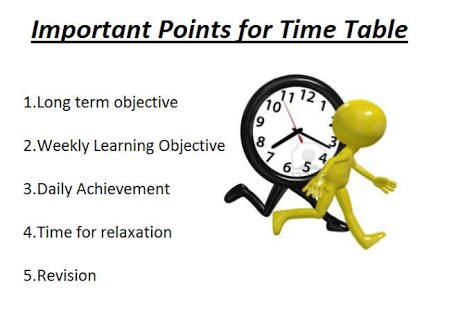
Draw out a timetable for yourself, and the time table should be a realistic one.Do not make a timetable which needs more than 8 -10 hours of your day to dedicate to your IAS preparations depending on your capacity. Once you have decided on the amount of time you will put in everyday and what topics you will cover when, make sure you follow it everyday.
3) Consistency is the key
No matter how much talented you are, how much hard working you are, how much smart you are – if there is no consistency in your preparation for this exam (UPSC civil services), you will either fail or unnecessarily prolong this journey making it stressful, burdensome and frustrating.
Being consistent i.e. being regular and steadfast in what you are doing – either making notes from newspapers or from books, writing answers daily, writing essays weekly, solving test papers from test series once in a week or ten days – is the ONLY solution to all your problems.
4) Revise more than you learn
Be wise ! Revise
When you plan your studies, make sure you have enough time on your agenda for a minimum of two revisions. Both general studies, as well as CSAT syllabus, should be reviewed twice – a week before the examination.Without revision,you cannot succeed in this exam.
DONT’ S ARE MORE IMPORTANT
1) Limit your Resources
Aspirants must not deviate from the UPSC syllabus as questions asked in the exam are on based on the given syllabus.
They should not ignore the basics and NCERT books, as some questions are based on fundamentals too.
One must avoid buying too many books or collecting too much material to study for the UPSC exam as it would be a waste of time.
One of the common mistakes UPSC aspirants make is ignoring the basics and NCERT books, which are important for IAS preparation as questions based on NCERT books and fundamentals may be asked in the exam.
Not solving sufficient practice papers and previous papers could affect their performance, too.Also, lack of consistent preparation, regular practice, and revision may impact their preparation process adversely.Spending time reading too many books may lead to confusionThough UPSC aspirants tend to consult various study material and books to prepare for different topics, going through too many books may create confusion and should be avoided.
UPSC syllabus is vast and candidates may need to refer multiple sources to cover it.
However, consulting too many books could be a waste of time. Instead, they should choose the right material/books and revise well.
Avoid making lengthy notes as it will consume your time as well as distract you at the time of examination .
Too much of content in notes is unnecessary .Notes should be kept precise and intact .
Do multiple readings and then make notes of the most important topic out of the whole just to get to know the whole idea at the time of need.
3) Do Not Ever Skip Newspapers
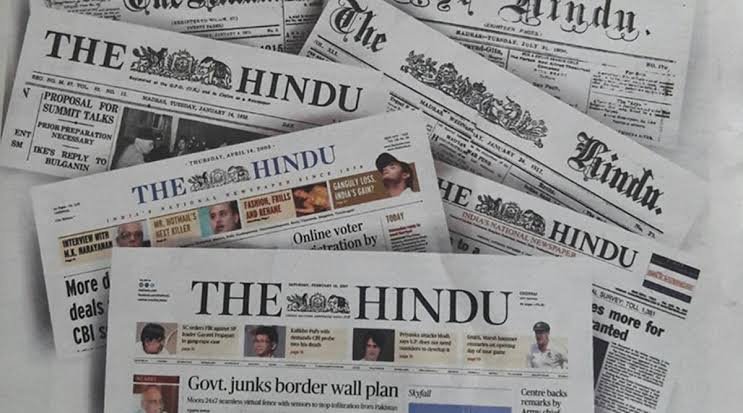
If there’s a bible that can guide you towards success, it’s the ;Newspaper Readings’ that acts as an integral whole in your entire preparation process. Many questions that are asked in the examinations come directly from the newspapers. Therefore, it becomes prudent on your part to know ‘How to read a newspaper’, ‘what to read and what not to read’.





















 International Journal of Research (IJR)