NEPAL

Location

Nepal, officially the Federal Democratic Republic of Nepal, is a country in South Asia. It is located mainly in the Himalayas, but also includes parts of the Indo-Gangetic Plain. It is the 49th largest country by population and 93rd largest country by area. It is landlocked, and borders China in the north and India in the south, east and west, while Bangladesh is located within only 27 km of its southeastern tip and Bhutan is separated from it by the Indian state of Sikkim. Nepal has a diverse geography, including fertile plains, subalpine forested hills, and eight of the world’s ten tallest mountains, including Mount Everest, the highest point on Earth. Kathmandu is the capital and the largest city. Nepal is a multiethnic country with Nepali as the official language.

History

The name “Nepal” is first recorded in texts from the Vedic period of the Indian subcontinent, the era in ancient India when Hinduism was founded and the predominant religion of the country. In the middle of the first millennium BCE, Gautama Buddha, the founder of Buddhism, was born in Lumbini in southern Nepal. Parts of northern Nepal were intertwined with the culture of Tibet. The centrally located Kathmandu Valley is intertwined with the culture of Indo-Aryans, and was the seat of the prosperous Newar confederacy known as Nepal Mandala. The Himalayan branch of the ancient Silk Road was dominated by the valley’s traders. The cosmopolitan region developed distinct traditional art and architecture. By the 18th century, the Gorkha Kingdom achieved the unification of Nepal. The Shah dynasty established the Kingdom of Nepal and later formed an alliance with the British Empire, under its Rana dynasty of premiers. The country was never colonized but served as a buffer state between Imperial China and British India. Parliamentary democracy was introduced in 1951, but was twice suspended by Nepalese monarchs, in 1960 and 2005. The Nepalese Civil War in the 1990s and early 2000s resulted in the establishment of a secular republic in 2008, ending the world’s last Hindu monarchy.

The Constitution of Nepal, adopted in 2015, affirms Nepal as a secular federal parliamentary republic divided into seven provinces. Nepal was admitted to the United Nations in 1955, and friendship treaties were signed with India in 1950 and the People’s Republic of China in 1960. Nepal hosts the permanent secretariat of the South Asian Association for Regional Cooperation (SAARC), of which it is a founding member. Nepal is also a member of the Non-Aligned Movement and the Bay of Bengal Initiative. The military of Nepal is the fifth largest in South Asia; it is notable for its Gurkha history, particularly during the world wars, and has been a significant contributor to United Nations peacekeeping operations.

How to go

  • Delhi to Kathmandu: If you want to fly (and get some incredible Himalayan views), Delhi to Kathmandu is the least expensive, least time-consuming route by air to Nepal (under two hours). Otherwise, the best option is to take a train to Gorakhpur and then a bus. Taking the bus all the way has become slightly more appealing since the Delhi Transport Corporation launched a direct service to Kathmandu. However, it’s still a long 25-hour haul!
  • Varanasi to Kathmandu: Many people travel overland from Varanasi to Kathmandu, either by bus, or train and bus combination. It takes less time than overland from Delhi (around 15 hours). It’s also possible to fly. However, it’s much costlier than from Delhi and there are very few direct flights.
  • Kolkata to Kathmandu: Nepal-based Buddha Air operates three direct flights a week from Kolkata to Kathmandu: on Mondays, Wednesdays and Fridays. The flights depart at 9.05 a.m. and the flight time is about 90 minutes. Expect to pay about 20,000 rupees one way. Air India also operates direct flights for a slightly cheaper cost, starting at 15,000 rupees. Alternatively, you can go by land via the Raxaul or Panitanki borders.
  • Via the Sunauli Border Crossing: Most people going overland from north India to Nepal pass through the Sunauli border to Bhairahawa in central Nepal, accessible from rather unappealing Gorakhpur in Uttar Pradesh (although, pleasingly, Gorakhpur has become a lot cleaner in recent years). This is the biggest and busiest India-Nepal border crossing. There are frequent connections to Kathmandu, Pokhara, and Lumbini from there.
  • Via the Raxaul Border Crossing: The Raxaul border crossing to Birganj in southern-central Nepal is accessible from Patna in Bihar. It’s most convenient for anyone traveling from Bodh Gaya or Kolkata. There are direct trains from Kolkata to Raxaul (16 hours). From Bodh Gaya, it’s quicker to take a bus or car and travel by road as opposed to train (13 hours). From the border, buses take six to seven hours to reach Kathmandu and eight hours to Pokhara. Shared jeeps to Kathmandu are a quicker option and only take four to five hours.
  • Via the Panitanki Border Crossing: The Panitanki border crossing, to Kakarbhitta in far eastern Nepal, is accessible from Siliguri in West Bengal. It’s most utilized by people traveling from Darjeeling, Kolkata, Sikkim and the rest of northeast India. Buses, taxis and shared jeeps run to the border from Siliguri, Kalimpong, and Gangtok in Sikkim. Siliguri to Panitanki (for those going from Darjeeling) takes approximately 45 minutes to an hour. Though the border crossing is open 24 hours, the Indian and Nepali immigration offices close are only open from 7 a.m. to 10 p.m. so foreigners should ensure that they arrive within this timeframe. There are regular buses to Kathmandu (14 to 16 hours) and Pokhara (15 hours) from Kakarbhitta. It’s worth stopping at Chitwan National Park on the way to break the journey. Get off the bus at Sauraha (nine hours from Kakarbhitta), which is the closest town and travel hub to the park.

Tourist Places

  • Kathmandu: Kathmandu, the capital and largest city in Nepal, is like no other city in the world. The decaying buildings in the heart of the city are a stark contrast to the lively atmosphere that permeates the streets. The smell of incense wafts from stores while street sellers push their goods, and people go about their daily lives, all against a backdrop of historic temples and carved statues. For several hundred years, Kathmandu was one of three rival royal cities, along with Bhaktapur and Patan. Situated in close proximity to each other, today these three almost run together. The highlight of Kathmandu has long been Durbar Square, the largest of the palace squares in the three royal cities and a UNESCO World Heritage Site. Temples and monuments of varying shapes, sizes, styles, and faiths can be found here. Kathmandu’s Durbar Square was severely damaged in the 2015 earthquake, with many buildings destroyed beyond repair, but it still remains a special place to visit.
  • Bhaktapur: Bhaktapur, the third of the “Royal Cities,” lies on the old trade route to Tibet, just outside of Kathmandu. For Bhaktapur, the trade route was both an arterial link and major source of wealth. Its relative remoteness at the time allowed the city to develop independently and in ways which distinguish it from the other two cities. In contrast to Patan and Kathmandu, the population of Bhaktapur is primarily Hindu. The best place from which to begin a tour of the city is Durbar Square, where in addition to the royal palace, several temples are also situated. The whole area is a UNESCO World Heritage Site.
  • Boudhanath Stupa: The Boudhanath Stupa, just outside Kathmandu, is one of the largest stupas of its kind in the world and dates to sometime around the 6th century, possibly even earlier. Like Bhaktapur, it lies on the old trade route to Tibet and is a UNESCO World Heritage Site. The stupa itself is a symbol of enlightenment but at Boudhanath the symbolism is particularly clear. Each different shape represents one of the five elements, earth, water, fire, air, and sphere, which are also the attributes of the five Buddhas. Brought together in the form of the stupa, their unity reflects in abstract fashion the structure of the universe itself. The stupa sustained minor damage during the 2015 earthquake and is now fully repaired.
  • Pokhara: Set at the base of the foothills and surrounded by some of the highest mountains in the world – Dhaulagiri, Manaslu, and Annapurna I – Pokhara is one of Nepal’s most scenic cities. For trekkers, Pokhara is the gateway to the Himalayas and the starting point for treks to Jomsom and the Annapurna region. It’s also a wonderful spot to relax for a bit, either before or after a hiking trip. By population, it is the second largest city in Nepal after Kathmandu but still does not feel like a big city. As you travel from Kathmandu, 200 kilometers to the east, you’ll notice the much cleaner air and pleasant climate almost immediately. Lake Phewa, with its cluster of lakeside hotels, restaurants, and shops, is ideal for those looking for a little relaxation.
  • Swayambhunath: Set on a hilltop to the west of Kathmandu, Swayambhunath is the second most important shrine in the Kathmandu Valley after Boudhanath. Due to the resident monkeys that inhabit parts of the temple, it is more affectionately known as the Monkey Temple. The Swayambhu Stupa, painted with the eyes of the omnipresent god, forms the centerpiece of the temple complex. It was originally a prehistoric cult site, but the temple complex dates to the 5th century. Swayambhu plays a major part in the lives of the Vajrayana Buddhists of Northern Nepal and Tibet, but especially of the Newari Buddhists of the Kathmandu Valley.

Why visit Nepal?

  • Nepal is a country of contrasts. Spectacular natural riches combine with a vibrant culture and sense of history. Home to ten of the world’s 14 highest mountains, the country offers a magnificent setting for hiking and mountaineering, as well as some of the world’s best white water rafting.
  • With its vast range of altitudes, Nepal is also home to an incredible variety of plant and animal species, including more than 300 species of orchid. With over 800 bird varieties, it accounts for almost 10% of the world’s avian species.
  • The diverse national parks of Chitwan and Bardia encompass lowland tropical jungles and grasslands and Nepal shelters a rich variety of wildlife. The Bengal tiger, rare snow leopard, one-horned rhino and the Himalayan black bear can be seen in the remote national parks.
  • The ancient culture and traditional architecture of Kathmandu means that the city boasts no less than seven World Heritage Sites, while Nepal is famous for its scenic monasteries as well as being home to Lumbini, the birthplace of the Lord Buddha.

A wide variety of accommodation can be found, however, what we recommend and use is the award-winning property mostly in the five-star category. It is strongly recommended that you reserve all your accommodation as far in advance as possible, especially if you want to travel during their festival period.

Nepal is a wonderful, family-friendly destination, offering a range of activities for children such as tailored wildlife safaris, rafting, nature hikes and cultural excursions. So what are you waiting for? Pack your bags and set out to Nepal!

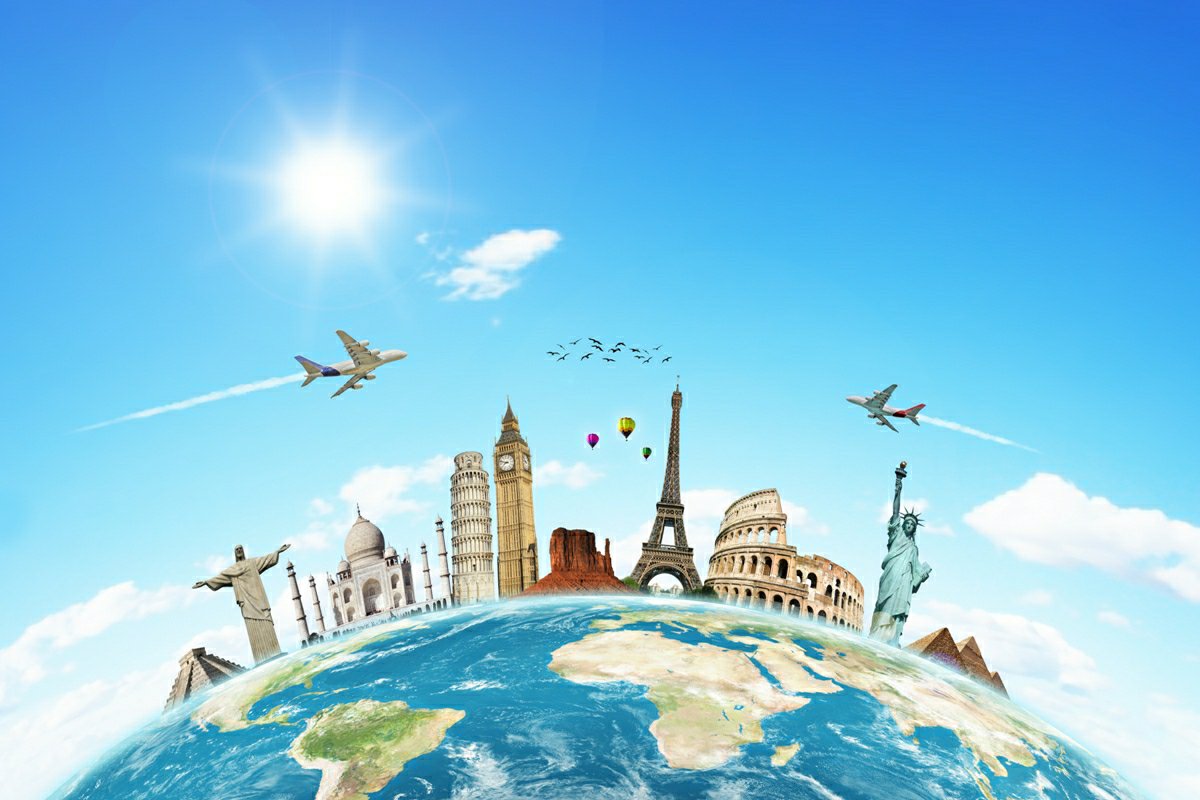
Tourism : can this be the next big thing for India

Who doesn’t love to travel?

Every body seek to grab every single chance to wander around the world. Some love to travel to hills, while others are pleased to be at the sea side, other proportion of people want to travel to desert areas,and the remaining like to scratch out every corner of the world. An increase in the trend of more and more wanderlust among the people, is the reason for an increase in the trend of tourism industry. No matter where you want to travel, which part of the world you have to discover, just a click on the e-travel site and choose your favourite destination.

In case of the country, such as, India, which is counted as a developing one, it is a fresh opportunity to become the top countries to offer a great traveling experience to those coming to the country in order to observe its beauty. Post pandemic, will be a great opportunity for the government to promote tourism in the country and it will surely create a massive opportunity for the economy to bloom and grow positively. As many of the scholars have claimed that, India’s economy may fall to negative, but, tourism industry is an idom used to drown, that can help the country with incredible increase in the number of tourists.

About 10.89 million foreign tourists visited India in 2019. But, according to the UN World Tourism Organization, 50 million Indians will travel overseas in 2019, which is a big reason to worry regarding the tourism industry in the country. There is a huge gap between people coming and going out of the country which needs to be filled, in order to see India as a huge tourist destination.

It is one of the reasons why tourism can be next big thing for India! We have been privileged to be a part of such a beautiful country as this, where every kind of physiographic divisions could be found, be it Jammu and Kashmir, pure heaven on the earth; or the widespread desert of Rajasthan; backwaters of Kerala;beaches of Mumbai and Goa;historic sites of Central India; beauty of northeast India; and all that enormous beauty that is untouched by most of the travellers.

But, the pandemic has given a jerk to the tourism industry, which has been a great source of income to the country, due to shut down offices of travel companies, tourist destinations, along with, hotel, restaurant chains, along with the suspension of, both, national, as well as international flights, ultimately bearing the loss hit by the pandemic.

The Indian tourism industry is projected to book a revenue loss of Rs. 1.25 trillion, in calendar 2020,which means a 40% decline in revenue over calendar 2019.

But, as it has been righteously said that, the population of any country is its wealth, we as the wealth of our country must only visit the tourist attractions in our own country (post pandemic) in order to give a hike to its economy. This would complete the twin objective

  • One is, to give a boost to the economic conditions of the country.
  • Second is, it will give us a chance to explore the unseen beauty of our own country and people will not underestimate the power of the country.

Bankers in India are more productive working from home

Work from home may remain part of the norm for many in India’s financial industry beyond the end of the world’s biggest lockdown. The reason: elimination of lengthy commutes in the past three months has boosted employee productivity. Take Jefferies’ India team for example. On average, its 60 members have managed to save over an hour every day on commute and 70% of them have seen higher productivity, according to a note from the brokerage, drawing on a survey of its staff.

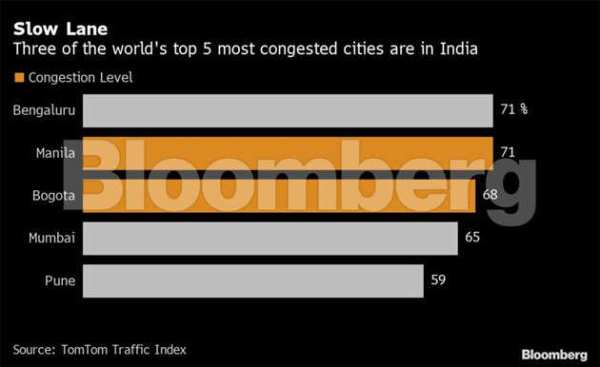
As banks and asset managers around the world try to figure out how they’ll manage their offices after the coronavirus pandemic, many in Mumbai – India’s finance hub – see the opportunity for permanent change in how they work. The average commute time on the city’s major routes is over an hour, more than twice the averages of SingaporeHong Kong and New York, according to a study by the IDFC Institute, a public policy think-tank.

Neil Parikh, chief executive officer of Parag Parikh Financial Advisory Services, like many others is finding the experience better than expected – so much so that he’s reconsidering plans of adding to the money manager’s offices in India’s top cities. He plans to equip new hires with laptops and high-speed Internet connections instead. “Now there’s no stigma around working from home,” he said. “I can see some from my research team being much more productive. Working from home saves almost 3-to-4 hours everyday in travel time for some people.”

Reliance Securities Ltd. has shelved plans to shift to a new premise. The firm, one of India’s leading retail broking houses, will have half its staff continue to work from home as it implements a rotational program to comply with social distancing norms, according to Chief Human Resource Officer Meenaa Sharma. “Many of our employees are saying that their productivity has gone up, and feedback from clients on research reports is good,” she said.

Second Wave
nullWhile the daily number of virus cases in Mumbai, India’s worst-hit city, has been stable in recent days, concerns over a second wave means businesses have little choice but to operate remotely. With economy set for its first full-year contraction in 40 years, India has begun reopening from the lockdown imposed on March 24 even as the country has the fourth-highest number of infections in the world.

Yet, not everyone in the world of finance is in a position to work remotely on a long-term basis. While banks and stock depositories had been open through the lockdown, designated as ‘essential services’, dealers who execute trades may have to return to office in greater numbers once regulatory relaxations are rolled back. “Businesses like ours where there’s sensitivity of information, at least some part of staff like dealers have to be in the office” said Jinesh Gopani, head of equities at Axis Asset Management Co. “Those parts were allowed at home because it was a crisis. But it is not ideal from the regulator’s point of view in the long term.”

For now, only a fraction of the staff in the financial-services industry is back in office. The unexpected benefits of working remotely mean it’s likely to be a favored option well into the future. “Productivity has improved dramatically because of removing unproductive travel time,” said Gopani. Working from home one or two days a week may become ‘the new normal’.

Frequency of floods has increased because of climate change

Mumbai floods: How to report road closure using Google Maps - The ...

NASA describes climate change as a long term change in the average weather patterns preexisting in local, regional and global climate.  Most of the changes observed in Earth’s climate since the early 20th century are primarily driven by human activities, particularly fossil fuel burning which releases greenhouse gasses like methane, nitrogen dioxide and most importantly, carbon dioxide (CO2). These gasses are heat trapping in nature and are raising the Earth’s average surface temperature. The temperature increased caused by man-made activities is referred to as global warming.

Global warming is causing extreme weather events like floods, cyclones, draughts, forest fires, heat waves, and hurricanes and melting polar ice caps of the planet. India being a tropical country faces floods every year. We also have huge coastline spanning 7,500-odd km and runs past nine states which are very vulnerable to flooding. The rapid melting of polar ice caps because of Global warming has accelerated the rise of sea levels as observed by study conducted by an IPCC panel. This is going to impact people living near the coastal areas and in islands. Mumbai, one of the largest cities in the world, with a population of 20 million is projected to be completely submerged by rising sea levels. Glaciers are also melting in the Himalayas, which is projected to increase flow rates in the Ganges and Brahmaputra Rivers. In 2013, heavy rain followed by a glacial lake outburst caused devastating floods in the state of Uttarakhand. The floods 4,000 people, destroyed and caused damages of 3.8 billion dollars.

Monsoon in 2019 witnessed 560 extreme rainfall events, a 74% jump from 324 events recorded in the year 2018. The heavy rainfall caused floods that led to a death toll of 1685 lives, spread across 14 states of the country, with Maharashtra accounting for the maximum deaths. According to Home Ministry officials heavy rains and floods fully damaged 1.09 lakh houses, partially damaged 2.05 lakh houses and destroyed 14.14 lakh hectares of crops. Responding to floods in different areas at the same time as happened last year strains emergency response efforts. NDRF, Army and the Air Force were deployed to rescue people across six states in northern and western India. An estimated 1.2 million people were living in government relief camps.

According to IPCC panel, the frequency of freak weather events like floods would drastically reduce if the rise in temperature was limited to 1.5 degree Celsius, however it is highly unlikely that we are able to achieve that target. In a study conducted by IIT Gandhinagar, it was found that short bursts of heavy rainfall, lasting only hours, are likely to increase by 20 percent if the global mean temperature rises above 1.5 degree Celsius. Such extreme events will be responsible for most cases of urban flooding.

Top 5 Places To Visit Around The World

Travelling what everyone like it. These are memorable moments in one’s life. Many people loves to travel around the world. Travelling makes you feel happy and excited in your life. People visits many places with great enthusiasm. Some go for work, family vacations, leisure, or etc. to foreign places. Everyone has their own reasons for travelling. With safe methods and affordable amount of money, people travel around the world. So here are the top 5 places that one should visit in their lifetime.

  1. Palawan Island, Philippines It is the most beautiful island and the largest province. It is also marked as the most beautiful island in the world many times. The ultimate destination full of incredibly beautiful natural seascapes and landscapes. Teeming with exotic wildlife, quiet waterfalls and quaint fishing villages, it’s one of the most bio-diverse islands in the Philippines. This is located in Asia region. The Calauit Game Preserve and peaceful wildlife sanctuaries is a must visit in Palawan island.
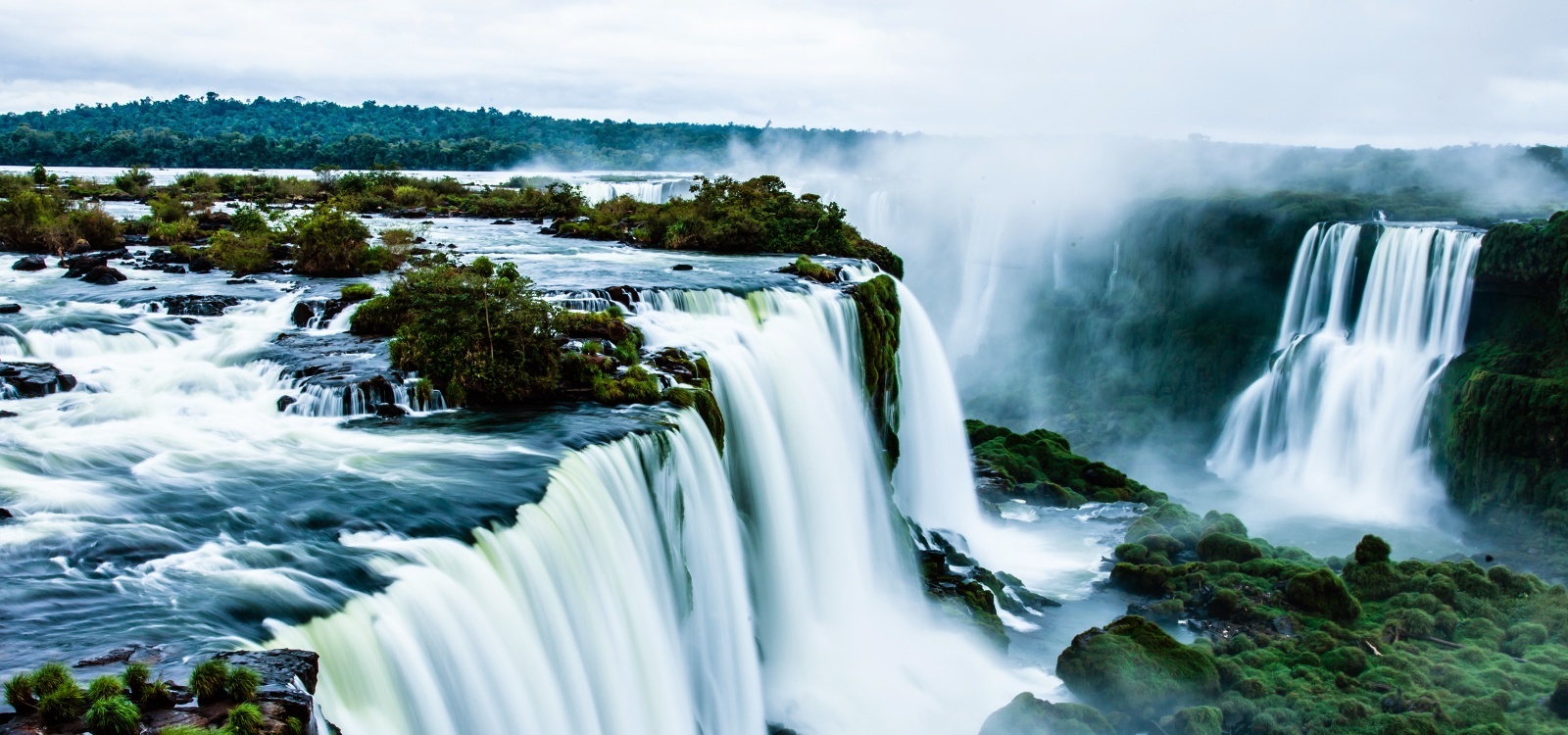
  2. Iguazu Falls, Argentina/Brazil border It is the one of the modern natural wonders of the world. It is located on the border of the Argentina province Misiones and the Brazilian state of Parana. A chain of hundreds of waterfall which look so beautiful and that power and noises of the cascades are must for visit. It is an awe-inspiring attractions.
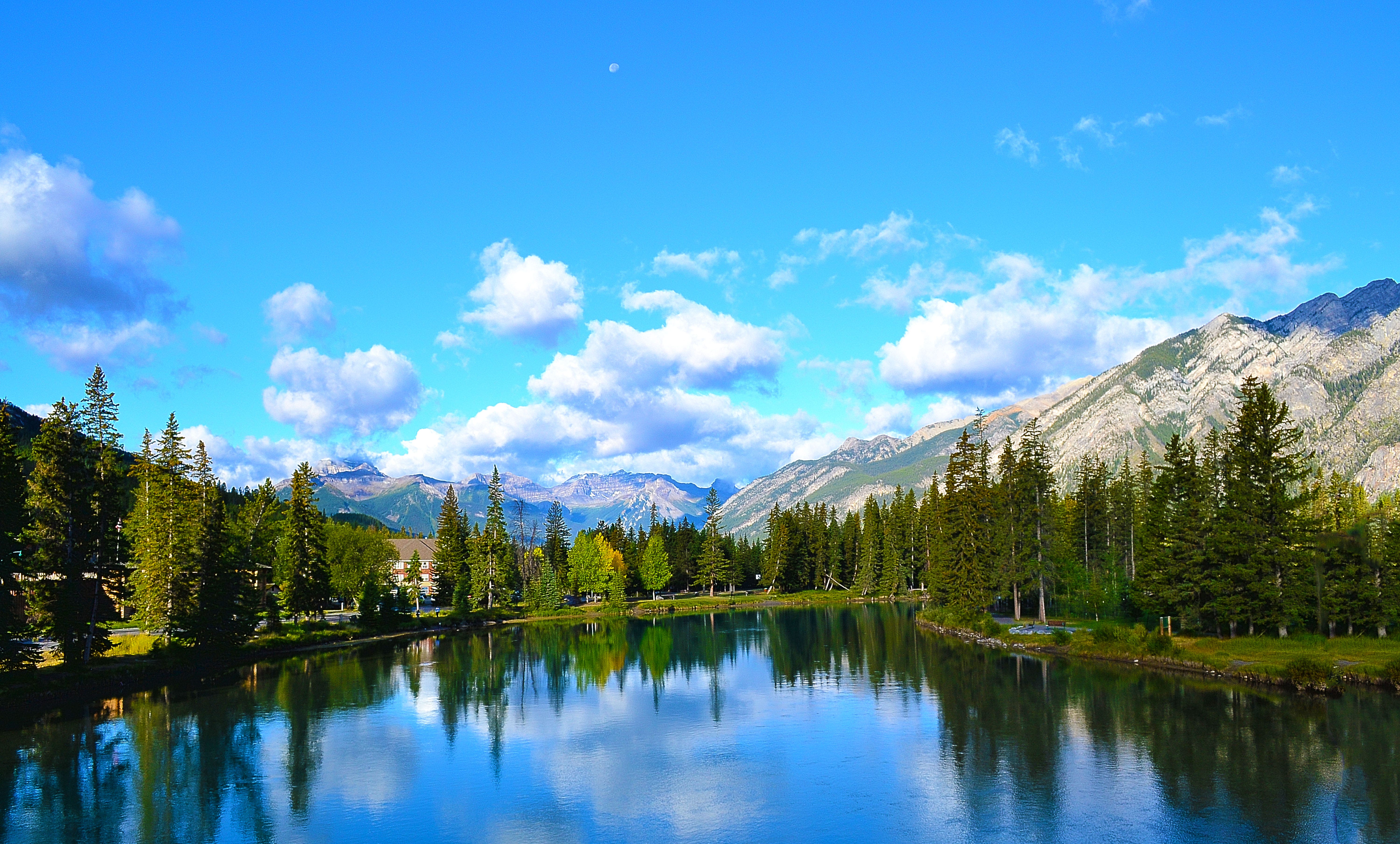
  3. Alberta, Canada It is a incredible and beautiful destination to visit. The most impressive scenery with awe-inspiring glaciers and turquoise lakes attracts millions of visitors every year. This destination attracts visitors for hiking, skiing and camping.
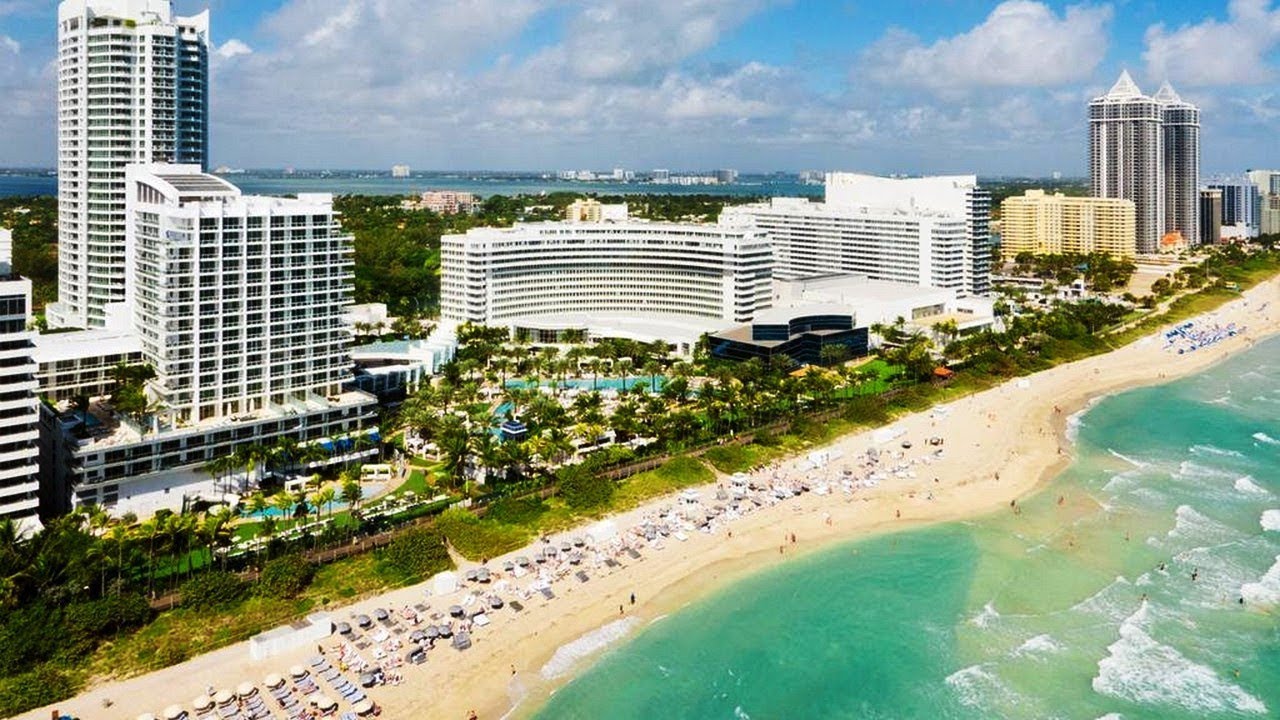
  4. Miami Beach, Florida It is a coastal resort city in Miami-Dade County, Florida, United States. This city accounts about more than half of the tourism. The best sites to visit here are South Beach, Art Deco Tour, Ocean Drive – South Beach, Haulover Beach Park; North Beach, Lummus Park; South Beach, Lincoln Road Mall; The South Beach, Bass Museum of Art; South Beach, Holocaust Memorial; South Beach, Miami Children’s Museum; Causeway, Jungle Island; Causeway and many others.
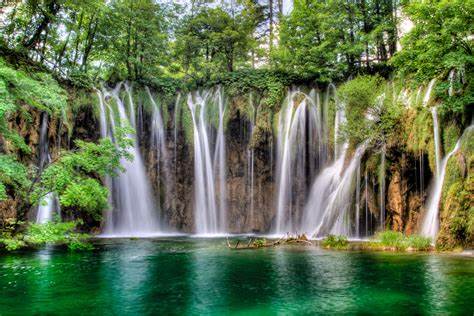
  5. Plitvice Lakes National Park, Croatia It is the most beautiful national park in the world. It is known for its 16 terraced lakes which are joined by waterfalls that further extends into limestone canyon. Its wonderful blend of oak forests, meadows and limestone rock formations with incredible vivid blue lakes which attracts visitors in Croatia.
With above beautiful places one will love travelling. These are the top most places that should be visited around the world. Increase in growth of unexpected nature influence tourists industry a lot. Like seeing a new place while travelling and than returning to be its your favorite place is incredible. That’s why travelling should be must and yet it makes you feel good which is better for a healthy life. Hence, travelling is a humbling experience that helps you to find your inner balance.

E-wallet is more safe and secure THAN having money in the pocket…

On November 2016 Prime Minister Narendra Modi urge for the digitalization and India to be a cashless economy.But the cashless economy was not the original goal but due to ‘demonization’ which leads to the shortage of notes gave a fillip to “E-Wallets” or “Digital-wallets”.E-wallet is a online payment account where one can store money and it used for making transaction through a computer or smart phones”. An E-wallet needs to be linked with bank account to make payments.The E-wallet segment broadly consists of services related to banking transactions, transfer of money as well as value added services like bill payments, shopping, ticketing,electricity bills, DTH and transport bills and they also are useful in making payments to mom and pop stores who are rajistered with these digital platform.Digital wallet provides more convenient transactions.The experience of purchasing items become quicker and easier which lead to a great sense of satisfaction.it’s a safer method you don’t need to carry cash when you are travelling alone or going abroad.Some kind of E-wallets are Paytm,Google pay,Bhim app,Phone pay etc.

Union Home Minister accuses Congress President indulging in Shallow Politics

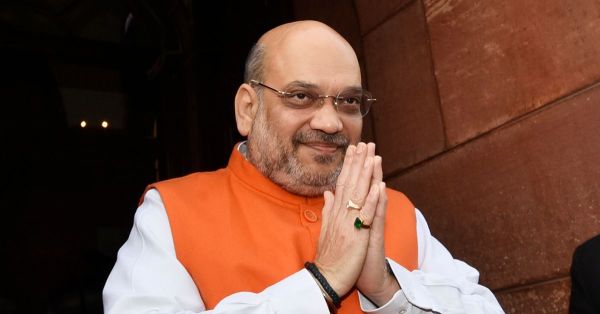
Union Home Minister Amit Shah

Union home minister Amit Shah made a scathing attack on former Congress president Rahul Gandhi, accusing him of indulging in “shallow politics”.

“We are fully capable of handling anti-India propaganda but it does pain when a former president of such a big political party does ‘ochhi Rajini (shallow politics)’ at a time of problems,” Amit Shah said in an interview to the news agency.

Rahul Gandhi has been leading the Congress attack on the face-off between Indian and Chinese soldiers in Ladakh’s Galwan Valley in which 20 Indian soldiers were killed. He even accused Prime Minister Narendra Modi of surrendering India’s territory to China using the words ‘Surender Modi’ for him on Twitter.

“It is a matter of self-introspection for him and Congress that his hashtag is being taken forward by Pakistan and China. It is not for me. It is a matter of concern for Congress that the hashtag of their leader is being encouraged by Pakistan and China. You say what China and Pakistan like. And at this time of crisis,” said Shah.

He also said that the government is ready for discussion on the issue in Parliament. “There will be a Parliament (session). If you want to discuss this, we will. Let everything be discussed from 1962 to today. No one is afraid of discussion. But when the soldiers of the country are making efforts, the government is taking solid steps after taking a stand, at that time, making statements that please Pakistan and China should not be done,” said Shah.

Mr. Gandhi’s “Surender” dig was a response to the Prime Minister’s comment at an all-party meet that China has not captured any Indian territory or crossed the border.

“Neither is anyone inside our territory nor is any of our post captured… While we have given a free hand to our armed forces, diplomatically too we have made our stand clear to China. India wants peace and friendship but protecting its sovereignty is supreme,” the Prime Minister had said.

He also took on Congress for not appointing anyone apart from the members of Gandhi family its president. “After Advaniji, Rajnathji, Nitinji, Rajnathji again, I became (party president) and now Naddaji. Is there a member of the same family? After Indiraji, tell me a Congress President who is outside the Gandhi family. What democracy they talk about?” said Shah.

Gandhi and the Congress party have been attacking the government since the June 15 skirmish. On Friday, Gandhi posted a video and said Prime Minister Narendra Modi should tell “the truth” as several accounts were saying that China has made incursions in Eastern Ladakh.

His mother and Congress president Sonia Gandhi accused the PM Modi-led central government of “mismanagement” which led to a full-blown crisis on the borders with China.

“True to its character, the government is in denial. The intrusion was detected and reported on May 5. Instead of a resolution, the situation deteriorated rapidly and there were violent clashes on June 15-16. Twenty Indian soldiers were martyred, 85 injured and 10 went ‘missing’ until they were returned,” she said at a virtual meeting of the Congress Working Committee (CWC), the party’s highest decision-making body.

Today again, the Congress party accused the government on Twitter of “giving in” to intruders.

Advantages of being a teenager

By Debalina Mukherjee


“His best companion, innocence and health. And his best riches ignorance and wealth. How happy he who crowns in shades like these. A youth of labour with an age of ease”These words were said by Oliver Goldsmith.
A teenager has the best of both worlds.If a teenager commits a mistake he or she is easily forgiven. Well, it is something to alin to, enjoying the fruits of adulthood without having to shoulder its responsibilities.
The best thing about being a teenager is that the elders and teachers take then seriously. Their individuality is respected and are taken for granted. Their life tends to changeA change is observed in their life. While beng children they wee asked to go and play while something important was being discussed, being a teenager they are often called up togive their views and opinions. This boosts their confidence and generates the feel of being important. In this stage may teenagers bend towards various sports and activities which in future becomes their profession as well. This is the stage when they get opportunity to excel in different fields. The can enjoy abandunt freedom without worry. But besides this they have to take may serious decisions of their life as well that can have a major effect on their future.They have to sit for various competitive exams as well. They always have a keen desire to achieve something big. The spirit of challenge and competition makes them more energetic and enthusiastic. They learn to be patient and to endure many things.They are least afraid of new challenges and accept life the way it comes. They can learn new things very easily.Teenage life is full of new experiences.They can accept and adopt new environments very easily. Maturity develops and a sense of responsibility grows within them. There are many examples where people have chosen their professions based on the passions that they had during their teenage like. Namely ,Sourav Ganguly and Sudha Chandran.According to me this phase can be called the golden period of anyone’s life and it should be thoroughly enjoyed before its brighness fades away with passing time. This is the time to gather knowledge and get ready to accept opportunities and swore like a golden eagle in the deep blue sky of learning and tend to fly through imagination. This stage of life is just like the Autumn season when everything is very beautiful and colourful.
To conclude the teenage life is the most beautiful and crutial stage of a person’s life but just as time and tide waits for none similarly this phase is very limited and short lived.I am pretty sure that if chance is given many of us would like to go back to our teenagr life and remain there only. But sadly rhat is not possible..We all have great memories of our teenage life which we all will be cherishing throughout our life.Every individual should utilize it to the fullest because it comes but only once.

child labour: A Question Of Livelihood

have you ever seen a little boy serving tea on a tea stall in scruffy clothes with glittering eyes with common words “Chae Lenge Aap”, or making a puncture in a cycle store rubbing the spot of puncture with a piece of a particular paper, no doubt he is a child does he like emerging bubbles in a bucket of water when he dipped tube with a spot of puncture or is it fun for him to add another cup of milk consecutively for preparing tea? as I can remember my childhood I had spent a lot of days playing in scorching heat but it is far different from working under scorching heat under a contractor. there are many pathetic scenes that are agitating creates a feeling of disconcerting, discountenance, and shook every Soul which have some piece of Humanity. If this troubles you compelled you to think about you are clear about the picture of ‘child labor’.

But child labour can be portrayed in many aspects or there are many definitions articulated with the concept of child labour. According to sociology one who must be in ‘Education’ but working is categorized as ‘Child Labour’. according to the general definition person below 14 years of age. and according to UN definition Children below 18 years of age. But the reality is articulated with compulsion, Helplessness creates situations which bounds children with labouring.

Causes which Creates compulsions or helplessness that Force a child not to hold a pen but a tea kettle:

Poverty: it is the basic problem which compelled a child to engage in child labour for earning bread to feed their bellies.

Underemployment of parents: there is a direct effect experienced by children of employment in which their parents are involved. it is found in study children who enrolled themselves in child labor have parents whose employment is undermined. even it is very hard for their parents to arrange the meal for themselves this helplessness encourages innocents young and soft hands to hold a bag of wheat or any material on their vests.

Illiteracy: Illiteracy is the important factor contributes to the emergence of child labor, because of illiteracy people remained unaware of necessary education, social activities, health, family planning, etc. which lead them to irresponsible decisions without knowing ill effects of child labor they engage their children in child labor and prevents them to take right decisions.

unhappy homes, lacking social security, large families, orphan protection failures, preferences for child labor, etc. contributes to child labor.

But how long will it be Prevelent in our society ? how long children who must serves basic education drag weights and hold tea kettles ?

The best solution for child labor is public awareness public should participate directly to heal the matter of child labor why we should wait for filing applications and response for the system it always took months years and we have nothing in terms of result whenever on any spot if child labor is associated or encouraged we must collectively discourage it. NGOs must come forward to support and monitoring. there must be the enactment of policy for child labor, there must be CREDA (center for rural education and development associations). Banning child labor is not enough parents must be punished, media must come with series on child labor for awareness there must be a public campaign not in mobs holding banners for a single day popping slogans, there must be an internal campaign which is intuitive in nature which encourages people by heart against child labor. Child labor is a sensitive issue we must collectively forward to abolish child labor.

CORNER SHELVES

Everyone and I am playing a big role in the designing industry. As always we came up with the corner shelves because we assure to fill up every space in your home. This 5 layer wooden shelves with a grey wall colour will give a mind blowing touch your home and the rest of the work will be completed by the floor paper.

GET RID OF BOREDOM

What is there in the same view every day? That is why i made a matte colour rectangular vent with drawers to keep your thing. It has a space beneath it so as to keep many things. The floor paper of wooden touch gives an extraordinary effect to the vent. To give an additional finish around mirror and an idea of greenery is also there.

SPICE IT UP

What is a life if you aren’t in touch with nature? I came up with remarkable design of space initializing idea of future vents with an open space under it to keep your buckets and boxes as per your choice. This wooden finish vent combines with the light green wall and the wooden floor. The wall hangings are only things that spice up your area

BRIGHT AS WHITE

A spot free life is what everyone needs. For that I came up with a white background square compartments with 2 large drawers, this compartment doesn’t have a coloured finish that because the “natural is the new”. Large scenery that will cover up the whole space an give a luxury feel.

BE THE KING OF YOUR STORY

Every morning you have two choices: continue to sleep with your dreams, or wake up and chase them. That is what i help you to fulfil by building a study table area which not helps you in working but always fills you up with new and cheerful ideas. Due to proper lighting and the woody interior work, this area will always fills you up with positivity. The zigzag table not only gives you a blink of future but also gives you a luxury eye appealing touch your house and the adjustable table which will provide you a good posture while working.

ELEGANCE IS NOT ABOUT BEING NOTICED
IT IS ABOUT BEING REMEMBERED

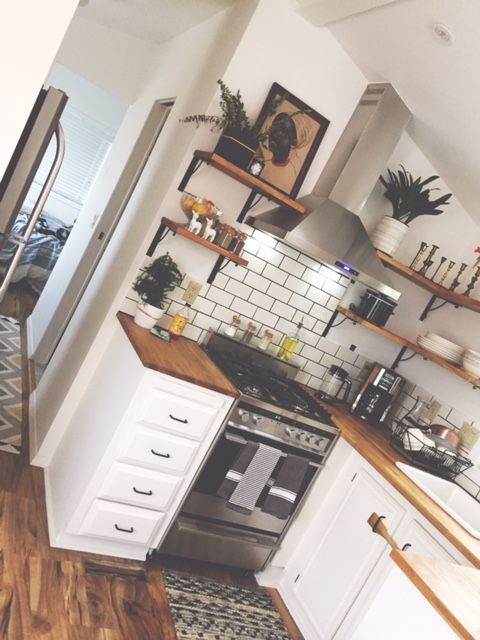
The more you know, the more you can create. There is no end to imagination in the kitchen. For that today I came with a new “U-shaped kitchen design”, this is going to change your way of thinking towards kitchen. This kitchen is going to give you a luxury finish in a minimum space. The modern slabs made of wood and the wallpapers which will be going to give you a blink to future and to your class
“Interior design is making the best possible use of the available space”

CLASSIC IS THE NEW RICH

If you are a person who lives a classic life then homedzine.com will help you to take a step further. Today’s design just gives you a textured finish with the help of wooden compartments and black shelve accompanying white tiles , in this the upper compartment combines with a wide compartments.