Plastic Bag Free Day

Today is a International Plastic Bag free day that is on 3rd July 2020. So when you go out for any shopping, remember to keep the paper bag or cloth bag with you instead of plastic bag. This should not be important to carry paper bag today but also its important to avoid using plastic bags daily as they are harmful for our environment. This day is a global initiative that aims at not to use plastic bag. According to the research about 2 million plastic bags has being used every minute around the world and just calculate it like how much damage we are doing to our Mother Earth by using plastic bags.

An International campaign group (A Plastic Planet) decided to use social media as their power to reduce the use of plastic bags. And they announced the World First Plastic Free Day on June 5, 2018 which planned to coincide with World Environment Day. Plastic pollution is increasing day-by-day. This is one of the main cause of using plastic bag. Due to unnecessary use of plastic bags daily, our planet is becoming contaminated with increase in numbers per day. This is not a good news at all. We need to decrease the use of plastic bags as it takes a long time to get decomposed. And pollution will definitely effect the human life. Secondly, it is also dangerous to sea life. Mostly plastic bags are thrown into the sea every year just because plastic bag takes time to decompose. This effects the marine life in a huge way. It also causes greenhouse gases.

The only ways to reduce the use of plastic bag are:

  1. Avoid using plastic bags instead of it use paper bag.
  2. Re-use the bags that once has been used. Avoid buying more and more plastic bags.
  3. Use re-usable containers instead of plastic bag.
  4. Make sure that your surroundings are clean. If you see any plastic bag lying on road or somewhere else than take the responsibility of throwing it into the garbage bans.
  5. Reuse containers for storing leftover or shopping in bulk.
  6. In any café or restaurants or any other place try to avoid using things made up of plastic like straws.
  7. Avoid buying frozen foods as mostly are packed with plastic.
  8. Reduce the use of plastic bags in your daily basis.
  9. Aware more and more people about not using the plastic bags. Also tell them the harmful effects that causes while using plastic bags.
  10. Start avoiding plastic bags from yourself first.

Almost everyone knows how harmful are the plastic bags for our environment. Still people are avoiding it or taking it as casual. But it is a matter that to be taken seriously. Yet companies keep on producing plastic bags and we keep on using plastic bags. Are we doing right? No. We need to focus on this issue as our Mother Earth is in danger. It is high time to take the responsibility to decrease the use of plastic bags which automatically reduce pollution from our environment.

EDUCATION AND TRAINING


Though education and training are parts of the learning process, yet education is wider in its scope than the training and the training is concerned with increasing knowledge and skills in doing a particular job, and the major burden of training fall upon the employer. But education is a broader field of subject and has a lot of connections in its roots and has a lot of scopes and its purpose is to develop individuals in each of their respective fields and it is very concerned with increasing the general knowledge and understanding of the total environment. Education also teaches us to solve any analytical, statistical concepts in a better manner with an in-depth understanding of all the complexity in them.

This image has an empty alt attribute; its file name is education-and-training.jpg

THE DIFFERENCE

By, education, we generally mean formal instruction in a school or a college or in a research facility or in a corporate environment, whereas the training is a vocationally oriented before you work on a complex or sophisticated machine or environment and is generally imparted at the work-place. Educational is theoretical, while training is practical and education is the process of developing and understanding of some organized body of knowledge and it is usually formal and aims at the total growth of an individual and it develops mental skills that enable one to use the knowledge acquired effectively in problem-solving situations. Training increases the aptitude, skills, and abilities of employees to perform specific jobs and it leads to the developmental of manual skills for a particular job, whereas education aims at enhancing the general knowledge of a person so that he may accomplish a job in an economical way or can start his own venture or a company to develop his knowledge that gives way for the evidence of his general intellect. As Flippo said in training “Training is the act of increasing the knowledge and skills of an employee for doing a particular job”.

This image has an empty alt attribute; its file name is rptgtpxd-1396254731.jpg

Actually, the distinction between training and education is not precise because in many cases both training and education occur at the same time in the form of some formal vocational school programmes are job-oriented only, whereas some employee development programmes in the industry are quite wider in scope and they may be viewed as education. The scope of training is narrow as it restricted to a specific job that requires a lot of practical knowledge to complete the given work or the job, whereas the scope of education is wide as it gives information about a specific area instead of a specific job. The objective of the training is to learn the method of accomplishing a specific job successfully whereas education aims at enhancing the general knowledge of a person to enable him/her to accomplish a job in an economical way giving evidence of his general intellect and training is imparted by a business organization, on-job or by setting up a separate training centre whereas the main source of education in schools, colleges and university. The burden of expenses for imparting training is the responsibility of the business organization, hence it alone bears are borne by the employee himself.

“MASTER JI” OF BOLLYWOOD PASSED AWAY

After Sushant Singh Rajput’s death there is another shocking news which has left us devastated. Yes, today morning we have lost another legend of bollywood industry. The legendary bollywood choreographer Saroj Khan died of cardiac arrest at around 2:30 am on Friday morning at a Mumbai hospital. She was in Mumbai ‘s Guru Nanak Hospital since June 17 after she complained of breathing difficulties. She was 71. After her death her funeral took place in the morning in Malad, Mumbai.

She was a three – time National Award Winner who was credited for choreographing more than 2000 songs. She was fondly called as ‘Masterji’ by the stars. She was a wonderful artist and an exceptional guru who played crucial roles in many superstars journeys by giving memorable choreographies to them. Her most famous collaboration were with actors Madhuri Dixit and Sridevi. Her iconic numbers included Dhak Dhak Karne Laga from movie Beta (1992), Ek do teen from Tezaab (1998), Hawa Hawaii from Mr India (1987) and many more.

So today we have lost another amazingly talented person. You will be missed Saroj ma’am.

#RIPSarojKhan

Source : Hindustan Times

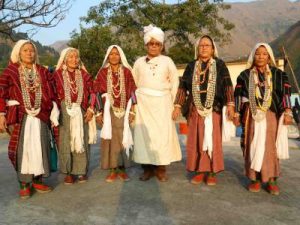
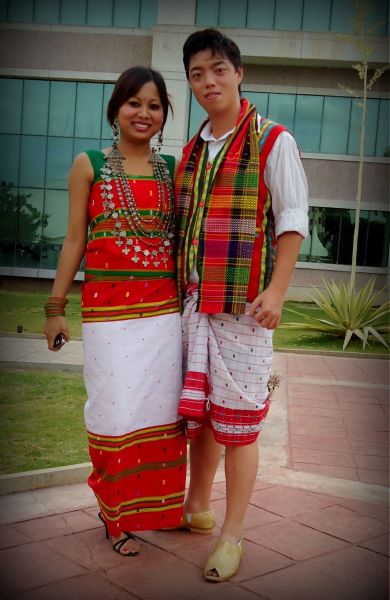
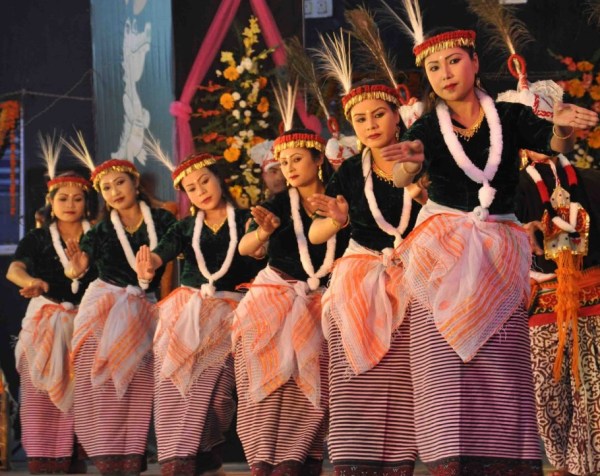
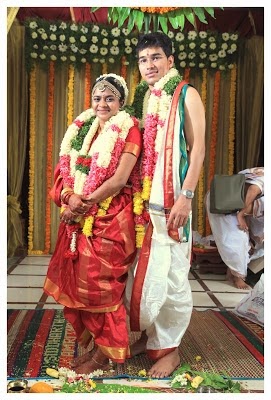
Indian states and their beautiful attires

India is a country with 29 states and each state had its traditions and values. People follow different religions, speak different languages, and eat different foods. Likely there exists a fashion and style diversity in India. Still, India is United as a country. Unity in diversity exists in India.

Here are some of the beautiful and Elegant Indian dresses which signify each state, and reveal the diversified beauty in it.

Madhya Pradesh

The people of MP wear very simple dresses compare to other states. Simple yet beautiful fashion style of these people includes Dhoti and Kurta or a simple shirt with a specific type of jacket called the Bandi or Mirzai and an equally unique headgear, a turban called the Safa which the men of this state wear.

Bandhej sari is very famous in the state still women folk wear Lehenga and choli with an Orhni called Lugra.

Uttar Pradesh

The women of this state wear salwar kameez. Churidaar bottom is originated from this state. Women also wear Ghagra Choli and Saree here. While men wear Lungi Pajama with headgear (topi or pagri) and sherwani on traditions days.

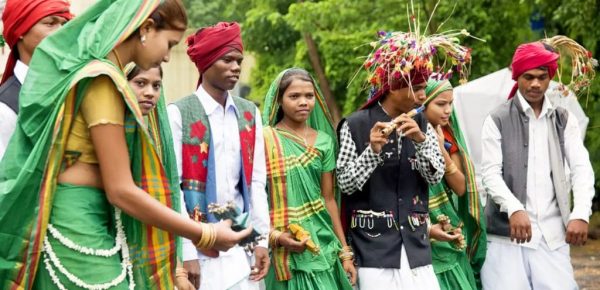
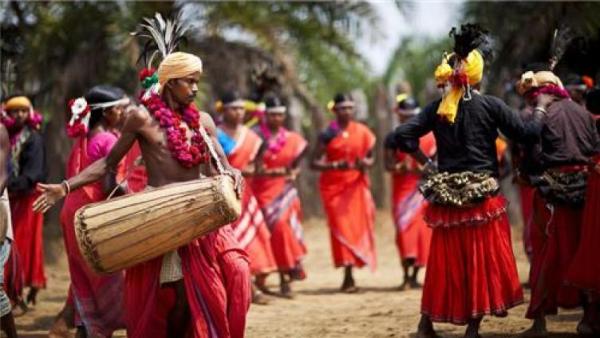
Chhattisgarh

Women wear saree known as Lugda with a blouse named Polka. They wear the saree in a typical Kachmora style. Men wear dhotis and headgears like cotton turbans.

Maharashtra

Nauwari saree the saree with 9-yard length is worn up to knee-length with beautifully designed Choli. The saree is worn with a different style like Dhoti.

Men of this state wear Dhotis known as Dhotar along with short sleeve shirts called Pheta and headgears called Pagdi.

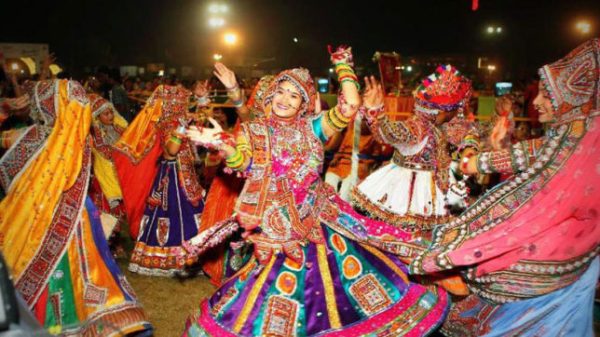
Gujarat

Gujarat Chaniya Choli is world-famous which includes Ghagra, Choli, and chunari or head veil. These dresses are found in different color combinations which look very beautiful.

Gujarati men wear dhotis or churidar pajamas and kurtas or Bandits, traditionally called Chorno and Kediyu that are paired with rich colored headgear as the turbans.

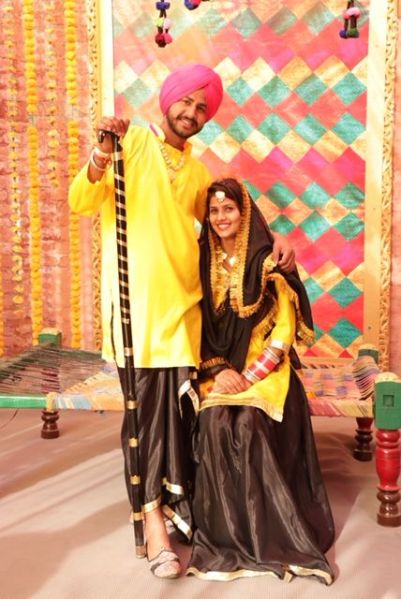
Punjab

Patiyala salwar and churidar are common wears of the women of this state. Women also wear colorful Ghagras.

  Common attire of the men of the state is kurta and muktsari pajamas, which has replaced the more traditional tehmats. They also wear Pagris.

Rajasthan

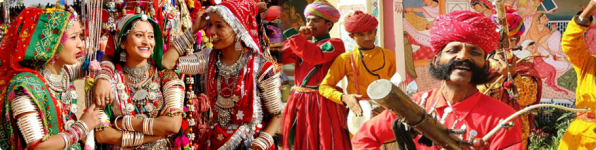
The men of the state wear dhotis or churidar pajama, kurta, angarkha, patka, or Kamar band and white Pagar or safa which is a kind of turban, Give them a royal look. However, the length and manner of wearing the dhoti vary across the state as does the length of women’s dress as well.

Rajasthani women wear long skirts called ghagra with blouses called Kanchi or Kurtis and cover their heads with Odhnis.

Himachal Pradesh

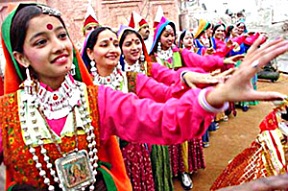
It is a hilly and cold state so people wear woolen clothes here. Men wear kurtas paired with dhotis or churidar pajamas and the typical Himachali cap called the pagri.

while Himachali women wear kurtas, rahide, and Ghagra Lehenga Choli, along with scarves and shawls. Rahides are headscarves decked with a golden periphery that serve to protect against the cold. Pashmina shawls from the region are one variety of woolen clothing popular all over for the warmth and quality it endows.

Telangana

Telangana has sarees, Langa vonis, salwar kameez as the traditional attires for women in the state on the other hand males wear the traditional dhoti called the Pancha.

Sikkim

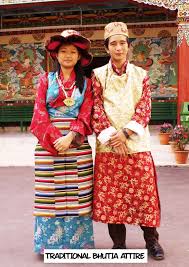
The traditional wear of this state is quite similar to men’s and women’s clothes. The men wear a dress called Bakhu or Kho with a pair of loosely fitted trousers teamed up with a leather belt and embroidered leather boots. While the women wear the outfit over a full-sleeved silk blouse known as honju and fastened with a silk or cotton.

 An ankle-length costume worn like a sari called the Dumvum and another attire by the name Nyamrek also counts among the traditional attires of the state.

Uttarakhand

Women of this state wear long skirts known as ghagri along with a choli and odhani. on the other hand, men wear dhoti, churidar or lungi along with a shirt or kurta, and topped off with a gol topi or Jawahar topi. Bhotu and Dhoti are unisex traditional attires of the state.

Tripura

Women of Tripura with two pieces dress the upper piece known as Risa which covers the chest and Rikutu covers the entire torso. While the dress for the lower half of the body for Tripuri women is called the Rigwnai.

The Rikutu is also worn by the men of Tripura to cover the loin. The upper male body is covered in a shirt ‘kamchwlwi borok’ along with a gamucha known as Kubai.

Manipur

The women of the state of Manipur wear a sarong wrapped around the chest as a skirt that is called the Phanek. A horizontally and woven shawl or dupatta called the Innaphi goes around the upper body to complete the traditional female attire.

The menfolk of the state of Manipur wears a dhoti that is four to five meters in length and jacket as their traditional dress. The look is completed by a white pagri or turban as the headgear.

Tamil Nadu

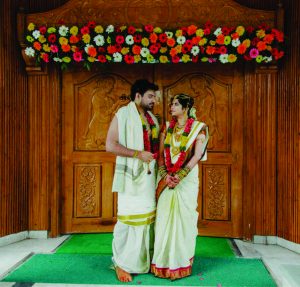
Kanchipuram Sarees the Women’s attire of Tamil Nadu is world-famous. These rich culture sarees called Pavada comprise a full-length short blouse called Ravaikai and a shawl, which are mostly worn by the younger girls. The grown-up girls wear a saree style called the Dhavani.

While the men in Tamil Nadu dress up in Lungis along with a shirt and Angavastra. The traditional Lungi of the Tamils is known as the Veshti and can be tucked in a number of ways.

Patent for ISRO protective garment for human spaceflight

Another feather adds to the ISRO crown. ISRO has got an Indian patent for its liquid cooling and heating garment suitable for the space Application. The patent is valid for 20 years from the date of application that is, February 8, 2016, and was granted on June 19. while ISRO is a patent owner, the four investors are Srirangam Siripothu, Reshmi Balachandran, Saraswati Kesava Pillai Manu, and Gurumurthy Chandrasekaran.

Spacesuit

The garment is made of biocompatible Fabrics and parts which help maintain comfortable body temperature. According to ISRO the garments has superior heat transfer efficiency and can be conveniently used for maintening the body temperature of the wearer at levels suitable for the physiological performance require. The outer and Inner Layer of the garment are separated by plurality of tubes configured to exclusive a heat transfer fluid

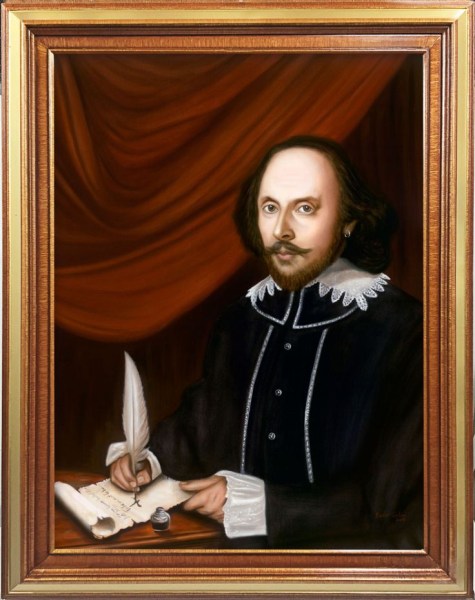
“THE BARD OF AVON” : WILLIAM SHAKESPEARE

  • Introduction and birth
  • Shakespeare’s Lost years
  • Career and his works
  • Writing style
  • His famous quotes

“All the world’s a stage, and all the men and women merely players. They have their exits and their entrances, and the one man in his time plays many parts.”

William Shakespeare was an English poet mystery, playwright and actor of the Renaissance era who is considered one of the greatest writers to ever use the English language. He was an important member of the King’s Men company of theatrical players from roughly 1594 onward. He is also the most famous playwright in the world, with his plays being translated in over 50 languages and performed across the globe for audiences of all ages known colloquially as“The Bard” or “The Bard of Avon,” Shakespeare was also an actor and the creator of the Globe Theatre, a historical theatre, and company that is visited by hundreds of thousands of tourists every year. Shakespeare’s writings capture the range of human emotion and conflict and have been celebrated for more than 400 years.

His birth records does not exist, but an old church record indicates that a William Shakespeare was baptized at Holy Trinity Church in Stratford-upon-Avon on April 26, 1564. Shakespeare was educated at the King’s New School, a free chartered grammar school that was located in Stratford. There he studied the basic Latin text and grammar, much of which was standardized across the country by Royal decree. He was also known to partake in the theatre while at the school . As a commoner, Shakespeare’s education was thought to finish at the grammar school level as there is no record of him attending university, which was a luxury reserved for upper-class families.

Shakespeare’s Lost years –
In 1582, an 18-year-old Shakespeare married Anne Hathaway. After the birth of his twins in 1585, Shakespeare disappeared from public record until 1592, when his works began appearing on the London stage. These seven years are known as “Shakespeare’s Lost Years,” and have been the source of various stories that remain unverified, including a salacious story involving Shakespeare escaping Stratford prosecution for deer poaching.

Career –
William Shakespeare first made his appearance on the London stage, where his plays would be written and performed, around 1592. He was, however, well known enough to be attacked by critics in newspapers, and thus was considered to be already an established playwright.

After the year 1594, Shakespeare’s plays were solely performed by a company owned by a group of actors known as the Lord Chamberlain’s Men, which became London’s leading company.
Between about 1590 and 1613, Shakespeare wrote at least 37 plays and collaborated on several more. His 17 comedies include The Merchant of Venice and Much Ado About Nothing. The most famous among his tragedies are Hamlet, Othello, King Lear and Macbeth. Shakespeare also wrote 4 poems, and a famous collection of Sonnets which was first published in 1609.

Early Works and after 1600: Histories and Comedies

  • Henry VI (Parts I, II and III), Richard II and Henry V – Shakespeare’s first plays were mostly histories.
  • Tragic love story Romeo and Juliet.
  • Julius Caesar portrays upheaval in Roman politics that may have resonated with viewers at a time when England’s aging monarch, Queen Elizabeth I, had no legitimate heir.
  • Comedies – the whimsical A Midsummer Night’s Dream, the romantic Merchant of Venice,the wit and wordplay of Much Ado About Nothing and the charming As You Like It and Twelfth Night.
  • Other plays before 1600 include Titus Andronicus, The Comedy of Errors, The Two Gentlemen of Verona, The Taming of the Shrew, Love’s Labour’s Lost, King John, The Merry Wives of Windsor and Henry V.
  • After 1600: Tragedies and Tragicomedies- Hamlet, Othello, King Lear and Macbeth. In these, Shakespeare’s characters present vivid impressions of human temperament that are timeless and universal.
  • In Shakespeare’s final period, he wrote several tragicomedies – Cymbeline, The Winter’s Tale and The Tempest.
  • Other plays written during this period include All’s Well That Ends Well, Measure for Measure, Timon of Athens, Coriolanus, Pericles and Henry VIII.

Writing Styles –
Shakespeare’s early plays were written in the conventional style of the day, with elaborate metaphors and rhetorical phrases that didn’t always align naturally with the story’s plot or characters.
However, Shakespeare was very innovative, adapting the traditional style to his own purposes and creating a free flow of words.
With only small degrees of variation, Shakespeare primarily used a metrical pattern consisting of lines of unrhymed or blank verse, to compose his plays. At the same time, there are passages in all the plays that deviate from this and use forms of poetry or simple prose.
While it’s difficult to determine the exact chronology of Shakespeare’s plays, over the course of two decades, from about 1590 to 1613, he wrote a total of 37 plays revolving around several main themes: histories, tragedies, comedies and tragicomedies.

Today, his plays are highly popular and constantly studied and reinterpreted in performances with diverse cultural and political contexts. The genius of Shakespeare’s characters and plots are that they present real human beings in a wide range of emotions and conflicts that transcend their origins in Elizabethan England.

Various famous quotes of william Shakespeare

“Love all, trust a few, do wrong to none.”

“A fool thinks himself to be wise, but a wise man knows himself to be a fool”.

“The empty vessel makes the loudest sound”.

“We are time’s subjects, and time bids be gone”.

No Time

What is this life if, full of care,
We have no time to stand and stare.

W.H.Davies’s poem “Leisure” is a very important poem that talks about the pertinent issue of lack of time the common man has in this fast-paced world. The world where anyone barely gets any time to sit back and cherish nature and the beauty the world has to offer. The poet asks what is this life where we don’t have any time to stand and observe. Observe anything the world has to offer to delight our visual senses.

No time to stand beneath the boughs
And stare as long as sheep or cows.

The poet says that we don’t have any time to stand beneath boughs and be lazy and just stare about blankly as sheep and cows do. This is to indicate that we don’t have any free time to about idly as cattle do.

No time to see, when woods we pass,
Where squirrels hide their nuts in grass.

We don’t have any time to observe the woods that we pass. The woods where squirrels hide their nuts in the grass. The poet says that we fail to enjoy the little but important things in life. The things that nature has presented us to cherish and bask in.

No time to see, in broad daylight,
Streams full of stars, like skies at night.

The poet says that we have no time to see in broad daylight the streams that are on offer that glisten and twinkle like stars at night. The poet points out the bountiful nature that we fail to cherish.

No time to turn at Beauty’s glance,
And watch her feet, how they can dance.

We don’t have any time to turn and look at beautiful things in life and the gracefulness that they possess. This could range from flowers swaying to the breeze to beautiful maidens dancing to a song.

No time to wait till her mouth can
Enrich that smile her eyes began.

Alas! The poet laments that we have no time to watch a beautiful smile. A pretty smile should be cherished but we fail to do so when we are running helter-skelter, hustling to stay in the race with the rest of the world.

A poor life this is if, full of care,
We have no time to stand and stare.

The poet says that it is indeed a poor life, full of care because we barely have any time to cherish the nature gifted to mankind. The poet hints to us that we should take time to cherish the small things in life that often go unnoticed and we miss out on the wondrous creation of God. Although hustling and our daily busy lives are important, we should take out some to cherish nature in its true magnificence. A pretty dance or a beautiful smile is fulfilling to our eyes and should be appreciated for its true worth instead of being ignored or missed. The poet admits the paucity of time Man has yet he tells us of the various wonderful things we would be missing out on.

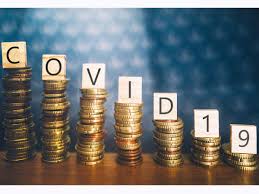
Financial effect of the COVID-19 pandemic in India

india news: India has opportunity to build a more resilient and ...

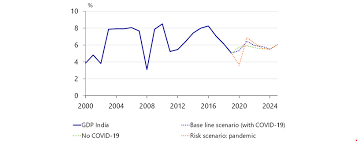
The financial effect of the 2020 coronavirus pandemic in India has been to a great extent troublesome. India’s development in the final quarter of the monetary year 2020 went down to 3.1% as indicated by the Ministry of Statistics. The Chief Economic Adviser to the Government of India said that this drop is predominantly due to the coronavirus pandemic impact on the Indian economy. Quite India had likewise been seeing a pre-pandemic lull, and as per the World Bank, the current pandemic has “amplified prior dangers to India’s financial standpoint”.

Coronavirus: The Economic Impact of COVID-19 on India - RaboResearch

The World Bank and rating organizations had at first overhauled India’s development for FY2021 with the most minimal figures India has found in three decades since India’s monetary advancement during the 1990s. Anyway after the declaration of the financial bundle in mid-May, India’s GDP gauges were downsized much more to negative figures, flagging a profound downturn. (The evaluations of more than 30 nations have been downsized during this period.) On 26 May, CRISIL reported that this will maybe be India’s most noticeably awful downturn since freedom. State Bank of India research assesses a compression of over 40% in the GDP in Q1 FY21. The constriction won’t be uniform, rather it will contrast as per different boundaries, for example, state and segment.

Banking and capital markets: Implications of COVID-19 | Deloitte ...

Joblessness rose from 6.7% on 15 March to 26% on 19 April and afterward withdraw to pre-lockdown levels by mid-June. During the lockdown, an expected 14 crore (140 million) individuals lost work while pay rates were cut for some others. More than 45% of family units the country over have revealed a salary drop when contrasted with the past year. The Indian economy was required to lose over ₹32,000 crore (US$4.5 billion) consistently during the initial 21-days of complete lockdown, which was proclaimed after the coronavirus outbreak. Under complete lockdown, not exactly a fourth of India’s $2.8 trillion financial development was functional. Up to 53% of organizations in the nation were anticipated to be fundamentally affected. Supply chains have been put under worry with the lockdown limitations set up; at first, there was an absence of clearness in smoothing out what a “basic” is and what is not.Those in the casual areas and day by day wage bunches have been at the most risk. An enormous number of ranchers around the nation who develop perishables likewise confronted uncertainty.

Impact Of Coronavirus On Business: India And The World

Significant organizations in India, for example, Larsen and Toubro, Bharat Forge, UltraTech Cement, Grasim Industries, Aditya Birla Group, BHEL and Tata Motors have incidentally suspended or fundamentally decreased tasks. Youthful new companies have been affected as subsidizing has fallen.Fast-moving customer products organizations in the nation have fundamentally diminished activities and are concentrating on basics. Financial exchanges in India posted their most exceedingly terrible loses in history on 23 March 2020. However, on 25 March, one day following a total 21-day lockdown was declared by the Prime Minister, SENSEX and NIFTY posted their greatest increases in 11 years.

How safe is your job? Covid-19 pandemic might put over 100 million ...


On 12 May the Prime Minister reported a general monetary bundle worth ₹20 lakh crore (US$280 billion),10% of India’s GDP, with accentuation on India as a confident country. During the following five days the Finance Minister declared the subtleties of the monetary bundle. After two days the Cabinet freed a number from proposition in the monetary bundle including a free food grains bundle

Think good for others 😇

Must Read…. Think good for others..

President Xi Jing Peng of China said:

When I was a small child, I was very selfish, always grab the best for myself. Slowly, everyone left me and I had no friends. I didn’t think it was my fault but criticize others.

My father gave me 3 sentences to help me in life.

One day, my father cooked 2 bowls of noodles put the 2 bowls on the table…
One bowl has one egg on top and the other bowl does not have any egg on top…
He said,
”My child. You choose. Which bowl do u want.
”Eggs were hard to come by those days! Only get to eat eggs during festivals or New Year. Of course I chose the bowl with egg! As we started eating.
I was congratulating myself on my wise choice/decision and wallop up the egg. Then to my surprise as my father ate his noodles, there were TWO eggs at the bottom of his bowl beneath the noodles! I regretted so much! And scolded myself for being too hasty in my decision…
My father smiled and said to me ,”My child.. You must remember what your eyes see may not be true. And if you intent on taking advantage of people, you will end up losing!”

The next day, my father again cooked 2 bowls of noodles: one bowl with an egg on top and the other bowl with no egg on top. Again, he put the two bowls on the table and said to me
,”My child. You choose. Which bowl do you want?
This time I am smarter. I chose the bowl without any egg on top. To my surprise, As I separated the noodles on top, there was not even a single egg at the bottom of the bowl!
Again my father smiled and said to me,”My child. You must not always rely on experiences because sometimes, life can cheat you or play tricks on you. But you must not be too annoyed or sad, just treat this as learning a lesson .You cannot Learn this from textbooks.

The third day, my father again cooked 2 bowls of noodles, again one bowl with an egg on top and the other bowl with no egg on top…
He put the 2 bowls on the table and again said to me ,”
My child. You choose.. Which bowl do u want? ”This time, I told my father,”
Dad, u choose first.
You are the head of the family and contributed the most to the family,”My father did not decline and chose the bowl with one egg on top. As I eat my bowl of noodles, Sure in my heart that there is no egg inside the bowl. To my surprise! There were TWO eggs at the bottom of the bowl.

My father smiled at me with love in his eyes,”My child, you must remember! When you think for the good of others, good things will always naturally happen to you!”

I always remember these 3 sentences of my father and lived and do my business accordingly. True Enough , my business was a roaring success…..

Direct tax collected In India

A direct tax is a tax that is paid by an individual or an organization to the imposing entity, or to be precise, Direct Tax is the one which is paid to the Government by taxpayers. These taxpayers include people and organization both. Also, it is directly imposed by the Government and cannot be transferred for payment to some other entity.

With Direct Taxes, especially in a tax bracket system, it can become a disincentive to work hard and earn more money, as more money you earn, the more tax you pay.

Income Tax- It is imposed on an individual who falls under the different tax brackets based on their earning or revenue and they have to file an income tax return every year after which they will either need to pay the tax or be eligible for a tax refund.

Estate Tax– Also known as Inheritance tax, it is raised on an estate or the total value of money and property that an individual has left behind after their death.

Wealth Tax– Wealth tax is imposed on the value of the property that a person possesses.

However, both Estate and Wealth taxes are now abolished.

The Central Board of Direct Taxes in India

The Central Board of Direct Taxes or the CBDT, which was formed as the result of the Central Board of Revenue Act, 1924 looks after the Direct Taxes in India. This department is part of the Department of Revenue in the Ministry of Finance and is responsible for the administration of the direct tax laws. Besides that, the Central Board of Direct Taxes also provides inputs and suggestions for policy and planning of the direct taxes in India.

The latest data of tax collection as per the Central Board of Direct Taxes (CBDT) was released. The data reveals that Maharashtra, Delhi, and Karnataka contribute 61% of the country’s total revenue from direct taxes. Including the contribution of Tamil Nadu and Gujarat will aggregate to 72% of the total revenue.

Direct taxes include income tax paid by individuals and corporate tax paid by firms. It is a general notion that more revenue collection implies higher income. It also implies better employment opportunities and greater ease-of-doing-business. Greater revenue collected states are also those that have greater avenues for economic activities.

It was found that the large and populous states like Uttar Pradesh, Bihar, and West Bengal fare poorly. Bihar, the third most populous state accounts only 0.65% to the total direct tax collection. Uttar Pradesh, the most populous state and West Bengal, the fourth most populous state contributed to 3.12% and 4% of the total tax collection. 

The poor collection of taxes shows the absence of formal sector employment and corporates. It also shows that the working population in these states are not part of the salaried class. If they were a part of the salaried class, the revenue from income tax would have not been so low as compared to the population of these regions

So if we assume the total direct tax collected in India would be 100/-how much would each state contribute

Maharshtra:38/-, Delhi:13.5/- ,Karnataka:10/-

  1. Tamil Nadu : 6.7/-
  2. Gujarat: 4.6/-
  3. Andhra Pradesh :4.3/-
  4. West Bengal:4/-
  5. Uttar Pradesh:3/-
  6. Haryana : 2.4/-
  7. Odisha: 1.2/-
  8. Madhya Pradesh: 1.8/-
  9. Kerala: 1.6/
  10. Rajasthan:24/-
  11. Punjab : 1.1/-
  12. Bihar:0.65/-
  13. Telegana:0.46/-
  14. Jharkhand:0.5/-
  15. Assam : 0.56/-
  16. Goa:0.3/-
  17. Jammu and Kashmir:0.16/ Himachal:0.25/-
  18. Chhattisgarh: 0.25/-  Uttarakhand : 0.3/-Chandigarh : 0.25/- 19.Meghalaya: 0.08/- 20. Tripura:0.03/-