Shoot High-Quality Videos with more efficiency

Have you ever run out of space that captures some of your cherished moments? Isn’t it annoying? No more hassles, after long research, now you’ll be able to record high-quality 8K videos and 360 degrees videos too. It’s estimated that 90 minutes equivalent to your favorite football match in 4K quality video takes up around ten gigs of space, but with the new technology, you can half it down to 5 gigs only.
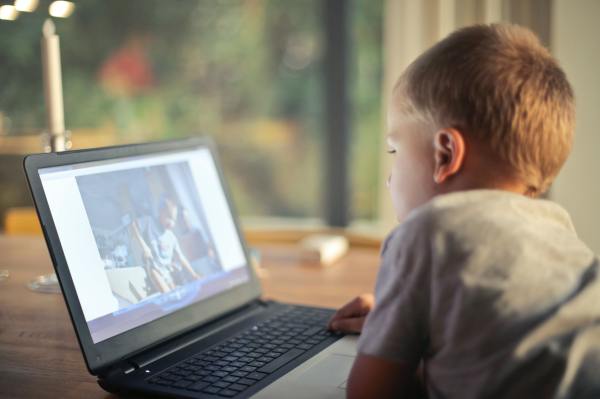
A boy watching his photos and videos captured on a camera.

Suppose you know that Netflix and YouTube have restrictions over streaming videos, not more than 480p resolution. It has been more than three months now in India; still, the capping exists, although some internet providers did remove it slowly. The social isolation has made people binge more than regular days, seeing an increase of 20 to 30 percent in subscription and user base. More people are now connected, increasing the bandwidth. Hence you may observe slow speeds in this period. Netflix is switching to AV1 codec to save data while watching the show when it delivers its content over the internet. This new research may be able to save more data.

A man binges for on-demand streaming shows.

Initially, the digital video started with H.120 encoding but wasn’t practical until H.261 came up based on the DCT (discrete cosine transform) compression. In 1991, MPEG-1 revolutionized the video sector with higher resolutions, which reached us in the form of VCDs and DVDs. In the late 90s and onset of the 21st century, we saw the currently used MPEG-4 or the most widely used H.264 video encoding. You may know this if you’re familiar with video editing.

After the H.265/HEVC encoding, now steps in H.266/MPEG-I Part 3/VVC (Versatile Video Codec) presented by Fraunhofer HHI with other partners including the significant-tech leading brands like Apple, Microsoft, Qualcomm, Sony, and Intel, with vivid HDR and better support for 360 degrees video. As earlier mentioned, AV1 codec, 30 percent better than H.265, which is adopted by Netflix, is royalty-free. Now, to support H.266 major hardware updates may be required to handle such heavy compressions and will take time for its actual implementation. Like for example, when H.265 was finalized at the beginning of 2013, Apple lately adopted it in the year 2017 as a part of the iOS 11 mobile operating system.

The VVC logo

The 500 pages specification document finalized this month on 6th July 2020, but actual usage in the video industry might take about an estimated 7-8 years. Why do we need such compression? By 2022, more than 80 percent will be part of video streaming, which may increase on more content based on 4K video quality as well as growing numbers of 360 degrees videos. The existing widely used browsers support AV1 codec, but H.266 to properly patent may lately delay web surfing too. Twitch and YouTube may become one of the first firms to implement as they’ve already implanted VP9, again a royalty-free codec by Google itself.

Along with this, MPEG-5 Part 1 or EVC (Essential Video Coding), and MPEG-5 Part 2 or LCEVC (Low Complexity Enhancement VC) is set to launch out. For us, a non-geeky person may visualize it after watching the following graph below.

Average bit rate savings graph. Courtesy: BBC Research

I hope you could know some of the new ways to encode a video. You can read more about it from their official website: https://www.hhi.fraunhofer.de/en/departments/vca/technologies-and-solutions/h266-vvc.html

Energy efficiency and why you need it?

ENERGY EFFICIENCY

Energy demand is increasing worldwide. The energy market situation is heating up and energy prices are on the rise. Instabilities in many exporting and transit countries are a cause for concern and the increased combustion of fossil energy sources is accelerating climate change. An expansion of energy supply options is costly and will take time. On the other hand, increasing energy efficiency curbs energy prices, reduces dependency on energy imports, counteracts energy distribution conflicts and cuts climate-damaging carbon dioxide emissions, saves wildlife habitats, safeguards the planet, and makes sure there is energy left for future generations.

Efficient energy use, sometimes simply called energy efficiency, is the goal to reduce the amount of energy required to provide products and services. There are many reasons why homeowners should consider energy efficiency, from the clear environmental and financial benefits of cutting energy use to potential improvements in mental and physical health. Improvements in energy efficiency are generally achieved by adopting a more efficient technology or production process or by application of commonly accepted methods to reduce energy losses.

Energy efficiency is playing an increasingly vital role in our lives, for three main reasons:

The environment: The more energy we use, the more carbon emissions are pumped into the atmosphere and the more our reserves of natural resources such as oil, coal and gas are depleted. We need to reduce our reliance on these energy sources, and one way to do that is to make sure we all use energy as efficiently as possible.

The economy: The global economy is based heavily on oil and gas, and as these resources dwindle their cost will increase, causing financial imbalances around the world and resulting in energy poverty in many areas of society.

Bank balance: Nobody wants to pay more than they have to for everyday necessities like heating and hot water, so it makes sense to be energy efficient. That way you fulfill your energy needs while paying as little as possible.

For a household it means you are using less energy to do the same jobs, reducing your home’s energy waste and saving money. To effectively increase your energy efficiency involves more than just using less energy – it requires you becoming aware of how energy is used, where it’s wasted, and how it can be used more effectively and efficiently in everyday life.

Musk’s reply when he was dared to wear short shorts to a meeting

Tesla’s CEO Elon Musk

Tesla’s founder and CEO, Elon Musk has promised on Thursday by tweeting that he will release “Tesla short shorts”, which he did. But the thing which amused was another tweet by the 49- year-old entrepreneur that he had bought a pair of shorts himself. In reply to his tweet, one of the tweeter users dared him to wear the same shorts to a shareholders meeting. Replying to this he said “that would be next level” and didn’t take it otherwise.

“Tesla will make fabulous short shorts in radiant red satin with gold trim,” “Tesla will make fabulous short shorts in radiant red satin with gold trim”, “Will send some to the Shortseller Enrichment Commission to comfort them through these difficult times.”

Mr Musk tweeted on Thursday – mocking short-sellers who borrow and then sell stock, hoping for a decline in price so they can buy it back at a cheaper rate and make a profit.

He kept his promise and put up shorts on Tesla’s website Sunday. The “Short Shorts” on the Tesla shop website.

The shorts have “S3XY” on the back, which is a reference to Tesla’s Model S, Model 3, Model X, and Model Y vehicles.

Elon Musk has announced the release of red satin shorts available at $69.420 (5000 RS) at the tesla store by tweeting… “Limited edition short shorts now available at”. The Price of the shorts was listed at Tesla’s website.

According to Tesla, the shorts will provide “exceptional comfort from the closing bell.”

Musk has spoken against the short-sellers, who bet the price of Tesla stocks will drop, for long.

In 2018, he had sent a box of shorts of hedge fund owner and Tesla short-seller David Einhorn. Developing on the idea, he brought the red satin shorts for mass sale in 2020.

At July 6, when the shorts were sold he tweeted that he has bought a pair of red satin short shorts for himself. He wrote, “I bought a pair of XL”.

Everyone was amused by this tweet and a tweeter user gave him a funny dare to wear the same shorts at shareholder meeting.
Tweeting, “Double- dare you to wear them at shareholder meeting”.

Despite interruptions from the coronavirus pandemic — including stay-at-home orders which Musk referred to as “fascist” — Tesla last week delivered 90,650 cars to customers down 5% from a year ago, but far less than the drops of 30% or more reported by other automakers. Tesla’s second-quarter sales were also up a bit from the 88,400 cars it delivered in the first quarter.

“Moon Base – Possibilities And Associated Difficulties”

Humans have been interested in space and it’s associated phenomenon since ages. Which has really fascinated humans to go much deeper into space studies and know space better and solve the mysteries residing out there. This journey as we all know started as a fight between the two countries at the time of the late 50’s which were Soviet Union and The United States of America. But as soon as they came to know that it’s much bigger than just a competition, it became a field of much more investment of both money as well as research and new ideas. The first manual landing on the earth’s natural satellite changed the dimensions for humans as we could imagine humans travelling outside the planet and thus have a close look to space and its constituents. Considering all this, humans were planning to set up a proper human base, so as to develop knowledge about the age-old regolith present there as well as find better resources for human travel. 

This all sounds interesting and fascinating, but how easy it is to set up a proper base with humans working all around Or people visiting as travelers on it and many more scenarios. 


  • The first problem which is a major one is to shift such heavy material or construction material through spaceships to the moon, which will cost billions and trillions of dollars, and the cost of building would be different too.
  •  Also it’s not sure that these constructed bodies would be able to stand still and strong at the surface of the moon or not get affected due to gravity and other factors such as meteors colliding.
  • We know that the moon doesn’t have a proper environment or shield which would break the coming meteors on it, thus these meteors impact the moon and form crater or big holes on the moon. This is very risky for us as well as our human base as our efforts would get dissolved and a big loss for us if our base gets destroyed and humans get hurt.
  • Also we would be requiring much water, food resources for people working over there.
  • One of the other major areas of concern is the radiation from the sun, which comes directly and this could be very dangerous for people working over there.


But most of the solutions were found for building bases, as in 2014 , a company named Made In Space brought the concept of 3-d printing parts in space. They tested making things with some plastic and regolith (moon soil), and made things out of them. These were really strong enough of handle heavily stresses. Also it was mostly automatic with little interference of humans. Thus this technology can effectively be considered for building out things in space. Also scientists believe that, there are tubes under the surface of moons, which would not only save us from the meteors, but provide effective temperatures to work in, save humans from radiations and also save much of our resources building human base, as we could consider them for the same. But the only reason to worry is that we do not know that, either these tubes are active or not. Since these tubes as we know carry magma in them from the moon core, so if some of them still act to be active then that would prove to be a problem for humans. 

Scientists and researchers are working in the field of developing new technologies and systems which could surely turn out to be a key changer in the lifestyle of humans. Would help us to reach the farther of the planet and also make it feasible to even live on them. “But it’s not a task of years, it’s a task of decades and centuries, so our initial steps towards developing better can turn out to be a stepping stone for our future generation to see and live what we just dream of”. 

Physics Revisited: A powerful laser in the making

You may have tried to burn the paper by concentrating the light focused at a single point using a magnifying glass. Now technology has advanced up that within a few seconds as the data given to a machine can design and cut your metal piece with the help of a unique device. This device is none other than LASER itself. The laser has many uses in day to day life like bar-code reading, laser cutting, laser welding, and whatnot. Usage also includes surgeries, and even the data to read this post is sent through a fiber optic cable using laser technology.

A laser metal cutting machine on a piece of metal to shape according to a design.

A laser is a device that can focus by emitting a beam of a consistent source of light using the amplification process. Various types of lasers found include gas lasers, fiber lasers, diode laser, and much more. A laser requires three prime factors, generally consisting of a pump or the vital source of energy along with the medium to travel and a resonator using two or more mirrors. We even observe the phenomenon known as the total internal reflection or TIR.

The laser invention won the most prestigious science honor, the Nobel prize in 1964, and again in 2018 for the optical tweezers. These tweezers can be so sturdy that it can make changes in a single atom too. Okay, you may have been a fan of Star Wars movie if you like, they demonstrate the use of lasers, especially the blasters. But, they’re not lasers; indeed, they’re plasma light in the movie.

Fiber optic cables used in networking.

One of the Nobel laureates along with the researchers from the Russian Academy of Sciences have built up a new technology to produce even more powerful laser. The power output from the more modern methodology can give up to 10 ^ 23 Watts by decreasing the duration of the pulse just to some femtoseconds. This method can cut down the operating costs; this study has grabbed attention and gained financial support from various institutions in Canada and Russia.

To generate a pulse for a short span, the researchers need a deep dive into the effects of non-linear optics. Still even at the limits of 10 femtoseconds pulse, with the energy of 3 joules, the intensity peaked up to 300 terawatts. Now with a further intention with 13 joules, a target of 3 petawatts is planned within five femtoseconds.

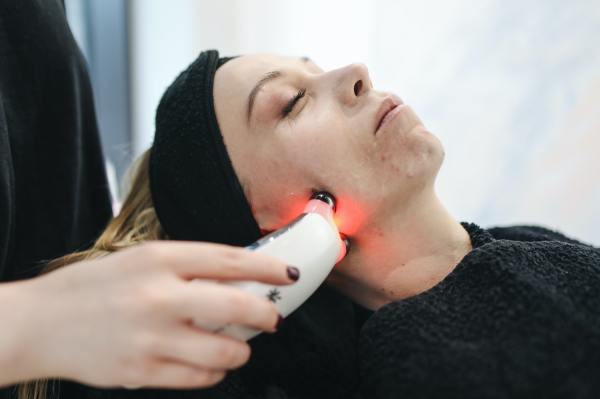
Laser treatment done on a lady as a procedure for a therapy.

The lasers have been so widespread that we see it for hair removal, too, where the hair follicles get treated. The laser is also found in your laptop or your computer if it has an optical disc drive. The data on the disc read by using a laser when it falls on the lands and pits present on the surface to convert them into electrical signal sequences. The laser has been extensively used in the field of defense too. There are handheld laser pointers available, but make sure that it is legal in your country to own one or may land up into jail. Be careful with laser pointers and use them effectively if you own one of them.

Renewable sources- Future of India

Imagine waking up one day, without any natural non-renewable resources left on this earth, how will it feel? Certainly, in a sense, we will be half dead.

Without any resources,without any foundation to support livelihood on this earth, survival of the humans is equal to null. The reason for which its important today to utilize the natural resources in such a manner that it becomes a boon for the generations to come. Provision of renewable resources by the nature itself, is a remedy for the same.

In case of a country, like, India, its a icing on the cake, surrounded by water on all the three sides, bestowed with a range of seasons in the country, the location on the world map is quite advantageous for India. The presence of oceanic water and large number of rivers in the country, is a significant edge in providing with hydroelectric power to the country;along with blowing winds, at the time of autumn and winter, that is a great opportunity to grasp the use of wind energy, in performing various tasks;also, the hot summer season, when sun is at the peak, is probably best suitable in providing the solar energy to the country, that directly comes from the nature, without harming any livelihood.

Renewable sources of energy –

  • Water resources –

Water, one of the basic necessities of any humans’ life, is considered as a renewable material when carefully controlled usage and treatment is followed. If it not, it would become a non-renewable resource at the location. Hydroelectricity, is generated from the fast flowing water, which becomes a renewable source. In India, projects like, Bhakra Nagal, Damodar Valley corporation, the Kopili Hydel project, are currently in working, but a lot more can be produced using Tidal waves, which is currently in not a much use, as it could be.

  • Solar Energy

India being a tropical country, has enormous possibilities of tapping solar energy. Photovoltaic technology converts sunlight directly into electricity. Today, the solar energy is used mostly by the people living in remote and rural areas, which contributes to environmental conservation and adequate supply of manure in agriculture. The largest solar power plant of India is located at Madhapur, near Bhuj, here solar energy is used to sterlise milk cans.

  • Wind Power

India stands as a wind super power in the world. In most of the states in the country, such as, Tamil Nadu, Andhra Pradesh, Karnataka, Gujarat, Kerala, Rajasthan, and even Lakshadweep, have the largest wind farm cluster which are well known for effective use of wind energy in the country.

The above stated are the major sources of renewable energy, apart from these, Biogas, and Geothermal energy, are major renewable sources that are helpful in generating mass energy, as well as electricity. Being a progressive country, India is heading towards the development of these resources that can help control the exploitation of other natural non-renewable resources.

Where are we lagging?

Despite having the largest availability of natural renewable sources of energy, India is producing less than what its capacity enables it to. Every state of the country has some or the other resource accumulated within it. But, due to –

  • Lack of technology
  • Lack of human approach to the resources
  • Lack of precise knowledge of resources
  • Lack of interest of financial institutions to fund projects
  • Safe guard duty on imported solar panels
  • Ambiguity over goods and services tax on solar equipment
  • Low investor sentiment due to delay by discoms to clean energy developers

It has become difficult to use them, also, the presence of other natural resources that are in use, currently, people are not inclined towards using these renewable energy resources.

Plans and programs –

India’s installed capacity touched around 86GW by November end. This includes solar, wind, small hydro, biomass, waste to energy and others. Around 30GW renewable capacity including 18GW solar and 10GW wind energy is under implementation. Besides, around 40GW including 36GW solar and 3.4GW wind energy, is being tendered.

https://m.economictimes.com/industry/energy/power/india-set-to-cross-100gw-renewable-energy-capacity-mark-in-2020/articleshow/72977561.cms

Schemes such as, PM-KUSUM, SPDA, PRAAPTI, have helped the private sectors to pull up their socks and work in the director that would make the country self reliant, or Atam nirbhar. The future certainly depends on these energy resources, bringing a new stream of development into the country.

Prevention from depletion of natural resources from the earth is a step ahead, by installing the new type of techniques for the development of human race.

https://en.m.wikipedia.org/wiki/Renewable_energy_in_India

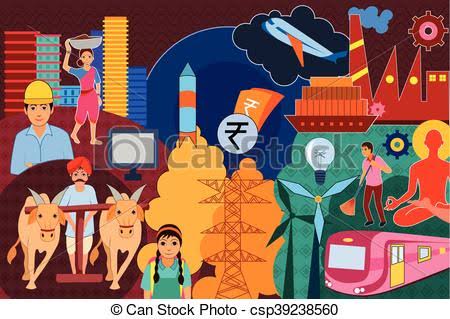
The Changes After 1991 In India

Today India is one of the most powerful nations in the world. Our progress in education, science-technology, business, economy, the defense system is really noticeable. India is always a unique country but India also passed many tough situations, this achievement comes after so many hardships, struggles, and fights.before 1991 the political situation in India is unstable, after 1991 certain changes in the Indian economy, science-technology held to be very important In the history of India.

Indian Economy: we wanted to establish an Economy based on social justice through planning for a National planning commission was established that would coordinate development through the policy of the Five Year Plan. The government started Economic Reforms are called as Economic Liberalisation. The foreign Invest In India increased, the field of information technology opened several avenues of employment in the country . Liberalization, Privatizati, and Globalization, India under its New Economic Policy approached International Banks for development of the country. These agencies asked Indian Government to open its restrictions on trade done by the private sector and between India and other countries.

Science and Technology: The experiment in the co-operative dairy movement By Dr.Verghese Kurien led to increase in milk production in India. This is called as White Revolution. Dr.Homi J.bhaba laid the foundation of the Indian atomic Power Programme. India insisted on using atomic energy for peaceful purposes like generation of electricity, pharmaceuticals and defense.

Change In Social Field: changes related to the women empowerment movement and other related to the policies regarding the uplift of deprived sections of the society

The force of nostalgia is strong with the remakes

It seems that video game companies are giving us more reasons to stay indoors and stay safe by rebooting/remastering or even completely remaking our favorite video games. Remember the times, when you used to live out your gangster fantasies in Mafia or Saints Row, or run from the Nemesis of Resident Evil 3? Well, get ready to that all over again in your sweet new 4k monitors.

Resident Evil 2 review – genre-defining horror, loaded with dread ...
Resident Evil 2 Remake

The trend of remakes took off in 2019 with the Resident Evil 2 remake, which was a complete overhaul of the 1998 version and the entire game was redone in a new engine from scratch. It received positive reviews from both fans and critics and became one the bestselling games of 2019. Continuing the trend, 2020 has turned out to be the year of video game remakes. Games like Resident Evil 3 and Final Fantasy VII are re-made on completely new engines and been given a full makeover. While resident evil 3 received mostly positive reviews, Final Fantasy VII broke sales record. Activision followed suit with the release of Call of Duty: Modern Warfare 2 remaster.

2K and Activision also announced the release of Mafia trilogy with Mafia: The City of Lost Heaven getting a complete makeover and Mafia II getting an HD remaster. People are now eagerly waiting for the remade Mafia (2002), one of the best video games in history. Not only that, Saints Row 3 remaster was released by Deep Silver games on 22th May and has been received well. Fans of Tony Hawk Pro skater can also rejoice as the games being remade with better graphics and a complete new look. The gameplay demo looked amazing and looks like we’re are getting another record braking remake.

2K formally unveils Mafia 1 remake, details Mafia: Trilogy bundle ...
Mafia Remaster

In a year of big AAA releases like Doom Eternal, Cyberpunk 2077, Ghost of Tsushima etc it feels amazing to find out that people are still excited to play these older classics. Apart from that it reintroduces these games to an entire new generation of gamers. Of Course, the video game companies are quite happy to cash in on the nostalgia factor associated with these classic games. Why take the risk of creating something new when they can milk money out of older IP’s. Old is literally gold for them.

When NASA found the first ever ‘Ultrahot Neptune’

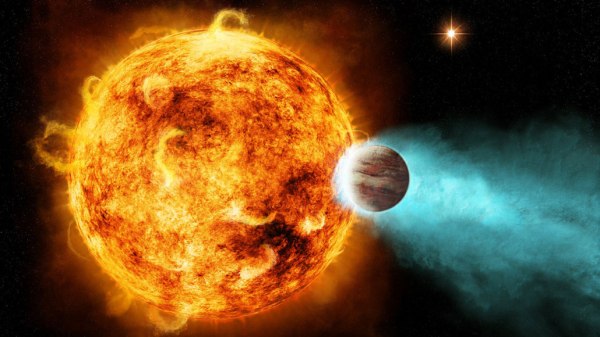
LOSING MY ATMOSPHERE  Astronomers think “hot Jupiter” exoplanets could lose their atmospheres as they draw close to their stars (as shown in this illustration), leaving scorched rocky worlds. The TESS telescope may have caught this transition in the act.

 Astronomers have spotted a new kind of planet: a Neptune-sized world sitting scorchingly close to its star. 

Astronomers have found a very hot planet, has the same size as that of a Planet Neptune.

It could be in the midst of transforming from a hot, puffy gas giant to a naked rocky core, astronomer James Jenkins reported July 29, 2019 at the TESS Science Conference at MIT.

“This planet is amazing. It’s the first of its kind,” says astronomer Elisabeth Adams of the Planetary Science Institute, who is based in Somerville, Mass. Adams studies larger planets that orbit close to their stars but weren’t involved in the discovery.

The planet is named LTT 9779b, orbits a star which is similar to our sun, and it’s about 260 light-years away. It was discovered by NASA’s Transiting Exoplanet Survey Satellite or TESS. The Satellite was launched in April 2018. 

Data collected by TESS show that the planet swings around its star once every 19 hours, putting it in a rare class of planets that orbit incredibly close to their stars.

Most other planets with such close orbits are either Earth-sized or Jupiter-sized and larger, said Jenkins, of the University of Chile in Santiago. But LTT 9779b is 4.6 times Earth’s size and 29.3 times Earth’s mass, placing it right in the middle of those extremes. Its proximity to its star should heat it to about 2000 kelvins (about 1725° Celsius), making it the first known ultrahot Neptune, Jenkins said.

One explanation for how close-in planets get cozy with their stars is that the worlds (Planets) form farther away and migrate closer over time. A planet that had a thick, gaseous atmosphere might lose more and more of that gas the closer it comes to its star, as the heat evaporates the atmosphere or the star’s gravity steals the gas away.

At about 2.5 million kilometers from its star, LTT 9779b may be about the closest a planet can physically get before the star gobbles up all of the atmospheres. If so, it could be a bridge between exoplanets called hot Jupiters, which are gas giants like Jupiter but have many closer-in orbits, and smaller, scorched rocky worlds, Jenkins suggested. The new planet is much smaller than a hot Jupiter, but still has a thick atmosphere that makes up about 9 percent of its mass, he said. 

The next step is to measure how quickly LTT 9779b is losing mass, Adams says. If it’s rapid, that could explain why no other ultrahot Neptunes have been discovered: They shift from gas giant to rocky core too quickly. Finding one mid-transition may have been a stroke of luck.

COVAXIN

What is Covaxin?

It has been developed by the company Bharat Biotech India (BBIL) in collaboration with ICMR’s National Institute of Virology (NIV). It is an “inactivated” vaccine — one made by using particles of the Covid-19 virus that were killed, making them unable to infect or replicate. Injecting particular doses of these particles serves to build immunity by helping the body create antibodies against the dead virus, according to BBIL.

News about Covaxin

Earlier this week, Bharat Biotech announced that it had developed a vaccine against the novel coronavirus, named Covaxin, together with the Indian Council of Medical Research (ICMR) and the National Institute of Virology (NIV), Pune. The company had also received permission from the Drug Controller General of India (DCGI) to begin human trials, expected to commence in August.

Bharat Biotech is a reputed drug manufacturer that delivers four billion doses around the world for infections like rotavirus, hepatitis, Zika, Japanese encephalitis and others. However, its claim that Covaxin is indigenous – advanced, among others, by managing director Krishna Ella – raises some doubts.

According to Bharat Biotech, Covaxin is an inactivated vaccine developed from an Indian strain of the novel coronavirus isolated by NIV. No further information has been provided, especially about the nature of the vaccine or how it was developed. There have been no prior announcements either about when the process of developing such a vaccine was begun.

ICMR transferred the strain NIV had isolated to Biotech Bharat on May 9. The company published its press release on June 29. So there were only 50 days in between, during which time the company should have developed the inactivated vaccine, conducted preclinical animal trials (with mice and hamsters, according to the company), and sent its reports to be evaluated and approved by DCGI. Although ICMR had promised to expedite the process, animal trials with mice typically take at least three months to conclude.

A related issue is that animal trials for COVID-19 can only be conducted with hACE2 transgenic mice, as ‘normal’ mice can’t get infected with the novel coronavirus. These mice need to be shipped from the US, Europe or China.

These issues therefore raise concerns about whether Bharat Biotech could really have proceeded to the human-trials phase of vaccine development within only 50 days of receiving the inactivated virus from NIV.

Collaboration with US company

Bharat Biotech has currently invested in two other vaccines: CoroFlu in collaboration with FluGen Inc. and the University of Wisconsin-Madison, and an inactivated rabies vaccine vehicle for coronavirus proteins developed along with Matthis Schnell, director of the Jefferson Vaccine Centre (JVC), Pennsylvania. The latter is of interest.

On May 20, Bharat Biotech announced its collaboration with JVC as well as the license it had received to conduct clinical trials, and to produce and deliver vaccines in 80 countries excluding the US, Europe and Japan. On April 7, JVC announced a promising vaccine candidate named Coravax.

Coravax uses an inactivated rabies vaccine to carry the spike protein of the novel coronavirus. The spike protein attaches to a host cell and causes an infection, so experts expected this vaccine to trigger a good immune response on the body’s part. Schnell corroborated this response following preliminary tests with animals. Schnell added that JVC would need one more month to complete follow-up studies.

Bharat Biotech hasn’t shared any technical details of Covaxin. But based on what we already know, there appears to be room for the possibility that Covaxin is Coravax by another name – and by another viral strain. And even if the vaccine is wholly indigenous, the timelines for the animal trials don’t line up.

When does ICMR plan to launch it?

Aiming to make it available for public use by August 15, Bhargava wrote to the 12 trial sites to ensure “all” clinical trials were conducted by then. While BBIL’s application with the Clinical Trials Registry of India (CTRI) shows it plans to complete enrolment of trial participants by July 13, Bhargava has directed the sites to complete enrolment by July 7.

Is this even achievable?

A vaccine usually goes through three phases of human trials. The Central Drugs Standard Control Organization has given approvals for phase I and II trials so far. According to details from CTRI, BBIL in its application estimated phase I and II trials to take a year and three months, including at least a month for phase I alone.

Experts have questioned how all three phases can be concluded within a month and a half. “I would find it very surprising if it is done. Even the most ambitious companies in the world that are in more advanced stages of development for their Covid-19 vaccines have a longer time-frame. Even having all the trial results, with safety and efficacy data, by August 15 is difficult. This raises several questions,” said Dr Anant Bhan, Researcher, Global Health, Bioethics and Health Policy.

While vaccine trials can be fast-tracked, it still takes over a year to launch the product, experts said. In a pandemic, emergency-use approval can be given if data from the first two trial phases is compelling enough, said an expert on condition of anonymity. This would allow the launch without the third phase being conducted, but this approval would likely be given with riders to submit additional data and adverse event reports.