From Ocean to Space: Women empowers the World

A person who undoubtedly serves forever is nonetheless a woman who gives spark to a new life, raises, and even works for the betterment of the society. The journey right from a child as a girl grows up to be a mother in the future becomes one of your grandparents and looks after you endlessly. Still, there are several voices raised to support and nourish them; women don’t get equal rights and freedom, fighting for so many decades, and it goes on. What we should be proud of is that a woman has nearly conquered everything in their life. Maybe being the first lady to break some of the achievements, as a leader ruling the nation, and doing every possible job what a man can do. Beyond may it be in the business sector or to the advanced fields of research, and they’ve made their existence, including the space industry.

Let me introduce to one of the famous NASA astronauts, Kathryn D. Sullivan. Aged 68, a geologist born in Paterson, New Jersey. In 1973, she pursued her B.Sc. degree for Earth Sciences at the University of California. Furthermore, she achieved her PhD degree in Geology from Dalhousie University in 1973. She served her career as an oceanography officer for the US Naval Reserve in 1988 till 2006 ended up with the captain’s rank. Before that, she was a part of the first astronaut groups to include women for NASA in 1978 who flew for three space missions and left in 1993. She was also a chief scientist for NOAA in the US.
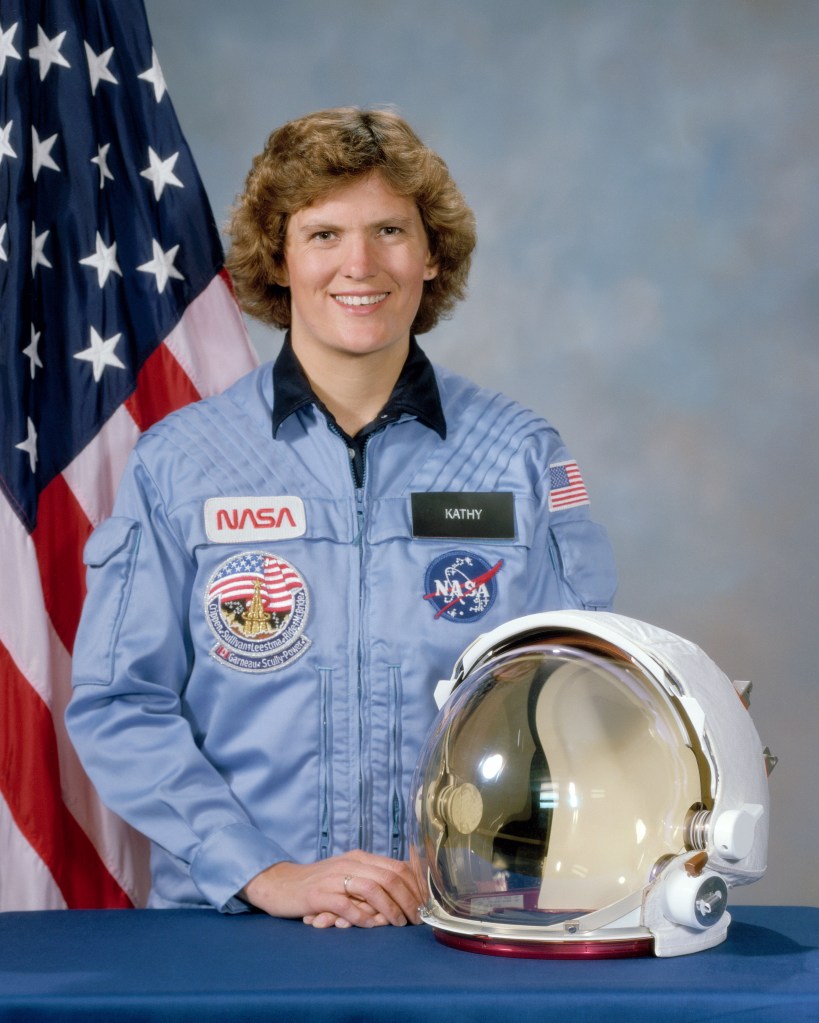
Kathryn Sullivan at NASA
Kathryn D. Sullivan in her astronaut uniform at NASA

She has achieved several great achievements, noteworthy to mention that in 1984, she and the mission specialists performed a 3.5-hour spacewalk in which they operated a system designed to demonstrate that a satellite can refuel while in orbit. On 8th June, World Ocean Day in this year 2020, she went on the mission to the Challenger Deep, one of the deepest points known. She is now the first woman to travel deep in the ocean as well as to space.

She also received several awards recognizing her contributions like the Gold Medal of the Society of Woman Geographers in 1993. In 2004, she made herself appear in the Astronaut Hall of Fame and was on Time 100 list in 2014. In 2019, she released a book “Handprints on Hubble: An Astronaut’s Story of Invention,” sharing her experiences on Hubble Telescope, the largest infrared telescope in space. You can read more about her from official NASA site mentioned below:

https://www.nasa.gov/sites/default/files/atoms/files/sullivan_kathryn.pdf

A woman looking out from a window
A woman is sitting on the window and glancing outwards.

There are many more women in the past as well as in the future to endorse. It will be an endless list. You can set them as your role model and move towards success in your life. Men have equally contributed to society, but women have been slowly growing up and are at the same pace as the men outperform in their field. Now they’re on the news, and we should appreciate them. Another woman, mountaineer by profession, Vanessa O’Brien, is inspired by Kathryn mentioned above, she can be second women to the Challenger Deep. So, take inspiration and keep inspiring others too.

13 REASONS WHY! Ever wondered about the mystery behind some common Hindu traditions? Here’s what science has to say!

1) Tilak on forehead

The  circularspot between the eyebrows  is viewed as a significant nerve point in the human body. A tilak is accepted to forestall the loss of vitality, and hold this to control different degrees of focus. In addition, the demonstration of applying this guarantees the focuses on the mid-temple area and Adnya-chakra are squeezed, encouraging blood gracefully to the facial muscles and ensuring the natural glow.

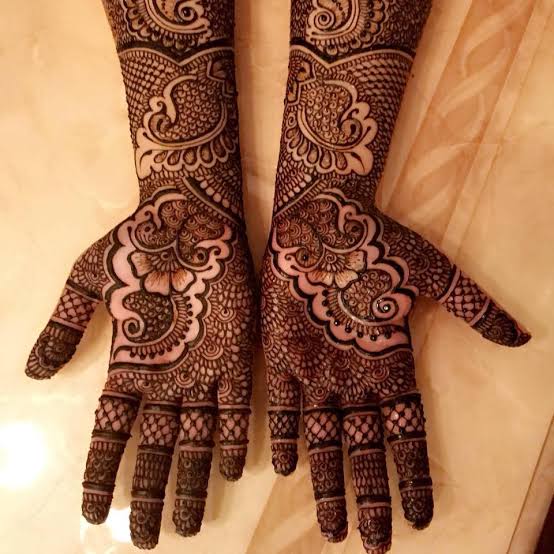
2) Mehendi on palms

Mehendi is an incredible therapeutic herb, and its application on our palms and feet can pre-empt worry and nervousness during weddings, something which is really common in the first-time brides. Moreover, it cools the body and shields the nerves from being tensed.

3) Namaste (Pranaam)

There is a logical purpose for the ‘Namaskar’ in Hindu culture. Joining two hands together guarantees contacting the tips of the considerable number of fingers together, which are connected to pressure focuses in the eyes, ears, and brain. Squeezing them together is said to actuate these, helping us recollect that individual moment for quite a while.

4) Ringing bells in the temples

Devotees strike the temple bells upon entering as its sound is said to clear our brain and assist us with remaining sharp, keeping our full fixation on dedication towards the almighty. Besides, these bells are made so that the sound they produce makes solidarity in the left and right pieces of our cerebrums. The term of the chime reverberation is perfect to enact all the seven recuperating focuses in our body, freeing us from antagonism.

5) Wearing bangles

Bangles cause steady grinding with the wrist which builds the blood flow level. Further more, the power dropping through external skin is again returned to one’s own body in light of the ring molded bangles.

6) Toe rings (bichhiya)

Indian ladies regularly wear toe rings on the subsequent toe. A specific nerve from this associates the uterus and goes to heart. Along these nerve-endings, a toe ring on this toe reinforces the uterus, keeping it solid by directing the blood stream to it. Besides, a lady’s menstrual cycle is supposed to be regularized.

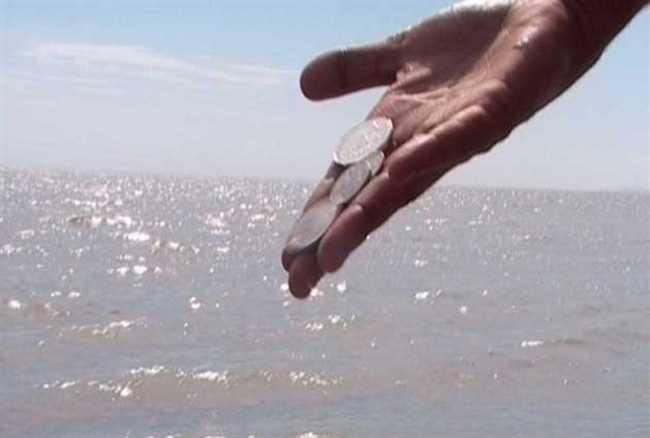
7) Tossing coins away in a holy stream or river

Verifiably, most money in the ancient period, was made of copper, an essential metal for the human body. Throwing coins in a holy water body was an approach to allow adequate copper, as a major constituent of water, to be consumed by us. As wells, drawing in water from these rivers were the main sources of drinking water.

8) Piercing of the ears

Indian doctors and scholars have acknowledged that piercing ears helps in the advancement of mind, intensity of reasoning and dynamic resources. This is the scientific reason behind most of the indian ladies piercing their ears while also serving the purpose for jewellery.

9) Not laying down with your head pointing north

The human body has its own magnetic field, while the Earth, as we all know, is a mammoth magnet. At the point when you lay down with your head pointing north, your body’s attractive field gets hilter-kilter to the Earth’s, causing issues identified with circulatory strain since your heart needs to work more diligently so as to defeat this.

10) Touching the feet of elders (Charan Sparsh)

At the point when you contact the feet of the old, their hearts discharge positive considerations and vitality, which they transmit through their hands and toes. Basically, the finished circuit empowers stream of vitality and increments grandiose vitality, turning on a soulful associate between two personalities and hearts. Your fingers and palms become the ‘receptor’ of vitality and the feet of the other individual become the ‘supplier’ of vitality.

11) Sindoor

Sindoor is set up by blending turmeric, lime and the metal mercury. Because of its inborn properties, mercury controls pulse and enacts oxytocin production. Along these lines, sindoor ought to be applied right upto the pituitary organ where every one of our sentiments are focused.

12) Idol Worship

Hinduism engenders idol venerate much more than any other religion does. This was started to expand focus during supplications or prayers. As per therapists, a man will shape his musings in accordance to what he sees.

13) Fasting on felicitous occasions

Ayurveda sees the fundamental reason for some infections as the amassing of poisonous materials in the stomach related framework. Ordinary purifying of poisonous materials keeps one sound. By fasting, the stomach related organs get rest and all body components are purified and rectified.

Amazon to stop use of it’s facial recognition software by cops

In a major policy shift for the company, Amazon is placing a one-year moratorium on use of it’s facial recognition software by the police . For years the company has been a fierce defender of the controversial software.

The company would suspend the use of this program for law enforcement to allow policymakers some room to establish system for regulation  that has been sparking controversy for years and shining an uncomfortable spotlight on Amazon’s cloud computing department. This step was taken in the wake of police violence and racism riots, after an cop killed George Floyd, an unarmed black man. In research, facial recognition technology has been found to often have trouble recognizing individuals with darker skin, recalling previous policy overreaching that infringed civil liberties for advocacy groups.

Amazon Web Services, the cloud computing group of the company, released Rekognition in 2016, a software service designed to identify objects in images and videos, including the ability to match a face with images in a database without taking the time to compare images manually.

Recognition isn’t the only software of this sort. Rivals from Amazon like Microsoft Corp., and Google have similar capabilities. But Amazon ‘s software became the focus of an intense debate about the potential for powerful, new software to undermine human rights after the American Civil Liberties Union called out the risks of misidentifying people with such software. The group highlighted the relationships between Amazon and a sheriff’s office in Oregon and Orlando City, two commitments that Amazon had made in marketing materials.

“We’ve advocated that governments should put in place stronger regulations to govern the ethical use of facial recognition technology, and in recent days, Congress appears ready to take on this challenge,” the company said. “We hope this one-year moratorium might give Congress enough time to implement appropriate rules, and we stand ready to help if requested.”said,Nina Lindsey, an Amazon spokeswoman.

The House and Senate Democrats included a provision in a sweeping police-reform bill introduced Monday that would block real-time facial recognition analysis of federal police body camera footage. Amazon said other organizations will continue to use the software, including those using facial recognition to fight human trafficking. Rekognition runs on Amazon servers, and is delivered as an internet service to customers, making it theoretically relatively easy for Amazon to suspend access for police users. How many law enforcement departments did use Rekognition remains unknown.In an interview for a PBS Frontline investigation that aired earlier this year, AWS chief Andy Jassy said he didn’t know the total number of police departments using Rekognition.

“It’s sort of the first, real, meaningful concession we’ve seen from Amazon allowing that use of facial recognition by police might not be good for communities” harmed by biased policing, said Shankar Narayan, who expressed concerns about Rekognition to Amazon officials while at the ACLU of Washington, which he left earlier this year. “The move shows that Amazon is vulnerable to public pressure and optics,” said Narayan, a co-founder MIRA, an organization working to give civil society groups a greater say in how new technologies are used.

Amazon, who has long been reluctant to bow to external pressure on public policy issues, claimed those studies did not accurately reflect its software capabilities. The corporation has said there have been no documented incidents of Rekognition’s harassment by law enforcement, but the ability by Amazon to monitor the use of the app is restricted by the security of AWS and regulations against consumer data analysis.

Following a January 2019 study by two AI researchers, pressure on Amazon stepped up , showing the software made more mistakes when used on people with darker skin, especially women. Amazon argued with the paper’s conclusions and methodology, authored by Inioluwa Deborah Raji and Joy Buolamwini, leading some of the top AI scientists, including Yoshua Bengio, the Turing Award winner, to criticize both Amazon’s sale of the product to police and its treatment of Raji and Buolamwini. The ACLU tested the software separately on Congress members and found it falsely matched 28 of them with mugshots, selecting minority lawmakers disproportionately.

“We believe it is the wrong approach to impose a ban on promising new technologies because they might be used by bad actors for nefarious purposes in the future,” Matt Wood, an executive in Amazon’s machine learning group, said in a 2018 blog post. “The world would be a very different place if we had restricted people from buying computers because it was possible to use that computer to do harm.”

Source:https://tech.hindustantimes.com/tech/news/amazon-to-pause-use-of-facial-recognition-software-by-cops-71591848562092.html

Capturing the moments through the digital eye

We as a human, we’re born as a social creature who likes to connect, befriend them and share memories. Earlier, we usually jot them down into personal diary. However, people still prefer to write in a journal, but in the age of digitalisation, blogging is on the verge. The blog has several media like images, videos, and noteworthy to mention, “the camera” through which they capture it. Almost every digital device like the smartphone, digital cameras, DSLRs used for capturing moments and sharing them with friends, relatives and acquaintances. Even the cameras used for security purposes like home security, theft detection etc. We also heard about thermal imaging camera, IR camera used for scientific purposes, also by photographers for night scenes while filming a documentary or a show.

A girl with a camera.
A girl capturing an image through a camera

Why do we need a camera when we have eyes to see it? The camera can be a boon or bane, useful for creating history so that people can know more about us in the future generations, can work as a piece of prime evidence for and save lives. The camera can be bad for several reasons like privacy invasions, clicking pictures without permission. Many institutions, hospitals don’t allow to capture images/videos, and it’s a quite controversial and debatable topic. The camera supports us to visualise the scenes even after a decade or more, and when we look back at them, we can still feel the positive vibes.

An old camera on a desk.
A Black and Silver Film Camera

Every invention has an origin, the portable camera was first invented by Johann Zahn in 1685, although in 1814, Joseph Nicephore Niepce took eight hours to click the first photograph. Before many more camera like instruments has come into the picture, most of them were merely able to screen the image, even pinhole camera is one of the discoveries such made. Now, we can share it in digital format, make a fabulous endzone video, and apply filters where AI has played a significant role. We share the images and showcase our memories on social media, through emails and also physical printed with photo frame. Earlier, the old technologies used photographic plate or on the film, now due to advancement in science and technology, we use the electronic image sensor. You may have heard the term CMOS sensor, a semiconductor device used in imaging after the 1960s before that CCD image sensor as seen in earlier digital cameras.

We know a lot about its history, let’s see how the digital camera works. There are several patents, and you can see one of them below:

https://patents.google.com/patent/US4131919

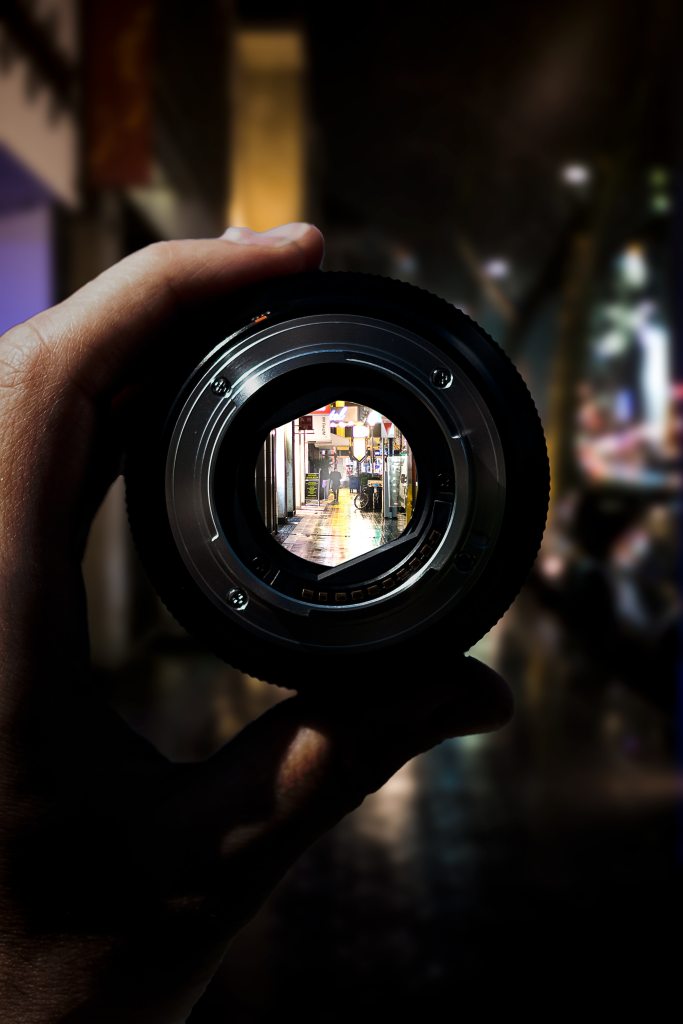
Camera lens now is the key to imaging which helps to take images in milliseconds. In simple terms, most of the light around the lens is captured and focused on a single point resulting in a sharp image. Further, conversion into a digitised format takes place. There are numerous processes involved in a single shot of image captured. We can zoom in by moving the lens far from the camera sensor. The focal length is one of the key terms associated with the zooming. You may have seen DSLRs depicting the focal length of the lens, focal aperture. These are some of the few words in the world of photography.

A night shot for a camera lens.
A person holding a camera lens

Researchers from the Chalmers University of Technology in Sweden have devised a technology for ‘metasurfaces’, an artificial material with lots of interacting nanoparticles that can control light. They are working on this as the technology of the camera lens hasn’t changed for an extended period. You can read the publication mentioned below:

https://pubs.acs.org/doi/10.1021/acsphotonics.9b01809

Photography has a separate fanbase. Almost everyone loves capturing moments, maybe the happiest moment when you made your first steps or perhaps where you got grand success. The digital era keeps on growing and always kept us astonished.

Johnson & Johnson to start human trails for covid-19 vaccine in july

Johnson & Johnson has decided to move up it’s clinical trials by two months, from September to July, says the company as the pharmaceutical giant , like many others expects to be the first, in the race of creating ‘the’ vaccine,i.e COVID -19 vaccine.

The speeding up of the process will allow J&J to participate in the U.S. government’s proposed major clinical trials project which targets to provide an successful vaccine by the end of the year. In March, J&J signed agreements with the U.S. government to build adequate production resources to manufacture more than 1 billion doses of its vaccine by 2021, even before it has confirmation that the vaccine will be effective.

There are currently no recognized medications or vaccines approved for the virus in the USA. A vaccination is seen as necessary to end the pandemic that has affected more than 7.2 million people and killed more than 412,000 people across the globe and has also had an adverse affect on the several economies around the world .

“Based on the strength of the pre-clinical data we have seen so far and interactions with the regulatory authorities, we have been able to further accelerate the clinical development,”Chief Scientific Officer Paul Stoffels of J&J said in a statement on Wednesday.

The trails by J&J will test the vaccine for safe operation and early signs of effectiveness in 1,045 healthy volunteers aged 18 to 55, and in those aged 65 and older. The trial will take place in the United States and Belgium.

The firm is also in discussions with the National Institutes of Allergy and Infectious Diseases (NIAID) to begin bigger, late-stage studies before time, based on early research outcomes and regulatory clearance.

The United States plans to study a number of participants for the coronavirus vaccine in studies that would involve up to 30,000 people and get a potency result as soon as possible.  Health Chief of National Institutes Dr Francis Collins said.

Stoffels said last week that J&J hopes to have results of its vaccine efficacy trials in the first quarter of 2021. He added that the company is “working hard to bring it back to the end of the year.” A lot will depend on how much virus is circulating at that time, he said.

The company plans to test the vaccine in high-transmission regions within the United States. If the incidence is low, “we will complement that with international sites to make sure that we reach enough endpoints quickly to prove the vaccine works,” Stoffels said.

Moderna Inc, which is working in close partnership with NIAID, has started testing its vaccine candidate in a 600-subject mid-stage trial. The company expects to begin late-stage trials in July.

Moderna’s vaccine uses messenger RNA technology, an approach that has yet to produce any approved vaccines. J&J is utilizing the same technology used to make its Ebola vaccine, which won European regulatory approval late last month.

The trick with developing a vaccine is that it has to be widely tested and developed in a format that is effective on everyone and thus, can be mass-produced , so that the vaccine is profitable for the company manufacturing it too.

There are about 10 coronavirus vaccines in human testing. Experts have said a safe and effective vaccine could take at least 12 to 18 months from the start of development, which would shave several years off the typical vaccine development timeline.

Source:https://www.reuters.com/article/us-health-coronavirus-johnson-johnson/jj-to-begin-human-trials-of-covid-19-vaccine-in-second-half-of-july-idUSKBN23H24F?utm_campaign=fullarticle&utm_medium=referral&utm_source=inshorts

Alternative technology for a climate change resilient India

If you can’t see the stars blinking in the night sky, it does not mean they have disappeared. They are there just behind the blanket of clouds, you need to discover them.

The world is stringing hard to contain the climate change. Every country,every international organization is trying their levels best to create awareness of the rising hues and cries regarding climate of the earth. International organizations like UN come up with programs like UNFF, 1.5° C reports, several conversations like Paris, Geneva, Kyoto, protocol etc. Among all these efforts at International level, individual countries to are trying at national levels in order to curb this menace of climate change.
India, not behind in any of the major International alliances on climate change has also pledged to keep pace with World order to combat the rising problems of the nation and the world at large. But, what is climate change and how is it affecting the world and particularly in India? The answer to the question lies in the virtues of mother earth of balancing the heat and other atmospheric phenomenon around the world. Climate change is a process of change (rise) of the average temperature of the world. This change is a result of combination of natural and anthropogenic processes.
The rise of temperatures at the Arctic Ocean is particularly alarming. As a result India won’t be untouched from this major change. Being a major developing country, India is also putting it’s efforts in this direction. The largest economies of the world, depend highly on polluting sources of energy like, crude oil, coal. The emissions from these sources are not only polluting but they remain stranded in the atmosphere for millions of years.
The country is a proud owner of multiple Physiography leading to different sources of energies other than the conventional ones mentioned above. The states of Western and southern India are rich resources of solar energy, one of the most crucial sources of Renewable energy. Giving a boost to solar energy in these states will assure India of energy security as it is a very cheap and reliable source of energy for India. The government has striked the iron hot by initiating programs like International Solar Alliance, PM -KUSUM, cheap loans to households for planting solar panels, etc.

The other major renewable source of energy is wind energy and hydro energy. The vast coastal areas of India provide it with yet another gift of non- polluting form of energy generation can be a milestone in harnessing global warming and Thus climate change. One of the most significant amount of pollution is seen due to vehicles. The mega cities of the country are ranked one of the worst in traffic on roads. Owing to large traffic, these vehicles majorly release sulphur contents, PM 2.5, PM -10, carbon monoxide, etc. in the environment. The government recently has set up rules in this context. It has come up with BS -VI norms of vehicles which in comparison to BS -IV norms release only sulphur content-10. Apart from this, there is also a reduction in PM 2.5 and PM 10 levels. Pertaining to increased pollution in Delhi especially during the times of Diwali celebrations, it is also caused due to-

  1. Burning of crops of paddy in the neighbouring states.
  2. Bursting of crackers in a huge amount

The government has setup air purifying towers in the city to overcome this problem. Along with this, the government has adopted for management of paddy residue by converting it into a fuel which will be less polluting. And for the problem of crackers CSIR has come up with green crackers instead of the crackers which were used earlier.

Other sources which are creating obstacles in containing climate change are the manufacturing units which use and also release gases like CFCs, HFCs etc. There is no denying to the fact that increased use of refrigerators and air conditioners has massively raised the levels of GHGs, like, CFCs, HFCs and HCFCs. Out of the obligations of International conventions India has successfully phased out use of CFCs is determined to phase out HFCs by 2020.

There is no doubt that achieving the goals of climate change resilient technologies is very challenging in a developing country like India, where full literacy is still a dream far to achieve. But the very truth of India having the potential to convert it’s massive demographic dividend and resource rich geography is also not deniable. Not only the government, but also the people at individual levels have to strive in achieving a climate on their very own earth which could be worth living and not only for them but the generations to come. The future is awaiting for the successful implementation of the policies of the government already made and the one’s to be made. New records of collaborations for example the one with Government of U. K to efficiently and resiliently ban the usage of ACs in every corporate and business etc. will enhance India’s capacity to conform with aims like 1.5° C and 2°C and combat climate change.

FERMI BUBBLES

What are Fermi Bubbles?

Fermi Bubbles are giant gamma ray structures emanating from the center of the Milky Way Galaxy, extending tens of thousands of light-years north and south of the galactic plane. They were discovered using the Fermi Gamma-ray Space Telescope during a survey for dark matter.  In 2010, gamma-ray observations by Fermi revealed previously unknown features in our galaxy that stretch halfway across the sky. Now called the Fermi Bubbles, these mysterious structures emerge above and below the center of our galaxy, spanning a total length of about 50,000 light-years.

The plane of our galaxy glows brightly in gamma rays, which result when high-energy particles called cosmic rays interact with gas and dust. The Fermi Bubbles emit higher-energy gamma rays than the rest of the galaxy’s disk.  The bubbles may be related to the release of vast amounts of energy emitted from the supermassive black hole at the center of our Milky Way galaxy. We know that in other galaxies, supermassive black holes that ingest large amounts of matter can power high-energy jets. It’s possible the Milky Way’s central black hole went through such a phase in the past, producing jets responsible for the Fermi Bubbles we see today.

What are Gamma Rays?

A gamma ray, or gamma radiation {\displaystyle \gamma }, is a penetrating electromagnetic radiation arising from the radioactive decay of atomic nuclei. It consists of the shortest wavelength electromagnetic waves and so imparts the highest photon energy.  Natural sources of gamma rays originating on Earth are mostly as a result of radioactive decay and secondary radiation from atmospheric interactions with cosmic ray particles. However, there are other rare natural sources, such as terrestrial gamma-ray flashes, which produce gamma rays from electron action upon the nucleus. Notable artificial sources of gamma rays include fission, such as that which occurs in nuclear reactors, and high energy physics experiments, such as neutral pion decay and nuclear fusion.

Gamma rays and X-rays are both electromagnetic radiation, and since they overlap in the electromagnetic spectrum, the terminology varies between scientific disciplines. A large fraction of astronomical gamma rays are screened by Earth’s atmosphere. Gamma rays are ionizing radiation and are thus biologically hazardous. Due to their high penetration power, they can damage bone marrow and internal organs. Unlike alpha and beta rays, they pass easily through the body and thus pose a formidable radiation protection challenge, requiring shielding made from dense materials such as lead or concrete.

Latest developments

  • For the first time, scientists have observed visible light from the Fermi bubbles, enormous blobs of gas that sandwich the plane of the Milky Way galaxy. The newly spotted glow was emitted by hydrogen gas that was electrically charged, or ionized, within the bubbles. Originally observed in 2010, the bubbles spew high-energy light known as gamma rays. The towering structures are thought to be relics of an ancient outburst of gas from the galaxy’s center. But scientists don’t know the source. The outflow could have been the result of the black hole at the center of the galaxy messily gobbling up matter, or emissions caused by bursts of stars forming. Within the bubbles, gas is expanding outward, its motion altering the apparent wavelength of its light. Material closer to the solar system is traveling toward it, appearing bluer and more distant gas is moving away, appearing redder.  The wavelength shift allowed the researchers to pinpoint the gas’s velocity at one location within the bubbles. Using the Wisconsin H-Alpha Mapper telescope, or WHAM, the researchers determined that the gas flowed outward at about 220 kilometers per second. The estimate agreed with an earlier measurement made using ultraviolet light. By taking measurements in other locations, the researchers hope to more fully map out the velocity of the gas.
  •  In 2010, astronomers working with the Fermi Gamma-ray Space Telescope announced the discovery of two giant blobs. These blobs were centered on the core of the Milky Way galaxy, but they extended above and below the plane of our galactic home. Their origins are still a mystery, but however they got there, they are emitting copious amounts of high-energy radiation.  More recently, the IceCube array in Antarctica has reported 10 super-duper-high-energy neutrinos sourced from the bubbles, leading some astrophysicists to speculate that some crazy subatomic interactions are afoot. Recently, a team of researchers pored through the available data, even adding results from the newly operational High Altitude Water Cherenkov detector and combined that information with various theoretical models for the Bubbles, searching for just the right combo.  In one possible scenario, protons inside the Bubbles occasionally slam into each other and produce pions, which are exotic particles that quickly decay into gamma rays. In another one, the flood of high-energy electrons in the Bubbles interacts with the ever-present radiation of the cosmic microwave background, boosting some lucky photons into the gamma regime. In a third, shock waves at the outer edges of the Bubbles use magnetic fields to drive local but lethargic particles to high velocities, which then begin emitting cosmic rays. But try as they might, the authors of this study couldn’t find any of the scenarios (or any combination of these scenarios) to fit all the data. In short, we still don’t know what drives the gamma ray emission from the Bubbles, whether the Bubbles also produce neutrinos, or what made the Bubbles in the first place.
  • A pair of gigantic gamma-ray bubbles centered on the core of the Milky Way galaxy was discovered by the Fermi Gamma-ray Space Telescope 10 years ago. But how these so-called “Fermi bubbles” arose was a mystery. Recently, however, researchers at the Shanghai Astronomical Observatory (SHAO) of the Chinese Academy of Sciences have presented a new model that, for the first time, simultaneously explains the origins of both the Fermi bubbles and the galactic center biconical X-ray structure, which was discovered in 2003. According to this model, the two structures are essentially the same phenomenon and was caused by the forward shock driven by a pair of jets emanating from Sagittarius A* (commonly called: Sgr A*) – the supermassive black hole lurking at the galactic center—about five million years ago. Although they cannot be seen with the naked eye, they are very bright in diffuse gamma-ray emissions. In gamma rays, the Fermi bubbles have very sharp edges and the edges coincide well with an X-ray structure called the galactic center biconical X-ray structure. Seeing the very similar edges of Fermi bubbles and the galactic center biconical X-ray structure, the SHAO researchers realized these structures might share the same origin. Furthermore, the biconical X-ray structure could be naturally explained by the shock-compressed thin shell of hot thermal gas driven by a past energy outburst from the galactic center. In previous theoretical models and computer simulations of the Fermi bubbles, two major competing energy sources were proposed, i.e., star formation at the galactic center and Sgr A*. However, in both models, the Fermi bubbles are explained as ‘ejecta’ bubbles, while the forward shock is always located much further away from the edge of the Fermi bubbles. In other words, these models could not explain the Fermi bubbles and the galactic center biconical X-ray structure simultaneously. In contrast, the theoretical model in this study, proposed by Guo Fulai and his graduate student Zhang Ruiyu from SHAO, used computer simulations to demonstrate for the first time that the Fermi bubbles and the galactic center biconical X-ray structure are the same phenomenon. In this model, the edge of the Fermi bubbles is the forward shock driven by a pair of jets emanating from Sgr A* about five million years ago. The age of the bubbles inferred in this study is also consistent with that derived from recent ultraviolet observations of some high velocity clouds along many sightlines towards the bubble region. The new model indicates that the total energy injected during the Fermi bubble event by the supermassive black hole is close to that released by about 20,000 supernovae. The total matter consumed by Sgr A* during this event is about 100 solar masses. Near the galactic center, the biconical X-ray structure has a very narrow base, while the forward shock produced by star formation or black hole winds can easily propagate to large distances, leading to a base much wider than observed. In contrast, collimated jets deposit most of the energy quickly to large distances along the jet direction, naturally leading to a narrow base for the shock front near the galactic plane.

Ring of Fire: Mystery of the dark sky

Solar eclipse captured by a professional photographer.
An image of a solar eclipse captured on a camera.

Nature has hundreds, thousands, and many more of underlying mysteries unsolved. It has left us astonished, including the researchers, scientists, and even us, while endorsing the creation of the beautiful environment around us. Let us decode the riddle all about the ring of fire. Ring of fire may confuse you with the area in the Pacific Ocean, but here it’s about the solar solstice.

This year, you will observe one of the rarest eclipses, the ring of fire. But what is the solar solstice, you might have come across this term while you’ve studied environmental science in your childhood. The word originated from the Old French solstice and from the Latin sōlstitium where sōl means the Sun and sistō refers to stand still. The solstice happens two times every year in June and December when the Sun arrives at its one of the unique positions in the sky as we can see from the North Pole or the South Pole. Solar Eclipse, on the other hand, refers to when the Moon is directly between the Sun and the planet Earth, which usually occurs twice in a year and can go up to 5 of them in a year occasionally.

The most significant thing is that how do you observe this spectacular event. During this occasion, wearing proper eye protection is a must, or else it can cause retinal burns. Even a slight revelation to this light can destroy cells in the retina: vision, one of the essential senses through which we can watch the world around us through the brain, you cannot risk to lose it. We can use a pinhole projector, which can be your next science-related DIY project, as one of the methods to observe it properly. There are other methods like telescope attached with solar filters, or you can even watch them online when the various astronomical organisations broadcast it around the world.

We always had a desire to look into the Sun directly in the sky and go blank for a while, unable to see things for the next few minutes. But this opportunity allows us to see the Sun in its most enthralling form. On June 21, 2020, the first solar eclipse in the year full of events like the recent pandemic, which affected everyone directly and indirectly. Now when Mother Earth has been recovering to its fullest, this will be one of the most awaited moments of the year to capture and create some positive memories. You can check the path of the eclipse on the official NASA site mentioned below.

https://eclipse.gsfc.nasa.gov/SEgoogle/SEgoogle2001/SE2020Jun21Agoogle.html

Eclipses have occurred several times throughout the history of humanity. There are several myths which leads to a reason that some of us take it in a positive manner or vice-versa. In the end, it teaches us the fact that there is always a way to light after every darkness, no matter how deep or bad memories do you go through, there is still a way to recover from it. In the 21st century, where science and technology are advancing day by day, but watching out nature’s fantasies, is what still keeps us connected to the field of astronomy, history, and beliefs and can be a motivational factor for the growth of a positive character within you.

world’s largest vaccine manufacturer invests usd 100 million to develop potential Covid-19 vaccine

According to a company official of , the world’s largest producer of vaccines, the Serum Institute of India , is planning to invest USD 100 million on a potential vaccine for COVID-19,  being developed at Oxford University. The organization established in Pune, has collaborated with AstraZeneca, a British bio-pharmaceutical corporation mammoth, to ensure a stable supply to India and other low- and middle-income countries of the AZD1222 vaccines.

“Our manufacturing facility is ready and we plan to start production in two months. We are spending more than USD 100 million for this facility. Till the trials are completed successfully for safety and efficacy, vaccines will not be distributed either in India or anywhere else in the world,” Adar Poonawalla, Chief Executive Officer, Serum Institute of India (SII), said.

With high hopes the company is planning to mass produce up to a million units, and is planning to stockpile the same at personal risk. According to the company when it comes to determine how many units India is likely to get in the first phase, they commented that it might be too early too comment. “However, if the vaccine trials succeed, India will gain access to the doses as it will also be the requirement of the Government of India. And we are certain that everybody will respect if the substantial volumes go to India,” he added.

According to their website, Serum Institute of India was founded in 1966 by Dr. Cyrus Poonawalla with the aim of manufacturing life-saving immuno-biologicals, which were in shortage in the country and imported at high prices. Thereafter, several life-saving biologicals were manufactured at prices affordable, and now is the world’s largest vaccine manufacturer by number of doses produced and sold globally (more than 1.5 billion doses) which includes Polio vaccine as well as Diphtheria, Tetanus, Pertussis, Hib, BCG, r-Hepatitis B, Measles, Mumps and Rubella vaccines. It is estimated that about 65% of the children in the world receive at least one vaccine manufactured by Serum Institute. Vaccines manufactured by the Serum Institute are accredited by the World Health Organization, Geneva and are being used in around 170 countries across the globe in their national immunization programs, saving millions of lives throughout the world.

Serum Institute of India is ranked as India’s No. 1 biotechnology company, manufacturing highly specialized life saving biologicals like vaccines using cutting edge genetic and cell based technologies, antisera and other medical specialties.

Serum Institute of India also has plans and is working on developing a vaccine with USA based firm Codagenix, Poonawalla recently said that at present, the firm is undergoing pre-clinical trials (animal trial phase) and hope to progress to the human trial phase by September/October.

“The aim is to make the vaccine over the next 1.5-2 years to help combat the novel corona-virus. With the combined efforts of our partner Codagenix, we are optimistic that we will be able to provide a viable and effective vaccine for mass use,” Adar Poonawalla, Chief Executive Officer, Serum Institute of India (SII), said.

SII along with Oxford and Codagenix is also working with an Austria-based firm, Themis and two other promising candidates to develop an effective and affordable vaccine for COVID-19.At least half a dozen attempts to build a coronavirus vaccine are underway worldwide but the ones in Oxford are considered one of the most assuring and promising ones.   A vaccine will be a much needed intervention that can bring the loss of lives caused by the infections, to a complete halt.

Source:https://economictimes.indiatimes.com/industry/healthcare/biotech/pharmaceuticals/serum-institute-investing-usd-100-million-on-potential-covid-19-vaccine/articleshow/76288408

THE E-WAY

Like an endless loop of strings, E-learning opens up multiple avenues for the students to choose from the comfort of their homes. Through E-Learning students in India can do varied courses offered by Harvard University ranging from a programming course such as CS50’s Introduction to Game Development to a social sciences course such as American Government: Constitutional Foundations.
Universities and their invaluable courses continents away can be accessed easily without the unnecessary hassle of the physical presence in the classroom.

E-Learning has brought varied courses around the globe in the comfort of one’s own house. E-learning has been successful in bridging the quality of education that one can access in the developing nations. It is a more economical and appeasing form of education in world crises such as the raging Covid-19 pandemic. It has ensured the unhindered transfer of knowledge when one is unable to be physically present in classrooms.  Schools and colleges have taken up E-Learning to ensure social distancing is not an issue they have to deal with so they can solely focus on the quality of education imparted to the students.

Despite its many perks, E-Learning also has its fair share of drawbacks. It is often difficult to cater to and overlook the progress of the students online which would have been a far easier prospect in the in-classroom mode of education. There are different challenges such as poor internet connectivity in the remote places and often the underprivileged do not have access to proper electronic devices. Some struggle with technology and thus are often unable to have a seamless E-Learning experience.

Though it is not without its fair share of challenges, E-Learning has been successful in the re-moulding the education system for the better. It is undoubtedly the mode of education for the future. It has been successful in providing affordable education to people in the different corners of the Earth. It has enabled some institutes to do without the physical infrastructure and additional costs that come along with maintaining physical classrooms.

There are several applications like Zoom, TeamLink, Google Meet, Duo etc which are being used by teachers and institutes to impart lessons to the students. The dangers of video lessons can be seen in the multiple instances of hacking and misuse of these applications. Data are stolen by hackers of the users of the application who misuse the data to their own fruition. The applications should be secured from hackers for seamless usage and to ensure that the users can operate it without any fear of their account being hacked.

E-Learning may, however, lead to a loss of jobs for a majority of people who used to assist in the seamless functioning of the brick and mortar classrooms. Publishing houses may suffer as learning moves online resulting in a sharp decline of hard copy textbooks. Publishing houses too shall have to adapt and move their publications online. Small publishing houses may fade away with time. The implementation of the proper 5G network would ensure an immersive learning experience. Physical libraries are slowly becoming defunct with even libraries uploading their content online. Information is available to Scholars very easily. Research has become easier than before. Some people have found it hard to cope up with the technological advancements while some have become unemployed with technology replacing manual labour. However, technology has changed the world for the better and made our lives easier. We should embrace technology as an inseparable part of our lives.