Covid-19 situation has turned the lives of students into home stay or quarantine. These are the most challenging times that we are living in. The spike in cases of corona has shut educational institutions to practice social distancing and stay indoors.
“Make this pandemic time productive for yourself”
However, this free time is precious for gaining many valuable activities which we do not get in normal days. Most of us must have tired of watching movies, shows etc. But there are plenty of things more than that-
Start a reading challenge-If you want to be a good writer or want to enhance your comprehension skills, do start reading articles, stories or whatever you like.
Learn a new language- Try to learn a new language of your internet which could help you to freely communicate with the people of that area.
Aim a fitness challenge- This is the time you can spend on your body. Do challenge to get regular habit of Yoga.
Create a collage- We have a collection of so many photos of childhood, events. This is the time to organize them in diaries, make collage. Remembering the good times will relieve any stress and anxiety.
Watch documentaries- Well we spend a lot of time on TV. You can expand your knowledge by watching documentaries on varying topics such as politics, famous heroes, etc.
Participate in webinars – Various types of webinars on social issues,skills- based are conducting in this pandemic time, do participate and express your views over the topics.
Play indoor-outdoor games- On regular basis, most of us do not get time for playing games. At this time, we can spend it on games which will also help for health of oneself.
Work on your hobbies-Spend time on your hobbies which we do not get in busy schedule.
Online Courses- There are various online courses to enhance your skills during lockdown. You can get guidance sitting at home for which you want.
Communicate with old friends- We are social beings we need to talk to people. In the time social media, try to interact with old friends and share your feelings, remember past memories.
Organize your notes- Students preparing for competitive exams, this is the high time for organizing notes and lecture notes.
Work for internships- Work from home internships are prevailing in this time. You can apply and work to shape your skills.
Learn to cook- Taking this time to learn how to cook will save you future expenditure, keep you healthy and even make you less homesick when you are in hostel.
All these things will engage your mind and will keep away from negative thoughts and feelings.Always try to innovate so to learn more and more new things. I hope you would have learnt so much from this article. Try it……
COVID-19 : Corona virus is believed to be originated from China’s Wuhan city has left the world in serious condition. Many countries are suffering with the spike of cases.
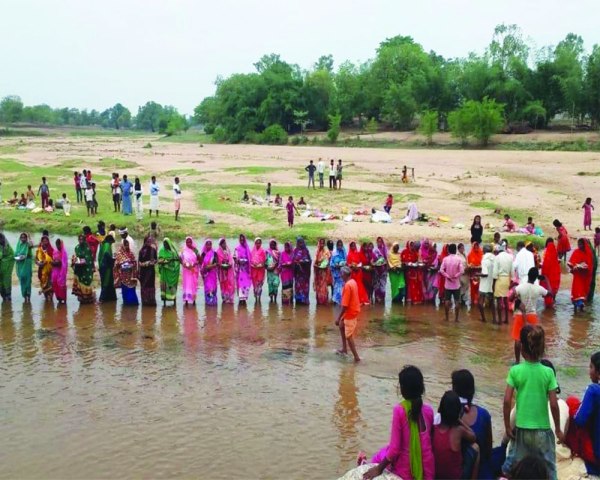
After India’s cases tally rises, parts of rural areas has started worshipping ‘Corona Devi’ . Suddenly corona virus converted into ‘corona devi ‘ Goddess in hope that this will protect them from covid-19 infection.
Corona Goddess is being worshiped in parts of Uttar Pradesh, Bihar, Jharkhand and Assam. In Uttar Pradesh, women in some villages in Kushinagar district and in many districts of Bihar, including Nalanda, Gopalganj, Saran, Muzaffarpur superstition run deep.
These women have dug a small pit in the field, filled it with water and each one offers nine cloves and nine ‘ladoos’ to ‘Corona Mai’ to appease her. Women from adjoining villages are flocking to the ‘temple’ to pray to ‘Corona Mai’. The women, though, are seen maintaining social distancing. Chants of “jai Corona mai” and “Corona mata ki jai” echoed in some open fields. A group of women took a dip in the Ganga and offered prayers at the river bank. Seven pits were made and after lighting incense, jaggery and sesame along with ‘ladoos’ and flowers were buried into the ground.
In many areas, the worship is also done by offering ‘poha’ to the ‘Corona Devi’.
According to the village in Dhanbad, women said that Corona Mai, who had come in dreams in the form of a cow and gradually turned into a lady saying that if people in India would start worshipping her, she will go from where she has come. Therefore, villagers performed puja here today to ward off corona virus from this country. Some said, viral videos and messages forced them to worship to get rid off corona.
Some local people have appealed to the district administration to stop such activities which spread superstition and misinformation and also such activities marks a spot for risk of pandemic.
Videos of women performing puja have gone viral on social media. Twitter flooded with #CoronaMai and in many villages of Bihar, women have resorted to worshipping what they call #CoronaDevi, a perceived angry goddess who shall turn benevolent if prayers are offered. People can’t believe that people have come up with such a superstition in the time when the entire world is fighting against the pandemic. While scientists and doctors are struggling to invent Corona virus vaccine.
Amid the lockdown, these kinds of superstitions, misinformation, viral material are very dangerous which creates negative awareness among people.
Corona-virus: During lockdown , Indian textile and apparel manufacturers have been facing difficult times as they have lost almost all their orders for the summer and faced huge losses in sale. But, as the lockdown rules are relaxed, huge consumption of masks are in demand. The virus that created problem also offered a lifevest to textile industries.Orders of masks are flooded and production process are in load to meet the demand of masks for the population. With manufacturers ramping up production of face masks since the outbreak of covid-19, India has turned into a surplus nation choking production lines.
“India, according to the association, has a production capacity of 1.5 billion three-layer masks and after accounting for domestic demand, the surplus capacity is 532.03 million”.
Wearing masks in corona began to be mandatory for prevention from corona virus that saw a spike in recent times in many parts of the country.Wearing mask is no longer just a safety accessory,but people use it as a fashion accessory. Due to this, many apparel companies have started producing masks according to public interest. The textile industry is gearing up and making variety of masks as people are increasingly becoming safety conscious. Fashion is the right industry to make masks.
“Suddenly this (mask manufacturing) has come as a great opportunity for the industry, as a different product line, at this moment of crisis,” Ram Bhatnagar, Vice President and Head – Sales,Raymond Ltd. said adding, “nobody could have ever imagined about this segment from a fashion perspective.”
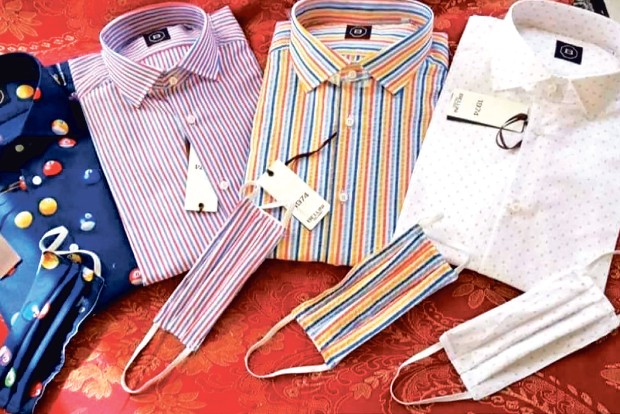
Textile industries are continuously on research to invent new forms of style in masks which would attract customers.This pandemic has brought out the innovative side of people.Mask made from different cloth,coloured or printed fabric are in demand. Masks are in demand according to workplace, events etc. Have a look to some of these-
Matchy- Matchy masks :
Indians are buying multiple masks for themselves and their loved ones, as masks are reusable. Fashion conscious peope are buying multiple masks with different colours to match their outfits. People who are working during the pandemic are using masks according to their dress matching.
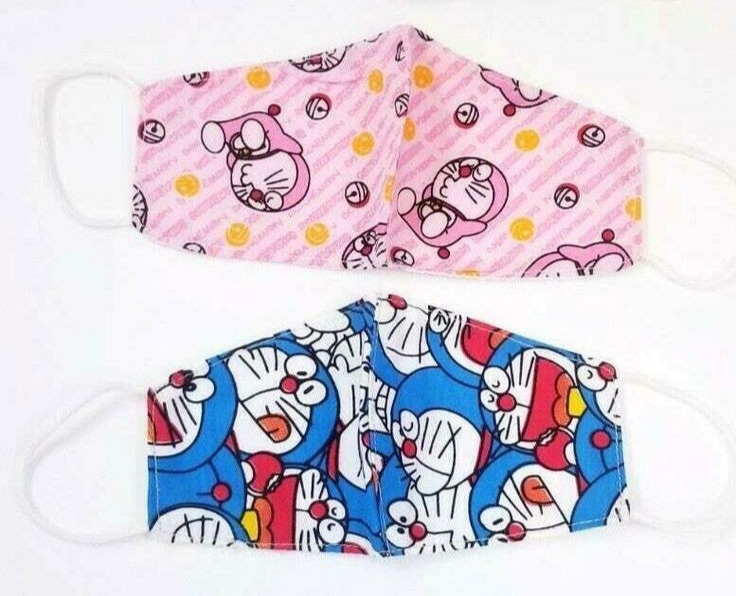
Children’s masks :
Textile industries are creative and designing attractive masks for kids. From cartoons to super-heroes, characters from sci-fi films,birds, animals and flowers to the range. Cheerful characters like dora, Chotta Bheem, Mickey Mouse and Donald Duck are in demand.
Face print masks :
This new surge in the demand for masks has led to people unleashing their creative best in the form of creating face printed masks. The mask is printed with the person’s face from nose to chin, which makes it easy to recognise despite wearing it. People are attracted towards their own face printed masks these days. The trend has become quite popular in other parts of the country too, with several other photo studios having started offering similar services.
Wedding masks :
Few Indian weddings have taken place during the lockdown and the bride and groom are seen wearing coloured, sparkling masks. The wedding wear market is also taking the trend seriously and a couple of clients have shown interest in custom-made face masks.
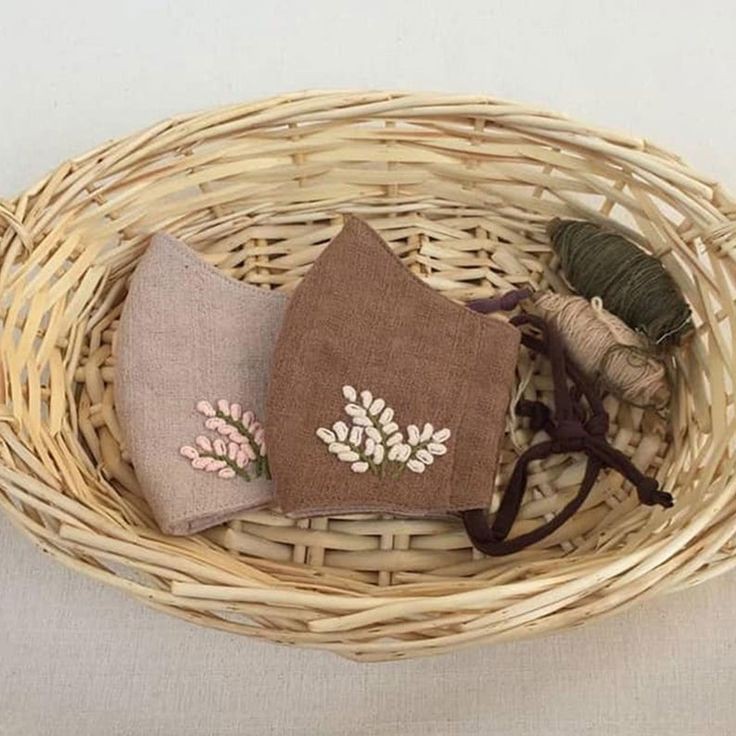
Organic cotton masks :
Organic material based masks are also in demand to promote ‘Swadeshi ‘.The fabrics used are pure cotton dyed in extracts of turmeric, neem, tulsi, red sandalwood and indigo.They are healthy and easy to breathe.
For now and post-covid world, masks are here to stay and so, designer masks. Perhaps, these masks is what may help people to get protected from coronavirus.So keep wearing face covers, masks or whatever you have. Stay safe, stay healthy….!!!!
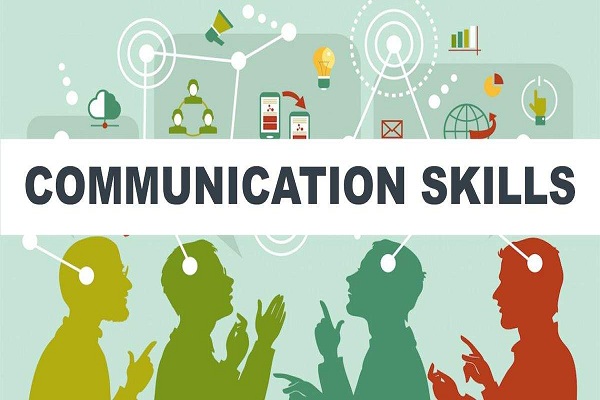
Communication is transferring information to produce greater understanding.Communication is the 2 way process between speaker and listener that is, message flow from speaker to listener and back to the speaker as feedback. Communication skills allow you to understand and be understood by others.Communication is important aspect for both personal relations and in career related work place.
It can be done vocally (through verbal exchanges), through written media (books, websites, and magazines), visually (using graphs charts, and maps) or non-verbally (body language, gestures, pitch of voice, and tone). All of these means of communication are essential skills that are vital for a successful career. Being able to communicate effectively is one of the most important life skills to learn. Communication skills involve listening, speaking, observing and empathising.
Importance of Communication skills in life and career-
Having strong communication skills aids in all aspects of life – from professional to personal life and everything that falls in between.Good communication skills are essential to allow others and yourself to understand information more accurately and quickly.
In contrast, poor communication skills lead to frequent misunderstanding and frustration.Communication is the foundation of any organisation. Whether it’s issuing simple instructions at work, sorting out a tricky situation with a subordinate, lifting flagging morale, working out a better way to meet productivity targets, briefing your team on customer feedback after a product launch, or as CEO, getting your employees to buy into your company’s vision – communication is the pivot of any business venture, from start-up to global corporation.Better communication increases relationship built-up among all areas of generation.
Skills necessary for improving communication in career work place and personal life-
Listening- Listening is one of the most important aspects of communication. To become a good communicator, it is important to be a good listener. pay close attention to what others are saying and clarify ambiguities by rephrasing their questions for greater understanding.Quite a lot of the time, we are not really listening to others in conversation, but thinking about what we plan to say next.Improve your listening skill to pay off improvement im your relationship both at home and work.
Speaking straightforward – Conversation is the basis of communication, and one must not neglect its importance. Convey your message in as few words as possible. Never be diplomatic in business related work place.
Understanding non-verbal communication- Much of any message is communicated non-verbally. Some estimates suggest that this may be as much as 80% of communication. Non-verbal signals are wordless communication, body position, facial expression, hand movements, gestures, eye contact, attitude and tone of your voice, muscle tension and the way you/we breathe.The way you look, listen, create, react, gesture, speaks far more about feelings than words will ever be able to.
Confidence- Be confident in what you say and in your communication interactions with others. Being confident can be as easy as maintaining eye contact, maintaining a relaxed body stance, and talking with concision. Try not to make statements sound like questions and avoid trying to sound aggressive or demeaning.Eye contact is important in communication – look the person in the eye to indicate that you are focused on the conversation. But make sure to not stare at the person as it can make him or her uncomfortable.
Open-mindedness- In situations where you disagree with what someone else has to say, whether it be with an employer, a co-worker, or a friend, it is important to sympathize with their point of view rather than simply try to get your message across. Respect the opinion of others and never resort to demeaning those who do not agree with you.
Emotional awareness and management- In communication, feelings play an important role. Making decisions more often affects the way you feel than the way you think. Guided by emotions, your nonverbal behavior affects the understanding of other people and how others understand and perceive you. If you are not aware of your feelings you are guided, you will not be able to express your needs and experiences. This can result in frustration, misunderstanding and conflict.
Improving your communication skills will almost certainly ease and improve all your interpersonal relationships, both at home and at work. It is an investment of time that will very definitely pay off. This pandemic time is important time for enhancing your communication skills. Now, communicate your way to success.
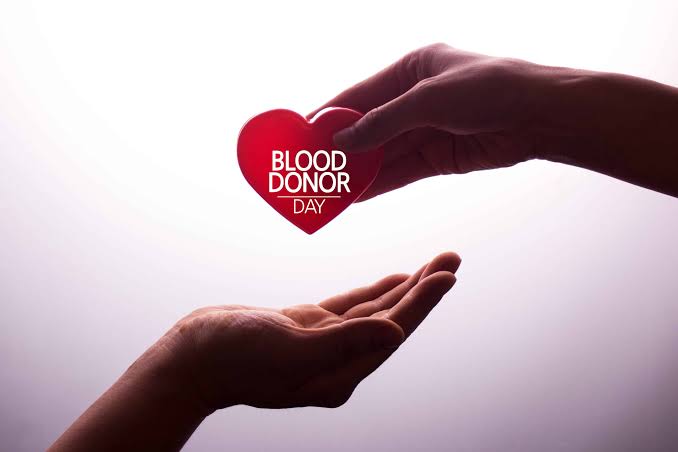
14 JUNE: WORLD BLOOD DONOR DAY is celebrated every year on this day to raise awareness about safe blood donations and to thank those who donate blood voluntary and save the lives of others.
On June 14, Nobel prize winner and scientist Karl Landsteiner was born. He has got the credit for finding the ABO blood group system.World Blood Donor Day is celebrated on the birthday of Karl Landsteiner,who discovered various blood groups.Before Carl detected blood groups, blood transfusions used to happen without knowing the various blood groups. This discovery made Karl Landsteiner win the Nobel Prize in the year 1930.
The theme for this year’s World Blood Donor Day is “Safe blood saves lives”with the slogan “Give blood and make the world a healthier place”. Every year, a host country is chosen to celebrate the National Blood Donation Day. Due to the Coronavirus outbreak, the WHO will conduct a global virtual campaign this year. The idea is to focus on the contribution an individual giver can make to improve health for others in the community.
Blood donation is voluntary, a noble deed and a great service which we can do for our fellow human beings. One donation of blood can save up to 5 lives. Blood transfusion helps patients in recovery and surgery, those who have platelet requirement, who have Hemophilia and ones undergoing organ transplantation or chemotherapy.
Benefits of donating blood:
Helps in controlling weight.
It keeps your liver healthy.
Keeps cancer away.
Helps in smooth blood circulation.
Helps in burning calories.
Blood donation has been compounded severely by the Covid-19 pandemic and lockdown.In early April, the Indian Red Cross Society had raised an alarm that voluntary donation had fallen by almost 100%.This isn’t surprising, given that the number of Covid cases is rising, making infected people and those who come into contact with them ineligible to donate.
The Ministry of Health and Family Welfare has now issued guidelines for safe donation of blood during the ongoing pandemic. Go through the guidelines on this website to know safe blood donation during covid pandemic-https://www.mohfw.gov.in › …PDF Web results Advisory for Voluntary Blood Donation during COVID – MoHFW
The objectives of this year’s campaign are to:
celebrate and thank individuals who donate blood and encourage more people to start donating.
raise wider awareness of the urgent need to increase the availability of safe blood for use wherever and whenever it is needed to save life.
demonstrate the need for universal access to safe blood transfusion.
mobilize support at national, regional and global levels among governments and development partners to invest in.
For information on blood donation,visit-nbtc.naco.gov.in › faq FAQs on Blood Donation – National Blood Transfusion Council (NBTC) – MoHFW …
The event serves to thank voluntary, unpaid blood donors for their life-saving gift of blood and also to raise awareness of the need for regular blood donations to ensure that all individuals and communities have access to affordable and timely supplies of safe and quality-assured blood and blood products, as an integral part of universal health coverage and a key component of effective health systems,” the WHO states.
All blood types can donate blood and they can do it whenever required.“Spare only 15 minutes and save one life”.
The World Food Prize is an international award recognizing the achievements of individuals who have advanced human development by improving the quality, quantity, or availability of food in the world. The prize has been awarded annually to recognize contributions in any field involved in the world food supply: Animal Science/Aqua Culture, Soil Science/Water/Conservation, Nutrition/Health, Plant Science/Seed Science, Plant Pathology/Crop Protection, Food Technology/Food Safety, Policy/Research/Extension, Infrastructure/Emergency Relief, & Poverty Alleviation/Hunger. The World Food Prize is considered equivalent to the Nobel Prize in the field of Agriculture, and the recipient is awarded $250,000 for improving the quality and availability of food.
“This year 2020, Indian- American Soil scientist Dr. Rattan Lal wins prestigious World Food Prize.”An alumnus of Punjab Agricultural University (PAU) and Indian Agricultural Research Institute,New Delhi and a renowned agricultural soil scientist from Ohio State University (OSU). Dr.Lal has been named as this year’s recipient of the World Food Prize for developing and mainstreaming a soil-centric approach to increasing food production that conserves natural resources and mitigates climate change.
The World Food Prize Foundation President Barbara Stinson announced Lal as the winner in an online ceremony in Washington DC ,Thursday 11 June. The ceremony featured pre-recorded remarks from US Secretary of State Mike Pompeo and US Secretary of Agriculture Sonny Perdue.
“The unbound joy and excitement of receiving the 2020 World Food Prize reminds me about the gratitude, privilege and honour of working for farmers from around the world ” Dr. Lal said.
Dr. Lal’s model indicates that restoring soil health can lead to multiple benefits by the year 2100, including more than doubling the global annual grain yield to feed the growing world population, while decreasing the land area under grain cultivation by 30 per cent and decreasing fertiliser use by half. His research led a better understanding of how no-till farming, cover crops, crop residues, mulching, and agroforestry can restore degraded soils, increasing organic matter by sequestering atmospheric carbon in the soil, and help combat rising carbon dioxide levels in the air.
“Dr Lal’s research in soil science shows that the solution to this problem is right under our feet. He’s helping the earth’s estimated 500 million small farmers be faithful stewards of their land through improved management, less soil degradation, and the recycling of nutrients. The billions of people who depend on these farms stand to benefit greatly from his work. “- Secretary Pompeo.
The World Food Prize was established by Nobel Peace Prize laureate Norman E Borlaug in 1986.The first recipient of this award was Indian Agricultural Scientist Dr. M. S. Swaminathan in 1987,regarded as “Father of India’s Green Revolution.
“Let freedom reign. The sun never set on so glorious a human achievement. “
This article consist of:
Introduction
Early life
Politics
Life as a prisoner
President
His writing
Awards
INTRODUCTION:
The leader is a man who comes closest to realizing the norms of a group that values the highest; this conformity gives him his high rank, which attracts people and implies the right to assume control of the group.
Nelson Mandela was a South African anti-apartheid revolutionary, political leader, and philanthropist who served as President of South Africa from 1994 to 1999. He was the country’s first black head of state and the first elected in a fully representative democratic election.
EARLY LIFE:
Nelson Rolihlahla Mandela commonly known as Nelson Mandela was born in 1918 to a tribal chief of Tembu – Henry Mandela. His mother was Nonqaphi Nosekeni and his father was Nkosi Mphakanyiswa Gadla Mandela, principal counsellor to the Acting King of the Thembu people, Jongintaba Dalindyebo. In 1930, when he was 12 years old, his father died and the young Rolihlahla became a ward of Jongintaba at the Great Place in MqhekeMqhekezweni.
Hearing the elders’ stories of his ancestors’ valour during the wars of resistance, he dreamed also of making his own contribution to the freedom struggle of his people. He attended primary school in Qunu where his teacher, Miss Mdingane, gave him the name Nelson, in accordance with the custom of giving all school children “Christian” names.
He completed his Junior Certificate at Clarkebury Boarding Institute and went on to Healdtown, a Wesleyan secondary school of some repute, where he matriculated. Mandela began his studies for a Bachelor of Arts degree at the University College of Fort Hare but did not complete the degree there as he was expelled for joining in a student .Meanwhile, he began studying for an LLB at the University of the Witwatersrand. By his own admission he was a poor student and left the university in 1952 without graduating.
POLITICS:
Mandela, while increasingly politically involved from 1942, only joined the African National Congress in 1944 when he helped to form the ANC Youth League (ANCYL). Mandela rose through the ranks of the ANCYL and through its efforts, the ANC adopted a more radical mass-based policy, the Programme of Action, in 1949. In 1952 he was chosen as the National Volunteer-in-Chief of the Defiance Campaign with Maulvi Cachalia as his deputy. This campaign of civil disobedience against six unjust laws was a joint programme between the ANC and the South African Indian Congress. He and 19 others were charged under the Suppression of Communism Act for their part in the campaign and sentenced to nine months of hard labour, suspended for two years.A two-year diploma in law on top of his BA allowed Mandela to practise law, and in August 1952 he and Oliver Tambo established South Africa’s first black law firm, Mandela & Tambo.
LIFE AS A PRISONER:
During 1940s and 1950s he rose rapidly through the ANC hierarchy, was frequently subject to detention, police harassments, and banning. ANC was outlawed in 1960, that’s when he went underground and a military wing was formed, Umkhonto we Sizwe (Spear of the Nation). In 1962 Mandela was sentenced for five years of imprisonment for travel without valid travel documents whilst leaving South Africa and inciting Africans to strike. Two years later during his detension in 1964, was charged with treason and sentenced him to life imprisonment for giving a four-and-a-half hours of speech criticizing apartheid which is memorable.
Living in a prison had the same meaning as living in the worst place in South Africa: Robben Island. ANC prisoners earned “D” classifications, prisoners who were the most dangerous and had the least rights. They were kept in cells with hay carpets and thin blankets as beds and iron buckets for toilets. The daily menu was a small portion of corn soup with extra vegetable or meat chop for dinner. The prisoners were given thin shirts from khaki and a pair shorts to wear, even during the winter, and were restricted from reading newspapers or magazines. The prisoners spent most of their time in a chalk mine, where they were made to work very hard. Being the leader of the group, Nelson received more harsh treatment than the others. He was kept 23 hours in his cell every day, merely lit by a lamp. Because of which he was unable to sleep or know what the time was. He was only allowed to have one visitor once in six months and he was once not allowed to see his wife (Winnie) for two years. He was allowed to write and receive one letter every six months. The letters he received was screened by the guard, who would cut and remove the parts that were considered unsafe or effectively erasing. Mandela spent 27 consecutive years of his life in detention.His imprisonment improved his political status which resulted in worldwide campaign to release him. During these 27 years that Mandela spent in prison, he was hidden from the world while he quarried limestone and harvested sea-weed; his quiet suffering example was one of the pressures for the government. Mandela’s Public discussion was considered illegal, but as the years passed by, he assumed the mantle of a martyr. Six years of Mandela life was spent in a solitary confinement, during this period he was allowed a weekly 30-minute visit by his wife. He was later in 1984 was offered a conditional freedom, with a condition that he should settle in a black “homeland” that is officially designated in Transkei, Mandela refused the offer affirming his allegiance to the African National Congress. Mandela was hospitalized in 1988 for tuberculosis. After he recovered he was returned to prison with lesser stringent circumstances. 1990, he was released unconditionally to a joyous scenes of celebration at home and abroad.
PRESIDENT:
On 10 May 1994 he was inaugurated as South Africa’s first democratically elected President. On his 80th birthday in 1998 he married Graça Machel, his third wife. True to his promise, Mandela stepped down in 1999 after one term as President. He continued to work with the Nelson Mandela Children’s Fund he set up in 1995 and established the Nelson Mandela Foundation and The Mandela Rhodes Foundation. Nelson Mandela never wavered in his devotion to democracy, equality and learning. Despite terrible provocation, he never answered racism with racism. His life is an inspiration to all who are oppressed and deprived; and to all who are opposed to oppression and deprivation. He died at his home in Johannesburg on 5 December 2013.
HIS WRITING:
Basic Books, 1965, “No Easy Walk to Freedom”. Pathfinder Press, 1986, “The Struggle Is My Life”. Long Walk to Freedom (Autobiography of Nelson Mandela).
AWARDS :
In 1980 Jawaharlal Nehru Award from the government of India for International Understanding; in 1981, Bruno Kreisky Prize for Human Rights from the government of Austria. In 1983, he named as an honorary citizen of Rome; Simon Bolivar International Prize from UNESCO, in 1983. And in 1986 he was honored W. E. B. DuBois Medal; in 1987 he was awarded with “Nobel Peace Prize” and Liberty Medal. The following year (1988) he received the Sakharov Prize, followed by Gaddaff Human Rights Prize in 1989. After 2 year he was awarded with Houphouet Prize in 1991 followed by a Nobel Peace Prize in 1993.
BAREILLY : Bareilly city of Uttar Pradesh shot to fame when Asha Bhosle rendered “Jhumka gira re, Bareilly ke bazaar mein” in noted Hindi movie Mera Saaya (1966) , Late bollywood actress Sadhna preformed an attractive dance. In order to commemmorate it, a “Jhumka” of 14 feet high has been erected in Bareilly at Naitonal Highway number 24.
Actress Sadhna performance on song “jhumka gire re” in film Saaya
Bareilly has finally got its much-awaited “jhumka” when Union Minister and local MP Santosh Gangwar unveiled a 14-feet high replica at the zero point on national highway. The jhumka that weighs over 200 kilograms was intalled in the Parsakhera area and is embedded with colourful stones and decorated by the city’s famous ‘zari’ embroidery. The ‘Jhumka’ weighing over 2 quintals and studded with colourful stones has been suspended from a pole. Officials said the project has cost the BDA around Rs 18 lakh — Rs 8 lakh for the jhumka and Rs 10 lakh for the beautification of the landscape surrounding the main structure.
“The location was chosen to ensure that the first thing that catches your attention on entering Bareilly, if you are coming from New Delhi, is this fabled ornament,” said a senior Bareilly Development Authority (BDA) official.The official added that the jhumka gives the city its own distinct identity. BDA, meanwhile, conceived the project of installing a jhumka as an attraction for the tourists visiting the city.
The entire structure is surrounded by a rotary in such a manner that it give its surrounding area a landscape view. The silver-golden coloured ‘jhumka’ made up of multi-coloured stones embedded with ‘minakari’, an art form colouring and ornamenting the surface of metals by fusing over it brilliant colours that are decorated in an intricate design.
Although there is no connection between the city and the piece of jewellery. The city, also, had no speciality in making or selling ‘jhumkas’. But, it just got famous topic due to the song over 54 years.
Inaugurating the jhumka, Union Minister Santosh Gangwar said: “The collaborative effort made by the authority, various organisations and local residents in setting up of the ambitious jhumka in Bareilly is commendable. It looks beautiful and unique. Visitors will finally be able to associate the landmark jhumka in Bareilly with the evergreen song.”
The idea was first thought of 30 years ago, but could not be completed due to lack of funds. However, BDA Vice-President, found an alternative and discussed the idea with several eminent persons. BDA vice-chairperson Divya Mittal said: “The jhumka has been delayed for some unavoidable reasons. The beautiful project is a collaborative effort among Rohilkhand Medical College, Bareilly International University and few other organisations, and local residents, who helped the BDA with funds in giving the shape to the ambitious project that would be considered a landmark.”
The iconic jhumka is set to become the ideal location for tourists and those who love ‘jhumkas’ .So, next time you are on a visit to Bareilly you know the ideal place to get yourself clicked or take a selfie.
Content – This article discusses rise in mental anxiety and depression during Lockdown and Government measure to reduce panic.
A survey – 61% Indians are experiencing mental illness related issues due to the uncertainty and financial crisis during the lockdown.
Cases of mental illness have risen by 20% since the country went into lockdown.
Negative impact of lockdown is heaviest on poor people, daily wages workers, slums and people out of the mainstream.
Depression, domestic violence, cases of divorce, suicidal are increased in pandemic due to mental illness.
Corona Virus pandemic has caused severe threats to the lives and the mental health of people. In response to the problems posed by the pandemic, various public health strategies such as isolation of infected or at-risk persons, reduction of social contact, and simple hygiene like frequent hand wash, have been advised to reduce the risk of infection. Although isolation helps in achieving the goal of reducing infections, reduced access to family, friends, and other social support systems causes loneliness increasing mental issues like anxiety and depression.
Lockdown may be ending but a new pandemic is emerging. According to a survey by Indian Psychiatry Society, within a week of the start of the lockdown, the number of reported cases of mental illness in India had risen by 20%.India will suffer from a massive mental health crisis due to unemployment, alcohol abuse, economic hardship, domestic violence and indebtedness.
The lockdown applied to three main areas: physical movement out of the home, social distancing when outside the home, and restricted availability of most public services while sparing essential services. There was a sudden and drastic alteration in the daily routine, with many millions stranded in boarding houses and rental apartments, without work and far from home.
Lockdown effects on mental status of –
Students- shutting down of schools after lockdown announcement. As per the present situation, there is uncertainty when schools, colleges will reopen. This is the crucial time for education sector because of entrance exams of universities and competitive exams,this uncertainty has increased mental anxiety among students.
Unemployed people- This pandemic situation has increased burden on unemployed students who were in seek of placements and jobs. Due to high loss in economical conditions of the country, marketinh companies are in loss which leads more to uncertain conditions for hiring students.
Daily wage workers- During this lockdown, industries are also at its financial loss, they are unable to pay their workers which leads them to mental and living distress, anxiety among them.
Old and sick people- senior citizens during this lockdown has been effected a lot. Daily morning and evening walk, away from thier social circle has lead to both health and mental illness among them. People who are dealing with other chronic diseases like cancer, kidney related, etc are suffering in homes due to closure of OPD’s. This causes mental tension for survival in them.
Mental health is a crucial aspect that needs to be addressed during this lock-down as all modes of communication revolve around the virus.
The central government has taken measures in this regard and has ensured the seepage of rules and measures to both state and local administration.
There is a Government controlled website- https://www.mygov.in/covid-19/ provides all the necessary information related to the pandemic. This includes videos and readable material on the infection and the necessary measures to be undertaken.
Also, very essentially, and in relevance to the topic of this article, a toll-free helpline number “+91−80-45110007″ has been launched by the “National Institute of Mental Health and Neuri-Sciences”(NIMHANS), a Bengaluru based premier medical institution.
In conclusion, to overcome the challenges created by the Covid-19 pandemic, what we need more than anything else is our mental health. Let’s take good care of it.
Drama is the specific mode of art represented in the form of performance. The term comes from a Greek word “dran” meaning “action” which is derived from to do or “to act”. Drama is an art form that explores human conflict and tension. It takes the form of a story presented to audience through dialogue and action. Drama is also a type of play written for theatre, television,radio and film. The person who writes drama for stage directions is known as dramatist. For more information you can check out http://www.wallpics.com
Drama developed as a result of the evolution of theatre as an art. A number of elements contribute to the specific nature of drama. It has a plot-it reproduces a course of events, ita action has dramatic tension and is broken down into scenes and episodes, characters have continuity. The purpose of drama is to “have an effect on the crowd, the many ,and to attract their curiosity.
Types of drama:
Comedy- comedies are lighter in tone than ordinary works, and provide a happy conclusion. The intension of dramatists in comedies is to make their audience laugh.
Tragedy- tragic dramas use darker themes, such as disaster, pain and death.
Melodrama- melodrama is an exaggerated drama, which is sensational and appeals directly to the senses of the audience.
Musical drama- in musical drama, dramatists not only tell their stories through acting and dialogue, but through dance as well as music.
The primary intent of a drama movie is to portray realistic characters. Drama movies are usually serious presentations or stories with settings or life situations. A dramatic film depicts human beings at their best, worst, and everything in-between. In order for you to be sad in a drama, the director must create an environment that puts you in a sad mood;then it can be considered a drama, because the sad emotion was successful. At first you feel hurt. A pain that, at first glance, puts you in an emotional state. From there, you would shift into an even more unsettling emotion of sadness that leads you to the deepest state you can be in, weeping or crying. To prove that someone can make a good drama, the right steps to be taken in production. It is more to produce a successful drama that doesn’t just make you feel poignant, but creates an effective way that will give you the desired emotional result you are seeking in a drama.
As the popular words say “All the world’s a stage”. The phenomenon of drama can be observed in many aspects of a life, especially in a modern world. It is not only playing on a stage but also behavior of people in society. So drama is a complex phenomenon that can be characterised in many ways.
Drama has laid the foundation for the evolution of other genres of Literature like the novel or the short story. The presentation of tension and the resolution or the irresolution of conflict is the main theme in any dramatic enactment. Theoretically speaking, it is called rising tension, crisis and falling tension. So, being a form of art, it should be conducted for awareness and knowledge of our ancient Literature and values.











 International Journal of Research (IJR)