POLITICAL DEPRESSION

‘Political Depression’ is a term being increasingly used to define the phenomena of uncharted and intense feelings of helplessness, grief and anxiety which occurs due to distressing social and political events. 

Politics plays a large part in a rapidly growing society and nation like India. Similarly, the political structure of a society can play a dominant role in the basic socialisation, ideology and lived experiences of an individual. However, what we tend to gloss over is the mental and physical impact of politics on the masses, especially those who involve themselves extensively into the political happenings in their nations and across the world.
Political Depression’ is a term being increasingly used to define the phenomena of the uncharted and intense feelings of helplessness, grief and anxiety in people which occurs due to distressing social and political events around them. Political Depression has mostly been observed amongst Millenials who are in the process of forming their own political understandings and in some cases, loyalties.
In April 2020, the Journal of Experimental Psychology in the United States conducted a research on ‘Political Depression?: A Big-Data, Multimethod Investigation of Americans’ Emotional Response to the Trump Presidency’. The study delved into how the 2016 presidential elections gave rise to pathological levels of election-related distress in liberal Americans. The study also addressed the likelihood of how public and professional discourses have increasingly overgeneralized concepts of trauma and psychopathology. The complex interconnections between the personal and political spheres bring us an unprecedented view of the psychological consequences of political events on human minds. However, this concept has not been studied in India, even though India is one of the youngest nations in the world which has the cheapest access to 4G internet services and a constant exposure towards politically distressing themes at home and across the world.
Is there an ideal way to deal with these crucial political differences amongst family members? “Just like any other concern, there is no stipulated way of dealing with difference in opinions. Having said that there are certain things that can be kept in mind to reduce anxiousness and helplessness. It’s important to understand that political exposure and news can be overwhelming and draining for some,” said Dakshita Sabharwal, Counseling Psychologist at LimeLighting Life.

PHASES OF INDIAN Music

WHAT IS MUSIC?

The music of India includes multiple varieties of classical musicfolk music, Filmy, Indian rock, and Indian pop. Indian pop and Indian rock are derived from western rock and roll. India‘s classical music tradition, including Hindustani music, Bhartiya music and Carnatic , has a history spanning millennia and developed over several areas. Music in India began as an integral part of socio-religious life.

Music is a way of expressing the feelings by the medium of rhythms and ragas the formation of both of these important elements makes the music beautiful. It expresses the situation you are feeling or someone else for whom the music is been created. The creation of music is an art it’s an beauty in itself the better the music plays or is created it gives a long lasting impact on the listeners. In India music is a heritage to the people of this country. Indian people have created music to express their feelings for the almighty god at first so that they can tell that how they feel about the god in a beautiful way. It helps to share the feelings in a short way and in a helpful way.

As we all know that India is a holy country a country full of devotees of almighty in every religion. So, the start of the music is also from the prayers or the story telling of almighty in India and then the other forms were discovered or created in Indian music.

BHAKTI MUSIC

Vedas (c. 1500 – c. 800 BCE Vedic period) document rituals with performing arts and play. For example, Shatapatha Brahmana (~800–700 BCE) has verses in chapter 13.2 written in the form of a play between two actors. Tala or taal is an ancient music concept traceable to Vedic era texts of Hinduism, such as the Samaveda and methods for singing the Vedic hymns. Smriti (500 BCE to 100 BCE ) post-vedic Hindu texts include Valmiki‘s Ramayana (500 BCE to 100 BCE) which mentions dance and music (dance by Apsaras such as UrvashiRambhaMenakaTilottama Panchāpsaras, and Ravana‘s wives excelling in nrityageetaor “singing and dancing” and nritavaditra or “playing musical instruments”), music and singing by Gandharvas, several string instruments(vinatantrivipanci and vallaki similar to veena), wind instruments (shankhavenu and venugana – likely a mouth organ made by tying several flutes together), raga (including kaushika such as raag kaushik dhwani), vocal registers (seven svara or sur, ana or ekashurtidrag note, murchana the regulated rise and fall of voice in matra and tripramana three-fold teen taal laya such as drut or quick, madhyaor middle, and vilambit or slow), poetry recitation in Bala Kanda and also in Uttara Kanda by Luv and Kusha in marga style.

Starting from the earliest known work Tholkappiyam (500 BCE), there are several references to music and Panns in the ancient pre-Sangam and Sangam literature starting from the earliest known work Tholkappiyam (500 BCE). Among Sangam literature, Mathuraikkanci refers to women singing sevvazhi pann to invoke the mercy of God during childbirth. In Tolkappiyam, the five landscapesof the Sangam literature had each an associated Pann, each describing the mood of the song associated with that landscape. Among the numerous panns that find mention in the ancient Tamil literature are, Ambal Pann, which is suitable to be played on the flute, sevvazhi pann on the Yazh (lute), Nottiram and Sevvazhi expressing pathos, the captivating Kurinji pann and the invigorating Murudappann.Pann(Tamil: பண்) is the melodic mode used by the Tamil people in their music since the ancient times. The ancient panns over centuries evolved first into a pentatonic scale and later into the seven note Carnatic Sargam. But from the earliest times, Tamil Music is heptatonicand known as Ezhisai (ஏழிசை).

Sanskrit saint-poet Jayadeva, who was the great composer and illustrious master of classical music, shaped Odra-Magadhi style music and had great influence on Odissi Sangita.

Sarṅgadeva composed Sangita-Ratnakara, one of the most important Sanskrit musicological texts from India, which is regarded as the definitive text in both Hindustani music and Carnatic music traditions of Indian classical music.

Assamese poet Madhava Kandali, writer of Saptakanda Ramayana, lists several instruments in his version of “Ramayana”, such as mardala, khumuchi, bhemachi, dagar, gratal, ramtal, tabaljhajhar, jinjiri, bheri mahari, tokari, dosari, kendaradotaravinarudra-vipanchi, etc. (meaning that these instruments existed since his time in 14th century or earlier). The Indian system of notation is perhaps the world’s oldest and most elaborate.

“In India music is now followed and aspired by the bollywood fashion which they have stated for the public to enjoy. Now we are discussing which change are there in the both types of music in the bollywood whether it is old or new and if they have followed any form or way from the Sufi music or the bhakti music it will be concluded later.”

OLD BOLLYWOOD MUSIC VS PRESENT BOLLYWOOD MUSIC

Hindi film songs are present in Hindi cinema right from the first sound film Alam Ara (1931) by Ardeshir Irani which featured seven songs. This was closely followed by Shirheen Farhad (1931) by Jamshedji Framji Madan, also by Madan, which had as many as 42 song sequences strung together in the manner of an opera, and later by Indra Sabha which had as many as 69 song sequences. However, the practice subsided and subsequent films usually featured between six and ten songs in each production.

Right from the advent of Indian cinema in 1931, musicals with song numbers have been a regular feature in Indian cinema. In 1934 Hindi film songs began to be recorded on gramophones and later, played on radio channels, giving rise to a new form of mass entertainment in India which was responsive to popular demand. Within the first few years itself, Hindi cinema had produced a variety of films which easily categorised into genres such as “historicals”, “mythologicals”, “devotional, “fantasy” etc. but each having songs embedded in them such that it is incorrect to classify them as “musicals”.

The Hindi song was such an integral features of Hindi mainstream cinema, besides other characteristics, that post-independence alternative cinema, of which the films of Satyajit Ray are an example, discarded the song and dance motif in its effort to stand apart from mainstream cinema.

The Hindi film song now began to make its presence felt as a predominating characteristic in the culture of the nation and began to assume roles beyond the limited purview of cinema. In multi-cultural India, as per film historian Partha Chatterjee, “the Hindi film song cut through all the language barriers in India, to engage in lively communication with the nation where more than twenty languages are spoken and … scores of dialects exist”. Bollywood music has drawn its inspiration from numerous traditional sources such as Ramleelanautankitamasha and Parsi theatre, as well as from the West, Pakistan, and other Indic musical subcultures.

For over five decades, these songs formed the staple of popular music in South Asia and along with Hindi films, were an important cultural export to most countries around Asia and wherever the Indian Diaspora had spread. The spread was galvanised by the advent of cheap plastic tape cassettes which were produced in the millions till the industry crashed in 2000. Even today Hindi film songs are available on radio, on television, as live music by performers, and on media, both old and new such as cassette tapes, compact disks and DVDs and are easily available, both legally and illegally, on the internet.

GENRES

DANCE

Hindi dance music encompasses a wide range of songs predominantly featured in the Bollywood film industry with a growing worldwide attraction. The music became popular among overseas Indians in countries such as South Africa, the United Kingdom and the United States of America and eventually developed a global fan base.

DISCO

In the Indian subcontinent of South Asiadisco peaked in popularity in the early 1980s, when a South Asian disco scene arose, popularised by filmy Bollywood music, at a time when disco’s popularity had declined in North America. The South Asian disco scene was sparked by the success of Pakistani pop singer Nazia Hassan, working with Indian producer Biddu, with the hit Bollywood song “Aap Jaisa Koi” in 1980. Biddu himself previously had success in the Western world, where he was considered a pioneer, as one of the first successful disco producers in the early 1970s, with hits such as the hugely popular “Kung Fu Fighting” (1974), before the genre’s Western decline at the end of the 1970s led to him shifting his focus to Asia. The success of “Aap Jaisa Koi” in 1980 was followed by Nazia Hassan’s Disco Deewane, a 1981 album produced by Biddu, becoming Asia’s best-selling pop album at the time.

In parallel to the Euro disco scene at the time, the continued relevance of disco in South Asia and the increasing reliance on synthesizersled to experiments in electronic disco, often combined with elements of Indian music. Biddu had already used electronic equipment such as synthesizers in some of his earlier disco work, including “Bionic Boogie” from Rain Forest (1976), “Soul Coaxing” (1977), Eastern Man and Futuristic Journey (recorded from 1976 to 1977), and “Phantasm” (1979), before using synthesizers for his later work with Nazia Hassan, including “Aap Jaisa Koi” (1980), Disco Deewane (1981) and “Boom Boom” (1982). Bollywood disco producers who used electronic equipment such as synthesizers include R.D. Burman, on songs such as “Dhanno Ki Aankhon Mein” (Kitaab, 1977) and “Pyaar Karne Waale” (Shaan, 1980); Laxmikant-Pyarelal, on songs such as “Om Shanti Om” (Karz, 1980); and Bappi Lahari, on songs such as “Ramba Ho” (Armaan, 1981). They also experimented with minimalisthigh-tempo, electronic disco, including Burman’s “Dil Lena Khel Hai Dildar Ka” (Zamane Ko Dikhana Hai, 1981), which had a “futuristic electro feel”, and Lahiri’s “Yaad Aa Raha Hai” (Disco Dancer, 1982).

Such experiments eventually culminated in the work of Charanjit Singh, whose 1982 record Synthesizing: Ten Ragas to a Disco Beatanticipated the sound of acid house music, years before the genre arose in the Chicago house scene of the late 1980s. Using the Roland TR-808 drum machineTB-303 bass synthesizer, and Jupiter-8 synthesizer, Singh increased the disco tempo up to a “technowavelength” and made the sounds more minimalistic, while pairing them with “mystical, repetitive, instrumental Indian ragas“, to produce a new sound, which resembled acid house. According to Singh: “There was lots of disco music in films back in 1982. So I thought why not do something different using disco music only. I got an idea to play all the Indian ragas and give the beat a disco beat – and turn off the tabla. And I did it. And it turned out good.” The first track “Raga Bhairavi” also had a synthesised voice that says “Om Namah Shivaya” through a vocoder.

Along with experiments in electronic disco, another experimental trend in Indian disco music of the early 1980s was the fusion of disco and psychedelic music. Due to 1960s psychedelic rock, popularised by the Beatles‘ raga rock, borrowing heavily from Indian music, it began exerting a reverse influence and had blended with Bollywood music by the early 1970s. You can download these songs for free from various sources as well. This led to Bollywood producers exploring a middle-ground between disco and psychedelia in the early 1980s. Producers who experimented with disco-psychedelic fusion included Laxmikant-Pyarelal, on songs such as “Om Shanti Om” (Karz, 1980), and R. D. Burman, on songs such as “Pyaar Karne Waale” (Shaan, 1980), along with the use of synthesizers.

GHAZAL

Music directors like Madan Mohan composed notable film-ghazals extensively for Muslim socials in the 1960s and the 1970s. The filmi-ghazal style experienced a revival in the early 1990s, sparked by the success of Nadeem-Shravan‘s Aashiqui (1990). It had a big impact on Bollywood music at the time, ushering in ghazal-type romantic music that dominated the early 1990s, with soundtracks such as DilSaajanPhool Aur Kaante and Deewana. A popular ghazal song from Aashiqui was “Dheere Dheere“, a cover version of which was later recorded by Yo Yo Honey Singh and released by T-Series in 2015.

QAWWALI

It represents a distinct subgenre of film music, although it is distinct from traditional qawwali, which is devotional Sufi music. One example of filmi qawwali is the song “Pardah Hai Pardah” sung by Mohammed Rafi, and composed by Laxmikant-Pyarelal, for the Indian film Amar Akbar Anthony (1977).

Within the subgenre of filmi qawwali, there exists a form of qawwali that is infused with modern and Western instruments, usually with techno beats, called techno-qawwali. An example of techno-qawwali is “Kajra Re“, a filmi song composed by Shankar Ehsaan Loy. A newer variation of the techno-qawwali based on the more dance oriented tracks is known as the “club qawwali”. More tracks of this nature are being recorded and released.

Nusrat Fateh Ali Khan and A.R. Rahman have composed filmi qawwalis in the style of traditional qawwali. Examples include “Tere Bin Nahin Jeena” (Kachche Dhaage), “Arziyan” (Delhi 6), “Khwaja Mere Khwaja” (Jodhaa Akbar)[43] and “Kun Faya Kun” (Rockstar).[44]

ROCK

Indian musicians began fusing rock with traditional Indian music from the mid-1960s onwards in filmy songs produced for popular Bollywood films. Some of the more well known early rock songs (including styles such as funk rockpop rockpsychedelic rockraga rock, and soft rock) from Bollywood films include Mohammed Rafi‘s “Jaan Pehechan Ho” in Gumnaam (1965), Kishore Kumar‘s “O Saathi Re” in Muqaddar Ka Sikandar (1978), and Asha Bhosle songs such as “Dum Maro Dum” in Hare Rama Hare Krishna (1971), “Ae Naujawan Hai Sab” in Apradh (1972), and “Yeh Mera Dil Pyar Ka Diwana” in Don (1978).

CONCLUSION

Songs nowadays have a soft spot in almost everyone’s heart. People listen different types of music be it a inspirational/motivational, sad, romantic, rocking, Gazal etc. I have been through the answers here some are saying old one’s have the meanings so are the best where as the new ones are shitty except few. Well this questions’ answer will definitely vary as it totally depends upon an individual’s perception.
I agree that old songs does have meanings but many don’t. Songs sung by legendary singers like Kishore Kumar, Gulshan Kumar, Lata Mangeskar etc. have been great no doubt, one of my favorite is zindagi ke safar mein this song is so much meaningful that one can relate it to one’s life. So there are many old ones which have meaning but not every as you all know.

Now coming to the new songs, who says new songs are not better than old one’s? Well many of you out there but let me tell you all, there are good numbers of new songs which have meanings like kal ho na ho, ashayein, muskurane ki wajah, roobaroo and many more. These songs have mesmerized many people. And if you are pointing towards Honey Singh’s songs then guys just tell me what’s wrong in it?  I mean I am not a huge fan of him but genuinely saying there’s nothing bad. His songs are heard just for fun or party. So i think it’s quite okay to enjoy in these kind of songs. Though it doesn’t have meanings at all but somehow it gives a good tune to listen. Not a big deal! Both old and new are best. It depends totally on you. And Indian songs have always been one of a kind because of our talented singers of our country. They have given so much hits and enlighten our mood as well. The ragas in these songs which are discussed in the above articles are a masterpiece of the mixture of the old classical and Sufi form of creating music.

TOP STARTUPS IN INDIA YOU NEED TO KNOW!

We are currently witnessing changes in almost everything, be it technology development, change of the mode of education, market fluctuations and many more. The major change which we will be talking about today is Startups. If you would’ve asked 10 years ago to people about starting their own business , the quantity of people who would’ve actually said yes could have been very low. The people used to perceive startups as a gamble, where they were unaware about the winning percentage. Everybody wanted to earn loads of money, but very few were actually willing to earn money from their startup. People were feared the amount of money and all their hard work which they will will lose. But now the situation is completely changed, the mindset of people which they used to had about startups is completely changed.Startups are now seen as an opportunity by the everyone, where they invest their money. Even in India we saw many successful startups, which started from nothing and now they are giving very tough competitions to the global MNCs. The success story of these startups are worth sharing and many more people should know about them so people can get inspired by them and can start their own venture without giving it a second thought. Some of these Indian startups are mentioned below :

FLIPKART

India’s foremost online retailer, providing a marketplace for both direct sales and merchant. Like Amazon and Alibaba, Flipkart’s diverse array of products includes everything from LED bulbs to Story books, to sarees to fan, and they are still adding more.By March of 2015, Flipkart had received a total funding amount of %2.45B, with Accel Partners and Tiger Global Management among the key investors.

SNAPDEAL.COM

The Delhi based Snapdeal is Flipkart’s main competitor in home soil, with a network of over 50,000 domestic and international brands and more than 20 million members.In a mere 5 years, Snapchat’s two founders have managed to capture 1 out of every 6 Indian internet users, so its future- just like that of its prestigious U.S. counterparts- is certainly one to keep an eye on.

BIGBASKET

Grocery e-tailer BigBasket is India’s largest online food and grocery store, selling more than 1,000 brands including an “Imported and Gourmet” range. The startup also sells grocery products under its own brand names Fresho, popular and Royal.BigBasket only launched in December 2011 and, with Indians spending around $370B annually on food and groceries , the future is bright.

HUNGAMA

Hungama.com is a Bollywood specialist, with the world’s largest repository, but the digital entertainment company’s storefront has over 2.5M pieces of content spanning an array of genres and languages. Subscribers can stream music tracks, movies, music videos, and dialogues as well as mobile content including ringtone and wallpaper.Owned by Hungama Digital Media Entertainment, this startup is in good hands to reach its goal of a 100 million MAUs by March 2016.Also, Hungama is wisely using its mobile-first capacity.

BOOKMYSHOW

Online ticketing platform BookMyShow provides caters to the customers to want to attend everything from movies to plays to sporting events. Customers can purchase gift cards, receive offers based on bank patronage and use the mobile app to buy their tickets.After raising $25M in June 2014, the company has been growing yearly at 70% and operates in 2,500 of the 10,000 screens across India.

CROP FAILURE

Failures and its Prevention

PATTIKONDA:11/07/2020

Crop Failure is an absent or Greatly diminished crop yield relative to expectation ,caused by the plants being damaged,Killed or destroyed in some conditions that they fail to form crops,seeds,leaves,fruits,pulses.

One of the effects of farming is the frequent complete loss of crops due to adverse weather conditions or pests. We explore what causes catastrophic conditions of crop failure by soil and climate

Some examples of Crop failure is Great famine ,Heavy Rains , Volcanic eruption, poor harvesting ,Floods,de salinity land,soil erosion,over fertilization,over desertification,using too much chemicals and unsustainable farming.

Famines and floods

The preventions for crop failures is using sustainable seeds,using digital tools and farming, By using organic materials and maintain low temperature at rate of reproduction by ecological balance.using bed and furrow system of field to prevent floods .

The most effective crop loss preventions are Fertilization,pruning,weeding, loosening the soil,Removal of crop residues,crop rotation and other works of tilage. Constructing ponds,dams and resoirvoir at bank s of fields for alternate source of famine and floods.

World population day 2020

World population day is celebrated every year across the world. This annual festival celebrates with specific theme every year. For this year “How to safeguard the health and rights of women and girls now.” theme decided.


Let’s Empower people, develop nations, control population and celebrate this #WorldPopulationDay!#WorldPopulationDay2020 pic.twitter.com/WplsGXXQls

— Praful Patel (@praful_patel) July 11, 2020


According to research of UNFPA, there will be a lot of changes occurs in the lives of women after  this pandemic situation. Recent UNFPA research highlighted that if the lockdown continues for 6 months with major disruptions to health services, then 47 million women in low- and middle-income countries may not be able to access modern contraceptives resulting in 7 million unintended pregnancies.


India holds 2nd biggest share of the population in the world. This means we have to be more careful towards resources, environment and sustainable development.#WorldPopulationDay pic.twitter.com/wGUO6n1nJo

— Sadananda Gowda (@DVSadanandGowda) July 11, 2020


31 million additional cases of gender-based violence can also be expected. The disruption of UNFPA’s programmes on the ground could result in 2 million cases of female genital mutilation and 13 million child marriages between 2020 and 2030 that could have been averted.


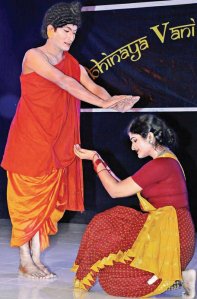
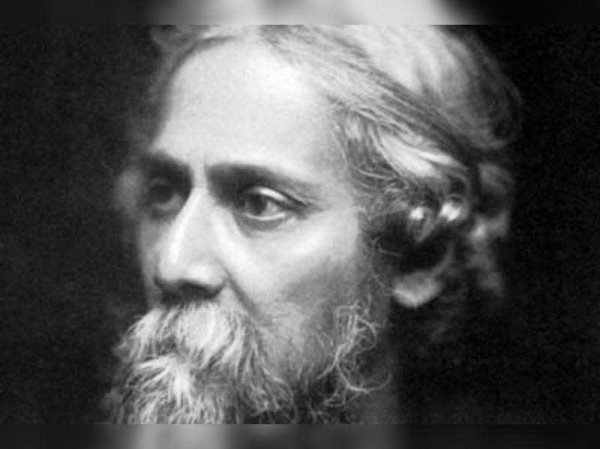
Rabindranath Tagore’s Chandalika

Self consciousness, up to a point, is necessary to self development;for without an awareness of the dignity of one’s own role or function, one cannot give one’s best to the world.

The above, are the lines from one of the most underrated dramas of Rabindranath Tagore, in the world of literature – Chandalika. A drama with a lots of love, compassion, over compassion, feeling of inferiority, new birth, and culmination of great teachings of Buddha. This drama has a vast history and has been portrayed over centuries as a musical drama, music to give more life to it, and make the audience understand the intensity of the emotions that the protagonists carry in themselves, during the play.

Themes –

A religion that insults is a false religion. Everyone united to make me conform to a creed that blinds and gags. But since that day something forbids me to conform any longer. I’m afraid of nothing now.

The story that is revealed in the plot is all about discovering new dimensions of life, as well as, discovering one’s inner self. Readers also come across new experiences of life through the characters themselves, in each and every scene that is being played on. Set in an old city of Shravasti, in the then Uttar Pradesh, the story has to offers many aspects of human approaches, such as, over obsession for something can be as disastrous as gulping poison. Another aspect of the play is discovered through the act of quenching thirsty Buddhist monk, that proves to be a kind of “rebirth” for a girl who is meant to be untouchable. The presence of the mother is a cue of saying that, one should not step out of the boundaries that are set by the religion and society for any person living on this earth. Rebellion against the wall of system and society, is another thing that is portrayed by the drama. The presence of a Buddhist monk in the play, rejuvenates it, bringing whole of a new sense to the play, teachings of Buddha, determination towards life and bringing up the best of a person, is that converts it into a multi dimensional and psychological drama of intense spiritual conflict. Finally, turning into a sort of redemption, along with self realisation, the drama yet has a tale to tell, that –

Love does not claim possession, but it gives freedom.

Introducing the characters –

Chandalika, as the name suggests, is about a chandal girl belonging to the lowest untouchable caste, who gives water to a beautiful monk and falls for him. Unable to restrain herself, she made her mother chant the spells and bound him to be presented at their house at night. Filled with lust and sensitivity, the character of Prakriti portrays the nature’s qualities, she is aggressive, ready to make sacrifices, adorably tolerant, love excessively, mostly alike our mother nature. The story is not of a wicked girl roused to lust by the physical beauty of the monk, but of a very sensitive girl, condemned by her birth to a despised caste, suddenly awakened to a consciousness of her full rights as a woman.

Anand, the famous disciple of Buddha, is a monk in a real sense, pure, loved all the creatures of the world, spread the enlightenment, and victim of the lust of a girl, who unknowingly, is put to remorse and shame.

Symbolizing the social evils prevailing in the society, in the contemporary time, Prakriti’s mother, is yet another character of the play, who, unfortunately had to pay heavy price of her daughter’s love, by giving sacrificing every nerve and cell of her body. She is, as protective, as every other mother ever lived on this earth. At the same time, preventing her to not to claim such a pure soul, Anand, as her’s.

The plot –

For wisdom is not happiness, and renunciation is not fulfilment.

Forgotten that I was a human being, these words always pinched Prakriti’s ears for many years, when one day in vaisakh, she, sitting under the blistering sun was introduced to a person in town, whom she could only think to be standing some fifty feets apart from “a girl, as she. ” It is, Anand, the monk, pure as heaven, beautiful,englitened, who has renounced the earthly leisures, approaches her to quench his thirst. But, being a Chandal, Prakriti was bound not to offer him water from a lake as unpure as herself, on which he laments, and speaks to her, if the black clouds of sravana are dubbed chandal, what of it? It doesn’t change their nature, or destroy the virtue of their water. Don’t humiliate yourself;self humiliation is a sin, worse than self murder. It is when comes twist in the tale, she is revealed to a new birth of herself and is determined to bring him back to her, and discover a cherish her new birth with herself.

Hearing this from Prakriti’s own mouth, her mother is shaken up and thinks that somebody has chant some spell over her. She is awestruck by the idea of her talking of the humanism, caste, and want for the monk. Not ready to listen to her mother, Prakriti wants the monk back, by hook or by crook, that could be achieved when the mother chants her spell over him, and call him off straight to her place. The mother rebels and protests against this idea of her, saying, we only churn up the mud, his power is much more greater than hers, and by chanting spell over him, she can commit a great sin.

The utmost desire to have the monk right next to her is unshakable, and being the only loveable daughter of her, the mother is bound to chant the magic spells. She makes her prepare all the stuff that is required to fulfill the strength of the words, and giving her a magic mirror, tells her to be attentive of the paththat Anand will choose to come over here. Magically, her spells worked out, but in a different manner, though Anand came all the way to her house, without any second thought, but his radiance withered, the shining, the purity, the heavenly glow, all gone, faded, destroyed to pieces. Also, her mother was exhausted till now, she was lying on the floor, counting last of her breath,as overpowering such a majestic personality was a difficult task to do.

It was the time when Prakriti again realised, was awakened to life, that she has committed a sin, redeemed for the second time, purged of the pride and egoism that had made her forget that love does not claim possession, but gives freedom. Also, the holy monk is taken back into his earlier state by the powers of The Buddha.

The drama is a delight to the readers, a tragedy with a lot of teachings and morals to tell. Self redemption, obsession, realization, rebirth, it is a bunch of great dialogues, that takes the reader into in itself.

“The Outcomes Of Shifting To Cleaner Fuel Instantly”

We have been hearing from recent times that the problem of Climate Change and Global Warming is increasing and is leading to deteriorate our environment and its resources. Our glaciers have started to melt and air is hardly left cleaner to be breathed. All these factors have also led the life of humans and other animals to suffer. This has been caused due to human early efforts to find themselves the need for power and energy. The major revolution which brought a wider change to the ground reality and people was the initiation of The Industrial Revolution which not only helped people to get jobs and get employed but also helped various families to earn their basic needs and necessities. But with times we have found major sources of energy out of the natural resources and fossil fuels present in our nature and with times these resources have seen a greater loss and have been decreasing thus we are left with not much if resources. These have also led to spoil the climate of our environment as carbon emissions from the vehicles and industries which consume them for energy generation has led to increase in the carbon content in the atmosphere leading to rise of earth temperature and thus climate related problems. Thus we can see how bad have humans deteriorated this earth with their actions in search of a better life. 

So what can be the possible solutions in such conditions of difficult times. People do suggest that cleaner fuel and sustainable resources like wind and solar energy can be utilized to fight these prevailing issues. Solar energy is widely available energy and we can use it for better use along with wind energy also. But we can not directly shift to the use of much cleaner fuel and energy sources instantly because:


  • Most of the power still comes from the energy generated from coal in various industries and most of the countries still don’t have much if technologies to shift to these natural energy sources for power generation. 
  • 66% of power we consume comes from coal and other fossil fuel consumption. If we stop it, we wouldn’t not be able to get much power for our daily usage. 


  • Instantly stopping fossil fuel, would let a great stop to our travel and other related things as we would not have fuel to power them. 
  • We would not get out food and other necessities since we won’t have the sufficient sources for delivering them.
  • Plastic for storing food,making parts of machines and various things would not be possible as we won’t get energy for manufacturing it.
  • But also the main problem would stay for many decades as according to scientists, they believe that the carbon emissions and other gases are trapped in the atmosphere and thus would require time to get away. 


This is the right stage and time for humans to understand the need to shift to much cleaner sources of energy. It’s not possible instantly since there would be a lot of problems doing so , but we can at least start small, by slow building technologies and fuels which would be Eco-friendly and safe for us as well as earth and much cleaner to that which we use at current time. We all need to step together in this journey for better future and thus save this planet slowly but effectively. 

BENEFITS OF BEING AN INTROVERT!

As an introvert, I’ve heard many myths and misconception about ourselves, so I’ve wanted to write something like this so that these myths can be cleared. Introverts are generally considered as boring, anti-social, less talkative and nerds. Well I won’t say that all of these are lies, in fact they are true to a certain extent. Off course we introverts don’t talk much but we are impossible to handle when we are with our buddies. Yes we read books and I personally don’t think reading a book should be considered only for nerds or introverts because I have seen highly extroverted people as dedicated readers. Extrovert gets their energy when they are around people and Introvert gets energy and stay charged when they spend time alone with themselves. They think about everything a little too much as compare to others and NO they aren’t unfriendly, in fact they are the most sweetest people you will ever meet. I’ve often felt guilty about wanting to stay alone rather than going out for a movie with my friends , but now I’ve accepted the fact that there isn’t anything to be guilty about. Personally I feel there are many perks of being an introvert which I would like to share with my readers :

Introverts are observant – It may look like they are sitting idle and unbothered by the happenings around them, but they observe every information.They are more likely to notice people’s body language and facial expressions which make then an excellent interpersonal communicator.

Introverts are good listener – Extroverts are likely to jump to conclusions without hearing the whole thing and it is because they process information interactively on the other hand Introverts process information internally. This helps them to hear and understand the information critically.

Introverts think before they speak – As introverts don’t usually like to talk much, they process all their thoughts and information before spitting them out, Their words have moore impact on others.

Quality>quantity – As introverts like being alone and to spend their time with themselves, they don’t make much friends but they chose to be friend with someone whom they can trust blindly . Their friend is generally small and great.

Compassionate leaders – Introverts are the best leaders. They don’t crave for coming into limelight and for taking all the credits as a leader, in fact they like to share their success with everyone. They are not impulsive and as a result take every decision only after analyzing it thoroughly.

in data analysis python is essential ?

Its producers define the Python language as “…an interpreted, an object-oriented, high-level programming language with dynamic semantics. It’s high-level built-in data structures, combined with dynamic typing and dynamic binding, make it very attractive for Rapid Application Development, as well as for use as a scripting or glue language to connect existing components.”

Python is a general-purpose programming language, meaning it can be used in the development of both web and desktop applications. It’s also useful in the development of complex numeric and scientific applications. With this sort of versatility, it comes as no surprise that Python is one of the fastest-growing programming languages in the world.

So how does Python jibe with data analysis? We will be taking a close look as to why this versatile programming language is a must for anyone who wants a career in data analysis today or is looking for some likely avenues of upskilling. Once you’re done, you’ll have a better idea as to why you should choose Python for data analysis.

It’s Flexible

If you want to try something creative that’s never done before; then Python is perfect for you. It’s ideal for developers who want to script applications and websites.

It’s Easy to Learn

Thanks to Python’s focus on simplicity and readability, it boasts a gradual and relatively low learning curve. This ease of learning makes Python an ideal tool for beginning programmers. Python offers programmers the advantage of using fewer lines of code to accomplish tasks than one needs when using older languages. In other words, you spend more time playing with it and less time dealing with code. 

It’s Open Source

Python is open-source, which means it’s free and uses a community-based model for development. Python is designed to run on Windows and Linux environments. Also, it can easily be ported to multiple platforms. There are many open-source Python libraries such as Data manipulation, Data Visualization, Statistics, Mathematics, Machine Learning, and Natural Language Processing.

So, to sum up, these points, Python isn’t overly complex to use, the price is right (free!), and there’s enough support out there to make sure that you won’t be brought to a screeching halt if an issue arises.

GOVERNMENT JOB VS PRIVATE JOB:-

WHAT IS JOB ?

A job, employment, work or occupation, is a person‘s role in society. More specifically, a job is an activity, often regular and often performed in exchange for payment (“for a living”). Many people have multiple jobs (e.g., parent, homemaker, and employee). A person can begin a job by becoming an employeevolunteering, starting a business, or becoming a parent. The duration of a job may range from temporary (e.g., hourly odd jobs) to a lifetime (e.g., judges).

An activity that requires a person’s mental or physical effort is work (as in “a day’s work”). If a person is trained for a certain type of job, they may have a profession. Typically, a job would be a subset of someone’s career. The two may differ in that one usually retires from their career, versus resignation or termination from a job.

GOVERNMENT JOBS:-

These are those jobs which are allotted or occupied by a person with all job safety and happy livelihood. These jobs are especially allotted by the government to make work easy for the local public.

Some reasons to opt this job and to not are:-

Advantages :-

1. Flexibility: Many people have the misconception that timing for government jobs is rigid and switches are not really possible. However, in reality, the government has made provisions for alternative work schedules. Last year, RBI offered flexible work timings for their officers. This practice helps in maintaining a healthier work-life balance.

2. Holidays: Weekend holiday is what every working professional enjoys. Those who are working in government offices enjoy a lot of holidays. In India, there are a number of festivals and they cover up the maximum portion of holiday list of the yearly calendar in India. So, being a government officer, you will get these holidays so that you can spend quality time with family and friends.

3. Prestige: This is an additional perk given to government officers, may it be at the state level or central level. In private sector you may go to a certain level of rank or position and earn prestige and reputation.

4. Low pressure: This is an advantage if you are committed to your job. However, if you are negligent and too lazy to carry out your responsibilities, you can feel the burden on your shoulders all the time. Otherwise the pressure levels are comparatively low in government sector.

Disadvantages:-

The disadvantages of working in government sector are as follows:

1. Work Environment: Many people complained about lazy work environment in government offices. According to them only a handful of people work diligently and complete their task within the schedule time.

2. Appraisals: You work hard; you expect appraisals for your hard work. It is a universal truth both in private and government sector. However critiques said that in government office, people who are working hard may often go unnoticed.

3. Control levels: In a government office, levels of controls are quite low. Government jobs give you a liberty to work freely, but in a restricted space.

4. Selection process: Although you will find thousand of government jobs in India but getting a government job is tough. Plus the selection process is quite lengthy and cumbersome. Even you are placed in the merit list; still you may have to wait for a long period of time before you actually join the office. Worse thing is that, if you are not selected, you have wasted a couple of days (or even months) and you may feel like you are in the middle of the sea. Carrying yourself from there and shifting to the private sector or to another opportunity in the government offices will take even more time.

PRIVATE JOBS:-

These are those jobs which do not have any government interference and are controlled or operated by an individual or some group of individuals. Reasons to opt for this kind of job and to not are below.

Advantages :-

1. Work Style: Private sector jobs ensure that the employees should complete the given task in a given time frame. So, you can be sure that the work style here is fast paced and efficient. You need to be on your toes every time you take up a responsibility and can be sure that your hard work will be appreciated.

2. Work and Growth: In a private sector, work and growth are directly related. Better you work, higher will be your growth and vice versa. You can be sure that if you are dedicated and have skills to work up to the next level, your potentials will be noticed and you will be promoted to the next level. This is an added advantage of working in a private sector.

3. Job satisfaction: Private sector jobs are not similar to traditional jobs where you have to work for fixed and limited working hours. Here, you can be sure that you are working for late hours but when you move out of your office, you will be satisfied that you have learnt something new today. Given your best to the company. Your hard work is/will be appreciated.

4. Higher pay: Yes, this is what people are mostly attracted to. In the real world, money is the biggest source of motivation and private sector offers you scope to earn incentives or perks for hard work.

Disadvantages:-

1. Pension: People are attracted towards government jobs because they know that when they retire from their job, they will be blessed with a pension plan which will be available to them for the rest of their lives. This facility is not available for those working in the private sector. Private jobs may give you higher pay currently, but once you are out of the organization, you may enjoy the post-retirement benefits. However the scenario has changed since there are many private companies who also have started monetary benefits for their retired employees.

2. Job security: This is a point you can never rule out. Imagine a situation. You are a normal employee in a private organization. Recession hits the economy. You may be terminated from your job. However, this possibility is minimal if you are a government employee. Even if a private sector company is suffering loss, then also your job may be at stake.

3. Holidays: Private sectors work on deadlines and holidays are limited in this sector. If work deadlines are not meet, you may also have to work for long hours and even during public holidays.

4. Competition: Employers of private sector appreciate hard work of employees and appraisals are prompt for the employees, depending on their performance and abilities. However, it also promotes fierce competition amongst colleagues.

CONCLUSION:-

To sum up you, you must consider both the advantages and disadvantages of working in both sectors and then take your decision accordingly. There are, of course, certain jobs that allow you to be “Self-employed” — such as running your own business, or taking up teaching as a private or online tutor. These jobs, especially the teaching ones, hardly depend on how old we get, or how much we can travel. Such things are usually decided upon by the tutor himself/herself, as per convenience. The same can be true for business. However, the ‘job security’ factor is said to be stronger in case of tutors, because it all depends mostly on how they prefer to teach, how many students they wish to teach, when, where, how and for how much. In case of businesses, things might not be the same, as a businessman has to depend on a larger number of factors and make an investment, first. Whichever profession you choose, our best wishes are there for you. Do share any story or advice on this subject, so that others can benefit from your observations, too.