online classes AMID Pandemic

COVID-19 began in the month of December in 2019 and soon it grew into a pandemic, leading to several losses of lives and locking down of many cities. Social distancing became the key to escape out of this problem. But, with this solution came other problems. We are able to follow social distancing by keeping us locked in our houses but this stopped students’ education too. But we can’t just stop everything due to this COVID thing. We need to find an effective solution to continue the education of students. We need to continue the functioning of schools and colleges.

Online Classes

In the times of the internet, the one and the only solution are online classes. The online way to share knowledge and information now is the internet. It has proved to be a real miracle these days, connecting millions and making information access fast and easy. Be it school, college, tuition, or coaching classes, knowledge is now being delivered to students who are sitting at their home and can learn things sitting there only. Students now need a mobile or desktop and fast internet connection to attend their online classes and learn things. It is not possible for a pandemic to stop students from learning.

How it is a different experience?

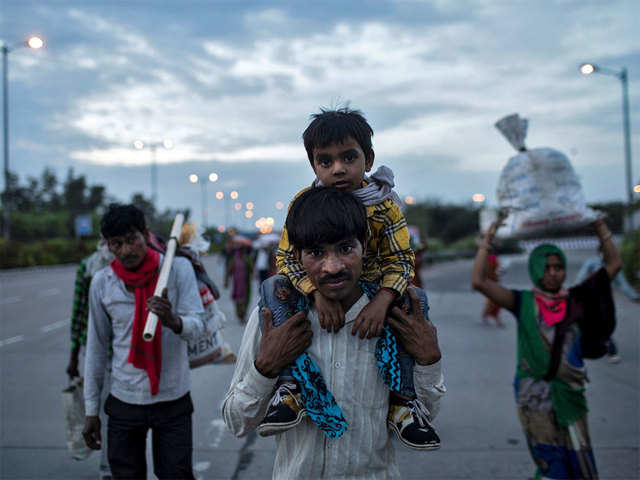
This way of learning is totally new to everyone, be it students, be it teachers or be it parents. We were already involved in some small ways of e-learning but a complete shift towards this type of mode is  something new and challenging to everyone. Teachers are continuously involved in finding new ways to make e-learning more interactive and interesting for students. They are continuously evolving their way of teaching and trying to give them a class-type of feeling. Teachers are also learning to adapt with new softwares and explore things. Students are learning how to deal with online homework submissions, doubt-sessions and examinations. But, the problem is that the medium of interaction is always an electronic device. Hence, students are subjected to fatigue and mental stress. They seem irritated and develop body pain sitting still at a particular position holding their phones or laptops. Students are also developing stress on eyes. It is quite difficult for them to adjust with all of these. It seems that this way of teaching costs their health, both mental and physical. Besides this, internet is not available to all the areas of the country and to all the students. Poor students can’t afford high speed data. This method of teaching, is thus, a barrier between poor students and education. It is a harsh truth that they are left behind. We need to work together towards this to make education available to these students also.

The Capabilities Of Custom Rotary Die Cutting

The Capabilities Of Custom Rotary Die Cutting

When you are looking for accuracy and exacting standards in cutting parts, you can use a high speed rotary die cutting machine. These machines are designed to work with a range of materials, and they can be set up inside any business or shop. Continue reading to learn what can be done when you would like to improve your manufacturing process. You will save money, save time, and avoid inconsistencies that will lose money, cause damage, or even cause injuries when your parts are not created properly.

Why Is Precise Cutting Important?

Precise cutting is important for every business because you need to know that the parts you have made will fit properly. Your customers are expecting you to give them the exact measurements they want, and these measurements are important when you are putting together several parts to build a product.

What Is The Process Like?

When you are using a high speed rotary die cutting machine, the machine does all the work for you. You will use special die cutters to cut each part, and these die cutters are installed and/or changed by workers who manage these machines. There is a motor on the machine that powers the cutter, and the machine will cut the material against an anvil roll.

You can laminate raw materials together, and you can quickly move from one item to another as you use the machine. You do not need to check your workspace, adjust your workspace, or clean your workspace. The machine does most of the work, and you can quickly clean up the interior of the machine.

How Do You Choose Rotary Die Materials

Die cutting is one of the most versatile things you can do to ensure that your business makes quality parts. You can design anything you want using one of these machines, and you can choose from a range of raw materials that will be just right for your business. Because you are allowed to laminate pieces, you can create the strongest materials possible.

When you are choosing your parts, you should look at:

  • Plastic
  • Rubber
  • Cork
  • Paper
  • Felt
  • Most fabrics
  • Foam

When you use these materials, you can get the exacting shapes that you are looking for. You do not need to guess about dimensions, and you can change the dimensions on the machine at any time. This allows your staff to move from one design to another quickly. You do not need to change the settings on a large machine, and you do not need to wait hours while the machine is adjusted. One die cutting machine can do all the work you need, and you will double your production capacity with another machine.

Custom Die Cutting Has Several Advantages

Custom die cutting is the most precise thing that you can do when you are creating parts for your company. You have several advantages when you are using these devices, and you should make sure that you consider switching over to die cutting to save money and time. These advantages include:

  • You can cut from a continuous roll to save time
  • You will produce less waste because the machine makes the cut once. You do not need to overuse your materials, and you can minimize waste while ensuring the die cutting machine has just enough material to get the work done.
  • Precision cutting occurs with a very low tolerance. This makes it much easier for the machine to work, the machine is not under tension that will make it break, and the machine is much easier to clean and power.
  • You can easily turn over to a new product, and you can get your work done much faster because the machine takes out several steps that make hand-cutting difficult.
  • You can get a consistent cut on every project no matter how many parts you need to create.
  • You can cut something that is very small with these machines because the speed of the die allows you to cut just once before the material breaks
  • You can do multiple cuts on the same project that will all be consistent.
  • You can use kiss cutting materials when needed.

When you are using die cutting, you should make sure that you have considered how fast you can get your work done. You can win contracts because you can make promises to your customers, and your parts will be extremely consistent. This means that you can build products without any trouble. This means that each product you create will be very consistent.

You Can Make Prototypes Easily

You can make prototypes at any time, and you will find that you can test these pieces without wasting all your time. You can set up the machine to make the new part, and you can test those parts at any time. You can go back to check on the parts again, and you can make a new prototype every few minutes until you know what you need to get the project done.

This also allows you to build prototypes for your customers. Your customers can try these parts, and they will let you know which one you should use. You can repeat this process in moments, and you can make a lot more money because you are not wasting cash on expensive prototypes that take days to complete.

Look Into Die Cutting Today

You can look into die cutting at any time, and you should make sure that you have considered which parts you can use. You can invest in some amazing parts that you can cut quickly, and you can create something that is very accurate. You can use the die cutting process to build your own products, or you can use this process when you need to create prototypes for your customers. Die cutting streamlines all your processes and helps your business increase profits.

DAIRY FARMS

A key role in society

PATTIKONDA:27/07/2020.

Dairy farming is a class of agriculture for long-term production of milk, which is processedfor eventual sale of a fairy product.Dairy production has come a long way since the days of milking by hand. These days, machines are used to help the farmer milk several cows at once.The plant which processes milk and produces milk products are called dairy plant or dairy.

Commercial dairy farms are typically one-species enterprises. Dairy farms typically consist of high producing dairy cows. But some species used in commercial dairy farming include goats,sheeps and camels. In  Italy, donkey dairies are also used. The dairy farmers would fill barrels with milk bring it to market on a wagon and sell it for money.

Dairy farming has been part of agriculture for thousands of years.Large scale dairy farming is only viable where either a large amount of milk is required for production of more durable dairy products such as cheese, butter, etc. milk preservation methods: Cool temperature has been the main method.Ice banks were the first type of bulk milk cooler. plate heat exchanger (PHE),This device utilizes a number of specially designed stainless steel plates with small spaces between them.

Modern technologies of milking

MILKING MACHINE: It is also known as milking pipeline,This uses a permanent milk-return pipe and a second vacuum pipe that encircles the barn. The milking device shrank in size and weight to the point where it could hang under the cow, held up only by the sucking force on the cow’s udder.The pipelines allowed barn length to keep increasing and expanding.

There is a great deal of variation in the pattern of dairy production worldwide. but, The milking of cows was traditionally a labor-intensive operation and still is in less developed countries.Worldwide, the largest cow milk producer is the United States, the largest cow milk exported in New zealand ,and the largest importer is china. India become largest milk producer and dairy farming in world by sharing 17% of total.

Dairy products
  • The products of dairy is
  • Butter. Butter and butter blends.
  • Cheese. Natural and processed cheese products.
  • Cultured Dairy. Yogurt, cottage cheese, sour cream, dips and other cultured dairy foods.
  • Frozen Desserts. …
  • Ice Cream/Novelties. …
  • Milk. …
  • Non-Dairy Beverages. …
  • Whey, Milk Powder.

why ANIME IS NOT FAMOUS IN INDIA???

First of all there’s no one in India who hasn’t watch anime, it used to be popular and it is popular till now but, if there are people who are thinking what particularly an anime is, so let me tell you every animation you watch like Chotta Bheem or Little Krishna are Indian animations because they are made in India in the same way animations made in Japan are called Anime. We can guess the popularity of Anime by some world wide famous shows like Dragon Ball Z, Shinchan,Pokemon,etc(many people dont know this, but yes these are also Anime).But Anime is not limited to these limited numbers, there are number of quality Anime people don’t know about.But the main problem is slowly peoples have stopped watching Anime or even worse they don’t know what anime is. So I am going to tell you some points according to my researches why, despite having big audience Anime has been wiped out of Indian Televisions.

1:Mature Content

As there is the ideology for Animation in India, that it is only for kids. Anime is like a big slap for people with this ideology.If we compare Indian TV shows with Anime.Most of the Indian TV animations have repeated story-line whereas Anime has awesome unique story-line, well influenced characters and above all it is suitable for every age group(unlike Indian TV cartoons targeting only children between 4-5 years).When adults are also there in targeted age group they have to add some adult content like relationship,sex and violence which are Censor Board won’t allow. To some extent it is right to for children to not watch such extreme content but when shows like Shinchan is also censored than it is not ok.

2:A PROPAGANDA AGAINST KIDS

It is clear to all how are mainstream media is making us fool, its main motive is to keep the audience dumb and of low IQ because if we became smart then there illogical shows will come to an end.For example a kid gets to know about gravity and solar system from Doraemon .Because of the shows kids are watching now there IQ level and understanding capability has also been worn out.For this people will say “If Anime is available in the internet then what is the need for broadcasting it in TV”they don’t understand that there are majority of people in India who don’t have much amount of. That is why Anime broadcasting in India is important because people who don’t have internet connectivity would have to look for other options like TV and movies.

3:MONOPOLY

Believe it or not our Entertainment Industry feels insecure about Anime,that is why they don’t want Anime to come in Indian Market.It is common in Indian Entertainment Industry, that there will be only some number of people who will run whole thing by themselves and won’t allow any other person to even enter.They misuse their power and put a dirty monopoly over it.

4:CULTURAL DIFFERENCE

There is a big culture difference in India and Japan, like girls in Japan mostly wear skirts unlike India where full body clothes are the first priority of society because of it shows like these are mostly banned so that Indian girls don’t get influenced by their culture. I know it does not even sound like a valid point to ban Anime in India but I have seen such extremist people who wants Anime to not air on Indian TV’s because of this.

HIGH COURTS JURISDICTION IN INDIA

The High courts of India are the principal civil courts of original jurisdiction in each state and union territory. However, a high court exercises its original civil and criminal jurisdiction only if the subordinate courts are not authorized by law to try such matters for lack of pecuniary, territorial jurisdiction. High courts may also enjoy original jurisdiction in certain matters, if so designated specifically in a state or federal law.

Basically, the work of most high courts primarily consists of appeals from lower courts and writ petitions in terms of Article 226 of the constitution. Writ jurisdiction is also an original jurisdiction of a high court.

Each state is divided into judicial districts presided over by a district and sessions judge. He is known as district judge when he presides over a civil case and session’s judge when he presides over a criminal case. He is the highest judicial authority below a high court judge. Below him, there are courts of civil jurisdiction, known by different names in different states. Under Article 141 of the constitution, all courts in India — including high courts — are bounded by the judgments and orders of the Supreme Court of India by precedence.

Judges in a high court are appointed by the President of India in consultation with the Chief Justice of India and the governor of the state. High courts are headed by a chief justice. The chief justices rank fourteenth (within their respective states) and seventeenth (outside their respective states) on the Indian order of precedence. The number of judges in a court is decided by dividing the average institution of main cases during the last five years by the national average, or the average rate of disposal of main cases per judge per year in that High Court, whichever is higher.

The Calcutta High Court is the oldest high court in the country, established on 2 July 1862. High courts that handle numerous cases of a particular region have permanent benches established there. Benches are also present in states which come under the jurisdiction of a court outside its territorial limits. Smaller states with few cases may have circuit benches established. Circuit benches (known as circuit courts in some parts of the world) are temporary courts which hold proceedings for a few selected months in a year. Thus cases built up during this interim period are judged when the circuit court is in session. According to a study conducted by Bangalore-based NGO, Daksh, on 21 high courts in collaboration with the Ministry of Law and Justice in March 2015, it was found that average pendency of a case in high courts in India is 3 years. High court looks after the issues which are not solved in district court. High courts were first established in three presidency cities of Calcutta, Bombay and madras in 1862. The high court of Delhi came up in 1966. Currently there are 25 high courts. While many states have their own high courts, Punjab and Haryana share a common high court at Chandigarh, and four northeast states have a common high court at Guwahati. Some high courts have been benches in other parts of the state for greater accessibility.

JURISDICTION AND SEAT OF HIGH COURTS

NameYearTerritorial establishment jurisdictionSeat
Allahabad  1866Uttar PradeshAllahabad (Bench at Lucknow)
Andhra Pradesh1956Andhra PradeshHyderabad
Bombay   1862Maharashtra, Goa, Dadra and Nagar Haveli and Daman and DiuBombay (Benches at Nagpur, Panaji and Aurangabad)
Calcutta   1862West BengalCalcutta (Circuit Bench at Port Blair)
Delhi1966DelhiDelhi
Guwahati(2) 1948Assam, Manipur, Meghalaya, Nagaland,Tripura, Mizoram and Arunachal PradeshGuwahati (Benches at Kohima, Aizwal & Imphal. Circuit Bench at Agartala & Shillong)
Gujarat  1960GujaratAhmedabad
Himachal Pradesh 1971Himachal PradeshShimla
Jammu & Kashmir  1928Jammu & KashmirSrinagar & Jammu
Karnataka(3) 1884KarnatakaBangalore
Kerala 1958Kerala & LakshadweepErnakulam
Madhya Pradesh  1956Madhya PradeshJabalpur (Benches at Gwalior and Indore)
Madras   1862Tamil Nadu & PondicherryMadras
Orissa 1948OrissaCuttack
Patna   1916BiharPatna
Punjab& Haryana(4)1975Punjab, Haryana & ChandigarhChandigarh
Rajasthan  1949RajasthanJodhpur (Bench at Jaipur)
Sikkim 1975SikkimGangtok
Chhattisgarh01/11/2000ChhattisgarhBilaspur (Chhattisgarh)
Jharkhand2000JharkhandRanchi
Uttarakhand2000UttarakhandNainital

2. Originally known as the Assam High Court, renamed as Guwahati High Court in 1971.

3. Originally known as Mysore High Court, renamed as Karnataka High Court in 1973.

4. Originally known as Punjab High Court, renamed as Punjab & Haryana High Court in 1966.

Constitution and composition of High courts

Every high court consists of a Chief Justice and a number of judges, who are determined by the President from time to time. Article 217 deals with the appointment of judges and states that every judge of high court shall be appointed by the President by warrant under his hand and seal after consultation with the Chief Justice of India, the Governor of the state.

Jurisdiction and powers of High Court

The powers and jurisdiction of High Court can be classified under following heads:

1) Original Jurisdiction- it means that applicant can directly go to High Court and not by means of appeals. This power is used in the following matters –

• Disputes arising out of relating to members of Parliament and state legislative assembly

• Relating to marriage, law, admiralty divorce, contempt of court etc

• Enforcement of fundamental rights (Supreme Court also has this power)

• Cases transferred from other court to itself which involves a question of law.

2) Writ Jurisdiction- Article 226 states that High Court shall have power throughout the territories in relation to which it exercises jurisdiction to issue to any person or authority including in appropriate cases, any government, within those territories directions, orders, or writs.

3) Appellate Jurisdiction-

It is said that the high court is the primary court of appeal i.e. it has power to hear the appeals against the judgment of the subordinate courts within its territories. This power can be classified in to 2 categories-Civil jurisdiction and Criminal jurisdiction

In civil cases its jurisdiction includes to the orders and judgments of the district courts, additional district courts and other subordinate courts.

In criminal cases its jurisdiction includes judgments relating to sessions courts and additional sessions court. These cases should be involving imprisonment for more than 7 years, confirmation of any death sentence awarded by session court before execution

4) Power of Superintendence –

The High Court has this power over all courts and tribunals except those dealing with the armed forces functioning in the state. Hence in the exercise of this power it may –

• Call for return from such courts

• May issue general rules and prescribe forms for regulating the practice and proceedings of such courts

• Prescribe the form in which books and accounts are being kept by the officers of any court

• Settle fees payable to the sheriff clerks, officers and legal practitioners

The constitution does not place any restriction on this power of superintendence over the subordinate courts, it is not only by means of appeal by the person, it can be suo motto. It is of the nature of revision as it verifies the earlier judgments. In this regard it is considered as a special function as the Supreme Court has no similar power vis a vis the High Court.

5) Control over Subordinate Courts –

This is an extension of the above supervisory and appellate jurisdiction. It states that the High Court can with draw a case pending before any subordinate court, if it involves the substantial question of law. The case can be disposed of itself or solve the question of law and return back to the same court. In the second case the opinion tendered by High court would be binding on the subordinate court. It also deals with matters pertaining to posting promotion, grant of leave, transfer and discipline of the members there in. In this regard it appoints officers and servants to be made by Chief Justice or such other judge of High Court as the Chief Justice may direct.

6) Court of Record – It involves recording of judgments, proceedings and acts of high courts to be recorded for the perpetual memory. These records cannot be further questioned in any court. Based on this record it has power to punish for the contempt of court either with simple imprisonment or with fine or both.

7) Judicial Review –

This power of High Court includes the power to examine the constitutionality of legislative and executive orders of both central and state government. It is to be noted that the word judicial review is no where mentioned in our constitution but the Article 13 and 226 explicitly provide High Court with this power.

8) Extension of jurisdiction of High Court to Union Territories –

Parliament by law may extend the jurisdiction of a High Court to or exclude the jurisdiction of a high court from any union territory.

Procedure for removal of Judges:

The judge’s enquiry act governs the removal or impeachment of judges of High Court. Hence the grounds for removal are

• Proved misbehaviour

• Incapacity

He is removed by the President as per the removal order passed by each house of the parliament by a special majority i.e. a majority of the total membership of the house and a majority of not less than two thirds of members present and voting. A detailed procedure followed is as follows:

1. The initial removal motion to be signed by 100 members in Lok Sabha or by 50 members of Rajya Sabha and be presented to the speaker/ chairman of the house.

2. The speaker has the option of either accepting or rejecting the motion

3. If it is accepted a committee would be constituted to investigate the matter

4. The committee so constituted consists of chief justice or judge of Supreme Court, chief justice of high court and a distinguished jurist.

5. If the committee ascertains the guilty of the judge then the houses take up the issue.

6. If the motion is passed in each house of the parliament by a special majority then the it is later presented to the President for his assent.

7. The President then passes order for removal of judge. The judge is considered removed from that day. (In fact no judge has been removed till now)

Transfer of a judge from one high court to another (Article 222) –

According to it the President may after consultation with the chief justice of India transfer a judge from one High Court to any High Court. Also when a judge has been or is so transferred he shall during the period he serves, after the commencement of the constitution act as a judge of the other high court, so shall be entitled to receive in addition to his salary such compensatory allowance as may be determined by Parliament by law and until so determined such compensatory allowance as the President may by order fix.

Later on in 1977 in K Ashok Reddy case ruled that there requires judicial review in case of arbitrary transfer of judges. Hence as to locus standi only the judge who is transferred can challenge it.

Appointment of acting Chief Justice (Article 223) –

When the office of Chief Justice of a High Court is vacant or when any such Chief Justice by reason of absence or otherwise, unable to perform the duties of his office, the duties of the office shall be performed by such one of the other Judges of the court as the President may appoint for the purposes. However, appointments of persons other than district judges to the judicial service of a state shall be made by the Governor of the state in accordance with rules made by him after consultation with the state public service commission and with the high court exercising jurisdiction in relation to such state.

The power of “Now”

Life, a very adventurous journey has three divisions, present past and future. We all have only one life and we want to live it to the fullest and make the best out of it. In our life, we have to deal with the present, past, and future. Thus, we are often confused about which moment of life is more important and should be given maximum attention. Let us try to figure this out.

Looking into the past and future

We all tend to be far-sighted, thinking of future plans, future goals, etc. We work for our future, we save for our future, and we plan for our good future. We work hard to achieve our future goals. But, we are uncertain of our future. Yup, are you sure your future will come? No one knows. Thinking of the future and making plans according to is also important, but getting lost in these plans is not the correct way. Working in a way that misses out today and seems promising of a good future is where we are getting ditched because we will be investing in something that does not exist.

Past, on the other hand, is what we already created. It is impossible to change now what we have done 10 years ago. We can only learn from the past to improve our present and future. So, there is no point in living in the past. If we live in the past, we are stuck.

Live in present. But, why? 

“If you want to conquer the anxiety of life, live in the moment, live in the breath.”

Think deeply and question again. Are there three divisions of time or is it only one? Are there past, present, and future or is it only present? Confused? It will be clear. 

Our present makes our past and our future. How? What we have today will become our past tomorrow. So, by living in the present, we create our past. By making our present beautiful, we create memories and by doing mistakes now, we create lessons to learn. Basically, it is possible to add what we want to add in our past. It is possible to create our past by designing our present in the way we want. We can also make our future in a similar manner. Whatever we do today will be reflected in our future. Whatever we want in the future, wherever we dream to stand in the future, it begins from the present. We have to work today only to reach where we want to be in the future. Our performance today decides what we will get in the future. If we want to get the best out of our life, we need to live in the present and give the best today, there is no other option.

“The present moment is the only moment available to us, and it is the door to all moments.”

“Now” is the happiness

The best and most important moment is now. It is not possible to grab it or hold it. What is possible is to enjoy it, make it the best by giving it the best and staying in that moment. Neither our past is bad, nor our future may be. It’s just certain instances of past that are bad or according to us and an imagined situation of future that may be overwhelming or fearful. But, the most precious moment is now. We need to enjoy it to the fullest. If we merge with the present we are truly living otherwise, we are dead. Living the present is happiness, it is the true pleasure. Make your each second beautiful. Embrace it.

If the Mondays were come to alive

Ok tomorrow is Monday, the first day of the week and as usual everyone just hate this day. By just heard the Monday, the very first thing which comes in mind is Bloody Monday . And this is a fact, most of the cases of heart attack occures on monday, said in a report. Because there is a thinking behind this universe that Monday is not having that much work just like other days, so there is no point to go on work, this leads to be the laziness and after a week off, nobody like to move from their comfort zone and enjoys. But after all this fun the very first thing which made to come up on that day just our responsibility and it’s not bad at all, we all are responsible for someone, someone may be the family, company, students, patients, workers and for yourself.

COTTON

India’s largest cash crop

PATTIKONDA:26/02/2020.

Cotton is a soft, fluffy staple fiber that grows in a boll, or protective case, around the seeds of the cotton plants of the genus Gyopssisum in the mallow family Malvacae. The fiber is almost pure cellulose. Under natural conditions, the cotton bolls will increase the dispersal of the seeds. The plant is a shrub native to tropical and subtropical regions around the world, including the Americas, Africa, Egypt and India.

The fiber is most often spun into yarn or thread and used to make a soft, textile.Current estimates for world production are about 25 million tonnes or 110 million bales annually, accounting for 2.5% of the world’s arable land. India is the world’s largest producer of cotton. it is the most widely use natural fiber cloth in clothing today.The United States has been the largest exporter for many years.

  • There are 4 types of cotton:
  • Gossypium hirsutum – upland cotton, native to america
  • Gossypium barbadense– known as extra-long staple cotton, native to tropical South America
  • Gossypium arboreum– tree cotton, native to India
  • Gossypium Herbecea – Levant cotton
Can live at low rainfall

Planting time in spring in the Northern hemisphere varies from the beginning of February to the beginning of June.Cotton is naturally a perennial but is grown as an annual to help control pests.cotton grown today is cultivated in areas with less rainfall that obtain the water from irrigation.Cotton can also be cultivated to have colors other than the yellowish off-white typical of modern commercial cotton fibers. 

The bacterium Bacillus thuringiensis (Bt) naturally produces a chemical harmful only to a small fraction of insects, most notably the larvae of moths,insects,butterflies and flies, and harmless to other forms of life.The gene coding for Bt toxin has been inserted into cotton, causing cotton, called Bt cotton, to produce this natural insecticide in its tissues.Cotton has gossypol, a toxin that makes it inedible. Bt cotton is ineffective against many cotton pests, and however, such as plant bugs,aphids and stink plants.

Cotton is used to make a number of textile products. These include terrycloth for highly absorbent bath towels,denims,robes,cambric, popularly used in the manufacture of blue work shirts and cotton twill. Socks ,clothes and most T shirts are made from cotton. Bed sheets often are made from cotton. Cotton also is used to make yarn used in crocheted and knitting. In the Textile industry, cotton is used in Fishing nets,coffee filters,Tentsexplosives manufacture  cotton paper, and in book binding. Fire hoseswere once made of cotton.

A pillar for textile industry

CHANAKYA: THE MASTERMIND OF UNITED INDIA

Chanakya was an ancient Indian teacher, philosopher, economist, jurist and royal advisor. He is traditionally identified as Kauṭilya or Vishnugupta, who authored the ancient Indian political treatise, the Arthashastra, a text dated to roughly between the 3rd century BCE and the 3rd century CE. As such, he is considered the pioneer of the field of political science and economics in India, and his work is thought of as an important precursor to classical economics. His works were lost near the end of the Gupta Empire in the 6th century BCE and not rediscovered until the early 20th century.

Chanakya assisted the first Mauryan emperor Chandragupta in his rise to power. He is widely credited for having played an important role in the establishment of the Maurya Empire. Chanakya served as the chief advisor to both emperors Chandragupta and his son Bindusara.

SOURCES OF INFORMATION

Buddhist version

According to the Buddhist legend, the Nanda kings who preceded Chandragupta were robbers-turned-rulers. Chanakya was a Brahmin from Takkāsila (Takshashila). He was well-versed in three Vedas and politics. He had canine teeth, which were believed to be a mark of royalty. His mother feared that he would neglect her after becoming a king. To pacify her, Chanakya broke his teeth.

Chanakya was said to be ugly, accentuated by his broken teeth and crooked feet. One day, the king Dhana Nanda organized an alms-giving ceremony for Brahmins. Chanakya went to Pupphapura (Pushpapura) to attend this ceremony. Disgusted by his appearance, the king ordered him to be thrown out of the assembly. Chanakya broke his sacred thread in anger, and cursed the king. The king ordered his arrest, but Chanakya escaped in the disguise of an Ājīvika. He befriended Dhananada’s son Pabbata, and instigated him to seize the throne. With help of a signet ring given by the prince, Chanakya fled the palace through a secret door.

Chanakya escaped to the Vinjha forest. There, he made 800 million gold coins (kahapanas), using a secret technique that allowed him to turn 1 coin into 8 coins. After hiding this money, he started searching for a person worthy of replacing Dhana Nanda. One day, he saw a group of children playing: the young Chandragupta (called Chandagutta in Mahavamsa) played the role of a king, while other boys pretended to be vassals, ministers, or robbers. The “robbers” were brought before Chandragupta, who ordered their limbs to be cut off, but then miraculously re-attached them. Chandragupta had been born in a royal family, but was brought up by a hunter after his father was killed by an usurper, and the devatas caused his mother to abandon him. Astonished by the boy’s miraculous powers, Chanakya paid 1000 gold coins to his foster-father, and took Chandragupta away, promising to teach him a trade.

Chanakya had two potential successors to Dhana Nanda: Pabbata and Chandragupta. He gave each of them an amulet to be worn around the neck with a woolen thread. One day, he decided to test them. While Chandragupta was asleep, he asked Pabbata to remove Chandragupta’s woolen thread without breaking it and without waking up Chandragupta. Pabbata failed to accomplish this task. Some time later, when Pabbata was sleeping, Chanakya challenged Chandragupta to complete the same task. Chandragupta retrieved the woolen thread by cutting off Pabbata’s head. For the next seven years, Chanakya trained Chandragupta for royal duties. When Chandragupta became an adult, Chanakya dug up his hidden treasure of gold coins, and assembled an army.

The army of Chanadragupta and Chanakya invaded Dhana Nanda’s kingdom, but disbanded after facing a severe defeat. While wandering in disguise, the two men once listened to the conversation between a woman and her son. The child had eaten the middle of a cake, and thrown away the edges. The woman scolded him, saying that he was eating food like Chandragupta, who attacked the central part of the kingdom instead of conquering the border villages first. Chanakya and Chandragupta realized their mistake. They assembled a new army, and started conquering the border villages. Gradually, they advanced to the kingdom’s capital Pataliputra (Pāṭaliputta in Mahavamsa), where they killed the king Dhana Nanda. Chanakya ordered a fisherman to find the place where Dhana Nanda had hidden his treasure. As soon as the fishermen informed Chanakya about its location, Chanakya had him killed. Chanakya anointed Chandragupta as the new king, and tasked a man named Paṇiyatappa with eliminating rebels and robbers from the kingdom.

Chanakya started mixing small doses of poison in the new king’s food to make him immune to poisoning attempts by the enemies. Chandragupta, who was not aware of this, once shared the food with his pregnant queen, who was seven days away from delivery. Chanakya arrived just as the queen ate the poisoned morsel. Realizing that she was going to die, Chanakya decided to save the unborn child. He cut off the queen’s head and cut open her belly with a sword to take out the foetus. Over the next seven days, he placed the foetus in the belly of a goat freshly killed each day. After seven days, Chandragupta’s son was “born”. He was named Bindusara, because his body was spotted with drops (bindu) of goat’s blood.

The earliest Buddhist legends do not mention Chanakya in their description of the Mauryan dynasty after this point. Dhammapala‘s commentary on Theragatha, however, mentions a legend about Chanakya and a Brahmin named Subandhu. According to this account, Chanakya was afraid that the wise Subandhu would surpass him at Chandragupta’s court. So, he got Chandragupta to imprison Subandhu, whose son Tekicchakani escaped and became a Buddhist monk. The 16th-century Tibetan Buddhist author Taranathamentions Chanakya as one of Bindusara’s “great lords”. According to him, Chanakya destroyed the nobles and kings of 16 towns and made Bindusara the master of all the territory between the eastern and the western seas (Arabian Sea and the Bay of Bengal).

 Jain version

According to the Jain account, Chanakya was born to two lay Jains (shravaka) named Chanin and Chaneshvari. His birthplace was the Chanaka village in Golla vishaya (region). The identity of “Golla” is not certain, but Hemachandra states that Chanakya was a Dramila, implying that he was a native of South India.

Chanakya was born with a full set of teeth. According to the monks, this was a sign that he would become a king in the future. Chanin did not want his son to become haughty, so he broke Chanakya’s teeth. The monks prophesied that the baby would go on to become a power behind the throne. Chanakya grew up to be a learned shravaka, and married a Brahmin woman. Her relatives mocked her for being married to a poor man. This motivated Chanakya to visit Pataliputra, and seek donations from the king Nanda, who was famous for his generosity towards Brahmins. While waiting for the king at the royal court, Chanakya sat on the king’s throne. A dasi (servant girl) courteously offered Chanakya the next seat, but Chanakya kept his kamandal (water pot) on it, while remaining seated on the throne. The servant offered him a choice of four more seats, but each time, he kept his various items on the seats, refusing to budge from the throne. Finally, the annoyed servant kicked him off the throne. Enraged, Chanakya vowed to uproot Nanda and his entire establishment, like “a great wind uproots a tree”.

Chanakya knew that he was prophesied to become a power behind the throne. So, he started searching for a person worthy of being a king. While wandering, he did a favour for the pregnant daughter of a village chief, on the condition that her child would belong to him. Chandragupta was born to this lady. When Chandragupta grew up, Chanakya came to his village and saw him playing “king” among a group of boys. To test him, Chanakya asked him for a donation. The boy told Chanakya to take the cows nearby, declaring that nobody would disobey his order. This display of power convinced Chanakya that Chandragupta was the one worthy of being a king.

Chanakya took Chandragupta to conquer Pataliputra, the capital of Nanda. He assembled an army using the wealth he had acquired through alchemy (dhatuvada-visaradan). The army suffered a severe defeat, forcing Chanakya and Chandragupta to flee the battlefield. They reached a lake while being pursued by an enemy officer. Chanakya asked Chandragupta to jump into the lake, and disguised himself as a meditating ascetic. When the enemy soldier reached the lake, he asked the ‘ascetic’ if he had seen Chandragupta. Chanakya pointed at the lake. As the soldier removed his armour to jump into the lake, Chanakya took his sword and killed him. When Chandragupta came out of the water, Chanakya asked him, “What went through your mind, when I disclosed your location to the enemy?” Chandragupta replied that he trusted his master to make the best decision. This convinced Chanakya that Chandragupta would remain under his influence even after becoming the king. On another occasion, Chanakya similarly escaped the enemy by chasing away a washerman, and disguising himself as one. Once, he cut open the belly of a Brahmin who had just eaten food, and took out the food to feed a hungry Chandragupta.

One day, Chanakya and Chandragupta overheard a woman scolding her son. The child had burnt his finger by putting it in the middle of a bowl of hot gruel. The woman told her son that by not starting from the cooler edges, he was being foolish like Chanakya, who attacked the capital before conquering the bordering regions. Chanakya realized his mistake, and made a new plan to defeat Nanda. He formed an alliance with Parvataka, the king of a mountain kingdom called Himavatkuta, offering him half of Nanda’s kingdom.

After securing Parvataka’s help, Chanakya and Chandragupta started besieging the towns other than Pataliputra. One particular town offered a strong resistance. Chanakya entered this town disguised as a Shaivite mendicant, and declared that the siege would end if the idols of the seven mothers were removed from the town’s temple. As soon as the superstitious defenders removed the idols from the temple, Chanakya ordered his army to end the siege. When the defenders started celebrating their victory, Chanakya’s army launched a surprise attack and captured the town.

Kashmiri version

The Kashmiri version of the legend goes like this: Vararuchi (identified with Katyayana), Indradatta and Vyadi were three disciples of the sage Varsha. Once, on behalf of their guru Varsha, they traveled to Ayodhya to seek a gurudakshina (guru’s fee) from king Nanda. As they arrived to meet Nanda, the king died. Using his yogic powers, Indradatta entered Nanda’s body, and granted Vararuchi’s request for 10 million dinars (gold coins). The royal minister Shakatala realized what was happening, and had Indradatta’s body burnt. But before he could take any action against the fake king (Indradatta in Nanda’s body, also called Yogananda), the king had him arrested. Shakatala and his 100 sons were imprisoned, and were given food sufficient only for one person. Shakatala’s 100 sons starved to death, so that their father could live to take revenge.

Meanwhile, the fake king appointed Vararuchi as his minister. As the king’s character kept deteriorating, a disgusted Vararuchi retired to a forest as an ascetic. Shakatala was then restored as the minister, but kept planning his revenge. One day, Shakatala came across Chanakya, a Brahmin who was uprooting all the grass in his path, because one blade of the grass had pricked his foot. Shakatala realized that he could use a man so vengeful to destroy the fake king. He invited Chanakya to the king’s assembly, promising him 100,000 gold coins for presiding over a ritual ceremony.

Shakatala hosted Chanakya in his own house, and treated him with great respect. But the day Chanakya arrived at the king’s court, Shakatala got another Brahmin named Subandhu to preside over the ceremony. Chanakya felt insulted, but Shakatala blamed the king for this dishonour. Chanakya then untied his topknot (sikha), and vowed not to re-tie it until the king was destroyed. The king ordered his arrest, but he escaped to Shakatala’s house. There, using materials supplied by Shakatala, he performed a magic ritual which made the king sick. The king died of fever after 7 days.

Shakatala then executed Hiranyagupta, the son of the fake king. He anointed Chandragupta, the son of the real king Nanda, as the new king (in Kshemendra’s version, it is Chanakya who installs Chandragupta as the new king). Shakatala also appointed Chanakya as the royal priest (purohita). Having achieved his revenge, he then retired to the forest as an ascetic.

Mudrarakshasa version

According to the Mudrarakshasa version, the king Nanda once removed Chanakya from the “first seat of the kingdom” (this possibly refers to Chanakya’s expulsion from the king’s assembly). For this reason, Chanakya vowed not to tie his top knot (shikha) until the complete destruction of Nanda. Chanakya made a plan to dethrone Nanda, and replace him with Chandragupta, his son by a lesser queen. Chanakya engineered Chandragupta’s alliance with another powerful king Parvateshvara (or Parvata), and the two rulers agreed to divide Nanda’s territory after subjugating him. Their allied army included BahlikaKirataParasikaKambojaShaka, and Yavanasoldiers. The army invaded Pataliputra (Kusumapura) and defeated the Nandas. Parvata is identified with King Porus by some scholars.

Nanda’s prime minister Rakshasa escaped Pataliputra, and continued resisting the invaders. He sent a vishakanya (poison girl) to assassinate Chandragupta. Chanakya had this girl assassinate Parvata instead, with the blame going to Rakshasa. However, Parvata’s son Malayaketu learned the truth about his father’s death, and defected to Rakshasa’s camp. Chanakya’s spy Bhagurayana accompanied Malayaketu, pretending to be his friend.

Rakshasa continued to plot Chandragupta’s death, but all his plans were foiled by Chanakya. For example, once Rakshasa arranged for assassins to be transported to Chandragupta’s bedroom via a tunnel. Chanakya became aware of them by noticing a trail of ants carrying the leftovers of their food. He then arranged for the assassins to be burned to death.

Meanwhile, Parvata’s brother Vairodhaka became the ruler of his kingdom. Chanakya convinced him that Rakshasa was responsible for killing his brother, and agreed to share half of Nanda’s kingdom with him. Secretly, however, Chanakya hatched a plan to get Vairodhaka killed. He knew that the chief architect of Pataliputra was a Rakshasa loyalist. He asked this architect to build a triumphal arch for Chandragupta’s procession to the royal palace. He arranged the procession to be held at midnight citing astrological reasons, but actually to ensure poor visibility. He then invited Vairodhaka to lead the procession on Chandragupta’s elephant, and accompanied by Chandragupta’s bodyguards. As expected, Rakshasa’s loyalists arranged for the arch to fall on who they thought was Chandragupta. Vairodhaka was killed, and once again, the assassination was blamed on Rakshasa.

Malayaketu and Rakshasa then formed an alliance with five kings: Chiravarman of Kauluta (Kulu), Meghaksha of Parasika, Narasimha of Malaya, Pushkaraksha of Kashmira, and Sindhusena of Saindhava. This allied army also included soldiers from ChediGandharaHunasKhasaMagadhaShaka, and Yavana territories.

In Pataliputra, Chanakya’s agent informed him that three Rakshasa loyalists remained in the capital: the Jain monk Jiva-siddhi, the scribe Shakata-dasa and the jewelers’ guild chief Chandana-dasa. Of these, Jiva-siddhi was actually a spy of Chanakya, unknown to his other spies. Chandana-dasa sheltered Rakshasa’s wife, who once unknowingly dropped her husband’s signet-ring (mudra). Chanakya’s agent got hold of this signet-ring, and brought it to Chanakya. Using this signet ring, Chanakya sent a letter to Malayaketu warning him that his allies were treacherous. Chanakya also asked some of Chandragupta’s princes to fake defection to Malayaketu’s camp. In addition, Chanakya ordered Shakata-dasa’s murder, but had him ‘rescued’ by Siddharthaka, a spy pretending to be an agent of Chandana-dasa. Chanakya’s spy then took Shakata-dasa to Rakshasa.

When Shakata-dasa and his ‘rescuer’ Siddharthaka reached Rakshasa, Siddharthaka presented him the signet-ring, claiming to have found it at Chandana-dasa’s home. As a reward, Rakshasa gave him some jewels that Malayaketu had gifted him. Sometime after this, another of Chanakya’s agents, disguised as a jeweler, sold Parvata’s jewels to Rakshasa.

Sometime later, Rakshasa sent his spies disguised as musicians to Chandragupta’s court. But Chanakya knew all about Rakshasa’s plans thanks to his spies. In front of Rakshasa’s spies, Chanakya and Chandragupta feigned an angry argument. Chandragupta pretended to dismiss Chanakya, and declared that Rakshasa would make a better minister. Meanwhile, Malayaketu had a conversation with Chanakya’s spy Bhagurayana while approaching Rakshasa’s house. Bhagurayana made Malayaketu distrustful of Rakshasa, by saying that Rakshasa hated only Chanakya, and would be willing to serve Nanda’s son Chandragupta. Shortly after this, a messenger came to Rakshasa’s house, and informed him that Chandragupta had dismissed Chanakya while praising him. This convinced Malayaketu that Rakashasa could not be trusted.

Identification with Kauṭilya or Vishnugupta

The ancient Arthashastra has been traditionally attributed to Chanakya by a number of scholars. The Arthashastra identifies its author as Kauṭilya, a gotra or clan name, except for one verse that refers to him by the personal name of Vishnugupta. Kauṭilya is presumably the name of the author’s gotra (clan).

One of the earliest Sanskrit literatures to identify Chanakya with Vishnugupta explicitly was the Panchatantra.

K. C. Ojha proposes that the traditional identification of Vishnugupta with Kauṭilya was caused by a confusion of the text’s editor and its originator. He suggests that Vishnugupta was a redactor of the original work of Kauṭilya. Thomas Burrow suggests that Chanakya and Kauṭilya may have been two different people.

Literary works

Legacy

Arthashastra is serious manual on statecraft, on how to run a state, informed by a higher purpose, clear and precise in its prescriptions, the result of practical experience of running a state. It is not just a normative text but a realist description of the art of running a state.

– Shiv Shankar MenonNational Security Advisor

Chanakya is regarded as a great thinker and diplomat in India. Many Indian nationalists regard him as one of the earliest people who envisioned a united India spanning the entire subcontinentIndia’s former National Security Advisor Shiv Shankar Menon praised Chanakya’s Arthashastra for its precise and timeless descriptions of power. Furthermore, he recommended reading of the book for broadening the vision on strategic issues.

The diplomatic enclave in New Delhi is named Chanakyapuri in honour of Chanakya. Institutes named after him include Training Ship ChanakyaChanakya National Law University and Chanakya Institute of Public Leadership. Chanakya circle in Mysore has been named after him.

Plays

Several modern adaptations of the legend of Chanakya narrate his story in a semi-fictional form, extending these legends. In Chandragupta (1911), a play by Dwijendralal Ray, the Nanda king exiles his half-brother Chandragupta, who joins the army of Alexander the Great. Later, with help from Chanakya and Katyayan (the former Prime Minister of Magadha), Chandragupta defeats Nanda, who is put to death by Chanakya.

Books and academia

  • An English-language book titled Chanakya on Management contains 216 sutras on raja-neeti, each of which has been translated and commented upon.
  • A book written by Ratan Lal Basu and Rajkumar Sen deals with the economic concepts mentioned in Arthashastra and their relevance for the modern world.
  • Chanakya (2001) by B. K. Chaturvedi
  • In 2009, many eminent experts discussed the various aspects of Kauṭilya’s thought in an International Conference held at the Oriental Research Institute in Mysore (India) to celebrate the centenary of discovery of the manuscript of the Arthashastra by R. Shamasastry. Most of the papers presented in the Conference have been compiled in an edited volume by Raj Kumar Sen and Ratan Lal Basu.

Chanakya’s Chant by Ashwin Sanghi is a fictional account of Chanakya’s life as a political strategist in ancient India. The novel relates two parallel stories, the first of Chanakya and his machinations to bring Chandragupta Maurya to the throne of Magadha; the second, that of a modern-day character called Gangasagar Mishra who makes it his ambition to position a slum child as Prime Minister of India

“Mahabaleshwar – A paradise For NATURE Lovers.”

Hill stations are blessed with delightful weather. The cool climate of a hill station captivates the people with its beauty. Hence, such places are always preferred by people for a picnic or a short trip. There are many hill stations in Maharashtra. Today, I will be talking about ‘Mahabaleshwar,’ a marvellous hill station located in the western ghats of Maharashtra.
Situated at a distance of 285 km from Mumbai, Mahabaleshwar is a lovely hill station in the Satara district of Maharashtra. It is a paradise for all the green panthers. It is one of the great tourist attractions.
People of all age groups can relish various things and different activities available in Mahabaleshwar. Small children can roam around the beautiful gardens, enjoy the rides at the amusement parks. The teenagers can go for trekking, cycling or go-karting. Shopping lovers would be pleased with a variety of thing that the local market has to offer. Elderly people can get to experience the calmness and peace found at the several popular points present over here. The huge range of places in Mahabaleshwar makes it a perfect travel destination.
Mahabaleshwar is blessed with a cool and pleasant climate. Hence, you can visit this place at any time of the year. You will definitely not regret planning a trip to Mahabaleshwar with your family or friends, because it has a lot to offer to the tourists.
Mahabaleshwar local market: The bustling local market of Mahabaleshwar draws the attention of all the people visiting this place. This market is crowded with people. There are different shops selling several food items, footwear, jewellery, clothes, handicrafts, decorative items, toys and so much more.

Beautiful places to visit: There are many pleasing places in Mahabaleshwar. One can spend time here and relax their mind and soul. You can enjoy at worth visiting places like Lingmala waterfall, Wilson point, Lodwick Point, Elphinstone Point, Venna Lake, Pratapgad fort, Mahabaleshwar temple, Mapro garden, Krishnabai Temple, Table Land, gorgeous gardens and many more. You can have a thrilling experience at the amusement parks like On Wheelz and Velocity Entertainmentz. People of all age groups can have fun at several rides and play different games available here. The delightful valleys, hills, and greenery of the dense forests in Mahabaleshwar engage all the nature lovers.

Food: You can try the delicious local cuisine of Mahabaleshwar. You also get to eat fresh and juicy strawberries and mulberries here. One can definitely enjoy different types of cool icecreams and street-side hot corn. You can buy various types of flavourful jam, crushes, fudge, syrups, squashes and enjoy it with your family and friends throughout the year at your home.
So, if you live near Mumbai, Kolhapur or Pune, and are planning to have a wonderful picnic with your loved ones. Then, Mahabaleshwar hill station is definitely the best recommendation. You will love a comfortable road trip to reach this charming hill station. Once you reach here, you get to spend quality time at the heavenly place and create memories that can be cherished forever.