A Thrilling Account of World war one (1914-1918)

-By Shivam Pathak

On a Sunday morning of 28 June 1914, a young Bosnian Serb Yugoslav Nationalist, Gavrilo Princip, assassinated the Austro-Hungarian heir Archduke Franz Ferdinand and his wife in Sarajevo. The assassination of the future king struck the whole Austro- Hungarian Empire very severely. After a befitting funeral of Archduke the Austro-Hungarian
Empire issued an ultimatum to Serbia on 23rd July for which Serbia was given 48 hours to abide. The ultimatum demanded a quick suppression of all publications which incite hatred and contempt against the Austro-Hungarian Monarchy. But Serbia’s reply failed to satisfy Austria’s appetency of a suitable reply.

Thereupon, two moved a war footing. But soon after the war enlarged from a bilateral issue to one involving most of Europe, and gave birth to the First World War in history. In world war First all powerful European countries were divided into two camps one was the Triple Entente (later known as Allied powers as other countries joined the alliance gradually) that includes France, UK, and Russia and the other was Triple Alliance (later known as central powers after Italy left the alliance and other countries joined ) that includes Germany, Austro- Hungarian Empire, and Italy, which remained neutral in 1914. But later Italy left Germany and Austro -Hungarian Empire alone and joined the Triple Entente due to a strained relationship with the former. In war the Germany was making successful advances towards west in France by invading Belgium in between, but on its eastern part the former was facing a grim battle against Russia.

As the time went by the situation was becoming more sophisticated as Germans had doubled down their efforts to invade France and Russia. But in April 1917 the USA military forces entered the war as an associate power rather than an official ally of Allied powers. The arrival of USA on the war canvas marked a significant halt of Germany’s efforts to become a super power in the world. Gradually, Germany and its allies had come to an end of their spirit and resources. And finally on the 11th hour of the 11th day of the 11th month, an Armistice was signed between the allies and Germany in 1918. In simple terms an armistice is generally an agreement to stop an ongoing fighting in order to create a breathing space in which a peace treaty can be negotiated, but the armistice of 1918 went a lot further.

The 1918 Armistice terms include not only evacuating all Germany’s conquests in France and Belgium, but also permitting the allied armies to occupy Germany west of the Rhine. The armistice also states that Germany had to give away its 30,000
machineguns, 5,000 cannons, 17,000 planes and all their u-boats. For an ambitious country like Germany, whose only objective was to become a supreme power, the armistice was a shame. But, at the end Germany signed the armistice and loses all its capacity to wage war in future (at least for two decades). Ultimately First World War was over, but Germany’s desire to avenge its enemies was started to build up even more fiercely. So it won’t be wrong to say that the ending of First World War sowed the seeds of an even more appalling conflict just two decades later. At last I want to state a line from a thought provoking book- “A Short History of the world” in which the writer, H.G. Wells, wrote in chapter 65 (page no. 425) that-‘The more interesting question is not why the Great War of 1914 was begun, but why the Great War was not anticipated and prevented”. Hope through this statement of the writer you could surmise the incompetency of that time so-called world leaders.

Modernization: An age of Prosperity or Destruction?

-By Shivam Pathak

Mankind of today’s diaspora is quiet fascinated with the advancement in science and technology, which marks the dawn of modernization throughout the world. But their understanding on the very same is rather complicated. If we consider the literal definition of modernization, then the term meant-“a progressive transition from pre-modern or traditional
to a modern society”. In reality the term means a lot more than this literal definition could callf for. My concern here is to break the fallacious reasoning of this term modernization. However the term has many
dimensions or aspects, but in this article I prefer to shed light on one of its dimensions and that is- “The false association of arms and ammunition development to modernization”. Before moving forward I want to quote a widely accepted cliché-‘Arms are responsible for both, war and peace’.

But always remember, to start a war a nation needs competent arms and ammunition to resist their counterparts, as Germany had against USA in world war two (1939-1945), which is one way or the other is a consequence of modernization. The eve of arms development marked a drastic change in human existence forever. For the first time in human history we now are capable of our own destruction as a species. But we always attempt to conceal the devastation caused by disastrous weapon testing by the veil of modernization, as USA had done in its nuclear testing on various sites on the Marshall Islands in the Pacific Ocean, somewhere between 1946-1962. Arms or weapons which were once considered as branch on the trunk (modernization) are now trying to replace the trunk all by itself. The modern age is now heavily interpreted as a nuclear age, so we need to understand that if it continues then it would be catastrophic not simply for one nation or another, but for the whole mankind. The
misconception regarding the definition of modernization is a big environmental issue, political issue, economic issue and most importantly moral issue. The 1986 accidental nuclear explosion at Chernobyl in Ukraine, then part of Soviet Union, served as the best example that the thing which we for so long believe in, is in actuality entails the source for the end of civilization or mankind.

The present situation of COVID-19 proves us that the modernization in terms of technology and arms
development is not the real development which we all are striving for. At last, I think the only way through which we could save ourselves from the upcoming jeopardy is the way of disassociation, disassociation of the idea of arms to the idea of modernization. The full-stop on arms and ammunition development could also result in eradication of the ideas of imperialism, dominance and the rest of the ill will issues. I left the rest on my reader’s consciousness on what is right and what is wrong.

entrepreneurship

Prologue:-

 An entrepreneur is an individual who creates a new business, bearing most of the risks and enjoying most of the rewards. The entrepreneur is commonly seen as an innovator, a source of new ideas, goods, services, and business/or procedures.

Entrepreneurship:– The Activity Of Setting Up A Business Or Businesses, Taking On Financial Risks In The Hope Of Profit is called as entrepreneurship.it is the is the ability and readiness to develop, organize and run a business enterprise along with any of its uncertainties in order to make a profit. The most prominent example of entrepreneurship is the starting of new businesses.

Entrepreneurship: Definition, Origin, Concept

It is classified into the following types:

Small Business Entrepreneurship:-

These businesses are a hairdresser, grocery store, travel agent, consultant, carpenter, plumber, electrician, etc. These people run or own their own business and hire family members or local employee. For them, the profit would be able to feed their family and not making 100 million business or taking over an industry. They fund their business by taking small business loans or from friends and family.

Scalable Startup Entrepreneurship:-

This start-up entrepreneur starts a business knowing that their vision can change the world. They attract investors who think and encourage people who think out of the box. The research focuses on a scalable business and experimental models so, hire the best and the brightest employees. They require more venture capital to fuel and back their project or business.

Large Company Entrepreneurship:-

These huge companies have defined lifecycle. Most of these companies grow and sustain by offering new and innovative products that revolve around their main products. The change in technology, customer preferences, new competition, etc., build pressure for large companies to create an innovative product and sell it to the new set of customers in the new market. To cope up with the rapid technological changes, the existing organisation either buy innovation enterprises or attempt to construct the product internally.

Social Entrepreneurship:-This type of entrepreneurship focuses on producing product and services that resolve the social needs and problems. Their only motto and goal are to work for society and not make any profits

This type of entrepreneurship focuses on producing product and services that resolve the social needs and problems. Their only motto and goal are to work for society and not make any profits.

Not all entrepreneurs are successful, there are definite characteristics that make entrepreneurship successful. Few of them are mentioned below:

Ability to take a risk:- Starting any new venture involves a considerable amount of failure risk. Therefore, an entrepreneur needs to be courageous and able to evaluate and take risks is an essential part of being an entrepreneur.

Innovation:- It should be highly innovative to generate new ideas, start a company, and earn profits out of it. Change can be the launching of a new product that is new to the market or a process that does the same thing but more efficient and economical way.

Visionary and Leadership quality:- To be successful, the entrepreneur should have a clear vision of his new venture. However, to turn the idea into reality a lot of resources and employees are required. Here, leadership quality is paramount because a leader imparts and guides their employees towards the right path of success.

Open-Minded:- In a business, every circumstance can be an opportunity and used for the benefit of a company. For example, Paytm recognised the gravity of demonetization and acknowledged the need for online transactions would be more, so it utilised the situation and expanded massively during this time.

Flexible:- An entrepreneur should be flexible and open to change according to the situation. To be on the top, a businessperson should be equipped to embrace change in a product and service as and when needed.

Digitizing Entrepreneurship for Impact | World Economic Forum

Know your Product:-

A company owner should be the product offerings, and also the latest trend in the market. It is essential to know if the available product or service meets the demands of the current market, or it is time to tweak it a little. Being able to point on yourself and then alter as needed is a vital part of entrepreneurship.

Conclusion:-

Entrepreneurs are the leaders for future.They are also known as Game changers.

the brontë sisters

The Brontë Sisters: Anne, Emily and Charlotte were some of the greatest contributors to the literature we love. Their books didn’t abide by the norm. Instead they were original and creative. The sisters had a talent for giving their characters depth and complexity which only few writers could pen down. They created a legacy which has been passed down for generations. Yet, their lives weren’t always perfect. Tragedy was regular for the Brontë’s, with the deaths of first their mother, and then of their two older sisters.

Emily Brontë

“He’s more myself than I am. Whatever our souls are made of, his and mine are the same.”

-Emily Brontë, Wuthering Heights

Emily is best known for her only piece of work ever published- Wuthering Heights, an original and exciting book, portraying the dark and twisted face of love.  She published her works under the pseudonym Ellis Bell. Her inspiration could be found in authors like Percy Shelley and Lord Byron. Emily was described as the shy and mysterious one in the family. The second youngest, she found occupation as a teacher in Law Hill School.

Yet, she had to return due to her fragile health. Her book, Wuthering Heights, was published in 1847, yet she didn’t live to see the success of her novel. She died at the age of 30, a few months after her brother Branwell’s death. It is said that she had grown so narrow and small that her coffin only measured 16 inches wide. Her work is now regarded as literary classic.

Charlotte Brontë

“’I am not an angel,’ I asserted; ‘and I will not be one till I die: I will be myself.”

-Charlotte Brontë, Jane Eyre

Charlotte was the oldest of the surviving Brontë sisters, who published her works under the pseudonym of Currer Bell, to veil her gender from the public. She was employed as a governess, a job she didn’t like, due to the abysmal treatment she received from her employers. Her first manuscript, The Professor, never found a publisher, but her second one, Jane Eyre, was her most famous and well known work. She was one of the few authors, who wrote the book from a female perspective. A governess, who falls in love with her employer, yet discovers that his crazy wife has been locked up in the attic the whole time. It was dramatic and ground-breaking, and found great success as well as positive reviews from critics. She published her last book, Villette, in 1853. The last surviving member of the family, she lost all remaining siblings within a span of ten months Brontë died at the age of 38, along with her unborn child.

Anne Brontë

 “What a fool you must be,” said my head to my heart, or my sterner to my softer self.”

-Anne Brontë, Agnes Grey

Anne was the youngest member of her family, and the least known, partly due to the delay in the re-publishing of her book The Tenant of Wildfell Hall. She too worked as a governess, but was later dismissed by her employers. Her debut novel, Agnes Grey was published in 1847 under the pseudonym Acton Bell, which was based largely on her own experiences as a governess. She drew inspiration from real life for her writing. This concept of realism was common amongst the sisters. Her second work, The Tenant of Wildfell Hall, is described as a shocking and disturbing contemporary Victorian novel. Yet, it was well received and an instant success. Anne died at the age of 29, shortly after her sister Emily’s demise.

arduino-the revolution of e-cars

Arduino  is an open-source platform used for building electronics projects. Arduino consists of both a physical programmable circuit board (often referred to as a micro controller) and a piece of software, or IDE (Integrated Development Environment) that runs on your computer, used to write and upload computer code to the physical board.

The Arduino platform has become quite popular with people just starting out with electronics, and for good reason. Unlike most previous programmable circuit boards, the Arduino does not need a separate piece of hardware (called a programmer) in order to load new code onto the board — you can simply use a USB cable. Additionally, the Arduino IDE uses a simplified version of C++, making it easier to learn to program. Finally, Arduino provides a standard form factor that breaks out the functions of the micro-controller into a more accessible package.

Arduino board.

The Uno is one of the more popular boards in the Arduino family and a great choice for beginners. We’ll talk about what’s on it and what it can do later in the tutorial.10 lines of code are all you need to blink the on-board LED on your Arduino. The code might not make perfect sense right now, but, after reading this tutorial and the many more Arduino tutorials waiting for you on our site, we’ll get you up to speed in no time.

The Arduino hardware and software was designed for artists, designers, hobbyists, hackers, newbies, and anyone interested in creating interactive objects or environments. Arduino can interact with buttons, LED’s, motors, speakers, GPS units, cameras, the internet, and even your smart-phone or your TV! This flexibility combined with the fact that the Arduino software is free, the hardware boards are pretty cheap, and both the software and hardware are easy to learn has led to a large community of users who have contributed code and released instructions for a huge variety of Arduino-based projects.

For everything from robots and heating pad,hard warming band  to honest fortune telling machines, and even a dungeons and dragon dice throwing gauntlet.The Arduino can be used as the brains behind almost any electronics project.

There are many varieties of Arduino boards that can be used for different purposes. Some boards look a bit different from the one below, but most Arduinos have the majority of these components in common:

1)Power (USB / Barrel Jack)

2)Pins (5V, 3.3V, GND, Analog, Digital, PWM, AREF)

3)Reset Button

4)Power LED Indicator

5)TX RX LEDs

6)Main IC

7)Voltage Regulator

The Arduino Family

Arduino makes several different boards, each with different capabilities. In addition, part of being open source hardware means that others can modify and produce derivatives of Arduino boards that provide even more form factors and functionality.

Arduino Uno (R3)

The Uno is a great choice for your first Arduino. It’s got everything you need to get started, and nothing you don’t. It has 14 digital input/output pins (of which 6 can be used as PWM outputs), 6 analog inputs, a USB connection, a power jack, a reset button and more. It contains everything needed to support the microcontroller.

LilyPad Arduino

This is LilyPad Arduino main board! LilyPad is a wearable e-textile technology developed by Leah Buechley and cooperatively designed by Leah and SparkFun. Each LilyPad was creatively designed with large connecting pads and a flat back to allow them to be sewn into clothing with conductive thread.

RedBoard

At SparkFun we use many Arduinos and we’re always looking for the simplest, most stable one. Each board is a bit different and no one board has everything we want — so we decided to make our own version that combines all our favorite features.

conclusion:-

Arduino will play a key role in building E-Cars.

BULLYING

It is the use of force, coercion, or threat, to abuse, aggressively dominate or intimidate. This behavior is often repeated and is habitual. It is the use of physical or social power. It aims at hurting another individual, physically, mentally, or emotionally. It can be done individually or in groups. This may take place in schools, colleges, workplace, home and neighborhoods. Bullying behaviors include physical assault or coercion, verbal harassment, or threat. It arises as a result of differences of social class, race, religion, gender, sexual orientation, appearance, behavior, body language, personality, reputation, lineage, strength, size, or ability. It is divided into four basic types of abuse:

  • Psychological
  • Verbal
  • Physical
  • Cyber

TYPES                                                    

  • Individual
  • Physical
  • Verbal
  • Relational
  • Cyber bullying
  • Collective
  • Mobbing
  • Reactive

WHAT MAKES A BULLY

It is the result of a person’s need to get and keep control over someone else. Bullies are focused on themselves. They are often insecure and bully others to make themselves feel better and might not care about people, or lack empathy. Some bullies don’t understand normal social emotions like guilt, empathy, compassion, or remorse. Both boys and girls can be bullies. Bullies may be: outgoing and aggressive, quiet and sneaky, friendly and fake.

CAUSES AND RISK FACTORS OF BULLYING

Risk factors for being the victim of bullying include having low understanding of emotional or social interactions, a tendency to become upset easily, or already suffering from anxiety or depression, actual obesity, being underweight. Homosexual youths are more often victims of bullying rather than heterosexual youth.

SYMPTOMS AND WARNING SIGNS OF PEOPLE WHO ARE BULLIED

  • Missing belongings
  • Unexplained injuries
  • Limited number of friends
  • Stress
  • Headaches
  • Stomachaches
  • Changes in appetite
  • Bedwetting
  • Dizziness
  • General aches and pains
  • Irritability
  • Anxiety
  • Sadness
  • Trouble sleeping
  • Frequent nightmares
  • Tiredness in the mornings
  • Loneliness
  • Helplessness
  • Feeling isolated
  • Avoiding social situations
  • Getting to school or work late
  • Taking off more days
  • Skipping school without telling parents
  • Trying to retaliate against their tormentors
  • Grades may decline
  • Hurting themselves
  • Attempting suicide

CYBERBULLYING

Cyber bullying can occur anywhere, via smartphones, emails, texts, and social media, 24 hours a day. Cyber bullies use digital technology to harass, threaten, or humiliate people. The methods kids and teens use to cyber bully can be as varied and imaginative as the technology they have access to. Cyber bullies come in all shapes and sizes.

HOW TO DEAL WITH A BULLY

  • Tell an adult
  • Ignore the bully and walk away
  • Walk tall and hold your head high
  • Don’t get physical
  • Try to talk to the bully
  • Practice confidence
  • Talk about it
  • Join your school’s bullying or violence prevention programs
  • Find your true friends
  • Stand up for friends and others you see being bullied
  • Try to view bullying from a different perspective
  • Don’t blame yourself
  • Don’t beat yourself up
  • Spend time doing things you enjoy
  • Learn to manage stress
  • Unplug from technology
  • Find others who share your same values and interests

HOW TO DEAL WITH CYBERBULLYING

  • Don’t respond to any messages or posts
  • Prevent communication from the cyber bully
  • Save the evidence of the cyber bullying
  • Don’t seek revenge
  • Report threats of harm

IF YOU ARE A BULLY

  • Try talking to a trusted adult about why you have become a bully and take advice from them
  • Try thinking of how the person being bullied feels

Bullying is not a single episode of social rejection or dislike, acts of nastiness or spite, random acts of aggression or intimidation, mutual arguments, disagreements or fights.

TIPS TO STAY HEALTHY WHEN BUSY

WHY NOW?

Well, in this busy world as we all know, no one has too much time to spend it on their health and well being. Better health is the key factor to human happiness, it also contributes to the economy, the more healthy the population the wealthier the economy. Here are 10 tips on health and fitness for occupied people.

1. A great way to manage your times for the things you value and love doing is to create a list of everything you would like to do in your free time such as watching your favorite TV show or exercising. Once you’ve formed the list, number each activity as per their priority, starting with the important ones on top. Now you have a list of the things you love doing. Strive to complete at least the first three activities even if you have 10-15 mins.

2. Less is a more-Don’t exercise for an hour and more to obtain the results in an hour the only result you will get s sweat. For eg. exercising for 2 hours and expecting to get the desired abs(it’s not possible). When you understand this you will see yourself exercising more regularly, even when you have a busy day. An example of less is more is you can do 2 minutes of abs exercise,3 mins of muscle tone exercise, and so on.

3. Learn some super quick recipes-After taking out some time from your busy schedule you would not want to see it go to waste so here, the super quick recipes come into the play. Instead of feasting on unhealthy food start having healthy food.When you’re tired from work these quick healthy recipes which do not take hours to make will make your stomach happy. (Garlic chicken Stir Fry,lemon-Pepper salmon, vermicelli Noodle Bowl, etc)

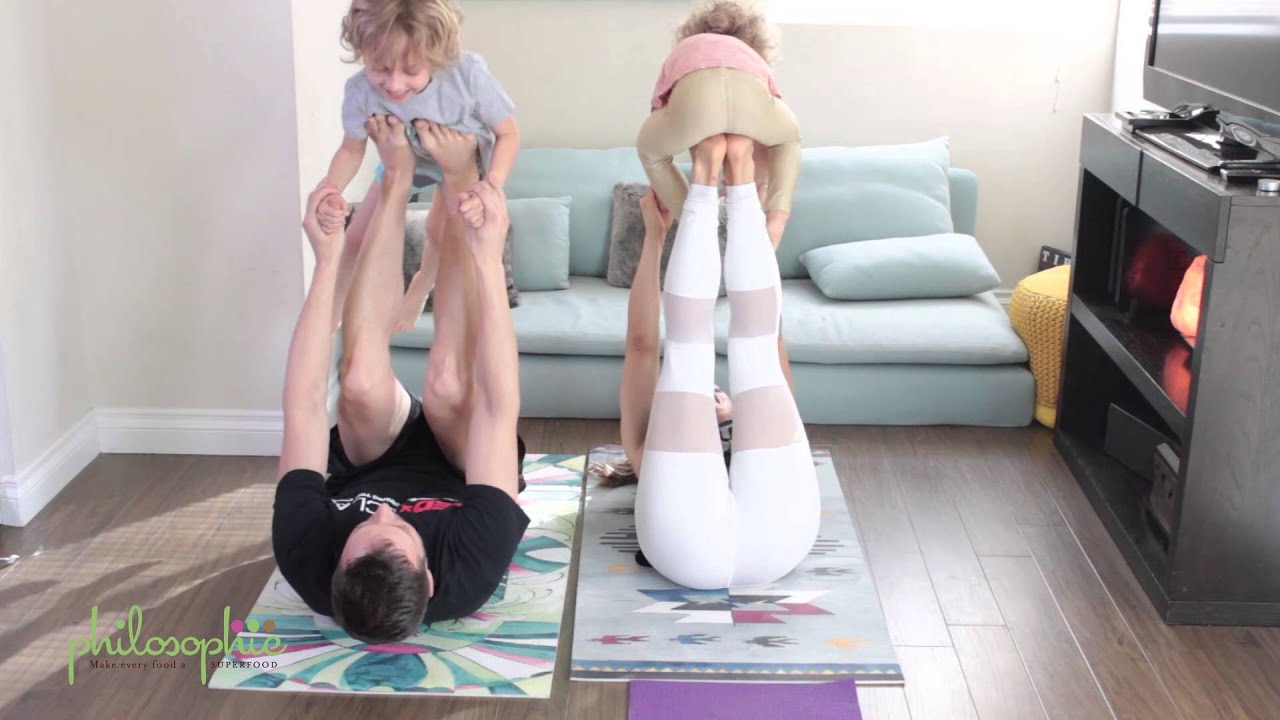
4. Workout with your kids-Children can be the best trainers possible as they run around, play, and enjoy childhood time. Playing with children, dancing around with them is a great way of working out without even realizing it. This way you will also be spending time with your kids.

5. Use your loudspeaker or phone-If you’re using your phone all day think about how else you can use it. While going home from the office you could walk somewhere quiet without losing attention from your phone.

6. Best foods- When you’re caught up in a tight schedule surviving on fast foods can make it an easier approach. To make sure you’re getting the right nourishment make sure you always have a good stock of foods that give the highest health benefits. For eg Spinach(good for the brain )salmon(good for weight loss)pumpkin seeds(good for your memory) and many others will keep you healthy and full.

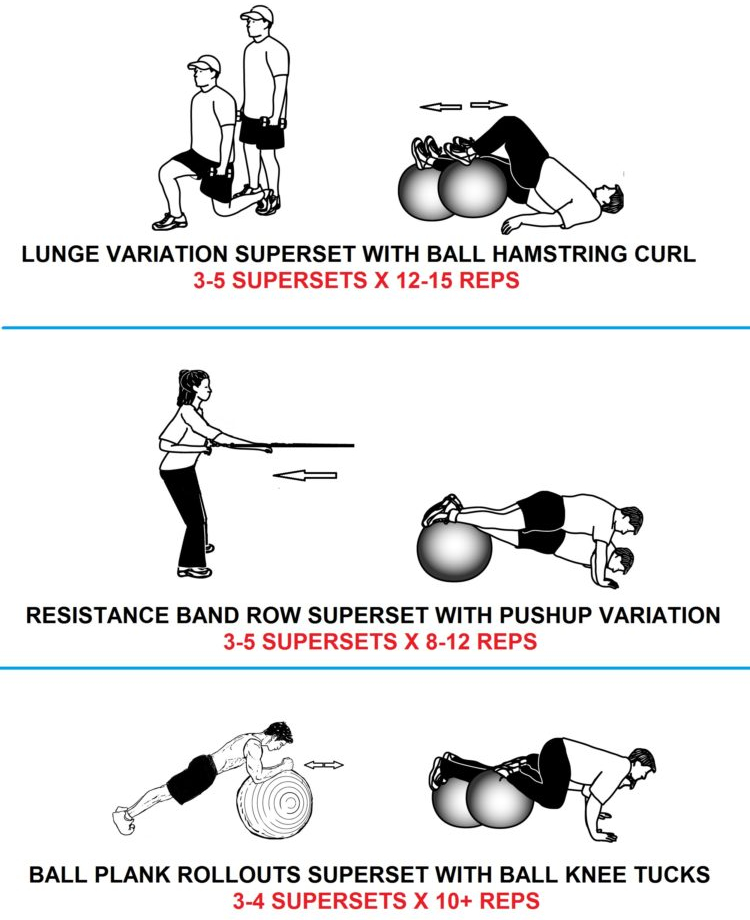
7.Supersets-When you are finally able to make some space for these exercises make sure you’re getting most out of it by doing supersets()Super-setting can lessen your exercise time by 50 percent because instead of having rest periods between sets, you do an alternative exercise that rests the muscles you’ve just trained and exercises the opposite one before you begin your next set. 

8. Live and active lifestyle-If you’re way too busy to do some exercise, exercising in your lifestyle can help you to stay healthy and fit even if you have a tight schedule. For eg.if you live close to your office, walk home instead of calling a cab.

9. Relax- When your stress levels are high due to office work or meetings it can have a disturbing impact on your health and wellbeing. Hence the best thing to do during this time is to learn how to relax your brain. Take a warm bath or do some light exercises, studies have also found that anticipation of laughter can also help in bringing down the stress levels so watch some funny videos or some funny episodes of your favorite series.

10. Two cups of water before a meal-Studies have shown that drinking two cups of water half an hour before a meal can help in losing weight, results of which are seen after 12 weeks. Drinking water after waking up, before a meal, is the simplest thing you can do to improve your overall health. Water also keeps your body hydrated and reduces the chances of headaches and helps in waste removal from the body.

EAT HEALTHY STAY HEALTHY!

-Shanaia Colaco

Distraction

Life is good the way it is. You don’t need to read another book or meditate or need anything.But I do have to admit that living life this way is no easy task.

Be happy and satisfied, because you don’t need anything else at the moment first. Second set goals and achieve them, never be too greedy too quickly

I’ve been goal oriented and focused on the present by setting goals of action, not by a finish line. The easiest example is weight loss. A finish line goal is “I want to weigh 60 kg.

We must learn how to enjoy the present moment without getting distracted by the past or future.

We are constantly thinking, stressing, worrying, and being preoccupied with a force that seems outside of our control.

We keep on treating by using meditation, reading comfortable books and articles, and trying that promises peace from ourselves.

I’m always looking for new knowledge and information. At some point, I learned that more information is not the answer.

“The life of a foolish man is fearful and unpleasant; it is swept totally away into the future.”

Pleasure is not only eating, drinking, and being merry — no, true pleasure is to live care-free.

But we live our lives far from it. We are always distracted by something. That’s why it’s difficult to enjoy the moment.

INDIAN JUDICIARY

In 1927 seems to be true as Chief justice of one country is forcibly removed from chair and apex Court of another has duly exercised its power on several occasions to declare the decisions of other two pillars of government as ultra vires, dictator of previous roared “Constitution is a 12 page book which can be torn anytime” whereas Supreme Court of latter sent a former dictator to imprisonment for suspending the constitution that is why the former is on 12th position in the “Failed States Index” of Foreign Policy Magazine whereas the latter is Emerging Superpower.

This is the tale of two countries namely India and Pakistan, both of them gained independence from slavery of centuries and with wounds of partition, communal hatred, riots and poverty but judiciary of latter thereby upholding the faith of people in the values of democracy declared the dissolution of even a provincial assembly as unconstitutional on the other hand the former had a history of every elected government being toppled by the dictators before completing its term.

The reason for all this is that one has the longest constitution of the world and the constitution of the other has been changed entirely twice since independence which is the reason that the latter is the largest democracy of world and the former had seen Marshal Law in 35 out of 60 years of independence i.e. majority of time as a nation it has been ruled by dictators.

Our constitution provides clear separation of powers of all the three wings of government namely legislature, executive and judiciary with all having separate domains and measures of checks and counter checks on each other. Our national leaders of freedom struggle realized that “No free government can survive that is not based on the supremacy of law” as in scripted on the Justice department building in Washington states so they felt the need of an impartial, sovereign and responsible institution to which the powers to administer justice and the function to uphold the supremacy of law could be delegated and which would be vigilant to other organs encroaching on citizens’ rights and subverting the Constitution.

This resulted in founding of The Supreme Court and a judiciary which is completely separated from legislature and executive in exercising its judicial functions and thereby deviating from the tradition of U.K. as our entire parliamentary system is taken from U.K. where the Supreme Court is the House Of Lords and is a part of legislature.

Comparing this setup with our setup, our Supreme Court is not a part of legislature so it can not only preside over dispute between the Union and State but can also review the executive as well as legislative action of arbitrariness and thereby can protect the voice of minority section of society rising against the atrocities committed on them by the government and thereby uphold the principles of natural justice that one can’t be a judge in its own cause.

To realize this goal of theirs the framers of the Constitution took infinite care to provide for an independent and impartial judiciary as the interpreter of the Constitution and the custodian of the rights of the citizens and Indian Constitution, which executes the said function through the process of judicial review over the acts of the legislature and the executive, which gives the mandate to the judiciary to interpret the laws but it should not be misunderstood as the Constitution does not contemplate a Super-organ nor confers an over-riding authority on any one organ.

No organ has any power to superintend over the exercise of powers and functions of another, unless the Constitution strictly so mandates. It is obvious that all organs of the State should act only according to the constitutional mandate and should not be astute to find any undisclosed source of power or authority to expand its own jurisdiction, which will give rise to avoidable conflicts and affect the harmonious functioning of the different organs of the State.

Judiciary: Savior of The Rights of Destitute and Commoner Supreme Above All

“The supreme court is the living voice of the constitution – that is of the will of people expressed in the fundamental laws they have enacted. It is the conscience of the people. it is guarantee of the minority who when threatened by the impatient vehemence of the majority, can appeal to this permanent law finding the interpreter and enforcer there of in a court set high above the assault of the factions.”

– As quoted by James Bryce, the then British ambassador to US in the American commonwealth in 1888 was understood to the deepest of its meaning by the framers of our Constitution as they assigned the judiciary in India to play a significant role of safeguarding the supremacy of the Constitution by interpreting and applying the provisions of the Constitution and acts as its guardian by keeping all authorities i.e. legislature, executive, administration, judicial and quasi judicial authorities within bounds of Constitutional framework and thereby maintaining the rule of law in the country and assures that the government runs according to law.

“Those who wrote our Constitution well knew the danger inherent in special legislative acts which take away the life, liberty or property of particular named person because the legislature thinks them guilty of conduct which deserves punishment. The authors of the Constitution intended to safeguard the people of this country from punishment without trial by duly constituted courts.”

– This was quoted by Felix Frankfurter, US Supreme Court Justice in US v. Lovett[2] in 1945 and to bring this reality they entitled the judiciary to scrutinize under Article 13 of the Constitution any governmental action in order to assess whether or not it conforms to the Constitution and the valid laws made there under.

It has power to protect people’s fundamental rights from any undue encroachment by any organ of the government. The Supreme Court acts as the guardian and protector of the fundamental rights of the people by invoking its power of writ jurisdiction conferred on it under Article 32 of the Constitution and thereby acts as sentinel on qui vive to protect the fundamental rights as was held by the Supreme Court in Pathumma v. State Of Kerla.

As in the words of Justice Untwalia in Union Of India v. Sankalchand Himatlal Sheth[4]: “Judiciary is a watching tower above all the big structure of the other limbs of the state from which it keeps a watch like a sentinel on the functions of the other limbs of the state as to whether they are working in accordance with the law and the Constitution where the Constitution being supreme.” [4]

It has also to dispense justice between the state and the citizens i.e. between seat of power and the commoner where the former is armed with all the privileges and power and support of majority of countrymen and the latter is bare hands belonging to the handful of people whose rights are infringed by the governmental action but with firm belief and faith in the principles of democracy in their heart and mind.

As it was quoted by Felix Frankfurter, US Supreme Court Justice in Earl Katcher & Warren: A Political Biography, 1967:

“The Supreme Court authority possessed neither of the purse nor the sword but ultimately rest on sustained public confidence in its moral sanctions. Such a feeling must be nourished by the court’s complete detachment, infact and appearance, from political entanglements and by abstention from injecting itself into the clash of political forces and political settlements.”

So in order to realize this and to enable judiciary to discharge their functions impartially without fear or favor, our forefathers armed the constitution with certain provisions not only to safeguard judicial independence but also to ensure the judicial accountability from lower to topmost tier. The judges of these courts are appointed by the central executive in accordance with the advice of chief justice himself and this mechanism for maintaining this independence was ensured after the landmark judgment in Supreme Court Advocate’s On Record v. Union Of India[5] case. Once appointed, the judges hold office till they reach the age of superannuation as fixed by the Constitution under Article 124(2) because of which their tenure is independent of the will of the executive and further there is a special and complex procedure that has been laid down in Article 124(4) of the Constitution for removing the judges on the grounds of incapacity or misbehavior which ensures that their power is checked and they do not function in an arbitrary manner.[5]

There is one more significant role that the judiciary has to play in a federation i.e. to act as the balance wheel of federalism by deciding the controversies between the constituent states inter se, as well as between the centre and state as this power is conferred to judiciary under Article 131 of the Constitution under the heading of original jurisdiction of the Supreme Court.

Further adding weapons to its armoury the framers of our Constitution has provided the Supreme Court with jurisdiction to punish contempt of its authority under Article 129 of the Constitution. Such a power is very necessary to prevent interference with the course of justice and in maintaining the authority of law as administered in the court and to ensure the confidence of people in the integrity of the judges as the same was observed by the court in Om Prakash Jaiswal v. D.K. Mittal[6] that: “Any act or omission which undermines the dignity of the court is therefore viewed with concern by the society and the court treats it as an obligation to zealously guard against any onslaught on its dignity.”[6]

It is not so that only an individual can be held liable for contempt of court but executive branch of government also bears a grave responsibility for upholding and obeying judicial orders as the same was ruled by the apex court in Md. Aslam v. Union Of India[7] and Vineet Kumar Mathur v. Union Of India[8] to name few but this responsibility is many times is not fulfilled in many cases and in many cases government officials are found guilty by the Supreme Court of contempt the most famous of which is Indira Sawhney v. Union Of India[9] where the Chief Secretary of Kerela was guilty of contempt of court. [9][8][7]

In this regard parliament has the power to enact laws but such laws are limited only to prescribe the procedure to be followed and the maximum duration of the punishment and can make provisions for appeal but parliament has no legislative competence to abridge or extinguish the jurisdiction or power conferred on this court by the Constitution. The two rulings namely Delhi Judicial Services Association, Tis Hazari Court v. State of Gujrat[10] and Supreme Court Bar Association v. Union Of India[11] in this respect are significant where in the former the Supreme Court held that parliament’s power to legislate in relation to law of contempt is limited and in the latter Supreme Court ruled that the Constitutional vested right under Article 129 can’t be either abrogated, abridged or cut down by any legislation such as Contempt of Court Act or C.P.C. [11][10]

The above mentioned provisions of the Constitution is the place from where judiciary attributes its supremacy over the other 2 pillars of Indian democracy namely the legislature and executive and any act done by judiciary for upholding the principles of democracy can’t be labeled as encroachment of judiciary over the domain of legislature and executive as many times in recent past top notch of legislature and executive had given statement in open against judiciary of not to cross its limits which clearly attracts contempt of court proceeding against themselves.

Talking about the recent major face off between the judiciary on one side and legislature and executive on the other side are on the issues of directions of Supreme Court to conduct floor test in Jharkhand Assembly, summons to Lok Sabha Speaker in expulsions of M.P.’s case and considering the constitutionality of dissolution of Bihar Assembly.

Regarding the direction of Supreme Court to conduct floor test in Jharkhand Assembly, it is no where in violation of Article 212 of Constitution because although the courts can’t interfere with the working of a house on grounds of irregularity of procedure but they may scrutinize the proceeding of house on grounds of illegality or unconstitutionality. The same was the case here as the courts didn’t interfered in the procedure of floor test but it only directed to conduct a floor test because formation of JMM government was unconstitutional as it was in minority and was formed without the floor test. Similar verdict of Supreme Court was there to conduct floor test in case of Jagdambika Pal v. State of U.P.[12]. It is all wrong to say that Constitution prohibits judiciary to look into matters of violation of Constitution when it is concerned with legislative act instead it is vice versa as in Keshav Singh v. Speaker, Legislative Assembly[13] the court had interpreted the Constitution as: “Article 212(1) seems to make it possible for a citizen to call in question in the appropriate court of law, the validity of any proceeding inside the legislative chamber, if his case is that the said proceeding suffer not from mere irregularity of procedure, but from an illegality. If the impugned procedure is illegal and unconstitutional, it would be open to be scrutinized in a court of law.” [13][12]

Coming to the topic of summon to Speaker of Lok Sabha and his subsequent remarks on that clearly invites contempt of court proceedings against him as he had laminated the Supreme Court to be overstepping its limits which was not the case of overstepping of limits, but is a jurisdiction conferred to it by Constitution as laid down in: Delhi Electric Supply Undertaking v. Basanti Devi[14] where it was ruled that under Article 142(1) that Supreme Court in exercise of its jurisdiction is entitled to pass any decree, or make any order, as is necessary for doing complete justice in any cause of matter pending before it and it was under same provision it was deemed fit by Supreme Court to summon the Speaker and ask him that under which provision of law the legislature has power to expel its members elected by people when it doesn’t have power to appoint them as representative of people. [14]

It must also be brought in light that it was not only under Article 142(1) but it was also under an express provision of Constitution for this purpose i.e. under Article 142(2) of Constitution Supreme Court have all and every power to make any order for securing attendance of any person and Speaker should be reminded of Article 361 of Constitution which protect only President and Governor from being answerable to any court in course of exercise and performance of powers and duties of his office or for any act done and the post of Speaker Of Lok Sabha is not in the ambit of this provision of not being answerable to any court of law and it should also be reminded to him that his denial to summons of court is in ambit of guidelines laid down by apex court in Hira Lal Dixit v. State of U.P.[15] in which it was held that any willful disobedience or non compliance of court order is considered as contempt of court as his act hampers administration of justice and erodes faith of people from the temple of justice and brings administration of justice into deep disrespect.[15]

Lastly dissolution of Bihar Assembly which was dissolved on the recommendation of Governor of Bihar and on advice of Union cabinet of ministers by The President was held unconstitutional is also not violation of Article 361 of Constitution as the court hadn’t seek any answer either from The President and The Governor of Bihar but from this it shouldn’t be construed from this provision that this prohibits the court to initiate any proceedings against the Government Of India as the same Article 361 further states that nothing in this clause shall be implied as restricting right of any person to bring appropriate proceeding against Government Of India. Further in this matter it should be taken that in the cases of Rao Birinder Singh v. Union Of India[16] and Madhav Rao Scindia v. Union Of India[17] and other such cases court held that appropriate proceeding can be brought against Government Of India and only President personally is not amenable to a court process with reference to act in question yet when question arises that whether in a given situation the President has acted rightly or wrongly it may be decided only against Government Of India without questioning president’s conduct.[17][16]

Conclusion

Finally it should be kept in mind that such Constitutional blunder as that of dissolution of Bihar Assembly case should be avoided in which the President’s office was indirectly brought under criticism by bringing an amendment in Article 74(1) of Constitution and thereby amending it as there shall be Supreme Court with Chief Justice at its head to aid and advice President who shall, in exercise of his functions, act in accordance with such advice so by this all his acts will be in ambit and accordance with laws of country where Constitution being supreme and there will be no any such Constitutional blunder as that of indirect criticism of President’s office.

Further the cases like that of P.N. Duda v. P. Shivshanknkear[18] should be dealt with an iron hand and no one should be allowed to walk away freely in any way or other despite criticism of courts only on the grounds that he or she belongs to power corridors of country as we don’t further want constitutional blunder as that of Justice Beg and Justice A.N. Ray nor brain drain from judiciary as that of protest resignation in the form of Justice Khanna.[18]

ADVERTISEMENT

It is the promotion of a product, brand or service in order to attract more customers and increase the sales. It is a paid form of non-personal communication. It is a promotional tool. Advertising is done through newspapers, magazines, television, radio, outdoor advertising or direct mail, search results, blogs, social media, websites or text messages.

STAGES OF PROMOTING A PRODUCT

  1. Market analysis
  2. Selecting the advertising media
  3. Cost-benefit analysis
  4. Deciding the mode of advertisement
  5. Creating the actual advertisement

IMPORTANCE

Customers:

  1.  Awareness of the product available in the market
  2. Helps to find the best product

Seller and companies:

  1. Helps in increasing sales
  2. Helps  to know their competitors
  3. Makes ground for new product
  4. Creates goodwill of the company
  5. Customer loyalty
  6. Demand of the product increases

Society:

  1. Educates people
  2. Deals with social issues like child labor, liquor consumption, girl child killing, smoking, family planning education, etc

TYPES OD ADVERTISEMNTS

  1. Print advertisement
  2. Radio advertisement
  3. Television advertisement
  4. Internet advertisement

TYPES OF AD FORMATS

  1. Banner ads
  2. Interstitial ads
  3. Native ads
  4. Video ads
  5. Playable ads
  6. Ads and adjust

THE BEST ADVERTISING CAMPAIGNS OF ALL TIME

NIKE: Just Do It

  1. Print, television, internet
  2. Connects the customers on an emotional level

COKE: Share a Coke

  1. Print
  2. Encourages sharing

VOLKSWAGEN: Think Small

  1. Print
  2. Consumers recognize and appreciate honesty.

GOOGLE: Year in Search

  1. Internet
  2. Unites everyone and tells customers how much you care that they care

METRO TRAINS: Dumb Ways to Die

  1. Internet, radio
  2. Communicates a simple idea in a creative and memorable way

APPLE: Get a Mac

  1. Television
  2. Explain your product’s benefits in a relatable way so consumers are able to see themselves using it.

KFC: FCK

  1. Print
  2. Demonstrates how to combine humility, class, humor, and ultimately company pride in a message

ADVANTAGES

  • From Viewpoint of Manufacturers:
    1. Increase in sales
    2. Supplementing Salesmanship
    3. Lower costs
    4. Greater dealer interest
    5. Quick turnover and smaller inventories
    6. Steady demand
  • From Viewpoint of Consumers:
    1. Improvement in quality
    2. Facility of purchasing
    3. Consumer’s surplus
    4. Education of consumers
  • From the Viewpoint of Middleman:
    1. Retail Price Maintenance becomes Possible
    2. Acts as a salesman
    3. Ensures quick sales
  • From the Viewpoint of Society:
    1. Change in motivation
    2. Sustaining the press
    3. Encouragement to artists
    4. Encouragement to research
    5. Glimpse of National life

DISADVANTAGES

  1. Deferred Revenue Expenditure
  2. Misrepresentation of facts
  3. Barriers to Entry
  4. Wastage of National Resources
  5. Consumer’s deficit
  6. Increased costs
  7. Product Proliferation
  8. Multiplication of needs

BENEFITS OF INTERNET ADVERTISING

  • Internet Advertising is Huge
  • Internet Advertising is Targeted
  • Internet Adverting Enables Good Conversion Tracking
  • Internet Advertising has a Lower Entry-Level Fees
  • Internet Advertising can be Much Cheaper
  • Internet Advertising has Greater Range

LIMITATIONS OF INTERNET ADVERTISING

  • Clutters
  • Privacy
  • Measurement problem
  • Surfing speed

FALSE ADVERTISING

False advertising is the use of false, misleading, or unproven information to advertise products to consumers. The advertising frequently does not disclose its source. Examples:

  • Photo bleaching
  • Omitting information
  • Hidden fees and surcharges
  • Manipulation of measurement units and standards
  • Fillers and oversized packaging
  • Misleading health claims
  • Comparative advertising
  • Manipulation of terms
  • Puffing
  • Incomplete comparison
  • Inconsistent comparison
  • Misleading illustrations
  • False coloring
  • Angel dusting
  • Guarantee without a remedy specified
  • Bait-and-switch

COMPANIES FOUND GUILTY OF FALSE ADVERTISING

  • VW falsely advertised environmentally friendly diesel cars
  • Activia yogurt said it had special bacterial ingredients.
  • Red Bull said it could give you wings
  • A lawsuit alleged that Taco Bell was falsely advertising its beef.
  • Eclipse said its gum could kill germs
  • L’Oreal claimed its skincare products were clinically proven to boost genes.
  • Splenda said it was made from sugar
  • Hyundai and KIA over-advertised its cars’ horsepower
  • Definity eye cream re-touched a model in an anti-aging ad
  • Wal-Mart falsely advertised the price of Coke in New York