Commercialization of Education

Back in the 90s, getting 60 percent on your boards meant having a party in the whole neighborhood; it was a celebration. Today, even 95 percent is not enough to secure your admission in the college and course of your choice. So, what changed during all these years? Not the NCERTs for sure.

India is fast becoming a country where education is just another commodity. With everyone obsessing over education and paying any amount of money to get the best, the real essence of education has been devalued. It is no longer a noble cause; it is a mere means for people to earn a profit, to scam others into paying for a basic necessity.

To educate someone means to impart that person the knowledge so that he or she can survive in society. But the commercialization of education has turned almost every institution into a business or a money-making factory, charging huge amounts for all the facilities that they provide. And the sad part of it all is that these facilities aren’t even required most of the time.

Today, every nook and corner has a new coaching institute being run by someone who is not even a professional of the field they are teaching or tutoring students in. As a result, most of the students going from schools to colleges are not using any prior knowledge from their formative years. Furthermore, the students passing out of colleges are not ready to be employed right away. Yet they are being employed, many even as teachers. A teacher is a pillar of a child’s future, but what will happen if the teacher himself fails to build a strong foundation for his student’s life?

Another important parameter for quality education is having the right infrastructure. The environment of the place where you send your child to study matters a lot. As a student, it is important to keep in mind that nurture plays a huge role in the development of our minds and the correct environment is the first step towards nurturing the feeling of learning in our minds. Schools and colleges are spending way more on advertising their institutions and finding prospective customers in the name of students rather than spending that same money on improving the infrastructure and the facilities available for the students. The parents are falling prey to these lucrative ads, readily paying a huge amount of money to get their ward into the said institution, without even realizing that their hard-earned money will be used to catch other prey. Basically, they are being cheated in the name of education.

Instead of being the solution to a problem, education itself is becoming more of a problem. Even though the education industry is rising, it is lagging behind in fulfilling its social responsibility towards the society.

The education system has to improve, thereby improving the meaning of education. Providing education should no longer equate to just paying the fees. The youth has to be provided with quality education and the whole society has to work together to convey this message to the world.

Image Courtesy: Google

The Coming-of-age genre (PRIDE EDITION)


In this era of seeking social validation, everyone is busy flaunting their intellectual millennial side. Posting stories of binging Nick Bateman’s stellar performance in Ozark while your Netflix’s ‘Continue watching’ flashes reality show cliché ‘Too hot to handle’ As the whiff of pretense fills our social media, one can never be in denial of a good coming-of-age movie. We often set aside our undying love for the action and splatter for a classic youthful, mellow movie. Whether it’s embracing the ‘Wednesdays we wear pink’ culture with the sassy Regina George from Mean Girls, reminiscing the Judd Nelson’s signature fist pump in the ending of Breakfast Club or even Hailee Steinfeld as awkward yet brazen teenager, Nadine in the Edge of Seventeen.
This blossoming genre often made audiences swoon. Either by propagating stereotypes of a dapper looking hottie falling for a demure, bespectacled girl or explored a more realistic approach of portraying the struggles and the bold nature of a teenager. The films that made the gravy train of this genre might have a very simplistic plot but truly wholesome and heartwarming. Formerly, with heterosexual protagonists exploring the journey to adulthood, films are now diversifying their crux and adopting a more queer sense and educating masses through powerful characters, shattering the heteronormative principles of society. Here’s presenting my favourite, 3 golden eggs of LGBTQ+ centric films.

  1. The Half of It.

Written and Directed by Alice Wu, the movie features a unique love story with a simplistic yet aroused, deep emotion. An introverted and aloof Ellie Chu, who is also a literature aficionado has a way of spinning beautiful written pieces with her words and philosophy. And then comes, naïve and adorable Paul Munsky, a mediocre football player with an undying love for his brainchild recipe of ‘taco sausage’ and the pretty, damsel Aster Flores. As our jock, decides to woo Aster by writing letters to her, he approaches Ellie for the task, unbeknownst of Ellie’s secret crush on the smart and witty, Aster. In the process, Ellie falls for Aster teaching us life lessons on the efforts one takes for their loved one, someone with whom you can escape the harsh reality and adores you for your true self. Even though your love might be unrequited, there’s always hope. It portrayed queer love, like an ordinary love story without glorifying it and also simple acceptance of another person’s sexuality without any beating around the bush drama . In conclusion here’s my favourite quote.
‘Love isn’t patient, and kind, and humble. Love is messy, and horrible, and selfish, and bold. It’s not finding your perfect half. It’s the trying, and reaching, and failing.’ – Ellie Chu

  1. Love Simon:

How to keep up with a messy love story? Well, keep a sketch pad handy to draft a web diagram, some uncalled for gasps and a tissue box for those waterworks as drama unfolds in teen flick ‘Love, Simon’. Rolling the carpet for our protagonist, Simon Spier a funny yet awkward high school student who has a poised and passionate personality. However, he’s discrete about his sexuality and keeps it under wraps fearing rejection. His entourage is small yet filled with interesting set of people, Nick, Leah and newcomer Abby. The film has all the key ingredients for a soapy, teenage drama. Simon exchanges heartfelt emails with a secretive pen pal ‘Blue’ under a pseudonym ‘Jacques’. As love blossoms and events unwind, Simon gets blackmailed for his emails. Throughout the story, Simon faces adversaries testing his friendships, being ostracized and bullied and the struggles of coming out of the closet. This film ended on a mellow note with and conventional happy ending. And also to know who’s behind those anonymous love notes, tune in with your feel-good kit.

  1. Call me by your name

The landscape of this movie transports you to the charisma of Italy in 1983, nestled in a beautiful villa where love blooms between a doctoral, research assistant Oliver with a suave and debonair and the American edge and 17 year old Eilo, a reserved boy who becomes wary if developing feelings for his father’s research assistant, Oliver. He keeps his sexuality closeted and eventually ventures in a daunting adventure of love with Oliver. The stereotype of opposites attract comes into play as the relationship between Oliver and Eilo blooms into something cherishing and worthwhile. Oliver is smart and confident, though he does not acknowledge and turns a blind eye towards Eilo’s surging feeling however eventually he pours his heart out. This movie explored bisexuality and not only perceiving it sexually but in a form of sincere adoration for one another. It’s also pretty obvious to fall in love, when the setting around is a beautiful, ethereal Italian Riviera. I guess we’ve found a new addition to your travel bucket list too.

Coronavirus has put our education in coma

FUTURE SHOCK: 25 Education trends post COVID-19, Marketing & Advertising  News, ET BrandEquity

Till now coronavirus has claimed more than 400,000 lives and has shattered the world economy. Most of the countries are presently in economic slowdown. In India, data from Centre For Monitoring Indian Economy shows that 122 million people lost their jobs because of coronavirus, a majority of them being migrant laborers. But another disturbing phenomenon is that our schooling and higher education is in a limbo.

UNESCO says that more than 67% of global school-going population has been affected by covid-19. In India, schools have remained closed ever since the countrywide lockdown was announced on March 24th. Even after the lockdown was lifted, a survey suggested that 92% of the parents didn’t want to send their kids to schools. Education has certainly taken a major hit during lockdown. Government and private schools have started online classes where teachers are handing out assignments and other tasks virtually but this is not a substitute to classroom teaching. Also, students of economically weaker sections do not have access to these facilities and they are missing out on lectures and study material provided by the teachers.

Higher education has also suffered a lot in this pandemic. Final year students have been hit hard by the covid-19 situation and hence, they are uncertain about their future. Campus placements of many college students have been cancelled or stopped. This is because of various companies going bankrupt or closing operations & laying off employees. First and second year students have missed out on a lot of classes and almost an entire semester. Many students have said that they are in depression and are feeling unproductive. PhD students are not able to access libraries for their research work.

Coronavirus has forced shut our educational institutions and it looks like they will remain so until the virus is gone. State and Central government should work overtime to curb the spread of virus so that our students can go back to their schools and colleges. They should also invest and expand their technology that facilitates online leaning so that education does not take a hit in times of crisis like these. They should also make sure that education is accessible to the most vulnerable sections of the society.

From Chubby Cheeku to Virat THE FITNESS FREAK Kohli

Virat Prem Nath Kohli who is currently captaining the Indian cricket team across all the 3 formats is not an unknown figure to any but is known majorly for his consistency, his unflagging hunger to outperform himself everytime, his aggression and intensive passion on the field and is always in talks because of the fitness regime that he follows. Let’s take a deeper dig into the Fitness Mantra the sportsman has not only followed himself but also continued to advocate, over the years, amongst his fellow counterparts and the young enthusiasts who wish to play the sport at an international level.

We are all well familiar with the Chubby Cheeku who led the Indian side to a victorious 2008 U-19 World Cup. Often he is bombarded with questions from the curious interviewers as to how did he manage to transform so miraculously? To which his answer is subtle yet sublime. He says that the realisation hit back in 2012 when during the IPL months, he realised, looking at himself in the mirror, that this is not how an international cricketer should look like. That’s where the journey to transform began mentally for him. Nextly, the diet had to change and the Delhi-born Punjabi Munda made a firm decision to give up on his all-time favourite Chole Bhature and other delicacies. The first three months were dreadful. Virat told Jatin Sapru in an interview for Star Sports that he had to eat boiled Kabuli chana and for a person whose taste buds are accustomed to having spicy food, it was no less than a disaster. But he didn’t give it up then, despite the temptations, knowing in his head that this shall soon become a habit and get easier and is now reaping the fruits, which the whole sporting world is a witness of.

JW Marriott Hotel, Pune in 2017
Kohli with Shankar Basu

We have heard Virat giving away the major credit to Shankar Basu, on several occasions, who was his fitness coach working with him in RCB. Although, Virat was initially quite reluctant to lift weights due to sustaining back issues and do the other types of exercises to strengthen the lower body, he kept following Mr Basu’s instructions and soon felt the body exceeding its previous limits. He was able to run swiftly between the wickets and during fielding, the match recovery was happening quickly and everything else seemed to fall in place. It’s more of a mental struggle than it is physically. The mindset has to be right and the energy has to be channelized towards the bigger picture, which for him, has always been the victory of the team and not individual milestones. And that is the major reason behind why the transformation happened so smoothly. Virat has truly been an epitome of relentless towards fitness because to him, it isn’t any special or out of the box thing, but a basic requirement of his job. He has been very strict with his nutritional intake to such an extent that if he would feel really drained out post big innings in a test match, he only affords to have a gluten-free dark chocolate bar to ensure just enough supply of energy and speeden up the recovery process for the next day. No Sweets please!!! He has always been so adamant about his exercising routines even during this lockdown which his social media profiles are a living proof of and all of that requires a lot of self control, dauntlessness and that desire to always be one of the bests in the world, which for sure he has become.

Taking inspiration from him are many, his teammates like Dhawan, Ashwin etc , the younger players like Chahal, Kuldeep Yadav Hardik Pandya, KL Rahul, Navdeep Saini, Shubman Gill etc are repeatedly seen acknowledging their captain for raising the bar and being a constant source of motivation to them and so many other future-cricketers of India. “Virat Kohli is like lion, his hunger is never-ending”, Shreyas Iyer was quoted as saying. The admiration and appreciation is not just confined to the junior lot but also a lot of senior players like Sachin Tendulkar and Sir Vivian Richards regard Kohli for bringing about a fitness revolution in not just India but globally and across all sports.

We are proud of you Captain Kohli for setting such a high benchmark in terms of keeping fit which has only taken Indian Cricket forward and we at Eduindex News wish you and your Indian Cricket Team all the very best for the forthcoming matches.

EXECUTING SUCCESSFUL BUDGET-FRIENDLY COLLABORATIONS WITH CELEBRITIES.‎ How to do and Why is it required?


For a large-scale promotion of the campaign, say a physical activity driven campaign which would emphasise  the benefits of regular exercising & staying fit and is less about preaching the nutritional value of particular foods. I reckon that we should use TV and Social Media preferably Instagram or Facebook. Nextly, we need to lookout for affordable and successful collaborations with a trending or in-buzz celebrity. The contact details including the email id and phone numbers of their managers are rightly mentioned in their Instagram bios and Facebook official pages. We can shortlist a few celebrities and then finalize one or two of them as per the budget. We can create illustrative posters, banners and post it on our social media handle under the brand name “play to slay the calories”,  “stay fit to be hit” etc.
Once we have officially communicated our needs to the celebrity, we can ask the him to repost our posters on his account and encourage his audience to engage in physical activities. We need to hand over short scripts enlisting the agenda of our mission to him and ask him to make videos to be uploaded on Instagram story campaigning for our brand and helping it grow eventually. I am sure the active followers upon his advice would record the videos of them exercising or playing an indoor/outdoor sport along with all the members of the family which includes both the young and the older generation and when they would put up those videos on the social media then the the celebrities should be asked to repost the best entries on his page. We are well aware of the fact that whatever a celebrity does tends to attract a lot of media attention so automatically the videos would reach other platforms like TV news and articles by leading media portals i.e Pinkvilla. When people would see others gaining overnight fame and becoming a sensation just because a celebrity posted their exercising or playing video on their page then people would get enticed and also motivated to be promoted on the official page of celebrities like Asim Riaz of Bigg Boss 13 who was trending almost everyday on Twitter. I witnessed people going mad for him. They even overcrowded a mall in Mumbai because of a rumour that he was going to visit as a part of a big boss task.
‎As per the budget we can also go for a young sporting athlete preferably from the Indian cricket team or any IPL franchise because if sportspersons promote fitness then the whole idea is accepted more widely and they have a larger fan base, not confined to any particular age group. Meanwhile on our social media handle, We will keep posting stats like 1 out of 3 people haven’t done any physical activity in the last year to appeal to their emotional conscience. And you never know, people might actually feel motivated to step out. We can use catchy captions like being active on social media isn’t being truly active. We will also keep posting regular videos i.e yoga tutorials or in other ways that would tempt them to make videos by going out and playing so as to get featured on a celebrity page. This way without the expenditure of much money or resources our job would also be done, people would exercise as well, our campaign would also get promoted and our brand name would also grow by utilising the fame of a particular celebrity.
‎The reason this idea popped up in my head was because I checkout Alia Bhatt’s Instagram stories of June 5 where she asked people to upload a selfie with plants on the occasion of World Environment Day and within 4 hours social media flooded with so many of them because 7-8 lucky peoples’ stories got mentioned in Alia Bhatt’s stories. Liked the idea?

Alternative technology for a climate change resilient India

If you can’t see the stars blinking in the night sky, it does not mean they have disappeared. They are there just behind the blanket of clouds, you need to discover them.

The world is stringing hard to contain the climate change. Every country,every international organization is trying their levels best to create awareness of the rising hues and cries regarding climate of the earth. International organizations like UN come up with programs like UNFF, 1.5° C reports, several conversations like Paris, Geneva, Kyoto, protocol etc. Among all these efforts at International level, individual countries to are trying at national levels in order to curb this menace of climate change.
India, not behind in any of the major International alliances on climate change has also pledged to keep pace with World order to combat the rising problems of the nation and the world at large. But, what is climate change and how is it affecting the world and particularly in India? The answer to the question lies in the virtues of mother earth of balancing the heat and other atmospheric phenomenon around the world. Climate change is a process of change (rise) of the average temperature of the world. This change is a result of combination of natural and anthropogenic processes.
The rise of temperatures at the Arctic Ocean is particularly alarming. As a result India won’t be untouched from this major change. Being a major developing country, India is also putting it’s efforts in this direction. The largest economies of the world, depend highly on polluting sources of energy like, crude oil, coal. The emissions from these sources are not only polluting but they remain stranded in the atmosphere for millions of years.
The country is a proud owner of multiple Physiography leading to different sources of energies other than the conventional ones mentioned above. The states of Western and southern India are rich resources of solar energy, one of the most crucial sources of Renewable energy. Giving a boost to solar energy in these states will assure India of energy security as it is a very cheap and reliable source of energy for India. The government has striked the iron hot by initiating programs like International Solar Alliance, PM -KUSUM, cheap loans to households for planting solar panels, etc.

The other major renewable source of energy is wind energy and hydro energy. The vast coastal areas of India provide it with yet another gift of non- polluting form of energy generation can be a milestone in harnessing global warming and Thus climate change. One of the most significant amount of pollution is seen due to vehicles. The mega cities of the country are ranked one of the worst in traffic on roads. Owing to large traffic, these vehicles majorly release sulphur contents, PM 2.5, PM -10, carbon monoxide, etc. in the environment. The government recently has set up rules in this context. It has come up with BS -VI norms of vehicles which in comparison to BS -IV norms release only sulphur content-10. Apart from this, there is also a reduction in PM 2.5 and PM 10 levels. Pertaining to increased pollution in Delhi especially during the times of Diwali celebrations, it is also caused due to-

  1. Burning of crops of paddy in the neighbouring states.
  2. Bursting of crackers in a huge amount

The government has setup air purifying towers in the city to overcome this problem. Along with this, the government has adopted for management of paddy residue by converting it into a fuel which will be less polluting. And for the problem of crackers CSIR has come up with green crackers instead of the crackers which were used earlier.

Other sources which are creating obstacles in containing climate change are the manufacturing units which use and also release gases like CFCs, HFCs etc. There is no denying to the fact that increased use of refrigerators and air conditioners has massively raised the levels of GHGs, like, CFCs, HFCs and HCFCs. Out of the obligations of International conventions India has successfully phased out use of CFCs is determined to phase out HFCs by 2020.

There is no doubt that achieving the goals of climate change resilient technologies is very challenging in a developing country like India, where full literacy is still a dream far to achieve. But the very truth of India having the potential to convert it’s massive demographic dividend and resource rich geography is also not deniable. Not only the government, but also the people at individual levels have to strive in achieving a climate on their very own earth which could be worth living and not only for them but the generations to come. The future is awaiting for the successful implementation of the policies of the government already made and the one’s to be made. New records of collaborations for example the one with Government of U. K to efficiently and resiliently ban the usage of ACs in every corporate and business etc. will enhance India’s capacity to conform with aims like 1.5° C and 2°C and combat climate change.

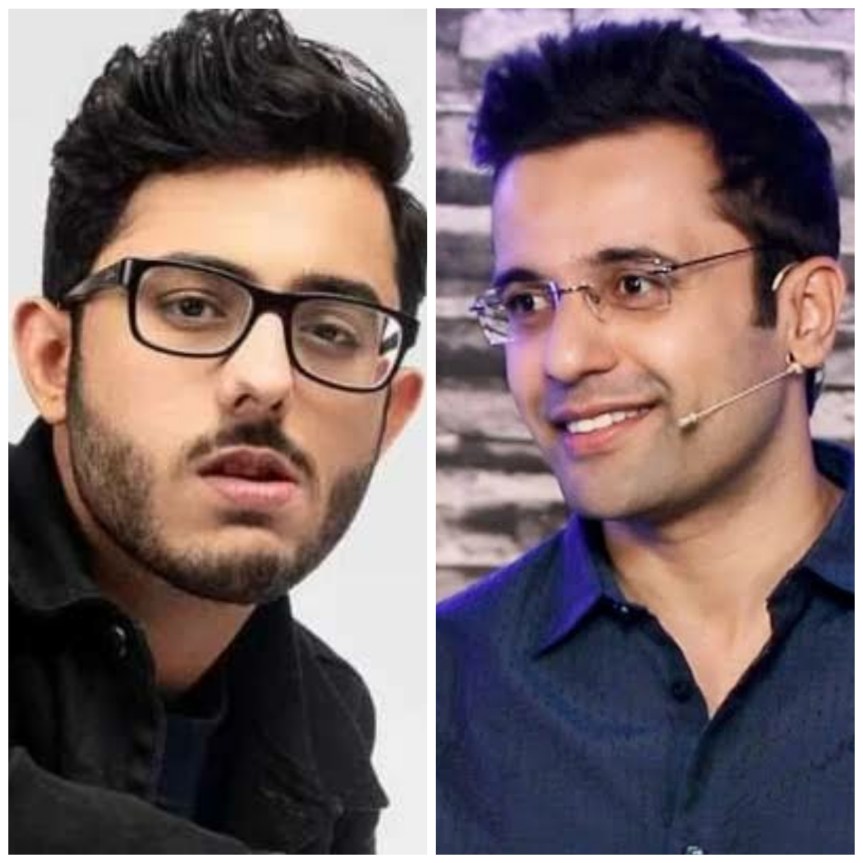
Why is the content of YouTubers like SANDEEP MAHESHWARI and CARRY MINATI so popular amongst younger audience despite being so contrasting?

Being a part of the younger audience myself, I feel that whenever I am listening to anyone speak or reading an influencer’s write-up , I want to feel that connect with them. It is often done subconsciously in order to soothe the inner child within me which wants to convince herself that even well-successful grownups who are standing and delivering that speech with utmost confidence have done things wrong at some stage in their lives when they were maybe younger, immature or simply unaware because it’s human and perfectly normal. The mind has this piece of information well fitted into it but the heart often tends to maunder whenever surrounded by any discomfort. I believe that the language needs to be more simple, narrative of one’s own personal experiences, openly expressive of vulnerabilities, full of connecting and compassionate tones rather than just imposing suggestions or advices on to the younger generation because they then don’t take it constructively, they take it as orders and that’s why the generation gap goes on widening. I believe the tone has to be such as to make them convinced that they are not in the midst of problems alone. Like content pieces for younger generation include diverse topics related to beauty, menstrual taboos, pimples and acne, dealing with the adolescence and peer pressure, career counseling, acting like cool guys or studs, pros and cons of excessive gaming, early dating etc among both boys and girls. Hence, tone should be assertive, firm and yet comforting to ease off the excess baggage which teenagers unknowingly carry on their shoulders. We need to make them understand, through our content, that we are here to try and suggest them a list of methods to solve their problems so that they are able to sense that natural connect and this way, they might even hear & implement it truly. And without any doubt, Sandeep Maheshwari has got all such qualities of being just the right advisor and mentor for teenagers.


So this was all about trying to creat impactful and emotionally moving yet stabilising pieces of content.
Let us now deeply discuss the language/tone used by the content creators other than motivational influencers who still manage to attract younger audience. Teenagers of today’s world often try and engage themselves in activities which can help them avoid their problems for a while cause they feel too weak and are simply unaware of their problem solving capabilities. But whatsover anyway, they watch a lot of laughter content on YouTube and other streaming platforms that gives them their much desired temporary escape from the depression, anxiety, vulnerabilities and non healed wounds caused within a broken/unhealthy relationship with friends or parents.

This need not be the case for every  teenager as a majority of them also watch such light-hearted contents for their mood freshening or to simply ease the study pressure. YouTubers like Carry Minati, Bhuvan Bam etc and meme pages on social media are so popular amongst younger audiences because of the kind of satirical tone/language which they quite effortlessly adapt while talking to their audience. The center point of the videos as far as my knowledge stretches is, the mockery, the trolling activity, the constant taking a jibe at someone/something.

So if you’re trying to create some content for a younger audience, make sure it falls in either of the two categories since maximum rates of success are guaranteed here. And the living proofs are these two legends!

“Corruption The Cancer for Nation’s Health”

The major hurdle which is stopping INDIA from being superpower in the world is ‘corruption’ which had corrode the strength and aspirations of the nation to be a super power. corruption had became a serious challenge for the progress of an individual up-to national level. and how it is degrading us ? is a serious concern to know about, there are many facts and figures supporting the Arguements above made deeply effecting us in many aspects from day to day life to long run, when there will be corruption the country foundation of development will be served with substandard goods for example lets look at nearby surroundings Even the best and developed cities of our country did not have good Roads People dyed because of falling in Pottols. Roads are considered to be the life lines of country provide channels for the transportation and considered to be the backbone for Buisness and hence emblematic for economic prosperity of the Nation. But we are unable to laid down even the basic requirement of building roads, and it is not that we can not built good roads just go to Malesia Nigeria Even Iraq we had built the best roads means Indian contractors had done beautiful work abroad but here in India roads are laid and with the passage of one monsoon roads are washed away and soon the next tender come and it is the repeating pattern country is witnessing . Corruption had effected us even on personal level Adulteration of food stuffs, The children the youths and every individual consumes adulterated foodstuffs liquors etc. deteriorating the healths and health expectancy of People. Apart From it One of the biggest Impact What Indian Economy Witness Is our Investment Priorities, corruption had completely distorted our investment priorities there is a significant percentage of people are under poverty line but instead of producing chief goods and basics goods for them we have most of our investment priorities for luxury items like we produced steel but it goes for building of Air Conditioners and these investment priorities are totally unsuitable for country like India. And Because of corruption there is a serious impact on what it is capital output ratio because when there will be corruption the transaction cost of country goes up and more insignificant will be the capital output ratio, (it is like if it is 3 it Means today if 3 rupees are spent than you will get 1 rupee as income perpetually it means more higher the number is more insignificant your production). why this number is so important to note down ? Take the total rate of investment divided it by GDP result will be the capital output ratio, the rate of investment in percentage divided by Capital Output ratio you will get your GDP a sign of production Rate, Which shows how much country is progressing a sign of progress. Hence Progress of the country is Inversely proportional to Corruption.

And in our country we had witness so many Corruption cases a big stigma on the identity of nation , From National Herald to Commonwealth coal mining Up-to Fodder Scam case, 2G spectrum etc. and even the culture of short and small bribes is also a part of it, we all are guilty of fostering a culture of taking , giving bribes and therefore definition of corruption varied from person to person it had deep rooted its foots among us like culture. these all series of corruption under a democratic government which accounts for transparent and good governance puts its liability under question mark ?it all had brings luxury Some Households who had committed it and committing it. But it brings many sufferings to the poor of country it makes hands of youths devoid of employment, skills keeps many children away even from basic education and making the pillars of the nation upon which country stands faltering. Now a big Question which arise before us Can’t we cure it ? How long it Will be the part of Our Culture ?

Economic impact of covid-19

COVID-19 became the most spreading disease in the world. By the impact of COVID-19, so many countries put a lockdown down for a long. It results in a lack of production and distribution of goods, unemployment, scarcity for food. Nearly one core of people we’re affected by Covid-19. Many of them died. Scientists and doctors we’re working hard to find a vaccine for the corona virus.

In the tough time of curfew, daily wages people like construction workers, street workers would face unemployment. Their lives we’re moving with their daily earnings, but now there is no work for them. They were struggling for their basic needs live foods. Another impact on COVID-19 is unworkable factories. The manufacture and distribution of goods were stopped it reflects that in the future, India will face the economic crisis. Imports and exports were stopped by the impact of COVID-19. Oil and Natural gas need also reduced because of the lockdown, there is no need for a vehicle to the people. This, the import of Oil and Natural gas also reduced. Now, the import and export were starts with some restrictions by the Government. And some other businesses were allowed to begin to balance the economy.

Our Indian Finance Minister, Mrs.Nirmala Sitharaman, announced the new plan called Atmanribha Bharat Abhiya to improve the lives of the people. By this plan, many of the minor business and self business people will be gain.

3 months given to unlisted bond issuers in debt funds to list by sebi

India’s Securities and Exchange Board (Sebi) has issued unlisted non-convertible debentures (NCDs), where mutual funds are mostly the investors, a three-month one-time window for listing has been allocated to such schemes.

A letter was sent to asset management companies late Tuesday, acoording to SEBI, stating that , starting June 15, a window would be made available to issuers who have outstanding unlisted NCDs as of March 31 without having to comply to the requirement and the guidelines on the electronic bidding platform. Mutual funds are however required to keep issuers informed of this window.

According to a copy of the letter with LiveMint , the letter stated “This is another step towards ensuring that debt mutual fund schemes hold only 10% in unlisted debt. Mutual funds have time till end of December to comply with the norms. The existing unlisted remains grandfathered. The listing would entail higher compliance and disclosures.”

The schemes had to meet the investment limits for non-listed non-convertible debentures (NCDs) at 15 percent and 10 percent of the debt portfolio by 31 March and 30 June respectively. These dates were subsequently extended to 30 September and 31 December respectively due to COVID-19 related disruptions. This additional move is to have liquidity for certain papers that are not listed. Exchanges require for the listing of fresh NCDs and not current unlisted ones, said asset management company’s CEO.

“In addition, it permitted mutual funds to grandfather the existing investments in unlisted debt instruments till maturity of such instruments, so as to not disrupt the market,” said Sebi.

According to Sebi communication, if issuers of non-listed NCDs take advantage of the opportunity of one-time listing and submit their application for listing but unduly delay in getting their NCDs listed, they would be required to pay additional 1 percent coupon to investors. On Wednesday the Asset Management Companies (AMCs) were advised by the Association of Mutual Funds in India (AMFI) that they would take full advantage of the opportunity and act immediately.

“There are about 121 companies which haven’t listed their debs. Franklin Templeton is the largest owner of unlisted debts among mutual fund houses. We will request all of invester companies to list their debts,” said the CEO of a large fund house, anonymously.

MF industry holds about 41,500 crore of non-listed NCDs in all schemes, excluding liquid schemes as of March 31. The six debt schemes that are under the winding-up process hold a large chunk of these unlisted debts. Many of these NCDs are issued and used to be considered liquid investments by marquee issuers. Those have been illiquid in the new covid-19 scenario due to market uncertainty, raising problems for the mutual funds.

“Further, some of the same issuers’ listed NCDs issued after 1 October trade regularly, but the unlisted NCD of the same issuer with the same rating and potentially a shorter maturity has become completely liquid. This has been adversely impacting the performance of various mutual fund schemes investing in debt instruments,” said an AMFI member.

“While Sebi has facilitated listing of unlisted NCDs many marquee issuers such as Tata Sons are unwilling to list their bonds. Perhaps they would make up the 10% of the unlisted debt still allowed,” said an official of a fund house.

Source:https://www.livemint.com/news/india/sebi-gives-3-months-to-unlisted-bond-issuers-in-debt-funds-to-list-11591790405023.html