“Significance of festivals.”

India is rightly described as the ‘land of festivals’ because there are various festivals celebrated all over India. People belonging to different castes and communities live together in our country. These people celebrate several festivals with great pomp and excitement.

There is a reason behind the celebration of every festival. Whatever the reason might be, it is a great time to have fun. All the people gather together during the period of festivals. Diwali, Holi, Christmas, Gokulasthami, Navratri, Makarsankranti, Eid are some of the festivals that we celebrate in India. But, along with these, there are many other festivities that people celebrate across our nation.
Apart from giving unlimited joy and happiness, festivals give us some valuable teachings in life.

◆ What do festivals teach us?

● Festivals teach us the power of unity. It is due to festivals that people forget their fights and come together for celebrations. People irrespective of their caste, creed or religion participate in different kinds of festivals and respect their religious sentiments. These festivals help to spread love, care and understanding among people.

● We learn from various festivals about the rich cultural heritage of our country. We get to know about the various traditions followed in our families since generations. Through festivals, we learn to believe in god and we get a chance to express our thanks towards god.

● Festivals create an environment of happiness around us. People get a break from their boring and busy routine and enjoy to the fullest during festivals. It helps them to forget their sorrows and pains. Festivals are also a great stress buster, as they create a positive atmosphere.

● We learn from our national festivals about the struggles of our freedom fighters and their sacrifices. These festivals motivate us to work for the betterment of our nation. They teach us to love our country and boost our feeling of patriotism. They help to bring together all the citizens of our country.

● We learn from the festivals about some good human values. They teach us to not give up easily and keep the hope alive as good always wins over evil, to not discriminate amongst people on the basis of certain factors and to help the needy and poor people.

● We learn from the seasonal festivals to love nature and to express our gratitude towards it. Mother nature has always been very generous in fulfilling all our necessities. By celebrating seasonal festivals, we get a chance to acknowledge nature.

● Festivals also help to improve the economy of our country. This is because people do shopping for various items for the celebration of festivals. This increase in the demand for different goods contributes to the GDP of our country.

We can thus see, that festivals
play a great role in our life. Festivals are a great way to relax your mind and free your mind from tensions. Hence, we shall always take out some time for the celebration of each and every festival. By doing this, we get an opportunity to become joyful from within, interact with others, learn something new and spread happiness around.

Evolution Of Killing

There are many cumbersome ways to kill a man.
You can make him carry a plank of wood
to the top of a hill and nail him to it.
To do this properly you require a crowd of people
wearing sandals, a cock that crows, a cloak
to dissect, a sponge, some vinegar and one
man to hammer the nails home.

The poet Wilfred Owen sarcastically talks of the various ways to kill a human being. He starts off by talking about the crucifixion of Christ who was betrayed by Judas, tortured and made to carry his own cross. Brutal crucifixion is one of the ways to end the life of a human being that the poet talks about.

Or you can take a length of steel,
shaped and chased in a traditional way,
and attempt to pierce the metal cage he wears.
But for this you need white horses,
English trees, men with bows and arrows,
at least two flags, a prince, and a
castle to hold your banquet in.

The poet talks of the War of Roses in the second stanza which was fought from 1455 to 1487 between the two houses of Lancaster and York for the throne of England. Here knights attacked the other in the traditional way with white horses with English trees, men with bows and arrows and a banquet where the winning side would hold the festivities. This manner of killing is swifter than the crucifixion of Jesus yet the sarcastic manner of Brock rings with irony throughout the lines of his poem.

Dispensing with nobility, you may, if the wind
allows, blow gas at him. But then you need
a mile of mud sliced through with ditches,
not to mention black boots, bomb craters,
more mud, a plague of rats, a dozen songs
and some round hats made of steel.

Brock in the third stanza tells us that we don’t need nobilities to kill other human beings for if the wind is favourable we can blow gas at the enemy. This refers to the world war 1 which was a gas and trench warfare with mud laced boots, bomb craters, a plague of rats and war songs pushing the men ahead with zeal and vigour.

In an age of aeroplanes, you may fly
miles above your victim and dispose of him by pressing one small switch. All you then
require is an ocean to separate you, two
systems of government, a nation’s scientists,
several factories, a psychopath and
land that no-one needs for several years.

Now the poet talks of the World War 2 where aeroplanes were used to dump and destroy Hiroshima and Nagasaki with atom bombs. One needed to just press a small switch to completely decimate and destroy the two cities of Japan. One just needed an ocean to separate the two countries with two different systems of government, nation’s scientists, several factories for the production of the mass weapons and a psychopath possibly referring to Henry S Truman who ordered the bombing on Hiroshima and Nagasaki.  One also needs land that no one would use for several years as the atom bomb radiation would render the land useless.

These are, as I began, cumbersome ways to kill a man.
Simpler, direct, and much more neat is to see
that he is living somewhere in the middle
of the twentieth century, and leave him there.

The final stanza states that the above-mentioned ways to kill humans were cumbersome and a more simple, direct and neat way to kill humans was to leave the man somewhere in the middle of the twentieth century and leave him there and he would perish due to the harsh circumstances of the century and would be a victim of time.

This poem has a hidden moral message which states that humans should aim at coexisting peacefully and without mindless violence.

Victorian women poets.


The term Victorian age is often used to cover the whole of the nineteenth century. Queen Victoria came into the throne in 1837. And this era gave rise to numerous exceptionally talented scholars. The two famous female poets along with their details have been discussed below.
Christina Georgina Rossetti was a victorian woman poet who wrote a variety of Romantic, devotional, and children’s poems. Rossetti began writing down from 1842, initially mostly imitating her favorite poets. From 1847 she began experimenting with verse forms such as sonnets, hymns, ballads, drawing narratives from the Bible, folklore, and the lives of the saints. Her most famous collections ‘Goblin Market and other poems’ appeared in 1862. It received widespread critical praise, establishing her as the main female poet of the time. With the death of Elizabeth Barrett Browning in 1861, Rossetti was her natural successor.’ Goblin Market can be seen as an allegory about temptation and salvation, a commentary on Victorian gender roles and female agency, and work about erotic desire and social redemption.In1892, Rossetti wrote ‘The face of the Deep’, a book of devotional prose. Her poetry collections include’ ‘ The prince’s Progress and other Poems,’ Speaking Likenesses’,’The Political Works of Christina Rossetti’etc. Some critics and scholars of the twentieth century and post twentieth century began to explore Freudian themes in her work, such as religious and sexual redemption. Her work strategy influences writers like Virginia Woolf, Ford Madox Ford, Philip Larkin, and Hopkins. Her fictions include Common Plays and other Stories’
Another famous Victorian female poet was Elizabeth Barrette Browning. She was one of the most prominent poets of the victorian era. Her first known poem was written at the age of six-‘On the Cruelty of Forcement to Man’Her first collection of poems essay on Mind with Other Poems was published in 1826 and reflected her passion for Byron and Greek politics. She opposed slavery and published two poems highlighting the barbarity of slaves and her support for the abolishionalist cause. The poems opposing slavery include’ The RunwaySlave at Pilgrim’s Point’, and ‘A Curse for a Nation’.In the first, she describes the experience of a slave woman who is whipped, raped, and made pregnant as she curses the slaves. In 1838′ The Seraphim and Other Poems’ appeared, the first volume of Elizabeth’s mature poetry to appear under her own name. Between 1841and 1844 Barrett Browning was prolific in poetry, translation, and prose. The poem’ Cry of the Children’ published in Blackwood’sMagazine condemned child labor and helped to bring about child labor reforms. In 1844, she published two volumes of poems which included ‘A Drama of Exile’, ‘A Vision of Poets’, and ‘Lady Geraldine’s Courtship’.Two of her most famous poems were ‘Sonnets from the Portuguese’ and ‘Aurora Leigh’.Much of her work carries a religious theme. She was interested in theological debates, had learned Hebrew, and read the Hebrew Bible. In ‘Aurora Leigh’ She created the character of a strong and independent woman who embraces both work and love. A five-volume scholarly edition of her works was published in 2010, the first in over a century.

Are gyms eco-friendly?

Time to run from the 'deadmill' gym treadmill

People nowadays are more concerned about their health and are going to the gym to achieve their fitness goals. Many exercisers find that running on a treadmill is easier, and therefore more preferable, than running outdoors. Those who face seasonal allergies or live in cold temperatures seem to have no option but to remain indoors for their workouts. There is also a sense of encouragement from joining a gym. By getting on the treadmill at their local club, they are now a part of a group who strive to be healthy. But by jumping on a piece of exercise equipment they may be helping their bodies but are harming the environment.

While the treadmills these gym-goers choose appear to be rather simple machines that wouldn’t require high amounts of power, one treadmill can burn the equivalent of fifteen 75-Watt light bulbs while in use. Most people would never want to have five lights on in their house, let alone fifteen, yet most people have no problem using a treadmill. While most treadmills are not constantly running, treadmills and other equipment still use energy while in standby mode. Some local gyms are also crowded enough that their machines are in almost constant use, burning large amounts of energy. The temperature raises in the gym, causing the use of fans and air conditioning in addition to the level that it is constantly running at. The lights at most gyms are consistently on and using electricity, even if no one is working out. The soda vending machine alone at a local gym can use about 10 times the amount of a home refrigerator.

An amazing alternative to the conventional gym is the Green Gym, a concept that allows gentle exercise out in the countryside in fresh air. Green Gyms involve members ‘working out’ by planting trees, rebuilding damaged forest footpaths or rebuilding walls. Participants have been found to exercise moderately over a period of about four hours – equivalent to a short session on a treadmill. However, the advantage is that the air is completely pure and, more importantly, the energy expended goes into producing a tangible product. This form of gentle exercise has been found to reduce heart attacks and strokes by about 50%.

Mental health organizations have commented on the well-being effects of the Green Gym. They say that people have a natural biological attraction to nature, which is often referred to as biophilia. Connecting with the natural environment can have therapeutic benefits and can significantly lower stress levels. Not only that, it can improve physical health too.

Carbon-neutral gyms are also starting to appear around the world. Many of these have environmental policies that aim to reduce waste, increase recycling and encourage users to think about the effects of their workout on the environment. Some gyms are even levying a charge on users so that tree planting projects can be resourced. One gym is able to reclaim over 800 cubic metres of rainwater from the roof. This is enough to fill their 25metre swimming pool.

So, going to the gym on a regular basis can have a great effect on your health and body. But it comes at a cost. For the discerning environmentalist, using a gym may be an acceptable option, but it is always a good idea to check that the establishment has an environmental policy, with aims and objectives clearly stated.

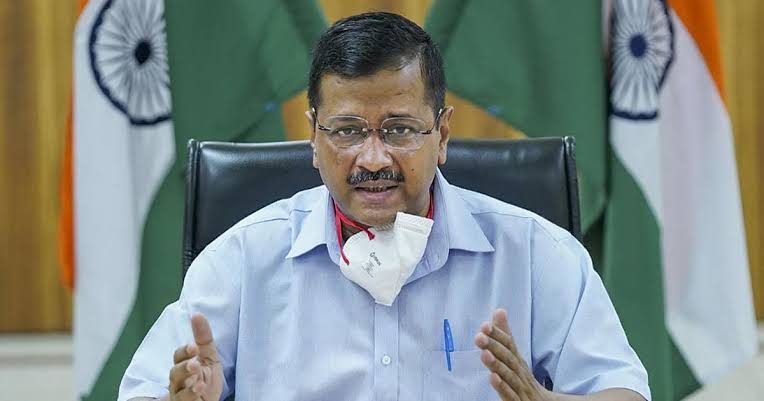
Kejriwal Government’s Decision“ A direct opposition of the Constitution”


In 1992, the Hon’ble supreme court made, listed under article 21 categorical:- The State of India is legally bound to ensure access to health as it is an integral part of RIGHT TO LIFE because if any citizen is denied, their life is in jeopardy and so are all other rights.
But Delhi government on 7th June announced to restrict access to health care only to residents of Delhi. Though this move has been blocked by Lt. Governor but let us get into whys and how’s of the decision.
There was a very high rise in the number of cases in the national capital, this caught the authorities napping. The failures in preparedness were put in the public domain. Moves and tricks we’re formulated to divert public attention from the original issue.
• Chief Minister Arvind Kejriwal amid huge controversy over the number of dedicated COVID beds, quoted “In the cabinet meeting today, a decision has taken regarding healthcare facilities. There are 10,000 beds in hospitals of the Delhi government and the same number of beds are available in those hospitals run by Centre. We are opening borders from tomorrow. Delhi hospitals will be available for the people of Delhi only, while hospitals run by the Central government will remain open for all.”

“Anyone can get treatment in hospitals run by the Central government. Private hospitals in Delhi will also be reserved for the people of Delhi. But there are some hospitals which offer surgeries/treatment like neurosurgery which is not available in other parts of the country. Those hospitals will remain open for everyone. I think this is a fine balance to protect the interest of people of Delhi and people from outside Delhi,”
To explain this move a few reasons we’re cited:- Delhi has an International Airport and two of the busiest railway station and all 15 special trains were routed to and fro from Delhi.
Being national capital Delhi has most of the head offices and departmental headquarters. This all contributed to the strict incline of pressure on Delhi healthcare facilities.
Article 21 states that “no person shall be deprived of his life”. This Article is not even “citizen-centric” it is “person-centric” let alone area-specific.
• In 1989, the Hon’ble Supreme Court after referring to the Code of Medical Ethics has termed that “there can be no second opinion that preservation of human life is of paramount importance. That is so on account of the fact that once life is lost, the status quo ante cannot be restored as resurrection is beyond the capacity of man. The patient, whether he be an innocent person or be a criminal liable to punishment under the laws of the society, it is the obligation of those who are in-charge of the health of the community to preserve life so that the innocent may be protected and the guilty may be punished….”.
• In its judgment Supreme Court hold that “Article 21 of the Constitution casts the obligation on the State to preserve life……A doctor at the Government hospital positioned to meet this State obligation is, therefore, duty-bound to extend medical assistance for preserving life. Every doctor whether at a Government hospital or otherwise has the professional obligation to extend his services with due expertise for protecting life. No law or State action can intervene to avoid/delay the discharge of the paramount obligation cast upon members of the medical profession. The obligation being total, absolute and paramount, laws of procedure whether in statutes or otherwise which would interfere with the discharge of this obligation cannot be sustained and must, therefore, give way.”
After being aware of these judgments and constitution this move fail to hold on the moral and legal accounts. Politicians, as always have played their game of dirt and swamp but the poor citizens fell prey to this game. This move dented the integrity of Indians and any such moves must be condemned.

The Unlock 2.0

The state of India has been under restrictions since March 25th. The nation has observed various phases Lockdown 1.0, 2.0, 3.0, 4.0, and then unlock which is scheduled to be a 5 phased issue. Yesterday the Central government announced guidelines for unlock 2.0. A few essential questions emerge, which need to be answered.
Why Unlock? Are the timings to unlock poor?
India has too high a test positivity rate, about 10%. India started easing restrictions at a time when about 10000 cases we’re emerging every day, so the question arises: why unlock then?
The answer to this question can be decoded by the mere fact that GDP ( Gross Domestic Product) prediction of India slipped about a straight 9 percent.
• Many state governments we’re running at the extreme shortage of money.
• Services were facing serious high pressure due to restrictions.
• Government-funded services were made to come at a halt.
• The seriousness of citizens to follow the norms was dipping.
• The psychological reason was that after spending about 2 months in lockdown, naming the next set of restrictions as Unlock gave people a ray of hope.
What will be open?
Next question is that what will be open in Unlock 2.0
In areas other than Containment Zones, all activities will be allowed, except the following:
• Schools, colleges and coaching institutions will remain closed till end of July. Online learning will be encouraged. Training institutions of the Central and State Governments will be allowed to operate from 15 July, 2020, for which Standard Operating Procedure (SOP) will be issued by the Department of Personnel & Training.
• International air travel, except for passengers as permitted by Ministry of Home Affairs.
• Social/ political/ sports/ entertainment/academic/ cultural/ religious functions and other large public gatherings.
• Metro Trains
• Cinema halls, entertainment parks, theatres, gymnasium, swimming pools, auditoriums, assembly halls and similar places.
Date of further changes will be announced as and when required.
Night curfew
Movement of individuals shall remain restricted in between 10.00 pm to 5.00 am, except for essential activities. Local authorities must issue guidelines, in the entire area under their jurisdiction with appropriate provisions of the law such as under section 144 , and ensure strict compliance.
States Government to decide on activities outside Containment Zones
States and UTs, by their observation of the situation, can restrict certain activities outside Containment zones, or impose restrictions as felt necessary. There must be no restriction on inter-State and intra-State movements. No separate permit will be required for such movements.
Lockdown limited to Containment Zones
• Lockdown shall continue to remain in effect in the Containment Zones till 31 July, 2020.
• In the containment zones, perimeter control must be maintained and only essential services allowed.
• Activities in the Containment Zones will be monitored strictly by the authorities, and the guidelines shall be strictly implemented.
• MOHFW will monitor the proper situation handling of Containment Zones and the implementation of the containment norms.
Vulnerable persons, persons above age of 65, persons with disabilities, pregnant women, and children below the age group of 10 years, are advised to stay at home, except when deemed necessary.

INDIAN FILM MAKING

India has a longstanding reputation for its acclaimed film industry and continues to be by far the world’s largest producer of films. Nevertheless, domestic demand for films appears to be waning as in a number of developed countries with mature film industries. Hence, the econometric analysis in this paper is particularly timely as with demand for films in Indian cinemas falling it is important to identify those factors that make films appealing for Indian audiences. An original dataset is utilised that includes data on all Bollywood films released in India between 2011 and 2015. Account is taken of the potential endogeneity between variables through the use of the generalised method of moments approach. Results are used to demonstrate how the Indian film market can continue to have a significant positive impact on the Indian economy. The discussion highlights appropriate film production company strategies and government policy responses that should be considered to ensure the continued success of the Indian film industry both domestically and in an increasingly competitive international market.

It is immediately clear that while India produces by far the greatest number of films, with the number of films produced continuing to rise, the number of consumers paying to see films at cinemas in India has declined dramatically in recent years, despite significant growth in GDP since 2000 and international investment in the Indian film industry, Fetscherin (2010). However, falling popularity of going to the cinema is not exclusive to India, with falls in cinema ticket sales also seen in the USA and UK. Each of these film markets can be considered mature markets, with long established, successful film production industries, and cinema visits a long-established social activity. Indeed, the first full-length Indian film, Raja Harischandra, was produced in 1913, and by the 1920s, large-scale Indian film studio companies existed, and Mumbai had established itself as an early hub for film making (to become known as Bollywood). See Jones et al. (2008) for a history of the Indian film industry.

The importance of the Indian film industry to the Indian economy cannot be overstated: in 2012, Indian cinema box office revenues were $1.6 billion (McCarthy, 2014), in a services sector which accounts for more than 50% of the Indian economy.Footnote2 Fetscherin (2010) suggests that the film industry accounts for approximately 20% of all revenues in the Indian media and entertainment industries. Further, despite the high profile of ‘Bollywood’ which is based in Mumbai, film production also has positive spillover benefits to other local economies, particularly Chennai where film production has long been established, with films made in four key southern Indian languages. There are also notable film production activities in Hyderabad, Karnataka, Kolkata and Kerala that benefit the local economies. Local economy benefits are not restricted to the direct benefits and multiplier effects associated with film production and therefore employment in specific local economies. Bollywood, in particular, also has tourism benefits with Bollywood locations boosting tourist visitor numbers, i.e. an indirect channel through which the Indian film industry contributes to gross domestic product (GDP).

Yet, the Indian film industry currently faces a number of challenges. First, a major challenge remains film piracy which limits the revenues that can be reinvested by producers, distributors and exhibitors. A complicated system of regulations with responsibility shared by a number of national and state level government departments only contributes to the often ineffective nature of policies and laws that should guard against piracy, Jones et al. (2008). The problem of piracy results in lower revenues across the film industry, and the negative effect on investment in the industry is compounded by the high entertainment tax rates imposed in India.

Second, relative to many countries, domestic cinema ticket prices remain low, Jones et al. (2008) and see Table 1. This again results in smaller box office revenues to be shared between film exhibitors, distributors and producers, reducing opportunities for reinvestment across the Indian film industry. This is particularly important at the moment as international film producers are increasingly investing in expensive technology associated with ‘enhanced format’ films, such as 3D and IMAX. Elliott et al. (2018) have found these films particularly popular with Chinese audiences, but these films require very large production budgets, as well as investment in cinemas by film exhibitors. Nevertheless, despite the costs of producing enhanced format films, they offer the advantage that the piracy of these films is less attractive as the special effects will be much less impressive to viewers when watching pirated films either on television screens or computer monitors. A further issue relating to low ticket prices is that regardless of this advantage, consumers are still purchasing fewer cinema tickets.

Meanwhile, despite difficulties until the early 1990s, the Chinese film market now continues to grow rapidly, both in terms of films produced and audiences’ desire to view films at cinemas. Despite initially slow growth of the film industry in China prior to the 1990s, its film box office revenues were expected to exceed $10 billion in 2016, coming close to overtaking the USA which enjoyed box office revenues of $11 billion in 2015, Shoard (2016). It is within this context that the performance of the Indian film industry has to be considered. The Indian and Chinese film industries share some similarities. Both countries have adopted economic liberalisation policies since the later years of the twentieth century, and as a result in both countries, the film industry has attracted greater foreign investment. Meanwhile, liberalisation has led to greater competition for domestic films from large budget, internationally produced films, often originating in Hollywood, with both Indian and Chinese audiences keen to watch these films.

This paper seeks to identify the factors that contribute to films’ success in Indian cinemas using an econometric analysis such that film production companies are in a better position to identify strategies to ensure their future success. These strategies relate to film characteristics as well as marketing strategy. Given the importance of the film industry to the Indian economy and the difficulties currently faced by the industry, our analysis is particularly important and timely. We believe this to be the first paper econometrically to estimate the determinants of domestic box office success for the Indian film industry. To do this, an original dataset has been collated and utilised, considering all Bollywood films released in Indian cinemas over the period 2011 to 2015. For each film, released data are collected on the size of production budget; Indian cinema box office revenues; film genre; the use of Bollywood star actors and directors; and the distributor of the film in India. Alternative measures of critical acclaim for each film are also collected. As well as identifying those factors associated with films’ Indian box office success, the results of the statistical analysis are used to develop government policy recommendations.

A literature review covering economic analyses of the film industry, both in India and more broadly, is provided in Sect. 2. The data and econometric methodology are described in Sect. 3. Results are reported in Sect. 4, with discussion of these results, policy implications and conclusions provided in Sect. 5.

YOGA – Benefits

Yoga, an ancient practice and meditation, has become increasingly popular in today’s busy society. For many people, yoga provides a retreat from their chaotic and busy lives. This is true whether you’re practicing downward facing dog posture on a mat in your bedroom, in an ashram in India or even in New York City’s Times Square. Yoga provides many other mental and physical benefits. Some of these extend to the kitchen table.

Types of Yoga

There are many types of yoga. Hatha (a combination of many styles) is one of the most popular styles. It is a more physical type of yoga rather than a still, meditative form. Hatha yoga focuses on pranayamas (breath-controlled exercises). These are followed by a series of asanas (yoga postures), which end with savasana (a resting period).

The goal during yoga practice is to challenge yourself physically, but not to feel overwhelmed. At this “edge,” the focus is on your breath while your mind is accepting and calm.

A Better Body Image

Yoga develops inner awareness. It focuses your attention on your body’s abilities at the present moment. It helps develop breath and strength of mind and body. It’s not about physical appearance.

Yoga studios typically don’t have mirrors. This is so people can focus their awareness inward rather than how a pose — or the people around them — looks. Surveys have found that those who practiced yoga were more aware of their bodies than people who didn’t practice yoga. They were also more satisfied with and less critical of their bodies. For these reasons, yoga has become an integral part in the treatment of eating disorders and programs that promote positive body image and self-esteem.

Becoming a Mindful Eater

Mindfulness refers to focusing your attention on what you are experiencing in the present moment without judging yourself.

Practicing yoga has been shown to increase mindfulness not just in class, but in other areas of a person’s life.

Researchers describe mindful eating as a nonjudgmental awareness of the physical and emotional sensations associated with eating. They developed a questionnaire to measure mindful eating using these behaviors:

  • Eating even when full (disinhibition)
  • Being aware of how food looks, tastes and smells
  • Eating in response to environmental cues, such as the sight or smell of food
  • Eating when sad or stressed (emotional eating)
  • Eating when distracted by other things

The researchers found that people who practiced yoga were more mindful eaters according to their scores. Both years of yoga practice and number of minutes of practice per week were associated with better mindful eating scores. Practicing yoga helps you be more aware how your body feels. This heightened awareness can carry over to mealtime as you savor each bite or sip, and note how food smells, tastes and feels in you mouth.

A Boost to Weight Loss and Maintenance

People who practice yoga and are mindful eaters are more in tune with their bodies. They may be more sensitive to hunger cues and feelings of fullness.

Researchers found that people who practiced yoga for at least 30 minutes once a week for at least four years, gained less weight during middle adulthood. People who were overweight actually lost weight. Overall, those who practiced yoga had lower body mass indexes (BMIs) compared with those who did not practice yoga. Researchers attributed this to mindfulness. Mindful eating can lead to a more positive relationship with food and eating.

Enhancing Fitness

Yoga is known for its ability to soothe tension and anxiety in the mind and body. But it can also have an impact on a person’s exercise capacity.

Researchers studied a small group of sedentary individuals who had not practiced yoga before. After eight weeks of practicing yoga at least twice a week for a total of 180 minutes, participants had greater muscle strength and endurance, flexibility and cardio-respiratory fitness.

Cardiovascular Benefits

Several small studies have found yoga to have a positive effect on cardiovascular risk factors: It helped lower blood pressure in people who have hypertension. It’s likely that the yoga restores “baroreceptor sensitivity.” This helps the body senses imbalances in blood pressure and maintain balance.

Another study found that practicing yoga improved lipid profiles in healthy patients as well as patients with known coronary artery disease. It also lowered excessive blood sugar levels in people with non-insulin dependent diabetes and reduced their need for medications. Yoga is now being included in many cardiac rehabilitation programs due to its cardiovascular and stress-relieving benefits.

Before you start a new exercise program, be sure to check with your doctor.

Researchers are also studying if yoga can help people with depression and arthritis, and improve survival from cancer.

Yoga may help bring calm and mindfulness to your busy life. Find registered yoga teachers (RYT) and studios (RYS) through The Yoga Alliance.

POLLUTION

Environmental Pollution:- Pollution is the effect of undesirable changes in our surroundings that have harmful
effects on plants, animals and human beings. This occurs when only short-term economic gains are made at the cost of the long-term ecological benefits for humanity. No natural phenomenon has led to greater ecological changes than have been made by mankind. During the last few
decades we have contaminated our air, water and land on which life itself depends with a variety of waste products. Pollutants include solid, liquid or gaseous substances present
in greater than natural abundance produced due to human activity, which have a detrimental effect on our environment. The nature and concentration of a pollutant
determines the severity of detrimental effects on human
health. An average human requires about 12 kg of air each day, which is nearly 12 to15 times greater than the amount of food we eat. Thus even a small concentration of pollutants in the air becomes more significant in comparison to the similar levels present in food. Pollutants that enter
water have the ability to spread to distant places especially in the marine ecosystem.

From an ecological perspective pollutants can be classified
as follows:
Degradable or non-persistent pollutants: These can be
rapidly broken down by natural processes. Eg: domestic
sewage, discarded vegetables, etc.
Slowly degradable or persistent pollutants: Pollutants that
remain in the environment for many years in an unchanged
condition and take decades or longer to degrade. Eg: DDT
and most plastics.
Non-degradable pollutants: These cannot be degraded by
natural processes. Once they are released into the
environment they are difficult to eradicate and continue t

AIR POLLUTION

Air pollution occurs due to the presence of undesirable solid
or gaseous particles in the air in quantities that are harmful
to human health and the environment. Air may get polluted
by natural causes such as volcanoes, which release ash, dust,
sulphur and other gases, or by forest fires that are
occasionally naturally caused by lightning. However, unlike
pollutants from human activity, naturally occurring
pollutants tend to remain in the atmosphere for a short
time and do not lead to permanent atmospheric change.
Pollutants that are emitted directly from identifiable
sources are produced both by natural events (for example,
dust storms and volcanic eruptions) and human activities
(emission from vehicles, industries, etc.). These are called
primary pollutants . There are five primary pollutants that
together contribute about 90 percent of the global air
pollution. These are carbon oxides (CO and CO2), nitrogen
oxides, sulfur oxides, volatile organic compounds (mostly
hydrocarbons) and suspended particulate matter.
Pollutants that are produced in the atmosphere when
certain chemical reactions take place among the primary
pollutants are called secondary pollutants . Eg: sulfuric acid,
nitric acid, carbonic acid, etc.

Carbon monoxide is a colourless, odorless and toxic gas
produced when organic materials such as natural gas, coal or
wood are incompletely burnt. Vehicular exhausts are the
single largest source of carbon monoxide. The number of
vehicles has been increasing over the years all over the
world. Vehicles are also poorly maintained and several have
inadequate pollution control equipment resulting in release
of greater amounts of carbon monoxide. Carbon monoxide is
however not a persistent pollutant. Natural processes can
convert carbon monoxide to other compounds that are not
harmful. Therefore the air can be cleared of its carbon
monoxide if no new carbon monoxide is introduced into the
atmosphere.
Sulphur oxides are produced when sulphur containing fossil
fuels are burnt.
Nitrogen oxides are found in vehicular exhausts. Nitrogen
oxides are significant, as they are involved in the production
of secondary air pollutants such as ozone.
Hydrocarbons are a group of compounds consisting of
carbon and hydrogen atoms. They either evaporate from
fuel supplies or are remnants of fuel that did not burn
completely. Hydrocarbons are washed out of the air when it
rains and run into surface water. They cause an oily film on
the surface and do not as such cause a serious issue until
they react to form secondary pollutants. Using higher
oxygen concentrations in the fuel-air mixture and using
valves to prevent the escape of gases, fitting of catalytic
converters in automobiles, are some of the modifications that can reduce the release of hydrocarbons into the
atmosphere.
Particulates are small pieces of solid material (for example,
smoke particles from fires, bits of asbestos, dust particles
and ash from industries) dispersed into the atmosphere.
The effects of particulates range from soot to the
carcinogenic (cancer causing) effects of asbestos, dust
particles and ash from industrial plants that are dispersed
into the atmosphere. Repeated exposure to particulates can
cause them to accumulate in the lungs and interfere with
the ability of the lungs to exchange gases.
Lead is a major air pollutant that remains largely
unmonitored and is emitted by vehicles. High lead levels
have been reported in the ambient air in metropolitan cities.
Leaded petrol is the primary source of airborne lead
emissions in Indian cities.
Pollutants are also found indoors from infiltration of
polluted outside air and from various chemicals used or
produced inside buildings. Both indoor and outdoor air
pollution are equally harmful.