Geeta Saar

Whatever has happened, has happened for good.

Whatever is happening, is happening for good.

Whatever will happen, shall also happen for good.

What have you lost, that you cry for?

What did you bring, that you lost?

What did you create, that was destroyed?

You came empty handed, and will go empty handed.

Whatever is yours today, was somebody else’s yesterday, and will be somebody else’s tomorrow.

Source : Wikipedia

Jio Platform Launches New Videoconferencing APP ‘jio Meet’

Jio Platforms, a subsidiary of Mukesh Ambani controlled Reliance Industries Ltd has launched a videoconferencing app, JIOMEET. It is a ‘Made in India’ free videoconferencing app. It can be used for one on one video calls and hosting meetings with up to 100 users with enterprise – grade host controls, Jio Platforms said on its website. It is available on App store and Google Play Store.

The app was commercially available since July 2. The company had on April 30 announced the launch of its nationwide video calling service. By March end the app already had over 100,000 installs on Play Store.

The app is launched when there is rising clamour for adoption of Make in India products as a result of ban of 59 Chinese apps. It is a great initiative by Reliance Industries in support of Make in India campaign and work from home culture during the pandemic.

“How to be immortal?”

Life is the best gift that each one of us gets from our creator. It is something that all of us want and we fear from losing it. We all want to live our beautiful journey of life happily and peacefully. Everyone wants to live forever and create wonderful memories with their dear ones.

To remain alive on this planet, people try many new things. We spend a great amount of money on our health. We do everything that is possible to maintain our fitness. From staying fit to eating healthy and maintaining a robust lifestyle, we all do our bit to increase our life span.

But the bitter truth is that nobody in this world is immortal. A person who has taken birth has to die some or the other day. But, there is a way to live even after you die. This can happen by following some of the measures listed below.

● The best thing that you can do to remain immortal is by donating your body organs to the needy people. Your eyes, kidney, heart, liver, pancreas, etc. are the vital organs in your body. You can choose to donate these organs after you die. You can thus give a new life to the people who need these organs to live a healthy life and continue to live inside their body.

● You can be immortal by doing good deeds and helping people. You will be remembered by people forever for your good work, kind behaviour and helping nature. So, all you need to do is change your attitude towards people and be more kind and generous. Try to help people in whichever way you can, donate useful things to the needy and poor. This will definitely prove useful to make a place in people’s heart and live in their hearts forever.

● During your life, you shall try to create good and happy memories with everyone. These memories will be remembered forever by other people even after your death. So, always try to spend some good time with people, have fun with them and make an effort to never hurt them in anyway.

● Behave nicely with everyone. Treat others with respect and never judge anyone. It is your attitude that can prove useful to make you immortal. If your behaviour is bad or rude towards people, they will not favour you. But, if you act pleasingly with others, they will like your company and will remember you forever.

● You can be immortal by your good deeds and also by encouraging others to do them as well. You shall involve other people in your charity work. This will motivate them to continue the work even in your absence. This will benefit more and more people and they will remember you in their happiness.

So, at least now you will believe, that life after death is certainly possible. You might not be able to enjoy your life by physically being present but by being a part of other’s lives and memories you can still be able to live your life.

5 Ways to Improve your Efficiency when Working from Home

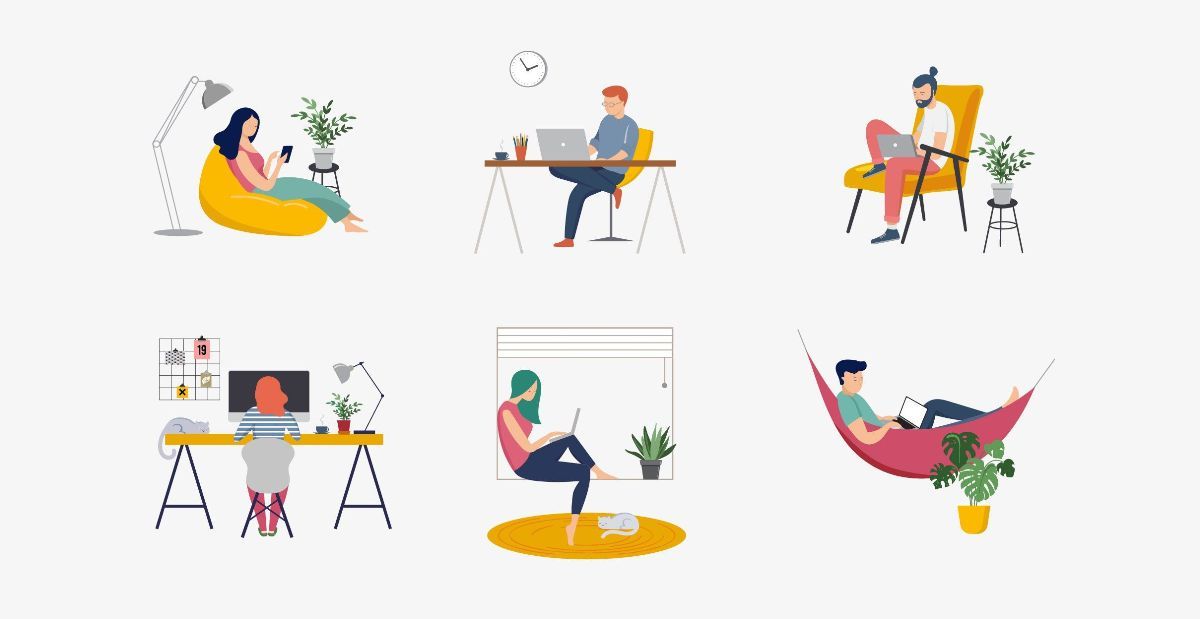
The outbreak of novel coronavirus has disrupted a normal life where humans today have realized how it feels to be caged. While the global lockdown has turned out to be the new normal after 4 months, people have started adjusting and adapting to new means and measures to continue living their personal and professional life in peace.

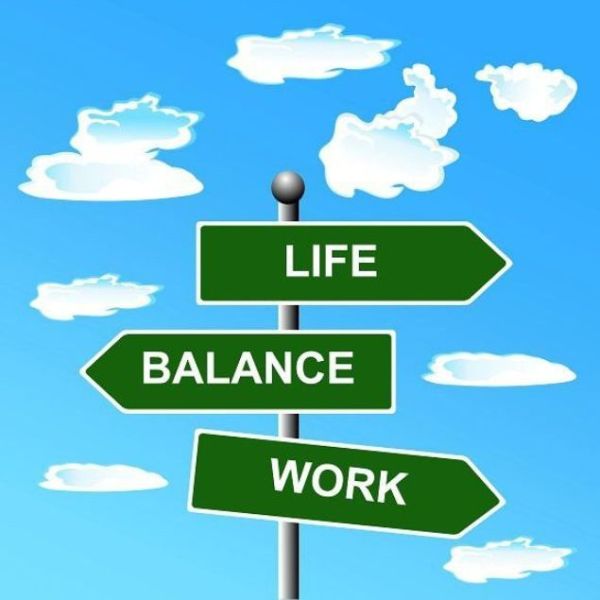
Maintaining a balance between personal and professional life was difficult even before, because we were short of time (as we spent most of our time travelling). However those who entered the quarantine phase thinking it would give them the additional hours to spend quality time with themselves and families, BOOM! here comes additional workload and irregular working hours.

Caged in our homes for nearly 4 months, it’s high time we set something’s right that helps us improve our work efficiency leaving us with more quality personal time.

Miss Diva Supranational 2019 Shefali Sood, who is also a mental health advocate, certified life coach and a motivational speaker in an exclusive has shared 5 effective ways to improve our ‘work from home’ situation.

1. Set up a workstation!

Setting up a workstation, a designated work space. Decorate it, fill it up with stuff that puts you in work mode and helps you concentrate. My workstation is surrounded with a cooling drink that I sip on when I work, a snack, a notebook and pen, my phone and laptop , stationery that I might need, and some decorative items. My workstation is surrounded with a cooling drink that I sip on when I work, a snack, a notebook and pen, my phone and laptop , premium stationery that I might need, and some decorative items. 

2. Plan your day!

Having control over small elements of your day gives you a semblance of order and discipline even when there is so much uncertainty

3. Plan breaks:

Plan your breaks. It is important to take 10 minute breaks after every hour of productive hard work because it helps you rejuvenate

4. Have an activity to look forward to!

After a long day of work we need an activity that we enjoy or one that will help us unwind! So plan a fun activity like sports or games or just family time or Netflix after work as a reward for all that hard work

5. Lastly, leave work at the workstation!

Make sure that your work time does not overlap with the rest of your day and you do not let work interfere with your daily activities or leisure time just because you’re working from home!

@martin_christopher

INDIAN ARMY

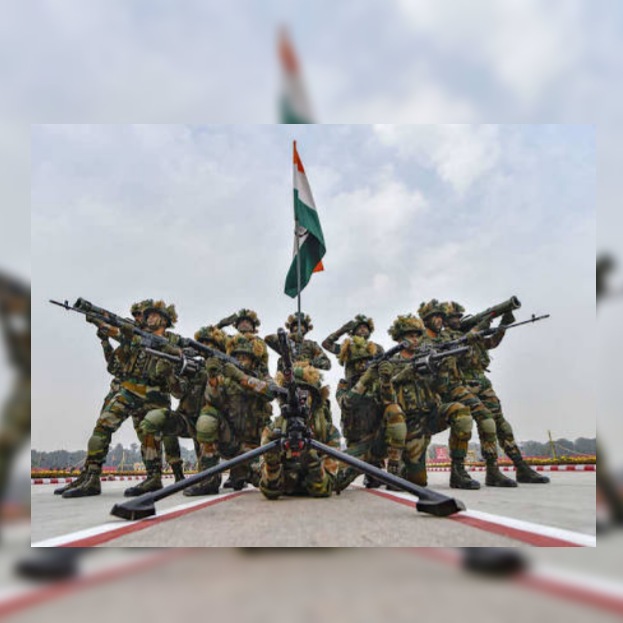
The Indian army is the oldest among the three armed forces.It has very and ancient heritage of more than 2000 year from the Times of Chandragupta Maurya . The foundation of the present army was inherited from the British Indian Army . Netaji Subhash Chandra Bose lead the Indian National Army (INA) during the world war 2 to fight for India’s Independence from British Rule . Women also formed part of the INA. Captain Laxmi Swaminathan headed the women’s wing.

Role of Indian Army

  • Go to war to defeat an External Aggression
  • Strengthen the internal security Management to defeat Internal threats.
  • Project force wherever and whenever called upon to safeguard the nation’s interest.
  • To support the peace keeping operations or Military Assistance to friendly foreign countries
  • Render Humanitarian, Disaster relief and Aid to civil authorities

The Indian Army spread over six operational commands based on geography and the preceived security threats.

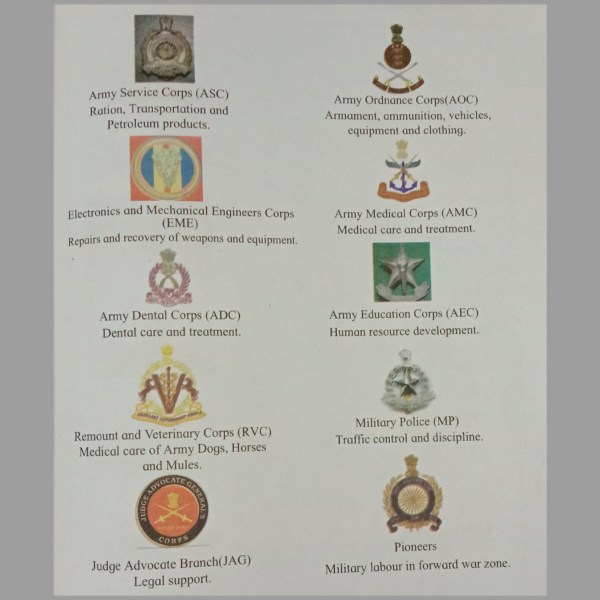
Logistic support services

Areas of responsibility of geographical commands

Northern command: Northern command is head quater in Udhampur .It is responsible for operations in Jammu and Kashmir against china in the east and Pakistan In the west.

Western Command :Western Command in Chandigarh. It is responsible for operation in Punjab,and Himachal Pradesh against China in the east and Pakistan in the west.

South Western Command:South Western Command is headquarter in Jaipur .It is responsible for operations in North and central Rajasthan and Haryana.

Southern Command: headquater Pune, responsible for operation in south Rajasthan and Gujarat, Maharashtra, karnataka, Kerala, Tamilnadu, Andhra Pradesh

Central Command : headquater in Lucknow. It is responsible for operations in Uttarakhand, Uttar pradesh, Bihar, Orrisa, Jharkhand, Chhattisgarh against China in the North as also security along the Indo-Nepal border with UP and Bihar

Eastern Command: headquarter in kolkata . It is responsible for operations in Sikkim, Bhutan, Arunachal Pradesh, Nagaland, Manipur, Tripura, Mizoram and also Against China and security Indo – Nepal, Mayanmar, Bangladesh Border

‘Hyderabad’ the best city to live in!

The capital city of Telangana ‘Hyderabad’ has been declared as the best city to live in. Proud to say that it has been ranked as the best city to live in since five straight year’s in a row according to the survey held by Mercer’s quality of living. Often called as the city of pearls. Why Hyderabad is best city to live in? Lets find it out.

Reasons as why it is the best city.

1) Weather:- It has the pleasant weather. Whether it be any season it serves you plentiful. You can enjoy the weather to the fullest. Be winter days, rainy days, or monsoon you have to bear with the sunny days(April to June). Since 10 years or more, hyderabad has been reported to have the increased temperature in the summer. As its metropolitan city and is developing rapidly in terms of infrastructure, technology, and seemingly increase of industrial sector leads to the deforestation which in turn is causing such weather.

The sapling plantation is covering the greenery yet needs to be covered fully. GHMC is planning to have 27 parks across the city. Also people should take a stand too to share their part of job as a responsible citizen.

2) Safest city:- No wonder hyderabad is safest city as compared to other metropolitan and mega cities. Hyderabad has become lesser safe as compared before. Eventually there is no such place where crime doesn’t takes place. But comparatively here we have less crime rate.

This city is also safe for kids and women and they can travel alone during the day time as well the early evening. (And personally myself being living here, then I feel safe side here.)

3) Quality of living:- For the past 3 years it has also been ranked as best Indian city for the quality of living in Hyderabad. Talking about essentials and groceries then, the prices are quite reasonable. The rental rate is not high in addition the electricity units are less. But in the old city people might face the water scarcity.

HI-TEC city is an abbreviation of Hyderabad Information Technology and Engineering Consultancy City is the major attraction as its the IT hub.

4) Cuisine:- Hyderabad is best known for its Biryani basically non-veg, but it doesn’t disappoint you as it serves with the best dosa, idli , sambhar vada..perks of living in south! You can find it in each and every corner available to you even in the mroning at 4 am. And trust me people visits in the cars in the early morning to have the brunch.

Be it veg or non-veg, Hyderabad doesn’t fail in serving you with the best food. Its also famous for the ‘Karachi biscuits’ and ‘Paradise biryani’

5) Heritage:- Hyderabad is famously know as the city of pearls which once were ruled by the Nawabs. It has become the major tourist attraction for both the Indians and the foreigners. The monuments and the historical places defines the true culture and the essence of the city.

There are several places to visit to insight the historical monuments and the glory of Hyderabad. Charminar is the most famous place, following the Golkonda fort, Chowmahalla palace, Mecca masjid (the largest mosque in the India) Qutub shahi Tombs, Falaknuma palace has the elegant beauty, Hussain sagar lake where the twin cities meets.

Lastly, people around here. They have the friendly and mingling nature towards the visitors, they’re humble and approaching and no racism can be find here. The language(Telugu) is quite complicated. But if you are good at Hindi then there is no language barrier as every other person knows hindi here. And the Hyderabad has its Hyderabadi language which is indeed impressive and humorous.

Give a chance to yourself to visit this city. Trust me it will not disappoint you.

JAIPUR

Location

Jaipur is the capital and the largest city of the Indian state of Rajasthan. As of 2011, the city had a population of 3.1 million, making it the tenth most populous city in the country. Jaipur is also known as the Pink City, due to the dominant color scheme of its buildings. It was constructed within a period of four years and Jaipur is the only city that has been planned as per rules & regulations of the Vastu Shastra and the Shilpa Shastra. It is located 268 km (167 miles) from the national capital New Delhi.

Jaipur is a popular tourist destination in India and forms a part of the west Golden Triangle tourist circuit along with Delhi and Agra (240 km, 149 mi). It also serves as a gateway to other tourist destinations in Rajasthan such as Jodhpur, Jaisalmer, Udaipur, Kota and Mount Abu. Jaipur is located 616 km from Shimla.

History

Jaipur was founded in 1727 by the Rajput ruler Jai Singh II, the ruler of Amer, after whom the city is named. It was one of the earliest planned cities of modern India, designed by Vidyadhar Bhattacharya. During the British Colonial period, the city served as the capital of Jaipur State. After independence in 1947, Jaipur was made capital of the newly-formed state of Rajasthan.

On 6 July 2019, UNESCO World Heritage Committee inscribed Jaipur the ‘Pink City of India’ among its World Heritage Sites. The city is also home to the UNESCO World Heritage Sites Amber Fort and Jantar Mantar.

How to go?

By air: Sanganer airport is the nearest airport to the city of Jaipur. It is located at a distance of 10 kilometers from the city centre. The airport has flight connectivity with major Indian cities like Mumbai and Delhi. International tourists can take connecting flights to Jaipur from Mumbai or Delhi airport.

By rail: The railway junction at Jaipur connects it with various cities. For a royal experience one can take the Palace on Wheels. This train leaves from Delhi and connects various cities in Rajasthan.

By road: Jaipur has good network of roads connecting it with major Indian cities. NH 8, NH 11 and NH 12 are the main national highways connecting the city of Jaipur with other cities. National capital New Delhi is just 235 KM from this beautiful city while the city of the Taj Mahal, Agra, is only 220 KM from here. Other important cities include Ajmer at 130 KM, Mathura at 196 KM and Gwalior at 250 KM. There are good services of Buses and Cabs available like buses from Jaipur to Delhi bus.

Tourist Places

Amer Fort: Amber Fort, situated 11 kilometers from Jaipur, is a fort built with great artistic taste. Cradled on the top of a hill forming a beautiful reflection in Maotha Lake, it is popularly known as Amer Fort.

City Palace: Located in Jaipur, The City Palace is the main palace from where the Maharaja reigned from. The palace includes the Chandra Mahan and Mubarak Mahal along with various other buildings within the complex. It is located towards the north-eastern side of Jaipur.

Hawa Mahal: The Hawa Mahal stands at the intersection of the main road in Jaipur, Badi Chaupad. It is regarded as the signature building of Jaipur and was built by Maharaja Sawai Pratap Singh.

Jantar Mantar: Jantar Mantar in Jaipur is the largest stone astronomical observatory in the World. It is located just next to the city palace of Jaipur in Rajasthan. Built during the period between 1727 and 1733, the Jantar Mantar is still in a running condition and it stands as a witness regarding the wisdom of former age.

Nahargarh Fort: Nahargarh Fort, situated on the outer skirts of Jaipur is an epitome of great architecture and planning. Drenched with rich past, the fort allows you a picturesque view of the entire city. Built in 1734, this grand architecture is a perfect way to begin the excursion of this pink city.

Chokhi Dhani: Chokhi Dhani is a luxury heritage resort synonymous with Rajasthani village culture. It is located a little on the outskirts of the city on the Tonk Road. The concept of the village is to give you a tangible feel of rural Rajasthan. It is a true depiction of traditional Rajasthan with ancient artifacts, handicrafts, paintings, folklore and sculptures. The village offers myriad entertainment options- folk dances, singing, camel rides, puppet shows, fortune-tellers, acrobatics, predicting parrots, magic shows, horse riding, boating etc.

Bapu Bazar: Besides the plethora of palaces and forts and havelis and wildlife, Jaipur is also the ultimate shopping paradise. Among the numerous flourishing flea markets of Jaipur is the Bapu Bazaar. Situated in the heart of the Pink city between Sanganer Gate and New Gate, the market is known for its alluring Rajasthani quintessential products including textiles, handicrafts, brass works and precious stones. The bazaar attracts tourists from all over India and worldwide owing to its authenticity, diversity and giveaway price products.

Jal Mahal: Amidst the chaos of the city of Jaipur, lies the splendid Jal Mahal, or Water Palace. Floating in the centre of the Sagar Lake, this low rise symmetrical Palace was once a shooting lodge for the Maharajas. This unique palace fascinates a large number of visitors from all over the world.

Panna Meena Ka Kund: Established in the 16th century, the place is also known by many other names locally, some of which are just derivations of the original name in the local language. A baori or a stepwell is a concept solely originating from the Indian subcontinent and were the most popular source of water during the old times. These are mostly man-made pools of water that can be reached by descending a series of stairwells. Panna Meena ka Kund in Jaipur is one of the many famous stepwells that still stand in the western part of India, where they were mostly constructed. The original purpose of this Baori was to supply the locals with water for drinking and other daily needs, especially during the dry summers, as well as crop irrigation.

So what are you waiting for? Pack your bags and set out to discover yourself back in time! Set out to go into history!

What are the options for students to post completing their graduation in Australia?


When the whole world is under a turmoil students might think what to do next. Well., every problem has a solution. Every end leads to a new journey. Once done with graduation one might continue staying there and pursue higher studies. Australia is considered to be the 3rd most popular study destination. They have excellent colleges and universities along with the world’s best teaching faculty. The universities provide courses like business administration, accounting, and bookkeeping etc. Currently, more than 40000 Indian students are studying in Australia. Competitive costs for tuition and scholarships make education affordable for students. Australian institutions are successfully providing education to 4,15,000 international students.
Australian universities provide a handful of popular courses that can take one to good posts. Students can apply for PhDs as well.No work is small and every work is equally respected. students can start doing part-time work from home which can fetch them good experience and command on the language will develop. Students having a good academic record in finance can easy join a company and start working as a Finance Business Partner. The average income of a Finance business partner is between $120k and $140k.Then as an AccountAdministrator, one can get a salary between $55k and $65k.Students who have a degree in the administration can try out their luck for the posts like Administration Manager, Administration Officer etc. The income of an administration manager is not less than $65k.One who has good experience in business can easily become a Business Administrator and can get a salary between $55k and $65k.Students coming from Advertising, media and arts.they can shift to different fields like acting, copywriting etc. In today’s world animation plays a big role in the entertainment industry. A good Animator can prove his excellence and fine if the once really have potential. Depending on the performance, the salary of an Animator is between $60k and $70k.In this competitive world, everyone has to up today and here journalism plays a very crucial role. So the students who have studied journalism cam become good journalists if they have proficiency in the language and content. The salary of a journalist often fluctuates between $50k and $60k and this is quite a big deal. The jobs of Editor and Communications Officer are no less prestigious.
There are students who also start their own business after completing their graduation. Manu Indian students often open their own restaurants and cafeterias. Educated and qualified students start working as entrepreneurs at a very young age. Indian food is accepted all over the world so It is an option that most students have in the back of their mind.
Apart from this students can also get involved with social workplaces and start working worldwide since the chin is wide in range and has given opportunities to many young and enthusiastic students.
To conclude, “If there is a will there is a way” goes an old saying. Although we all are probably facing the darkest nights and heading towards a recession still if someone has talent no hurdle can stop him or her. Closed doors cant stop the wind from entering into the room, similarly talents cant be stopped by any means. Dont just wait for the opportunity be prepared for it. World has enough jobs but fewer talents so make yourself count.

COVAXIN

What is Covaxin?

It has been developed by the company Bharat Biotech India (BBIL) in collaboration with ICMR’s National Institute of Virology (NIV). It is an “inactivated” vaccine — one made by using particles of the Covid-19 virus that were killed, making them unable to infect or replicate. Injecting particular doses of these particles serves to build immunity by helping the body create antibodies against the dead virus, according to BBIL.

News about Covaxin

Earlier this week, Bharat Biotech announced that it had developed a vaccine against the novel coronavirus, named Covaxin, together with the Indian Council of Medical Research (ICMR) and the National Institute of Virology (NIV), Pune. The company had also received permission from the Drug Controller General of India (DCGI) to begin human trials, expected to commence in August.

Bharat Biotech is a reputed drug manufacturer that delivers four billion doses around the world for infections like rotavirus, hepatitis, Zika, Japanese encephalitis and others. However, its claim that Covaxin is indigenous – advanced, among others, by managing director Krishna Ella – raises some doubts.

According to Bharat Biotech, Covaxin is an inactivated vaccine developed from an Indian strain of the novel coronavirus isolated by NIV. No further information has been provided, especially about the nature of the vaccine or how it was developed. There have been no prior announcements either about when the process of developing such a vaccine was begun.

ICMR transferred the strain NIV had isolated to Biotech Bharat on May 9. The company published its press release on June 29. So there were only 50 days in between, during which time the company should have developed the inactivated vaccine, conducted preclinical animal trials (with mice and hamsters, according to the company), and sent its reports to be evaluated and approved by DCGI. Although ICMR had promised to expedite the process, animal trials with mice typically take at least three months to conclude.

A related issue is that animal trials for COVID-19 can only be conducted with hACE2 transgenic mice, as ‘normal’ mice can’t get infected with the novel coronavirus. These mice need to be shipped from the US, Europe or China.

These issues therefore raise concerns about whether Bharat Biotech could really have proceeded to the human-trials phase of vaccine development within only 50 days of receiving the inactivated virus from NIV.

Collaboration with US company

Bharat Biotech has currently invested in two other vaccines: CoroFlu in collaboration with FluGen Inc. and the University of Wisconsin-Madison, and an inactivated rabies vaccine vehicle for coronavirus proteins developed along with Matthis Schnell, director of the Jefferson Vaccine Centre (JVC), Pennsylvania. The latter is of interest.

On May 20, Bharat Biotech announced its collaboration with JVC as well as the license it had received to conduct clinical trials, and to produce and deliver vaccines in 80 countries excluding the US, Europe and Japan. On April 7, JVC announced a promising vaccine candidate named Coravax.

Coravax uses an inactivated rabies vaccine to carry the spike protein of the novel coronavirus. The spike protein attaches to a host cell and causes an infection, so experts expected this vaccine to trigger a good immune response on the body’s part. Schnell corroborated this response following preliminary tests with animals. Schnell added that JVC would need one more month to complete follow-up studies.

Bharat Biotech hasn’t shared any technical details of Covaxin. But based on what we already know, there appears to be room for the possibility that Covaxin is Coravax by another name – and by another viral strain. And even if the vaccine is wholly indigenous, the timelines for the animal trials don’t line up.

When does ICMR plan to launch it?

Aiming to make it available for public use by August 15, Bhargava wrote to the 12 trial sites to ensure “all” clinical trials were conducted by then. While BBIL’s application with the Clinical Trials Registry of India (CTRI) shows it plans to complete enrolment of trial participants by July 13, Bhargava has directed the sites to complete enrolment by July 7.

Is this even achievable?

A vaccine usually goes through three phases of human trials. The Central Drugs Standard Control Organization has given approvals for phase I and II trials so far. According to details from CTRI, BBIL in its application estimated phase I and II trials to take a year and three months, including at least a month for phase I alone.

Experts have questioned how all three phases can be concluded within a month and a half. “I would find it very surprising if it is done. Even the most ambitious companies in the world that are in more advanced stages of development for their Covid-19 vaccines have a longer time-frame. Even having all the trial results, with safety and efficacy data, by August 15 is difficult. This raises several questions,” said Dr Anant Bhan, Researcher, Global Health, Bioethics and Health Policy.

While vaccine trials can be fast-tracked, it still takes over a year to launch the product, experts said. In a pandemic, emergency-use approval can be given if data from the first two trial phases is compelling enough, said an expert on condition of anonymity. This would allow the launch without the third phase being conducted, but this approval would likely be given with riders to submit additional data and adverse event reports.

SYLLABUS REDUCTION IN ICSE AND CBSE

ICSE Syllabus Reduction

The Council for the Indian School Certificate Examinations CISCE, popularly called ICSE Board has announced a reduction of up to 25 per cent in the syllabus for classes 10th and 12th. This reduction would be applicable for ICSE, ISC board exams to be conducted in 2021.

The board has decided this on account of learning disruption that students faced as the schools were closed during the nation-wide lockdown. The ICSE, ISC board has directed all its schools to ensure that the subject teachers go by the syllabus strictly as per the sequence of topics listed in the syllabus. This would make it easier to facilitate a further reduction in syllabus. ICSE Board Exams remaining papers for the year 2020 have recently been cancelled and the new assessment scheme for the students is expected soon on cisce.org. 

CICSE Chief Executive and Secretary Gerry Arathoon said, “Schools across the country have been shut for the past three months due to the lockdown. While a number of CISCE-affiliated schools have tried to adapt to this changed scenario and have tried to keep alive the teaching-learning process through online classes, there has been a significant shortening of the academic year and loss of the instructional hours.”

He informed that the currently used syllabi would be reduced by 25 per cent which is subject to the condition that prevails in the next few months. He asserted that in case the conditions do not improve the syllabus might be reduced even more.

“To make up for the loss in instructional hours during the current session, the CISCE has worked with its subject experts, to reduce the syllabus for all major subjects at the ICSE, Class 10 and ISC, Class 12 levels. Syllabus reduction has been done, keeping in mind the linear progression across classes while ensuring that the core concepts related to the subject are retained,” he informed while talking to the media.

The Chief Executive officer and Secretary informed that there might be a fifty per cent reduction in syllabus too if the conditions did not improve in the coming months. He added, “Given the academic loss till July, which is around 45 days we have reduced the syllabus for the students appearing for Class 10 and 12 Boards up to 25 percent. However, that is subject to further review as from July first week our schools are only able to resume online classes. This could have further adverse effects. We may even have to reduce the syllabi further and may even have to go up to 50 per cent reduction.”

The Council for the Indian School Certificate Examinations (CISCE) has worked with its subject experts to reduce the syllabi for all major subjects of the ICSE and ISC.

“Syllabus reduction has been done keeping in mind the linear progression across classes while ensuring that the core concepts related to the subject are retained,” said Gerry Arathoon Chief Executive and Secretary of the Council in the circular dated July 3.

The reduced syllabi for the current academic year 2020-21 have been made available on the CISCE website. Student may see ICSE reduced syllabus for class 9 and 10 and ISC reduced syllabus for classes 11 and 12 on the website.

CBSE Syllabus Reduction

Central Board of Secondary Education, CBSE is expected to share a reduced syllabus with the various schools for Classes 9 to 12 soon. The new syllabus, officials have shared, are almost ready and would be shared with the respective schools soon. Furthermore, it is expected that the syllabus may be reduced by 33% for 10th 12h Board Exams 2021. Paper pattern is also expected to be revised.

CBSE has been in conversation with various stakeholders and also NCERT to rationalize the existing syllabus for secondary and higher secondary classes in view of the prevalent conditions. It has taken cognizance of the slowed speed of online learning, existing situations and also the fact that the schools may not open soon enough for many regions in the country. Taking all the factors into consideration, the board would be releasing a revised curriculum for Classes 9 to 12. For classes 1 to 8, the board has already notified schools to accordingly make the changed. 

Though the exact extent of the changes has not been shared as yet, Mr. Anurag Tripathi, in a webinar with various school Principals from across the country shared the board’s readiness. Heads of schools have shared the broad outline as shared by the secretary of the board, highlighting that the new syllabus and paper pattern is going to be more ‘student centric’.

The board has also pointed out the simple reduction of syllabus is not enough. With COVID-19 and closure of schools, education has been impacted to a large extent. Though online classes have started, there are considerable differences in classroom coaching and online classes. With this in mind, the board is expected to also make the following changes in the class 10, 12 exams, including revised paper patter, evaluation and assessment strategy.

Inclusion of online assessment in terms is small tests, project based and inter-group activities are being considered. Schools have also been advised to consider ‘Digital Labs’ and changing ‘practical’ to make it at home. No change in weightage of practical or internal marks was suggested. Guidelines for summative assessment are also expected to be shared by the board along with revised syllabus structure.

In another unconfirmed report, it was suggested that CBSE may increase the MCQ part of the paper pattern further. In previous years plans shared by the board, CBSE had already suggested an increase in the MCQ section to cover about 20%. This was further reminded by the board to the schools in a circular released in April. The board is likely to further increase the weight of MCQs. Some even suggested that the same may be increased to about 50% of the paper – this, however, was not suggested by the secretary in the meeting mentioned above.