Marietas Islands

Location

The Marietas Islands are a group of small uninhabited islands a few miles off the coast of the state of Nayarit, Mexico, located in federal waters approximately 7.9 kilometres (4.9 mi) southwest of the peninsula known as Punta de Mita, in the municipality of Bahía de Banderas. The islands are a popular tourist destination because of the abundant marine life populations due to the islands being protected from fishing and hunting by the Mexican government. The ocean water depth around the islands is between 70 and 110 feet.

Geography

The Marietas islands were originally formed many thousands of years ago by volcanic activity, and are completely uninhabited. The islands are about an hour-long boat ride west-northwest from the coast of Puerto Vallarta or a 15-minute boat ride from the resort area of Punta Mita and are visited daily by hundreds of tourists. However, visitors cannot legally set foot on the islands. In the early 1900s, the Mexican government began conducting military testing on the islands since they were uninhabited. Many bombings and large explosions took place on the islands causing caves and rock formations to be created. After a massive international outcry, started by scientist Jacques Cousteau in the late 1960s, the government eventually decided to declare the islands a national park and therefore protect it against any fishing, hunting or human activity. Situated in a sort of open sun-drenched crater, this beach is affectionately nicknamed the “hidden beach” or “beach of love”. It is accessible only when the tide is low.

Tourism

Protection by the government has created an environment conducive to the development of the marine ecosystem, and is a popular location for snorkeling and scuba diving. Not even during whale watching tours, people often report seeing sea turtles, manta rays, octopus, wild dolphins, humpback whales and thousands of species of tropical fish around the islands. The islands are also home to a few thousand birds, with species such as the blue-footed booby. Currently, the Mexican government allows only a few companies to go to the islands and allows the landing of passengers onto one secluded beach with the necessary permit from SEMARNAT.

From Punta de Mita, small boats do tours through the islands to see the wildlife of this region. From December to March, gray and humpback whales can be observed that come from Alaska to give birth off the coast of Nayarit.

It has been estimated in studies that the so-called “hidden beach” or the “love beach” can accommodate up to 116 visitors a day without degrading. The carrying capacity of the entire park is 625 visitors. However the actual number of visitors is typically three or four times this limit with more than 2500 visitors landing on it each day during 2016. During the Easter holidays more than 250 boats landed on the island per day, some of them carrying as many as 400 tourists. This has been due to recent interest in the Island. The number of tourists in 2012 was only 27,500, but this skyrocketed to 127,372 in 2015.

Things to do

  1. Islas Marietas Eco Discovery

In terms of pristine natural beauty and scenic seaside vistas, few areas in the world are richer than the Marieta Islands. Protected as part of Islas Marietas National Park, these natural wonders are home to a number of native wildlife species, as well as some of the most breathtaking landscapes in all of Mexico. On this tour, guides give you the opportunity to enjoy the natural majesty of the Las Islas Marietas at your own pace. Explore the serene seawater while snorkeling, kayaking, or paddle boarding. No matter what type of natural wonder you’re looking for, on the tour of Islas Marietas, the guides will make sure you find it.

The Bay of Banderas is one of the few places in the world that is a natural sanctuary for a profusion of natural land and sea life. Within the Bay of Banderas, there are few areas lusher in life than the waters surrounding Islas Marietas National Park. During the winter months, it is common to see humpback whales in the bay, since this is a centuries-old breeding ground and respite following their annual migrations. Dolphin encounters are a regular year-round occurrence. You may see them in large groups leaping out of the water or in pairs riding along near the bows of boats in the bay.

2. Rhythms of the Night –SAVIA

Deep in the heart of the steamy tropical rainforest at Las Caletas, near a crumbling pyramid, there is a mystical amphitheater where excitement is waiting for you. As the stars appear in the sky, the spirit world convenes here in a dazzling world-class show that will take your breath away. Conceived of, written and directed by Gilles Ste-Croix, co-creator of Cirque du Soleil, Rhythms of the Night – SAVIA is a celebration of spectacular acrobatic skill, pulsating rhythms, vibrant dance, amazing costumes and Ste-Croix’s breathtaking interpretation of the Aztec creation story.

SAVIA: The Legend of the 5 Suns is truly a feast for the senses. Great entertainment, food, and adventure await. As you take your place in the incredible outdoor amphitheater for a show at the pyramid under a serene starry sky, you’ll feel like you’re entering another time, another place. And perhaps you are, for each night in Puerto Vallarta, this is where the spirit world of the ancients once again comes alive!

An explosion of color, sound and spectacle, SAVIA tells a powerful story about the persistence of the human spirit using colorful imagery, music, dance and movement. Legend has it there were four civilizations of humanity prior to ours. Each new period saw the evolution of the human race, as well as its demise. These previous worlds were destroyed by tornadoes, fires and floods, yet rituals and sacrifices have kept the human spirit alive. From the bones and ashes of the ancients comes a celebration of the fifth sun and the unflagging hope for a better world. Rhythms of the Night dinner and show, with its intimate setting, vibrant story and stunning feats of acrobatics, are nothing short of magical.

3. Valarta Canopy tour

A canopy tour zip line tour is a pre-established route through a forested or other beautiful landscape, often with mountains and valleys making use mainly of zip-lines and suspended bridges between platforms that are built upon trees. Visitors are harnessed to steel cables all the time while on these tours, ensuring their safety.

Canopy tours have existed for a long time, but just recently have they become a tourist attraction and a popular tour in Mexico, Costa Rica and many other places around the world. Canopy tours in Puerto Vallarta are a truly thrilling ecological experience that offers you the unique opportunity to glide through the treetops on a network of cables suspended high above the jungle trails in the local tropical forest. The list of the main canopy zip line tours in the area includes – Canopy River, Canopy Los Veranos, Extreme Zip Line Adventure, Canopy La Vista, Mundo Nogalito Canopy, Las Animas Adventure Park and Rancho Mi Chaparrita, to name a few.

Why visit the Marietas Islands?

  1. Hidden Beach

Officially it’s called Playa del Amour, but visitors reckon Hidden Beach does the job better. After all, it’s tucked away in a cave underneath one of the islands and can only be reached by swimming through a tunnel. But what makes it really bucket list-worthy is the fact that the cave has no lid, opening it up to the sunshine – and savvy aerial photographers.

2. The snorkeling scene

With a snorkel and fins, the Marieta Islands are your oyster. There are more than 10 kinds of coral around these parts, reeling in the biggest load of reef fish in Banderas Bay. In winter, the kings of the ocean and humpback whales mooch through the waters.

3. The boobies

It’s not all about the amazing sea life. Around 100 bird species hang around the Marieta Islands, including a few record breakers. There’s the world’s largest colony of brown boobies, for starters, and the islands are also home to biggest swallow breeding grounds in Mexico.

4. The castaway vibe

Hidden Beach is the closest you can get to actually stepping foot on the Marieta Islands. And thanks to their uber protected status – they’re national park territory – only a few tour operators can weigh anchor in their waters. With all that peace and quiet, it’s hard to believe you’re only an hour’s boat ride from Puerto Vallarta.

5. The History

Way back in the early 1900s, the Mexican government used the Marieta Islands as a military testing site. These explosions carved out some of the caves and oddly-shaped rock formations you’ll see when you visit today. In fact, rumour has it that even Hidden Beach was created by one of these test bombs.

So what are you waiting for? Pack your bags and set out for this paradise on the face of the earth!

13 REASONS WHY! Ever wondered about the mystery behind some common Hindu traditions? Here’s what science has to say!
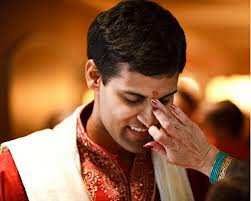
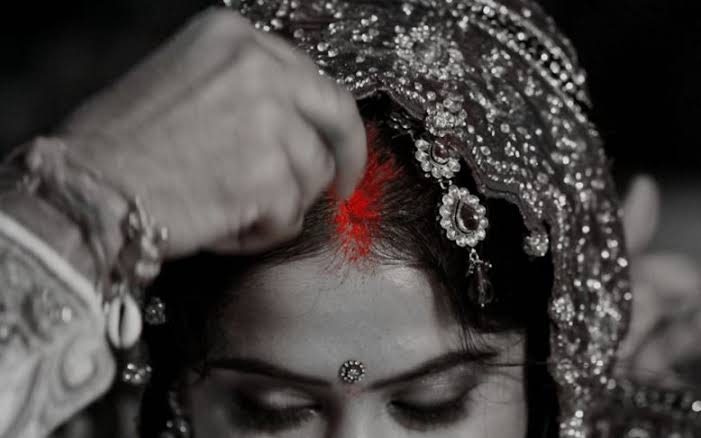
1) Tilak on forehead

The  circularspot between the eyebrows  is viewed as a significant nerve point in the human body. A tilak is accepted to forestall the loss of vitality, and hold this to control different degrees of focus. In addition, the demonstration of applying this guarantees the focuses on the mid-temple area and Adnya-chakra are squeezed, encouraging blood gracefully to the facial muscles and ensuring the natural glow.

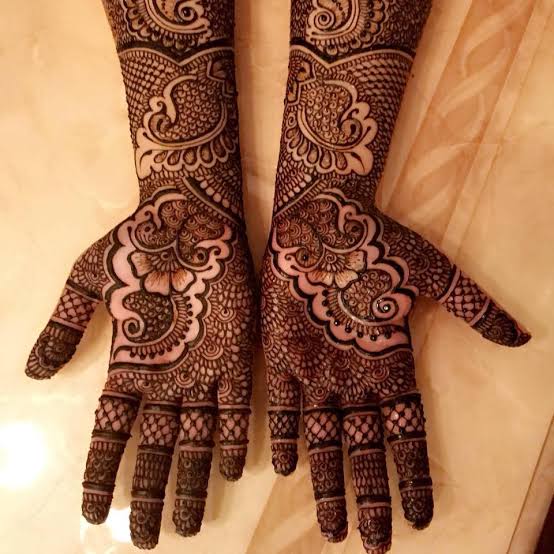
2) Mehendi on palms

Mehendi is an incredible therapeutic herb, and its application on our palms and feet can pre-empt worry and nervousness during weddings, something which is really common in the first-time brides. Moreover, it cools the body and shields the nerves from being tensed.

3) Namaste (Pranaam)

There is a logical purpose for the ‘Namaskar’ in Hindu culture. Joining two hands together guarantees contacting the tips of the considerable number of fingers together, which are connected to pressure focuses in the eyes, ears, and brain. Squeezing them together is said to actuate these, helping us recollect that individual moment for quite a while.

4) Ringing bells in the temples

Devotees strike the temple bells upon entering as its sound is said to clear our brain and assist us with remaining sharp, keeping our full fixation on dedication towards the almighty. Besides, these bells are made so that the sound they produce makes solidarity in the left and right pieces of our cerebrums. The term of the chime reverberation is perfect to enact all the seven recuperating focuses in our body, freeing us from antagonism.

5) Wearing bangles

Bangles cause steady grinding with the wrist which builds the blood flow level. Further more, the power dropping through external skin is again returned to one’s own body in light of the ring molded bangles.

6) Toe rings (bichhiya)

Indian ladies regularly wear toe rings on the subsequent toe. A specific nerve from this associates the uterus and goes to heart. Along these nerve-endings, a toe ring on this toe reinforces the uterus, keeping it solid by directing the blood stream to it. Besides, a lady’s menstrual cycle is supposed to be regularized.

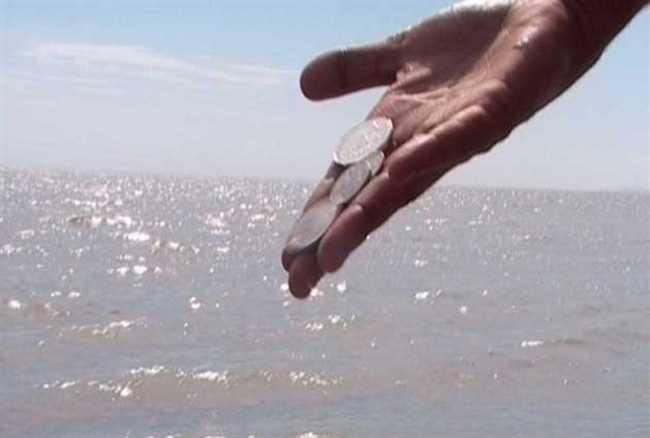
7) Tossing coins away in a holy stream or river

Verifiably, most money in the ancient period, was made of copper, an essential metal for the human body. Throwing coins in a holy water body was an approach to allow adequate copper, as a major constituent of water, to be consumed by us. As wells, drawing in water from these rivers were the main sources of drinking water.

8) Piercing of the ears

Indian doctors and scholars have acknowledged that piercing ears helps in the advancement of mind, intensity of reasoning and dynamic resources. This is the scientific reason behind most of the indian ladies piercing their ears while also serving the purpose for jewellery.

9) Not laying down with your head pointing north

The human body has its own magnetic field, while the Earth, as we all know, is a mammoth magnet. At the point when you lay down with your head pointing north, your body’s attractive field gets hilter-kilter to the Earth’s, causing issues identified with circulatory strain since your heart needs to work more diligently so as to defeat this.

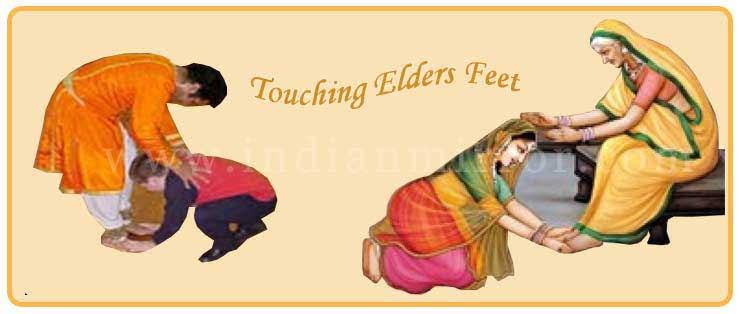
10) Touching the feet of elders (Charan Sparsh)

At the point when you contact the feet of the old, their hearts discharge positive considerations and vitality, which they transmit through their hands and toes. Basically, the finished circuit empowers stream of vitality and increments grandiose vitality, turning on a soulful associate between two personalities and hearts. Your fingers and palms become the ‘receptor’ of vitality and the feet of the other individual become the ‘supplier’ of vitality.

11) Sindoor

Sindoor is set up by blending turmeric, lime and the metal mercury. Because of its inborn properties, mercury controls pulse and enacts oxytocin production. Along these lines, sindoor ought to be applied right upto the pituitary organ where every one of our sentiments are focused.

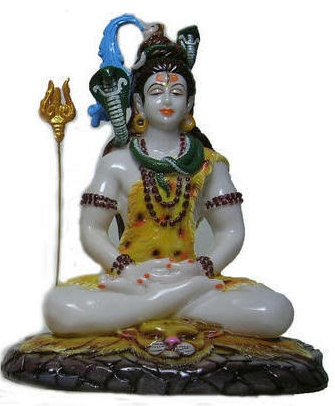
12) Idol Worship

Hinduism engenders idol venerate much more than any other religion does. This was started to expand focus during supplications or prayers. As per therapists, a man will shape his musings in accordance to what he sees.

13) Fasting on felicitous occasions

Ayurveda sees the fundamental reason for some infections as the amassing of poisonous materials in the stomach related framework. Ordinary purifying of poisonous materials keeps one sound. By fasting, the stomach related organs get rest and all body components are purified and rectified.

“Jhumka” – BAREILLY

Bareilly gets its famed jewellery ‘JHUMKA’

Jhumka ‘mila’ Re

BAREILLY : Bareilly city of Uttar Pradesh shot to fame when Asha Bhosle rendered “Jhumka gira re, Bareilly ke bazaar mein” in noted Hindi movie Mera Saaya (1966) , Late bollywood actress Sadhna preformed an attractive dance. In order to commemmorate it, a “Jhumka” of 14 feet high has been erected in Bareilly at Naitonal Highway number 24.

Actress Sadhna performance on song “jhumka gire re” in film Saaya

Bareilly has finally got its much-awaited “jhumka” when Union Minister and local MP Santosh Gangwar unveiled a 14-feet high replica at the zero point on national highway. The jhumka that weighs over 200 kilograms was intalled in the Parsakhera area and is embedded with colourful stones and decorated by the city’s famous ‘zari’ embroidery. The ‘Jhumka’ weighing over 2 quintals and studded with colourful stones has been suspended from a pole. Officials said the project has cost the BDA around Rs 18 lakh — Rs 8 lakh for the jhumka and Rs 10 lakh for the beautification of the landscape surrounding the main structure.

“The location was chosen to ensure that the first thing that catches your attention on entering Bareilly, if you are coming from New Delhi, is this fabled ornament,” said a senior Bareilly Development Authority (BDA) official.The official added that the jhumka gives the city its own distinct identity. BDA, meanwhile, conceived the project of installing a jhumka as an attraction for the tourists visiting the city.

The entire structure is surrounded by a rotary in such a manner that it give its surrounding area a landscape view. The silver-golden coloured ‘jhumka’ made up of multi-coloured stones embedded with ‘minakari’, an art form colouring and ornamenting the surface of metals by fusing over it brilliant colours that are decorated in an intricate design.

Although there is no connection between the city and the piece of jewellery. The city, also, had no speciality in making or selling ‘jhumkas’. But, it just got famous topic due to the song over 54 years.

Inaugurating the jhumka, Union Minister Santosh Gangwar said: “The collaborative effort made by the authority, various organisations and local residents in setting up of the ambitious jhumka in Bareilly is commendable. It looks beautiful and unique. Visitors will finally be able to associate the landmark jhumka in Bareilly with the evergreen song.”

The idea was first thought of 30 years ago, but could not be completed due to lack of funds. However, BDA Vice-President, found an alternative and discussed the idea with several eminent persons. BDA vice-chairperson Divya Mittal said: “The jhumka has been delayed for some unavoidable reasons. The beautiful project is a collaborative effort among Rohilkhand Medical College, Bareilly International University and few other organisations, and local residents, who helped the BDA with funds in giving the shape to the ambitious project that would be considered a landmark.”

The iconic jhumka is set to become the ideal location for tourists and those who love ‘jhumkas’ .So, next time you are on a visit to Bareilly you know the ideal place to get yourself clicked or take a selfie.

LADAKH

Location and history

Ladakh (“land of high passes”) is a region in northern India. It is located between the Kunlun mountain range in the north and the main Himalayas to the south. Ladakh is well-known for its remote mountain scenery. It is inhabited by a mix of Indo-Aryan and Tibetan people. Their la nguage is an archaic dialect of the Tibetan language. It is sometimes called “Little Tibet”, because it has been strongly influenced by Tibetan culture. Ladakh is one of the least populated regions in the area.

Historically, the region of Ladakh included neighboring Baltistan, the Indus and Zanskar Valleys, Lahaul and Spiti, Aksai Chin and the Nubra Valley. The modern region borders Tibet to the east, Lahaul and Spiti to the south, and Kashmir, Jammu and Baltistan to the west. The largest town in Ladakh is Leh. It is one of the few remaining places in South Asia where Buddhism is very strong. A majority of Ladakhis are Tibeta Buddhists and the rest are mostly Shia Muslims. Leh is followed by Kargil as the second largest town in Ladakh. 

How to go

The nearest airport to Ladakh is Kushok Bakula Rimpochee Airport in Leh which is just 3.8 km from the main city. The cabs are available outside the airport; by which you can get transferred to the heart of Ladakh easily. This is one of the highest commercial airports that is directly connected to the major cities like Kolkata, Mumbai, Delhi, Srinagar and Jammu. The International travelers can directly board a flight from the major cities like Kolkata, Mumbai and Delhi to reach Leh Airport by air and then ultimately to Ladakh, by a cab.

Places to Visit

Pangong Lake:

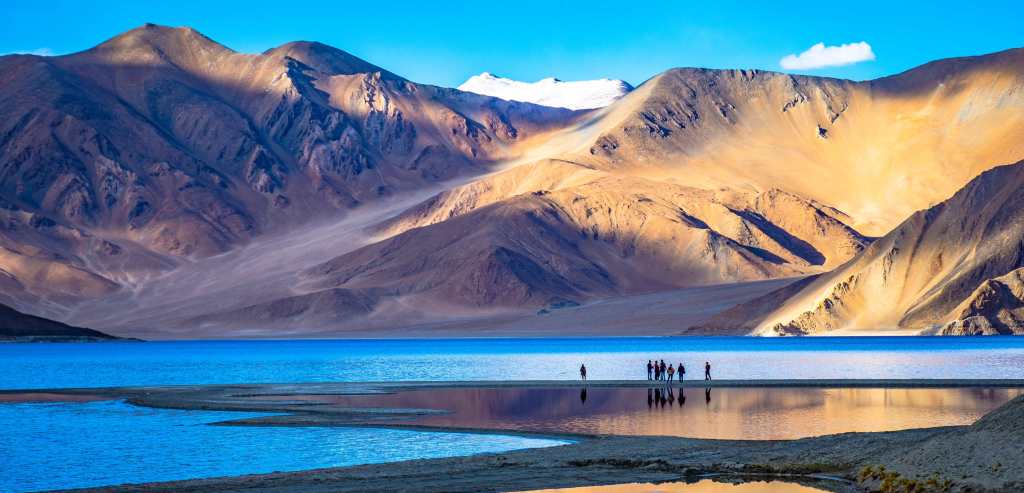
Pangong Tso or Pangong Lake is an endorheic lake in the Himalayas situated at a height of about 4,350 m (14,270 ft). It is 134 km (83 mi) long and extends from India to the Tibetan Autonomous Region, China. Approximately 60% of the length of the lake lies within the Tibetan Autonomous Region. The lake is 5 km (3.1 mi) wide at its broadest point. All together it covers 604 km2. During winter the lake freezes completely, despite being saline water. It is not a part of the Indus river basin area and geographically a separate landlocked river basin.

Zanskar valley:

Zanskar or Zahar (locally) or Zangskar is a subdistrict or tehsil of the Kargil district, which lies in the Indian union territory of Ladakh. The administrative centre is Padum. Zanskar, together with the neighboring region of Ladakh, was briefly a part of the kingdom of Guge in Western Tibet. The Zanskar Range is a mountain range in the union territory of Ladakh that separates Zanskar from Ladakh. Geologically, the Zanskar Range is part of the Tethys Himalaya, an approximately 100-km-wide synclinorium formed by strongly folded and imbricated, weakly metamorphosed sedimentary series. The average height of the Zanskar Range is about 6,000 m (19,700 ft). Its eastern part is known as Rupshu.

Chadar trek:

The Chadar Trek or the Zanskar Gorge is a winter trail in the Zanskar, in the Indian administered union territory of Ladakh. Traditionally the only means of travel in the area during the harsh winter months, the trail has become popular with international adventure tourists.

Nubra valley:

Nubra is a subdivision and a tehsil in the Indian union territory of Ladakh. Its inhabited areas form a tri-armed valley cut by the Nubra and Shyok rivers. Its Tibetan name Ldumra means “the valley of flowers”. Diskit, the headquarters of Nubra, is about 150 km north from Leh, the capital of Ladakh. The Shyok River meets the Nubra or Siachan River to form a large valley that separates the Ladakh and Karakoram Ranges. The Shyok River is a tributary of the Indus River. The average altitude of the valley is about 10,000 ft. i.e. 3048 metres above the sea level. The common way to access this valley is to travel over the Khardung La pass from Leh town.

Hemis National Park:

Hemis National Park (or Hemis High Altitude National Park) is a high altitude national park in the eastern Ladakh Union Territory of the Republic of India. Globally famous for its snow leopards, it is believed to have the highest density of them in any protected area in the world It is the only national park in India that is north of the Himalayas, the largest notified protected area in India (largest National park) and is the second largest contiguous protected area, after the Nanda Devi Biosphere Reserve and surrounding protected areas. The park is home to a number of species of endangered mammals, including the snow leopard. Hemis National Park is India’s protected area inside the Palearctic ecozone, outside the Changthang Wildlife Sanctuary northeast of Hemis, and the proposed Tso Lhamo Cold Desert Conservation Area in North Sikkim. The park is bounded on the north by the banks of the Indus River, and includes the catchments of Markha, Sumdah and Rumbak, and parts of the Zanskar Range.

Magnetic Hill:

Magnet Hill is a “Cyclops hill” located near Leh in Ladakh, India. The layout of the area and surrounding slopes create the optical illusion of a hill. The hill road is actually a downhill road. Objects and cars on the hill road may appear to roll uphill in defiance of gravity when they are, in fact, rolling downhill. It is 7.5 km southeast of Nimmoo and 26.5 km west of Leh on Srinagar-Ladakh road.

Why visit Ladakh?

Sweeping scenic beauty

Enclosed in between the Himalayan and Karakoram mountain ranges, the Ladakh region is a highland that is layered in spectral of red, orange, brown, green, and grey with large crystal blue water bodies. The rugged landscape under the stark blue sky, aligned by snow crested peaks and some lush green patches of vegetation along the valleys formed by the perennial streams together make for a surreal scenic beauty. So if you are still thinking that Ladakh is just a barren landscape, I’m afraid, you are going to miss the shelter in heaven.

Foodie benefits

I know you must have tried out both momos and thukkpas out here in the city at some Indo-Tibetan restaurant or at any edge eateries. But out there in the mass of indigenous Indo-Tibetan sphere you will just relish each bite of momos and slurp of thukkpa. Just imagine that there is a mystical spice hidden in the valley that top-ups the steamy momos to a lip smacking snack and lashing of red chilli in the bowl of thukkpa will just counteract the chilly and dry winds ensuing a great solace.

Vibrant and indigenous festivals

You might have read or heard about the indigenous culture of the Indo-Tibetans – about their lifestyle, rituals and festivals. I bet it will be a pleasure to your eyes if you are visiting Ladakh during the auspicious festivals of Losar, Hemis, Naro Nasjal, Kalachakra, Dosmoche, Tak, and Phyang. These festivals are not just vibrant and unique in their own ways, but if you trigger the traveler inside you, you will find a sensational vibe of ritual that drives away the evil spirit. And if you can’t trigger that out, you have got to capture and enjoy the drama performance, which is a fusion of drums and trumpets, and thumping steps of the masked Lamas.

Lose yourself in the barren panorama

So, when you can afford your sound health to that altitude then why not to spend a bit more and explore the barren and rugged beauty that is dispersed throughout the region.  It is a region where you can breathe in some fresh air, let go all the weariness and explore the untraceable landscape of Ladakh.

Limber up your photography skills

The mountainscapes, desertscapes and riverscapes altogether offers a wonderful scenic frame to limber up your photography skills. So you have got a chance to click countless candid moments. Not to miss moments are the heavenly horizons, unplugged landscapes, wildlife and culture and sparkling blue lakes.

Conquer the highest trekkable peaks and mountain passes

You know Ladakh is quite popular for certain trekkable peaks like Stok Kangri, Nun-Kun and Kang-Yatse? Well conquering that altitude isn’t a cup of tea but you are still fit to go for it. You can dream of a strenuous climb and days like Eskimos! Even if you think it is hard for you to get acclimatized to the high altitude of 6,000 meters and above, you got those historical mountain passes that used to be the trade routes once upon a time between India and China. Once you conquer one of these mountain passes I bet you will receive the best bird’s eye view of the distant valleys and remote villages tucked in the midst of the Trans-Himalayan ranges. Some of the notable mountain passes are the Khardung La, Tanglang La, Chang La, Wari La, and Namshang La.

Being an abode of some of the ancient Buddhist monasteries and gompas

The Ladakh region is also notable for housing some of the ancient Buddhist monasteries and gompas that chronicle the footsteps of Buddhism in India. The vibrant festivals, indigenous attire and strange rituals are some other things that you are going to see in addition when you visit these monasteries. Further, the artistic décor, ancient manuscripts and antiques like statues, thangkas and murals are simply going to take you back to the pre-historic era. Some of the notable Buddhist monasteries and gompas in the Ladakh region are the Hemis monastery, Alchi monastery, Matho monastery, Spituk monastery, Thiksey monastery, Stakna monastery, Stok monastery, and Lamayuru monastery.

Acclimatize your driving skills and snaking through mountain passes

If you are a traveler on wheels the aslant roads snaking through the barren mountains will give you an opportunity to acclimatize your driving skills. The drive from Manali to Leh, crossing some of the highest motorable mountain passes in the world; an expedition through Khardung La to Nubra Valley; and a thrilling journey from Leh to Srinagar is some of the best routes in Ladakh region where you can whizz and snake through the mountainscapes.

Stretch your money with cheap accomodations

Ladakh is one such destination where you are going to spend much on travelling than lodging. You will find neat and tidy rooms in Leh starting at just Rs. 600 even during the peak tourist season. Then you can also find accommodation in some local villages in the Ladakh region and experience the local culture throughout your trip. Further, you have plenty of options for camping in Ladakh.

Away from the Hi-tech life, live like a nomad

Overlooking the sparkling blue Pangong Lake an overnight camping is much needed for techies like you. Just imagine a life other than technology, civilization and infrastructure and you step into the wide open space of nature. How about a part of your life spending at the Hunder Sand Dunes? It is beyond your dreams. Amid the towering mountains camping in Hunder Sand Dunes makes you feel like you are living life like a nomad. There again if you can afford further couple of days, camping at the Tso Moriri Wetland will surely give you an opportunity to get acquainted with some of the beautiful species of high altitude birds and animals.

So if you are still thinking why to visit the Ladakh region once in your lifetime, you have got your own vibe to add further as another reason. If you are an adventurer then the winter is the best time to exploit every bit of Ladakh. The Snow Leopard trek and Frozen River trek are some of the notable winter expeditions in the Ladakh region which you can go for. If you are a leisurescaper, then you have time to plan a customized trip starting from April and continuing till October. So what are you waiting for?

The Land of temples

Welcome everyone, so Today, we are going to know about the land of temples, in India, the states have other names likewise the land of temples is Odisha Because, in Odisha there is many temples, also Odisha is not only famous for temples, but for other objects which we will know following on this study.

Odisha also known as Orissa, is located in Eastern India with the neighboring states with West Bengal, Jharkhand, Chattisgarh, and Andra Pradesh. The ancient name of Odisha was Kalinga, which was after the name of Mauryan Emperor Ashoka. In Odisha, there are many temples to witness the beauty of the architect made in the ancient time. In India, it represents the multiple ethnicities, the diverse religion.

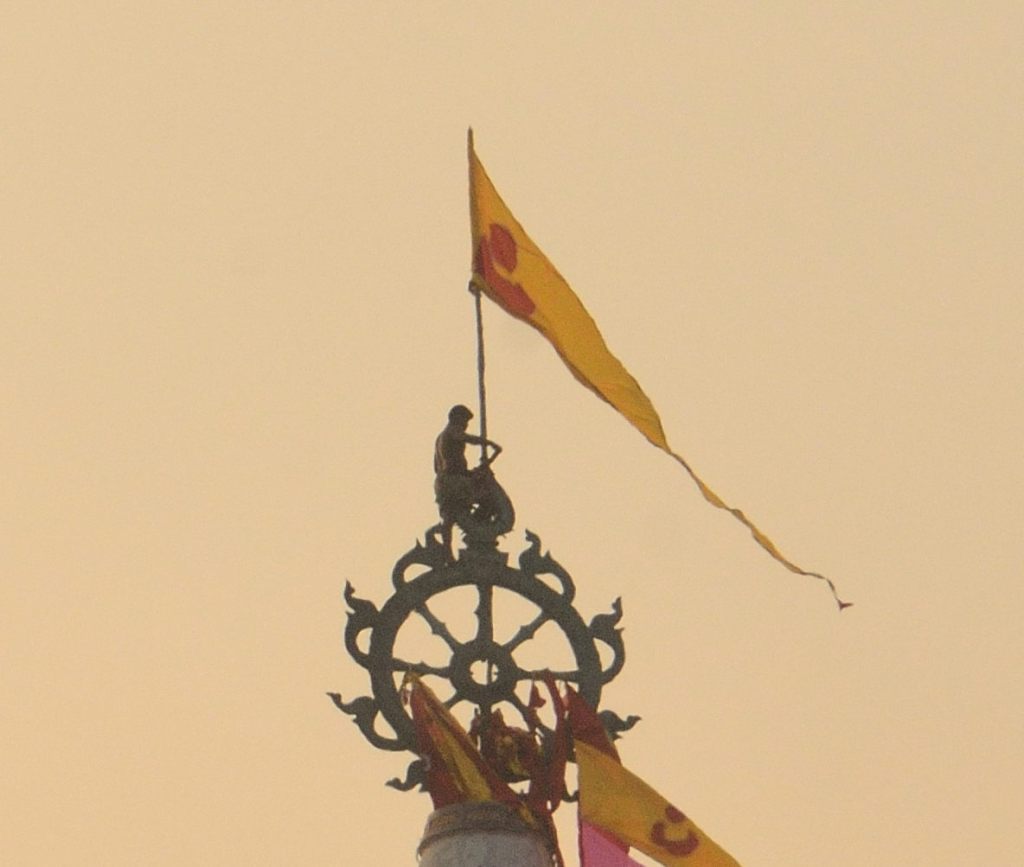
The main temple in Odisha, Jagganath Temple which is located in Puri which is famous all over the world, Sri Jagannatha Dhama is the other name of Puri, also famous Rath Yatra which is witnessed by millions of the people. It has a 1078-year-old huge structure with a great architecture design. You might know or may not know that the flag which is tied above the temple is changed every day with other design.

The design is never repeated and also the flag which is tied is triangular always flies in the opposite direction of the wind. To change the flag one priest always climb at the time of evening every day without any help or ladder to tie up a new flag. This is the most surprising fact that I have ever known.

Another surprising thing is that no bird fly above the temple. Yes, it’s true above the temple no birds you can see flying also you can test it by going to that place.

In the temple, the food is always made every day and the most extraordinary thing about the food is doesn’t get waste not a single day or a single bite, and the food every day is made with the equal quantity, and the people every day they can eat the food with a great taste, another thing is the food is always made in a different method it means the pots are placed over one another and are cooked using only firewood.

So there are many surprising things you will witness when you visit that place.

Then other temples are in the capital of Odisha that is Bhubaneswar.

The Bhubaneswar is known to be dedicated to Lord Shiva. In Bhubaneswar, there are many types of temples with beautiful architecture.

Some temples are:-

The first one is the Lingaraj Temple which is the largest temple in Odisha. It is height of about 180 ft (ca. 55 m) and another one 150 ft (ca. 46 m). The temple is believed to be made during the 11th century.

The second one is Ekamra Kshetra is one of the biggest religious places in Odisha which draws thousands of guests from all spots of the world. It is the symphysis of a multi-religious system consists of Bhraminical, Buddhist and Jain.

The third one is Konark which is built in the 13th century located near Puri, which is also recognized as The Sun Temple. It is listed as World Heritage Sites by UNESCO, it also has a beach name as Chandrabagha beach which is the cleanest and beautiful beach in Odisha.

So these are the important places of Odisha. I wish you all loved this article and let me know in the comment have you been attended Odisha or not! Thank you for viewing this piece and have a nice day!

HAMPI

What is Hampi?

Hampi or Hampe (in Kannada) also referred to as the Group of Monuments at Hampi, is a UNESCO World Heritage Site located in east-central Karnataka, India. It became the pilgrimage centre of the Hindu religion. It was the capital of Vijayanagara Empire in the 14th century. Chronicles left by Persian and European travelers, particularly the Portuguese, said that Hampi used to be a prosperous, wealthy and grand city near the Tungabhadra River, with numerous temples, farms and trading markets. By 1500 CE, Hampi-Vijayanagara was the world’s second-largest medieval-era city after Beijing and probably India’s richest at that time, attracting traders from Persia and Portugal. The Vijayanagara Empire was defeated by a coalition of Muslim sultanates; its capital was conquered, pillaged and destroyed by sultanate armies in 1565, after which Hampi remained in ruins.

Located in Karnataka near the modern-era city of Hosapete, Hampi’s ruins are spread over 4,100 hectares (16 sq mi) and it has been described by UNESCO as an “austere, grandiose site” of more than 1,600 surviving remains of the last great Hindu kingdom in South India that includes “forts, riverside features, royal and sacred complexes, temples, shrines, pillared halls, mandapas, memorial structures, water structures and others”. Hampi predates the Vijayanagara Empire; there is evidence of Ashokan epigraphy and it is mentioned in the Ramayana and the Puranas of Hinduism as Pampaa Devi Tirtha Kshetra. Hampi continues to be an important religious centre, housing the Virupaksha Temple, an active Adi Shankara-linked monastery and various monuments belonging to the old city.

Location

Hampi is situated on the banks of the Tungabhadra River in the eastern part of central Karnataka near the state border with Andhra Pradesh. It is 376 kilometers (234 mi) from Bangalore, 385 kilometers (239 mi) from Hyderabad and 165 kilometers (103 mi) from Hubli. The closest railway station is in Hosapete, 13 kilometers away and the closest airport is 32 kilometers at Jindal in Toranagallu which has connectivity to Bangalore and Hyderabad. Overnight buses and trains also connect Hampi with Goa, Secunderabad and Bangalore.  It is 140 kilometers (87 mi) southeast of the Badami and Aihole archaeological sites.

History

A place of such great magnificence and opulence is sure to have a rich cultural heritage to it too. Hampi was a part of the Mauryan Empire back in the third century BC. There has been enough evidence of the fact that the rock edifices found in the Bellary district were a common form of recording relevant information in the times of Ashoka. Hampi was the capital city during the four different dynasties altogether in the Vijayanagar city that came into existence in the year 1336 AD. The Vijayanagara Empire reached unfathomable heights under the guidance of King Krishnadeva Raya of the Tuluva Dynasty. There is a legend associated with the place in relation to Ramayana. It is well known that the epic Ramayana is divided into seven ‘Kaands’ or episodes. One particular episode named ‘Kishkindha Kaand’ which has special significance concerning Hampi. According to the legend, the episode took place when Lord Rama and Lord Lakshman reach the Land of Monkeys. The place where they reach is said to be Hampi, and there are many geographical proofs in relation to that too.

Iconic spots

  • The Lion God Narsimha: Hampi also has a story which related it to Lord Narasimha. There is a temple known as Lakshmi Narasimha Temple which is just a little south of the famous Krishna Temple. Intricately designed pillars here show the different shades of Prahlad’s life, who was an ardent devotee of Lord Vishnu. Lord Narasimha’s destruction of the demon king Hiranyakashyap is displayed here in the form of articulate carvings.
  • Bhima’s Gate: It is said that during the exile of the Pandavas, Draupadi came across a flower named Saugandhika which had a lovely smell. Enchanted, she desired more of these flowers, so Bhima set forth to find its source. After overcoming many obstacles, he found a pond full of the Saugandhika flower. At this point, Lord Hanuman took the form of an old man and lay across on the pathway. When Bheem asked him to move, he said that he is too old and that Bheem should move his tail himself. When repeated attempts by Bheem failed, he realized that he was facing Lord Hanuman. Bheem then fought two demons guarding the pond and returned with the flower for Draupadi.
  • Yantrodharaka Hanuman Temple: Yantrodharaka Hanuman Temple is present at a distance of around 2km from the famous Virupaksha temple. This temple is a part of a cave standing at the peak of a hill and is dedicated to the Hindu deity Lord Hanuman. Also, the Tungabhadra flows through the steps of this hill. Here, you can find Lord Hanuman indulged in a state of deep meditation. Within a distance of five minutes from here, you can find another temple dedicated to Lord Srinivasa. In case you feel hungry, you can approach small stalls nearby selling mangoes, biscuits or cucumbers. It is best if you plan on your itinerary to this place in between October to March.
  • Queen’s Bath: Reckoned as a large bath of Hampi, Queen’s Bath exemplifies the Vijayanagara’s architectural excellence. It lies close to one of the most awful places to visit in Hampi- the Royal Enclosure. Although built around 500 years ago, this magnificent structure still remains intact in its construction. Its simplest exterior perfectly blends with an ornate interior to embrace its overall appearance. It a rectangular building admeasuring around 30 square meters and has a large sunken bath at its center. It may interest you to find arched corridors all around this Royal bath.
  • Prasanna Virupaksha Temple (Underground Temple): Underground Shiva Temple’s every single piece of the structure reflects a perfect blend of mythology and history. This is amongst the only places to visit in Hampi lying under water. The central portion of this ancient shrine always lies immersed in water. According to local beliefs, it is the Tungabhadra which flows through the interior of this temple through canals. There is the main hall, a courtyard, a small hall that leads to the innermost sanctum. All around the temple is a lush green lawn where you can sit and relax for some time.

Reasons why you should visit Hampi

  • Heaps of giant boulders perch precariously over miles of undulating terrain. The Vijayanagara kings chose Hampi/Vijayanagara as their capital because of its location because surrounded by hills on three sides and fronted by the Tungabhadra; it offered enemies a difficult target. Today, the hillside and the river offer tourists some unforgettable natural and archeological splendor. Any visitor to South India should not miss this epitome of Hoysala architecture.
  • Hampi is charismatic even in its ruined state, attracting thousands of visitors every year. Vast stretches of boulder-strewn hills make the backdrop of Hampi unique. Dotted around the hills and valleys are 500 plus monuments. Among them are beautiful temples, basements of palaces, remains of aquatic structures, ancient market streets, royal pavilions, bastions, royal platforms, treasury buildings.., the list is practically endless.
  • Hampi is a backpacker’s paradise, the same way a pilgrim’s delight. Unreal and bewitching, the forlorn ruins of Hampi, around 330km from Goa, make a highly worthwhile and popular, side trip from the coast. They lie scattered over a landscape that leaves you spellbound.
  • Hampi is also famous for its religious history rather than just the architectural beauty of its ruins. There are many well known temples here including the Virupaksha Temple, the Vittala temple and Anjeneyadri. The Tungabhadra, one of the major rivers of Karnataka flows serenely along this town, providing an awe-inspiring natural setting near the ruins.
  • The stone chariot at the Vittala Temple stands as an icon of the rock carving traditions of the Vijayanagara kings, and has been adopted as the emblem of the state’s tourism department.
  • Thought it is not primarily known for climbing, Hampi has a number of places where the bouldering folks camp. There are even some guesthouses who rent out the basic gadgets.

The best time to visit Hampi is during the winters between November and February. Unfortunately quality hotels in Hampi are hard to find. Therefore, if you are looking for better facilities then Hospet is a better option.

HEAVEN ON EARTH

Welcome everyone, so, you might get a bit of confusing by reading the topic, well it is true, there is a paradise not for the people who is a die or something it is the place where the living person can also go there. Well, that place is so gorgeous to see and with the valley on the lap of the majestic Himalayas.

So, you must all have got ideas!

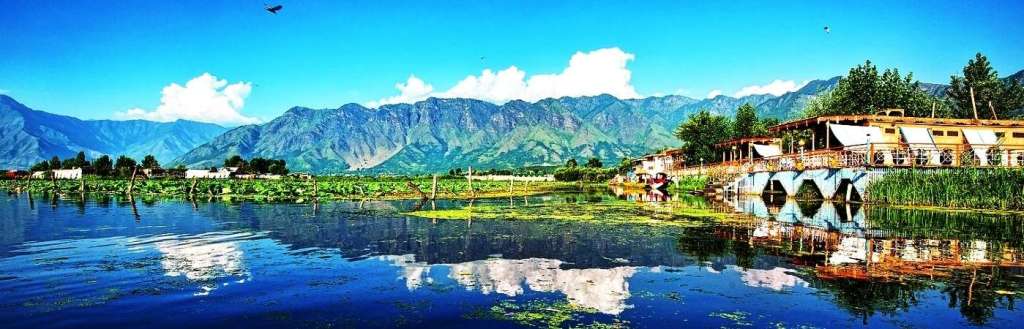
The place which I am talking about is nor other than Kashmir-The Heaven on Earth. Nature had made Kashmir such a magnificent place with unbelievable beauty. Do you know how the people knew that Kashmir was only heaven on earth? In the 17th century Mughal emperor Jahangir visited there and saw this beautiful and breathtaking place. He said this place as Heaven.

Kashmir is in the northernmost state of India is surrounded by the mountains, Kashmir signifies represented with, stunning Chinar trees turn into the entire valley into yellow at autumn, Silver lakes that turn into golden at the crack of Dawn, that all the natural beauty feels like we are in the sky. Kasmir is the land of flowers at the time of spring and winter season.

Do you know the story about Kashmir? I am not telling you about the division between India and Kashmir. There is another story about Kashmir which some of you may know, so there was a classical story that the place which is now known as Kashmir was a Lake. There was a demon who used to live there and was creating difficulty to the souls of that place. So later on, Goddess Parvati with Maharishi Kashyap killed that demon. So this was the story about Kashmir.

Now, I am going to describe you some extraordinary elements in Kashmir.

1. Srinagar:- The most famous place in Kasmir in Srinagar. In Srinagar, you can go trekking, boating, bird watching, we can also say that Srinagar is the mirror image of mountains. In Srinagar, you can visit at the time of June to October and if you want to see snow then you should go from December to January.

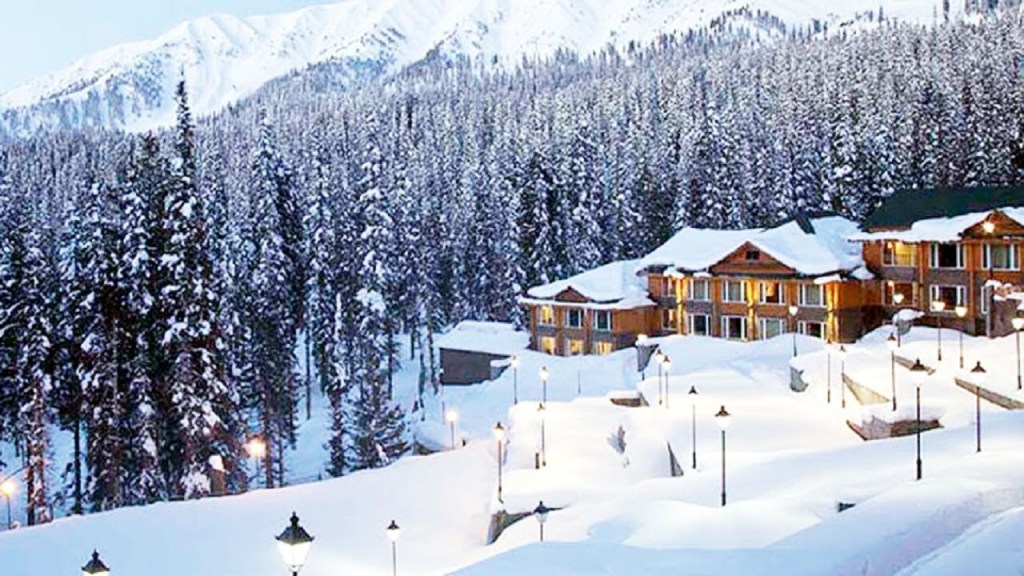
2. Gulmarg:- Gulmarg is also known as the Meadow of Flowers, as you can see there many vibrant colors of flowers. It is the best place for Mountain Biking, trekking, and skiing. In Gulmarg, you can visit the place from December to January as it is time for whitening.

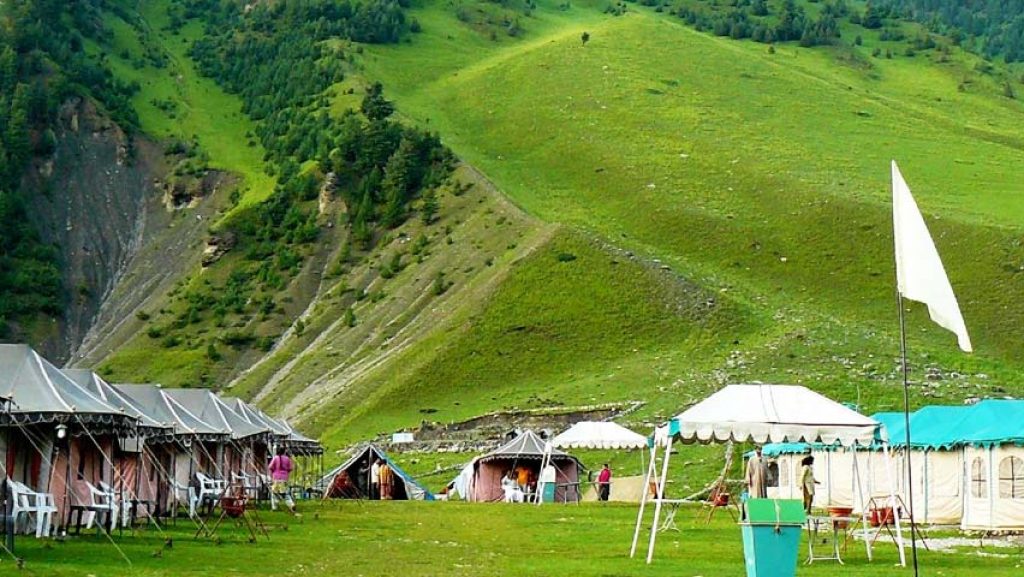
3. Sonamarg:- The land of Gold of Kashmir. It is the place to visit at the time of summer for camping, trekking. It is the best place to enjoy the aroma of flowers.

4. Leh:- You all have viewed the movie 3 idiots, this is the place where 3 idiots last scene has been shot. This place is best for the bikers. In this place, you will never get disappointed as it offers breathtaking views. So these were the most famous places in Kashmir.

Now we will see the most mouthwatering dishes of Kashmir.

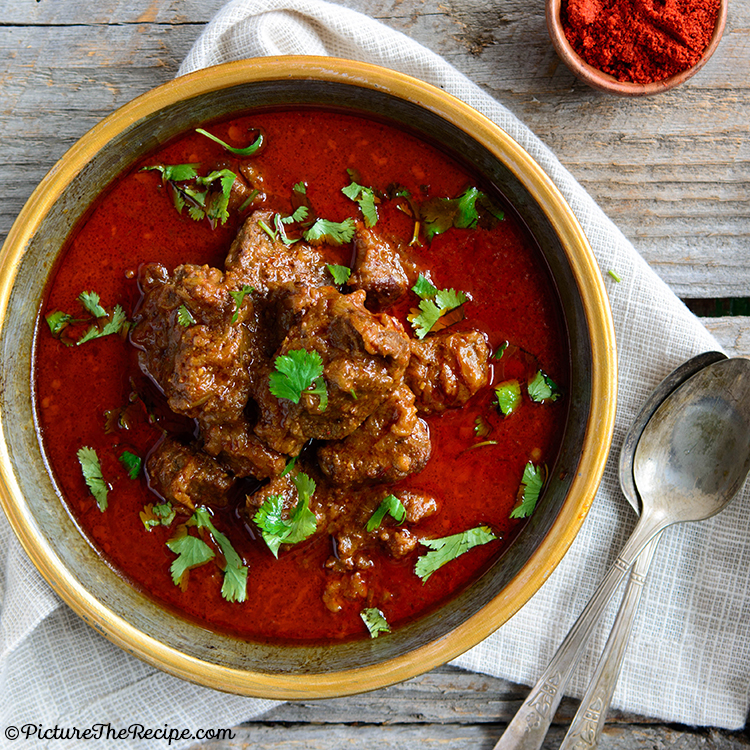
1. Rogan Josh:- It is the non-vegetarian dish, who is fond of eating meats you should try this dish. It is flavored with brown onions with various spices and yogurt.

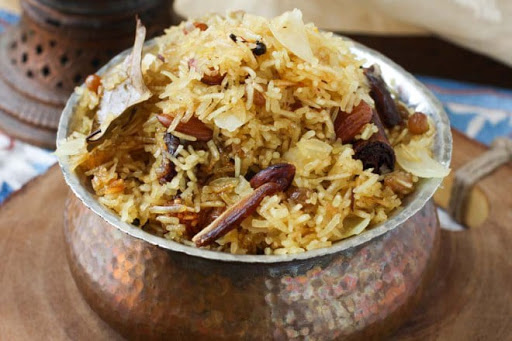
2. Modur Pulav:- It is the Kashmir sweet dish prepared by using cinnamon, saffron, milk, and ghee. This different taste of Pulav is something you have never tasted.

So these are the most famous dishes in Kashmir.

In Kashmir, they wear there Traditional dress which is known as Phiran. This outfit is both for male and female. This traditional dress benefits them to keep warm in the place.

There are some things you should buy when you visit to Kashmir.

First, is Pashmina Shwals and Blanket, which is commonly famous in Kashmir. They are crafted with pure sheep wools which visitors usually buy it.

Second, the traditional Jewellery which is crafted with high precision to offer a luxurious look.

Third, the dress materials are the most gorgeous traditional dresses to wear and also have a photoshoot.

So these are things usually people mostly buy it. I think this is all about Kashmir.

Let me know in the comments how you feel about Kashmir and has you visited Kashmir or not. I hope you all enjoy reading my article!

Thank you and have a nice day!

JAIPUR: -THE PINK CITY

Hello everyone Today, I am going to discuss the Pink City. From the title, you all must have known about which city I am going to tell. The city is nor other than Jaipur-The Pink City.

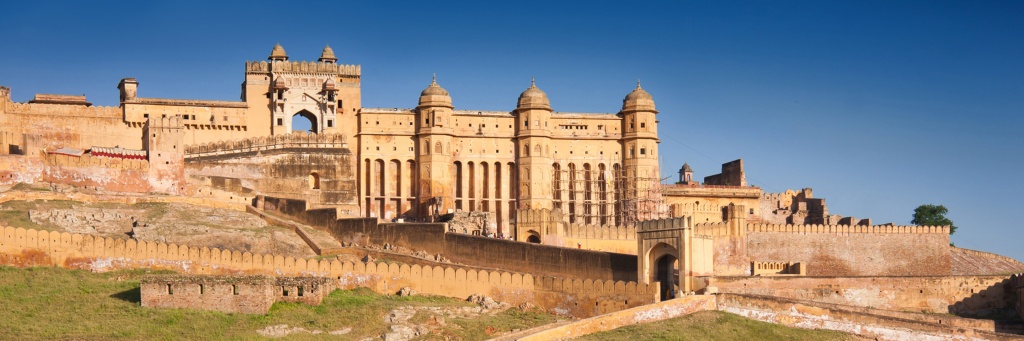
Jaipur is known as the Pink City the largest city of Rajasthan in India. Jaipur was founded in 1727, by the Rajput ruler Jai Singh II, who was the ruler of Amer. The city name happened by the Rajput ruler Jai Singh II. Jaipur is known as Pink City because of the dominant color scheme of its building. It is a particularly popular tourist section. Jaipur has grand places and haveli which is surrounded by mighty fortresses which make Jaipur a welcome respite from high rise malls and urban living. Jaipur is the most famous tourist destination forming a part of the Golden Triangle.

Jaipur is also popular for its ancient beauty which is enclosed by colorful markets, and their events. In Jaipur, you can find fascinating cityscape which is completely covered in a smooth, glowing shade of blush, and that depends on the sunset of each evening.

In Jaipur, there are many festivals like:-

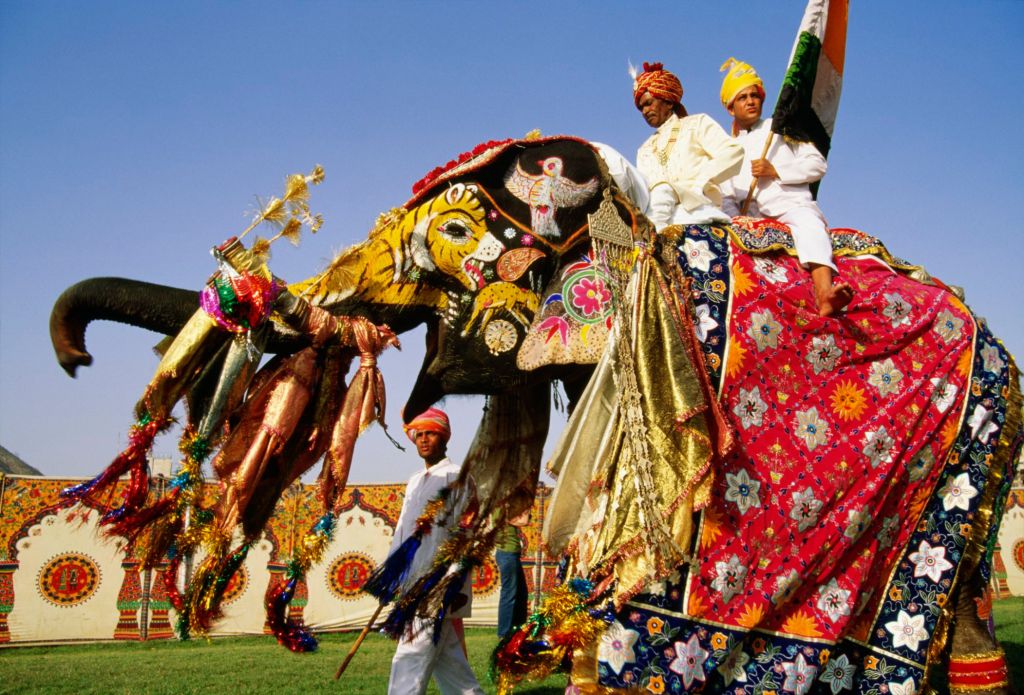
1. Elephant Festival:- Every year in February and March, the Elephant festival is celebrated. In this Elephant, Polo and Elephant dances are the highlight of this festival. The city brings over the six and a half million people with a diverse array of backgrounds.

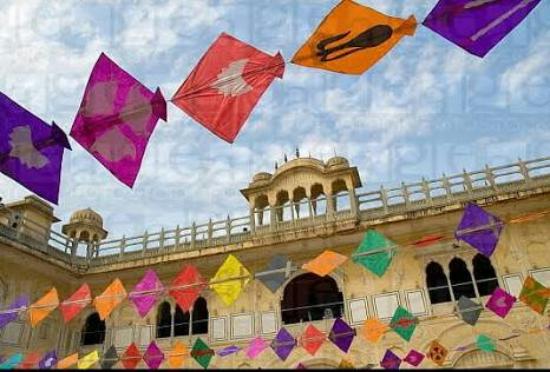
2. Kite Festival:- In every year, January 14 is celebrated as Kite Festival. The Kite Festival brings the contrast of bold colors in the sky. In every year the kites fly in the sky which makes the sky more beautiful than other days. In the daytime sky is a full of Kites, whereas, in the night, the fireworks glow the sky with light. This lovely festival marks a transition of the sun from Sagittarius to Capricorn.

3. Teej Festival:- In the month of late July and early August, this joyful festival brightens the Jaipur street with parade of color and sound. This Festival is focused on the story of the reunion of Lord Shiva and Parvati after 100 years. In this festival married women pray for the long life of their husbands.

4. Gangaur Fair:- This festival is celebrated in Spring for the goddess of abundance Gauri. In this festival, the young girl prays for their future husband while the married women pray for there husband for long life.

So this was a famous festival in Jaipur city.

Let see the most famous places in Jaipur City to witness the beauty of the city.

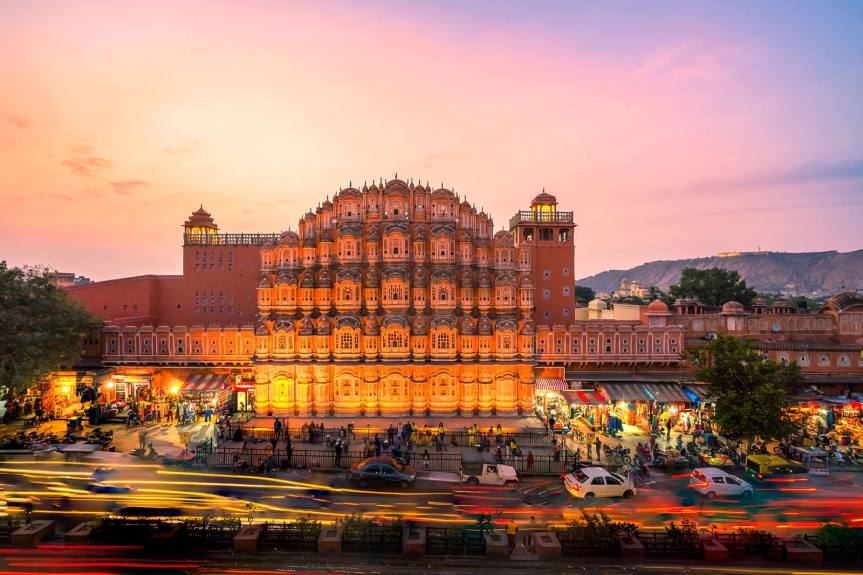
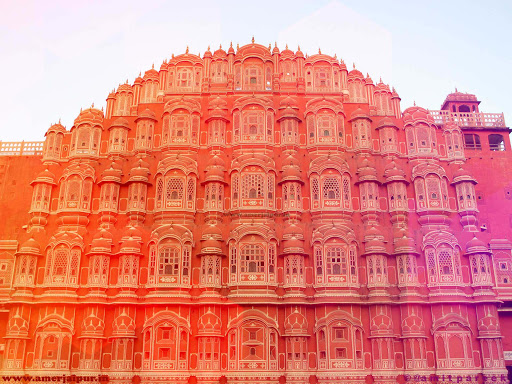
1. Hawa Mahal:- The most romantic Pink fortresses was originally built in 1799 for the ladies of the royal household. It is made up of 152 windows into rounded balconies which showing the beauty of Rajput architecture. In every sunset, it displays the statues the relics, and other historical memorials.

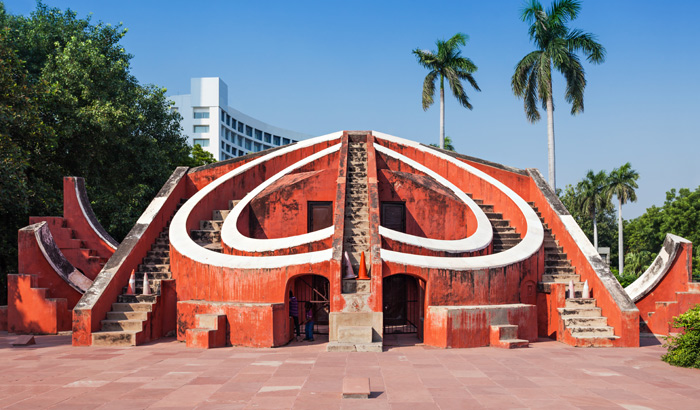
2. Jantar Mantar:- Jantar Mantar is one of the most lookout located in the heart of Jaipur. Maharaja Sawai Jai Singh II executed the whole idea of making Jantar Mantar.

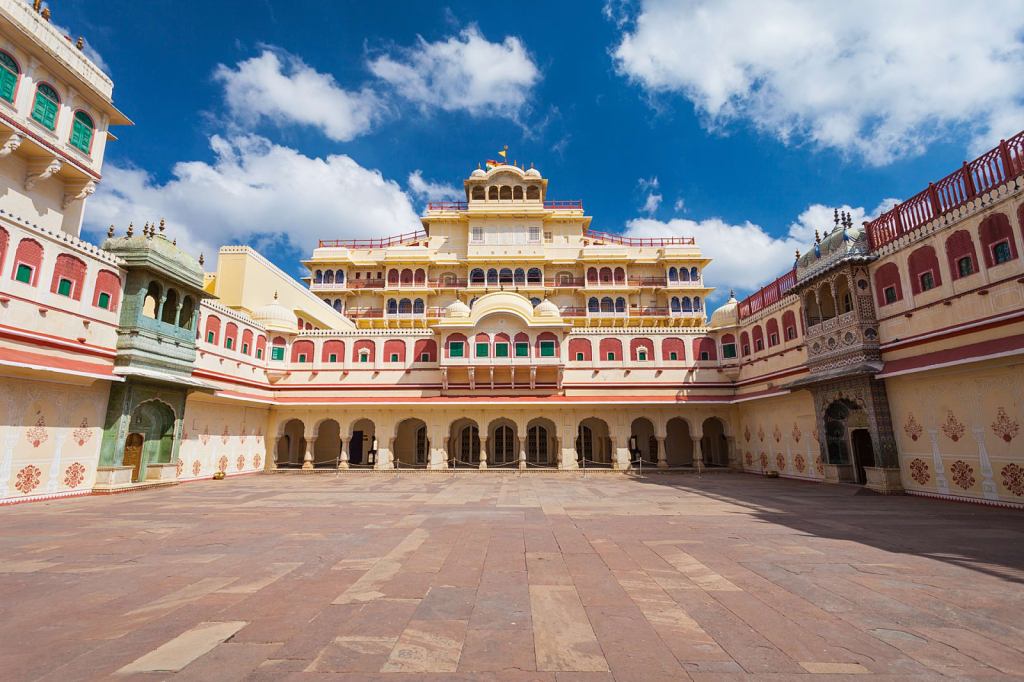
3.City palace:- City palace is the centerpiece of Jaipur city and the heart of founder Jai Singh II leave. City palace is the combination of Rajput, Mughal and European styles which are made with highly trained architectural care. It showcases the historical monuments and art from the city and region.

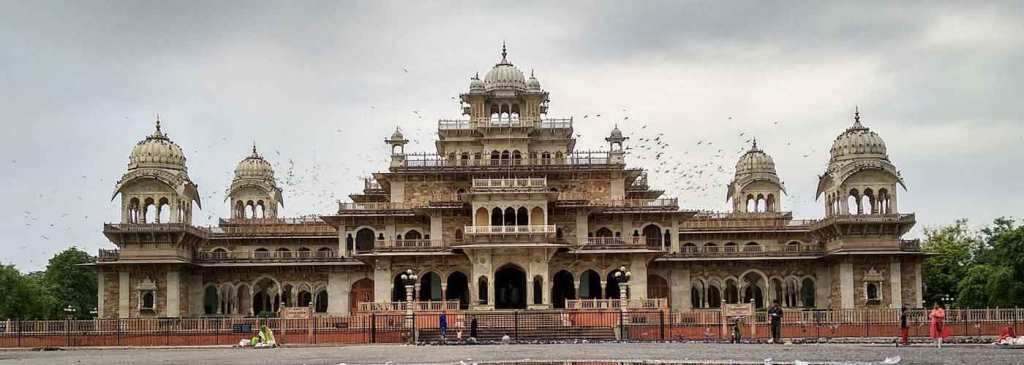
4.Albert Hall Museum:- It is an industrial Art Exhibition which is located near the city center. This museum presents the history and arts of Jaipur and Rajasthan.

So these are famous places in Jaipur. So these are analyses why Jaipur is known as the Pink City.

There are some facts about Jaipur which will definitely will make you surprise.

First Jaipur has the most expensive hotels in India. The most famous hotel in Jaipur is The Raj Palace Hotel which is about US$ 50,000.

Second Jaipur is the only city that organizes the largest free festival in the whole world.

Third Jaipur is not only known for monuments but also for handicrafts and beautiful jewelry.

Fourth. it is the most photographed place in India.

So these are some facts about Jaipur.

If you all like this article let me know. Let me know in the comments what do you think about Jaipur!

Thank you for reading this and have a nice day!

kerela: GOD’S LAND ON EARTH

Kerala, known as the land of god is among the most popular tourist spots in India. It is located on India’s tropical Malabar Coast near the Arabian Sea and its prime attractions include serene beaches, compose climate, beautiful stretches of black water and exotic wildlife. These assets
are enough for Kerala to attract a huge amount of tourists from around the country and all over the world every year. In the first quarter in 2019, the total number of tourist arrivals was around 45 million. The total number of arrivals from abroad was more than 1.6 million in 2018.
Kerala is home to some of the most wonderful and serene waterbeds, estuaries, lakes, canals, rivers etc. This huge interlock network of waterways can be travelled and enjoyed on a houseboat, without compromising on a comfortable stay as these houseboats hold all modern facilities including furnished bedrooms, modern toilets, a kitchen and a balcony for angling.
Some of the famous backwaters that can be enjoyed on a houseboat are Kollam, Alleppey, Kozhikode, Cochin and Kazaragod. Alleppey is known as ‘The Backwater Captial of India’ and ‘Venice of the East’ and is located two hours south of Kochi, the prime city of Kerala. From Alleppey the houseboat starts its journey, taking the tourists on an adventure through places like Kumarakom, Kottayam, and Alumkadavu. The houseboats usually travel 40 to 45 km each day, letting the tourists have a wholesome experience of the bests that Kerala has to offer. The
best time to visit is from September to March. Kerala houses a number of beautiful hill stations which has a lot to offer, including their dense
green attractive locations, acres of tea, coffee and spice farms, profuse and thick forests, an unusual or weird type of flora and fauna, intersecting mountain small rivers, amazing waterfalls.
Some of the famous hill stations include Thekkady, Munnar, Ponmudi, Lakkidi, Vagamon and many more. Of these, Wayanad and Munnar seem to be the favourites among the tourists as
they receive the maximum viewers each year. These hill stations with their pure beauty and perfect weather are going to make the tourist’s journey extraordinary and memorable. These are the all-year-round destination and can be visited at any time of the year.
That is not all for the tourists because Kerala has a number of beaches at Cherai, Bekal, Kovalam, Dharmadan, Fort Kochi, Beyporeand Allapuza. Kovalam beach is a popular surfing destination in Kerala. Kerala wildlife sanctuaries house a huge variety of animals, marine life
and birds of all species. Around fourteen wildlife sanctuaries and two tiger reserves are destined in the elaborate forest of the majestic Western Ghats. The wildlife sanctuaries worth visiting are
Chinnar Wildlife Sanctuary, Eravikulam National Park, Periyar Tiger Reserve, Thattekkad BirdSanctuary, Idukki Wildlife Sanctuary, Wayanad Wildlife Sanctuary and Kumarakom Bird Sanctuary. Kerala also has endangered species like the Lion-Tailed Macaque, Bengal Tiger,
Nilgiri Tahr, Indian Sloth-Bear, Indian Bison etc. These wildlife sanctuaries and national parks not only just let the tourist enjoy a view of some of the rarest and exotic species, but they also offer other enthralling activities like elephant riding in jungle, lion and tiger safaris, trekking, boating and much more.
Kerala’s equable climate, natural abundance of the forest with the wealth of herbs and medicinal plants and a cool monsoon season which starts in June and ends in November are best suited for Ayurveda’s curative and restorative packages. In fact, today Kerala is the only state in India which practises this system of medicine with absolute dedication. This is the reason why Ayurveda is such an integral part of Kerala’s tourism. A number of notable Ayurveda Medical Colleges and Hospitals are spread all across the State. Panchakarma is a term given to the five prolonged treatment that Ayurveda has to offer. This includes medicated oil, herbs, milk and a special diet which could be beneficial in curing all kinds of ailments. The tourists can get famous rejuvenating therapies, Ayurvedic spa, Ayurveda Yoga to relax their mind and soul.
Another major part of Kerala tourism is its cuisine. The cuisine here could be described to have drawn inspiration from the fusion of French, Malabari, and Arabian influences and enhanced with a touch of Kerala’s unique culture. This is why tourists love to indulge themselves in the spicy flavours of Kerala. Some of the staple ingredients of Kerala’s food include rice, coconut and fish. The flavours are enhanced with chillies, ginger, cardamom, mustard seeds, turmeric tamarind, black pepper, clove, cinnamon curry leaves, and asafoetida. The plate their food on banana leaves which is a part of the South Indian culture. Some dishes that the tourists cannot miss on include Idiyappam, Puttu and Kadal curry, Parippu Curry, Erissery, Dosa with Kerala style Sambar, Nadan Kozhi Varuthathu, Ela Sadya etc. Bekal Fort is the largest fort in Kerala and one of the oldest and most beautiful forts in India. India
has developed the Bekal Tourism Development Corporation to promote this tourist location. Kerala also holds the fourth largest Hindu temple in India, called Guruvayur Sri Krishna Temple. This temple is well known among the tourists for its magnificent charm and appeal. Munroe Island is formed by a cluster of eight islands and is interconnected by a turquoise network of canals. Other important tourist attractions include Fort Kochi, Athirapilly Water Falls, Vembanad Lake, Mattancherry Palace, Edakkal Caves, Napier Museum, Wonderla, Shree Padmanabhaswamy Temple, Santa Cruz Cathedral Basilica, Kowdiar Palace etc.
October to March is the best time to visit Kerala. All kinds of hotels and resorts, equipped with the latest amenities are available in Kerala. Kerala is well connected by roads, railway and air. One can reach Kerala from almost every part of the country because it has good rail connection and
almost two hundred railway stations. It has three international airports at Trivandrum, Kochi and Kozhikode. All the major tourist attractions in the state can be easily reached by buses, trains and autorickshaw. Kerala is an ideal option if the tourists are looking for a place to visit this
holiday season. Tourists have to visit Kerala to realize why it is known as ‘God’s own Land’.

Ooty: Queen of Hills

By- Shakti Singh Rathore

The Nilagiri or Blue mountains are home to a beautiful, lush green and attractive town Ooty which rests in its foothills. Ooty (also known as udhagai, udhagamandalam, ootacamud, Queen Of Hills) is a small town located 100kms north from Coimbatore in Tamil Nadu, attracts a huge number of tourists by its serene beauty, lush slopes and unspoiled landscapes. This town of 36 sq.kms and altitude of 2240M above sea level was used to be a summer resort of British Raj and now it’s one of the favorite honeymoon destinations for newlywed couples. Not only tourists but this place also have been attracting filmmakers since it has been discovered, some famous and hit Bollywood movies like Raja Hindustani, Golmaal 4, Kuch Kuch Hota Hai and so many movies have been shot here. Originally occupied by the Toda people, the area came under the rule of the East India Company at the end of the 18th century. The economy is based on tourism and agriculture, along with the manufacture of medicines and photographic film.


MY EXPERIENCE

Ooty- Queen of Hills

Ooty, whenever I use to hear this name my mind automatically use to picture winding roads, green mountains, gushing cascades, The two things which excite bike riders the most are speed and curvy roads with a hairpin bend. Ooty is full of them and is one of the favorite places for born to ride a person of South India and I m one of those born to ride persons and my ride to Ooty was extremely exciting and full of surprises. I started my journey from Coimbatore on Monday morning so that I meet less traffic. It was winter season or say in December with a little drizzle of rain. Until Mettupalayam road was good visible but as soon as I reached Mettupalayam the clouds threw a little well and road became dark because of the shape of trees near the road, it was like a tunnel made by trees.

There are two ways to reach Ooty (1.cunoor, 2.kothagiri) I took junior to drive up and kothagiri to drive down.  There started the hills, forest and bends. After two or the bends, you might start getting views of Mettupalayam town but unfortunately, midst was all I could see due to weather. Due to the midst, visibility reduced drastically and even road wasn’t visible.

With only that much visibility, my journey came to halt at the very first tea point, I waited for the midst to pass a little bit so that I can drive up. After 30 minutes I started my ride back. Slowly things started appearing and it was very joyful to see those long trees, dark road, dense green forest, monkeys on sidewalls. That chill breeze with the fragrance of wet trees along with the fragrance of flowers and fruits was something a city wearer person should go to a hill station for. The road was very clear then and also in perfect condition and after two hours it (Ooty) was closer and clearer. Three hours straight on the same seat might make one feel disquieting but all those feelings fly away when you see lush green slopes with tea plantation, small houses in those blue mountains with narrow streets, cliffs with long trees, still neat and undamaged ancient architecture, white clear clouds moving fast. In a moment I forgot all my tiredness and started enjoying the views. My accommodation was preplanned in Elk Hill Hotel (a three-star hotel with good views from the balcony). Since my hotel was on the other side of the town I moved to the main city of Ooty. This town was set on a steep hill so it was basically like one street up and the other down. Roads in the city are broad but due to lots of fancy shops, restaurants and hotels, it looks narrow. The one shop you can see throughout this town is the shop which sells chocolate and tea powder (handmade chocolates and fresh tea in this town are famous). Finally, I reached my hotel and my plan was to stay there for three days and explore each and every place and explaining my three days experience will be quite long for readers so I cut short tell places you must visit, do’s and donts and ways to reach

Must visit:                             

  1. OOTY:

At a distance of 1 km from Ooty Bus Station & Railway Station, Ooty Lake is an artificial lake situated in the beautiful hill station of Ooty. The lake is surrounded by groves of Eucalyptus trees with a railway line running along one shore. Situated amidst beautiful valleys, Ooty Lake is a major landmark in the town and is the prime attraction in Ooty.

  1. BOTANICAL GARDEN

At a distance of 3 km from Ooty Bus Station & Railway Station and 4 km from Ooty Lake, Ooty Botanical Gardens is a beautiful garden situated on the foothills of Dodabetta Peak in Ooty. The garden spreads over an area of 22 hectares with more than 650 species of flowers and trees.  It houses a thousand species of plants, shrubs, ferns, herbal, bonsai plants, and trees.

  1. DODDABETTA PEAK:

At a distance of 9 km from Ooty, Doddabetta is the highest point in the Nilgiri Mountains. One can have a magnificent panoramic view of the landscape, beautiful valley, plains of Coimbatore and the flat highlands of Mysore from the peak.

  1. ROSE GARDEN

At a distance of 2 km from Ooty Bus Station & Railway Station, the Government Rose garden is situated. This garden has been beautifully laid out in terraces with rose tunnels, pergolas and bowers with rose creepers.

  1. WENLOCK DOWNS:

At a distance of 16 km from Ooty, Wenlock Downs is a vast expanse of grassy meadow located on the way to Pykara in Ooty. The journey from Ooty to Wenlock Downs takes one to the most serene excursions from Ooty. The Wenlock Downs is perfect for walking and hiking amidst this elegant landscape. The peak offers breathtaking views of the Nilgiris and is one of the best places to watch the nature of Ooty.

  1. PYKARA FALLS:

At a distance of 2 km from Pykara Lake and 23 km from Ooty Bus Stand, Pykara Falls is a majestic waterfall.  The waterfall amidst the dense forest is a treat to watch. It is one of the must-visit places for honeymoon couples and nature lovers during their Ooty trip. During the rainy season, the waterfall is in full bloom.

  1. TOY TRAIN:

You wouldn’t disagree with me if I tell that the Toy train is by far one of the biggest attractions in Ooty. And why not? It summarizes the essence of Nilgiris – lush green tea estates, towering Nilgiri/Eucalyptus trees, beautiful bridges on which the train chugs, countless tunnels where darkness consumes the space and leads to light at the end.

How to reach

Air:   Approximately 85 km away, Coimbatore Airport is the aerodrome closest to Ooty that connects this hill station with the rest of the country via an extensive network of flights. Carriers like Air India, IndiGo and SpiceJet have regular flights from New Delhi, Mumbai, Kozhikode, Bangalore, Hyderabad, and Ahmedabad. International travelers can book their tickets till Bangalore (around 310 km away) as Bangalore airport, popularly known as Kempegowda International Airport, is connected with major cities across the globe. Taxis and buses are easily available from both airports for Ooty.

Road:    An amazing way of reaching Ooty is by the well-maintained state and national highways. Tamil Nadu State Road Transport Corporation (TNSTC) buses along with some private buses connect Ooty with major neighboring cities like Bangalore, Chennai, and Mysore. NH 209 and NH 275 connect Bangalore with Ooty, and a number of luxury buses operate from Bangalore, which takes around 7 to 8 hours.

Rail:    Mettupalayam, 40 km from Ooty, is the nearest railhead serving this hill station. Several trains are available from nearby cities like Chennai, Coimbatore, Mysore and Bangalore for Mettupalyam. Once you reach the railway station, you can hire private cabs or avail bus services to reach Ooty. Another exciting way of getting to Ooty is by boarding the heritage Nilgiri mountain toy train, which takes you uphill, moving through thick forests, down the valleys via dark tunnels. Though this journey is extremely slow and time-consuming, it is a once in a lifetime experience.