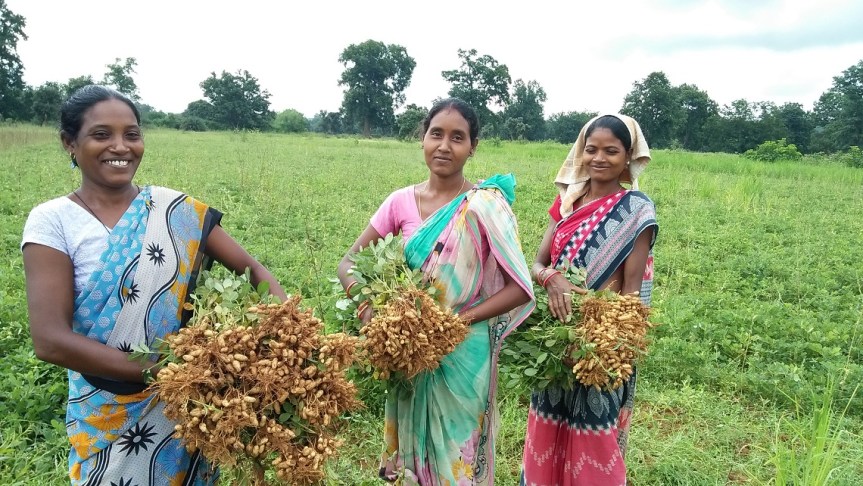
Women and Agriculture

Agriculture in India, contributing about 15.5 per cent of GDP, is a female intensive activity. In a typical rural-agro household, women pursue multiple livelihood strategies often managing complex issues. Her activities vary from performing multiple farm operations for producing the crops, rearing animals, and preparing food to work for wages in agricultural or other rural enterprises, collecting fuel and water, engaging in trade and marketing, caring for family members and maintaining their homes. Though national account does not classify many of this economically active employment they are vital and essential to the well-being of rural households.
The Agriculture Census, 2015–16 has revealed a very promising trend. The census established that the share of female operational holders has increased from 12.79 per cent in 2010–11 to 13.87 per cent in 2015–16. In terms of the operated area, the share of women increased from 10.36 per cent to 11.57 per cent. This signifies that more and more females are participating in the management and operation of agricultural lands.

Agriculture and Female Employment

The central role in all operations of agriculture and even rural household management is played by women. They are involved in all aspects of agriculture, from crop and seed selection to harvest and post-harvest management, marketing, and processing. According to estimates, the agricultural sector employs about 4/5th of all economically active women. Women have a clear edge in dairying and animal husbandry also.
Close to 75 million women are engaged in dairying and 20 million in animal husbandry against 15 million men in dairying and 1.5 million in animal husbandry. Nevertheless, the percentage of female engaged in agriculture has been sizeable at 54.6percent in 2019 against 39.5 per cent of male. The contribution of female workers and farmers has been much larger in agriculture and allied activities than men. The withdrawal of women and men workforce from agriculture is a welcome move due to the empowerment of women through better education, alternative employment opportunities and access to rights and resources, etc.
In a developing nation like ours where urbanization is becoming a social development order, the large number of women needs to move out from agriculture to join services and industrial sector. When examining that of the participation of men, the decline is comparatively lower to that of women.
Women have been instrumental in agricultural development and rural prosperity.
Rural women play a vital role not only in crop planning and cultivation but also in high-value activities like horticulture, primary food processing, livestock rearing, fisheries and cottage industries.
Although women have been contributing dominantly in the rural labour force, they are marginalised and disadvantaged in wages, land rights and representation in group activities. Women have very limited access to productive resources which consequently limits their productivity. Somehow, the needs and aspirations of the women labour force could not get true focus in the rural development initiatives in the past.

Summing Up

Several out of box initiatives of the Government for skills development, subsidised loans for businesses led by women, recent legislation doubling maternity leave, and childcare facilities in companies that employ more than 50 people will have the far-reaching impact on women empowerment and give a boost to India’s economy. The number of women in the total workforce in India is only 27 per cent, and more seriously, almost 20 million women had withdrawn from the workforce during 2005 and 2012. On a global landscape, India ranked 120th among 131 countries so far as women workforce participation is concerned. Adding to woe is the worsening state of gender-based violence in India.

Balancing Fundamental Rights and Duties

The longest written Constitution in the world, lays down the basic structure and the framework of India’s polity. It is built on the foundations of certain fundamental values that have been embedded in it by the makers of the

Constitution to ensure that there should be fairness and justice for every citizen of India.

However, it has been made very clear that:

  •  lot of restraint is required while exercising this freedom.
  •  the absolute freedom is an illusion and cannot survive alone.
  • the fundamental rights need to be paired with fundamental duties.

 To offset the increasing tendencies of indifference towards the business of the government amongst its citizens and to check fissiparous growth, the Constitution

(Forty-Second) Amendment Act, 1976 introduced the concept of fundamental duties by adding Part

IV-A, consisting of the sole Article 51A.That the Constitution ought to be amenable to change to allow for emerging needs was always recognised.

This year the government is laying more emphasis on creating awareness on eleven fundamental duties as part of celebration of 70th year of adoption of the Constitution through its various initiatives. The underlying idea is that these precepts should become a part and parcel of every Indian’s thoughts and actions. The balancing of fundamental rights is a constitutional necessity as every right gives rise to a corresponding duty

The fundamental duties are the mechanism that aims at striking a balance between individual freedom and social interests. These duties do not cast any public duties but are applicable only to individual citizens. However, in  a judgment, the Supreme Court held that the Fundamental Duties are as important as Fundamental Rights and that though Article 51A does not expressly cast any fundamental duty on the State, the duty of every citizen of India is the collective duty of the state- its de facto enforceability in the sense that Article 51A is a yardstick against which the action of the State may be assessed.6In Union of India v Naveen Jindal7, the Supreme Court observed that fundamental duties are implicit in the concept of fundamental duties, the former providing certain restrictions on the exercise of the latter.

Article 51A (k) was introduced as a fundamental duty in 2002, along with Article 21A as a fundamental right. Through Article 51A (k) read with Article 21A, the State and the parents are made to share obligation with regard to education of the children in the following manner:

  • the State with free education
  • the parents with compulsory education.

The State has been entrusted with the responsibility to ensure compulsory education while at the same time Article 51A (k) does not penalise parents or guardians for not being able to send their wards to school.10 In similar manner, right to hoist the national flag has been granted to the citizens subject to the restrictions specified in the Article 51A (c).

Thus, it may be observed that, in umpteen number of cases, the various contours of Article 51A have been interpreted and applied by the Apex Court. The unenforceable duties have got a booster dose of contents as well as some sort of enforceability through increased references in various judicial pronouncements. Various current crises related to environment, mob-violence and terrorism etc. could have been regulated to a large extent if the human values could be inculcated right from the formative period of life so as to lay a strong foundation for effectuation of Fundamental Duties along with the strong desire to avail the rights. Thus, there is a strong necessity to maintain a strong balance between the rights and the duties. One does not have existence as well as the meaning without the other.

Dealing with jealousy

Oh well! So that’s quite a juicy topic and a very interesting one which is I feel is more of a hush-hush topic, for people know that it exists but they don’t want to admit it publicly, considering it might cause them some sort of an embarrassment or is going to tease their ego a bit and that’s the reason why they are busy silently combating with this one but here I am going to talk about it in a more umm, deeper manner or whatever you may call it.

I am pretty sure that all of us must have experienced jealousy at one stage or the other no matter how much we try to get away with it but I think walking through jealousy is only going to be a successful conquest if, we firstly accept and acknowledge that we have been at points, jealous in our life post which almost 70% of the job is already done. It’s absolutely normal, just a part of human mindset but is deeply rooted in fear and in lack and know that, the feeling of lack is rooted in ego.

Sometimes it is important for us to deeply analyse our emotions and go an extra mile to try and heal them cause unless we heal them, they are going to keep causing troubles for us, leading to absence of mental peace. So why not go into deeper insights and try and figure out how jealousy looks like. It is the general idea that can be taken from the help of sentences that people generally use;  I hate that she has those things, Why does she have them? I wish I had them. Why is he with her? I think I look much better than that girl. Look at me, my Life. I don’t have all these things. I don’t have this money. I don’t have a boyfriend. I don’t have xyz and the list would go on and on unless we choose to accept it and embrace ourselves and practice more and more self love and compassion. Might sound difficult at first, but is not impossible.

If somebody has something, we need to regard it as a blessing bestowed upon them. For the enormous amounts of hard work that they must have been upto all those years of their life, somewhat like the quote “Work hard in Silence and let your success make the noise”. We don’t know, we aren’t aware how incredibly hard circusmstances they would have endured, how many failures they had to overcome and when the time has come for them to enjoy the reward, the fruit of long years of toiling hard and struggles, what are we doing to them? Are we really being compassionate here? Are we really wishing them luck and positivity. Are we really being good human beings here?No, by being jealous and envious, we arez on top of it, trying to tarnish their success by throwing away negativity and jealousy is a negative vibe. Let’s accept it.

So try and make a smooth transition from jealousy to being inspired by that someone, to that extent, where you also want to work hard to earn that fruit and for that, know that, you would also have to put in the equal amount of hardwork, absorb in the pressure and only then you will be rewarded because if you want to chill in an air conditioned room, you would first have to know the experience of being burnt under the sun. Because, my dear, nothing in this world is ever free of cost. You have to endure some amount of “pain” in order to get some “gain” and notice that when you channelize your entire energy towards this process of trying to gain something, trying to work work hard and fulfill your dreams & desire post setting up goals and following your passion, you would find yourself engulfed in a bubble of positivity and there would just be no room for negativity and even if there are some other things which make you feel low and jealous and if the self doubt tends to creep in, don’t worry. Just soothe your inner child, comfort it and with a tranquil state of mind, affirm and say that I have been working hard and I am sure if I don’t give up right now, I will also get what I truly deserve. Also, be mindful enough to not say that “I will also get to match up with that someone”. That’s where comparison comes into play and this is what leads to jealousy. So remember, that as long as you hold love and compassion in your heart, nothing negative can impact you. I hope it helped.

Are you consuming Bad fats?

Fats are not always harmful to the human body. Like other essential nutrients for the human body, fats are also important but everything in a huge amount will affect our body negatively.

There are two types of fats good fats and bad fats

Good fats are unsaturated fats and omega 3s are healthy for our body they boost our energy level, fight fatigue, improve our mood, and even help in weight loss.

while bad fats such as saturated fats or trans fats are responsible for our weight gain, fatigue, raise cholesterol which ultimately causes many serious cardiovascular diseases, cancer, obesity, and diabetes.HDL cholesterol is the “good” kind of cholesterol found in your blood.LDL cholesterol is the “bad” kind. The key is to keep LDL levels low and HDL high, which may protect against heart disease and stroke.

 When we hear cholesterol it always has a bad impression in our mind. We think it is not good for our body but as like other nutrients cholesterols are also important in a sufficient amount for our body, until it doesn’t become bad for the health. 

Most of the foods that contain these types of fats are solid at room temperature, such as:

  • butter
  • margarine
  • shortening
  • beef or pork fat

 Most saturated fats are animal fats. They’re found in high-fat meats and dairy products.

Saturated fat sources include:

  • fatty cuts of beef, pork, and lamb
  • dark chicken meat and poultry skin
  • high-fat dairy foods (whole milk, butter, cheese, sour cream, ice cream)
  • tropical oils (coconut oil, palm oil, cocoa butter)
  • lard

Eating too much-saturated fat can increase blood cholesterol levels and low-density lipoprotein (LDL) levels.

Traditionally, doctors have linked higher saturated fat intakes with increased heart disease risks. This idea has been called into question more recently.

Short for “trans fatty acids,” trans fat is generated synthetically and appears in foods that contain partially hydrogenated vegetable oils. These are the worst fats for you. You might find trans fat in:

  • fried foods (French fries, doughnuts, deep-fried fast foods)
  • margarine (stick and tub)
  • vegetable shortening
  • baked goods (cookies, cakes, pastries)
  • processed snack foods (crackers, microwave popcorn)

Like saturated fat, trans fat can raise LDL cholesterol, also known as “bad” cholesterol. Trans fat can also suppress high-density lipoprotein (HDL) levels or “good” cholesterol.

Essential fatty acids- These are the fatty acids can not be synthesized. There are two types of essential fatty acids-

  1. Linoleic acid (Omega 6)
  2. Alpha linoleic acid 

 Linoleic and Linoleic acids are the essential fatty acids that are derived from foods containing Omega-6 and omega-3 fatty acids. 

Alpha Linoleic acid is a type of omega-3 fatty acid. The best source of Omega- 3 is oily fish. It can also be derived from other marine sources, such as algal oils. ALA, on the other hand, is mainly obtained from nuts and seeds.

Here are the amounts of omega-6s in 100 grams (3.5 oz) of the following foods:

  • Soybean oil: 50 grams
  • Corn oil: 49 grams
  • Mayonnaise: 39 grams
  • Walnuts: 37 grams
  • Sunflower seeds: 34 grams
  • Almonds: 12 grams
  • Cashew nuts: 8 grams

Here are the amounts and types of omega-3s in one serving of the following foods:

  • Salmon: 4.0 grams EPA and DHA
  • Mackerel: 3.0 grams EPA and DHA
  • Sardines: 2.2 grams EPA and DHA
  • Anchovies: 1.0 grams EPA and DHA
  • Chia seeds: 4.9 grams ALA
  • Walnuts: 2.5 grams ALA
  • Flaxseeds: 2.3 grams ALA

Anything that we consume in our diet should be healthy along with the taste.

Next time do check whether you are consuming something which is not good for your health…

References-

1. Siri-Tarino, P.W., et al., Saturated fatty acids and risk of coronary heart disease: modulation by replacement nutrients. Curr Atheroscler Rep, 2010. 12(6): p. 384-90.

2. Hu, F.B., Are refined carbohydrates worse than saturated fat? Am J Clin Nutr, 2010. 91(6): p. 1541-2.

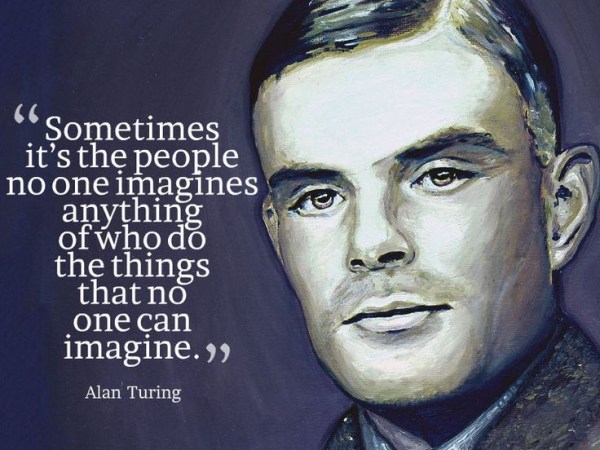
The Man Who Knew too much: Alan Turing

I remembered my first day in college, our vice-chancellor arranged a seminar for all departments 1st-year student, he motivated us, told us about the future that is in our hand, and one thing that I always keep in my mind he told that every student should know to code, I knew the importance of code language, programming, Artificial Intelligence but I really not aware of their history how it was developed, so after the session, I am starting to know about code languages during this time I came came to know about a man “Alan Turing” his life, passion for mathematics and machine, code languages, computer science, just mesmerized me.

Alan Mathison Turing the Father of Modern computer science and Artificial Intelligence. Today Mr. Turing’s 108th birth anniversary. He was an English mathematician, computer scientist, logician, cryptanalyst, philosopher, and theoretical biologist. Turing was highly influential in the development of theoretical computer science, providing a formalization of the concepts of algorithm and computation with the Turing machine, which can be considered a model of a general-purpose computer.

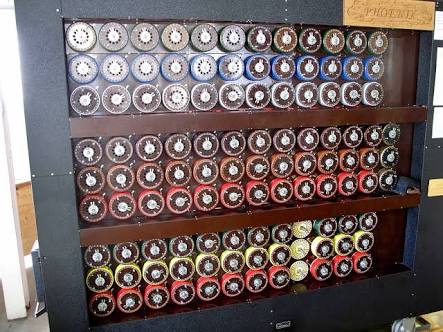
His revolutionary idea was to create a machine that would turn thought processes into numbers. The machine would read a series of ones and zeros from a tape which described the steps needed to solve a problem or task.During the Second World War, Turing worked for the Government Code and Cypher School (GC&CS) at Bletchley Park, Britain’s codebreaking centre that produced Ultra intelligence. For a time he led Hut 8, the section that was responsible for German naval cryptanalysis. Here, he devised a number of techniques for speeding the breaking of German ciphers, including improvements to the pre-war Polish BOMBE method, an electromechanical machine that could find settings for the Enigma machine.

Turing played a crucial role in cracking intercepted coded messages that enabled the Allies to defeat the Nazis in many crucial engagements, including the Battle of the Atlantic, and in so doing helped win the war.he and fellow scientist saved lots of life by code breaking.

The man who is a pioneer of modern mathematics and computer science, his invention, theories changed today’s technology. Tribute to the world’s great Inventor Mr. Alan Mathison Turing🙏.

# Clean India Movement 🇮🇳

One may see a person throwing a plastic wrappers or an empty bottel on the road from car in all the cities in India. This is a very common sight in our country of 1.25 billions because of lack of awareness, recklessness, and irresponsibility and of course- ‘Old habits die hard’. India is making progress after opening the economy to foreign investment however, it stinks that more than 54.7% of our house so are still without tolites despite the government spending about Rs. 1250 billions on sanitization project in the last two decades. Clean India movement in thus, a dream for every person of this country. However it is wrong to blame the government because it could do nothing alone. It explicitly requires that the general public has to be made aware of this malice. People of this great country litter with irresponsibility irrespective of whether they are rich or poor and where they live. And at the same time we also have no problem if living with the dirt. Now the question is what is really needed to get rid of this problem? Literacy and education is the real key to overcome this habit. One things is for sure is that hefty fines are not the solution. In this situation, we have to look forward to our new or younger generation who are the future of this nation. Our children can became the torch bearer of this Clean India Movement, if we can inculacate the habit of cleanliness among our children then perhaps this Movement can become a reality in India . This mission can be implemented and achieved by educating our children from the very beginning of their lives that is from school itself. If in the school students can be inspired for this cleanliness drive, their future will be safe and successful. This is an initiative by the Government of India and everyone’s support is a must to accomplish this dream.

Self-Reliant India

The Prime Minister in his address on 12th May 2020 gave a call for self-reliant India. The definition of self-reliance has changed in the globalised world and he clarified that when the country talks about self-reliance, it is different from being self-centred. He said that India’s culture considers the world as one family, and progress in India is part of, and also contributes to, progress in the whole world. He noted that the world trusts that India has a lot to contribute towards the development of the entire humanity.

Five pillars of self-reliant India

Self-Reliant India will stand on five pillars viz. 

  1. Economy: which brings in quantum jump and not incremental change; 
  2. Infrastructure: which should become the identity of India; 
  3. System: based on 21st-century technology-driven arrangements; 
  4. Vibrant Demography: which is our source of energy for a self-reliant India; and 
  5. Demand: whereby the strength of our demand and supply chain should be utilised to full capacity. He underlined the importance of strengthening all stakeholders in the supply chain to increase, as well as fulfil, the demand.

Atmanirbhar Bharat Abhiyan

The Prime Minister announced a special economic package and gave a clarion call for Atmanirbhar Bharat. He noted that this package, taken together with earlier announcements by the government during COVID-19 crisis and decisions taken by RBI, is to the tune of Rs. 20 lakh crore, which is equivalent to almost 10% of India’s GDP. He said that the package will provide a much-needed boost towards achieving ‘Atmanirbhar Bharat’. He observed that the package will also focus on land, labour, liquidity and laws. It will cater to various sections including cottage industry, MSMEs, labourers, middle class, industries, among others.

Talking about the positive impact of reforms like JAM trinity and others, brought about in the last six years, Prime Minister said that several bold reforms are needed to make the country self-reliant so that the impact of crisis such as COVID-19 can be negated in future. These reforms include supply chain reforms for agriculture, rational tax system, simple and clear laws, capable human resource and a strong financial system. These reforms will promote business, attract investment, and further strengthen Make in India. Self-reliance will prepare the country for tough competition in the global supply chain, and the country must win this competition. The same has been kept in mind while preparing the package. It will not only increase efficiency in various sectors but also ensure quality. Highlighting their contribution to the country, Prime Minister said that the package will also focus on empowering the poor, labourers, migrants, etc., both from organized and unorganized sectors. He observed that the crisis has taught us the importance of local manufacturing, the local market and local supply chains.

Bold Reform-Need of the Hour

  1. Supply chain Reform for Agriculture
  2. Rational Tax System
  3. Simple and Clear Laws 
  4. Capable Human Resource 
  5. Strong Financial System

Self Reliant is the imperishable call from the side of PMO. It is the time in which India should stand on his own feet. The time has come to prove himself as a ‘teacher of the world’ as it was in the past.

Migration and Economic Growth

Social Distancing and ‘stay home, stay safe’ became the mantras when the nationwide lockdown was announced on 24th March in an attempt to arrest the spread on Corona Virus. Due to this most of the employees were allowed to stay at home and do your job from your home. But there are a few sections of working people who depend on the daily wages like labourers working in factories, in the construction sector and so on. In this section, most of the peoples are from another state. These labourers are called a migrant worker. These were the migrant workers who provide support services to every supported themselves without jobs. And though government by declaring as it national disaster had made it obligatory for the employers to pay the wages as per the National Disaster Management Act, it is difficult to assess its implication. This is because, firstly, the administrative machinery to ensure compliance across the nation is far from adequate. Secondly, the income earned by the self-employed workers cannot be termed as wages, which mean that these workers would have to go without earning in piece-rated jobs, whose remuneration would differ depending on pieces made. And finally, the MSMEs or tiny enterprises are financially too fragile to release the wages without production. Perhaps only the domestic workers, whose contracts involve a significant personal component making them relatively indispensable, might have received their wages during the lockdown. By the end of the lockdown 1.0, the virus had made its appearance in urban areas where it was feared to flare faster due to the sheer density population, the use of common toilets, etc. 

A Challenge and an Opportunity

Harris-Todaro model of migration (1970) shows how rural/agricultural workers decide to migrate to urban/industrial spaces when the expected wage rate in the urban-industrial sector is significantly higher than their present wages in the rural sector. The expected wage is a ratio of the present urban wage rate and the ‘chance’ of finding a job. The latter being a ratio of the number of jobs available and the total number of aspirants, which includes those living in the urban sector and the new migrants. Naturally, if the ‘chance’ of finding a job is poor, the expected wage is low and the decision to migrate is put off. What plays an important role in changing this calculation is the presence of kin or a community in the urban sector. Availability of such support induces migration, which is a rational personal choice, by providing at least an initial base to a new migrant. And while every migrant may dream of a secure job in the formal sector, as more migrants flow in, they are compelled to settle in the unorganised or in the formal sector.

Economic Growth: Slowdown and Lock Down

Indian Economy has been going through a rough patch for a while. The GDP growth rate of the economy rate had slipped to 5% in the first quarter of FY20. The annual report of the RBI for the fiscal year 2018-19 shows a significant decline in every macro-economic indicator.

The US-China trade war could be an important exogenous factor affecting the economy. As we move beyond lockdown 4.0 there is a talk that ‘herd immunity’ might work better than social distancing. This is because virologists are warning us of a return of the virus within a year. So extending lockdown might not deliver much.

‘It is a day of universal brotherhood’- PM Modi on International Yoga Day, Mysuru celebrates Yoga indoors, on Terrace

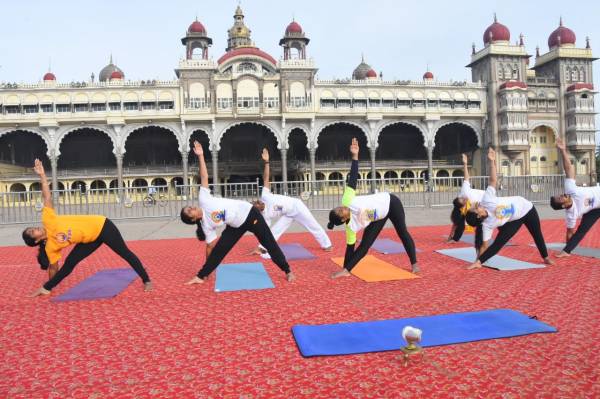
International Yoga Day celebration at Mysuru Palace on Terrace.

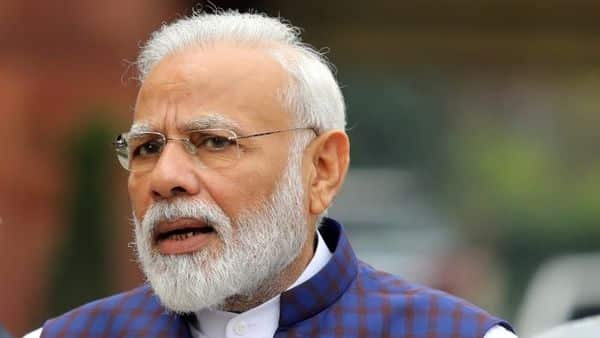
Addressing the nation on Sunday 21 June 2020 PM Narendra Modi said this is the day of unity as yoga binds everyone together. “It is a day of universal brotherhood.”

“The theme of International Day of Yoga this year is ‘Yoga at home, Yoga with family’. Today, we will stay away from all social gatherings and do yoga with our family. When family members come together in practicing yoga, it spreads energy in the entire house,” said PM Modi.

“The world is taking the need to practice yoga more seriously in the wake of Covid-19. Yoga has many asanas (poses) to boost our immunity. These asanas strengthen our muscles and metabolism. Coronavirus attacks our respiratory system, and pranayama (breathing exercise) is the best exercise to keep ourselves safe,” the Prime Minister said, urging people to include pranayama in their daily routine.

“Yoga enhances our quest for a healthier planet. It does not discriminate, goes beyond color, race, faith, and nations. Anyone can embrace yoga – all you need is some time and space,” PM Modi said.

He ended the address with Sanskrit verse: Lokah samastah sukhino bhavantu (may all beings be happy and free).

For the first time since June 21, 2015, Yoga Day is being celebrated digitally. This year’s theme is ‘Yoga at home and Yoga with family.’

On December 11, 2014, the United Nations General Assembly had declared June 21 as ‘International Day of Yoga’, months after PM Modi had proposed the idea.

PM Modi had urged people, in a video message on Thursday, to observe the day from the confines of their homes due to the Covid-19 pandemic.

Yoga celebration at Mysuru Palace

Due to the Pandemic outbreak, PM Narendra Modi could not attend the Yoga performance at Mysuru.

Still, the program was conducted at the palace premises under the aegis of the Yoga Federation of Mysuru with the representative from the local AYUSH department.

The program was live-streamed on Social media to encourage the public to perform yoga, where 24 Asanas were performed apart from Pranayama and Dhyana.

“Instead of the single venue outdoor mass yoga session, they can celebrate performing yoga at a time staying in their homes. We hope the people cooperate and support the initiative in the light of pandemic,” he said, in a video message.

At least one lakh people are expected to perform yoga from their homes to celebrate the occasion, he said.

Pratap Simha, Mysuru MP, in a video message, said people could do ‘asanas’ of their choice staying indoors. “We wanted to break the record held by yoga guru Baba Ramdev on the yoga day show this year in Mysuru by attracting a gargantuan crowd. But the pandemic stopped us from making it happen,” he recalled.

“We had sought permission from the Deputy Commissioner tp perform in front of the palace and live to stream the event on social media to popularise yoga. So, in terms of reach, if surpassed our earlier efforts’, said Ganesh Kumar, one of the yoga instructors conducting the event.

Those performing yoga on June 21 in their homes will get a certificate acknowledging their participation.

15 Date Ideas that you can do at home during lockdown

Yes, you heard it all right. I am here with yet another article to make love blossom between you and your partner. With the nationwide lockdown still going on, we presumed that there might have been a temporary hault to the intimacy & romance because you can’t step out for fancy dinner dates or weekend getaways. It must be frustrating since the summers are already here and you just can’t travel. But as they say, Love isn’t just about all fancy and over-the-top things but it is more of those little gestures which make your hearts beat faster for each other because the fairytale has to end one day and the normal life would soon commence so why not try getting used to it from now only by taking pleasure in simple joys of life.
So no more worries when we are here to the rescue.
Here below are enlisted 15 Budget Friendly Date Ideas that you can do at home and keep the romance brewing. So what’s the waiting for? Let’s get started…

1) A DATE IN THE GARDEN
Oh yes who would have thought that planting saplings together could turn out to be so romantic and eco-friendly. If you don’t think so, go try it out for yourself. You can sneak cute, lovable glances while you plant the sapling together, hands closely intact in mud as if solidifying the bond between you two. And if you’re more of a naughty one, try throwing off the mud on your partner and notice the magic of love and romance taking over you.
Make an effort to water the plant together each day and watch your love grow alongwith the plant.

2) A DATE IN THE SHOWER
All you need is to get your bathrobe on and your partner in his towel. You can sway your hips to some romantic music together and embrace each other under the shower. A glass of wine and rose petals would be like an icing over the cake. Typically bollywood na? Still sounds just oh-so-romantic!

3) A DATE IN THE KITCHEN
Tired of cooking everyday with no domestic help available  given the current circumstances? Bring that guy along into the kitchen who vowed to stand by your side always and then cook something special or maybe experiment on an altogether new recipe. What could be more romantic than putting flour onto each other, tasting the food through each other’s fingers and savouring the taste of LOVE with some nice music playing at the background!

4) A DATE ON THE TERRACE
Thanks to the Indian daily soaps that I don’t need to brief you about this one. I am sure everyone of you is well aware of how the decorations should be, the type of music, the outfits and the couple dance steps. Lastly imagine self-cooked dinner being fed to each other, gazing at the twinkling stars in the bespangled sky and then ending the night in each other’s arms. Ohh! How romantic!

(To be continued…)