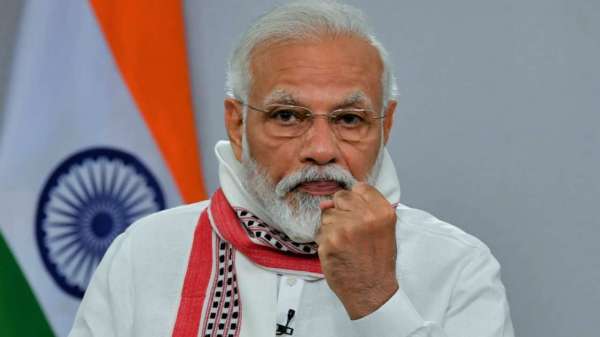
Prime Minister on Saturday announced the Aatmanirbhar Innovation Challenge, inviting India’s tech and community to create an Aatmanirbhar App Ecosystem.
The project was launched by the Ministry of Electronics and Information Technology (MeitY) in partnership with the Atal Innovation Mission and government think-tank Niti Aayog.
“Today there is immense enthusiasm among the tech & start-up community to create world-class ‘Made in India’ Apps. To facilitate their ideas and products @GoI_MeitY and @AIMtoInnovate are launching the Aatmanirbhar Bharat App Innovation Challenge,” he tweeted.
PM Modi also urges the techies and start-up community to participate if they have such a vision and expertise to create the products.
“This challenge is for you if you have such a working product or if you feel you have the vision and expertise to create such products. I urge all my friends in the tech community to participate.” PM Modi tweeted.
Addressing the tech community through a post on LinkedIn, PM Modi said: “Today, when the entire nation is working towards creating an Aatmanirbhar Bharat, it is a good opportunity to give direction to their efforts, momentum to their hard-work and mentorship to their talent to evolve Apps which can satisfy our market as well as compete with the world.”
This challenge will run in two tracks–Promotion of existing apps and development of new apps.”Track-01 will work in mission mode for identifying good quality Apps for the leader-board and shall be completed in around a month. The Track-02 initiative will work to help create new champions in India by providing support in ideation, incubation, prototyping, and roll out along with market access,” he wrote in the post.
The first track of the challenge is being launched in eight categories, which includes Office Productivity & Work from Home, Social Networking, E-Learning, Entertainment, Health & Wellness, Business including Agritech and Fintech, News and Games.
The outcome of this challenge will be to give better visibility and clarity to existing Apps to achieve their goals and to create tech products to find solutions to tech conundrums with the help of mentorship, tech support, and guidance during the entire life-cycle, he wrote.
After the banning of 59 Chinese apps –Tiktok, Helo Mi community and 56 others– in the country it will be a great opportunity not only for the existing tech companies but also for the start-ups too.
Prime Minister Modi in his post said that there is tremendous scope among these sectors for new Apps that solve specific issues for India and the world.”Can we think of making traditional Indian games more popular via Apps? Can we develop Apps with targeted and smart access to the right age group for learning, gaming, etc? Can we develop gaming apps for people in rehabilitation or getting counselling to help them in their journey? There are many such questions and technology alone can creatively give answers,” said PM Modi.
With this statement he questioned as well as challenged the Indian techies to utilise this opportunity for the betterment of the Nation.
This innovation challenge can be accessed through the MyGov platform from July 4. Companies will have to submit their entries by July 18 through an online submission process.
The government will provide the assistance for each of the tracks, which will include personnel from the private sector and academia to evaluate the entries.
Post evaluation, these apps will be given awards and features on “leaderboards for information of citizens”. The government has allocated ₹20 lakh, ₹15 lakh and ₹10 lakh for the first, second and third placed apps in each category. Further the winners of sub-categories will get ₹5 lakh, ₹3 lakh and ₹2 lakh for first, second and third position, respectively.
What is yoga, and why is it so popular? Yoga is a series of stretches and poses that you do with breathing techniques. It offers the powerful benefits of exercise. And since yoga is gentle, almost anyone can do it, regardless of your age or fitness level.
Yoga is a 5,000-year-old discipline from India. It was developed as a practice to unite the mind and body. There are many branches of yoga. All yoga styles can help balance your body, mind, and spirit, but they achieve it in various ways.
A study in The Journal of Alternative and Complimentary Medicine (among others) shows that yoga can build strength in addition to flexibility. And flexibility is the key to strength. When your muscles and the tissues that surround them are super tight, you’re not able to move as much weight with a full range of motion in the gym. Doing yoga helps loosen up those tissues so you can get more out of your strength sessions.
Research in the International Journal of Yoga shows that yoga not only reduces stress, but can help lower anxiety and depression, too. (It can also help battle insomnia, helping people who have it to sleep sounder at night, per researchers in Southern India.) There are as many types of yoga as there are machines in the gym, each having their unique benefits. There’s something for everyone: From hot yoga to aerial yoga to a good ‘ol Vinyasa flow to Ashtanga and Kundalini.
A study in the European Journal of Preventive Cardiology found that yoga can ward off heart disease helping to keep your heart in good form. Since that’s one of the key reasons people do cardio in gyms, to boost heart health, it’s interesting to note that similar benefits can be reaped from a yoga class. The twisting, stretching and folding of a yoga practice are good for the digestive system, the circulatory system, the lymph system and more. It’s a great way to detox the body and can improve your cardiovascular system. And all this while developing stronger muscles. A gym workout is focused just on strengthening muscles and boosting cardio.
Yoga is a different experience in a yoga studio, but you can easily practice yoga at home, outside or in small spaces. All you need is about 6 feet by 4 feet and you have your own yoga studio. A gym workout requires more equipment and more space.
Yoga eases your aches and pains. A gym workout increases them. Yoga slowly stretches muscles and opens the energy channels of the body. The increased flexibility keeps muscles and joints lubricated and healthy. Weights and treadmill can cause strain which leads to soreness and injuries.
Yoga helps you breathe easier. During times of stress, it’s easy to forget to breathe, really breathe, and not just shallow breaths. Without deep breaths, it’s harder to think clearly and fatigue can set in. Yoga focuses on the breath so that when you need it most, those deep breaths are the norm.
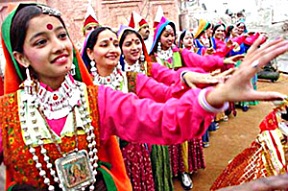
India is a country with 29 states and each state had its traditions and values. People follow different religions, speak different languages, and eat different foods. Likely there exists a fashion and style diversity in India. Still, India is United as a country. Unity in diversity exists in India.
Here are some of the beautiful and Elegant Indian dresses which signify each state, and reveal the diversified beauty in it.
Madhya Pradesh
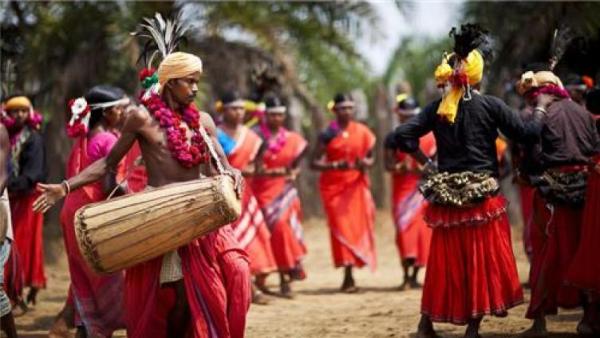
The people of MP wear very simple dresses compare to other states. Simple yet beautiful fashion style of these people includes Dhoti and Kurta or a simple shirt with a specific type of jacket called the Bandi or Mirzai and an equally unique headgear, a turban called the Safa which the men of this state wear.
Bandhej sari is very famous in the state still women folk wear Lehenga and choli with an Orhni called Lugra.
Uttar Pradesh
The women of this state wear salwar kameez. Churidaar bottom is originated from this state. Women also wear Ghagra Choli and Saree here. While men wear Lungi Pajama with headgear (topi or pagri) and sherwani on traditions days.
Chhattisgarh
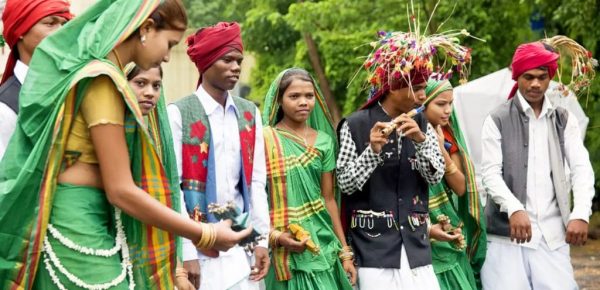
Women wear saree known as Lugda with a blouse named Polka. They wear the saree in a typical Kachmora style. Men wear dhotis and headgears like cotton turbans.
Maharashtra
Nauwari saree the saree with 9-yard length is worn up to knee-length with beautifully designed Choli. The saree is worn with a different style like Dhoti.
Men of this state wear Dhotis known as Dhotar along with short sleeve shirts called Pheta and headgears called Pagdi.
Gujarat
Gujarat Chaniya Choli is world-famous which includes Ghagra, Choli, and chunari or head veil. These dresses are found in different color combinations which look very beautiful.
Gujarati men wear dhotis or churidar pajamas and kurtas or Bandits, traditionally called Chorno and Kediyu that are paired with rich colored headgear as the turbans.
Punjab
Patiyala salwar and churidar are common wears of the women of this state. Women also wear colorful Ghagras.
Common attire of the men of the state is kurta and muktsari pajamas, which has replaced the more traditional tehmats. They also wear Pagris.
Rajasthan
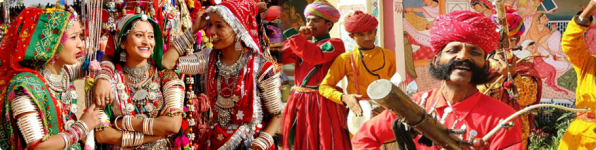
The men of the state wear dhotis or churidar pajama, kurta, angarkha, patka, or Kamar band and white Pagar or safa which is a kind of turban, Give them a royal look. However, the length and manner of wearing the dhoti vary across the state as does the length of women’s dress as well.
Rajasthani women wear long skirts called ghagra with blouses called Kanchi or Kurtis and cover their heads with Odhnis.
Himachal Pradesh
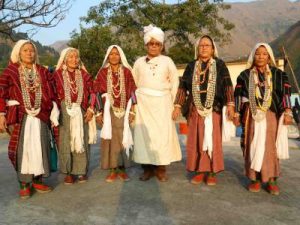
It is a hilly and cold state so people wear woolen clothes here. Men wear kurtas paired with dhotis or churidar pajamas and the typical Himachali cap called the pagri.
while Himachali women wear kurtas, rahide, and Ghagra Lehenga Choli, along with scarves and shawls. Rahides are headscarves decked with a golden periphery that serve to protect against the cold. Pashmina shawls from the region are one variety of woolen clothing popular all over for the warmth and quality it endows.
Telangana
Telangana has sarees, Langa vonis, salwar kameez as the traditional attires for women in the state on the other hand males wear the traditional dhoti called the Pancha.
Sikkim
The traditional wear of this state is quite similar to men’s and women’s clothes. The men wear a dress called Bakhu or Kho with a pair of loosely fitted trousers teamed up with a leather belt and embroidered leather boots. While the women wear the outfit over a full-sleeved silk blouse known as honju and fastened with a silk or cotton.
An ankle-length costume worn like a sari called the Dumvum and another attire by the name Nyamrek also counts among the traditional attires of the state.
Uttarakhand
Women of this state wear long skirts known as ghagri along with a choli and odhani. on the other hand, men wear dhoti, churidar or lungi along with a shirt or kurta, and topped off with a gol topi or Jawahar topi. Bhotu and Dhoti are unisex traditional attires of the state.
Tripura
Women of Tripura with two pieces dress the upper piece known as Risa which covers the chest and Rikutu covers the entire torso. While the dress for the lower half of the body for Tripuri women is called the Rigwnai.
The Rikutu is also worn by the men of Tripura to cover the loin. The upper male body is covered in a shirt ‘kamchwlwi borok’ along with a gamucha known as Kubai.
Manipur
The women of the state of Manipur wear a sarong wrapped around the chest as a skirt that is called the Phanek. A horizontally and woven shawl or dupatta called the Innaphi goes around the upper body to complete the traditional female attire.
The menfolk of the state of Manipur wears a dhoti that is four to five meters in length and jacket as their traditional dress. The look is completed by a white pagri or turban as the headgear.
Tamil Nadu
Kanchipuram Sarees the Women’s attire of Tamil Nadu is world-famous. These rich culture sarees called Pavada comprise a full-length short blouse called Ravaikai and a shawl, which are mostly worn by the younger girls. The grown-up girls wear a saree style called the Dhavani.
While the men in Tamil Nadu dress up in Lungis along with a shirt and Angavastra. The traditional Lungi of the Tamils is known as the Veshti and can be tucked in a number of ways.
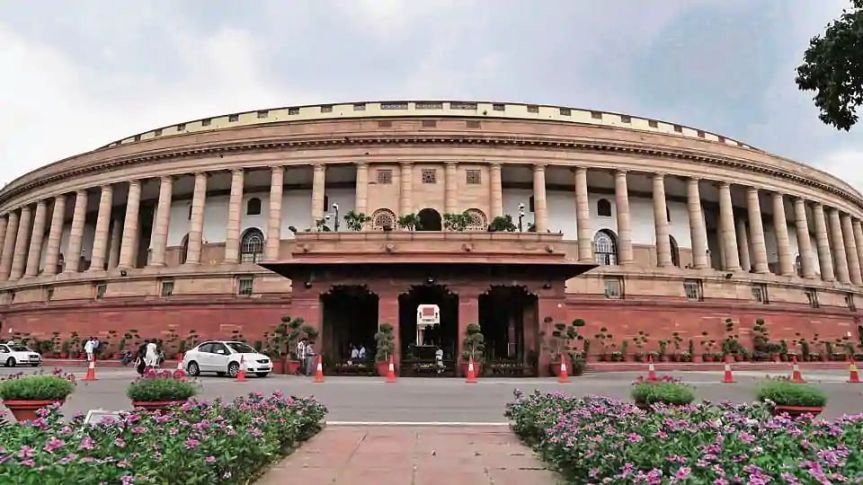
As the central legislative body in India, the Parliament has four main roles—it makes laws, it holds the executive to account for its actions, it allocates government finances, and represents the interests and aspirations of citizens. The Parliament is also a constituent body in the sense that it can amend the Constitution.
Functioning of Parliament
Over the years, the Parliament has been meeting for a fewer days. Figure 1 shows that the number of sitting days has declined from 125-140 in the 1950s to about 70 days in the last twenty years. Also, disruptions have further reduced the amount of time available for discussion in Parliament.
An important casualty is Question Hour. If the House is disrupted, it often sits late or through the lunch hour to make up for lost time. However, the time lost in Question Hour is never made up. As a result, only a few questions listed for oral answers are actually answered on the floor, and the rest get a written.
The shortage of time has also affected discussion on bills. Every bill is expected to go through three readings at the stage of introduction, consideration when there is a detailed discussion on each clause, and passing. The Parliament rarely discusses any bill at the first or third reading. Many bills are not discussed at the consideration stage either,
Areas of Reform
There are some structural issues that need to be addressed to improve the effectiveness of Parliament. These include the repeal of the anti defection law, recording all votes on bills and major debates, referring all bills to committees and strengthening the support system for committees.
The Anti-Defection Law Anti-defection law when it was passed, it aimed at bringing down the political defection but due to ever increasing political dishonesty and corruption this law never developed properly and now a question arose that ‘whether achieving the goals of this law a reality or a myth ? ‘Politicians found loopholes in this law and used it for their own benefit. It is high time that a watchdog should be provided to our Parliament and there is a need for our constitutional pundits to revisit the issue to combat the menace of corruption and defection which has eroded the values of democracy.
Committee System
Committee System has following disadvantages:
High Cost in Time and Money
Indecisive Action
Compromising Attitude
Dominance of a Few
Suppression of Ideas
Splitting of Responsibilities
Political Decision
Departmentally Related Standing Committees
Of course, there is no one right answer about the benefits of standing committees. But, I do have a bias against standing committees that have been around forever without revisiting their purpose.
What is the purpose of the committee? Is their charge clear? Is it defined in terms of outcomes that benefit the organization? What has the board delegated to this committee and is the board providing oversight to assure that the assigned work is getting done? If you have a current strategic plan, is the committee assigned strategies and outcomes that support advancement on that plan?
Committees that have a long history frequently, but not always, end up acting independently of the organization’s envisioned future and strategic direction. That committee’s work may or may not support the current strategic plan. There is a comfort zone for individuals who have been on a committee and in a position to define their own work and see it as somewhat independent of the rest of the organization.
If this is true of the standing committees of your organization, it might be worth an investment of the board’s time to review all committee charges (purpose statements, commissions, whatever you want to call it) and determine how those committees can best support the strategic plan and strategic initiatives. It may mean rewriting or refining the current committee purpose statement in terms of outcomes. In my experience, when the delegation of work to a committee changes from what the committee has comfortably done over the past many years, the folks on the committee will grumble and then, when held responsible for the outcomes, will either jump in and contribute or leave.
If you decide on investing in revisiting the objective statements of all committees, it may also help the board identify the right person to be the next chair – someone who is on board with outcomes and board oversight.
Committee on Subordinate Legislation
● No parliamentary deliberation – Parliament does not get a chance to debate rules, regulations, etc. made by the executive. These are made in the ante-chamber of the bureaucrat and the benefits of parliamentary deliberations are lost.
● No prior publicity- Whereas drafts of bills are often published for public comment and criticism, prior publicity is not always possible in case of rules and regulations and the benefits of public discussion are criticism is lost.
● Not enough publicity- Everyone is supposed to know the law because statutes are, generally speaking, easily accessible. This is not so in the case of delegated legislation, where the mass of rules, regulations, bye-laws, orders, etc. often lie buried in the files of bureaucrats. Antecedent publicity, that is, publicity before enactment is often missing in delegated legislation.
● Lesser research- Since statutes are normally given greater publicity than rules and regulations, the former can reach out to a greater number of citizens.\
● Possibility of overreach and or overlapping – as delegated legislation can often be confusing, complex and difficult to understand. Moreover, it can be different (and at times, contradictory) in different states, thus leading to confusion and lack of uniformity.
● Possibility of poor drafting – Delegated legislation may not be well considered or drafted by legislative experts and may thus suffer from infirmities due to poor drafting.
● Possibility of confusion- Experiences show that delegated legislation can often be confusing, complex and difficult to understand. Moreover, it can be different (and at times, contradictory) in different states, thus leading to confusion and lack of uniformity.
Conclusion Parliament plays a central role in the Indian system of representative governance, affecting all aspects of lives of citizens. It has done a remarkable job for nearly seventy years, helping manage internal tensions of perhaps the most diverse set of people in any country. Many social reforms and economic progress have been led by Parliament. However, there are ways in which its effectiveness can be improved. These include revocation of the anti-defection law, making recorded voting mandatory and strengthening the committee system
People nowadays are more concerned about their health and are going to the gym to achieve their fitness goals. Many exercisers find that running on a treadmill is easier, and therefore more preferable, than running outdoors. Those who face seasonal allergies or live in cold temperatures seem to have no option but to remain indoors for their workouts. There is also a sense of encouragement from joining a gym. By getting on the treadmill at their local club, they are now a part of a group who strive to be healthy. But by jumping on a piece of exercise equipment they may be helping their bodies but are harming the environment.
While the treadmills these gym-goers choose appear to be rather simple machines that wouldn’t require high amounts of power, one treadmill can burn the equivalent of fifteen 75-Watt light bulbs while in use. Most people would never want to have five lights on in their house, let alone fifteen, yet most people have no problem using a treadmill. While most treadmills are not constantly running, treadmills and other equipment still use energy while in standby mode. Some local gyms are also crowded enough that their machines are in almost constant use, burning large amounts of energy. The temperature raises in the gym, causing the use of fans and air conditioning in addition to the level that it is constantly running at. The lights at most gyms are consistently on and using electricity, even if no one is working out. The soda vending machine alone at a local gym can use about 10 times the amount of a home refrigerator.
An amazing alternative to the conventional gym is the Green Gym, a concept that allows gentle exercise out in the countryside in fresh air. Green Gyms involve members ‘working out’ by planting trees, rebuilding damaged forest footpaths or rebuilding walls. Participants have been found to exercise moderately over a period of about four hours – equivalent to a short session on a treadmill. However, the advantage is that the air is completely pure and, more importantly, the energy expended goes into producing a tangible product. This form of gentle exercise has been found to reduce heart attacks and strokes by about 50%.
Mental health organizations have commented on the well-being effects of the Green Gym. They say that people have a natural biological attraction to nature, which is often referred to as biophilia. Connecting with the natural environment can have therapeutic benefits and can significantly lower stress levels. Not only that, it can improve physical health too.
Carbon-neutral gyms are also starting to appear around the world. Many of these have environmental policies that aim to reduce waste, increase recycling and encourage users to think about the effects of their workout on the environment. Some gyms are even levying a charge on users so that tree planting projects can be resourced. One gym is able to reclaim over 800 cubic metres of rainwater from the roof. This is enough to fill their 25metre swimming pool.
So, going to the gym on a regular basis can have a great effect on your health and body. But it comes at a cost. For the discerning environmentalist, using a gym may be an acceptable option, but it is always a good idea to check that the establishment has an environmental policy, with aims and objectives clearly stated.
Lucknow is extremely popular for Chikan and Zaroori. Both of these are two kinds of stylish and delicate Indian embroideries. The export of these rich materials, forms a significant part of the revenue to the city. There is a huge demand of both these handcrafted embroideries, not only in India but in overseas markets as well.
2. Agra
If there is anything that comes close to the popularity of Taj Mahal from Agra, it is the delicious and popular Agra ka Petra. It is popular Indian sweet from the state. It is translucent looking, soft, chewy and candy – like, eaten dry or dipped in sugar syrup.
3. Firozabad
Firozabad located in Uttar Pradesh is mainly an industrial town located nearly 200 km away from New Delhi. This city is popularly known for its glass industry producing glass bangles or famed bangles. This city has been producing glass bangles for more than 200 years where workers are still melting glass in traditional furnace.
4. Nagpur
The city of Nagpur is mainly known for its juicy oranges and this is the reason why it is called as the Orange City. It is a major trade center of oranges cultivated in large part of the region.
5. Kashmir
Apple is probably the most ancient fruit primarily grown in Asia. But if one wants to eat the most delicious apples of wide variety then one must visit Kashmir. There are mainly 7 types of Apples grown on a commercial scale which are : Ambri Kashmir, American Tree, Red Delicious, Maharaji Apple, Hazaratbali Apple, Golden delicious apple.
6. Varanasi
A Banarsi silk Saree is a must have in every Indian women’s wardrobe. These Sarees are handwoven in Varanasi, UP. These Sarees have a blend of marvellous colours and their sheen and texture make them irresistible and are simply pieces of art.
7. Surat
Strategy is known as City of Diamonds. Today, India gives shine to 75% of rough diamonds sold globally, with Surat being the Capital of trade. Over 90% of the world’s diamond pieces are cut in Surat, contributing to about 80% of the Indian annual diamond export.
8. Kannauj
Kannauj famous for distilling of scents is known as India’s perfume capital and is famous for its traditional Kannauj Perfume, a government protected entity. Kannauj itself has more than 200 perfume distilleries and is a market center for tobacco, ittar and rose water.
9. Darjeeling
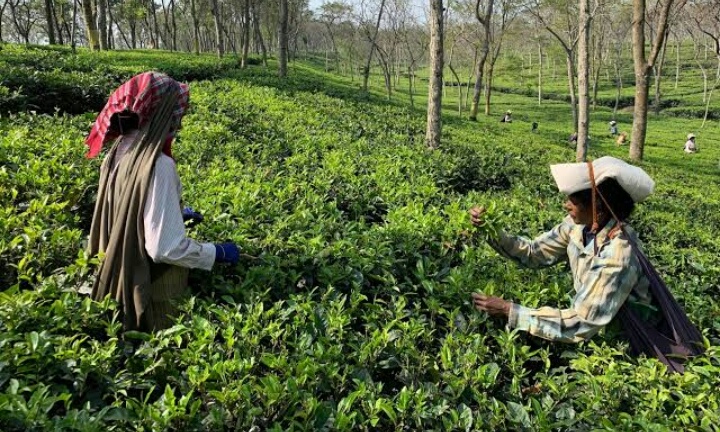
Darjeeling is famous for its tea plantations the world over. With many gardens producing the famous Darjeeling tea, this is the place to enjoy guided tours amid verdant tea estates and enjoy tea tasting sessions like a true connoisseur very good for photography with local dress. The smell of tea leaf makes us fresh.
So this was all about our popularity of Indian cities.
Every year on 1st July India celebrates National Doctor’s Day in honor of Bharat Ratna Dr. Bidhan Chandra Roy former chief minister of West Bengal and someone who represented the best of his profession at a critical time in India’s modern history.
He is still considered the greatest Chief Minister of West Bengal and a visionary of developing the State as after independence lot of industrial development took place in the State. He was the one to establish the Indian Medical Association in 1928 and the Medical Council of India. He also played a crucial role in establishing the Indian Institute of Mental Health, the Infectious Disease Hospital, and even Kolkata’s first-ever postgraduate medical college.
My Tribute to our life Saviors
And on this Doctor’s Day salute to all the doctors and healthcare workers for their selfless service. In this pandemic, they are real-life heroes, bringing hope in these difficult situations. Keeping us safe, fighting the coronavirus war at The frontline. Their invaluable contribution makes people recover from this dreadful disease.
Biogas is obtained from anaerobic digestion process, a fermentation process, which takes place in a closed airtight digester where organic raw materials such as manure, food waste, sewage sludge and organic industrial waste are converted into biogas and digestate as products. The produced biogas is a mixture of 50-70% methane and 30-50% carbon dioxide and smaller amounts of water vapor, hydrogen sulphide and other minor components and trace elements. The wet digestate results from anaerobic digestion of the substrates, which are pumped out of the digester tank, after the extraction of biogas.
Very simple biogas digesters have been in use in China, India and many other Asian countries for many years. Industrial applications of biogas production started well over 50 years ago as a means of stabilizing sewage sludge at waste water treatment plants. The biogas industry expanded in the 1970’s and 1980’s as increased production of different organic materials (such as manure and industrial wastewater from sugar refinery and pulp mills) became more widely used. Starting in the mid 1990’s extraction of landfill gas (low quality biogas) came to the fore, along with the construction of farm-based biogas plants and anaerobic digestion of solid wastes from food industry and food waste. After 2000’s, there was an increased interest in biogas and so, construction of farm-based biogas plants took place and an industrial sector was established.
The multiple functions of biogas in circular economy:
1. Biogas: a part of the modern society’s energy supply system
Biogas, made from organic waste streams, does not add to the carbon dioxide load in the atmosphere. Carbon dioxide produced during combustion of biogas is offset by either the carbon dioxide consumed by the biomass, which is digested. Biogas is thus a “green” sustainable energy vector and has a significant role in shifting to a sustainable decarbonized society. Biogas has many uses in the sustainable society that can be utilized in a broader perspective than today. Industries, as well as households, can use biogas for heating and hot water supply. Biogas can be used to supply warm air for drying, for example, in laundries, carpentries, industrial coating facilities and other places where there is a need for fast and efficient drying. The exhausts from upgraded biogas combustion are clean and do not generate odours or particles.
2. Biogas used for heat and electricity production
The most common use of biogas is in a non-upgraded form for production of electricity and heat production. The default use of biogas is for CHP (Central Heat and Power) production, which is in fact production of renewable electricity and heat, also known as cogeneration. The heat from the CHP engine can also be used to drive an absorption chiller to give a source of cooling, resulting in a combined cooling, heat and power (CCHP), also known as trigeneration. The utilization of the renewable heat is very important, as it brings about significant additional economic and environmental benefits, on top of the utilization of biogas for renewable electricity production.
3. Upgraded biogas or ‘bio-methane’ used as vehicle fuel
Raw biogas can be upgraded in a process which removes hydrogen sulphide, water, particles and CO2 present in the gas. The process creates a gas consisting mainly of methane and thus increases its energy content. Clean upgraded biogas is used as fuel for cars, buses and trucks of various sizes. In several countries, there is a well-developed infrastructure for vehicle gas, and it is possible to fuel natural gas vehicles (NGVs) in the most densely populated areas of such countries. Today, vehicle gas like CNG, LPG is used mostly for buses, trucks and passenger cars.
4. Upgraded biogas ‘bio-methane’ injection into the gas grid
Biomethane from renewable sources is also fed into the national transmission network for natural gas in several countries.
5. Reduction of Green House Gas (GHG) emissions
One of the main reasons for a transition from fossil energy and fuel to renewable energy and fuel is the reduction in greenhouse gas (GHG) emissions. The production of biofuels and bioenergy contributes to a significant reduction of GHG emissions. In many areas around the world, organic substances, considered as waste, are still deposited in landfill sites where they decompose, releasing methane (CH4) with a global warming potential (GWP) 21 times that of CO2. When these streams of organic waste are redirected from landfill to a biogas facility, a significant reduction in methane emissions from landfills occurs.
6. Improved nutrient up-take efficiency in agriculture
Intensive agriculture is one of the major greenhouse gas sources worldwide. These emissions are associated with enteric fermentation, management of manures and production of synthetic fossil fuel based fertilizers. Anaerobic digestion systems remove the easily degradable carbon compounds in feedstocks such as slurries, and converts them to biogas. When the remaining digestate is applied as biofertiliser, the slow to degrade carbon is recycled back to soils, contributing to build up of the humus content of the soil and its long-term suitability for agriculture. Macro and micro-nutrients contained in digestate are predominately in mineral form which makes them easily accessible to the plant roots, compared with nutrients in raw manure and slurry, which are mainly organic compounds, and must be mineralized in order to be up-taken by the plants. As such digestate has a higher nutrient uptake efficiency, compared with raw manure and slurries.
Organic matter in digestate can build up the humus content in the soil; this is a benefit unique to organic fertilizers, which is particularly crucial for arid and semi-arid lands with low carbon content. The destruction of weed seeds in the AD process is another significant benefit to organic farmers.
7. Energy security
Fossil energy is still in abundant use around the world. This energy comes in the form of coal, oil and natural gas from a relatively limited geographical region and is used worldwide. Many countries are thus dependent on a few countries for energy supply. A transition to a bio-based/renewable energy production system would better balance the energy supply situation around the world; more countries and regions would be able to become energy self-sustainable.
8. Optimal utilization of resources
In a sustainable society where resources are used efficiently, what previously was considered to be waste is instead included in a production circle where organic material and nutrients such as nitrogen and phosphorus are returned to the soil to replace chemical fossil fuel sourced fertilizer. When digesting municipal and industrial food waste such as waste from super markets and restaurants or slaughterhouse waste, biogas is produced, and valuable nutrients accumulate in the digestate where they are easily used as fertilizer. One ton of digested food waste produces 1200 kWh biogas energy, which is enough fuel to drive 1900 km with a gas fueled car. The food waste from 3000 households can fuel a gas bus for a year.
Some countries already have targets for energy recovery from food waste. The Swedish government, for example, has a target that at least half of all generated food waste from households, shops and restaurants be separated and treated to recover nutrients and that 40% is treated to recover energy by 2018.
9. Generating income in rural areas
The biogas plant itself is not labor intensive but it can create new business opportunities in rural areas which otherwise suffer from depopulation. Through collaboration with different farms, the biogas plant can create different job opportunities along the process chain, such as raw material cultivation and collection. By increasing local energy production, income stays in the local area instead of going to global energy markets.
In the future bio-economy, wastes will be transformed to highvalue products and chemical building blocks, fuels, power and heating; biogas facilities will play a vital role in this development, and in the implementation of the novel production paths that arise in the transition to a bio-economy.
The future of the biogas facility is a factory where value is created from previously wasted materials. This ensures sustainability of the environment and potential for financial gain for the local community. The flexibility of the anaerobic digestion system and its ability to digest a multitude of organic feedstocks, while producing a significant range of products ensures the role of anaerobic digestion and biogas in the circular economy.
It was in 2015, the 125th birth anniversary year of Baba Bharat Ratna Saheb Dr Bhimrao Ambedkar that the Government of India decided to celebrate 26th November, as ‘Constitution Day’ every year. The year 2019 marked the 70th year of the adoption of the Constitution. To reiterate our gratitude to the chief architect of our Constitution, and publicise the glorious and rich composite culture and diversity of our nation, the Government is celebrating the spirit of Constitution through a series of initiatives and activities till 26th November 2020. It is a tribute to the legacy of this great man and the greatness of the Constitution. The document written over 70 years ago is the most relevant at these times for the government, judiciary and citizens alike. Withstanding its core principles of justice, liberty and equality, reminding the citizens of their fundamental duties to uphold unity and integrity, and the Directive Principles for the government, our Constitution is the guiding light for the Indian society as a whole. The Constitution of India is a result of exhaustive research and deliberations of a body of experts. These makers of our Constitution, with their foresight and wisdom, prepared a futuristic and vibrant document that reflects our ideals and aspirations on the one hand and protects the future of all Indians on the other. They are credited to bring in the best features of all the hitherto existing related documents and making it the most lengthy and detailed constitutional document in the world. The document in itself is well equipped for future amendment provisions. It was made sure that the Constitution should neither be too rigid nor too flexible. The hundred-plus amendments over the seven decades have strengthened it further and made the constitution even more relevant in the present times. The Preamble to the Constitution declares India to be a sovereign, socialist, secular democratic republic and a welfare state committed to secure justice, liberty and equality for the people and for promoting fraternity, the dignity of the individual and unity and integrity of the nation. These Rights go hand-in-hand with the Fundamental Duties. Every citizen must abide by the Constitution and respect its ideals and institutions; to cherish and follow the noble ideals of our freedom struggle; to renounce practices derogatory to the dignity of women, and to value and preserve the rich heritage of our culture. The Rule of Law has been a core civilisational value of Indian society since ages. India has been cherishing values of trust and faith towards justice that inspire our Constitution. About 1500 archaic laws have been repealed. And speed has been demonstrated not only in doing away with irrelevant laws but also in enacting new legislation aimed at strengthening the social fabric. The architect of our Constitution, Dr B. R. Ambedkar had said: “Constitution is not a mere lawyer’s document, it is a vehicle of life, and its spirit is always a spirit of the age.” In legislating the rights for transgender, the law against the practice of Triple Talaq, expanding the rights of Persons with Disabilities, the government has worked with complete sensitivity and responsiveness to the needs of modern society. The ‘Constitution of India’ lies at the foundation of the world’s largest democracy. This is the supreme document in the country’s democratic framework and it continuously guides us in our endeavours.
Ayurveda is a holistic system of medicine that is indigenous to and widely practiced in India. The word Ayurveda is a Sanskrit term meaning ‘science of life.’ Ayu means ‘life’ or ‘daily living’ and Veda is ‘knowing.’ Ayurveda is a medical system that deals with health in all its aspects; physical health, mental balance, spiritual well-being, social welfare, environmental considerations, dietary and lifestyle habits, daily living trends, and seasonal variations in lifestyle, as well as treating and managing specific diseases The origin of Ayurveda is lost in prehistoric antiquity, but its characteristic concepts appear to have matured between 2,500 and 500 B.C. in ancient India. The earliest references to drugs and diseases can be found in the Rigveda and Atharvaveda.
Ayurveda is all about Dharana and Dharma, both Sanskrit words denoting a sustainable complex of life and living: the first within the organism itself and the second within society and the world. Ayurveda is almost – in a positive sense – preoccupied with ‘sustaining life’: as a science it focuses on preserving life down to the cellular level of each living organism, and first and foremost of human beings. One of the reasons that sustaining and preserving human life is so important in Ayurveda, is a result from the fact that it is a spiritual science which sees this life – and our bodies as temples for our souls – as a way to evolve spiritually. This evolution is not for a personal gain, but for the greater common good: Ayurveda sees life as one, and not as a fragmented event.
Ayurveda gives clear guidelines for lifestyle and nutrition, which all fit within a framework of Dharma. Dharma naturally supports something that carries responsibility for the whole of society and humanity, and thus also regarding ethical and environmental matters. Lifestyle – according to Ayurveda – should be helping to preserve a healthy environment and support of nature, in all possible aspects. This cannot but lead to supporting responsible behavior in keeping our water, our nature, our forests, our cities, our air, and in short our whole life, as clean and pure as possible. It also implies a natural care for good and sustainable food sources, and agriculture which preserves not only life in the sense of clean and pure production, but also responsible and safe nutritional methods. Good examples include active support of organic and biodynamic farming, support for natural agricultural systems such as permaculture, as well as active resistance of technical and not safe-proof production methods such as with GMO foods. It also promote the wise and respectful use of animal products.
According to the sustainability goals of Ayurveda, organic and other forms of responsible farming should be used to grow the herbs Ayurveda uses for its remedies. Use of local herbs has been advised over procuring exotic and rare herbs. Commonly availabe spices such as cumin and turmeric have profound healing properties, and are powerful additions in the arsenal of medicinal substances. Ayurveda is the makes use of small shrubs to big trees for various purposes and to that Ayurvedics follow certain guide lines for collection and cultivation. So in order to obtain herbal medicine Ayurvedics also engage forestation and cultivation. The use of medicinal plants is oriented to take advantage of their ability to harmonize the balance between the patient and the basic influences of life, such as diet, work, and family life. With more than 2700 plants at its disposal, it is clear that Ayurveda in quite close with nature and its powers. In this way both doctors and patients easily see their connections to nature.
The Hospital wastes of Ayurveda are almost biodegradable. The medicines are of Herbal or Mineral or a mixture of both which are easy to dispose in to the earth after their expiry or their use. The pharmaceutical waste of Ayurveda is also biodegradable and some of them make good manure for cultivation. The plastic and other artificial materials not used for treatment makes Ayurveda an Eco friendly system. In Ayurvedic system each and every part of the environment is given importance which makes the optimum utilization of natural resources from Daily usage to the Drug. For example, neem- plant is used for Twigs, tooth brushing and tongue cleaning; Leaves-for medicating the bathing water; Seed oil, for external application over scalp for healthy hair etc.
This approach to nature as the source of healing and to personal care, as a source of loving health care, with emphasis on the preventive side, is a very welcome feature of Ayurveda, which could permeate and facilitate our approaches to sustainability and to the rich relationships between people (society), things (economy) and nature (ecology). Environmental sustainability is highly related to conscious mental and bodily good practice, of which Ayurveda could be considered as a very useful model, not only in the countries where it is traditionally applied, but everywhere. Ayurveda not only teaches to live healthy, but also teaches to love nature and live with nature.































 International Journal of Research (IJR)