GST DAY

Approx most of the day we heard about this Term GST, if we Recharge mobile current postpaid bill is Rs 500, we will have to shell out Rs 590. It is Rs 15 more than what you are currently paying. Food, electricity, gold, land, loans in these services GST is applicable

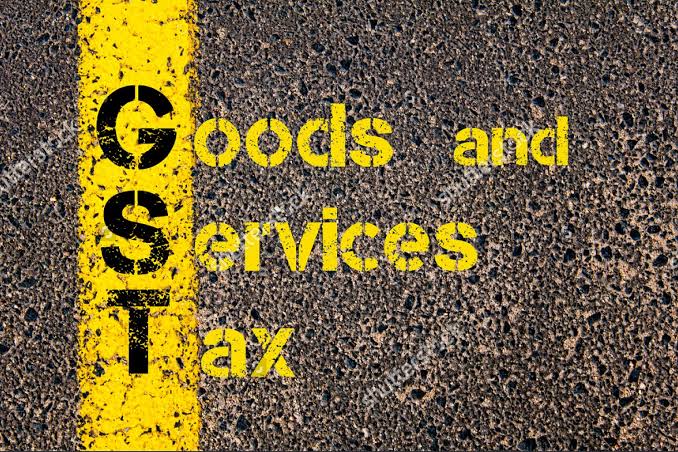
GST, Goods and Service Tax Act passed in the parliament of India on 27th March 2017 and came into effect on 1st July 2017.

The day was celebrated on 1st July 2018 to mark the first anniversary of the new indirect tax regime.GST is a single indirect tax on the supply of goods and services right from manufacturers to consumers. It’s replaced a number of taxes such As excise duty, service tax, central sales Tax, Value-added Tax(VAT), and Octroi.

Excise duty is an indirect tax that levies on the goods which, are produced within the country. This tax is not related to the Customs Duty. Excise Duty is also known as Central Value Added Tax. value-added Tax is collected by the state government. For example, if we purchase a good then we must pay an additional tax as Value Added Tax to the government. The VAT rate is decided based on the nature of the item and state.Custom duty and OctoroiThis tax is levied on those goods that are imported into India from outside. The Custom Duty tax is paid at the port of entry in the country as the airport. This tax rate also varies over the nature of goods. While the Octroi tax is charged on the goods entering the municipality.

GST was First coneceptual by Former Indian Prime Minister Atal Bihari Vajpayee,1999.

In an official message on the occasion of GST Day, Finance Minister Nirmala Sitharaman on Wednesday said that more efforts are required to ease tax compliance further for the taxpayers, especially the micro, small and medium enterprises (MSMEs). Wednesday marked the third anniversary of the launch of the Goods and Services Tax (GST) regime.In message, Ms Sitharaman herhighlighted the steps taken towards easing the return filing process, including the recently introduced feature of SMS-based filing for nil return

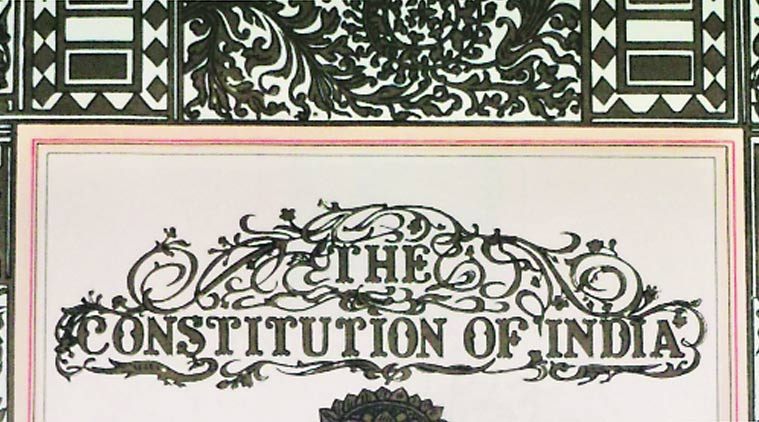
We, The People

“We, The People”

It was in 2015, the 125th birth anniversary year of Baba Bharat Ratna Saheb Dr Bhimrao Ambedkar that the Government of India decided to celebrate 26th November, as ‘Constitution Day’ every year. The year 2019 marked the 70th year of the adoption of the Constitution. To reiterate our gratitude to the chief architect of our Constitution, and publicise the glorious and rich composite culture and diversity of our nation, the Government is celebrating the spirit of Constitution through a series of initiatives and activities till 26th November 2020. It is a tribute to the legacy of this great man and the greatness of the Constitution. The document written over 70 years ago is the most relevant at these times for the government, judiciary and citizens alike. Withstanding its core principles of justice, liberty and equality, reminding the citizens of their fundamental duties to uphold unity and integrity, and the Directive Principles for the government, our Constitution is the guiding light for the Indian society as a whole. The Constitution of India is a result of exhaustive research and deliberations of a body of experts. These makers of our Constitution, with their foresight and wisdom, prepared a futuristic and vibrant document that reflects our ideals and aspirations on the one hand and protects the future of all Indians on the other. They are credited to bring in the best features of all the hitherto existing related documents and making it the most lengthy and detailed constitutional document in the world.
The document in itself is well equipped for future amendment provisions. It was made sure that the Constitution should neither be too rigid nor too flexible. The hundred-plus amendments over the seven decades have strengthened it further and made the constitution even more relevant in the present times.
The Preamble to the Constitution declares India to be a sovereign, socialist, secular democratic republic and a welfare state committed to secure justice, liberty and equality for the people and for promoting fraternity, the dignity of the individual and unity and integrity of the nation. These Rights go hand-in-hand with the Fundamental Duties.
Every citizen must abide by the Constitution and respect its ideals and institutions; to cherish and follow the noble ideals of our freedom struggle; to renounce practices derogatory to the dignity of women, and to value and preserve the rich heritage of our culture. The Rule of Law has been a core civilisational value of Indian society since ages. India has been cherishing values of trust and faith towards justice that inspire our Constitution. About 1500 archaic laws have been repealed. And speed has been demonstrated not only in doing away with irrelevant laws but also in enacting new legislation aimed at strengthening the social fabric.
The architect of our Constitution, Dr B. R. Ambedkar had said: “Constitution is not a mere lawyer’s document, it is a vehicle of life, and its spirit is always a spirit of the age.” In legislating the rights for transgender, the law against the practice of Triple Talaq, expanding the rights of Persons with Disabilities, the government has worked with complete sensitivity and responsiveness to the needs of modern society.
The ‘Constitution of India’ lies at the foundation of the world’s largest democracy. This is the supreme document in the country’s democratic framework and it continuously guides us in our endeavours.

SAY NO TO DRUGS

On International Day Against Drug Abuse and Illicit Trafficking, we should be more serious about this hazard, that destroys the lives of millions including youngsters.the theme for this year’s anti-drug abuse day Is “Better Knowledge for Better Care”. The main idea behind this theme is to stress upon the need of improving the understanding of the world drug problem.

The day is also marked as an expression of its determination to strengthen action as well as cooperation and achieve the society which is free of drug abuse.Around 35.6 million people across the world are victims of drug abuse, according to the World Drug Report 2020 published by the UN Office on Drugs and Crime. Young adults and teenagers account for the largest share of those using drugs and most of them suffer from HIV, Hepatitis C and other related diseases. Only one out of eight people who need treatment and rehabilitation are able to get it, according to the report.

So many people want to quit but they can’t due to lack of awareness and social stigma. We need to take a step to secure our life and future, this is our responsibility being a citizen of a country .

25 June |India’s Black day

On 25 june , 1975 Prime Minister Indira Gandhi declared a National Emergency , which is the blackest day in India’s Democracy.

There are total three type of Emergency provision in India’s Constitution National Emergency, President rule , Financial Emergency .All these Emergency cannot be declared without the approvement of President and that time President was Fakhruddin Ali Ahmed who approved the National Emergency declaration at mignight on 25 , June.

It was the third time when the National Emergency was a declareded within in the country.In 1962 the National Emergency was declared for the first time during the India-China war and the 2nd Emergency was declared in 1971 during Indo-Pak war.

This emergency was mainly imposed due to four reasons Navnirman Andolan in Gujarat .This movement in 1974 was lead by student and middle class against economic crisis(Hipe in food rates and fees) and Coruption. It all started by the protest by student .In December 1973 Amhedabad protest was lead by students of L.D. College of Engineering against a hike in fees .This was the first and only agitation which led to victory dissolving the state government.

After the successful movement in gujarat there were many movement led in other parts of country and Bihar movement is one of them intiated by students and led by Jayaprakash Narayan, the socialist who fought against misrule and corruption due to which the problems of indira gandhi started increasing .

The third reason behind the emergency was the Railway Strike by the workers of Railways in 1974.And the major and last i.e. forth reason was the Raj Narayan Verdict .

Indira Gandhi elected election from Rae Bareilly  against Raj Narayan in 1971 .After losing election Raj Narayan filed a case in Allahbad High Court against Indira Gandhi to use malpractices like bribing voters with liquor and using misusing goverment machinery ,ultimately using her power in the wrong way.On 12 , june 1975 verdict was declared that she was found guilty and was barred for election for six years and high court declared the verdict that she have to leave the prime minister post .She was losing control and in order to be in power she filed a petion in supreme court ruling the high court decision.

On 24 june , 1975 Supreme Court judge, Justice VR Krishna Iyer ruled the vedict partially and she was allowed to remain prime minister but cannot vote as a MP until the final verdict .She was not happy by the decision .

On next day , 25 june 1975 she imposed National emergency at midnight.All prominent leaders Jayaprakash Narayan, Atal Bihari Vajpayee, LK Advani, Morarji Desai were arrested. 

In order to save her legacy she imosed Emergency .After this outbreak press censorship was imposed i.e.freedom of press were totally carry off .Fundamental rights were demolished and many restriction was imposed and whosoever ,stand against the decision were sent into jail.

After many protest against her and when International Media started portraying her image as a dictator , After 21 months i.e. On 21,March 1977 she finally dispose of the Emergency .

According to experts , if there was no Raj Narayan nor the Energency would declared.it is no denial, 25 June was the darkest day in the Indian History since Independence .

DELHI’S RISING NO. NOT PERMANENT

As predicted, on Wednesday Delhi overtook Mumbai to become the region with the country’s largest number of novel Coronavirus cases. Delhi now has over 70,000 cases, of which roughly 40,000 have been detected during the last two weeks. These are around 800 fewer Mumbai has.

Yet it’s doubtful this condition will remain permanent. Delhi’s surge can be attributed to a marked increase in the number of samples tested by the city late, particularly after deploying the recently approved rapid antigen tests, which yield results in just about half an hour. The number of tests in Delhi has risen from around five to seven thousand a day in the last ten days to close to 20,000 on Wednesday.

On the other side, Mumbai performed very small experiments, between 4,000 and 4,500 a day. But Mumbai too, having ordered one lakh fast antigen kits, is now all set for an increased check. Mumbai ‘s case numbers are also expected to go up when these experiments continue to be implemented. There is already some criticism that Mumbai has spread its test net quite thinly, targeting only the primary contacts of the infected and those at the highest risk of infection. The real number of cases in Mumbai may be much higher, but since the results are small, this is not being observed.

Meanwhile, Delhi has also decided to carry out door-to – door monitoring to detect the disease early and minimize the spread. Mumbai has been doing this exercise on a smaller scale for some time, and he’s had some success. Door-to – door screening results in early identification of suspected outbreaks, thus reducing the number of individuals to which the virus can be spread. This exercise could theoretically halt or delay the growth of Delhi events.

Door-to – door surveillance is now expected in Madhya Pradesh as well as starting July 1. The test is part of a fortnight-long program to step up measures to curb the virus’ spread. The disease has also accelerated dramatically in the state. Indeed, Madhya Pradesh is the slowest growing country among major states, with growth rates below 2%.

One city which was lauded for its efforts to monitor the spread of the virus until quite recently is Bengaluru. It had succeeded in avoiding the fate of Delhi , Mumbai, Ahmedabad, Chennai , Hyderabad, Pune or Kolkata. Over the last few days, though, the situation has improved somewhat, but it is better than the other big cities. More than 1,000 new cases have been identified this month in the region, while about 70 people have died. Local officials are now considering a partial shutdown to curb the rise.

In Chandigarh, a weekend shutdown is also being considered, but it is more to do with people who do not follow basic laws of physical distance than any big surge in cases. Chandigarh has only 420 confirmed illnesses, many of which didn’t meet physical distancing rules. Nevertheless, merchants and shopkeepers have resisted any attempt to enforce a weekend lockout. Punjab also follows the pattern of lockout at the weekend.

On Wednesday about 17,000 new cases were reported across the country bringing the overall number of infections above 4.7 lakh, of which about 2.6 lakh have recovered. Close to 15,000 people have died in India so far because of the disease.

Source:https://indianexpress.com/article/explained/india-coronavirus-cases-explained-delhi-mumbai-covid-cases-deaths-6475436/

Tri-service contingent of Indian Military Participates In Victory Day Parade In Russia

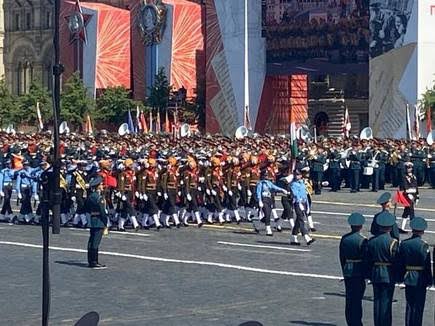
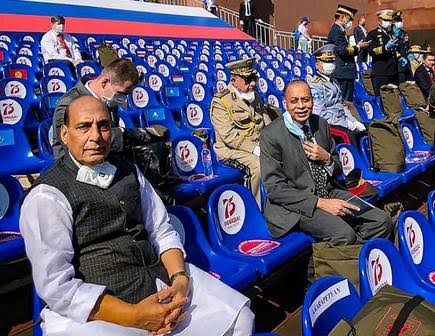
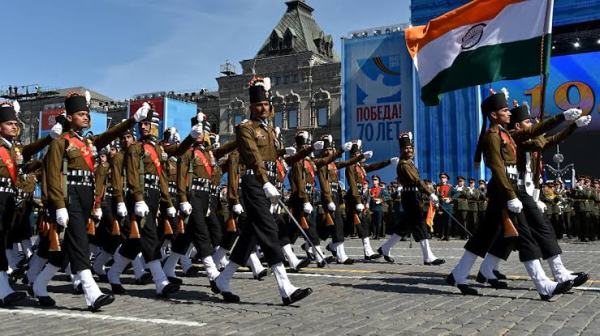
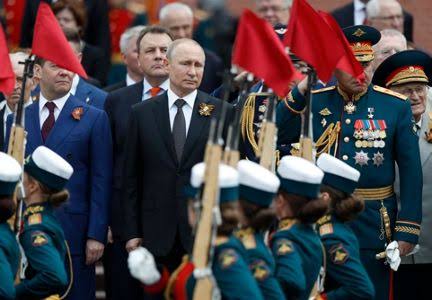
75-member Tri-service contingent of the Indian Armed Forces participated in the 75th anniversary of the Victory Day Parade at the iconic Red Square in Moscow on June 24. Defence Minister Rajnath Singh was one of the high profile guests at the event In Russia. 24 June 2020 Russia celebrated 75th anniversary of the victory of Soviet people in great patriotic second world war 1941-45.

Defense Minister Rajnath Singh At Red square Moscow 24 June with other Guests

“I am proud that a Tri-Service contingent of the Indian Armed Forces is also participating in this parade,”he tweeted.

” impressive turnout of the Tri-Service contingent of the Indian Armed Forces at the Victory Day Parade in Moscow is indeed an extremely proud and happy moment for me,”Mr. Singh said in another tweet.

Indian Military Marched down at the wide road of the Red Square Moscow June 24 2020

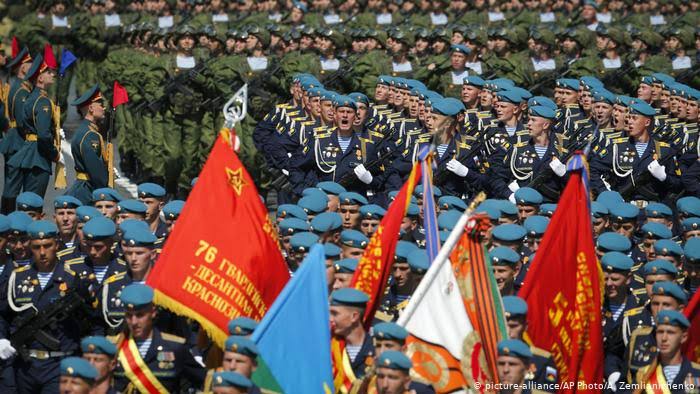
The Tri-Service contingent of the Indian Armed Forces comprised 75 all ranks and marched along with contingents of Russian Armed Forces and 17 other countries, according to an official statement. The parade was reviewed by Russian President Vladimir Putin, war veterans, and guests, including Defence Minister Rajnath Singh.This year, 14,000 troops and several hundred military machines took part in the parade, including 30 historic T-34 tanks. President Putin congratulated the military and guests, saying this victory determined the future of the planet.

Russia postponed its military parade traditionally held on Moscow’s Red Square on May 9 for a later date due to the corona virus pandemic.On May 26, President Putin announced that the Victory Parade would be held on Moscow’s Red Square on June 2.He explained that this was chosen because, on June 24, 1945, the legendary historic parade of victors took place, when soldiers, who fought for Moscow and defended Leningrad, who stood their ground for Stalingrad, liberated Europe and stormed Berlin, marched on Red Square.


‘LEARN FROM HISTORY’ SAYS DONALD TRUMP

As America comes face to face with it’s racism in its past, President Donald Trump has firmly back lined up with those who argue that the pendulum has swung too far in favor of removing statues and other symbols of that flawed history, saying errors will be repeated unless learned from and understood.

Trump’s campaign also sees the division over this new political flash point as a way to improve the president’s reputation, which has weakened through his treatment of the coronavirus epidemic and the social discrimination demonstrations that accompanied the death of George Floyd in Minneapolis. After weeks spent demanding “law and order” in response to the protests sparked by Floyd’s death by police, Trump began to draw a line in the sand.

He vowed executive action to preserve landmarks after several Confederate statues and other historical icons with checkered life stories were violently pulled down from parks and other socially popular spots.

Trump says he wanted the highest penalty possible under federal law — up to a decade in prison — for anyone who wrecks or tamper with public property monuments commemorating those who served in the U.S. military. He said the executive order would “strengthen” existing legislation.

“We are looking at long-term jail sentences for these vandals and these hoodlums and these anarchists and agitators,” Trump said, referring to protesters who have vented their anger over racial injustice by toppling statues of figures tied to America’s racist history.

He spoke out after an attempt Monday night to bring down a Lafayette Park statue of Andrew Jackson, one of Trump’s favorite presidents, was foiled by police in the park across from the White House. Trump called it a “sneak attack” on the statue of Jackson, who owned slaves and was ruthless in his treatment of Native Americans. “We should learn from the history,” he told Fox News in a taped interview broadcast Tuesday. “And if you don’t understand your history, you will go back to it again.”

Trump’s campaign sees the attempts to remove statues as a potential presidential lifeline. The campaign argues that liberals are dramatically overreaching by embracing calls to “defund the police” and remove statues of American icons taught in history books.

In the current climate, Trump’s prior support of Confederate statues and military bases named after such individuals posed a political risk. But aides now believe the president has found an unexpected new line of attack on Democrats as the effort to remove symbols has spread to include the likes of Presidents Ulysses S. Grant, Jackson and George Washington in some places.

Although all three figures were flawed individuals, Trump’s campaign believes he can use them to wage a culture war and position the president as the defender of a way of life threatened by demographic change and generational shifts in views on issues ranging from marriage to racial justice.

Calls to overhaul policing and confront lingering racial inequality may be bipartisan, but Trump’s reelection team believes the most aggressive steps being pushed by some Democrats will turn off centrists and energize the president ‘s base-– many of whom share his avowed commitment to safeguard symbols of the nation’s past. A White House official and a campaign assistant summarized the president’s rationale by speaking on condition of anonymity because they were not allowed to publicly discuss the issue.

Senate Majority Leader Mitch McConnell on Tuesday cast the “lawlessness” of the attacks on statues as a cultural phenomenon among “far-left radicals” in need of a history lesson.

Source:https://indianexpress.com/article/world/trump-says-learn-from-history-instead-of-removing-statues-6473595/

Balancing Fundamental Rights and Duties

The longest written Constitution in the world, lays down the basic structure and the framework of India’s polity. It is built on the foundations of certain fundamental values that have been embedded in it by the makers of the

Constitution to ensure that there should be fairness and justice for every citizen of India.

However, it has been made very clear that:

  •  lot of restraint is required while exercising this freedom.
  •  the absolute freedom is an illusion and cannot survive alone.
  • the fundamental rights need to be paired with fundamental duties.

 To offset the increasing tendencies of indifference towards the business of the government amongst its citizens and to check fissiparous growth, the Constitution

(Forty-Second) Amendment Act, 1976 introduced the concept of fundamental duties by adding Part

IV-A, consisting of the sole Article 51A.That the Constitution ought to be amenable to change to allow for emerging needs was always recognised.

This year the government is laying more emphasis on creating awareness on eleven fundamental duties as part of celebration of 70th year of adoption of the Constitution through its various initiatives. The underlying idea is that these precepts should become a part and parcel of every Indian’s thoughts and actions. The balancing of fundamental rights is a constitutional necessity as every right gives rise to a corresponding duty

The fundamental duties are the mechanism that aims at striking a balance between individual freedom and social interests. These duties do not cast any public duties but are applicable only to individual citizens. However, in  a judgment, the Supreme Court held that the Fundamental Duties are as important as Fundamental Rights and that though Article 51A does not expressly cast any fundamental duty on the State, the duty of every citizen of India is the collective duty of the state- its de facto enforceability in the sense that Article 51A is a yardstick against which the action of the State may be assessed.6In Union of India v Naveen Jindal7, the Supreme Court observed that fundamental duties are implicit in the concept of fundamental duties, the former providing certain restrictions on the exercise of the latter.

Article 51A (k) was introduced as a fundamental duty in 2002, along with Article 21A as a fundamental right. Through Article 51A (k) read with Article 21A, the State and the parents are made to share obligation with regard to education of the children in the following manner:

  • the State with free education
  • the parents with compulsory education.

The State has been entrusted with the responsibility to ensure compulsory education while at the same time Article 51A (k) does not penalise parents or guardians for not being able to send their wards to school.10 In similar manner, right to hoist the national flag has been granted to the citizens subject to the restrictions specified in the Article 51A (c).

Thus, it may be observed that, in umpteen number of cases, the various contours of Article 51A have been interpreted and applied by the Apex Court. The unenforceable duties have got a booster dose of contents as well as some sort of enforceability through increased references in various judicial pronouncements. Various current crises related to environment, mob-violence and terrorism etc. could have been regulated to a large extent if the human values could be inculcated right from the formative period of life so as to lay a strong foundation for effectuation of Fundamental Duties along with the strong desire to avail the rights. Thus, there is a strong necessity to maintain a strong balance between the rights and the duties. One does not have existence as well as the meaning without the other.

Will US pause on H1-B visas will impact Indian companies?

On Tuesday, the U.S. government announced it extended the 60-day immigration and non-immigrant worker visa ban until the end of 2020. Popular work visas including the much coveted H-1B and H-2B and some categories of H-4, J and L visas will also remain suspended until 31 December, the White House said in a press release.

The move, said US President Donald Trump, was to protect domestic workers who had been affected in the wake of the Covid-19 pandemic because of a contraction in the economy.

To fill a shortage with highly qualified low-cost workers in IT and other similar fields, the U.S. government issues a variety with permits per year allowing businesses outside the U.S. to send staff to work on customers.

Among all working visas, the H-1B remains the most common among IT companies in India. Per year, the US government has a quota of 85,000 H-1B total visas. Of this, 65,000 H-1B visas are issued to highly skilled foreign workers, while the remaining 20,000 may be allocated additionally to highly skilled foreign workers who have an American university degree in higher education or master’s.

In addition to the H-1B visas, the US government also issues L1 visas allowing companies to transfer highly skilled workers to the US for up to seven years. H-2B visas enable food and farm workers to seek employment in the US.

After its introduction in 1952, the H-1 visa system has undergone several modifications and amendments to authorize or disallow other groups of foreign workers in the US, depending on the country’s economic situation.

Together with the arrival of the internet and low-cost computers in developing countries such as India and China, the technology boom saw a large number of graduates willing to work at relatively low costs in the US, a win-win situation for both the employer and the staff. Since then, though, it has been frequently criticized for sending low-cost workers to the US at the expense of homeworkers.

After taking over as US president in January 2017, Trump had suggested that low-cost workers hampered the economy and undermined citizens’ jobs. The US then suggested that the “broken” H-1B visa system be reformed.

Trump seized the opportunity presented by Covid-19’s economic contraction by first banning the entry of non-immigrant workers until June 23, and then extending it until December 31.

Trump said in his executive order extending the ban that while “properly administered temporary worker programs can bring benefits to the economy” under normal circumstances, the extraordinary economic contraction created as a result of Covid-19 posed a threat to American workers.

As the ban is in place immediately, issuance of the additional types of visas H-1B, H-2B, J, and L will have to be halted. This means that those who do not have a valid non-immigrant visa as of June 23, and who are outside the US, will not be allowed to enter the country until December 31. Some relief has been given to workers in essential services in the food sector and their entry will be decided by the immigration services consular officer.

Source:https://indianexpress.com/article/explained/us-h1b-visa-suspension-india-it-companies-6471966/

The Man Who Knew too much: Alan Turing

I remembered my first day in college, our vice-chancellor arranged a seminar for all departments 1st-year student, he motivated us, told us about the future that is in our hand, and one thing that I always keep in my mind he told that every student should know to code, I knew the importance of code language, programming, Artificial Intelligence but I really not aware of their history how it was developed, so after the session, I am starting to know about code languages during this time I came came to know about a man “Alan Turing” his life, passion for mathematics and machine, code languages, computer science, just mesmerized me.

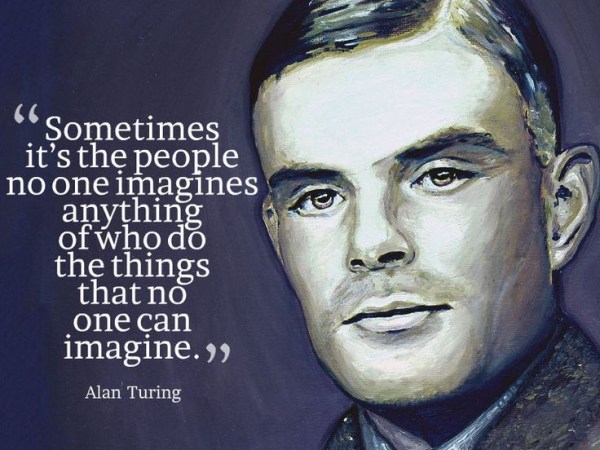
Alan Mathison Turing the Father of Modern computer science and Artificial Intelligence. Today Mr. Turing’s 108th birth anniversary. He was an English mathematician, computer scientist, logician, cryptanalyst, philosopher, and theoretical biologist. Turing was highly influential in the development of theoretical computer science, providing a formalization of the concepts of algorithm and computation with the Turing machine, which can be considered a model of a general-purpose computer.

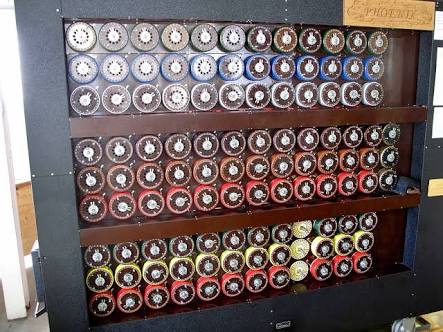
His revolutionary idea was to create a machine that would turn thought processes into numbers. The machine would read a series of ones and zeros from a tape which described the steps needed to solve a problem or task.During the Second World War, Turing worked for the Government Code and Cypher School (GC&CS) at Bletchley Park, Britain’s codebreaking centre that produced Ultra intelligence. For a time he led Hut 8, the section that was responsible for German naval cryptanalysis. Here, he devised a number of techniques for speeding the breaking of German ciphers, including improvements to the pre-war Polish BOMBE method, an electromechanical machine that could find settings for the Enigma machine.

Turing played a crucial role in cracking intercepted coded messages that enabled the Allies to defeat the Nazis in many crucial engagements, including the Battle of the Atlantic, and in so doing helped win the war.he and fellow scientist saved lots of life by code breaking.

The man who is a pioneer of modern mathematics and computer science, his invention, theories changed today’s technology. Tribute to the world’s great Inventor Mr. Alan Mathison Turing🙏.