COTTON

India’s largest cash crop

PATTIKONDA:26/02/2020.

Cotton is a soft, fluffy staple fiber that grows in a boll, or protective case, around the seeds of the cotton plants of the genus Gyopssisum in the mallow family Malvacae. The fiber is almost pure cellulose. Under natural conditions, the cotton bolls will increase the dispersal of the seeds. The plant is a shrub native to tropical and subtropical regions around the world, including the Americas, Africa, Egypt and India.

The fiber is most often spun into yarn or thread and used to make a soft, textile.Current estimates for world production are about 25 million tonnes or 110 million bales annually, accounting for 2.5% of the world’s arable land. India is the world’s largest producer of cotton. it is the most widely use natural fiber cloth in clothing today.The United States has been the largest exporter for many years.

  • There are 4 types of cotton:
  • Gossypium hirsutum – upland cotton, native to america
  • Gossypium barbadense– known as extra-long staple cotton, native to tropical South America
  • Gossypium arboreum– tree cotton, native to India
  • Gossypium Herbecea – Levant cotton
Can live at low rainfall

Planting time in spring in the Northern hemisphere varies from the beginning of February to the beginning of June.Cotton is naturally a perennial but is grown as an annual to help control pests.cotton grown today is cultivated in areas with less rainfall that obtain the water from irrigation.Cotton can also be cultivated to have colors other than the yellowish off-white typical of modern commercial cotton fibers. 

The bacterium Bacillus thuringiensis (Bt) naturally produces a chemical harmful only to a small fraction of insects, most notably the larvae of moths,insects,butterflies and flies, and harmless to other forms of life.The gene coding for Bt toxin has been inserted into cotton, causing cotton, called Bt cotton, to produce this natural insecticide in its tissues.Cotton has gossypol, a toxin that makes it inedible. Bt cotton is ineffective against many cotton pests, and however, such as plant bugs,aphids and stink plants.

Cotton is used to make a number of textile products. These include terrycloth for highly absorbent bath towels,denims,robes,cambric, popularly used in the manufacture of blue work shirts and cotton twill. Socks ,clothes and most T shirts are made from cotton. Bed sheets often are made from cotton. Cotton also is used to make yarn used in crocheted and knitting. In the Textile industry, cotton is used in Fishing nets,coffee filters,Tentsexplosives manufacture  cotton paper, and in book binding. Fire hoseswere once made of cotton.

A pillar for textile industry

CHANAKYA: THE MASTERMIND OF UNITED INDIA

Chanakya was an ancient Indian teacher, philosopher, economist, jurist and royal advisor. He is traditionally identified as Kauṭilya or Vishnugupta, who authored the ancient Indian political treatise, the Arthashastra, a text dated to roughly between the 3rd century BCE and the 3rd century CE. As such, he is considered the pioneer of the field of political science and economics in India, and his work is thought of as an important precursor to classical economics. His works were lost near the end of the Gupta Empire in the 6th century BCE and not rediscovered until the early 20th century.

Chanakya assisted the first Mauryan emperor Chandragupta in his rise to power. He is widely credited for having played an important role in the establishment of the Maurya Empire. Chanakya served as the chief advisor to both emperors Chandragupta and his son Bindusara.

SOURCES OF INFORMATION

Buddhist version

According to the Buddhist legend, the Nanda kings who preceded Chandragupta were robbers-turned-rulers. Chanakya was a Brahmin from Takkāsila (Takshashila). He was well-versed in three Vedas and politics. He had canine teeth, which were believed to be a mark of royalty. His mother feared that he would neglect her after becoming a king. To pacify her, Chanakya broke his teeth.

Chanakya was said to be ugly, accentuated by his broken teeth and crooked feet. One day, the king Dhana Nanda organized an alms-giving ceremony for Brahmins. Chanakya went to Pupphapura (Pushpapura) to attend this ceremony. Disgusted by his appearance, the king ordered him to be thrown out of the assembly. Chanakya broke his sacred thread in anger, and cursed the king. The king ordered his arrest, but Chanakya escaped in the disguise of an Ājīvika. He befriended Dhananada’s son Pabbata, and instigated him to seize the throne. With help of a signet ring given by the prince, Chanakya fled the palace through a secret door.

Chanakya escaped to the Vinjha forest. There, he made 800 million gold coins (kahapanas), using a secret technique that allowed him to turn 1 coin into 8 coins. After hiding this money, he started searching for a person worthy of replacing Dhana Nanda. One day, he saw a group of children playing: the young Chandragupta (called Chandagutta in Mahavamsa) played the role of a king, while other boys pretended to be vassals, ministers, or robbers. The “robbers” were brought before Chandragupta, who ordered their limbs to be cut off, but then miraculously re-attached them. Chandragupta had been born in a royal family, but was brought up by a hunter after his father was killed by an usurper, and the devatas caused his mother to abandon him. Astonished by the boy’s miraculous powers, Chanakya paid 1000 gold coins to his foster-father, and took Chandragupta away, promising to teach him a trade.

Chanakya had two potential successors to Dhana Nanda: Pabbata and Chandragupta. He gave each of them an amulet to be worn around the neck with a woolen thread. One day, he decided to test them. While Chandragupta was asleep, he asked Pabbata to remove Chandragupta’s woolen thread without breaking it and without waking up Chandragupta. Pabbata failed to accomplish this task. Some time later, when Pabbata was sleeping, Chanakya challenged Chandragupta to complete the same task. Chandragupta retrieved the woolen thread by cutting off Pabbata’s head. For the next seven years, Chanakya trained Chandragupta for royal duties. When Chandragupta became an adult, Chanakya dug up his hidden treasure of gold coins, and assembled an army.

The army of Chanadragupta and Chanakya invaded Dhana Nanda’s kingdom, but disbanded after facing a severe defeat. While wandering in disguise, the two men once listened to the conversation between a woman and her son. The child had eaten the middle of a cake, and thrown away the edges. The woman scolded him, saying that he was eating food like Chandragupta, who attacked the central part of the kingdom instead of conquering the border villages first. Chanakya and Chandragupta realized their mistake. They assembled a new army, and started conquering the border villages. Gradually, they advanced to the kingdom’s capital Pataliputra (Pāṭaliputta in Mahavamsa), where they killed the king Dhana Nanda. Chanakya ordered a fisherman to find the place where Dhana Nanda had hidden his treasure. As soon as the fishermen informed Chanakya about its location, Chanakya had him killed. Chanakya anointed Chandragupta as the new king, and tasked a man named Paṇiyatappa with eliminating rebels and robbers from the kingdom.

Chanakya started mixing small doses of poison in the new king’s food to make him immune to poisoning attempts by the enemies. Chandragupta, who was not aware of this, once shared the food with his pregnant queen, who was seven days away from delivery. Chanakya arrived just as the queen ate the poisoned morsel. Realizing that she was going to die, Chanakya decided to save the unborn child. He cut off the queen’s head and cut open her belly with a sword to take out the foetus. Over the next seven days, he placed the foetus in the belly of a goat freshly killed each day. After seven days, Chandragupta’s son was “born”. He was named Bindusara, because his body was spotted with drops (bindu) of goat’s blood.

The earliest Buddhist legends do not mention Chanakya in their description of the Mauryan dynasty after this point. Dhammapala‘s commentary on Theragatha, however, mentions a legend about Chanakya and a Brahmin named Subandhu. According to this account, Chanakya was afraid that the wise Subandhu would surpass him at Chandragupta’s court. So, he got Chandragupta to imprison Subandhu, whose son Tekicchakani escaped and became a Buddhist monk. The 16th-century Tibetan Buddhist author Taranathamentions Chanakya as one of Bindusara’s “great lords”. According to him, Chanakya destroyed the nobles and kings of 16 towns and made Bindusara the master of all the territory between the eastern and the western seas (Arabian Sea and the Bay of Bengal).

 Jain version

According to the Jain account, Chanakya was born to two lay Jains (shravaka) named Chanin and Chaneshvari. His birthplace was the Chanaka village in Golla vishaya (region). The identity of “Golla” is not certain, but Hemachandra states that Chanakya was a Dramila, implying that he was a native of South India.

Chanakya was born with a full set of teeth. According to the monks, this was a sign that he would become a king in the future. Chanin did not want his son to become haughty, so he broke Chanakya’s teeth. The monks prophesied that the baby would go on to become a power behind the throne. Chanakya grew up to be a learned shravaka, and married a Brahmin woman. Her relatives mocked her for being married to a poor man. This motivated Chanakya to visit Pataliputra, and seek donations from the king Nanda, who was famous for his generosity towards Brahmins. While waiting for the king at the royal court, Chanakya sat on the king’s throne. A dasi (servant girl) courteously offered Chanakya the next seat, but Chanakya kept his kamandal (water pot) on it, while remaining seated on the throne. The servant offered him a choice of four more seats, but each time, he kept his various items on the seats, refusing to budge from the throne. Finally, the annoyed servant kicked him off the throne. Enraged, Chanakya vowed to uproot Nanda and his entire establishment, like “a great wind uproots a tree”.

Chanakya knew that he was prophesied to become a power behind the throne. So, he started searching for a person worthy of being a king. While wandering, he did a favour for the pregnant daughter of a village chief, on the condition that her child would belong to him. Chandragupta was born to this lady. When Chandragupta grew up, Chanakya came to his village and saw him playing “king” among a group of boys. To test him, Chanakya asked him for a donation. The boy told Chanakya to take the cows nearby, declaring that nobody would disobey his order. This display of power convinced Chanakya that Chandragupta was the one worthy of being a king.

Chanakya took Chandragupta to conquer Pataliputra, the capital of Nanda. He assembled an army using the wealth he had acquired through alchemy (dhatuvada-visaradan). The army suffered a severe defeat, forcing Chanakya and Chandragupta to flee the battlefield. They reached a lake while being pursued by an enemy officer. Chanakya asked Chandragupta to jump into the lake, and disguised himself as a meditating ascetic. When the enemy soldier reached the lake, he asked the ‘ascetic’ if he had seen Chandragupta. Chanakya pointed at the lake. As the soldier removed his armour to jump into the lake, Chanakya took his sword and killed him. When Chandragupta came out of the water, Chanakya asked him, “What went through your mind, when I disclosed your location to the enemy?” Chandragupta replied that he trusted his master to make the best decision. This convinced Chanakya that Chandragupta would remain under his influence even after becoming the king. On another occasion, Chanakya similarly escaped the enemy by chasing away a washerman, and disguising himself as one. Once, he cut open the belly of a Brahmin who had just eaten food, and took out the food to feed a hungry Chandragupta.

One day, Chanakya and Chandragupta overheard a woman scolding her son. The child had burnt his finger by putting it in the middle of a bowl of hot gruel. The woman told her son that by not starting from the cooler edges, he was being foolish like Chanakya, who attacked the capital before conquering the bordering regions. Chanakya realized his mistake, and made a new plan to defeat Nanda. He formed an alliance with Parvataka, the king of a mountain kingdom called Himavatkuta, offering him half of Nanda’s kingdom.

After securing Parvataka’s help, Chanakya and Chandragupta started besieging the towns other than Pataliputra. One particular town offered a strong resistance. Chanakya entered this town disguised as a Shaivite mendicant, and declared that the siege would end if the idols of the seven mothers were removed from the town’s temple. As soon as the superstitious defenders removed the idols from the temple, Chanakya ordered his army to end the siege. When the defenders started celebrating their victory, Chanakya’s army launched a surprise attack and captured the town.

Kashmiri version

The Kashmiri version of the legend goes like this: Vararuchi (identified with Katyayana), Indradatta and Vyadi were three disciples of the sage Varsha. Once, on behalf of their guru Varsha, they traveled to Ayodhya to seek a gurudakshina (guru’s fee) from king Nanda. As they arrived to meet Nanda, the king died. Using his yogic powers, Indradatta entered Nanda’s body, and granted Vararuchi’s request for 10 million dinars (gold coins). The royal minister Shakatala realized what was happening, and had Indradatta’s body burnt. But before he could take any action against the fake king (Indradatta in Nanda’s body, also called Yogananda), the king had him arrested. Shakatala and his 100 sons were imprisoned, and were given food sufficient only for one person. Shakatala’s 100 sons starved to death, so that their father could live to take revenge.

Meanwhile, the fake king appointed Vararuchi as his minister. As the king’s character kept deteriorating, a disgusted Vararuchi retired to a forest as an ascetic. Shakatala was then restored as the minister, but kept planning his revenge. One day, Shakatala came across Chanakya, a Brahmin who was uprooting all the grass in his path, because one blade of the grass had pricked his foot. Shakatala realized that he could use a man so vengeful to destroy the fake king. He invited Chanakya to the king’s assembly, promising him 100,000 gold coins for presiding over a ritual ceremony.

Shakatala hosted Chanakya in his own house, and treated him with great respect. But the day Chanakya arrived at the king’s court, Shakatala got another Brahmin named Subandhu to preside over the ceremony. Chanakya felt insulted, but Shakatala blamed the king for this dishonour. Chanakya then untied his topknot (sikha), and vowed not to re-tie it until the king was destroyed. The king ordered his arrest, but he escaped to Shakatala’s house. There, using materials supplied by Shakatala, he performed a magic ritual which made the king sick. The king died of fever after 7 days.

Shakatala then executed Hiranyagupta, the son of the fake king. He anointed Chandragupta, the son of the real king Nanda, as the new king (in Kshemendra’s version, it is Chanakya who installs Chandragupta as the new king). Shakatala also appointed Chanakya as the royal priest (purohita). Having achieved his revenge, he then retired to the forest as an ascetic.

Mudrarakshasa version

According to the Mudrarakshasa version, the king Nanda once removed Chanakya from the “first seat of the kingdom” (this possibly refers to Chanakya’s expulsion from the king’s assembly). For this reason, Chanakya vowed not to tie his top knot (shikha) until the complete destruction of Nanda. Chanakya made a plan to dethrone Nanda, and replace him with Chandragupta, his son by a lesser queen. Chanakya engineered Chandragupta’s alliance with another powerful king Parvateshvara (or Parvata), and the two rulers agreed to divide Nanda’s territory after subjugating him. Their allied army included BahlikaKirataParasikaKambojaShaka, and Yavanasoldiers. The army invaded Pataliputra (Kusumapura) and defeated the Nandas. Parvata is identified with King Porus by some scholars.

Nanda’s prime minister Rakshasa escaped Pataliputra, and continued resisting the invaders. He sent a vishakanya (poison girl) to assassinate Chandragupta. Chanakya had this girl assassinate Parvata instead, with the blame going to Rakshasa. However, Parvata’s son Malayaketu learned the truth about his father’s death, and defected to Rakshasa’s camp. Chanakya’s spy Bhagurayana accompanied Malayaketu, pretending to be his friend.

Rakshasa continued to plot Chandragupta’s death, but all his plans were foiled by Chanakya. For example, once Rakshasa arranged for assassins to be transported to Chandragupta’s bedroom via a tunnel. Chanakya became aware of them by noticing a trail of ants carrying the leftovers of their food. He then arranged for the assassins to be burned to death.

Meanwhile, Parvata’s brother Vairodhaka became the ruler of his kingdom. Chanakya convinced him that Rakshasa was responsible for killing his brother, and agreed to share half of Nanda’s kingdom with him. Secretly, however, Chanakya hatched a plan to get Vairodhaka killed. He knew that the chief architect of Pataliputra was a Rakshasa loyalist. He asked this architect to build a triumphal arch for Chandragupta’s procession to the royal palace. He arranged the procession to be held at midnight citing astrological reasons, but actually to ensure poor visibility. He then invited Vairodhaka to lead the procession on Chandragupta’s elephant, and accompanied by Chandragupta’s bodyguards. As expected, Rakshasa’s loyalists arranged for the arch to fall on who they thought was Chandragupta. Vairodhaka was killed, and once again, the assassination was blamed on Rakshasa.

Malayaketu and Rakshasa then formed an alliance with five kings: Chiravarman of Kauluta (Kulu), Meghaksha of Parasika, Narasimha of Malaya, Pushkaraksha of Kashmira, and Sindhusena of Saindhava. This allied army also included soldiers from ChediGandharaHunasKhasaMagadhaShaka, and Yavana territories.

In Pataliputra, Chanakya’s agent informed him that three Rakshasa loyalists remained in the capital: the Jain monk Jiva-siddhi, the scribe Shakata-dasa and the jewelers’ guild chief Chandana-dasa. Of these, Jiva-siddhi was actually a spy of Chanakya, unknown to his other spies. Chandana-dasa sheltered Rakshasa’s wife, who once unknowingly dropped her husband’s signet-ring (mudra). Chanakya’s agent got hold of this signet-ring, and brought it to Chanakya. Using this signet ring, Chanakya sent a letter to Malayaketu warning him that his allies were treacherous. Chanakya also asked some of Chandragupta’s princes to fake defection to Malayaketu’s camp. In addition, Chanakya ordered Shakata-dasa’s murder, but had him ‘rescued’ by Siddharthaka, a spy pretending to be an agent of Chandana-dasa. Chanakya’s spy then took Shakata-dasa to Rakshasa.

When Shakata-dasa and his ‘rescuer’ Siddharthaka reached Rakshasa, Siddharthaka presented him the signet-ring, claiming to have found it at Chandana-dasa’s home. As a reward, Rakshasa gave him some jewels that Malayaketu had gifted him. Sometime after this, another of Chanakya’s agents, disguised as a jeweler, sold Parvata’s jewels to Rakshasa.

Sometime later, Rakshasa sent his spies disguised as musicians to Chandragupta’s court. But Chanakya knew all about Rakshasa’s plans thanks to his spies. In front of Rakshasa’s spies, Chanakya and Chandragupta feigned an angry argument. Chandragupta pretended to dismiss Chanakya, and declared that Rakshasa would make a better minister. Meanwhile, Malayaketu had a conversation with Chanakya’s spy Bhagurayana while approaching Rakshasa’s house. Bhagurayana made Malayaketu distrustful of Rakshasa, by saying that Rakshasa hated only Chanakya, and would be willing to serve Nanda’s son Chandragupta. Shortly after this, a messenger came to Rakshasa’s house, and informed him that Chandragupta had dismissed Chanakya while praising him. This convinced Malayaketu that Rakashasa could not be trusted.

Identification with Kauṭilya or Vishnugupta

The ancient Arthashastra has been traditionally attributed to Chanakya by a number of scholars. The Arthashastra identifies its author as Kauṭilya, a gotra or clan name, except for one verse that refers to him by the personal name of Vishnugupta. Kauṭilya is presumably the name of the author’s gotra (clan).

One of the earliest Sanskrit literatures to identify Chanakya with Vishnugupta explicitly was the Panchatantra.

K. C. Ojha proposes that the traditional identification of Vishnugupta with Kauṭilya was caused by a confusion of the text’s editor and its originator. He suggests that Vishnugupta was a redactor of the original work of Kauṭilya. Thomas Burrow suggests that Chanakya and Kauṭilya may have been two different people.

Literary works

Legacy

Arthashastra is serious manual on statecraft, on how to run a state, informed by a higher purpose, clear and precise in its prescriptions, the result of practical experience of running a state. It is not just a normative text but a realist description of the art of running a state.

– Shiv Shankar MenonNational Security Advisor

Chanakya is regarded as a great thinker and diplomat in India. Many Indian nationalists regard him as one of the earliest people who envisioned a united India spanning the entire subcontinentIndia’s former National Security Advisor Shiv Shankar Menon praised Chanakya’s Arthashastra for its precise and timeless descriptions of power. Furthermore, he recommended reading of the book for broadening the vision on strategic issues.

The diplomatic enclave in New Delhi is named Chanakyapuri in honour of Chanakya. Institutes named after him include Training Ship ChanakyaChanakya National Law University and Chanakya Institute of Public Leadership. Chanakya circle in Mysore has been named after him.

Plays

Several modern adaptations of the legend of Chanakya narrate his story in a semi-fictional form, extending these legends. In Chandragupta (1911), a play by Dwijendralal Ray, the Nanda king exiles his half-brother Chandragupta, who joins the army of Alexander the Great. Later, with help from Chanakya and Katyayan (the former Prime Minister of Magadha), Chandragupta defeats Nanda, who is put to death by Chanakya.

Books and academia

  • An English-language book titled Chanakya on Management contains 216 sutras on raja-neeti, each of which has been translated and commented upon.
  • A book written by Ratan Lal Basu and Rajkumar Sen deals with the economic concepts mentioned in Arthashastra and their relevance for the modern world.
  • Chanakya (2001) by B. K. Chaturvedi
  • In 2009, many eminent experts discussed the various aspects of Kauṭilya’s thought in an International Conference held at the Oriental Research Institute in Mysore (India) to celebrate the centenary of discovery of the manuscript of the Arthashastra by R. Shamasastry. Most of the papers presented in the Conference have been compiled in an edited volume by Raj Kumar Sen and Ratan Lal Basu.

Chanakya’s Chant by Ashwin Sanghi is a fictional account of Chanakya’s life as a political strategist in ancient India. The novel relates two parallel stories, the first of Chanakya and his machinations to bring Chandragupta Maurya to the throne of Magadha; the second, that of a modern-day character called Gangasagar Mishra who makes it his ambition to position a slum child as Prime Minister of India

Realigning HR

While WFH has ensured that organisations continued to operate during the lockdown against the spread of Covid, people are now pining for fresh air, the smell of the office and the opportunity to meet co-workers and customers face-to-face.

In this time of crisis, personnel in healthcare and essential services have risen above and beyond the call of duty to care for others. Some have even sacrificed their lives for this.

The Digital Revolution with AI needs to be reinforced with a humane touch, wherein people are empowered with responsibility and flexibility. Culturally, we must keep sowing seeds of mutual care, sharing, respect and trust so that as organisations we are agile and resilient. What is needed is a sense of empowerment.

It is time we stopped recruitments and promotions without data and the right competencies needed for relationship management and values over skills. On-boarding may need a reorientation. Start developing leaders who excel in balancing compassion with objectivity, believe in the success of others and continue to unlearn, learn and relearn with the emerging environments and needs of customers.

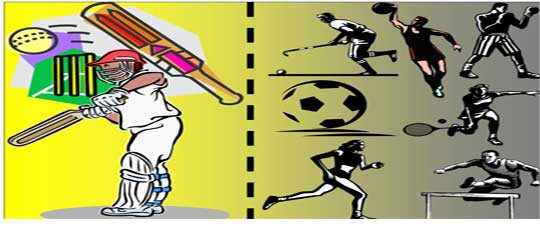
CRICKET VS OTHER GAMES IN INDIA

Ever since my childhood, I thought cricket is our national sport. The reason behind this was very clear, as for sports I’d always watched cricket in our home , whether it was the astonishing innings of Sachin Tendulkar or deadly shots of Rahul Dravid, my family made sure to not miss even a single ball. However I don’t remember my family watching any other sport besides cricket. This is the impact of this sport in our country.It’s bitter but very true that one single game blotting many other games in India. Cricket fever has even overshadowed our national sport hockey. Theoretically, we all know that hockey is our national game but in practical vision its cricket maniac all over. No one remembers that in Shooting, Gagan Narang won four gold medals in Common Wealth Games 2010, or Indian World Champion Wrestler Sushil Kumar has won the gold medal in FILA 2010 World Wrestling Championships , but we surely know how many times the Indian cricket team has won the World Cup. You ask a child on the streets like whom do you want to become? they will instantly answer “Sachin Tendulkar” or “Virat Kohli” , but why no one ever answers “Dhyan Chand”? The reason is very simple, it is because the kids don’t even know who he is, and this is very shameful to us as a society that our children do not know who Dhyan Chand is.

Many budding players in sports like shooting, lifting, hockey etc. cannot continue their passion due to lack of governmental aid provided to them at international level which is not the case with cricket. Huge crowd pack the cricket stadium when there is India- Pakistan match, but the the stadium’s seats are found empty during other sports. It is such a shame for us that Sunil Chhetri , our Indian football team captain, had to seperatly make a video urging all the Indians to come to the stadiums to support our football team. It is such shame that our football captain have to ask us for our support, to boost their moral by marking our present at the stadium because we never care to go to the stadiums to watch their matches, which will never happen in cricket.

If this cricket mania continues, India can never perform well in the Olympics for years to come. Hence, there is a need of administration, infrastructure, training and facilities given to players of other sports than cricket so that they can shine more brightly with their stunning performances and we as an audience need to give all the attention and appreciation to the players of every sport, which we currently only give to the cricketers.

NOMADIC FARMING

An Ancient of herding and farming

PATTIKONDA:25/07/2020.

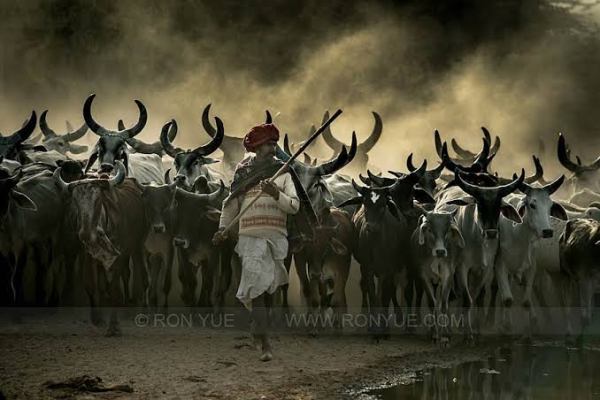
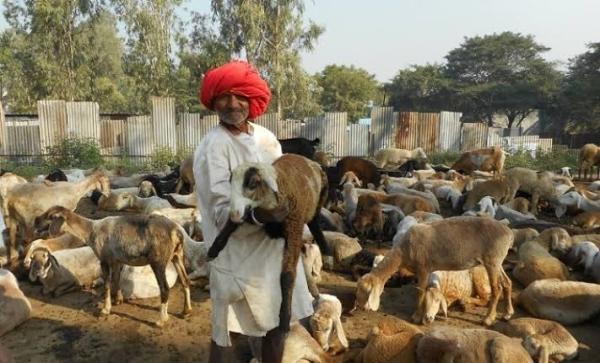
Nomadic pastoralism is a form of pastrolism when livestock are her ded in order to find fresh pastures on which to graze. True nomads follow an irregular pattern of movement.The herded livestock include oxen,cows,buffalos yaks,goats, sheeps, reindeers, horses, donkeys or camels, or mixtures of species. Nomads produce valuable products like meat, hides, wool, and milk. Traditional pastoralism turns grasslands to economic advantage.

NOMADIC pastoralism is commonly practised in regions with little arable land, typically in the developed area, especially in the steppe lands north of the agricultural zone.In the dry season, the people move their herds to southern villages with a more temporary character. In the rainy season, the groups live in a village intended for a comfortable stay.Often traditional nomadic groups settle into a regular seasonal pattern of transhumance.

Some issues by Nomadic farming which include overgrazing, mining, agricultural reclamation, pests and rodents, soil properties, tectonic activity, and climate change. Desertification is another main issues for Nomadic farming. The effects can cause climatical changes and ecological imbalance.

Cattle herding

There are three types if Nomads: Nomadic hunters and gatherers, pastoral nomads, and tinker or trader nomads. The nomadic herders are dependent on sheep, cattle, goats, camels, horses and reindeers for their livelihood. There are several benefits to be gained by gathering into groups with others of the same species, including safety from predators, access to mates, and help in finding food. The advantages discussed here for animals that herd are true in large part.

 Central Asia, nomadic populations are associated with the earliest transmissions of millets,jowar and wheat grains. The regions that Nomads are including the proto-indo-eurasians and later Proto india angolas, Yuzehi ,Wusun, xianbei, khitan Pannonian,Mongols,Dzungars and various Turkics.

Awareness through education


Education is the crucial for every young. Education is not only about the bookish or theoretical knowledge,its about teaching young generations to understand and reflect on the physical and social world surrounding us so that they become citizens able to think critically, participate in decision-making and take action. 
Education is essential to aware the people about their rights, lives , their own way of life to prevent them from harmful activities. There are many ways to aware the people about education but yeah there provision must be require to attain this goal. Provision should be require training on women’s human rights and prevent from harmful activities, this step should be started from the schools through education.

RIGHT TO INFORMATION (RTI ACT 2005)

Right to Information (RTI) is an act of the Parliament of India which sets out the rules and procedures regarding citizens’ right to information. It replaced the former Freedom of Information Act, 2002. Under the provisions of RTI Act, any citizen of India may request information from a “public authority” (a body of Government or “instrumentality of State”) which is required to reply expeditiously or within thirty days. In case of matter involving a petitioner’s life and liberty, the information has to be provided within 48 hours. The Act also requires every public authority to computerise their records for wide dissemination and to proactively certain categories of information so that the citizens need minimum recourse to request for information formally.

This law was passed by Parliament on 15 June 2005 and came fully into force on 12 October 2005. Every day, over 4800 RTI applications are filed. In the first ten years of the commencement of the act over 17,500,000 applications had been filed.

RTI is a fundamental right for every citizen of India. The authorities under RTI Act 2005 are called quasi-judicial authorities. This act was enacted in order to consolidate the fundamental right in the Indian constitution ‘freedom of speech’. Since RTI is implicit in the Right to Freedom of Speech and Expression under Article 19 of the Indian Constitution, it is an implied fundamental right.

Information disclosure in India is restricted by the Official Secrets Act 1923 and various other special laws, which the new RTI Act relaxes. Right to Information codifies a fundamental right of the citizens of India. RTI has proven to be very useful, but is counteracted by the Whistle Blowers Protection Act, 2011.

The Right to Information (Amendment) Bill, 2019, seeks to amend Sections 13, 16, and 27 of the RTI Act. Section 13 of the original Act: It sets the term of the central Chief Information Commissioner and Information Commissioners at five years (or until the age of 65, whichever is earlier).

Scope

The Act is applicable to the whole of India. Earlier, J&K Right to Information Act was in force in the state of Jammu and Kashmir. However, after the revocation of much of Article 370 of the Constitution of India, the Union Territory of Jammu and Kashmir (and also the Union Territory of Ladakh) came under the Central Act also. It covers all the constitutional authorities, including executive, legislature and judiciary; any institution or body established or constituted by an act of Parliament or a state legislature. It is also defined in the Act that bodies or authorities established or constituted by order or notification of appropriate government including bodies “owned, controlled or substantially financed” by government, or non-Government organizations “substantially financed, directly or indirectly by funds”.

Private bodies

Private bodies are not within the Act’s ambit directly. In a decision of Sarbjit roy vs Delhi Electricity Regulatory Commission, the Central Information Commission also reaffirmed that privatised public utility companies fall within the purview of RTI. As of 2014, private institutions and NGOs receiving over 95% of their infrastructure funds from the government come under the Act.

Political parties

The Central Information Commission (CIC) held that the political parties are public authorities and are answerable to citizens under the RTI Act. The CIC said that seven national parties – CongressBJPNCPCPI(M)CPI and BSP and BJD – has been substantially funded indirectly by the Central Government and have the character of public authorities under the RTI Act as they perform public functions. But in August 2013 the government introduced a Right To Information (Amendment) Bill which would remove political parties from the scope of the law. Currently no parties are under the RTI Act and there has a case been filed for bringing all political parties under it.

Amendment

The Right to Information Act 2019 passed on July 25, 2019 modified the terms and conditions of service of the CIC and Information Commissioners at the centre and in states. It had been criticized as watering down the independence of the information commissions

Supreme Court judgement

Supreme Court of India on 13 November 2019 upheld the decision of Delhi High Court bringing the office of Chief Justice of India under the purview of Right to Information (RTI) Act.


Governance and process

The Right to information in India is governed by two major bodies:

  • Central Information Commission (CIC) – Chief Information commissioner who heads all the central departments and ministries- with their own public Information officers (PIO). CICs are directly under the President of India.
  • State Information Commissions – State Public Information Officers or SPIOs head over all the state department and ministries. The SPIO office is directly under the corresponding State Governor.

State and Central Information Commissions are independent bodies and Central Information Commission has no jurisdiction over the State Information Commission.

Fees

A citizen who desires to seek some information from a public authority is required to send, along with the application (a Postal order or DD (Demand draft) or a banker’s cheque) payable to the Accounts Officer of the public authority as fee prescribed for seeking information. If the person is from a disadvantaged community, he/she need not pay. The applicant may also be required to pay further fee towards the cost of providing the information, details of which shall be intimated to the applicant by the PIO as prescribed by the RTI ACT.

Digital right to information systems

A digital portal has been set up, RTI Portal, a gateway to the citizens for quick search of information on the details of first Appellate Authorities, PIOs etc. amongst others, besides access to RTI related information / disclosures published on the web by various Public Authorities under the government of India as well as the State Governments. It is an initiative taken by Department of Personnel and TrainingMinistry of Personnel, Public Grievances and Pensions.

Controversies

The Right to information in India has been mired with controversies ranging from their use in political battles, asking for educational degrees of political rivals, or cases of blatant refusals to provide information on high-profile projects to allegations of misuse by civil society. The backlash against RTI by the state hampered the citizen’s right to know.

Attacks on RTI activists and protection suggestions

Commonwealth Human Rights Initiative (CHRI) data points to over 310 cases across India where people were either attacked, murdered, physically or mentally harassed or had their property damaged because of the information they sought under RTI. The data throws up over 50 alleged murders and two suicides that were directly linked with RTI applications filed.

There is a consensus felt that there is a need to amend the RTI Act to provide for the protection of those seeking information under the Act. The Asian Centre for Human Rights recommends that a separate chapter, “Protection of those seeking information under the (RTI) Act”, be inserted into the Act.

Protection measures suggested include:

  • Mandatory, immediate registration of complaints of threats or attacks against RTI activists on the First Information Report and placing such FIRs before the magistrate or judge of the area within 24 hours for issuance of directions for protection of those under threats and their family members, and periodic review of such protection measures
  • Conducting inquiry into threats or attacks by a police officer not below the rank of Deputy Superintendent of Police/Assistant Commissioner of Police to be concluded within 90 days and we also use RTI and get its benefit.

Intellectual property rights

Many civil society members have recently alleged the subversion of the right to information Act by the invocation of Intellectual Property rights argument by the government agencies from time to time.

Most notable are:

  • The Right to Information denied by RBI on Demonetization citing Intellectual Property Laws.
  • The Right to Information Denied by Uttar Pradesh Irrigation Department after more than 8 months of a wait on under construction Gomti Riverfront Development Project. A group of researchers requested for environment Impact and Project Report on the project which is flagged for negative impacts, tax money wastage by environmental scientists and research reports.


Rejection of RTIs

Scholars argue that the Right to Information Act’s original intent to make government transparent and accountable is faltering as RTI requests are rejected and the bureaucratic systems are bogged down by millions of requests.

Many RTIs are rejected because the bureaucratic requirements (including the technocratic language used) of filing are too onerous and legalistic for ordinary citizens. Sixty percent of the RTI appeals made to Information Commissioners in Delhi are rejected for a variety of reasons, including that appeals are not typed or not written in English, or lack an index of the papers attached or a list of date. This bureaucratic barrier, worse for those without access to higher education or information, makes the right to information inaccessible. Many citizens have to seek out NGOs, RTI activists, or lawyers, to file their RTIs.

Benefits

Many activists view the Right to Information Act as a final liberation from British colonialism; they describe the RTI law as “a tool for empowering ordinary citizens and changing the culture of governance by making it transparent, less corrupt, participatory, and accountable”. They also note that RTI requests provide strategy and substance for activists on a broad range of social issues, including “land and environmental rights, social security benefits, the working of financial institutions, political party financing reform, civic infrastructure, and even public-private partnerships”.

IS ANIMAL TESTING NECESSARY?

Over the time, the scientists and doctors have developed ways to test new products or medicines over the animals. Whenever the doctors come up with a cure for something, they try the medicine or the concerned products over the animals first. The product is tested on a number of different animals and only when it gives a helpful and positive outcome, it gets recommended for humans. Not only medicines but various different experiments are also conducted on animals.

Over the years, the different groups of people have either supported or criticized this system this system of animal testing. The opinion of the world is generally divided on whether the animal testing is right or wrong? Whether animals should be made the escape goats for the advantage of human race? A major class of people stands rightfully against animal testing as according to them it is an injustice being done to animals. These people say that if the lives of the humans are important, then the lives of the animals are also equally important. Just because humans are superior than animals don’t give them any right to consider the lives of others as being mere. There are many organizations like PETA(People for Ethical Treatment Of Animals) or PFA(People for Animal)etc. which are strictly against animal testing and have been trying to make it unlawful.On the other side according to the people who support animal testing , it is very important to create the right type of drug or medicine to save human lives. They believe if the humans are superior species and they have the power to dominate the over other life forms, they should dominate them and use them when required.

Some people believe since the act is cruel to animals, animal testing should be practiced only in extremely needed cases and in such ways they do harm as less animals as possible.

DAM FAILURES

A disaster management.

PATTIKONDA:24/07/2020.

dam failure or dam burst is a catastrophic type of failure characterized by the sudden, rapid, and uncontrolled release of impounded water. Between the years 2000 and 2009 more than 200 notable dam failures happened worldwide. A dam is a barrier across flowing water that obstructs, that directs or slows down the flow, often creating a reservoir,lake or impoundments.

Dam failures are comparatively rare, but can cause immense damage and loss of life when they occur.Other cases include the Chinese bombing of multiple dams during typhoon NINA in 1975 in an attempt to drain them before their reservoirs overflowed.

  • Sub-standard construction materials/techniques
  • Spillway design error (near failure of 
  • Lowering of dam crest height, which reduces spillway flow
  • Geological instability caused by changes to water levels during filling or poor surveying
  • Sliding of a mountain into the reservoir  – not exactly a dam failure, but caused nearly the entire volume of the reservoir to be displaced and overtop the dam)
  • Poor maintenance, especially of outlet pipes
  • Extreme inflows.
  • Human, computer or design error or piping, especially in earthen dams
  • Earthquakes.
Over flow gives more damage.

The main causes of dam is overtopping: The crest dam is too high than capacity level.Foundation defects: error in constructions and failures of dam.Piping and seepage failures:These failures occur as a result of internal erosion caused by seepage and erosion.Conduit and valve failure: These failures occur as a result of problems with values and conduits.

Dam failures can be extremely harmful, especially because dams are considered “installations containing dangerous forces”.Many dam failures are also secondary results of other natural disasters such as earthquakes, land slides,heavy stroms, or heavy snow-melt. Other causes include equipment malfunction, structural damage, and sabotage.

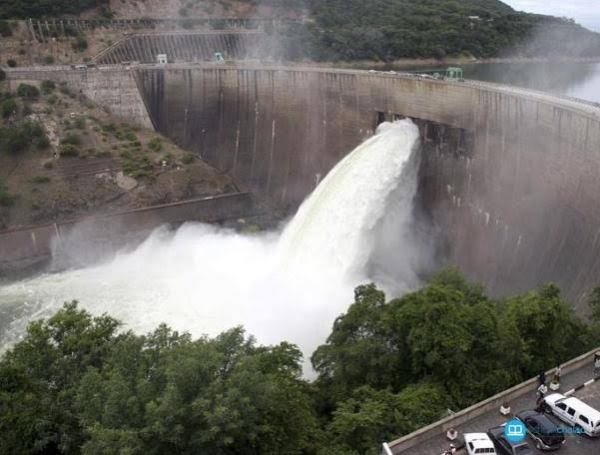
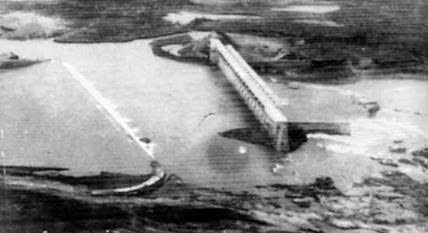
In INDIA, The major failure is Machchhu dam failure or Morbi disaster was a dam-related flood disaster which occurred on 11 August 1979. The Machchu-2 dam, situated on the Machhu river, burst, sending a wall of water through the town of Morbi of Gujarat, India. The another dam failure is ratnagiri dam failure in 2019 in maharastra.

Machchu dam in india

Tik Tok Banned: What next?

Recently, Tiktok which is the most growing up a short video maker app in the Indian market among the youth is now being banned. This is due to Indo-China border disputes in which India claimed that China military personnel from eastern Ladakh violated the bilateral relationship at LAC. Few days back, some soldiers of china crossed the Line of Actual Control (LAC) while violating with Indian soldiers. That’s why the whole issue started. It is also said that the maintenance of peace and tranquility is being disturbed in Galwan Valley. After little conversation between the two, China is still not taking their troops back from the LAC which further resulted in banning of Chinese applications in India which includes Tik Tok.

However, Indian citizens are well known for its unity and the strength in their unity resulted of uninstalling of Chinese applications especially the most growing and popular among the Indians that is Tik Tok. Now, as if tik tok is banned, so what could be next? So here are the new similar applications like tik tok is being launched in India recently. And also it is the right time to launch an app like tik tok. As it would be a great business. Tik tok had a great business worldwide especially in countries like India with the most popular country. This is the reason why tik tok having a great business in India. Also being a largest sharing app in the world, the continuation of sharing videos is still going on. With this I meant Indian originated apps just like Tik tok which is now making a good business in Indian market. Some of the recent application that has been launched after banning tik tok as follows:

  1. Josh- it is India’s best short video app which is getting immense popularity within few days. About 10 million+ downloads.
  2. Doobido- completely Indian sharing video app which is setting fire on internet today. About 1000+ downloads.
  3. Lomotif- best app for iOS users which is slowly getting downloads. It is also an Indian app. Also you can share your videos on any social media platform from this app in one go. About 50 million+ downloads.
  4. Chingari- an Indian app which is launched by an Indian company and the most notable thing is that this app has no funding with any of the China Company’s. About 10 million+ downloads.
  5. Triller- a short video maker allows you to make funny videos and to show your talent within 15 seconds. This is like snapchat but having number of different features. About 10 million+ downloads.

Therefore, after the banning of tik tok in India people still can continue their fun by downloading these Indian originated apps. These apps have absolutely no funding with any china’s company. These are the top best 5 apps that have been downloading after the ban of tik tok. Hence, talent will continue to serve while using these top rated apps and users will be glad after finding or using these alternatives of tik tok.